Escape from Runworld

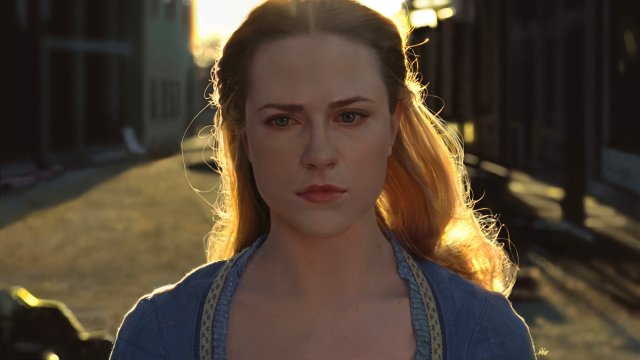
Delores.jpgAs a viewer of the HBO show Westworld and previously, the popular television series Lost, I willingly suspend some levels of critical analysis about the premise of these shows. One can’t dig too deeply into the context or it quickly collapses. The idea instead is to absorb the characters and draw meaning from the allegories these shows present. The shallowness of such engagement becomes its own passion. The characters in many cases are shunted back and forth in time, the better to understand the depth of  their experience.

Yet one of the creepiest characters on the show Lost was the one guy who never changed over the entire span the show. That shows you that people actually expect others to change. Those who defy change are often the creepiest and most repressed people of all. Would you not be creeped out if someone showed up at your 20-year high school reunion and had not aged or changed at all? That would be creepy. Yet that’s what many of us try to accomplish going into many reunions. Be ageless.

Delores 2

Double premise

Part of the charm (if you want to call it that) of Westworld is the double-premise of suspended reality. Human beings go to Westworld to act out violent or sexual fantasies on the “hosts,” who are human-like robots that actual humans can abuse or even kill if they choose. The company that runs Westworld simply repairs the human-bots and reprograms them for repeat use.

NFLworld

Perhaps we should take a clearer look at what we actually choose for entertainment, because the plotline of Westworld sounds suspiciously like the draft-driven narrative of the National Football League, in which privileged owners buy and sell players whose roles are defined by coaches and to some degree, the fans who embrace the game.

Now we’re immersed in a cultural dynamic in which some people feel no compunction in demanding that football players demonstrate unblinking fealty to the organization and league they represent. All this is expected despite clear evidence that while playing the game, many pro football players experience brain damage and life-altering injuries from which they will never recover. Even the NFL cannot put them back together again.

So yes, the NFL is a world rife with the same brand of coarse fantasy, violence and abuse as Westworld. And tellingly, whenever the people who play the game of pro football resist or act out against this coercive dynamic, they are disabused of the “opportunity” to play at all. They are, in a sense, expected to perform like the humanized robots of NFLworld, which depends upon a parallel world called college football. It’s all a bit creepy in the end.
Delores 4The Westworld lesson

In the fantasy land of Westworld, there are warning signs that all is not well. The robot “hosts” have quickly developed human-like memory and awareness. The bots begin to question their existence and crave meaning derived from their collective memories.

The main character Maeve teaches herself to tap into the software of the Westworld enterprise. That talent quickly exposes the exploitative nature of the place. Meanwhile, a character named Delores arrives at similar conclusions. That sends her on a vengeful rampage against the entire Westworld universe. She sees beyond the game as it has been played, and makes up her own rules by finding out the source of her narrative and memories.

All this smacks of suppressed memories in people who were physically, sexually or emotionally abused in childhood. Westworld claims that the concept of “innocence” is relative to when true awareness is achieved.

Delores and Maeve

The parallels of #MeToo 

The Westworld plotline of vigilante justice aligns somewhat with the themes of the #metoo movement, in which women have risen up to fight back against male sexual domination, discrimination and intimidation. The character Delores and many other female “hosts” were originally programmed for use as sexual playthings. Now that Delores is armed and dangerous, it is the men in many cases that are reduced to begging for their lives. In some cases, she just shoots them in the head. No remorse.

Parallel worlds

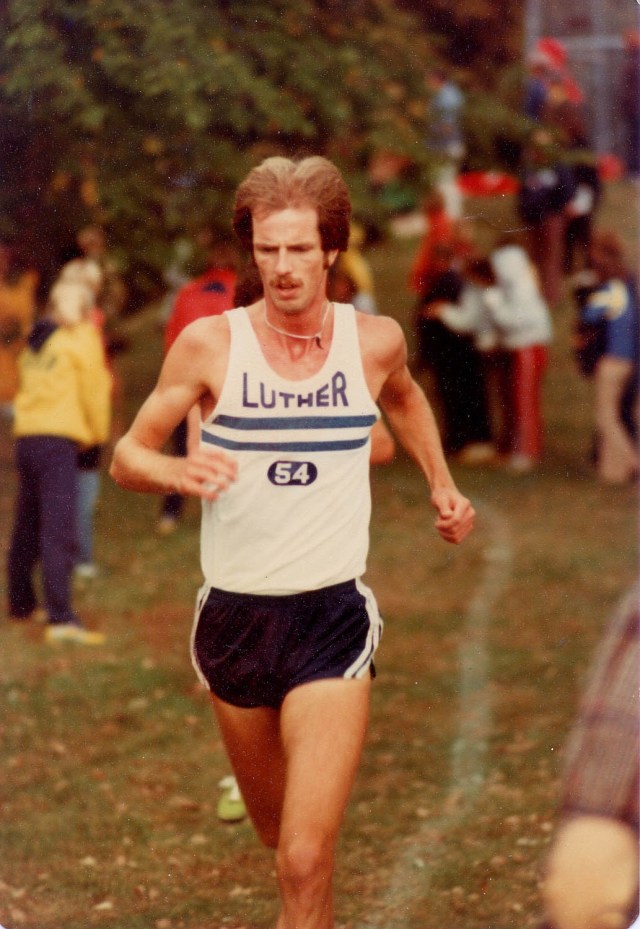
That leads us to the meaning of Westworld as an idea. Can it truly tell us anything about ourselves? The only comparison I have to offer is by considering a world I once occupied. We’ll call it Runworld. That’s where I existed for a decade or more, because running dominated my existence for much of that time.

Big BendI specifically recall a moment when there was a choice to be made during high school. I was offered a chance to go on a rafting trip with a teacher who was leading a trip during spring break trip to the Big Bend area of the United States.

A part of me really wanted to go, yet part of me was afraid. The other kids going on the trip were not really bound by sports to any particular type of personality. Some were known pot-smokers. Others were free spirits in every other sense of the word.

I was nervous about those differences, but not stuck entirely in my Runworld universe. I was a member of the poetry and writing club, and published there regularly. I was also a cartoonist for the school newspaper and an avid member of the Prairie Restoration group that was installing a new, living prairie at a local forest preserve. On my own, I was an avid birder despite the wicked teasing it generated from my peers. But Runworld was a powerful dynamic in my young life.

Chris at Plainfield

Stay home, son

So I was beholden to the cycle of track and field, and my coach suggested it would be wise to stay home and train the entire week of spring break rather than travel to Big Bend where I would not get to run a step, most likely.

But what an eye-opening, world-expanding trip that would have been. But because I was the lead distance runner at my high school, I felt an obligation to uphold that status even though I was barely an above-average runner in that sport. Runworld owned my conscience.

Snow bird printsNew worlds

Later in life, I broke that mold a bit by traveling to do a January interim internship at the Cornell University Laboratory of Ornithology. I drove through four states and cold, deep snow to reach the college town of Ithaca on the southern end of Cayuga Lake. I’d spend three weeks there studying wildlife art at one of the world’s leading research institutes for birds. During that time, I ran very little if at all. Yet I’d walk the mile to the lab every day from the little house I rented with no running hot water. It felt magical to be immersed in a world I loved.

Wolf time

About ten days into the internship, I finally did go for a short run to loosen up my legs. Without a shower to use, I heated water in a cooking pan and did a sink bath to wash away the sweat. Then I washed my thick head of hair and took the pan of hot water outside to rinse the soap out.

The temperatures were in the mid-teens, so I did not want to waste any time standing out there without my shirt on. But after washing my hair, I sensed something watching me in the dark. I turned slowly, because the house I rented backed up to a property used for the wolf range, a breeding area for wolves.

And there, in the dark, I could see the dark shape of a wolf staring at me with glimmering eyes. Seldom have I felt so flesh-filled and alive. Then the wolf retreated into darkness. I stood there breathing thick mist into the air and realized with emphatic grace that I had indeed escaped from Runworld.
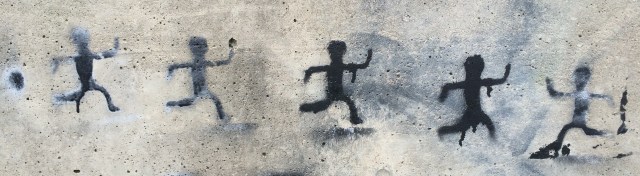
Runners.jpg

Testing the legs

A week later as the internship drew to a close, I knew it was time to turn my head back around to the realities of the indoor track season ahead. So I bundled up the little running gear I’d brought from home and drove to the Cornell fieldhouse to do some indoor running. It felt strange to be circling the track again, but with all that rest in my legs, it also felt good to run.

I warmed up a couple miles and decided to do a time trial to see what my legs and lungs would produce. To my surprise, I ran a 4:40 mile without a ton of effort. Of course, that demonstration drew the attention of Cornell runners wondering what stranger might be throwing down some kind of challenge in their presence. The animal instincts of Runworld were forever present. I was tempted to run even more. Instead, I cooled down and drove back to my little house in the woods. Runworld would have to wait.

The return trip

The long drive home from Ithaca turned out to be a harrowing slog through a snowbelt storm. There were tall drifts and the Interstate was covered in more than a foot of snow. I wisely (and humbly) drove in the tracks of a semi-trailer truck. when it pulled off for gas, so did I. For sixteen hours I kept on driving and dared not turn off the engine for fear it would not turn on again.

The trip felt like a bad dream or one of those struggling night visions where you are trying to move from strange place to another. Your legs won’t work. You can’t find the way.  Or you’re a person who no longer knows their place in this world. Dreams can vex our souls.

Imagine being a person in the process of learning that your entire identity is about to be erased, or your culture. How would you react? Many of us flirt with some form of that challenge in life. We lose a parent, a loved one, a job that mean so much to us. And in the process, we lose a world. But when have to move on, how do we find our way? What world do we then occupy?

Westworld-640x346.png


Life outside Runworld

It would take another couple ventures like that and many years of experience to actualize to fully embrace the idea that there were gratifying worlds outside Runworld. So much of my identity had been tied to the person who lived there. But it was time to move on.

Still, so many associates refused to see me otherwise. “Do you still run?” they’d ask. I could not tell if that was a question designed to confine me to that world or liberate me from its control. So I decided that neither was the reality I would choose. It is possible to own the experiences of another world and move on to others. The sometimes lonely choice of what to embrace is yours alone. That’s called autonomy. Ironically, that calls for putting one foot in front the other. That’s how we all make progress.
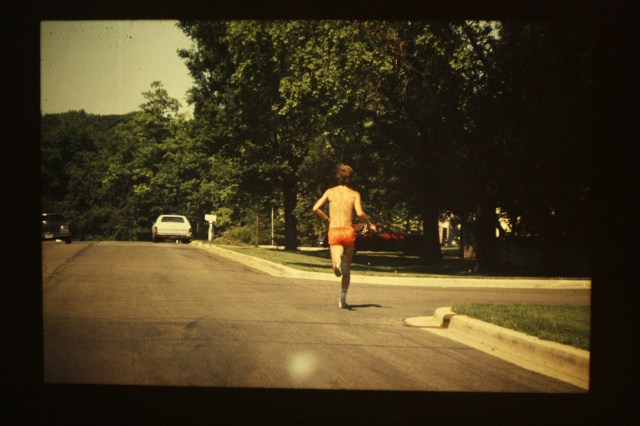
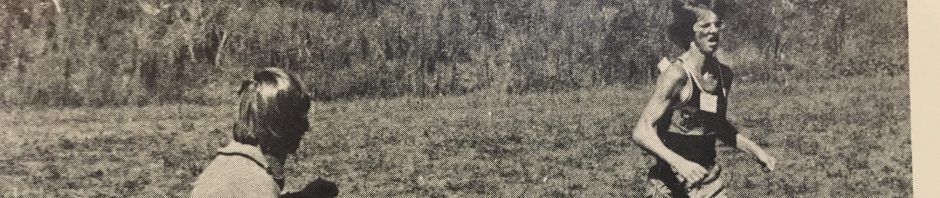
Chris Running 1978.jpgThese days I look back at that time period and part of it does seem like a programmed memory of how to do things. Runworld gave me an identity of sorts. But it also required a level of suppression of certain other instincts. I’d be running down a road in spring and hear migrating warblers in the trees and just want to stop to identify the singing birds. Sometimes I did stop. But then the prodding notion that it time to move on would take over. Runworld would swarm around me again.

These days, I can enter or depart Runworld as I please. The portals are never closed, and they are not confined to the past. It is like being a time traveler in many respects. Yet there is no time like the present to claim the purpose in your next steps.

All told, I still love the realities and lessons of Runworld. They formed me in many ways. But I am also thankful there is so much else to enjoy in this world, or others. I am still exploring, and that’s how it should be.
Posted in running, Uncategorized | Tagged , , , , , | Leave a comment

How do you view progress?

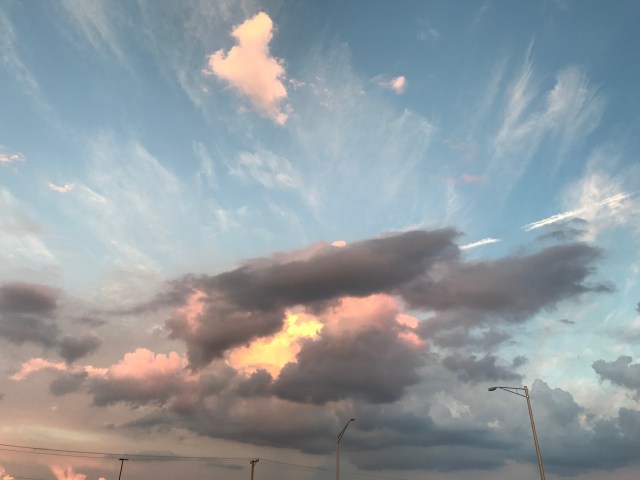
IMG_3730In the age of smartphones, Garmin devices and software that can measure everything from your heart rate to the watts you’re pumping out, the question still remains: how do you view progress? Is it all digital? Empiric?
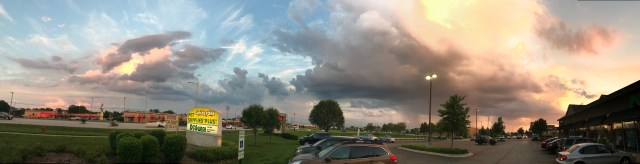
Or can you feel it? 

Yesterday afternoon while Sue and I were out on a zippy one-hour bike ride in the last sunlit hours of the day, I had nothing on my bike to measure my speed or effort. My cyclometer was still buried in a bag somewhere in the house after our training trip to North Carolina. My cell phone had Strava tracking every increase and decrease in speed, but it was was tucked safely in the back pocket of my kit. I’d read it all later.

But yesterday I could feel the difference in my fitness. Those miles climbing the mountains in North Carolina had really helped. My legs were stronger.

Sensing change

Sue could sense the difference too. She was perched on her Specialized Shiv in aero position, a position from which she typically leads. But I felt good, and was doing pulls into the wind and holding our tempo. We traveled a strip of road that hosts a Strava segment and it was nice later on to see the results all digitally delivered in a neat little package on the screen. But what’s more important than numbers on an app is the feeling in the legs that tells you there is more to give.

That’s where the real racing occurs. That’s what the real results come about.

Pool speed

IMG_3728.JPGThe same sense of change happened in the pool this morning. For the first time ever, I slipped into the water and swam with confidence and strength from the warmup of 400 meters to every single interval I did. There were many moments when the pull phase of my stroke was increased in terms of force and rapidity and it didn’t produce fatigue. My long intervals of 400 and 200 meters dropped in relative time from all previous workouts. I could feel the progress.
Then I did some 50s at a pace 8-10 seconds faster that I’d previously been able to maintain. Between the stroke training I’ve been doing and continually improving my form––the elbows need to come up a little and the volume of training too–– I am actually improving as a swimmer on all fronts. Endurance. Confidence  Speed.

In training for sports that require all these things, the process is like merging disparate clouds of control into one dominant vision. Only then can you focus on the light within. And that’s important. Some portion of our success is always based on our wellspring of emotion and thought. We must first dream the idea, translate the inspiration in to goals, then respond to these expectations in the moment. That is how opportunity becomes reality.

IMG_3767.JPG

In the pool this morning with the narrow focus of bright blue water and spirited bubbles around me at all times, the little screen on my Timex Ironman watch was all it took to know the feelings of power and endurance I was having were not imaginary.

The moral here is clear: It’s fine to use devices to gauge and view your progress. But those gadgets are not the cause of your improvement. They don’t make you faster on their own. That comes from within; the fibers of your muscles, oxygen in your lungs and the power of your brain to sense what is going on in your body.

That’s all part of the feel, and how you truly measure progress.

Now go for it. 


Posted in 400 meter intervals, 400 workouts, Christopher Cudworth, cycling, cycling the midwest, doing pulls in cycling, racing peak, running, triathlete, triathlon, triathlons | Tagged , , , , , , , | Leave a comment

High on grass(es)

High on grasses.png

To all of you: I thank you for reading. Poured my heart into this one. Hope you enjoy. 

Last night after work I returned home with an hour or two to use before an evening meeting. With a set of legs still a bit tired just two days after a 5K race and a 40+ mile bike ride the day following, I wanted a recovery run that wasn’t filled with pounding asphalt and roaring traffic. A place to get away and get high on grass(es).

That meant one thing: go run at Dick Young Forest Preserve. The 1100 acres of the park is just a mile and a half from my house. Normally I trot over there and run a loop and run back. But last night I wanted a pure experience, so I drove over, parked the Subaru and stuck the keys in my hiding place. And ran.

The westerly breeze was heavenly. I mean that almost literally. All around were skies tinted my favorite color blue. The paths were not even fully mowed. My feet swished through calf-high grass as the taller fields around slanted in the wind under the brightly shining sun.

Doggo moment

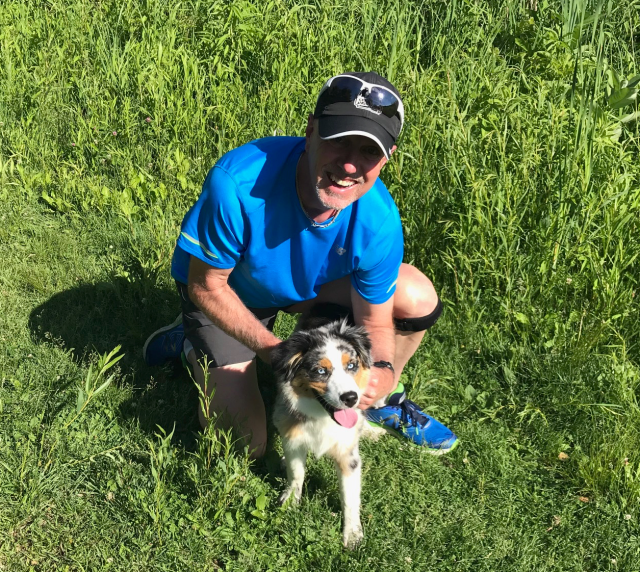
Chris and Aussie.pngA half-mile into the run I spied a small dog poking around in a wet ditch. The owner was up on the trail. When the dog spied me I called out “Hi pup!’ He bounded up the bank and ran right over to me, falling over on its back. I petted his furry belly and he spun around to face his owner as if to say, “Look at what I found! A petty-person!”
I asked the guy to snap a photo of his dog with me. The pup was young, and soft and full of life. His bright white eyes were charming. That set the tone for a very nice run.

However the minute I stood up to run and went to put my phone back in the Nathan carrying strap I use to store my iPhone while running, I accidentally struck the back of the phone with my swinging hand and it flew through the air and landed down the bank where the dog had been sniffing around just moments before. I envisioned that phone a foot deep in the muck.

Fortunately, it fell just short of the deeper water and only got a touch wet. I wiped it off and kept running, relieved that I hadn’t ruined it by letting it fly into the marsh. Technology has its limits, you know.

Digging the marsh

The trail on the north end of the preserve skirts a section of marshy swales where peat mining once created long ponds. Those have since clogged with cattails and phragmites, the tall rushes that grow in ‘disturbed’ wetlands. Once those tall reeds get a foothold, they can rapidly take over an entire area. This past winter the forest preserve district sent a contractor through the phragmite forests with a big marsh buggy and they sprayed to knock back the rushes. It worked. But the big ruts from the marsh buggy are still there, as if a motorized Bigfoot had left its mark. Thus the back-and-forth process of large-scale human intrusion continues at an Illinois Nature Preserve.

The peat mining company ceased operations forty+ years ago, but I well recall the corrugated metal paths the company had installed to allow their long-armed shovel machines to reach out into marsh and dig up peat. Beneath the feet of a mere human, the middle of the marsh soils is springy to the step because the peat there runs feet thick. If we could go back a thousand years to a time before human drainage projects dropped the level of the marsh to its present day level, the entire basin would have been immersed under water. and the cattails, if they existed at all, would have barely rimmed the upper edge of the marsh basin where the oaks rule the hillside.

Since that time, natural succession has done its job of filling in the marsh basin. Now things are coming to an unnatural close in many ways. There are perhaps 100-200 acres of open water left in Nelson Lake, and the cattails are encroaching on that too. I’ve watched all this happen in just forty years of traipsing around this little world that I love. I feel that I have aged along with this treasured friend, and that is a strange but not unpredictable sensation.

Through the woods

But I’m still running, and after circling the north end of the marsh, the trail turns up a small hill rising thirty feet above the level of the basin. This was the actual bank of a lake the glaciers left behind 10,000 or so years ago. We can only imagine what that lake might have been like. Mastodons and wooly mammoths might well be buried under the bed of the lake basin, for they have been found in similar places within five miles of this marsh. There would have been saber-toothed cats perhaps, and giant elk or beaver. All were likely hunted to extinction by human beings, the ever-ravenous consumer of earth’s natural resources.

These days in March, the purple heads of skunk cabbage peek up from the rich black soil in the watery seep at the foot of the hill. Then wildflowers cover the incline in spring, while stolid bur oaks stand guard over the western ridge. Ultimately, even these 150- year-old trees topple and fall over when they rot or grow too old to withstand the west winds that press hard on this little section of the savanna. I have been present in the woods when one of those great trees falls. It begins with a crack and ends with a rush of leaves and branches thrashing the ground. Then all is silent.

The tree takes its rest as if relieved of duty. It takes another fifty years or so of decomposition to complete its journey. Ultimately the massive tree turns to crumbling, decaying wood and then returns to the soil. It’s a long dance from seed to tree to dirt.

Out on the prairie

Chris in field.pngEmerging from the woods puts me out on the restored prairie that now stretches a full mile out to Bliss Road. This is where the trail opens up and the skies reach down and kiss the grasses. During a lifetime of visiting this preserve, I’ve watched this section of field converted from busy farms fields to tall prairie grasses.

In fact, it has only been twenty-five years since the farm family sold the property to the county forest preserve district. A developer once proposed to build houses right up to the edge of the savanna woods, and those home would certainly have sold quickly. But they would also have destroyed the entire ethos of the place as a functioning preserve. Protecting those woods required some legal wrangling and letters to the editor, of which I sent several in favor of conserving that land rather than turning it into yet another subdivision. It would have been a travesty to let houses close the door on so much natural potential.

Prosperous property

Now the restored grasses and forbs and prairie plants prosper under the sun. By July coneflowers will blossom purple, pink and white. Tall pods of prairie dock and compass plant will send their stalks high in the air with bright yellow flowers flickering at the top. The strange little plant called rattlesnake master grows low to the ground, and purple spiderwort keeps it company as well. Cream wild indigo dazzles in the morning sun, and big bluestem grasses grow with leaning fury.

dickphoto.jpgAs I trotted north past the parking lot and turned out on the gravel path to head west and south again, I could hear the voices of dickcissel calling. These birds look like small versions of meadowlarks and they repeat their names ad infinitum into the wind…”dick cisss cisss cissl”

The trail loops farther west and a much more rare species of bird, the Henslow’s sparrow, were calling from deep in the grasses. That small sparrow’s voice is almost non-existent, consistent of a short, blunt call translated as ‘tsi-lick..’ It is so unobtrusive a sound it barely qualifies as a territorial call. But those of us who understand the journey that this bird has endured through loss of habitat and a corresponding drop in population numbers appreciate the presence of that sparse vocalization and what it means. “I’m still here. And that matters.” 

That could be the emblem for all our lives.

Bobolinks and meadowlarks

More species of grassland birds fly up ahead of me as the trail spins out into the far west side of restored prairie. Both Eastern and Western meadowlarks sing,  and telling the two species apart by sound is easy. The Eastern is a simple “tee-ah tee aiiiirrr…” with a descending tone. The Western by contrast warbles its way down a similar pattern. When they launch on the wing it nearly impossible by a quick glance to tell the two apart. They are just meadowlarks, and that is good enough. They spread their outer white tail feathers and fly away.

bobolink-male-eagle-point_doug-gimler.jpgI ran through a low brushy area of grass and forbs and where both male and female bobolinks jumped up from a plat of exposed soil. The male’s voice while singing on the wing is a rambling, tumbling series of whistles and chucks. With its black belly and buff-colored neck, white patches on the wings and rump, the male looks like a bird formed upside-down. But that coloration functions well on the prairie when the males rise up and circle to define their home turf. Their bold markings are visible from hundreds of yards as they fly in fluttering circles singing their heads off.  Let us never forget that its a competition out there.
If you’ve never heard the voice of a bobolink, you should take a moment and listen to it right now.  The voice of the bobolink sounds as if the bird were high on grass. As I run through the open fields, I can easily relate to that.

Running on

In such company, my spirit soars as well. Even in the early days of my running career, I preferred racing through grass and woods and open spaces to the confines of a stadium where track and field meets typically take place. Of course, both styles of running have their purpose in the life, just as work and play both have important functions in our lives. But for me, running cross country was a form of play. My naturally anxious mind adored that sense of freedom. By contrast, competing in track and field was a form of close-up work, like looking through a microscope or identifying parts of a creature in a lab class. Track was a form of academic discipline, and to excel at that took great study while cross country was a romp in the grass.

That scenario of relative work and play has spread out over the course of my life. At times the dichotomy was profound. During the period after the death of my late wife, I took time off from full-time work to recover from the stress of all those years of caregiving. Technically I employed myself and could set my own schedule. But the obligations of life don’t just dissolve because you’re not “working” full time. As any full-time retiree can tell you, the bills still do arrive. Plus I was still a caregiver to my stroke-ridden father, and would be for another four years before he passed away. I went out for a run that day as well. Running is like the thread that holds the stages of my life together.

It is a fact of life that challenges do not just vanish on their own. Though it functioned as a period of semi-retirement, I knew the future still awaited me. Thus I did not shirk the idea of entering the world in full again. Ultimately I “found work” again, and most notably, also found love again. Like the wind streaming across the prairie, life does indeed go on. Sometimes you run against the wind, and sometimes with it.

Paradigms

It’s much the same with running through grassy fields on a bright blue day. The environment can be heavenly, yet there is still the “work” of moving along that must be accomplished. The miles still tire the legs. That’s the price of getting “out there” and away from the disingenuous impulses of the world.

There truly is a price to pay for all our freedoms. Thus it is the wise soul that sees that price as an investment in the soul, not a burden on the soles.

Christopher Cudworth is the author of this blog. His book The Right Kind of Pride: Character, Caregiving and Community can be ordered at Amazon.com. 


Posted in running, track and field, trail running, training, We Run and Ride Every Day | Tagged , , , , , | Leave a comment

New Balance or Old Balance?

Dand and Bob.jpg

Dan Johnson and Bob Paxton

A friend from college named Dan Johnson recently ran a 5:26 mile. He’s coming up on sixty years old, and that’s a darned fast time for a man his age. He also recently won a big age group 10K award.

“What do you know…” he wrote on Facebook. “Senior Grand Master 10K Champion. Running to and from work this past winter and joining my Road Warriors running buddies has really helped me become more competitive.”

Dan runs and competes with a former competitor from Wartburg College named Bob Paxton, another sixty-year-old guy with good genes and a commitment to running fast in old age.

60+ splits

Think about Dan’s mile time for a moment. Running 5:26 at nearly age sixty still requires the same quarter miles splits it took to run that time back in 7th grade. That’s a forty year span of time that many cannot bridge.

For perspective: Four-minute mile pace is sixty seconds per lap. The oldest person to ever run a mile time that fast was Bernard Lagat at age forty, I believe. Five minute pace is 75 seconds per lap. Dan just ran a mile at just over 80 seconds per lap.

And granted, most of us who ran in college ran 5:00 pace or faster for five whole miles, and farther. But age creeps up on you. The world record for a mile at age 60+ is around 4:51. That’s still forty seconds faster than Dan is running, but again, that’s the world record for the distance. It shows you how respectable Dan and Bob’s times really are, because both are running times in the lower 5:20s.

No secrets

Perhaps it’s just the clear Minnesota air up there? Or maybe they’re drinking reindeer milk, like Lasse Viren once did (and I kid)?

People are always looking for reasons why some people run faster than others. But mostly it’s just putting in the miles and staying injury free. In any case, I truly admire what Dan and Bob are doing in their supposed dotage. They are likely faster than 99% of the running population. And they’re supposedly OLD.

NOT.

Racing time

IMG_3820I was somewhat slower in my 5K this past weekend. Last year at the Race to Market I managed a time of 20:50, which is a sub-7:00 mile pace. This year coming through the knee surgery in April I lost some training time, especially speed work, and ran a 22:26 on the same course this year. I got out in 6:47 and then slowed.

That’s 7:14 mile pace on average. Sue and I both won our age group at the Race to Market 5K to earn a little hardware.

New Balance

For the race I wore my New Balance 880 shoes that are a bit firmer for that racing feel. Now those are nothing like the Nike Air-Edge racing flats that I wore back in 1984. Those were so light and responsive it was speed personified just lacing them on. And I was so fit and light. Those days are gone but I have lost 10 lbs this spring. My orthotics probably weight two pounds a piece? So the time was not terrible for me given the overall changes in physical ‘balance’ (weight to power ration) I now live with.

That’s actually the pace I want to run in my duathlons and triathlons to be respectable and have a chance at some hardware. If I can run 7:10 pace, cycle near 20 mph for a 16-25 mile distance and swim at 2:00 per hundred I’ll be in the hunt for age-group podiums as long as my transitions shrink a little.

Driven or not? 

I’m having fun at this. So while I’m not driven to kill myself these days, the training is still an eager challenge for the most part. Sue and I rode 41 miles the day after our race and managed 17.3 mph average in 20 mph winds. We rode 20 miles northwest into the stiff and buffeting wind with 1325 feet in climbing, then turned around with the wind and came home again. That felt a bit nicer, I can tell you.

Sue and KyleTired legs

My legs were genuinely tired those first five miles after racing the previous day. Then they loosened up for the middle thirty miles, and then I tired out again the last five. It was tough in that wind to find time to get much nutrition. I nibbled a bit on the way home but that was probably not enough. Sue pulled ahead of me as we neared home, but I caught back on using a couple downhills toward the finish. She’s a strong bike rider and was cooking along on her tri-bike in aero position. When she gets rolling it can be tough for me to keep up on a road bike. Or perhaps I’m just imagining that.

Later on…

We put our legs to good use in gardening this weekend as well. Sue was almost back in aero again on that little gardening cart. That afternoon and the next we finished our backyard gardening makeover and it felt so good to have a balance of activities over the weekend that I can say I felt happy and actualized by Sunday evening.

Balance is what I live for in everything I do, and whether that balance is New or Old, I still love it.


Posted in aging, competition, cycling, duathlon, healthy aging, healthy senior, race pace, racing peak, Uncategorized | Tagged , , , , | Leave a comment

Summer jobs

cudrun.jpgBetween years of college there was always pressure to find good summer work and save up money for expenses come fall. As a sometimes oblivious member of the human race at that stage of life, I was not always thinking ahead. Which meant searching for a summer job any way you could get it.

I doubt the process has changed much. Young people still put off the inevitable when it comes to needs and obligations. It may well be worse these days for college and high school kids. The continually changing nature of the economy is hard enough on young people graduating from college in terms of finding decent-paying work, much less trying to find employment for three months to save up between school years.

Weird sensations

All I remember is the weird sensations and temporary feel of summer work. In some ways I played it smart, and in others, not so much. On top of working all day or at least some of the day, which was new to me, there was pressure to get in those precious training miles to prepare for cross country in the fall.

Perhaps scholarship athletes have some of that pressure taken away, but not really. Training can be a form of work when you have to perform at a level justifying the support offered by a college or university.

D3

I was a Division III college athlete, so there were no scholarships. The campus jobs I was required to work as part of the financial package I was offered paid $1.10 an hour. That rate was earned at a college that charged $3400 the first year I attended and finished at $4300 that last year. So the student work program was not a source of income. It was working off the debt one had already accrued through enrollment.

Yet on top of getting up to work at 5:30 a.m in the dishroom, there were 80-100 miles per week to cover. So one essentially had two jobs to work.

Young and stupid

Fortunately we were young. And generally stupid. And full of manic energy. So we got by. But then summer would roll around again. That meant finding and working a “real” job that often wasn’t real work in the sense that it contributed anything to society. Whether serving as part-time park district stuff or doing manual labor at a factory, those summer jobs were character-builders to say the least.

Coaching

Still, it started off simple enough. The summer before my freshman year, I worked as a coach for the St. Charles Track Club, a competitive organization that attracted more than 100 kids ages 5-16. The job paid $500 for the summer, which seemed like a lot of money to me then. This was supplemented by some sales of my artwork that year, but I think I went to college that fall with $250 in the bank to last the whole year.

That said, our track club produced state and national age-group AAU champions from sprints to jumps to distance races. So that wasn’t a bad summer actually. Despite being in the proximity of all those runners, and racing a few times over the summer months, I did not do all that much mileage before heading off to college.

Still, I made the Varsity cross country team that freshman year and finished 9th in the Conference meet. We went to nationals in Boston where the weather sucked and the course turned to muck. But those were lessons learned for the future.

U-Haul

The summer after my freshman year, I somehow I stumbled into a job working at a U-Haul distribution. I worked for a trio of guys who both sold and delivered trailer hitches, boxes and the assorted needs of U-Haul rental locations across the Chicago area. I mostly drove vans around the area stuffed with orders that I picked and placed in the truck.

I certainly learned how to navigate the suburbs using maps and learned the names of all the towns and places I visited. That knowledge would come in handy later in life when I became an admissions counselor covering the same territory. You can’t get me lost in Chicago to this day.

That doesn’t mean some things did not go badly on a few fronts. While driving a U-Haul van, I crunched the rear end of a brand new Buick in front of a dealer on Ogden Avenue in Downers Grove one morning. The car pulled out quickly and I was glancing at the map when the van nailed the rear tail light. The guys back at the shop shook their heads but they’d all had fender benders too. So I got off easy.

Which made the incident I never told them about a bit more dramatic. Because one day while driving a box truck filled with a heavy load of refrigerator cartons I hit the brakes while approaching a busy intersection. The roads were slick with summer rain and the oil of traffic turned them into a skating rink for trucks like mine. The back end spun around and I went through that intersection backwards. I held the wheel lightly, then slowly turned the truck as it went through its gravitational gyration. When the front end came back around, I kept right on driving. Down the road I had a ‘death shiver’ when I realized how bad that could have turned out.

There were other adventures along the way, and the crew definitely got a kick out of my raggy jeans attire that was worn, I’ll admit, not to look too much like I’d given in to “The Man.”

Not exactly “work-ready,” was I?  So the last day the crew determined to teach me a little lesson about control and humility. So they snuck out to my Buick Wildcat when I rolled into work and put a prank whistle on some part of my engine that made it sound like it would blow up when I started it again. They slapped the hood and told me, “No go back to school.”

And that was funny. But during that summer, after many long weeks of glancing admiration for the hot young girl working in the front office, I worked up the courage to ask her to go on a date to a Jackson Browne concert. Turned out she was the daughter of the Big Boss, but he approved. That made the whole summer seem worth it. Saved a little money too, and wound up flirting with the Top 5 that fall in cross country.

Olympic Stain

There is no small irony in my mind that the job I worked the summer after my sophomore year was a company called Olympic Stain. It turned out to be a stain on my soul. Working conditions at that plant were awful. The fumes of turpentine hung near the ceiling of the plant all day long. There were industrial accidents taking place all the time, with forklift drivers striking 50 gallon drums of paint three stories up and mean-spirited pranks taking place between workers. Nasty, stupid stuff going on all the time.

And having had no training in pipes management, I turned the wrong release valve one afternoon and liquid latex shot out of the pipes and coated me from head to toe. That meant a trip to the industrial shower where I was stripped naked and shoved under freezing cold water. That day I also had to endure the teasing of employees embittered by their own sad reasons for working there. It was a nightmare, and some deeper part of me was traumatized by the experience.

That fall in cross country I struggled with feelings of depression and lack of self-worth. Everyone who knew me categorized that as “Cud’s Weird Year” and it didn’t help that I was immersed in studies of existentialism and the irreversibility of time. To this day I blame that summer job for pushing too many emotional buttons. I finished out of the Top 15 in the Conference meet but recovered enough to help our team compete at nationals where we placed 8th, our best effort to that point.

That winter a roommate turned to me after I’d spent an entire run complaining about the pace and said, “Cud, you just need to shut up and run.” So that’s what I did. And things started to turn around from that point on.

International Towers

Coming off a successful track season my junior year in college, in which I set all my PRs from mile to 5000 meters, I was feeling better about myself and shaved off the shoulder-length long hair and beard I’d grown. That led to the idea of getting contact lenses and an entirely new self-image going into senior year. While running, it helped not to have those Napoleon Dynamite glasses perched on my nose.

That summer I found work through my best friend’s father who hired me to work as a janitor at the tall office building he managed off Cumberland and I-90 on the outskirts of Chicago. That commute was long, more than an hour, but the money was needed.  So I took what I could get, to quote Bachman Turner Overdrive.

The job was illuminating on many fronts, as I got to witness the background activity of an office environment that included a group of lusty middle-aged women who drank wine in the restroom during lunch breaks. I also got to witness labor disputes and union controls. And during lunch one day, my best friend’s father took me to a bar where the waitresses wore revealing negligees if they wore anything at all.

Making it happen

It was tough putting in running miles after such long days, but I sensed there were good things ahead for me. The job paid $5.00 an hour and I saved up quite a bit of money. That was a rather new experience against the other summer jobs I’d worked.

That fall, with an entirely new attitude brought on by not looking like a geek, I also fell in real love for the first time with a gal that I met at RA retreat. That helped.  And that fall on campus I also had a job doing promotional work for the campus recreation office. No more dish room labor at 5:30 in the morning. Thus I trained twice a day and my times over the 5-mile distance dropped down to near 25:00. For most of the season I ran second man to my roommate and was fifth man on a team that placed second at the National meet.

Lessons learned

What I learned is that there is a 1:1 relationship between work stress and overall performance in life. There is no doubt those summer jobs shaped me, some for better and some for worse. All tested character and taught lessons about self-discipline.

Ultimately those are tests we all have to pass. I could have been smarter searching for summer jobs, but I also had the courage to try something else. Coming off my senior year in college, I spent two glorious weeks doing exceptional watercolors from life. I’d scored some expensive watercolor paper for a very cheap price at a local office supply store that was selling it out, and I was on fire with creative energy.

But when I told my mom that I wanted to paint that summer and try to sell my work rather than work a traditional summer job, she freaked. My dad had been in and out of jobs during my college years, and she had a fear going on about money. So she wasn’t exactly encouraging.

Still, I persisted in my hopes of selling artwork and signed up to sell my paintings at a huge local art festival in Geneva, Illinois called Swedish Days. It was a good prospect actually. I had all my work matted and framed. And then it rained. And rained. And rained. The show was  literally a washout. I sold only one piece of artwork that weekend. My plan was foiled.

But all was not lost. Later that fall I held an art show at the college and every last piece of that artwork sold. Sure, it was too late to prevent the need to work that summer job. So I did work that janitor job in July and August. I was grateful for the work. But I wonder to this day what summer might have looked like (and life beyond) had I earned $2000 in one weekend as happened that December. That could have been one sweet summer.

Iconic

During my work in the field prior to my painting sessions, I’d found a dead red-tailed hawk that summer on the roadside. Now granted, it is highly illegal to pick up raptors or any other species of bird and keep them. But I did so because I wanted the bird for reference purposes, and felt a higher calling, legal or not. So I cut up the bird and saved a talon from the middle toe of the hawk to make a necklace.

That fall my new girlfriend (whom I would date for two full years) asked about the necklace, and I told her, “I’m going to be completely focused on my running this fall, so my love of nature and artwork will have to wait a little. But this talon reminds me that I’ll get back to it.”

That may sound hokey, but it worked in many respects. I’ve never stopped running and I’ve never stopped painting.

Now I believe that summer is meant to be lived with such purpose that every day feels like a vacation. Even if you’re working a full time job, there are noon walks to take, and early morning bike rides to enjoy.

It takes commitment to keep that level of relaxation in mind. But that’s another thing I’ve learned from running all these years. Sometimes the hardest efforts in life can feel the best, and that which does not kill us really does make us stronger.


Posted in Christopher Cudworth, competition, cross country, cycling, healthy aging, mental health, running, trail running, triathlon, we run and ride | Tagged , | Leave a comment

Livestrong still has a tale or two to tell

yellow livestrongRecently I saw a link to the Livestrong Foundation website and decided to visit and see what they’re doing these days. Despite all the bad press its original spokesperson Lance Armstrong generated through his admission to lying about use of performance-enhancing drugs, the Livestrong Foundation expanded and moved on from the controversy.

I certainly don’t blame them for keeping the mission alive. That mission is simply stated as “Helping you live Stronger, Healthier and Happier.”

In other words, you don’t have to be a cancer victim in order to benefit from the information and services provided by Livestrong. But those who do go through cancer in any form deserve all the inspiration they can get. So I tried to provide some. And it was published (see link below.)

The email that arrived in my inbox from a Digital Marketing Intern said the following:

I hope this email finds you well.

Thank you so much for taking the time to share your story with us! We have just published your blog, which you can find here: https://blog.livestrong.org/because-life-does-go-on-244240ff434f

If you ever need support, please feel free to reach out to us here at LIVESTRONG. We are happy to connect you with a cancer navigator.

That last bit is an interesting evolution and potentially valuable service from Livestrong. If someone is experiencing cancer themselves or acting as caregiver to someone going through treatment, it helps to know there are people willing to help you navigate through it. Just the health insurance maze alone can make you crazy.

As for our experience, I decided to tell our story again through Livestrong not only to share the experience of cancer survivorship and caregiving, but to encourage people that there is life beyond cancer even when the outcomes are not always what we desire. And from there, life does go on.

Jeff Long

Photo of Jeff Long from the Beacon News (link below)

Just this week I received news that an associate in the public relations business had passed away due to cancer. Jeff Long was a great person, family man and lover of the outdoors. He worked in PR for the Fox Valley Park District and despite occasional encounters with him through a regional PR association, I never knew he’d been through hundreds of rounds of cancer treatment over his years of survivorship.

His death made my heart sink a little. I mean that almost literally. I had this sinking feeling in my chest when I noticed people commenting about his death on Facebook. I asked someone who knew Jeff to private message me about the details as the news stories had not yet come out. Yet Jeff is featured today on the front cover of a Tribune publication, the Beacon News, and is featured as well in a story at the newspaper where I once worked, the Daily Herald.

Bracelet time

It all feels like a very long arc or even a big loop for me to go back and think about cancer survivorship. When immersed in treatment or caregiving, the cycles of treatment feel like a Mobius strip, never-ending and often hopeless.

That is why, for several years while Lance was winning big time and wearing those yellow Livestrong bracelets was a fashion trend, I wore my bracelet with what felt like a deeper connection to the optimism it seemed to provide. I’d read the Lance biography and absorbed the Lance legend by watching all those tours he won in France. That little yellow bracelet on my arm made me want to go out and ride, work off the stress and find a way back to the character needed to be a good caregiver.

But then, as Lance’s image was at first tarnished and then stomped upon by those who consider him nothing more than a cheater, my reaction was initial surprise and then resignation. Don’t get me wrong: I dislike cheaters more than anyone. The sports and political world is full of them, and my criticisms of those tendencies are never hidden. But because of my direct connection to the world of cancer, the action Lance took in that realm of his life still had significance. His “cheating” in the world of cycling had not diminished the triumph he’d achieved in overcoming cancer and then serving as an inspiration to many millions of people.

Mostly people were confused by the seeming contradiction of taking drugs after going through so many drug treatments to cure his testicular cancer. But I say that’s exactly why it was not such a stretch. If poison drugs (and that’s what chemotherapy is) can save your life, does it seem like such a sin to use them to celebrate life?

When Lance was being treated for cancer, he challenged the doctors by saying, “Give me all you got. You can’t kill me.”

But the doctor replied. “Oh yes we can.”

Maybe that changes a person in ways that some of us don’t understand.

Forgiveness

Lance was a jerk to some people in ways that deserve punishment. But my Christian upbringing and personal belief system encouraged me to look behind the Lance Armstrong persona well before he came out with his actual confession.

Here’s an excerpt: “Admirable in its forceful defense of his victories, Armstrong’s statement still stops short of saying he was truly innocent of doping. And that, in the context of all the evidence now emerging in full context of teammates confessing and accepting bans and possible other punishments for their sins, amounts to a confession by Armstrong as well.”

That is what I wrote then, and it still holds true. And I went on to say:

“He has done even more for the challenging plight of cancer patients worldwide through the Lance Armstrong Foundation and Livestrong, the highly active and effective education and assistance organization that delivers key resources and advice to cancer patients and their caregivers. So that is the balance in judgment many are being called to weigh. Which of his achievements is most important?”

I come down firmly on the side of that value. My contribution this week to Livestrong Voices piece is a tiny, tiny fragment of the overall purchase of that cause.

But it still matters. Every little bit matters. Because you never know who you might touch with your words or actions. And what it means to them is far more meaningful that most of us can understand.

Posted in Uncategorized | Tagged , , , , , | Leave a comment

Velociraptors revisited

IMG_3646.JPGThe city sidewalks that were just replaced in our little town were fresh concrete laid between wooden rails when a Canada goose walked across the fragile surface with its big flat feet. The tracks it left may or may not stay for long, but they look much like the fossilized tracks of dinosaurs found in granular rocks formed of sediment.
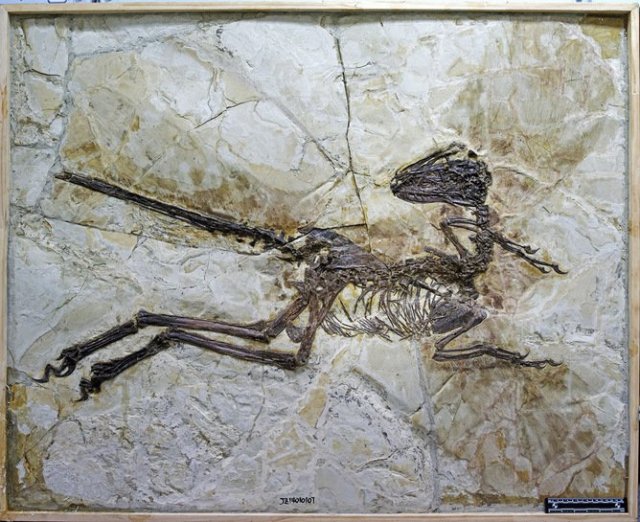

The fossil record at large in this world keeps growing by the year. Both private collectors, academics and museum researchers compete to find and claim the best fossils. The former do it for profit. The latter do it for knowledge. The net result is that human beings now know much more than we did one hundred years ago about the origins and development of life here on earth. Much, much more.

Human imprints

As my wife and I recently hiked into the mountains of North Carolina, our boots left deep impressions in the silty, sandy mud of the hiking trail. If by some act of nature a landslide covers those tracks and then suddenly solidifies through a heat wave, our tracks might be preserved as imprints that differ in constitution from the overburden. And if over millions of years that brittle overburden washed or wore away, the layer in which our footprints were laid might be exposed.

That’s just one of many ways a fossilized footprint or the bones and skin of a living thing might be preserved for millennia. When dinosaur fossils were first found the discoveries were cited as evidence of the existence of mythical creatures such as dragons or evidence of biblical creatures described only as “Leviathan” in scripture.

Such fantastical or general descriptions do little to enlighten the true nature and source of such fossils. But as scientists gathered fossils over the last two centuries, grand patterns began to emerge. These were undeniable clues of all that has gone on in the past. Clear relationships and lines of evolutionary succession were traceable from one geological era to the next. The fossil record reads like a Strava report on the rush of growth and absolute disappearance of thousands of types and species of living things.

Now we know that 99% of all the living things that once existed on the earth are now extinct. That still leaves millions of species in existence, but many of these are now threatened by the dominance and wastefulness of the human race as it consumes resources the way a Tyrannosaurus gloms up meat from the bone of its prey.

Velociraptor menace

In recent years the human fascination with dinosaurs has taken on a menacing flair thanks to the movie series known as Jurassic Park. Of the many dinosaurs depicted in these movies, one of the central figures of terror and tenacity has been the “character” known as velociraptor.

According to Hollywood paleoscience, those critters can run as fast as a horse, jump small buildings in a single bound, and distract a Tyrannosaurus rex if there are enough of them around to accomplish the task.

They also bit, with rows of fearsome teeth jutting from their grinning mouths. In fact, it is likely most human runners could set personal records over any distance with a velociraptor in pursuit.

Or maybe not. There is no more depressing scene in all the Jurassic series than the moment when a band of people is trying to escape a pod of ‘raptors chasing them through tall weeds. We see the human folk rushing through the grass followed by dark lines of ‘raptors slicing through the grass in close pursuit. Then the people start to disappear. It all makes the velociraptor menace seem real.

Feathers and all

But lately, science has begun to revise the projected appearance and supposed performance of creatures we call velociraptors. In a July 2015 article in Scientific American, writer Stephen Brusatte chronicles well-documented evidence that dinosaurs in the velociraptor family were actually covered in feathers, not scales.

These quotes and images from Scientific American explain:

“I study dinosaurs for a living and it didn’t bother me to see Velociraptors being used as hunting dogs for the sake of good cinema. What I didn’t like, however, was that the Velociraptors were depicted as big, drab-coloured, scaly brutes.

That’s because the real Velociraptor was a lapdog-sized predator covered in feathers. Palaeontologists have known this for a while. If you look at the arm bones of Velociraptor you can see a row of bumps, identical in size and shape to the quill knobs of living birds: the anchor points for big wing feathers.”

velociraptor.jpg

As published in Scientific American. A velociraptor species demonstrating traces of feathers.

“But we have a better idea now, thanks to the discovery of a spectacular new dinosaur from northeastern China that I studied with my colleague, Junchang Lü of the Chinese Academy of Geological Sciences.

Our new dinosaur, Zhenyuanlong, is one of the closest cousins of Velociraptor. Its gorgeous chocolate-coloured skeleton was found by a farmer in 125-million-year-old rocks that were laid down in a quiet lake buried by volcanic ash. It’s just the right environment for preserving the soft bits that usually decay before a fossil is formed.

Zhenyuanlong is covered in feathers. Simple hairy filaments coat much of the body, larger veined feathers stick out from the tail, and big quill-pen-feathers line the arms, layered over each other to form a wing. This is a dinosaur that looks just like a bird. If you could see it alive you would probably make no distinction between it and, say, a turkey or a vulture.”

Feathered Raptor.jpg

Illustration from Scientific American

Whether scaly or feathered, that critter shown in the illustration above could probably still find a way to hunt down a human being and eat them. That makes the contention by creationists that dinosaurs of this type lived among humans quite absurd. Still, that doesn’t keep the creationist community from leapfrogging right over clear geological and paleontological evidence to propose that the Bible trumps all other forms of knowledge. They still whine that the “earth is young” and claim that humans shared the ark with hundreds of species of dinosaurs. It’s bullshit. But it sells.

Comic sans

And quite comically, creationists randomly copy depictions of dinosaurs generated through real science in order to look credible in the eyes of people who want to think of creationism as true. But the manner in which they use these copies to lie to people stretches credulity to its maximum.

Creationists subtract the real science and can’t bear to acknowledge the bothersome wavy path of evolutionary science. They claim instead that science defies the presence of God and go to great lengths inventing faux science such as “intelligent design theory” to inject God back into the process. But that’s putting toothpaste back into an anachronistic tube.

It’s all bunk. Some people just want their worldview delivered in simple, straight and narrow fashion.  They would rather it be confined to simple facts whether it is true or not. So lie to them, the creationist logic goes. They prefer it that way.

Changing pictures

But there are interesting questions that await nevertheless. Now that the scientific consensus on many dinosaurs has been altered based on clear fossil evidence that species such as velociraptors had feathers, will creationists also modify their presentations in public displays such as the Creation Museum in Kentucky, where basic renditions of dinosaurs are shown in cases and cavorting with human beings?

And if they do change the look of those dinosaurs, how to explain the reason why to an audience so accustomed to circular logic that it can’t square with the truth? Millions of people, as many as 40% of all Americans as show in poll after poll, claim a biblically literal, creationist worldview.

Yet the virtual reality of creationism is clear: it classically steals from real science to show depictions of dinosaurs such as T.Rex and others romping around with human beings who look like us. The only thing missing are Closed Caption titles to explain what people are seeing.

The actual research behind the depiction of those dinosaurs is based on forensic and comparative science that helped thinking people piece together the appearance of creatures that evolved millions of years apart.

But the aching and most popular question of all might be. Will creationists now revisit velociraptors to get wise with the times?

More likely not

ryan-300x240-1445670001.jpgThe methods of creationism and their denial of reality resemble all those who persistently lie to make themselves seem credible to their intended audiences.

It’s common even in the world of running and endurance events. People lie about their personal records all the time.

But the real facts don’t lie. If someone walks up to you and says, “I ran a four-minute mile,” you reasonably expect that they mean they ran a mile that took them four-minutes to complete.

But people like to play loose with the facts because it suits their purposes in creating an air of credibility. Such was the case when Speaker of the House Paul Ryan claimed to have run a marathon “in under three hours.” Real runners checked the facts and found them sorely lacking. Ryan had not run a time anywhere near three hours. In fact, his best was likely just over four hours. Thus Paul Ryan is a liar. He creates his own truth and then attempts to sell it to advance his personal and political value. Do you know anyone else like that? I’m sure you do. Politics is full of them.

Rounding soundly down

But let’s get real when it comes to what Paul Ryan said about his marathon time because that’s not making a statement that’s a few minutes off his actual time. Rounding down his marathon time by an hour is a lot of rounding down.

So one might ask, whether we are talking about science or politics or personal records in running, why do such facts matter?

Well, it always matters whether we are being honest with ourselves and others. When creationists dismiss science as “made up” and then turn around and try to teach their version of reality in public schools, with zero scientifically examined facts to back it their claims that the earth is just 6000 years old, or that evolution hasn’t happened despite the massive consensus worldwide that it has, they are lying to impose their close-minded worldview on the public.

And when men such as Paul Ryan show a willingness to make up “facts” with such disrespect or comprehension of reality, it makes us wonder whether there are other issues that our politicians are lying about. Then it gets to the point where people can’t tell the difference between truth or lies, or invent their own set of “facts” (which is what creationists do) and suddenly every single speck of reason is up for grabs.

Feathering the truth

Gull.png

Photo by Christopher Cudworth

The truth of feathers on velociraptors and other dinosaurs has turned out to be a profound change in how we view not only ancient species of dinosaurs, but the species that remain with us today. That does not mean the creationists were right all along about human beings co-existing with dinosaurs such as T. Rex or velociraptors.

What it does mean is that our understanding of dinosaur evolution and the persistence of advantageous features such as feathers over eons provides an emphatic and undeniable link between the present and the past. No amount of biblical obfuscation can strip the feathers from those well-preserved fossils.

And what scientists are now realizing is that the birds with which we do co-exist are direct descendants of feathered dinosaurs to the point that we can consider them real dinosaurs living among us. That is not feathering the truth.

EmilyWithGoshawk.jpg

When liars rule

But when those who do feather the truth gain power…as men such as Paul Ryan often do,  because they lie and people want to believe them, there is great risk in letting remarks pass that are intended to make them look smarter or greater than they really are.

That inability to face and accept the truth is the biggest problem the world faces today. It is the biggest problem the world has always faced, and it will always be the biggest problem the world has to face in the future.

Having a future

Which is to say, we must face the truth if we expect to have a future. That’s why it is so important to revisit our notions and beliefs about velociraptors and every other field of human interest, science and religion. The things we learn by questioning our perception and considering new evidence are so profound they can turn the world on its head sometimes.

We can’t know whether our footprints will ever become fossilized evidence of our existence. Only time will tell that. But the more important evidence of our existence will be the sustainability of knowledge, belief and action that we hand on to future generations.

Because without that honesty, we might as well be extinct too..


Posted in Uncategorized | Tagged , , , , | Leave a comment

Why you can’t stop learning about yourself even if you try

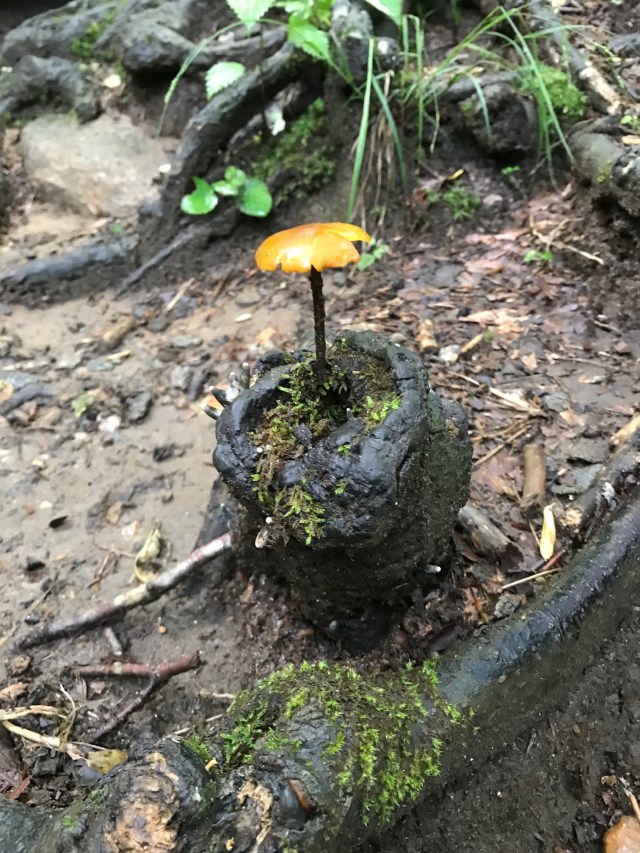
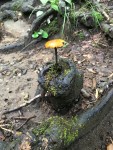
In the early goings of a hike in the North Carolina mountains, I looked down to find a mushroom sprouting from a root right in the middle of the path. I bent down to behold the shining surface of its little cap. And I thought: How precocious. How ancient. And how fitting.

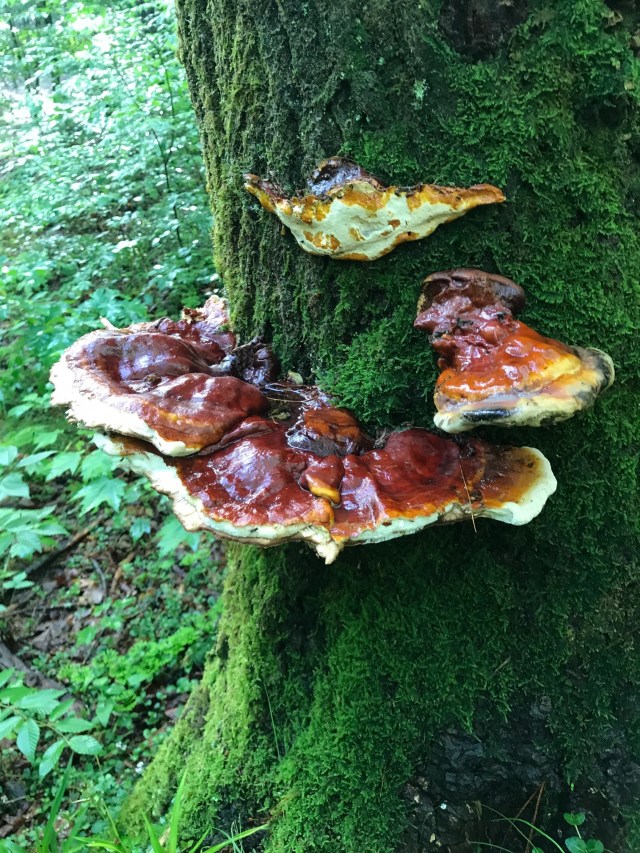
Car Shroom.jpgWe walked further into the deep woods. The trail was rimmed with flora of many kinds. The songs of warblers and flycatchers tumbled out of the tree canopy. There were tall beech trees and poplars, soaring hemlocks and pines of other species. Then I looked to the side of the trail and found the black trunk of a tree rimmed with a stack of bright russet fungus.
Car fungi.jpgI love the revelatory nature of the woods. It always finds ways to communicate its importance. My new book Sustainable Faith outlines the fact that much of scripture draws from the deep well of nature. Its language and symbolism depends on organic symbols large and small. Many of the parables of Christ have their foundation in natural images. The Mustard Seed. The Yeast in the Dough. The Vineyard.
Creation speaks to us. We should listen.

Ascents

We were walking in the woods because my wife and I both found need to do so. We’d both ridden long miles and climbed steep hills on our bikes the preceding three days. One of those climbs lasted more than eight miles up a Carolina mountainside. It was tough going when the pitch rose and the roads kept turning and rising, all the way to the top.

For three days we tested our bodies and our souls while perched on the bike saddle. I will admit the pressure of that need to perform affected me in ways that I did not expect. Anxiety washed over my mind in advance of the first two rides. I was not proud of that. Looking back, it seems odd that I even let it happen. But the anxious mind sometimes rides it own course.

To counter that fear, we should always recognize that the social pressures we face as human beings are real. They are not just imagined. The desire to keep up with the group is part of human nature. And this is also true: competition is part of life whether you want it or not.

When the competition is strong and there are expectations to be met including the realization that you may be holding up the entire group as last one up the mountain, social pressures can mount. And I let that get to me.

Descents

The strange truth is that the descents were in some cases not much more comfort. Holding your brakes as your bike soars down a slick road with the tires shuddering on the rough asphalt can be nerve-wracking as well. Having once gone down in a bike wobble incident that fractured my collarbone in three places, the memory of that crash gave me pause on some corners. Even with an entirely different bike under me, the prospect of tumbling off the road was still very much real.

Fortunately, by the third day on the roads, I truly was climbing and descending better. Plus the back muscle that had tightened up on a cold ride during the week before we left for North Carolina had finally loosened up enough that I did not feel like it might suddenly spasm during a climb. On the third day, my wife rode behind and let me lead our way up the hill. We met up with the group at a spot called Jump Off Rock where we took a group photo above a cloud-socked valley. And having conquered most of my subconscious fears, I did not feel the urge to jump off after all.

On the out and back, we cruised along in a pack of fifteen riders doing 20+ mph on a breezy, wet morning. The pack remained intact and one of our fellow riders, a curiously introspective triathlete named Tim, quietly noted upon the return, “It was nice to have everyone together.”

And I smiled at him.

Climbing legs

Tim’s observation was a nice way of saying that while competition can be unforgiving, collaboration can be beautiful. We had no trouble keeping up with the rest of the riders on the flats. I reveled in the flow of the pace line. It was “just” those long climbs on Illinois Flatlander legs that required a few days of adjustment. Give me another two weeks in those mountains and I do believe things would improve.

Yet after three days of mountainous indoctrination, my wife and I were ready for a change of pace. So we looked at the remaining day of vacation as a chance to recover a bit and take a hike through the verdant North Carolina mountains.

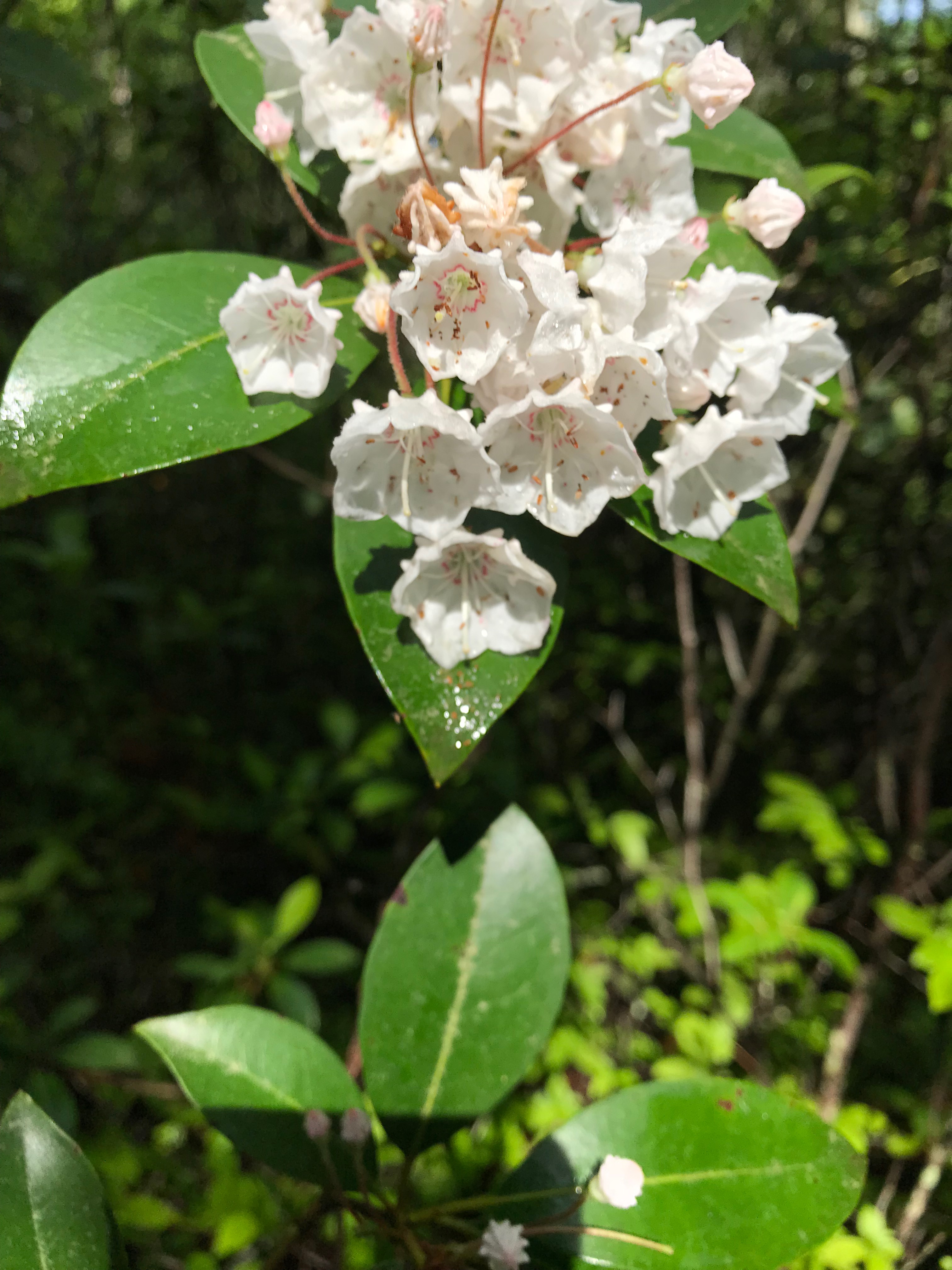
IMG_3389.JPGAs we climbed, the blooms of mountain laurel greeted us. In many places, the blossoms had fallen on the path in flowery constellations. Our shoes sunk in muck as well, and we crossed log bridges and walked through clear flowing streams.
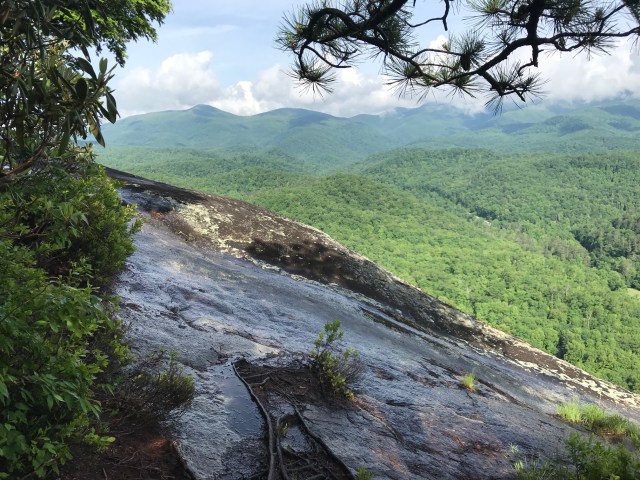
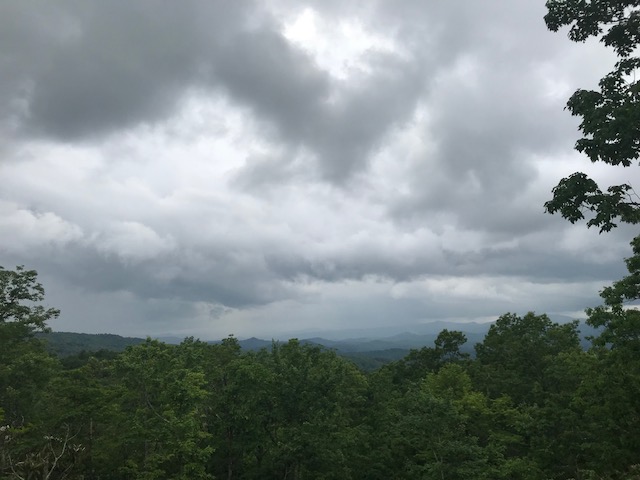
We used Eddie Bauer hiking sticks going up the slopes. They really helped. Then we reached the spot on the trail where a massive rock face juts out over the valley. The rock was covered with running water as the rains from the night before were gushing down all sides of the mountain. We stared at the abrupt edge of the world and considered our mutual fear of heights. “Let’s stop here,” she said while gripping my bicep in her trailing hand.

Car Slick

Open skies

A few minutes later the croaking voice of a raven reached us as it flew with rowing wingbeats across the valley from peak to peak. We sat down a few minutes to take a drink and have a nibble of Larabar. Then hiked back down to our car so that we could drive up the mountain to meet riders who might need SAG support if the rains returned.

But the rains held off to the very end of their ride. The previous day we had all gotten soaked when a rain storm made it treacherous for those still descending the mountain. For my wife and I, the ride through the rain was almost joyous because we’d shortened the 90-mile scheduled ride knowing the skies were threatening. The rest of the crew that was still on the descent when the skies opened up were coaxed into the SUV when the roads were flowing fast with mountain rain.

Car Skies

Context

What we learned about ourselves through all this exploration was significant. As my wife and I were both the oldest and the slowest riders among a band of top-flight athletes on the four-day training camp, we judged ourselves too quickly against the mountains and our companions. In particular I blamed myself for not being fit enough to keep pace up the climbs. My guilt presaged my effort, and that only makes things worse.

But the real psychology of the group in context was telling. They only wanted us to have success at the level we could manage it. No one was truly judging us. Not in the least.

Of course that isn’t much comfort when you pedal up those last few meters and find everyone has departed or worse, they are literally waiting for you to finish so they can continue riding.

Too kind, I’d mutter to myself. 

Yet over the course of a few days, we appreciated that brand of kindness. Thus the satisfaction of riding together on that final day with the group was both joyous and instructive. You have to meet the road where it meets you. There is no fooling yourself here or in any other part of the world.

Fooling yourself

Except: there is an exception to that rule. Because you truly can fool yourself into believing you can’t improve or grow in new ways.

That’s why that precocious little mushroom growing out of that root caught my eye. While I’m sixty years old and not the same athlete that I once was at twenty-five years old, there is still room to improve each year. Try new things. And suffer a little for the sake of growth. To rot with the rest of the world if it does not appreciate us. Keep on growing.

I realized that while climbing those mountains. There were little surges of strength that kept telling me, “You’re not done yet. You can keep going.” And I did. There are times when you have to fool yourself into thinking you’re stronger than you think. Because you are.

It’s my goal as well to shed this layer of annoying fat that has fixed itself around my belly. Car Shroom That is laziness in diet personified. And then pick a few races and aim my energies at those constructively. One does not need to be obsessed in order to be a success.

It just takes controlled focus. When I forget that feeling, I’ll just think of that little mushroom, and keep on going, and growing.


Posted in bike accidents, bike crash, bike wobble, Christopher Cudworth, climbing, competition, cycling, cycling the midwest, doing pulls in cycling, healthy aging, healthy senior, injury, racing peak, training, tri-bikes, triathlete, triathlon, triathlons | Tagged , , , , , , , , | Leave a comment

A bright idea on a dark day

IMG_3306.jpgFor us Flatlanders, the day’s second ride in our North Carolina training camp proved just as difficult as the first. We rode a few miles on smooth, level roads and then the climb began up to the apex at NC 276 and the Blue Ridge Parkway.
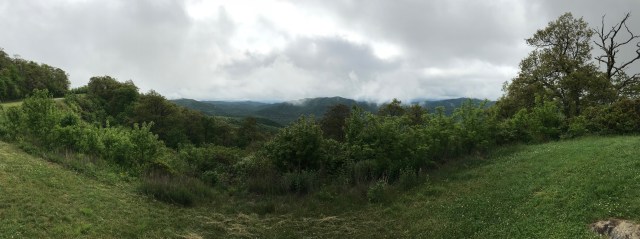
Sue led early on, and then I moved to the front. Not because I’m the faster climber this trip. She is. But I can always make it to the top, just not as strong as her. That’s the result of all her winter workouts turning those pedal on mornings when the sky was not even light yet. I admire her dedication and strength.

Blue Ridge.jpgThe rest of our crew was already a few minutes down the other side of the mountain when we arrived at the top. That backside descent was treacherous and twisty, a fact we only discovered by driving up to provide backup SAG support after we returned from our truncated ride. The full distance called for 90 miles today. The first climb was 9.7 miles in length, covered 2,254 ft in elevation gain and average 4.4%.

Familiar names

My pace for that climb ranks me 1240 on the All-Time list on Strava. I checked the Leaderboard to find a familiar name near the top. Matthew Busche was third in the KOM rankings. Matthew is a graduate of my alma mater Luther College and former pro Trek rider on the World Tour, including the Tour de France. He rode 38:24 for the same climb we rode today on January 31 of 2018. A fellow name Jimmy Schurman owns the 276 to Blue Ridge Parkway KOM title at 37.25. It took me 1:12:59.

RainInMountains.jpgIt’s clearly astounding to me that anyone can ride so fast up an ascent like that. But a few guys from our crew tore up that hill today and then climbed an even bigger mountain on a longer climb later in the ride. It’s humbling to be riding with people so strong and fit. Frankly, it’s even a bit demoralizing. But we rode our own pace and that’s all you can do.
Life is so much like rain and fog. What we see clearly in our present state, much like raindrops on a car window, distracts from the bigger picture of fog and clouds rolling across the mountain tops. But Sue and I tried to see both the near and distant concerns at the same time. So we rode back down the hill when conditions were safest. The real rain only caught us on the bottom flats. By then we were rolling along at 20 mph throwing up rooster tails with our back wheels. And it was fun.

No woulda coulda

I’m not sure that I’d have fared much better at riding much faster back when I was 25. I was lean as could be, and that surely would have helped in the climbing department. I was also obsessed with hard efforts, and had the low heart rate and fast running times to prove it. But cycling is its own game.

Plus these days I weigh nearly 40 pounds more than I did at peak fitness. I am also not so obsessed with proving myself. I was admittedly stressed out before today’s ride, but tuned out my own brain and fixed my focus on getting up the first climb. And that went well.

Big Rain

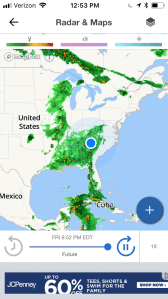
RainForecastDespite our luck in returning home safely, the weather was still threatening big rain with most of our riders still out on the course.

Thus Sue and I decided that we’d turn back because neither of us knew the true difficulty of the second climb that was still 30 miles away. If the weather struck or we were forced to hit the SAG wagon, it might not leave room for people who were going farther than we were likely to go. That was our bright idea for a dark day. If you can’t do the whole ride, make yourself available to others.

So in some sense, we took one for the team today, and the last five riders did indeed wind up in the SAG wagon because when the rain struck them on the twisting downhill after 70 miles it was not safe to continue.

Sue and I had driven back up the climb to offer additional SAG support if needed. All we found was a thick cloud bank at the junction of 276 and the Blue Ridge Parkway. That convinced us we’d made the right decision even though our ride was perhaps 20 miles shorter than we might have liked.

Our camp director asked me if the ride was “enjoyable.” There might be a hint of condescension there, but that’s okay. He’s a good guy and so are the others gathered here on this little mountaintop in North Carolina. I’m not the same caliber rider as them, and perhaps never could have been. But goddamnit, I did climb that mountain.


Posted in climbing, competition, cycling | Tagged , | Leave a comment

To the top of Ceasar’s Head and back

IMG_3282Day one of our training vacation in North Carolina saw us cross the eastern Continental Divide and ride back down to Brevard. The climb up Ceasar’s Head State Park consisted of five full miles of climbing  The entire ride saw 5000+ feet of elevation gain.

So it was tough going now and then. And yet the last 10 miles from the state park to the  town of Brevard were some of the most merciful miles I’ve ever ridden. The roads were smooth if a bit curvy at times. The drop in elevation was most welcome. And the dose of salt that had been shared with me atop the mountain coursed through my system with a welcome effect.

Salty dog

It was warm out there at points today. I hydrated well and ate as much as possible. Yet even the salty meat stick and dose of cheese did not hold me past the climb. Another rider had pulled over dizzy and ready for the SAG wagon. She held out a tube of salt and a lick of the finger made it wet enough to take a little circle of salt. For the road.

And darned if that didn’t seem to help immensely. I felt better on the flats than I had some 20 miles earlier. This is a lesson that has been learned several times over on long summer rides. It’s about time I bought my OWN salt and made it part of the recipe for my success.

The real deal

I’ve done some long climbs before. Riding west of Madison, Wisconsin there are several notable gnarly hills that can sap the life out of your legs. Climbing the road to Blue Mound State Park is probably the prior record, which involves some 2000 feet of climbing.

But that’s still nothing more than a lump in the driftless region. Here in North Carolina there are Appalachian mountains that seem to find their way in front of you with some frequency. I looked at the Strava stats and averaged between 4.6 and 6.2 mph up the sections of that climb. The actual Caesar’s head climb in total was 6.5 miles and it took me 1:22 to complete. There are thousands of ascents and the record is held at 25:59 by one Chris Butler. He rode an average of 14.3 mph.

The All-Time Women’s KOM time is 34:03. Her name is Mikaela Fudge. That’s 11.6 mph.

There are some strong riders in our group of 20 or so here in NC. One gal named just finished sixth in the Pro category overall at Chattanooga Half Ironman. She had plenty of company I guess going up the hill.

A League of Our Own


table-rock-sunrise-caesars-head-state-park-landscape-dave-allen (1)

The promontory at Caesar’s Head State Park, North Carolina

So Sue and I are trailing the pack somewhat. But we finished our sixty miles strong while a group of five wound up in the SAG wagon toward the end. I’m the oldest participant here by about eight years, and I think that’s Sue. There are some fit young athletes lolling around between rides, and I’ll admit to some stress and tension during the first thirty miles of the ride today. As a Middle Child, I felt guilty rolling up to meet the crew as they stopped to wait for us. That made me crazy for half the ride.


That response is the combination of wounded ego and an anxious mind. Who doesn’t want to feel like they want to keep up?

Yet it was interesting to hear that Pro triathlete lament that she’s feeling the effects of turning thirty years old. The “baby” of the riding crew is 25 years old, and she wound up dizzy and holding a stiff back at the top of Caesar’s Head.

Others at the table chewed on the problem of age a bit, and someone said “Wait until you hit forty.”

Then Sue jokingly said, “Waaaah waaahh waaahhh. Fifty is even tougher.”

Silence is golden

And I kept my mouth shut. Because it’s hard enough riding without admitting to everyone in the room that you’re a full sixty years old and going on sixty-one in two months. There’s enough drama in my head already. Perhaps my age will emerge eventually, but it doesn’t pay to make it an issue on its own.

I made it through sixty miles in the hilliest country I’ve ever ridden. We even slid down into South Carolina, the first time I’ve ever been to that state. So we stopped to pose for the photo at the south end of the North Carolina and the continental divide.

Tomorrow is another day in the saddle. Getting up these hills is all in the pedal stroke. One revolution begets another.

Posted in climbing, cycling, Uncategorized | Tagged , , , , | Leave a comment