Sandals vs. orthotics

IMG_4447.jpgDuring the early 1980s, I illustrated a book on running biomechanics that was authored by Dr. John Durkin (deceased) and famed running coach Joe Newton of York high school (also deceased). Durkin was a podiatrist to some world-class athletes including Sebastian Coe, the Olympic champion at 1500 meters. Coe had flat feet and kept getting injured. The man could leg-lift 700 pounds, but the force of his own body pounding along the track with a bad case of pronation was injuring his calf muscles. Newton was helping with Coe’s training leading up to an Olympic year, and he introduced him to Dr. Durkin to help with a chronic leg injury.

At that time that I met Coe at Durkin’s office, I was young enough that my feet weren’t giving me many problems. Thus I viewed Coe’s issues with a cold objectivity and was actually sworn to keep his flat feet a secret. This was pre-HIPPA laws I believe, but there are some aspects of privacy that are just plain common sense.

Truth be told, Sebastian Coe was not alone among world-class distance runners having injury problems. There were other top-flight athletes visiting Durkin for help. He specialized in making orthotics for runners and when runners experience success with any kind of treatment, word tends to get around.

Twinges

cudrunI’d had some twinges in legs and joints as early as high school. That’s when my dad fashioned a heel lift for my track spikes. He made it out of brush denim, a fashion favorite at the time. His engineering mind helped him structure the counterbalance in my shoe, and it worked. I was able to complete the season injury-free.

In college as a steeplechaser, there were plenty of times when my left calf would get injured from making that leap of twelve feet from the barrier to the water pit. But that injury was less about biomechanics and more about the extreme stresses of jumping from a 42″ barrier over water to land on an incline.

That injury would always heal up. Overall I was pretty lucky not to have many overuse injuries during the competitive years of my career.

And then I got older.

Chondromalacia strikes

Somewhere in my mid-30s, I started to notice a burning sensation under my left kneecap. It persisted for months. Finally, I bought this gadget called a Cho-pat knee strap that lifted the kneecap to keep the underlying cartilage from rubbing the wrong way beneath the patella. That worked for a while, but it was kind of annoying to run with that stupid strap on my knee all the time.

I finally visited Dr. John Durkin and got a set of orthotics. He was rather dismissive of my knee strap. “You’re not dealing with the source of the problem,” he told me. Durkin was a bit brusque in many ways.

The orthotics worked. My knee pain subsided and I actually increasing my running mileage for a while. Yet I was also a prisoner of sorts to the orthotics in my shoes. I could not go anywhere without them or the knee would start to ache under the patella.

No more sandals

That was a pretty profound lifestyle change in some ways. No longer could I wander around in summer sandals of any kind. I even wore the orthotics in my dress shoes. The problem with that strategy was the smell. The orthotics made by Durkin has an insole glued over the top of a plastic insert designed to keep my feet stable. All that running and sweat and confined spaces made those orthotics stink so bad they could kill small animals if I crossed their path.

I recall wearing them to a new job where I shared a space with another new employee during the first few weeks. The foot odor from my orthotics was so strong it was embarrassing. I tried everything from sprays to powders to keep it at bay. But all failed.

Round II & III

Finally, I went to see another podiatrist in 2002. He made some dress orthotics that had thin leather covers that never absorbed odor. Problem solved. I still have those orthotics and wear them daily. So I’ve certainly gotten my money’s worth out of them.

I even used them running for many years. That strategy worked until calf cramps took me down. Then I consorted with a pedorthist, Shelley Simmering, who built a new set of orthotics specifically for running. They are relatively thick and somewhat heavy, but they do the trick. I get them tweaked now and then.

Principles of orthotics

IMG_3392In case you are lucky enough not to need such devices, the basic premise of orthotics is simple: They put your foot into a neutral position so that your legs and knees do not have to compensate for the imbalances caused by structural faults in the bone and ligaments of your feet. While human bipedalism is a miracle of evolution, it is a far-from-perfect process. With 7 billion people in the world, the odds are plentiful that some of us will have feet that are either flawed from the start or develop problems over time.

Some medical doctors seem to scoff at the whole orthotic paradigm. A triathlon friend we call Dr. Joe has steadfastly refused to get orthotics even as his knees and hips give him problems. I also have a triathlete friend whose feet were aching. She tried orthotics for a while but then went into intensive physical therapy. That seems to have helped immensely. It was all about using strength training to compensate for the imbalances in her foot structure.

I rather admire those who refuse to go the orthotic route. Sometimes I look at the devices in my shoes as a ‘crutch’ of sorts, an affectation of purpose that is only necessary because I’m too lazy or busy or cheap to actually invest in the strength training that might cure the source of the problem.

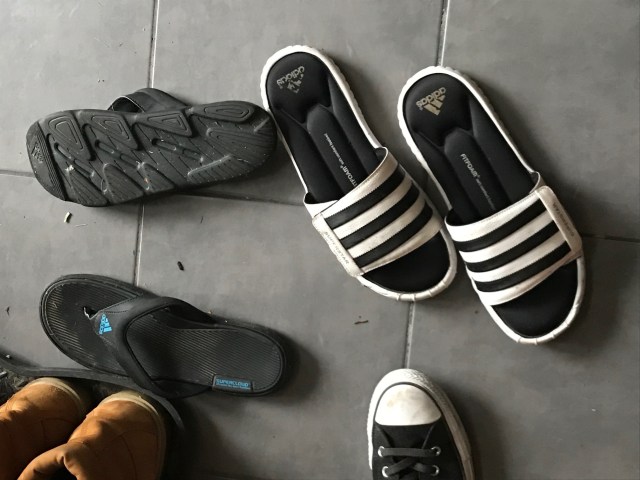
Maybe so. But until then I’m grateful for the TEVA sandals that I own. They have a degree of arch support and I can wear them without typically sticking the orthotics inside the open banded sandals.

But good old flip-flops? Those don’t really work for me over any sort of distance or time. I can wear them in and out of the pool, or maybe to the beach. But the souls of those rubber floppers are largely safe from wear. In the game of sandals vs. orthotics, it is likely always the orthotics that will win.


Posted in aging, aging is not for the weak of heart, running, Uncategorized | Tagged , , , , , , , | Leave a comment

Trading paces

IMG_3820Midway through this morning’s swim workout, I paused to glance at the lane next to me where my wife Sue was doing her 75m IM repeats switching from freestyle to backstroke to breastroke with each lap. She loves swimming, and grew up competing for clubs. Now she competes occasionally in Master’s meets. Mostly she swims to train for her Ironman events. This fall she’s doing the ocean swim at the Half-Ironman in Wilmington, North Carolina.

I grew up swimming as a little kid and even competed in meets between pool clubs over the summer. But once we moved from Pennsylvania to Illinois, pool access was not available in the small town of Elburn, Illinois. Being landlocked, I eventually turned into a runner. There was plenty of space in the Illinois cornfields to do that, as long as you could avoid the farm dogs.

Love and like

These days Sue loves to swim and gets in 2-3 workouts a week. I have grown to like swimming now that I can actually cover a few laps in the pool without flailing and gasping to a halt after 50 meters. But my stroke still needs work. Even though I know better, my elbows still come out of the water too low and my catch is inconsistent underwater. I’m improving, but there are days when the pool still feels like a struggle.

Sue feels a bit the same way about running. She took up triathlon almost ten years ago and has run a half marathon under two hours. But like me in swimming, there are a few rough patches to her form. Her coach Steve Brandes had her do strength and bounding drills this winter along with speed work on the indoor track. That whipped her into shape. She was running 8:00 pace in interval workouts when her normal race pace is about 9:00 per mile.

There are interesting similarities between where Sue still needs work on running form and my challenges with swimming. Both sports require form efficiency to perform well. Unless you train to develop the strength and form needed to sustain pace, things fall apart in a hurry.

Or worse, they sometimes fall apart slowly. It can creep up on you. Before you know what’s happening, you’re going slow as molasses. We’ve all been there.

Sue thinking

Here’s the law that covers that problem: When endurance athletes get tired (and this applies to almost all of us) old habits tend take over. Yet it is ironic that we tend to revert to bad form right when we need good form the most.

That’s why we always need to train beyond good form in order to compensate for those times when we regress. At least in that mode, we’re only back at a midpoint.

Swimmers achieve this ‘overtraining’ effect by using pool implements such as floats, hand paddles, kickboards and fins. Each of these tools puts a stress on the body that trains the muscles to exceed the lazy norms to which we gravitate when tired.

The “feel” of good form

In running, the stretch effect takes place as a result of speed work. But a runner can also add range of motion and introduce form improvement using bounding, toe running and even running backwards to teach the body the “feel” of good form foundations.

Swimmers at Marmion 2Sue’s not super keen on tossing me advice while we’re both swimming. Afterwards she’ll sometimes point out problems she can identify from one lane over. I just like the look of her in that sleek swimsuit, especially with the tan lines she just brought back from Florida. I’ll admit I like the feel of that good form.

But I digress. Husbands will do that.

Handing out advice

I don’t always like to correct her running form issues during track workouts. But when pacing her in intervals I do give hints on how to maintain focus on good form. Mostly it is simple stuff such as “stay on your toes” or “drive you knees” to add purpose to the pace. These small measures can get us through bad patches. After we’ve completed the interval I might have her try a few things. This also works before we get started.

Trading paces

In essence what we’re doing is trading paces. She teaches me how to swim faster and I train with her to help her fun faster.

Out on the bike, it all happens in real time. She’s a strong rider and some days she gets the better of me, especially when riding her tri-bike in aero position. But there are days as well when I’m feeling fast and conditions favor my riding style. So we trade drafts like good cyclists should anyway.

When it is all said and done and we’ve showered and changed and hydrated and dined, it’s nice to be able to cuddle up next to her on the couch and share space with her until one or the other of us dozes off at our own pace. And that is divine. Because I love this woman.

Posted in TRAINING PEAKS, tri-bikes, triathlete, triathlon, triathlons | Tagged , , , , , , | Leave a comment

A social kind of brain injury

In recent years news has come forward that playing professional football in the NFL can produce severe brain injury. The result is a condition, chronic traumatic encephalopathy, that is abbreviated as CTE. The brain becomes so concussed after multiple collisions (both direct and indirect) that the brain ceases to function in a normal manner.

The stories of former NFL players trying to cope with the effects of CTE are heartbreaking. Just as heartbreaking are the tales of spouses and friends trying to help those whose minds are addled by CTE.

Hockey playersSome players have taken their own lives as a result. Yet they are not alone in the game of football in dealing with CTE. Hockey players such as Daniel Carrillo, who played for several NHL franchise, has recently elected to donate his brain to science and the study of CTE. Carcillo was a hard-charging hockey player with more than 1400 collisions chalked up in his career. He also endured a few fistfights, if memory serves.

In an article on philly.com, Carcillo’s story reveals the frustration many former pro athletes feel once they retire and get outside the spectrum of money and pressures that drive them to play without regard for their health the rest of their lives. The article states: “Earlier Wednesday, he answered questions on his Instagram live concerning the NHL – which he calls the “league of denial” – and implored players to learn the risks associated with repeated hits to the head.”

The crushing impact of blows to the head is one type of brain injury. But in a strange little convergence of news this morning after reading about Carcillo’s story yesterday in the Chicago Tribune, I was listening to music through YouTube on my phone while cleaning up my bedroom. A video came on featuring actor Denzel Washington talking about the dangers of social media and cellphone addiction.

The dopamine kid

IMG_3767I stopped to listen. There were discussions on how cellphones and social media apps and sites are specifically designed to produce an addictive desire to use them. We all might joke about the dopamine effect and how phones and apps work together to give us short little charges of chemical excitement, but our brains can get numb to the early levels and start to crave more. And more.

Before we know it, we’re emotionally and chemically hooked on using our devices to feed our brains the brands of stimulation they crave. For me the problem is doubled by the fact that using social media is a significant part of my job. I also have two cellphones, one for work and one for personal use. That means keeping both phones charged and checking apps on one phone that I don’t carry on the other. It can become unmanageable in a hurry. 

Looped in

The “two phones” thing is purposeful, but perhaps misguided. It’s easy to make a mistake and cross those worlds on work and personal phones and social media. One cannot even manage a company social media page on Facebook without having a personal account. At the same time, Facebook makes it impossible to post a comment on some social media pages under the name of the company you represent. Instead it appears as a personal post.

I’ve talked with many other social media users about these problems and all share the same frustrations. We all live in a digital web. But are we spiders, or are we flies?

red-orange-green-traffic-lightsThat’s the question that has begun to bother me. It took me years to come to grips with aspects of my brain chemistry. Acknowledging and coming to grips with the conditions of anxiety and depression, and learning how to employ coping strategies to avoid ruminative or damaging thought patterns has taken hard work and years to accomplish. Sometimes when you change one part of your brain, the other part takes over. It’s like a traffic light. 

Add in the fact that I have likely dealt all my life with some form of ADD or ADHD, which is technically ‘undiagnosed,’ and I might just be the #1 candidate for social media addiction.

School daze

Back in school I often had a hard time concentrating. The attention disorder also results in a propensity to make mistakes or fail to recognize them in my own work. My mind wants to believe something is correct, and it skips right over the problem. You’ve seen that in this blog, I know. I hate when I go back through and find errors, and I often go back and do that when it’s been published. So it’s not laziness on my part. It’s how my brain functions/dysfunctions.

So I’m writing this blog from now on in Word to copy it over rather than writing the pieces straight into WordPress as I’ve long done. It’s more fun that way, but it’s also a recipe for consistent, bothersome errors. Thus the layer of writing in Word is an objectivity that is necessary. Mistakes in grammar, spelling or other flaws clearly undermine my efforts at credibility. I love writing. Why poison it with bad habits? 

Social absorption

I’ve also realized that despite the healthy breaks I give my brain by swimming, riding and running, those benefits can all be wasted by allowing too much absorption in social media. Over the last ten years, I’ve gotten out of control a few times. Not only have I behaved like a manic soul on occasions, I’ve hurt people that I know, and been hurt in return.

All because the chemistry of my brain flips into conflict mode when faced with consistent sources of stress. It is one of the ironies of human existence that we sometimes crave the things that damage us the most. These stimulations may be wholesome or healthy in moderation, such as sex or food or alcohol or gambling, but when craving takes over the human brain there is little one can do to stop the craving as it turns into a need and an addiction. Then it’s time to get help. 

Running addiction

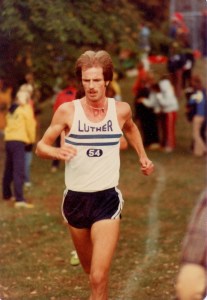
Chris Running 1978I was once addicted in some respects to running. It held up my self-esteem. Whenever anything bad in life would occur, or I felt like I needed a dose of self-worth to keep myself afloat, I’d pour my efforts into running. Often that resulted in some fine results. But of course they were fleeting, and deep down, few people really care if you’ve just won a local 10K. 

Finally I decided in my late 20’s to break that cycle. I had a family on the way and it was time to put things in check. I transitioned to being a ‘fun runner’ and have continued on that path with relative consistency. These days I do triathlons for fun. Sometimes I do well in age group competition, but mostly it is the peak experience of concentration and focus that I enjoy. 

Not everyone has that epiphany. I recently encountered a woman I met in a naturalist certificate class a few years back. She was very slight but had strong calves and arms. Over the years I’ve watched her shrink from too much exercise. She’s participated in every kind of severe distance events you can imagine. Now her complexion is almost yellow. She’s growing hair on her cheeks. It seems to me that she might exercise herself to death.

Taking stock

All this has made me take stock of how my own brain is functioning of late. There are times when I feel the pull of the phone and it makes me anxious all on its own. And lifestyle issues enter in, because when I leave my phone to work in the yard or go for a ride, the pressure to be available all the time is pervasive.

There’s no such thing as getting completely away from that. I know that now. But there are things we can all do to avoid this prison of perpetual complicity we’re all in. Once I eagerly hoped that the Apple computer company would triumph over the Microsoft copycats of the world. I considered Apple the more creative and therefore purer company.

Well Apple triumphed alright. I’ve used Macs and iPads, iPods and iPhones. I don’t think I want an Apple watch because it is attached to my body.

Partitions

Feet On TrackSo I’m planning to partition my brain somewhat from the impacts of all this digital deference. That may involve blocking out portions of the day where I do not touch the most consistently used apps of Facebook, Twitter, Instagram or Linkedin.

But we all know how difficult it can be to give something up cold turkey. I know a young man who got hooked on heroin and had to go through rehab. When he came out, he told his parents, “I won’t do heroin but I’m gonna keep on smoking pot.”

An adult friend of mine who was going through a divorce was told by a counselor that he was an alcoholic. He responded, “I have a drinking problem, but I’m not an alcoholic.” And to his credit, he moderated his drinking. For a long period he took it down to near zero. He can now drink socially and not get drunk all the time. I’m proud of him for that. He knew his own mind pretty well.

Productive use

Which shows that the message for some doesn’t always sink, while in others, there is hope for self-remediation. In my case, I know my mind well enough to recognize the fact that the sensations I’m feeling in my mind toward phone and social media use are not normal, healthy brain functions. But having dealt with my own brand of addiction to running in an earlier phase in life, I think it’s possible to continue use of social media without remaining a full-time addict.

The core issue is using social media and smartphones for productive, not escapist reasons. That will be the measure for the change. I don’t know how you feel about all this, but if you’re feeling the numbness and addiction creep in on you, perhaps it’s time to address yourself with honest and authenticity. Use the phone for safety, constructive dialogue and personal goals. Beyond that, the rest is just trying to own you. It’s a social kind of brain injury, but it may be just as real as CTE. 

And that’s a sobering realization.

Posted in Uncategorized | Leave a comment

There are some real asses out there

IMG_4276I’ve never really been an ass man, per see. But in this day and age, there are so many more asses on display thanks to changes in the fashion spectrum, it’s getting difficult not to be an ass man of some sort. Fashions from jean shorts to triathlon kits now provide ample opportunity to share ass cheeks with the world. It’s also no longer a taboo to do so. Asses are asses, and that is that.

But before we say much more about asses, especially the word “ass,” you should check out this hilariously insightful routine about ass by Finnish comedian Ismo. It will help you understand the direction of this blog once you reach the end.

Thumbs up for butt cheeks

I tend to appreciate the ass meme taking over the world not just for its sometimes pleasant display of human assage, but for thumbing its butt cheeks at the uptight notion that the human body should always be covered up.

In some respects we owe what amounts to an Ass Revolution to the progression of swimwear over the last twenty years. Perhaps we can credit college girls on Spring Break for flaunting the rules on swimwear to the point that it turned Floridian law on its head. That resulted in a release of all-out Ass Energy that has resulted in the cultural Big Bang of an ever-expanding universe of planetary assage that we’re now witnessing.

You may recall that a while back there were attempts to contain this metaphysical event before it got too far. I seem to remember that Florida legislators were trying to actually regulate the amount of ass-cheek that could be shown in swimwear on Spring Break beaches. But that dictated trying to define exactly where the human ass begins and where it ends. That pretty quickly turned into a repressive admission that no one had any idea what an ass really was, or how it worked. Plus the female anatomy in particular is not always so definitive. Truth be told, the whole swimwear debate has been going on for more than a century, and so, for the most part, the swimwear zealots have given up. Asses are in, and there’s nothing anyone can do about it.

Not the same

Since some women are naturally curvy and others aren’t, it isn’t easy to say that a swimsuit on one woman will not be deemed obscene on another. The same can be true for men, but for completely different reasons having to do with the sadly odd nature of certain parts of the male anatomy along with the general census that male buttocks are far less frequently attractive than those of women. Thus naked male asses are not making the same play for mainstream attention as the female ass. Nor is the male version of camel toe a particularly welcome sight in public. Nuts are just nuts to show.

One could credit this imbalance in taste to raw male chauvinism and the consumer market for sexual titillation in seeing women’s ass cheeks. That would be partly true. But there’s more to this matter when it comes to cultural acceptance than, shall we say, meets the eye. 

Women Power

Ass runnerGiven their far more considerate nature as a gender,  women seem to be able to appreciate and accept the whole lady ass genre as part of an evolution in spirit. There is both an appreciation and a liberation to not worrying whether one’s ass is showing. For women who want to ass it up as they run, ride or swim, such as triathletes or track stars, there are fashions that encourage full-on ass liberties. And among the women I know, they tend to say, “If you got it, flaunt it.” 

Yet for women who really don’t want their ass to show, there are still plenty of options to avoid that circumstance. That’s called freedom of choice. It’s very American at its core. Women who don’t want to show off their asses should have that right too. Women’s sportswear designers have come a long, long way in that regard.

Strong ass, strong will

Ass muscles are most definitely a display of strength. So are leg muscles, arm muscles, back muscles and calf muscles. Muscles are a sign of work. Work is a sign of self-worth. Self-worth is a sign of self-esteem. Good self-esteem cannot be stolen when it is hard-earned. Thus a strong ass can be a sign of a strong spirit.

But not everyone is gifted with naturally strong ass muscles. Yet we still see women working their asses off; doing their runs, getting in their swims, going for long rides. It does not necessarily produce the type of tone in them that we find in pictures of world-cl(ass) athletes, but that does not matter. Women are diverse in structure and perception of self. That’s what the fitness revolution is all about.

Put simply: Everyone’s ass is fine. But the first rule of assessing assage is this: It’s their ass, not your ass. Take care of your own ass first. The Bible says so. People who make snide comments about other people’s asses are mostly making asses of themselves.

Sorting out ass from asses

Now you might say that showing your ass in public is a risk you should not take. Critics might say, “If you don’t want people to comment on your ass (or other parts of the body) then why show it?”

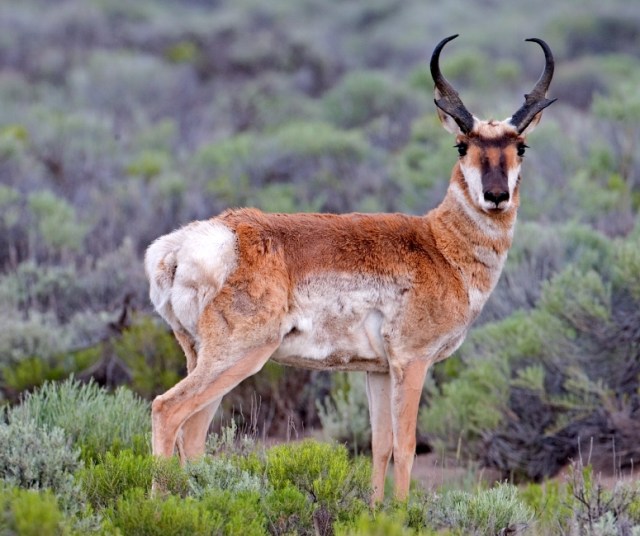
antelope.jpgTo that one must reply, “You’re a hypocrite.” Because unless someone is disfigured by an accident or disability, everyone in this world; male, female or transgender, has an ass of their own. That’s both a fact of nature and a human right.

Beyond that, there is another fact of nature, proven by everything from antelope to elephants: One cannot move through the world without someone else seeing your ass. We all get to have an ass, and the degree to which we show it should largely be our own choice.

In pursuit of an ass, I can honestly say that I once ran two full miles up the Chicago lakefront trying to keep sight of the ass of a young woman in order to get a date. I asked her out. She accepted. We went to some bars and it turned out she was out of my league because she did cocaine and knew all the bouncers at the clubs. In terms of a life experience, it was still worth two miles of chasing her ass to learn something about the world. Some asses are unattainable.

But a few months later, I chased another woman’s ass around the track during workouts and we wound up dating more than a year. Asses can do good things, you see.

Asses and good taste

Is it in always in good taste to show your ass when it isn’t the greatest looking ass in the world? Perhaps not. But who is the ultimate judge of that? People make odd fashion choices all the time that are not in the best interests of good taste when it comes to public displays of flesh or behavior.

I worked for years in journalism, and those people were some of the worst dressers in the world. But their job was not looking good, but writing well. And finding the truth. Some of them were asses in some respects to the people from whom they were trying to extract that truth. For those reasons, journalists are sometimes hated. But we need those people to keep the real asses of this world from taking advantage or exploiting our political, financial and social sphere to an unethical degree. In that respect journalists are the pinnacle of good taste in human culture. They are largely the truth seekers. And people who brand them Fake News are typically the ones with the most to hide.

And they tend to be dressed in suits and ties.

Trump suit and tie.jpg

The smile of a proud and arrogant ass. 

Genuinely offensive

Because if wearing something that offends others is going to be outlawed, then let’s talk about the abusive traditions long associated with the male suit and tie.

Lord knows there are plenty of men in this world who look and act like total asses while wearing that outfit. Some can’t keep their hands off other people’s asses (or pussies, or more) whether they have permission or not.

Some even choose to brag about it, then deny it when challenged by the likes of journalists.

But when the truth becomes known, they turn around and try to defame those who try to hold them accountable. Then hire a “fixer” to pay them to be quiet. Then hire sleazy lawyers to attack their character. All because they want to avoid accountability for being asses in the first place, even when running for President of the United States. This is what’s called an all-around Asshole March of Champions.

Giu.jpeg

A complete and total ass(hole): Rudy Giuliani

The ass threshold

In fact, many of the world’s biggest asses do their worst work while wearing suits and ties. In this attire, the cross the entire ass threshold by turning into total assholes in public and private. Their own bodies may be covered in a suit and tie, but their corrupt ambitions and conflicted appetites are both grossly naked and blatantly untrustworthy. Some even have the gall to hide the weakly bulging gravity of their untruths behind the cloak of religion. Those are the most nakedly disgusting hypocrites of all. Jesus says so.

All these behaviors and the repressed wardrobe of falsehoods with which they adorn themselves are far worse than the careless glimpse of a butt cheek with cellulite or a bit of female whale tale peeking above a set of mom jeans. That’s a whoops in the cultural acumen, but not a crime against humanity.

Thus we must ask which is worse; seeing an actual ass in public or dealing with someone who is clearly an ass in public. 

That Ismo comedian was right. There really are many meanings for the word ass in the human language. Perhaps it’s high time we deal with the weight of the truly gross behavior in order to better understand the ugly nature of the bullies who give people political wedgies to show them who’s boss.

There truly are some real asses out there in the world. But the muscle of the gluteus maximus is not our biggest problem.


Posted in Christopher Cudworth, duathlon, track and field, training, triathlon | Tagged , , , , , , , , , , , , , , , | 1 Comment

No good deed goes unpunished


LUW 1Last evening I was cycling down a country thoroughfare called Bliss Road (you’ll see the irony soon) during the opening miles of a 31-mile ride. The road crosses a bridge over Interstate 88 and one lane is closed to trafficto repair frost-related pockmarks in the road surface. The bridge needs to be closed on one side in order for the construction crew workers to do their job.

Over the last few weeks, I’ve ridden through the construction zone at least ten times. The route down Bliss leads to a number of options for 20-40 mile rides.

White line fever

On Bliss and many other roads, I often ride with my tires outside the white line. I don’t trust that people driving will abide by the law requiring them to give cyclists a full three feet when passing. Most people can’t seem to separate hazards that way. They seem unable to judge how to avoid an oncoming car when they are passing a bicyclist. Perhaps it’s not in their genetic makeup to figure it out. Instead, they attempt to race by in a burst of speed as if that excuses or lessens the impact of their portent.

I stay out of trouble for the most part while riding this way. It takes some decent bike-handling skills to use the 12-18″ of road margin rather than riding on the main road surface. Still, that’s not good enough for some motorists. They honk or buzz me anyway.

As I approached the Interstate bridge the light was red and cars were coming across the one-lane passage from the other direction. That meant traffic on our side was backed up about ten vehicles waiting for the light to turn green. So I slowed and rode gingerly up the road margin past the cars toward the front of the line. I did this for a simple reason: to get to the other side safely.

Shifting scenario

As I approached the row of cars I noted that there was a large gap between the two vehicles near the stop light and the other eight cars in line. As I neared the front of this group, I saw there was a blue Corvette positioned as if the driver wasn’t sure where he should be on the road. The Vette then shifted its wheels and jerked a bit to the right as I rolled up the side of the road. “Hmmm,” I thought to myself, “He might be moving.” So I slowed even further and was going less than five miles an hour when I rolled past his passenger side window, which was wide open.
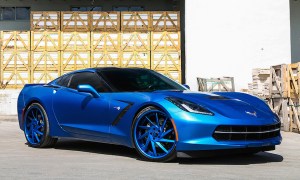
Blue-on-Blue-Corvette-0 “Hey!” the guy inside the Vette shouted. Then he started gesticulating at the cars up ahead on the road.

Here’s where our worlds divided. My plan going forward was to avoid blocking traffic as a cyclist by heading up there and slipping past the light to cross the bridge just inside the line of cones separating the traffic lane from the construction work. That way I would not hold anyone up, and no one would miss their opportunity to get through the light. Waiting for cyclists in situations like that really pisses people off. I knew this corridor existed because I’d ridden across that bridge the day before. Even without traffic present, that is where I rode my bike. Because it’s safer.

But the Corvette Guy seemed eager to push my buttons on the issue before I even got there. His little dodge move with his Blue Corvette seemed an attempt block me or force me to stop. Perhaps he’d seen make the turn onto Bliss Road a half mile back, and did not care for my presence on the road in the first place. Whatever his motivations or the source of his angst, he was clearly ready for a confrontation of some sort to prove his point. Whatever that was.

Courtesy and the lack of it

I made for the other side of the bridge without interfering with any of the cars in line. I reached the other side before the lead vehicles passed. Then came a quiet pause as the rest of the cars caught up. That meant the approach of the Blue Corvette.

The driver rolled up next to me and the first words out his mouth were a loud “Fuck you!” He was driving slowly next to me, holding up the traffic behind him as he shouted more invectives and insults at me. I kept up my pace as he rolled along at what was now 20 mph on a downhill. He kept on yelling and was leaning over the passenger seat pointing at me. His dirty old trucker hat was perched on his head and a prodigious white beard spilled down to where the crease of his chest met his bulging gut. A pair of large-aviator glasses covered his eyes.

Threats and intimidation

He pulled ahead of me in his car until he could pull over in the turn lane of a subdivision. His brake lights were blinking on and off and other cars swerved to go around him. I eased my bike out onto the road surface to roll on past. What was he planning to do, I wondered?

It seemed his logic must have told him that I should have waited far back in line with the rest of the cars rather than riding past them to go across the bridge under construction.

By that point, I looked at that situation as a danger both to myself and the other drivers on the road. Just then his intentions got dire: “I’m following you!” he screamed. “I’m gonna follow you wherever you go!”

Outfoxing him

In that regard I already had him outfoxed and out-calculated. He was absolutely keen on showing me “Who’s boss” on the highway, and I was keen on ridding myself of an angry old dude with whom I should have had no quarrel. I’d done nothing that inconvenienced him in any way. Had I slowed him down? Caused him to have to swerve in any manner? Created any danger to his car or his person? None of the above.

So his angry tirade was about something else. Perhaps I was witnessing a campaign to teach me that  “his rights” were being violated by my presence on the road. I

Provocation

And maybe I could have avoided the situation by letting him have his anger to himself and not yelled,  “Yeah, Fuck you” right back to him in his car. I should have turned the other cheek. No doubt. But from long experience, I know that even if I’d remained silent, he might still have pulled over in front of me to get out of his car and yell. I’ve seen it many times over the last twenty years. His actions were calculated to intimidate and project some deep-seated anger on the world. This particular cyclist happened to ride into the perceived path of his trajectory.

Backstory
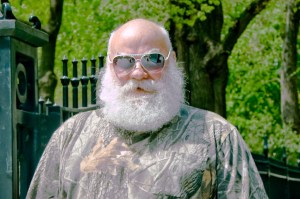
White guy with beard and glasses and camo

This is almost exactly what Blue Corvette guy looked like. It’s a look.

Obviously, I don’t know the man’s backstory. Often when you get an opportunity to actually sit down with some folks, especially angry people, their anger toward some facet of the world is truly legitimate. Probably in the past, some cyclist did cut him off in traffic or cause him to hit the brakes. I see that all the time, and I’ve been in my car when cyclists do stupid things in front of me. It makes me angry too, but in a different way. I wish people on bikes truly would wise up. It would help us all.

That said, I’ve made plenty of genuine mistakes on the road. Usually, I gain the motorist’s attention, point to myself, offer a wave of apology and yell out, “I’m sorry! My fault!”

Most people appreciate the admission and forgive the breach on the spot. That’s the truly civil way of doing things. Whenever I make a mistake, and I try to prevent that, I go out of my way to apologize. Because next time that driver encounters a rider like me, they might be a little bit nicer.

But some cyclists really are arrogant. Many do break the law and seem not to care if the rest of the world hates them. The world is full of fucked up people doing fucked up things. I wish that weren’t true for cyclists, but it is.

My backstory

My backstory is simple. I ride because I like it. I ride because it keeps me healthy. I ride to reduce stress (most days) and ride to have new experiences in new places and make familiar places more interesting. That’s about as deep as it gets.

I’m not riding to purposely piss people off, flaunt laws or show that I somehow rule the road. That’s absurd. I defer to traffic almost 100% of the time because I frankly don’t want to get killed by someone that is not paying attention on the road. Now that people are texting and driving, I’ve had no less than four really close calls in the last year alone. I fear for my life out there some days. That’s disturbing, I’ll admit.

And despite all that deference to traffic, people still assume I’m trying to fuck them over by riding my bike on a public road. They yell things such as, “Get on the bike path!” In fact, most bike paths either don’t go anywhere for very far, are jammed with people, dogs and children, or pass through parks or urban areas where riding your road bike at even a middle pace of 16 mph is a danger to everyone. I ride faster than that. Road bikes are designed to go as fast as you can make them go. And cyclists have that right.

So we ride on the roads. Because that’s what “road bikes” are designed to do. And laws are put in place to govern our access and our rights. America is based on a simple premise on such matters: deal with it or shut the hell up.

Wise and aware

So cyclists are not the ones that are always fucked up and always looking for a fight. Most of us have grown wise and aware in decades of riding. We know and calculate the meaning of our actions. And I maintain that by pulling ahead of traffic on that bridge with room to ride off the actual one-lane access surface I actually saved everyone parked in that line precious time. That’s called being considerate, and nice.

But Mr. Blue Corvette Guy translated that as my version of cutting in line. And as he proved by his behavior, that’s more his problem, not mine. As for his possible anger at the world? About that he needs to talk to God, if he chooses, or at least a good therapist. There is help and forgiveness aplenty in this world if you have the character to admit that you need it.

Getting off

Through four or five rounds of cat and mouse the Corvette Guy was swerving on and off the road to block my way. That game was getting old and I guessed it might soon turn ugly. After I pedaled up an incline and down a hill, I knew that my time of departure was near.
Gull Against Dark SkyHis car actually got pinned in front of a truck that had seen his antics and was tailgating him to force him on down the road. That meant Blue Corvette Guy could no longer keep his eye on me in his rearview mirror. That must have royally pissed him off. The one thing a vigilante craves is having the target of his ire in sight.

And just like that, I was gone off the road. I’d planned my point of departure at a point where a bike path crossed the road and dove down the trail into Bliss Woods. Goodbye, Mr. Blue Corvette. It’s time for me to fly. Away from you.

Rules of the road

I maintain there are situations while riding a bike that is not clearly defined by law. Instead, they require good human judgment and courtesy. Cyclists encounter many such situations in their travels. Here are just a few:

  • When to ride inside the white line, and when to avoid it.
  • When to brake and come to a stop when traffic is too heavy for safe riding
  • When to ride single file or double for group communication
  • How to address stop signs in various neighborhoods where traffic may be absent
  • What roads to travel at all; many are not suited for bike riding

I learned a few things from my experience with the Man in the Blue Corvette. Perhaps a short stop would have been helpful to explain, “Hey, I’m going to ride off the road up ahead to avoid holding you up.” I do things like that all the time, gesturing to traffic to let them go through at four-way stops, and the like.

I somewhat regret my Robert DeNiro moment in shouting “Fuck you!” back at the guy. But not entirely. I’ve dealt with bullies in this world long enough to know that the one thing they ultimately understand is defiance in the face of their habitual intimidation. The same holds true with the gaslighters of this world, who try to make you feel crazy about your own reality. And the abusers; domestic, sexual and otherwise, who think it’s their right to take advantage of people mentally and physically to cover up their own insecurities and shameful needs.

I was trying to do a good thing for the other people on the road last night. But as we know, no good deed goes unpunished in this world. I just wonder if the Blue Corvette Guy is still out there driving around, looking for a way to mow me down. I hope I don’t find out someday that he is.

 

Posted in cycling, cycling the midwest, cycling threats, game of chicken, Uncategorized | Tagged , , , , , , | 3 Comments

Even flat turtles have their day in the sun

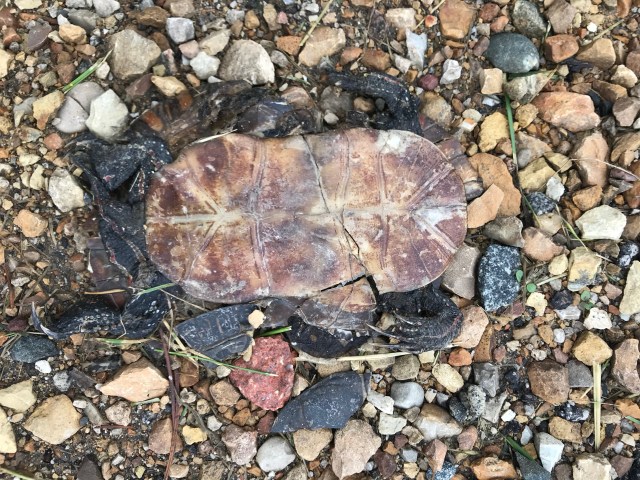
IMG_4150This morning I ran what might possibly be the slowest three miles I’ve done in a long time. Along the way, I chanced to look down and see a flattened turtle on the gravel shoulder of the road.

It bugs me to see nature wasted that way. Millions of years of evolution flat as a pancake. But it happens every day. Where human activities and animals intersect, the animals often lose.

Nature itself is merciless when it comes to who survives and who doesn’t. Science tells us that 99% of all species of living things that ever existed are now extinct. What the creationists won’t admit is that it took millions and billions of years to accomplish that level of extinction. They like to compress it all down to the biblical flood.

But that doesn’t come near explaining the fact that there are still millions of species of living things that still exist on this earth. Some of them, like blind cave salamanders and the species of turtle I saw along the road had no way of crawling all the way across the North American continent, swimming several thousand miles of ocean and again crawling across desert landscapes and mountains and valleys to reach some tiny ark in the Middle East. It’s a fantasy of religious fervor and an all-out lie to make such a claim as literal truth.

But then again, some people still believe in a flat earth despite all evidence to the contrary. And I place the Flat Earth believers and creationists in the same bucket of denial. Both constitute belief systems as flat and shallow as a squashed turtle. All shell, no real guts.

Holdouts

Chris_Cudworth_GBHeron.jpgIt helps me a bit these days to realize that not all the dinosaurs are actually extinct. Turns out birds are basically dinosaurs that survived the weaning throes of evolution. Now, you’d think that it helps that birds can fly. But that’s no promise of survival either. Those of us who run and ride find plenty of flattened birds out there on the highway. All it takes is a fatal swoop of a bird over the road and the game of life is over for that individual. Smack.

Holding onto life

I once witnessed a young Cooper’s hawk get smacked that way on the front of a car windshield ahead of me on the road. It lay there stunned in the middle of the lane after the car that hit it passed by. Pulling over, I parked my car on the road edge and jogged out to retrieve the stunned raptor. Grasping it by the “shins,” I lifted the bird up to carry it off the road. At that moment, my eyes met those of the bird and it gathered its wits, flickered out of its stupor and stared at me with cold furty. A flare of light seemed to emanate from its eyes and the bird gave two sudden, strong flaps of its wings, and I was forced to release it.

I thought about that hawk and the flat turtle as I ran home this morning along a quiet road. My pace was more than 10:00 a mile. Slow as a turtle, you might say. For me, anyway. So slow in fact that a homely little pair of ticks proved how ignorant I was about nature’s ways.

Tick tick tick

IMG_3E3C95E5FF0B-1.jpeg

Last week I went for a run in the grasslands of a forest preserve on a five mile run. The breeze made me want to just stand there and look at the sun. But then I felt something crawling up my leg. It was a pair of ticks that had clung to my socks somehow and were busy making their way up the bare skin of my calf. I shuddered and flicked them off. I hate ticks.

And I thought that was the end of the tick situation. But a day later while working in my office, I felt something on the back of my arm and found two ticks crawling under my shirt sleeve. Somehow they’d gone along for a ride on my clothes or my body. Then they emerged a full 24 hours and had decided sneak out from whatever crevasse they’d found. I’d even taken a shower and they survived that. But I’m thinking they plotted some other way to stick around.

I know, it’s totally gross to think about. But nature is nothing if it not persistent, particularly if it wants your blood. Beyond ticks, there are species of leeches, mosquitoes and even bats that will feed on your blood if they get a chance. And don’t tell me these things all hung out on an ark for weeks without feeding on something. If you think that’s true, you have never met a real tick. Or leech. Or mosquito. When they want blood, they will not wait around for anything.

In disgusted horror, I plucked one of those ticks from my arm and set on the edge of my computer to get a better look at it. I wanted to identify the species, and it turned out to be a common dog tick.

With furious angst I watched it flail its arms about as if to scream, “Give me your flesh!” Then I knocked it off and stabbed it clean through with the sharp end of a roller-ball pen. The tick was dead. I’d won in that round of evolutionary fury. Red in tooth and claw. I was faster on the draw and the tick lost.

Stayin’ alive

All it takes sometimes to make it through the qualifying rounds of evolutionary survival is to be one step faster than your nearest rivals. As the saying goes, “I don’t have to outrun the bear. I just have to be faster than you.”

But then there’s the other saying that goes, “When you’re wrestling with a gorilla, you don’t quit when you get tired. You quit when the gorilla gets tired.” That’s a phrase popular among cyclists, particularly those in a road race, where the only thing that matters is staying on the wheel of the rider in front of you. Close as a tick, you might say.


On my best days as a runner, I’m still faster than probably 97% of the world’s population. It’s a poor test sample upon which to base the assertion, but I finished in the top 15 out of 300 or so competitors in the 5K race I raced last week. Of course, there was a time when I’d have beaten the winner of that race by more than three minutes. I was a different kind of creature back then, a type of desperately skinny animal. My body looked like a turtle that had lost its shell and was running around naked looking for another one.

But I was stayin’ alive, I’ll tell you.

Defying time

I still go to the track to defy time and celebrate that feeling of stayin’ alive now and then. I may be a relative turtle some days on the roads, but there is still some zip in these legs despite their age. If someone wants to make fun of me for being slower than I used to be, that’s fine. Even flat turtles have their day in the sun.


Posted in Uncategorized | Tagged , , , | Leave a comment

Escape from Runworld

Delores.jpgAs a viewer of the HBO show Westworld and previously, the popular television series Lost, I willingly suspend some levels of critical analysis about the premise of these shows. One can’t dig too deeply into the context or it quickly collapses. The idea instead is to absorb the characters and draw meaning from the allegories these shows present. The shallowness of such engagement becomes its own passion. The characters in many cases are shunted back and forth in time, the better to understand the depth of  their experience.

Yet one of the creepiest characters on the show Lost was the one guy who never changed over the entire span the show. That shows you that people actually expect others to change. Those who defy change are often the creepiest and most repressed people of all. Would you not be creeped out if someone showed up at your 20-year high school reunion and had not aged or changed at all? That would be creepy. Yet that’s what many of us try to accomplish going into many reunions. Be ageless.

Delores 2

Double premise

Part of the charm (if you want to call it that) of Westworld is the double-premise of suspended reality. Human beings go to Westworld to act out violent or sexual fantasies on the “hosts,” who are human-like robots that actual humans can abuse or even kill if they choose. The company that runs Westworld simply repairs the human-bots and reprograms them for repeat use.

NFLworld

Perhaps we should take a clearer look at what we actually choose for entertainment, because the plotline of Westworld sounds suspiciously like the draft-driven narrative of the National Football League, in which privileged owners buy and sell players whose roles are defined by coaches and to some degree, the fans who embrace the game.

Now we’re immersed in a cultural dynamic in which some people feel no compunction in demanding that football players demonstrate unblinking fealty to the organization and league they represent. All this is expected despite clear evidence that while playing the game, many pro football players experience brain damage and life-altering injuries from which they will never recover. Even the NFL cannot put them back together again.

So yes, the NFL is a world rife with the same brand of coarse fantasy, violence and abuse as Westworld. And tellingly, whenever the people who play the game of pro football resist or act out against this coercive dynamic, they are disabused of the “opportunity” to play at all. They are, in a sense, expected to perform like the humanized robots of NFLworld, which depends upon a parallel world called college football. It’s all a bit creepy in the end.

Delores 4The Westworld lesson

In the fantasy land of Westworld, there are warning signs that all is not well. The robot “hosts” have quickly developed human-like memory and awareness. The bots begin to question their existence and crave meaning derived from their collective memories.

The main character Maeve teaches herself to tap into the software of the Westworld enterprise. That talent quickly exposes the exploitative nature of the place. Meanwhile, a character named Delores arrives at similar conclusions. That sends her on a vengeful rampage against the entire Westworld universe. She sees beyond the game as it has been played, and makes up her own rules by finding out the source of her narrative and memories.

All this smacks of suppressed memories in people who were physically, sexually or emotionally abused in childhood. Westworld claims that the concept of “innocence” is relative to when true awareness is achieved.

Delores and Maeve

The parallels of #MeToo 

The Westworld plotline of vigilante justice aligns somewhat with the themes of the #metoo movement, in which women have risen up to fight back against male sexual domination, discrimination and intimidation. The character Delores and many other female “hosts” were originally programmed for use as sexual playthings. Now that Delores is armed and dangerous, it is the men in many cases that are reduced to begging for their lives. In some cases, she just shoots them in the head. No remorse.

Parallel worlds

That leads us to the meaning of Westworld as an idea. Can it truly tell us anything about ourselves? The only comparison I have to offer is by considering a world I once occupied. We’ll call it Runworld. That’s where I existed for a decade or more, because running dominated my existence for much of that time.

Big BendI specifically recall a moment when there was a choice to be made during high school. I was offered a chance to go on a rafting trip with a teacher who was leading a trip during spring break trip to the Big Bend area of the United States.

A part of me really wanted to go, yet part of me was afraid. The other kids going on the trip were not really bound by sports to any particular type of personality. Some were known pot-smokers. Others were free spirits in every other sense of the word.

I was nervous about those differences, but not stuck entirely in my Runworld universe. I was a member of the poetry and writing club, and published there regularly. I was also a cartoonist for the school newspaper and an avid member of the Prairie Restoration group that was installing a new, living prairie at a local forest preserve. On my own, I was an avid birder despite the wicked teasing it generated from my peers. But Runworld was a powerful dynamic in my young life.

Chris at Plainfield

Stay home, son

So I was beholden to the cycle of track and field, and my coach suggested it would be wise to stay home and train the entire week of spring break rather than travel to Big Bend where I would not get to run a step, most likely.

But what an eye-opening, world-expanding trip that would have been. But because I was the lead distance runner at my high school, I felt an obligation to uphold that status even though I was barely an above-average runner in that sport. Runworld owned my conscience.

Snow bird printsNew worlds

Later in life, I broke that mold a bit by traveling to do a January interim internship at the Cornell University Laboratory of Ornithology. I drove through four states and cold, deep snow to reach the college town of Ithaca on the southern end of Cayuga Lake. I’d spend three weeks there studying wildlife art at one of the world’s leading research institutes for birds. During that time, I ran very little if at all. Yet I’d walk the mile to the lab every day from the little house I rented with no running hot water. It felt magical to be immersed in a world I loved.

Wolf time

About ten days into the internship, I finally did go for a short run to loosen up my legs. Without a shower to use, I heated water in a cooking pan and did a sink bath to wash away the sweat. Then I washed my thick head of hair and took the pan of hot water outside to rinse the soap out.

The temperatures were in the mid-teens, so I did not want to waste any time standing out there without my shirt on. But after washing my hair, I sensed something watching me in the dark. I turned slowly, because the house I rented backed up to a property used for the wolf range, a breeding area for wolves.

And there, in the dark, I could see the dark shape of a wolf staring at me with glimmering eyes. Seldom have I felt so flesh-filled and alive. Then the wolf retreated into darkness. I stood there breathing thick mist into the air and realized with emphatic grace that I had indeed escaped from Runworld.

Runners.jpg

Testing the legs

A week later as the internship drew to a close, I knew it was time to turn my head back around to the realities of the indoor track season ahead. So I bundled up the little running gear I’d brought from home and drove to the Cornell fieldhouse to do some indoor running. It felt strange to be circling the track again, but with all that rest in my legs, it also felt good to run.

I warmed up a couple miles and decided to do a time trial to see what my legs and lungs would produce. To my surprise, I ran a 4:40 mile without a ton of effort. Of course, that demonstration drew the attention of Cornell runners wondering what stranger might be throwing down some kind of challenge in their presence. The animal instincts of Runworld were forever present. I was tempted to run even more. Instead, I cooled down and drove back to my little house in the woods. Runworld would have to wait.

The return trip

The long drive home from Ithaca turned out to be a harrowing slog through a snowbelt storm. There were tall drifts and the Interstate was covered in more than a foot of snow. I wisely (and humbly) drove in the tracks of a semi-trailer truck. when it pulled off for gas, so did I. For sixteen hours I kept on driving and dared not turn off the engine for fear it would not turn on again.

The trip felt like a bad dream or one of those struggling night visions where you are trying to move from strange place to another. Your legs won’t work. You can’t find the way.  Or you’re a person who no longer knows their place in this world. Dreams can vex our souls.

Imagine being a person in the process of learning that your entire identity is about to be erased, or your culture. How would you react? Many of us flirt with some form of that challenge in life. We lose a parent, a loved one, a job that mean so much to us. And in the process, we lose a world. But when have to move on, how do we find our way? What world do we then occupy?

Westworld-640x346.png


Life outside Runworld

It would take another couple ventures like that and many years of experience to actualize to fully embrace the idea that there were gratifying worlds outside Runworld. So much of my identity had been tied to the person who lived there. But it was time to move on.

Still, so many associates refused to see me otherwise. “Do you still run?” they’d ask. I could not tell if that was a question designed to confine me to that world or liberate me from its control. So I decided that neither was the reality I would choose. It is possible to own the experiences of another world and move on to others. The sometimes lonely choice of what to embrace is yours alone. That’s called autonomy. Ironically, that calls for putting one foot in front the other. That’s how we all make progress.

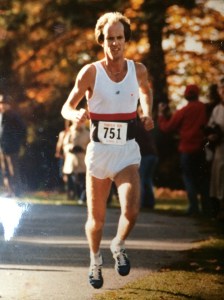
Chris Running 1978.jpgThese days I look back at that time period and part of it does seem like a programmed memory of how to do things. Runworld gave me an identity of sorts. But it also required a level of suppression of certain other instincts. I’d be running down a road in spring and hear migrating warblers in the trees and just want to stop to identify the singing birds. Sometimes I did stop. But then the prodding notion that it time to move on would take over. Runworld would swarm around me again.

These days, I can enter or depart Runworld as I please. The portals are never closed, and they are not confined to the past. It is like being a time traveler in many respects. Yet there is no time like the present to claim the purpose in your next steps.

All told, I still love the realities and lessons of Runworld. They formed me in many ways. But I am also thankful there is so much else to enjoy in this world, or others. I am still exploring, and that’s how it should be.

Posted in running, Uncategorized | Tagged , , , , , | Leave a comment

How do you view progress?

IMG_3730In the age of smartphones, Garmin devices and software that can measure everything from your heart rate to the watts you’re pumping out, the question still remains: how do you view progress? Is it all digital? Empiric?
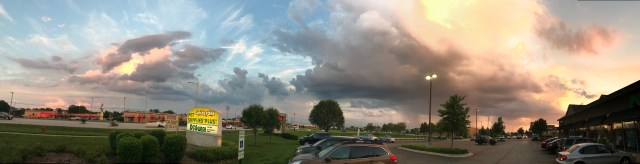
Or can you feel it? 

Yesterday afternoon while Sue and I were out on a zippy one-hour bike ride in the last sunlit hours of the day, I had nothing on my bike to measure my speed or effort. My cyclometer was still buried in a bag somewhere in the house after our training trip to North Carolina. My cell phone had Strava tracking every increase and decrease in speed, but it was was tucked safely in the back pocket of my kit. I’d read it all later.

But yesterday I could feel the difference in my fitness. Those miles climbing the mountains in North Carolina had really helped. My legs were stronger.

Sensing change

Sue could sense the difference too. She was perched on her Specialized Shiv in aero position, a position from which she typically leads. But I felt good, and was doing pulls into the wind and holding our tempo. We traveled a strip of road that hosts a Strava segment and it was nice later on to see the results all digitally delivered in a neat little package on the screen. But what’s more important than numbers on an app is the feeling in the legs that tells you there is more to give.

That’s where the real racing occurs. That’s what the real results come about.

Pool speed

IMG_3728.JPGThe same sense of change happened in the pool this morning. For the first time ever, I slipped into the water and swam with confidence and strength from the warmup of 400 meters to every single interval I did. There were many moments when the pull phase of my stroke was increased in terms of force and rapidity and it didn’t produce fatigue. My long intervals of 400 and 200 meters dropped in relative time from all previous workouts. I could feel the progress.
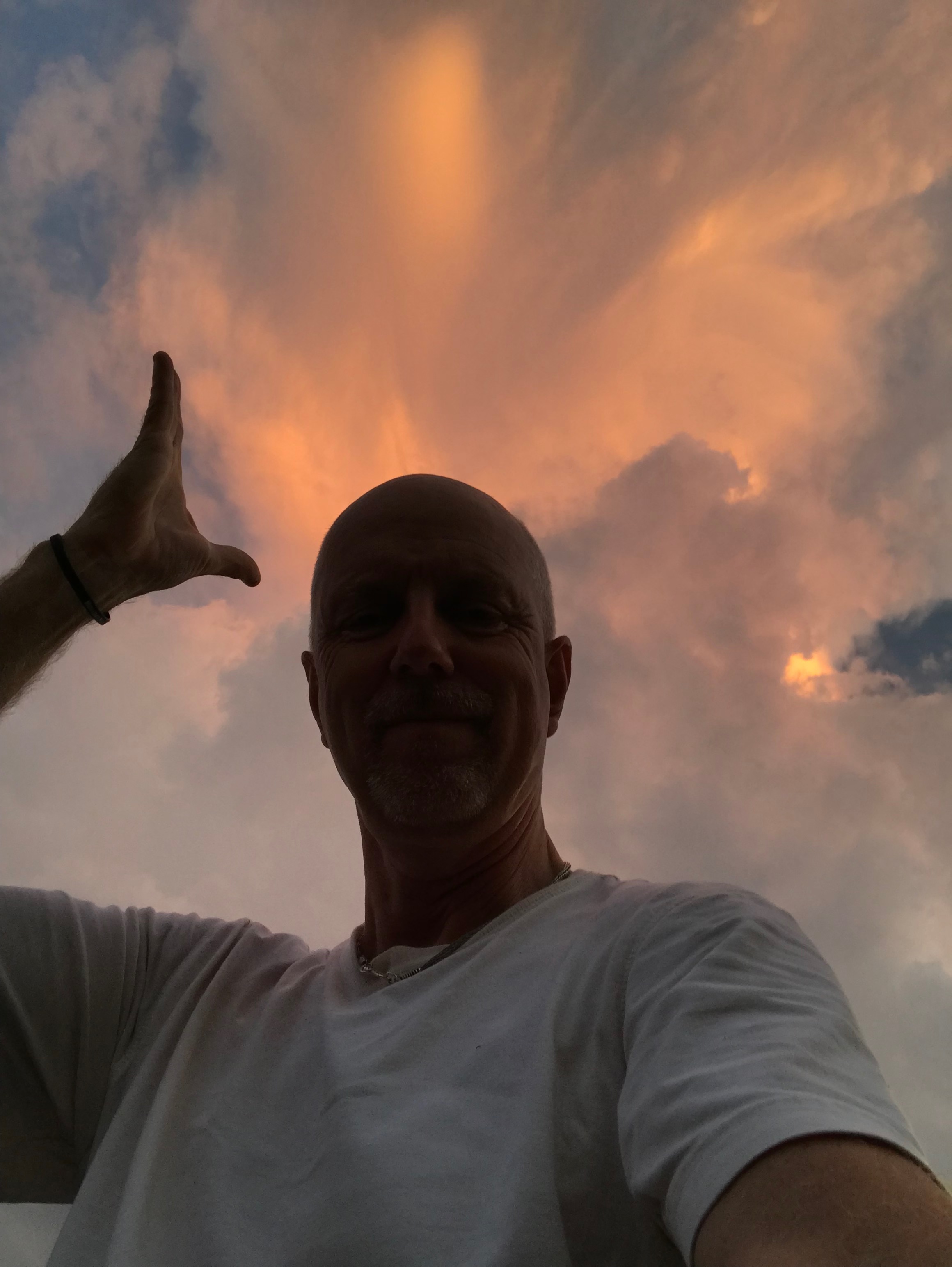
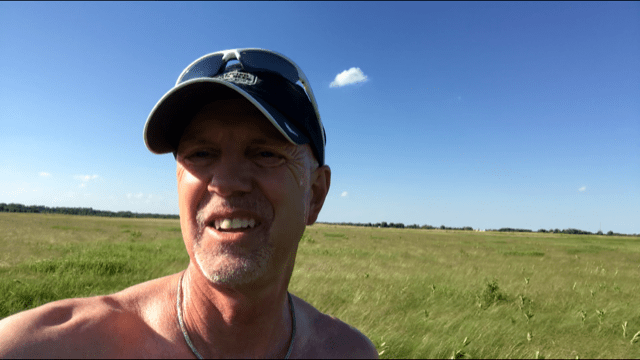
Then I did some 50s at a pace 8-10 seconds faster that I’d previously been able to maintain. Between the stroke training I’ve been doing and continually improving my form––the elbows need to come up a little and the volume of training too–– I am actually improving as a swimmer on all fronts. Endurance. Confidence  Speed.

In training for sports that require all these things, the process is like merging disparate clouds of control into one dominant vision. Only then can you focus on the light within. And that’s important. Some portion of our success is always based on our wellspring of emotion and thought. We must first dream the idea, translate the inspiration in to goals, then respond to these expectations in the moment. That is how opportunity becomes reality.

IMG_3767.JPG

In the pool this morning with the narrow focus of bright blue water and spirited bubbles around me at all times, the little screen on my Timex Ironman watch was all it took to know the feelings of power and endurance I was having were not imaginary.

The moral here is clear: It’s fine to use devices to gauge and view your progress. But those gadgets are not the cause of your improvement. They don’t make you faster on their own. That comes from within; the fibers of your muscles, oxygen in your lungs and the power of your brain to sense what is going on in your body.

That’s all part of the feel, and how you truly measure progress.

Now go for it. 


Posted in 400 meter intervals, 400 workouts, Christopher Cudworth, cycling, cycling the midwest, doing pulls in cycling, racing peak, running, triathlete, triathlon, triathlons | Tagged , , , , , , , | Leave a comment

High on grass(es)

High on grasses.png

To all of you: I thank you for reading. Poured my heart into this one. Hope you enjoy. 

Last night after work I returned home with an hour or two to use before an evening meeting. With a set of legs still a bit tired just two days after a 5K race and a 40+ mile bike ride the day following, I wanted a recovery run that wasn’t filled with pounding asphalt and roaring traffic. A place to get away and get high on grass(es).

That meant one thing: go run at Dick Young Forest Preserve. The 1100 acres of the park is just a mile and a half from my house. Normally I trot over there and run a loop and run back. But last night I wanted a pure experience, so I drove over, parked the Subaru and stuck the keys in my hiding place. And ran.

The westerly breeze was heavenly. I mean that almost literally. All around were skies tinted my favorite color blue. The paths were not even fully mowed. My feet swished through calf-high grass as the taller fields around slanted in the wind under the brightly shining sun.

Doggo moment

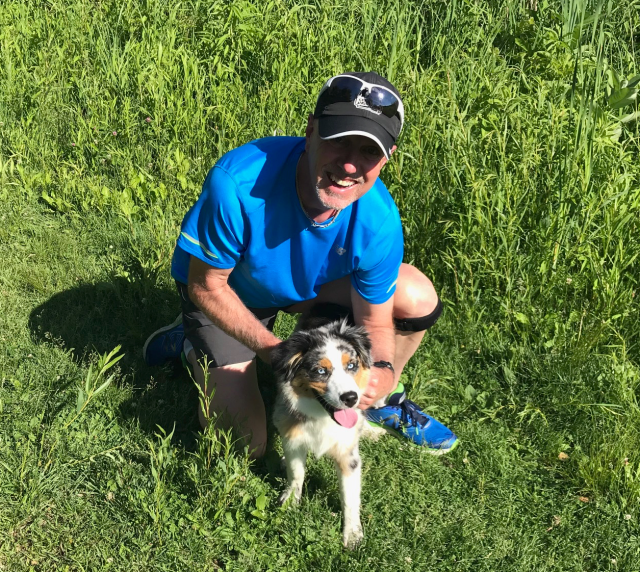
Chris and Aussie.pngA half-mile into the run I spied a small dog poking around in a wet ditch. The owner was up on the trail. When the dog spied me I called out “Hi pup!’ He bounded up the bank and ran right over to me, falling over on its back. I petted his furry belly and he spun around to face his owner as if to say, “Look at what I found! A petty-person!”
I asked the guy to snap a photo of his dog with me. The pup was young, and soft and full of life. His bright white eyes were charming. That set the tone for a very nice run.

However the minute I stood up to run and went to put my phone back in the Nathan carrying strap I use to store my iPhone while running, I accidentally struck the back of the phone with my swinging hand and it flew through the air and landed down the bank where the dog had been sniffing around just moments before. I envisioned that phone a foot deep in the muck.

Fortunately, it fell just short of the deeper water and only got a touch wet. I wiped it off and kept running, relieved that I hadn’t ruined it by letting it fly into the marsh. Technology has its limits, you know.

Digging the marsh

The trail on the north end of the preserve skirts a section of marshy swales where peat mining once created long ponds. Those have since clogged with cattails and phragmites, the tall rushes that grow in ‘disturbed’ wetlands. Once those tall reeds get a foothold, they can rapidly take over an entire area. This past winter the forest preserve district sent a contractor through the phragmite forests with a big marsh buggy and they sprayed to knock back the rushes. It worked. But the big ruts from the marsh buggy are still there, as if a motorized Bigfoot had left its mark. Thus the back-and-forth process of large-scale human intrusion continues at an Illinois Nature Preserve.

The peat mining company ceased operations forty+ years ago, but I well recall the corrugated metal paths the company had installed to allow their long-armed shovel machines to reach out into marsh and dig up peat. Beneath the feet of a mere human, the middle of the marsh soils is springy to the step because the peat there runs feet thick. If we could go back a thousand years to a time before human drainage projects dropped the level of the marsh to its present day level, the entire basin would have been immersed under water. and the cattails, if they existed at all, would have barely rimmed the upper edge of the marsh basin where the oaks rule the hillside.

Since that time, natural succession has done its job of filling in the marsh basin. Now things are coming to an unnatural close in many ways. There are perhaps 100-200 acres of open water left in Nelson Lake, and the cattails are encroaching on that too. I’ve watched all this happen in just forty years of traipsing around this little world that I love. I feel that I have aged along with this treasured friend, and that is a strange but not unpredictable sensation.

Through the woods

But I’m still running, and after circling the north end of the marsh, the trail turns up a small hill rising thirty feet above the level of the basin. This was the actual bank of a lake the glaciers left behind 10,000 or so years ago. We can only imagine what that lake might have been like. Mastodons and wooly mammoths might well be buried under the bed of the lake basin, for they have been found in similar places within five miles of this marsh. There would have been saber-toothed cats perhaps, and giant elk or beaver. All were likely hunted to extinction by human beings, the ever-ravenous consumer of earth’s natural resources.

These days in March, the purple heads of skunk cabbage peek up from the rich black soil in the watery seep at the foot of the hill. Then wildflowers cover the incline in spring, while stolid bur oaks stand guard over the western ridge. Ultimately, even these 150- year-old trees topple and fall over when they rot or grow too old to withstand the west winds that press hard on this little section of the savanna. I have been present in the woods when one of those great trees falls. It begins with a crack and ends with a rush of leaves and branches thrashing the ground. Then all is silent.

The tree takes its rest as if relieved of duty. It takes another fifty years or so of decomposition to complete its journey. Ultimately the massive tree turns to crumbling, decaying wood and then returns to the soil. It’s a long dance from seed to tree to dirt.

Out on the prairie

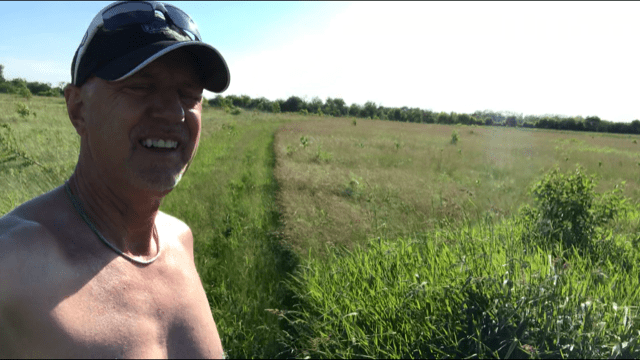
Chris in field.pngEmerging from the woods puts me out on the restored prairie that now stretches a full mile out to Bliss Road. This is where the trail opens up and the skies reach down and kiss the grasses. During a lifetime of visiting this preserve, I’ve watched this section of field converted from busy farms fields to tall prairie grasses.
In fact, it has only been twenty-five years since the farm family sold the property to the county forest preserve district. A developer once proposed to build houses right up to the edge of the savanna woods, and those home would certainly have sold quickly. But they would also have destroyed the entire ethos of the place as a functioning preserve. Protecting those woods required some legal wrangling and letters to the editor, of which I sent several in favor of conserving that land rather than turning it into yet another subdivision. It would have been a travesty to let houses close the door on so much natural potential.

Prosperous property

Now the restored grasses and forbs and prairie plants prosper under the sun. By July coneflowers will blossom purple, pink and white. Tall pods of prairie dock and compass plant will send their stalks high in the air with bright yellow flowers flickering at the top. The strange little plant called rattlesnake master grows low to the ground, and purple spiderwort keeps it company as well. Cream wild indigo dazzles in the morning sun, and big bluestem grasses grow with leaning fury.

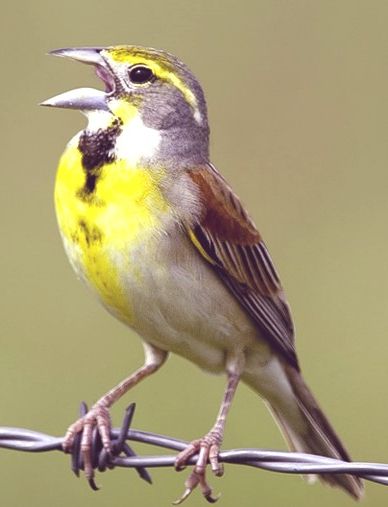
dickphoto.jpgAs I trotted north past the parking lot and turned out on the gravel path to head west and south again, I could hear the voices of dickcissel calling. These birds look like small versions of meadowlarks and they repeat their names ad infinitum into the wind…”dick cisss cisss cissl”
The trail loops farther west and a much more rare species of bird, the Henslow’s sparrow, were calling from deep in the grasses. That small sparrow’s voice is almost non-existent, consistent of a short, blunt call translated as ‘tsi-lick..’ It is so unobtrusive a sound it barely qualifies as a territorial call. But those of us who understand the journey that this bird has endured through loss of habitat and a corresponding drop in population numbers appreciate the presence of that sparse vocalization and what it means. “I’m still here. And that matters.” 

That could be the emblem for all our lives.

Bobolinks and meadowlarks

More species of grassland birds fly up ahead of me as the trail spins out into the far west side of restored prairie. Both Eastern and Western meadowlarks sing,  and telling the two species apart by sound is easy. The Eastern is a simple “tee-ah tee aiiiirrr…” with a descending tone. The Western by contrast warbles its way down a similar pattern. When they launch on the wing it nearly impossible by a quick glance to tell the two apart. They are just meadowlarks, and that is good enough. They spread their outer white tail feathers and fly away.

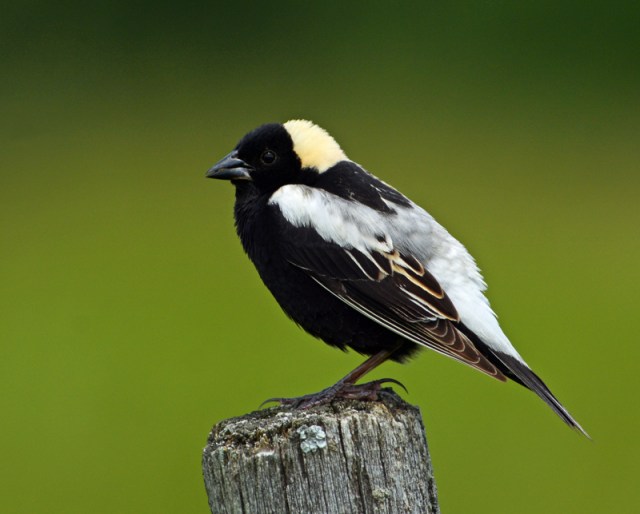
bobolink-male-eagle-point_doug-gimler.jpgI ran through a low brushy area of grass and forbs and where both male and female bobolinks jumped up from a plat of exposed soil. The male’s voice while singing on the wing is a rambling, tumbling series of whistles and chucks. With its black belly and buff-colored neck, white patches on the wings and rump, the male looks like a bird formed upside-down. But that coloration functions well on the prairie when the males rise up and circle to define their home turf. Their bold markings are visible from hundreds of yards as they fly in fluttering circles singing their heads off.  Let us never forget that its a competition out there.
If you’ve never heard the voice of a bobolink, you should take a moment and listen to it right now.  The voice of the bobolink sounds as if the bird were high on grass. As I run through the open fields, I can easily relate to that.

Running on

In such company, my spirit soars as well. Even in the early days of my running career, I preferred racing through grass and woods and open spaces to the confines of a stadium where track and field meets typically take place. Of course, both styles of running have their purpose in the life, just as work and play both have important functions in our lives. But for me, running cross country was a form of play. My naturally anxious mind adored that sense of freedom. By contrast, competing in track and field was a form of close-up work, like looking through a microscope or identifying parts of a creature in a lab class. Track was a form of academic discipline, and to excel at that took great study while cross country was a romp in the grass.

That scenario of relative work and play has spread out over the course of my life. At times the dichotomy was profound. During the period after the death of my late wife, I took time off from full-time work to recover from the stress of all those years of caregiving. Technically I employed myself and could set my own schedule. But the obligations of life don’t just dissolve because you’re not “working” full time. As any full-time retiree can tell you, the bills still do arrive. Plus I was still a caregiver to my stroke-ridden father, and would be for another four years before he passed away. I went out for a run that day as well. Running is like the thread that holds the stages of my life together.

It is a fact of life that challenges do not just vanish on their own. Though it functioned as a period of semi-retirement, I knew the future still awaited me. Thus I did not shirk the idea of entering the world in full again. Ultimately I “found work” again, and most notably, also found love again. Like the wind streaming across the prairie, life does indeed go on. Sometimes you run against the wind, and sometimes with it.

Paradigms

It’s much the same with running through grassy fields on a bright blue day. The environment can be heavenly, yet there is still the “work” of moving along that must be accomplished. The miles still tire the legs. That’s the price of getting “out there” and away from the disingenuous impulses of the world.

There truly is a price to pay for all our freedoms. Thus it is the wise soul that sees that price as an investment in the soul, not a burden on the soles.

Christopher Cudworth is the author of this blog. His book The Right Kind of Pride: Character, Caregiving and Community can be ordered at Amazon.com. 


Posted in running, track and field, trail running, training, We Run and Ride Every Day | Tagged , , , , , | Leave a comment

New Balance or Old Balance?

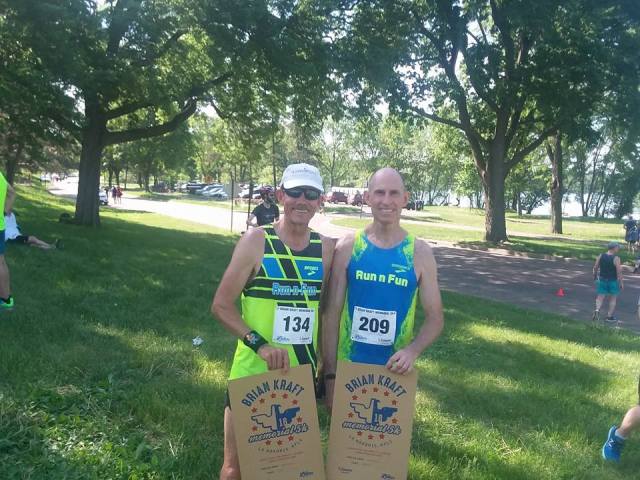
Dand and Bob.jpg

Dan Johnson and Bob Paxton

A friend from college named Dan Johnson recently ran a 5:26 mile. He’s coming up on sixty years old, and that’s a darned fast time for a man his age. He also recently won a big age group 10K award.

“What do you know…” he wrote on Facebook. “Senior Grand Master 10K Champion. Running to and from work this past winter and joining my Road Warriors running buddies has really helped me become more competitive.”

Dan runs and competes with a former competitor from Wartburg College named Bob Paxton, another sixty-year-old guy with good genes and a commitment to running fast in old age.

60+ splits

Think about Dan’s mile time for a moment. Running 5:26 at nearly age sixty still requires the same quarter miles splits it took to run that time back in 7th grade. That’s a forty year span of time that many cannot bridge.

For perspective: Four-minute mile pace is sixty seconds per lap. The oldest person to ever run a mile time that fast was Bernard Lagat at age forty, I believe. Five minute pace is 75 seconds per lap. Dan just ran a mile at just over 80 seconds per lap.

And granted, most of us who ran in college ran 5:00 pace or faster for five whole miles, and farther. But age creeps up on you. The world record for a mile at age 60+ is around 4:51. That’s still forty seconds faster than Dan is running, but again, that’s the world record for the distance. It shows you how respectable Dan and Bob’s times really are, because both are running times in the lower 5:20s.

No secrets

Perhaps it’s just the clear Minnesota air up there? Or maybe they’re drinking reindeer milk, like Lasse Viren once did (and I kid)?

People are always looking for reasons why some people run faster than others. But mostly it’s just putting in the miles and staying injury free. In any case, I truly admire what Dan and Bob are doing in their supposed dotage. They are likely faster than 99% of the running population. And they’re supposedly OLD.

NOT.

Racing time

IMG_3820I was somewhat slower in my 5K this past weekend. Last year at the Race to Market I managed a time of 20:50, which is a sub-7:00 mile pace. This year coming through the knee surgery in April I lost some training time, especially speed work, and ran a 22:26 on the same course this year. I got out in 6:47 and then slowed.

That’s 7:14 mile pace on average. Sue and I both won our age group at the Race to Market 5K to earn a little hardware.

New Balance

For the race I wore my New Balance 880 shoes that are a bit firmer for that racing feel. Now those are nothing like the Nike Air-Edge racing flats that I wore back in 1984. Those were so light and responsive it was speed personified just lacing them on. And I was so fit and light. Those days are gone but I have lost 10 lbs this spring. My orthotics probably weight two pounds a piece? So the time was not terrible for me given the overall changes in physical ‘balance’ (weight to power ration) I now live with.

That’s actually the pace I want to run in my duathlons and triathlons to be respectable and have a chance at some hardware. If I can run 7:10 pace, cycle near 20 mph for a 16-25 mile distance and swim at 2:00 per hundred I’ll be in the hunt for age-group podiums as long as my transitions shrink a little.

Driven or not? 

I’m having fun at this. So while I’m not driven to kill myself these days, the training is still an eager challenge for the most part. Sue and I rode 41 miles the day after our race and managed 17.3 mph average in 20 mph winds. We rode 20 miles northwest into the stiff and buffeting wind with 1325 feet in climbing, then turned around with the wind and came home again. That felt a bit nicer, I can tell you.

Sue and KyleTired legs

My legs were genuinely tired those first five miles after racing the previous day. Then they loosened up for the middle thirty miles, and then I tired out again the last five. It was tough in that wind to find time to get much nutrition. I nibbled a bit on the way home but that was probably not enough. Sue pulled ahead of me as we neared home, but I caught back on using a couple downhills toward the finish. She’s a strong bike rider and was cooking along on her tri-bike in aero position. When she gets rolling it can be tough for me to keep up on a road bike. Or perhaps I’m just imagining that.

Later on…

We put our legs to good use in gardening this weekend as well. Sue was almost back in aero again on that little gardening cart. That afternoon and the next we finished our backyard gardening makeover and it felt so good to have a balance of activities over the weekend that I can say I felt happy and actualized by Sunday evening.

Balance is what I live for in everything I do, and whether that balance is New or Old, I still love it.


Posted in aging, competition, cycling, duathlon, healthy aging, healthy senior, race pace, racing peak, Uncategorized | Tagged , , , , | Leave a comment