On writing and the light within

chicago-skyline-4a.jpgI remember well the jury-rigged IBM Selectric typewriter that I used to write in the summer of 1983. I’d purchased the machine from a friend for $100 and it worked fine except for the fact that the carriage would sometimes stick on the automatic return.

The Chicago apartment we rented sat on Menominee Street at the corner where Lincoln Avenue angles back into Wells Street in Old Town, right by Lincoln Park. My roommate was a high school and college friend enrolled in graduate school at the University of Illinois-Chicago. He also worked nights as an orderly in the CAT scan room at Rush-St. Luke’s Hospital.

That meant there was considerable time for me to be alone and write. I was working on a book titled Admissions, much of which I’d originally written on legal paper (by hand) while commuting to the city by train. The typing process became the editing process. It was quite the discipline.

Training sessions

Road sunBetween writing sessions, I’d go out for training runs morning and night. I’d just moved back to Chicago after having been sent out to Philadelphia in a work transfer the year before. The newly formed marketing department at the investment banking firm lasted until April of 1983. Then the company closed it down as fast as they’d formed it and sent the bulk of us packing. We got severance checks and a pat on the back.

So I was feeling a bit disjointed and trying to figure out what comes next in life when the offer came from my buddy to come back and live with him in Chicago. Having never lived in the big city before, I didn’t really know what that meant. But I wasn’t quite ready to move back to the suburbs and the house I’d  rented back in Geneva had new occupants. So I moved in with my friend to find out what Chicago had to offer.

Life in the city
IMG_5419Those summer days of 1983 were hot and filled with the sound of traffic rolling down Clark Street, the noise of garbage trucks unloading dumpsters across the street and the hiss and roar of buses stopping and starting their journeys.

And the smells. The textures. Every day the waft of tar from roofers working on apartment buildings filled the air. When the windows were left open a fine grit from the city air would seep through the screens and gather on the surface of the typewriter and the paper left on the roller.

Clean start

I’d brush it all off in the morning and start writing again. Page after page I worked on my novel. Th editing process was intense as I tried to identify and clarify the voice and pace of the novel. The characters were well established, and I mapped out the plot lines and twists on a sheet of paper to keep it all straight.

In the morning I’d run six miles on the lakefront. In the evening I’d run 6-10 miles up to Montrose Point and back. Building fitness, racing occasionally and keeping an eye on the fall calendar. In between I was writing stories for a small publication called Illinois Runner, working freelance graphic design jobs and serving as a running consultant for a company my former track coach ran called One On One Fitness. Scratching out a living, in other words.

Reality checks

Slowly the severance money drained away. I’d kept it all in traveler’s checks and paid my share of the rent and fed my skinny body when necessary.

And most days I would write.

The novel centered around a fictitious college called the University of Wisconsin-Dells. The concept was that every student enrolled in the school would work in the tourism industry to fund their education. That model has come true in a number of ways, specifically at Disney. But my prediction was made in 1983, well before Disney went through its massive change from moviemaker to media juggernaut.

I made other novel observations that came true in the future as well. For example, I predicted that a conservative movement called The Mandate would take over most of AM radio and turn it into a massive talk show network to influence politics at the national and local level. This was well before the likes of Rush Limbaugh came along, but I saw it coming back in 1983 during the height of the Reagan adminstration. I predicted in my book Admissions that The Mandate would use media to target and harass those who disagreed with conservative policies. In many ways that presaged the concept of InfoWars and Alex Jones. Even then I saw back then how conservatives operate, filling vacuums of social commentary through propagandistic media strategies designed to capitalize on ideological opportunities at the street level. That has come true with Fox News and now, even more powerfully, with Sinclair media buying up media properties across the nation.

So the time has come to complete my novel Admissions.

Novel thoughts

IMG_5417But it wasn’t all serious stuff. I wrote a chapter called Doing the Icons about a woman who develops a sex fetish for costumed mascots. And a chapter about a motel owner whose deep Wisconsin property becomes a hangout for swingers. That’s pretty much come true as well with the Don Q Inn in Dodgeville.

The chapters were all written as free-standing sections with the plot line woven through them. The main character Sean and his girlfriend Charise wander through these adventures much like the novel Candide, where both and good things happen, but the final lesson was simple, “We must tend our garden.”

Life tectonics

I invented a term in the novel for the things that happen to us in this world. I called it “Life Tectonics,” the crashing together of continents of self and others. That idea was taught by an iconic professor named Jith Lakota, an East and American Indian descendant whose studies on the topic were being carried out at the University of Wisconsin-Dells. When I first heard the song “Crash” by Dave Matthews band it also made me jump out of my car seat to yell, “I thought of that first!”

The good professor in the novel also preaches a practical philosophy: “Sometimes you have to be smart enough to admit your faults, and stupid enough to know what’s good for you.”

That aligned with the fictitious idea that the UW-Dells made use of a voice recognition technology for recruiting that could identify deep personality traits and intellect just by making a recording of a person’s speech. That would eliminate the need for an application process, as the analysis would produce an accurate portrait of your worst faults in learning ability, personality and character. These became front-end learning points in one’s education.

I still believe that’s going to happen someday.

The novel today

The novel Admissions sits on floppy disks that I’ve kept all these years. My brother sent me a drive that allows you to transfer information from a floppy disk through a USB port to a contemporary Mac. It requires me to convert MacWrite files into plain Text files, but these can then be opened in Word.

So I’m in the process of doing just that, as my son and I are going to take that novel and finish it off. There are many other predictions I made in 1983 about the future that were to come true. Some of them seemed outlandish at the time, like the concept of an all-Beatles channel on the radio. But now that exists too.

Whether my thoughts on auto technology will come true remain to be seen. The novel proposed that cars would someday be propelled by opposing magnetic coils that would be charged up electrically and wound into an opposing force that could drive an “engine” much like the rubber band on a balsa wood glider. Perhaps I’m wrong about that one, but this is a novel, after all. Some fantastical ideas are allowed.

Back to the Future
IMG_5347So it feels like time travel for me to work through these chapters and turn them into modern forms of text that can be edited. By the time I got it all written I was a young father with a job to hold down and kids to raise, so the novel faded into the older technology of my Powerbook 540c Mac.

But I so well recall the feeling of typing those words on the IBM Selectric in that Chicago apartment as I dreamed up the characters and the plotline. I’d run those four to six miles in the morning and run even more in the evening. Between, I’d write what I hoped would someday become a novel predicting some much about the world.

Life interceded as it always does. But you know, the process of being a writer is a marathon, not a sprint. And that process continues. I have two other books in the works already, and a conference call with a literary agent next week to plan next steps.

Someday I hoped the book titled Admissions truly gets to see the light. Because writing has kept the light alive within me all these years.

Posted in Uncategorized | Tagged , , , , , | Leave a comment

Washed out but not up

Lifeguard two.pngI’m still new to triathlon in many respects. But like so many (other) things in life, it is sometimes the early experiences that teach us the most.

Bike racing 

For example, the first time I tried racing bikes in a criterium, I stuck with the main bunch through a lap or two and thought I was in a good, respectful spot at the back of the peloton. Then riders in front of me began peeling off en masse. These were guys that had shot their wad and had nothing left to give.

I watched the carnage for a few seconds and suddenly found myself twenty yards back from the pack going into a straightaway. At that moment I should have sprinted like made to catch on. Instead I said (and this was the rookie mistake) “Be calm and catch up over the next lap.”

Wrong. Idea.

The pack quickly pulled away and I was left to pedal the rest of the entire race on my own. Lesson learned. Catch on right away or give up all hopes.

Out of control conditions

041618marathonnl08.jpgBut that lesson was about racing tactics, not race conditions. Last spring’s Boston Marathon was a wet, cold, sleeting mess of a race because the spring weather turned things into a chilly hell for all enrolled in the race. The dream of competing in the Boston Marathon was turned into a nightmare of trying to finish the race.

Even the women’s winner Des Linden was going to quit at six miles or so. But true to her steady form, she stayed in the race, got into a groove and wound up winning the thing.

I’ve run in similar conditions. We once did a three-hour run in 43 degree temperatures on a January day in southeast Pennsylvania. It rained the entire way. I weighed 140 lbs at the time with 3% body fat. All I wore was a long sleeve tee and a tee shirt over that. And shorts. All were soaked through. That was a hard day.

Lake Michigan roars

Life Savers.pngBut few conditions are more daunting than a choppy lake and an open water swim. This past weekend’s Maytag Steelhead Half Ironman offered up a breezy morning and waves tumbling onto the shore at two feet tall.

Lifeguard.pngThe pros and age-groupers all took off into the chop and those of us standing on shore were left to imagine what conditions were like out there. After the race, I spoke with Amanda Marek, a top-level age grouper and victor in several state-level triathlons last year. She’s just coming off an arm injury that required surgery, but if nothing else, the young woman is a competitor. Her take on the swim portion of this past weekend?

“That was the scariest experience of my life.” She still finished in 4:50. Yeah, baby.

Then there are the studs who don’t seem to let anything daunt them. This guy emerged from the surf looking like a freaking god. You are very welcome ladies. Thank me later for the visual orgasms.

Life Stud.png

And still, the water was not wetsuit legal, and for many less godly competitors that meant staying safely on shore. “You could give me ten wetsuits and I wouldn’t swim today,” said one woman while firmly ensconced on shore. Her family laughed.

The outcome

Life Brandes.pngThose who dared the surf did so with resolute will. Here Madison Multisport coach Steve Brandes pops up in shallow water at last.

The conditions in the water still shook the daylights out of people swimming through a chop worth of the Maytag name affixed to the race. It looked like a washing machine out there and from all reports, it felt even worse. Some took the safe way back.

Lifeguard Three.png

My wife emerged from the water with a big bruise on her face and a loose contact lens inside her goggles. Standing on shore, she reorganized her physical self and her wits, then trotted off to ride the bike.

So it was a case of being washed out but not up for many competitors. We all have our days when conditions whack us good. Some of it is random luck, good and bad. One day goes great in the heat. The next time, cooked. Or the swim goes well and the bike sucks. Or the bike goes great and the run, not so well.

It’s a relatively rare thing when we don’t wash out a little in some aspect of the triathlon. But catch a wave and you’re sittin on top of the world.

May you all catch the wave of your dreams.

Posted in triathlete, triathlon, triathlons | Tagged , , , , | Leave a comment

The Rule of Threes in triathlon

I’m not a triathlon coach. No certifications. No real credentials except the fact that I regularly podium in my age group.

But that’s the objective of most triathletes, is it not? As in any endurance sport, especially the three involved in triathlon, the category of ‘elite athlete’ is reserved just for those with the talent, time and drive to lead races.

The rest of us find our goals in the many layers of achievement well below those of the world’s elite. Yet even standing on the podium isn’t possible for many. So how do we measure the relative amount of training we should legitimately apply to reach our goals?

The rule of threes

IMG_6118A few years back when I was struggling with Achilles tendon problems, I managed only ten miles a week in training. That usually consisted of three three-mile runs during the week. One of these I would do fairly quickly, actually spending time on the track doing intervals. These I did fast, usually at 6:00 per mile pace. A typical set would include 6-8 X .400 at 90 seconds each.
If that type of workout sounds contradictory given the tight and sore Achilles issues, all I can say is that it didn’t hurt any more running fast than it did slow. Ultimately the Achilles problem was cured by a fortuitous change in shoe models. I was given a free pair of Saucony Triumph ISOs whose heel counter did not dig into my Achilles. That was largely the end of that.

Along with all the riding I was still able to do, I ran 43:00 for 10K that fall. About 7:00 per mile pace. That’s pretty decent on 10 miles of running per week.

So my formula was simple: three runs each week with 30% of it done faster than race pace.

Applying the Rule of Threes on the bike

The same system can be applied to racing on the bike. Getting out the door for three rides a week is often sufficient to race a Sprint, Olympic or duathlon. Two longer rides of 2-4 hours on the weekends and one hard and fast ride during the week is a minimal yet still effective strategy. I personally use a 20 mile distance to do a hard ride. My goal is to ride a 20 mph average. That includes some very hard intervals where the speed is over 25 mph for stretches of 800 yards or so.

The average speed naturally drops when hills or wind impinge, and that is part of the gig. You have to learn to deal with those issues in a race, so there’s no better way to practice than riding hard and fast in all types of conditions.

If you’re fortunate enough to have time for a second weekday ride, a nice strategy is to ride quite easy overall but choose a few Strava segments to really blast and try to beat your best effort. That way you get empiric feedback, much like running intervals on a track. But the overall ride from 25-35 miles should be easy.

The rule of threes in the pool

It seems the theories on how to swim faster and longer are shifting toward doing longer sets of short, fast intervals. I read the swim magazines and online stuff and that strategy, along with form drills focused on efficiency, are the current trusted method for swimming better.

And speaking from personal experience, swimming three times a week really can build fitness quite fast. I haven’t done that much all that often. Even two times a week if the swimming is done hard really helps. But the goal of threes in all three sports is a wonderful way to transfer overall aerobic training with far less risk of overuse injury than bulking up in one sport or the other.

Specificity is important, and doing intervals hard and fast in the pools is important to making yourself a faster swimmer. Choose one day a week to push yourself past your normal limits and “swim to fatigue” even if it means a bit longer rest intervals between.

That’s it. The Rule of Threes is a dependable and sustainable approach for most triathletes. It’s easy to plan and track your efforts, and know you have three hard workouts built into your swimming, cycling and running each week is a true confidence builder.

I may not have coaching certifications and this system of threes requires a bit of upward tweaking to achieve proper Half-Ironman training, but frankly there are only so many hours in a day and so many days in a week. If you live by the Rule of Threes you won’t likely die in the race.

Ironman reality

An Ironman training program requires considerably more  volume in each of these categories. The weekend rides need to build to 6-7 hours and cover 80-110 miles. Longer runs of 15-20 miles are necessary for marathon training. Open water swim training must be incorporated to prepare for the two-mile distance.

Most people planning to compete in a full Ironman distance event hire a coach for perspective and application of training principles. The fatigue and commitment are considerable, and the depths of training render athletes unable to judge for themselves how much they should do.

But you honestly could depend on applying the Rule of Threes if your goal is to finish. Allow 16-20 weeks to prepare.

Or enjoy yourself a Sprint. You’ll recover three times faster. (LOL)

Posted in 400 meter intervals, 400 workouts, triathlete, triathlon, triathlons | Tagged , , , | Leave a comment

The swim champion in lane two

RioOlympicsswimmingpool-GettyImages-519838356-59c09963054ad90011cf5247.jpgI swam next to a state champion in the pool this morning. She’s just graduated from high school and will be going to the University of Cincinnati this fall.

One of the coaches in the Master’s swim program described her this way: “For a small girl, she pumps out a lot of power.” I can vouch for that.

It was fascinating watching her swim butterfly, the event at which she’d placed first and third in successive years at the Illinois State Championships. Her shoulders surged and her arms came round with strong precision.

Yet there’s always room for improvement. “You were a little long on the walls,” the coach said after one of her intervals, “but otherwise looking good.”

Dolphin time

At the start of the session I was standing on the deck as the state champion pushed away from the wall to start her workout with a long underwater dolphin kick. “That takes a lot of core strength,” my wife noted later. She’d been watching our state champion from two lanes over.

What impressed me most, however, was the young woman’s ability to propel herself with just her kick. Using the foam kickboard, she tooled along nearly as fast as I could swim in full freestyle mode. “Geez,” I thought. “It’s like she’s got an inboard motor.”

Swim strokes

All the parts of a swim stroke matter of course. The catch. The pull. The rotation. The kick. Some people never truly complete the picture. They pull strong but don’t kick. They raise their elbows but don’t rotate. They bob their heads on every breath or drop their hips and legs in the water. Or all of the above. Swimming can be hard to learn.

Real swimmers work on far more subtle improvements. After the workout was over, our coach was talking butterfly form with my wife and demonstrated how not to hunch the shoulders during butterfly. “I still have problems with that,” he admitted.

“That’s because the butterfly was invented by Satan,” I joked. He rolled his eyes and turned away. “Nawww,” he groaned.

Improvement

I’ve gotten faster this year, and can actually now sense the reasons why. My swimstroke has come a long way since the days of that straight-armed windmill technique where I’d wind up cashed and gasping at the end of 25 meters. Blessedly, those days are long gone.

My 50 time has now dropped below 50 seconds. I swim a 25 in 20-21 and expect to dip below 20 soon. My hundred time is down to 1:45. It’s coming together.

It was also important to me that I didn’t get upset being passed repeatedly by the state champion swimming one lane over. That’s because I’m no longer so frustrated and embarrassed by my own lack of progress. Ego is often the worst enemy to ultimate improvement. The more you worry about people going faster than you, the slower you will likely go on your own. Relaxation is critical to efficiency and speed.

Talent rules

At the end of the swim session when everyone was gathered near the edge of the pool, I told our young state champion, “I appreciate your talent. It’s been an inspiration.”

It’s almost as if we live in different worlds. She’s eighteen years old. I’m sixty-one. She’ll be a Cincinnati Bearcat in a couple weeks and I’ll still be an aging Master’s swimmer and triathlete.

But you know what? I’m fine with that. The champion in lane two has her whole life ahead of her. Yet so do I. Might as well strive to be a champion in lane three.

Posted in swimming | Tagged , , , , | Leave a comment

Winging it with monarchs

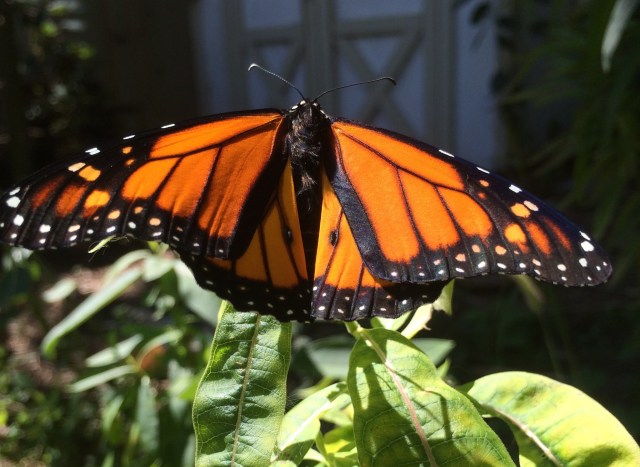
Monarch Milkweed.png

Photo by Christopher Cudworth

In the early 1970s, I recall running along the roadside of Illinois Route 38 just north of Elburn where we lived. The east-west orientation of that highway with its raised road bed made it a perfect monarch-killing machine. Over just a milelong stretch between the intersection of Route 47 and 38 and the Elburn Forest Preserve a mile to the west, dozens of dead monarchs could be found lying in the gravel. They were all hit by speeding cars.

My brother and I collected them. We’d gather shoeboxes full of the insects. All that carnage was an indication of several likely scenarios.

1) there were more monarchs alive in those days or

2) our little town was right in the path of an important monarch migration route

Monarch migration patterns

Likely both scenarios were true. In all cases, the numbers of these insects was stunning. It is also amazing how far this species travels in stages from Mexico up to Canada and back.

Perhaps you’ve become familiar with the lifecycle of the insect called the monarch butterfly. Millions of monarchs that breed in the United States and Canada overwinter in the mountains of Mexico. That’s where conditions typically favor their survival during the winter months. But monarch lifecycles are changing.

As the linked article on phys.org describes, many monarchs have ceased journeying to Mexico and are hanging out in the southern United States where a certain species of non-native milkweed survives all winter. That has attracted monarch breeding, yet set the monarch population up for increased risk of disease.

The article states: “Long distance migration can reduce disease in animal populations when it weeds out infected individuals during the strenuous journey, or when the migrating animals get to take a break and move away from contaminated habitats where parasites accumulate,” she said. “Our non-migratory monarchs don’t have those benefits of migration, so we see that in many cases the majority of monarchs at winter breeding sites are infected.”

Changing climes

Some of this may be the product of climate change. As global temperatures continue to rise, the range of existence for a wide diversity of life forms expands and contracts. At climate extremes, such as high mountain terrain, alpine species are forced higher up the mountain face as increased temperatures alter the zone in which they can survive. But ultimately, they can run out of vertical and the adaptations of many species to their climate zones are formed over hundreds of thousands of years, not just a century.

When the “norms” no longer apply, human beings typically turn to technology to solve such problems. But other livings things aren’t always so fortunate. This much we also know:  even technology can’t always compensate for the habits of greedy, stupid or stubborn people. We’re typically born with a fine brain, but survival all depends on how we use it.

So we depend on beautiful things at times to remind us not to be wasteful with creation.

Monarch scales.jpg

Photo by Christopher Cudworth. Female.

Monarch ranchers

The facts are in across the land: monarch numbers are down these days for a number of potential reasons. The chief problem appears to be the agricultural eradication of the native milkweed plant species upon which monarch butterflies depend for breeding. They lay their eggs on the plants. Then small caterpillars emerge and munch out on milkweed leaves. It helps to “ranch” them to protect them from natural and unnatural predators.

Thus to help the monarch population, our family planted and grew milkweed in our garden. First, we’d search for eggs and pluck sections of the milkweed to bring inside and put into a water-filled jar.  Soon the eggs would hatch into tiny caterpillars and those would start eating the milkweed leaves. They grow quickly into fat striped caterpillars and wind up reaching 1.5″ long. Then they’d climb to the top of the aquarium and affix themselves with tough silk to the screen top and curl into a tight ball. It all happens fast as the insects change from pudgy caterpillars into a bright green chrysalis with shiny gold flecks.

MonarchPoster

All rights reserved. No copies of this image may be made without permission.

My daughter Emily is an incredibly observant and patient photographer who documented all these stages in a series of images. She built a poster from these images. You can order one by contacting me at cudworthfix@gmail.com.
Payment is $21.60 by Paypal only. Size is 16″ X 20″ in high-res imagery. Shipping is $4.50. Total $26.10.

Watching the insects develop is a fascinating treat. But the real reward comes when the chrysalis form turns dark black and transparent after ten or so days inside the green chrysalis. That means the insects are ready to hatch into a full butterfly.

One year we ranched 50+ monarchs. There was a day when I released seven brand new butterflies outside in a period of several hours. The experience of watching these insects hang on their empty chrysalis shells while their wings pump into full form is incredibly inspiring. Being present for the “birth” of a living thing is both a humbling and affirming moment.

Holding a fresh new monarch as it clings to the end of your finger truly lifts your heart. Watching it hang a few minutes on a flower stalk in July with sunlight striking its brand new and colorful black and orange wings can be breathtaking. When the insects flap their wings and take off into a blue sky, it truly gives you a sense of wonder.

That’s a rare gift in this world where cynicism and the habit of taking the natural world for granted is so common.

The light in our eyes

Monarch Light.jpg

Photo by Christopher Cudworth. Male monarch (black spots on lower wings)

So you might be asking, what does all this monarch talk have to do with running, riding and swimming? Well, I’ve known many endurance sports coaches who get the same sense of joy watching their athletes go through stages of development. That’s the literal take on how this all relates to running, riding and swimming.

“WE’RE ALL BUTTERFLIES!” 

Okay, now that we got that one out of the way, let’s talk about a deeper perspective.

The richer meaning rests in all those days my brother and I spent walking the roadside during the height of monarch migration 40+ years ago. For it’s always hard to know, as young kids, what we’re supposed to recognize and know about the world. But when we grow into adults, it is important not to become jaded to what the natural world has to tell us. Because in that pattern of existence, we can begin to harm ourselves and others without ever knowing it.

We knew even back then that piles of monarchs along the road was not a good thing. But multiply that times how many east-west roads across the country? That meant millions of monarchs dead and wasted.  So we collected them, and pondered that, and an environmental ethic began to form. Being nature-loving kids, we recognized that obvious lesson.

Butterflies aren’t free

But the deepest lesson of all is that monarchs are fortunately still with us. They have not gone extinct, as yet, and they are not “free” in the sense that their existence does not come without a cost. That would be protecting them. Advocating changes in agricultural policy. And even ranching them by hand.

Thus the arc from collecting those dead monarchs to raising and releasing them as grownups into the wild signifies a connection between ourselves and the earth’s systems. Even the Bible recognizes this important relationship. The parables told by Jesus were often founded on deeply organic symbols in a literary device we call metonymy, “the use of the character of one thing to represent the nature of another.”

We find this method of communication throughout the entirety of scripture. It is the organic foundation of the Word of God. Those who ignore that deeper symbolism do so at their own peril, for they miss the critical nature of what God is truly trying to tell us when we’re warned that life and creation are gifts from the universe. We’re not the center of it. Instead, it resides at the center of us. That is the heart of God.

Generations

Monarch Milkweed Dusk.jpg

Photo by Christopher Cudworth. Monarch on milkweed at dusk.

Passing something of value along to the next generation and the generation after is the greater gift of existence. Some of the monarchs that migrate north to Canada stop to breed, and the succeeding generation is the foundation of what travels south to Mexico. There is altruism even in nature, the sacrifice of one individual to pass along life to another.

This is a lesson important to human beings as well. Even if it’s the simple act of protecting what already exists, or at least not squandering creation on selfish grounds of greed or neglect, that is the basic responsibility of all human beings. Because despite the fact that some religious people see themselves as specially created and thus separate or superior to nature, they live in denial of what scripture actually tells us. Jesus saw beyond the legalism of such literal notions of relationship to God. His parables launched listeners into a greater spiritual connection, but they worked by using everyday examples from life and nature to do so.

So it’s not the end-all, be-all to simply say “God made this and I love it.” We have a duty to discern the greater patterns of nature and how they reflect creation as a whole. I personally embrace the notion of God but I also welcome the insights of those who do not. Wisdom comes in many forms, and butterflies can talk to us if we listen.

All a person has to do is hold a monarch butterfly on the end of their finger to know that life connects to life. Yet lacking that immediacy, we should at least appreciate that the insect fluttering over the fields has a long journey to make, and that our running, riding and swimming is a pale yet important imitation of the real thing.

That should be both a humbling and inspiring lesson to us all.


Posted in Uncategorized | Leave a comment

Did someone say cycling commute?

IMG_0128Iiiiiiiii rode my bike to work today. Not on purpose, mind you. The vehicle I normally take to work needed service. More than I thought. Took longer than I thought too. Soooo the option was hopping on the Specialized Rockhopper and pedaling up the Fox River trail to work.

It was fun. No calamity to report. No skids on wet bridges where my shirt gets covered with green moss. No squirrels jumping into my spokes. Not even a chipmunk to run over in gory anguish.

Just a bike ride on a somewhat cool, somewhat warm day depending on how long one spends in the sun.

Blessedly my ride was mostly in the shade along a beautiful river sinking low in its late summer state. Egrets stood bored on the rocks jutting out of the water. Their guts were likely full because the fishing is easy when the water gets this shallow. Or so you’d think.

IMG_3831I even found a bike trail along a road that normally takes me to work. But like all bike trails in this world that are tied to subdivision development, it came to an abrupt and immediate and all encompassing end. Just like that.

Which is the terminal answer to people who yell out the window at me while I’m on my road bike, which I ride on the road because it’s a road bike.

And still they yell: “Get on the bike trail!” Did I tell you that they yell?

The problem with their Philosophy is that their vision of how the bike trail works is limited to that 800-yard space where it actually runs along the road. So many of them end just like the one I found today. Plus they’re often lumpy, covered with glass or rife with thick cracks that can take a skinny tire guy down in el segundo. 

There’s never an actual time to explain the realities of cycling in this world. Not to people obsessed with their own timeframe and mental model of getting where they want to go unimpeded. In their cars. With nothing and no one in their precious way.

IMG_1319.JPGWhich is why the Fox River Trail along the river is a quite nice way to commute to work by bike. No idiot drivers. Just me an the fat tire bike rolling along.
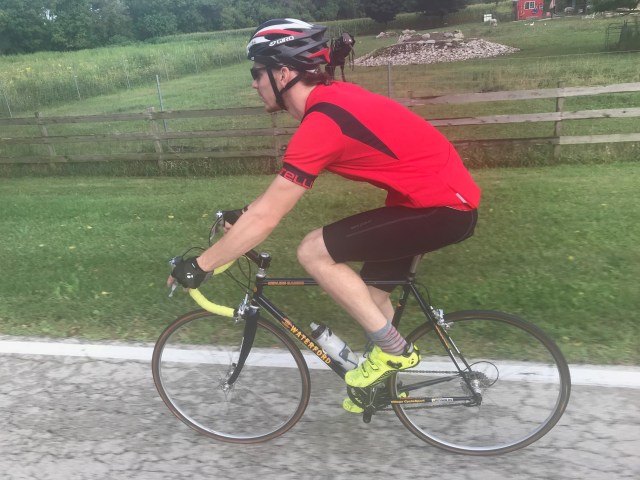
It took me 20 minutes to get to work today by bike. Not that much longer than it takes to drive. I have a bit of sweat on my back and my forehead is shiny. Other than that, no damage to report.

Perhaps I’ll do this again. Soon.

Posted in cycling, cycling the midwest, cycling threats | Tagged , , , | Leave a comment

Road bike happiness

Kyle on Waterford.jpgLast night I led my daughter’s boyfriend Kyle on his first road bike venture. He’d grown up as a proficient and daring BMX racer, so the whole road bike thing wasn’t as threatening to him as it might be to others.
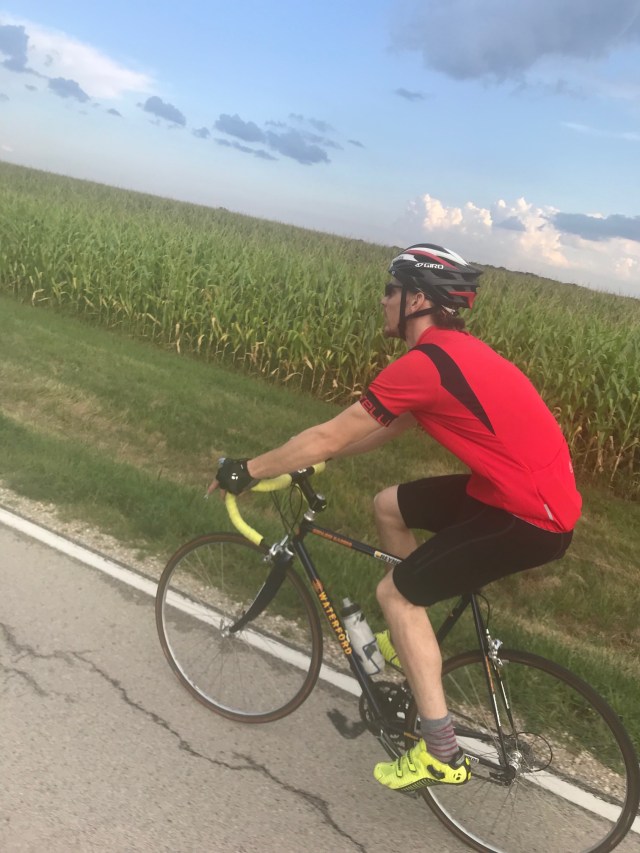
Still, he admitted to some anxiousness about clipping in and out of the pedals. We practiced a few times in the cul de sac in front of our home. Within minutes he had it down. I counseled him to remember to unclip before coming to a stop. That’s how new road cyclists wind up on the ground. That happened to me a few times in the early days.

Kyle loves speed and making things go fast, so the road bike is an enticing concept to him. Recently he drove a massively powerful and expensive car at a racetrack. It was his birthday gift to get behind the wheel of that machine in conditions that truly let him explore what it means to have horsepower and the wheels to try it out.

He’s also mechanical, so the workings of engines and gears and such are no mystery to him. As I taught him the order of shifting gears, he rode with his head down watching the chain jump around on the cassette. I could see his mind internalizing those functions.

One of my best friends and a fellow cyclist is a bike mechanic. He can take a bike apart and put it all back together again. He’s worked in bike shops and done repair work for people in his own well-equipped garage. I admire his capacity for wrenching because I have none of that ability myself. Even after taking a bike maintenance course I realized that I’d absorbed almost none of what I’d been taught. I was just as unsure about messing with the derailleur as I’d been before.

But Kyle, I’m betting he could take a road bike apart and remember how to put it together no problem. He’s been doing things like that since he was a little kid. Of course, there were some experiments that didn’t work out that well. He recently related that as a young kid he’d disassembled an unused appliance to get the motor out. He wanted to stick it on a go-kart or something like that. His dad came home to find the garage floor covered with parts. “Can you put that back together?” he asked. “I think so,” Kyle said.

Well, over the years he’s taught himself to fix all kinds of things.

Kyle Uphill.jpgMy point here is that Kyle will likely approach this road cycling thing in a different way than I have. What appealed to me about cycling was the liberty and freedom of rolling along at high speeds without having to run. Of course, I learned to change flat tires and how to adjust a thing or two on the bike so that I wouldn’t be stranded out in the cornfields. Beyond that, I remain a pathetic (apathetic?) novice at bike maintenance.
Gladly do I pay my friend the bike mechanic or a local bike shop to put things back in order. But Kyle is a practical young man who loves to know how things work and how to fix them.

So he also paid attention when we were pedaling up a hill and I suggested he drop his heels a bit and use the full rotation of the crank to help him climb. He got that instantly. “I can feel it,” he told me.

But here’s the funny part in all this. When we first pedaled out from the cul de sac to a long stretch of road to practice shifting, Kyle was struggling behind me. The riding was difficult. And it turned out there was a reason for that. The Waterford bike that he was riding had been hanging on a hook in the garage. That pulled the rear tire out of alignment and the rubber of the tire was rubbing so hard against the frame it was impossible to make the bike go more than 10 mph. It was killing him.

He stopped at one point and said, “My thighs are burning up! What’s wrong!”

I looked at the rear wheel and realized the problem. On one hand, I had to laugh because I’d ridden that bike while my son was in town and wanted to try out road cycling too. The same thing with the rubbing tire had happened to me. I could not figure out why my wife and my son were so easily pulling away.

So I said, “Kyle, I am so sorry! Look at this!” He saw right away how the tire was misaligned.

“Oh my God!” he laughed.

And I added, “No wonder. Dude, this is going to feel so easy after we fix this.”

Then we got him back on the bike and he was rolling down the street unencumbered by a tire that was basically braking the bike every inch that it traveled.

So we tooled up a stretch of unincorporated road to practice some faster riding. Kyle was clipping in and out pretty smoothly at the stop signs, so we rolled on out to some country roads.

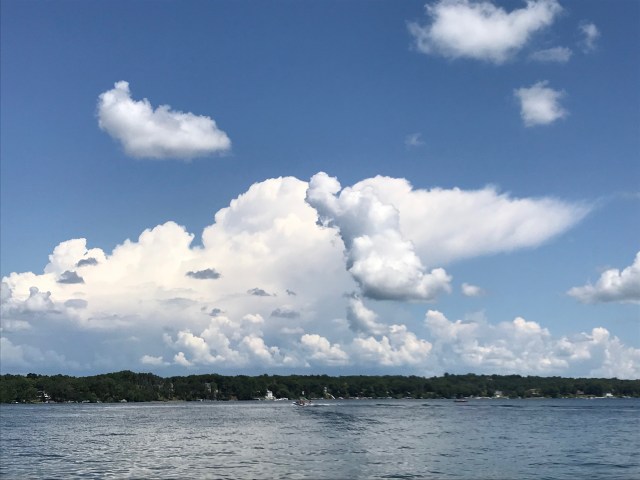
Road sun.jpgThe weather was fine and light. A storm had passed through an hour before so the clouds to the north towered 40,000 feet in the air. It served as an interesting backdrop to the rolling country road we traveled. On the downhills we soared past 20 mph and on the uphill Kyle experimented with the gearing. “It’s hard to get used to this,” he’d said earlier. “I’m so used to pressing down to make the pedals go. Being clipped in and being able to pull up is strange.”
The boy definitely has the makings of a road cyclist. He’s attuned to the things that make the entire enterprise work. Most of all, he has that appetite for speed. That should serve him well someday.

After his butt and legs recover, of course. There’s a cost to every new venture, and he was feeling it by the time we got home. Those sit bones take time to break in. Those legs need to build some strength and muscle memory.

Then the horizon waits.

Posted in climbing, cycling, cycling the midwest | Tagged , , , , | Leave a comment

Getting my 20 on

IMG_6490I’m not a slow bike rider. But I’m not a super fast bike rider either.
My brother-in-law Paul once rode 40K (that’s 24 miles) in an hour. On a road bike.

That’s fast. And he was still a CAT 3 rider. Not a CAT 1 or CAT 2. A CAT 3.

So there are lots of people faster than me. I say that because what I’m about to share seems like bragging of a sort. But it’s really not. It is appreciation. Gratitude. And excitement over riding at a pace that feels fast to me.

20 mph

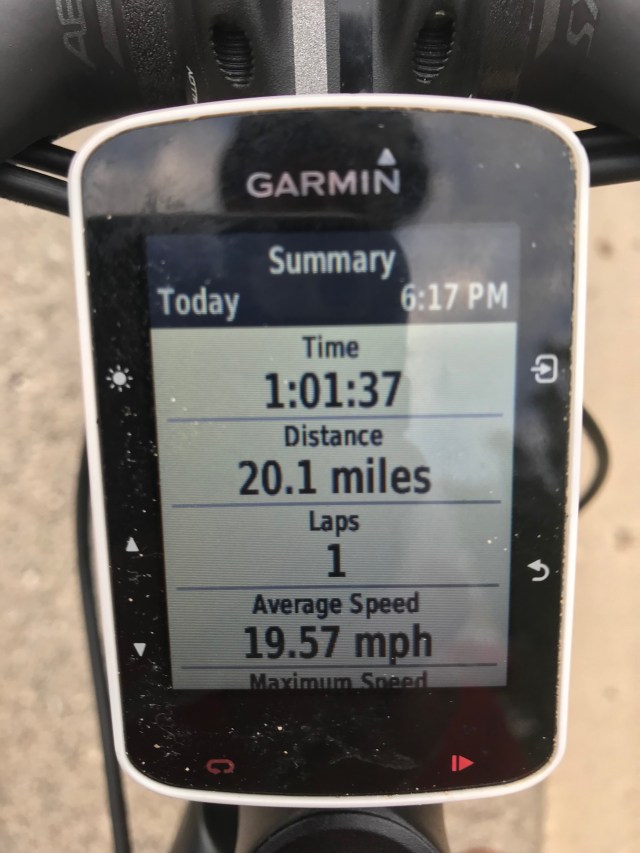
I rode 19.57 mph for 20 miles last night. That included a couple long climbs where despite my cadence and hammering as hard as I could, the pace dropped to 14 mph.

And the wind, of course. This is Illinois.

Short of races where I’m going all-out for the sprint distance, which is usually 15-16 miles, I don’t typically average more than 20 mph while riding solo. But as the summer proceeds and my fitness increases, it’s always my goal to do a few rides where my average speed tops 20 mph.

That’s easy enough to do in a group ride. I can easily average whatever the group is doing. That might be 20-24 depending on the ride and the group.

All-time fastest

dragonfly.jpgMy all-time fastest average was in a Masters 50+ race. When I got dropped after 35 minutes I looked down to find that I’d averaged 25.2. That’s pretty decent for a guy over fifty years old who only started riding seriously in his late 40s.

Strava shows that I haven’t fallen off precipitously on my average times or segments even after turning sixty years old. If you get out there and ride, there’s a lot of life left even in older bodies. I can still run 7:00 pace for a 5K. And if pressed, I run intervals at 6:00 pace on the track. That’s the same pace I ran as a 12-year-old kid in seventh grade gym class during a 12:00 time trial. 49 years ago.

In the drops

I don’t own a time trial or tri-bike. So to ride fast I slide down on the drops and stay low as long as I can. My Specialized Venge is an aero geometry bike with a thin profile from the front. It’s a snappy bike even though the handlebars that came with the purchase are 44s, and that’s a bit wide for me. I make it work.

I’ve been cycling on a decent road bike since 2007. Those have been years well-spent learning how to ride well. And I still like trying to go fast. That used to be my Twitter handle. @gofast. I gave it up and moved to @genesisfix07 for reasons related to other pursuits in life.

No full white beard

IMG_6510But the cycling is still a pursuit that I like to do as fast as I can. I’m not ready to grow the requisite full white beard that men of my age (too) often sprout. The signal they’re ready to slow down, retreat and fix their personal doctrine into permanent place.

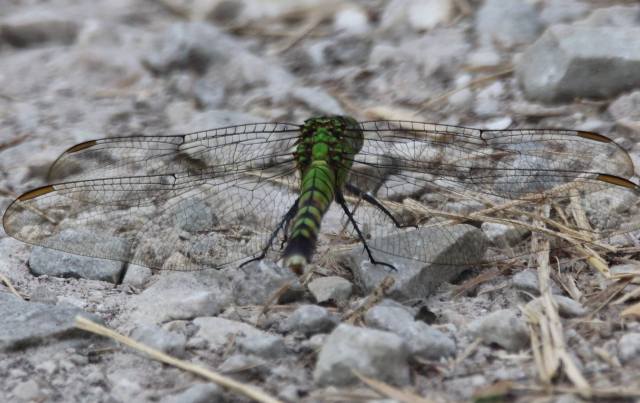
I sport my white goatee because I still love new music and artistic pursuits that challenge my own perceptions. I love diversity in everything from the people I meet to the miracles of evolution all around us (see the dragonfly above, a photo I took yesterday at Fermilab.)

And all that runs through my head as I course down the road at 26 mph trying to raise the average time above 20 mph in compensation for that hill I just climbed.

It’s just one of the things I do.

Posted in cycling, Uncategorized | Tagged , | Leave a comment

August light

light-chrisFor many people it is the light of autumn that seems romantic. As the sun courses lower in a September sky, shadows grow longer and trees take on a tinge of color. Come October, the light grows clear without the humidity of summer.
Those are wonderful things. My son has always loved autumn for these reasons. I look forward to them as well. And autumn is not far away.

Looking back at summer, the month of July is always an awesome feast of summer fun with its blooming lilies and my birthday, to boot. Before that, June is full of anticipation as summer arrives.

Yet August is like some rich combination of dinner and desert. Usually my fitness is good by then. I can cycle 40-50 miles and not get tired. Same goes for running. And I even swam 1500 meters in a lake this past weekend without gasping. And so, with the exception of the occasional grass allergy that comes along the first week of August, I’ve always enjoyed the rich glory of warm weather and August light.

Halcyon

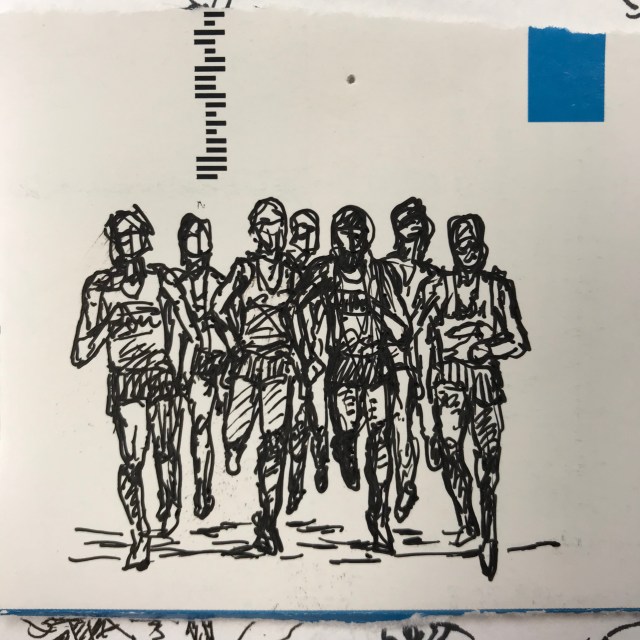
Some of that appreciation goes all the way back to those first weeks of cross country practice when I was just fourteen years old. I’ll never forget the strain in my lungs and the aching in my chest as we ran those first miles, every kid for himself. Something clicked in me though. I loved it. It all took place under August light.

Arriving at cross country practice every August after that meant days filled with goals and expectations. The older I got, the more was expected of me. August meant leadership.

When I went off to college, those first miles running around the campus at Luther were a thrilling yet challenging test of personal confidence and resolve. I clearly recall climbing a long, winding hill at Palisades Park, a set of bluffs that rise high above the Upper Iowa River in Decorah, Iowa. I was running at my limits but not willing to give an inch. We curled around the top of the park and then descended like madmen, almost flying off the road at some points.

Then we raced back to campus and gathered around our coach. Each young man was eyeing the other. “Look!” one of the Juniors pointed at me and said. “This dude’s not even sweating!”  That was 44 years ago.

August love moon

IMG_6108Entering my fourth year in college I fell in love with a girl under an August moon at an RA retreat in the hills of Wisconsin.
But I also recall the drive up to Luther with my father that year. Finally we’d reached a level of peace and respect in our lives. He’d given me good advice and encouragement in choosing Luther in the first place. “You can bird in those hills,” he’d told me. That set the course of my life in a good direction.

He was right about the birds many other things. In fact, he was the man who nudged me into running in the first place. As much as my father and I fought about many things in life, he genuinely wanted us to find our place in the world, and succeed. But he was practical too, almost to a fault. The previous spring when I’d broken off a relationship that lasted the second half of my junior year in college, I confessed to him that I’d never really been in love with her in the first place. “Well, she kept you warm for a while,” he offered. I glanced over at him in the car that day. He gave a rare nod of the head. All things have their seasons, he seemed to be saying.

See the light

Which is why this August light gets to me as the prairie dock and compass plant flowers tower over the prairie when I run past. That light has carried me through so many years. Well after college was over, I’d push my body into hard training mode in August so that come September and October, when the weather cooled and race days would come along on Sunday morning, I’d be ready to throw it down with the best of them. I’m proud to say that I won more than a few. The die for that success was cast in August, I must say. If you want to see the light, you’ve got to rise to the occasion. Early and often. Even in the heat of August.

Tall and august

Of course things have mellowed for me with time. I still race, but the urgency with which I approach those opportunities has changed. Like the rich shadows that cloak a dew-soaked lawn on the first of August, I stand tall and august in one place at times, just thinking about what I want from each day.

I’m grateful for all the August mornings I’ve experienced. Grateful for sharing them with sharp-cheeked teammates racing along with sweat falling from their hair. Grateful for those first two women runners who showed up at cross country practice that August in 1975.  They were women who set the stage for so many women to follow, and every woman that I see running makes me think back to the efforts of those two gals.

Grateful as well for a coach who understood and encouraged those women, and demanded much of us all, along the way. Grateful for the memories that flow from all those experiences.

I’m also grateful to be running well enough to enjoy a four mile run today through a cool morning on the last day of July, 2018. It will grow hot again later this week. Thus the die is cast again. There is no getting through August, or its determined light, without a barrel of sweat that falls from tanned skin.

And I love it. I do love it so.

Posted in aging, aging is not for the weak of heart, Christopher Cudworth, competition, cross country, running | Tagged , , , , | Leave a comment

On Wisconsin

IMG_6402.JPG

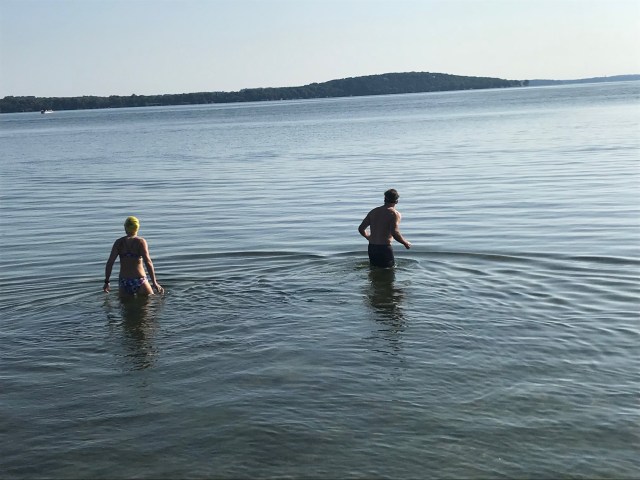
On the water? On Wisconsin.

There are places in this world we can claim for ourselves despite the fact that we are not legally a resident. For me, one of those is Wisconsin. I know that people who live there refer to Illinoisians as Flatlanders. The implied insult is that we’re somehow invaders in the state to the north.

On some levels, that is true. Thousands if not millions of Illinois residents stream north on weekends. The thoroughfare of I-90 headed to Madison can turn into a traffic jam on a Friday afternoon. The same holds true in coming south on a Sunday evening.

Illinoisians buy property all over the state, then tow their boats behind big pickup trucks and SUVS. They pull up and dump their boats into the lakes, grab a case of beer and take over the place most weekends. Some come to fish. Others come to water ski or jetski. Those Flatlanders flow into the bars wearing Cubs and White Sox hats.

Most mind their manners, but many don’t. I particularly recall one Illinois asshole holding court over slow service at a roadside spaghetti hut east of Eagle River. What a jerk. Everyone in the joint wanted to grab that pompous blowhard and throw him out on the street.

Gentler times

I can’t disclaim any of the bad stories about Illinoisians. But I’ve also spent more than forty+ years traveling into and through the state of Wisconsin. Camped and birded. Cycled and run. I’ve even fallen bent, broken and bled in a roadside ditch on a warm September day in 2013. Very easily could have died that morning. Bike wobble you know.

I once stopped with my Specialized Rockhopper on a mountain bike trail in Governor Dodge State Park. It was late July and the song of indigo buntings tumbled down through the trees. Crickets were singing and the air was still. I stood there thinking about all the ways I’d connected with that landscapes over the years. A few hills over and a few years before, I’d fallen in love at first sight under an August moon.

How the years had passed. Thus it came to me that the buntings would continue singing and the crickets would keep chirping long after I’d departed this earth. At that moment, it did not matter where I actually called home. I was at home in those woods.

IMG_6379.JPG

A giant fish in the sky over Green Lake, Wisconsin.

On winter days in that same park I’ve seen rabbit tracks crossing two thin paths where cross country ski trails cut through the snow. Down the road we’d lodged at the terminally kitschy hotel known as the Don Q Inn. There are “Fantasy Theme Rooms” that supposedly increase the atmosphere of romance. There is a Cave Room and a Viking Room, a Japanese Room and who knows what else.  The place has been in business for decades, so it is apparent that someone enjoys the schtick.

Eskimo rooms.jpg

So Wisconsin wants to accuse Illinois people of having no taste? Just stop.

That is Wisconsin in a nutshell. Because twenty miles up the road sits the House On the Rock, a major tourist attraction in the western part of the state and one of the most pathetic examples of bad Americana imaginable. Built by a skeezy architect with zero integrity and even less capacity for acquisitive restraint, the property encapsulates the confused nature of the American Dream.

Right up the road stands the Frank Lloyd Wright estate known as Taliesin. And while Wright was a massive egotist, he humbled his architecture to reflect and harmonize the landscape. By contrast, House On the Rock lies like a jagged set of dick and balls stuck on a chunk of granite, or whatever.

IMG_6396.JPG

A play on words I guess.

So the people of Wisconsin can malign Illinoisians any way they choose, for lack of taste or discretion, and all one has to say to defeat the criticism is “House On the Rock.” And if the Badger Blockers still don’t get it, that only proves the point.

The American South with all its Confederate pride and rage is demonstration that Proof of Residence is no guarantee of exceptional insight. The same goes for the turds so jealous and perturbed by cyclists riding two abreast on far country lanes they feel the need to hassle and holler at the supposed invaders to get the hell off the roads. “We pay taxes!” the voices come chortling out of the pickup trucks and low-slung muscle cars.

But who truly owns any road? Is it those whose tires wear out the asphalt faster or the souls who brave a half-mile hill with the sun on their backs and the cheering of crickets in their ears. Granted, the Wisconsin farmer that works the land and has cows roaming the hills is a stakeholder in something special.

None of us that visit those regions pretends that is not true. Many’s the time we’ve pedaled slowly behind a tractor hauling hay from field to barn and not complained a bit. That is the price of admission, for sure. Our bike ride is a privilege that we regard with respect. And should be block a few cars because riders stack up and spread across the road on a hot day, well, please forgive the transgression. What indeed is the true hurry in this world that one car cannot abide a 30-second delay for people sweating under a summer sun?

IMG_6362.JPG

The lake life.

But somehow the sense of ownership in some people translates as tribalism. I’ve seen it many times over the years. The roaring engines of a truck behind a cyclist or the sputtering motor of an ignorant motorboater chasing loons around the lake until they can hardly submerge for exhaustion. It’s the torment of the disenfranchised soul that makes people want to badger others for the sake of self-aggrandizement.

But the water in those Wisconsin lakes falls from the sky or musters up from the earth. The bergamot and chicory that blooms on roadsides in August shows red or purple or blue despite the politics of a particular place. The kingbirds chattering on Wisconsin fence lines care not about taxes or collective bargaining or the desperate acts of the DNR to keep the deer population both under control yet plentiful enough that hunters don’t resort to shooting each other during the fall.

I’ve run in the woods and fields. Skinny dipped in the lakes and ridden so many miles my head spun from the climbs and descents. But most of all I’ve spent enough years on Wisconsin soil to claim it as a place I also call home. No one can take that away.

Posted in bike crash, bike wobble, Christopher Cudworth, cross country, cycling, cycling the midwest, cycling threats, triathlon, triathlons | Tagged , , , , , , , , , | Leave a comment