On sports prowess and worthless skills

My Pistol Pete Maravich look, age 12

At the age of nine years old, I was a big fan of Pistol Pete Maravich, the basketball great who essentially invented the modern game in all its flashy play. While Maravich was a sensation, his talent with a basketball wasn’t enough to lead the teams for which he played to an NBA title.

That’s a criticism often labelled at other players whose greatness fell short of the title-winning standard. Basketball greatness is ultimately measured by the winning records of players such as Bill Russell, Wilt Chamberlain, Michael Jordan, Kobe Bryant and LeBron James, all of whom won multiple NBA championships.

That said, I modeled my basketball style after a player that I much admired for his creativity and innovation. The height (or nadir) of that imitation was learning to spin a basketball on the tip of my finger. It took me a week of practice to get decent at it, but eventually I grasped the need for a level spin on the ball and how to slap it to keep the revolution sufficient to keep the ball up in the air. I was proud of that achievement, and can still spin a basketball on my finger to this day. Recently I showed that skill to a batch of elementary students during a substitute teaching gig. Some of them actually made progress in their first lesson.

I didn’t bother to tell them how useless it was to learn that skill. But that’s the way it is with so many activities in sports. I once won the football Punt-Pass-and Kick Contest in our town and and advanced to a District competition, but that didn’t really equate to being a football player. My father knew that and told me in no uncertain terms that I was going out for cross country that fall. Still, on a cool fall day in college, I once kicked a football field goal from forty yards out. That’s a pretty worthless accomplishment too.
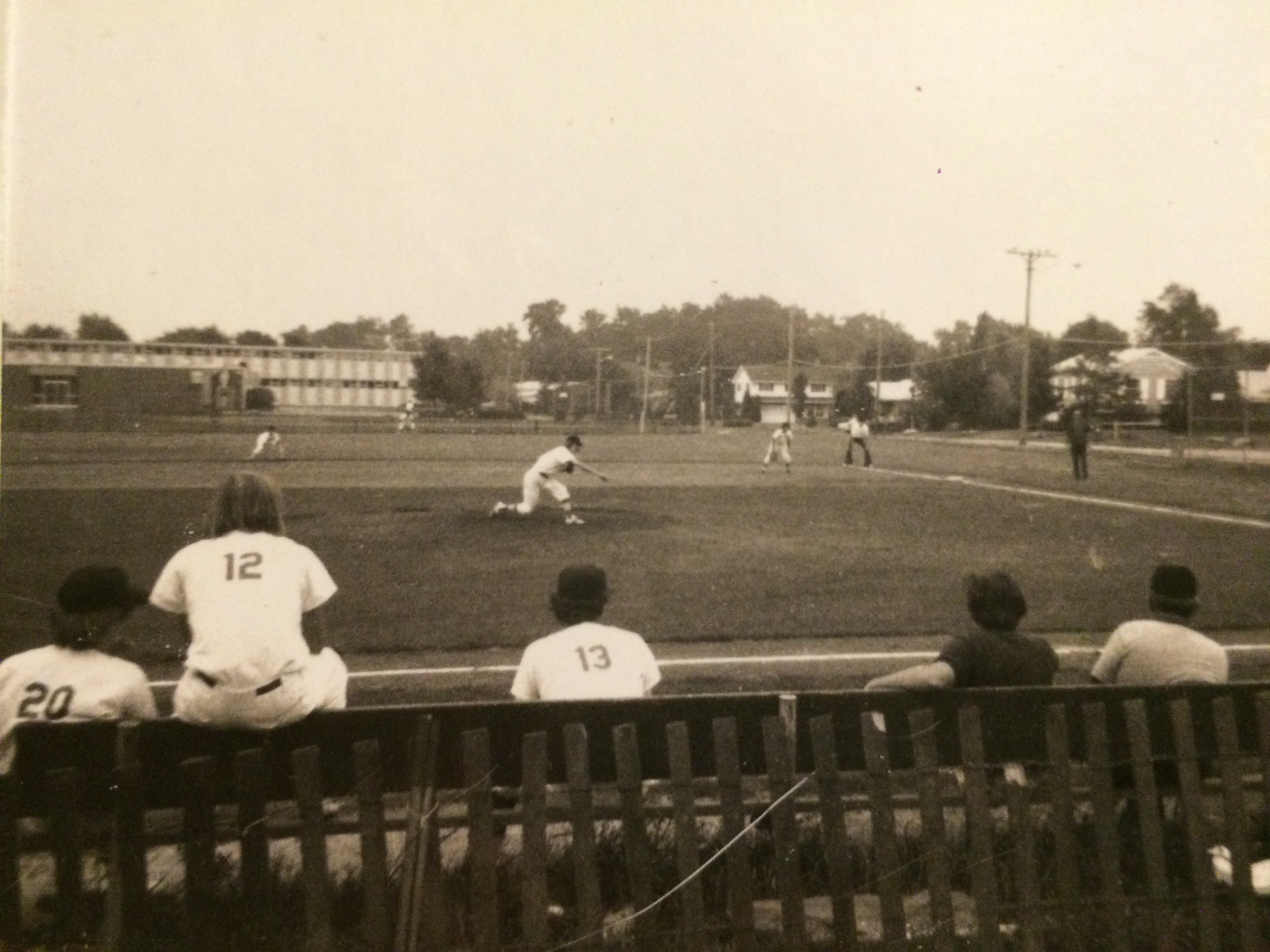
Pitching in Pony League, age 16.

In baseball I pitched all the way through my junior year in high school, going 7-1 in the summer league. That consummated years of playing that sport from the age of five through the age of seventeen. I recall hours spent throwing into a pitching net, calling every ball and strike measured on the string squate woven into the net with as much honesty as I could muster. Then I pitched and won a championship game for a team that won the Lancaster New Era Tournament. That was the peak of youth achievement in that era. Upon moving to Illinois, there was no league for 13-year-olds in the small town of Elburn, so I tried out for the 16+ year-old American Legion team and made it. Traveling to small towns to play summer baseball was a valuable social experience, and I learned plenty of emotional control and how to handle pressure along the way, but as a pure life skill playing baseball isn’t really that valuable.

Come college I signed up for an intramural Superstars competition in which the Softball Throw was one of the events. I tossed the ball over 300 feet but the other competitors insisted, upon seeing my skinny distance-runner frame, that the measurement must have been a mistake. So I threw it even farther the next time. “Fuck you,” I muttered under my breath. I’ve always hated when people doubt me.

Certainly playing sports builds character in one way or another. I once bowled a 283 when my daughter’s high school friend lorded his first game over me at the bowling alley. I rolled multiple strikes in a row before my daughter turned to me and said, “Are you insane?” And I’ll admit, at that moment, I was out of my mind. I never liked to lose to people who were cocky.

Sports prowess is all about competition, and learning to compete in all kinds of circumstances is one good attribute of having been an athlete. These days my competitive instincts are more constrained, but I still like doing a few triathlons a year. Interestingly, the activities of swimming, riding and running actually are useful skills for lifelong health and fitness. They keep me in relatively good shape and wick off stress.

I can’t say the same for spinning a basketball on my finger, but it still does impress the third-graders in this world. So I suppose that’s good for something.

This life in athletics formed a significant part of my personality. But the other day I was chatting with one of my brothers who lamented how much we’d missed by always being tied up in sports of one kind or another. As artists and writers, it would have been great to go on spring break trips to wild locations, or overseas to visit other countries during college. Instead it was the grind calendar of in-season and off-season training for many years.

There were indeed many thrills earned along the way. Those fueled the dopamine and hormone-driven need for approval. I even lived out sports fantasies in real life, such as sinking a last minute shot from half court in basketball, slamming a home run with the bases full in the final inning, and winning races well into my late twenties. These things happened mostly because I wanted to impress the girls in one way or another. Yet even when I did, those moments of adoration were most fleeting.

I did break the sports addiction cycle a few times. During January Term at Luther College, I traveled at the age of nineteen to do an internship at the Cornell University Laboratory of Ornithology. For thirty days I pretty much ignored the need to run and just lived, walking through daily accumulations of new snow to hide out in the back rooms of Sapsucker Woods studying the work of the greatest bird artists in the world. Only at the end of the term did I turn my attention back to running.

But one can’t help wonder what other opportunities were missed over the years by dedicating so much time to developing essentially useless skills. My brother made a comment recently that has me thinking about the years and the world in general.

“Fuck sports,” he said. And to some degree, I do agree.

Posted in competition, running | Tagged , , , , , , , | 3 Comments

A life in newspapers, and long may you run

At the age of thirteen, I took on a paper route in the tiny town of Elburn, Illinois. I think there were 750 residents, but the houses spread across a chunk of the landscape and I covered the north half of town.

I’d rise at 5:30 every day, seven days a week to deliver newspapers. Back then, it was the Chicago Tribune and Sun-Times, and a few copies of the Chicago Daily News, I think it was.

I prided myself on doing a great job on that paper route. As a freshman in high school, I’d sometimes feel the previous day’s cross-country or track workout in my skinny legs while pedaling a Huffy three-speed around the three-mile paper route. At every home I’d drop the bike, jog up the yard and place the newspaper inside the screen door or just inside the house.

In high school I started writing for the school newspaper. That continued through college and beyond, when I produced a weekly column titled Field Day for the St. Charles Chronicle, the newspaper that had covered my exploits in track and cross country. One of the sportswriters there was Elmore McCornack, a kindly gentleman who traveled to our meets to report on race results. Forty-five years later I’d have the honor of being the officiant at the wedding of his granddaughter Annie Clarrisimeaux, whose older brother Evan was also a runner who turned a 4:07 mile at the University of Iowa.

We’ve been through
Some things together
With trunks of memories
Still to come
We found things to do
In stormy weather
Long may you run.

In my late 20s, I went to work for the Chronicle Newspapers as they consolidated into a single publication called the Kane County Chronicle. While I worked in advertising and marketing, my passion for writing continued as I traveled to cover cross country meets with the two same programs for whom I’d competed at Kaneland and St. Charles. Two years ago in 2019, both of those schools won state championships. It’s nice to be part of that heritage in several ways.

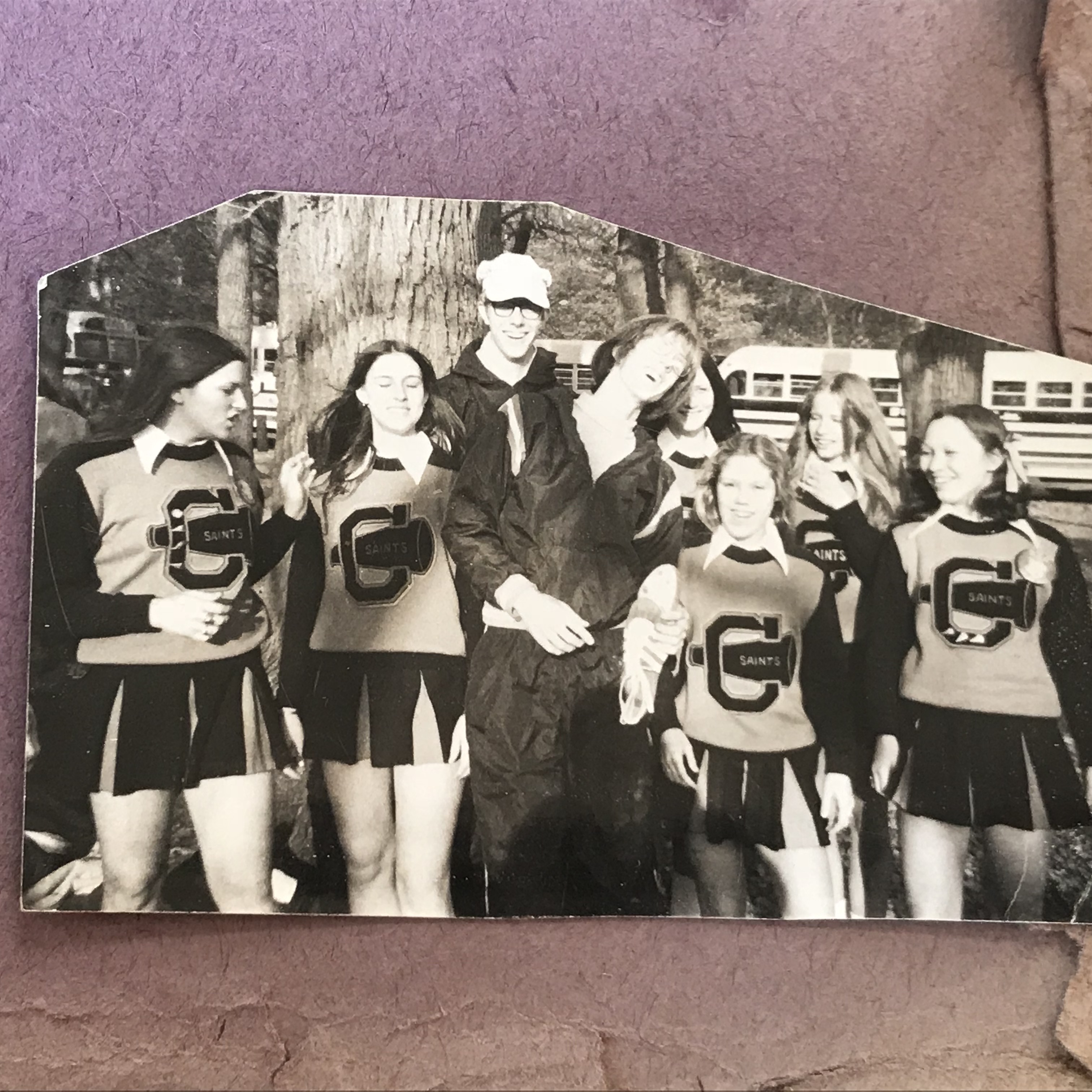
With the St. Charles cross country cheerleaders following a meet.

I worked seven years at the Chronicle and by the year 2000, had joined one of the best newspapers in the state, the Daily Herald. As an editorial writer I didn’t write much about sports except to comment that I didn’t think it was fair for home-schooled kids to compete in public school programs. My reasoning was that home-schooled kids had an unfair advantage in having more opportunity to train and rest if they chose. Despite many protest letters from all over the nation, I still believe that.

After leaving the Daily Herald I started writing nature columns for the Beacon News, a suburban daily in the Chicago region. The sportswriter with whom I collaborated was Bill Kindt, a journalist that had covered my running career as well as the basketball exploits of my younger brother Greg Cudworth.

Well, it was
Back in Blind River in 1962
When I last saw you alive
But we missed that shift
On the long decline
Long may you run.

In between all that, during the 1980s I wrote for publications such as the Illinois Runner, a monthly newspaper published by Rich Elliott, one of Illinois’ finest distance runners in his day. I absolutely loved interviewing runners and producing long-form articles about men such as Al Carius, the North Central College distance coach.

But as we know, newspapers have been struggling for the last decade or more. Even at the time when I joined the Daily Herald in 2000 and moved to the marketing department in 2001, I studied the financials and noted to my boss that with a narrow 8% profit margin, “All it would take is the loss of one category, and we’re hurting.” Sure enough, the recruitment category soon began to migrate online, followed by Real Estate, Automotive and even retail as the Internet took over.

Not only did newspaper advertising shrink, so did circulation. That combination forced many newspapers across the nation to close shop. Even newspapers with supposedly modern approaches and bulletproof formulas of short-form content, such as USA Today have still struggled to retain an advertising base sufficient to compete with other forms of media in this world.

As for the Daily Herald, which once earned the 10 That Do It Right award from Editor & Publisher Magazine, it once had the highest staff-to-circulation ratio of any newspaper in the country. Now, as I understand it, the newspaper is employee-owned and runs much leaner out of necessity. While it no longer boasts 150K in circulation as it once claimed, the newspaper has built online communities and continues producing a great product. While working for the Daily Herald, I built a literacy program with a reach of 375,000 families through 175 libraries across the Chicago market. My goal was to build an entirely self-sufficient “community” based around reading, but perhaps I was a bit ahead of the curve in that respect. The Internet in 2007 was still in its formative stages with how content communities and social media were operating. Then my wife experienced a recurrence of cancer and my focus on the reading program had to stop. I met with representatives of the Chicago Tribune to explore a re-launch a few years back, but the paper had pressing issues of solvency at hand.

There is a cancer now affecting the Chicago Tribune, a newspaper with which I’ve had a relationship for more than forty-five years. After delivering that newspaper in my youth, I’ve been a subscriber since the mid-1980s. But recently the Tribune Publishing enterprise was purchased by Alden, a firm known for gutting newspapers. The vultures at Alden offered buyouts to employees and two of the newspapers best assets, Eric Zorn and Heidi Keibler-Stevens, have announced their departure along with others. Readers of the Tribune feel like they are losing friends in writers such as these. It will be interesting and sad, perhaps, to see how many of those subscriber relationships end.

It is unlikely that we’ll keep our subscription much longer if the Tribune gets gutted. I was already disgusted by the tactics of its former owner Sam Zell years ago, who hired a bunch of radio-industry nutniks to manage the paper. All they did was trash the Tribune Tower and treat the paper like a big game. So much for the wisdom of supposedly wise capitalists like Zell. The only thing he proved by buying the Tribune is that rich assholes are still assholes. True journalism is something entirely different than a pack of shallow bastards looking at spreadsheets. Yet that’s who owns the Tribune now.

The Randy Michaels era of Tribune management did not last long.

Maybe The Beach Boys
Have got you now
With those waves
Singing “Caroline No”
Rollin’ down
That empty ocean road
Gettin’ to the surf on time.

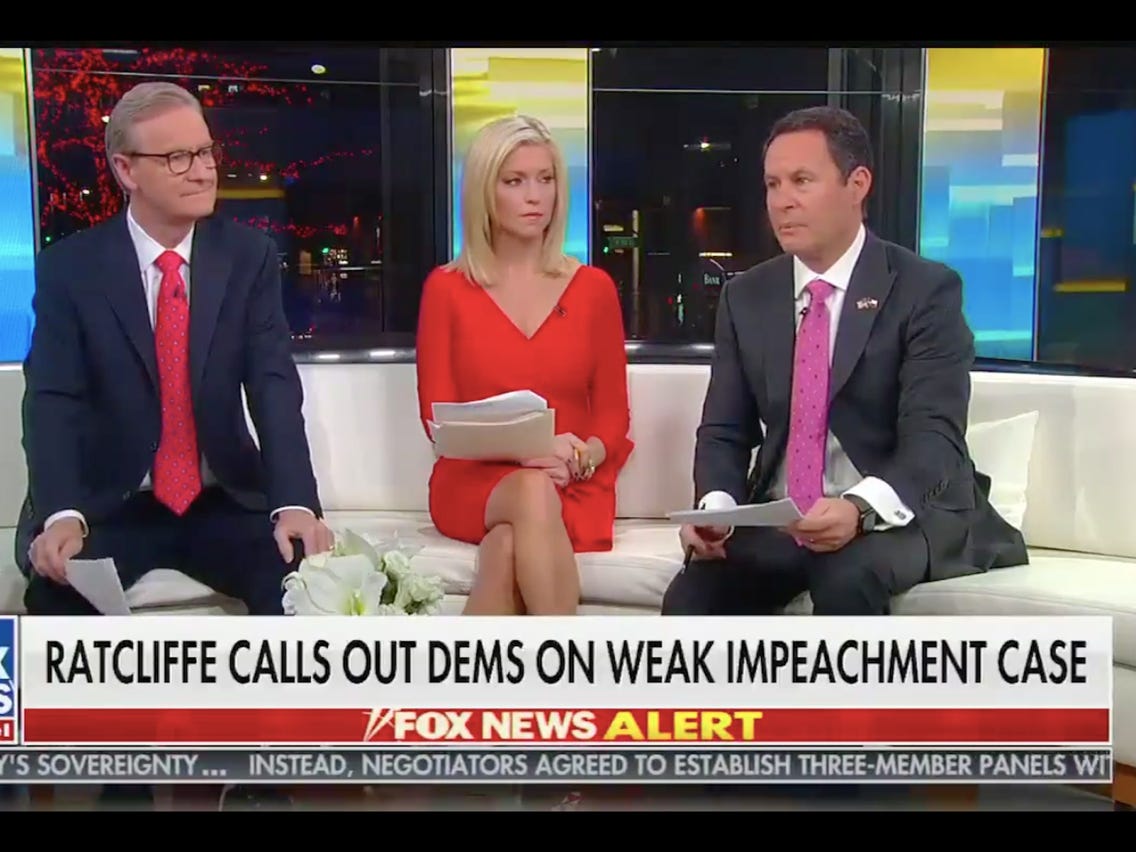
That’s the problem in today’s world. It is devastating to the propagation of honest culture when the world rewards gutless, shallow, and dishonest organizations such as Fox News…a company that hasn’t told the truth for decades except by accident. Yet Fox makes money hand over fist while companies like the Tribune struggle to survive. The only exception to the ghastly Fox formula of despotic opinion cloaked as news were the rare cases when hosts refused to accept the lies anymore and spoke out against the likes of Donald Trump. The amoral truth about Fox is revealed in the many sexual harassment lawsuits against its leadership and personalities. That has proven the feckless nature of its operations, yet the station persists with its “tits above the fold” approach and its blathering panels of talking heads.

Fox News has ruined many lives, but especially those of its followers.

I trust somehow that newspapers will survive in one form or another. But my life in newspapers, both as a writer and consumer, has surely changed. That’s both an honest assessment and a lament.

Though I’ve lost a few prized sports clippings over time, it was that hard copy recognition of your name in print that used to mean so much. As an athlete, I loved printed results, both good and bad, because they told a “real” story. You go out there and do your best, and it gets printed for all to see. There’s a deep honesty in that. Thus as a writer, I have always loved bylines because there is an honesty to actually putting thoughts on paper rather than just copying memes and pretending you have something to say. That’s even a problem on social media networking sites such as Linkedin, where the dog-whistle memes serve as bully pulpits for all kinds of partisan hacks.

I’m proud of my life in newspapers in many ways. But I’m sad that shallow societies fail to see their value, be it in digital or print form. Of course there have always been ratty newspapers as well as good ones, and the industry as a whole had to deal with that.

But even the good ones are suffering now. So, to those now vacating space in the newspaper world, we all wish you well. See you in the PR world or some other realm because that’s where many of us hang out. So long may you run.

Long may you run.
Long may you run.
Although these changes
Have come
With your chrome heart shining
In the sun
Long may you run

Posted in running | Tagged , , , , , , , , , , | Leave a comment

Like it or not, I’m a single-speed (18 mph) kind of guy

When most cyclists talking about going “single-speed” on the bike, they’re referring to “fixies,” the type of bicycle with just one gear. No shifting. No hassles. You ride as fast as you pedal.

I’ve seen people riding fixies or single-speed bikes in events where I struggle to handle the climbs or the distance. Such was the case at the Horribly Hilly 100, a group riding event centered around the hilly terrain of Mt. Horeb, Wisconsin area. It is as horribly hilly as it sounds. Yet I saw a fixie rider pedal into a rest stop just the same. He looked rather smug. Or maybe that was just a mask of pain on his face.

There’s a bike purist attitude at work with some single-speed riders. It’s a badge of honor to ride around sans gearing. Apparently they view it as a more ‘honest’ form of cycling. You ride with your muscles rather than a sneaky little derailleur.

I’m not a fixie rider, but it does seem like I am sort of a single-speed kind of guy. Recently I rode a series of three separate 24-26 mile rides. These all took me about 1:20 to complete at an average pace between 18.0-18.3 mph. That’s not horrible, but neither is it fast. I’m not slower than I was ten years ago, but I’m also no faster. Hmmm. What does this mean?

Last year I did ride 56 miles with Sue on my tri-bike, and we broke three hours at an average pace just over 19.5. That’s an ideal goal when training for the Half Ironman distance. If you can swim a mile in 35-40:00 and close with a two-hour marathon, that three-hour bike assures a sub-6:00 finish.

In my estimation, that’s a respectable time for a sixty-year plus guy. The swim has been the toughest part of improving in the triathlon. But in many respects, my plateau on the bike is a problem of sorts. Perhaps it’s the fact that I don’t own a true “tri-bike” but have a jury-rigged Felt 4C with aerobars. I’ve been experimenting with fit. With some progress.

In Olympic distance events I have on several occasions averaged 19.5 for the 26-mile distance. So I’m not completely stuck. Yet it is still frustrating to go out on training rides and wrestle around with the same 18 mph pace. Maybe I’m dumb. Maybe just happy.

Truth be told, I’m not riding enough miles these days to improve. I don’t have a real right to bitch until I plug in a bunch more miles and still show no progress. I also found a photo of myself from ten years ago when I weighed 163 lbs. and realized that I’m carrying around twenty more pounds of something on my body. Some muscle, but mostly fat.

That said, on many days, I’m still hitting Strava segments that I set ten years ago.

The other parts of this self-perception, “single-speed kind of guy” equation is the invisible factor of wind conditions that does not show up on Strava data. Today’s ride was the 23.91 effort shown above. There was a northeast wind that helped me a bit on the way west (left) and south from Kaneville. But then it was a crosswind grind and even a full-on headwind during the return trip.

It amuses me that these two rides too similar routes and were just 0.48 difference in length and just one second difference. I recall that the wind was coming from a different direction on the June 2 ride, primarily from the northwest. So the early part of the ride was a struggle and we closed fast the last ten miles.

Such are the vagaries of cycling. In some respects, the average pace we ride doesn’t mean that much in the end. It’s a bad practice to just flail away week after week riding the same damned speed getting the same damned results.

So I’ll be breaking up the training in the coming weeks, and adding some miles to the overall load. Even a “single-speed guy” like me can see the writing on the Strava wall. It’s time to mix it up a bit out there.

Posted in Uncategorized | Leave a comment

A hot day followed by a false fall

After yesterday’s early run in advancing heat, I accepted that I was not up for completing the last half-mile to reach ten miles… and that taunted me on the Garmin. The 4.85 miles of running out to Waubonsee Community College on the Virgil Gilman Trail from the Fox Valley Park District water park was 85% shady. On the return trip, the sun rose far enough in the sky to turn the trail into a glaring strip of heat.

My mile splits dipped into the mid-8:00 pace during the middle of the run, but the further the sun rose in the sky, the more I felt its heat upon me. That was alright. I wasn’t trying to set any land speed records. Just some base-building.

Back in the car I slipped a shirt under my butt to keep the car seat from getting soaked with sweat. I was headed straight to 7-Eleven to tank up on lemonade once the run was done. But during the run I’d hoped the buildings on the Waubonsee campus would be open so that I could slip inside for a drink of water. No such luck.

The doors were locked tight, so I came up with another scheme. There was a church a mile back along the trail that was now open on Sunday mornings following the worst of the pandemic. It is a mostly Latino congregation so I practiced Spanish phrases in my head in the event I needed to explain my sweaty visage coming through the back door of the church.

“El bano, por favor,” I practiced saying a couple times. “Para agua.”

Yes, I know most people carry water with them on long runs these days. I’m still a bit Old School in those habits. The adventure of finding water when you really need it is still part of that mentality. Makes you tougher.

The bathrooms at the church, a former Boy Scout lodge if I recall correctly, were right inside the door. I nodded to the fellow I met when coming in the side door, who said, “Can I help you?”

“Just here for water,” I said, pointing to the bathroom. At the sink I turned the faucet on full blast and stuck my face into the stream of cold water to suck down as many fluids as I could. By the time I stood up, my stomach was full and gurgling and felt bloated as I started running again after the break. “That should get me back,” I thought to myself.

The sun kept my pace honest on the return trip. The fifth and sixth miles were in the 8:40 range. Then I started to slow as the sun on the hot trail took its toll. Plus I had to climb those two arched bridges over the major roads.

Back at the water park where my car was parked beside the trail, there were lines of people queued up waiting to get in for a day of swimming. The lifeguards were busy getting the gates open in their classic outfits of white shirts and red shorts. Those muscled boys and lean girls with smiles on their faces heralded the start of summer.

These June days are precious that way. Every one of the first twenty-one days of the month are a precursor to “true summer.” Yet the heat we’ve been feeling here in Illinois tells a different story. Thanks to that heat, we had our first real rainstorm yesterday, a much-needed gully-washer arriving on scudding clouds and winds furious enough to strip leaves from the trees. By late afternoon, it was warm all over again.

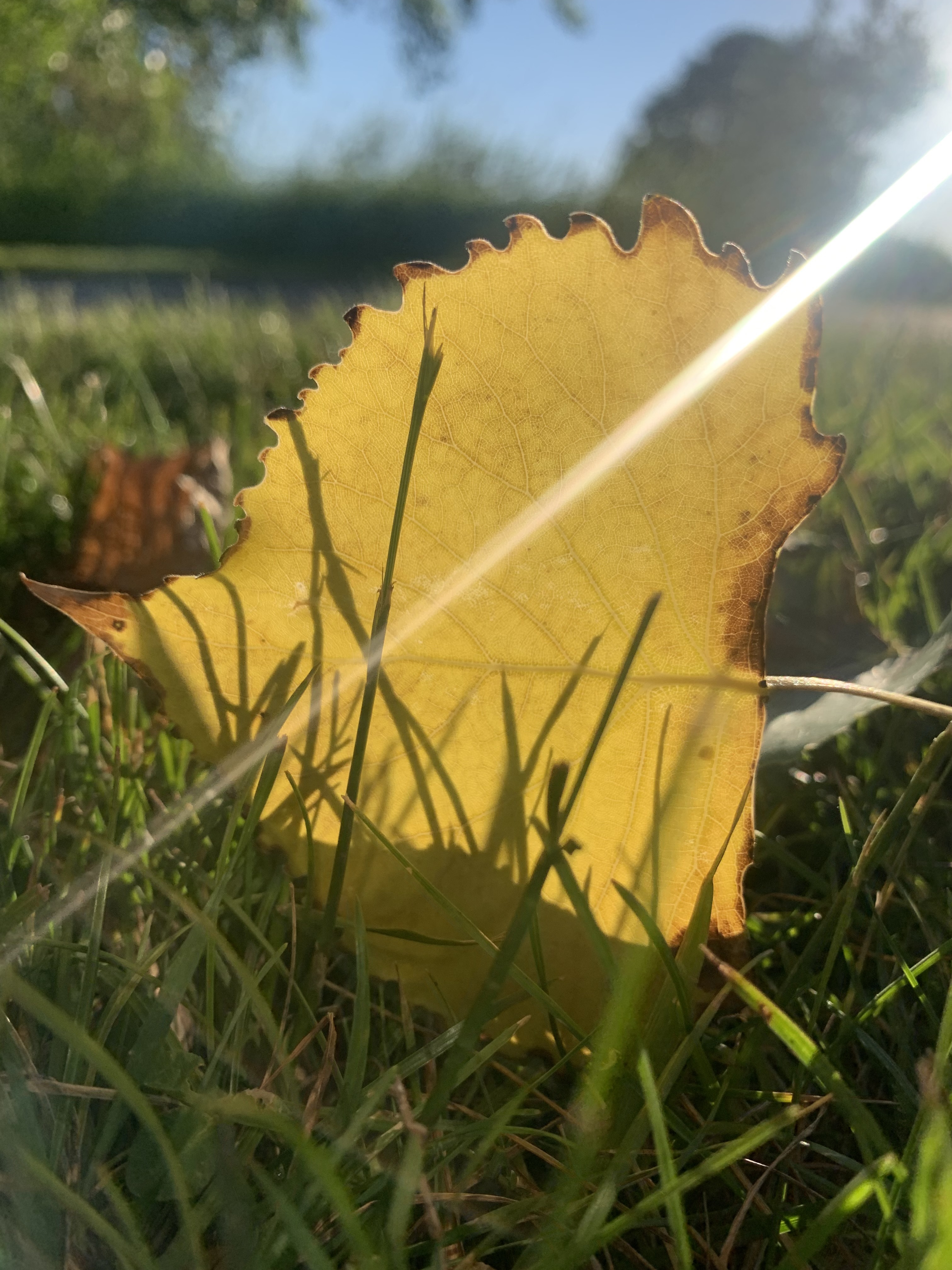
Yet this morning broke breezy and cool, a false fall you might say. A few yellow cottonwood leaves blown down during the storm were strewn about the green lawns next to the path where I walk the dog. It seems too early to see yellow leaves, yet there they were. They looked out of place on the rich green grass, yet they are reminders not to take these any of these June days for granted. The full berth of summer is yet to arrive, but the inevitable truth of fall peeks at us from every angle until it catches up with us in September, when summer claws to hang on until the 21st of that month. By then it is too late to appreciate what you’ve gained or lost. False fall turns into reality.

Posted in Christopher Cudworth, running | Tagged , , , , | Leave a comment

Why I didn’t work out yesterday

Yesterday while driving around I recognized that there was no more avoiding reality. The air conditioning in my car needed a fix, as the freon apparently needed to be ‘recharged.’ After a morning of driving around in the heat of a Subaru toasted by the sun and humidity, I stopped between appointments at a Valvoline oil-change place where the “deal” of the week was a $99 recharge.

The young man running the stall told me a leak test was necessary before doing the recharge. “Then if it’s leaking, you can tell us whether you want to do the recharge now or not. It’s $29.99 if we find a leak, but that price goes away if there’s no leak and we do the recharge.”

I don’t know what actuarial types sit around and figure out these consumer price models, but it didn’t raise my trust level at the station. Still, something had to be done to fix the lack of cool air coming through those vents, because it was so hot inside my vehicle it was hard to concentrate on driving. My temper was flaring at small traffic issues. I wasn’t in a good state of mind.

“Okay, but I have a photo assignment at 1:00 across town,” I told the attendant. “Can we get this done by then?” it was 11:40 in the morning.

“Sure,” he told me.

I sat down in the customer lounge where the door was wide open and there was no air conditioning or breeze inside. “Great,” I muttered while pulling out my camera battery charger to plug it in and make sure that the battery was fully set up for the afternoon photo shoot. I sat there checking emails until the attendant came by and told me, “Good news. No leaks.”

The freon recharge took a while. So I walked next door to a restaurant called Old Republic to buy lunch. The logo has a big old bear on it, which made me wonder if the owners were Russian or such. Apparently the Old Republic name is more about American fair, but then why the bear?

The joint has an outdoor patio with a newly-built music stage created out of railroad shipment containers. However, the music outside was so loud, and I’d spent so much time sweating in the car yesterday with the radio on loud for sanity, that I decided the cool interior of the quieter bar area sounded like a much better choice. I sat down with a menu and ordered a Sloppy Joe along with a Jack and Coke to calm my overheated brain.

The food looked good but the lunchtime prices all started at $15 and all I wanted was something light. I ordered the Sloppy Joe with fries at $10.99 and then the bill came. The drink was $9.50 for about seven ounces of liquid displaced by three large ice cubes. I wrote on the bill: “That drink is awful expensive for what you get. Sorry.” I still tipped the wait staff $2.00.

That drink didn’t do anything to fix my grumpy mood. It only got worse as I walked over to the Valvoline place wondering whether the recharge was done or not. “Almost done,” the attendant told me. I sat down in the hot customer ‘lounge’ again and checked my phone for messages.

Finally the Little Dude taking care of my car came over to talk to me. “The recharge is done but only half your air-conditioning works,” he told me. “It’s only cool on the passenger side. There’s a valve in there that controls the heat and A/C and it must be broken.”

I didn’ t have the time or patience to question his expertise. I needed to be at a family photo shoot across the City of Elgin in 15 minutes. I paid the bill and jumped on Route 20 to reach Route 25 east of the Fox River.

Only when I got there, I realized that the address I was seeking was actually still on the west side. That meant either turning around and going back on 20, which is a hassle, or just cutting through town on routes I used to drive when that city was part of my work territory.

I cut through neighborhoods, crossed the bridge back over the river by the casino and turned on the GIS directions I’d forgotten to use on my phone. It was still so damn hot in the car it was hard to think.

As I approached the client’s address, it dawned on me that I’d left the battery charger and my camera battery back at Valvoline. I stopped to tell the client about the problem and she said, “No worries. The kids aren’t even here yet.”

Back in the car I tried all sorts of combinations opening rear and front windows to circulate the thin breath of cool air so that it would cool down my car. It wasn’t working. The heat of the day came blasting in from every angle. I got angrier as the trip back to Valvoline was irritatingly slow. I hate retracing any kind of steps in this world. That goes for running and riding too. I much prefer loop courses over out and back routes unless I’m in a strange city, where that kind of course is a brand of self-preservation.

The attendant handed me the charger and I got back in the car and followed the Google Directions this time that took me right back where I’d just driven.

The photo shoot fortunately went great. The kids were wonderful and their shady back yard gave plenty of opportunity to take good pictures.

When finished, I gathered my photo bag with the camera and lenses to leave and headed out to the car. The client called out, “Wait, you forgot your tripod!” I chuckled and said, “Yeah, I can’t think today. It’s too hot.”

I headed west back to Randall Road with the idea of cashing the check I’d just been given before it blew out the window or something crazy like that. Those things tend to happen when the day is already scattered. I arrived at the bank and felt for my wallet in my back pocket. It wasn’t there. Then I recalled that I’d pulled my phone out of that pocket back at the client. The wallet must have fallen out.

While looking around in the car for the wallet, I noticed that my computer bag was also missing. That made me recall that I’d taken my Mac inside the house to check the quality of the photos and then left it behind. My regular mental checklist of habits are so ingrained that the act of having the photo gear bag over my shoulder made me think I’d gotten everything.

Much as we try to keep them forever,

all vehicles wind up the same way.

I owned a Plymouth Arrow exactly like

this at one time.

That meant another long, hot drive across town to the client. Along the way, I reminded myself to be grateful for the job that day and not get so fussy about traffic. Just calm down. No sense in hurrying. After I’d reached the house, gathered up my Mac, said thank you again to the kids for being such great subjects, and got my wallet from the man of the house, I walked back to the car. The grandfather that handed it to me was out talking on the phone in his air-conditioned truck. The irony.

Back on Randall Road I yelled at people balking at traffic lights and swerved when one joker slid over into my lane without looking. Again, I was trying to be patient, but the world around me was having none of that.

I picked up our pup at the dog care center, paid the fee and led her out into the car. It was still hot outside and she typically likes to stick her nose out into the breeze. I rolled the rear window down and turned up the half-functional A/C all the way up. Perhaps I could make it home in peace, and in one piece.

At the traffic light I sat as the first car in line at the left turn lane. No one was behind me but the light is notoriously short. When the green arrow came I hit the gas and spun left. That’s when I heard a thumping noise and glanced back to see that our dog Lucy had stumbled completely out the back window.

I hit the brakes, looked at the jangling leash out and leapt out of the car to find her. She’d landed on her feet and ran around behind the car as if this was nothing out of the ordinary. After all, she jumps in and out of the car from the back seat all the time when I open the rear door. This time, she launched out either on her own accord or because the centrifugal force of the turn threw her out.

Two women in the vehicles parked now on the road pointed me toward her and I scooped her fifty-pound body into my arms and loaded her back into the car.

“Oh, my God,” I blurted. Then I gestured “Thank you” to the women and pulled away while looking in the rearview mirror to see if anyone else was coming. Fortunately it all happened so fast the cars back at the stoplight were still parked waiting for the green signal.

At home I shared the incident with my wife who said, “Yes, we probably need to not open the windows.” We’ve had our pup for two years and nothing like this had ever come close to happening. But one close call is all I need to change how things work to protect our dog.

I went upstairs and gave a thought to whether I should go out and run or ride off the stress of the day. But no, I was mentally exhausted and sweaty and wanted only to flop on the bed and absorb some cool air in the house.

We had glasses of white wine with dinner. The chicken I grilled came out great and we sat out back facing the summer sky as the towering clouds calmed my mind. I’m so grateful Lucy was okay. Nothing else about the confusion and heat of the day mattered any more.

And that’s why I didn’t work out yesterday.

Posted in anxiety, Christopher Cudworth, mental health | Tagged , , , , , , , , | Leave a comment

Summer road trips

It is officially summertime. Covid is at least partially on the run. Time for a road trip.

We have a busy race calendar in this household this summer. My wife has a race in Des Moines in a weekend or two, and there are others lined up as well. I’ve yet to plug in an Olympic race or a targeted Half-ironman for the early or mid-fall.

With local and regional races, we typically drive to races. The first time I saw Sue race was at the Racine Half-Ironman a few weeks after we’d met. She stayed the night with her sister Julie on Saturday, and I drove up Sunday morning. I left at 4:30 in the morning but missed seeing the swim start by three or four minutes.

She had a great race despite the hot weather conditions. After the event, we stopped at a service station on the way out of Racine where she washed up and changed into fresh clothes. I admired her ability to make that change on the fly. Athletes get that.

On the way home there was plenty of time to talk, and we did. Road trips are opportunities to let the conversation range far even though you’re sitting near to each other. About an hour from home, she finally got tired from the six-hour swim-ride-run and dozed off quietly with her head against the back of the seat and her legs curled up in front of her.

That was certainly no insult in my mind. It was the opposite. Trusting a person to know that you need a nap after a hard effort is a core tenet of a good relationship.

We’ve made many such driving road trips since that day, traveling to Madison, Wisconsin, Muncie, Indiana, Benton Harbor, Michigan, Louisville, Kentucky and other more local races within and hour’s drive or two.

Passing the time

One of our favorite ways to pass the time is listening to podcasts, especially The Move with Lance Armstrong and George Hincapie. Some people write Lance off as a cheater for all time. But he’s mellowed with age, and is clearly contrite about many aspects of his former career. I say “former” because there really was a dividing line between his competitive cycling days and how he approaches and views life these days. He’s still one of the reasons why I chose to get into cycling, and even if he used performance-enhancing drugs, the entire cycling world was doing the same thing.

So we listen to Lance and George with knowledge that their careers, while marked by ostensibly illegal activity, still offer tremendous insights on the nature of competition and what it’s like to lay it all on the line.

That’s inspiring, often funny stuff to absorb on a triathlon road trip. The two of them analyze races like the Tour de France and the Giro and Vuelta, often with a sort of admiration at what athletes today can and do achieve.

There are also trips where we don’t turn the radio or a podcast on at all. We’ve solved some genuine life challenges along the way. Coming to terms with subtle differences in outlook is an important part of any relationship.

And sometimes, she still nods off when I’m driving and the sun shines through the car window and strikes her legs at an angle showing both strength and a trace of tan line where the cycling shorts end and I think, “We’ve come a long way together.”

Image above: Summer Road Trip, Pastel by Christopher Cudworth. Framed in antique window. 39″ H X 23″ . $600. Inquire at cudworthfix@gmail.com

Posted in Christopher Cudworth, competition, Share the Road, triathlete, triathlon, triathlons, we run and ride | Tagged , , , , , , , | Leave a comment

Data tells a story, but not the whole story

I’ve never been a deep data diver. The data that I know well includes my average resting heart rate (47) blood pressure (118/78) and how fast (or slow) I typically cover training miles.

After a six-mile run on Sunday, I swiped Left a few times on my Garmin readouts to view data related to the miles I’d just completed. The data on heart rate caught my eye.

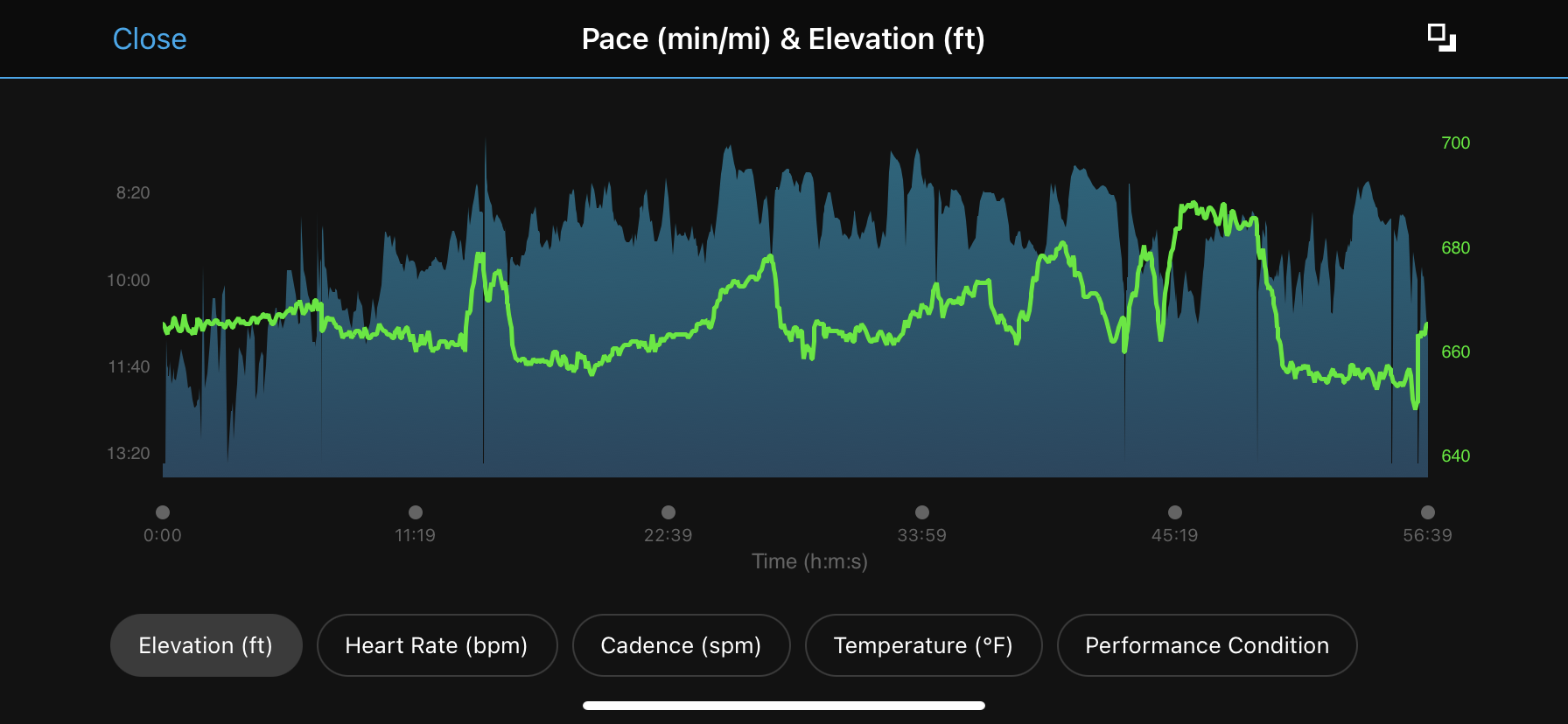
What this shows is a chart of heart rate (red) across a six-mile run in which the pace ramped up to 7:14 at its fastest point with an average over the last four miles (or last 3/4 of the run) of about 8:30. I warmed up at 10:00, ran the second mile at 8:50, dropped to 8:25 the third mile, 8:18 the fourth and then started to feel it through the hills on the east side of the Fox River Trail.

My pace sank to 8:46 as fatigue caught up with me. But as you can see, the pulse rate stayed high except for that dip where I stopped to pee. It rose again to near 170 for the remainder of the run at 8:55 pace.

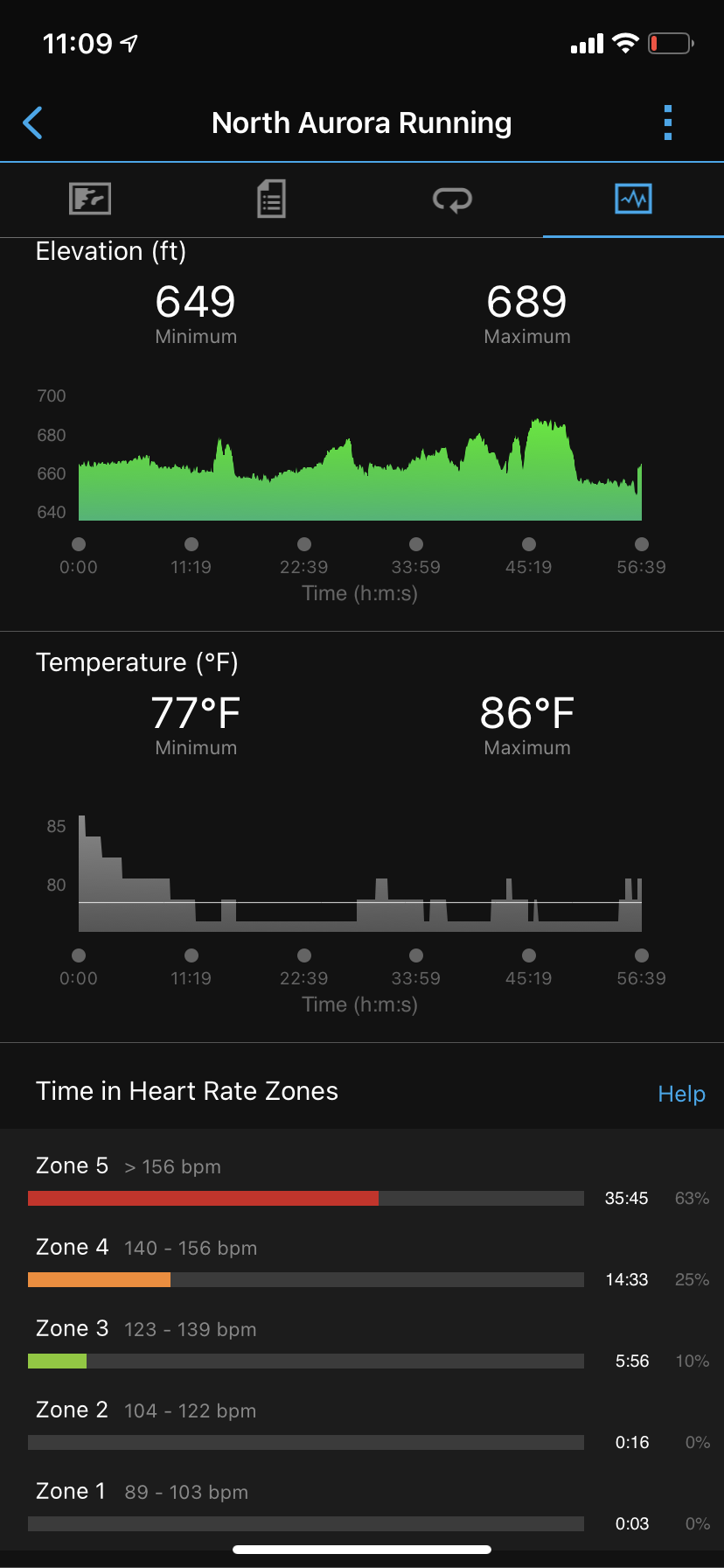
Important note: it was 76+ degrees at the start and finished near 86. Pretty hot, and heat accelerates the heart like nothing else. The hills were a factor too. You can see the impact of the climbs in this pace-per-mile (gray) versus elevation (green) data chart. That last big hump toward the end of the run is the rise through a forest preserve that ends with a 400 yard downhill onto the flats next to the Fox River.

While I didn’t sink to a complete jog, I could not wait to finish that run yesterday. The Zone chart tells why. I spent quite a bit of time in the Red Zone with a heart rate above 150 bpm, which is what I expected from a relatively hard effort on a hot day.

That’s how I like to go about things now and then. Train steady most of the time, and do about 20% overall at a harder tempo, including some speed.

My maximum heart rate these days tops out around 180. Or so it seems. I’m pretty sure that I could drive it above 200 in my youth during athletic prime. Running at sub-5:00 pace for six miles requires that kind of heart performance.

I’ll never know what my heart could do forty years ago because there was no such thing as a heart rate monitor. Tracking devices such as Smartphones and Garmin watches were not invented yet. All I had was my Timex watch and an index finger on my neck to determine how well my body was responding during training.

Sometimes I’d be close to sleep at night and would test my resting pulse rate. In 1984 when I raced 24 times at distances from one-mile to 25k, my heart beat just 38 times per minute. I can still recall its slow, consistent thumping.

Ten years ago during a period of high personal stress from caregiving, I felt some palpitations or fluttering sensations in my chest and worried that I’d developed arrhythmia or some other condition. I got checked out at the hospital and did a stress test on a treadmill that slowly raised the incline up to 18%. I ran steady for several minutes until the pitch became so steep that I began to struggle as my heart rate soared.

“When can I stop?” I finally blurted to the technicians. “Oh, anytime,” they answered. “You were done three minutes ago.”

They got their stats that day, all the data they needed to know that my heart was doing okay. Yet even those stats and data didn’t tell the whole story of a runner too dumb and obsessed to know when to quit.

That’s a lesson we seem destined to learn time and again.

Posted in 10K, aging, aging is not for the weak of heart, competition | Tagged , , , , , , , | Leave a comment

Bone on bone

I saw a former running acquaintance riding his bike on the road outside our cul-de-sac this morning. The bright blinker mounted on his aging Trek Madone caught my eye. As he passed I called out his name. He kept rolling but then turned around to see who had recognized him.

It’s been twenty years or more since I last ran with him. He was a tough little runner, but known for half-stepping everyone in the group that met on Saturday mornings for a five mile run down the river trail and back. At one point the other runners in the group begged me to teach him a lesson about constantly upping the pace. So I trained to get in shape and showed up ready to push him till he popped.

Some might call my actions mean-spirited, but in fact it was a favor to a group that had grown tired of his weekly throw-downs.

I’ll admit that I relished the chance to be the bad guy acting as the good guy, and confess that part of my competitive spirit has often been tied to a sense of vengeance. I used running to take out my frustrations with the world. There were also many occasions in my running career when it felt good to beat an opponent I didn’t like. I’m sure there were plenty of runners over the years that didn’t like me either. I’m not always a likable guy.

This fellow I taught a lesson wasn’t a ‘bad guy’ by nature. He just had a habit, perhaps innocent in a way, of pushing the pace by one-stepping everyone. We had a conversation not long after the run where I explained the situation. He seemed to understand.

On the bike

Today we talked about cycling instead of running. I complimented him on getting out for rides, and commented that I’d seen him frequently during the cycling season over the last few years. He seemed surprised and I told him, “Well, that’s why I called your name this morning. I wanted to say hello.”

“Cycling’s good as you age,” he told me, glancing down at a black brace on his right knee. “This one’s bone-on-bone,” he said, pointing at the joint.

That’s not the first runner I’ve heard use that phrase. I don’t always know the cause behind many of those bone-on-bone stories, but many of them are no doubt the result of unfortunate biomechanics and structural deficiencies that add up to worn-down cartilage.

So far, I’ve managed to maintain decent knee health, but not without incident. I’ve torn my left ACL a couple times, and had meniscus surgery on that knee too. Then last year a dog ran into me at the Bark Park and tore the MCL. I was so angry and depressed by that because the knee was healed well from the meniscus tear. It took 18 months, but finally the damned soreness of the MCL tear healed and I’m back running ‘pain-free’ in that region of the body.

That’s one of the tarsnakes of the running avocation. For some people the risks of wearing down joints increases the more they run. For others, it seems like running actually keeps the knees, hips and other joints healthy. I know runners with total knee and hip replacements. Some keep going after that, while others figure the wear and tear is not worth it, and take to walking, cycling or swimming instead. No shame in any of that. Just keep moving.

Are you still running?

Before my friend left he turned and asked, rather wistfully, “Are you still running?” I explained that I’m now married to a triathlete and do get out running fairly often. “Well that’s good,” he replied, and “congratulations.”

That is the farthest thing from a ‘bone-on-bone’ statement one could imagine. For all of our competitive instincts over the years, age helps us wish each other well, and to find the best resolution for fitness as time goes by.

We exchanged waves as he circled around an intersection while looking out for cars. “You have to watch for traffic more as a cyclist,” he called out. Then he pedaled away.

It was a nice way for old running friends to share a moment. I wish him well and hope no more joints give him trouble on the road to keeping up (or ahead) with his health.

Posted in aging, aging is not for the weak of heart, bike accidents, Christopher Cudworth, competition, cycling, cycling the midwest, cycling threats, running | Tagged , , , , , , , | 3 Comments

Measuring your hydrate to pee ratio (HPR)

Knowing your Hydrate To Pee Ratio (HPR) can save a lot of trouble in endurance events.

The triathlon world is awash in a new study on the subject called the Hydrate to Pee Ratio. It is the key measurement of how often you take in fluids versus how often you have to pee.

A group consisting of World-class athletes and Age-groupers were studied to determine the ideal Hydrate to Pee Ratio. The purpose was to determine the critical What Goes In Must Come Out (WGIMCO) factor.

Every athlete needs to hydrate to compete at their highest level of performance. But nutritionists working with athletes at all levels noticed that many athletes exhibited a WGIMCO ratio above 8:12. That is, athletes consuming eight 12-oz glasses of hydration per day were visiting the restroom twelve times or more during a typical 16-hour day.”I have to pee all the time,” one athlete complained during the study. “I hope this helps me figure out why I have to pee so much.”

“It really becomes impractical,” one of the study’s participants observed. “I mean, how do you hold it during a Zoom call with twenty people watching? I make the worst faces.”

A new syndrome called Pee Anxiety emerged during the study. The condition is marked by immense relief after a good pee followed by dread that the urge to pee would return again before getting back to the desk chair.

Pee Factors

Other factors affecting the HPR Ratio are caffeine and alcohol consumption. It was also noted that Perceived Distance to Restroom Facilities (PDRF) was a psychological factor along with beliefs about bladder size.

It was determined by the HPR study that athletes deal with HPR, WGIMCO and PDRF ratios in many ways. One male athlete told the study’s directors, “If I have to pee during a workout, I just pull over and let it rip. I can spot a good Pee Tree from 400 yards out.”

Female athletes noted that the logistics of Pee Management Syndrome (a version of PMS related to urine and emotional strain) included wearing cycling shorts rather than bibs during workouts and learning to pee in the pool without guilt. “Finding a spot to pee when you’re a woman is a completely different problem than when you’re a male. We’re not known for being able to pull over and ‘let it rip,’ you know. It’s more like Squat and Hope…no one comes along at the wrong time.”

The study’s directors noted wide variability in the HPR factor within genders. “One male athlete with a sensitive bladder has literally worn out a path in his carpet between his home office and the bathroom during the pandemic,” the study report concluded. “We call this a HPR Pattern. It is not particularly evident on tile floors except among athletes ingesting sixteen or more 12-oz glasses of hydration.”

Prescription for sex

Males with BPR (Benign Prostate Enlargement) are particularly susceptible to an off-the-chart HPR. Physicians recommend “frequent sex” to reduce the load-bearing capacity of the prostate, the organ responsible for storing sperm in the male body. When gorged with semen, the prostate can block urine flow. Several extremely hopeful-looking male participants in the study requested a prescription they could present to their partners to relieve the problem. Several female participants in the study responded that, “We might like to help our guys out. But right now, we’ve really got to pee.”

The HPR study was concluded with this critical advice for athletes at all levels. “When you gotta go, you gotta go.”

Posted in aging, anxiety | Tagged , , , , , , , , | 2 Comments

Seven yards of deep thought and a winning effort

Endurance athletes are typically accustomed to thinking about workouts in terms of accumulated miles. Strava and Garmin add them up for us in neat piles of data to be picked apart ad infinitum.

Athletic performance becomes all-consuming that way. “You’re only as good as your last performance,” the hardline theory goes.

It’s easy to become obsessed with that self-measurement data, to the point where we judge ourselves first and only grow to accept our efforts later. There’s also a problem in viewing athletic endeavors as our primary purpose. A few years back I read a hilarious takedown of a high-quality yet self-absorbed cyclist who wrote to a pro columnist named Phil Gaimon about a problem he had at home. “I don’t want to mow the lawn and tire out my legs for riding,” the cyclist complained. “My wife doesn’t understand me!”

Gaimon wrote back and chided the guy for being a petulant jerk. “Unless you’re a pro, your first job is not cycling,” he counseled. “Mow the law.”

I confess to having a touch of Golden Leg Syndrome back in my competitive years, but I wasn’t so obsessive that I wouldn’t mow the lawn or take care of business around the house. At that time I had few obligations anyway. I lived on my own. My only concern was not getting stuck at some party where we stood around for hours the night before a race.

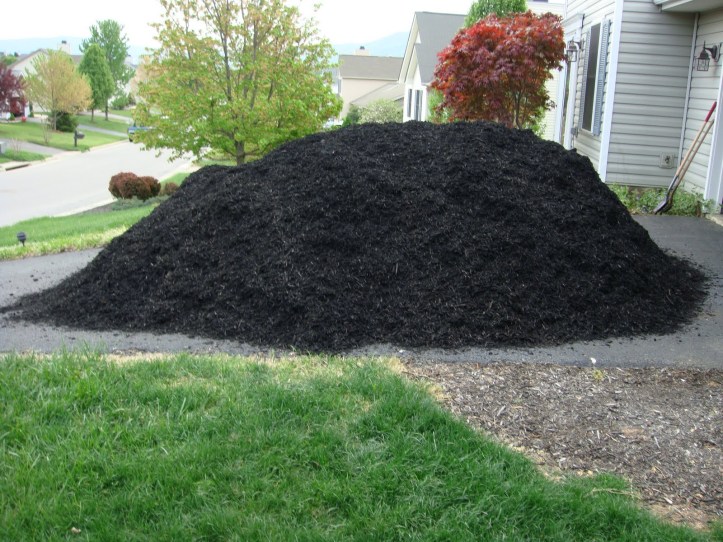
These days I enjoy the feeling of getting things done. This weekend we ordered seven yards of high-quality mulch. It was satisfying to move that stuff from the big steaming pile on the driveway out to the beds around the property. My wife also removed a weedy tree that was overgrown and dominating some pretty bushes in one of the beds, and the new mulch improved the new space even further.

Seven yards of mulch is a healthy amount. That’s about as much as shown in the picture I stole off the Internet at the head of this blog. One key takeaway: I probably would have been smart to wear a mask while moving all that much. The dust swirled around and gathered in my throat over time. With my history of strange infections and weird afflictions, I got a bit nervous about the possibility of getting Mulch Lung or something odd affliction like that.

Halfway through, my stepson borrowed a mulch shovel from work that made the job easier. From there it was an incremental job of hauling wheelbarrow loads out to each bed and spreading them by hand. I became quite adept at spreading the right amount across the crusty mulch beneath that was compressed by the deep snows of winter.

When all was done the satisfaction was equivalent to the completion of a good race. The mulch-moving process also offered plenty of time for deep thought. I didn’t even listen to music, just moved at the pace necessary to get the job done while singing songs or thinking about things on my own.

When it was all over, I received the greatest compliment any man can get after doing something needed around the house. “Nice job, honey,” my wife told me as we sat outside on the back patio having dinner and sipping a quiet Memorial Day drink. As far as I’m concerned, that encouragement from her makes me a winner this weekend.

Posted in cycling, love, running, tour de france, TRAINING PEAKS, tri-bikes, triathlete, triathlon, triathlons | Tagged , , , , , , | Leave a comment