Take the long way home: the lessons of the water shrew

By Christopher Cudworth

I know you’ve been dragged some weird places if you read this We Run and Ride blog on a regular basis. So be prepared, you are about to be dragged somewhere you never thought you’d go. Into the realm of the water shrew.

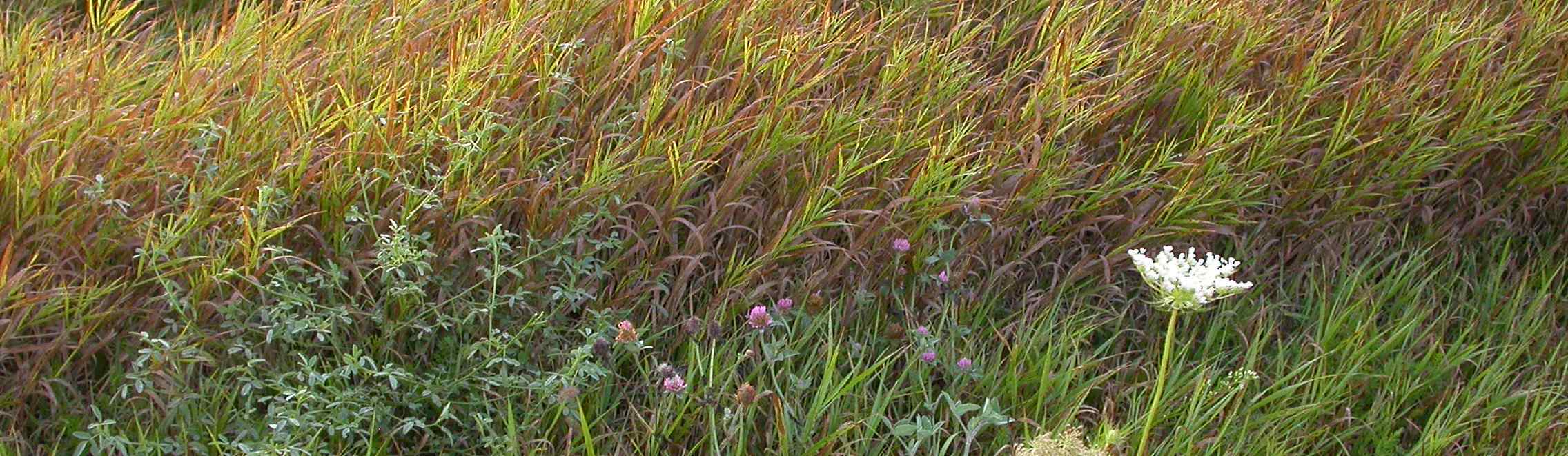
This water shrew shows how it's done. Ready, set, go! Oh wait, he's going swimming.

This water shrew shows how it’s done. Ready, set, go! Oh wait, he’s going swimming.

If you took a biology class in high school or college, you might have heard about water shrews. There are quite a few types of these tiny mouselike creatures with pointed snouts and sharp teeth. Shrews are feisty little carnivores with heartbeats so high that if they get caught out in the open and hear or feel a loud vibration they’re likely to have a heart attack on the spot and die. I’m the kind of weird guy who picks up shrews and looks at them closely when I find one dead on the path. I have also seen a pack of seven shrews madly running around a grass tussock screaming bloody shrew murder. But that’s a tale for another day.

How shrews survive, and why it means something to people (ultimately)

Water shrews and many other types of smaller creatures have adapted interesting behaviors that help them survive against the threat of predators.

For example, there’s this phenomenon called “edge seeking” that you often see in mice, hamsters and other small rodents. If you put a mouse down in the hall, it is not likely to walk straight down the open corridor as did the little mouse in the movie The Green Mile. Instead most small creatures head for the nearest wall or “edge” so that they only have one side of their little being to protect. This basic behavior has tons of survival value in the wild. Edge seeking cuts your risk of attack from the edge-seeking side at least in half. Smart little edge seekers live to see another day. And, if they’re lucky, they’ll find a mate and pass on the successful genes of edge-seeking to their next generation of little edge-seekers. And so it goes. The instinct breeds survival, but the behavior is what reflects the instinct.

Those are just some of the mechanisms and relationships that drive the forces of evolution.

So, back to our water shrews. See, most species of shrews don’t see too well. They do everything, including hunting, by smell and perhaps by vibration. But we haven’t been able to completely figure out that second part because a shrew’s voice is so high, a barely perceptible squeak, that you can hardly understand them when they talk. It takes a good pair of shrew ears to understand them.

Edge-seeking behavior, and survival

But given their poor eyesight, shrews depend on an advanced form of edge-seeking to help them navigate their world. Many water shrews live in damp places at the edge of ponds or marshes. They make little trails in the mud and vegetation that are pretty much invisible to the human eye, obscured as they are by overhanging vegetation. But to the water shrew, these little tunnels are home with a capital H. When going to and fro in their habitat, they do not deviate from their carefully made paths even if that path takes the long way to get from point A to point B. In fact, sometimes shrew paths go everywhere except the straight line from point A to point B, even crossing their own path on the way Home.

We often see edge-seeking behavior even among human beings, especially in middle school, when shy kids with arms full of books creep along the locker doors trying to avoid attacks from bullies in the center of the corridor. Some rules of biology never change. That is, until those bullied kids grow up to be executives and the bullies hang around the edges of bars bragging about how they used to rule the hallways. Those were the days. And shrewish girls join them to bitch about whole stole their boyfriends back then. But those aren’t water shrews, the smart kind. Those are alcohol shrews, the kind you’d never, ever want as a pet.

Really, it’s scientifically proven

A scientist once studied this phenomenon and found that water shrews are so dependent on their mapped out paths that they will take the known path under almost all circumstances even when faced with immediate danger. When you can’t see well, it is better to follow the known scent rather than a blind path to possible oblivion. Water shrews likely die at times because they don’t take shortcuts. But many more likely live because their trails are so damn confusing and they move so fast that predators can’t really catch them. So the adaptation here is that shrews actually know much better than most of us what gets them from point A to point B (and Home) the fastest.

What we can learn from water shrews

What can those of us who run and ride learn from water shrews? Well, let’s say you’re way the fuck out in the country, riding along happily when a sudden storm kicks up. You’re exactly 2 miles from the next road toward home and the storm is bearing down on you from behind. As you reach the halfway point toward the next road, a few raindrops hit your back, and a feeling of panic starts to grip you. A flash of lightning strikes somewhere in the background and you make a quick decision to try the next road that comes along.

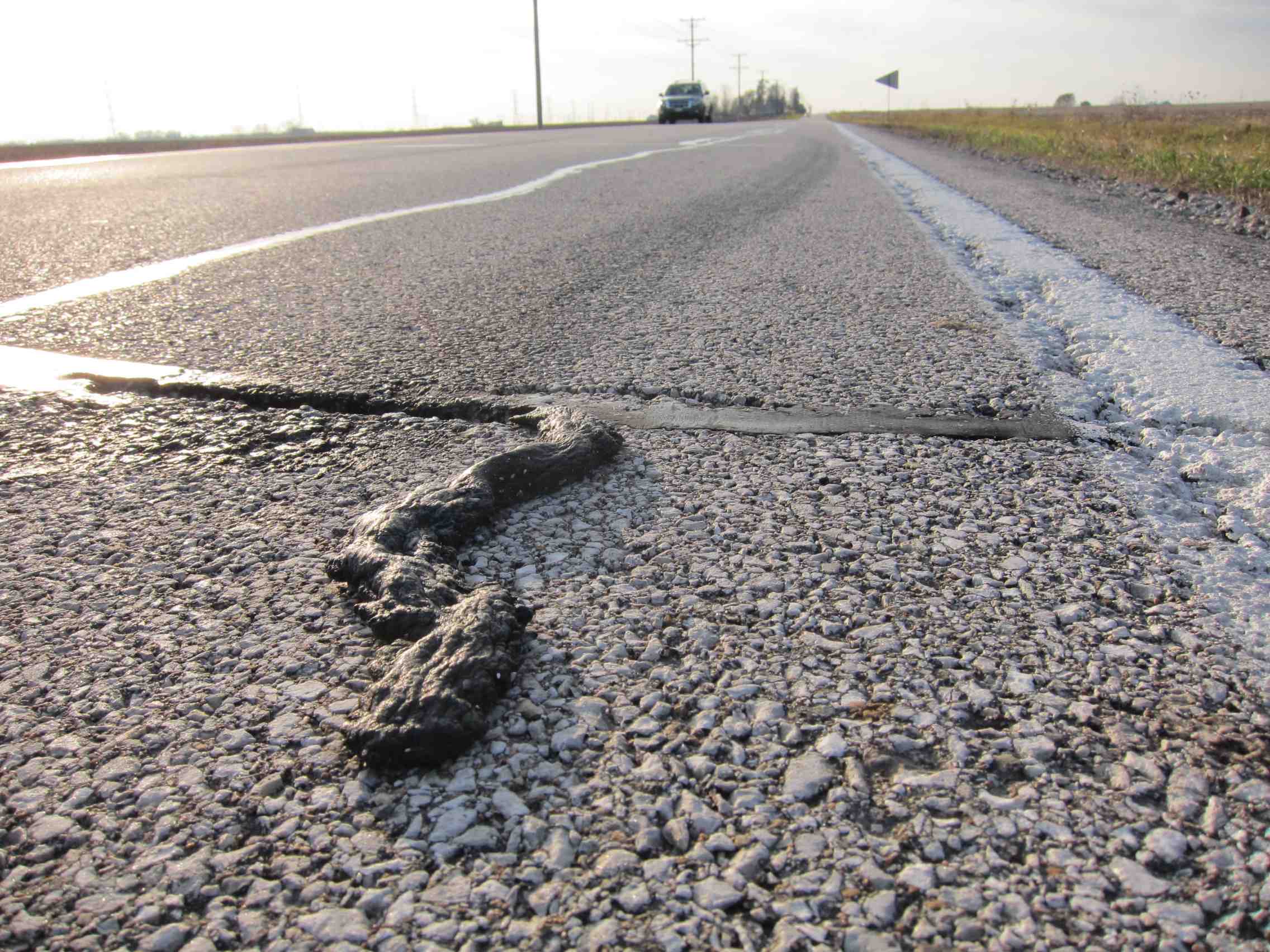
Tarsnakes are always waiting to take a weakened rider down.

Tarsnakes are always waiting to take a weakened rider down.

The road is thin and somewhat crackly. Tarsnakes crisscross its surface. At times the surface seems to give way. But you ride hard and the bumps seem to disappear underneath. Nearing the next stretch of woods the road turns slights and suddenly you are faced with an actual, living, breathing dirt road rather than a path of country asphalt. You face a decision. The dirt road seems to aim toward the original road you planned to take to escape the storm, but you can’t be sure. The gravel under your road tires is rough, and pings sound when bigger rocks fly beneath the 120psi you used to fill them a couple hours before.

Now the rain starts to pelt the dirt road, making rain craters in the surface. You can hear them hit, and they bounce off your helmet. Wait, was that a piece of hail too? Sure enough, the hail begins in earnest, whacking telephone wires and poles as it falls. You pedal on, hoping the dirt road will meet up with the main road home soon.

The road turns again, parallel to the road you want to reach. It’s just over a field of corn newly planted. Now the dirt road has grown shiny and slick. Lightning and wind are all around you. The storm is in full form. The rain piles up on your spine and runs down your ass crack. Face it: too late to pull out the rain jacket now. You mash the pedals trying to make headway through the growing much. Finally the road turns again toward the road you need, the road you should have chosen if not in such a panic.

The unexpected

But wait. There is a barrier across the road 50 meters before the better road. The bridge over a drainage ditch is out. The ditch is deep and filled with water. Both sides are clogged with thick weeds and unstable banks. To try to cross would be dangerous, and rather stupid.
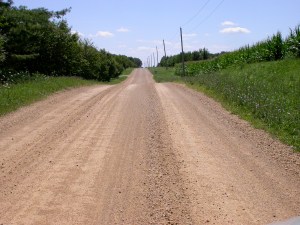
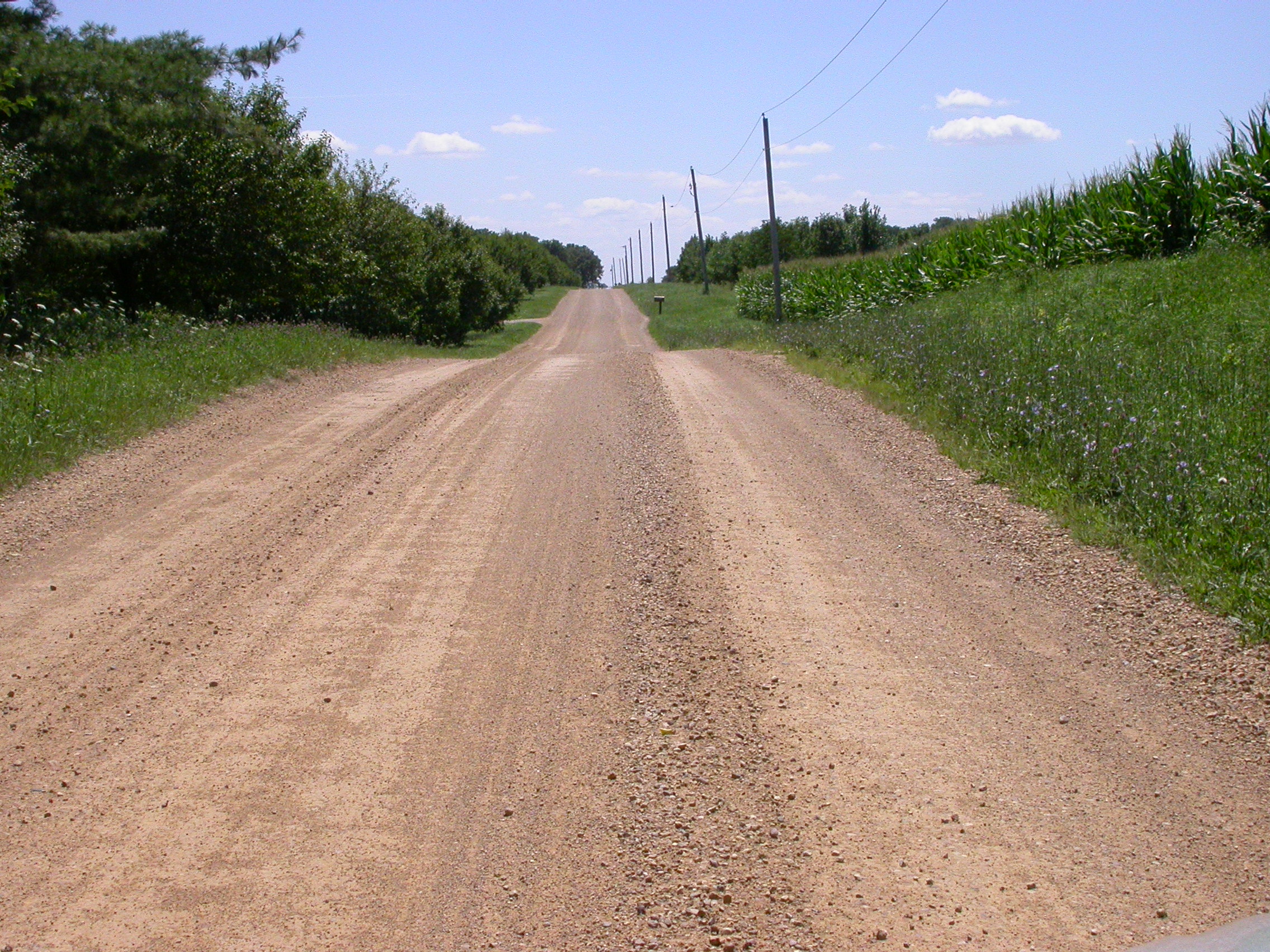
Gravel roads can often lead to trouble, and nowhere.

Gravel roads can often lead to trouble, and nowhere.

You’ve ridden two miles onto a gravel road and there’s no way out but back the way you came. The rain keeps coming down but it shows signs of ending. As if to mock you, a low roll of thunder falls away to the east. You panicked for nothing. It was just a short shower, not a major blast.

The ride back through gravel is humbling, to say the least. You laugh looking at the cyclometer. Your average speed has dropped from just below 19 mph to just above 15, and it’s dropping fast. Birds come back to the wires, and just before you reach the road, a male red-winged blackbird dives from above and strikes your helmet with its feet. A shiver of adrenaline rushes through you, making you feel like the hunted.

We’re all water shrews

In a way, that’s exactly what you were, and always will be. We’re all just water shrews in the game of life. You could tell the same story about a runner caught on a country road and the results would be the same. Making rash choices is an evolutionary mistake. It puts you in worse danger than if you’d taken the known route and weathered the short shower with a bit more smarts and dignity.

So next time you think you’ll regret taking the long way home, consider the options. If it’s hot outside and you’re about to bonk, better to ride or run on the main route and risk a mile or two extra if you don’t know the alternate route.

Because, like a water shrew that dumps its path in favor of a panicked try at reaching home another way, you can get caught out in the open, blind to the right options, and that’s no way to survive.

WeRunandRideLogo

Posted in Tarsnakes, We Run and Ride Every Day | Tagged , , , , , , , , , , , , , , , , , , , , , , , , , , , , , , | Leave a comment

If dogs run free, why can’t we?

Running or riding with a dog requires a dog that can keep up. Or the other way around.

Running or riding with a dog requires a dog that can keep up. Or the other way around.By Christopher Cudworth

By Christopher Cudworth

If dogs run free, why not me..Across the swamp of time? My mind weaves a symphony…And tapestry of rhyme   -Bob Dylan

Running or riding with a dog requires a dog that can keep up. Or perhaps it’s more often the other way around. The right dog can outrun many a runner, of course. Even a cyclist on a mountain bike with a healthy dog has to do some serious peddling.

Dogs that love to run

If you run with a dog, you likely know their enthusiasm for the activity. Many breeds of dog are literally made to run. Others, with short legs, puggy snouts and pudgy bodies, maybe not so much.

So you have to choose wisely if you want to run or ride with a dog. The dog may even be built for the activity, but not want to do it. Some dogs just don’t have a lot of run in them. They go for short spurts, for a ball or a neighborhood cat, then chill for a while.

Chris, Linda and our dog Chuck on a healthy hike in a forest preserve. Looks like he wants to run!

Chris, Linda and our dog Chuck on a healthy hike in a forest preserve. Looks like he wants to run!

Chuck chooses to chill

My own dog Chuck is a combination runner and chiller. He’s learned that there’s no real requirement to run, except when he wants to.

Except we both enjoy the last block sprint of a good walk. If I chirp, “Let’s run!” he jolts at the end of the leash and takes off. It’s all I can do to sprint with him, and some weeks it’s the only sprinting I do. For Chuck, it seems like a release of some sort. A treasured rush toward home.

Sometimes he looks back at me as if to say, “C’mon!” I have to tell him, “Not as fast as I used to be.”

Doggie world

The other dogs in the neighborhood, especially the big ones, know that Chuck is faster in a flat out sprint. Chuck can beat everyone on a flat field with the exception of one whippet-like pit bull with a sweet spirit and a fast set of legs. She can outrun Chuckie and he knows it. So he stops stock still when she catches him. Smart dog.

So I don’t take Chuck on “runs” per se, but just enjoy running with him. I’ve always thought him a little small to go long distances. Not that small dogs are incapable. My best friend had a Jack Russell named Apple Jack that would 15 miles to our 10. He’d sprint from side to side and into the brush on our runs, the way only a Jack Russell can do. His coat would flow like water, making him appear more like some sort of squat snake than canine.

In the long run

The runners and riders who do take their dogs for official “runs” know the pleasure of company with fellow athletes. Some dogs go long distances with enthusiasm.

But that can change rapidly if the dog has a bad experience. One fellow runner owned a black setter-Lab mix that loved to run. But one hot summer day the dog got overheated and from then on, chose not to run again with its owner. Can’t blame the dog in that case. Common sense.

Common souls

For a long time before we owned a dog I’d stop during runs or walks with my wife to pet whatever pup came along the trail. But the real runner dogs would pass right by. They didn’t care about plodding humans. All they wanted to do was run. And I can respect that. Always have. Always will.

WeRunandRideLogo


Posted in We Run and Ride Every Day | Tagged , , , , , , , , , , , | Leave a comment

Running and riding on the tarsnake of cinnamon rolls

A Breadsmith cinnamon roll sits next to the bike sprocket beer top opener on the kitchen shelf. No, I didn't drink beer with cinnamon rolls. But I might have to try that.

A Breadsmith cinnamon roll sits next to the bike sprocket beer top opener on the kitchen shelf. No, I didn’t drink beer with cinnamon rolls. But I might have to try that.

By Christopher Cudworth

When Monday rolls around much of the working world will run a gauntlet of food temptations. All sorts of weekend goodies show up in the morning cafeteria to tempt us in layers of delights even Dante’s Inferno cannot match in their debauchery. There may be cookies someone kindly brought to work and a bag of greasy donuts sitting there like circles of oozy sin. Cream-filled. Sugar coated. Frosted. Sprinkles.

But no more greater desecration of dietary discipline exists than the cinnamon roll.

The name sounds so innocent. Cinnamon roll. And there they sit there all spirally and delicious looking. Cinnamon oozing round the middle. Daring you to eat them.

Working it off. Not. 

You may have come off a weekend where you rode 35 miles on Saturday in the cold and semi-rain. Followed by a Sunday run of 6 miles in which your tired legs begged you to stop. But you kept going. All in all, it was a good combo.

Yet you only lost a pound, when you were hoping for 3. Kept your chocolate intake to a minimum even though you had a headache as a result. Stayed away from chips and beer. Tried to savor the tired feeling on Sunday night, but almost gave into the Sunday binge that kills so many weekend warriors.

Rolling in the dough. Might as well. 

Then Monday comes and you fire yourself up for work knowing you’ve done your best to use the training time well over the weekend.

Then there it sits at work. A tray of cinnamon rolls. You might as well go roll in the dough. It’s going to stick to you anyway. Like a carbo tar baby. The tarsnake of dietary joys and weaknesses. Yin and yang. A spiral of cinnamon signals your doom.

A tarsnake, as we know, can be both a good and bad thing. Just like cinnamon rolls.

A tarsnake, as we know, can be both a good and bad thing. Just like cinnamon rolls.

Rich in carbohydrates, fat and sugar. Cinnamon rolls are essentially a heart attack waiting to happen. Because it’s not just the fat you eat that clogs your heart. It’s the carbs you don’t burn off that turn into fat that clogs your heart. It’s a wicked little secret, only recently confessed, it seems, by the athletic world in general. For such a long time carbs were considered fuel, and fuel alone. Now they fuel fear of putting on the wrong kind of weight. No muscle. Just carb-based fat.

So many have gone before you

Yet you grab the cinnamon roll because just one can’t hurt you, right? You’ve eaten so many before.

In our high school cafeteria there were cinnamon rolls served every day. Yet not everyone knew about them, it seemed. You had to ask for them at the counter. They cost $.50 each. That was all. And they were so good.

In those days every carb counted on a body that was so thin, 6’1”, 128 lbs that to not eat meant a poor workout. So I’d eat cinnamon rolls with savory relish. And never put on a pound.

Ronnies Rolls

Then in college in Decorah, Iowa, there was this place called Ruby’s, a breakfast joint where farmers came to hog down pancakes, eggs and sausage. And cinnamon rolls. Big, frosting-covered cinnamon rolls. Holy crap were they good. Ronnie’s Rolls.

And just yesterday my wife and I needed an outing and drove to Breadsmith, a carbohydrate-based bakery in St. Charles, Illinois. And there, sitting like kernels of frosted lust, were rows and rows of cinnamon rolls.

But I only ate half of one this morning at breakfast. What discipline.

During my 3-mile run at a slow pace this afternoon, it dawned on me that my pace and distance were not enough to account for the calories ingested in that cinnamon roll. I was breaking even at best. But falling behind in terms of cinnamon discipline.

A Breadsmith cinnamon roll sits next to the bike sprocket beer top opener on the kitchen shelf. No, I didn't drink beer with cinnamon rolls. But I might have to try that.

Ugh. The other half is still there for tomorrow. 

God may forgive us such sins. But our bodies don’t. Not really. It will take a 50-miler on the road bike next weekend to apologize. And a hard run the next day as well. Then my belly might accept my weakness for cinnamon rolls with a shake and a groan. Just please don’t do it again, my stomach and sides will say. Just not again.

WeRunandRideLogo

Posted in We Run and Ride Every Day | Tagged , , , , , , , , , , , , , , , , , , | Leave a comment

Johanna Olson an inspiration to all

This painting by Christopher Cudworth of Johanna Olson, Luther College distance runner, will be given to her family during a fund raising event in Arizona. Click to view.

This painting by Christopher Cudworth of Johanna Olson, Luther College distance runner, will be given to her family during a fund raising event in Arizona. Click to view.

My alma mater Luther College has a great running tradition. My career there resulted in a second place finish in the NCAA Division III nationals, a thrill and an achievement. Yet following my own graduation, there came a series of runners who added to the running tradition of the college in so many ways it is hard to describe. One of those runners was Johanna Olson. Her story has been ably covered in an ESPN.com piece that documents her spirit, talent and great attitude toward life.

Recently I was commissioned to do a painting of Johanna for a Luther College fund raising event in Arizona. My former coach Kenton Finanger, himself a legend among Division III coaches is heading up the event and has hired me to do paintings of Luther College runners before. But this painting was a special opportunity to celebrate a life fully lived, for sure.

It is fitting. Finanger is known not only for his successes with teams and runners, but for his joy in the sport and commitment to runners at every level of ability. Coach Kent welcomed the first two female athletes into the cross country program at Luther College in 1975, the year I enrolled as a freshman. That move led to a women’s program that produced national champions such as Turena Johnson-Lane, who won the Honda Award for female athlete of the year in 1997.

Both their careers were an inspiration not only for their athletic achievements, but for their character and refreshing view of the sport, as sport.

It is an honor to do a painting of a person such as Johanna Olson. I tried to capture both the immediacy of the event and her transcendence in the moment. Hope you enjoy.

Posted in We Run and Ride Every Day | Tagged , , , , , , , , , , | Leave a comment

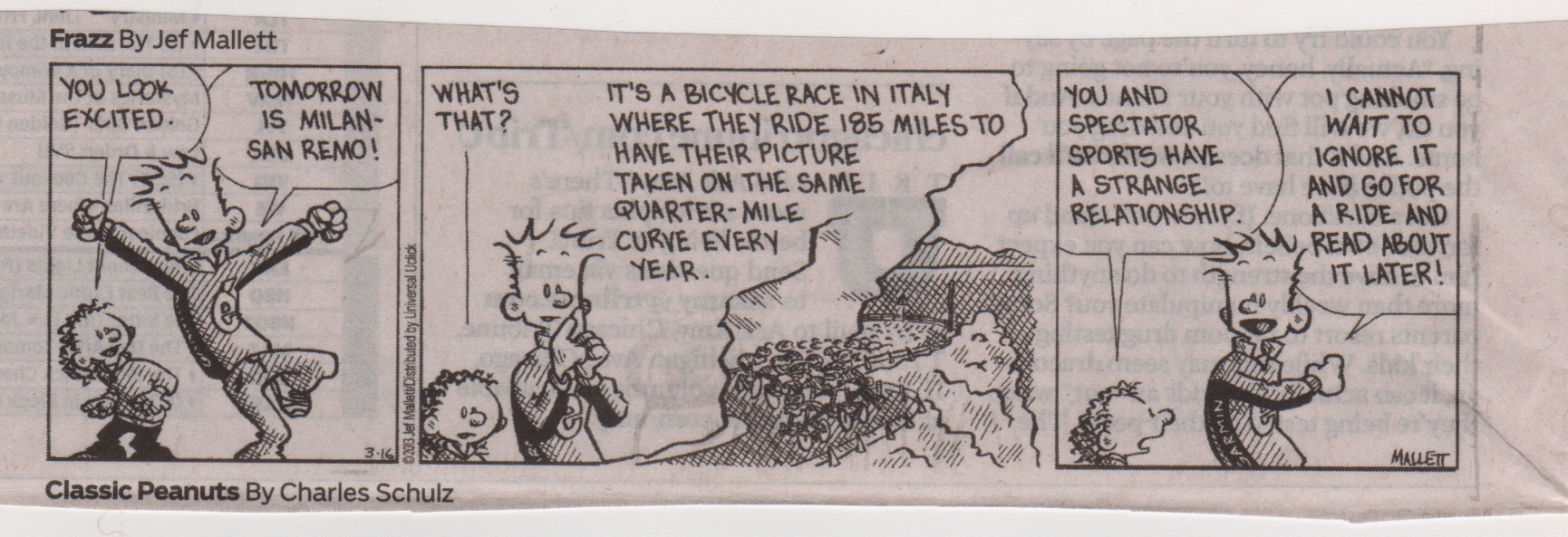
Saturday artwork: Cycling fandom captured by cartoon Frazz

The Frazz cartoon features a janitor who is a cyclist and triathlete. Today's cartoon so captures cycling fandom it deserves to be promoted. Hilarious.

The Frazz cartoon features a janitor who is a cyclist and triathlete. Today’s cartoon so captures cycling fandom it deserves to be promoted. Hilarious.

Posted in We Run and Ride Every Day | Tagged , | Leave a comment

The simplest thing you can do to improve bike safety on the road

The simplest single thing you can do to enhance safety on your bike.

I know this is going to sound simple. But most real solutions are simple.

If you ride a bike or any sort; road, mountain, hybrid, cruiser or other type, you need a light on the back. But not just any light. A red that blinks.

But not just on and off blinking. On and off blinking is better than a flat red light, but not as good as a red light that blinks in alternating patterns top to bottom and back.

Whenever one forgets to turn on the taillight on a bike, traffic tends to ignore the fact that you’re on the road. Turn on a red light and cars may or may not swerve around you Some are jaded to cyclists with plain old red lights, it seems.

When that light is blinking the respect and awareness increase incrementally. You can hear cars slow down behind you because they see your blinking light and something in their blinking brain says to their blinking consciousness; “Oh, there’s a bike ahead. Better try to go around.”

It shouldn’t take that much to get road respect. But it does.

But I invite you to try one of the many forms of blinking lights sold at your local bike store. I like the type that is about an inch wide and 2” tall. When that light is mounted behind the seat it seems to really help win respect with cars from behind.

There’s another form of blinking light that attaches best to the back fork, facing backwards. These lights usually have a rubbery strap that wraps around the fork, and the LED light inside blinks pretty brightly. It can also alternate, and that really works well too.

When the blinking lights are on, I predict you’ll find that cars really slow down and wait to go around your bike. The blinking light seems to represent some sort of official vehicle in the minds of many drivers. With the blinking light on, I’ve had trucks that normally might have run me down slow enough to go around when there’s no traffic.

A blinking light doesn’t work miracles, but it’s the closest thing we cyclists have to protect ourselves on the road. And that’s miraculous enough for me.

Posted in Mechanical Genius, We Run and Ride Every Day | Tagged , , , , , , , | Leave a comment

The serious psychological business of a cycling or running comeback

The hyper-talented, hyperthin Andy Schleck may be a broken rider. We can only hope not.

The hyper-talented, hyperthin Andy Schleck may be a broken rider. We can only hope not.

By Christopher Cudworth with Monte Wehrkamp

It is a painful, difficult challenge coming back from a major injury. The higher the level of sport in which you participate, the more difficult the task of reaching your former level of performance.

One feels for the bike racer Andy Schleck, who this week abandoned from the Tirreno-Adriatico bike race in Italy. Last year Schleck crashed so badly he broke his sacrum, the triangle of flat, platy bone at the base of your spine. His comeback from that injury has not gone so well. A recent VeloNews story described it this way. “Andy Schleck (RadioShack-Leopard) abandoned Tirreno-Adriatico during a wet, cold stage 6 on Monday. After the stage, his team manager said that he hoped the 2010 Tour de France champion would seek psychological help in his return from the 2012 crash that kept him out of the Tour.”

Psychological help. We all need it sometimes. Coaches provide it. So do spouses, bosses, co-workers and ministers. If we’re lucky.

The average person walking down the street is a psychological mess by most measures. Anxiety. Anger. Napolean Syndrome. Napolean Dynamite. All mental problems. You name it. Baggage to be carried. It weighs the mind. Yet we keep going.

High speed chills

Cyclists streaking down a mountainside at 60 mph cannot afford to be a psychological mess like the rest of the world. Anxiety gets you dropped, and messing around with fear at that speed can get you killed.

But it can be enormously difficult to get your mojo back once it is gone. Just ask Austin Powers. He almost lost his will to Shag, Baby! And that’s not normal for Austin at all. Normally he’s the pillar of pride and confidence, even if he’s got teeth like the Pyrenees. If you smile wide enough, they say, you can conquer mountains. Smiles wipe away the fear, you see. Andy Schleck seems to smile a lot when he’s riding. But the smile does not seem to be working. He can’t get his mojo back.

Sacrum hell, it almost killed him

Today co-blogger Monte Wehrkamp sent me an email with some observations about the comeback of Andy Schleck.

Side note: We may not have covered it here in this blog, but during the first month of Monte’s own “comeback” to cycling when he bought his new Jamis road bike, he got veered into a curb by a mindless pickup driver cutting across a gravely parking lot. The truck nearly hit Monte, who was forced to T-bone the curb, which flipped him onto his back, and he tells me it hurt. Really hurt. He didn’t know it at that precise moment, but he had literally broken his back. His sacrum, to be precise.

Yet being the pain-denying mutha I know Monte to be, he rode his bike 11 miles back home. Worried that the pain was getting worse, he wisely stopped at the home of a fellow cyclist who happens to be one of the head emergency room doctors at Cadence Health Center, one of the premier hospitals in the Midwest. (That same doctor late last year took care of my busted clavicle from a bike crash. Me and Monte, we likes to crash it seems.)

The good doctor was not home, but his wife was there. She calmly suggested Monte get off his bike. His back hurt so bad he could not obey her suggestion. So she slowly jimmied it out from under him while he tried to raise one leg like an old dog, but all it did was produce even more pain. They called our doctor friend who checked him out and gave the prognosis: Busted sacrum.

I got the text that night:

“****! Broke my back. I’m such an idiot!”

Monte Wehrkamp during our annual ride to Lake Geneva. His back recovered from a sacrum break well enough to ride all summer.

Monte Wehrkamp during our annual ride to Lake Geneva. His back recovered from a sacrum break well enough to ride all summer.

That’s how Monte and I text each other all the time. Short, sharp shocks of reality. Usually with some cursing involved.

But Monte also has a tradition of writing me lucid, insightful emails about life and God and cycling as well.  Our exchanges are what got this blog started. We decided to talk to the world in the same language we talk to each other. Maybe someone would laugh along with us? We have fun anyway.

So this email from Monte about Andy Schleck arrived today, questioning whether Andy will ever again be a consistently world class rider after breaking his sacrum in an awful crash last year. As we now know, Monte knows how much that hurts. He’s been there.

Monte wrote:

“He may not make it back. Just not make it.

His team is even thinking he’s PTSD’ing. He’s through the physical recovery, now the trick is convincing himself that he can do it again like he used to. But he’s afraid. Like Derrick Rose. Afraid it’s not gonna hold. That it’s going to happen again. That it’s not ready, too soon.

I get it. You do, too. (Note: I broke my clavicle in a high speed crash last September.) 

Going down hard, harder than ever. Hearing the impact at first, before the physical realization of the severity of the impact. Before the shock wears away and you’re left with nothing but trembling pain. The understanding of how bad it was, and how close it was to the end. DOA. Or paralyzed. Hi, honey…I think I just pooped. 

Andy kept riding after he broke his back, as sacrum fractures are tricky to diagnose. He finished that time trial. He tried to ride again the next morning, but abandoned to the hospital for more tests. And that was that. The end of his year. And maybe, the end of his career. 

His body and his emotions haven’t forgotten. And physically, his back hasn’t either. It’s not gonna fit the bike like it used to. A bit of flexibility is going to be gone. Those nerves — all bundled in that transition zone at the base of the spine — were traumatized. They’re gonna be fiddly forever, too.

Riding with PTSD is real. Still have it myself. Riding with a sense of mortality. Riding with a target on my back (like FL, that sense of forboding, only to have an old woman barely miss cleaning me off the road an hour later). Does a rider ever fully open up again? Simple and unrestrained joy in riding? Or, like a jilted lover, always hold back a bit? 

I know lots of pros take terrible, smashing crashes and bounce back the next season. Or even on the next ride, if they didn’t break anything. Some guys break shit and just keep going. Hamilton rode the Tour, in yellow, with a broken clavical for goodness sake. Fiorenzo Magni tied an inner tube to his bars, then bit down on the other end so he could pull up on the bars while climbing in the Giro. Either riders like this are insane, or unimaginably mentally and phsycially tough. Hamilton said the pain was actually intoxicating — his body was probably releasing a cascade of hormones and chemicals just so he could endure.”

Probably the latter is true. Pro riders are unimaginably mentally and physically tough. But the former is just as true. Pro riders are clinically insane. Just ask them. They’ll tell you that keeping up with the peloton alone is an insane project some days, much less lashing down a mountain on a wet road and a lonely road.

Perhaps Andy Schleck is a little too nice a guy (he hugged his rival Alberto Contador after getting second in the Tour) and a little too sane for the insanity of riding with a formerly busted back. If so, who are we to blame him? Sanity is a rare commodity, even among those walking down the street.

It’s a confusing question. Whether we should, in the end, be nice people or be possessed by such a fierce desire to succeed that we sacrifice all sorts of common sense to prove that we can achieve. To prove it to ourselves, if no one else.

I know I’ve gone over the line more than a few times. Running to collapse. Coming back from what I thought was a case of heat stroke only to realize that years later that it was food poisoning, not heat stroke that had laid me low during a national meet. But the ghosts of that effort did haunt me. And I chased them away with miles of feverish training. It took years to get over the hump, and only when I ran in the top 5 of a major local road race in hot conditions did I realize I’d been fooling myself all along. I could run in the heat. But psychologically it seemed impossible after the original trauma.

Well, like Don Quixote we sometimes tilt at windmills. Just try not to fall of your bike while you’re doing it, or you’ll break your ass. So to speak.

Posted in Uncategorized | Tagged , , , , , , , , , , , , , , , , , , , , , , | Leave a comment

Watch out when the rubber hits the road if you run and ride

By Christopher Cudworth

We have read quite a bit on this blog about getting down close to the road and really studying the surface we ride upon.

We have celebrated tarsnakes together, and even their wintry cousins, the snowsnake, of which there haven’t been too many this year here in Illinois. The snow either fell too fast or too wet or too thick. Any potential snowsnakes got buried well before they could crawl across windy Route 38 like they usually do, out Elburn way. (That’s the country around here.)

Shedding their coats

But now the seasons are changing here in the Land of Lincoln, and with the springtime some people out there apparently think it’s high time to start shedding their coats, as we enter what ought to be called Rubber Season.

That’s what we find when we run and ride on a Sunday morning or a Tuesday afternoon. Someone’s been out having fun in the car and tossing aside the evidence. Condoms. Weenie jackets. Prophylactics. Doesn’t matter what you call them. They’re always sort of shocking when you find them used and discarded. Even an empty condom package has a story behind it. We dare not imagine it. Not on our own. Too often we are jealous creatures.

Too close encounters 

When the rubber hits the road, best watch out where you run or ride. But don't worry. Its only teenage wasteland.

When the rubber hits the road, best watch out where you run or ride. But don’t worry. Its only teenage wasteland.

Running along some street in a suburban neighborhood you look down in the half dark of dawn and think, “What’s that?” And then you realize. Someone actually threw that thing out the window. But why? And when?

Teenagers, one must suspect. The Trojan ads all target teen-aged men and women, plus a zillion college students, all doinking their way through Handsome High and the University of Sex Ed. Word has it it’s not that hard to get a passing grade, although the movies Superbad and American Pie might beg to differ.

Of course teenagers don’t have college dorm rooms so they go out and do it in a car and that’s the other thing one finds a lot while out running and riding. Quite a few cast aside panties.

Between the condoms and the panties lining the roads in our region of the country it is a wonder anyone between the ages of 16 and 18 actually ever learned how to drive. It’s hard to hump over a stick shift, is it not? Someone’s trying. And succeeding, from the looks of things.

Are cyclists just human condoms?

All kinds of narratives emerge when you’re out riding your bike all dressed up in an expensive cycling kit, only to look down and see the closest cousin to your body condom spandex, a tube of spent-looking latex, lying there on the ground. Makes you wonder: Am I just a human condom?

There are certainly days when you don’t feel that much better than that on a bike. You start out all erect and proud at the start, but when you turn into a stiff wind your energy goes blammo. Looks like you’ve blown your load of glycogen on a false flat and a high gear. Good luck holding someone else’s wheel now.

Minimalism redefined 

Runners really have to watch out where they’re stepping some days, for fear of causing some strange sort of street explosion by coming down flat-footed on one of those little ribbed condoms perched on the white line of the road.

But pity! the barefoot minimalist who neglects to look down often enough to avoid stepping on one of those squirmy condoms left on the street. That will bring out the caveman or cavewoman in you, for sure.

Backflips

God forbid that a used condom should get flipped up by the back wheel of your bike and land on your bare neck. There are some people who might choose to ride to their own death at that point rather than come to grips with the truth in what they feel.

Don’t blame me for this blog, I’m just a journalist doing my job…

Don’t try telling me that only I have these strange thoughts, and that the rest of you are innocent of such considerations. It’s my job as a journalist of the highest caliber to warn you of such dangers as tarsnakes and, dare we say it, rubbersnakes on the road.

After all, we do run and ride the same roads, you and I. So now you have fair warning to beware when the rubber hits the road. Just step over it. Keep calm and carry on. It’s only teenage wasteland.

Posted in Tarsnakes, We Run and Ride Every Day | Tagged , , , , , , , , , , , , , , , , , , , , , , , , , , , , , , , , , , | Leave a comment

Putting some numbers on running and riding

Where numbers get crunched. Or atoms anyway.

Where numbers get crunched. Or atoms anyway.

Putting some numbers together on cycling and running

As an Art and English Major I’ve never been all that good at math. But basic numbers still fascinate me.

For example, if you maintain your cadence on the bike at an average of 90 rpms, then you pedal 5,400 times an hour. Ride 3 hours and you’ve pedaled 16,200 times. And that’s just on a typical Saturday morning.

Add up all the riding you do and it gets even more interesting. I’ve ridden 20,000 miles in the last 7 years. That’s about 2857 miles per year. At an average of 17 mph that’s 1,176 hours on the bike, or 49 total days of cycling over the last 7 years. Correct me if I’m wrong…

Since there’s 24 hours in a day and you pedal about 5400 times an hour, that adds up to 129,000 rpms per cycling “day”, or 6,350,400 rpms in the last 7 years.

Wordle CyclingYou can see why you forget to keep up your cadence once in a while. Fall slack and pedal along at 80 instead of 90 rpms. Or 90 instead of 100.

Pros roll

The numbers for a pro cyclist would dwarf the numbers someone like me puts up. Many of the best pros roll 10,000 miles a year. And they ride so much faster, averaging who knows how fast per mile in training. Or kilometers. They ride kilometers in Europe, don’t they? Of course they do. It just sounds better. 15.5 miles? Nada. 25 kilometers? That rocks.

The point is that cycling is a pretty insane game when it comes to numbers. We punish ourselves mentally for dropping cadence, slacking on the MPH or KPH and yet the miles still add up.

Stride for stride

Running has its own numbers games as well. Runners don’t worry so much about cadence or strides per minute like cyclists. But perhaps we should. Some of us have strides that are too long or inefficient. We could perhaps learn a few things about running from riding.

Wordle RunningI’ve run an estimated 50,000 miles in my running career. It could be higher, but I doubt it. It’s hard to calculate if you rule out all the miles of running in soccer, basketball, baseball and all the other sports. Tennis. It just keeps going. It’s a wonder my feet aren’t nubs. Well, they kinda are.

But if I’ve averaged 8:00 per mile for 50,000 miles that adds up to 400,000 minutes of running. That’s 6,666 hours, which is kind of scary. Maybe I’ve been chased by Satan all these years. Or my own demons, more likely. Either way, that 666 thing is creepy. It all breaks down to 277 days of running. Not quite a full year of my life. But close enough.

Like I said, I’m not that good at math, so if you check the numbers you might find I’ve made a mistake here or there. So be it. The fact that I’ve run close to a year of my life makes me feel weird though. I mean, that is weird, right?

My mind works better with words, anyways. Which is why I took the section on CYCLING in this article and put it through Wordle to create a Word Cloud, showing which words stand out in the thought process. Then I did the same for the RUNNING section of today’s blog, and look at the words that show up.

Numbers or words. They fly through our heads and sometimes land on a page. We Run and Ride through WordClouds and number games. And never really know it.

WeRunandRideLogo

Posted in We Run and Ride Every Day | Tagged , , , , , , , , , , , | 1 Comment

When the world is running down, you make the best of what’s still around

When the world is running down, you make the best of what's still around.

When the world is running down, you make the best of what’s still around.

That Police song from the early 80s is so true. When the world is running down, you do need to make the best of what’s still around. 

You don’t see as much of that spirit these days as people who run and ride so quickly replace worn out gear for fear of injury, chafing or whatever.

But there was a time not so long ago when runners and riders wore their best stuff until it literally fell off their bodies. Guys would show up at races in the same shorts, singlet and socks they wore the week before, and you could see they hadn’t washed the stuff because the same sweat stains were on the short. Then they’d kick your assess, smelling like an old locker room the whole 10k. You didn’t dare pass them for fear of puking in their wake.

Pissing off the primpy cyclists

Primpy cyclists. I know. I'm one.

Primpy cyclists. I know. I’m one.

I like the fact that today’s cleaner athletes all look dapper at the starting and finish lines. There’s a certain respect for the sport I guess, in dressing the part. And I’ve seen some worn out characters at races the last few years.

Even got beat once in a criterium by a guy wearing blue jean shorts. But I think he was wearing that anti-cycling gear on purpose. Just to piss off the primpy cyclists. And I loved him for that. Cyclists are definitely way too primpy and uptight in so many ways. Except for Jens Voigt maybe.

Early minimalism

Runners in the early days wore their shoes down until the shards on their feet were as minimally efficient as the minimalist shoes you pay dozens of dollars for today. I’ve shared that I once raced right through a sole of a pair of New Balance training shoes. The last two miles of a 20K I was running on a sock. Finished in 1:09. When the world is running down, you make the best of what’s still around.

Making it last

In college we wore our shoes 800-900 miles. No questions asked. But to preserve the heels we were wise and applied carefully appliquéd layers of athletic tape to make sure our shoes were level and the heels did not wear more quickly than they needed to. It worked. Athletic tape was tough stuff, made of cross-woven thread and stinky, like a bad hospital. But if torn off in small quantities and applied to the heels of a set of running shoes, it worked great to delay wear on the heels of expensive shoes. To this day I’ve never heard anyone else who thought of that. Have you? It would still work.

Threadbare wheels

Those of us who ride know that changing your tires before they become threadbare is wise, if you think of it. But as the miles wear on and the bike tires grow thin, you are somehow surprised that you’re suddenly getting flats every other ride. It doesn’t take a genius to look at your tires and know they’re worn thin. But the perverse optimist in all of us like to think we’ll make it a few more miles before they really need a change. Here’s a hint: When you hit the brakes and can see the fiber through the bike tire rubber, it’s time to change your tires. Continental. Bontrager. Michelin. They’re all the same. They wear out eventually. When the world is running down…

That goes with brake pads too. Metal on metal is not a good noise, and brake pads that thin don’t really count as brake pads. Not philosophically or legally.

Taking it too far

Of course I know a guy who drove his Toyota for 80,000 miles and never changed the oil. The goo inside the engine somehow still moved around and kept it from seizing. But not by much. Why it never burned completely off we can never be sure. Dumb luck I guess.

Protecting the unworn

Now when I retire my running shoes they don’t even look worn. They look like the new shoes I bought back in the 80s. I run on my midfoot so the heel barely shows any wear. But one thing we should never forget is that we wear out the insoles sometimes before the outsoles ever wear out. Still it seems a damn shame to put a perfectly good looking shoe into the closet. They’re laying all over my house, these unworn-out-looking running shoes. I know, people in China or Malaysia or Bangladesh could use those shoes, but don’t tell them. They’re the ones making the running shoes we Americans wear for 376.25 miles and then retire because they don’t feel quite right.

Pushup prices on shoes

It’s gotten a little insane on the price end of things too. Running shoes now cost $120 and we use them about 1/5 as much as we used to. The only thing that gets used less than a new pair of running shoes and has the same confined brand of utility is a pushup bra from Victoria’s Secret.

After all, there are only so many occasions when that kind of garment can be worn, and the damned things  are so expensive can’t afford to put much wear and tear on them. Both expensive running shoes and pushup bras are good for one thing and one thing only: Going forward for as long as the support holds out.

When the world is running down, you make the best of what’s still around.  Sure seems like Sting new what he was talking about. But then again, I think he is a runner. That was probably the inspiration for the song.

Posted in We Run and Ride Every Day | Tagged , , , , , , , , , , , , , , , , , , | Leave a comment