50 Years of Running: Olympic Aspirations

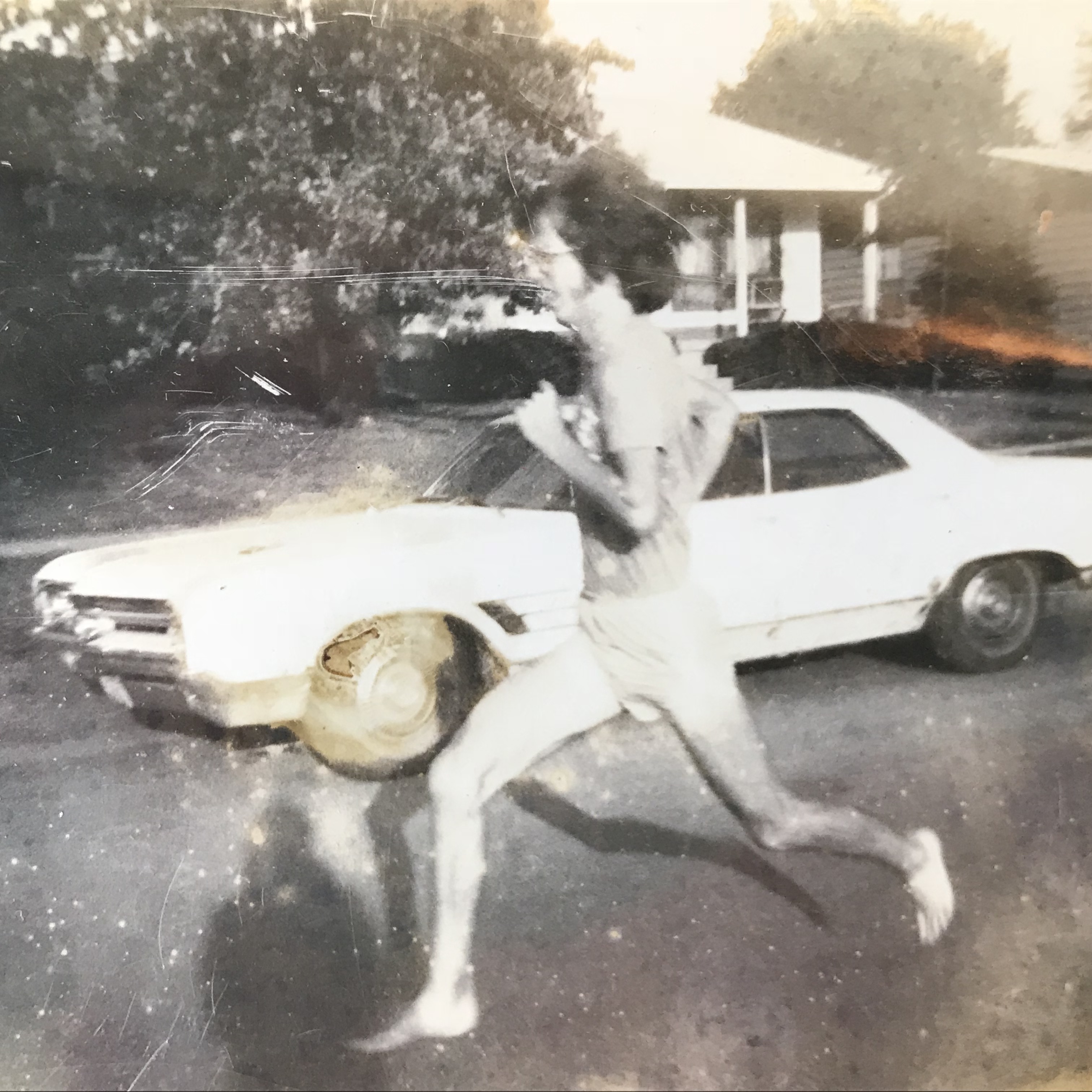
The shitty little split level house in which we lived through 1976

The summer before my junior year in college, my parents decided to move from a tiny split-level house in a suburban St. Charles neighborhood to a farmhouse six miles out of town. They were both raised on farms in Upstate New York. Perhaps they thought it would be nice to live out in the country again. Whatever the motivation, it wasn’t well thought out. My younger brother was still in high school on the other side of the Fox River. That meant it was an eight-mile trip one-way for him to get to school and basketball practices.

Coming home from college that summer was a bit disorienting. The farmhouse sat on a thousand acres covered in corn and hayfields. Those first few days I wandered the property trying to figure out what it meant to live so far out in the country.

There was plenty of room to run. The hills were plentiful too. But I’d forgotten one thing about running in the country. The dogs weren’t on leashes. On one of the first warm June mornings I was flying down the south side of a hill on Denker road when a large Doberman dog burst through the bushes and planted his nose firmly in my crotch while growling. I stood completely still, fearing that the next move might result in jaws and teeth embedded in my junk.

Instead, the owner came out of the bushes and called his dog back. I stood there a moment, not really daring to say anything to either the man or his dog. They disappeared through the bushes and I went on my way. Something about that day felt like an omen.

A week later while playing basketball with my brothers, we were dunking on a short rim when a loose ball rolled under the basket. I came down on the ball and twisted my ankle in a moment of fear and pain. That left me hobbled for several weeks. I wrapped the ankle in an Ace bandage and couldn’t run. That made me worry about fall fitness and cross country.

The other worry was finding a decent summer job. My mom heard that a friend’s son was working at a factory for Olympic Stain. He was a former basketball teammate so it seemed like a decent opportunity to share rides to work for the last half of June and the month of July.

And then I walked into a nightmare. The factory work was a Sisyphean mix of repetitive tasks and mind-numbing boredom. The first week was spent lifting Imperial gallons of liquid stain on and off a conveyor belt because the bailer element of the machine that installed wire handles on the cans kept breaking. That meant the cans coming down the belt would back up, and I’d have to stack them on the floor and back on the rack when the mechanic fixed the bailer.

Back and forth from our country house to the factory I went. The days mixed together in a bad way. Plus the guy with whom I shared rides was terrible at being on time. Work started at eight a.m. and I liked to leave our house by 7:20 to have time to get all the way down to Batavia, a good twelve miles away. But Johnny Be Late would show up at 7:45 because he was such a sleepyhead and couldn’t get out of bed on time. It drove me so nuts I even called his mother to let her know what a dweeb he was being. He’d mutter and apologize some days but honestly, he seemed not to care that much that he was always late. My hatred for him grew by the day. He’d even be late coming out of the house on the days that it was my turn to drive. As time when by there were many mornings that I didn’t talk to him at all.

It drove me insane to punch in late at that job. And without being able to run for those first couple weeks due to the sprained ankle, I had no way to wick off the stress of the whole circumstance.

The factory was also a chemical experiment in progress, with a blue haze of fumes from the turpentine used in the paint floating around the roof of the plant. The air we breathed was rife with the stuff, and a week into working there, a few of the regular plant workers conspired to play a prank on me, the dumb college kid.

“Here,” one of them instructed me. “Hold this hose down in the drum while we ‘shoot the pig’ to clean out the pipe,” he said, pointing to the long transport system leading from the turpentine tank to the mixing station. I stood there holding the hose into a drum already filled with turpentine when a rush sound came through the hose and a dense sponge traveling the speed of sound plunged into the turpentine drum. Instantly I was coated head-to-toe with a layer of toxic turpentine. It stung, and I felt it running down my hair and back. I looked up to see the line worker laughing has ass off. Then the foreman came running over and grabbed me by the arm. From there, I got my first introduction to the industrial shower. Naked and scared that I might die from poisoning, I stood there in hot water trying to wash the color and chemicals off my body.

The culture inside the plant was built around constant teasing and verbal abuse. Mostly it was the divide between full-time workers and summer help that drove a form of spiteful commentary and behavior. It felt like a classic conflict between townies or locals. It was all a form of in-house bullying. I recall being mocked for not knowing what the term MoPar stood for. As the farthest thing from a motorhead the world had to offer at the time, I was disgusted to learn it was about nothing but car parts. It astounded me that someone could be so tribal and derisive about something so inconsequential to most of the world. While the people in my world were fascinated by Olympic aspirations, the people working in that factory were consumed with proving their worldview was superior in all its sordid details.

One of the guys I half-trusted was a former classmate from Kaneland High School named Phil. We took to making jokes with each other to pass the time and deal with the insanely toxic environment of that plant. Our humor took on a pattern of dark and disgusting jokes about different types of farts. Some of it was wordplay, like Brain Fart (not yet a colloquial term at the time) but I finally closed down the prolonged exchange by calling out “Blood Fart” across the sounds of the bailing machine and he replied, “Okay, you win.” I was way ahead of a future production of the same name.

Ywr ten years later, I randomly met Phil at a party of some sort. “Hey!” I told him. “Do you remember working together at Olympic Stain?”

“No. You didn’t work there,” he insisted.

“Yeah I did,” I reminded him. “We made up those fart jokes. That’s the only way that we could stay sane.” Then I looked closely at Phil. He was high as a kite. In fact, he was probably high the entire time we worked together at the paint factory. No wonder he didn’t recall a thing.

And yet, I saw him a few years after that and he recalled it all. Go figure.

After a few weeks of working on the paint floor, I got moved out to the shipping department and was glad for the change in routine. I learned how to use the handlifts to move skids of paint around. We loaded up trucks every day. Then an announcement came through the plant that the President of the company was going to pay a visit the next day.

We were all keeping busy when the President came out of the front office and was strolling down the aisle toward the dock when a guy driving a forklift came whipping around the corner with the forks raised. One of the metal prongs struck a stack of fifty-gallon drums three stories up and two of the giant cans flipped off and fell to the floor. The lid burst open and black paint went streaming down the aisle and washed over the President’s feet. He pointed at the forklift drive and commanded: “Fire that man.”

I went home that evening shaken by the idea that stuff like that could happen. I went

Finally, my ankle was improving enough to go for some short runs after work each day. But I noticed a strange fatigue that summer that I’d never experienced before. Was it the long days? Or was it breathing the chemicals in the plant all day long.

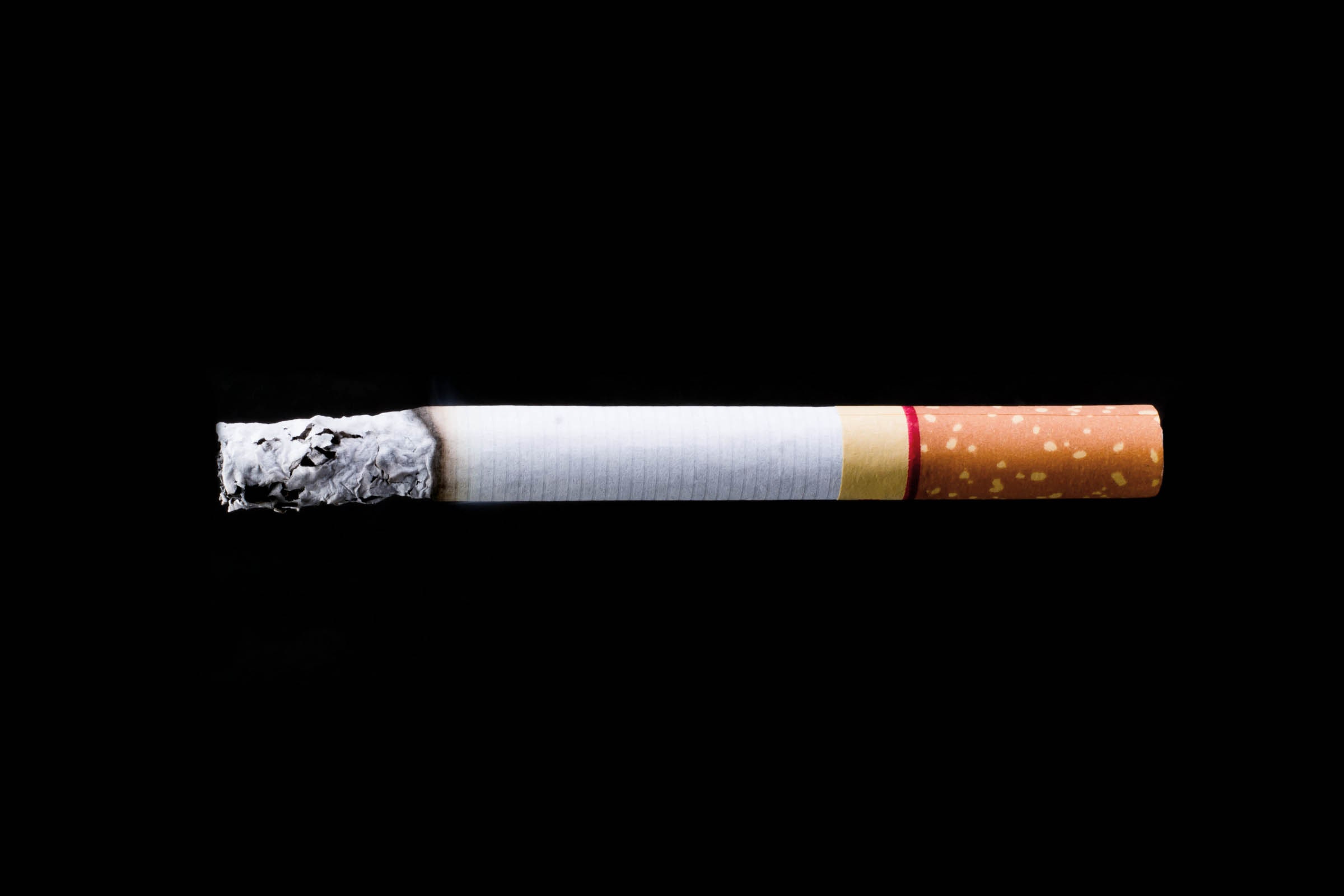
During work breaks, we’d retreat to the upstairs cafeteria to grab a Coke or in some cases, smoke a cigarette. The 30′ X 20′ space was nothing big, and it felt even smaller when people crammed in there smoking ciggies. I worried that the Blue Haze at the top of the plant ceiling might ignite one day from the tip of a lit cigarette. So I moved from the industrial blight of an open floor plan of a chemically compromised atmosphere to the enclosed spaces of a secondhand smoke science experiment. The wizened faces of the women sucking on on Kools and Marlboros seemed unconcerned that they might blow the place sky high. In turn, I pretended it wasn’t a risk.
For reasons unknown to anyone but the foreman, I was shifted back onto to the plant floor another week. He seemed to manage his job like a gopher filling holes that he’d already dug himself. So I dutifully moved into a position where the paints were being mixed and suddenly and briefly was given instructions on how to clean the pipe systems between the two 35,000 gallon vats of turpentine and liquid latex.

I just looked up the information about when OSHA laws were created, and it says they were put into place in1971. Yet here it was, in 1977, and I was being “trained” to conduct a highly dangerous industrial activity with one ten-minute session of training and no one to supervise me. Add in the fact that I am an ADHD learner and it was inevitable that disaster was about to strike.

The instructions were difficult for anyone to follow. The procedure required one to clean out the pipes on one side of the system, shut them down, then clean out the pipes on the other side of the system, and shut them down too. Then one had to conduct a pressure test, and that’s where things got weird. I turned the valve handle and liquid latex came shooting out from somewhere in that pipe system at an enormous rate. The fountain shot into the air and covered me from head to toe. I stood there in shock and recall trying to wipe the liquified rubber out of my eyes from behind my glasses, which were already stained a rust color from “shooting the pig” into a barrel of turpentine a few weeks before.

This time the plant manager came running over and shut down the pressure. Two people grabbed me and it was off to the industrial shower again. I could hear the floor employees laughing and saw them pointing at me. I was angry and scared and emphatically determined to pay them back for mocking me.

I stood naked in the shower until all the liquid latex drained down to the floor. My hair was matted and thick with the stuff, so I stuck my head under the showerhead for a few more minutes. Then I donned a set of company work clothes and went back out onto the floor.

All afternoon I heard taunts about the “Human Condom” while I worked the bailer in silence. I could not believe that I’d been put in the position of having to conduct a potentially dangerous activity like that. One guy in particular kep shouting insults at me, and I finally flipped him a gesture of discontent an he was so busy looking back at me that he’d forgotten to turn the Clarke floor cleaner in time to avoid driving off the railroad dock. The front-heavy vehicle tipped out the dock and sent him flying out over the tracks like a catapult. I stood there in shock for a moment, then shook my head and went back to work.

“Serves you right,” I muttered.

The next day I arrived late at work again thanks to my lazy-ass driving partner, and upon walking in the door was accosted by the plant foremone.”Listen,” he said. “If you keep showing up late you’re fired.”

Then he instructed me to go clean up paint under the main tanks at the west side of the plant. I walked over and inspected the area, which was coated with a fine layer of paint flecks and dust. I went to the closet and found a hoe-like device with a half-circle metal blade. For the rest of the day I chopped into the paint and found that there were layers of crusted, caked paint six inches thick.
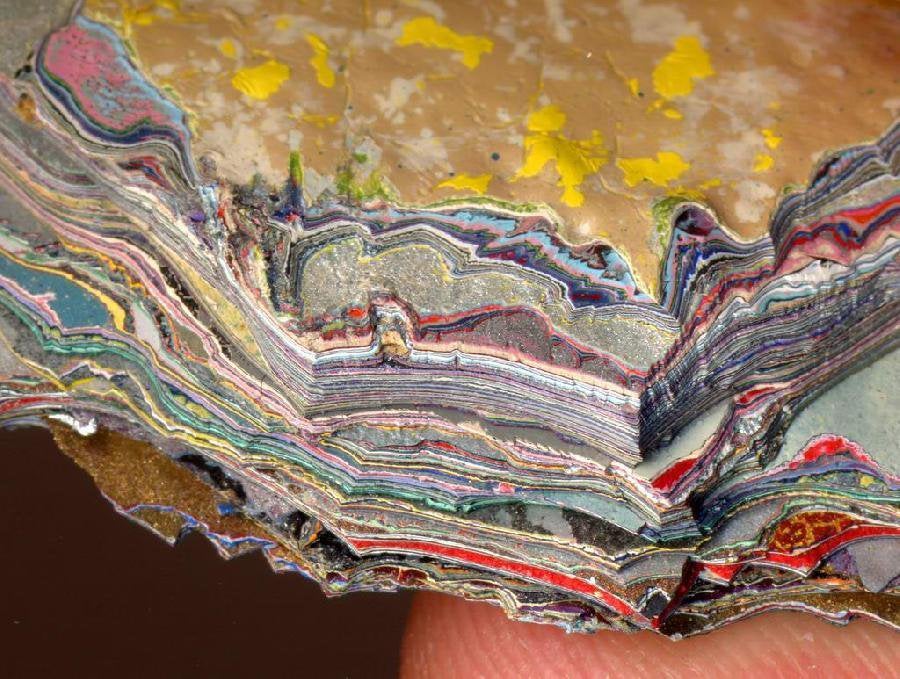
I worked methodically chipping out the paint in six-foot squares. I was so sick of being late to work that I told my driving mate to fuck off and took my mom’s car to work every day. I’d punch in, walk to the closet to fetch the hoe-blade, chip away at the paint layers for several hours and slip off to have lunch at noon. Then I’d go back to work chipping paint again.

That went on for two weeks. I was deep into the rhythm of paint-chipping and relieved to be free of the insulting environment of the main plant floor. At night I’d go home to run a few miles before dinner, and worked my ankle and body back into summer shape. I’d lost four weeks of distance training thanks to the sprained ankle but decided that it was time to make the best of it. What I’d really missed was the stress relief that came from running. During that summer of working at Olympic Stain I’d begun to realize how important running was to my mental health.

Then one day I came into work and was chipping away at paint under the big vats when the foreman wandered back to find me doing what he’d told me to do. “What the fuck?” he asked, glancing around at the forty-by-forty-foot space I’d cleared under the paint vats. “Who told you to do this?”

“You did,” I replied.

“The fuck…” he responded. “Come on out here. We need you out on the bailer.”

I dropped the blade-hoe where I was standing and glanced back at the fine job I’d done clearing out that six inch layer of paint residue. If I’d done nothing else of value at that paint plant, I reasoned, at least I’d accomplished something visible and real.

The next day when I arrived at work, the foreman handed me a check and said, “We’re done for the summer. This is your last pay.” I snatched the check and walked out the front door of the plant. What a relief.

The next two weeks I spent trying to get in shape for cross country season that fall. But something creepy was going on with my body. I couldn’t get a full breath on some days. I realized that all those paint and turpentine fumes were messing with my lungs, my mind, and my self-perception.

I felt a heavy feeling in my head, like a sinking sensation at the back of my brain that both inexplicable and real. That was the first time in my life that I felt the effects of depression working on me. But it was time to go back to college. So I gathered all my stuff and rode with my older brother up to campus. He dropped me off with little ceremony and I hauled all my junk up the elevator to a dorm room in Dieseth Hall. On one hand I was happy to be back. On the other hand something felt vastly off about the coming year.
And then the fall training began.

Back home, my parents were having second thoughts about life on the farm. The commute to drive my brother to school and back was making them crazy. Plus the older couple from whom they rented the farm house was acting strange, accusing my parents of having too many people over to the house and weird things like that.

It all had an odd effect on my. Looking back on the entire circumstance, I recall that my closest friends recall the 1977-78 college period as “Cud’s Weird Year.”

And I can’t argue with that. Things definitely got weird in some ways.

Posted in anxiety, Depression | Tagged , , , , , , | Leave a comment

50 Years of Running: U-Hauling Ass

Working summer jobs between school years was necessary to pay my way through college. That first summer I worked as a coach for the St. Charles Track Club but only earned $500 for the entire summer. The next year, I pulled myself up by the College Kid bootstraps and found a job through a friend as a delivery driver for a U-Haul distributorship in West Chicago. My job was driving all over the Chicago area dropping off trailer hitches and cartons of packing boxes to U-Haul licensed dealerships. Between deliveries, I’d sit in the back room screwing big oily nuts onto the knob and bolts of trailer hitches.

My supervisor was a guy that ran the delivery side of the business. His boss was a mustachioed quasi-executive type that worked in the front office with a bunch of secretarial types. He also had an extremely hot-looking teenaged daughter, just a year younger than me. I’d sometimes wander into the executive area to get a cup of water and check her out. Whenever I’d come back, the other two senior members of the delivery staff gave me crap about flirting with her.

In fact, they gave me crap about a lot of things, but I needed it. They reminded me to count the hitch orders carefully. Hinted that I should study the shortest route across the suburbs to save time. Every day there was a new round of instructions to obey. And frankly, I needed them.

I wasn’t always forgetful, but I was sometimes. Nor was I always spacey, but sometimes I was. Like the day that I was looking down at a map in my lap while driving and rammed into the rear taillight of a brand new car being backed out of a new car lot. That was actually the first car accident I’d ever caused. The bumper of the U-Haul van was barely dented, but the rear tail light of the new car was obliterated. I’m not entirely sure the accident was all my fault, but the daddy’s boy in a cheesy shirt and tie screaming at the top of his lungs about damaging the new car sure thought it was. By the time I left, I was glad I hit that asshole’s car.

With all the miles I drove that summer, I was lucky there weren’t more accidents. While driving a 20-foot truck loaded with refrigerator cartons, I approached a large intersection in Roselle only to see the light change as I crested a hill. I hit the brakes but it had just rained after several weeks of dry weather and the oil on the surface of the road made my tires slip and slide. The heavy rear-end of the truck spun around to the right and all I could do is turn the wheel in the direction of the spin and slide through the entire intersection. Blessedly, no one else had entered the intersection yet and as the truck’s front end came around I got it to go straight again and just kept on rolling. No harm done.

But a half-mile down the road, I pulled over and sat there with a death shiver. “I could have killed someone,” I muttered to myself.

A week or so later, while out on a run through the City of Geneva, I was standing on the curb waiting to cross Route 38 at Route 31 when a speeding car ran a red light and smashed into a Volkswagon Beetle. The car lifted into the air, and instinctively I grabbed the guy next to me and dove with him down the steps next to what used to be the Little Owl restaurant. I glanced back to see the VW resting on its side right where we’d been standing.

The man next to me climbed back to his feet and at that moment, a car waiting at the light honked its horn at him and a woman inside waved for him to get in. Without saying a word of thanks, the man opened the passenger door and got in the car. The light changed and they drove south together.

I stood there in a state of shock. Time stood still for a few minutes. Then the light changed again and I started running back east toward my house. About halfway across the bridge over the Fox River, I stopped and had yet another death shiver. “I could have died,” I said out loud.

That whole summer turned into a weird, hot dream in which I drove around in traffic all day and tried hard not to forget anything on deliveries. The guys at U-Haul kept up the teasing, and I kept learning from it despite how mad it made me at times.

The lead guy was genuinely a kind guy who worked as a clown in parades and such when he wasn’t busy with his real job. His main helper was a somewhat officious and brusque guy with a big frame, a prodigiously groomed red beard and a ton of advice about life in general. He was clearly well-educated, often weighing in on conversations with refined input about the quality of one thing or another. He was also well ahead of his time in being a connoisseur of fine beers.

The third member of the delivery management team was the wry joker of the bunch. I liked him most because he reminded me of a close friend with the same name. He was also the one who egged me on to ask for a date with the daughter of the big boss. “Get up there and do it,” he challenged.

Hint: 70s girls were hot, and she looked something like this

So I did. The end of summer was approaching and there was a Jackson Browne concert at Ravinia in late July. It took all the courage I had to ask her for a date, but she quickly said, “Yes, that sounds great” without any hesitation. We went to the concert and had a great time. That was a one-shot deal, but not every date needs to turn into a big romance to have a positive effect on your life.

The last weeks of working at U-Haul turned into strange ones. First, a big shipment of trailer hitches was due to arrive and we were all kept off the road to help unload them. But rather than arriving on an open flat trailer, they were crammed into a big semi-trailer. The load shifted during shipment and it was impossible to pull most of them out one trailer hitch at a time.

We tried several methods to unloosen the load, but finally, a tractor and giant chain were put to use. “Okay,” the bearded guy in our crew announced, “Everyone stand back.” Then the tractor fired up and tailer hitches came flying off the back of the semi. Nuts and washers flew off and struck the nearby fence. This was dangerous work indeed.

The next week a trailer came back from a rental job. It was filled with unlit fireworks and had been left in the lot to bake in the heat all day before someone got to look inside. “That whole thing could blow,” our lead guy warned. “Let’s open ‘er up and let some air in. Then we’ll see how it goes.”

Fortunately, there was no pyrotechnics that day. But on the last day, I worked at U-Haul that summer, the boys all gave me an extra hard time and when I went to start up my engine to leave, a cacophony of noise and whistles, smoke, and rattles came from inside my engine. They’d planted some sort of gag device in the engine of the ’67 Buick Wildcat I drove to give me a big sendoff. Actually, the daily fear of driving that thing to work was a gag all its own. The front-right ball joints on that car were shot and the car would shimmy uncontrollably if I hit a pothole on the way to work.

Somehow I made it through all that. And I thanked them for the summer work as sincerely as I could after the fake exploding engine gag. They were good mentors in many ways, especially given my considerable gaffes along the way. There were some that I never actually told them about.

There were also things I never felt the need to dwell upon at the time or since. All three of my U-Haul mentors were gay men. At that stage in life, it helped me understand that gay people are all about doing their jobs and living their lives like everyone else. They honestly tried to help me become a better worker and better person.

Knifing through

With a week left before heading back to school, I had time to get in a few more hard training runs after a summer of 30-40 mile weeks. I never did train that hard over the summer months, and perhaps I’d have been a better runner if I had, but somehow the intensity of the actual season was always enough for me.

As I ran past the spot where earlier that summer I’d almost been struck by a flying VW, I started thinking ahead to sophomore years in cross country and the track season beyond. I ran through town and was passing the Geneva Theater where I saw a group of kids hanging out and waiting for a movie. As I ran past on the sidewalk, one of them slid down to stick a foot out in an attempt to trip me. That might have been caused by the fact that I was wearing an orange and black tee shirt from St. Charles High School, and I was running through Geneva, whose colors were blue and white. But these kids weren’t exactly what I’d call rah-rah types. Two of them were smoking cigarettes, and all of them were dressed more like party animals than Be True to Your School color.

In any case, I easily jumped over the leg of the guy trying to trip me. A couple strides later, I spun sideways to give him a fist-up arm-jam gesture. Someone yelled, “Hey!” and I kept running.

A second or so later there were loud footsteps behind me on the sidewalk. I glanced back to see a huge dude trundling after me. His fat body was shaking around inside his shirt and his duck-feet strides were bad runner stuff. I trotted ahead of him and picked up the pace to leave him behind. I heard him grind to a halt, then a car door slammed and an engine roared behind me.

My spidey-sense told me the incident wasn’t over. I cut through the Jewel parking lot and was trotting down a set of aging railroad tracks to get out of sight when I saw a guy I knew from high school rolling by on a small motorcycle. I waved to him and he pulled over. “Man,” I told him. “Things just got weird back there.”

At that moment, a yellow Datsun pulled out and the kid that tried to trip me jumped out of the back seat. I saw him raise his arm and something flashed in the sunlight. He threw a large knife that quickly hit the ground and skittered past us. My acquaintance on the motorcycle kicked the starter pedal, shifted into gear, and took off with a roar.

I took that as a sign that I was on my own. For some reason, I ran straight past the car as the guy that had thrown the knife was busy searching for it in the grass. I heard doors wiggle as I flew buy and by that point, my pace was below 5:00 per mile and on the increase every step. I took off west looking for promising streets and found an alley between the houses. Glancing back, I could see the car just starting to turn around, so I swept into the alley and kept running.

Two blocks passed, and I noticed a garage door standing open. I ran inside and pulled it shut.

A minute or two passed, and I heard a car drive through the alley. I waited it out for another five to ten minutes, then came out the side door of the garage, crept out the gate, and started running for home. I was three miles away and never slowed down.

That was in 1976. In 1985, my wife and I bought a home in Geneva with a garage out back that faced an alley. The first time I walked inside the garage, I recognized its interior. It was the same garage where I’d hidden from the local toughs almost a decade before.

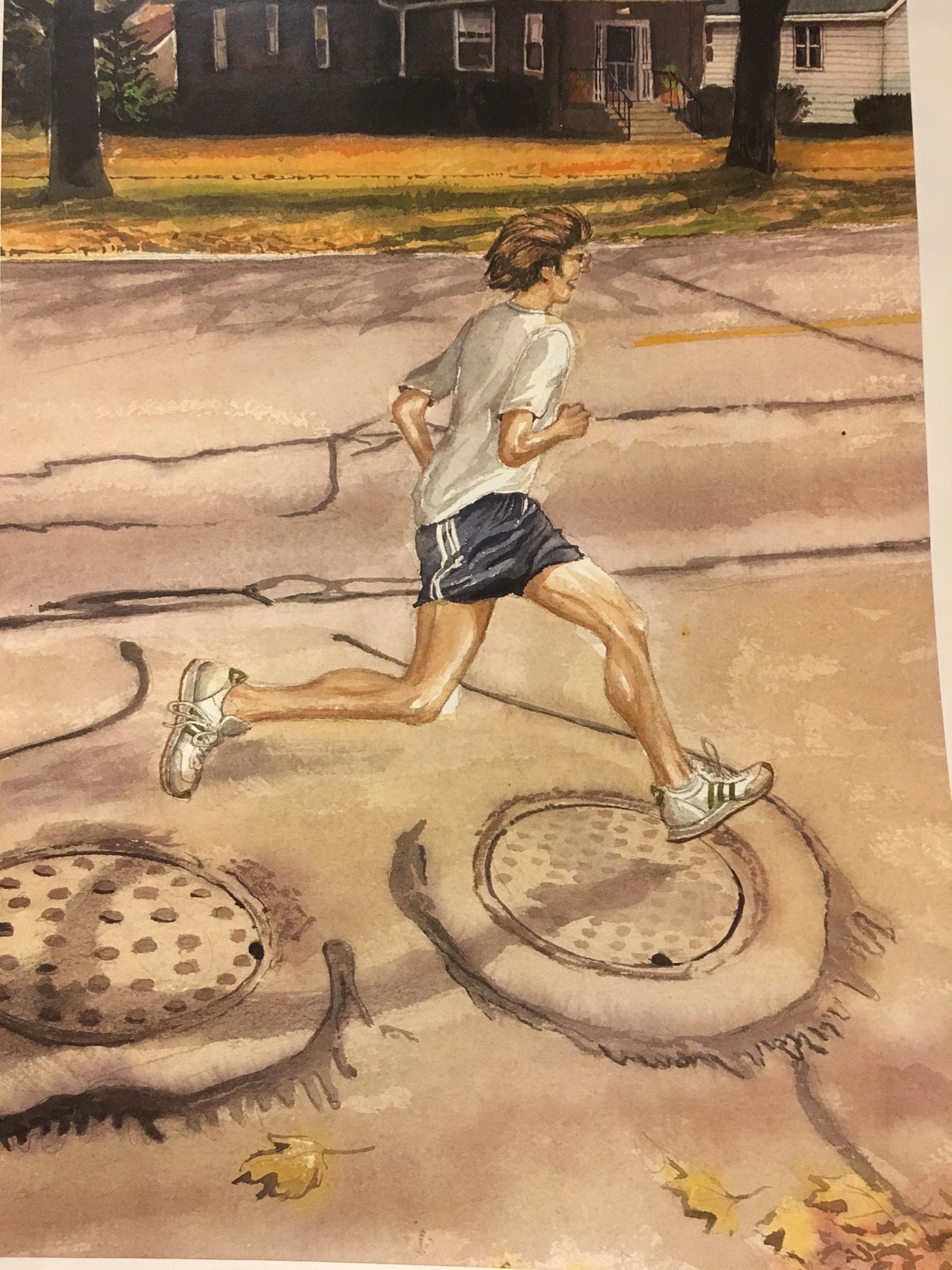
My painting of myself running past the Geneva house where we lived from ’85-’96

I’d move many times in life after college. Almost always, we rented U-Haul trucks to make the move. On move back from Pennsylvania to Chicago, I was driving up a long mountain incline in the west part of the state when the engine stalled. The truck had manual shifting, so the first few seconds after the engine stopped, the truck was in limbo. Then began a reverse freefall as I tried to start the engine up again. Finally, I got the clutch engaged and gave the key a turn. Mercifully, the truck revved up again and I was spared rolling backward down the Interstate.

I can’t see a U-Haul logo without memories of that summer flashing through my mind. Many years and many moves later, U-hauling ass is still what I’m trying to do.

Posted in Christopher Cudworth, competition, cross country, life and death, mental health, running, same sex adults, sex | Tagged , , , , , , , , , , , , , , | Leave a comment

50 Years of Running: Sophomoric self-perception

One of the most challenging aspects of being a runner is building a self-perception conducive to improvement. For starters, you must believe that it is possible to improve. Secondly, you must do the work necessary to improve. And finally, you must execute in competition when given the opportunity to supercede prior efforts. That is the 1, 2, 3 of endurance event success.

During scholastic and college years, all that is plugged into the context of team dynamics and competition. There is the daily competition of training with teammates. In those circumstances, managing mental attitude and focus during workouts is the key to improvement. Then when races roll around, turning that fitness into results takes determination and concentration.

As distance athletes, we sometimes find ourselves trapped in cycles of self-perception. These bind us to a level of performance that seems satisfactory in some respects, yet really doesn’t rise to full potential. We get used to running in certain patterns, for example. When you reach the photo of our team starting a race later in this blog, I find it interesting that in the photo from the next year, the same seven guys are all starting out in the exact same positions.

We limit ourselves sometimes. Going out at a given pace to avoid early fatigue is one such habit. Running behind runners that have beaten you in previous weeks is another. We’re not always aware of these habits that hold us back, but they exist.

Unforced habits

That means it is vital for endurance athletes of all kinds to seek ways to break out of unforced habits. It’s far too easy to stumble into races week after week hoping that something special will happen. Occasionally it might. We might run faster on a given day because it feels goods. But that’s no real path to improvement, is it?

Times have changed in some respects when it comes to how high school and college cross country programs operate. Back then, we raced thirteen meets in college cross country, and from eighteen to twenty-one meets in high school cross country. Was that a bit too much racing to pile on top of fifteen weeks of hard training?” We even “ran through” some meets, not taking a break in training in hopes of earning fitness dividends down the road.

In college, we averaged between 70-80 miles per week, and some of us pushed that up to 90-100. That’s not huge mileage by the measure of many programs, but it was tiring on top of college life. And was it really necessary to race five miles effectively?

Some of us graduates from the Luther program have asked ourselves over the years, were we being sophomoric in our training tactics? The word sophomoric means pretentious or juvenile. Were we running too much, or running too hard all the time? Was that good for us? Were we overtrained? Or simply overwrought? We were certainly were that in many ways.

Personally, I look at results from the fall of 1976 and realize that while I typically wasn’t in the Top Five in many of our races, my times were only 10-15 seconds slower than our fourth and fifth guys. That pattern is simple enough to analyze. I was doing my best, and my teammates were simply faster than me most weeks. Our record that fall tells a compelling story. Our team took third against big college competition at the Iowa State University invitational. Then we won the Luther College All-American invite, the Grinnell College Invite, the St. Olaf Invite, and the Carthage College invitational. Our dual meet record was 4-1 and we took 1,2,3,4,6 to score 16 points in the Iowa Conference meet. I placed twelfth in that meet on a hilly course as our seventh man. All told, that is a really successful season for all involved.

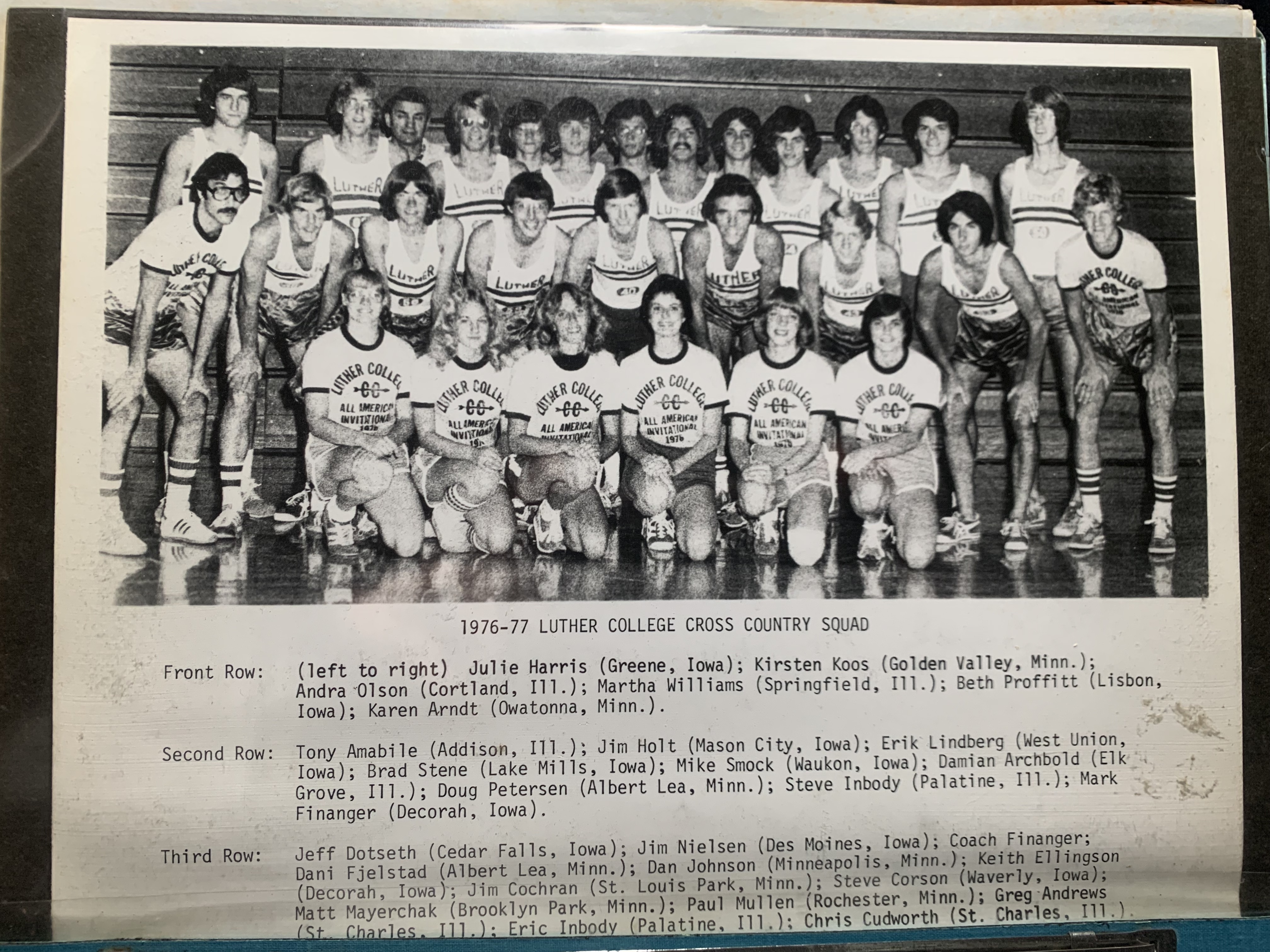
My teammates Doug Peterson, Paul Mullen, Mike Smock, Eric Lindberg, Keith Ellingson, Steve Corson and Dani Fjelstad were all hard-working, exceptional runners. The fact that I didn’t often break into the top five that season was not due to any actual failure on my part. It was instead a credit to the quality of men that I ran with. And there were women runners on our squad to admire as well. That season our women’s team grew from two original gals to six dedicated people.

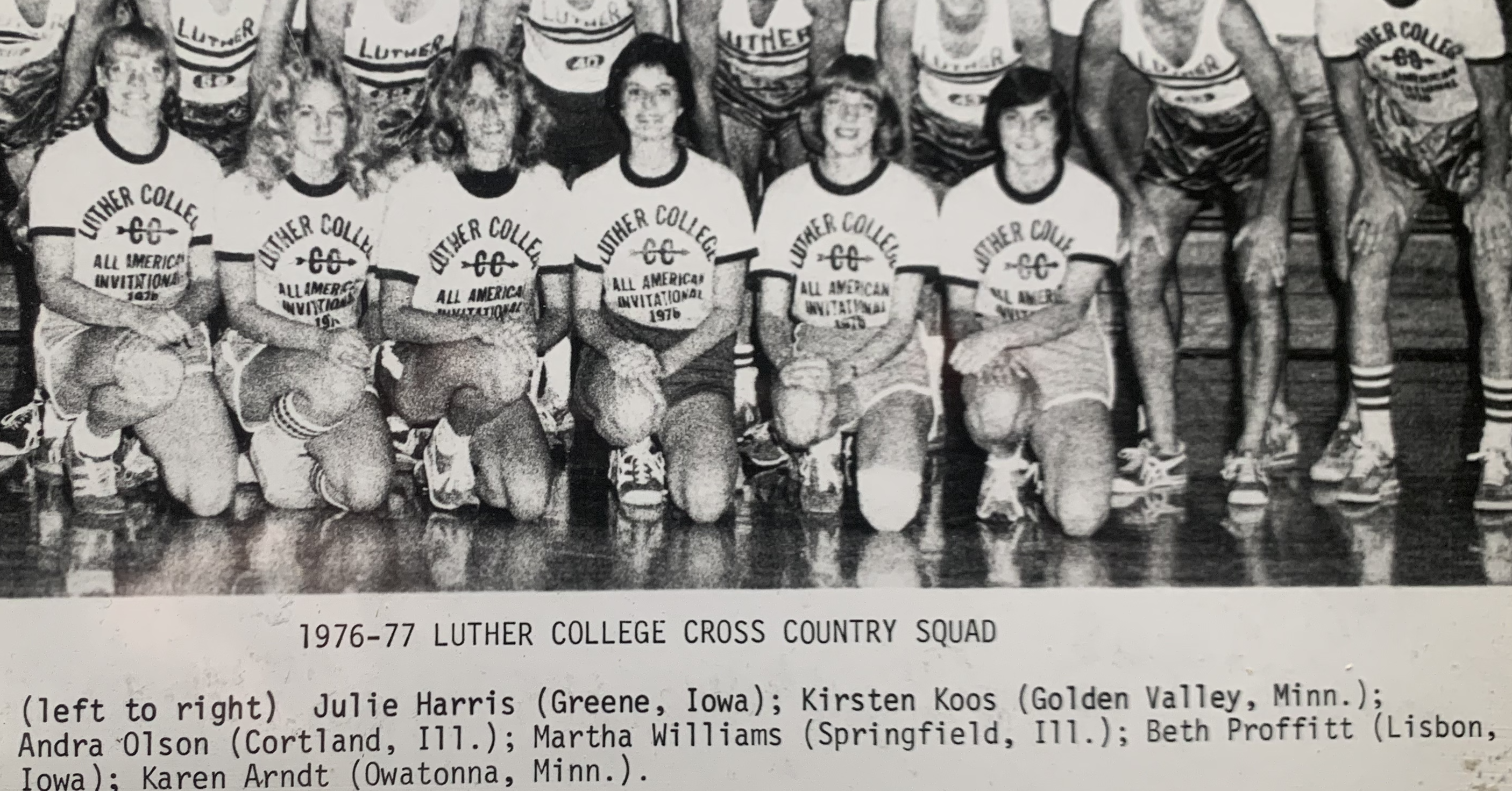
1976: The Luther College women’s cross country team

The women ran their own training modules designed by Coach Kent Finanger. They raced at many of the same meets as the men, and also a couple meets of their own.

The men’s team trained about 750 miles in ten weeks. It all looks objective in print, but we can’t forget that all those miles were accomplished while attending school and trying to stay healthy in the college dorm germ factory. That is no small feat. Add in the new dimension of social interactions of the small-school fraternity I joined with my roommate Paul Mullen, and one has to just shake one’s head and go, “Damn, I guess I made it through.”

Finishing the Carthage Invite in the bright October sunshine in 1976.

Of course, every cross country season is peppered with fine memories of a particular course or effort. Our last invitational of the season before conference, we traveled to Carthage College in Kenosha to race in a park called Petrifying Springs. It was a rolling affair, with places on the trails where passing other runners was not possible. The race started and finished across a wide grassy field, a fine opportunity for a hard start and a fast sprint at the end. Peterson and Smock both earned watches for finishing in the Top Ten, and I was less than a minute behind as our seventh man in 26:15 for the five-mile course. With our 76-point total, we beat schools from UW-Stevens Point, Carthage, UW-Parkside, UW-Platteville, and Northwestern University.

Luther runners, from left: Dani Fjelstad, Paul Mullen, Keith Ellingson, Chris Cudworth, Doug Peterson, Damian Archbold (over his shoulder) and Mike Smock (leading out at right)…Smock was a fearless competitor.

That next week we met our only dual meet loss to the powerful LaCrosse team led by the twin runners Jim and Joe Hanson, who won the meet in a tie at 25:20 on their home course. For some reason, I loved running against the LaCrosse team every year, and I ran as our fourth man that day in 26:10. The splits are interesting to study as I went 4:55 with our bunch through the mile, then 10:16, 15:35, 20:58 and 26:10 for five miles.

It’s hard these days for me to imagine running that fast. In my sixties, I can barely run even one lap at 5:00 mile pace without great strain. So looking back at nationals that season in 1976, I can’t beat myself up for running 27:07 to finish 152nd on a snow-covered route at the Highland Golf Course in Cleveland, Ohio. I was about a minute behind the 25th place (All-American) runners 25:55.

The other thing one remembers most from those day is the friendship and joking, the ridiculous stunts of running naked through town and the occasional drinking bouts that led to the occasional hangover the next day in training. Running ten or twenty miles with booze in your system is a character-building all on its own.

It was a heady time to be a runner overall. New types of running shoes were being introduced as fast as we could wear them out. We ran in blue-and-yellow Nike Waffle Trainers for workouts and competed in yellow and green Nike Oregon Waffles for races. Our guys hunted the running shoe market for new products all the time. We experimented with New Balance, Brooks, Lydiard, Etonic, adidas, Puma, Tiger/Onitsuka and others. As the heels wore out on our shoes from training, we put layers of athletic tape on the heels to keep them level and get more miles out of them. We were New School Old School, you might say.

Following our manic training trip out West to Yellowstone to start the season, we won almost everything we took on, and finished 13th at nationals. It was a sophomoric season to remember.

Posted in aging, aging is not for the weak of heart, alcohol, Christopher Cudworth, college, competition, cross country, running | Tagged , , , , , , | Leave a comment

50 Years of Running: Go West Young Man

Heading into the cross country season of 1976, I elected to join the team training trip out west to Yellowstone and the Grand Tetons. The previous year’s trip to South Dakota provided compelling accounts of runs in the mountains. It also delivered a story that became legendary in the program.

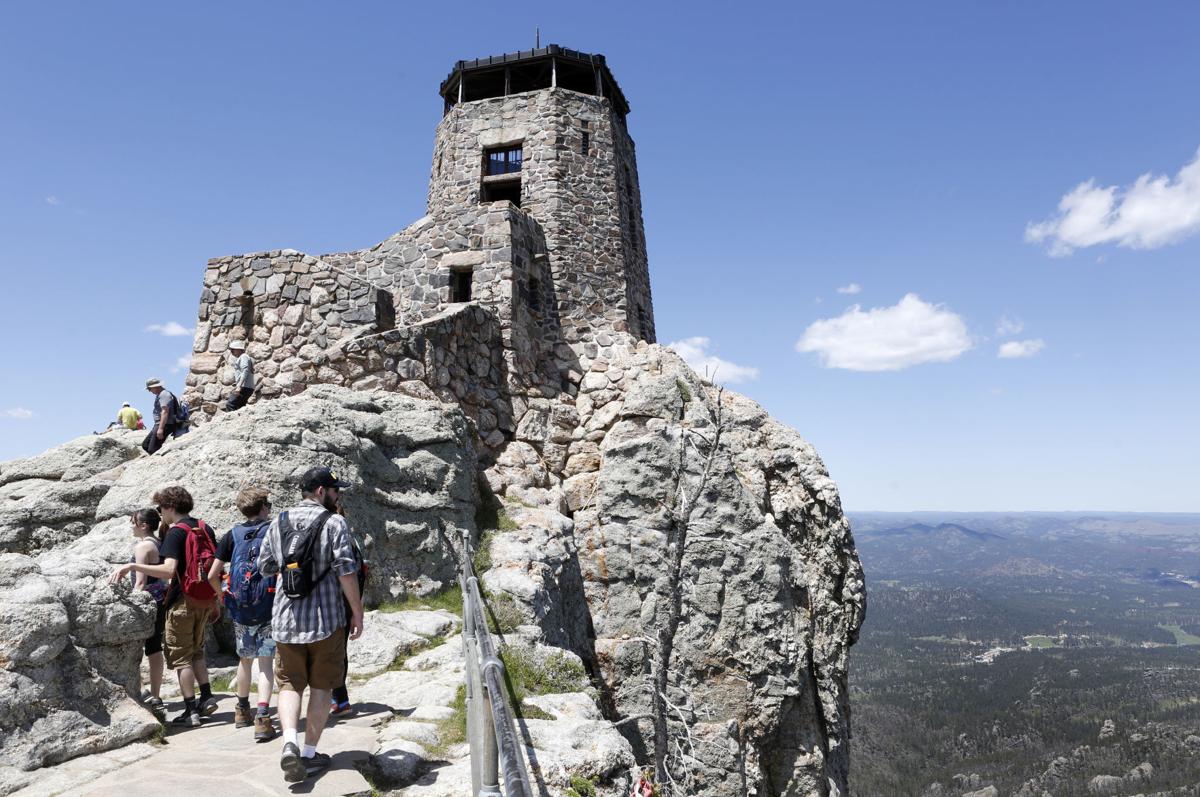
One of the runs took the team to the top of Harney Peak, the tallest point in South Dakota. The site was renamed Black Elk Peak in 2016 in honor of the Native American tribe leader. But what interested the cross country team in the fall of 1975 was the challenge of running up a mountain.

The guys all gathered at the top and someone announced, “Now I’ve got to take a dump. And I want to do it over the edge of this mountain.” By various reports, the drop off the edge of the lookout where they stood was more than one-thousand vertical feet. Straight down.

Most of us are cautious in such circumstances. But not college kids with adrenaline in their veins or a full colon. So they held this guy by the arms as he leaned back over the edge of the mountain and let it rip. The laughter, as you can imagine, was uproarious.

The next part of the story is partly hearsay, but whether it is true or not, the concept still makes me laugh. Because after the guy wiped his ass and tossed the toilet paper over the edge, it remained suspended in an updraft that lasted until someone pulled up in their vehicle and wondered what it was floating in the air.

See, I don’t care if the second part of that story is true or not. I wasn’t there to witness. I only choose to believe it because it’s too damn funny not to want it to be true.

That’s the thing with college antics and training trips. They take on legendary aspects through the retelling of stories. This is also probably how 30-40% of holy scripture works, because people want to believe shit even if it isn’t true. Some stories are too good to be true, and others are too good not to be true.

So my expectations for the trip out west that next year were colored, you might say, by the cautious realization that crazy things could happen. But mostly I was excited to go west for the first time in my life. I’d never been further west than Iowa up to that point. Going past the 100th meridian meant the chance to see all new birds and pad my life list. And do some running too.

We piled thirteen of us into the pale green Luther College van. As I was getting into the vehicle, I looked down to notice a bubble sticking out of the tire. “Should that be like that?” I asked. But no one answered.

We drove through Iowa to western Minnesota and west through South Dakota. The further we traveled the more I pressed my face to the window in hopes of seeing new birds. I was a rabid birder at that point in life. All it took to get a new species was a glimpse of a wing or a pattern of plumage. That’s how I found my first magpie while traveling seventy-five miles an hour.

The rest of the team could care less about birds, so I was on my own in that venture. Then I finally fell asleep for an hour or so as sunset neared. When I woke up for a minute, I glanced out the window to spy an antelope running alongside us. I was mesmerized.

We drove all night and arrived to set up camp in the morning. Yellowstone was crowded with late-summer campers and we parked the van and found some suitable campsites. The park was loaded with warnings about bears. On one hand, I was thrilled at the thought of seeing one. On the other hand, I’d read about park maulings and figured it was best if a grizzly did not come visiting.

The first thing on the agenda that first day in the park was to go for a run. We took off at some insane clip toward a distant bluff. Hopping off the road, all thirteen of us clambered up a dusty, rocky trail to the top of a hill and posed for a first-day picture. My head was throbbing from the altitude and I was in a seriously bad mood. It is with much regret that I gave up the opportunity to keep the photo slides from that trip and other years. A team member named Bill Higgins was an avid photographer and his slide collection bounced around between teammates a few years. I wish I’d kept them.

But I recall the grumpy, depressed-looking visage of my own face that morning. I was boiling with frustration at being asked to run so hard so early in the trip. The drive had been long and sleep was weak. But we never ran slowly at Luther. Almost ever. Every run was like a geyser of energy erupting all over again. Day in. Day out. Like Old Faithful, running hard was a daily occurrence in all circumstances.

We kept ourselves so busy those first couple days of running there was little time for sightseeing, much less birding, as I hoped to do. But at one point we were headed into town or such to buy food and stopped on the roadside to look at a moose or bison on a hill above us. The van’s wheels sunk into the roadside gravel on the right side of the road and the entire vehicle tipped to a 10-degree angle. It quite well could have flipped and rolled down the hill if I had not jumped out and told everyone to push the backend while the driver pulled ahead. A tragedy was averted.

The next morning I awoke at 5:00 a.m. with a pre-approval to take the van out and go birding on my own. I grabbed my binoculars and started up the van only to hear the passenger-side door open. In climbed one of the older runners on the team. “Mind if I go with you?” he asked.

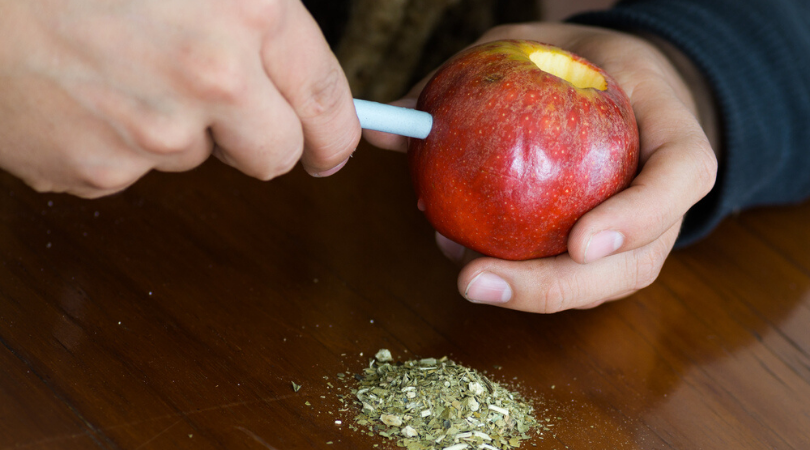
I was surprised, to say the least. But we drove down the road toward a wetland I wanted to visit and within a minute or two, I realized that my companion was not interested in birding at all. He pulled out a bag of weed and an apple. Then he rolled a joint and stuck it in a hole bored in the apple, and proceeded to eat the apple after the joint was smoked to a nub. I didn’t join him because I’d never smoked pot in my life. But I was fascinated at his apparent ingenuity.

He happily sat in the van enjoying his high while I walked around a small lake listening to the calls of kinglets and thrush in the woods nearby. By then, I’d added twenty new species to my life list just by keeping my eyes open, and it was relaxing to get away from the haggling crew of runners and soak up nature on my own.

Back in the van, my companion asked for a vow of secrecy and I promised that I would not say a word. We returned to camp in time for the morning run and I marveled that he could go out and run eight miles at altitude with a marijuana buzz.

To close out our time in Yellowstone, we set up teams within the squad and did a 50-mile relay within the park. I was paired with a big, tall freshman named Jeff Dotseth. He was running really well on the trip and I admired his ability and focus. But he was always hungry. One morning our breakfast was a big kettle of oatmeal. The stuff came out really thick and after one bowl, I was stuffed for the morning. Jeff was still hungry, and I recall watching him dig into that kettle with fervor. I don’t know how anyone could eat that much thick oatmeal. But he needed it apparently.

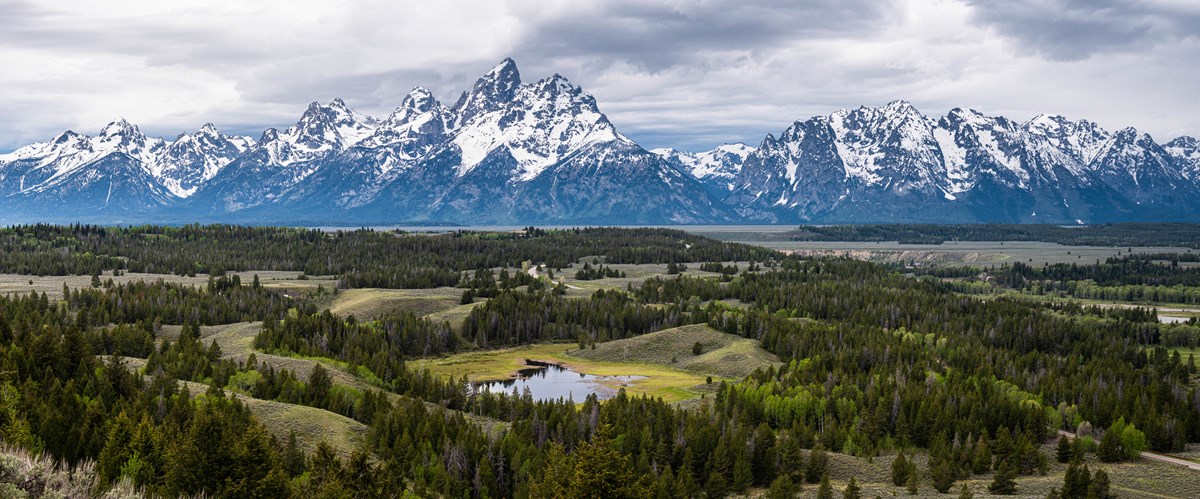
After the big relay, it was time to move south to the Grand Tetons for the second phase of the trip. I added a few more bird species on the way, and we delighted in spotting herds of elk in the meadows. The air each morning was fresh and clear. The mountains were sinking into our bones.

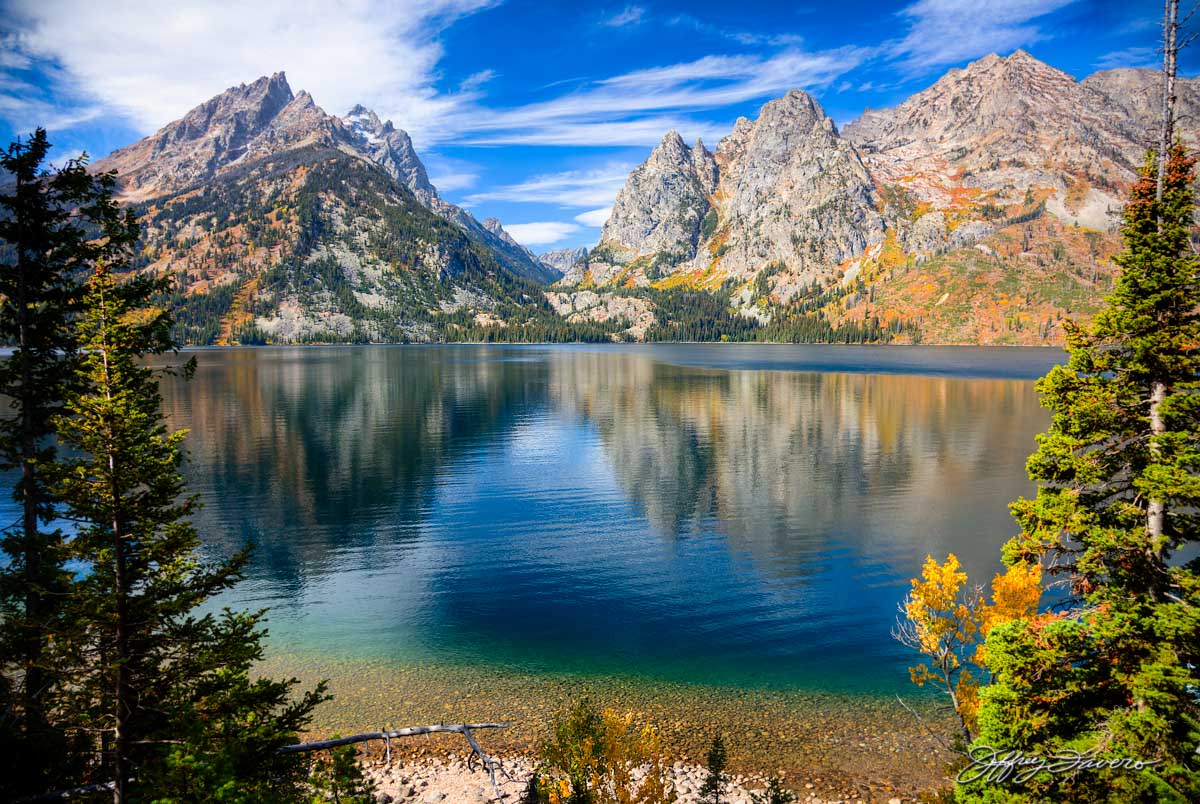
We camped at Jenny Lake at the base of the Grand Tetons. In town, we shopped for groceries and a few of us decided to go for a swim in the Snake River. The water was straight out of the mountains and the melting snow, so it was bracing to dip up to the shoulders in just our running shorts. Yet it felt so good compared to the hot western air we all splashed around. I dove in for kicks and came up for air after a few underwater breaststrokes. To my surprise, I was twenty-five yards downstream by that point, and out of reach from the bare beach where we’d entered. It was tough swimming and clawing my way back against that current. I realized that when it comes to nature and humanity, the West does not mess around. “It would be easy to die out here,” I said to someone upon climbing out of the water.

That night, we partied in town, playing pool and foosball at a local bar. As the evening passed, the games got more competitive and the mood among the locals got a bit darker. One of our younger team members, a freshman from Illinois, got a little mouthy after a foosball game and his opponents asked him if he wanted to fight. We all grabbed him and exited the bar and climbed into the van. “I could have taken him,” the drunken young runner, all 135 lbs of him insisted. “I wrestled in high school.”

We drove off into the night and immediately noted two sets of headlights following us up the road. We kept our eyes on them as the two trucks rolled up behind us. Then we turned into the park road and the trucks pulled to a stop. Apparently, they knew that the park rangers would not welcome a bunch of local toughs beating up some park visitors.

The final big run of the trip was scheduled and we decided to run from Jenny Lake up to Lake Solitude and back. The route was nine miles and the climb went from 6000 to 9000 feet and back. All of the route was on trails.

We took off running and the climb was gradual at first. Then it shot up some switchbacks and climbed some more. Nine miles in the mountain air was challenging, especially with the climbs. But the excitement kept us all going.

All of us, except a few tired members of the team that were feeling the week’s training. We’d already put in sixty miles of running, and one of the freshmen was feeling it pretty badly, but we didn’t stop to consider how it all might go for him. He lagged behind during a long climb in which a giant moose was lying next to the trail, and we arrived at Lake Solitude high in the Grand Tetons. The bigger peaks still towered above us. The lake water was freezing cold. Too cold to swim. But a small speckled trout swam past me as I sat on a rock staring at the calm turquoise water.

We couldn’t drink the water in the lake or any other source. All the streams contained giardia, the infectious parasitic germ that causes wicked diarrhea. None of us carried water either. So we’d run nine miles in thin air with nothing to drink. Now the task was running the nine miles back down.

The last two guys in our group were just arriving as we turned around to head back down. Perhaps someone checked on them, but I’m not sure to this day that anyone was paying much attention. So much of running back in the day was survival of the fittest and the devil take the hindmost.

We jogged and ran and clambered back down the nine miles toward camp. The sun was now behind the mountains and the shade started to mix with darkness. I don’t recall how long the total run took us, but we hadn’t planned anything about the trip well, so why start then?

I knew that I’d make it back down after six miles on the trail. But I began to think about the guys behind us. At some point, the fatigue got great enough that I cried a little. Not sure if that was relief, anger, joy or fear that made me cry. But I didn’t have much water to spare in my system, so it didn’t last long.

I recall my toes feeling like they were about to come out the front of my shoes. I’m pretty sure I wore Nike Waffle Trainers, those blue and yellow staples of mid-1970s distance running. They were not built for trail running. Coming back into camp, I was elated to realize the run was over and picked up the pace the last 400 meters to show that I wasn’t beaten. There was no need to do that. Everyone was clearly beat, if not beaten. “Good job,” someone muttered.

Then the waiting game began as we started to worry whether our freshman and a couple other less-fit guys would make it back before dark. We thought about running back out to find them. But it got dark. I sat on a rock eating a bag of Oreos that I’d purchased at the store because there were no plans for making dinner yet. I also downed three Mountain Dews.

Then came Tony, one of the last two guys on team, rolling out of the darkness like a ghost.

“How far behind is Matt?” someone asked him.

“Well, we had to climb up over a boulder to get around the moose. It was lying on the trail when we came down.”

“Holy crap,” someone muttered.

“Yeah, holy crap,” said Tony, wandering over to grab something to drink. He did not appear too happy.

And finally, the thin-looking freshman Matt came trotting into camp. He didn’t look all that tired, as I recall. Perhaps he’d paced himself? If so, quite intelligently. But he admitted. “That moose was big.”

And so it went. We’d all run eighteen miles with 6000 feet of climbing and descending in the Grand Tetons of Wyoming. With no water. No nutrition. No nothing. Know nothing.

That night, a massive storm came roaring over the Tetons. It rained so hard the drops hitting the ground at first sound like slaps in the face. Then the streams began through our campsite. I pulled my feet up off the tent bottom and held a flashlight up to look at the water pouring through our space. It was a long night, for sure. But even so, I finally fell asleep.

We drove back to Decorah, Iowa with that bubble on the van tire still whapp-whapping around like it was ready to pop any minute. I still don’t know how we didn’t get a flat, or let the van slide down the hillside. I don’t know how someone didn’t die up in those mountains or get beaten to a pulp by townies at the bar that night. The whole truth and nothing but the truth of the matter is that stupidity goes a long way in some circumstances. And the rest gets chalked up to legend.

Posted in alcohol, Christopher Cudworth, climbing, competition, cross country, mental health, nature, running | Tagged , , , , , , , , | Leave a comment

50 Years of Running: A Bird’s Eye View of Life

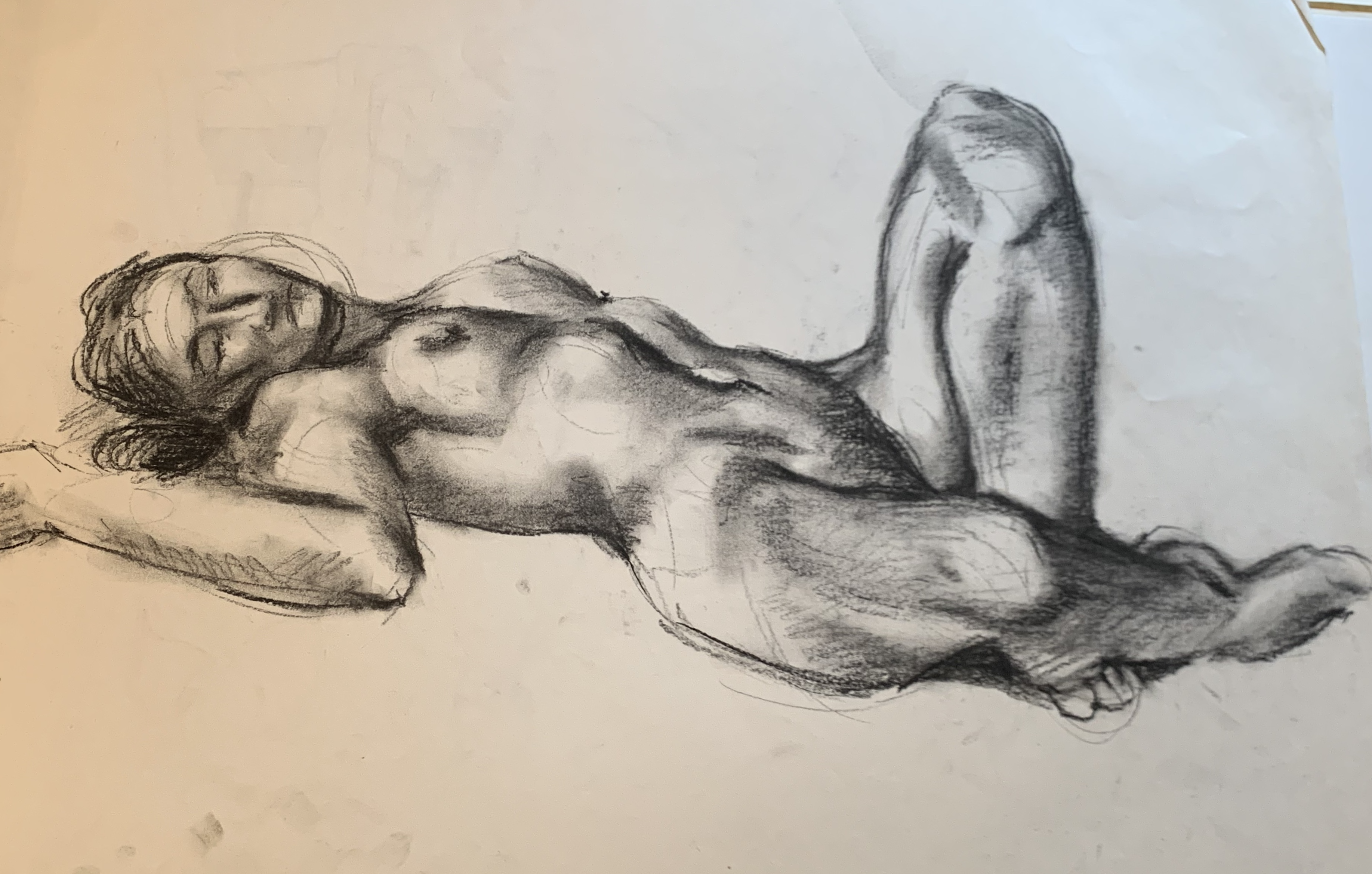
As college cross country season ended in the fall of 1976, I started thinking about what to do during January interim. The previous year I drew nudes for six hours a day. That was enlightening. But my other keen interest in life at the time was birds. I loved drawing them, painting them, and I sold some artwork to friends and collectors.

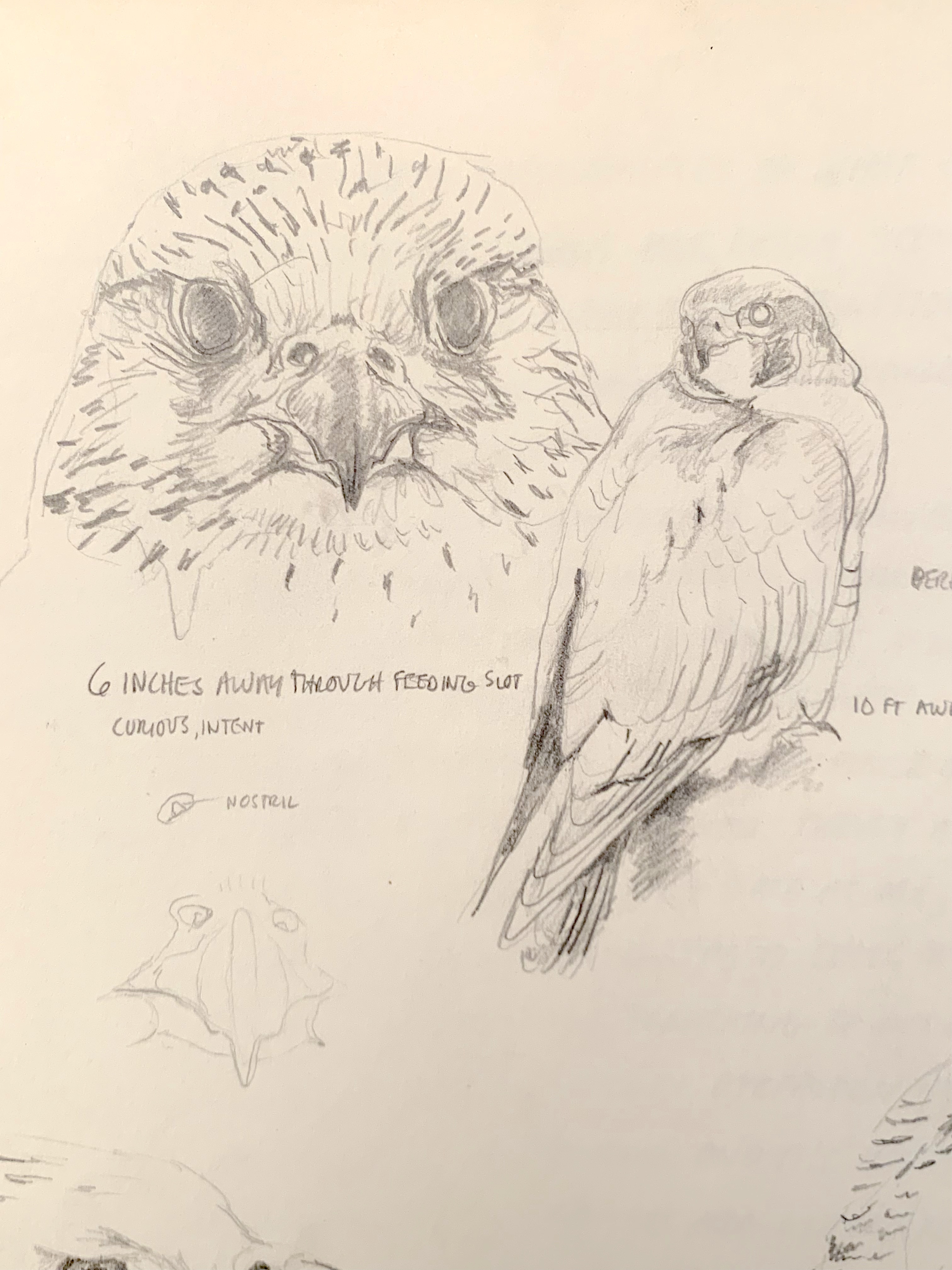
A pencil drawing of a gyrfalcon drawn at the Hawk Range at Cornell University, January 1977.

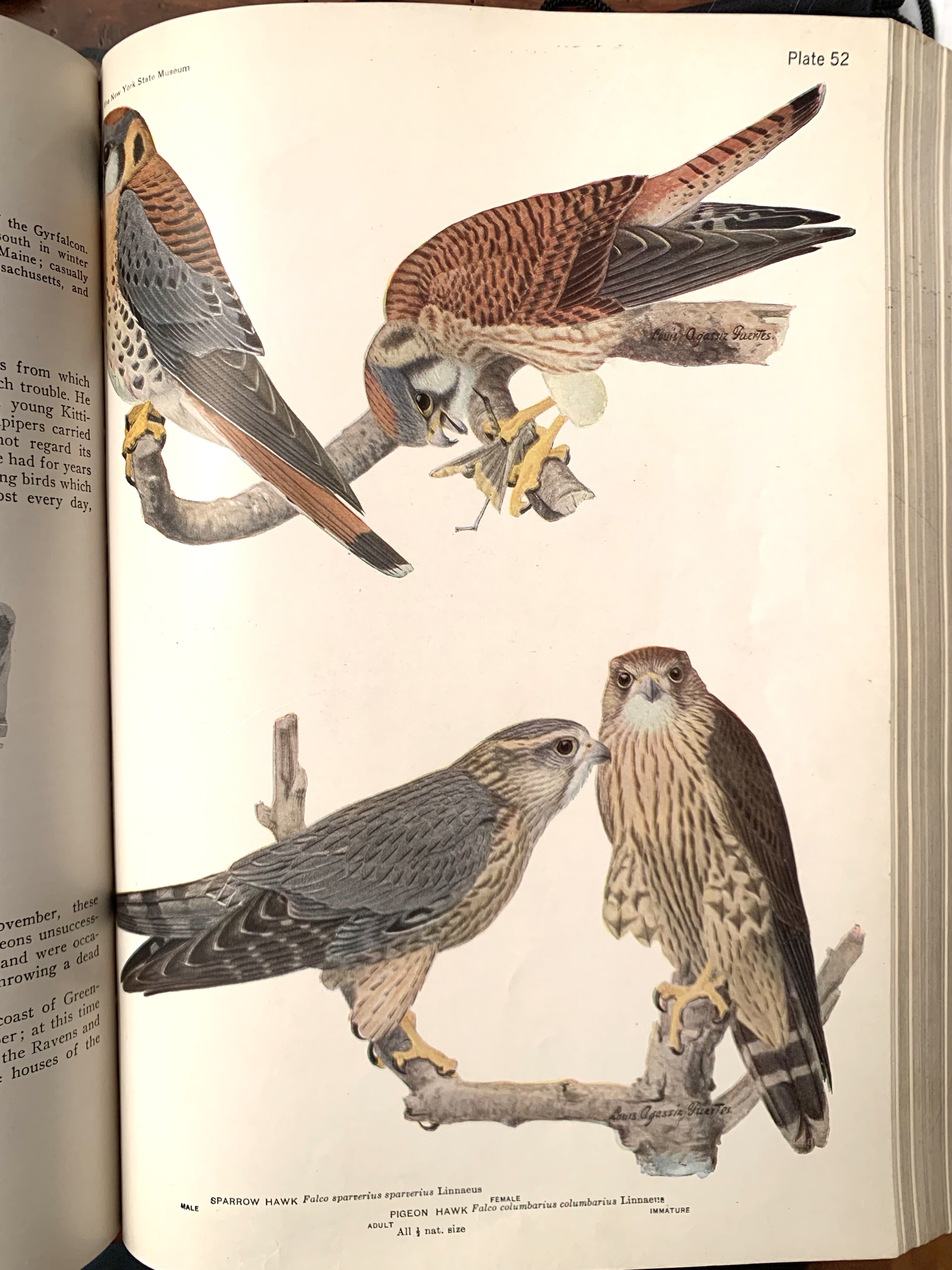
Wildlife art as a genre was taking off at the time. Yet there was one bird artist that I particularly admired, a painter from the early 1900s named Louis Agassiz Fuertes. I’d first seen his work at the Cornell University Laboratory of Ornithology in Ithaca, New York. My father attended Cornell after World War II, and his sister lived in nearby Binghamton. During a visit there we took a trip to the Lab, as it was called, and I stood mesmerized by Fuertes’ paintings in a gallery dedicated to his work.

With a bit of bold and irrational initiative, I wrote to the Lab and asked if I could do an internship there. To my surprise, the facility’s director wrote back and said that I’d be welcome if I was willing to help curate the collection of bird art the Lab had on site.

That sounded exciting to me. My art instructor Doug Eckheart approved of the trip as a January interim project, so I contacted my parents to see about borrowing their car and it all fell into place in a few weeks. It’s a bit hard to imagine how all that planning took place in the age of expensive long-distance phone calls, letters sent back and forth, and no Internet. But it did happen. I made it happen.

My parents scrapped together $750 to send with me to Cornell. I climbed into the big old Buick LeSabre my parents owned and drove east to New York through the snow belt of Indiana, Ohio and Northeastern Pennsylvania. I was nineteen years old, a combination of eager and dumb at the same time. I knew nothing about real winter driving conditions, and the winters back then were typically brutal. My father warned me that the LeSabre could be quirky during really cold weather. He often sprayed starter fluid in the carburetor to free it up whenever the engine froze up from condensation. I didn’t even know what that meant. I was obsessed with getting to Cornell, and I was driving. That’s all I knew.

Buffalo and beyond

First I stopped to stay with cousins in Buffalo, New York. The snowdrifts in town were ten feet tall. Plows had to cut the streets open for people to drive around. The next day I drove over to Cornell and showed up with a grin to meet the Lab director, who asked a simple question. “Where are you staying?”

I stared back at him blankly. No one had thought to ask me that before leaving. Not even my parents.I didn’t think to ask about it either. Perhaps I thought there would be a dorm room waiting for me, like there was back at Luther College. Perhaps everyone assumed that I’d arranged to stay somewhere. Yet here I was, some dopey kid with a big head of thick hair, wire-rimmed glasses and a pile of expectations. The Lab director told me to wait a few minutes, conferred with an employee and came back to me with an offer I really couldn’t refuse. “Listen,” he said. “Mike here has a place a mile down the road. It has no running hot water, but it has cold water and heat. You can stay there for $150 for the weeks that you’re here.”

That sounded fine to me, and that’s where I stayed, living on a diet of waffles, frozen vegetables and pan-fried meats.

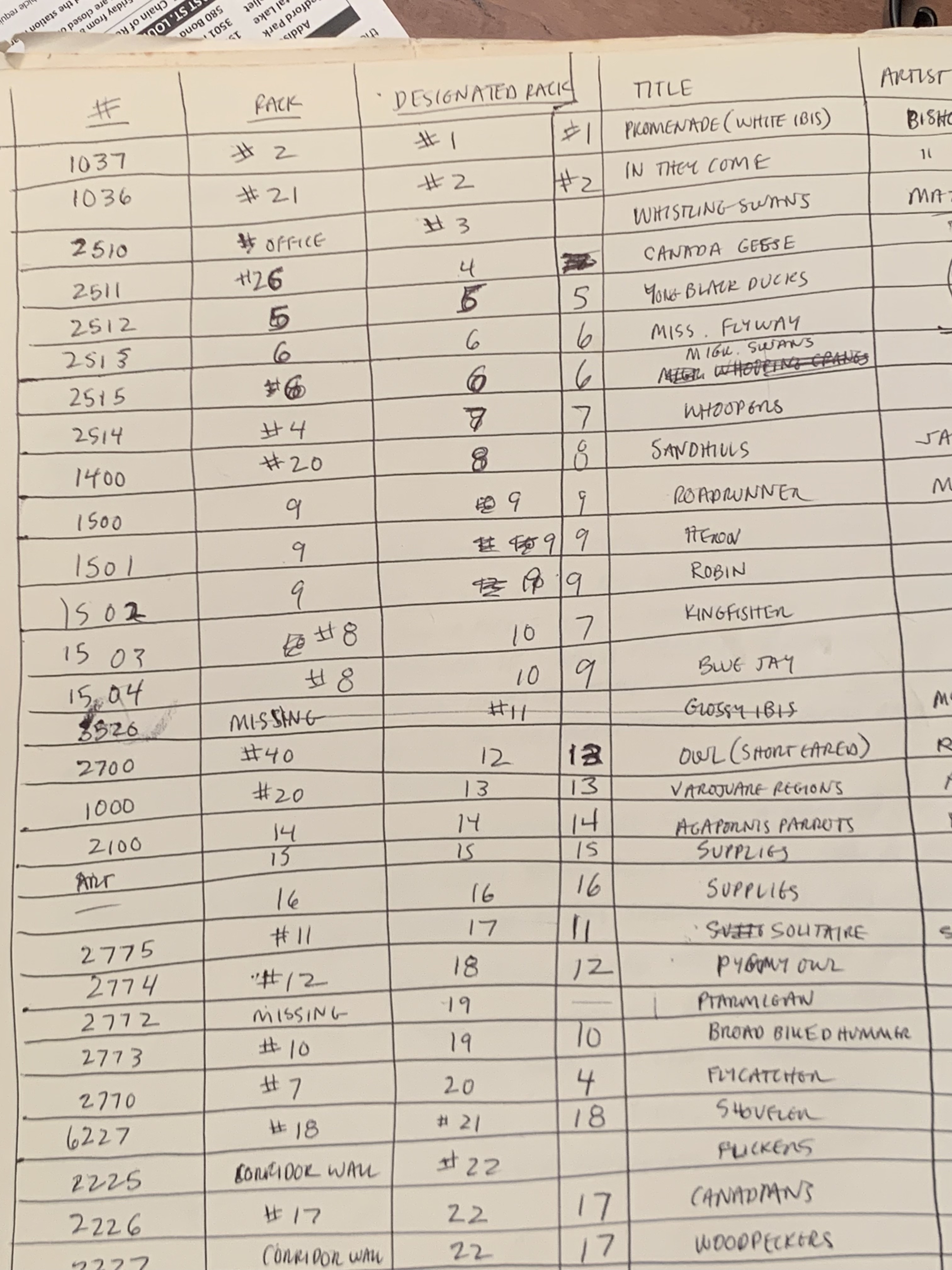
But I was happy. In the morning, I’d sometimes walk the mile from the house to the Lab on the quiet road covered with fresh new snow. It was a daily wonderland because it snowed almost every night that I stayed there. I’d go to the Lab at 7:30 in the morning and pore through bird art the entire day, making lists of what they owned while recording the images and their artists in a ledger. It felt like I was doing something important, and actually, I was.

Singular focus

Not once during that first couple of weeks did I worry about running, or fitness. Instead, I focused entirely on meeting everyone in Ithaca that knew about bird art. I interviewed a somewhat reclusive artist named Bill Dilger, who was kind and honest in everything we discussed. He was a bird illustrator by his own description and openly warned me that making a living as a bird artist was not easy.

I also wandered the halls of a giant museum collection of stuffed birds from all over the world. I’d learned some taxidermy already at Luther College, so I knew not to handle the skins much. But I could not resist viewing a specimen of the ivory-billed woodpecker, an extinct species that once was called the God Bird, for how big and impressive it was. I also found a passenger pigeon, another extinct species of bird.

Several days were spent drawing falcons at the Hawk Barn, a series of buildings and pens where peregrine falcons and gyrfalcons were being captive-bred to restore their populations in the wild. Those species had been devastated by the presence of DDT in the environment, so the opportunity to study these birds up close was prized. I stood face-to-face looking at a gyrfalcon through a small window. That image (above) is one of the prized drawings in my entire life.

A drawing that I did of myself peering into the hawk pens at Cornell

During those three weeks at Cornell I cataloged nearly the entire collection of bird art. Along the way, I made prodigious notes about the work of dozens of different artists. Years later, in curiosity about the state of the bird art collection at Cornell, I visited their website to look up a few of the drawings that I’d cataloged back in the ’70s. Finding them again was like visiting old friends. I also noted that a few of the newer pieces of art on the site were mislabeled by species, and sent emails to the curators. They thanked me for that.

As the weeks went by, I started to grow a bit restless with the spare accommodations. Every other day I bathed by heating water in a cooking pan and washed my long, thick hair with shampoo as well. I’d get it all sudsy and then step outside in the frigid air with a full pan of warm water to rinse it out in one giant pour of the pan. The house where I stayed backed up to the area where the university kept a pack of wolves. I saw one of them standing near the tall fence one night. That giant canid stared at me as I stood half-naked in the dark. Talk about recognizing the frailty of your humanity.

Most of my time was spent out on at the Lab, but I wandered into town to visit a childhood friend that I knew at Ithaca College. She and I had grown up together in Lancaster, Pennsylvania. She was a skinny little thing back then, and we played together on long summer days and shared our childhood dreams. She’d grown into an incredibly beautiful woman in her late teens and I was intimidated beyond belief when she extended a close hug upon greeting me after all those years. To this day I find it funny that her family owned two dachshund dogs named Meg and Jenny. Later in life, I dated women by those names.

Cold nights

Toward the end of the three weeks at Cornell, the heat went out in my little house in the woods. I stayed overnight at the home of the Lab director, who was kind enough to host me for a night or two. I showered for the first time in days and decided to head to the Cornell University indoor track and get in a run.

Wearing my Luther College sweats, I started jogging around the indoor oval in the ancient old building where it was housed. A set of Cornell runners started out running across the track from me, and it became a competition to keep the same distance around the track between us. When they picked up the pace, so did I. That’s how it went for a few miles, and I finished exhausted, sweaty, and clearly a bit out of shape. But I didn’t care. My time at Cornell was worth a few lost weeks of running fitness.

The day came to drive home and I stopped to thank the director and finally meet the President of the Lab, who’d been traveling during the month of January. He looked through the paintings I’d brought to share and had compliments about some of them. He was also honest and realistic about my need to work on creating form in my work. He was right about that.

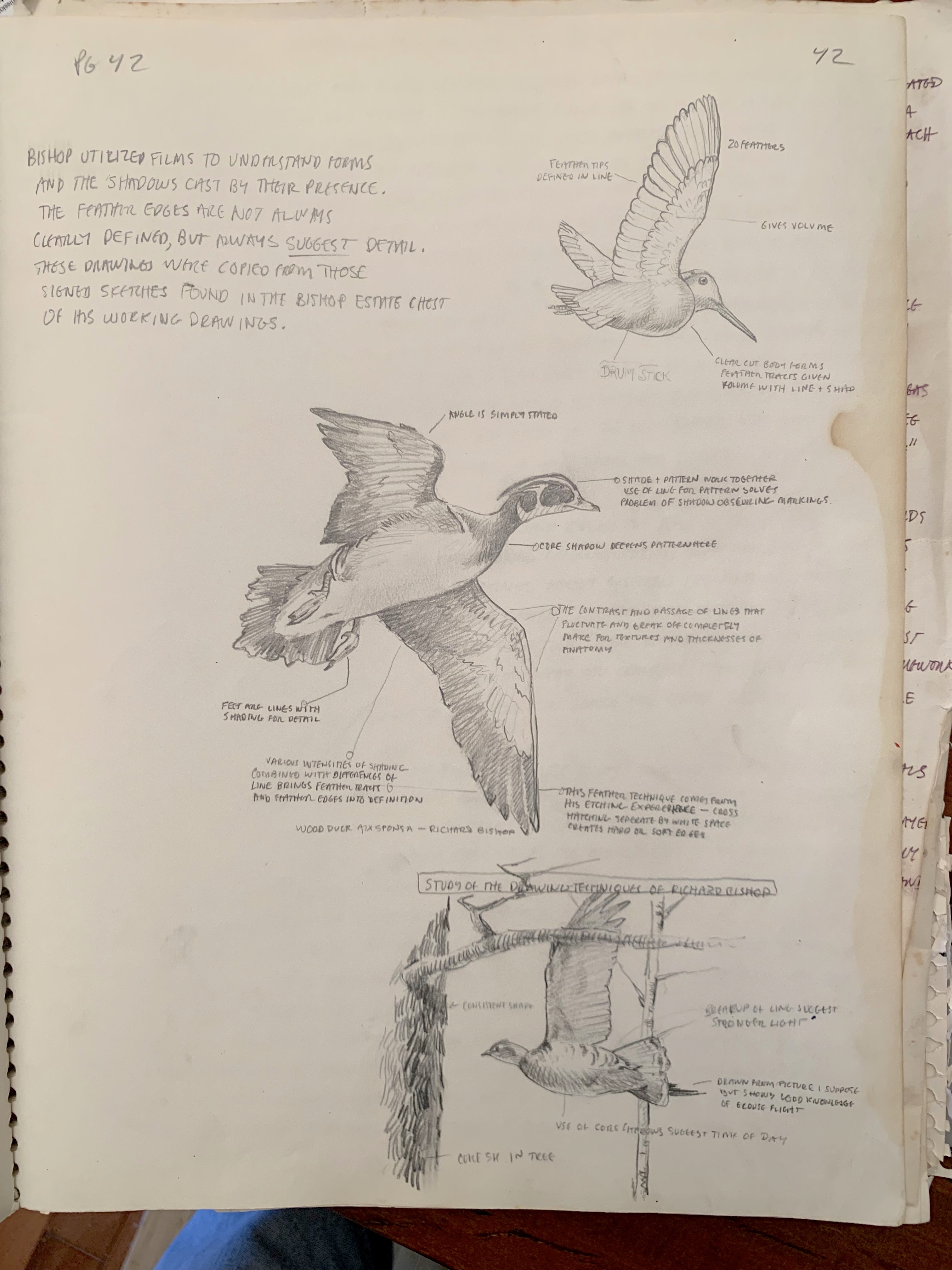
But I’d learned quite a bit studying those weeks at Cornell. One of the highlights was going through the work of an artist named Richard Bishop, whose estate donated an entire trunk of his preparatory drawings to their collection. His drawing technique was smooth and amazingly efficient. I copied his drawings to learn how he did it.

Outside in the parking lot, I went to start up the LeSabre and it wouldn’t turn over. Apparently the short drive from the house up to Sapsucker Woods created enough condensation to freeze up the carburetor again. The guy from whom I rented the house wandered by at that moment, and pulled out some starting fluid from his car to spray in the LeSabre’s engine. After a few shots, it fired up like a big old drag racer, roaring to life in the cold New York dawn. I thanked him and shook his hand, and thanked him again for letting me use his house. Then I climbed in and drove off. As I was leaving, he motioned for me to roll down the window, and said, “I’d try not to turn that thing off much. It might not start again.”

So I drove and drove west toward Chicago. South of Buffalo, it started to snow and continued all the way past Cleveland. I placed my wheels in the ruts of a semi-truck ahead of me and concentrated on its taillights. When the truck pulled off to gas up, so did I. But I didn’t turn the motor off. I fueled up with the motor still running. Dangerous, perhaps. But I kept on rolling.

Somewhere in Indiana, the snow let up a bit, but the road was still thick with inches of slush. So I kept on driving all the way around the southern part of Lake Michigan and up through Chicago to our home back in St. Charles. Pulling into the driveway, I felt a level of exhaustion pass over me that was completely unfamiliar. I’d driven straight through from Ithaca to Illinois, breaking only for Cokes and to fill up the gas tank. I had a Standard Oil charge card but the gas stations along the way, Sunoco and whatever, all honored it that night.

I carried my stuff into the house and walked into the bedroom at 1:00 in the morning. I’m not sure my parents even knew that I was home when they got up the next day. Finally, I heard my mother poke her head in my bedroom and ask, “Chrissy, are you okay?”

“Yes,” I replied quietly. “Just really tired.”

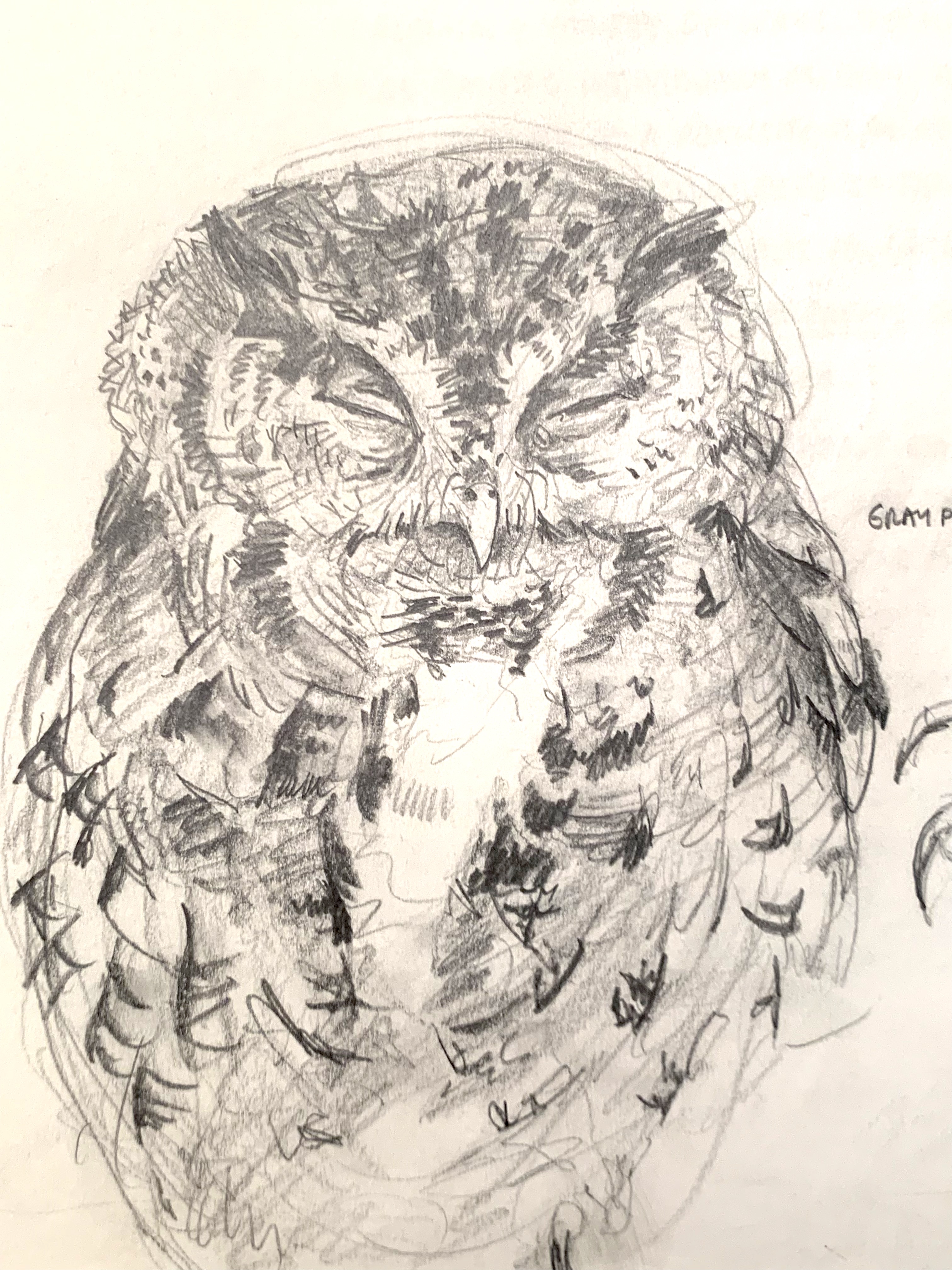
A screech owl drawing done from a live subject while studying at Cornell University in 1977.

I slept through the entire day until 3:00 that afternoon. My father was outside trying to get the car started again, without much luck. “What did you do to this thing?” he wanted to know.

“I drove straight through from Ithaca,” I told him. “I didn’t even turn the car off the fill up.”

He muttered and stuck his gloves back on and fired another shot of starter fluid into the engine. The car did not start for days. I’d really done a number on it.

My dad drove me back up to Luther College that weekend. The drive was six hours in the winter months back then. He dropped me off and turned back home, as I recall. That Buick LeSabre must have hated our family.

That winter my times in indoor track showed only modest improvement from year-to-year thanks to those weeks off from training while studying at Cornell. But formative experiences like that are worth some time off from running. Plus that day racing the Cornell guys on their own oval shot my heart rate up so high it probably made up for two weeks off from training.

I did round into shape that spring and qualified for nationals in the steeplechase. In the end, it’s all about outcomes. And having starter fluid ready when you need it the most.

Posted in Christopher Cudworth, competition, mental health, nature, racing peak, running, sex, track and field, training | Tagged , , , , , , , , , , , , , , | Leave a comment

50 Years of Running: If you can’t stand the heat

There is nothing quite like setting personal records at any distance that you run. There’s no better feeling than running faster than you’ve ever run before. Heading into my sophomore year at Luther College, the goal was to achieve continual improvement, move up in team rankings, and qualify for the national track meet in steeplechase.

Competing against a pair of LaCrosse runners at the Norse Invitational. Note the grass runup to the steeple pit.

The problem with all plans to improve as a runner is that improvement is never a straight-line proposition. It can be so joyous to run a sub-21:00 four-mile race for the first time, only to wind up running slower the next week. Of course, so many factors determine the pace on a given day. The weather from heat to cold. The wind or rain. The ground surface. Hills.

Then there are the mental factors of daily life. Recently I attended the conference meet at my alma mater Luther College where their top runner ran a decent yet ultimately disappointing race, finishing in tenth place behind a phalanx of talented Wartburg runners. He looked so strong those first few miles, and we all hoped he could hang on through the fast early pace. His mom and dad came in from Colorado to watch their son race. I told them they should be really proud of their son, who is also a great student on top of being a top-caliber runner.

Apparently he’d been facing some hard academic work leading up to the conference meet, and I felt for him upon hearing that. The ups-and-downs of college life are many. Social commitments can lift you up or drag you down. Dating is another realm altogether. A good relationship can thrill and inspire. A bad relationship undermines the confidence needed to run well.

It is too easy to look through those mimeographed booklets of races and times from college years and question or wonder if things could have gone better now and then. In the best of all worlds, that might be true. But we don’t live in the best of all worlds all the time. We show up at the starting line as young men and women trying to do their best. So the question to ask ourselves all these years on is simple: Did we legitimately try to do our best? It’s easy to be self-critical and build up negative beliefs about yourself based on past failings. It’s just as easy to be dunned by dismissive slogans such as “If you can’t stand the heat, get out of the kitchen…”

Kitchen up

It seems that all of us run into a coach or two along the way with a personal axe to grind…those coaches that pick out weaknesses rather than help us find our strengths. Those coache fuel our self-doubts if we’re not careful. They make ‘getting out of the kitchen’ seem like the thing to do. Granted, we all need our asses kicked now and then in sports like running, but that’s not what we’re talking about here. There’s a right and a wrong way to go about motivation. For the most part, I experienced the right ways.
I didn’t always succeed, but I could always take the heat. There weren’t many races where I flat out gave up if there was an ounce of energy left to still compete. There were no races where I absolutely quit trying, or purposely ran slow to back off the pain. These days while running much slower in races, the pain of the effort still feels the same. That feeling of running up against the best that I can do in the moment is still so familiar. That’s why I don’t second guess the progress made during those collegiate years. While I was often too anxious for my own good or let nerves get the best of me now and then, those failings are part of the learning process.

Finding ways to overcome fear (the heat in the kitchen!) is the life lesson we all learn from running. It is true that sometimes we build up these perceptions about ourselves and live by them rather than trusting our ability and finding ways to transcend our limitations. But when we do transcend those limitations there is always the fear of success that comes with it. “Now I’ve got to run that fast all the time,” we tell ourselves. Fear of success. So the cycle feeds back upon itself. That can happen in many of life’s avenues.

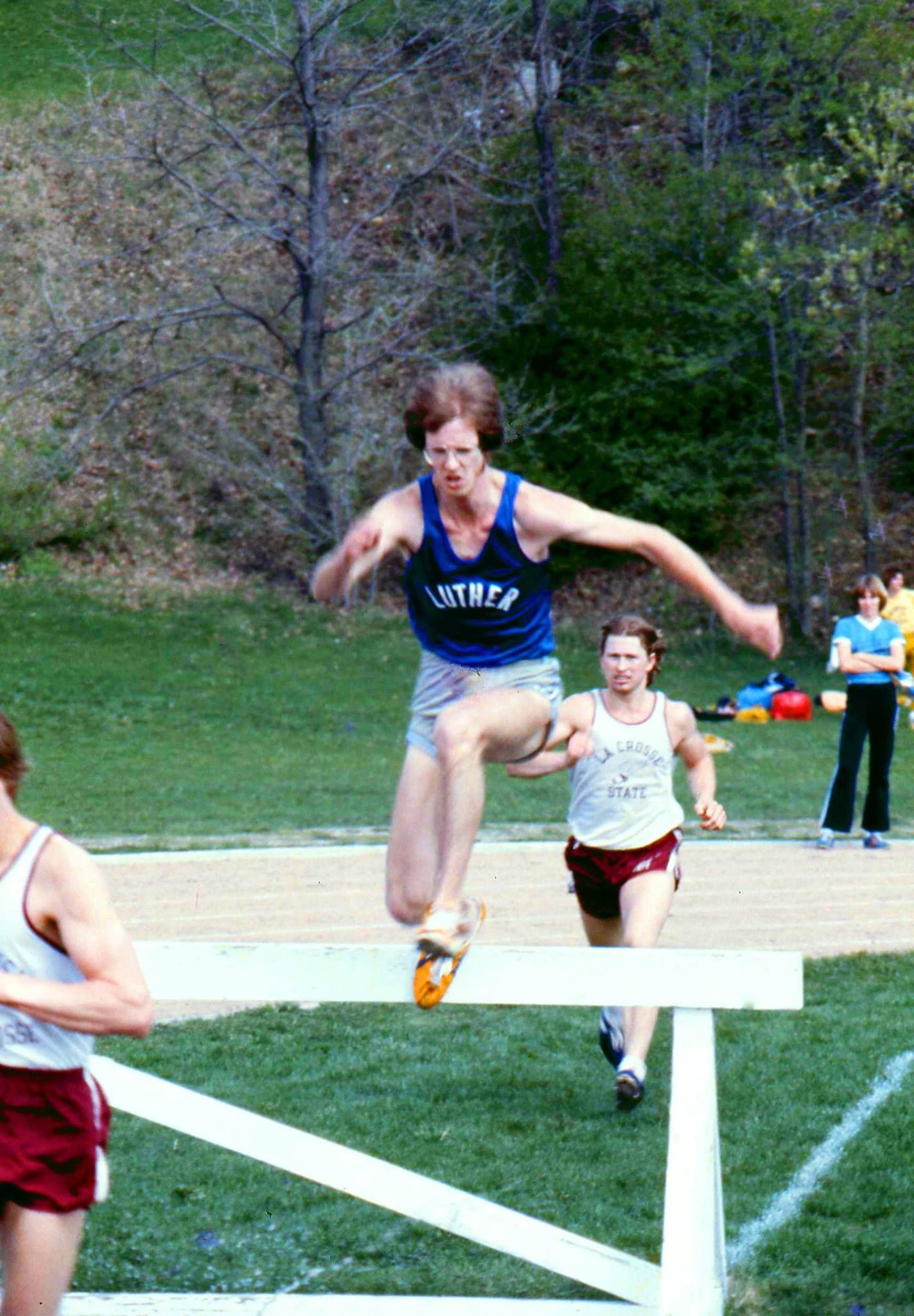
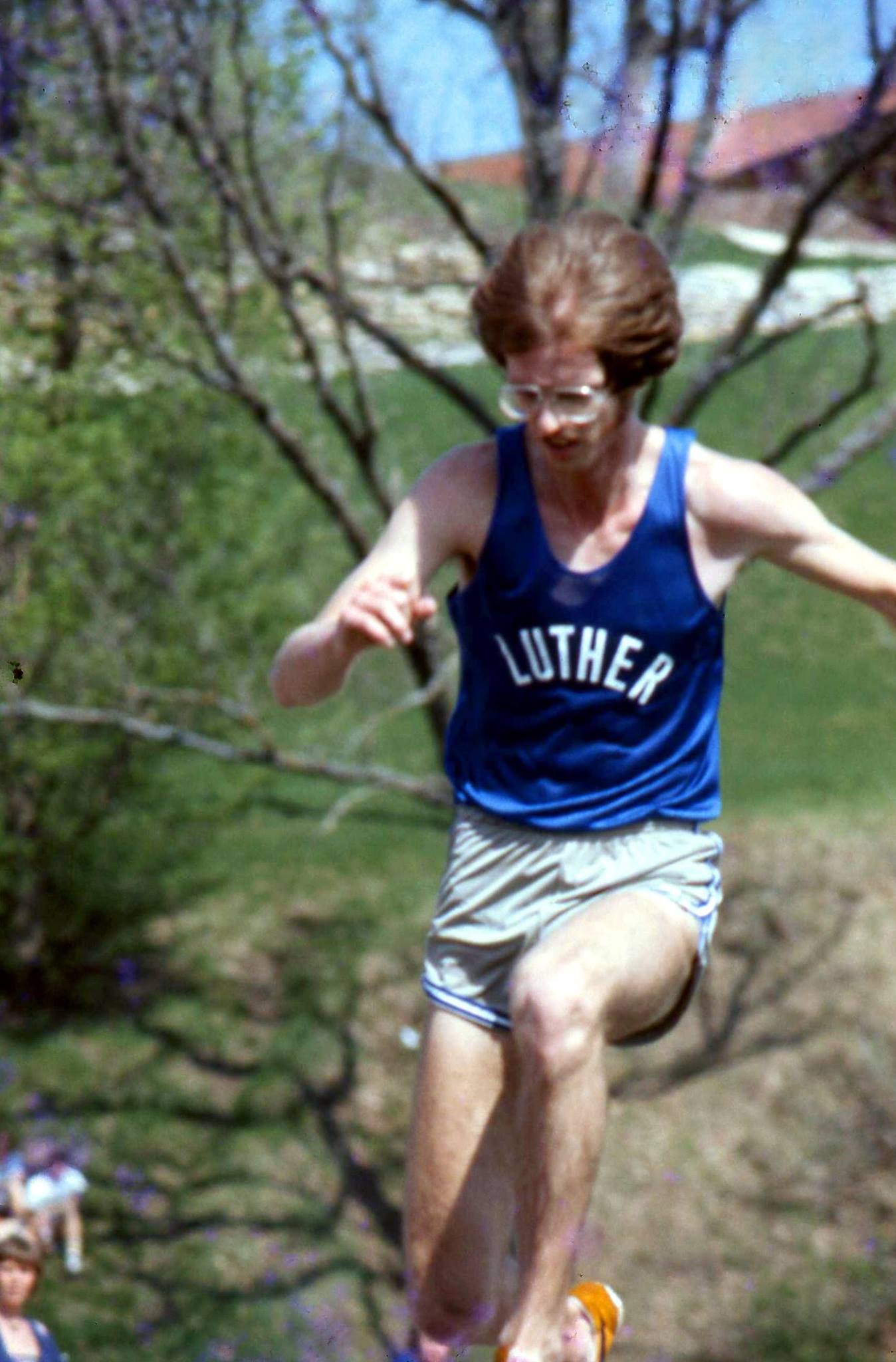
Up and over the steeple barrier and water pit.

So I don’t look back and think I “woulda-coulda-shoulda” run better at any point in my career. I know from the effort I feel today that I’ve always run as hard as I could. Were there times when my mental state may have limited those abilities? When I didn’t push through the pain enough? No doubt. But we can’t live with those regrets or they harms us in other ways.

Ups and downs

I ran as our sixth or seventh man most of that sophomore cross country season. My times were slightly better than freshman year, and we qualified to fun at nationals that fall. Unfortunately, the November meet was held in Cleveland, Ohio, where it snowed four inches the day before the race. Given that running tights were not invented as yet, and our sweats were to baggy for racing, we went to the department store the day before the race to purchase long johns and women’s nylons. Neither fit us well so we abandoned the idea of covering our legs and focused on having a warm turtleneck under our racing singlets. I recall finishing that race in a bent-over condition and feeling like I had to barf in the chute. I heaved up something hot and nasty that landed on another runner’s shoe. He punched me in the neck. I don’t blame him.

The Short Ride

Mixed in with all the serious stuff that year were so many laughs and goofy incidents. As a sophomore, I’d signed up for a fraternity along with my cross country roommate. One of the rites of passage was the Short Ride in which some brothers plucked us out of our rooms to be deposited twelve miles out of town with nothing to but our underwear, a shirt and a twelve-pack of beer that we were supposed to drink. Yes, it was a form of hazing, but fairly harmless by most standards. We stashed the beer in the ditch and started running back to campus. With our cross country fitness, the run back took us about an hour and fifteen minutes even through the darkness of night. The sound of our feet crunching on the gravel roads back to campus was satisfying, and we were both flying. We ran so fast that we actually beat our frat brothers back to the dorm (they’d gone out to the bars) and locked our door behind us. When they got back from the bars they pounded on our door and were playfully pissed that we’d made such easy work of what was supposed to be a long, cold and lonely night.

But when they arrived a few weeks later to take us on the Long Ride, we told them to fuck off because the conference meet was coming up a few days later. To their credit, they understood that we were far more serious about the matter than they thought.

Downs and ups

That spring in track I ran the steeplechase in 9:33 to qualify for the national track and field meet. A bunch of us traveled by van to Calvin College in Grand Rapids, Michigan, where the weather turned hot as hell after a cool spring. I raced in the 88-degree temperatures and high humidity to fade to a slow time. That afternoon we went out to dinner and then retreated to our motel room to lie around watching TV in the air-conditioning.

At 11:00 that night I awoke with severe nausea and started throwing up. The sickness lasted all night. My roommate counted the number of times that I got up to barf: 27.

In the morning our track coach Bob Naslund arrived to drive us back home. I told him, “Naze, I need to go to the hospital. I’m really sick.” By that point, my hands were tingling and I felt faint. Surely dehydration had caught up with me.

“I think you’ll be okay,” he offered.

“Take me to the hospital,” I demanded. “Or I’m gonna die.” I saw his eyes fly open wide and my roommate shook his head Yes.

So we checked into the emergency room and the nurses hooked me up to an IV and forced me to drink a thick orange electrolyte liquid to replace the fluids I’d lost overnight. I ate a banana or two and finally felt good enough to travel home.

Standing the heat

For many years, I credited that illness to a case of heat stroke. In the back of my mind, I was always cautious about running in the heat. Then I competed in a ten-mile race in the heat of July and ran so well that I took fourth place in the Melrose Park Run for the Roses in a time of 53:30. I felt so good the entire race that I actually laughed out loud at one point. I was having fun. During the last mile I sprinted past two other runners. I remember the winner Kevin Higdon turning around to slap my hand knowing that I’d run a bit above my standard performance.

That race in the heat made me think back to the national meet to figure out why the heat had affected me so badly. I through through the events of that day… and then it hit me.

It wasn’t heat stroke that made me sick that night after the national track meet. It was the medium Pizza Hut pizza that I downed almost all on my own.

I read an article later that year (in Harper’s, I think it was…) about the many times the Pepsico organization and Pizza Hut in particular get sued for food poisoning. It is estimated that 1 in 6 Americans gets sick annually from foodborne illnesses. The company employs an army of lawyers to protect against legal actions caused by the high number of food poisoning cases they face each year.

These days, there is a website devoted to self-reporting food poisoning cases across the country. It is called Iwaspoisoned.com. Browsing through the reports on that site is a sobering experience. All I know is that I really could have died that night in Grand Rapids. I’m obviously glad that I didn’t. But I’m also glad that I stopped fearing the heat for all the wrong reasons.

There’s a symbolic lesson of several kinds in that last statement.

Posted in college, competition, cross country, race pace, racing peak, running, steeplechase | Tagged , , , , , , , , | Leave a comment

50 Years of Running: Let’s steeple people.

The spring track season in 1976 broke typically cool, windy, and wet. Not great weather for any type of runner. The sprinters sought to avoid muscle pulls while the distance runners suffered in shorts through cold winds, puddles on the track and the pangs of not-quite-fitness in the legs and lungs.

That said, I decided to make my track experience even tougher that freshman year by competing in one of track and field’s most challenging events: the steeplechase.

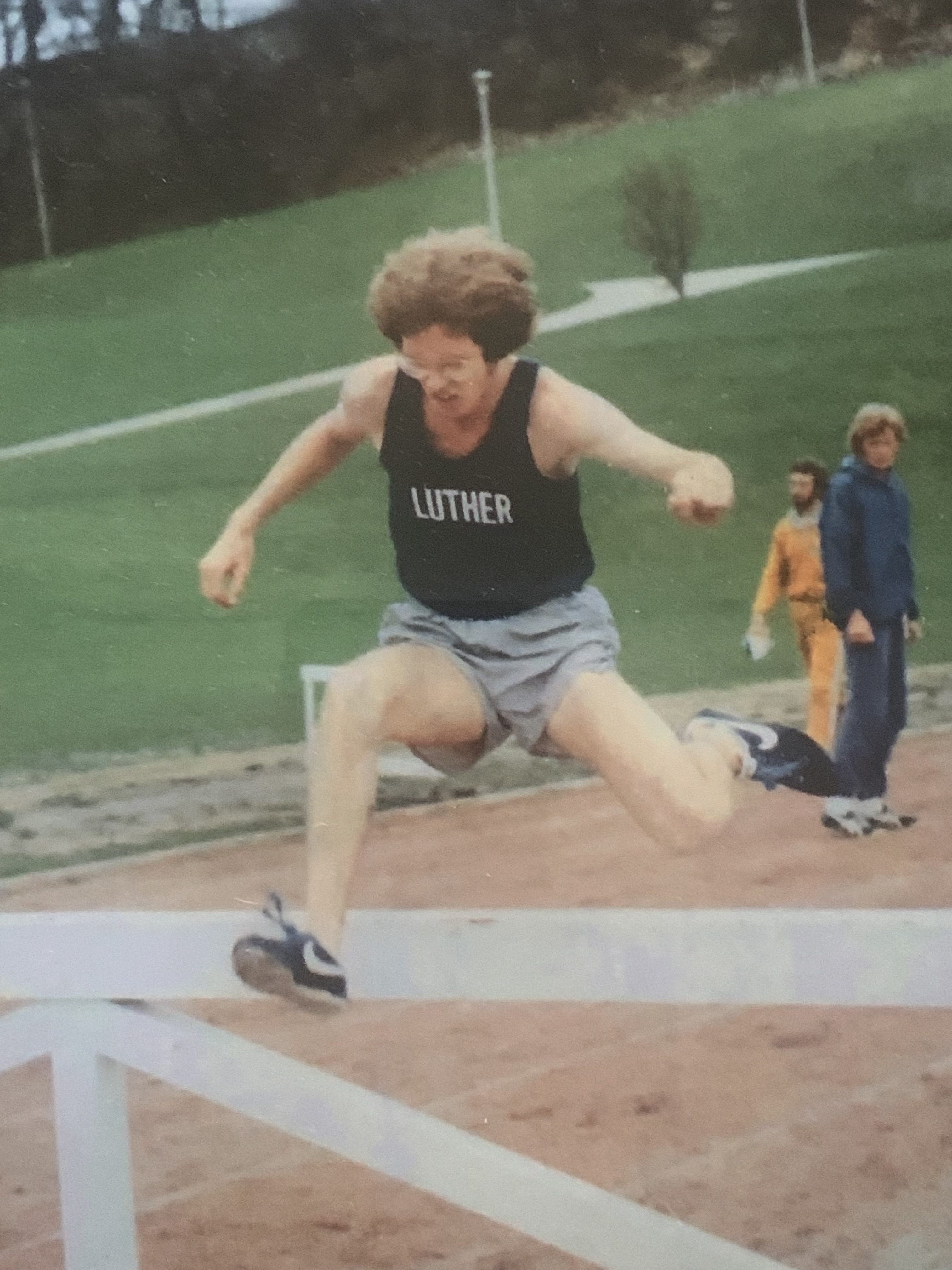
Competing in the steeplechase at Luther in a year when the grass runup was too soaked from rain to do the water jump. We jumped an extra barrier in the rain-drenched inside lane.

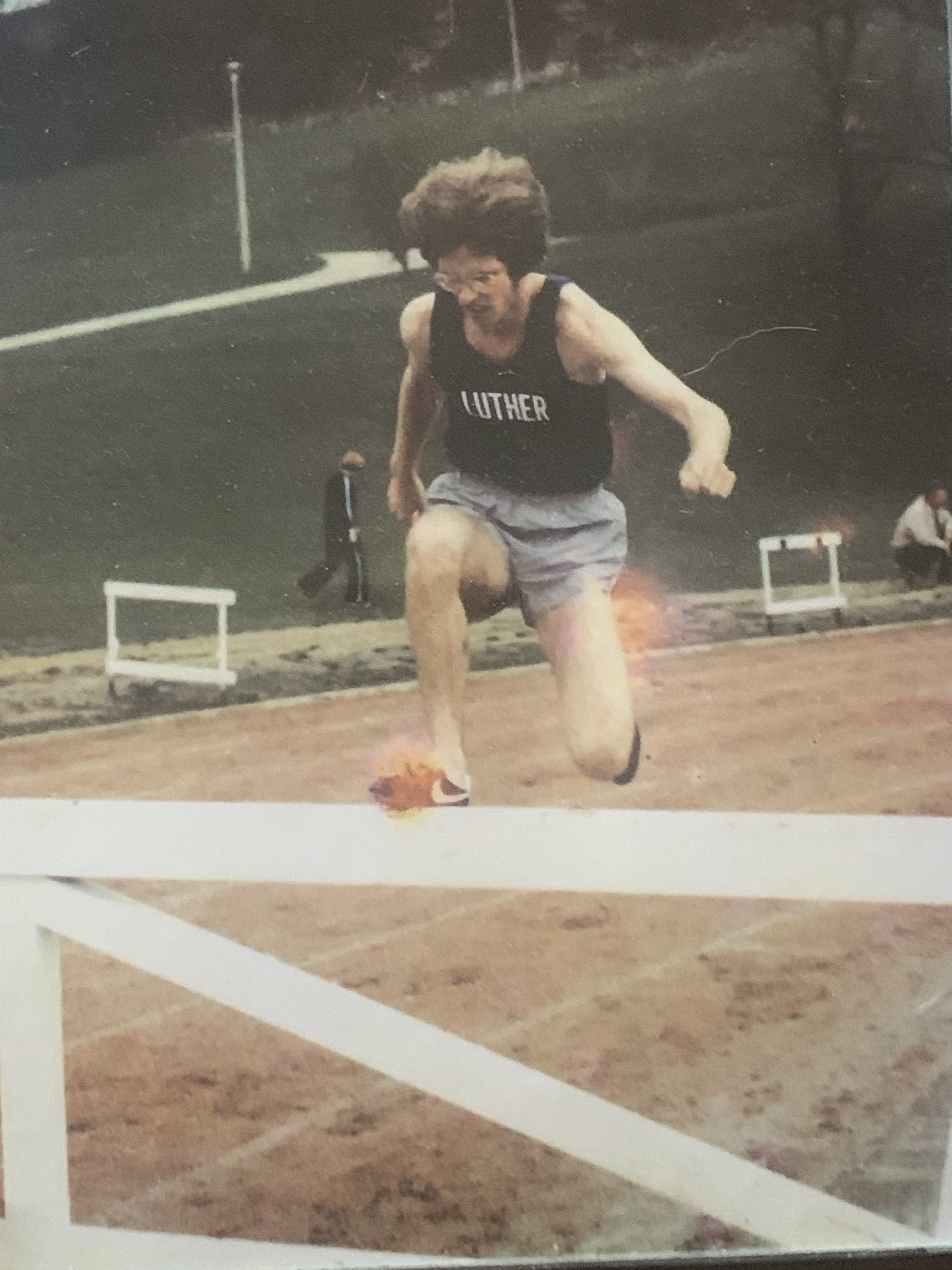
My background as a multi-sport athlete helped me adapt quickly to the steeplechase, a race that involves running 3000 meters over 35 barriers (42″) and 7 water jumps (with a 12′ zero-depth pit). Growing up, I always liked making obstacle courses. The steeple felt natural to me.

I loved running up to that water barrier, stepping on the top and flying out over the water. If the pit was set up properly, there was about a one-foot gap between the water and the end of the pit, so I worked at landing in that water-free zone. That way, my lead foot would not get so wet.

I’d been a forty-foot triple-jumper in high school, so I had good hops. My hurdling form needed work, as I’d not hurdled much before college. But in terms of inspiration, I was following in the footsteps of a cross country teammate Dave Hanson. He’d been an All-American steepler for Luther the year before.

My best that spring was not that consequential. We competed at several tracks where there was no steeplechase bit at the track. In that case, the meet organizers simply put another barrier on the track where the water pit would have been. That was not nearly as much fun. Still, I won a race and finished well in all the others.

I later used my steeplechase hurdling form to run the 400IM hurdles.

But the Iowa Intercollegiate Athletic Conference had not yet added the steeplechase event to the final meet of the year. As I learned just this year from Coach Bob Naslund, the other schools in the conference were not keen to give Luther’s distance runners one more event in which to rack up points.

Lacking a spot in my event, I looked around at the other distance events and realized that the top three spots in the mile, three-mile and six-mile were all taken. That was the last year in which we ran yards instead of metric distances.

So I was stuck without an event for conference. But I’d been high-jumping off and on that spring, so I competed in a jump-off and won the third spot.

Then I overheard that there was going to be a run-off for the third spot in the 400-meter hurdles as well. I told coach Naslund I wanted to run the event and showed up for the trial during practice.

My steeplechasing taught me decent hurdling form. Not super-efficient, but I could get over the hurdles with minimal loss of speed. Part of me felt bad jumping into the trial because there were three other guys that had been doing the IM hurdles all spring and wanted to race at the conference meet. But I wasn’t going to be deterred.

I ran 59.6 in that hurdle trial, earning the third spot on the team. At the conference meet, on an all-weather track, I lowered my best to 59.2.

Stepping on the barrier was a safety precaution in really wet track conditions.

God, that race was difficult. There are few events that so thoroughly exhaust your legs as the 400M hurdles. It is extremely difficult to get that last jump over the hurdle to fit in your stride pattern. Miscalculating can put you face-first on the track. But I managed to run well enough to have an assistant coach ask if I wanted to run the event the following year.

I don’t think that would have worked out. My basic 400 speed was only just sub-55. I retreated to distance running and the conference held a steeplechase the next three years. I won the race my senior year, and may have won in previous years as well. I don’t recall. My job was to earn as many points as possible to help Luther win meets.

Posted in 400 meter intervals, 400 workouts, Christopher Cudworth, college, competition, track and field | Tagged , , , , , , | Leave a comment

50 Years of Running: A Proving Ground

Challenging the freshman squad at Luther was admittedly a “makeup game” for an aborted career during high school.

Between cross country season and the start of indoor track at Luther College, I’d often play pickup basketball in the gym. While I’d ceased my official basketball career after junior year in high school, my game actually improved because I was a Gym Rat by nature. All winter long, my brothers and I would hit open gym on Saturdays and Sundays to play basketball all afternoon. We’d start at noon and play all day until the gym closed at six p.m.

Playing basketball was great cross-training for track, plus it provided a consistent outlet for competitive energy. The proprioception was good for the legs, and an excellent injury prevention measure. I later read that world-record holder Sebastian Coe spent 6-8 weeks doing bounding and strength drills. Well, I’d play basketball all winter and be ready for indoor track come January and February.

At Luther, I was in great basketball shape in late January when I walked past the freshman college team practicing in the gym. A friend of mine and former high school teammate played on the team. I stood there thinking that it might be fun to scrimmage them if I could put a team together.

Back at the dorm that afternoon, I started asking other expatriated basketball players if they’d like to scrimmage the freshman team. There was immediate enthusiasm for the idea, and I recruited all the best athletes I could find. We had some big guys too, for the rebounding. We set up a time with the freshman team, and it was game on.

The romantic plot would have our hardscrabble dorm team winning. That did not happen. We played even with them for one half of basketball. Our street ball carried us that far, but the freshman team pulled away in second half. Raw talent does not often win out in the real world of sport.

That said, there were some joyous moments during the game. One of our long jumpers, Jeff Wettach, came flying down the court to pin a layup against the backboard. We worked up some plays that were effective the first half. But as our big guys tired, the rebounding was a lost cause.

I scored nineteen points in the game, so I felt personally satisfied with trying that proving ground on the basketball court. I think there was a score to settle within myself. The whole thing was a bit of a prick move on my part, sort of trying to make up for faltering in basketball during my high school years. From then on, I settled into pickup ball never wondering whether I could compete with “real” ballers. I’d proven that I could at some level. Yet I knew that real college ball was a ton tougher than some scrimmage on a Saturday afternoon. That was all I needed to move on in life.

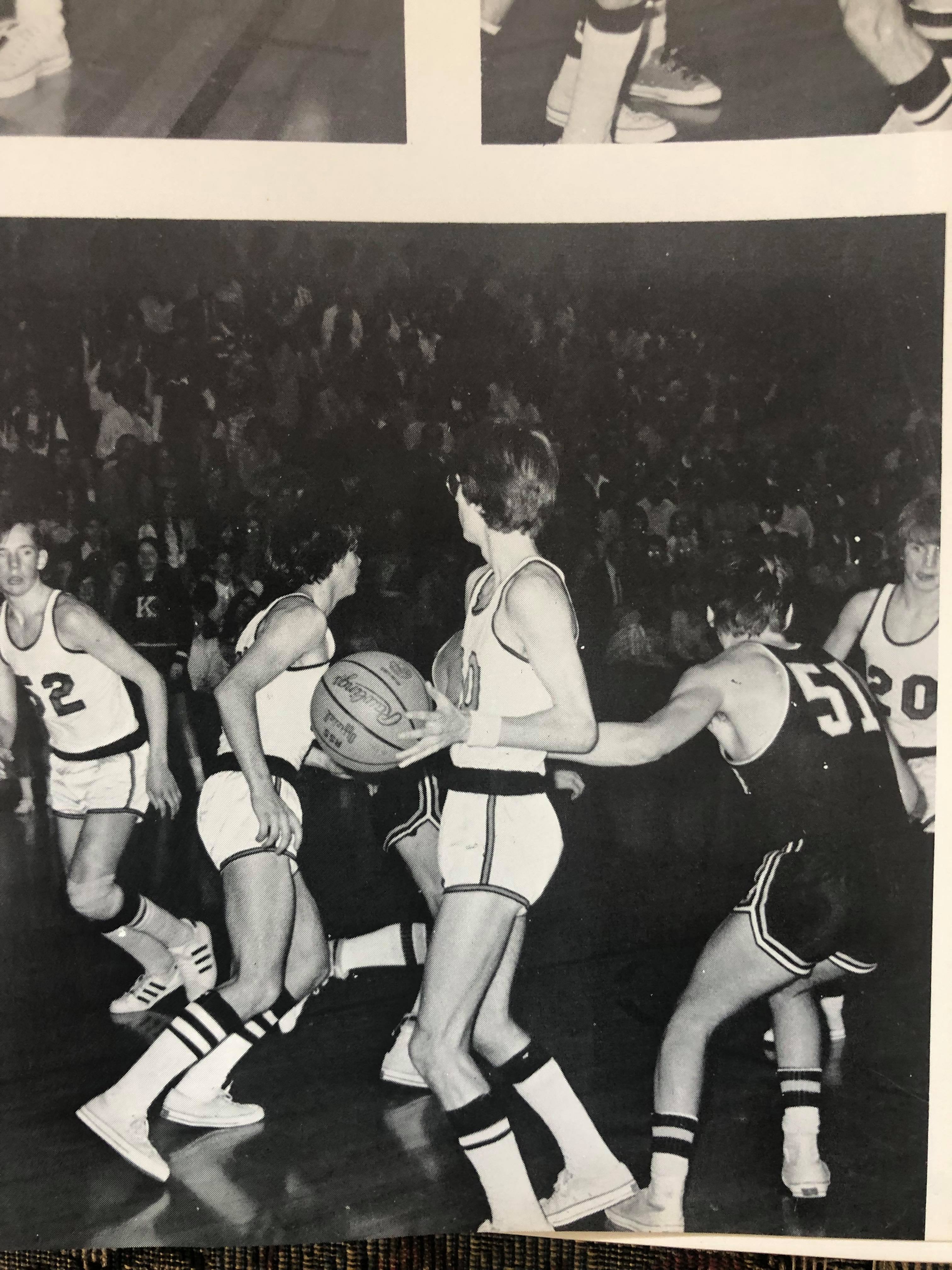
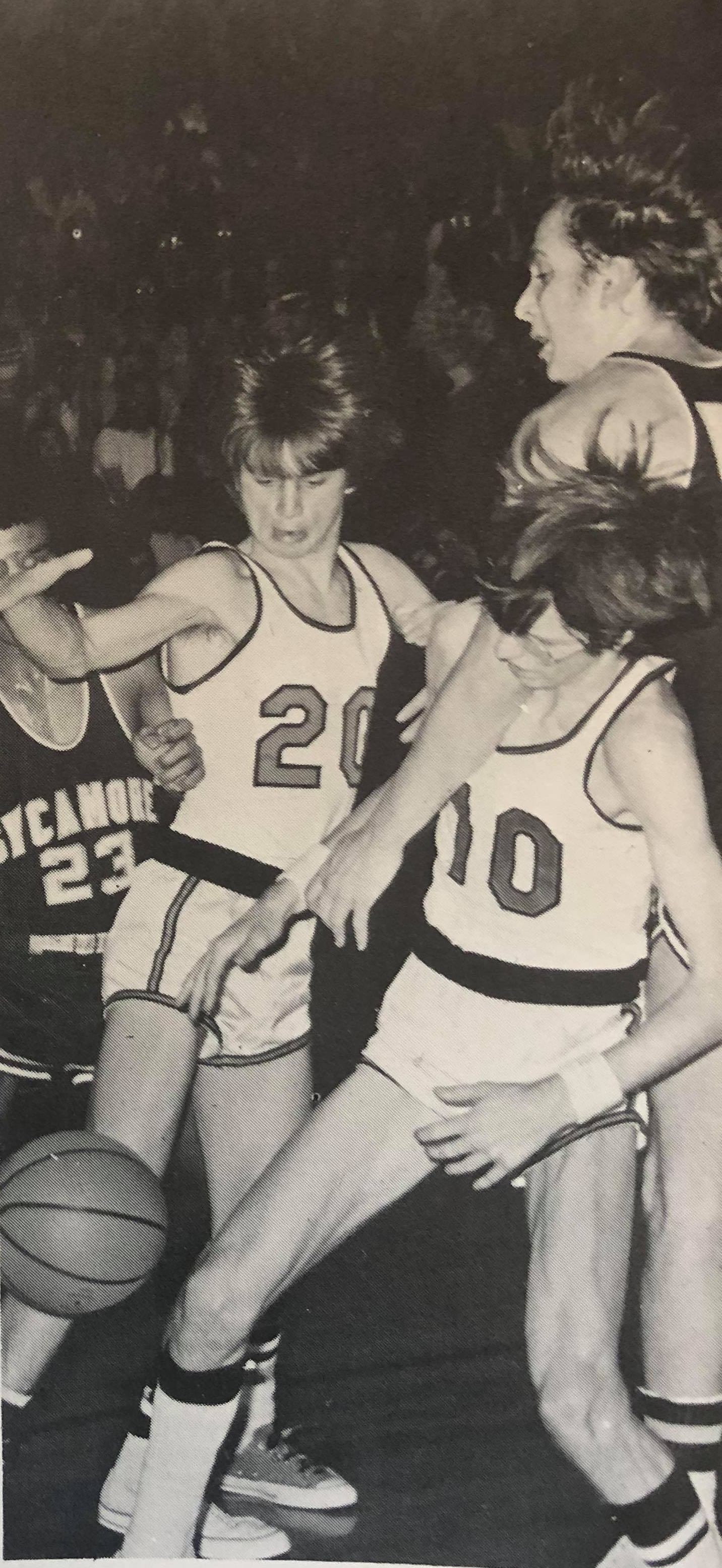
Hoops was always a good way to let off steam in the gym. This photo from my sophomore year in high school shows that I was never afraid to mix it up. (#10)

By that point in time, the indoor track season was calling. The month of February rolled around and our team started traveling to meets in LaCrosse and other colleges with indoor facilities. My basketball fitness proved helpful when racing on the 176-yard indoor tracks with tight turns and slippery floors.

I also high-jumped some, but by college standards, I was a below-average jumper, clearing 6′ 1.5″ at a LaCrosse dual meet. That day, a gymnast-style high jumper from LaCrosse was experimenting with a handspring style of high-jumping. He ran straight at the bar, did a frontwards flip, and then dove over the bar. There was one problem with his technique: no one could tell if one or both of his feet were striking the ground on takeoff. The rules state that high jumpers must use only one foot to leap. That said, I watched that guy jump seven feet, but he was disqualified for improper takeoff.

I ran the mile and two-mile at most indoor meets and took the baton for relays. As a freshman, I was approximating my best high school outdoor times on the indoor track. All winter we trained through snowstorms and freezing cold weather. Every night after showers we’d march from the fieldhouse up to the Union in sub-zero temps and my big head of hair would freeze solid like a helmet.

Then we’d scarf down dinner and kid around until it was time to head back to the dorms and study. But most nights I’d go play ping-pong with my friend Jim Nielsen. After that, I might get around to studying.

All that distraction with basketball and table tennis and kidding around was still better than going out drinking every night. Still, I do recall a fun evening with my friend Dave Hanson and some other teammates. We retreated to some downtown pub and had a few 50-cent beers. The joint had blank walls on which everyone was drawing pictures, and the bar welcomed it. So I drew a hot-looking nude girl on the post and we all had a good laugh about it. I remember walking back from the bar on a freezing cold Northeast Iowa night without many cares in my head. The beer in my brain and the stocking cap on my head was enough to keep things warm.

Then March came around. Indoor track was over and it was time to face the real world again.

Posted in Christopher Cudworth, college, competition, track and field | Tagged , , , , , , | 1 Comment

50 Years of Running: Drawing On Experience

Once the cross country season was finished that freshman year at Luther College, I experienced dorm and campus life without the daily commitment of early morning runs and afternoon practices. That was liberating, to some degree. It left time open to do and try other things.

Following the winter break for Christmas, I returned to school for January Term. At Luther, that meant taking a single subject for three solid weeks. I chose a life drawing course. Six hours of drawing a day. I loved it.

A life drawing from January Term, 1975

Being able to focus on one subject like that was both absorbing and amazing. Our teacher John Whelan played classical music, to which I had not been much exposed, and we drew for three hours in the morning and three more hours in the afternoon. I’d never drawn live, nude models before. It was challenging to manage proportions and the subtleties of the human figure, especially women. Admittedly, I’d not seen fully nude women standing before me. Yet I can say that the experience in that environment was not sexual for me at all.

I can’t say the same for my dormitory brethren, who often gathered around my room when I returned from class. “What did you draw today?” I’d get asked. The guys all wanted to see naked women. All I wanted to do was learn to draw better.

A life drawing from January Term, 1975

We also had male models, but they were rarer. I recall the first day a man modeled nude for the class. I could see the women working their way around the drawing until they were almost forced to draw the crotch. Who can blame them? Dicks are kind of weird, especially when you look at them for a while.

Come January, our indoor track team started practicing. Our distance team ran 6-10 milers daily from the fieldhouse. The gravel roads around Decorah were covered with a layer of crushed snow and ice. We learned to navigate those surfaces even in the dark. We’d head out into the twilight at 4:30 and run as a pack through the gloom. Often the road ahead was quite visible even in near darkness. The cold was a challenge, as our equipment was basic; cotton sweats and layers worn as strategically as possible. One night a teammate forgot to wear nylon shorts underneath his cotton sweats. The sub-zero wind cut through his sweats and he feared getting frostbite on his crank. Not knowing what else to do, he stuffed a hand down his pants and ran that way home for several miles.

Our facilities at Luther consisted of a central set of lockers and a rack of showers around which we’d all stand waiting for the water to warm up. It always took a while on those cold winter nights, so we’d stand there telling jokes or talking about upcoming meets. We never thought much about the fact that we were naked. The locker room environment was not a big deal. I’ve gone back to Luther many times over the last 40+ years. Those basic showers are still in place. The water doesn’t warm up much quicker.

These days, athletes in high school and college often ignore locker room facilities to shower elsewhere. Somewhere along the way, young people were convinced that showering together was a bad idea. What caused that change? Was it fear? Embarrassment? Comparison? Naked lies about some aspect of being naked? It all seems silly.

The Luther locker room showers where we never thought much about being naked.

Well, times change. But in other ways, they don’t. During that era, those life drawing classes at Luther were still a tiny bit controversial. To some people, the idea that Luther students should see naked people every day in class upset the more conservative factions of the college hierarchy. Yet there we were, walking about the locker rooms completely, stark, raving naked. It was hypocritical to object to nude figure drawing. There was apparently particular concern about the presence of male models. And, it was strictly forbidden to have male or female students pose nude for the art department. Our nude models came from the community around Decorah. We got to know their bodies particularly well, male or female.

Modeling is not an easy job. Holding a pose for a long period requires discipline. We grew to appreciate our models for their dedication, and frankly, their professionalism. Still, the guys back at the dorm still just wanted to see them naked.

Yet Luther was not about to stifle the realities of life in the 1970s. One of the weekly movies chosen by the Student Activities Committee to show in Valders Auditorium was the adult film titled Emmanuelle. Most of us had no idea what was coming, so to speak, and the sex scenes were quite illicit. We walked out of the science hall a bit dazed and extremely wound up. We were all a bit wiser for the experience.

The young Sylvia Kristel starred as Emmanuelle.

We all spilled out into the night a bit horny and crazed after having watched that film. Some knew what to make of it, while others, like me, wondered when something like that woman might enter our lives. The pack of us skinny runners weren’t the top pick of the litter at the bars, but somehow some of us found our ways into the arms of a woman or two. Those efforts were the center of discussion on many a long run. Who got laid? Who didn’t. We all wondered if we’d find our own Emmanuelle.

A scene from the movie Emmanuelle.

For me, it was quite a leap from those graphite images that I created on my art room table and the graphic images of Sylvia Kristel on that movie screen that night. Without a woman to bridge that gap, I was left to run it all off and hope that someday a real woman would fall in my lap. Such is the loneliness of the long-distance runner.

Posted in Christopher Cudworth, college, competition, cross country, track and field | Tagged , , , , , , , , , , , | Leave a comment

50 Years of Running: First, a flight. Then I woke up dead.

Following a successful conference meet, our team earned a trip to Nationals out in Boston, Massachusetts. We’d swept the top five spots at the IIAC race and our coach Kent Finanger followed through on getting us an entry to the NCAAs. That was the ticket we needed, as there was not yet a Regional meet to determine qualifiers.

I was included on the Top 7 roster thanks to my ninth-place finish at the conference meet. But it was also thanks to the graciousness of senior Kirk Neubauer, who turned down a nationals spot to allow me to run despite the fact that we’d tied for team points that season. “Let Cud run,” he told Kent. “It will be good for the future of the team.”

At-home training in the mid-1970s.

So we all traveled to O’Hare airport in Chicago. Several of the small-town Iowa guys on the team had never flown on an airplane before. We landed in Boston and somehow wound up having dinner with an MIT runner named Frank Richardson, who’d go on to place 4th in the 1976 NCAAs and have a solid career at a marathoner, winning the 1980 USA marathon championships and the1980 Chicago Marathon in 2:14:04– at that point a race record. He went on to place 9th at the US Olympic Trials as well.

What I recall about Frank was his natural humility and somewhat wry sense of humor. To us, he seemed like a worldly fellow, not nervous at all about the upcoming nationals race. In fact, he’d finish fifth the next day behind Tim Fleming of Lowell. Bruce Fischer of North Central was 4th.

First Nationals competition

Luther did not have a great effort that day. Boston was a big city in all our eyes, and we ran a bit intimidated. We didn’t have any clue how we stacked up against other NCAA teams, and went into the race trying to figure that out. North Central College won that year with 91 points. Luther finished 16th with 441 points. Our top runner was Doug Peterson in 47th. Paul Mullen ran 75th, Mike Smock 85th, Damian Archibold 100th and Keith Ellingson’s place is now illegible in my result book thanks to the fading mimeograph ink. I finished 171st and Dave Hanson rolled in 203rd. That first experience running at Franklin Park Golf Course in Boston prepared us for bigger things to come. There were 318 runners that race, so I didn’t even finish in the top 50% overall. But that’s expected for most freshman. You run for experience as well as a result. Someday that experience would pay off.

We dined that night in downtown Boston at a restaurant overlooking the water. I downed a plate of soft-shelled crabs before asking, “Was I supposed to eat the whole thing?” I’m not sure I ever got an answer.

Back in Decorah following Nationals, the team prepared for its annual Cross Country Party. We gathered at a small house somewhere off-campus and the mood was light and humorous. I watched some team members haul in large bottles of alcohol and pour them into a giant barrel. “What is that going to be?” I asked innocently.

“Wapatuli!” someone crowed.

The Hard Stuff

Up to that point in life, I’d never drunk any hard liquor at all. Just beer, for the most part. So I didn’t know the punch was that strong as I downed a couple cups while trading stories with the boys. A band of women showed up to witness the spectacle of skinny guys getting wasted, and I was talking with one of them when I started to feel a heavy drunk coming on. I turned away to gather my courage to engage with one of girls and turned around to try giving her a drunken kiss. She’d stepped away and I planted a smacker on the thermostat right next to my head.

That is when I knew I was in trouble.

Perhaps I stopped drinking at that point. Or perhaps not. In any case, I recall the party ending for me at a point where someone said, “Maybe we better get Cud home first.” They piled me in a car and we drove up to campus where they helped me up the stairs, took my keys to open the door to the dorm room, and left me sideways on the bed to “sleep it off.”

The next thing I knew, I woke up dead. Or so it felt. My liver hurt like hell. Or at least, that’s what I figured out. I never knew I had a liver before that night of insane drinking. I felt sick in the stomach and my head felt like it was turned inside out. For a few minutes, I just lay there wondering how to get to the bathroom. It did not feel like I was in control of my 138 lb body. Everything hurt so bad I wondered if I was fully alive, or was I half deceased? It was that bad.

If I’d crawled to the bathroom, I would have forgiven myself. Instead, I lurched and leaned down the hallway and leaned over the toilet, but nothing came up. There I hung for a bit, head leaning on the toilet seat with an arm underneath. Pathetic and ignorant of what I’d just done to myself.

Recovery

It took the entire day to recover. It was more than a hangover. Looking back years later, I realized that what I’d survived was alcohol poisoning. One more cup of Wapatuli might well have killed me. I was that close to being dead, I’m pretty sure.

I took some kidding about that massive drunk over the next few days, and laughed along with my friends. But deep down, the experience scared me. Never had I blacked out or had that type of reaction to drinking. While I’d go on to get drunk more than a few times in college and beyond, there was only one other moment when I was that drunk again.

It happened during my junior year in college with a girlfriend who got me ripped on rum and Cokes. Our relationship was a tug-and-pull affair of sex and commitment, and at some point, she expressed jealousy over my dedication to running. It felt like she wanted to destroy that part of me. We partied in LaCrosse and I wound up falling over drunk in a McDonald’s.

After that, I started looking ahead at life without her. She may have been sweet in some respects, but the fear and resentment I felt in her presence never really left me. Perhaps she felt the same about me.

Self-awareness

It takes years to develop self-esteem and awareness.

There’s no question in my mind that my dangerous drinking was the result of a lack of personal confidence and self-esteem. That was combined with an intense desire for acceptance and approval. So many of us wrangle through life with these conflicted internal dialogues going on in our heads. Add in some self-medication due to anxiety or depression, or to cope with social situations, and we find ourselves in toxic cycles of self-doubt that can lead to drug abuse.

I never fell into addiction or anything at that level, but to this day I watch my alcohol consumption carefully because no one is really safe from their weaker instincts.

There are better ways to approach the party life, and my son Evan Cudworth has astutely created a way to approach matters of self-awareness with his coaching business, Club7van. He’s been through some big life challenges and has much to offer people seeking ways to party healthily. Many of us could have used that perspective during our lives. He even featured some of the advice I used to give him when I was a young father.

I’m just glad to be alive, rather than living as someone’s tragic memory of a person that once was, or the guy that drank himself to death at a college party. The risk is real. Too many kids get themselves into situations they can’t handle. My liver hurts just thinking about that November day when I woke up dead. I don’t wish it on anyone. Ever.

Posted in addiction, alcohol, anxiety, Christopher Cudworth, college, competition, death, Depression, fear, life and death, mental health, mental illness, running, sex | Tagged , , , , , , , , , | Leave a comment