From 0 to 58 in nothing flat

Sweat Shop

This post is a bit of a request. During the middle of last night’s Computrain session, a friend and blog reader turned to me and said. “Chris, what are you going to blog about tomorrow?”

It was a good question. Because at that point, blogging was the farthest thing from my mind. I’d gotten off the bike (naughty) to fill my water bottle that had been emptied in the first hour. Sweat was soaked through black bandanna on my head, which now looked like a black banana instead.

You can hardly think when the lactic acid and carbon dioxide starts to eat your brain from the inside out. This was only my second ride of 2016, and the last time I rode in 2015 was on a late October day in the wind and murk. From the get-go I did not feel good that day, and it only got slower the further we went. By the time I got home and forgot the bike was on the roof rack, it was too late. The Felt died that instant.

So the bike perched on the trainer last evening was the Waterford, a machine that has never been properly fitted to my body. The bike expert running the CT training took a look at the seat height for me two weeks ago, and that was okay. But the seat position front and back still seems off. So I nudged it forward last night. But my companion Sue pedaling next to me noticed that I still looked stretched out.

“Don’t remind me,” my brain muttered in silence. “Yeah…” I sighed instead.

There is nothing like those first couple rides on the bike after an intentional or unintentional layoff. If you are unlucky enough to start your season outdoors, the landscape turns into a worldwide torture chamber. No matter how hard or how long you pedal, the cyclometer seems to be lying. You could not possibly be going only 15mph.

And nothing makes you feel your age, no matter what age you truly are, than being out of riding condition. Or running condition. Or swimming condition.

It’s never conditional. The way you feel rhymes with “gain” and starts with the letter “p.” There is no way around this wordplay that hurts so much at times, you wish you were dead.

ResultsSo I’ve gone from zero to 58 in a heartbeat, or many as the case may be. At one point I put a pair of fingers to my neck to check the heart because I was not hooked up to the monitor on the computrainer. That seemed just a bit too intimate. It already owned me body and soul. Why should I let it break my heart as well as my mind?

It all starts with the load assigned to your riding by the cruel man or woman who decides, on a whim, what kind of condition you’re in. Or how you rather look like a rider, so we’ll set you up <<here>>. Mine was 220 for some ungodly reason. Everyone else in the class had a lower number in that category than me.

In some respects, that has been a pattern in my athletic career. Coaches have smiled and told me on many occasions, “I think you can do this.” It happened at age twelve, when I ran my first 12:00 two mile. It hurt, but I did it.

It happened at 14 when I first broke 5:00 in the mile. And again at 17 when I first broke 4:30. And again at 19 when I first broke 4:20. Progress is the word that sounds like “gain” but starts with a “p.” It always, always hurts. But you learn to perform in spite of the “p”.

Yet there’s something unique and special about being stuck in one place on a bike in a basement where the name of the place is the Sweat Shop and there are 10 other people sweating along with you. The music was pure 80s tunes, which took me back to riding my bike in that Chicago apartment during the winters of ’83 and ’84, when I was just 23 years old. It was hard then, and it is hard now. That’s what training is.

And I will admit that the training got so hard at a couple points that I had to stop, let the rear wheel wind to a stop, and start up again. My cadence was low on average, about 74 versus the 90+ one is supposed to maintain. The director came by at one point and asked, “How are you doing?”

“I’m muscling through,” I told him.

“Well, that will have a cost,” he reminded me.

And the gal next to me issued a statement at some point into the third of five hard intervals. “You should keep your cadence up. It’s easier. Or else the trainer makes it harder.”

That was like telling a dying man to breathe a little more. I was doing all I could. The best choice and the worst option was to make sure I hit the harder segments hard. Keep that green bar green, not yellow, blue, orange or red.

It turns out that I averaged 18.55 mph for the hour and a half on the bike. Which absolutely frightens me that I’ve hit some kind of age-related threshold. Because that’s what I’ve averaged on long rides for years.

It also means that other than a couple years, my riding intensity and training have not been sufficiently difficult or “gainful” enough to make a difference. Early on in my riding career, I was too stupid to know that I was riding too hard. And I got faster as a result. But as I’ve aged and gotten wise, my body and mind have learned ways to trick myself into thinking I was riding hard. When I wasn’t.

That’s the ultimate tarsnake of training on the bike, the run or the swim. As you get better, you also get better at tricking yourself and compromising on the “gain” required to improve each year. Which is why the Computrainer and its empiric face are honestly the best way to begin a season in earnest. Next week we’ll do a 20-minute test to see where we really sit in terms of fitness. That will be interesting.

All this gives one an interesting respect for world class cyclists that can crank out 400 watts for hours at a time. I’ve seen inhuman athletes at work. Men like the relatively diminutive Sebastian Coe, who could leg press 700 lbs and run 400 meters in 44 seconds, 800 meters in 1:42 and a mile in 3:46.

And women who defy their supposed status as the “weaker sex,” that can kick your ass on the bike and the run. I once raced next to Grete Waitz for 30+ minutes in the Orange Bowl 10K. I’ve seen what women can do. They are not the “weaker sex.”

And it turns out we’re all together in this world of “gain” that begins with a “p.”

See you at the Sweat Shop.

Runoverthetarsnakes2


Posted in cycling, running, Uncategorized | Tagged , , , | 1 Comment

Me and XRT

ME and XRTHere in Chicago, we have a radio station that has not just stood the test of time, but helped define it. Back in the 1970s, WXRT started as an FM radio station that put playlists together featuring song messages. The DJs were witty and insightful. There appeared to be very little corporate interference between the air personalities, the music and the audience.
Things have necessarily changed over the 40+ years the station has been in existence. It is corporatized now, rife with advertising that pays the bills. A station cannot exist without that. Yet several of its air personalities remain even from those early days. One is Terri Hemmert, who is currently off-air at this point, working through some form of cancer treatment.

To that, I can certainly relate. Having ushered a wife through eight years of cancer treatment, it is certainly understandable why Terri would not want to be on the air. Depending on the treatment, there are days when you would rather not get out of bed, much less stay vibrant and interested while music plays over the radio.

At one point when I lived in the city, my then-girlfriend and I attended a trivia night hosted by WXRT at a pizza place, Giordano’s I think it was, a couple blocks up from my place 1764 Clark Street. The theme was the Chicago Cubs, who the next year would make a charge for the World Series, and fail. Such is life in Chicago.

But XRT has stayed loyal not only to the Cubs, but to the Sox and all the sports teams in Chicago over the years. The on-air personalities have fun at the expense of teams during bad years, and cheer them on in good years. That’s how it should work.

Yet the more imporChris 1985tant facet of the radio station’s existence is the music it plays. The standard joke about being the “soundtrack of your life” holds very true with WXRT. Through all my hard training, running through Chicago in the early 80s, the station would provide introductions to new music and send me to the record store to purchase albums by the Talking Heads and even the Tom Tom Club. Without that music, I’m not sure the full motivation to run so many miles would have been there. Those songs held me through many cold miles on the lakefront.

I’d also listen to the radio while sitting on my bike trainer in the second story flat on Clark Street. That MagTurbo trainer still sits in my basement thirty years later. And it still works. I was ahead of my time using that Schwinn to pedal miles and get in an aerobic workout when it was twenty below zero outside. The combined humor and music of XRT made those rides tolerable.

There were late night DJs that still got to be playful with the music as well. One strung together the songs Jungleland by Bruce Springsteen and a Supertramp song whose orchestral sound aligned perfectly with the big interludes played by the E Street Band. My best friend and fellow runner called me that very night and said, “Did you hear that?” Yes, it was 80s epic radio. And yes, it can seem trite in retrospect. But it was real. And that’s what counted most. I still own one of the classic “Diamond” XRT tee shirts representing “Chicago’s Finest Rock.” Yes, I do.

In fact, my friends and I have shared many XRT moments and concerts and events over the years. There was humor too, such as the night a DJ had just finished listening to the traffic report which concluded with the street name of “Wacker.”

“You whack’er, you brought her,” he jested.

And that started years of jokes similar to those of Michael Scott (The Office) and his famous line “That’s what she said.” To us the Wacker jokes didn’t mean anything. None of it. Just wordplay.

Scan 14

Linda and Christopher Cudworth with Terri Hemmert of WXRT, circa 1984

All this popped into my mind because while getting ready for work this morning, I turned on a radio that I keep in my bedroom. It is a refugee from simpler times, a “boom box” with an actual antenna. And each time I walked between the radio and the direction from which the radio waves were coming, the sound got hazy and interrupted. It dawned on me: I have a physical effect on whether than sound reaches me or not!

It works both ways. A few years back I heard this song by Modest Mouse in the record store, and fell in love with the band. Yet I wasn’t hearing their music on the radio at WXRT. So I called the station and left a message for them. “Hello WXRT,” I said. “I’ve been a listener since the day you went on the air, and I’ve relied on you for years to find and play new music. But there’s this band Modest Mouse that you’re not playing on the air. And that disappoints me. The song is “Float On,” and I hope to hear it on the station soon.”

And the very next day, while driving around with the car radio on, that song was played on WXRT. Could well have been a coincidence. Would not be the first time in life something like that has happened. And likely won’t be the last. But whatever the circumstance, it felt real.

And the station is still real. Listen to the feature “Lin’s Bin” by on-air morning personality Lin Brehmer, if you don’t believe me. The man has all the ethos of a true radio veteran, yet keeps it fresh. These days I stream the station through my computer and play it through speakers while doing chores around the house. The delivery methods may have changed, but XRT is still XRT.

In sum, that little radio station by the lake has been changed by the years, yet unchanged in many ways. And that’s the connection between me and XRT.

And Terri Hemmert, Queen of Sunday mornings with The Beatles on XRT, get well soon. Cancer is just one of life’s tarsnakes, and not a fun one. We all hope you can kick it.

Runoverthetarsnakes2


Posted in running, Uncategorized | Tagged , , | Leave a comment

One of these (those) days

Cross and Nails copy.jpg

Illustration (2015) by Christopher Cudworth

There are days when you roll through everything. Things go well enough that they seem to have gotten finished. Bills get paid. Work gets done. There might even be some inspired behavior between all those practicalities. We all have our crosses to bear. So to speak.


Yesterday was not one of those “roll through it” days. I muddied up a commissioned painting by overworking parts of it. That can happen easily. All it takes is a touch of the wrong color and it seems to spread like blood on a crime scene floor. The damage is done before you even notice it. That means going back to the drawing board. Literally.

All can be repaired. Every artist and writer knows the dangers of the process. A sloppy paragraph needs editing. Lord knows I’ve committed that crime here. Then there are those glitches where technology steps in and repeats a paragraph when you’re not looking, or makes an autocorrect that turns the word “turn” into “turd” for some reason known only to the universe. It’s the product of insane autologic. Yet we honestly know that a million monkeys typing on a million computers will still not produce a novel. That’s just not how it works. The mind of the universe employs the random reality of free will. Every watercolorist knows that process well. But words and twelve mile runs are different. We learn how to make corrections on the run. Intentionally.

But it does not always go as planned. Yesterday was a hopskotch from one process to the next. Painting. Writing. Meeting with client. More writing. Then at four o’clock I went to the gym to get in a pool and weight workout.

Only I was sleepy. Basically, I’d skipped lunch to save on time. By late in the day my energy levels dropped. A week ago that sensation got so bad (on another skipped lunch day) that I slept in the car for half an hour before going into the gym. It’s a strange yet wonderful sensation to ease the car seat back in a dark parking lot and doze off while rain putters on the windshield. Then, like Lazarus wrapped in skin tight Under Armour, you rise to head inside. The Walking Dead.

It wasn’t that bad yesterday, but to get my body warmed up, clean and awake, I took a shower before heading into the pool. The lanes were all open when I walked past the big windows overlooking the pool. No hurry. Or so I assumed.

By the time I sat down by the big whirlpool to let the water beat on my flighty Achilles tendons, one swimmer had occupied a lane. Then I looked up again, and there was one more lane taken in the pool. So I put on my Nike sandals and klopped over to the spot where I’d set my pool float down to indicate my chosen lane.

At that moment a longtime friend and fellow triathlete walked in. He pointed to the other end of the pool. “It looks like someone’s already got your lane,” he said. And sure enough, a gal at the far end slid into the pool.

My buddy’s a good swimmer and triathlete. He looked ready to go. I was not about to bicker over the open lane with him. And truth be told, I just wasn’t in the mood to share that lane, especially at the edge of the pool.

“All good,” I told him, waving my hand toward the gym. “I’m gonna go lift.”

The lifting went well. I just shut my mouth, turned on the focus and worked through every machine I on the floor. I even headed upstairs where the real weight nuts reside and the older equipment lurks. There I found a nice little torture device in which you extend your arms and use your abs to do vertical crunches. It felt good to curl those stomach muscles. Plus the motion resembled the position on a bike. I worked that machine thinking about the summer months, leaning over the handlebars for hours at a time. It takes a strong core, and we all have our crosses to bear. So to speak.

All this proves that when you’re having one of “those” days, it can pay to make it one of “these” days, and be flexible. One of the tarsnakes of training is that you can’t control every factor in your life. Often there’s a reason why things don’t go smoothly. My delay in getting into the pool indicated that I was not mentally ready for that workout. It turned out lifting felt like a resolution of sorts. Today I’m slightly sore and it wakes me up to the fact that there is work to do.

And miles to go before I sleep (again) in the parking lot.

Runoverthetarsnakes


Posted in Uncategorized | Tagged , , , , , , , | 2 Comments

Oregon runners and Oregon militia

All the focus on the so-called Oregon militia got me thinking about the difference between their “mission” and the tradition of Oregon runners.

pre-olympics.jpg

If you’ve followed running over the last 40 years you know the legend of Steve Prefontaine. He was a firebrand runner with a penchant for taking the lead and pushing the pace no matter what. It likely cost him a medal in the 1972 Olympics, but that only added to his legacy. Watch the video in the link (it will pop up) and consider how many times Pre battled back against more mature, accomplished runners. Savvy Europeans hardened by training and sharp racing beat him. But it wasn’t for lack of courage.

Alberto Salazar (L), Bill McChesney (R)

Alberto Salazar (L), Bill McChesney (R)

That’s the heart of the Oregon tradition when it comes to runners. Many others have followed, including Alberto Salazar, another gutty competitor who battled the likes of Henry Rono to make themselves better.

It’s interesting that men like Pre and Salazar have also affected the world of running in other ways. Pre stood up against a corrupt and selfish AAU that would not allow runners to make a living from their sport. Looking back in time, that seems antiquated in some respects. Yet there were real costs to those rules, essentially taking away the earning power for people whose primary talent was running. Where is the social justice in that?

Today, men like Alberto Salazar and his runners benefit greatly from the protests of Pre and Frank Shorter and other runners from the early 70s who had the guts to go against a system of athletic governance that had both monetary and competitive costs. Runners also were not allowed to even run where they wanted and against whom they wanted because of AAU rules. This ostensible forbearance stemmed from both greed and a falsely “pure” notion of what athletics was based on the idea that forcing runners to remain “amateurs” somehow made them better people.

There were politics involved as well. America’s obsessive competition with the Soviet Union came into play. From Sputniks to 10K runners, there was not an effort made in the era from the 50s through the 70s that was not somehow a comparison to the “Russians” or the Eastern bloc.

These overcompensations were what Prefontaine set out to correct. That’s how Oregon came to represent the liberality of running as a sport. He helped lead efforts to start a professional track circuit. He “illegally” brought in runners to compete on the Oregon track to show that AAU that no harm could come from honest competition. His leadership style always involved throwing his guts into everything he did.

So it’s an interesting comparison to consider how a man like Steven Prefontaine, also a fabulous drinker and party guy, compares in legacy to the history being written as we speak by the so-called Oregon militia.

208_350x350_Front_Color-NAYou know the history by now. Ranchers angry at the government have refused to pay leasing rights to run cattle on public land. This is a tradition that is complicit with the Bureau of Land Management in large swaths of the American West. Author Edward Abbey hated this tradition, because he despised despoilation of wild and public lands by stupid dumb beasts like cattle.

Raising cattle and other meats requires lots of water as well as millions of acres of land. Yet the macho and sentimental tradition of ranchers raising cattle to feed the rest of us with meat is firmly embedded in the American culture. So the romantic idea of the independent ranch owner running cows from his (or her) own land from range to market is somewhat sheltered from the reality that many of those ranchers depend on grazing rights granted on public land. They pay a fee for this right, and when they refuse to pay that fee, the government has a right to block their cattle from grazing on public lands.

cattle-2[1]And that’s where participants in the Oregon “militia” come into play. Their notion of independence and the right to use public lands for grazing rights or any other purpose conflicts with the laws governing our nation. They view our government as an oppressor, making it more difficult to make a living. Conservatives have thus sided with ranchers spitting venom at the government. This is based in part on the ugly meme begun by President Ronald Reagan, a favorite among Republicans, who made the specious claim: “government is not the solution to our problems, government is the problem.”

Now we have a protest in progress based on the idea that the government is out to get a bunch of people for refusing to pay grazing fees. And other reasons cobbled together into a mad, ugly whole. These people are now advocating a form of anarchy in the face of governmental rule. Interestingly, they share a taste for anarchy with their worst enemy, the late Edward Abbey, who said: “Anarchism is founded on the observation that since few men are wise enough to rule themselves, even fewer are wise enough to ruleSteve-Prefontaine-Oregon-782562 others.”

So we begin to see how these strains of independence converge out in Oregon. A man like Steve Prefontaine hated the constraints of the AAU, the former “government” of the AAU. Yet he was also fiercely loyal to the institution he represented, even to the point where the Oregon track is known as the “house that Pre built.”

And then you have Edward Abbey, an advocate for wilderness. He had little patience for those who by their selfish motives would ruin it.

And then you have these latter-day militants, whose objections to government and desire for self-rule would be quaintly patriotic if they weren’t also so misguidedly wrong in both perception and law.

Because while they’ve taken over the Malheur sanctuary, the real owners of that land, which is us, are being denied access. The Oregon militia obviously fails to grasp or respect this basic fact. Their “higher purpose” flouts both the economic realities of public land and the philosophical paradigm behind them. That is, their romantic claim to “ownership” is an outright lie.

And that’s the plain difference. Steve Prefontaine only wanted the right for runners to earn a living doing what they do best. That was being denied by the AAU. Edward Abbey wanted American lands to be protected from wanton abuse and overgrazing, which caused major problems ranging from erosion to soil breakdown. He wanted to protect the land owned by the public.

But the Oregon militia wantonly chooses to ignore the laws governing public land in order to take and use property for their own purposes. They’ve clearly done exactly that in their current protest. They are not justified in this venture. They are rightly being mocked for doing so.

These actions are also clearly mixed with partisan political notions…for example, that the current administration is out to “take their guns” despite the fact that no such actions are even remotely on the political radar.

Plainly, these are fearful, angry and largely confused people whose romantic notions of anarchy seem to imitate the American Revolution. In fact, their purposes stand in direct contrast to the reasons why the American government was originally formed.

To create a unit of obvious tyranny, as the Oregon militia has done, in order to combat a perceived tyranny that is simply respecting the practices of common law in terms of public land, is the ultimate demonstration of stupidity.

We can thank John Lennon for spotting that tendency years ago.

You say you’ll change the constitution
Well, you know
We all want to change your head
You tell me it’s the institution
Well, you know
You better free you mind instead

See, men like Steve Prefontaine understood the real meaning of revolution. His plan was to give rights that were deserved, yet never granted. And men like Edward Abbey loved anarchy for its symbolic virtues. He represented a revolution of the soul of the land. That which was originally granted through its very existence.


The Oregon militia, by contrast, represents a revolution of selfish aims and ultimate irresponsibility. There is nothing admirable about this brand of movement at all. It is symptomatic of a conservative instinct to “take back America,” and from who? The very people that have worked hardest to make it what it truly should be. A nation based on the public and common good. Not one of special interests, or white privilege. Not one of one religion, but of any religion that might exist within its borders, or none at all.

And not a nation of people worshipping only cowboys, or cows, to the point where that worship allows a small group of ranchers to run their animals on publicly owned lands for free. Or allows people to carry guns around society as an unregulated militia. It’s time we all fought back against the wacky revolutionaries claiming America’s legacy for its own.

Runoverthetarsnakes2

Posted in Uncategorized | Tagged , , , , , , | 3 Comments

What it’s like to lead and win a race

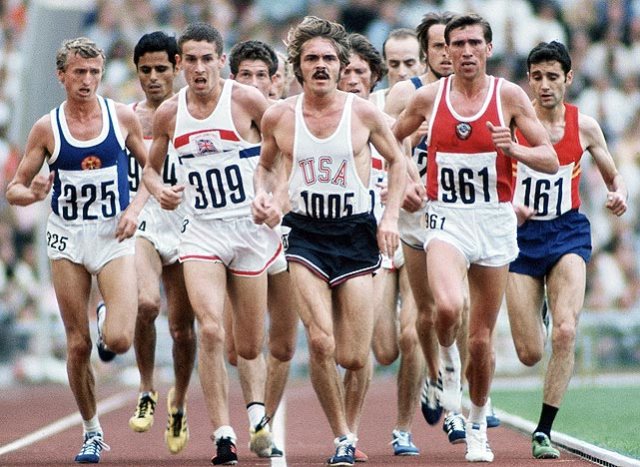
SteeplechaseI don’t win any races outright anymore. Age groups, maybe. But not the whole race.
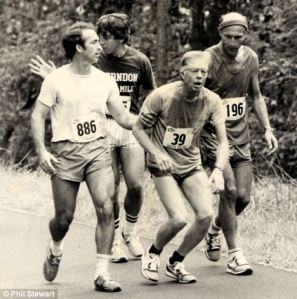
But I used to win quite frequently. So I thought it might be interesting to share what that’s like, and what it can actually teach those of us who never wind up in first place. We’ll discuss pacing races in both running and cycling, for there are major differences.

Expectations

First off, lead runners typically work in a fashion that prepares them mentally and physically to win. That means there is empiric data at work in both training and racing. For example, most 10K races at the regional level are still won at just over 5:00 pace per mile. My personal best at 10K was 31:10, exactly 5:00 pace. From high school through college and beyond, 5:00 pace was a gold standard for running competition. Your goal to win races in high school cross country was to run sub 5:00 pace for three miles. We’d train 50-60 miles per week with speed work done on the track and grass at race pace or below. Come race day (and we raced 18-20 times per season in those days) the goal was always to go through the first mile in 5:00, which would put a runner near or in the lead.

From there, the experience was mental as much as physical. To lead a race, you must run with confidence in sustaining your goal pace. Only by doing that consistently enough in practice can you expect to race along at 5:00 pace (or any other) and not blow up.

There are competitive factors to consider as well. If you take the lead, you take a risk that your competitors can or cannot keep up or overtake you. I well recall that flush of anxiety with competitors on my heels. But to succeed, you run to expectations, not fears. That is how you take and keep the lead. If a competitor is faster in the early phases of the race, you may adjust your pace, but sometimes it takes just as much confidence to stick by your own expectations and “lead from behind” and overtake them in the last mile.

Extensions

During college the racing distance in cross country increased initially from three to four miles. In track we moved from two miles to 5000 meters, or 3.1 miles. That meant an increase in base training mileage was critical to building strength and endurance for the corresponding longer distances.

We trained from 70-90 miles per week in college, and raced four miles close at just above 5:00 pace. That meant we ran 4:45-4:55 mile intervals in practice, usually 4-6 of those as racing prep.

The adjustment to four miles was, at first difficult, but additional physical maturity helped compensate for that. My times over four years racing at four miles dropped from 21:16 (at age 18) to 20:16 (age 21.) Post collegiately I raced 19:49 for four miles on the road.

Yet college cross country had a cruel treat in store. After four meets, the racing distance shifted to five miles! That meant you’d race the four miles you were now accustomed to pacing and had to add on a mile. But the other surprise was fascinating. We raced through four miles at the same pace and continued on to five.

I admittedly led and won only a couple college cross country races, one at four miles and one at five. The mental enterprise of taking the lead in a cross country race at that level is as much capitalizing on opportunity (and a “good day”) as it is a product expectations. In track, where distance runners are spread over three or four events, there was much more opportunity to take a lead and hold it than in cross country, where all competitors were concentrated together.

A race within the race

Instructively, that meant you needed to learn to construct and win a race “within a race.” That simply means that when you are not the absolute leader, you must become the leader of a group or competition inside the race as a whole. With team competitions on the line, this was not hard to do. You might group up and run as a pack, or you might single out competitors with whom you typically ran from week to week. These are known as “rivalries,” and they can be tremendously motivating.

There is also the empiric measure of your race as dictated by time. When you know you ran 26:15 for five miles the previous week, the goals are simple. You break down that pace and determine what times you need to hit to run faster. Then you tune out the other music and run to your best ability. That is constructed a race within a race, and is a most useful skill for everyone that is a runner, or a cyclist.

For every triathlete, the “race within a race” is almost always the dynamic. Within 50 meters of a mass swim start, you lose sight of 99% of your competitors. And out on the race course with the bike, you are not allowed to pace or draft anyway. For that reason, confidence in your own goal pace is critical and the entire definition of “taking the lead” into your own hands.

But there are things to be learned about racing by looking at how bike races on their own typically roll out. So we’ll get to the difference in racing a bike right now.

Dependency

“Leading a race” is an entirely different prospect in cycling. None of the dynamics are the same in comparison to either competing in a triathlon. In fact, a rider that takes the lead in a bike race is often nothing more than a sacrificial lamb for the rest of the pack. That’s how bike racing actually works.

That does not mean there are not moments when strong cyclists take the lead. But few in a typical bike race can simply “ride away” from the gun and hold off the pack for 30-60 minutes, much less five or six hours, without being reeled back in. Sometimes that conclusion comes late, with only 500 meters to go in the bike race. The peloton is an immensely unforgiving creature.

So bike racing as a pure sport is still more often a collaborative rather than a solo effort when taking the lead. A group of four to five riders may make a breakaway in a criterium or road race and share the load of riding in the lead. Only the absolute strongest cyclists can manage a solo breakaway. When that happens with a rider like former pro Jens Voigt, the effort can be inspiring. But Jens was from Mars, not Earth.

Circumstance plays a huge role in cycling, and you’d better learn how to read it or learn from hard lessons along the way. While racing in the Elk Grove Criterium, on a bike course that featured a tight hairpin turn, I’d raced the entire 40 minutes catching back onto the lead group through the hairpin. Stunningly, I found myself slingshotting to the front of the pack come off a turn past the grandstands. I wasn’t trying to take the lead. We were suddenly going into a wind that had picked up in advance of a coming storm, and heading for the last hairpin turn. I accelerated thinking it would be an advantage to head in first and not have to catch back on with an energy-sapping sprint going into the last lap.

And to my horror and instructive peril, I came out of that turn with cyclists whipping by me as if I was going backwards. That’s because I’d already hit the gas too many times during the main part of the race. I had nothing left in the tank. I was left pedaling solo as the group plundered on. I rolled in 35th overall.

That was the wrong kind of “lead” to have built. The real “leaders” of that race had done two critical things right during the event. They’d “led” from just behind the first people going into every turn, and positioned themselves consistently for smooth transitions through the hairpin. They saved their energy for the last lap.

The same strategies can be important in distance running as well. On windy days, it typically does not pay to race ahead and bear the full brunt of the wind for lap after lap in a track race.

I once led a steeplechase race on a day where the wind blew 50 mph. I took the lead but my competitor brought gloves along and was literally hurdling the barriers sideways to cut down on his effort of jumping barriers in a gale. It was despicably ingenious. He nearly beat me. It was a nightmare. But I still won.

Confidence

Leading a race at every level obviously requires confidence. At that moment when you surge to the lead, you are making a statement. “I’m fitter than you. Catch me if you can.” In cycling, of course, everyone typically knows that an early leader is a liar. The pack quickly reels in those with too much enthusiasm and not enough training to hold off the peloton. In running, it takes some time to figure out if the leader actually can hold the pace.

In running, it takes some time to figure out if the leader actually can hold the pace. And there are codes to obey. If you’re behind in a running race, you tend to reel things in slowly. But if you get “gapped” in cycling, you waste no time getting back on. The longer you’re off the back, the more you’ll suffer in the wind going solo. If you hope to lead near the finish, there is no choice but to hit the hammer and catch a wheel. Otherwise, you are gone, gone, gone, my friend.

Which points out the fact that there are two kinds of confidence actually. One is built from the training you’ve done. That is confidence earned from practice and knowing what pace you can run or ride, and for how long. There is also racing confidence, built from experimentation and risk-taking in actual competition. It generally takes a few “failed” attempts in races to build full racing confidence. If that sounds contrary or ironic, it surely is. But until you’ve guttered home defeated and disgusted by your blowup, you might not learn the lessons you need to know, or find the motivation to overcome your previous malaise.

In other words, sometimes you just have to get pissed off enough at losing to finally get motivated enough to win.


The will to win

Let’s be honest about something. Competition is not a pretty thing. In nature, creatures get eaten if they have a bad day. End of story. And you can parse it any way you want, but human competition can be just as cruel and terminal. If you set out to win and do not accomplish that goal, you have lost.

That doesn’t mean you are, by definition, a loser. That only happens when you quit trying. And remember, victories can come out of some of the strangest circumstances. So never quit trying.

Motivation and the will to win requires that you want to do better than others, and better than you have done in the past. But let’s be blunt: taking the lead is a slap in the face to all those you have bested. That is why some angry people make really good competitors. They keep score and have scores to settle. They don’t forget who beat them last time, and care deeply that they don’t get beat again.

The will to win is therefore seldom a product of nice guys (or gals) finish first. You don’t have to be mean to others in order to win, but you might have to be mean to yourself now and then. You can forgive your own competitive failures, but you also must learn from them.

The next time you “take the lead,” whatever that may mean in your own racing context, there is no question what you want to do. You want to win this time. And nothing’s going to stop you. And that’s what it’s like to lead and win a race.

Authors note: All these rules apply to swimming in some context. But I have not yet competed in swimming as an adult. When I do, I’ll share those lessons too. 

werunandridelogo


Posted in running, track and field, triathlete, triathlon, Uncategorized | Tagged , , , | 2 Comments

Still a jogger and a Fred in the pool

Jimmy carter

Jimmy Carter was a “jogger” back when it as acceptable to call someone by that name. No more.

To whit, terminology can be harsh. Calling someone a “jogger” when they consider themselves a runner is a cold, hard, reality check. In this day and age, you hardly hear the term jogger at all. It’s considered impolite. No matter how slow you go in the Modern Running Era, you’re a runner. No insult there.


Likewise, it goes with calling someone a Fred on the bike. That means they aren’t quite up to the cycling meme in how to dress or ride. Or else they try too hard.

For example, the first time I showed up for a group ride on my new carbon fiber Felt bike, my cycling friends did not initially tell me that the sunshade insert on the front of my helmet was not cool. Later on, they made clear that only mountain bikers really keep those on their lids. They also suggested (kindly) that I take the reflectors off my bike wheels. Frankly, my conversion from a Fred into a cyclist took well over a year. That’s how it works.

Cruel kids

Flood pantsAll this hearkens back to the days when as kids, we are forced to learn what is socially acceptable. People of a certain age recall with dread the social stigma of being caught wearing “flood pants.” If you grew out of a pair of jeans or your mom shrank them in the wash, your pants might be too short for your legs. And kids were merciless about mocking you for it.

And now, Flood Pants are actually a “thing.” So go figure. Society is cruel and stupid.

Same went for wearing white socks with street clothes. That was cause for terrifyingly mean commentary about your family’s origin, especially that of the hillbilly variety.

How some of these critical views come into being is the why sociologists have jobs. Why do people feel such a need to criticize and categorize? Because we’re cruel, heartless bastards and bitches, for one thing. Both evolution and religion admit that people are soulless beings unless they are somehow slapped into shape by either failure or confession.

The Inquisition

The Catholic Church even produced a series of institutions collectively known as The Inquisition to draw confessions about heresy, witchcraft or whatever else they did not like. This was serious business, as evidenced by this excerpt from one of their dictums:

“It has recently come to our ears, not without great pain to us, that in some parts of upper Germany, […] Mainz, Koin, Trier, Salzburg, and Bremen, many persons of both sexes, heedless of their own salvation and forsaking the catholic faith, give themselves over to devils male and female, and by their incantations, charms, and conjurings, and by other abominable superstitions and sortileges, offences, crimes, and misdeeds, ruin and cause to perish the offspring of women, the foal of animals, the products of the earth, the grapes of vines, and the fruits of trees, as well as men and women, cattle and flocks and herds and animals of every kind, vineyards also and orchards, meadows, pastures, harvests, grains and other fruits of the earth; that they afflict and torture with dire pains and anguish, both internal and external, these men, women, cattle, flocks, herds, and animals, and hinder men from begetting…”

The illustration below is what happened to people who pissed off the Catholic Church. They’re pouring hot liquid down the throat of a woman accused of poisoning other people. Notice the guy standing in the background reading a list of the accused sins? He’s reading off a list of her sins. As if she’s listening right now. But like all religious zealotry, confessions are not really about saving the victim. They are about making the people doing the accusing feel superior.

Torture of Brinvilliers, 17th Century

A picture of the torture of poisoner Marie-Madeleine-Marguerite d’Aubray, Marchioness of Brinvilliers, in the seventeenth century.

Which is why the Catholic Church and every other religious zealot in history blathers on and so on. Zealots tend to talk quite a bit in run-on sentences. That way, if someone figures out they are full of crap along the way, they can always refer to the phrase before, and before that. That’s how all zealots run their enterprise. Keep talking and keep torturing those who oppose you. It’s a political strategy too.

The attempted founders of the New Inquisition in America are Rick Santorum and Mike Huckabee. If these two ran on the same political ticket all hellfire would rain down on the earth, and dogs would bark in fear and warning that the apocalypse was about to begin.

End Times for Joggers and Freds

05e05330882707.56058a87a8e35Which is actually what 50% of America seems to want these days. Tired of all the political mess created by fighting between Democrats, Republicans and Libertarians, much less the Green Party, people are practically begging for the End of Days to come.

In the meantime, they occupy themselves by forming angry packs and calling themselves True Christians, reading books by Tim LaHaye and listening to shows like Bible Times on Moody Radio.

Truth be told, much of this End Times theology has absolutely nothing to do with Jesus and everything to do with ending Social Security and Medicare because taking care of the sick and elderly is a really miserable thing to do. In this regard, the movement to end social programs bears much in similarity to The Inquisition, only without the whole burning people at the stake part. But give them time, they’re just getting warmed up. According to men like Ben Carson, legislation such as Obamacare and the theory of evolution are the work of the devil. 

Those of us Joggers and Freds like think we’re innocent in all this as we roll along in our happy travels through weather thick and thin. Yet we live in a time period that some so-called Christian believers consider The Tribulation. As it happens, some people are all too happy to enfold themselves in expectation of The Rapture and laugh at those of us who wear too little clothing and spend too much time thinking about Garmin or Strava stats. Those numbers can’t save your soul!

Such occupations are considered narcissism, and it is contagious. So perhaps the accusers do have a point.

thongTo whit (again) society does seem to be regressing toward a Ground Zero where the Anti-Christ is set to emerge as the leader of the sports world.

After all, consistent display of the human gluteus maximus is now almost commonplace. The region of the body known as the buttocks or ass, is now perfectly acceptable to show off in public. Truly, it was once was a cause for concern if your ass was showing. Now it’s a hobby to show it off, especially during events like the Tour de France. You can blame Borat for that.

This modern trend makes the issue of wearing flood pants or white socks rather amusing in retrospect. But that’s how human society works. It loves turning taboos intro traditions. What else can explain something the sport of triathlon, an event established by mashing three separate sports together like an endurance hash? Yet people seem to love it. But be smart about it. Take your time, especially in transition. No need to rush a multisport buffet. Who really cares what your End Time turns out to be? It will come soon enough.

No shortcuts

This all makes me worry a lot less about my humble status in the pool. It’s taken more than a year to swim long enough to even call myself a swimmer. Up until then you’re a paddler and a heavy-breather.

fat_man_in_kit_in_storeBut in deference to some social pressures, I do wear a decent length Speedo swimsuit. It is the color black, so that nothing underneath will show in outline. That, I agree, is never a good look. Women friends assure me they do not want to look at that. The rule holds true for bike shorts and running shorts as well. There are no shortcuts to impressing a woman. Even if you’re well-endowed.
There are also no shortcuts to becoming something other than a jogger or a Fred, either. Not on the run, nor the bike, nor in the pool. One wishes there were, like those children’s games, an opportunity to land on a square and instantly slide to a better position in life. But we all know that’s not how it works. Why we ever teach our children that is impossible to understand. The more realistic aspect of those games is when you suddenly get sent to Jail or ushered back to Square One with a debilitating shake of the dice. We all know that happens a lot more in life than you might think.

Burned at the stake

Well, at least we’re not going to get burned at the stake for being a jogger or a Fred. Not publicly, anyway. None of us can really control the things that people say behind our backs. Trust me, those are the cruelest inquisitions of all.

In the meantime, we keep plodding and rolling and paddling along. Content in our jogging and Fredding and sputtering, we make ourselves into something we did not used to be. That might be a triathlete. Or it might not. You’ll have to ask your friends about that.

But don’t expect a truly honest answer. Honesty is the ultimate tarsnake. It waits like a test of internal balance for every innocent to come rolling by.

Runoverthetarsnakes2


Posted in Uncategorized | Tagged , , , , , , , , , | 4 Comments

Matters of snow, and why snow matters


Snow Bear

This bear sits on this chair in my yard year round. But he seems happiest in the snow. He’s a snow bear.

Ever the early riser, my companion Sue texted me at 7:00 a.m. when she’d gotten home from Master’s Swim. “Pretty snow out there today!”


Love it. We need snow. Snow matters. It moistens the ground. It actually insulates the earth. And it makes for interesting running and riding.

A few years back on the day after Christmas my brother needed a car and his was out of commission being repaired. So I drove my Toyota down and left it for him to use. Then I rode my mountain bike for the 15 miles back home. There was about four inches of new snow on the ground. My bike tires cut through the fresh layers like an icebreaker through arctic waters.

My new fluorescent green cycling jacket, given to me by my brother-in-law, who had once been a Cat 3 road cyclist, was perfect for the weather. Snow was still coming down, and the helmet cover that came with the jacket protected my head.

It was quiet, as you can imagine, on the day after Christmas. There were so few cars I rode up the center of a street for a while to get to the bike trail that would lead north along the Fox River home to Batavia. The river was largely frozen, but there were patches where the black water coursed heavily around islands. There were geese and ducks; mergansers and goldeneyes. Above the river, the perched shape of a bald eagle in a cottonwood.


Snow Footprint

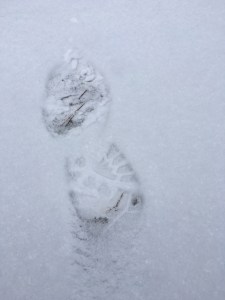
There’s a pleasure in leaving footprints in snow.

Snow came down in big, steady flakes. At times, you could hear those snowflakes landing on the already fallen snow. The steady sound of my bike tires through the snow was gratifying. It is so fun to make progress on a fresh new landscape.


I was in no hurry to get home, but neither did I want to get off the bike. There is something that calls us once we get moving. Yes, it’s fine at any time to stop and ponder. But there are some rides and runs that are not meant to be interrupted. Perhaps it’s the idea of putting down footprints when you’re perched on the bike. Doesn’t seem right.

However there have been many moments running in the snow where there is nothing in the world that I’d rather be doing that placing those tracks in the straightest line possible. If you are lucky (or early) enough to be the first down a snowy street, there is a genuine feeling of liberty and individuality in making those tracks. You’re flirting with the rules if you run down the middle of the road. Take a glance back and you can see from whence you’ve come. That’s actually a rare experience in this life. Think about it.


Snow birds

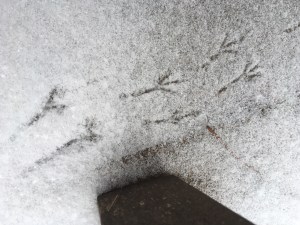
Footprints in the snow from birds keep us company in winter.

Those of us who run and ride, in other words, know that snow matters. It marks the seasons just as the seasons mark us. On bike or on foot, we make our reverse tarsnakes in the snow, knowing full well they will soon enough vanish or be run over by the bigger vehicles that come along. Of course this year, I am armed with a set of clingon Yak Trax, those tools of motorvation that strap to your running shows. So I’ll likely give them a try today if the streets say so.


Then there are the plows, those beasts of burden that clear the streets. And we can be thankful for those too. Because running or riding on the snow every day does have its risks. Ankles and arches and knees bear the brunt of running on icy streets. You cling to the spots where pavement shows through because it’s that much easier to move.

And out west of town, where the plows really have to work when the wind blows, I will drive and keep binoculars at hand to spy on the winter birds; longspurs and horned larks and snow buntings, who feed on the roadside scrapings and scattered grass and farm seed. These are beautiful things, these birds, and only come to the roads when snow obscures the deep field leavings. And if I’m very lucky, I will stumble on the snowy owl that hangs out south of Dekalb, where the fields do not care if you exist or not. But the mice and voles love these places, and the owls too.

These are matters of snow, and why snow matters. Whether the layer be thick or thin, snow brings out those willing to make their mark on the world.

Runoverthetarsnakes

Posted in Uncategorized | Tagged , , , | Leave a comment

Running and riding over tarsnakes of technology

TarsnakesI truly admire all of you out there who can plug big miles on the treadmill. Just this morning my companion Sue texted me that she’d covered an hour on the belt, a triumph because she’d tweaked a glute muscle in last weeks’ early morning speed session. That injury likely came about because we’d ridden hard in a Computrain session on the bike the night before. One of the risks of indoor training is that you might not give yourself enough time to recover. It’s easy to remember a hard effort when you’ve cranked out 40 miles hard on an outdoor ride. Indoors you might remember nothing about the ride except the colored bars indicating percentage of effort.
The dry winter air doesn’t help either. It’s easy to get dehydrated and not know it.   And perhaps that was my condition going into last night’s workout. I ran a couple miles on the treadmill and it wasn’t much fun. To make matters worse, the television on the treadmill would not change channels. Perhaps I could have jumped over to another machine. Somehow I did not think of that. My program was already rolling along and my heart rate was up. I was in that weird focus where you’re not really thinking. You’re just doing. Nike isn’t so smart about some things. So I just kept going.

No shame

25 minutes on the treadmill is not a shame. I ran 8:30 pace once the body warmed up, but that was a chore. The temps outside were near zero and frankly my toes were cold after walking in from the car, and my feet were stiff. You really don’t want to jump on a treadmill and start running in that condition. The running motion on a treadmill is difficult enough to maintain without dealing with malfunctioning body parts.

Plus some weird thing happened to my right shoulder on the way driving to the health club. Again it was likely the cold that caused what felt like my rotator cuff to tweak. Honestly it might have been the product of a day spent on a writing project. That combined with a manic session of guitar playing between writing sessions might have tightened that shoulder ligament. All it took was a walk into the cold night air and “OW!” I was in pain.

No gain

So that took some of the verve and enthusiasm out of my training last night. I just don’t push it when something like that has happened. Often it’s a sign that other aspects of your body are off kilter as well. One of the thing you need to watch when you feel a cold coming on is your back muscles. It’s a strange thing, but something occurs at the cellular level throughout your body when a common cold approaches. There’s a tension to your muscles, and the middle of your back is one of the places that can occur. Of course, a violent sneeze never helps things either. It’s best to watch it when you feel like that. A back spasm can put you out of action for days. There’s nothing to gain in trying to fool your body into a hard training state when it needs to recover.

Rather than push myself through phases like that, I’ve learned to forgive my body and let things warm up well. The first ten minutes on the treadmill saw me covering just over a mile. Alright, it was time now to dial things up. You push buttons and make yourself go faster. How hilarious is that, really?

Fast company

I used to run very fast on treadmills. 6:00 pace or even 5:00 pace is rather fun when you can do it. Flying along in one place, feet kissing the belt as you go. But then there was that incident where a pretty girl walked up to ask me if I’d be long on the treadmill, and I got distracted, and fell to the belt, which slammed my shoulder and sent me flying feet first through the wall behind. True story. And I’m not embarrassed. Well, sort of. She was really cute. And I was pretty stupid.

So it is with some consternation that I step on the treadmill to this day. It’s just never been a big component of my training routine. If I can run outside, I do. Zero degrees isn’t that bad if you wear proper headgear and gloves. The body itself is never that cold. Not once you get moving.

There will be a few more treadmill running sessions before winter is done, and lots more on the Computrainer, I suppose. This is a mechanized world of fitness we occupy. You simply can’t keep up with others in terms of fitness unless you learn to run and ride fast in the same place. Modern problems, we must suppose. A tarsnake of technology.

Runoverthetarsnakes2


Posted in Tarsnakes, Uncategorized | Tagged , , | Leave a comment

I lost a couple followers


Shoe 4

My goddamned new running shoes did finally arrive. On Saturday. But that was never the real point of the blog.

Last Friday’s post about my goddamned running shoes being delivered late from Saucony must have offended a few people. Three or four apparently dropped my blog. I sort of get that. Not everyone likes to read language they might consider “swear words.”


Of course, it actually is absurd to think like that. It’s a false brand of sensitivity, calculating in its way, but still false.Deeming one word an evil thing is the stuff of ancient superstition. Yes, one could argue that using the word “goddamn” is taking the Lord’s name in vain. But let’s stop and think about that for a moment.

Because I contend that the Lord’s name is taken in vain far more often by those using it to manipulate people into giving them money than I ever could by using the word “goddamn” in satiric impatience over a pair of running shoes being delivered late. Do you see? I was actually mocking a lack of patience, temperance and Christian gratitude. So the word “goddamn” was a perfect foil to illustrate a set of corrupted values. That’s how satire works. But people too often refuse to see themselves in it. They take symbolism literally, or wonder how the writer could be so deranged. And they miss the goddamned point.

Word power

So let’s go further. Theologically the word “goddamn” has essentially been cleared for use because it no longer means what it used to mean. People say “goddamn” with no real reference to the Creator or anything holy at all. It’s just a word, or words, used to express a patent form of ignorant frustration. And God cannot possibly really care about that. Not when there are so many other keen problems we face in this world.


Shoe 6

These shoes are pretty goddamned nice.

So we use the word “goddamn” these days precisely because it robs a term like that of its supposed taboo or power. In fact, with many such words, we find it necessary to abuse their original meaning in order to keep people from leveraging the supposed authority that goes with ownership of those words.


That’s exactly why black culture, for example, freely uses the word “nigger” as a playful pejorative (expressing contempt or disapproval). That is done precisely to challenge the perception that the original use of the word represents. Powerlessness. For a white person to call someone a “nigger” was to demean their person.

Yet John Lennon also wrote a song titled “Woman is the Nigger of the World.” You make her paint her face and dance… Artists are good us leveraging such terms to deliver creative insights.

Politicians, not so much. Nor bigots. Their idea of creativity is to shout such terms even louder, or to repeat them, type them in ALL CAPS or shout “Ditto!” when someone barks them on the radio.

So let’s examine a more creative and insightful dynamic. In line with celebration of a day in honor of Dr. Martin Luther King, Jr.,  let’s pause for a moment and carefully consider a phrase that really does mean something to this world.

Black culture.

By contrast with the word “nigger,” which is a negative epithet adopted by white culture to racially demean others, black culture persists in its honor and achievements despite visible and determined obstacles to that end. Black culture has simply refused to be silenced, and the world is a far better place for it.

It was barely more than five decades ago that performers such as Elvis Presley and the Beatles and the Rolling Stones borrowed, begged or stole from black artists to drive popular music forward. When black artists were finally enabled to fully explore their art in popular culture, the world began to grow in its understanding of who people really are, versus who they were forced to be.

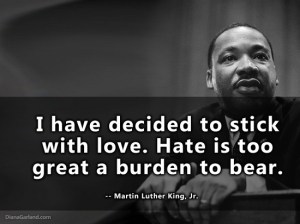
Martin-Luther-King-Jr-Quotes-1001_thumbMeanwhile men such as Dr. Martin Luther King, Jr., ever conscious of the forces of oppression and fear that dominate America (and beyond) to this day, remind us that the process of cultural growth is never finished. Dr. King said, “All progress is precarious, and the solution of one problem brings us face to face with another problem.”
So, let’s look at the nature of progress. It is universally recognized that as black athletes entered the world of sports, the quality of all those activities was improved. The empiric evidence is there in sports such as track & field. There is no argument that can dissolve that. And as the level of sports was raised, it forced white athletes to up their game or be left out. Yet the first response to men such as Jackie Robinson was prejudice and fear. (All progress is precarious). In other words, fear of competition. White people were genuinely afraid they would not prove superior after all.

One can also apply this paradigm to all facets of culture,  from music to science, art to the Olympics. On many fronts, black culture brings out the best in humanity. But it does so at great conflict because fear dominates racial discourse.

Backhanded compliments

Which means that what black culture continues to get in return for its contributions to society… is ever more fear and prejudice. People tend to hate change and the progressive front of black culture demands it. Which means that change brought about by black progress can be tough for certain groups of white people to handle. Even compliments towards black achievement can sometimes sound like insults.

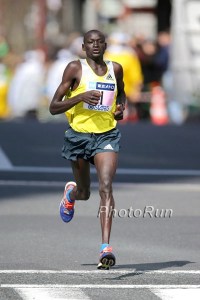
Kimetto_Dennis1-Tokyo13-1For example, runners tend to make jokes about wanting to be as good as “the Kenyans,” or Ethiopians or Moroccans. But these are sometimes grudging (if ironic) allusions to racial advantage of some sort. So we must understand that so-called racial superiority is a slippery slope in either direction. Instead, it is hard work and intelligent use of those physical attributes that make people great. Dedication and discipline too.
I personally recall spending time in the company of world-class African runners at a race in Texas. The morning after the race, while American runners were crawling out of bed hung over from the party the night before, laughing at their own compromised state while slumping on the breakfast table, the Kenyan runners had already returned from a 10-mile workout, showered and were dining on tea and enjoying lean breakfast fare. That is how you become great.

A world of wiggers

I cannot help make a comparison between the symbolism of that moment and the way that white America engages with black culture. Our nation consumes the creative output of black musical artists (producing “wiggers” as a result) and apparently admires the personality cult of Oprah Winfrey. Michael Jordan essentially owns the world, and Neil DeGrasse Tyson is the scientific equivalent of Air Jordan.

Yet the problems of black culture are not so popular a topic of engagement. Young black men are incarcerated at a far higher rate in America than their white counterparts. In fact, the perception of young black men as thugs has led to violent, ugly confrontations. That kid-killer George Zimmerman in Florida invoked vigilante justice to shoot Trayvon Martin simply for being black, wearing a hoodie and being in the wrong neighborhood. Yet somehow this execution has given men like Zimmerman an audience to criticize none other than Barack Obama, America’s first black president, for publicly crying over the idea that gun violence is causing American families real pain. This is disrespect of the most egregious form: getting away with murder and bragging about it. Yet that’s how the KKK ruled the South for decades. Those forces have not gone away. Movies such as O Brother, Where Art Thou delightfully mock the backwards ways of Southern hatred, but those strains of belief are not gone from this world.

The fact remains: Zimmerman is a goddamned poor excuse for a moral center in America. And by proxy, his obvious and demonstrated hatred for black people is taken as an excuse for hating President Obama. Even before his election, Obama became the target of many verbal attacks about his intellect (either too smart or too dumb) and his “community organizing” which were dog-whistle complaints about his black origins, and they have persisted during his eight years as President. These attacks may not be as direct as shooting Trayvon Martin for the apparent crime of wearing a hoodie, but the attacks are just as real, and have been as calculatedly “set up” to mete out “justice” as seen fit. That is, to keep an uppity nigger in his place.

mlk-love-vs-hateObama haters love to deny this racism exists, claiming their objection to his Presidency is strictly based on policies, not the color of his skin. But even if that were true, hate of the man still persists in place of the racism, and the hypocritical effects are the same.
Because the sad fact is that Obama haters frequently align themselves with politically-motivated people who love to claim that America is a Christian nation. If that is true, in what way does this brand of Christianity respect the call to “love your enemies?” Instead, we’ve seen clear demonstrations in which politics and racism and religion are clearly wrapped in helix with Confederate or Tea Party or even Nazi flags. At what point does this confused mix of hatred and racism and selective religious belief get called into account?

Take Back America?

It does not. And that is why calls to “take back America” ring so goddamned hollow. That brand of hate-based fascism is not what America is about, at all. That is not America. The America that hates women’s rights, that hates blacks. The America that hates gay people, and scientists too (for evolution and climate change). The America that loves white privilege and doesn’t understand why that’s a problem. The America that claims to love creation and uses religion to despoil it, or take it over with a militia. The America that claims persecution when questioned about basic aspects of its theology. The America that denies birth control to women while decrying abortion. The America that loved the cynicism of lying to go to war, yet criticizes legitimate diplomatic resolutions for peace. The America that loves when our black athletes win Olympic Gold Medals yet doesn’t want black men marrying white women, or vice versa. The America that loves the second half of the Second Amendment far more than it values human life.

The America that is perpetually conflicted by its own violently racist history…without now accepting that social progress has been made on all these fronts if people would only stop trying to “take back America” by taking America back to a time when all these worthwhile movements toward progress were still only hopeful ideals.

Yes, I might have lost a couple followers this past weekend, and will lose a couple more most likely, because of this particular blog. Yet I accept the challenge to challenge all of your perceptions through this blog because that’s how I started how and plan to remain engaged in that efforts. This has everything to do with how I started out three years ago to provide “original thoughts about running and riding” because look around; racial diversity is a very big thing in our respective sports. We should talk about it.

And I simply refuse to accept that words like “goddamn” or “nigger” should be the end of dialogue on any subject.


Posted in Uncategorized | Tagged , , , , , , | 3 Comments

When will my goddamned new shoes get here?

IMG_1850I ordered new shoes. They should have been here by now, goddamnit. They should have been here before I was born! New shoes are not supposed to be late. Never!

Don’t tell me I am spoiled or have #modernproblems. New shoes are supposed to teleport through time and space to get to me. I Deserve Them! Never mind that I wore the old pair too goddamned long and it’s my fault I need them so bad. Those are goddamned excuses to make me feel responsible! I’m not responsible for this! I’m not responsible for anything!!  

Was I responsible for the fact that the shoes they wore when mankind walked on the moon first_man_on_the_moonlooked like orthopedic boots? And that they had basic one-side-to-the-other treads on them that looked like they were drawn by a two-year-old? No. That was not my fault. So shut your goddamned trap about that. Not my fault.
And was it my fault that Jimmy Carter took up jogging and made liberals the laughing stock of the late 1970s? Because he wore those stupid shorts and ran sideways and then fainted when he was supposed Jimmy carterto be going forward? And that came to represent his entire presidency? Not my goddamned fault either. I’d still goddamn vote for him today, even though…

…the goddamned 1980 Olympics didn’t get held, and Craig Virgin got screwed out of a chance to win Gold and exceed the legacy of Steve Prefontaine, which he frankly deserves. Not my fault we skipped out. I was all for America going over to Soviet Moscow or wherever and kicking some Goddamned Soviet Ass. Now I sound like a goddamned conservative. And sonofabitch, in some ways I am.

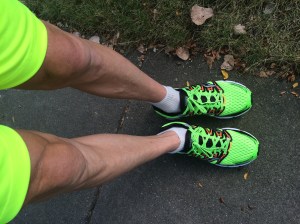
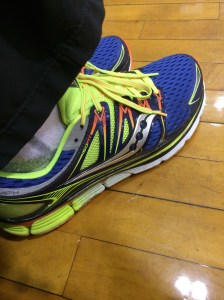
But my goddamn shoes are still not here, and I want to run tomorrow. Not next week. Not IMG_3473a goddamned month from now. Tomorrow. My whole goddamned world is clogged up like a giant Shoe Shit waiting to come out my goddamn skinny runner butt. Until my New Shoes get here, the rest of my world is on hold. Goddamnit. God. Damn. It.
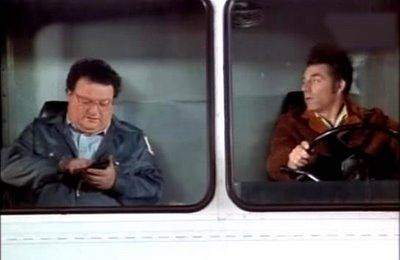
Because goddamnit, I was a Shoe Guinea Pig for the rest of you goddamned people. I wore shoes in the 70s and 80s that were not fit for goddamned human consumption. The government and Nike and Asics and New Balance and goddamned Osaga for fuck’s sake…all conspired and conducted running shoe experiments on us Old Schoolers so that the rest of you goddamned people can enjoy good shoes today.

Seinfeld_s7e22We paid our dues. We taped athletic tape to the heels to make that cheap rubber they used back then last longer. We literally wore goddamned holes through the bottom of the soles of our shoes because we cared not about biomechanics and gait balance. We were like the Seinfeld character Kramer driving around with his car on “E” to see how goddamned far he could go. All we knew how to do was goddamned run. And we were good at that.

So goddamnit I should not have to wait for my goddamned new shoes. Not one minute more. Get here. Goddamn. New Shoes. Goddamnit.

IMG_1850

Posted in Uncategorized | Tagged , , | 3 Comments