
Riding outside the White Line

TarsnakesThere is little reason to not share the road with cyclists or runners other than raw selfishness. Even a large crowd of cyclists taking up a lane of country road on a Saturday morning can be passed eventually.

Yet there is evidence that a great impatience exists in this world among those who feel they should never have to share the road with people on bikes. Or on foot. Or on motorcycles. Even other cars.

Time concerns

The reasons for these road-hog mindsets are manifold. Some people are just plain “in a hurry” and get upset when they find cyclists or any other obstacle in the way.

But let’s be real about something: If you’re late to an appointment, it is no one’s fault but your own. And if you’re not late, but your fears of being late are making you angry or upset at a band of cyclists, then you simply did not allow enough time in your schedule to anticipate delays that happen almost every day.

Because it’s not just cyclists that cause delays. Far more time is spent by the average vehicle on the road by sitting at traffic lights than trying to ease around the occasional cycling group. This fact is demonstrated on a regular basis by cars that zoom around cyclists on the open road only to find that the cyclists catch up to them at the next traffic light. The culprit in making someone late, in that case, isn’t the cyclist. It’s the traffic light. So that claim is thoroughly debunked.

Selfish aims

Beyond time constraints, there appear to be a fair number of people who simply don’t like the supposed inconvenience of having to navigate around a cyclist on any sort of road. But there’s an art to driving, as well as a science.

Anticipating delays and getting around other traffic on the roads actually has a name. It is taught in driving school, and is called “separating hazards.” That means you try to avoid encountering two vehicles in the same space of the road. When an oncoming vehicle is approaching and there is not enough time to pass the car or bike ahead of you on the road, the appropriate (and legal) thing to do is to “separate” those hazards by adjusting your speed. Typically this is done by slowing down for a short period, then safely passing the slower traffic by using the other lane to get around. In farm country, this happens when you come up behind a tractor going slowly on the highway. In urban or suburban areas, the more typical scenario is a vehicle driving slowly on a tw0-lane side street or highway. The right thing to do to get around is to separate hazards and pass safely.

However, some motorists are too selfish for that. They refuse to wait for the opportunity to pass anyone safely. Instead, they choose to squeeze past cyclists by cutting closer to them within the lane. This is illegal in many states because laws dictate that a three-foot width must be kept between a vehicle and a cyclist.

Those who flaunt this rule often do so with demonstrative flair, gunning their engines as they roar past. The point here seems to be that expressing their frustration is some sort of divine right. As in, “This road is mine and you are slowing me down.” The patented engine roar is a threat intended to strike fear in the minds and hearts of those riding their bikes. It often works.

The greater threat to cyclists may come from the fact that millions of equally selfish drivers are daily distracted by texting. So the rude combination of aggressive, selfish drivers and those paying no attention to the road is more deadly than ever.

The roar that kills

There are thousands of collisions between vehicles and bikes each year. Some people even lose their lives.

Many drivers complain that the Rules of the Road are not being followed by cyclists either. Let’s be honest: that is true in many instances. As a cyclist for more than a decade, I can testify that it can be difficult to control or guide the behavior of the more ignorant or selfish cyclists among us. But we’re working on it. Who is doing the same among selfish drivers?

That is the pressing question, but one that is likely going to be ignored in an era when personal rights have become a turnstyle of selfish aims. It is no longer what President Kennedy said, “Ask now what your country can do for you, ask what you can do for you country.” The cultural meme has, in essence been reversed to satisfy those with selfish concerns about how white people deserve special treatment over minorities in this country, or Christians. Yes, the two most prodigiously favored cultural groups in America over the last 200 years are so, so persecuted these days.

As for the genuinely mistreated Middle Class and blue collar workers put of work by the flow of capital to cheaper labor overseas, somehow those people saw fit to vote against their own interests by believing lies about those jobs “coming back home.”

It is a truly strange world when a selfish vote turns into a vote against one’s own self-interests. Because unless someone also brings back the unions that protected worker rights, negotiated fair pay, invented the American weekend and established the right to overtime (which Trump has just avowed will disappear once he’s in power) then the entire premise of voting for self-interest in Donald Trump is based on hollow promises.

Because it was not men such as Donald Trump that delivered fair working conditions to textile workers in the Southeast, or protected coal miners and oil workers and other laborers from dangerous environmental conditions. That was all the work of liberals, who also worked to pass public laws to rid the country of dangerous air pollution as well as chemical and heavy metals in lakes and rivers. Anyone concerned about general human health and making America great should be concerned about these things, and yet Donald Trump has promised to roll back all these regulations, including perhaps the accords that address global climate change.

His voice indeed may be the Roar That Kills.

The anger behind support of Donald Trump may well be the same rage that drives people who do selfish stupid, dangerous things around cyclists because they hate the notion of sharing the road with cyclists just as they hate the notion of sharing the nation with immigrants, Muslims or anyone else they define as The Other. This the nation we now live in. Trump supporters love to deny this selfishness, but it is there in the signs of everything their Seig Heil leader says. He’s the ultimate selfish asshole who even claims there is no potential conflict of interest between his global business interests and his role as President of the United States. He made the spurious claim that the right to judge these conflicts for himself were included in his victory. But of course, that remains to be seen.

Political games

But let’s exhibit some temperance of our own right here. All it takes is one incident to color the image of one side or the other when it comes to use of the roads. A similarly political game is playing out in other arenas as well. This tirade that a Trump voter conducted inside a Starbucks illustrates the selfish perspective some people can develop when they think they’ve somehow earned the right of ownership in any cultural sphere. But let’s face it: selfishness abounds on many fronts. It is not confined to any single political or cultural group.

However, there is a difference in the degree to which selfishness is expressed, and how dangerous it is to society. When a motorist driving a 2000 lb. vehicle feels justified in expressing their selfish anger by running cyclists off the road, or even striking them, that is a threat to human life. By contrast, what threat can a cyclist actually deliver to a person driving a car or truck? Is slowing someone down for a 30-second period truly an act of selfishness or a simple product of the freedoms guaranteed by law in this country? These are the political questions that may soon come to a head in America.

Farm Country  
Wisconsin SunsetTwo seasons ago our group of cyclists was far out in the country southwest of Chicago. It was farm country and we were queuing up to make a left turn when a farmer in his truck came tearing up behind us, crossed into the opposite lane and made a veering turn to cut us off. He stopped his vehicle and raged that he paid taxes for those roads, and that cyclists interfered with his rights to drive them. A few words were also tossed in about maintaining his livelihood and such. Which left us staring out at the bland black fields where corn stalks tipped up by an October plowing session made clear the harvest was long over.

So the issue was really about a sense of ownership. And that farmer very likely had a strong sense of ownership for the roads that cut through his fields. Add in the pressures of taxes paid for that farm property, and how many developments were now threatening to consume fields to the east, driving up property values and assessments as they go, and the league of threats vexing the mind of that farmer all seem quite really, and present.

I’ll admit that I stopped and discussed the situation with that farmer. Told him that we all pay road taxes like the rest of the world. “We all drive,” I pointed out. See, he was pissed at the idea that people riding bikes and using the roads were not paying taxes for that right. Which is absurb. But the argument is used over and again by those who consider themselves an Emperor of the Highway.

Institutional causes

There is also institutional frustration with cyclists over the idea that the roads are public property. Up in Southwest Wisconsin in the Driftless Region, thousands of cyclists travel to enjoy the the freedom to ride in a landscape rife with hills and valleys. Yet there have been moves by local communities and counties to prevent organized rides in that territory.

People who believe that local governments should have the authority to make those decisions may be happy for that fact. “Go ahead, ban those cyclists from taking over your roads!”

But one wonders, given the expressed belief by those taking over the reigns of the upcoming administration, whether local control could someday also get out of hand. The incoming Secretary of Education under the President Elect has, for example, stated that her department will support local control of schools. That could directly lead to school districts teaching whatever they want in terms of curriculum. If that happens to include replacing science with religious education and creationism, so be it. In America, it is believed by those on the Right, it is more important what parents want taught to their children than what some government agency might want them to learn.

And so it might go with the roads across this land. If local governments think cyclists are a hazard to the interests and a safety of local residents, why not ban cyclists from using the roads altogether?

Except for those in the way
riding-gouldsThis would no doubt please those whose selfish view of the roads would exclude cyclists. And it would be no coincidence if that those voters who elected the Selfish One as their Leader to Make America Great Again might be the first to use their local control to vote against cyclists using roads where Real Americans like to drive trucks, tow farm vehicles, race muscle cars and hunt deer from the roadside using headlamps to blind them, if that’s what you feel like doing. Because this is America. Land of the Free. Except for those who get in the way of what you want. Including cyclists.

Because we’re being steered toward an America that claims it wants to be a lot whiter, a lot less diverse, less liberal, less gay, less alien, less Muslim, more Christian, less soccer, more FOOTBALL, less women’s rights, less abortion, less arts and letters, more Holy Scripture, less Democrats and Greens, more coal and oil, less politically correct, more Open Carry, less worry about misogyny, less taxes on the rich, less national forest and parks, more Open Range Clive Bundy free use of public land, less Living Constitution, more Originalism, less tolerance for blacks and Mexicans and Indians and most of all more rights for whites who founded this place, including the roads. Which were never intended for use by cyclists, right?

This may give all new meaning to riding outside the White Line.

That’s where the country may be headed, in which it is fair game to force cyclists off the road. So enjoy the roads while you can. Because when the Selfish take over the wheel, there is no safe place for anyone.


Posted in cycling, cycling the midwest, I hate cyclists, Open Carry, Uncategorized | Tagged , , , | Leave a comment

All is cool with the chef and the pool


Evan Sue Chris.jpg

Suzanne Astra, Evan Cudworth and Chris Cudworth at the Fox and Turkey 4 Mile

Yesterday morning we ran the local Fox and the Turkey Four Mile. The Batavia race attracted 2061 runners, 916 men and 1100 women. I placed 180th at just over 30 minutes. It was a fun run that went past my former home on Republic Road. And as coincidence would have it, I lined up with my own son about three blocks from that home. So we ran past it together feeling a bit strange that it was no longer the place to which we would return and have Thanksgiving dinner as we have the last few years.

Really cooking now

Instead, Sue and I worked to make Thanksgiving work for everyone at our new place. This year I actually prepared the sweet potato casserole on my own, with little help except finding the ingredients in the litany of cabinets where they are stored.

It might seem like a simple enough task to follow a recipe. And yet when attempting the same sweet potato feat a few years back, I mixed up the toppings ingredients with those used for baking the potatoes and had to start all over again.

It could be said that cooking is basic science. I recall chemistry experiments in high school that involved mixing liquids together, and if you combined them in the wrong order, the entire experiment would turn out a bust. There is no substitute for good instructions, and following them.

It’s the same thing with training, you know? It’s the same as having a recipe and having a winning recipe. I’ve done that many times in life.

But it’s a little different these days. I now have enough experience as a “cook” in endurance sports to throw a few ingredients together things generally come out okay. I do not perform at the level of a chef anymore. More like a mildly talented short order cook. Yet despite the fact that I have not been training like a maniac, I still finished 180th or so out of 2000+ runners in 30:03, a bit above 7:00 per mile.

Which isn’t too bad on a cool November morning in the 55-59 age group, where I finished twelfth among my peers, the best of whom ran in the 26:00 range, just over 6:00 pace.

And I could train my ass off and possibly do that again. But seriously, what would that prove at this point in my life? Besides, it seems much more fun to keep an eye out for life’s little absurdities and take what comes with the training I do do. And yes, that’s a joke.

Juggling Gumby Spatulahead

gumbyBecause during the first mile of the race I found myself in company with a runner who registers and dresses in character as Juggling Gumby Spatulahead. He wears a giant green Gumby costume and juggles green tennis balls during the entire race. He also spouts insane dialogue toward the runners around him and spectators as well. This turns his sphere of operation into a comic enterprise.

Yes, even Juggling Gumby Spatulahead beat me by a minute yesterday morning. At one point in my life, that fact would have offended me greatly. During my competitive career, I could not stand getting beat by anyone with a less than respectable stride, much less some joker in a Gumby costume.

But one learns to adapt to circumstance and choose your battles rather than try to beat every Juggling Gumby Spatulahead who comes along with another attention-getting scheme. That’s a game no one with self-respect and a conscience actually wants to win. Because you can wind up like every evangelical preacher conducting fake healings on TV, where credulity too quickly fills the void where credibility vacates the premises.

So characters such as Juggling Gumby Spatulahead symbolize joy and mock seriousness at the same time. People who can’t make real contributions in this world often invent ways to gain and keep attention. That’s how TV preachers make so much money. They create a show around miracles that never really happen. The same thing happens quite frequently in politics. The phonies often gain the most attention because people are so eager to be entertained and fooled they can’t separate real performance from carefully manufactured fiction. And that’s how men like Donald Trump win elections.

grinchYet it’s a subtle dynamic. Because we all enjoy people dressing up to celebrate an occasion and have some fun. Nothing at all wrong with that. There were hundreds of people dressed as turkeys at the race yesterday, and I loved the costume and makeup of this Grinch that was racing too. He not only looked the part, but carried an audio speaker with him that played “You’re a Mean One, Mr. Grinch.” But talk about an earworm…
Uber Reality

Granted, I always wanted to go out and win a running race while wearing a pair of Converse Jack Taylor basketball shoes. It seemed like that would be a cool thing to do as an expression of an Uber Reality, or consciousness. Retro and smart.

To be sure, I once witnessed a guy wearing cutoff blue jean shorts nearly win a competitive cycling criterium. Along with his cutoffs, he wore a torn up tee-shirt with his race number pinned to the side. In this getup, he rode with the top crit riders throughout the race, only losing in the bunch sprint by a few meters. It’s the closest thing I’ve seen in real life to the look of that classic cycling movie Breaking Away.

And I also watched a guy many years back win an 800-meter race while wearing blue jean cutoffs and borrowed track spikes. The college All-American runner from North Central showed up to watch an All-Comers meet and was talked into jumping in the race by his former teammates. He won the race with a blistering kick in 1:53. Without a warmup. He used the first lap to do that. Then killed the field.

In other words, he was truly talented and smart enough to harbor his resources for the circumstance of the race. That’s real talent and brains. No Juggling Gumby Spatulahead was he. He did not need to fake it to get attention.

Rise and shine

Along with talent, accomplishment requires a degree of hard work. So the morning after Thanksgiving, Sue and I drove to the Vaughn Center to do weights and swim. I focused on leg sets while Sue did an all-body workout that her coach assigned.

Then we moved to the pool and did our respective workouts there. I was invited to share a lane with a woman about my speed while Sue swam in a lane with a University of Northern Iowa college swimmer.

The gal in my lane turned out to be a swim coach by trade. When we stopped to talk near the end of our respective swim sessions, I told her the story of how Sue and I met, and how that relationship led to doing triathlons and swimming for me. She asked how long I have been swimming.

“It’s taken about two years to get where I am,” I replied.

“Well, I’ve been coaching for 40 years,” she told me. “And I can tell, you’re doing very well.”

“That means a lot to me,” I told her. “It’s been a hard thing to learn.”

“A slim person like you does not float easily,” she responded.

And I’ve heard that many times before. And it’s true. Yet there were moments this morning when I actually felt that flying sensation some people experience while swimming, like I was working with the water rather than it working against me.

At that moment I felt thankful for all the hard work put in over the last couple years, and that I hadn’t give up hope on those days went it felt worthless to try. I have followed the recipe doled out the swim coaches I know as well as advice from Sue as I went along.

So all is cool with the chef and the pool. And I’m certainly thankful for that.


Posted in running, swimming, triathlon | Leave a comment

If you’ve got it, flaunt it?

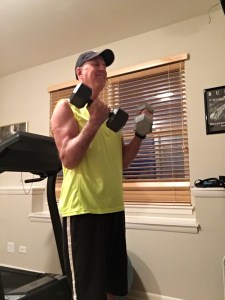
strength-workThis morning while lifting weights I set the camera up and snapped a photo of a curl set with 25 pounds. I’ve never been much of the flexing type. But I suppose the photo came out okay. I have a little more meat on my arms compared to thirty years ago when I weighed 140 lbs and raced 24 times a year.

I’d have to do strength work 24 hours a day to catch up with the physiques of some of the people found on Instagram. Their profiles are chock full of muscle shots and rock hard abs. Nothing but pictures of themselves. One after the other. Day in, day out. Me me me.

If you want followers on social media, that’s actually what you need to do. Pound away at the image and self-image of who you are. Make it appealing somehow to the masses. Be the One Trick Pony. And if you’re smart, you might wind up being a brand representative for health and fitness products.

girl-posesIt certainly seems to help if you have some physical attribute by which to market yourself.

twinmamahealthSo what can we learn from the Instagram accounts with the most Followers? Well, a nice butt never hurts whether you’re male or female. Strong legs too. A few thigh gaps seems to make a difference too. Then there are a fair number of female athletes who punch up the boobs shots as well. Whatever works.
More power to them. Like they say in the show The Producers, If You Got It, Flaunt It! Or perhaps, if you’re a fan of Donald Trump, you’ll prefer this Springtime for Hitler clip instead. Spooky how life imitates art sometimes. Even parody art.

Not sure that “flaunting it” will ever be MY business plan. What a typical senior guy has to offer in terms of flaunting it is not traditionally the fare that attracts thousands of Instagram followers. So I’ll stick with my drawings, paintings, a few running and riding shots. And plod along with my modest personal brand in tow.


Posted in Uncategorized | Tagged , , , | Leave a comment

What a first grader running around the playground knew when he heard about the assassination of JFK


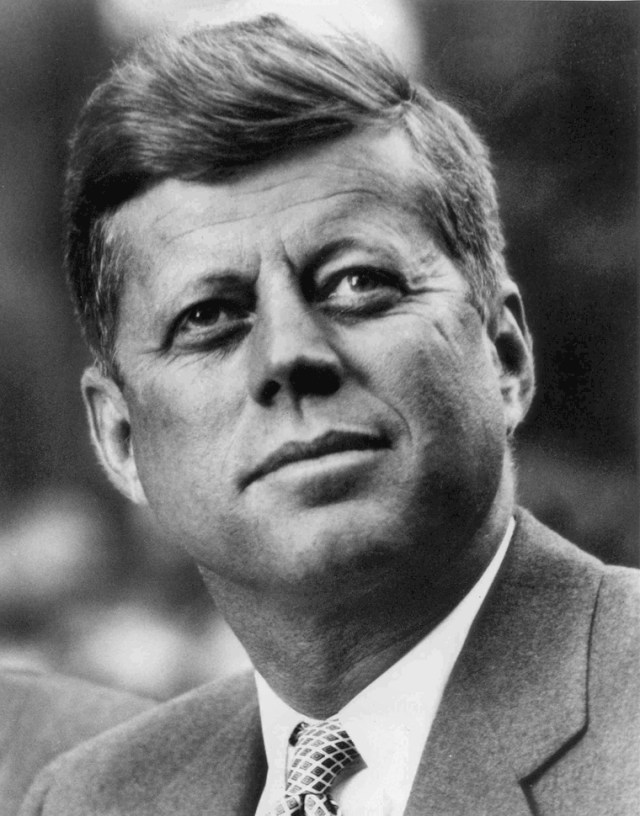
john_f-_kennedy_white_house_photo_portrait_looking_up

President John F. Kennedy: assassinated 53 years ago today.

I was a first-grader at Willow Street Elementary south of Lancaster, Pennsylvania in 1963 when President John F. Kennedy was assassinated. Like so many people alive in that era, I specifically recall the spot where I stood while hearing the news. We were out playing on the macadam playground because those were the playground rules in late November when the ground grew muddy from freezes and thaws in the ground surface. And I stood there, shocked and for a moment, quite fearful. What did it mean?


Our lives were fairly regimented in those days. We all knew the rules well because those were the foundations of our existence. We knew when recess started and finished. We’d stare at the clock on the classroom wall trying to will it to move its hands a little faster. We yearned for that precious time when we got to ditch the classroom and go outside to play. Recess was a form of salvation kids with so much energy and creative imaginations. That’s where people like me could find themselves in motion and freedom.

But suddenly it felt like all the rules had been broken. Someone had murdered the President.

Freedom rules

riding-sunsetRecess still exists in my mind. Nothing has really changed about the way I view that dynamic of motion and freedom. All these years of running and riding and swimming have their purpose. Every minute spent doing those activities is a reflection of that kid on the playground. I ran and ran and ran if I could. Early on, we played tag or some other game. Then we graduated to kickball and in springtime, wandered out on the flattened grass fields to play 500, a baseball game in which one player swung the bat and others kept track of the catches they made. 100 points for a fly ball. 50 points for a grounder.
Even freedom had its parameters. The rules defined the game. Otherwise, there was no game to play. We did not tolerate cheating. The game was self-governed by those who participated. On occasion, there would be fights over enforcement of the rules. But for the most part, everyone respected the rules of our playground games.

The heavy hand of authority

The hard part of being in school was putting up with the authoritarian rule of teachers with little patience or a wilting view toward the liberality of our precious playground time. We had to navigate the heavy hand of authority in order to get our chance to go out on the playground. I clearly recall a specific instance when my third-grade teacher gave me an evil choice:”You can stay inside and work on the classroom play or you can go out to recess. Which will it be?”

I knew that i needed my time outside. So I choose recess. “Okay,” she barked. “You don’t get to do either.” She made me sit at the desk and write fifty times: I’m sorry I did not want to be in the class play.

rulers

Ulterior motives

In other words, there never really was a choice. She had one outcome that was acceptable to her. But rather than take the time to explain the potential benefits of staying in to work on the play, she hung me out to dry. This is the method of blind authority. And it sucks.

I never forgot that lesson. It drove a new form of suspicion deep into my soul. I learned that so-called grownups were often trying to push me into things that they wanted me to do. When they didn’t get their way, they punished you.

And I thought to myself, at that tender age, “If this is how the world really works, I want nothing to do with it.”

From that point on, at the age of eight years old, I became a committed liberal. Either take the time to explain the rationality of your position and its implications, or I’ll suspect your ulterior motives.

Lessons learned

We all get that it is the supposed job of teachers and parents and Sunday School teachers and coaches and siblings to help us learn to make responsible, considerate choices. That’s how we grow. The narrative goes like this: the consequence of making poor decisions is punishment.

But even at six years old, as a first grader running around the playground at Willow Street Elementary, I understood the dichotomy between punishment for bad choices and the injustice that was perpetrated on John F. Kennedy. I stood there on the playground trying to process what I’d just heard. “What had our President done,” I wondered, “to deserve assassination?”

Somehow I knew what the word meant ‘assassination’ meant right away. It was clear enough from the manner in which someone said that word to me. Someone had actually killed the President of the United States. Shot him dead with a gun. Right through the head. But why?

The broader narrative

img_6438It struck me immediately that our President had not been given a chance in that situation. Someone according to their version of authority had made that decision on their own. This related deeply to the emotions I felt about the relatively unjust choices I was being offered on a daily basis by people in authority in my own life. I knew what it felt like to have my options canceled without question.

Years later as I read about the events surrounding the Kennedy assassination, two things became evident. 1) There was obviously far more to the broader narrative than a single gunman acting on his own and 2) the President was far from a perfect person, yet still an inspiration to many people.

Both of these were revelations the sort that require deeper investigation. So like many millions of Americans, I tried to learn more about the situation of JFKs assassination. It didn’t take long to discover that the “official” version of the assassination was a load of bunk. The Warren Commission was a hastily arranged opinion, if not an outright coverup.

From that point, the map opened wide. A broad range of conspiracy theorists dissected the Kennedy murder from (literally) every angle. These narratives involved various elements including the CIA, the FBI, the Mafia, Cuba, Soviets and you name it. Yet one thing was clear. All of them had a different vision of government than President Kennedy. And all of them operated in the shadows.

Public figures

Some authors investigated the personalities driving the conspiracies and produced convincing works about the motivations for some people to want Kennedy dead. Some accused Lyndon Baines Johnson (LBJ) in the plot to kill Kennedy and assume the Presidency for himself. LBJ was something of a surly bastard and he had a trail of ugly incidents and murders surrounding his legacy. He was a man desperate for the position of Vice President because it afforded him an opportunity to bury some of the skeletons he’d generated during his own drive for power.

Still others accused George H.W. Bush of running the CIA operation that killed the President. This much was clear: Kennedy had actually threatened to close down the CIA, or defund it, and that pissed some people off. JFK had plenty of other enemies as well, including FBI director J. Edgar Hoover. But the most intriguing piece of evidence about a CIA plot is a quite convincing photo of what appears to be a young George H. W. Bush on site in Dallas the day that Kennedy died.

Operations on the fly

Then there was the horrific theft and transport of President John F. Kennedy’s body from Dallas back to Washington. During the flight on Air Force One or Two, depending on who you believe, doctors obviously messed around with the wounds on Kennedy’s head. There was clear evidence that surgeons patched up a blast hole in the back of his skull. Talk about the ugly signs of a coverup…

OIl and WaterCoverBut that operation almost perfectly symbolizes a longheld American tradition in which the narrative acceptable to the populace is pieced together from a combination of bloody fragments and blown out narratives. But once the stitching is in place, people move on and don’t look back at the scars.

This is the very process by which millions of white Americans choose to ignore the genocide of Native Americans, which stands like a gaping wound in the settlement of the continent. Others choose to dismiss the horrific practice of slavery on black Americans. It’s as if the echo of that institution leaves no marks on the collective psyche. The result is a nation deeply conflicted by its interpretation American history.

Throw a bit of religion into the mix and what do you get? Even more confusion and anger over who is right and who is wrong.

Political stitchery and bloody truth


So let’s admit something about John F. Kennedy. He was an ardent womanizer. He hid medical conditions from the public to keep his candidacy alive. He was not a perfect human being. Neither was Dr. Martin Luther King, Jr. Or Robert F. Kennedy. All had flaws in personality and practice. Yet all stood for civil rights and social justice. And it cost them their lives. There is no getting around that simple fact. The leading civil rights and liberal political leaders of the 1960s were all shot dead. Murdered in cold blood. This is not some coincidence of history. This is the ugly, blown out fact on the back of America’s head. It has been covered up with decades of matted hair and political stitchery because the truth is just too ugly and real to reveal.

So we’re left to wonder what might have happened if Kennedy and his brother Bobby had survived those plots to erase them from history. The same goes for one of the leading black political and religious figures in American history, Dr. King.The political genius and moral vision of these people far surpassed the limited thinking of conservative American politics that produced McCarthyism, protected racism all across the American South and battled progress from science to medicine all across America. Conservatism stood for anachronism while the Kennedys and Dr. King stood for progress. This is the remaining battle for the soul of America, and it continues to this day. It is the battle of positive governance versus negative, light versus darkess, and enlightenment versus patent and dogmatic ignorance.

Positive versus negative

John F. Kennedy once said, “Ask not what your country can do for you, ask what you can do for your country…”

Compare Kennedy’s positivity to the likes of Ronald Reagan who made this famously negative statement, “Government is not the solution to our problem; government is the problem.”

Though he was considered by many conservatives to be a positive ray of light for the nation, and his ‘government is not the solution to our problem’ bears some resemblance to the inspiration words of Kennedy, Reagan assassinated the memory of JFK a second time with his negative statement about the role of government in America. Kennedy did not consider government an evil. It was a tool for good. His contention was that Americans needed to helped direct this tool for good. Reagan’s contention was that government should, in many cases, simply be abolished. That is the legacy conservatives have since embraced with fervor, and have held that belief to the head of America as if it were a loaded weapon about to go off.

Concealed Carry

chicago no guns signWe now know that the guns of conservatism were aimed back at Reagan himself, whose administration turned on him with the shadowy acts behind the Iran-Contra affair. Once unleashed the forces of darkness and negativism are too powerful to control by mere politics. The belief by zealots that they represent a higher power was quick to fill the void created by the negative space Reagan created with his criticisms of government.

It’s true:  very same forces within the CIA that conspired to undermine Kennedy took matters into its own hands with the Iran-Contra affair. As a result, Reaganism finished its term in office disgraced as one of the most corrupt administrations to have ever run the nation. Such is the power of negativism and self-fulfilling prophecy.

Smoldering coals

The reasons for the disgrace were simple. The secret form of government that evolved from the hot, smoldering coals of the Kennedy assassination fanned the flames of conservative zealotry during the Reagan years. These fires spilled across the globe under the guise of “American interests,” a loosely defined term that stands for imperialism.

It remained for the likes of Dick Cheney to come roaring in with his a conspiratorial version of Reaganism. Under Cheney’s watch, the American military was privatized into a mercenary operation accountable to no one but cash. War profiteering went wholesale. The Iraq War was an unbudgeted farce answerable only to the shadow government created by Dick Cheney.

Military wakeup call

The reality of this ugly truth took a while to sink in with those commissioned to serve the nation in our military. Soldiers participating in multiple tours of duty became disenfranchised by the lack of focus, and many eventually learned that the Iraqi people afflicted by America’s imperialistic aims were not, in fact, the enemy at all. America had been bilked into a war of choice, based on lies, and no exit strategy to boot.


This is what happens when secretive revolutions take place within a government. But even the public face of the government during the Bush years was an undeniable parade of one destabilizing event after another. First came the stolen election. Then 9/11. The war of choice in Iraq. The mess of Hurricane Katrina. And finally, the economic recession.

IMG_1019Yet conservatives refuse to admit or take responsibility for any of this. They prefer the patched up version in which liberalism is cut from the belly of America and slapped into bloody position over the wounds created by the assassination of American character that took place during the Bush years. The cognitive dissonance of governing by negativity as Reagan confusingly proposed was the undermining influence on American confidence.

To counteract this grandiose would in political will, conservatives threw fear in the faces of all who lived under the American flag. “Elect us or be killed by terrorists!” was the battle cry. And Americans, ever susceptible to the patched over tradition of American history, accepted fear as a replacement for courage.

Killing JFK again and again

This was proof of the pain and suffering produced by the Reagan Revolution. Those who don’t believe in government should never be given the reigns of power. And yet, millions of Americans have embraced a new candidate of negativity in the likes of Donald Trump. The man promises to murder the positive legacy of John F. Kennedy in all new ways. He has called the free press to his offices to chastise them for doing their job. He has threatened immigrants and women and gays and even children with his incurious, vicious and bombastic mode of communication.

To some, Trump must feel like the New Reagan. A supposed visionary. And yet, like Reagan, the hidden negativity of his message and communication style will also be his downfall. There can be no good outcome for an American president who simply does not understand or believe in the basic tenets of freedom and governance built into our Constitution. It is a very liberal document, originating the very freedoms of enterprise and thought that John F. Kennedy so aptly communicated when he said, “Ask what you can do for your country…”

Fighting blind authority

As a six-year old kid running around the playground, I already had encountered the ugly whims and force of blind authority. I understood what the price of freedoms were, and how rules and regulations guide that freedom, but are not the end answer to any of our problems. In other words, I understood at the age of six years old what liberalism was all about. I linked it to the lessons I was learning in Sunday School and how Jesus promised freedom to those who understood the rules but unlike Satan, did not use them to

gov-mike-pence

The newly installed Vice Bigot Mike Pence.

manipulate others. That’s how the serpent tricked Eve and Adam, by twisting God’s words to get them to do what he wanted. This, I understood, was the root of all evil.


I also understood that the forces that killed John F. Kennedy were similarly dark and negative. They had welled up from those places in the human soul where people confuse the will to win with the desire to cheat, to control and to gain control. Those forces are always heavy handed and hard at work in the world today.

And today, fifty-three years after the Kennedy Assassination, I remain determined not to let those ugly forces win the day. Because recess is worth it, and so is running around without people calling you inferior because you are black, or Mexican, female or gay. Liberalism is the heart of American virtue. That is lost on those who prefer the words and darkness of Satan (as Trump’s key advisor Steve Bannon has claimed) to those of the Constitution.

And please take note, before you cease following this blog because you disagree with these assessments, try to prove me wrong. Write a rational response in your own words, not just the sputterings of Alt-Right websites or talking heads like Limbaugh. This is important stuff. Freedom matters. I invite your discussion and will listen and respond to all rational attempts to describe why you think this current course is the right path for America. History speaks otherwise. But perhaps you’ve got greater insights. 


Posted in Uncategorized | Leave a comment

Living by the rulers

I’ve been perfectly square for the last 15 years or so. By that, I mean that my inseam exactly matches my waist size, which is 34″.

Being 34″ X 34″ all these years has been a product of some hard work, but also some heavy eating. Like all of you out there, I love to eat. And have a few beers. There is a daily soft drink typically thrown into the mix. Ugh. Liquid poundage. Same with the beers.

Lately, I have been leaning more toward wine at dinner rather than beer. A dietitian recently reached out to me through LinkedIn to trade some marketing services in exchange for some dietary advice. So I keep lurching toward a better approach to eating to go along with a balanced fitness routine that includes running, cycling, swimming, weight work and yoga.

I’d like to lose the few pounds of fat around my waistline. It built up over time and is quite stubborn. Much of it is the product of a lower metabolism with age. But it has not caused my pants size to go beyond 34″ at the waist. I have only panicked once about that, a few years back, when I was under a ton of stress and my comfort food intake shot up due to multiple levels of caregiving.

bigger-rulersFoundationally, the process toward healthy weight loss begins with strength work. That is, building up the smaller leg and joint muscles that carry me through all the running and cycling. I have some biomechanical issues that require strength to support them. It’s a combination of a long athletic career and pursuant age.

Recently we joined a new fitness center that has a ten-lane pool, a 200-meter indoor track and quite adequate weight room facilities. It’s only three miles from the house and thus a logical way to carry a routine of fitness through winter.

I want to manage weight but not lose a ton of it. To get too lean as you age makes for a wizened look. If you’re a guy with buzzed silver hair like me, and lose too much weight, people ask if you’re sick or something. That’s not the image I want, or anyone for that matter.

Rather a healthy, happy fitness for the rest of my life. That’s my goal. Compete and enjoy. And stay square. Living by the rulers.

How about you? What’s your goal for fitness and appearance?

Posted in healthy aging, healthy senior, running, Uncategorized | Tagged , , , | 4 Comments

The moral of every story is Don’t Get Greedy

img_0996As athletes, we all want to achieve the highest level of performance possible. We train with goals such as personal records in mind. When we achieve them, we set new goals. This is the cycle of life and applies to many other endeavors as well.
So it is important that what we learn from participation in athletics teaches us the right lessons. So here is a rule to live by: The moral of every story is Don’t Get Greedy.

For example, let us imagine that you’ve just come off a race in which you set a personal best. In the days following the event, your emotions run high. All that training really paid off! And you start to think: If I do even more, I will get even better. That can be true, at times.

It can also lead to your short and long term destruction.

Because…just past the optimal training level that created your racing success lies the very real danger of overtraining. That can lead to getting sick, or injured. If you don’t back off even when long term fatigue hits you, the harm you do your body and brain may be more than short term.

Greed and Chronic fatigue

Chronic injuries or conditions often come about because people get greedy with their training and racing. You may have seen those folks at your local training group. They show up and hobble through the first parts of a workout, then retreat to their vehicle and head home. They can’t do the training, yet they can’t not show up.

right-kind-of-prideIt takes a degree of personal confidence outside the scope of our self-image as athletes to back off and accept that we’re temporarily not the athlete we so desire to be. When we’re sick, hurt or injured it takes personal integrity to admit that and find paths to self-esteem not so reliant on our public achievements.

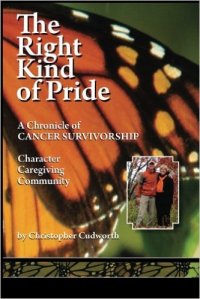
As I’ve written in my book The Right Kind of Pride (Amazon.com) there are times when humility or vulnerability are often the greatest strengths you possess. When life is tough, it can pay to be persistent and perseverant, yet it is also wise to let others help you. Help yourself to a less aggressive approach to your situation and let the power of admission, forgiveness and acceptance enter your life. It is a very powerful manner of existence during times of crisis. But it also works in everyday life. That is the right kind of pride, taking care of yourself by controlling your own ego.

The Right Kind of Pride

As an athlete, the Right Kind of Pride can mean a variety of things. The most prudent (and less greedy) form of self-nurturing is to plan periods in the year when you actually allow your body and mind to recover. That can mean taking some time off to recover. Allow yourself to put on a few mild pounds perhaps. You don’t need to get fat, but do let your joints and muscles rejuvenate.

So Yes, you should still eat well and do some light workouts. Focus on strength-building and weights instead of endurance. Vary it up and you won’t be tapping the well dry. It is surprising how quickly this approach can help you get back on track for a new training period.

Roll with the changes


run-out

Competition is great. But we all need a break sooner or later

November and early December are excellent times to dispense with greed in your training and set your sights on a new year. If you live in northern climes, the weather changes and makes it difficult to get bike time outside anyway. So grab the mountain bike and throw some lights on the thing. Bang around some dirt trails in the twilight. Leave your bike computer at home and your Strava too. Ride or run because it’s fun to do.


But even if you live in sunny Arizona and can ride or run anytime you like, make sure your greed for good mileage does not wear you out. The pool is always a good resort in any season. Swim for the great feel of it. Don’t kill yourself. Roll with the changes.

Hemispheric pressures

Of course, on the other side of the world people in Australia, New Zealand and other more southern places are just starting their competitive seasons. They’re just coming off the winter months and are raring to go. So we all have different rhythms.

Elite athletes have to consider these differences in training schedules because international competitions can demand readiness for indoor track or a triathlon season Down Under. Cyclists at the world level now race in countries around the world, and that can put pressure on people trying to make teams for premier events later in the pro season.

It all comes down to the simple rule: We have to make choices. Don’t be greedy.

Life lessons

AssesThere are plenty of arenas in which these lessons apply. So we’ll close with this beautiful and somewhat funny lyric from a song by the Lovin’ Spoonful, a 60s group with some of the best harmonies and melodies ever written. The song speaks to the greedy mind of a young man that can’t choose between the girl he’s dating and her cute sister. “Oh, to be so lucky,” some might think. But greed confuses the mind. It can make you think you’re capable of ruling the free world when you’re little more than a greedy bastard who talks big. If you want all the asses in the world, it just turns you into an ass yourself.

It all starts with simple choices, you see. The following lyrics apply to the allure of dating two pretty girls, but it could just as well apply to the temptation of doing too many races,  trying to podium every week, or stay 100% fit all year round.

The moral of every story is Don’t Be Greedy.

Did You Ever Have to Make Up Your Mind 

Did you ever have to make up your mind
Pick up on one and leave the other behind
It’s not often easy and not often kind
Did you ever have to make up your mind

Did you ever have to finally decide
Say yes to one and let the other one ride
There’s so many changes and tears you must hide
Did you ever have to finally decide

Sometimes there’s one with big blue eyes, cute as a bunny
With hair down to here, and plenty of money
And just when you think she’s that one in the world
You heart gets stolen by some mousey little girl

And then you know you’d better make up your mind…
Sometimes you really dig a girl the moment you kiss her
And then you get distracted by her older sister
When in walks her father and takes you a line
And says, “You better go home, son, and make up your mind”

And then you bet you’d better finally decide…

Read more: Lovin Spoonful – Did You Ever Have To Make Up Your Mind Lyrics | MetroLyrics

Posted in Uncategorized | Tagged , , , , , , , | Leave a comment

When the world is aggressively slow

We got up to swim this morning at 4:45. Drove through the mist to Marmion Academy and the warm confines of the natatorium. Did our swim workouts broken up into little sections like a watery breakfast of freestyle, pulls and intervals. I was definitely the fastest swimmer in the half a lane I shared with no one else.

Then we headed back home to get ready for work. Some days I drive Sue to the train, and we’re still figuring out the reasonable amount of time to allow with all the lights and still cover the distance from our new home to the train. This morning there were a few drivers poking along at various stages of our trip. They may or may not have been old people, but they were all going almost aggressively slow. And after I dropped Sue off to the train a song by John Hiatt came on the radio. The lyrics cracked me up.

Old people on the hill
They don’t have too much time
Cut a head on the buffet line

Got back for a dollar and 50
Then I argue with the …girl
They lived so much behind them
They try to slow down this god damn world

Old people are pushing and they aren’t mushy
Old people are pushing cause life ain’t cushy

Old people are pushing
They drag what they don’t want drag
And go as slow as they want to
They don’t care who stays alive

And they’ll kiss that grand baby
All around the back and back front
They don’t care what you think of them
That baby has got something that they want
Old people are pushing
Cause life ain’t cushy

old bastard.jpgSue was telling me to chill out while driving behind some of these aggressively slow vehicles on the road. You know the type. The speed limit is 30 so they go 27. And if you get up on their bumper, they go 25. And if that doesn’t work, they slow down to 20 and give you that glance in the mirror that says Fuck. Off.
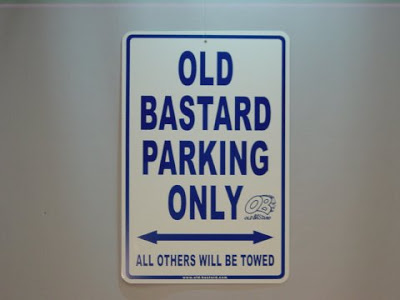
I get that. Tailgaters are a pain in the ass, almost literally. When I’m the supposedly slow driver on the road, I look in the mirror and say Fuck You to the person doing the tailgaiting. It’s the American thing to do. Say Fuck You.

Back and forth it goes in life. Sometimes you’re the slow one. Sometimes you’re the fast one. We all seem to be in a hurry for one reason or another.

Race day 

Speaking of slow and fast. I had to laugh at the start of this weekend’s half marathon. I was one of the slow ones compared to the people at the front. I knew my 8:10 pace would carry me along okay. It’s now difficult to conceive those days when I’d do a half marathon at 5:20 pace. I never won a race at that distance, but came close. Having run a dozen or so times at the half marathon distance with times in the 1:10-1:12 bracket, I’d have at least placed in the top five this weekend. Here were the results.

1. Alexander Rink 1:11:37
2. Aron Kehoe 1:12:27
3. Colin Riley 1:13:25
4. Sam Poser 1:13:30
5. Will Olson 1:15:23

It was a hilly course, but I well remember a race in Lancaster, Pennsylvania that was three times as hilly. I finished fifth at the 10-mile distance at 54:00 flat. But those days are gone, and I’m not a surly old bastard about it. These days the leaders peel away from the start and there is no dream of keeping up with them. I’m happy to cruise along at my pace, sad that I cannot go back in time somehow and pull those faster times right out of my cosmic ass, because that was always fun. It really was fun to kick ass when I could do it. But getting my ass kicked by runners even better than me was fun too. It’s all part of the deal.

Perhaps those of us who were blessed (or obsessed) with our sub-elite running careers were delusional in some respects. What does it really matter that any of us ran times that were faster then than we can run now? It mattered in some respects because we showed others that it could be done. I recall talking with other runners after races were complete. People were eager to hear how it went. When did the breaks occur? How did you feel? Was it fun to win?

old_bastard.jpgOf course, it was. But that can’t last forever. And so, there’s a social responsibility of sorts to share whatever experiences we do have. That’s why I have written this blog the last three years. Trying to open people’s eyes to other thoughts and possibilities is both a challenge and a reward.

It probably doesn’t mean all that much that I once was able to win races. The real measure of a person is the character they show when they don’t win in life.

Perhaps it’s more important that one can accept the humility of being a middle-of-the-packer than it ever was to win races in the first place. Most of us never see the winners anyway. They wrap themselves in Mylar or warm down before we ever even cross the finish line. They might show up to claim their bling if they make the podium. But only half (or less) of the participants in any given event ever stick around to see who won. Social media is the new post-race ceremony, replete with pictures and finish medals and the like. Sure, it’s a bit self-aggrandizing, but it’s how society has evolved to address the recognition we all crave.

Ultimately, however, we all go back to more mundane tasks like following some slower driver on the road, or being tailgaited ourselves if someone thinks we’re the slow one. Going aggressively slow is a statement unto itself. There might be no better allegory for the state of politics in America right now.


Posted in Uncategorized | Tagged , , | Leave a comment

Riding for Peter Pumpkinhead

As I was riding out of town on the 15th of November, bathed in late afternoon sunshine and only slightly chilled by temps near sixty degrees, a feeling of gratitude swept over my soul. The ride was smooth even if I was out of riding shape. When that happens, it feels like my legs are too thin to propel me at the speeds possible last summer. The muscle built riding-twilight-zoneby long, hard rides goes somewhere else. Into the twilight zone of autumn.

That how all fitness comes and goes. We peak for seasons when the weather is accommodating, then make the best of it in the off-season. Sometimes we can’t tell the difference between building up our base and just managing to recover.

That’s the real twilight zone of the triathlete’s world. In the void after the real competitive season, we break off into other ventures like simple old road races. These might consist of half marathons or even crazed ventures such as the 31-mile race on the Chicago lakefront that a couple gals I know ran early November. They jumped into the race on the heels of completing an Ironman just this September. The race made them sore so that when they had to hobble up the stairs to our balcony seats at a recent Postmodern Jukebox Concert, it all must have felt surreal in some respects, like this video of Puddles the Clown singing in his Pity Party with those great musicians in PMJ.

I’m not claiming to be as brilliant or talented as that clown. But some might say that Puddles acts and looks like all of us liberals blubbering their eyes out at the prospect of a Donald Trump presidency. I’ve done my share of protest online including this article titled “When Trump says “You’re Fired” America.

Yet as I rode west this afternoon I spotted a roadside display that made me want to stop and pose with the main character. So I lay down next to a pile of gourds and pumpkins with my helmet still on my noggin. Because perhaps I’m a bit more like a character from that XTC song titled Peter Pumpkinhead.

Riding Pumpkinhead.jpgPeter Pumpkinhead came to town
Spreading wisdom and cash around
Fed the starving and housed the poor
Showed the Vatican what gold’s for

But he made too many enemies
Of the people who would keep us on our knees
Hooray for Peter Pumpkin
Who’ll pray for Peter Pumpkinhead?

See, being called something on the order of a Pumpkinhead is not always an insult. Sure, there are those who take it literally, insinuating that anyone who is a pumpkinhead must be stupid. Scoop out the brains and what do you have left? A bunch of crunchy seeds that taste good with a little salt on them. Those of us with liberal beliefs are accused of having mush for brains on a regular basis.

riding-coming-and-goingBut when you grab hold of the allegory and give it a different shake, we find that person who is a pumpkinhead can also be someone who innocently encounters the evils of the world and reveals that many supposed strengths are actually the true weaknesses in this world.
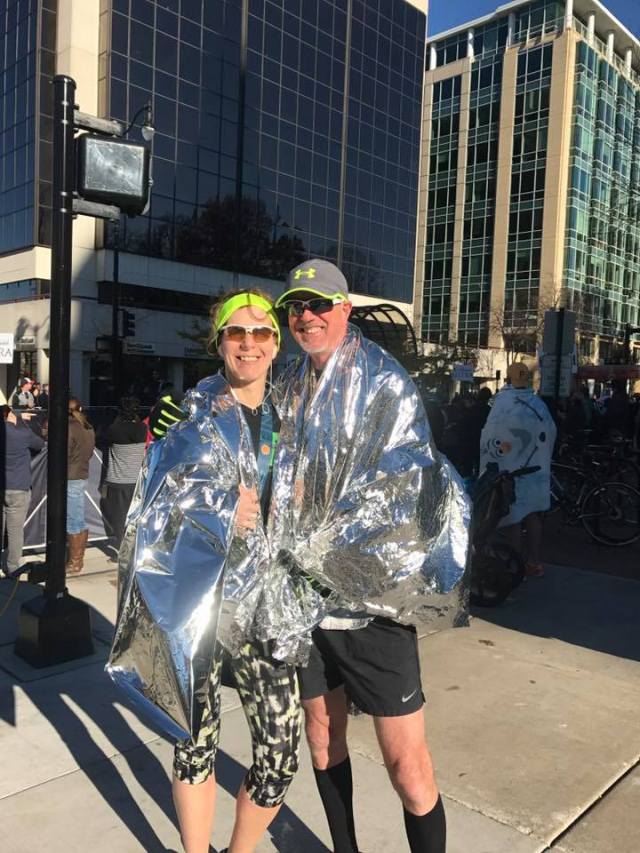
Because through their seeming ignorance, pumpkinheads actually point out the errors in thinking by those who think they know the secrets of life when in fact they obscure them by relying on their very literal take on things.

One might point to the epochal character of Forrest Gump to better understand the Power of the Pumpkinhead. Gump exemplified the powers of pumpkinhead common sense in action. “Stupid is as stupid does,” he once said.

Jesus Christ also admirably painted himself as a sort of pumpkinhead at times. It was his method to seemingly play a little dumb at times. Instead of answering questions asked by religious leader in literal fashion, Jesus often responded with seemingly simple, dull questions that in fact stumped his political, intellectual and theological opponents.

It was also the method of Christ to demonstrate weakness in the face of those claiming earthly strength. This always called the false notion of authority into bold relief. Almost without exception, his politically powerful opponents took his weakness as a sign of contrition to their earthly power. It was, in fact, the opposite.

riding-sunsetThat’s how the pumpkinhead side of liberalism actually works. People who stand up for “pie in the sky” ideas such as human equality can seem a little simpleminded in what they say to promote the cause. Mahatma Ghandi once said: “Gentleness, self-sacrifice and generosity are the exclusive possession of no one race or religion.”

That statement seems so simple. Yet there are those whose religious doctrines absolutely prevent them from accepting truth in that context.  The Christian faith and Muslim faith have both been known to claim the status of the one true religion.

But pumpkinheads simply don’t accept that possesive brand of thinking. And that wise little pumpkinhead Mahatma Ghandi also said “You must be the change you wish to see in the world.” Which calls us liberal pumpkinheads to stand up to false authority even if it makes us look like the dumbest people in the room.

It’s a different (and often difficult) path to choose. And as Ghandi notes, there is ridicule that comes with that territory. “First they ignore you, then they laugh at you, then they fight you, then you win,” says Ghandi.

To try to win the fight, cynical people will brand you a bleeding heart or a tree hugger. But most of all, you will be called  A Fucking Liberal as if that label were an insult.

But in fact, all those seeming insults are actually terms describing people who actually fucking care about others. Liberals give a fuck when other people are getting the shaft. Too much of the world is obsessed with how much money they can hoard, or who has to pay their goddamn taxes to support the country. Jesus didn’t give a goddamn about all that. He specifically said to “store up your treasures in heaven.”

That is where the liberal heart of faith truly resides.

And let us consider another stanza from the song Peter Pumpkinhead, in which the songwriter imagines what a latter-day figure such as Christ might experience in this world if he were to come around again.

Peter Pumpkinhead was too good
Had him nailed to a chunk of wood
He died grinning on live TV
Hanging there he looked a lot like you
And an awful lot like me!

riding-gouldsThis same brand of treatment holds true for liberals who claim to be patriots. Yet absent the brand of pseudo-militaristic trappings of aggressive, creed-driven, flag-waving patriotism, some people think it doesn’t deserve the label of “patriotism.”

But actually standing up for the rights of other involves far more than waving flags and posting yellow ribbons wherever veterans show up in our culture. True patriots instead put their personal brand on the line without fear. They put country before self by advocating for the oppressed elements of society. That is the mark of a true patriot.

All these things ran through my head during my Peter Pumpkinhead ride today. I’m more than willing to admit that my liberal side seems a bit daffy and worthy of ridicule at times. But that’s also what makes me want to go out and share the road while I run and ride, to see the country together. There is nothing so equalizing as the feel of the wind blowing through your soul.

I’m proud to be a Peter Pumpkinhead with all my softhearted flaws. I’ll lie down with my fellow pumpkinheads any day of the week. And I have the pictures to prove it.

Posted in cycling, Uncategorized | Tagged , , , | Leave a comment

Madison Half Marathon greetings

Mylar Twins.jpgThe truth about running half marathons is that you really should train for them. That was evidenced by the performance of my fiancee Sue, who ran with confidence and decent cadence for all 13.1 miles of the race in Madison, Wisconsin. Her coach Steve Brandes at Madison Multisport was there to urge her on.  He was helped in the job by the most adorable puppy ever brought into this world. She is called Cedar after some high mountain trail the coach had climbed. And during our introduction, while talking to her coach, the puppy settled down and leaned on Sue’s leg. That little bit of warmth was welcome cedarbecause the temps were still stubbornly stuck in the high 30s. A steady breeze from the north was keeping it that way.

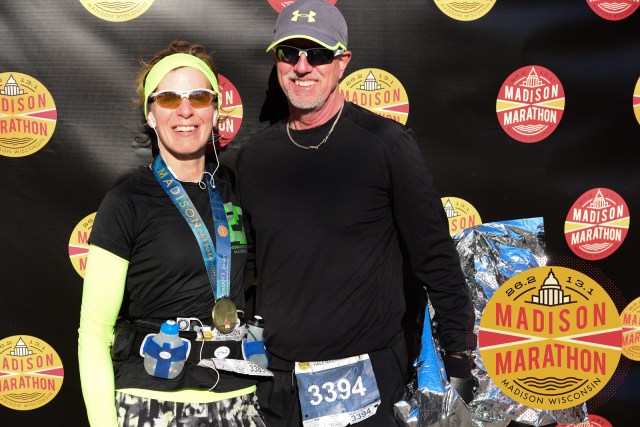
It can be tricky to dress right in such conditions. Layering up so that you won’t stiffen up is important. But then you come to the starting line like I did to find some gal in a strappy little top sporting bare shoulders and arms. Or the gal in the short little bun-huggers that stop at the crack of her ass and you think to yourself, “I’m not so tough.” But it’s not really acceptable for men over 50 to wear raspberry colored bun huggers in a race, so that trend can be passed over without guilt.

Testing testing…

As it stood, I was dressed in all black with compression socks holding my calves together. That was necessary because I’d done a little test run the weekend before the race and things turned a little sour at about eight miles of the scheduled ten-mile run. My plan was to examine even the prudence of attempting a half-marathon given my dearth of steady training this fall. The complete absorption required to move the goods out of the house where I’d lived for twenty years basically erased both the desire and time to run at all. Yet I’d traipsed through a 10K at 7:30 pace without much problem despite this gap, so the idea of adding another 10k onto the back of that didn’t seem so bad.

Unfortunately, I tweaked a calf muscle in the process. Perhaps it was overstepping my training load during that 10-miler, or perhaps it was the ebullience of tossing on that bright new pair of Nike Floaters or whatever the hell those new shoes I bought are called. At any rate, during a three mile run on Wednesday, my lower calf cramped right where the sheath to the Achilles tendon begins. I’ve had that injury before, many times. It first happened during my days as a steeplechaser in college. The angle of your foot when landing on the inclined pit would often strain my calf. That doesn’t heal up quickly, I can tell you.

I tried everything I knew how to do in order to heal up the calf. Yet deep inside I knew that by a certain point in the race, and there would be no predicting when, it would be game over.

Sue and Chris at Madison.jpgMy hunger to enjoy the race was sufficient however, to start. It’s still exciting to step to the line with all those people and glance at your watch when it reads 00:00:00. All those zeros are possibilities, you see. That’s the fun of running a race. You feel alive.
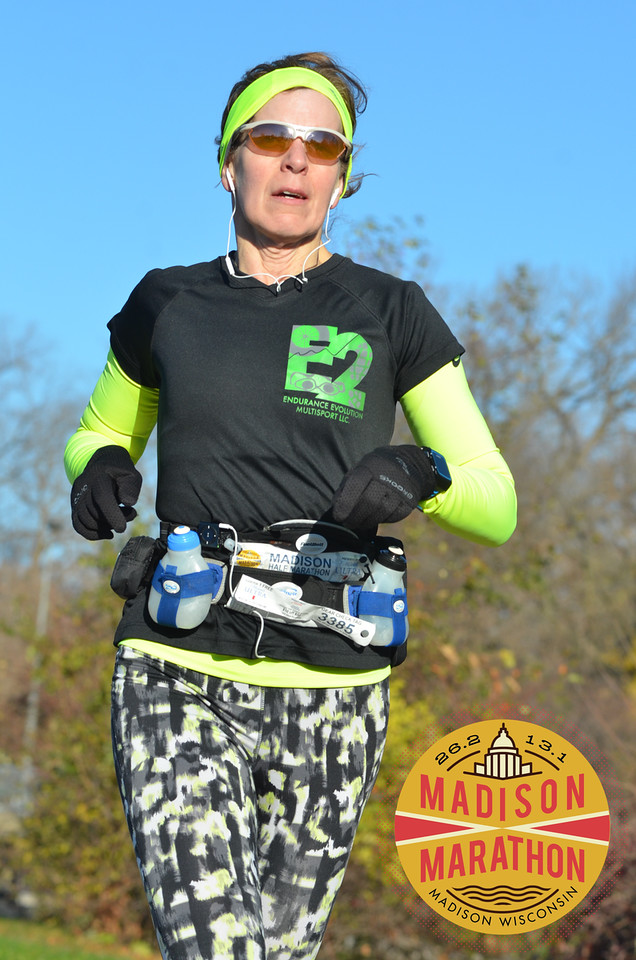
The course at Madison is both urban and beautiful at the same time. Starting at the Capitol building (better known as Governor Scott Walker’s Playhouse) the race heads across the land bridge between Lake Mendota and Lake Monona. I’ve swum now in both those lakes, which are elegant bodies of water in any season. In November however, one can accept the idea that swimming would not be such a good idea.

Race time

And perhaps even running was a dumb idea for me. During warmups at a very slow pace, my calf did not hurt much. I started the race modestly enough with the goal of running 8:00-8:10 miles if the leg allowed. And sure enough, I drifted through the first mile at 8:11. But there was a twinge every step that I took. My hope was that the leg might suddenly like the additional extension of a quicker pace. It’s happened before with injuries. A couple years ago when Achilles problems vexed me it was possible to still race at a decent pace. I figured out eventually that it was the angle of the heel counter in the shoes I wore that was causing me pain.

Mile two went by at 8:10. Mile three at 8:10. I was rolling along with absolutely no effort. 24:30 at three miles and hoping it would get better. But every step hurt, and I knew that was not a good thing.

There was another challenge, and that was hills. Up and down we went. I felt fine on the flats but the downhills, in particular, were a problem. This made me a bit sad. I was having fun in the early goings and looking forward to the bigger climbs out at mile 8 and 9.

It was not to be. Through mile four the leg began to tighten toward the point where it might outright spasm despite the fact that I’d run yet another 8:10. Well, that was fun anyway. Somewhere before mile five though, I turned around and started jogging back in the direction where all the other runners were coming.

Interlude

I envision that this is a bit like what happens when we die. Our souls pop out and start going backward in time. We get a chance to review our entire life before going off into whatever we call heaven, or hopefully not hell. Through time we travel going, “Okay, that was cool,” and “I remember that asshole. He was a pain at work.” 

And so on, all the way till we get to the part where we’re pooping our own pants and eating creamy shit our mothers dish into our mouths. Then we suck right up into the Eternal Vagina and pop out in some other dimension completely reborn as some awesome spirit thing with an extra hand to hold our cell phones while we drive. 

Sag Wagon

Okay, so my mind wanders a bit when the race is over for reasons other than getting a finishing medal. So I flagged down a Sag Wagon and it turned out the woman driving it was once coached by the wife of Sue’s coach Steve Brandes. Her name is Cindy Bannick. She’s a top-flight triathlete in her own right, and now co-owner of the cutest dog on earth. Both Steve and Cindy are multi-sport coaches in one of the Multisport Capitols of the World.

So it was a nice warm ride back in the Sag Wagon. I haven’t been in one of those for a long, long time. Other than that ambulance ride after the bike wobble incident three years ago, I’ve been able to avoid, for the large part, the DNF.

Mylar Man

Once back in Madison, I fueled up with the Panera Bread lunch and grabbed a Mylar blanket. Then I started walking around the Capitol Square trying to find the street that led to the parking garage. And damn if I could not find it. The problem with Madison is its combination of the strict linearity of its town square combined with a panoply of angled streets feeding into the perfect square where the race started and finished. So I made several laps peering down streets trying to see our parking garage to go change into warmer clothes, but my mind kept playing tricks on me.

Oh well, I just wrapped myself in the Mylar and found a cubby hole next to a bank out of the wind and in the sun. That’s where I waited for Sue to finish, because she was having a good race (I’d seen her when I turned around at five miles) and I did not want to miss her finish.

Sue Racing Madison.jpg

She was excited, even thrilled at the feeling of this run. Her training had given her both the strength and confidence to run without fear. That’s key at the longer distances, and when she goes to apply this training in combination with the cycling and swimming, it’s going to be fun to see her progress.

As for me, I’ve decided that actually training for some of these races might be a good idea. I can accept that. I actually used to train for races. Kept a journal and everything. Maybe it’s time to get back to basics. But perhaps not as basic at that Red Roof Inn where we stayed the night before the race. That’s going too far.


Posted in marathon, running, Uncategorized | Tagged , , , , , | Leave a comment

On Veterans Day and dealing with bullies

david-and-chrisAs a competitive kid, I was always trying to win at everything I did. It helped that my brothers challenged me daily with taunts or physical roughhousing. We also played sports constantly. Often these games went on for hours whether it was table tennis or a game of what we called Glowball, a form of baseball using a 29″ hardball bat and a collection of softball-sized balls formed of a tough but pliable plastic.

We also competed in sports with all the neighborhood kids. Our pickup baseball games often took place with all positions filled. Or, we’d play soccer or football on the west end of a long practice range at the golf course next to our homes. Sometimes fights would break out over some call, but most of the time we enjoyed those games for all they were worth. In all, these and other sports in which we participated from basketball to track and field and cross country, these were methods of learning about life.

Skinny kid

As you can see from the photo above, this physical and emotional activity kept me skinny and wired. I was an anxious kid who needed that release. My father was alternately a tough and tender man, yet when his fury unleashed on us for some insubordination the results could indeed be terrifying.

There was one incident that left a deep mark on my soul when I was only six. My brothers had done something wrong in the eyes of my father and he exacted a beating on them while I watched. Weeks later my best friend was spanked on the playground by a teacher and I broke down crying. So I know that there were psychological effects as a result of all that open violence. I was a sensitive kid.

Playground bullies

There were also plenty of school bullies with which to contend. The communities south of Lancaster, Pennsylvania were strongly striated along economic terms. Coming across the metal bridge on Route 222 over the Conestoga River, one first found a trailer park. Then came modest homes, and then a country club. Continuing south one crossed the smaller Mill Creek with its age-old brick mill and dam, followed by a fruit market and a then street that dug into the hills like an asphalt scar. The homes there leaned from neglect and sporting rings of broken down cars and old washing machines. And that’s where most of the playground bullies came from.

The were two guys in particular who seemed to hate me for no reason. One was named Brian McFalls. His hair piled up on his head like a bushel of hay and he was lean and hard of character, almost as if gravity itself were compressing his tight-jeaned figure. On every occasion that he could find, he tormented me with mean little acts. He once kicked the case of clarinet under the wheel of the school bus as we were boarding. He’d also sidle up while waiting for the bus and say mean things while his toadie friend snickered. Basically these two were exactly like the characters of Scut Farkus and his little brute friend in the movie A Christmas Story.

Fighting back

By sixth grade, the actions of bullies like Brian and others had added up to no good in my own little soul. Again, recall that I was a competitive kid like no other. My brothers all called me The Mink, because I’d go off like a rocket when there was a challenge to be met.

By the sixth grade I had begun to start some fights in school and other places. That led to other fights and a reputation. Finally, I wound up being challenged to a ‘real fight’ by a scary kid named Davey Long. He had pasty white skin and lips that looked transparently red, as if the tissue under the surface of his skin was showing through.

I agreed to meet Davey Long to have our ‘real fight’ in the deep end of the Meadia Heights swimming pool. It was winter and the pool was empty, and secretly I was frightened out of my mind at the thought of fighting that guy. But to buck myself up I bragged about it at the local basketball court. That’s when a neighbor named Davey Arnold grabbed me by the shirt and said, “You’re not going.” He gave me an angry shake and said, “I’ll go for you.”

That’s what Davey Arnold did. He went down to the pool at the prescribed time and met up with Davey Long. Davey Arnold administered a pummeling that concluded by holding Long’s faced in the crook of his elbow while he pounded his fist into it. There was blood all over the front of Davey Arnold’s tee shirt when he came back to the basketball court to point a finger at me. He walked straight up and grabbed my shirt by the collar. “You are not going to fight anymore, do you hear me? Davey Long pulled a knife on me, do you know that? You could have been really hurt.”

War and peace

To me, Davey Arnold symbolizes what the power of our military is for.  Throughout the history of our country, our nation has been pushed by bullies of one kind or another. Our military takes that job of dealing with bullies on itself and does it well.

But recently our military has also done some pushing other around on behalf of the nation. This week I interviewed a set of soldiers for a Veterans Day article. One related that he had enlisted immediately after watching the 9/11 attacks unfold on a high school classroom TV. He related that during his first mission “all I wanted to do was create chaos,” and he was ready to fight anything that moved. He did see combat in Iraq, walking into streets where potential enemies lurked. “By the end of my first tour though, I realized that 99.7% of those people in that country were not our enemies. It was only the tiny percentage that we were after.”

Food for thought

During their walkabouts, the people of Iraq would often invite them into their homes to share their food. “They had little or nothing,” he said. “Yet they still offered it to us.”

He returned to Iraq two more times. On his second tour, his military group happened to visit an area that was the historic home of the religious scion Abraham, hero to people of faiths in three religious traditions; Judaism, Islam and Christianity.

This gave him new perspective on the fact that there was a much bigger picture at work in the conflict over Iraq. His continuing interactions with people of that country began to change his mind about the reasons for fighting in Iraq at all. By the third tour of duty, his mates in the Marines were all giving deep thought about the purpose of that war. “We ventured even deeper into the history of that country,” he related. “And it changes you. When I went over there I knew nothing about the world. I didn’t even know how to do the job I was sent to do. We were all just making it up and trying to figure out how to make things work.”

Honor and will to succeed

Such is the life of so many soldiers. Called to duty. Committed to service. Commanded to act. It is theirs to push forward with the honor and will to succeed. No one questions any of that. Veterans deserve our ultimate respect. I’ve never served in the military, but I believe our country should take care of our soldiers with health care and other benefits for their whole lives. Our country has not done that dating all the way back through the Revolutionary War. After the conflicts, we too often treat our soldiers with neglect and disrespect. It’s happened with too many wars, with World War II and the GI Bill being one noble exception.

Challenging stories

But even this summation does not mean their stories are simple or pat examples to all mankind. The other two veterans we interviewed had challenging stories to tell. Both were now dealing with holdover effects of PTSD, the result of psychological trauma from the brutality of their military service and combat. Transitioning back to civilian life has largely gone well, but they worry that people view them as shattered beings, when in fact, they are simply human beings who have seen the realities of war and know a bit more about the world as a result.

They have been the ones to go out and deal with bullies, in other words. But they have also experienced what it means to “be the bully” when sent into combat in a region where the lines of good and bad are not so clearly demarcated . Perhaps the political bullies who sent them there do not truly understand the consequences of that type of conflict. Or perhaps they simply do not care. And that is the ultimate disrespect to the service of our military, and our veterans.

Evil within us


It is important to realize that while the fight against evil in the world can seem so simple and clear, there is also the evil within us that must be reconciled. All people have that trace of evil within them. When it is riled into action by those seeking to gain power, especially those seeking to create chaos within the social order because it confers them an opportunity to occupy a power vacuum, it can be difficult to recognize who the heroes really are, and who in fact are just bullies looking to push other people around. This happens in politics quite frequently. Politicians are all too willing to send people to die based on their own morbid fears or sick ideologies. It’s been the case throughout history. Nothing has really changed in that aspect of the human condition.

Navy man

My father served in the Navy at the tail end of World War II. His rickety old ship barely made it across the Pacific in 1945. They scuttled the boat in the ocean once they’d made it. And then my father walked the grounds in Hiroshima and Nagasaki. He was an avid photographer and snapped some photos of those ruined cities.

That was the product of America confronting the nation of Japan, which had become a bully without fear of throwing its own citizens into the craw of war in order to achieve victory. Fortunately, it did not, because of one crushing blow delivered by those nuclear weapons. One can argue the morals of those actions forever, but the fact that Japan and the United States ultimately reconciled those acts from both sides is a good sign that nations can survive even the most zealous leaders and live to see another day.

And that is the ultimate lesson from war whether it is fought abroad or right here at home.

Posted in track and field, Uncategorized | Tagged , , , , | Leave a comment