Monte writes some riding wresolutions

WE RUN AND RIDE New Years Resolutions

by Monte Wehrkamp (January 4, 2012)

We all wrestle with our New Year’s resolutions. Sometimes they become wresolutions:Solutions to problems with which we wrestle in running and riding. These are focused on riding. Because Monte kind of hates running. Don’t ask him about he. He literally broke is ass last time he tried it. So here’s the pedal resolutions he has resolved to make. 

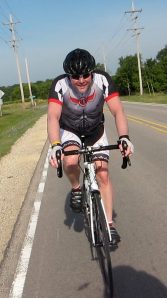
Monte Wehrkamp on our annual trek to Wisconsin

Let’s hold him to the fun he prescribes. See you on the MTB!

I resolve to ride like a kid again. To meander and seek, to take a new road or trail with no plan or purpose other than to see where it goes, and what it’s like.

I resolve to let fitness be the byproduct, and not the goal. I’ll not worry so much about zones, or intervals, or whether I’m doing enough climbing work, or what my mileage or speed/pace is in 2013. 

I resolve to stop quantifying and qualifying. If all I have time for is a 25 minute ride after work or on a Saturday afternoon, then I shall take the opportunity and make it the best 25 minute ride possible, and stop thinking 25 minutes is not enough to “do any good” and simply not riding at all. Bah! Good is in the doing. Good is in the now. I shall do good now for as long as I have time available.

I resolve to ride my mountain bike more. I shall seek out trails and paths and wind my way through woods and prairies where nature inspires and heals. 

I resolve to take a riding vacation with my wife. Maybe it will be back in my homestate of South Dakota, or maybe California, Colorado, Florida or even Delaware or Texas. Inn to inn, or B&B to B&B, taking in a new place at a bike’s pace, then exploring each day’s destination on foot, tasting and smelling, meeting new people.

I resolve to start a friend or family member on a bike. Somewhere, someone I know is ready for the joy of pedaling; they’re just waiting for the encouragement. I shall have my eyes and ears open and will help where and when I can.

I resolve to make the Saturday morning group ride a bigger priority. It’s usually too hot, or too cold, or too fast, or too hard — and usually, I have too much to do. I shall dispense with the excuses and remember the joy of riding with a group of good riders, with good conversation, and enthusiastic effort – and I’ll be there. 

I resolve to ride a century with Chris Cudworth. We had hoped to ride one in 2012 — have one of our wives dump us off in the middle of nowhere, and we’d roll back home. Life events conspired against us in the fall of 2012, but we shall get our century completed in 2013.

I resolve to ride a charity event. There are no shortage of opportunities in Illinois, with many worthy causes. I shall support at least one with both my participation and my checkbook. 

I resolve to clean my bike more. Cuz seriously. Ick. 

I’m sure I’ve left out some great resolution ideas, so I encourage everyone to share their running and riding resolutions below, whether they be new this year, or ones you’ve kept in the past. Heck, for fun, you can even share resolutions you made with the best intentions, but were unable to keep. 

And we’ll see you on the road or trail in 2013!
E-MAIL CONFIDENTIALITY NOTICE:
The information contained in this communication is confidential, and is intended only for the sole use of the recipient named above. If the reader of this message is not the intended recipient, you are hereby notified that any dissemination, distribution, or copying of this communication is strictly prohibited. If you have received this communication in error, please re-send this communication to the sender and delete the original message or any copy of it from your computer. Thank you.

Posted in Uncategorized | Tagged , , , , , , , , , , , , , , , | Leave a comment

Think before you go out and run or ride

How important is your head while running and riding. It plays a pretty big part. Illustration by my son Evan Cudworth, circa 1998.

How important is your head while running and riding? It plays a really big part in success. Illustration by my son Evan Cudworth, 1998.

Running and riding are not mindless activities. We should all know that, but it is easy to forget.

Doing a little thinking before you set off on a 50-mile ride can, for instance, help you prepare for the inevitable challenges brought on by each ride. Rather than let the ride dictate to you what you want from it (which sometimes still happens…) it is far better to consider the route you are planning to take, what riders you might be accompanying, and how you plan to respond to pulls, surges and hills.

Set the tone

Setting the tone mentally––and thoughtfully––helps the mind avoid “panic mode.” That’s the state in which you are riding or running along and an increase in pace throws you for a loop. You drop off the back before you are ready and have to ride like made to catch back on. Suddenly that surge of fatigue races through your legs and the group is not letting up. You’re in desperation zone, riding just to stay with the group rather than riding in control and with thoughtfulness.

Runners can fall into a similar mental slump during training or a race. It is easy to let the mind grow slack, particularly on a longer run. That is when your form gets lazy and you begin wasting energy. This can be costly during any length of run, but it is absolutely wasteful on runs of 15-20 miles when you are trying to teach your body to be more efficient.

What to do, on the bike

Rather than go into a run or ride without a mental plan for form and consistency, it is better to rehearse what you need to do to maintain efficiency.

For cyclists, thinking about cadence is the secret to better riding. Fortunately most riders equip their bikes with cadence meters so you can glance down and check how many RPMs you are doing. That is a quick key to whether you are pedaling efficiently. The rule of thumb is to maintain a pedaling cadence between 90 and 110 rpm, which means finding a gear where the pedal stroke is not about resistance, but enables you to pedal quickly and smoothly while driving the bike forward. Thinking in advance about your cadence and even paying attention to the rate being used by riders around you can provide constant clues about your efficiency. Why ride dumb when you can ride smart?

Special dynamics of a group ride

I recall a group ride in which there were about 20 riders involved, all torquing along at 20-25 mph. It is easy to grow slack in your mental state when you are riding in a group like that. Letting the draft do most of the work for you is smart, but can also lull you into a lazy, and too heavy–pedaling cadence. I took note of several of the best riders in the group and how fast they were pedaling. Mimicking their cadence and tucking into their draft stream, the ride felt effortless for long periods. Note: It also helps to be “light” on your handlebars, using your core strength to “perch” on the seat of the bike and not hunch or lean too heavily on the bars. That leads to fatigue, especially in the lower back, which takes away critical riding power. Be mindful of that!!

Then when the faster-paced pulls came along toward the end of the ride and the pace line pumped me to the front, there was energy left to do my share of the pulls and ease back into line. Instant respect.

When the pace really picked up with four miles to go, topping 26-28 up short inclines and down the backside, it felt great to be sticking with the group. As a bonus, one of the better riders in the group came up toward the end of the ride and said, “Way to keep up the high cadence. I was watching you the entire ride. That’s the way to stick with the group.” What a nice bit of encouragement!

But it all started with thoughtfulness at the start of the ride. Cadence. Pedal stroke. It’s simple stuff if you don’t forget about it.

What to do, while running

Running with a group is an entirely different dynamic than cycling. For one thing, the draft effect is relatively minimal on days when the wind is less than 10 mph.

For another thing, there is no coasting downhill to recover like there is in cycling. You’re propelling yourself with your own two feet the entire way. And good luck with that if you’re wasting energy with bad form or unmindfulness along the way.

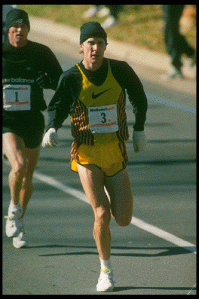
dave_wottle_oly_chmp

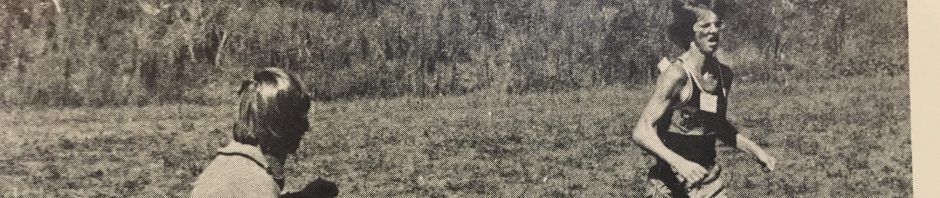
Notice the placement of Dave Wottle’s foot. The toe-off is key to fast, efficient running. That hasn’t changed in 40 years. Nor will it ever.

Paying attention to foot strike in running is the equivalent to riding cadence in cycling. You should know your foot strike pattern well enough to know whether you are overstriding or running efficiently. Generally the overstriding runner is reaching so far ahead with each step their heel is striking the ground with force almost like a brake. And guess what? That’s exactly what is happening with so many runners.

It does not mean you cannot use a heel strike pattern while running. Many world class runners do. But their stride at that point is almost like a cyclists in that their feet are rotating through each stride almost in a circular fashion. They are pedaling over the ground rather than reaching-landing-lifting with their feet.

You can hear the difference if you run on a gravel trail. When you are overreaching with your stride the heel will literally crunch into the ground. Your stride goes —–scrinch scrinch scrunch—–because each time you hit an uneven part of the surface your stride is not in control. The entire weight of your body drives your foot into each little hole and your foot is literally pushing surface material forward underfoot.

Running over the ground

An efficient runner by contrast is running over the ground, and that takes some serious thought to practice and perfect. Good running form is real, rehearsed and mindful. The entire CHI running movement is based on this mindfulness. Many CHI runners use a midfoot stride in which the pattern used by the runner is almost a flipping motion of the foot forward, yet the ground surface is not contacted until the body weight is over the point where the foot strikes the ground. The best description of this type of stride is that you are “pawing” the ground, much like a cheetah running over the African savanna. Your foot should always be headed backwards when it touches the ground. The forefoot under the balls of your feet is your contact point, and the heel comes in contact with the ground almost like a spring mechanism is installed in the achilles.

Practice your midfoot stride at a higher speed than your normal training pace. Go to a neutral surface like a running track and be mindful of how and when your foot strikes the ground. You do not need to go all “CHI” on yourself to learn how to run efficiently. Mindfulness of your footstrike and the correct, slightly forward-leaning trunk position is all you need to move more efficiently over the ground. Some runners practice the flip stride by kicking their own ass with their heels. It’s a good exercise but won’t happen for most runners while racing except at top speed.

Remember: don’t let your arms rotate to the sides if at all possible. That throws energy out at all the wrong angles.

Mindfulness reminder

So there you have it. Some mindfulness and thinking about what you are doing out there on the roads and trails can really make you a better rider and better runner.

Now get out there and kick some ass. Your own, and others.

Posted in We Run and Ride Every Day | Tagged , , , , , , , , , , , , , , , , | Leave a comment

Do trophies really mean anything?

My running and riding trophy case is a shelf above my art studio.

My running and riding trophy case is a shelf above my art studio.

If you have ever won a trophy for any reason, you know the feeling of success in having earned recognition for your efforts.

First trophies

I don’t remember my first trophy, but it might have been for winning a prestigious youth league baseball championship in Lancaster, Pennsylvania. It was the type of baseball league where you really learned how to play the game. Sliding practice. Fundamentals. Major League rules. And it was fun. But it was work, too.

In the Lancaster New Era tournament we won the first game 26-0. At one point the coach put me in the lineup and said, in all kindness, “I’ll never ask you to do this again. But please try to strike out.”

I swung up at the ball that way you should not, and accidentally cracked a double up the middle. Standing on second base, I looked in at the coach and shrugged. Sometimes when you try to lose, you still win.

I got to pitch in the second game, which was a pretty big honor considering I was one of the younger kids on the team. Then we won the championship game and headed to the Dairy Whatever for ice cream. I ordered both a cone and a shake because Coach said we could, only to hear one of my fellow players say, under his breath; “He didn’t even do anything to help us win.”

Hello! I pitched four innings out of six in the second game, which we won by a score of 8-6 or something like that. The anger I felt at the insult fueled many another triumph over the years. It’s funny how much a small comment can drive the human mind.

I suppose the trophy for that championship is sitting up on a shelf somewhere with a few of the others. Most of them are running trophies. I was lucky enough and worked hard enough to win a few races over the years.

Not so consolation prizes

Yet toward the end of my serious racing career in my late 20s, I entered a road race and won my age group, but did not place in the Top 3 overall. Given that the awards ceremony was not scheduled to be held for another 2 hours for some strange reason, I went home.

That afternoon a local competitor showed up on my doorstep with my age group trophy and a lecture. “You’re bad for the sport. You don’t show any respect for other runners when you don’t pick up your trophy.”

I’ll admit I was pissed off about not placing high enough overall to earn a “real” trophy rather than an age-group consolation. At the time I was a bit of a prick about my achievements, for better or worse. I did not really care about the age group trophy. When you are accustomed to winning races, the redundancy means little.

Trophies and meaning

But the incident made me wonder if trophies really mean anything at all. I have not won a trophy for running in years (just a ribbon last year for finishing a 3 mile cross country run in 21:00) and have never won a cycling race or placed high enough in a criterium (staying with the bunch sprint doesn’t count for much…) to get a trophy or even a six pack of beer as a premium.

My collection of trophies sits on a shelf high above my art studio. They don’t even collect much dust because it all falls downhill.

At least one that matters
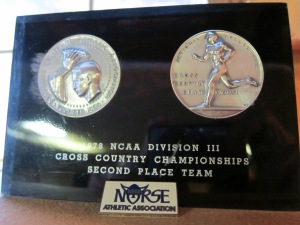
Plastic and metal represent reality and mettle

Plastic and metal represent reality and mettle

There is one “trophy” I keep out in sight. It is a plaque, really, with two silver medals inside a plastic case. That trophy was for placing second place as a team in the Division III national meet. That trophy means a lot because it represents a whole bunch of different facets of training, mental preparation and teamwork coming together.

Softball and other arenas

Since then there have been a few other “trophies” along the way for accomplishments in business and civic activities. The human race motors along on a tide of effort and recognition. Our trophies mark past accomplishments and ostensibly, motivate future efforts.

But I think about what one player from the opposite team said when our softball team had won the league championship for the 7th straight year. We were purposefully a ragtag team without uniforms. Half the team was former college players and several had 90 mph arms at one time. So we were tough to beat, and it was a fun way to spend Sunday afternoons, denying advancing age.

The trophy was a small baseball glove facing upward, like it was set to catch something falling from heaven. As each player stepped up to get his trophy, one of the opposing players joked, “Congratulations. That’ll be good at collecting dust over the years,” he laughed.

And he was right. It has. Yet what I remember from that game was the last out, because I got to make it. The sky was gunmetal gray because the season had been delayed several weeks into September due to late summer rains. The popup rose high into the sky and I centered myself under the tail end of its arc. The white ball shone like a bright stone against the clouds. It grew bigger as it fell and my teammates yelled “two hands!” and “clutch it” as it dropped from the sky.

Trophies=memories

There are similar memories from running trophies, if I pick them up and look at them. The Run for the Money was my breakout race in road running, bursting through the 32:00 mark for 10K on a course the locals said was a little long.

The vicarious effect

The 3rd place trophy for a 25K I ran in 1:25 reminds me of the fact that I got to escort Bill Rodgers around that day. I knew the race director who lent me a Volkswagon to pick Bill up at his hotel. He opened the door in his underwear and laughed, “Is it time to go already?”

We drove up to the race and people flocked to the car, seeking autographs and advice. One runner leaned in the window and said, “Bill, what advice do you have for a 4-hour marathoner?”

Rodgers eyes went wide and he said, “You can run for 4 hours?

I got so inspired hanging out with Rodgers that I decided to jump into the race at the last minute. This despite the fact that I had trained 15 miles at 6:00 pace on Thursday, and ran a 10 miler again at 6:00 pace on Friday. I was so fit that it would have been a great weekend to run a marathon had I put one on the schedule.

So I ran. And the race went great. I placed third and got a trophy. But at 14 miles something went “twinge” in my hamstring and following the race, back in the company of Bill Rodgers, it was hard to mask my growing concern about the possibility of injury. He could read my body language and my mood, astutely noting that throwing a race onto the schedule at the last minute can be risky.

Lessons from a master

He had cancelled his own racing effort that day due to general fatigue. In fact he’d lent me his actual big number and during the race people cheered me on, think I was the great Bill Rodgers himself.

Like he’d have finished in third place against a bunch of locals. Or cared about the trophy that came with that place.

One can only imagine what the trophy case of a Bill Rodgers might look like. Or a Galen Rupp. Or whoever. Yet, it’s true. Olympic Medals and New York Marathon trophies (Rodgers won 4 times) gather dust just like the rest of the trophies in the world. So they must mean something else, other than being symbols of triumph.

Shared sacrifice

But we can imagine what the work it takes to get to that level and stay there is really like. All our efforts feel the same, even if we do not run the same speed. While Rodgers once labelled the pace of slower runners “graceless striving” he later amended that take in having seen how much significance people place on the doing, rather than the awards.

And that, if anything, is what trophies really represent. But most of them are invisible, except to our own discerning minds. Whether you run or ride, may you have the good fortune to earn a few trophies of your own in 2013.

WeRunandRideLogo

Posted in We Run and Ride Every Day | Tagged , , , , , , , , , , , , , | Leave a comment

Clawing our way into the New Year and beyond

A talisman hawk's claw was part of the inspiration in college cross country.

A talisman hawk’s claw was part of the inspiration in college cross country.

There is something in the human spirit that likes a practical talisman or two to help us get through life. We wear chains around our necks with a charm, a cross or a hawk’s claw, as I did in college when I knew that my running was going to be the center of existence for a while.

Getting back to nature

The hawk’s claw, which was admittedly illegal to possess, served as a reminder that I would get back to my nature study and painting when the all consuming cross country season was done. Even at 21 years of age I was conscious of the need to seek balance. To seek out that side of myself that needed nature to thrive.

Discoveries

I’d found the dead hawk during a run in a forest preserve and returned later on to collect the bird and bring it home. As a college student trained in taxidermy and a wildlife artist keen to learn the details of so glorious a creature as a red-tailed hawk, the discovery was a gem of sorts. I rendered drawings of the feet and studied the feathers on the back and wings, which were marked with such enormous subtlety that even someone accustomed to painting the details of nature saw the task as a daunting prospect.

Evolution and creation

Even so common a bird as a red-tailed hawk is a testament to the complex work of evolution and the wonder of creation. Such creatures also bespeak wildness and fierce nature. High-flying hopes. It is no wonder that pro sports teams are named after falcons, lions and eagles. The human race, for all its sophistication and logo-driven commodification still desires commune with our roots. And we are connected deeply, right down the genetic level, with everything that moves and creeps on this earth.

Limited worldview

Don’t let the selfish creationists fool you into thinking the human race is separate from all creation. God doesn’t think that way, nor did Jesus, who taught using parables richly steeped in what organic fundamentalism, a term I conceived in my book The Genesis Fix: A Repair Manual for Faith in the Modern Age.  Organic fundamentalism is a scriptural method that recruits metonymy (the use of one thing to represent another, especially nature) to communicate spiritual laws and values.

The whole bible depends on this tradition, and it supplies the metaphorical foundation for truth. In fact all great traditions of faith and belief ultimately recognize these deep connections between nature and what we call God, while scientists eventually sit in awe and wonder at what they study, at complexity, and at the meaning derived natural law.

Reduced to metaphor

Can you see this truth? We are reduced to metaphor to describe anything in this world. The very words you read here represent ideas, and ideas represent meaning, and meaning leads to truth. There are no shortcuts.

Literalism, by contrast, is the child’s view. It limits our worldview and leads to brutally childish conflicts over dogma, false theologies and politics. Look at what literalism does to the great religions of the world. The radical side of literalistic Christianity fights science and seeks to dominate social policy. The radically fundamental wings of Islamic faith issue threats against the world and resorts to terrorism. These two branches of faith engaged in Crusades and kill people within their own traditions to get their way.

It is a fascist form of faith that plagues our world. Resist the temptation to run or ride down that road, for it is the tarsnake of ignorance. Use your running and riding to gain the mental space to see beyond these fatal ideologies. They will kill your spirit.

A talisman of hope

As a youth, I wanted hope in the form of a talisman around which to draw the robe of my worldview. Youthful symbolism is different that childish faith, and I wanted a part of that awe and wonder to go with me wherever I went, especially wherever I ran.

So I hired a jeweler to mount one of the hawk’s claws in a clamp on a real silver chain.

The feet and claws of this gyrfalcon exhibit the incredible design and power of evolution to a purpose.

The feet and claws of this gyrfalcon exhibit the incredible design and power of evolution to a purpose.

With respect to laws

Again, the decision to use that hawk claw was illegal, and flies against the wildlife protection laws in every state in the nation. So I am not recommending that anyone use any part of a wild animal for any decorative purpose these days. I no longer possess the chain or the claw, and have since focused my acquisitive nature on taking photos rather than specimens.

Especially, I did not kill the hawk to collect the claw (which would have been heinous) but found it dead already. It is against the law to collect even dead wildlife however, and the laws to protect wildlife exist for a reason. They must be sweepingly observed in order to prevent potential for abuse.

Different era

But a determined young man accustomed to trespassing in search of birds to see was not going to be deterred by such considerations in the late 1970s. I’d been handling all sorts of wildlife specimens in field biology; ruffed grouse and great horned owls, gray and red squirrels, beaver and opossum and 15 species of ducks.

So the short leap to wearing a hawk’s claw around my neck was not difficult to make.

Flying higher

Despite how hokey it might seem, the hawk’s claw (along with the love of a woman at the time) did inspire me. I moved from 7th man to 2nd man on the team that season, and nearly winning my first varsity college race. Our team finished 2nd in the nation in Division III cross country. Not earth-shaking results by measure of the world’s great achievements, but they meant a lot to us, and me. And still do in many ways.

Returning to earth

I think the hawk’s claw ultimately dissipated from exposure to sweat at the base of my neck where it hung for so many miles. It returned to the earth, as shall I some day. We all do.

Great faith traditions recognize the connected nature of the universe.

Great faith traditions recognize the connected nature of the universe.

Or perhaps we’re all running and riding in a cycle much larger than our own thinking. This life and whatever comes next, or came before. Our own bodies are launched in a cycle of destruction and renewal, the marathon of reality and imagination we call life. Yin and yang. Darkness and light. Nature and nurture. Devil and God. Self and selfless.

As Crosby Stills Nash and Young put it in the song Woodstock …

“We are stardust, we are golden, we caught in the devil’s bargain, And we got to get ourselves back to the garden.”

Posted in We Run and Ride Every Day | Tagged , , , , , , , , , , , , , , , , , , , , , , , , | Leave a comment

It’s almost 2013 and that means time for reverse resolutions on 2012

Insanity can add up.

Looking behind can teach us a few things about looking at the road ahead.

A couple years ago my cycling took a strange turn in late summer when a series of flats took me out of action day after day. It didn’t take a genius to ascertain that my tires were worn from a summer of riding, but when I put new tires on the bike, two more flats came along!

Bad advice 

I’d taken some bad advice from a guy at the bike store who insisted that some thinner tires would hold up in day to day riding. So I put them on and got one flat from a piece of road debris and another from a pinch flat. Too thin. Too bad!

Repeat performance

There had been a similar series of flats before, and I made the mistake of barking about the constant need to change tires when a buddy noticed my complaint on Facebook and said: “Do yourself a favor. Stop running over shit.”

That is some very…

Good advice. Ranks right up there with the time a college roommate heard me bitching about the pace of our team’s winter training and advised me: “Cud, you just need to shut up and run.” I took his advice and set all my indoor PRs that winter.

Sound off

But there is still something to be said for bitching out loud when things don’t go right, if only to hear yourself whine.

There is also something to be said for listing your complaints so that you can see what has gone wrong as well as what’s gone right.

So here’s a suggestion, make some Reverse Resolutions. That’s right, rather than looking ahead and throwing blind promises at the New Year, take a look behind at the old year and figure out where you went wrong. It can teach you a lot about yourself.

In the spirit of self-deprecation, here is my list of Reverse Resolutions for 2012:

1. No More Bike Wobbles. The bike wobble that sent me crashing to the ditch in September 2012 resulted in a broken collarbone, surgery and physical therapy. It also deeply bruised a hamstring that took months to recover. But having never heard of bike wobble before the crash, I cannot be entirely blamed for those miserable results. What I’ve learned since has convinced me that Bike Wobble is essentially preventable if you pay attention to the warning signs and learn a bit about what to do if it comes along again. Press your knees to the top bar, keep pedaling and loosen your grip. What a great resolution for the old year to take into the new.

2. Don’t train the same stupid pace all the time. It seems simple, but in 2012 I simply did not train hard enough or easy enough at times. Always kind of hammered the middle ground, and had middling fitness as a result. There were legitimate Life Stuff and Events that prevented me from better variety, but looking back at 2012 and ahead to 2013, that is one thing I plan to change. Get up and GO now and then.

3. Don’t forget about strength training. I know bloody well that strength training keeps me from injury and improves overall performance, especially in running. So why do I (and so many others I know) neglect such a simple problem prevention technique? Usually it’s for lack of focus. 2012 was full of that. Which doesn’t mean I hope to be “full of it” in 2013, as in making false promises to myself. But keeping up the strength work would be the nicest thing I could do for my mind, body and whatever else enters the picture.

4. Run and ride like you mean it, not like it’s an obligation. How many of us go out the door with that sodden attitude that we “need” to go for a run or “have” to lose some weight. What a crappy way to live. Instead, we should focus our gratitude and thankfulness toward the fact that we CAN run and ride. If that’s the only Reverse Resolution we all keep in 2013, things are guaranteed to go a lot better.

Tarsnakes are everywhere. And don't you forget it.

Tarsnakes are everywhere. And don’t you forget it.

5. Stay on the lookout for tarsnakes. I’m not the only one who warns you about these things. But I may be the first to recognize their metaphysical meaning.

Tarsnakes are real, and they are also the product of our ignorance and imaginings. That said, there have been several other trip-ups during the year 2012. Wearing a pair of training shoes too long. But there have been positive results and possible averted disasters by paying better attention to riding safety and accepting that the brutally hot weather of last summer in Illinois really did affect one’s ability to train.

Those are my simple Reverse Resolutions for 2012.

Happy New Year to everyone for 2013! Thanks for finding this blog that started up in August 2012 and swings into 2013 with hope and excitement. Best wishes to all of you!

Christopher Cudworth

Monte Wehrkamp

WeRunandRideLogo

Posted in Tarsnakes, We Run and Ride Every Day | Tagged , , , , , , , , , , , , , | 2 Comments

2012 in review: Facts and stats about We Run and Ride (August-December!)

The WordPress.com stats helper monkeys prepared a 2012 annual report for this blog. I wanted to share it with you because it says things about what readers of this blog want to see, where they come from and more. Because that’s important to me. Ifyou have any comments leave in the space below or send to Christopher Cudworth @cudworthfix@gmail.com. Thanks and Happy New Year! Looking forward to running and riding in 2013!

Here’s an excerpt:

600 people reached the top of Mt. Everest in 2012. This blog got about 7,600 views in 2012. If every person who reached the top of Mt. Everest viewed this blog, it would have taken 13 years to get that many views.

Click here to see the complete report.

Posted in Uncategorized | Leave a comment

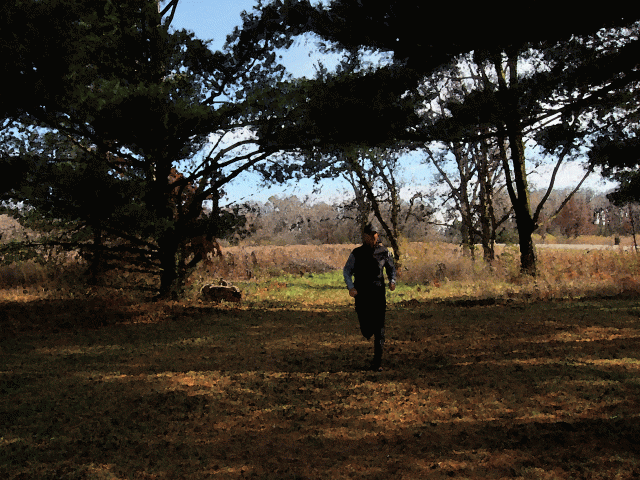
Saturday artwork: Photoshop watercolor of fall runner

You know the feeling. The temperature is right. The day is bright. Just cruising through a forest preserve with your own thoughts.

You know the feeling. The temperature is right. The day is bright. Just cruising through a forest preserve with your own thoughts.

Posted in We Run and Ride Every Day | Tagged , , , , | Leave a comment

Physician, heal thyself

Marathoner Bob Kempainen, now a physician, ran through stomach illness to win the Olympic Trials marathon. A physician's gift for physical and mental discipline? Likely so.

Marathoner Bob Kempainen, now a physician, ran through stomach illness to win the Olympic Trials marathon. A physician’s gift for physical and mental discipline? Likely so.

“Physician, heal thyself” is a quote of a Proverb spoken by Jesus in the book of Luke 4:23. It means, quite simply, that people wanted him to do miracles in his hometown like those they had heard about in other places.

But Jesus didn’t fall for such tricks, demanding proof of the miraculous. And neither should we.

The meaning of this bit of scripture hit home as I was riding the elevator at a hospital with a physician who wore a stability boot on his ankle. “What’s up with your foot?” I asked.

“Achilles,” he said.

“Do you mind if I ask how it happened?”

“It was progressive,” he replied. “Started with a torn plantar fascia and sooner or later the achilles went.”

Ignoring the warning signs

Many of us have been there in our running and riding. Ignore the warning signs and pay the price. Favor one injury and pick up another. That’s called a compensatory injury. Trying to compensate for one ache can lead to another, sometimes worse problem.

Compensatory injury 

I once strained the achilles on my right leg pretty badly by refusing to use crutches when I was rehabilitating my left knee after surgery to repair a torn anterior cruciate ligament. Humped all over a soccer tournament on one leg basically, and by the end of the weekend, trouble sprang up in my right achilles. Dopey, I know. But we all try to heal ourselves the wrong way sometimes. Hoping for miracles. Or acting like they’ve already happened.

Let healing occur

You have to allow your body to heal. Even doctors are prone to forget that when it is their own bodies they are trying to heal. One orthopedic surgeon I know tore his ACL and had it fixed by his surgical partner, staying awake to watch the surgery while it was in progress. Talk about ‘physician, heal thyself!’

Yet he tried to come back too soon from surgery and tore the other ACL in the process. So his partner fixed that one too, while his fellow surgeon stayed awake again to watch.

Doctor, doctor, gimme the news…

My family doctor is a runner. Or at least he was. He cherished running the Marine Corps Marathon each year, for at one time he was a physician in the Marines.  But as he aged the training got tougher to take, as did pushing away from the table. His increased load along with a slight weight gain around the middle added up to trouble. First his knee went bad, then a hamstring. He hobbled through 26.2 miles nonetheless. But that was that. His lower back went out, and a disc slipped a little too. “Now I just spin on the bike at the health center,” he chuckled. “I was too damn dumb to know when to back off.”

We’re all human

We’re all human. Even our physicians. That same doctor didn’t quite make the right call on my own knee and hip problems a few years ago and deterred me from getting physical therapy that probably could have identified some weakness problems. With the right PT, I might have prevented even the ACL tear.

Defying human limitations

Yet I also know many physicians who seem to be able to defy the common limitations of the typical athlete. An Ironman doctor I know rides his bike like a maniac, dialing it up to 26 miles per hour for miles at a time. He can’t climb hills for shit, but he sure can go on the flat.

Running with him was an interesting exercise as well. His stride is forceful, not elegant. Yet he covers those 26.2 miles with determined steadiness. As a runner, he’s a grinder, not a glider. Whatever works, right?

The amazing example of marathoner (and doctor) Bob Kempainen

I think back to the Olympic Trials where then-resident physician in-training Bob Kempainen threw up during the race yet went on to win. The only way I can figure he had the toughness to puke and keep going was the discipline learned in residency. Physicians spend 80 hour weeks on barely any sleep taking care of patients. When it comes to taking care of themselves, life seems like a cinch. And so he ran through sprays of his own Gatorade to win the Olympic Trials. Gutsiest performance I’ve ever seen. Pun intended.

It’s a unique perspective our physicians have on the world. We can be grateful for their expertise, their specialty training and their amazing collaboration to help us all get through life, and hopefully heal us as we run and ride. I’ve always admired their ability to serve in their practice far beyond what most people can take. Long hours. Difficult, draining time at the operating table. Long lines of complaining, sick patients. We should all be thankful for doctors. Sure, there are a few pompous pricks among them. But maybe, just maybe, they’ve earned the right.

But most of them are kind and considerate. Except when it comes to their own injuries. Then they can be too tough on themselves. It’s hard to pull off miracles so close to home.

WeRunandRideLogo

Posted in We Run and Ride Every Day | Tagged , , , , , , , , , , , , , | Leave a comment

No fear of darkness, nor fear of cold

As darkness settles, our senses often heighten. But we need not always fear.

As darkness settles, our senses often heighten. But we need not always fear.

Somewhere along the way, well into my 30s, I walked into a basement and stood there in deep darkness. And was not afraid.

Most of childhood and beyond was filled with trepidation at the thought of being left in a totally dark room. My brain had been filled with the idea that danger lies in darkness. That bogeymen or evil spirits might somehow get you.

Yet there I stood. Alone in the dark. A quiet clock across the room kept ticking. And nothing came to get me.

Nothing ever has. There have been many moments perhaps where something could have jumped out of the dark woods, for example, to knock me down or rob me. There have been many nights running down dark paths where strangers or thieves could have attacked. Yet none ever has.

I count myself fortunate in that regard. One should not take for granted even the basic safety of hot having been assaulted in the night. Yet even when I lived in the City of Chicago and trained through the dim passages of Lincoln Park and the lakefront, I stayed alert.

We generally fear what we do not know. This photo of a windmill at night seems like an evil creature. But it is not.

We generally fear what we do not know. This photo of a windmill at night seems like an evil creature. But it is not.

But basic fear of darkness is about more than fearing circumstance. That haunted feeling that something is near, about to get you, is a phobia that is not easy to cure. Yet mine did. Cured itself?

Not exactly. Some fear of darkness is inherent to our human condition. Anxiety might magnify it, and I’ve had my tussles in that category.

By contrast, human faith often fights the notion that there is anything to fear in darkness. I have grown in that category. Yet the lack of fear of darkness seemed a pragmatic realization as much as some spiritual release.

Now it is the cold I no longer fear as well. The cringing reaction one instinctively has when emerging outside to be hit by chill air is vanishing. It is not that I no longer feel the cold. It is that I suddenly have started feeling it differently. It is, after all, just cold air. We all know our limits in dealing with that.

Those limits vary widely from person to person. I have often wondered at the sight of an urban fisherman standing on the concrete walks along Lake Michigan on a 35 degree day dressed only in a tee shirt. I might be jogging by wearing two layers of running gear to fight off the lake breeze, and here’s this stolid fisherman, not even shivering in the wind.

People who exercise outdoors with any frequency build up a tolerance for cold over time. The 50 degree day you dread in September is welcomed with a tee shirt come spring. It’s all relative.

IMG_8216Something in our head changes, and our bodies go with it. We overcome our sensations, and with it go our fears. Sometimes we make a mistake and wander into a dark place where we should not go, or get caught on a run with too little clothing to fight the chill rain, or on the bike when sleet starts cutting across the open fields. Then you realize you’d better be smart and get home right away.

It’s going out into the dark or rain that marks the moment where your fears don’t rule you. That’s the hallmark of someone who has moved past their superstitions and fears to become one in control of their own mind.

When you can stand in the dark. When you can brace for the chill. And not be afraid. Run on. Ride on. Your mind leads the way because you can see into your own soul, and not be afraid. And your body leads the way because it can sense the limits of what you can do, and deliver a sane response. That’s a great place to be. Without fear.

And why is it important to conquer fears of darkness or cold? Because fear operates within us on ignorance of our true circumstance. When we get a grip on one set of fears, it enables us to move past fears of other kinds, like outlandish nervousness before a race, or fear of a hard training ride with superior cyclists. You move past your fears and move into the zone where you can sustain and compete.

These are aptitudes transferable to other circumstances in life. When disease or illness strikes. When relationships blow up. When faith abates. When failure, stress or disppointment lurk in your mind.

Learn to work with your fears, and even overcome them, and life makes more sense overall.

And that is how you learn how to best run and ride.

WeRunandRideLogo

Posted in We Run and Ride Every Day | Tagged , , , , , | Leave a comment

The tarsnake of running and riding over Hump Day

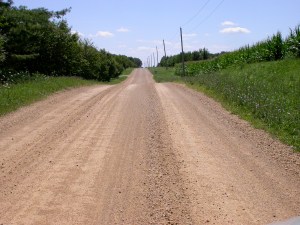
Hump Day is a gravel road with little traction and a 10% incline. Keep on running and riding. You'll get through it.

Hump Day is a gravel road with little traction and a 10% incline. Keep on running and riding. You’ll get through it.

You know the feeling. Wednesday. Hump Day. When will Friday come?

Sure, sometimes you face a weird week with Christmas on a Tuesday and all. So let’s have compassion on those who are already back in the office, staring at the steep gravel hill of Hump Day. Car Wheels on a Gravel Road. Lucinda Williams sings it best.

We all face the same situation sooner or later, it seems. People run or ride up the hills of Monday and Tuesday only to find that the road ahead is a switchback over a steep incline before reaching the descent days  of Thursday and Friday.

The Bell(y) curve

If your week too often looks like a pregnant Bell(y) curve with a giant bellybutton sticking up where you once had an ‘innie’, well, take heart. We’re all out here rooting for you.

There are good weeks…

Some weeks are just like a great run or ride. You hit the ground running on a Monday and before you know it, Friday’s over and you’re sailing home with everything completed on time so that you can do your long workout on a Saturday morning with a clear mind and a hopeful heart.

And bad weeks…

Then there are those other weeks. Days when you feel like you’ve been shoved into a black hole or a time warp. The minutes drag and the seconds eat away at your soul. That person with the annoying whistle while they work, or who talk too loud on the phone or hold whispering conversations right outside your door that you try to tune out? Well, sometimes they just can’t be avoided.

Then there is jealousy and envy…

You glance out the window and wouldn’t you know it? There goes a runner in bright shoes and matching top, trotting along happy as can be. Or you head out for a quick break at lunch and grab some sort of fast food you should not eat, and on the way back to the office, a sleek-looking cyclist on a $5,000 bike wearing the coolest kit you ever saw passes you by on the side road. You think to yourself: “I suck. Here I am a fat slob eating crap and there goes the guy who will kick my ass at the next criterium I race.”

Temptations and obligations

It’s not easy being a working workout lover. Temptations and obligations are everywhere. Some are things you want to do. Some are things you have to do. Some are things you wish you could avoid and can’t. Some are things you wish you could do and never find the time.

Hump Day Thoughts

These are Hump Day thoughts. Stuck in the Middle With You thoughts. Not quite there and not quite gone, you cling to the hope that somehow, someday, your schedule will be yours to decide.

We all wish that dream of personal freedom and Hump Day ignorance could come before retirement. Before the body is too old and the will too comfortable in its objectives.

Of course when you’re running a marathon, Hump Day really doesn’t arrive until about Mile 20. That’s when your glycogen is due to run out and The Wall lurks for many people. In cycling the same effect hits you at about mile 80 of a Century Ride.

So you have to use a combination of wise replenishment and mental strategy to prepare yourself for potential events such as these.

There is hope

But you make your own way in this world, and sometimes, with the help of God or a dying relative perhaps, you finally get the time you need to train without constraint.

Behold your own dedication!

I have a friend who finished the Madison Ironman last year. Joined him on several workouts. He’s a hard working physician who’s done well in life. Yet his work still calls him loud and clear. Watching him focus on his workouts was a pleasure that recalled the time when I actually ceased working full time in my early 20s and just ran. Ran like hell for a full year and set all my PRs, won some races and pretty much ignored the fact that the working world of 8 to 5 (it used to be 9 to 5…how’d that happen) even existed.

It wasn’t the wisest career move, I must say. But it was wise in terms of understanding what time allowed for that sort of existence. Pretending I was a pro athlete (I did have sponsorship) was both a fantasy and a reality at once. Sure, I found out eventually I was not a world class athlete, but I also found out other things about myself as well.

Surprise: There’s more to life than work

Like knowing that when you’re not working, you really do still exist. And that not everything in the world revolves around work so much as work revolves around you, hemming you in, cutting off your passage to contemplative existence. Fortunately or unfortunately, that’s the way of the world. Blame it on Adam and Eve. The first human f’ups.

For a while there for me, Hump Day ceased to exist. It was living out a fantasy that maybe I should not be so quick to regret. I once lamented to my own mother that the time spent racing and training was self-indulgent and she interjected: “Oh, I don’t know. I rather like you then. You were so focused.”

On anything but Hump Day.

It can still happen for all of us if we apply some basic principles of commitment and discipline in our training.

How to Wipe Out Hump Day (WOHD)

Heading into the New Year,  the best thing you can do for yourself to wipe out Hump Day and ride over those tarsnakes of negative thoughts about lack of time for training and learn to forgive yourself.

It’s just like downshifting to get up a hill on your bike or running in place at a street corner to catch your breath and gather your thoughts. You need to keep moving, but use the time to gather yourself and move on. Just don’t stop or go backwards. That’s the goal of personal momentum.

Momentary lapses are sometimes the worst

Forgive yourself those moments of weakness by being patient enough to avoid gorging on food at night the minute you get home from work. Settle down a bit from your day of work or commute and you just might  get out the door for a run or a ride.

Beseech your spouse and say something like, “You know, I need this for mental health, and if the chores can wait a little while longer, I’ll be a better person to live with.”

If all else fails, you can still do something simple and healthy like taking the dog for a walk! It all adds up in the end. Who knows, your dog might find something to hump and that always makes Hump Day a little more exciting, for the dog least. We heartily recommend that you yourself do not actually hump anything in public. Despite all urges to the contrary, that is not what Hump Day ever means. Not for us human types anyway.

Smoothing over Hump Day

You’ll be amazed how quickly Hump Day starts to smooth over when you realize that its just another hill, of the metaphorical––or is that allegorical type––of course. I think it’s both.

You’ve crested many such hills both in  in your day, and you will crest many more.

Godspeed, and watch out for those cinnamon rolls on the counter and bottles of cold beer in the fridge. They are the tarsnakes of diet and determination. Run past them first and you will have the willpower to only sample them later, and that is good. Your salvaged will is your best hope. It will help you past Hump Day and beyond.

WeRunandRideLogo

Posted in Tarsnakes | Tagged , , , , , , , , , , , , | 2 Comments