Embracing the unincorporated you

Unincorporated Hickory.jpgFall can be such a conflicted season. With the weather changing from warm to cool, there are still hot days in September that fool you into thinking the weather is not really going to change. Just yesterday while starting out on a run, I encountered a woman walking her dog who turned to me and said “It can stay like this all winter and then just turn to spring.”

Sounds nice, doesn’t it? 68 degrees. Dew on the grass. Forever. Perhaps it’s like that down in South Carolina all winter. But probably not.

Here in Illinois we’ll still get six more weeks of pretty decent weather before the dank arrival of November. It’s like the Groundhog Day Reversal.

But that’s fine. By then we’ve been through the shiningly shorter days of October. The leaves have flared brightly and fallen. We crunch through piles of them and the season progresses. We brace ourselves for winter.

Cottonwood leaves.jpgChange is a constant. Yet for some reason we also love to embrace the thought that some things never change. We love small little towns where the storefronts are still occupied with locally owned businesses. We cherish the discovery of a restaurant that seems like it remains locked in time. We have one like that here in Batavia, Illinois. It’s called Daddio’s. It’s a diner that’s a real throwback in time. And damned good food.

While driving around we love those little sections of landscape where the farmers rotate crops and there are no FOR SALE signs on the roadside beckoning developers. We cherish the hollyhocks growing by the mailbox. The farm cat that sits on the stump. The barking dog that will secretly stop and wag its tail if you talk nicely.

These are the places where things don’t change because no one is really trying to change them. These are the unincorporated sections of America.

There is a section of road behind our house that cuts through an unincorporated section of Batavia Township. The Welcome to North Aurora sign marks the end of that town’s grip on the landscape, and immediately the homes on that street go from cookie-cutter to eclectic. Old, low-slung ranches and half updated Colonials. Even a roughly treated former farmhouse being slapped with modern accoutrements. Because it’s unincorporated. People play by different, somewhat looser rules.

Unincorporated 1.jpg

The road itself is some sort of calm black asphalt with no apparent relative roads anywhere in our county. It holds up well under plowing in winter, and isn’t bad for footing even when the snows and ice make other roads slippery. The few driveways that peel off the main road are typically black as well.

Frog 1This past summer though, the road was splattered with the carcasses of frogs run over by passing cars. There was a massive migration of young bullfrogs from the local wetland. They headed out in all directions after a particularly heavy rain and many wound up smangulated on the unincorporated strip of Hickory Lane.

My wife and I were headed out for a run and I mentioned going up Hickory. “Ugh,” she chuckled. “It’s still covered with frogs.”

She was right. From a frog’s standpoint, it looked like crucifixion row leading into the City of Jerusalem after the Romans quelled a Jewish rebellion. But there’s no accounting for the ways and means of evolution. For every frog we spotted on the road, there were likely ten or twenty that made it into some wet ditch. Life is a numbers game. It is also a pre-existing condition.

So the unincorporated area near our home is not without its reminders of mortality and life passing us by. There are days when I run that road and it feels like I’m 80 years old. Then there are days when I feel good and race along at 6:30-7:00 pace and I could be 30 or 40 years old again. Instead I’m somewhere in the middle of all that. Grateful for the good days and respectful of those when I feel creaky, strange or old.

Sometimes I take the unincorporated path back from a bike ride and the smooth surface of Hickory Lane welcomes the thin black tires of my Specialized Venge. There are no tarsnakes on Hickory. No patches of black tar or long strips of rubbery, warmed up goo to make the rider anxious when bike tires sink into the grooves.
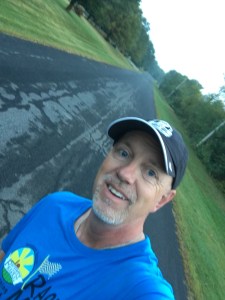
Unincorporated MeI’ve gotten to know some of the people along that stretch of road. I’m now “that runner guy” to many. I am happy to play that role. They wave and I wave back. Their dogs give a cautious yip or a bark, but I am no longer the odd threat I once was to the canines protecting their home turf.

One day there was an actual herd of goats wandering the roadside. They’d gotten out of their cage at a farmhouse somehow, so I yanked up some grass and placed it before their munching mouths. They happily chewed up the grass and nudged me for more. They smelled lightly of hay and dirt, because they’re goats. That’s what goats smell like. They have weird eyes, and I don’t trust them entirely. But that’s the beauty of unincorporated areas.

Down another unincorporated road near home there is a horse farm where I stop sometimes on a run or a ride to yank grass and feed the steeds and fillies. I didn’t used to care one whit about horses. But I visited a barn a few years back and one of the horses in the stalls seemed to adopt me. That big soft muzzle won me over. Now appreciate the look and feel of a nice horse. They are the ultimate unincorporated animal.

These sensations appeal to the unincorporated me. There’s a person in me that was raised on a farm in upstate New York. Who knew the smell of cow manure and did not find it offensive. Who caught frogs with bare hands and marveled at the sight of young barn swallows with yellow mouths begging parents for food.

The unincorporated you is the person who feels alive at such sensations. Who can forget the supposed sophistications of the phone and the news feed. Who watches the sun for a minute as it rises above a bank of gray clouds at dawn.

Embrace the unincorporated you. The one who rides without a bike computer now and then. Who lets the Strava fall away for the day. Who swims without counting laps, and takes a long shower outside if the occasion arises, and stands naked in a prairie when there’s no one else around.

The unincorporated you is alive within. Embrace the feeling, that mildly untamed nature of who you want to be. In control, but not absolutely under control. There’s a freedom of spirit there. Unincorporated.
Posted in Christopher Cudworth, Tarsnakes, triathlete, triathlon, triathlons, werunandride | Tagged , , , , , | Leave a comment

The TriSherpa’s role

Sue Running 3.pngThere are four weeks until my wife’s Ironman in Louisville. Her training is going well. That is not to say it is going easily.
Fifteen miles of running on a mid-September day with temps in the 80s is a sweaty slog. We set up shop out on the Virgil Gilman Trail, a bike and running path that traces an old rail line from Aurora out to Waubonsee Community College. It is happily occupied by dozens of runners, cyclists and recreational walkers on weekends. That means it is safe but not overly occupied. A good training location.

But it is linear, so the plan was to park our vehicles at opposite ends of a five-mile segment and have her run out and back and out again.

I ran east to meet her, but she had a head start as I was filling water bottles and hitting the potty at my end of the bargain. She was 30 minutes into the run coming west and I was 20 minutes into the run going east when we met up on the trail.

Coming off 100

She was also coming off a 100-mile ride the day before. I pedaled 55 or so miles with her on Saturday. She finished off the rest on her own. We were joined on the ride by one of my best friends. That offers good company for the ride because it gets a bit boring doing all that training by yourself. So we trucked the back roads together, a merry little band of three cutting through the crosswinds.

Sue leads most of the way on the rides. It doesn’t really help her to draft on me when the Ironman bans such behavior in competition. So I wheel suck and lightly converse at corners and keep her company when the wind doesn’t blow the words away.

Speedway rendezvous

A few weeks ago one of her wheels blew when a shard of glass sliced her rear tire. We stopped to replace the tube next to the Bob Jo Speedway between Virgil and Sycamore, and set out to ride again.  PFfoooom! It blew again. The tire was damaged and the tube popped right away.

I’d already had a pinch flat that day so we ran out of tubes. So we coordinated a rescue with her son while I rode the 20 miles back to St. Charles to pick up our vehicle. Her son drove out to bring her home and they stopped on the way back to buy new tubes and a tire. Then she finished up the last fifty miles on her own.

Before, during and after

Such are the trials of training for a triathlon. Not everything is going to go as planned. She has a three more 100+ rides to do. I plan to be there with her during significant portions of the rides and the runs. That’s the role of a TriSherpa, to support the racer before, during and after the events.

I actually talked another TriSherpa this summer who is performing TriSherpa duties for his wife in her goal of doing Ironman Wisconsin. The pair hail from Minnesota and were down for a weekend in Wisconsin doing the Madison Open Water Swim and riding the Ironman Course, which has added a brutal ass hill known as Barlow to its retinue of climbs this year. It’s a wise idea to practice and gain some confidence or at least a plan for the hilly course.

“I’ve done Ironman three times,” the TriSherpa told me. “But this is her summer. I asked what she needed most from me and she told me, ‘I need your support so I can do this.’ So I’m not really racing this year. I didn’t want my goals to compete with hers. So I’m training with her and we’re focusing on getting her ready for the Madison Ironman. It’s going pretty well. Not easy for her, but it’s going well.”

Mental space

Later that day we saw them parked in the shade of a pine tree after riding their first loop of the 40-mile loop from Verona out to Mt. Horeb and back around to Cross Plains. That is the head and heart of the Madison Ironman bike course. There are some soul-sucking hills out there. They were heading back out after a fuel break and a chance to mop up some sweat. I gave him a quick nod and he smiled as she sat gazing into the distance, her thoughts occupied on the job ahead.

That is the TriSherpa’s job: giving the athlete the support they need… and the chance to think it through.

But foot rubs help too. 

We’re headed for Louisville in mid-October.


Posted in IRONMAN, triathlete, triathlon, triathlons | Tagged , , , , , , , , | Leave a comment

The cyclist’s lament

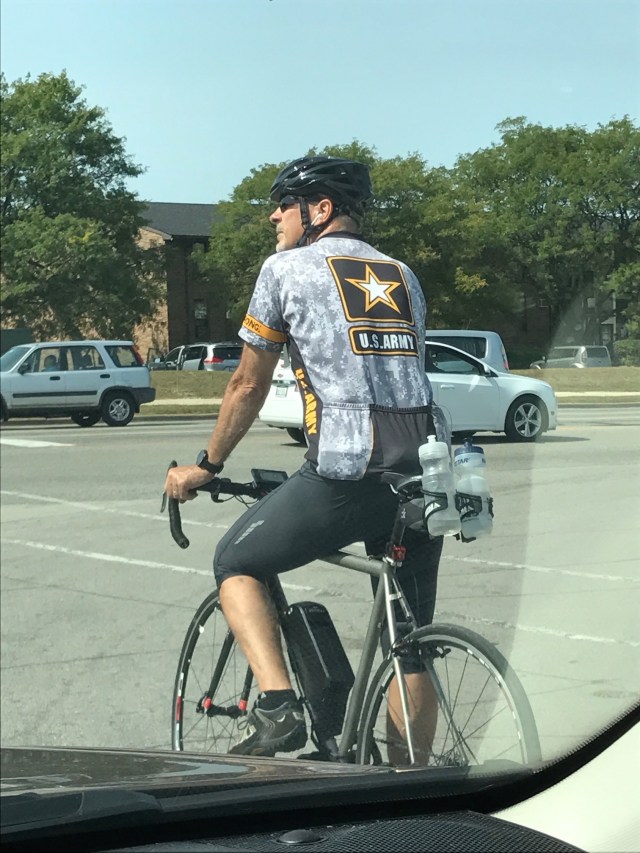
Rider.jpgParked at the Wilson Street entrance to Fermi National Accelerator Laboratory, I glanced up to find a cyclist dressed in an Army kit waiting for the light to change. Without stopping him to ask about his connection to the military, I cannot know whether it was his own service that engendered the kit, or one of his progeny.

But I did think that his kit was a good idea. At least a veteran or military person might get respect on the road. That’s all I wish for anyone. Basic respect. To be given, and to be returned.

My own riding habits have grown more cautious as the years have gone by. Certainly, I respect the rights of other cyclists on the road when it is me driving past in a car. I give them three feet of space as our traffic laws demand. I separate hazards ahead on the road if necessary, pausing if it appears that a vehicle coming from the other direction will arrive at the same time I am about to pass the cyclist.

These are common sense actions. But what I see out on the road when cycling is entirely different. I see drivers refusing to separate hazards at all. Instead, they hug the center of the road and speed up as if cutting down the moment of conflict is somehow a better resolution to competition for space on the road.

That’s what it’s all about for some people. They’re competing for space on the road, and they don’t want to lose. Which makes them look at cyclists as interference, an interruption and an affront to their road sensibilities.

This is how our culture has devolved. It’s not about the lack of people attending church or the teaching of evolution in schools. It’s not about being Republican or Democrat or Libertarian. It’s not even about being military or civilian. It’s about people being selfishly competitive to the point where they cannot even bear to expend three seconds of their day pausing to respect another human being on a bicycle.

There are probably other socio-cultural issues that feed the reasons why some people hate cyclists. Perhaps the lycra shorts on our Army friend in the photo above seem offensive to some. After all, we had an entire kerfuffle about the suitability of women wearing yoga pants in public. And those bright-colored kits preferred by cyclists? Some people consider them less than masculine when worn by men.

But those are distractions. For this is the cyclist’s lament: the fact that riding a bike legally on a public road is considered a massive affront to people too impatient and selfishly competitive to slow down, separate hazards and show respect to another human being on this earth.

It’s a sad fact, but the man in the Army kit illustrates the attitude of too many people on the road these days. It’s a war for space out there, and some people are not willing to give an inch. Not on their life.

But maybe yours? That’s not their concern.

Posted in cycling, cycling the midwest, cycling threats, Uncategorized | Tagged , , , | 1 Comment

Life in a fog

Fog.jpgThere is a fog spread across the entire Midwest this morning. It is nothing more than a cloud come to earth. But it has the smell of fog. That wet, specific smell of fog that goes everywhere with you.
I love running in the fog, but not cycling. Runners can step off the road while running against traffic. Not so on a road bike. Even with bright lights on the back of the bike, a really thick fog can put riders in great danger. We won’t do it. No bike riding in a deep fog.

It is the isolation of running in fog that I like so much. Navigating a woodsy trail in a fog in the woods, even better. The world is reduced to what you can see a few feet ahead. It simplifies things. Takes away the open dread of daily life. Back to the womb, as it were, of existence.

We’ve been to triathlons where a fog hung over the lake and had the swim canceled for safety reasons. It’s hard enough to keep track of hundreds of swimmers in the water without having them disappear into a fog or mist. It’s all about specific gravity, if I have the science correct:

Specific gravity is the ratio of the density of a substance to the density of a reference substance; equivalently, it is the ratio of the mass of a substance to the mass of a reference substance for the same given volume. Apparent specific gravity is the ratio of the weight of a volume of the substance to the weight of an equal volume of the reference substance.

Water and fog are thus the same thing. One is simply denser than the other. We even emit a brand of fog from a shallower density as we run. So whether we admit it or not, we live our lives in a fog. If it isn’t present otherwise, we create our own.

This brings up another kind of fog, the metonymic* kind, with which we sometimes deal in life. This is how the phrase “mind in a fog” is described:

Clouding of consciousness, also known as brain fog or mental fog, is a term used in medicine denoting an abnormality in the regulation of the overall level of consciousness that is mild and less severe than a delirium. The sufferer experiences a subjective sensation of mental clouding described as feeling “foggy”.

We all wake to fogginess some days. Fatigue can bring that on. Intense training requires so much of our mental energy the mind retreats into a fog. It is a strange thing to go out for another ten-mile run or fifty-mile bike ride when your brain is still in a fog from the day, the week, the month before. The body goes through the motions and the brain, well, it tries to navigate through the fog.

But sooner or later the fog always lifts. It does not remain. The sun burns off a morning fog. Sometimes it goes away all at once. Or, it can shred and shift and rise in long columns, like memories to which we can no longer cling.

That’s why some people seem to associate fog with evil. What good can come out of seemingly unnatural phenomena? In the age olde town of London, fogs are known to reach epic scale. That’s when slashers and killers and werewolves supposedly move about. From fog comes horror, and from horror, death.

I have never embraced such fears. Fog is a friend to me, a welcome dampening of the hard edges of the world. Even the birds lay low when fog reigns. No morning songs. No fast flight. I move through fog with eyes focused only on the nearest section of road or trail ahead. That is enough for me, an act of trust that the next step is the right one. It is all you need to know, for the moment, and that can be heavenly.

*Metonymy: Metonymy is a figure of speech in which a thing or concept is called not by its own name but rather by the name of something associated in meaning with that thing or concept.

Posted in Uncategorized | Tagged , , , , , | Leave a comment

Losing everything you have

Hurricane damage.png

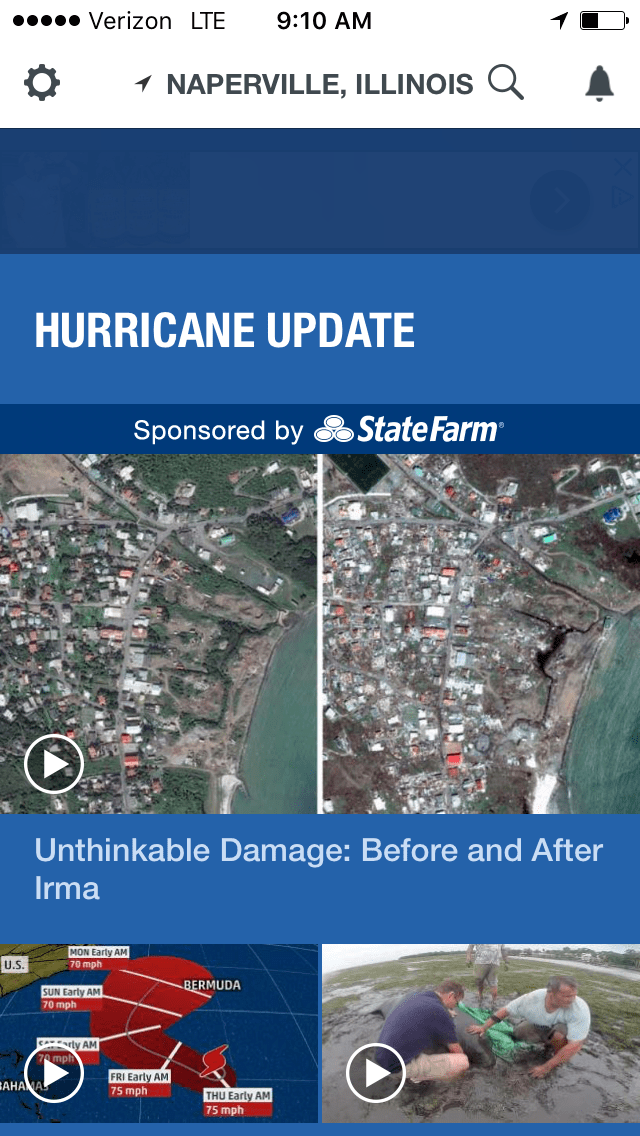
On the small screen of my iPhone, the Weather Channel app showed an aerial shot of the before and after damage from the hurricane known as Irma. Even at such a small scale, the wreckage of homes and the debris thrown everywhere was obvious. That’s what 125-150 mph winds will do.

Here in Illinois, we’ll likely get the remnants of Irma in the form of a Westward-Ho rainstorm. The drops of rain will be big and the leftover winds may buffet our homes, but there will likely be little damage.

I once went out to run in the remnants of a hurricane that came north from Texas a few years ago. It was like running in a comedy. There were literal rivers of water gushing down the streets. Raindrops as big as ping pong balls splattered on my hat and shirt. People honked their horns and waved at the stupid runner trying to make headway against warm, strong winds and more water than the skies had a right to own.

We have also had tornadoes in our part of the country that destroyed homes with strong winds. Some people lost everything in those storms. Imagine walking up to the cement frame of your basement and finding all of your house gone. All of it. Along with it went those family photos, memories, and keepsakes that can never be replaced. Vanished.

The loss in those situations is not just monetary. A part of life gets ripped away as well. Yet people invariably find that material loss, whether by fire or wind or water or mudslide, is just that. Stuff.

Bike RockI recall a day that I lost nearly everything I valued. Coming off a job in Admissions at my alma mater, I had packed up all my important stuff in my Plymouth Arrow and detoured north to Minneapolis with a plan to visit my girlfriend. She was due back in town from her parent’s place on Saturday, but I arrived on a Friday night and arranged to stay with some friends from college. So I settled down for a night of sleeping on the couch and waited until morning.
The next morning I rose early and went to out get my shaving kit from the car. All around the vehicle was a wide debris path of my personal belongings. Everything I owned was scattered across the parking lot. There were key things missing as well. I’d been robbed.

The thieves smashed the driver’s side front window and threw open the doors. They must have been like a band of raccoons around a garbage can, picking through things they did not want to find things they could keep or sell.

So I lost the Olympus OM-1 camera that my father and mother had given me for college graduation the year before. Gone. Also missing was the jacket portion of the Frank Shorter running suit (orange with light blue sleeves) for which I’d saved up $90 one summer to buy in advance of my senior year in college cross country and track. That suit felt like the height of luxury after years of training in boxy track pants and old cotton sweats. All I had left was the orange nylon pants, and that’s hardly a consolation.

oil-4

But the thing that I really feared losing was a deerskin art portfolio that my girlfriend’s parents had given me for graduation. I knew that it was expensive. I also knew that they were fairly materialistic people, and losing that gift would not be received well.

Sure enough, my girlfriend was livid with me about that portfolio. She seemed to care more about that damn thing than she did about how I was feeling after having been robbed. That hurt.

Six months later, we’d broken up. She quickly moved on to marry the man she’d met in the Twin Cities. By all reports has led a happy life all these years. So that was all meant to be.

Perhaps it was also meant to be that I learned that day what it was like to lose things of material importance and spiritual importance. Surely it was stupid to leave a car jammed with possessions in a parking lot next to a set of railroads tracks in the urban environs of St. Louis Park, Minnesota. That was naive. Stupid. And unsuspecting.

At that stage in life, I was fearful of many things that don’t really matter, yet ignorantly unafraid of some that do.

It’s like that with so much in life. Getting robbed and at the same time realizing that the woman I loved was likely leaving for greener pastures was clear evidence of how often the security we think we own is an illusion. Millions of people learn that lesson every time a major disaster hits somewhere in America. Life tectonics, I call it.

challenge-riverYet we learn from characters in the Pearl Buck story the Big Wave, how Japanese families choose to settle on the beach again after a monster wave washes away their entire community and with it, entire generations. The reviewer on NPR puts it this way:

“Pearl Buck wrote her children’s book The Big Wave because, she said, during World War II, she saw that many children “were not used to the idea of death. They thought that death comes only to old people. But during the war they learned that death comes also to the young, if we allow it.” And so she wrote a story about how two boys, a fisherman’s son and a farmer’s son, “learned to live in the presence of death, as indeed we all do, young and old.” She wanted to “help other children not be afraid of death, because life is stronger than death. Life goes on and on, whatever happens.” She wanted them to understand that it’s through facing life and its dangers that one learns not only to be brave, but also to appreciate life’s joys.

I think of the young man that I was standing stricken with grief and shock in that parking lot in St. Louis Park, Minnesota. It was hard to imagine such a thing as that robbery was possible. All my stuff was tossed naked into the world. And the losses. I loved that camera. That running suit. That deerskin portfolio. And I loved that woman for as long as she was mine.

But losing things you love is an important lesson in how to appreciate and focus on the things you still have, and can do. Which is why every step I take now as a runner, every pedal stroke as a cyclist and every bend and pull of the arm means something a little different. It’s everything I have, and yet nothing at all.

Zen philosophy teaches that even the most precious possessions are nothing to covet in terms of ownership. The famous example of a zen master treating a crystal goblet as an everyday object is most telling: “I imagine it already broken. Therefore it cannot cause me grief if it goes that path.” Crystal.jpg

“I imagine it already broken. Therefore it cannot cause me grief if it goes that path.”

What an ethereal existence. What a purposeful way to live. I feel lighter just thinking about it. Faster too. Let it go.


Posted in Christopher Cudworth, Uncategorized | Tagged , , , | Leave a comment

Does cycling have its own concussion problem?

cavendish6.jpgWatching the Grand Tours such as the Giro de Italia, the Tour de France or the Vuelta a Espana is an annual ritual for many cycling fans. But it hasn’t been an easy journey in many respects. With performance-enhancing drugs such an issue in cycling, many heroes have succumbed to penalties and even bans from the sport of cycling.

But it’s not just drugs that vex the sport. It’s the crashes too. People simply don’t appreciate how fast pro cyclists can go. But it’s the cyclists who so often pay the price.

Testimony

Taylor Phinney legs.jpegDuring this year’s Tour de France, cyclist Taylor Phinney was featured in a series of video vignettes in which he gave insights from within the race and on the team bus. His laconic personality appealed to a younger audience, but Taylor also had a dark secret to share. He nearly lost his legs to cycling a few years back.
It happened with a high-speed crash. Bones were fractured. Surgeries were required. Yet Phinney crawled his way back to the top level of cycling. To celebrate his return, he led the entire first stage of the Tour before getting caught by the sprinters with several hundred meters to go.

No gifts

Such is the nature of pro cycling. There are no gifts in the sport. Which is why so many riders risk their careers and reputations trying to take what they can by any means.

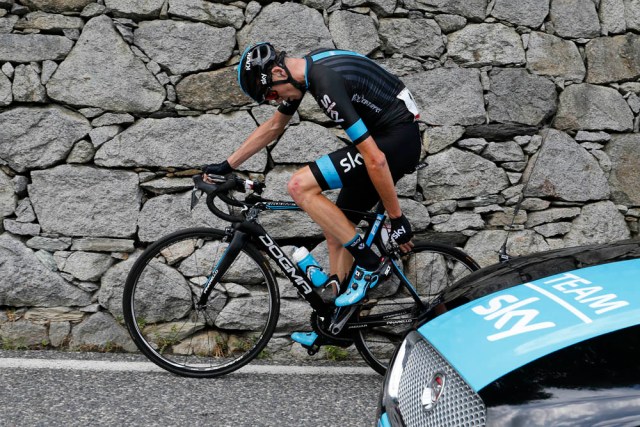
FROOME-Christopher008pp.jpgThat’s where the sport has some accounting to do. There are so many crashes in major stage races the sport is nearly as causally dangerous as the NFL. This past week during the Vuelta, the peloton compressed on a narrow road bordered on both sides by stone walls. Somewhere in the bunch, a rider got flipped onto his side and broke his pelvis.

The cameras lingered on the fallen rider. His body was twisted in a strange way. But it was the moans he made that rang so familiar to me. I happened upon a cyclist a few years back that had been knocked from his bike by a large dog. The dog ran away, but the cyclist lay on the ground alternately gritting his teeth and screaming in pain. He made the same moans that the Vuelta cyclist did while lying on the ground. I helped him get to the hospital and visited later that week. But it was his voice that day that sticks with me every time I ride, see a dog, and realize it could very well happen to me.

Body slam

Sagan Elbow.jpgA violent crash of some sort happens in every Grand Tour. Sprinter Mark Cavendish got blasted into the barriers by an intentional/unintentional elbow from Peter Sagan. Cavendish was all busted up and Sagan got banned from the Tour the remainder of the race.
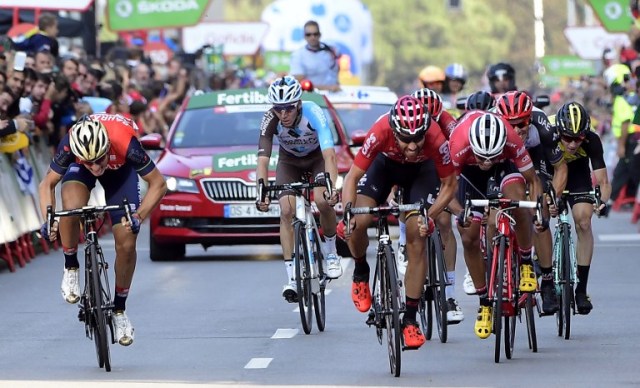
Some thought the penalty too severe. But to cycling’s credit, it tried to draw the line somewhere. Watching the video of Sagan sticking an elbow up sure gave the impression that he was not playing fair. But neither was Cavendish, who tried to squeeze through a space that did not really exist. In essence, Sagan’s suspension was a message to Cavendish as well. Hold your line, fellas, or get knocked out of the race.

Which is probably good. This is cycling’s version of pro football’s ban on spearing opponents with a helmet. That practice was bad in many ways. But now the sport of football has discovered that it is actions like the spear that actually put players engaged in that practice at even greater risk of concussion and CTE. Protecting players in one respect wound up protecting them in others.

Competitive fury

Vuelta.jpgThus at some level, the sport of cycling has to protect the participants from themselves. Competitive fury at the level of world class cycling is hard to contain. Sprinters reportedly “have no fear” and do not think about crashing in the race for the finish line. The rules clearly state that a rider cannot veer off their line. Yet riders still do, engaging in just about anything to cut a competitor’s path to the finish. There are body slams and elbows and harsh words on the way to the finish line.

But like hockey, where fighting was once an accepted part of the game, it may be time for pro cycling to cut down on the greater part of its violence. Yet the hardest part of governance in pro cycling comes, not with the mad rush of sprinters, but with open road crashes. Out there on the roads where wheels touch and riders lose concentration for a moment, they wind up crashing. Sometimes that where real damage can happen as well.

The risks come from all sources. This year’s Vuelta featured some crazy riding by the motorbikes on which cameraman and officials tool through the race like barracuda through schools of cycling fish. Commentators Bob Roll and Paul Sherwen repeatedly complained the bikes were too close to the riders. On a couple occasions, motorbikes tumbled into the barriers creating a logistical mess as dozens of riders came peeling past.

Public life

Vuelta_Crash

A five year old child gets struck while trying to cross the road during a pro bike race

One of the wonders of pro cycling is the fact that the roads are not blocked to the sporting public. Fans can get close to the racers, sometimes too close. The crowds pressing in on climbs sometimes interfere with the racers. A few years back cyclist Alberto Contador threw a hard jab that caught a fan in the face. That was a well-deserved shot to keep the integrity of the race alive.

So the chaos of Grand Tours and other stage races is both part of the race and a big problem always waiting to happen. No one can forget the sight of Johnny Hoogerland flying off his bike after being struck by a motorbike at high speed in the Tour de France. He wound up tangling with barbed wire on a roadside fence, his kit torn and his buttocks bared and scarred by massive bloody wounds.

Too much pressure? 

Some riders have blamed Grand Tour organizers for recruiting too many teams and putting too many riders on small roads. The pressure to stay in the front bunch is so great that riders are forced to fight for every square inch around them. During a 2000+ mile bike race, the odds that something bad is going to happen are too great. No one can concentrate 100% of the time.

One wonders whether the health risks to cyclists has gotten more serious than ever. There have always been crashes in bike races, but is cycling taking its risks seriously enough to cut these risks in any substantial way?

Richie-Porte-crash-updates-Tour-de-France-826551.jpg

The sight of Richie Porte careening across the road to smack into a stone rock face was horrific in the Tour de France. Likewise the sight of that contorted rider with a broken pelvis in the Vuelta this year was hard to take. These are human beings before they are racers. And while we all admire their courage and the ability to “come back” to racing after such violent crashes, it also says something about the world that we all pay witness to such tragedy and call it entertainment.

Concussive reality

Perhaps that’s the human condition. Perhaps the concussions in pro football are part of the price of admission for those involved and those who pay. A few cyclists have actually died from their injuries, but not many. So the sport senses the risks in some respects.

But there have been times when the riders themselves have protested the conditions and even refused to race when the weather or the course or the insanity of the organizers and motorbikes and fans and sponsor demands are just too much to take.

Because it is, after all, supposed to be a sport. And that is all.

Posted in competition, cycling, cycling threats, Uncategorized | Tagged , , , | 1 Comment

Do you ever worry about your attention span?

GoofyOnBikeThis morning while doing a leg workout at the Vaughn Center, I pulled out my phone between sets for who knows what reason. And I thought: What the hell? Can’t I get through five minutes of working out without checking my phone?

Here’s the concern: I’ve never had the world’s most devoted attention span. During school I had trouble concentrating if the subject didn’t interest me. These days experts might call it a condition on the order of ADHD. Teachers back then called it various things, but “distracted” comes to mind.

A life of distraction

dallas-cowboys_pg_600.jpgSo much of life is built around distraction. For example, the NFL is short-attention-span theater.  It’s like brain food for the terminally numb. Violence and sex, bright colors and shiny helmets. Blathering announcers and crowd noise like an electric vacuum left on for four hours. And it sells.

The same can be said for so much of what constitutes ‘politics’ these days. If a president or Congressman wants to avoid responsibility for their actions or hide some bill or executive order from the public, they know that it works to pump up some other distracting issue to take the public’s mind off what is actually going on. Issues such as abortion and war work best, but so do sex scandals and terror alerts. Everything is about distracting the public from the rational workings of the inner mind.

Mind games

But this is a problem when it becomes a game in your own mind to concentrate on what you need to do. If doing even basic things like weight work requires a distraction to get you through, there might be a problem going on.

The online version of Psychology Today points out in a 2012 article that studies show a chemical response going on inside our brains whenever we use our smartphones. As the article points out:

“You may have heard that dopamine controls the “pleasure” systems of the brain: that dopamine makes you feel enjoyment, pleasure, and therefore motivates you to seek out certain behaviors, such as food, sex, and drugs. Recent research is changing this view. Instead of dopamine causing you to experience pleasure, the latest research shows that dopamine causes seeking behavior. Dopamine causes you to want, desire, seek out, and search. It increases your general level of arousal and your goal-directed behavior.”

That passage reminds me of the Saul Bellow book Henderson The Rain King. The main character is a disillusioned soul who can’t figure out what he desires from the world. The Wikipedia summary of Henderson does a noble and succinct job of describing his lament: “Eugene Henderson is a troubled middle-aged man. Despite his riches, high social status, and physical prowess, he feels restless and unfulfilled, and harbors a spiritual void that manifests itself as an inner voice crying out I want, I want, I want. Hoping to discover what the voice wants, Henderson goes to Africa.”

Mind travels

That’s what disillusioned people did before the Age of Distraction. They went places. Several times in my 20s I took off for places unknown with just a few bucks in my pocket and a voice much like Henderson’s ringing in my head. But mine spoke more along the lines of “What do I want? What do I want?”

Chest piercingNative Americans had methods of dealing with distracted thinking.

Young men participated in rituals such as the Sun Dance, in which participants were sent through a rigorous and painful test of mind and spirit. Men would pierce the flesh of their chests with sharp objects knotted into leather. Then they’d lean back to let the pain sear through their brain and see what kind of visions their brain chemicals would produce before someone cut them down and tossed them back in a tepee.

Modern Sun Dances 

Those of us that participate in endurance events may be seeking a sanitized version of these seemingly barbaric practices. Yet we’re not so far away as we might think. Plenty of people these days are getting their bodies pierced or having painful tattoos seared onto their bodies. Are these markers of commitment or the scars of a struggle for existence?

Triathletes can testify that the Ironman experience itself is a rite of passage requiring intense concentration. And yet, at the same time, the event has been known to produce a state of total dissociation as well. Athletes live for that rite of passage at the finish line when the announcer calls out their name and proclaims, “You’re an Ironman!”

The only thing missing in that ritual is the assignment of some sort of Spirit Animal to guide Ironman athletes through the rest of their lives.

Not alone

extreme cycling.jpgSome ultra distance runners readily admit to “out of body” experiences during 100-mile races.  Extreme cyclists are also known to go into a state of hallucination during cross-country events. Surely long-distance swimmers lose themselves at some point during the trek across a large body of water. There may be nothing that so closely resembles a near-death experience than the most extreme forms of endurance training and racing.
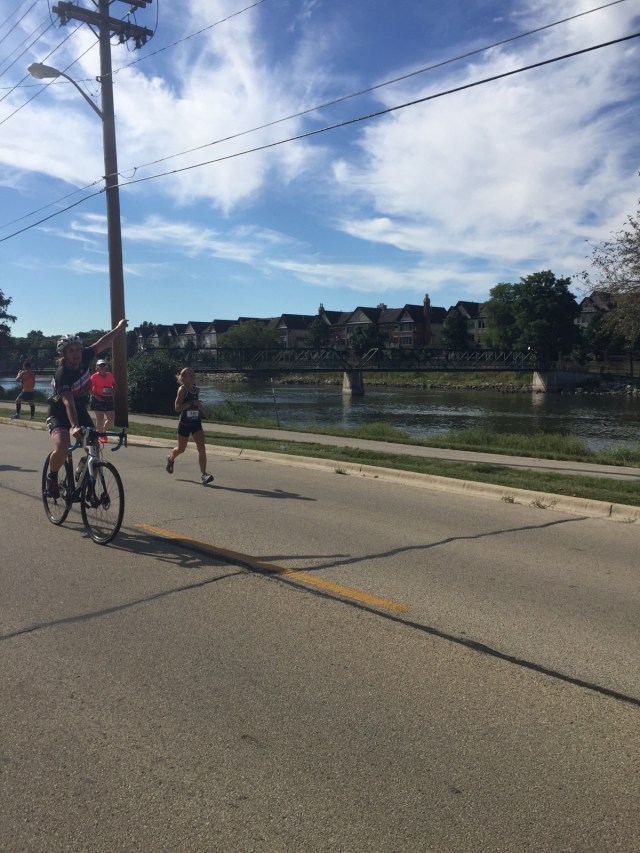
Yet lacking these tests of endurance on an everyday basis, most of us opt instead for the quick fix and dopamine hit brought on by a glance at our cellphones. We check our Instagram and Facebook accounts to see how many Likes our posts have gotten. We share in the sorrows and joys of others as well. All these interactions hit our dopamine centers and draw our attention from consequential things to matters that may not be so important. We simply don’t want to be alone.

And there is a connectivity that comes with our distraction. Many people feel genuine empathy and a sense of community through their social media accounts.

Addictive traits

But that connectivity can be addictive too. Our brains rewire themselves to expectations and stimulus quite easily. Our phones are just like a coffee or caffeine habit in that they are as much much emotive as they are chemical. We even eat ‘comfort food’ because it bears an association with feelings of well-being. That’s how we compensate for the tradeoffs in life. We put up with all sorts of difficulty and then bury our wounded hearts and bothered minds in things that make us feel good.

A few months ago while participating in a training seminar for work, the leader had u-s raise our hands if we think we’re good at multi-tasking. I raised mine of course, the only person in the room to do so. Then she had us all do an exercise with a single focus and then one with a multiple focus, and we all failed miserably. The point she was trying to make is that none of us can focus on more than one thing at a time. But I find that still hard to believe. If that was the case, the human race would never have evolved, and even Noah could not have built an ark, if that’s what you choose to believe.

Multi-tasking is a native part of being human. It is how our minds evolved. It is the painful oppression of a singular focus that actually causes so many problems in this world. There’s not a human being alive who thinks only of one thing at a time.

That does not mean categorizing and prioritizing the multiple distractions we face every day is not an important aspect of our existence. But to pretend that only one thing is going on at a time in the human mind is like believing in a literal bible. It insults the creative powers we’re all given to freely associate and assimilate information to produce a grander whole.

So there.

But there is great value in forcing our concentration through the keyhole of what unlocks our core thoughts and activities.

Deprivation counts

jamie-mayer-marathonBut think how good it actually feels to go through a bit of deprivation now and then. When your last water bottle runs out during a long bike ride, it takes real focus to get to the next water stop on the route. But you bite into the challenge. Make it yours. Own it. And when you make it through, there’s a quick sense of accomplishment. Hell, yeah. 

Even when you’ve finished a tough workout and haven’t yet had time to eat, that intense hunger can actually make you feel real and alive.

It turns out that the urgency of existence when funneled through a portal of real effort feels much more satisfying to our normally fat-fed attention spans. A hard workout cleans your mental palate, wicks off random thoughts and rumination and can even cure depressed and anxious feelings.

Best of all, working out can give you clarity that adds up to the ability to find solutions. It can make you worry less about your attention span and find the path to focusing more on what really matters. In some strange way, a dose of deprivation and difficulty counts most of all, and you no longer have to worry about your attention span because you have other things more immediate and important to think about.


Posted in tri-bikes, triathlete, triathlon, triathlons | Tagged , , , , , , , | 1 Comment

Negatives, positives, and being.

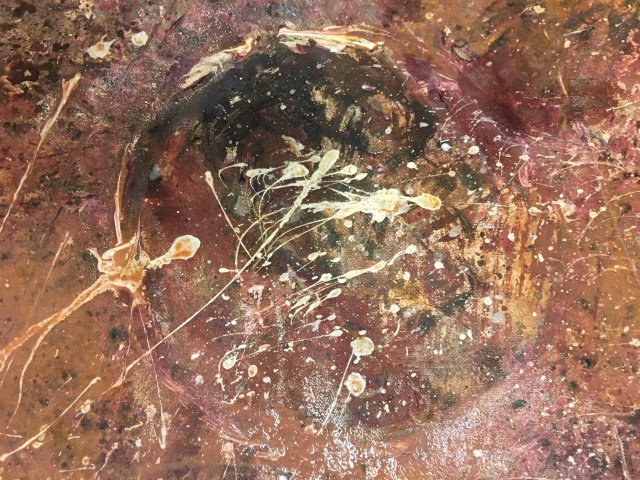
Being 2.png

Acrylic painting titled BEING by Christopher Cudworth, 2017

A few weeks back while cycling on a remote country road, a speeding car passed within six inches of my side. It tore further down the road and never paused. I am convinced the driver of that vehicle never saw me. Perhaps wasn’t even looking. And in that moment of inattention, I almost ceased to be. I almost went from a positive to a negative. In an instant.

I’ve had a bit of anxious fever in my head while riding ever since. We all value our lives. We all know they could end in a minute. That is supposed to make every one of us appreciate every moment and make the most of our lives. Somehow it doesn’t always work that way.

You’re gonna die

Some fellow on Linkedin wrote a piece called “You’re gonna die.” It used that provocative title as Clickbait to get readers. After all, everyone wants to know how they’re gonna die. If someone can give us a bit of insight, why not read it?

So I read the piece to the point where I realized where it was going. He was repeating what every religion and motivational speaker tells us. Life is precious. Make the most of it.

The guy’s big point was to push people in business to do more, and never quit. This was the same mantra conveyed in a LinkedIn blog from a successful businessman who suddenly discovered that he has pancreatic cancer.  Stage 4. Everything in his life was going great guns until them. Wealth. Great family. Then bam. Welcome to the anxious fever of threatened existence.

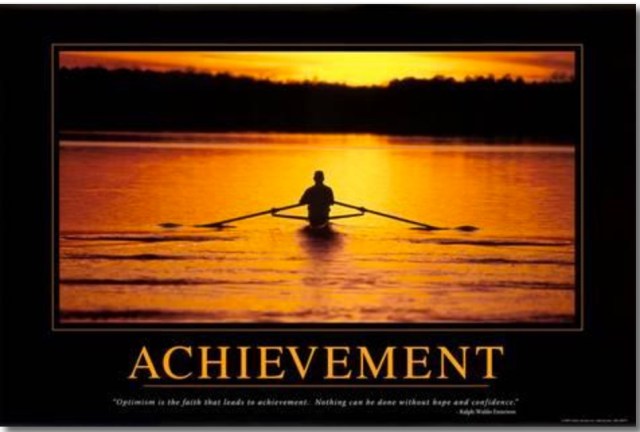
Stories like that really heighten the banality of most “business motivation” memes. Twenty years ago a company near my home got big by making those motivational posters featuring pretty places or athletes in action with words like PURPOSE or PASSION emblazoned below the photo. Some businesses hang these posters everywhere in hopes of inspiring employees to be more loyal, motivated and productive.

Achievement.jpeg

I suppose it’s much better than hanging a photo like the one below with the words “GIVE UP. Most men live lives of quiet desperation.

IMG_2589.jpgWhich really is the more effective motivator? Powerfully positive words? Or honestly negative phrases?
The jury on that one seems to tilt toward positivity. But the recent experience of being nearly wiped out by that speeding vehicle on a country road has called a certain brand of negativity to bear in my worldview. Prior to that moment, I was assuming the best about the world. I was positive, for the most part, that people would care enough to look for me on the road. To see me before striking me down. To notice the world around them.

But I no longer think that way at all. It was a watershed moment in my athletic career. I am now positive about the negative aspects of inattention, ego and false sense of security.

Being 1

Detail from the painting BEING by Christopher Cudworth, 2017

It could have all ended right then and there. That’s seems a profound negative, but it is one with which we all have to live. I’ve got blinking lights for the back of my bike and a headlight mounted on the front. But even that may not be enough. There are too many dark minds in this world obsessed with their own phones and texting to their desires. It’s like courting the chaos of the universe. There are no guarantees. None at all.

But that’s where negativity can actually save you. Being negative about the general compassion and attention of this world actually amounts to a positive, in the end. Negativity is sometimes the only positive protection we have.


Posted in cycling, tri-bikes, triathlete, triathlon, we run and ride, We Run and Ride Every Day | Tagged , , , , , , , , | Leave a comment

Somewhere over the rainbow

Rainbow east.jpgLast evening while driving from home to my art studio for a painting session, the clouds to the east grew dark at twilight. Then the sun broke through from the west and caught the edge of the clouds. Up from the earth rose a segment of rainbow.
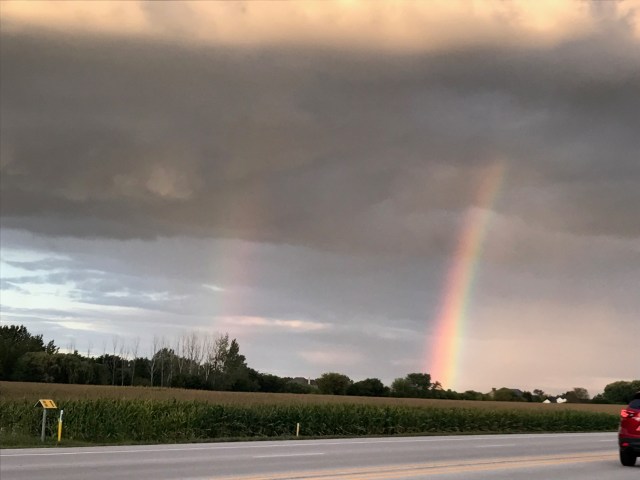
I thought I’d seen the most beautiful sight last night. Yet this morning a friend named Sean Patrick Macadams posted an even more striking photo of a rainbow sighted just eight miles northeast, in St. Charles. His image showed a double rainbow with copper colored light bouncing around the atmosphere. So, so beautiful!

Sean Patrick Rainbow

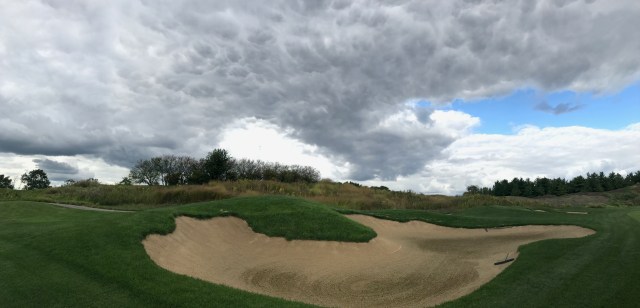
It appears Sean captured his image in Pano mode with his phone. Yesterday I used the same technology while out on the golf course with my brother-in-law. The pattern of the clouds in the sky echoed the pattern of the sand trap below.  I love the idea that we live in parallel universes.

Cantigny.jpg

It’s amazing to be able to carry around a small camera capable of capturing such images. Then the ability to instantly share them with the world? Mind-boggling. The days of waiting a week for film to develop are gone. Yet the days of being so preoccupied with capturing every second of our lives in digital reality are here.

We had a runner on our college cross country team named Bill Higgins. He was a military vet that had served in Okinawa coming off the Vietnam War. So he was a 26-year old junior in college watching us dumb kids run our heads off and make fools of ourselves drinking too much most weekends. We lovingly nicknamed him Colonel, and he took on the role of chronicling our racing and training trips as well.

At one point I was offered a box of slides that were being handed through the team because Colonel didn’t really want them. I really regret not accepting those images. They would be an interest psychographic study of those years in the 70s.

The film itself was probably Ektachrome, one of the alternate film types available for slides. It tended toward the cooler side of exposure. Kodachrome was warmer, and used quite often for film. I may be wrong about, but it is largely moot. All those film types are nearly obsolete. The Kodak company no longer rules photography. All of that old technology has vanished somewhere over the rainbow.

Rainbow tight.jpg

There are a few images from the slide film and Kodachrome era that I’ve been able to keep over the years. Two of them I found in a drawer one day after the big cleanout that happened last year during my move. This steeplechase shot was taken by Colonel Higgins in 1976 during a sodden steeplechase at the Luther College Invitational.

img_1811

It has occurred to me that even these images will someday not have much significance. Perhaps my children might like to keep a few. But the press and the clippings? Other than raw numbers on fragile paper, they are most likely not that valuable to anyone.

But they still mean something to me. They are part of the rainbow of existence. They capture this parallel life between how we’re living and what we remember of it. Then it all goes somewhere over the rainbow.

Over the Rainbow
Somewhere over the rainbow
Way up high
And the dreams that you dreamed of
Once in a lullaby
Somewhere over the rainbow
Blue birds fly
And the dreams that you dreamed of
Dreams really do come true ooh oh
Someday I’ll wish upon a star
Wake up where the clouds are far behind me
Where trouble melts like lemon drops
High above the chimney top
That’s where you’ll find me
Oh, somewhere over the rainbow bluebirds fly
And the dream that you dare to,
Oh why, oh why can’t I?
Well I see trees of green and red roses too,
I’ll watch them bloom for me and you
And I think to myself
What a wonderful world
Well I see skies of blue
And I see clouds of white
And the brightness of day
I like the dark
And I think to myself
What a wonderful world
The colors of the rainbow so pretty in the sky
Are also on the faces of people passing by
I see friends shaking hands
Singing, “How do you do?”
They’re really singing, “I, I love you.”
I hear babies cry and I watch them grow,
They’ll learn much more than we’ll know
And I think to myself
What a wonderful world world
Someday I’ll wish upon a star
Wake up where the clouds are far behind me
Where trouble melts like lemon drops
High above the chimney top
That’s where you’ll find me
Oh, somewhere over the rainbow way up high
And the dream that you dare to, why oh, why can’t I?
Posted in running, Uncategorized, We Run and Ride Every Day, werunandride | Tagged , , , , , , , | Leave a comment

What’s it like to go really nuts?

IMG_7218Ten years ago in the throes of caring simultaneously for a wife with cancer and a father who was a stroke victim, the emotional toil became too great. I met with my doctor who prescribed an anti-anxiety and anti-depressant medication called Zoloft.
I started taking the meds on a Tuesday. The doctor said that it might take a couple days for the effects to kick in. By Wednesday I felt jittery and anxious. But he said that might happen. By Thursday my thoughts raced quite a bit. On Friday I could barely work.

By Saturday afternoon, I was writhing and kicking on the bed and nothing could calm me down. We placed a call to the doctor’s office but it was the answering service.

“Is this an emergency?” they asked.

I said yes. But unfortunately, no one called back all that evening. So I quit taking the medicine that next day but Saturday night was a spiral into near madness.

Come Monday, the doctor called back. “Hmmm, maybe I should have told you to stop taking it if things got that bad.”

Ya think? 

Doctors aren’t perfect. Some should not even be prescribing medications of that order. I’ve since talked with psychiatrists and other licensed to dispense such meds and they all agree: the minute things go weird the medications should stop.

LUW2We’re all trained to follow doctor’s orders. And my long experience in athletics also taught me to be disciplined and try to see things through before quitting anything. A race. A job. A workout. A relationship. Tough it out until the outcomes are obvious.

But when my mind was disappearing one twitch at a time, I started to really feel for those with full-on mental health issues. Over the years, my own propensities for anxiety vexed me until I got a grasp of how the mind operates. The triggers. The sensations. The dread that dogs the anxious. The sinking emotions of the depressed.

Over time I learned to work with my own mind. Learned not to let anxiety run ahead like a rookie messing things up before I can get there myself.  I learned the fine art of anticipating and addressing the unclear lines of depression, and how to sort out the near term events from any chronic symptoms.

I can’t say that I’m “proud” of this work so much as I’m grateful to be working from a better place, with more emotional stability. I was never out of control in any deep respect. But it is true that the symptoms of depression or anxiety can make you do things that are not in your best interests. No doubt about that.

For me, I actually also recognized in my very late 20s that there was an emotional dependence on running that was not in every way healthy. While running has long helped me wick off stress and get control of emotions, there was also a broader cycle of approval seeking and defining my personality through athletics that needed to be addressed. Plus running simply fed the brain cramps that desire stimulation.

Now studies show that using cellphones gives the brain a similar melatonin kick that can become addictive. There are behavioral traits that come with these addictions. Some actually drive the addiction while others reflect it. This is very similar to the effects of endurance sports on the human mind. Cause and effect. Effect and cause.

Storm TrackThese patterns are simply a much subtler way of “going nuts” but they are just as real. Our emotional health depends on understanding how our own brains function. All of us are susceptible to negative sources of stimulation. Emotional waves can function like storms that cross our minds, wreaking havoc and leaving devastation in their wake. That’s why big storms like Harvey and Irma make us feel all feel a little nuts inside. Storms are symbols for our own internal tempests.
We try to distract ourselves from these waves of real emotions and issues. For some the release might be attention-grabbing outlets such as television. For others, it might be pornography or gaming. Even religion and politics can replace healthy thought patterns with outright delusional belief systems. And let’s not forget there are people out there who still believe that the earth is flat, and that trickle-down economics actually works. There are a million ways to ‘go nuts’ in this world.

Which is why, to this day, I feel like the beneficiary of some considerable insight gained that afternoon when I writhed on the bed under the fearsome spell of a powerful psychotropic drug. There are also recreational drugs that are just as difficult to comprehend, or to kick. The best some of us can do is to work daily and diligently to replace the feeder mechanisms with stimulation from other sources. For me, the biggest source of replacement is writing. I freely admit that when all other forms of self-therapy fail, it is writing that rescues the mind. And painting sometimes fill that bill as well.

That is all mixed in with a healthy amount of exercise. At times I go a little harder in pursuit of some level of performance or an event. But I already know what it feels like to go all-out, 100% training, all the time. I’ve run 100 miles weeks and been a sponsored runner competing in races 24 times in a year. It was fun. But to be honest, it had its time.

Others find that surge at other points in their lives. It is can be an awesome ride to go a little nuts with it when the time is right. The thrill and sense of accomplishment. The confidence and the realization of progress.  All are sensations that are healthy in their context.

bowl of orangesWe don’t necessarily need to “go nuts” in order to experience these things. We’ve all seen people go “off the deep end” in endurance sports. Some are in recovery from a life event that gutted them. Others might be facing some emotional challenge that needs to be worked off or blown into the karmic atmosphere. So they go nuts training to the point where people worry about them. Some achieve success. Win the day. Go social with their achievements.

But then too often there’s a void. That approach can leave an empty feeling on the other side of accomplishment. Then the brain needs configuring all over again.

That’s okay too. I’ve previously stated that I love that passage at the end of the movie (and book) titled Wild, in which Cheryl Strayed confesses that she needed to “go nuts” in order to find out who she really was. She’d lost her mother to a dragging form of cancer. Then she felt isolated and took refuge in deep treatments of sex and drugs. Her finances were a mess, and she felt estranged from her brother whom she might otherwise have depended upon for support. Yet he was un-busy going nuts in his own way.

Finally she tossed all her shit (emotionally and materially) out the window. Then she bought an oversized backpack and some too-small boots and started hiking from the south end of the American wilderness all the way to the north. Along the way she faced threats from a few fucked up people. But mostly she met souls willing and/or eager to engage with her journey.

oil2This proved to be an extremely constructive way to “go nuts.” I’ve done it a few ways myself over the years.

It may involve getting naked in nature or riding your bike until your actual nuts or vagina ache. It may involve getting drunk or high, dancing in the desert or soaking yourself in water so cold it makes you numb with fear of dying right there on the spot.

In any case, it sometimes pays to purposely go a little nuts so that you don’t actually go nuts. It is no cliche to state that “life is short.” I still maintain that my favorite phrase from Cheik Hamidou Kane’s book Ambiguous Adventure holds true:

The purity of the moment is made from the absence of time. 

Posted in Uncategorized | Tagged , , , , , , , , , , , , , | Leave a comment