A spirited little ride or run with religion

By Christopher Cudworth

CountryChurches-iStock58977For those of us who like to attend church, Sunday mornings are usually a question of squeezing in a ride or a run before heading to services. That results in an algebraic response to the morning hours. There is the early service at 8:00, the Praise or casual service at 9:15 and the typical 10:30 formal service where people who don’t like to get up early show up to praise God.

That’s just the Christian format however. Schedules for Jewish or Muslim services take a significantly different form. All religions have their rhythms. Some don’t even discriminate by faith order. They believe all paths lead to God, while atheism contends that no God exists to dictate our actions. All these worldviews still affirm that human beings crave understanding in some form or another. We absorb it one way or another.

Osmosis

It’s not that one does not somehow incorporate aspects of other religions into a worldview. We speak of zen thinking and karma. Those words have become part of the colloquial parlance without being well understood. I know this much: zen takes work and focus.

Karma? Let’s take a look at that for a moment. Just the Wiki version folks. “Karma means action, work or deed;[1] it also refers to the principle of causality where intent and actions of an individual influence the future of that individual.[2] Good intent and good deed contribute to good karma and future happiness, while bad intent and bad deed contribute to bad karma and future suffering.[3][4] Karma is closely associated with the idea of rebirth in some schools of Asian religions.[5] In these schools, karma in the present affects one’s future in the current life, as well as the nature and quality of future lives – or, one’s saṃsāra.[6]

Reasons

Holy smokes there seems to be a close relationship with Christianity in some respects. That whole causality thing for starters. And good or bad actions contributing to the potential for pain and suffering. One realizes that John Lennon’s Instant Karma was again so insightful the catchy tune probably obscured the call to action in which the singer truly believed.

There’s quite a bit of karma at work in the world whether people want to believe it or not. Much of it seems to consist of the “instant” kind in which your actions have immediate consequences. And that makes some sense. The deeper rhythms of the cosmos might take a bit to get rolling your way for good or bad. But the spirit of karma is as wicked or hopeful as the wind.

Always the wind. The Bible speaks of God as a wind roaring and the Holy Spirit whipping around people while depositing little flames above their heads.

Lessons

How many times have you been running or riding along and thinking you’re feeling so good and moving so fast only to find out when you turn around there is a strong tailwind at your back. Your pride has swelled up and 20 mph on the bike feels like nothing. Your mind plays egotistical tricks on you. “I’m so strong today! I must really be making progress!”

Then you turn on a new road and the wind cuts across your path or turns out to be in your face. Bad karma starts to kick your butt ride away. Pride may goeth before a fall, but it also takes the form of a crosswind or a headwind on a mission to slow you down.


We learn these lessons over and over again. Yet our minds love to deceive us into thinking we are better than we really are or smarter than we think. It seems at times the whole purpose of religion is to put us in our true place in this world. We’re small and inconsequential, prone to pride and puffed up ambitions.

Purpose

Yet religion has another purpose as well. That is salvation in all its forms. In that regard there is so much common ground between faith and endurance sports. 2 Timothy 7 reads like this: I have fought the good fight, I have finished the race, I have kept the faith.

There is little more you need to know about life than having a bit of perseverance in the face of adversity. Set a goal and do the work to complete it. Keep faith in the idea that the work you do is worth it. Have pride but don’t be too proud about it all.

That’s a pretty good life philosophy for people of any faith. Throw in a little meditation, prayer or attenuation and you’ll capture the moments you were meant to experience.

Ride on. Run on. Have faith in yourself. Or something greater.

That about covers it. WeRunandRideLogo


Posted in Uncategorized | 1 Comment

The very serious business of getting faster, and how fun it can truly be

By Christopher Cudworth

So it’s fun to make fun of ourselves for being slower than we’d like. We did that yesterday on We Run and Ride.

Es hora de hacer que la gente más rápido!

Es hora de hacer que la gente más rápido!

But what do we legitimately do to get faster? That’s what we really want to know? So let’s get to it.

Getting faster the right way

There are similarities to getting faster on both the run and the bike. But there are  things to be learned from the differences as well.

We’ll study the three keys to getting faster in either sport. These might well apply to swimming as well. What follows are helpful terms to describe how to practice and build speed in your respective sports. So you’ll be faster!

Es hora de hacer que la gente más rápido!

Turnover or cadence

In running, the rate at which you can move your arm and legs is called turnover or cadence. For a runner, turnover equates to the rate or timing of footplants. The quicker you can accomplish turnover the more speed you can generate.

In cycling this pattern is called cadence. You spin the pedals rather than drive them up and down. That pulls the chain and in turn propels the wheels. The higher the gear you can sustain while increasing your cadence the faster you will go.

Think of a side view of a runner. If you drew a circle touching the farthest point where the tips of your fingers and toes reach with each stride, it would make a bubble around the entire runner.

With cycling, that circle of propulsion is confined to the space where your feet spin in a tight circle around the cranks. The rest of you constitutes wind resistance. So you can see the physics are somewhat different for runners and riders.

For runners you are always propelling your own weight. There is no coasting. But for cyclists, the propulsion while assisted by wheels must also accommodate the resistance caused by the weight of the bike and the breadth and width of your body. Those are the factors that slow you down.

So now we know what’s holding us back. How do you get faster? By increasing the rate of turnover in running or cadence in cycling.

It starts with strength and the basal ability to drive your legs and arms in running, and your legs in cycling.

That is why many great athletes begin their training in the gym or doing plyometric base training to build the muscle foundation necessary to generate faster turnover. A high school school coach once had us spend the entire month of January doing high knee drills and lunges in the gym. We ran only a couple miles each day during this period.

You can invest time in the gym using weight machines to replicate the strength phases of your running stride and the overall pace of your cycling cadence. In both cases you should focus on the quads, hamstrings and butt muscles. Help them gain strength by working slow with high weights and quickly with lighter pounds and faster reps. Do not skimp on either.

During this period you will likely be building toward running higher mileage as a base or going for longer base rides as well. Don’t confuse the muscles at first. Let strength be strength in the buildup phase. You can’t get fast right away. You’re simply putting money in the bank.

After you’ve done your base building program and progressed to the point where you are running or riding consistently, you can begin adding speed to your workouts. That’s when turnover and cadence can be practiced in earnest. You take your strength to the track to do intervals and inject doses of speed into your cycling routine with increased frequency, duration and pace.

To increase turnover in running you will need to practice at shorter distances and build the ability to apply that speed to sustained intervals. That means short periods of  faster turnover running. For runners, that means 200 meter repeats run at race pace or even faster.

For cyclists, that means putting your cadence meter on your bike and paying attention to the rate of pedaling in all gears. Keep it at 90 or above in all circumstances or else gear down. It may take weeks to build up your cadence in higher gears. Many cyclists keep their gearing on the small ring for 1000 miles as a rule. You’ll notice that over a period of a few weeks you can begin to maintain cadence at increasingly higher gears. Throw in some mild hill work to build on the strength you’ve built in the gym or through leg and lunge exercises.

That’s the secret. Building base strength and then increasing the rate turnover or cadence through progressive inclusion of turnover work is the primaty way to build speed. When you’ve done that work the results are one of the most fun feelings in the world. You are, actually, faster. But it doesn’t end there.

Tempo: timing and pace of movement.

Tempo is the pace at which you are moving for different purposes. Increasing your tempo involves faster turnover or cadence, but it does not end there either. The subtleties of running or riding faster involve a commitment to keep your body parts moving quickly in response to pace and competitive conditions. That takes rehearsal.

It comes down to this: once you’ve built the foundation speed, you need to learn how to apply it. There’s not just “one speed” after all. There are many different types of pacing necessary for success in endurance sports. For triathletes, the goal is  to conserve and distribute total pacing ability over three separate sports. In triathlon, getting faster is all about balanced tempo.

Much of that is dictated by the type of event in which you are participating. The tempo needed to race a mile is different in form and structure from that which is best for a marathon.

Para viajar más rápido usted debe sostener un tempo más caliente.

Para viajar más rápido usted debe sostener un tempo más caliente.

In cycling a road race is significantly dependent on conditions such as wind and the number of riders you are with. In a criterium your tempo is defined by the type of circuit you are riding, long or short, as well as how many turns there are and number of riders in the pace group. Maintaining tempo in each of those circumstances is what enables you to “keep up,” or better yet, pull ahead as strategy dictates.

You likely recognize the feeling when you lose tempo. It’s like a bad dream in which you’re telling your body to run and it just won’t let you go any faster.

In a marathon or half marathon a runner’s tempo typically falls apart through cumulative fatigue. That radically reduces speed and can literally leave you walking rather than running. You’ve lost tempo completely at that point. To counter that type of tempo issue requires two things obviously. First, the endurance base must be there. But you must also do the tempo-based training of running faster than your desired race pace tempo so that your actual race pace feels comfortable. That’s the entire secret of running a marathon.

That is how marathon training has radically changed over the last 30 years. It was once true that marathon runners all did long, slow distance and some tempo work. But when real 10K runners moved up to the marathon, their ability to maintain a quicker tempo made them deadly over the 26.2 mile distance. Now we consistently find marathon runners throwing 4:30 miles into the start, middle or end of a marathon. That’s clipping along at a pretty good tempo, wouldn’t you say?

In races such as miles and 5K, tempo is affected more by buildup of lactic acid than of general fatigue of the muscles. Muscles that won’t fire either seize, cramp or fail. They slow in response. The ability to maintain tempo drops.

That’s when cyclists also fall off the back of the group. Spinning at a high cadence and a big gear maintains tempo. You can see this dynamic especially at work in the climbs during the Tour de France. Riders than can maintain tempo up a mountain look very different from those struggling just to make the climb.

To learn to maintain tempo therefore requires combined practice methods. You must simultaneously teach your body what tempos you need and then train your body to perform at those levels.

The teaching part is the trickiest. Learning pace and tempo requires both empiric data such as a stopwatch or cyclometer and a responsive sense or mental/muscle memory that tells you what your target range will be, and what you are currently doing.

For runners that means going to the track and doing pace work so that you learn what each pace per mile feels like at different distances. Serious runners will do intervals from 200 meters all the way up to two miles in order to learn the feel of specific tempos.

Cyclists can look at their cyclometers and know how fast they are going. Yet even that empiric data can be deceiving. More than one cyclist has ridden 15 miles at a great clip only to figure out on the way home there was a tailwind pushing them along. That 20 mile per hour average suddenly drops to 15 on the way home. That leaves you with 17 mph and another hard lesson learned about real tempo.

That means for cyclists tempo is more about the ability to “keep up” with the pack. Your solo rides should be spent teaching your body high cadence, increased gearing, climbing short and long hills and riding efficiently in the wind. Those are all necessary skills for a cyclist to “go faster.”

Tempo is relative in cycling, whereas in running tempo is rather hard-lined with acceptable adjustments for running into the wind or uphill/downhill.

To get faster one simply rehearses running and riding at increased tempos. Keep track of your progress with empiric data, and be sure to place yourself in training or competitive situations where you are pulled to a faster overall pace than you are accustomed. Accept that you might get left behind or dropped the first few times you step up. But the only way to get faster is to improve by increments, working through fears or physical stopping points by going a little farther and a little faster than you did last time.

Sustainable endurance and mental pacing. 

If you haven’t guessed by now, getting faster is truly a state of mind. One group of small college distance runners knew they were going to face a much faster racing scenario at a major college relay event. They set up a workout that involved running a set of twelve 400 meter repeats to replicate the 4:00 mile pace they would face against Division I schools. It worked. Each of the runners set a PR on their mile leg by 2-3 seconds. The faster broke 4:10 and the anchor leg broke 4:20, a PR by four seconds.

The same can happen for a cyclist in criterium work. A typical CAT 5 cyclist trains at 17-19 mph on their own. But even CAT 5 races zip along at 23 mph. That means some homework has to be done by any level cyclist before jumping in a race where the tempo might be 4-8 miles per hour faster than their typical rides. Riding practice criteriums or joining fast local group rides is key to building the sustainable endurance and mental pacing necessary to compete at a faster level.

And don’t forget to warm up! That’s one of the biggest mistakes anyone can make when trying to go faster. Even if you’ve trained your body and seen the results in practice, jumping into a fast tempo when your body is not warmed up is sure to fail.

It’s all about learning quicker cadence and turnover, teaching the body tempo and learning how to apply it, and applying your sustainable endurance against the clock. That requires mental pacing.

That, in summary, is the formula for getting faster.

But it’s incredibly fun if you plan it out and pay attention to the feedback. The first time you feel yourself actually getting faster is a thrill like no other in running or riding. The same thing goes in the pool. Being able to sustain a faster, more efficient arm and leg stroke is the same dynamic as running with quicker turnover and riding with higher cadence.

Faster really is more fun. But you have to do the work to get there. See you on the track, the roads and in the pool.

Es hora de hacer que la gente más rápido!

WeRunandRideLogo


Posted in Christopher Cudworth, We Run and Ride Every Day | 1 Comment

10 things you absolutely must do to become a slower runner

By Christopher Cudworth

Here is a runner practicing the art of going fast. This is not what you want to do.

Here is a runner practicing the art of going fast. This is not what you want to do to become a Slower Runner.

You’re sick of running fast.  Admit it. You’d really like to know how to run slower so that you can avoid the pressure of always having to train and try so hard to get faster.

Plus, there’s nothing like going slower to gain a little more attention and be seen during races. Those runners who go flying by at 5:00 pace? You only see them for a few moments. What kind of fun is that? You want to give race spectators something to share. To savor. You’re like a fine wine pouring slowly out of the bottle. So take in the bouquet. Slow it down even more.

But be prepared to make some sacrifices. Becoming a slower runner truly is an art form. You can’t just go out there and expect to get slower without working at it.

So here’s some hints on how to get slower with the best of them.

#1: Avoid speedwork at all costs. 

You heard us. What about the word “speed” don’t you get? If you’re going to get good and slow, then speed cannot be part of your vocabulary. It is especially vital to avoid those group speed workouts where you get pulled along during intervals and run much faster than you ever expected. That’s a complete no-no.

#2: Eat anything you like. 

The best way to get slower is to simultaneously get fatter. We said fatter, not faster. That means eating lots of carbohydrates and keeping your mileage low enough that the energy in those carbs goes straight into making pudge. That’s the organic way to slow yourself down.

#3: Party on Wayne

Another great way to get slower is to party like there’s no tomorrow. That means staying up late all week and then staying up even later on the weekends. It’s especially important that you stay up exceedingly late the night before any race or event. It’s always good to have that “draggy” feeling in your legs when you wake up. We also advise drinking lots and lots of alcohol. A hangover is good for slowing you down.

#4: Avoid sex

There’s nothing like a little sexual tension to make you all tight and nervous for your runs. It’s true what they say, “A tense runner is a slow runner.” So no more sex for you. No whacking it or rubbing the nub either. That’s cheating on your commitment to become really slow. It is a documented and well-known fact that orgasms actually make you able to faster. They loosen up the muscles and make you all happy and stuff. So stop it. Now. We said stop it!

#5: Always run alone. 

The best thing about running alone is that you can’t tell how fast you’re really going and neither can anyone else. So lope along slowly guys and gals. And do it all alone. You may even reach that ephemeral feeling known as Slow Runner Bliss. It’s kind of the opposite of Runner’s High. There is even a likelihood you will sit down on a park bench or curl up in the grass next to the running trail to immerse yourself in that state of bliss known as Stopping. That could lead to a new Nike slogan in fact. Just Go With It.

#6: Keep those old shoes.

To become a slow runner it is best to keep your running shoes so long they become flat and thin and hard. That way your body will be absorbing all the impact of the concrete on which you must consistently run to become a truly slow and beat down runner. If your shoes break down and slant to one side or the other, all the better. Really bad biomechanics are part of the art form known as Slow Running. Lean on, people.

#7: Never hydrate.

Drinking fluids of any kind will result in a state of hydration. This must be avoided at all costs. It is better for slower runners to maintain a constant state of dry tongue and even itchy skin. That way you know you are underhydrated on every run.

#8: Wear really baggy clothes

You know the look and you love it. Big floppy shorts that look as if they fell off the butt of some lowgrade hoops star. Shirts that are so big they cannot possibly be tucked in. If you are actually going to risk wearing tights it is best if you layer up with shorts that catch the wind and make you look like a really, really slow dork who doesn’t know how to dress for running. Psychology counts you know.

#9: Go minimalist

There’s no better way to assure yourself of slow running than to get rid of shoes. Running barefoot or in minimalist footwear will make you optimally efficient and really, really slow. Want proof? The last person to win any sort of race barefoot was Abebe Bikila, and that was back in 1968. There are reports that the rest of the runners threw that race as a kind of Olympic joke in protest of some international policy they did not like. Yet the legend persists that running barefoot or close to it will make you fast. But the joke’s on you. If you do go minimalist, enjoy going slower. You’ve hit the perfect formula.

#10: Always remember the slow runner’s mantra…

Coulda Woulda Shoulda. That’s the phrase that runners who go slow must repeat to themselves with every mile they run. “I coulda gone faster today if I had wanted to,” you’ll hear slow runners say. But we say embrace your slow running in totality. “I could have gone slower today if I had wanted” sounds so much better. We guarantee people will turn their heads and ask, “What did you just say?” To which you can repeat the phrase and then watch their mouths drop as they move away from you at the cocktail party. That’s the Loneliness of the Slow Distance Runner. It’s one of the tarsnakes of the running existence. It takes courage to run really slow, and it’s a hard life. But someone’s got to do it.

So go ahead and Slow Down. It’s really the only way to earn attention and respect in this hustle-bustle world. The rest of those jerks trying to run faster? They’re all caught up in the Rat Race. So it’s up to you to set the pace, and make it slow. You’ll be a better person for it, especially if you finish last.

WeRunandRideLogo


Posted in Christopher Cudworth, Tarsnakes, We Run and Ride Every Day | Tagged , , , , , , , , , , , , , , , , , , , , , , | 5 Comments

Nirvana by the Numbers

By Christopher Cudworth

Nirvana StoryIn going through some files in search of reference material for this blog, I happened upon a story written in 1984 when I was doing freelance journalism for a publication called Illinois Runner. The newsmagazine was ahead of its time in some ways. It featured stories on the track and road racing scene in hopes of capitalizing on the running boom of the early 1980s. Rich Elliott was the editor and publisher. 

At one point during this period I was approached by an optician with an interesting story about going to train in the Himalayan Mountains. Jack Gardner had the means and the interest to travel to India in company with other runners as part of an experiment to test the limits of physical endurance. 

What follows is the story I wrote that never got published. Illinois Runner ceased publication abruptly in late 1984 due to advertising ups and downs. This story has sat in a yellowed folder ever since. It was typed on my jury-rigged IBM Selectric in a Chicago apartment with no air conditioning and lots of urban grit blowing in through the window. Imagining myself as a sort of running Studs Terkel, I interviewed Jack at his offices in Orland Park and returned home to crank out this piece. It’s a pretty interesting tale even in today’s world. 

NIRVANA BY THE NUMBERS
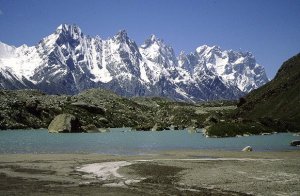
HALPIt is New Year’s Eve in Thansing, India, the Himalayas.  A group of eleven American doctors is gathered in a dark-walled hut. Their faces shine from firelight and the occasional flare of a camera flash. They are dressed warmly because heat from the fire does not spread well across the room from the open hearth.

Conditions at this New Year’s celebration are primitive, but spirits are high. Members of the expedition discovered a new resolve in pushing themselves through an itinerary designed to stress their bodies at high altitudes and low temperatures. The doctors hiked as high as 18,000 feet, up to twenty miles a day and tolerated sub-zero temperatures during the two-week excursion.

Dr. Otto Appenzeller, a physiologist and sports medicine specialist, organized the Himalayan trip as part of his research on the reactions of well-conditioned individuals to physical stress. Marathoners, ultramarathoners, triathletes and endurance performers of limitless genres; young and old, male and female, answered the call to test themselves under Appenzeller’s direction. As doctors, they would also be monitoring fellow expedition members in their specific areas of medical expertise.
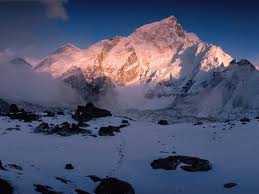
url-3The region in which they travelled is rich in mountaineering history. Peaks such as Everest are full of the mystique and challenge that has emboldened men in their climbing assaults to pare their efforts to minimalist terms, to climb each face as they can, with less equipment, no oxygen supplies, solo, until it is only man and mountain.

In the Appenzeller expedition, the goal was not to reach any peaks but those of physical performance. Appenzeller and crew relied on the guidance of Sherpas while in the mountains, and porters were hired to transport supplies from point to point, leaving the doctors to hike as fast and far as they could.

Still, the cold fate of men left stranded or alone in the Himalayan world of ice and stone remained near in the minds of the doctors as they began their expedition. In mountains such as these, the challenge is always to return with senses and body intact.

Appenzeller began the trip out of Darjeeling, India, an urban center of 64,000,000 people. Once out of the glut, and glad of it, the doctors began putting each other to the competitive test, racing each other on trails between farm and forest before ascending to the alpine regions. There they would find the air thinner and the going less easy. By the third day of hiking, having climbed thousands of feet in elevation, and descended as often, attitudes about competition began to change.

The accumulative fatigue was as great as any of the participants had experienced. One of the doctors, optometrist/marathoner Jack Gardner, had whipped himself into good running condition on the hilly forest preserve trails near his office in the suburbs of Chicago (Orland Park/Palos Hills). He soon found the severe climbs and descents had greater effect than his flatlander legs had anticipated. Even the mountain runners who had competed in races such as the Western States 100 miler found the Himalayas an extra challenge.

Himalayan_mountains_from_air_001“You had to concentrate not to hurt yourself,” explained Gardner. “It would have been very easy to look up and bust an ankle. It happened to one of our group members when he looked across a chasm and caught his boot heel on a rock. Fractured his tibia. He got a free ride down the mountain on the back of a yak.”

“While hiking you felt so insignificant and frail in the perspective of that place,” Gardner continued. “Destinations that looked close took entire days to reach. I expected as much, but the tired legs made things seem magnified.”

Jack Gardner’s resting heart rate normally reads in the mid-fifties. Above 13,000 feet it never fell below ninety beats a minute. Doctors who adapted better kidded Gardner about being out of shape. Some began short runs around camp to shake out kinks from climbing all day.”

Gardner awoke one night gasping for air in a pattern known as Cheyne-Stokes breathing. At lofty altitudes the diaphragm muscle that pumps the lungs sometimes forgets its normal rhythms and the lungs convulse in a series of huffing breaths that don’t allow full exhalations of air.

Fear jangled in Gardner’s body and brain when Cheyne-Stokes hit. He had watched that day as one of the toughest members of his group that had previously finished races over hundreds of miles in rough terrain lost his lunch from exertion during the afternoon hike. Gardner questioned himself at that point, thinking, ‘If that tough cookie got sick, where am I…” and here he was, propped up in total darkness, unable to get a full scoop of oxygen as he inhaled. He was exhaling though. If there came a point of diminishing returns, would his number be up?

He treated himself as he would a nervous patient, trying to calm his apprehension, but he had to force it. Finally he breathed evenly, but the ability to lay back and sleep came much harder. His tired mind finally gave up the ship and his exhausted body took control. He flopped back for a few hours of rest.

himalayas_2815_470x353Gardner was not the only one to experience fear and illness on the expedition. Some woke up in claustrophobic panic in the crowded tents. Others discovered a previously unknown fear of heights. Those are bad things to have determined on an expedition to the Himalayas.

There were humorous moments as well, albeit at the expense of some pride. Gardner had to survive an acute case of midnight diarrhea. He awoke with the urge only to find that his tent zipper was stuck, perhaps frozen. He frantically yanked the tent open and climbed out into absolute darkness. The temperature was below zero degrees. He knew he had better not wander far from the tent. His urgency sent him scuttling hand over foot in search of a suitable release area. Once positioned, his bare buttocks grazed ice somewhere in the Himalayan landcape and Gardner let out a small shriek.

A voice from the tent inquired, “You all right, Jack?”

“Yes, fine,” he squeaked, but only in the spirit of cooperation.

Otto Appenzeller’s previous trip to the Himalayas had been on an October expedition. That meant the January trip provided plenty of surprises for Otto and his group of Sherpa guides. The weather was tricky. They found themselves actually going up in elevation to avoid snow squalls. Ice formed on many of the trails.

Appenzeller had prepared a list of of equipment needed to prepare participants for every kind of weather and condition. Somehow he wound up the sole possessor of a pair of ice crampons for his boots. No one else could recall their inclusion on the equipment list. Though not absolutely necessary at any point on the trip, ice crampons did make walking more efficient for the one member of the trip who had them. Some good-natured grumbling ensued.

It was hard to be mad at the ebullient Appenzeller for long, equipped as he was with a wild mustaches that gave him the appearance of a hyper-learn circus strongman as he traipsed ahead of his band of bone weary doctors. At fifty years of age Appenzeller was a picture of fitness even for a man fifteen years younger. He trained with extra weights welded onto sets of HeavyHands barbells. With these he ran ten miles a day, ten pounds on each arm. This routine, he contended, optimized the constructive stress on heart and lungs.

The nature of the Himalayan journey appealed to Appenzeller’s eclectic temperament, wandering toward a distant goal in the name of science. The expedition did’t sit well with the sone of the head Sherpa, a man of 26 years that had studied in Wales and knew something of Western culture. “What does a group of well-vested Americans get our of running around these mountains?” he wanted to know. “It is your culture’s instinct for capitalization on nature.”

Appenzeller was inclined to answer him philosophically. But somehow he knew this was not an argument to be won or lost, merely defined. “We do it for research,” he plainly stated. “And for our own self aggrandizement.” Western culture may never have been summed up so neatly.

The doctors on the expedition were indeed involved in the research aspect of the trip by monitoring each other’s physical and mental reactions to the stress of exertion. As Gardner explained, “Most of us were careful not to be oversensitive to our own physical reactions. With all the ‘tough athletes’ on the trip, no one wanted to be listed as the hypochondriac.”

As the optometrist, Gardner found few severe visual reactions to altitude, nor was there any snow blindness. Everyone but Gardner had protective eyewear, an irony forced on the eye specialist when his suitable shades were lost with a bag of luggage that never made it out of New York.

“The one guy who had slight visual problems was losing sight in one eye at odd intervals,” Gardner related. “He also happened to be the same guy who broke his ankle stepping on a rock. But he wanted me to know that it wasn’t because he couldn’t see. He just wasn’t looking where he was going. I told him I couldn’t help him with that.”

The doctors turned to one another for group  introspection when the trip began to wear out their individual constitutions. Campfire discussions became exercises of friendly interrogation, evidenced by conversation designed to relieve as much as examine stress:

Doctor 1: “Think of the accumulative years of education sitting here. It’s really a gathering of well-trained minds. 

Doctor 2: “And think of the total earning power present around this fire.”

Doctor 3: “Neither of which goes anywhere in explaining why someone with the least bit of an analytical mind would put himself through this, much less pay to do it.”

UnknownVerbal barbs became a daily form of entertainment. The ripest quotes were aimed at a Dale Carnegie type whose ever-positive attitude had begun to grate on tired nerves. Sometimes the best response to over-positivity is a health dose of happy negativity.

The verbal jibes had their good effects. It gave everyone a release of tension. Some odd, amusing relationships formed as those with a fear of heights teased the claustrophobics and so on. Even the Sherpas and porters jumped in the fray of jests. Friendships grew out of the interplay.

Jack Gardner shared observations with a newfound hiking partner, Ed Feller. The two used the intensified realm of experience to measure and compare their lives and philosophies. They talked much about their families, practices and their loves. They traded running stories and made plans to get together in Boston that spring for the Big Event, the marathon, and run together.

They did meet. As is so often the case, others on the trip did not remain in contact as they had promised. The trip had been a lot to assimilate. The doctors had all come for different reasons. The common thread had been the need to escape the confines of civilization and the demands of a medical practice. That they were in turn contributing to medical knowledge across a spectrum of physiological responses by participating in the expedition was a plus. The group had also learned to better cooperate as a team and to tolerate both the strengths and weaknesses of others. The joy of finishing each day was the manner in which each could quantify their efforts. So there were both philosophical and empiric benefits.
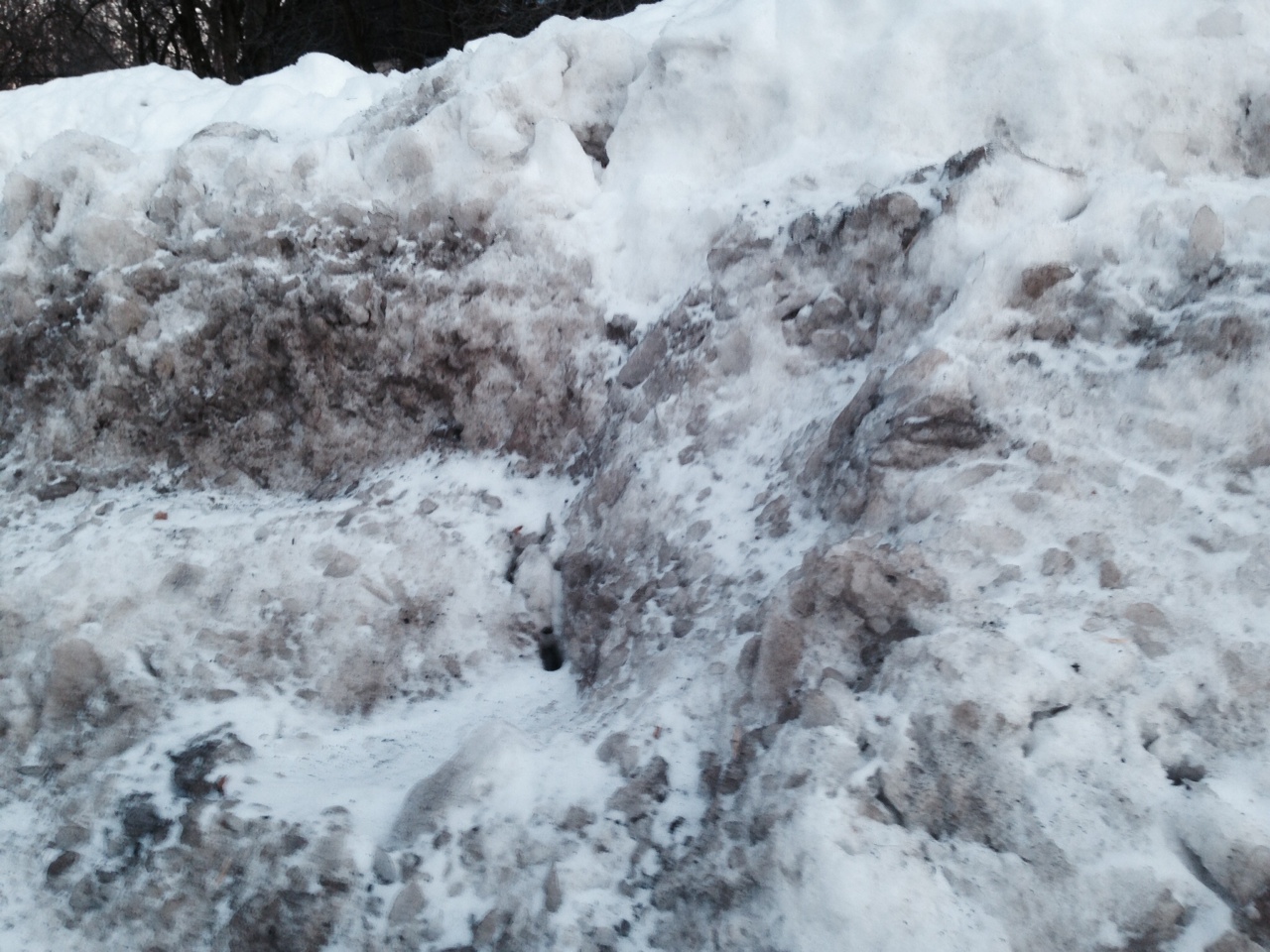
SnowbankForemost in all their minds was the struggle with fatigue. That wrought an attitude of coexistence rather than a conquering attitude with the mountains. From lowland forest to barren alpine slopes the natural elements offered a changing version of nirvana.

The raw passage brought about a change in perceptions. Comforts of food, fire and rest became an obsession. After days of extreme cold, a thirty degree day saw everyone stripping to rub down and scrape off built up sweat and to escape what seemed like a prison of layered clothing.

By the time the doctors reached the hut where they celebrated on New Year’s, their days and nights in the Himalayas had long since been lost to the significance of numbers and become what seemed like one strong and very recent dream.

“That place taught me there are no limits,” Gardner recalled. “You can never afford to stop learning about yourself, not matter how busy, old or preoccupied you are. You must keep on going, and keep on learning.”

Note : Dr. Jack Gardner’s optometry practice is in suburban Chicago at multiple locations.

WeRunandRideLogo


Posted in Christopher Cudworth, We Run and Ride Every Day | Tagged , , , , , , , , , , , , , | Leave a comment

The muscle of evolution

By Christopher Cudworth

Helicopters in closeupAs a little kid you’re often more closely in contact with nature. Given the amount of time you spend on or near the ground, playing in dirt and among acorns and ants and thistles, you get a better feel for being connected to the earth.

One of the distinct impressions that has stuck with me all these years is how much the bulging end of a maple seed resembles the muscle in a human bicep. As a skinny kid I always wanted stronger biceps. In fact I yearned for strong muscles of all types. As a young runner it was painful to go to track meets where the ripping calves and shoulders of sprinters made me feel weak and winsome.

But we’ve all evolved for different purposes, haven’t we? The skinny frame I inherited through genetics proved to be decently suited for distance running and endurance sports. It was the very lack of muscle on my frame that proved to be a strength competing in races from a mile to a marathon.

How ironic that nature, for all its supposed emphasis on strength in the survival of the fittest should also accommodate those with a talent for endurance.

Long ago (or not so long ago depending on how you look at it) human beings evolved the ability to walk upright.

Bipedalism gave us distinct advantage in some ways. Our eyes were raised above ground level. Our bipedal locomotion actually combined with a slowly evolving larger brain to make it possible for us “humans” to look around, get around and think around problems faced in daily living. It’s even more interesting that our bipedalism has evolved one step further into the bipedalism of cycling. We’ve equipped our own evolution with remarkable tools to make life easier.

Helicopters on streetBut like all things evolutionary, it is seldom one factor that makes an organism successful. The fact that we stood up and started to think was no guarantee of survival. The Neanderthal race of human beings went extinct perhaps through factors of competition.

That means they might have been muscled out of existence. But again, it doesn’t mean they were the weaker race. Evolution is notably specious in who survives and who does not.

Choosing heroes wisely

So we must be careful how much joy and compliment we confer on the apparent “winners” in life. The very people we grow to admire most may be the worst examples for our own success. That’s why publications such as People magazine are so fascinating. They are chock full of stories of success and failure. If you want evidence of human evolution up close and personal, just read People magazine or Us or even the Wall Street Journal. It’s all about determinism. There is not a second goes by that we are not evolving as a race in some way.

Origins and emigrants

We know that this occurs in fits and starts however. The people who populated North America long before European settlers arrived to turn the place into a giant strip mall were likely locked up in a region where the Bering Strait now exists. Once the seas rose and an Ice Age receded the residents were forced out of an area that served as home for perhaps 10,000 years. Through environmental pressure and breeding, their descendants diversified into a wide range of civilizations ranging from the Inuit of the North to the people who built Machu Picchu in South America.

Fundamentals

Some of us were taught to think it all started in the Garden of Eden about 6-10,000 years ago. That vision was off by a continent or so and about 350,000 years. Those who don’t take the Bible literally can conceive that at some point Middle Eastern culture assimilated its creation myth on the collective wisdom of people who maintained a self-concept through oral history. To think otherwise is simply shortsighted and perhaps even stupid. Cutting the Bible or any other Good Book off at the knees by taking it too literally is an eclipse of the power of human imagination. It may also be shutting our eyes to the wisdom of God.

Even the great teacher of Jesus Christ made use of organic symbolism to teach about spiritual concepts. He did not limit himself to the legalistic vision of self-concept around which the religious leaders of his day had built a controlling religion.

Human memory and miracles

What we now know from genetics and anthropology is that the descendants who populated the Middle East emigrated from tribes of hominds that evolved in northeast Africa. The myths that fill the Torah and the Bible and the Koran all describe major events such as major floods and other highly memorable tectonic or meteoric events. Our comprehension was necessarily limited because human beings simply could not conceive of their position in the universe any other way. Everything that happened out of the ordinary constituted a miracle of sorts.

But human culture proved both remarkably adaptable and highly susceptible to our collective foibles. We successfully invented agriculture and then expanded on that concept through industrialization. We jammed our holiest forms of knowledge into various forms of scripture and started to fight about whose vision of creation and salvation was the best. These horrid fights continue to this day.

Helicopters on Tree

Competition

It’s all part of human evolution, for competition drives it all. The will to compete and survive is hard-wired into the human race and will never go away. The diverse outlets of athletic competition help us vent our animal instincts in many ways.

But let’s face it: competition for space and control is still at the heart of every human conflict. The fact that some people do not think they can exist without guns for protection is just one illustration of the evolutionary question. Are those people better evolved in making use of a murderous tool for protection? Or are they less evolved in having to depend on that tool for security?

We can’t even interpret the US Constitution with any clarity on such matters. The truth is that human evolution is full of ambiguity.

Our own realms

Those of us who run and ride are trying to evolve within our own spectrum of existence. We pass along our experiences in hopes of forming a tribe of people who share in similar enlightenments. We wish others would appreciate the benefits of that lifestyle. Yet we’re stunned to realize that many people don’t care if we even exist. Some would prefer to even wipe us out. They call our endeavors arrogant or frivolous. And we have to take that criticism into account because they just could turn out to be right.

Proof and challenges

We don’t really know. No matter how many ways you attempt to prove yourself a higher being in terms of evolution there are moments when you discover your own weakness and frailty. It’s there every second of every day. We compete and we fail. We get injured and grow older. We love and we lose.

But we also experience moments of extreme joy and triumph through this process of evolutionary experimentation. We build muscles and self esteem. We build friendships and trust and hope in the human condition.

We move through the seasons from summer to fall to winter to spring and the seasons of despair and renewal affect us all. We shiver at the polar vortex and worry at the increasing summer heat. Could we in fact be messing up our own nest, this place we call earth?

Sense of wonder

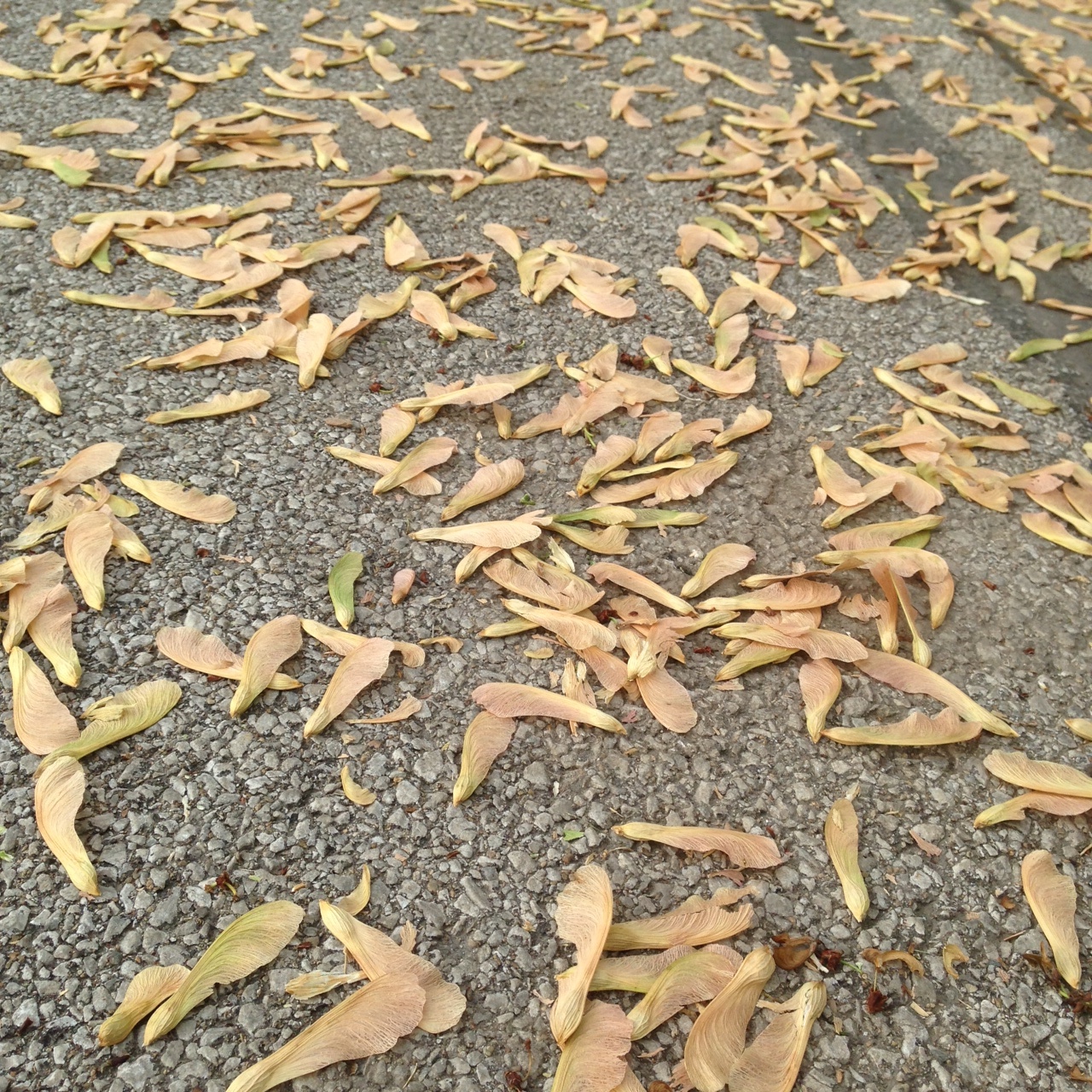
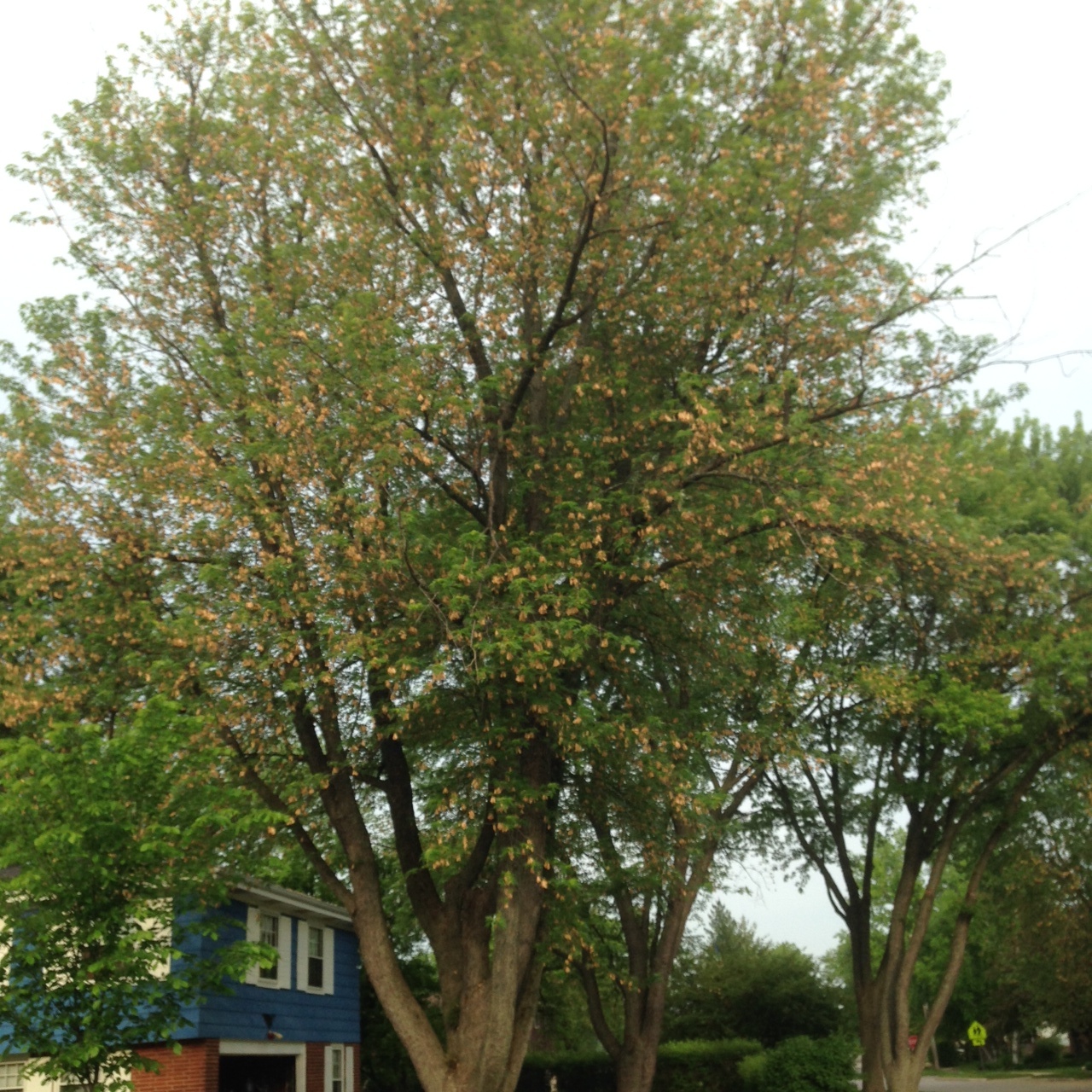
Then we walk out in the spring wind and find ourselves engulfed by a shower of maple seeds showering from the trees. They fall and twirl like helicopters through the air. They pile in masses and penetrate our carefully mown grass with their heavy seedheads. It is a perfectly evolved strategy for propagation. The wing that carries the seed down gently from the tree will quickly defray and fall away. The seed is left to slip toward the earth where it can get soaking wet and germinate. Then little maple trees begin to grow.

Helicopters with runnerThe trees are not so very different from us, you see. They muscle their way into existence any way they can. Whether we accept it or not, we evolved from seeds of the human race, and have been distributed in much the same way. Our family tree goes back to roots of people we might barely recognize.

Some see them as too potentially inferior to reflect on their own being. “We didn’t descend from monkeys,” the non-believers have been known to say.

Firm evidence

Our genetics tell us otherwise. The maple seeds of DNA are driven into our bodies and our souls. We can see them in the muscles of our biceps and the formations of our bones. We are exactly like those that came before, and yet we are also always evolving. Life is nothing but change. It revolves and challenges our conceptions like a maple seed borne on the wind. It is ours to see that, and to seed that in the choices we make in this life.

We can choose to ignore it, but to our peril. Or we can choose to expect it, and run and ride driven by the knowledge that we’re trying to make ourselves into better people. That’s the muscle of evolution at work.

WeRunandRideLogo

Posted in Christopher Cudworth, We Run and Ride Every Day | Tagged , , , , , , , , , , , , , , , | Leave a comment

Heading into the weekend with an eye on better fitness

By Christopher Cudworth

Find a bu

Find a buddy and get out there to get in shape!

Heading into a Memorial Day weekend is quite often a pleasure of purpose for amateur athletes like us. We hope and pray for good weather if there’s a race to run or ride. If we’re set up for a big training weekend we hope that other obligations don’t chew up our time.

A few years back a friend of mine was not riding that well all spring. He quietly stated on a ride just days before the Memorial Day weekend, “I’m going to ride all four days.”

And he did. He rode long. And he rode hard.

The weekend following his training binge his fitness seemed to have improved by 50%. No lie. He was leading the pulls and climbing with energy and focus. Before that, he’d been wheel-sucking, cramping and dropping on a regular basis.

Can one big weekend make all the difference? In cycling, it seems like it can. World class riders like Lance Armstrong chronicled their “big weeks” as being key to flipping the switch on fitness. Armstrong rode in North Carolina if I recall correctly, hammering a murderous climb again and again to push his body past the point where it resisted fitness.

My buddy Jack who rode himself into shape in one weekend.

My buddy Jack who rode himself into shape in one weekend.

Yes, that’s how one has to look at it sometimes. The mind has to take over at some point. You must become determined to get fit if you are really going to do it. That means pushing past that comfort zone where we all ride when we think we’re getting fit but really aren’t. Much of the time we’re just fooling ourselves.

My friend who did the big rides really knows his body well. He’s been riding for 30 years and has the muscle base to take on a big weekend and not crush himself. He’s also an incredibly strong sprinter so that when he throws some distance training into the mix and emerges on the other side, watch out. He can go from 20 to 30 in a heartbeat it seems. So don’t mess with him on the County Line sprint. It’s a remarkable thing to watch.

I always feel good when a buddy gets fit and feels good. It’s nice when friends round into shape and feel good on the bike.

Last weekend I was the lone rider who showed up for a Saturday morning session with another guy. He’s always fit. A really strong rider who competes in mountain biking as well as road races. We took off at 18mph and right away I knew it wasn’t my day. The legs felt sluggish. I hadn’t gotten enough sleep leading up to the weekend. At an hour I was struggling to stay on his wheel in the wind and rode up beside him to say, “You know what Tom? You go ahead. I’m holding you back.”

It was true. Released from the bondage of false companionship, he lifted off his pedals and rode ahead with a comfort that was enviable to me at the time.

It occurs that I once used to race a 10-miler every Memorial Day in Elgin, Illinois. The course was hilly and filled you with dread just thinking about the pain you’d feel on some of those climbs. Yet the last mile was slightly downhill. After you’d race 9 hard miles you could literally see the finish line ahead of you. I ran that stretch in 5:10 one year, finishing 4th overall.

That race was symbolic of what it takes sometimes to push yourself through to fitness. It’s like that with a big training weekend too. You push and push and think you’re wiped and then a second wind or a surge of adrenaline kicks in. You’re glad for the effort you put in.

So now it’s our turn. And whether you plan to log some good running miles or are riding in a race, a Century or some other event, may the Gods of Fitness go with you. This is the start of the summer riding and running season. Let’s go for it!

The pleasures and priniciples of low art.

The pleasures and priniciples of low art.

On a side note: Hope you enjoy this little video I created about an art project just completed in Geneva, Illinois. https://www.youtube.com/watch?v=eleO4gTONwI

Or read about it here: http://redroom.com/member/christopher-cudworth/blog/the-pleasures-and-principles-of-low-art

WeRunandRideLogo

Posted in Christopher Cudworth, We Run and Ride Every Day | Tagged , , , , , , , , , , , , , , , , , , , , , | Leave a comment

The surprising power of determination

By Christopher Cudworth

“You’re so determined.” 

IMG_6318That’s one of the biggest compliments you can give any person.

When you say that someone is “determined” it means they are focused on a goal. They mean to achieve it the best way they can. They will not let anything stop them.

You can be determined to finish. Determined to set a PR. Determined to raise money for a good cause. Determined not to let the past hold you back.

Determination is part belief, part motivation, part courage and 100% willingness to try.

Where does determination come from? 

Testing fate

Some degree of determination is built into all of us. The world’s greatest literature focuses heavily on people trying to determine their own fates. Some succeed. Some fail.

One thinkurls of Captain Ahab chasing the White Whale. What a determined fellow Ahab really was. His determination consumed him to the point where he died lashed to the back of his prey. So you can be determined to a fault.

Then there’s the peripatetic Don Quixote wandering the countryside jousting at windmills. Who knows what his determination was really all about? An imagined reality where things were better?

In the book Hotel New Hampshire by John Irving the lead character is told by his wrestling coach to “Get obsessed and stay obsessed.” That is the heart of determination in a nutshell. To be determined is to prevent distraction from guiding you away from your course and objective.

In the moment

photo 3 (1)I recall a moment in a high school cross country meet when I had a lead in the first mile. The course was marked with a white line that turned a corner and headed straight into a cattail marsh. There was a flag indicating “go straight” on one side of the marsh and another flag 30 yards beyond. With no one there to indicate otherwise, I followed directions and ran right through the wetlands. As it turned out, the course designers actually wanted to make things interesting for the runners. But there was no course tour that day.

I was determined to win that day, and did. It would have been easy to stop, wonder aloud whether what I saw ahead was too weird to believe. But instead I ran right through. Given no other alternatives, determination can get you through all sorts of obstacles in life.

The business of determination

In running and riding as in business and other endeavors, being determined can make the difference between having a chance at success and not being in the hunt at all. But even that type of determination can get a bit raw.

We must suppose that people who earn tons of money in business and turn to blood sports like big game hunting simply need more stimulating outlets for the determination that made them wealthy in the first place. Their determination needs an outlet.

url-1The problem with determination of that sort is that there are natural limits to how much hunting you can ultimately do. If you’ve shot all the rare cats in the world, what then do you then hunt?

Or if you go market hunting for passenger pigeons because there are billions of them in the world, who would think they could ever run out? Yet they did. There were hunters so determined to bag pigeons they literally wiped out the one of the most numerous birds on earth. Were those hunters determined to get every last one? Not likely. But it happened just the same. Determination can turn into a form of evil when it knows no limits.

So we need to understand that determination is both an attribute and a danger. It is truly one of the tarsnakes of human motivation. Without perspective our determination can lead us to costly extremes.

Enduring determination

Endurance sports naturally draw determined people. Without determination it is not possible to run or ride through pain that persists and tests our will to continue. Half the battle is dealing with pain and exhaustion. Cyclists and runners alike know that it never gets easier because you can always go faster.

That’s about as frustrating a life philosophy as those great existentialists who conceived the irreversibility of time. There is no going back in time, and going forward is never easy. You must therefore be determined to course your own fate.

Determination of God

8-devil-guy-crazy-tour-de-france-fansBut are other factors involved. Are the metaphysical or supernatural forces of the universe real? Does the God in whom so many people believe have any control over our fates? Or better yet, can human beings realistically determine their own fates?

People once thought God determined all that. They believed that since God knows all, then our fates must be mapped out before we’re even born. That would mean we really have no choice in who we are or what we do. That’s a pretty depressing thought actually.

Is God really such a control freak? Does the devil exist to tempt us into quitting when we should be determined to persevere, to be righteous and to tarry on when the going gets tough?

Indeed, do we have free will to make our choices and thus live with the consequences? That makes more sense theologically. It doesn’t make life any easier however.

Determined souls

We learn much about that from our running and riding endeavors. When you sit on the wheel of the rider in front of you and it comes your turn to pull, it is often possible to find the extra strength to lead into the wind. One moment you’re struggling to hold on and the Froomewigginsnext moment you’ve got you’re head down and your eyes on the road just ahead and you are pedaling with determination and focus. On you go. When your pull is through and you slide to the back of the group a deep sense of satisfaction rolls through your mind. You did it. You held the pull. Earned respect. Led the pack.

And when running there is no greater test than the last 800 meters of a race. It is in that 800 steps that you find out how much determination you really have. For elite runners that means just over two minutes of total effort. 800 strides. So many breaths. On you go with fatigue screaming from your legs. But you finish, and stumble beyond the line to catch your breath, relieved at last to be free of that prison of pain created from your own determination.

That is the surprising power of determination. You can determine your own fate. And when you get there and look around, there is nothing quite like it.

“I did it!”

You might pray to your God for strength in victory. Or you might ask for grace and forgiveness if you fail. But in either case you need to have determination to seize the day and come to grips with where you are in life. That’s how you determine who you really are.

WeRunandRideLogo


Posted in Christopher Cudworth, Tarsnakes, We Run and Ride Every Day | Tagged , , , , , , , , , , , , , , , , , , , , , , , | Leave a comment

Resolving the mysteries of Smartwool

By Christopher Cudworth

There are a lot of great performance and comfort products out there in the world these days. One of my favorite brands is Smartwool.* All their products feel good on the skin and the socks don’t stink no matter how many times you wear them. It’s true.

A pair of sheep that don't look all that smart.

A pair of sheep that don’t look all that smart.

But I got worried when thinking about Smartwool. Because we know that sheep are not known by reputation for their brains. Even Jesus called us all sheep for our lack of ability to comprehend the mysteries of spiritual salvation on our own. He told us to get in line with the rest of the sheep and Follow Him. Lest we get lost. So if human sheep are stupid, real sheep must be really stupid.

Smarter Sheep

But apparently Smartwool has found a way to make sheep smart enough to produce wool that is smarter than other types of wool. This takes some doing.

This rare breed is called the Rorschach Sheep. What do you see in its wool?

This rare breed is called the Rorschach Sheep. What do you see in its wool?

One can only imagine the interviews Smartwool had to conduct to identify the smartest sheep. The Rorschach tests alone must have been fascinating. Imagine a sheep sitting at a bare little desk in a room lit by big windows. The Smartwool psychotherapist leans over and pushes across the table a page with an ink blot design on it. The sheep looks at the page with those weird eye slits and says, “Baaaaaah. Nothing.”

So that’s not the sort of sharp sheep they’re looking for. Instead they’re looking for a sheep that really gets it. A sheep that wears its smarts on its sleeves. A sheep with a degree of genius. A sheep that has its shit together.

Bright sheep

There is evidence of sharp sheep out there you know.

Smartwool Sheep grow the wool that goes into all its hi-tech clothing. And socks. Wools likes socks.

Smartwool Sheep grow the wool that goes into all its hi-tech clothing. And socks. Wools likes socks.

For example, there are sheep that can grow wool in bright colors. They’ve been trained to grow fluorescent yellow wool and other colors that can be turned into all sorts of hi-tech performance gear. That’s why it’s called Smartwool. See, it’s even smarter than you. So don’t put it in the drier with the other crappy stuff you own.

Sheep aren’t the only smart things out there you know. Goats are pretty smart too. Here’s a video of a goat making an appearance on a program hosted by Brian Fellows. The goat seems to have outsmarted Brian.

Well, that’s about all the time we have for today’s nature lesson about Smart Sheep and Smartwool. We hope you’ve learned a lot and know how to pull your socks on now. Wait, we didn’t tell you that? Well, you’ll have to figure that out on your own. But your socks can actually help with that if you buy them from Smartwool. They’re smart. And they’re wool. From Smart Sheep. Or something like that.

* No promotional considerations were part of this blog.

WeRunandRideLogo

Posted in Christopher Cudworth, We Run and Ride Every Day | Tagged , , , , , , , , , , | 1 Comment

Being a pussy is not what it used to be

By Christopher Cudworth

kill-bill-vol-1-originalWalking out of the health club after a weight workout last night, I overheard a friend call across the parking lot to a young man entering XSport.

“Diego’s a pussy,” he teased.

His friend laughed and they met at the door for a fist bump before heading in to lift weights.

The comment struck me. Guys have teased each other about being “pussies” for as long as I can remember. All the way back to middle school, the worst thing you could be called was a pussy. It meant you weren’t man enough to stand up to competition. Or it meant you quit when the going got tough. It was the worst of insults to be called a pussy.

But it’s funny to consider the term is still being used after all these years. Hasn’t the frame of reference changed when it comes to such terminology?

Like a girl 

marathonersBeing a “pussy” once meant you acted “like a girl” in competitive situations. It used to mean that actually having a pussy, to use a coarse and colloquial term for a woman’s vagina, meant you were one.

Once upon a time, girls really didn’t “do” sports. Not in the sense that guys did sports. Girls didn’t know how to throw and catch, shoot hoops or ride a bike at 30 miles an hour. Only tomboys did that, and that came with its own vacuous accusations about the sexuality of a girl who liked to do things that guys do. To be called a lesbian is still a term used with disdain in some quarters.

Over time that really has changed. The days of worrying that a woman’s uterus will fall out if she runs a marathon are over, and girls who compete in sports are no longer labeled “tomboys.” But certainly there’s still some patent ignorance about women’s bodies going on. It plays out in the news every day it seems.

Ignorance on the run

More than one politician has shown misogyny in their worldview with attitudes about rape, abortion and the simple act of birth control. A simple survey from the website politicsusa.com (a liberal political site) reveals a wide range of dumb statements about women.

Take for example the statements of Ken Buck about rape: “A jury could very well conclude that this is a case of buyer’s remorse … It appears to me … you invited him over… the appearance is of consent.” –October 2010 

And then there’s the inimitable Clayton Williams, “If it’s inevitable, just relax and enjoy it.”

We should not forget the brilliant insight of one Todd Akin, whose knowledge of the female anatomy appears to start somewhere outside the pussy and end there as well. He said: “If it’s a legitimate rape, the female body has ways of shutting that whole thing down” – mid 2012 Senate Campaign.

Let us not forget the attacks leveled on Sandra Fluke by the king misogynist Rush Limbaugh, who accusingly stated that he believed she was having so much sex she could not afford birth control, and that the government should not subsidize her sex life?

Limbaugh later was forced to apologize in order to avoid the appearance of a bully and an idiot. But the point was already made.

On weakness

f6a3e3f03e432600_178369404.previewWith attitudes like that floating around, and plenty more to back them up, it is perhaps no surprise the term “pussy” is still a popular derogatory term for women and “being weak.”

But then perhaps we should turn it around and accept that some men simply seem to have dick for brains.

In any case, there now appear to be more women runners than men in the United States. Each has taken control of the health and fate of her own body in a healthy, positive activity that helps everything from weight management to self empowerment. As a result women are changing the reference point on everything about the female body. Men have been forced to recognize women as their equals on the athletic front.

Hard and fast

One learns that lesson the hard way when you make any sort of assumptions about the power and ability of women to compete and enjoy athletics. My own experience of trying to tag along when two strong women cyclists passed me on a country road brought the lesson home all over again. Both these people were good riders. They traded pulls on the front at more than 23 mph on the flat and climbed hills at a rate that found me standing on the pedals to keep up. Then they rode even faster, topping 26 mph while I gasped and hammered for miles in their wake. Finally they eased away and I was forced to ride along on my own. I’d gotten dropped, in other words. I saw them glance back while rounding a term and could not help wondering if they did not mutter the word I would have least like to hear at that moment.

“Pussy.”

Turnabout is fair play

Women have perhaps earned the right to wield that term as a threat and an insult. For decades women have put up with derogatory comments about their anatomy. Even a favorite cycling term for Time In The Saddle adds up to the word TITS. The sexual undertones of such terms are common in the sports world. Yet each as it is exposed seems to wane away. Mixed company and looking like a macho dork in the company of female athletes will do that.

It’s somewhat the same with the racial term nigger, which is being turned inside out. A generation of comedians and other social commentators have determined to own the word nigger by using it aggressive verve, dismissing its discriminatory history in a tarsnake of social irony.

149912104.jpg.CROP.rectangle3-largeOn many fronts we really are witnessing a quiet revolution of social change. Of course it is being resisted on many fronts by people who abhor change. But what’s the alternative to social progress, going back to a time when it was acceptable to go around calling everyone pussies and thinking nothing of it? Women have emphatically disproved such assumptions. Yet old and odd habits persist. Gross traditions die hard.
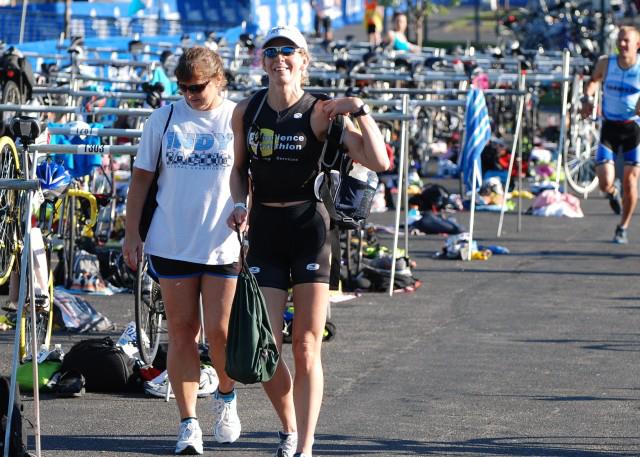
Let us consider that the term pussy is used almost interchangeably with the term “fag” for someone who is considered effeminate or weak. It stands to reason that the same groups of people who seem to have trouble understanding the real strength of female anatomy would have an even harder time understanding a sexual orientation that is not the same as their own. They are threatened by such notions, especially fearful when the “other” shows strength of purpose and resolve for equal rights.

That’s true for both women and for homosexuals. But things continue to change. The history and leanings of an obsessively patriarchal society seemed indomitable just a few years ago. Now those social structures are changing. Yet people cling to anachronistic worldviews including religious views that have long been proven false.

The times they are a changin’

photo (15)But all great social change takes place one footstep at a time. Civil rights marches made the difference in the 60s. And who resisted the changes wrought by such passive empowerment? The very same people who continue to resist positive social change today. For some reason they prefer stubborn adherence to derogatory social dogma and literalistic fervor over granting people different from them the basic rights of citizenship and approval in this world.

A real revolution of terminology and perspective began back in 1967 when one Katherine Switzer dared compete in the Boston Marathon. Since then it has been a growing revolution of women engaged in running, cycling cadence and arm turnover. Every moment made by women contributes to the bigger movement of social change. To deny that is to expose a gross flaw in one’s worldview. Women continue to work for control of their own body image. Even the color pink now stands for empowerment. Perhaps there is no small irony that the word pink is another yet another term for the female anatomy we call pussy. Yet even the big, bad macho world of the NFL is “going pink” on occasion. Redemption happens in strange ways.

Super changes

Cross Country GirlsWe live in a sexually charged society. The big old marketing force that is the NFL knows that better than anyone. Hence the cheerleaders on the sidelines. But now there are female sportscasters who report with knowledge and insight on NFL games. So guess what, there’s no such thing as a pussy anymore. Girls and women have changed all that by taking the lead in their own empowerment as athletes. And more.

There may be still be athletic events where elite men are still superior to women in terms of overall time. The gaps have indeed narrowed and along the way millions of men have learned the important lesson that women can not only pass them by, they can literally leave them in the dust.

So who’s the pussy now?

That’s not what it’s all about of course. Sure, the kidding can be fun and women can be just as tough with their insults as men. The term “pussy” is not likely to go away anytime soon. It’s been commodified in a post-post-modern context, applying not to gender per se, but to weakness in general. At the point where it is turned back on the original perpetrators it is probably no longer politically incorrect. But we’ll see.

By any measure, being pussy just isn’t what it used to be. And that’s a good thing.

WeRunandRideLogo


Posted in Christopher Cudworth, Tarsnakes, We Run and Ride Every Day | Tagged , , , , , , , , , , , , , , , , , , , , , | 1 Comment

Exercising our ability to deal with stress

By Christopher Cudworth

There are two kinds of stress in this world.

The first is stress from the unknown. We grow anxious and worry when fear of the unknown presses in on us.

scorpionThe second type is stress from the known. That is, we know something is going to be difficult and we focus on the challenges a situation, task or event will produce.

These two types of stress produce very different responses in the human mind.


Distraction

Stress from the unknown is distracting. It keeps us from being attentive on the matters at hand. It can cause erratic thinking and even irrational behavior as we try to come to grips with fear of the unknown. Stress from the unknown evokes the famous “fight or flight” response with which we should all be familiar. It is wired into our minds and body. The wilder side of our nature has not functionally changed in the last 100,000 years. So we must live and learn to cope with our inner animal. That type of stress is based in the notion of survival.

Confrontation

Stress from the known is much more direct and tangible. It does not hide from us like a fearful animal. It rather confront us. It is the stress of facts and empiric data. We either figure out how to solve a problem or we do not. That type of stress is the question of success or failure. It might not be something that is likely going to kill us. It just feels that way sometimes.

We experience both these types of stress as we engage in our chosen sports of running and riding.

Stress factors

.

.

For example, when an athlete maps out a plan to achieve a goal, there are tons of unknowns to anticipate along the way. These can stress us out. There is injury to worry about, and pain. We do not know how we will respond to these inevitable yet unpredictable factors in our training and racing.

There are the knowns to worry about as well. We might choose an event to enter. Completing a marathon. Riding a Century. Finishing an Olympic or Half Ironman.

Then we put additional pressure on ourselves. We set goals for these events. A three-hour marathon. A 5-Hour Century. Or that big bad full Ironman.

Elimination

We envy somewhat those who seem to be able to handle the stress of training for these events. Some people organize their lives around their training and succeed that way. Their stress is pumped through their plan, which externalizes it somewhat. The unknowns exist outside the plan, and the plan is a filter for them. That’s one way of dealing with the unknowns. You try to eliminate as many of them as you can.

Preparation 

As for the knowns, we must learn to trust our preparation in order to deal with them. Some people take the step of hiring a coach in that circumstance. We then internalize the advice given to us by coaches about training volume and pace. We use empiric measures from the stopwatch to Strava to give us feedback on progress. We join up with others having similar goals and train together.

Then we show up at the race with all this stress neatly bundled where we can see and deal with it. Of course then there are nerves to deal with. Having put in all that work, we do not want to blow it.

That means everything from diet to hydration to stretching and strength must be calibrated to make the stress of the day go away. A well-prepared athlete then knows that nerves are a sign of anticipation, not worry. It is time to put all that stress behind you. Go as fast as you can. Race and measure your progress. Pay attention to the associative information that leads you to success.

The business of stress

IMG_1491We apply the same principles in business. We map a plan. We try to anticipate the knowns and the unknowns. We also try to reduce the stress that comes from putting pressure on ourselves, or dealing with pressure from bosses or clients.

So what do we do? Some of us go out and put more pressure on ourselves with fun activities like running, riding and swimming. That’s one of the tarsnakes of stress management. Sometimes to deal with the stress we already feel, we find ways to engage in positive stress to make the negative stress go away.

The purpose of corporate fitness programs is to engage peopel at two levels. First is better health. The second is better mental health. Exercise is a proven stress-reducer. That can help eliminate stress-related illnesses as reasons for worker absenteeism. That contributes to greater overall productivity. So reducing stress is considered a worthwhile investment by many businesses.

Yet on a practical level, we can all use some stress-reduction techniques to help us keep our stress levels in perspective. Here are some solid recommendations along those lines.

Record Your Training: High tech

With technology such as Strava and Garmin now available, it is possible to chronicle empiric data  on nearly every type of workout you do, even walking the dog! In great detail you can record and measure progress. That track record can be great assurance as approach your event. That’s when doubt starts to creep in and stress can rise. Looking back on improvement and the volume of training you’ve done is a confidence builder.

Record Your Training: Low tech

If you’re not into high-tech feedback, buy a composition book at your local office supply store and write down your workouts. And here’s a suggestion: the low-tech version can be really great for recording how you feel about your workouts at the time. That can be just as important. In the near and long term, knowing how you felt about dealing with the stress of training and balancing your workout and business or family life is vital information.

In any case, write it down

This journal from the peak of racing season chronicles four weeks of training, racing and managing stresses such as injury and goals. Click to enlarge.

This journal from the peak of racing season chronicles four weeks of training, racing and managing stresses such as injury and goals. CLICK TO ENLARGE.

One of the best techniques for dealing with stress is to get a genuine grip on what’s bothering you by writing it down. That way you can see your stressors in living, breathing black and white reality. It helps sometimes to see it all in your own handwriting. It’s personal that way, and not some cold, objective font lifted from a Microsoft Word document. Put little boxes next to the list of stresses and see if you can cross some off right away. Or prioritize by putting days or numbers when you can get things done.

That technique is great for “middle of the night” stress when you wake up with a madcap list of things to do or things to worry about and you can’t get back to sleep. Wander out to the kitchen and grab a legal pad. Write it all down. Usually that gives you some nice perspective. Then you can get back to sleep after grouping it all together and wake up fresh with a lively “to do” list already at your beck and calling.

Make a race or performance list

A compressed period of stress such as a race provides its own world of factors to consider. Every mile in a race is a piece of strategy. Your pace and feed zones, transitions or sections of the course where there are hills or other factors are all stresses you need to consider in advance if possible.

Building in leeway for the unknowns such as wind direction or stress brought on by competitors is key to a successful race strategy. Just know that you cannot control everything. That’s the whole point of having a stress compensation strategy. Being ready to adapt and having enough training foundation and practice at racing pace and conditions makes all the difference.

The dope on stress reduction

For all the criticism leveled at Lance Armstrong and that entire era of cyclists for secret doping plans, we may need to consider in retrospect that doping is nothing more than a calculated form of stress control. The more amped you are for competition, and more prepared, the better you can perform. Doping affords athletes a broader frame of reference in athletic performance. Being able to respond to competitive surges is just one of the many challenges athletes face in racing more than 2000 miles in 21 days. This is not to justify doping or suggest we make it legal. But it does explain some of the very human reasons why athletes seek competitive advantage in events of that scale. It’s a stress reduction technique.

Planning strategy

The other thing at which Armstrong excelled was controlling his team and the peloton. He was known as a control freak in fact. In that he is not alone among great athletes. Sprinter Michael Johnson set world records at 200 and 400 meters and won Olympic gold in those events as well as relays. He was known for his almost obsessive knack for neatness and organization. That’s a method for eliminating the loose ends going into training and competition. If you can eliminate mental clutter you are far more able to focus your attention on the matters at hand and intellectually process the demands of competition and stress. It’s true in sports. It’s true in business. Organization does matter.

Stress and creativity

Yet we also know that great athletes respond to stress in highly creative ways. Being able to improvise on the fly is key to responding to competitive demands in all sports. In basketball a player driving into the lane faces a gauntlet of arms, hands and bodies. Being able to finesse your way to the basket, or muscle your way through is what makes great players.

In endurance sports, creativity can mean knowing when to surge or how to tuck into the group in a bike race when the winds get heavy. Finding creative ways to respond to stress is a massive competitive advantage at times.

Overcoming fear

When we line up for a peak performance it is a clear statement of purpose and mission. “I am no longer afraid.” That ability to come to grips with fear and stress is one of the things we so admire in great athletes. The Olympian who triumphs in a big race is a brilliant example to all of us.

Stress if part of the human condition, but what makes us truly human is finding the best ways to overcome our inner animal and do that thing that stress tells us we cannot.

So get out there and turn that negative stress into a positive experience. You can do it. We know you can.

WeRunandRideLogo


Posted in Christopher Cudworth, Tarsnakes, We Run and Ride Every Day | Tagged , , , , , , , , , , , , , , , , , , , , , , , , , , , | 1 Comment