Resurrections

ResurrectionIn Christian tradition there is no more important event than the Resurrection. It symbolizes life after death and to some, the promise of eternal life.

Those are pretty big concepts to grasp. Yet every year at this time people who call themselves Christians broom together their guilt and sorrow into a dingy little pile and submit their repentance for consideration before the Lord God and His Son, Jesus Christ.

If that sounds a little bit like the language of a Radio Preacher, then so be it. As I wrote recently on my blog GenesisFix, there is a new form of Christianity out there that is more about winning the values argument than it is about actually acting out Christian principles. I call it Meta Christianity, that referential brand of faith that commodifies the authority of Jesus for the convenience of the self-proclaimed righteous masses and what they decide is all important on behalf of God and Christ. That might include lying to yourself about the Prosperity Gospel or that evolution is a farce, but so be it. Hubris isn’t confined to the secular world, for sure.

Because mostly what we find behind the motives of Meta Christianity is the love of money, political power and control freak standards of morality that have nothing to do with an intelligent understanding of scripture. There’s an arrogant tradition in religion that says if you own the narrative, you own the power. Just ask the Catholic Church before Martin Luther took them down a notch.

Ask and Ye Shall Receive…

Because while preachers these days are asking for $65M jets from their followers, and building $10.5M homes as testament to their own dreams of prosperity, millions of naive people continue giving their hard-earned money to the cause of the wealthy because humble people are always dying to get into heaven. It couldn’t possibly suck as bad as life on earth.

So the Resurrection holds tons of hope for people worshipping at churches where the kingdom of God is turned into a kind of currency exchange all those seeking a title loan on their souls. Frankly that approach makes the kingdom of God feel like a Rust Belt city trying to make ends meet as a tourist attraction. All those arenas filled with crying parishioners march straight from the church to the NFL stadiums or their big screen TVs because they crave stimulation in the face of this boring, secular life they have to struggle through before earning their place in heaven.

Paths to Salvation

photo (89)Well, I am here to tell you, my fellow believers and non-believers, that those of us who run and ride know a better path to salvation. We know daily what it means to suffer and come back to life. We resurrect ourselves for morning workouts when even God is still lying in bed. We strive and fail with gusto, just like Jesus and even the God of the Muslims and the Torah told us to do.

Moses and Abraham would have made great triathletes or marathoners. They knew the virtues of strife bring out the best in us all. A restricted diet of manna and quail? No problem. Let’s keep moving folks. We don’t want the dust to settle under our feet for too long. Snakes biting your ankles? Wrap thick cloth around your ankles and make sure you strap on your sandals tight in case you need to run for your life.

Moses and Abraham were like the original coaches, don’t you see? They led their charges out of Egypt and got their training rules from God himself.

But the people griped and complained. Life was too damned hard in the desert. They bitched and moaned about the food, or tried hoarding it like little piggies. So God made it wilt and spoil just to prevent them from cheating on their diets. Oh that Oreos would do that trick.

Even that biblical character Job knew what it meant to suffer with the best of them. “It builds character,” he so much as bragged to his snarky buddies who stood around mocking him for his pains. “And when I’m through with the spiritual workout God is putting me through, I’ll be in peak soul condition. Because what doesn’t kill you makes you stronger.”

Women pegged for success

There are plenty of strong women in the Bible too. You had to be tough to be a woman in those days. It wasn’t easy being the property of any man. Hell just finding the car keys would have been tough! And when tested, women knew how to survive. Take this example from Judges 4:21, “But Jael, Heber’s wife, picked up a tent peg and a hammer and went quietly to him while he lay fast asleep, exhausted. She drove the peg through his temple into the ground, and he died.”

It is likely she killed him because he stole her water bottle before a 20-mile workout. Anyone who does that deserves to die. And it’s unlikely that the dude with the tent peg through his head got resurrected, either. God doesn’t like thieves. They don’t get into heaven. “Thou shalt not steal.”

Daily Resurrections

Those of us who run and ride do know what it’s like to rise from death to run and ride again. Or at least we feel dead some days. Aching legs. Ass numb from riding 80 miles on a hot day in August. And yet, when you get moving a little things often improve. You come back from the dead eventually.

Of course we also make ourselves nearly sick to death with our training regimens. We skip sleep and feel like zombies. We catch colds so bad our lungs come flying out in chunks. We get diarrhea and constipation, spew blood and sweat and Farmer Snots, and still we swallow our pride and come back for more. We kill ourselves only to rise again. Another day, another workout. And goddamnit, we’ve not quitting.

Jesus in the Desert

Think about Jesus in that desert for 40 days and 40 nights. Satan himself accompanied him out their to tempt the Son of God with all sorts of riches and comforts. He waved his hand and said, “All this can be yours!” But Jesus turned to Satan and said. “I’ve got a swim workout at 5:00 a.m. tomorrow. Go away and let me sleep.”

So you get the picture. Our sacrifices do teach us a few things about life. Even if you think religion is a bunch of bunk, you have to admit there are certain parallels between endurance sports and the race of life. 2 Timothy 7 captures it cleanly: “I have fought the good fight, I have finished the race, I have kept the faith.” That’s like the triathlon of spiritual testimony, right there.

Beware of False Prophets

Crazy Squirrel (Callospermophilus lateralis)So we must beware of false prophets who would lead us astray from the modern asceticism that we find appealing in our endurance sports. The New Pharisees with their promises of the Prosperity Gospel seem to think God is in the business of handing us stuff just for speaking well of his character. They seem to think we’re all just a bunch of squirrels sniffing around for free nuts that God throws down from heaven. Seriously, that’s about the depth of their so-called Prosperity Gospel. Well, nuts to them.

True Spirits

Those of us who run and ride know there’s a big difference between saying you’re going to run a 2:30 marathon and actually doing it. We know that God refines our character through trials that many people seem unwilling to endure.

And yet we must be careful not to think ourselves better than others for our pursuits. There are many paths to God or enlightenment. Many types of journeys can deliver insight, hope and the zen of being.

The best philosophy is to be strong in your efforts, but grateful for your abilities. Be hopeful in your approach, yet accept your failings with humility and grace. Be sure to kick ass when you can, yet be encouraging to people of all abilities. The weakest among us are not those whose ass you seek to kick.

They already understand the grace of God, after all. They rise and fall in daily resurrections just like you, but without the possible glory you might earn. Those are the people we need to respect most of all. They teach us that resurrection is something highly individual, yet meant to be shared.

And here’s hoping the Easter Bunny brings your favorite kind of chocolate. You’ve most certainly earned it.

Spread the Gospel of We Run and Ride. Please share with your flock of friends. 

WeRunandRideLogo

Posted in Christopher Cudworth, cycling, duathlon, half marathon, marathon, running, swimming, triathlon, We Run and Ride Every Day | Tagged , , , | 2 Comments

5 great reasons why we should all be fans of women’s running

Women'sRunning

Posted in Uncategorized | Leave a comment

Running and riding from here to eternity

constellation-orionLast night on the way out of a networking event, I was walking along with an associate toward our cars. We both looked up at the night sky. I remarked that the big planet in the western sky might be Jupiter, and the constellation to the south and west was Orion.

“Have you ever seen Jupiter through a telescope?” I asked. “You can see its moons. That freaks me out. The idea that there’s a planet out there with other moons around it boggles my mind.”

That’s when my friend said: “You know, NASA is recruiting people for missions on which they’ll never come back.”

Would you do that? Would you climb on a spaceship, fly out of earth’s gravity and venture into space knowing that you’d never return to earth again?

It’s a question you probably have not considered except in strange little rock songs like Major Tom by David Bowie or Rocketman by Elton John. The idea of being shot off into space without hope of further human contact is a bit terrifying.

IMG_5128Then there’s this whole concept of eternity to consider. As scientists wrestle with the physics of how matter came into being, and how to describe the world as it is, not just as we imagine it, there is greater appreciation and greater uncertainty about what it is we really see around us.

I heard a discussion on the radio about the likelihood of life on other planets. We know there are great odds that there are other planets like earth positioned in galaxies likes ours where conditions for life as we know it may well exist. But there’s one problem. As the scientist describing these galaxies pointed out, there are something like 200 billion possible galaxies like that. All with billions of stars and billions of planets circling them.

Because there’s this thing called eternity. And it goes on forever. And ever. And ever.

Those of us who run and ride understand a few things about time and space. It’s not uncommon to hear people brag or complain about how far they just ran or cycled during a workout. “I felt like that run took an eternity,” you might hear someone say.

An eternity. That means time with no beginning and no end. The human mind can’t do it. Can’t conceive how that’s possible. That’s why people throw God into the equation. It helps explain to the human mind that time had a beginning, and that it might also have an end.

Comedian Louis C.K. describes the day his young daughter asked if the sun would ever go out. Before he knew what he was doing he described the process by which suns expand to massive burning orbs and then shrink and die. to his own horror he saw his daughter’s eyes grow wide as she started to cry. “No, it’s not going to happen for a very long time,” he tried to assure her. But in her mind everyone she knew was going to die. There was no way for her to conceive it any other way.

Bono-Might-Never-Play-Guitar-AgainEven adults can feel like their world is coming to an end when something happens in their life that makes them wish it could somehow be different. A bad race is sometimes enough to make those of us who run and ride wish we could go back in time and start all over again. Living with the results of a bad effort makes it feel like time has slowed down just to torture you. “God, I wish I could just die…” we tell ourselves. Not seriously of course. But in jest we say such things to help process the emotional pain that comes with disappointment or loss.

During college I took a course called Philosophy of Existentialism. One of the concepts we studied was the “irreversibility of time.” That’s right buddy. You can’t go backward. So you’re stuck with the consequences of your actions no matter what. That’s a depressing thought to many. Which is why so many people think existentialists are full of shit.

But those of us who run and ride live in intimate relationship with the irreversibility of time. And as I ran through the dark Iowa hills in the deep of winter, I could literally feel time passing me by. And I thought anew about the nature of eternity. And about God And our temporal existence. Rather than make me more of a skeptic about spirituality, existentialism stripped bare the material flatness of our being and exposed the rich emotional world of love, cosmic reality and hope.

Window 1Jean Paul Sartre created the play No Exit that proposes the idea that “hell is other people.” The play focuses on three people in a small room for eternity. And at some point at least one of the people in the room is disliked by the other two. It’s a critical, cynical view of human existence. Yet it’s pretty true as well. I could even hear Jesus saying that phrase: “Hell is other people.” It’s the flipside of the statement that the kingdom of God can be found here on earth.

It’s always stuck me that there are people that almost immediately offend your sensibilities when you meet them. You try like hell to be gracious but your mind gravitates to that ugly emotional pattern where you instantly hate their guts. You can’t even explain it.

Perhaps there is some evolutionary function to such emotions. When you think about your rivals in endurance sports, the people you like to beat the most, there is often some aspect of their character that makes you want to beat them badly.

Window Snowblock 3Why in all eternity do such emotions exist? Because the nature of the universe is that nature is not benign. It is a reflection of the competitive reality in which we all live. So our sporting endeavors are manifestations of truths that exist both in visible reality and in time out of mind. Competition is the dark matter of our brains. We know it’s there and control it to get along with others at work or in family dynamics. But deep down we’re aching to break out of this reality we’re forced to accept. We’re running and riding from here to eternity. We’re seeking to deny that there is a beginning and end to everything.

Or that there is not. That is our even greater fear. Eternity makes us feel like we are insignificant. That we really don’t matter in the scheme of things. That’s what our obsession with God and heaven is all about. We want to matter to someone. Whether that is true or not is a debate for the ages.

So we’re stuck as well with the seemingly competitive realities of religion and science. Some people flatly refuse to try to reconcile the two. Their religion is so important to them that they prefer to deny evolution over acknowledging that Christ and the Bible make liberal use of organic symbolism to describe spiritual principles. Jesus was a naturalist, you see. He would gladly have taken the knowledge of evolution and turned it into parables for how we’re supposed to understand the universe at an emotional, spiritual level. That’s not hard to imagine if you open your mind to realize that nearly every parable Jesus used to teach all who would listen that the eternity of God’s kingdom can be understood best through natural examples of how things work. The mustard seed. Yeast in the dough. That’s how the kingdom of God grows. And evolves.

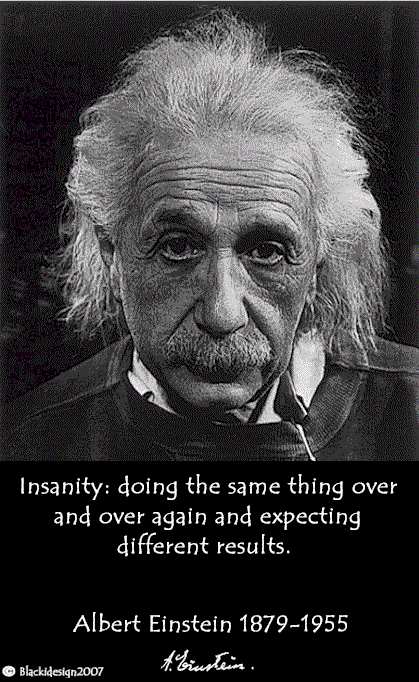
insanitySo it pains me to watch how people struggle with the simple, existential truths of how the world works. It’s all within our grasp if we don’t draw lines in the sand and say, “That’s my worldview. I’m finished.” But that’s insane.

Moving along in our individual passages through eternity is not a race. We’re generally in no hurry to finish off our lives. Some people can’t seem to wait to die and get into heaven. But they’re also generally the people most prone to condemn others to hell. Which proves the existentialist’s point: being forced to live with that sort of person really is a brand of hell.

I’ll freely admit that eternity has always freaked me out. It should freak you out too. Beyond our rich yet meager little planet lie cosmic systems so vast we can’t possibly know if we’re the only form of conscious life in all eternity. But as I’ve often quoted from the book The Ambiguous Adventure by Cheik Hamidou Kane, “the purity of the moment is made from the absence of time.”

That means that time expands when you’re doing something you love. Indeed, that’s what happens when we run or ride or swim. We’re living fully in the moment and also communing with eternity. It’s a humbling little adventure for sure. But it really matters. It really does.

WeRunandRideLogo

Posted in Christopher Cudworth, cycling, running, We Run and Ride Every Day | Tagged , , , , | 2 Comments

Running head on into your personal brand

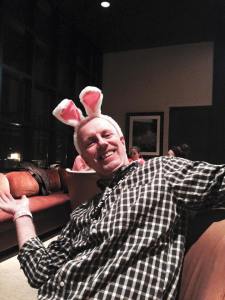
Bunny earsFor the last two years I’ve written this blog, my objective has been to engage readers with original, hopefully knowledgeable insights on running and riding. The tagline is “original thoughts on running and riding.” And some swimming.

Some of the content published here has been designed to be informative. Some of it is meant to be entertaining. Some is just a joke. Or satire. My approach to blogging here has been to find or create things that interest me or that I think might interest others.

This blog has been read all around the world. I know that because every day when the stats come in through WordPress analytics I can see the country of origin. It’s exciting to think that people in Africa or Australia or Europe or Asia are reading my work.

Googling

It also gets shared on LinkedIn, Facebook, Twitter, Google+ and sometimes other social media such as Pinterest. I’m always grateful when people share my writing because it expands the audience for the blog. Go ahead and Google Christopher Cudworth. I’ve worked hard to develop my personal brand. People can find out anything they want about me and I’m both empowered and powerless to control all of that. People are going to judge you by their own criteria. It’s not likely you can manufacture a personal brand that won’t at some point offend or meet disapproval from someone.

Blogging

Blog trafficOne of the troubling aspects of writing on WordPress is that the convenience of automatically distributing this blog to your email address may actually cost the blog “real traffic.” I’m not complaining but when people simply read my blog in their email address, it never shows up as a view on my blog.

The most that have read a single blog post according to the analytics are 25,000 people. That’s not bad. Of course I’d love an audience of 100,000 or a million readers.

I hope what I do has value to you. It has value to me. This blog has brought me business connections through people I’ve interviewed. Some of my faves include talking with Jim Varga, the entrepreneur that has developed a way to personalize white ovals. I’ve also done personality profiles on people like Kerri Hoskins Branson, the Playboy model turned amazing mother and now professional painter and artist. We all have personal brands. Some are more interesting than others. But they all matter. Some readers regularly comment and interact. I love that! All the interactions are appreciated.

Debating

We even debate a few subjects here. As a noted Progressive on all fronts, my more conservative readers take exception to some of the things I write about topics such as guns, Republicans, religion or finance. As the title of this blog suggests, all these observations, right or wrong, are my own original thoughts.

Emotional IntelligenceThere’s a risk in that approach. I just read a blog on LinkedIn Pulse by an author named Travis Bradberry advocating his book titled Emotional Intelligence. That’s a book that is endorsed by none other than the Dalai Lama and Stephen Covey. One is a real guru and the other is pretty good at acting like one.

So I was a bit stunned at the brand of advice in Dr. Bradberry’s post on LinkedIn. He’s a LinkedIn “INFLUENCER” which means that for some pretty good reasons (including a #1 Bestselling book) Dr. Bradberry is someone to whom you should listen.

But I found myself depressed by the low threshold of advice in his post 12 Things Successful People Never Say At Work. Basically it winds up advocating a form of self-censorship. That is, don’t say anything too revealing or you risk giving people something to judge you on. And be careful not to judge others as well. Don’t talk about your party or sex life. In fact leave most of your personality at home.

It’s one of the tarsnakes of corporate existence? What can you possibly say about yourself that is safe?

Fraternizing

I have a couple friends who run companies. One is a CEO. The other is a President. When it comes to their personal lives, both run things close to the vest. For example, they avoid political topics at all times. They don’t go on and on about their families or the fact that they both own summer homes. All that is personal business. And that’s smart.

Both were also close friends of mine in running. I know their personal histories pretty well. They’re great but not perfect human beings. They both still run. Both apply the discipline they learned in running to their business lives. That has helped make them good at what they do. They’ve earned the right to their position in life.

Organizing
IMG_3505I’ve run organizations before as well. Not as a CEO mind you, but as President of service clubs and a chamber of commerce. In all my dealings with the business people in those organizations I strove to be perfectly honest about every aspect of my goals and commitments. In several cases I progressively  advocated transparent business dealings and financial accountability in situations where those principles had been neglected. Creating change was hard, but it set those organizations on a better course.

Some of that straightforward approach and transparency stems from my experiences in running and cycling. These egalitarian sports require much of us, but most of all honesty. It doesn’t pay to lie to yourself about your abilities. In the end, the watch or results don’t lie. You can either do what you say or you can’t. That’s a very real bottom line.

Equalizing

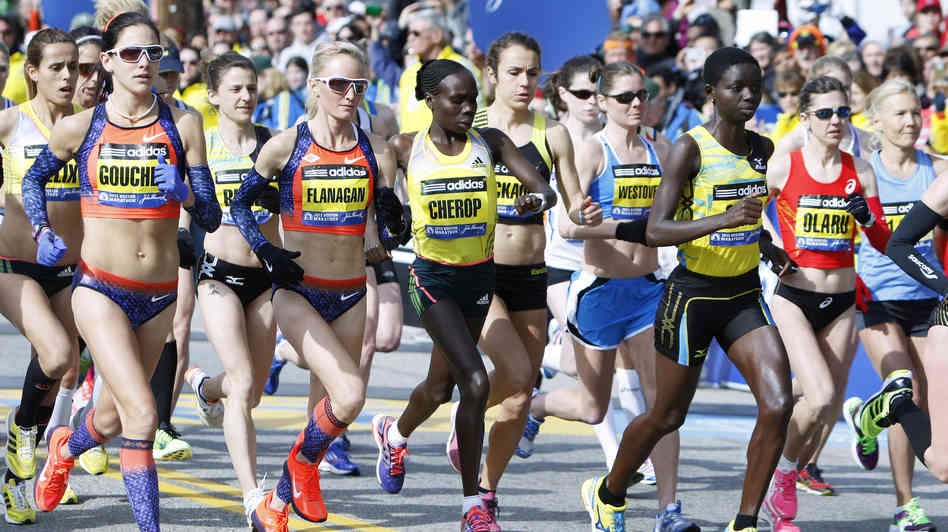
VS women's marathonThese sports are also great social equalizers. That does not mean that everyone who participates has equal ability. Instead it means that everyone has an equal chance to participate. Every person in every race or an event is a contributor. They may not be the fastest at their event, but their contribution of time is equally important as those who win the race, their age group or simply finish. Ask any race director whether he or she would rather have 10 elite athletes to compete in their marathon or 25,000 runners willing to pay for the right to compete, and guess who they’ll choose? It’s a democratic principle and a key aspect of business that numbers of people do count.

Of course there are vents where performance dictates your status. The Olympics or World Championships, for example. These are the best athletes in the world, after all.

Competition defines who makes the team even at the entry levels of a sport. The Top 7 fastest runners compete on a team in cross country. No one can really complain about that system unless political motives are imposed on the results gained each week.

Competition can also erase social strata such as race, gender, political and religious differences. But the lines quite frequently blur between competition and collaboration. When you’re riding in a group of cyclists on a windy day and you desperately need a draft to hang with the group, are you going to worry whether that person in front of you is a liberal or a conservative? A different race or gender than you? Nope. They’re a body just like you. And you’re grateful for that.

Politicizing

Rush creepy lookingAs you know from reading this blog, I am often critical about issues of political and religious conscience. When I don’t agree encounter viewpoints with which I disagree in this world, I am not afraid to challenge them. Nor am I afraid to be challenged. My values and views are hard-earned and consistently tested by publishing my views not just on this blog, but on other sites and social media as well. Some people advise against that approach to life. “Don’t give people a reason to hate you,” one friend told me. Another said, “I think you’re confusing your personal brand. If you want people to Like you, it’s best not to offend their sensibilities.”

But what about the advice of relationship managers who tell us we can never get everyone to like us? Isn’t that true as well? I happen to be a middle child. I know the costs of trying to get everyone to like me and to like each other at all times. Frankly it’s impossible.

Emotionalizing

So it is disturbing that a best-selling author such as Travis Bradberry should issue advice that we should essentially go around protecting ourselves from our selves. That’s not a sign of emotional intelligence. That’s an emotional sickness.

It is an emotional sickness because the logic behind it feeds the worst dynamics in society. If we’re protecting ourselves we’re going to buy into the perverse logic that ageism is the norm in the work world these days. We’re thus encouraged us to hide our age when seeking work because people are all too willing to judge our abilities by how old or young we are. So rather than conquer ageism through education and advocacy, corporatism takes the lazy way out and says, “You can’t stop it. So you better hide your age.”

Paralyzing

Wall threeThat’s just stupid. It’s not hard for a company or a hiring manage or an HR director to figure out how old you are. Many companies use background search services that can dig up everything in your entire personal history from financials to whether you teach Sunday School. Yet we’re told to play this stupid game of hiding our age? People are supposed to have the “emotional intelligence” to hide their age everywhere it can be hidden. On our LinkedIn Profile. Are we supposed to go back and alter our ages on college transcripts? Frankly, it’s paralyzing to think about.

Abiding by ageism, racial discrimination, gender and sexual orientation bias is not evidence of emotional intelligence, yet that’s where this polite lie of hiding aspects of yourself in the workplace ultimately leads. Yes, we all get that the advice in that column was just common sense. You should not brag about your party habits in the workplace, or snark on fellow employees. But the sinister side of all that supposed politeness is that ugly little aspect of human nature that judges on all sort of other counts. If we don’t have the real honesty to understand the diversity of human behavior and engender productivity through those channels, then the litmus test is left to those who view emotional intelligence as a tool for manipulation and competitive advantage.

Patronizing

There is a pathologically fomented sickness in society that says it is better to abide by the lie that gets you approved than to encourage change and actually demand honesty in the workplace.

For years it was acceptable to discriminate against gays and not hire people on basis of their sexual orientation. Progress has been made, Yet many people still believe in forcing others to hide their sexual orientation, and refuse to hire gay people on religious grounds. That’s not emotional intelligence. That’s emotional ignorance.

There are big moments in history when such “emotional intelligence” and hiding what you really believe and who you really are was a matter of life and death. Catholics once hated Protestants so badly they invented things like St. Patrick’s Day to celebrate chasing the “snakes” out of Ireland. Was it bad news at one point to admit that you were a Protestant? Sure as hell. Emotional intelligence during that time period was to put up or shut up. Same goes for blacks in the south post-slavery. Don’t show your face in the wrong neighborhood of you’ll get lynched.

Idolizing
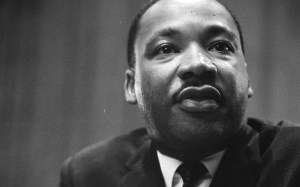
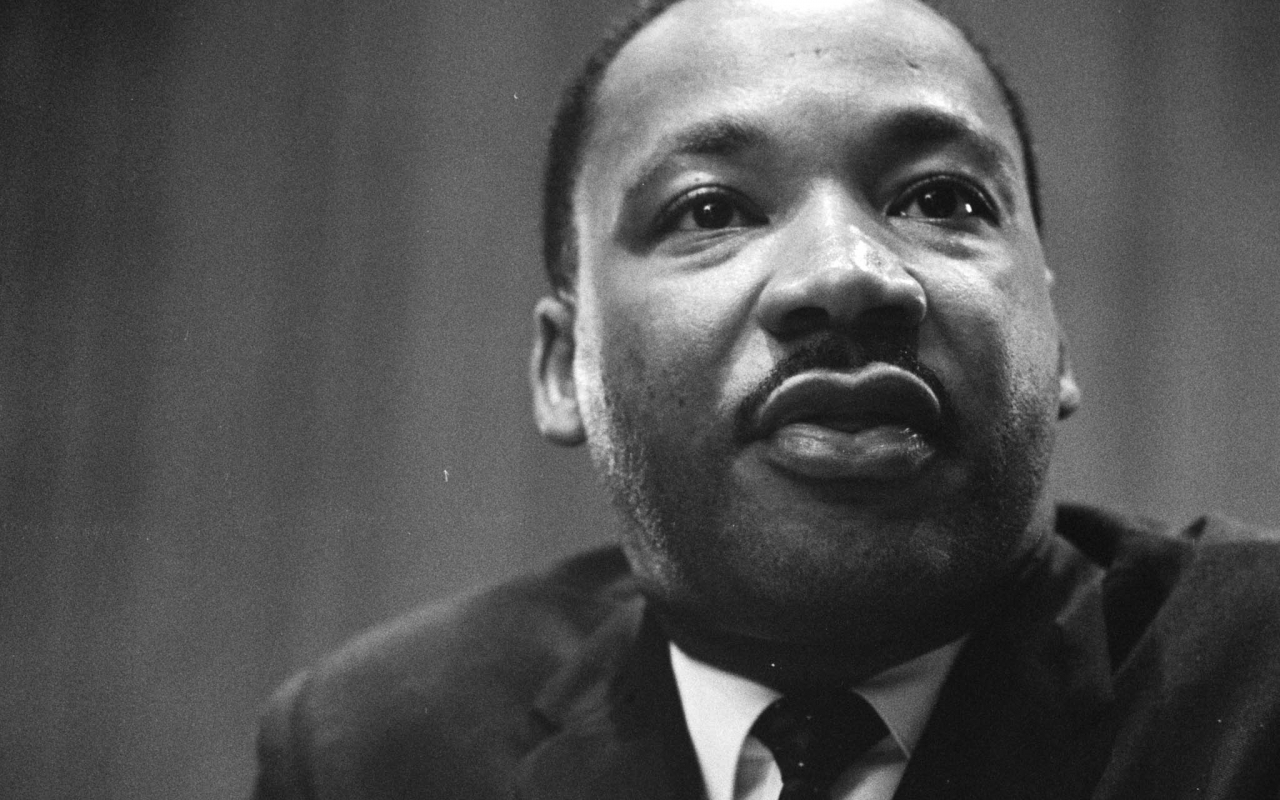
Martin-Luther-King-Jr-1280x800-3Real emotional intelligence requires a different kind of courage. The world is filled with great heroes that have given their very lives standing up for the verity of self identity. Dr. Martin Luther King, Jr., though he was a flawed man with a penchant for dalliance, was also a courageous defender of social morals that went entirely against the grain of American society. Businesses, communities and hate organizations all felt it was fine to discriminate against and persecute black people. That prejudice was based on the idea that black people were an inferior race. In certain societies it was considered impolite to even admit a black person not under servitude into the presence of white people. King peacefully and intelligently resisted that vision for black Americans.

As Americans we love what business does for our nation. Our productivity, inventiveness and wealth is considered remarkable in human history. One dares to say it is also exceptional.

Equalizing

But let’s not pretend our exceptionalism is complete, or even accurate. The work begun by Pointy-Haired_BossDr. Martin Luther King Jr. work is not done. There are still a great many dishonest people who claim to love their country while not supporting equal rights for all those who live here. In fact entire political parties stand in denial of these facts on demands that we simply “put it all behind us” even while discrimination persists in our very midst.

People that insist we need to hide our true selves in order to “get along” and “function” in the civic world or workplace often are the very same people who, in too many cases, are all too happy to be bad bosses or co-workers because they excel at leveraging the negative to their own profit over favoring positive or progressive solutions that actually require social or business changes.

Realizing

People who admire such authoritarian and provocative voices also tend to admire bullies and blowhards who claim to represent “reality” when in fact all they represent are their own selfish interest cleverly disguised as a benefit to others.

It happens in society and it happens in business. We evolve cultures in the workplace and society that incorporate or even foster discrimination over equality. The business world has become enormously adept at singling out all those who turn out to be “different.”

Psychoanalyzing

Wall IceJust this morning a psychologist in our business networking group explained that a specific personality test was created to identify all those with anxiety and depression. Somewhat ironically, the test was used as an identifier for people that tended to be motivated workers under certain kinds of stimulus. Yet that same test could just as easily be used to discriminate against those personality types. So who’s to say what’ right or wrong?

There are thousand of companies that use personality testing to rule out candidates they might deem to be too “different” from their mainframe or culture. That’s a tremendous capability when it comes to hiring.

Dehumanizing

It’s also dehumanizing. Yet the bottom line and the cost of hiring bad employees is deemed too great a risk to take chances with bad hires. So we’ve evolved emotional intelligence testing to objectify the hiring process as much as possible, and eliminate that risk.

But here’s an interesting notion. We could apply the same system of elimination to any marathon or event. Having competed for 40+ years in track and field and running, cycling and now swimming, I can head out to the weekend marathon and tell you with relative accuracy who the fastest and slowest runners will likely be.

Analyzing

But that’s not the point of a race, is it? It’s about participation and celebration of human achievement. It’s about the untalented mixing with the talented. Because no matter who we are, at some point in human society, we’re both talented and untalented.

MichaelAbsolutely no one is exceptional at everything. For example, even basketball superstar Michael Jordan couldn’t hit a curve in baseball. He also tried making it in professional golf. Yet he could not hack it. (pun intended).

But was he crazy for trying? And did he somehow breach the rules of emotional intelligence and corporate fealty by trying his hand at different sports. Was Michael Jordan a failure because he could no do everything he dreamed?

Quite the opposite. One must not forget that Jordan faced enormous pressure in both his professional and personal life during his career. The loss of his father weighed heavily on him. Perhaps stepping away to do something crazy in sports was just what he needed to process what his life in basketball really meant. In that respect was displaying a real form of emotional intelligence.

Spiritualizing

And perhaps there’s a lesson about personal branding in Jordan’s very public example of taking care of yourself when life throws you a curve. Perhaps toeing the line and sticking with basketball where all the money and championships and expectations resided would have been the corporately intelligent thing to do. But it was not the right thing for Michael at the time. His spirit needed something more than the manufactured brand he had become.

Chocolate Traffic LightIf there was ever an example of taking risks with one’s “personal brand,” then Michael Jordan was it. Of course it helps to be the best in the world at something when you want to tell the money-mongers to shove it. He could have quit baseball and basketball and golf and been fine for life with his accomplishments. The Jordan line of NIKE gear continues to sell well.

But he went back to the sport of basketball when he was ready. He had healed himself doing crazy things. It was not what many of his fans likely wanted. Nor was it likely what Nike or the Chicago Bulls as companies probably wanted or desired from their star “employee.”

Kind of gives you a new take on what it means to “Be Like Mike,” does it not? Because who are the Bulls or their fans or even Nike to judge Michael Jordan by force of their own expectations? Was Michael emotionally intelligent or not when he went against the grain of what the world wanted from him?

Those are questions worth asking ourselves before we run our personal brands through a filter of emotional intelligence that might just suck the soul right out of you.

Follow this blog and please share to your social media connections. Your readership is most appreciated.

Follow this blog and please share to your social media connections. Your readership is most appreciated.

Posted in Christopher Cudworth, running, We Run and Ride Every Day | Tagged , , , | 3 Comments

Commemorating 50 Years of Luther College Women’s Athletics

In 1975 when I enrolled as a freshman at Luther College, the very first two women signed up to compete in cross country. At the time I had no idea that women’s sports at the college had only started 10 years before. Now Luther women enjoy success in a full range of programs from cross country and track to volleyball, tennis, soccer, basketball and more. Luther Women's Poster

Annually my former coach Kent Finanger hosts a big fund raiser in Arizona to raise money for Luther Athletics. Each year I donate a painting for auction. This year I took a different approach and produced this composite painting of Luther women in sports. It also holds hints of the Decorah, Iowa landscape and Luther College. I love doing paintings like this where you play with reality a bit. Yes they are partly illustrative. But working with the shapes to compose a “landscape of the mind” is also fun. (and oops, I just remembered I left my brushes out downstairs…time to clean them up.)

The RUNNING poster is available for $20. Click for information.

The RUNNING poster is available for $20. Click for information.

So I’m excited to share this project with my readers at We Run and Ride. In the past I was the featured artist for the Lake Jackson, Texas race Brazosport Run for the Arts where one of my posters was entered in the Runner’s World contest and took a Cream of the Crop aware for Top 5 running posters in the nation.

Hope you enjoy my work. If you would like a painting of your running, cycling or triathlon endeavors, give me a call. I’ve done more than 1000 successful commissions over the years. They range from 5 x 7″ all the way up to 4′ X 4′! All are fun! Contact me at cudworthfix@gmail.com. And if you’re in the Chicago region and want a mural, I do those too!

WeRunandRideLogo

Posted in Christopher Cudworth, running, We Run and Ride Every Day | Tagged , , , , , , , , , | Leave a comment

10 Reasons Why You Can’t Wait for Spring

10ReasonsEagerForSpring

Posted in Christopher Cudworth, cycling, running | Tagged , , , , , , , , , , , | 2 Comments

Celebrating the fitness of youth

Ryan and Andrine

Ryan Kredell and Andrine Larsen patiently pose for a photo after their early morning workout.

As my companion Sue and I did a workout of 6 X 800 on the Batavia High School indoor track this morning, we noticed that a couple kids had showed up with their parents to run. Between intervals I jogged over to playfully bop the young man on the head and ask, “Are you awake yet?”

It was, after all, just 6:15 in the morning on a school day. The kid smiled and assured me that yes, he was indeed awake.

His name is Ryan Kredell. At 13 years of age he has already run a 5:18 mile. And that’s going into his 8th grade season.

Accompanying him on the workout was a 12-year old girl named Andrine Larsen. When complimented on the beauty of her first name, she smiled as her father Tormod said, “It’s Norwegian.”

Initially I had called the group a family, but both parents corrected me. “We’re two different families,” they laughed. “We’re not married,” the parents said. So I asked Ryan and Andrine, “Are you two married then?”

Ryan made a face and Andrine just dropped her eyes, chagrined. “Noooo….” said Ryan. My own children will testify that I have long enjoyed creating embarrassment for middle schoolers. Some things never change.

Ryan had come to the 200 meter indoor track at Batavia to run 400 repeats. His efficient stride, rapid turnover and good biomechanics in running form gave away the fact that he has already been running for three years. “I train with the Accelerators,” he told me.

This spring Ryan will be competing in distance events in track. He runs for Geneva Middle School South (GMMS) and made sure that I got that right. “We don’t want to give any credit to North,” he laughed. The two schools enjoy a healthy rivalry even though they feed into Geneva High School. Looking ahead, their former rivals would become teammates.

Andrine possesses an equally quick running stride. Even with her tiny frame she generates a ton of speed and has already run a mile in the 5:40 range. “That’s fun,” she admitted. “But I like cross country even better.”  This spring she’ll be doing distance events and relays.

Ryan placed 10th in cross country nationals this past fall. Andrine placed  4th.  Andrine is heading to indoor track nationals in Washington, DC this March 13-15th.

Ryan finishes seven of his scheduled ten 400s and calls it a morning. It’s time to head off to school, after all. Perhaps there might even be a breakfast in between. You know how it is with runners. They’re always hungry but sometimes they even forget to eat.

Seeing the future of running is such a joy. Celebrating the fitness of youth is equally so. Watching these two kids tear around the track with focus and purpose should give everyone hope about the future not just of running, but for the world. And that’s what it’s all about.

WeRunandRideLogo

Posted in Christopher Cudworth, running | Tagged , , , , , , | 1 Comment

You do your best with the body (and brain) that you have

GoofyOnBikeAs children we imagine that all things are possible. You can be what you want to be.

That childlike innocence has its purpose. It enables the mind to grow unhindered. We explore through play. Some of us take up that banner of play and pursue a passion for sports. We initially explore our abilities by playing games.

At some point a refinement process begins. Those blessed with ability are chosen first. They make it through formalized tryouts too. The rest are told to sit out or go home.

Obviously we can’t all be pro athletes. But given the errant behavior and massive personality flaws in so many pro athletes, perhaps that’s a good thing. We’re faced with the fact that athletes who have been pampered for their abilities and given a pass on responsibilities often turn out to be real jerks.

Extremes

Against these extremes in physical ability the rest of us are somewhat forced to measure our own efforts. The exploits of the world’s fastest runners are largely lost on the masses. Most people don’t even get to see these people at the starting line of a race, much less the finish.

article-2514861-04FA3F7900000514-951_634x446Cycling also has its heroes. Yet in recent years all have been tainted by accusations of performance-enhancing drug use in cycling. For perhaps 15 years there were no exceptions to the rule that athletes were doping. The most talented cyclists in the world were forced to cheat in order to compete. But not everyone. The challenge at times seems to be discerning who’s clean, not who’s doping.

Think about that for a moment. Here you own this massive cycling engine and amazing legs. You can ride for 100+ miles at a pace most cyclists consider their top speed. In fact you can average that speed for more than 2000 miles in a Grand Tour that includes climbs beyond category.

How must one feel to be that good, and yet not good enough (somehow)? How frustrating it must be to have a body capable of that level of performance and yet be left behind when the leaders surge off the front?

Sure, doping is not fair. But it shows you that no matter how good you become there will always be challenges to your perceived level of talent and ability. You’re left to do the best with the body (and brain) that you have.

The mirror

SwimmersWhen we stand before a mirror in the morning, what do we see? Typically we assess our fitness by the amount of fat we do or do not perceive on our bodies. That’s the visual test, but it can be deceiving. I have ridden with cyclists that outweigh me by at least 50 pounds on a similar sized frame. They are capable of riding me right off their wheel at speeds in the low 20s even in a high wind. They seem to defy all physical laws.

In moments like that, we’re left to consider whether all our efforts to stay thin are really worth it. Watching last year’s Ironman Wisconsin race I was struck by the wide variety of bodies slugging it out through 2.4 miles of swimming, 112 miles of cycling and the run of 26.2 miles. I saw people so big they did not look like they could complete a 5K, much less do all of that endurance training that leads up to an Ironman. I also saw tiny little wizened women with wrinkled tanned skin and tri-suits hanging off their shoulders. You think to yourself: How the f*** does that woman do it?

It turns out there’s no magic formula for success in athletics. Having a bit of fat on your body can actually be a benefit, to some degree, in a sport like triathlon. There’s buoyancy in swimming, for example. Fuel to burn in a long bike ride. By the time you’re ready to run you don’t care what you weigh. You have to move your ass one way or another, no matter what it weighs. Everyone feels pretty much the same by that point. Legs are dead. So’s your head. Keep moving.

Twice over

Finish Run TooLast year I did my first duathlon. I’m in my late 50s and this woman at least as old (young?) as I am came blasting by me on the bike at 14 miles. I’d left her in the dust on the run but she was killing it on the bike. Killing it! Screw gender, I thought. She’s fast.

That’s the triathlon in a nutshell of course. Some competitors do best in the swim. Some ride the bike like a dream. Others make up time on the run. It’s a simple fact that all of the athletes have these relative plusses and drawbacks. Even at the top level of the sport this is true.

Imagine that

From a very early age I imagined myself an athlete and even imagined myself into something of a winner at times. But deep in my soul I also sensed my limits. Training with superior runners it was easy to see that something else was going on with them. Their engines were bigger. Better. Stronger. When I stepped to the line in a July 1984 race in company with Alberto Salazar, Thom Hunt and other world class runners, I knew the outcome. I ran with them for three miles and then blew up. So what? I tried.

In those situations you just do your best. Once in a while you hang on to achieve more than you imagined possible, surpass your expectations in ways that seem to defy your own perceptions. On another hot day in July 1984 I ran to a very high placing against runners whose PRs at the 10-mile distance were minutes ahead of me. And yet, it happened. I stuck it to them.

Up and down

You’re probably like me too. You look yourself up and down and wonder what it might be like to be built slightly different. In my case it’s simple. What if my torso was not so long? Would I be a better runner at only 5’10” versus 6’1″? My 34″ inseam is forced to carry all this extra body around. And yet if I had not been six feet tall my basketball career might not have gone as well as it did. Which was not that exceptional. But who cares? It was fun.

CraigVirgin2I recall being 15 and traveling downstate to Peoria to watch Craig Virgin run his 13:51 record for three miles at the Illinois State Cross Country meet. I tried to imagine running that fast, but it was hard. My best at the time was 16:31. After college, I’d go on to run 14:14 for three miles on the way to a 14:47 5K on the track. But I was 24 years old then, not 18.

Yet we must acknowledge that even Craig Virgin might have liked to have changed some things about his body. He overcame a potentially debilitating childhood disease and poor kidney function to become World Cross Country champion. Twice. And he’s not the only distance runner to overcome challenges of the body and mind. Steve Prefontaine had sciatica. I recall a runner from Michigan actually chopped off his big toe with a lawnmower and still went on to run a sub-4:00 mile and compete in the Olympic Trials.

Call me strange, but I might have plunked that severed toe in a jar of formaldehyde. Just to remind me to keep trying. That’s a twisted take on body image, I know. But no more twisted than some…can we talk about plastic surgery and those LA doctors turning faces and bodies into decomposing shrines to vanity?

Body image

So let’s not imagine ourselves unfortunate for being stuck with the bodies we have. If we want our thighs to be stronger, it’s always possible to do the work to make that possible. And consider the terrific challenges faced by those with real physical disabilities. Those without functional legs who climb into wheelchairs and compete as hard as they can.

You do the best with the body (and brain) that you have. It’s the ultimate tarsnake of endurance sports. So be careful not to let your body or brain become an excuse not to try. There’s a whole world out there waiting to see what you can do. It makes a world of difference if you don’t start out by imagining reasons not to try your hardest.

WeRunandRideLogo

Posted in Christopher Cudworth, cycling, duathlon, marathon, running, Tarsnakes, triathlon | Tagged , , , , , , , , , | 2 Comments

Loss is what we’re ultimately founded upon

Life exists as a process of dealing with continual loss. But that does not mean that all is necessarily lost.

Life exists as a process of dealing with continual loss. But that does not mean that all is necessarily lost.

Tomorrow night I’ll be speaking at our church on the topic of loss. The foundation of the talk will come from the book I’ve written titled The Right Kind of Pride. The book addresses dealing with loss in a positive way.

Perhaps you’ve noticed that a sense of anxiety hits when you lose something. If it is a material object, you search until you find it. If it remains lost, you go through a period of mourning. This is all very natural. However some people deal with loss better than others.

With small things like a set of gloves or something else lost in the hubbub of daily life, we might smack ourselves in the forehead and try our best to move on. This past week I lost a pair of gloves during a trip to the health club. I thought perhaps I had left them in the small cupboard by the drinking fountains at the gym. So I called to ask if the gloves had turned up at the Lost and Found. The desk personnel told me there was no sign of them. The next two times I went to the club it was north to the St. Charles location to swim, so I was not back at the Batavia location for several days to check for the gloves. Plus I figured that by them my gloves had either been lost somewhere else or been taken by someone who used the cupboard hole where I’d left them.
Last night when we arrived to lift weights it occurred to me to check the cupboard to see if the gloves were still there. Sure enough, they were right where I’d left them. They were jammed up against the back wall of the lowest cubbie on the far lower right of the cupboard. No one had apparently seen them in there.

Gloves

The gloves I thought I’d lost were not lost at all. They had never been found by anyone else.

I was quite grateful to find those gloves. I like them. They’re wool with rubber nubbies on the hand surface to help you grip things. They cost $20 at Gander Mountain and they hardly showed any wear from this winter. That meant they were good for another season or two.

In March of last year I’d lost a favorite pair of gloves that I had worn for five consecutive winters. It pissed me off that I’d dropped them in some dark parking lot the night before. I went back to look but they were gone.

I try to be careful with my stuff because I really am absentminded at times. My brother recently told about his system for checking stuff as he moves about in life. “I have systems guarding my systems to check my systems,” he said. Made me laugh.

As an inveterate pocket-checker I’ve got my own little systems. But life has a way of interrupting our thought processes. Sometimes our diligence winds up being our undoing. Several times I’ve locked the keys to my gym lock inside the locker. That’s an example of all the systems working in reverse. Not good.

However my day had gone extremely well yesterday. I felt truly engaged and in tune with life. Some business research had turned up a potentially productive partner for a program I’m putting together with a media company. The rapport and solutions they offered appeared to be everything I needed. Then my swim session when great as well. Yeah baby!

So, I had hope but no real expectation that my recently lost gloves would turn up where I remembered that I’d left them.

Recovering something lost always seems sweet. But some things we lose can never be recovered. The day that I tore my ACL the second time I knew that there would not be a second surgery. Not all over again. That meant giving up the ballistics sports I loved to play. Basketball. Soccer. Tennis. You name it. If it involved cutting hard to the right or left, doing activities that required hard pivots would be out of the question. I went through a period of very real mourning for the self that I knew had been lost.

"Don't it always seem to go, that you don't know what you've got 'til it's gone." Truer words cannot be spoken.

“Don’t it always seem to go, that you don’t know what you’ve got ’til it’s gone.” Truer words cannot be spoken.

Still I worked hard to re-strengthen the knee and learned that there were still plenty of things to do without an ACL. I could cycle. I could run (thank God) and now I can swim. At 50+ years old my ballistic sports days were numbered anyway. The ligaments and joint flexibility necessary to excel at those sports simply diminishes with age. I can no longer jump as high as I once did.

At one point I witnessed in bold relief how far my own skills and speed had been lost. That came about by playing soccer on the same team as my son when he was in his early 20s and I was in my late 40s. He could steal the ball and score with ease. It made me realize how much life had slowed me down.

Yet it was all relative. Just the week before I’d played, a teammate turned to me and asked, “How old are you? You don’t appear to have lost any speed.” I had told him: “I can still run fast. I just don’t have the brakes to stop.”

It’s all relative, you see. So much of our sense of loss and purpose is relative to our perceptions of who we are and what we can do. That’s the thing about loss. Sometimes the things we supposedly lose actually open up new chapters in our lives. We re-invent ourselves. We learn to live with loss because it sheds light on what we truly value. Perhaps we gain more through the experience of loss than we might through business as usual?

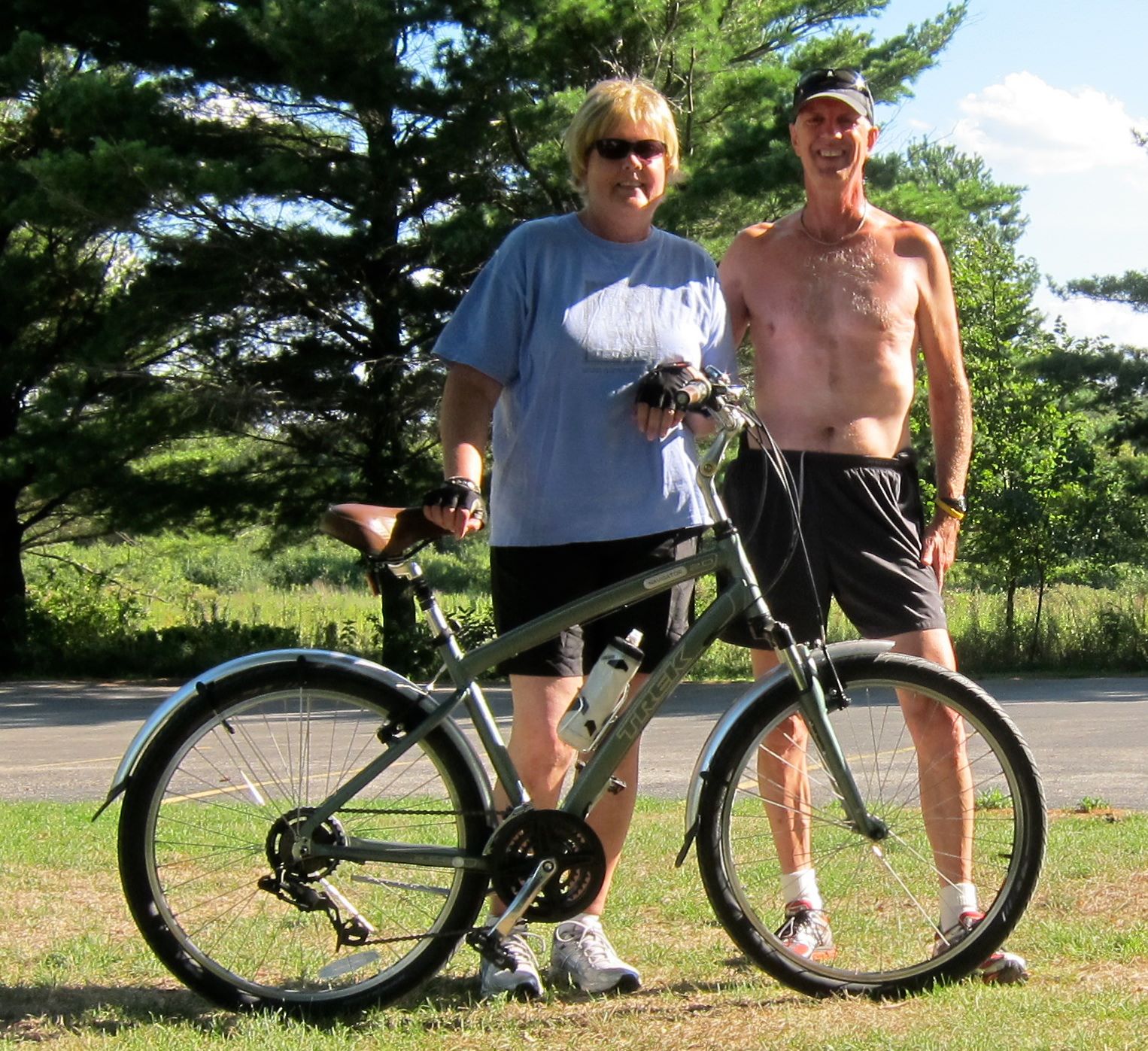
One of the lone times we got out on her new bike together.

One of the lone times we got out on her new bike together.

That was certainly the case with my late wife and I. We lost all kinds of things in eight years of cancer survivorship. She lost the ability to do some of the things she wanted to do. We bought her a new bike but riding bikes turned out to be tough. Even walking for fitness was nearly impossible at times. Her feet were so numb from neuropathy due to chemo her balance could not be trusted, especially in the dark. We just did our best. She was a gamer.

In order to deal with loss both temporary and permanent, you need to develop a sense of perspective about loss as you go along in life. So many times our losses are not so important as we think. Yet if our losses do turn out to be profound, such as the loss of a parent, a sibling, a spouse, a marriage or a friend, then it’s all the more important to examine what they truly meant to you. As you can imagine, there are no easy answers to some of those questions. Don’t be afraid to ask for help coping with loss. We all need counsel to help us through life. Some depend on friends. Some on faith. Most of us need some combination of both.

Our losses ultimately cause us to consider the very meaning of our lives. We lose material things and come to realize that those are not what defines us. For if we are spiritually healthy, we realize that we are founded on something else entirely. It is this internal sense of self-respect and soul that we need most to protect. We do not want to lose that. Ever.

That is why it is so important not to raise our athletic endeavors to the status of life or death propositions. It is fine to challenge ourselves and build a positive self-image through the sports we do. But you can lose yourself in the process if you are not careful. I know that I have done so in the past. There is still a propensity to do that in the present.

A friend of mine just experienced a nearly fatal cycling accident. Life is random and things like that happen so fast you have no time to consider what it might have meant to slow down in the moments before calamity. I’ve crashed at 40mph going downhill with bike wobble. I’ve run head-on into a tree with my head down thinking too deeply about a business project. Both of those incidents could have turned out much, much worse.

It simply doesn’t take much to lose ourselves in the sports we love.

Photo Copyright Christopher Cudworth

Photo Copyright Christopher Cudworth

The sad and difficult thing is that life is also random and unpredictable. We lose things when we can least afford the inconvenience or thought required to get them back. Suddenly we’re faced with a world that looks entirely different. Yet as we come to grips with what the loss might mean, we also are forced to sense the core of our being.

It’s true: loss is ultimately what we’re founded upon. Life demands that we process that fact. As I’ve always told my children, “Enjoy the process.” That’s literally all we have. All that has gone before is lost except to memory. All that is bound to happen ahead can only be gained by going through it. Then it too is lost.

I count myself blessed to have won a few things in life. Races. Championships. Business deals. Yet the things I have lost have also built character, defined values and given me reason to try again. Our losses are quite often our greatest gains. And you can forgive yourself for knowing that.

Follow this blog and please share to your social media connections. Your readership is most appreciated.

Follow this blog and please share to your social media connections. Your readership is most appreciated.

Posted in Uncategorized | Tagged , , , , , , , , , , , , , | 1 Comment

That swimming thing, Part Deux

IMG_6695This morning was my second swim session with Whitney, the swim instructor at XSport St. Charles. What a gift today was!

Over the weekend with my companion Sue I was reviewing the things I was doing with swim class last week. Understand something: Sue is an excellent swim instructor. She’s also a most excellent girlfriend. But those two things are not necessarily things you want to mix in a relationship. Not at the basic level where I’ve been swimming anyway. Like playing tennis together, there is quite a bit of room for conflict if things don’t progress at the rate one mate expects of the other. By choice I’ve kind of absorbed what she has to offer and tried to implement it at my own pace, so to speak. There was just one problem: I’ve been trying to go too fast too soon. I kept getting fiercely out of breath. Yet I wasn’t out of hope.

Soaking whet

So the unspoken agreement from my prospective has been simple. She whet my whistle for swimming. It was my job  to use what she taught me in the early sessions we did together. Eventually I’d get good enough at swimming to join the Master’s Swim group at Marmion, a high school where they swim at 5:30 a.m.

But I’ll admit I’ve been a slow and intermittent student. Mostly it was a breathing issue. I knew there’d be a breakthrough at some point but somehow it kept escaping me.

Incremental measures

Last week I joined a swim class with an instructor named Whitney who slowed me down. Her instruction helped me relax in the water. Lo and behold, I also had enough time to breathe. There are still plenty of things to learn, but hey I’ll take the progress it wrought.

Because today I was swimming 150s and 200s when formerly I could barely manage a 50. Seriously. There were times when even that was tough.

So I texted Sue because I know she knows how much I care about doing this the right way. Someday I’m going to be swimming 400s, 800s and more. But it all comes down to a moment in time when you go against all your intuitions and lose your inhibitions.

Today was one of those days. And I’m thankful. That’s all.

WeRunandRideLogo

Posted in Christopher Cudworth, swimming | Tagged , , | Leave a comment