5 Things You Can Learn From My Sycamore Pumpkinfest 10K

CudworthVersusCudworthThere are not many better conditions to run than those presented at the Sycamore Pumpkinfest 10K yesterday. The wind was nearly still. The temps edged into the high 40s and low 50s. The skies were clear and bright. Perfect for racing.

That means there were not many excuses for not doing well. And as planned, I raced in the low 7:00 range for 10K.

That put me in the top 5 in my age group, and I was well-pleased with that. Last year I averaged 7:17 per mile at 45:15. This year, 7:10 pace and 44:27. So I improved by 48 seconds! Yay!

Lesson #1: Weight, weight, don’t tell me

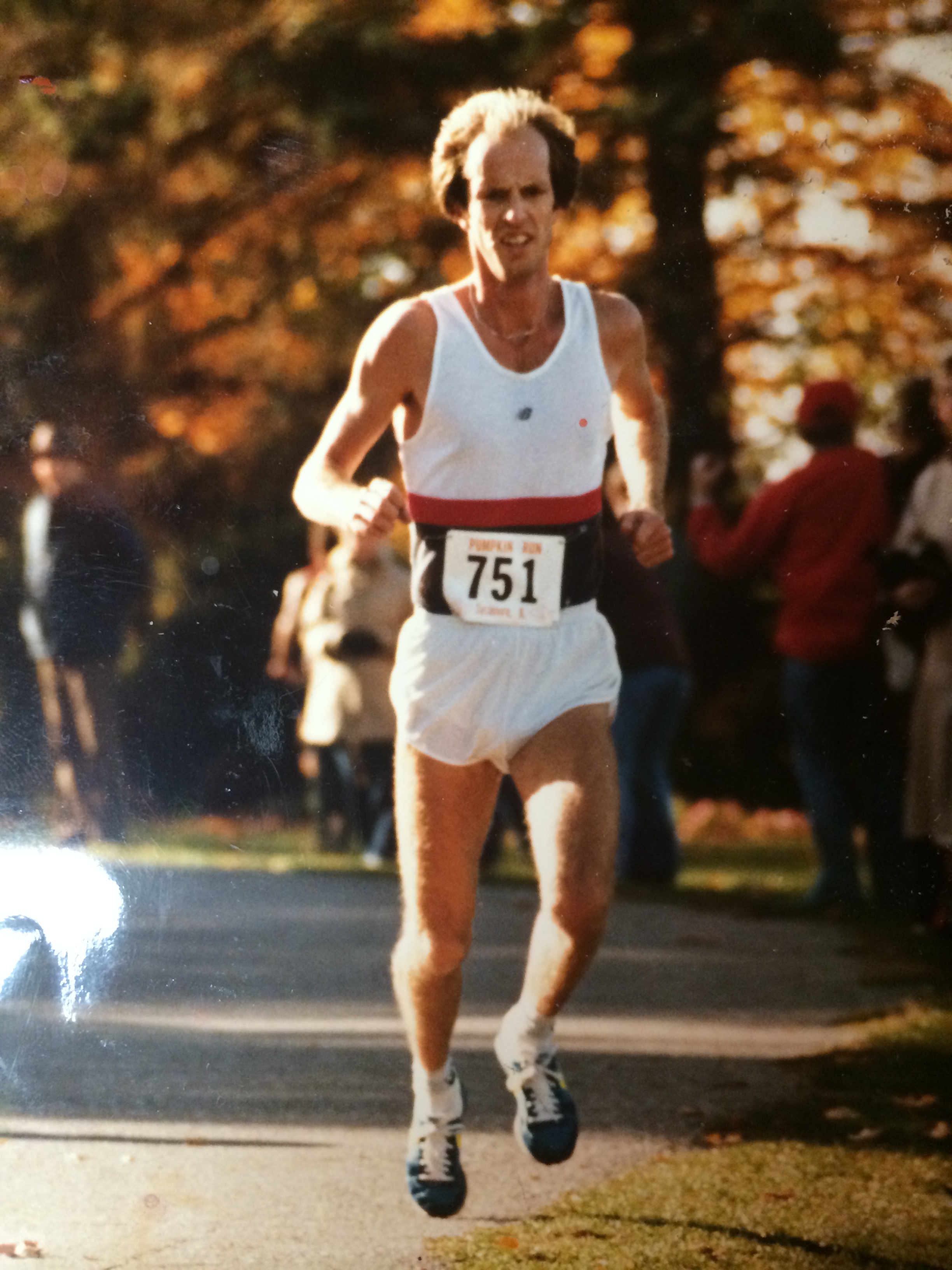
Granted, I’m far behind my best on this course at 32:28. But that was during my peak years of racing, and at the height of youth. Though hardly a fattie, I now weigh between 176 lbs and 180 lbs in a typical week. Back then I weighed 140. That’s 36 more pounds of weight to carry around the course. I could stand to lose 7-10 lbs through a better diet. Eating better is an ideal goal for 2016, because a slightly lighter body reduces risk of injury from bearing weight during training. Carrying even 10 lbs. less weight on both the bike and the run is naturally a better strategy. If you’re already performance thin, congratulations. But if you can stand to lose 5-10 lbs. and have a propensity for eating carbohydrates and sugar like me, that’s a good lesson to learn going into the new year.

Lesson #2: Being smart with training volume pays off

Going into last year’s race, I was injured for months in advance. Fortunately, I lucked into a pair of shoes that enabled me to run pain-free again. But even with my reduced training last year, I was smart about the training I did do. Some weeks I only ran 10 miles, but some of that was speed work. That seems counterintuitive, but the pain in my Achilles was from volume, not speed.

Once that was fixed, the cross-training from cycling served as my aerobic base for running. As a result, I was able to run in the low-7:00 pace range for 10k. That is proof that cross training really does work. Admittedly my legs ached for days after last year’s race, because there were not accustomed to volume running or sustained speed, but that’s the case for most people racing anyway.

#3: Learning your pace matters

Sue RunningGoing into this year’s race, I did a series of training tests to find out where my fitness actually stood. This is critical to anyone’s racing effort. For example, I essentially conducted a 5-mile solo race effort three weeks ago on the flat trails west of town.

On that run, I was able to cover those miles at around 7:17 per per mile, right on pace with last year’s Pumpkinfest 10k effort. That told me my fitness was slightly better, because with ideal conditions on race day, I could anticipate a faster pace.

Leading up to that time trial, I also ran half mile intervals at 6:30-7:00 pace on the track. Often Sue and I would head to the track and run our workouts together, but separately. She was doing Ironman training and I was trying to build speed back up after a year of injuries last year.

This taught me my top end. I also threw in 6:00-pace 400 meter interval sessions (typically 6-8 intervals) to teach my legs a quicker tempo. This also has the effect of lengthening critical leg muscles in the calves and somewhat ironically loosens my Achilles tendon.

Honestly it was also humbling to train at 6:00 pace. I learned that my body was not ready to try to race at that speed. I could last a mile at that pace at best. So dreams of a sub-40 10K were not realistic at this point.

Lesson #4: Sticking with your pace matters

This year I went through the first mile in 6:55. The second in 13:55. The third mile in 20:55. The fourth mile in 27:55. The fifth mile (short) in 35:42 and finished in 44:27. I had a slow last mile, or else the five mile marker is supposed to be somewhere up the road. Everyone had a fast 5-mile split.

But the point is that I found a groove and stuck with it. At just before three miles another runner came up beside me and said, “Come on…” as if to pull me ahead. I quietly told him, IMG_7618“I’m good, man…” and kept on with my pace. That’s because I knew there were two hills in the fourth mile that can kill you. Last year I slowed down quite a bit on those hills.
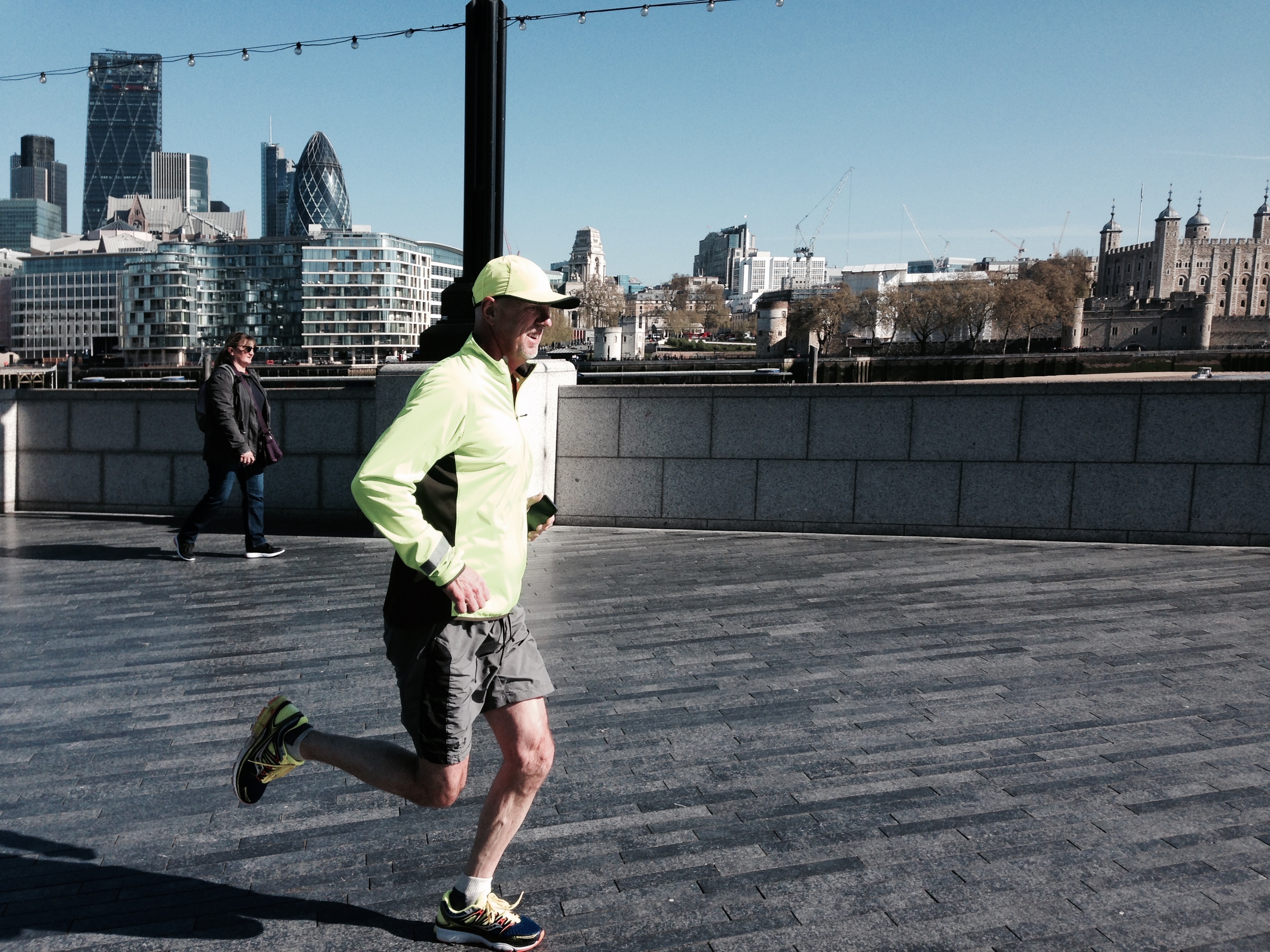
This year I shortened my stride and ran them steady. Sticking with your pace matters. If by some miracle you feel great in the last mile, you can kick it in. But you don’t want to collapse, and I struggled enough with pace that last mile. So I kept a positively intelligent attitude about pace.

Lesson #5: Performance is relative

I am no longer capable of putting in weeks of 80 miles or more in training. Yet in some ways my body is healthier and stronger than I was back then. For one thing, I was highly susceptible to breaches in immunity that led to vicious colds. So to enjoy productive running these days, I do not push as hard as I once did. That means improving from year to year is done so without turning myself inside out.

Sure, it would be nice to win races again. Dream on!

I was fifth in my age group of 55-59 this weekend. That’s two spots better than last year. I was 78th overall this year, and 68th among men.

Sure, my time of 32:28 in 1984 (I’m fairly sure that was the time…but I’ll try to look it up just in case…it was under 33:00) would have won this year’s race by two full minutes…and I took second place with that time back then! So there’s always second-guessing we runners do. But there is something going on in the world of running…

Epilogue: Different times

Looking around at all the results from races throughout the summer and this fall, it is my selfish solace to know that my typical 10K times between 31:00 and 32:30 would win all but a few of the races held in the Chicago area. I do not know why the winners these days are slower than they were 25-30 years ago. Perhaps there are so many races it gives more people a chance to win. I guess that’s good. 
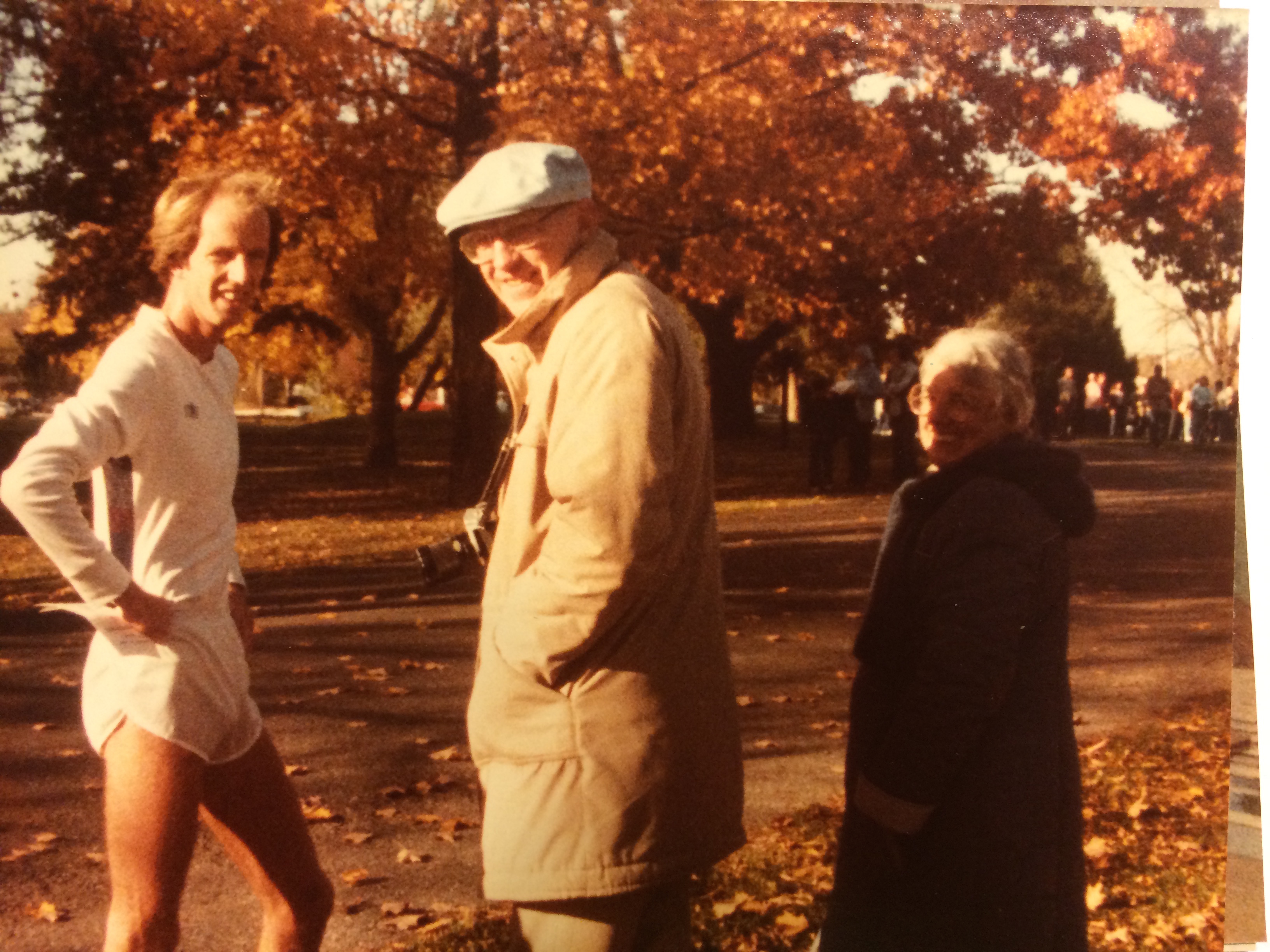
Cudworth with ParentsBut I don’t think that’s it. I raced 18 times in 1983 and 24 times in 1984 while representing the Running Unlimited store team. On typical weekends four or five of us would race together and that led to some intense, competitive times. Often I was 4th or 5th man just on that team, which had several runners under 31:00 for 10k, and two under 2:20 for the marathon.

We don’t see that competitive dynamic at work so much. Dick Pond Athletics has a Fast Track racing team, but more runners seem to be involved in sports such as triathlon and duathlon than ever before. Frankly, the premium in those sports is not on really fast running times, but being able to run relatively fast coming off the bike. If you can run 6:00 pace in multisport competitions, you’re a star at any distance.

Desires and aims

So as noted, performance is relative to desires and aims. In some ways the competitive environment of the 1980s was harsh and unforgiving. Runners had no mercy on one another, and some would not even talk to other runners before races. You were there to kick tail and nothing else mattered. I had many days like that. All I cared about was winning. Which meant that on some days I’d run well and stil not be satisfied. Not even close.

But that was how we rolled. It was true from high school on up through college running and beyond. 5:00 pace was the dividing line. You could either hack it or you lost.

Looking back now I appreciate that burning desire to run well, and am glad I did it to my own best ability. Which made for some fun times. And it was not all serious. We had zillions of laughs in training and there was plenty of good-natured competition along the way as well. And we partied hard when it was all through.

Resurgence

There are many good runners coming up through the high school and college ranks again. The coaches who are guiding them are products of the 1980s, and they know the risks of burnout as well as the processes that lead to performance. In other words, today’s runners really are in good hands. Those old competitive days really did beat the hell out of some people.

So when I’m trundling along in the middle of the pack and see the leaders turning the corner far ahead of me… knowing that at one time I’d be 100s of meters ahead of them, it makes me chuckle to think that I worry so much about such things at all. No one really knows or cares about that stuff in the end. You are what you are.

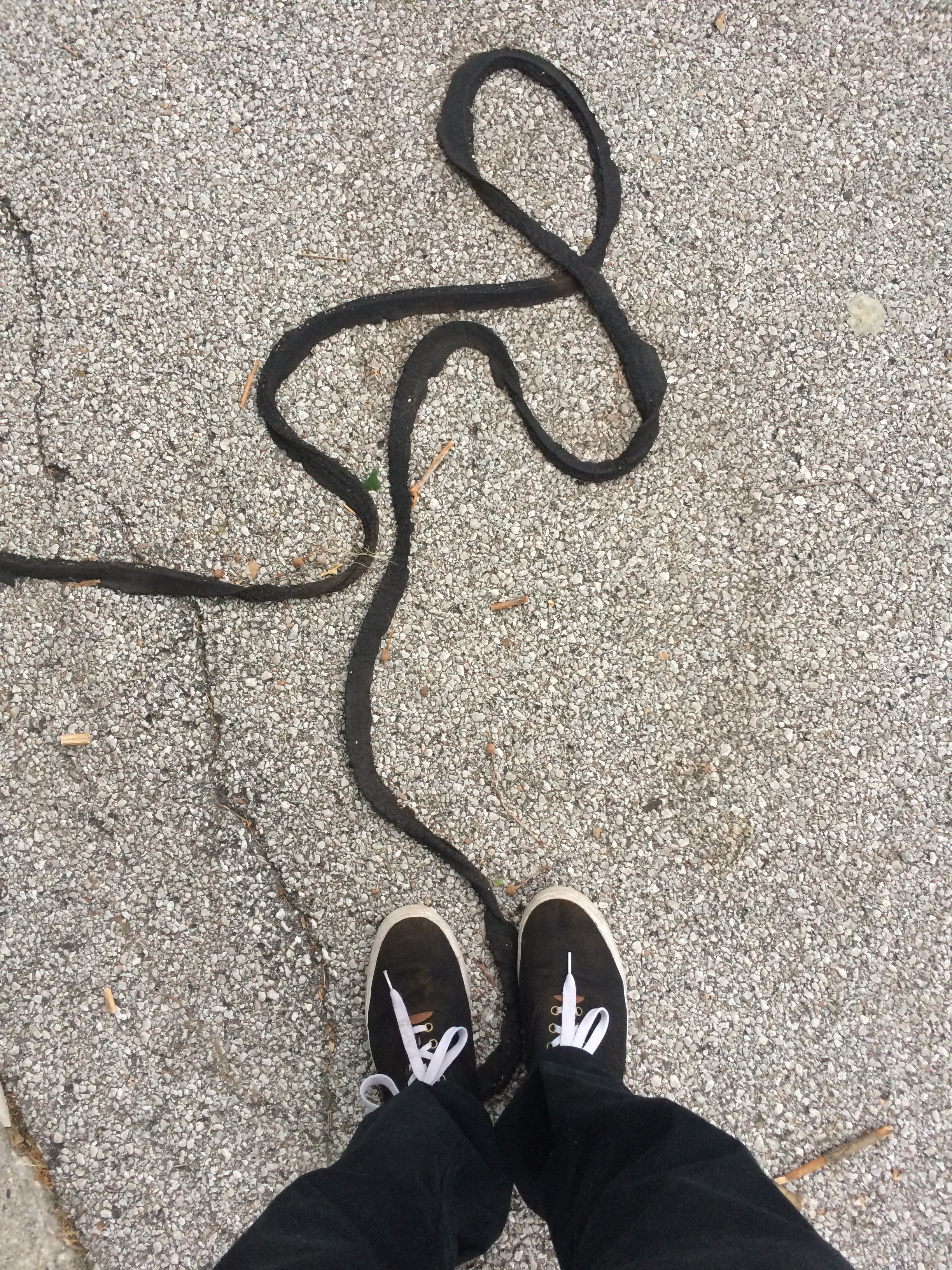
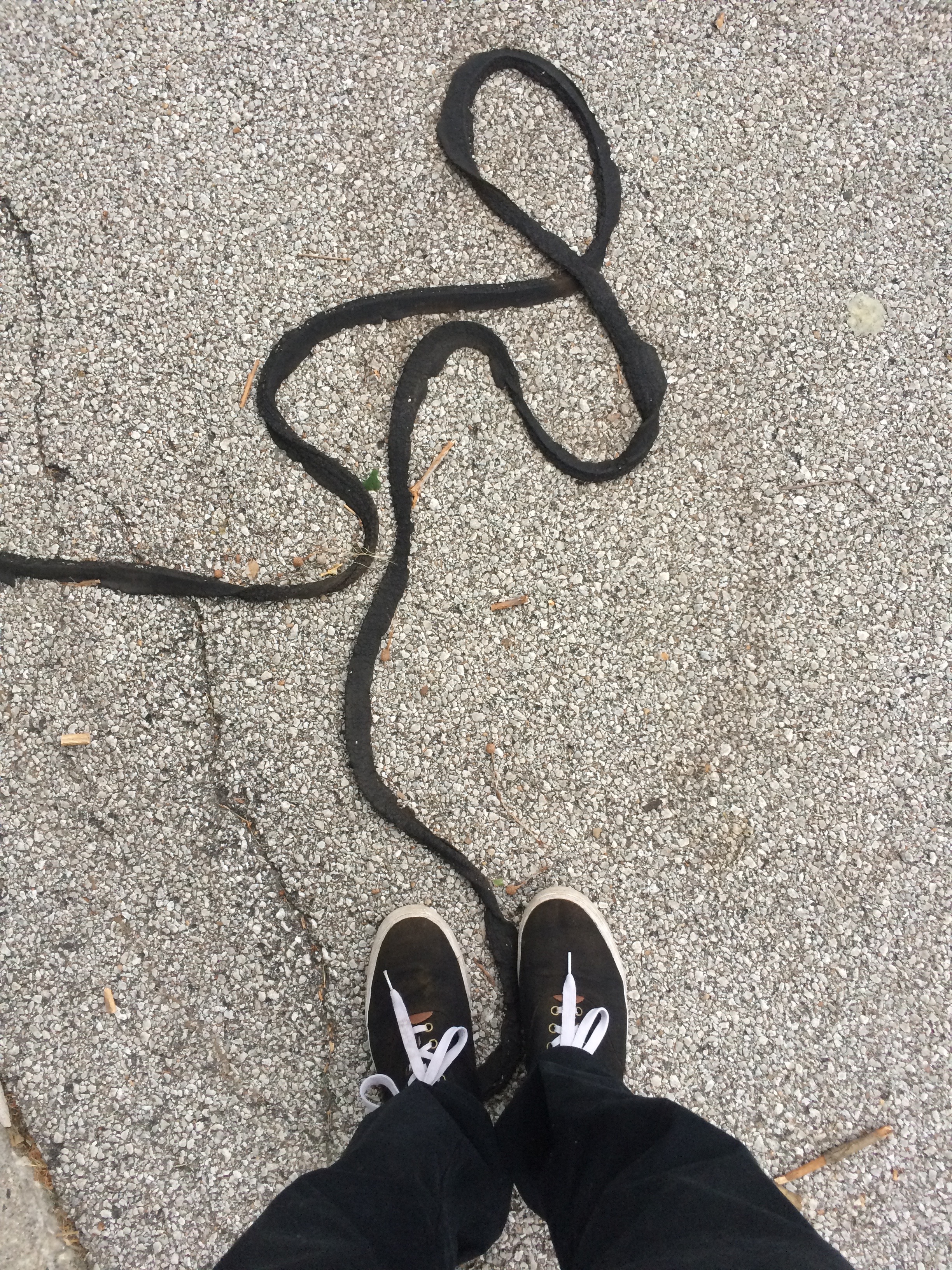
If running or racing makes you a better person somehow, that’s what really matters. Testing our mettle on the roads helps us face challenges in life. Go out there and run over the tarsnakes. It will do you good.

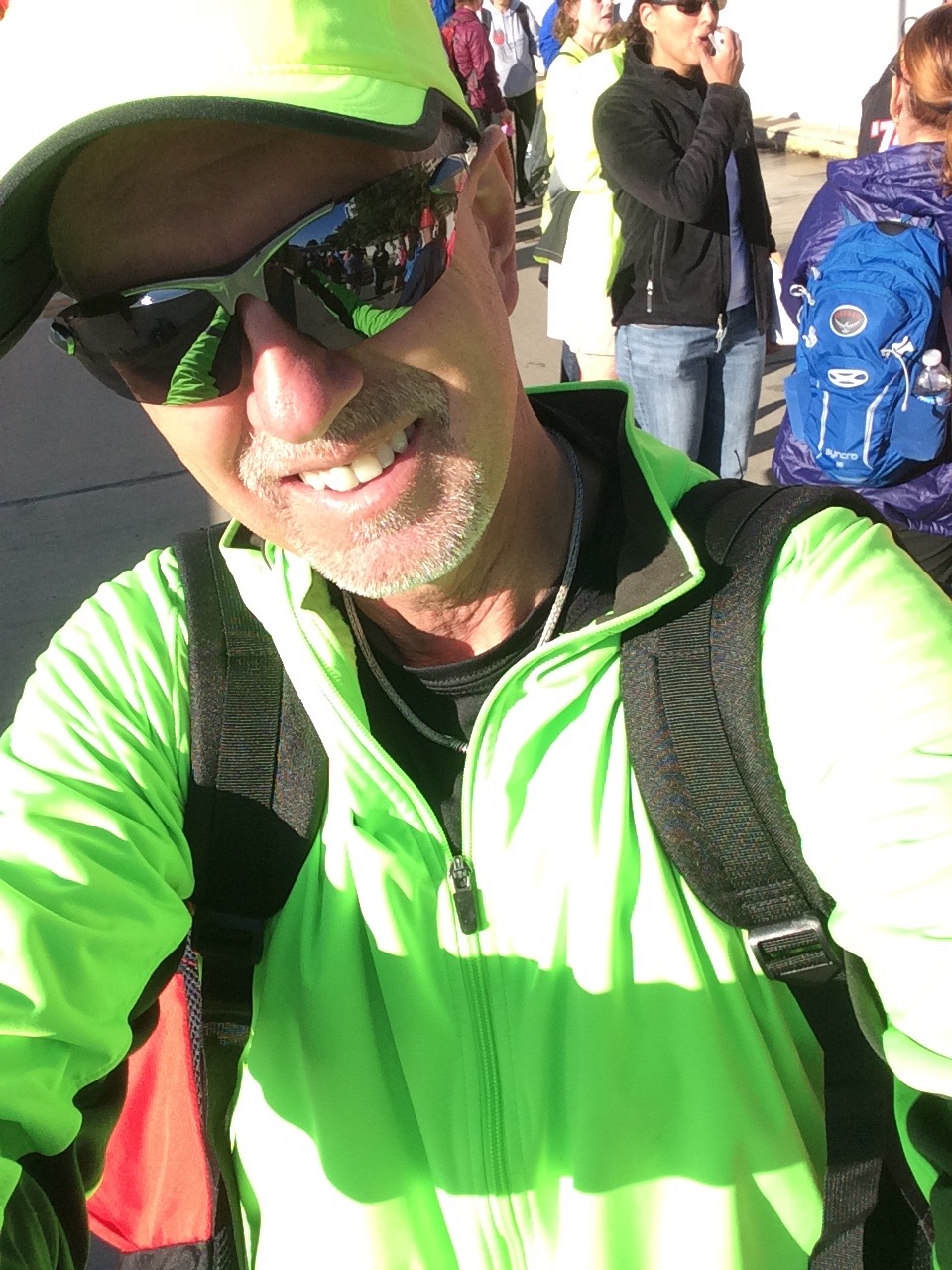
Runoverthetarsnakes

Posted in Christopher Cudworth | Tagged , , , , , | Leave a comment

It’s time to go fast for @gofast

IMG_2870My Twitter handle @gofast was concocted at a moment’s notice when signing up for social media several years ago. I’ve tweeted something like 6000 times since then. That means I’m quick on the draw, have an overly active mind, take too many pictures and have a preternatural need for recognition. I admit to all of the above. Social media is a preoccupation of mine.

But this morning my preoccupation is with not eating. For health purposes, I have blood work to do, and the appointment is not until 11:00 a.m. So, I’ll be drinking only water until then.

Fasting really isn’t that bad. The last time I fasted was for a colonoscopy at 3:00 in the afternoon. That was rather a long fast from the day before. Plus you drink that crap-clearing stuff that basically turns you into a sea anemone, one big channel from top to bottom with your arms flailing about trying to keep you arse on the toilet.

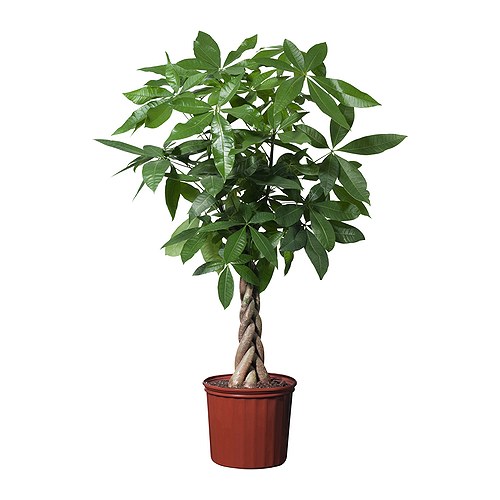
pachira-aquatica-potted-plant__0121010_PE277826_S4But actually, human beings are physically more like potted plants in a container that is too small. Our veins and arteries curl around inside us like the roots of a tree jammed into too little soil. If we further clog them with too much salt, sugar and fat, problems start to happen.

Some of us are predisposed to clogging of the arteries. We’re wired with a propensity to retain too much cholesterol, or else our circulatory system doesn’t move stuff around well enough. Plaque builds and we’re screwed. Our xylem and phloem gets all clogged up.

For some people, no amount of running, riding and swimming can unclog the system if it gets junked up. That means our diet plays an important part in keeping our blood healthy and clean.

Eating better has all sorts of important effects. So does eating poorly. Years ago when I told my brother that I had not yet had a colonoscopy, he barked: “What, haven’t you ever eaten a Slim Jim?” His point was that both the digestive and circulatory systems are subject to the vagaries of what we eat. There are bits of bad stuff left behind from whatever we eat.

I’ve heard it said that people can’t digest meat, and that 10 pounds of rotting meat is typically stuck to the sides of our intestines. This website begs to differ, warning us that it is vegetable materials, not meat that cause us to fart and rot from the inside out.

mcdonalds-Egg-White-DelightSo it’s pretty difficult to know what to think. There seems to be conflicting science and opinion on every aspect of human diet. For years, I avoided eating eggs as a rule. Now they’re back in vogue, at least the egg whites, and Starbucks and McDonald’s both serve sandwiches with only egg whites in them.

Of course, some people will tell you to look at that sandwich and divide it up into layers. The carbs are your worst enemy.

All I know right now is that I’m fasting and that sandwich photo makes me quite hungry. That’s how McDonalds sells so many products. They’re right there when you need them, cruising around in your cars and wanting to fill your sea anemone gut with something to make the hunger go away. And who the f*** cares if it is good for us or not when it’s 7:34 in the morning and you’re on the way to work? Give. Me. Some. Food. And a Coke for breakfast.

Poor McDonalds. They do what they do really well, which is to make mechanized food taste really good, and to charge you an arm and a leg for a simple slab of chicken on a bun. And it’s true, their food gets ripped for being unhealthy for us. The film Super Size Me by independent filmmaker Michael Spurlock documents what happens when a person chooses to eat only McDonald’s Food for 30 days. He gets fat, and other bad things happen as well. Here’s what the Wikipedia summary said about the effects of his McDonald’s experiment:

Spurlock ate at McDonald’s restaurants three times per day, eating every item on the chain’s menu at least once. Spurlock consumed an average of 20.9 megajoules or 5,000 kcal (the equivalent of 9.26 Big Macs) per day during the experiment. An intake of around 2,500 kcal within a healthy balanced diet is more generally recommended for a man to maintain his weight.[3] As a result, the then-32-year-old Spurlock gained 11.1 kilograms (24 lb), a 13% body mass increase, increased his cholesterol to 230 mg/dL, and experienced mood swings, sexual dysfunction, and fat accumulation in his liver. It took Spurlock fourteen months to lose the weight gained from his experiment using a vegan diet supervised by his then-girlfriend (now ex-wife), a chef who specializes in gourmet vegan dishes.

Well, give his ex-wife credit. The dude must have been pretty messed up from all that fast food. Because it’s not like the old days, where people thought that attaching leaches to their arms would suck the bad humors out of their bodies. Her gourmet vegan dishes must have been pretty good to lure Spurlock away from Big Macs.

white-blood-cell-amungst-redNo matter what we eat, we still have to consider our personal evolution in the process of determining the right diet plan.

We now know that genetics plays a big part in how our blood systems operate. Some people are wired in to retain fat. But that’s not the only reason America has become a nation of fat people. Americans have typically lousy diets and a generally low investment in exercise. That forces our blood to carry around a lot of extra stuff we don’t need. No amount of voodoo or bloodsucking really helps unless you take precautions about what you put into your body, and if you don’t work out, you turn into a blob. It’s simple as that.

But even when you do work out, there are risks in our family history that need to be addressed. For example, I know that my family has had its share of heart disease. My father just passed away 13 years after a massive stroke that whacked his brain and body. Before that, he had a quintuple bypass surgery that lasted five hours.

My father did not run or ride or swim. He played golf and some tennis, but his diet was not the best and he put on some unhealthy fat during his eight years of stressful commuting to work from St. Charles to Skokie, Illinois. Let me tell you, that’s about the worst commute you could ever invent. There are no routes and no roads that go from those two places.

IMG_2250All these risk factor are like a gauntlet in life that we run through on the way to kicking it in after 80 or 90 years if we’re lucky. Sorry to be harsh and blunt, but it’s true. One of the tarsnakes of life is that you can do a lot of good things and still keel over from a congenital heart problem like the famous runner Jim Fixx. 

So if you’re smart, you’ll fast now and then and get a physical from your doctor once in a while. Because even if you’re running 70 miles a week, biking 150 and swimming until you grow gills, you don’t know everything about your body unless you get checked out.

Because no matter how fast you go, you can’t always outrun the gauntlet of preservatives, hidden sugars, bad fats and oversized quantities floating around in the typical American diet. Even if you avoid these baddies, you may have predispositions to higher cholesterol and other tricks up your internal sleeve.

So it’s a double entendre that makes sense. Go fast. It means a lot of things.

werunandridelogo

Posted in aging is not for the weak of heart, Christopher Cudworth, diet | Tagged , , , , , , , , , , | 1 Comment

A place to run through time

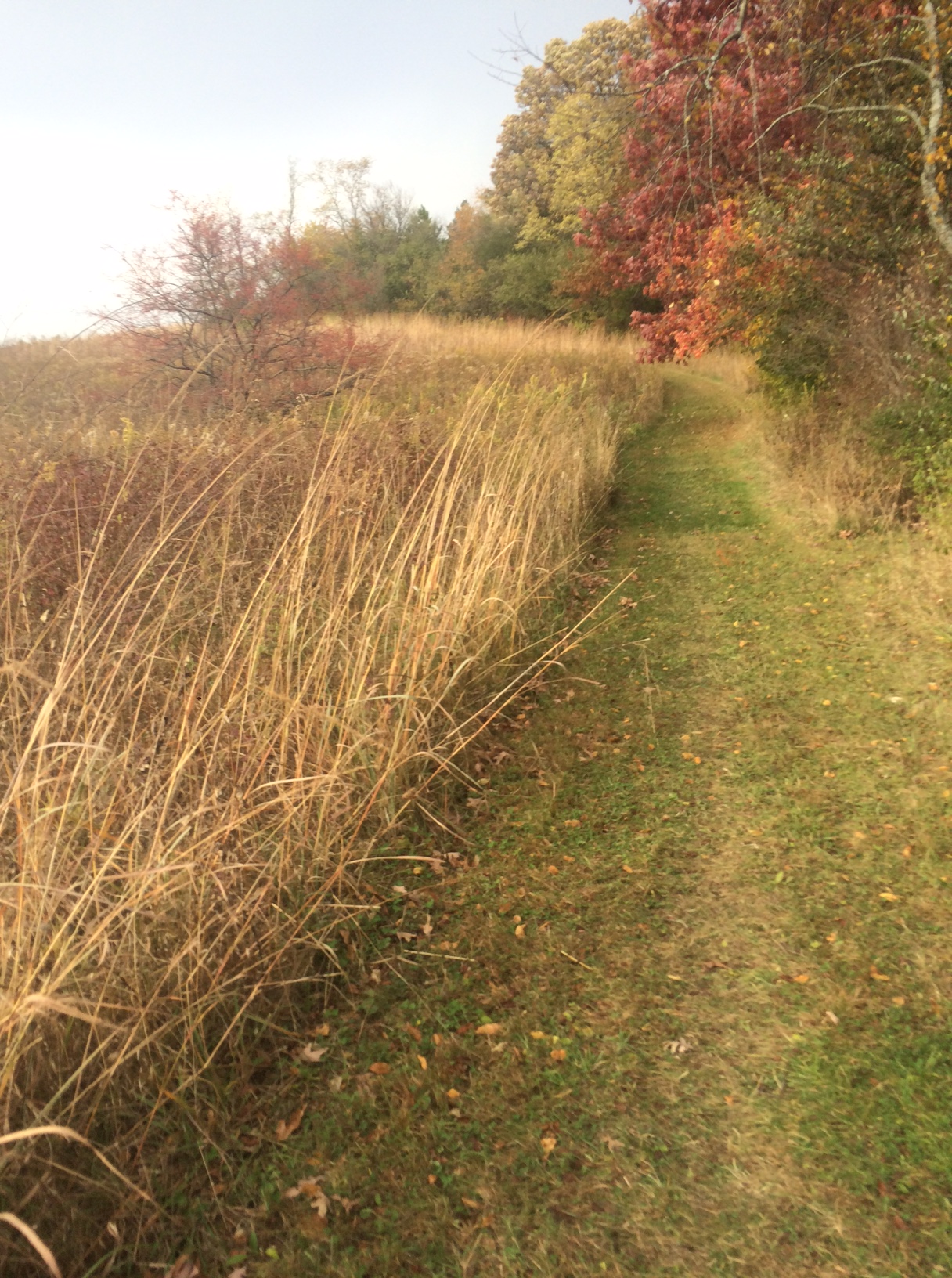
IMG_3989Yesterday I ran in Leroy Oakes Forest Preserve, a large park on the west side of St. Charles, Illinois where I went to high school. The preserve is a mix of grassy hills, mature oak woodlands and former farm and residential property now converted into open space for recreation and nature study. It is also the site of the area’s main high school cross country course for several high schools.

In 1973, our cross country team was the first ever to compete at Leroy Oakes. One of our teammates, Kevin Webster, designed the original course. Prior to that, we raced on a series of intersecting loops on the high school campus.

Running at Leroy was a marvelous change. Our course followed a path through the east side of the preserve. There were slight hills and the path was hard dirt, gravel and grassy sections where your spikes made no sound as you ran along.

Originally the course came through that loop and then crossed a 400-meter section of bottomland where remnants of the oxbow banks of Ferson Creek recalled a time when things were very different. Then the course shot up a steep, rutted, tree-root-infested hill. That was a tough climb, and true cross country.

Years later that section of the course was changed, and the newer course turned and made the long climb out from the creek bottom to an arc through tall prairie grass. It was a better course, and made for some epic racing over the years. I watched future Olympian and world-class runner Evan Jagr of Jacobs High School in Algonquin come through that section of the course on his own the year he won an invitational. I turned to some stranger in the crowd and said, “Remember that kid. He’s going to be great someday.”I was never in the category of an Evan Jager in cross country or any other form of running. But I did win a fair number of races on that Leroy Oakes layout.

I also recall the day that my aging jock broke under my shorts with 800 meters to go for a victory. I’d also that day chosen to wear an old pair of silky orange shorts from the legacy equipment room. So at that point there was nothing holding anything in place as I turned the corner for the sprint into the chute. Like a good boy, I ran in holding the seam of my shorts down on my leg. And still won. Chagrined.

So are some fun, and funny memories of racing at Leroy Oakes those 40+ years ago. I’ve run many workouts in that preserve since that time. It was a favorite place to train during my peak running years in my mid-20s. Hill workouts. Long intervals on the open trails.

Watching the preserve grow and change has been fascinating as well. The county has done a fair amount of habitat restoration work, growing a rich prairie on the main hillside, and weeding out garlic mustard and buckthorn in the woods. Henslow’s sparrows, a formerly endangered native species of bird, now breed in the preserve.

I have also run in the preserve for solace, and for hope. One October afternoon when my mother was ill with cancer, I had an iPod music player on me while I ran. That was not my keen habit, but for some reason that day it fit. I put the music on shuffle while running through the preserve, and somewhere along the way a segment of music from Elgar’s Nimrod came on. That particular version of the classic was provided to me by my son Evan Cudworth. It is one of the most moving renditions I’ve ever heard. This video of the Chicago Symphony Orchestra playing the piece is quite special as well. My sister-in-law Diane Mues is a violist for this symphony.

As I ran along and that music rose to a crescendo, I fell to my knees and cried at the blue skies above. I knew that my mother would soon be passing from this earth. She’d seen me run many times at the preserve, and was a great fan of my running in general. It was a good cry, let me tell you that.

In the intervening years, my young family liked to go to Leroy Oakes to walk and play next to the creek and in the woods. I have a photo of my two-year-old son climbing a set of stairs embedded in a dirt hill. To me, it always symbolized the climb of life ahead. I also carried my daughter on my back on many walks in that park.

What a spectrum of life we lead. And, walking with my family through a place where you have competed and trained was always like wading through a pasture of ghosts and recollections. These were overlaid with visions of other runners racing these same trails.

IMG_4038And so it is with some excitement that I’m planning to attend a cross country meet on Saturday at Leroy Oakes Forest Preserve. Thanks to an expansion in property, the preserve has almost doubled in size. Now the cross country teams will race on a big breather of a course laid out on the sweeping perimeter of the preserve. It will be a great place to watch the competition. I ran portions of the loop to feel it out, and learn what it would be like to race those trails on the new course.

The course still sweeps through the woods where I once raced as well. But that’s about the only fragment left of the original course. And that’s okay. In fact, it is better this way. Life moves on and changes. We need to embrace those changes and celebrate the many ways our fellow human beings and new generations encounter this world. We’d first made the change all those years ago, after all. It’s time to welcome yet another vision of what it means to run all out, and see who wins.

That’s what life is all about.

werunandridelogo

Posted in cross country, running | Tagged , | 1 Comment

It’s a Newton world down there

IMG_3979My buddy Monte was sold some Newton running shoes. He tried them out a few times and they were not for him. Now granted, Monte is not by trade a runner. Which makes one wonder why the running store would sell my friend those shoes when they are quite obviously engineered for people deeply involved in the running experience?

Newtons are designed with these crazy lugs in the forefoot. They are also zero drop shoes in the pair I now own (since Monte gave them to me) and that is pretty much a concession to the fact that real runners are trying to get back to the roots of running without so much padding between their feet and the ground. Sort of.

You’re supposed to run “over” the ground while wearing Newtons, and I get that, because I’ve been running more than 40 years and have tried every type of shoe known to the human race. I’ve seen Huarache style shoes with spandex forefoots. I’ve seen Osaga KT-26s with winglike appendages sticking out both sides of the heel. I’ve worn NIKE LDVs so huge it was like running on the fat ridges of razorback hogs.

So I have both an open mind and a cynical heart about innovations that supposedly deliver a better running gait and performance.

Even Newton’s website struggles to explain why their shoes work:

“We can’t fully explain it, there are no adjectives that can do our shoes justice, and we can’t figure out how to draw a sensation diagram. You just have to try them on because they will feel like nothing you have ever worn before.  They will feel like they were made specifically for you. How do we know this? Because we made them specifically for you.”

From the Newton website

From the Newton website

Well, isn’t that sweet? Except my pair was a hand-me-down. So, I fooled you, Newton.

But they aren’t just fooling around at Newton, I’ll admit. They try to put their money where their mouth is. They’re trying to create a tribe of believers. Newton is also the official shoe for Ironman. So there’s that.

Actually the same running store that sold my friend Monte his pair of Newton’s also tried to sell me a set six months ago. I tried them on and turned them down at the time in favor of a repeat pair of Saucony Triumph shoes. I wear orthotics, you see, and was not convinced those Newton lugs under the forefoot were a good combination with my existing control devices.

But the guy at the store wanted none of that. “You won’t need your orthotics if you wear these. They promote a more natural running gait.”

Dude, shut the hell up, I thought to myself.

I called my friend that owns the store and told him there was a Newton zealot in his ranks that seemed to have drunk a little too much of the Hello, Better Kool-Aid. I love enthusiasm as much as anyone. But you have to be careful what you prescribe when you’re just a store employee with a little bit of running experience.

I know. I once worked in a running store called Running Unlimited. At the time, I was being trained to recognize common biomechanical deficiencies such as pronation and supination by a podiatrist whose book I was illustrating. It was just becoming clear to the running community at that time that not all runners are built the same for running. Many of us have problems waiting to happen in the structure of our feet, the bow in our legs, the angle of our hips and the inherent weakness or inflexibility of our joints.

So shoes were starting to be designed with the goal of solving these problems. But you can’t mass produce a shoe that will fit and feel fine to every runner. So more and more styles cropped up, and shoes like the Brooks Beast were invented to help fat guys and people with shitty strides run at all. Just being honest.

But that’s what made the running boom possible. Then it took off in all manner of directions.

Newtonian

Innovation does not always guarantee results, however. Just ask Apple about their version of the Newton. It was visionary, and opened the door to all sorts of other experimentation. But it wasn’t one of their most successful products.

IMG_3978The Newton running shoe company appears to be doing quite fine, however. I see them on the feet of many people in the running community. This is especially true in triathlons, where traditional shoes such as Nike and adidas and Puma are not necessarily accorded such reverence as they are in track and field and cross country, both sports for traditional runners.

By contrast, triathletes have invented their own equipment and abide by their own rules on everything. The cycling world has certainly been impacted by the demand for more “aero” bikes. With running shoes, companies such as Newton and other less traditional brand as Hoka and Mizuno and even Skechers, for God’s Sake, have jumped all over these markets.

Try them out

So I’m more than willing to give these new Newtons a try. I’ve reinvented myself as a runner the last couple years and my mind is always open to new things. So I ran a mile yesterday in the shoes as a short experiment. They didn’t kill me, or kill my feet. I could feel my forefoot stride working with the lugs under the ball of my feet. But I need to study that some more, and talk with my pedorthist, who has gotten me back on the road these last three years.

Not sure that I’ll race in these babies this weekend. I’m only doing one serious 10K this fall and I don’t want to cramp up and curl up in a Dekalb County cornfield during the Sycamore Pumpkinfest 10K.

But perhaps that would be fitting. The Newtons are rather pumpkin-like in color. And if I do curl up from calf cramps from racing in my new Newtons, I would just be acting like the guinea pig I’ve always been with running.

Like I said. I’ve tried just about everything when it comes to running. When you find something that works you typically go with it. But then the running shoe company discontinues or “improves” that model and you are forced to start the search all over again.

But looking down at my feet, I realize all good inventions tend to start by solving a problem from the ground up. Perhaps Newton is onto something. We’ll see.

werunandridelogo

Posted in Uncategorized | Tagged | 2 Comments

Taking back my legs

The hemline of my new shorts is a little higher. And faster. I hope.

The hemline of my new shorts is a little higher. And faster. I hope.

In an effort to put my purchasing level over $200 at our local running store, Dick Pond Athletics, I perused the sale rack and found a pair of running shorts at half off.

They were normally $40 shorts, and the tag bore the information: 3″ inseam.

It’s been a long time since I wore shorts that short. All through the 70s, 80s and 90s I raced in shorts that were technical and, well, short.

But thanks to the Michael Jordan phenomenon of hyper-long basketball shorts that somehow drove the more conservative meme that shorts had to be longer, running shorts extended down the leg until most runners sported shorts more suited for running the barbecue grill than running ten miles.

I suppose I’ve gotten used to the idea that men of a certain age are not supposed to expose their thighs. And then when I took up cycling it became a bit embarrassing to run with shorts any shorter than the length of the cycling shorts, because the tan lines were crisp and obvious. And then the style of cycling shorts also got longer and longer as the years went by. It was a no-win proposition.

This trend is apparently part of an accepted social construct that says flesh is bad on men. Women have not been forced to endure shrinkage in their running attire. But many women do skoot around in skorts, and frankly those little things are somehow sexier than even regular old short shorts. Go figure.

There are many women that prefer a more modest brand of shorts that covers their tush. Not every woman wants to run in gear suited for a Victoria’s Secret model. There are good reasons for that. But you still don’t see women trotting around with shorts that extend almost to their knees. They don’t put up with that sort of shit. And I don’t blame them.

Yet men do. And part of the reason may be that women simply don’t want to look at exposed male thighs. Most of them, anyway. The right man in a pair of shorts can certainly get away with it. And yet, most styles of men’s running and casual shorts are longer, leaving much more to the imagination. Again, women have restraint when looking at men. There’s a guy in our running group whose crank is always flopping around no matter what he wears. The women I know all say, “Make it go away.”
11130329_10153355465999313_956786642998782350_oAnd we all get that. So normally I wear running shorts that bottom out 4″ above my knees. But I admit that I’m conflicted by that. When I run past a window and see those long shorts in the window, I feel like I look slow. Like a jogger, not a racer.

This deeply ingrained vision of myself goes back to the racing outfits I chose in the 80s, when I was actually reasonably fast, usually tanned, and not, I suppose, a middle-aged or senior man just trying to look like I am fast.

But man the world can be harsh. For example, if you run past some high school kids these days in shorts that are too short, they can be a little critical. You might even get a bit of laughter or a catcall. Heck, that happened even in my Old Guy shorts the other day. One has to wonder what one does some days to incite criticism? It may be the simple fact that you’re a handy target for bored kids in their daddy’s car, but it still hurts. I won’t lie. I yell back.

So the risk of being catcalled even more just increased with the purchase of my New New BalanceBalance racing shorts. They’re not super short like my former Nike or New Balance shorts from the 1980s. Those were short. But I was also fast enough to justify them. Perhaps what I’m dealing with nowadays should be called Old Balance, not New Balance. Ha ha.

But I’m actually racing this weekend (in the same race shown at left) and the tan lines from cycling have faded enough by this time in October that I will not look like some sort of pasty Popsicle out there. Of course, if it turns out to be cold like it has in past years, I will not be sporting shorter shorts. I know from experience that is insanity.

So, I’ve tried on the new shorts and looked in the mirror. I don’t think the womenfolk of the world will be too offended by my choice in running fashion. Plus they go with my shoes and hat, and there’s nothing wrong with that. I’m taking back my legs. And I hope they take me faster where I want to go.

WeRunandRideLogo

Posted in running | Tagged , , , , , , , , | 3 Comments

The 10 mile experiment

On Saturday at noon I needed to run. This was the product of trying to figure out a lot of things in life. Not just the present, but the future.

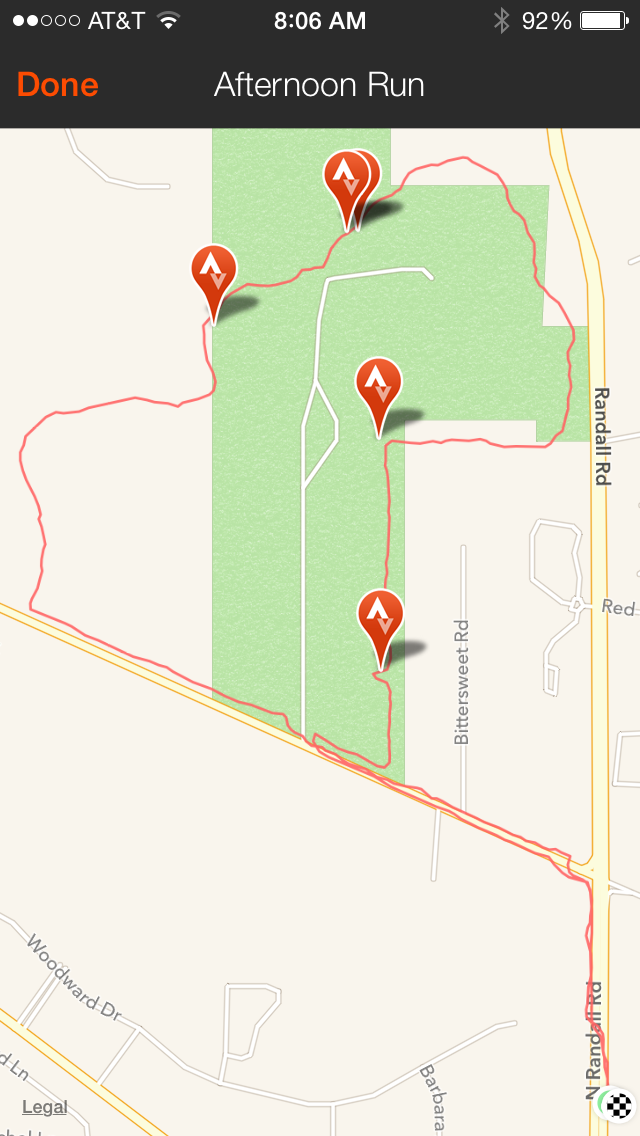
So I tossed on my favorite running gear and took off north toward St. Charles. I knew it was 10 miles or so up and back.

The run was also an experiment of sorts. I’ve been considering the Naperville Half Marathon in November. It would be a good thing to do a longer run before that, and find out what’s actually in the tank in terms of sustainable running.

What I learned is that I’m aerobically very fit. The total run only averaged 8:47 per mile, which is not that fast even for me these days. Yet I ran a 52:00 10K in there somewhere during the first six miles.

Tarsnakes

But what held me back in the last four miles was a feeling of being beat up in the legs and hips. My companion suggested this might be the result of not doing that many long runs in the weeks leading up to Saturday. And yet, last week I ran a 10K on the trail in just over 45:00. Even during that run my hips and legs got tight and tired.

The only antidote that I’ve seen to this problem is not more running. It’s weight work. Lots of weight work. One of the tarsnakes of running is that it is sometimes the preparation you do off the road that makes you good on it.

Our bodies depend on strength to sustain pounding. You can run all you want to accomplish this, and get some nominal effects out of the effort. But you won’t necessarily strengthen your hips and legs that way. In fact what running does sometimes is accentuate your weaknesses and inflexibilities.

As a result, we pick up injuries to the IT band, the knee of the hip. Often there is hamstring tightness involved in all of this. You simply cannot run healthily if your hamstrings are either tight or weak, or both. You will have problems.

Planning ahead

I had already envisioned doing lots of strength work this winter in preparation for better cycling next year. One of the challenges in aging is the fact that muscle mass reduces the more you add years. In order to combat this trend, an athlete must do strength work on a regular basis and go beyond what they have traditionally done as well.

Otherwise, your baseline continues to erode. It gets tougher to run on the roads especially, because all that pounding resonates up the body, causing even further tightness and soreness. If you’re unlucky, you’ll develop a pulled tendon or stress fracture.

Biomechanics

IMG_1352This is especially true if you have biomechanical issues. Most runners do. Some try to combat them with strength training alone, and I get that. One of my doctor friends refuses to get orthotics, but he’s been hurt for a full year and it may be time for him to come to Jesus, so to speak. He’s got the means, and if orthotics bolster his stability and fix his gait, he’s got everything to gain.

However my orthotics give me fits after six miles because my feet get numb. This is a problem because you can’t really run effectively if your feet hurt. So I need to go discuss this with the pedorthist to find a cure.

Wear patterns

I’ve also noticed the left heel of my running shoe is wearing out quicker than my right. That’s been the case all my life, but it does not need to be that way.

What I learned from my ten-mile experiment is simple. I’m not ready to run a half marathon because there are too many weaknesses in my foundation and training to justify a run of that length. If my pace fell off from the low 8:00s I was running early in the 10-miler it was not because I was winded, but because I was struggling with a numbness and shakey feeling down below the hip line.

Perhaps by next spring with a winter of strength work under my belt (literally) I’ll be more confident of running that far. My longest run this year has been 12 miles, and actually that went much better than the 10-mile experiment this past weekend. So there’s a chance that it all might go better, and that it might have been overall stress holding me back this weekend. A couple hours after my 10-mile experiment came the call that my father passed away.

Processing

So it was an interesting mental journey as well during those 10 miles. It helped me process all that had been going on, and that’s far more important than whether I choose to race 13.1 miles in a couple weeks or not.

We’re going to race the Sycamore Pumpkinfest 10K next weekend. I may even loosen up and fashion a costume for the occasion. I know my fitness state pretty well from the 10K trial run I did last week around 45:00. Running much faster than that would depend on the winds and weather anyway, this time of year.

Truly I’m happy to be moving and running relatively injury free. The sport still feels good. That’s what the 10-mile experiment actually told me. To keep moving.

werunandridelogo

Posted in 13.1 | Tagged , , , , | Leave a comment

With thanks to dad in the long run

Cudworth Racing SycamoreI’ve often related a story of how my running career actually got started in high school. As an eighth grader that previous fall, I’d won the local Punt, Pass & Kick competition in the town of Elburn, Illinois, advancing to the regionals where I did well but not enough to win.

Still, the idea that I would someday be a football player was stuck in my head. My father did not like the idea. Not for me, or for any of my brothers. He viewed the game as a knee-wrecker, which at that time was fairly true. But there was more to it than that.

He also did not want us to become wrestlers. My dad liked a certain amount of grace to the sports he helped choose for his sons. Baseball and basketball were terrific. So was soccer, so back home in Pennsylvania my brothers had both played soccer, one as a defender, and the other as a goalie.

When we moved to Illinois the high school had no soccer or baseball. Only football and track & field. So my brother who was a junior when we left Pennsylvania had no other choice but to go out for cross country the fall of his senior year at a new school. He did pretty well for having had no previous experience in the sport. Then he ran track & field in the spring in lieu of baseball. The athletic director was the track coach and wanted no competition for athletes from the sport of baseball.

FamilyThat was an unfair gig for my brother in several ways, but my father was not exactly sympathetic as I recall. That was not his style. His philosophy was “grow and adapt.” He thought it built character.

And so the same choice was made for me that freshman year in high school. We drove out to the campus and my father walked with me to the door of the locker rooms. “You’re going out for cross country,” he advised me sternly. “And if you come back out of that locker room, I’ll break your neck.”

As it turned out, that decision was the right one for me. I weighed about 126 lbs. on a 5’11” frame at the time. I might have survived playing football, but maybe not.

New BalanceBut after that first cross country practice, I knew the sport of running was for me. I loved the feeling of it. And with that drive came a modest degree of success. I made the varsity team as a freshman, led the varsity in points as a sophomore and then moved to another school my junior year to lead the team to a district title.

Beyond high school my running continued at Luther College, a school my father insisted I visit even after I had signed up at Augustana. My dad liked the sound of the wild country around Decorah. We drove through the hills of Wisconsin to northeast Iowa together and I recall a deep feeling of welcome sitting in the hippy cafe in downtown Decorah that day.

“You can cook wild game in the dorm around here,” my father counseled, and something in his message clicked. It also helped that Decorah with its hills and trees looked much like my birthplace in Upstate New York.

My father was more often right than wrong in his judgments and advice, but we had our differences for sure. The sometimes exasperating approach of challenging my perceptions caused some distance between us in the years of college and beyond. There were also anxieties stemming from a stern and sometimes physical upbringing that included thrashings if my father did not approve of the actions of his boys.

BrothersSome people sentimentally celebrate those corporal punishments as necessary to the upbringing of a generation. But I am not one of them. In raising my own children, I never felt the need to strike them. A couple attention-getting swats to their diapered or young bottoms, maybe, but perhaps three or four times in their entire lives was all that was necessary. They turned out wonderfully without having to beat the tar out of their bottoms or anything like it.

There was a certain level of anger that fueled our sporting endeavors as a result of the physical upbringing. We knew how to pass a licking on from one to the other within the brotherly hierarchy. We knew how to fight. There was also some cruel teasing involved.

All these are honest assessments of the period and time. They do not fault my father, whose own upbringing was absent both a mother and a father. His mother died from complications of cancer when he was just seven years old. His father struggled with financial and emotional problems through the Depression. Losing both a wife and a farm did not help the man.

So my father may have struggled for a role model by which to raise his own sons. Combined with the enormous financial ups and downs of the 1970s and 80s, there was plenty of insecurity to add to the mix.

CudworthEnglertBut there was no lack of love. Even through my father’s family and work challenges he was fiercely committed to supporting each of his boys in their athletic endeavors. Like all good parents, he attended our meets and games, often yelling to us “Stay Loose!” as a way to connect with us on the field. He could detect the anxious minds at work in his boys, and wanted us each to realize that the best way to perform was to lose that nervousness and gain the strength of relaxation. But sometimes his chortling calls worked to the opposite effect. My brothers and I will still tease each other with the call to “Stay Loose!”

Yet my father really did care how we did. And that’s what counted most. He also loved a good game of catch with a baseball. We’d take turns throwing knuckleballs to each other. All his boys turned into good pitchers in the sport of baseball. But none of us ever topped the knuckleball my father threw to one of my brothers. It fluttered through the air and then sank from shoulder height to drop near his feet at the last minute. My father loved a good knuckleball. It was like fly-fishing in the side yard, more of an art than an act of sport.

My father was pretty swift of foot in his day. As a kid I recall challenging him to a footrace in our Pennsylvania yard and he took off with that weirdly smooth stride of his. There was no chance I could catch him. Perhaps my father might have made a pretty good runner had he been given the chance growing up.

Instead, he watched us all race at some point in our careers. All my brothers and I participated in track and field. Jim ran a 4:40 mile as a freshman. Gary long-jumped nearly 20 feet. Greg high-jumped 6’6″ and made it downstate.

I was a little too eager about the whole thing, high-jumping 6’1″ and triple jumping 40’4″ in an attempt to win points for the team in high school. All that as a distance runner? But my father never made me quit trying field events. Anything for the team, he agreed.

Most fondly, I recall the day our cross country team at Luther earned second place in the NCAA National Meet. My father and mother were both in attendance that day in Rock Island, Illinois, where the flat course circled around Arsenal Island. When it was all said and done, and our team pictures were taken, I walked over to my father and gave him a long hug. It was the first hug in a long while, as I recall, because kids in the 70s often ignored or resisted their father’s attentions.

And yet, the feel of your father’s arms around you when you return to those graces with a hug can be liberating indeed. I simply said, “Thanks, dad.” And he hugged me hard.

There were tears in his eyes, for he knew that there were struggles through those long miles of training. But this was something we could both share, an accomplishment.

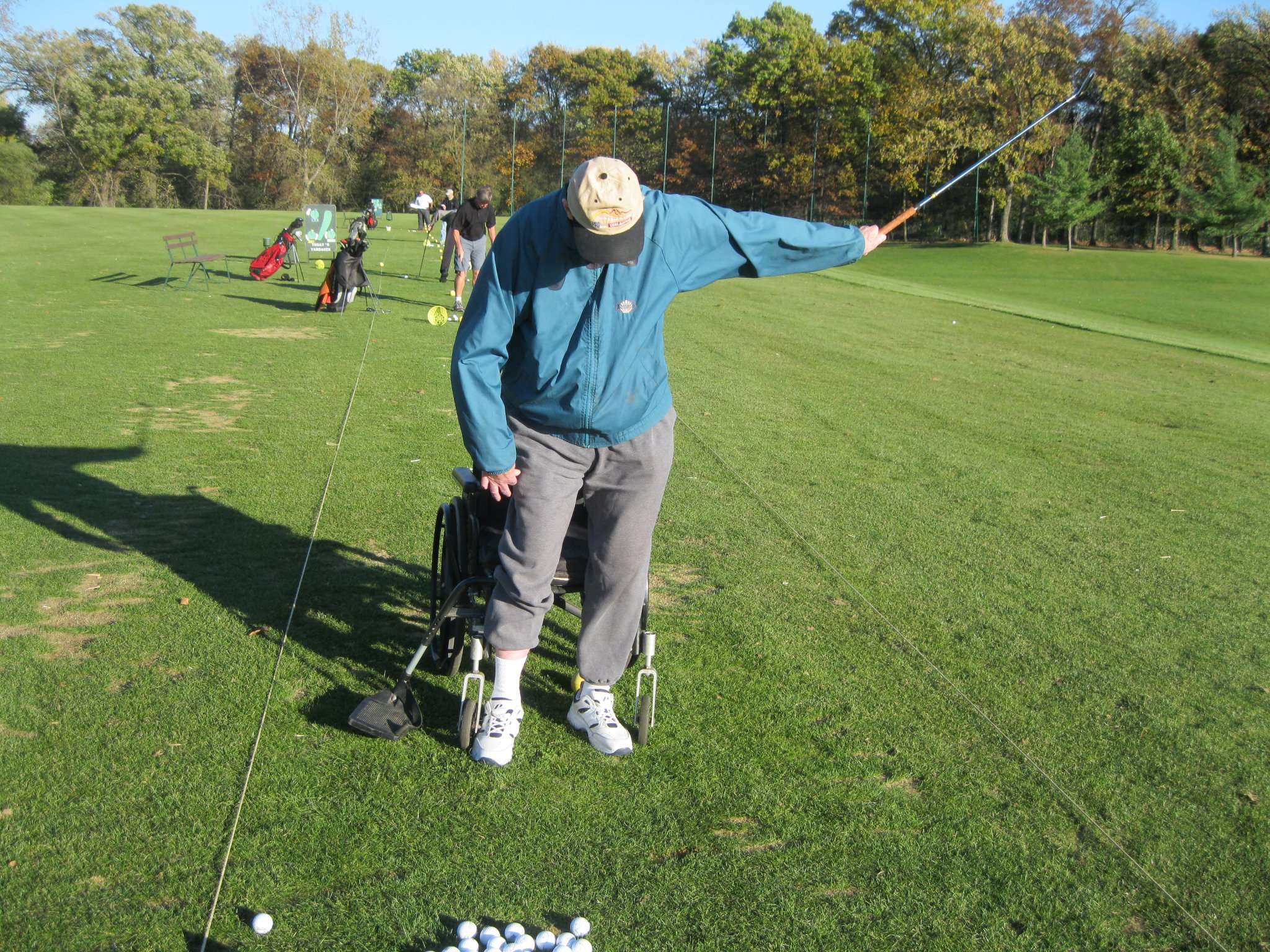
330060_111606775635235_2063240478_oMy father passed away this weekend after twelve very long years of living with the effects of a stroke. He was eighty-nine years old, and had dealt with his circumstance of not being able to talk or walk very well for all those years. He still got up and swung his beloved golf clubs, and with one hand repaired and refurbished clubs which he lovingly gave to friends or family. My dad loved the game of golf and won his flight one year in the city tournament in St. Charles, Illinois. It was my job to take care of him in many ways once my mother died twenty years ago. I always felt like it was returning a favor.

I still think about the manner in which he addressed a problem with my track spikes in high school. The long miles and hard intervals on the track were causing a tightness in my left Achilles tendon, so my father set to work making a heel lift out of leather to glue into my shoe. It was just enough to take pressure off my heel for the remainder of the season. I recall looking into the heel of those adidas blue suede spikes and marveling at how he’d managed to make the pad smooth enough not to rub my heel.

That was my father, a man who made real wooden frames out of rescued barn wood to help me sell my paintings at a local restaurant willing to hang them on the wall. Of course one morning the nails gave out and a frame came crashing to the table, flipping pancakes in several directions. “Nothing’s perfect,” he told me.

He also gave me advice about my artwork that has never been forgotten, and yet not implemented enough in some ways, “Paint squirrels,” he told me. “People like stuff they recognize.”

Brothers In Kitchen

Christopher Lynn Cudworth, Gregory Lawrence Cudworth, James Stewart Cudworth, Gary Douglas Cudworth, Our mother Emily Nichols Cudworth passed away in November, 2005. 

He was right about many things in this life. We had our challenges but through thirteen years of caregiving to the man who raised me and my three brothers, it was an honor to provide that care back. Sometimes it was done impatiently I will admit, for the fatigue of caring for a parent can be exhausting. For me it never occurred in any sort of a void. While taking care of my dad, I also ushered my late wife through eight years of ovarian cancer survivorship. Being pulled in two or more directions was stressful.

But when I really needed to get away, I went out and ran or rode some miles to help put things in perspective. That was a gift that my father gave to me. He somehow knew that my mind would need that in life. So it is that I’m giving thanks in the long run. We love you dad, and we’ll miss you.

Stewart Kirby Cudworth was born in Upstate New York in January, 1926 and lived to 89 years old. He was a World War II Navy Veteran, avid golfer, visitor to garage sales and socializer who loved to sing with a beautiful tenor voice. He earned his engineering degree from Cornell University and worked for RCA, Sylvania, Belden and Anixter in his career. 

werunandridelogo

Posted in Christopher Cudworth | Tagged , , , , , , | 4 Comments

Running it up the old flagpole

IMG_2250Yesterday I walked past the flag display at our local hospital. The flags were standing straight out from the pole. “Bad cycling weather,” I thought to myself.

Recently some friends participated in the Louisville Ironman. The swim is conducted in a river. We must presume they swim downstream, and not with the current.

Back in college our cross country team was hosting a few runners from a junior college. They came to visit the campus and joined us for a 10-mile run. Unfortunately, there were winds blowing more than 50 miles an hour. “This sucks,” one of the visiting runners said. “I’m never coming here to run.”

Tough times

None of us likes to do our activities when the conditions make it even tougher than normal to swim, ride or run. If we had it our way all the time, the wind would always be at our backs.

That seems to be the way some people like to view the world. If they see an opinion that does not agree with their ideology, they would rather walk away than engage in a genuine discussion about the subject, or better yet, learn something from the experience.

Some people accuse me of being intolerant of conservative opinion on this blog. But there’s a difference between publishing your opinion and refusing to read anything by anyone that might contradict your own. I listen all the time to conservative radio, for example. And I read The Blaze and other conservative websites to see what they’re saying. And I can’t avoid the Fox News television blaring away at the health club I use.

Footprint TwoDespite the claims of a so-called “liberal media” and bias against conservative causes, the facts point out something entirely different. The number of radio stations carrying liberal programming has dwindled thanks to station owners that don’t want that information getting out to the public. Television station ownership is similarly conservative, as are newspapers such as the Wall Street Journal. These are not liberal outfits. They are in the long run, conservative mouthpieces for policies in business, industry and the media that favor the interests of corporate conglomerates, monopolies and an oligarchic political system in America.

Odd bedfellows 

Today one of my blogs about sociopathic socialism was shared on a Tea Party site. I cannot presume to know whether they shared the piece on their site because they liked it or hated it. One can never tell. I’ll have to go see if there are comments. The wind of politics blows in many directions these days.

This much I can say. I did not arrive at my political views by accident, or without experience. Just as I did not become a runner or a cyclist and now a swimmer overnight, I have tested my opinions and digested a lot of information that runs counter to my principles. Yet I still read it, examine its merit and corroborate its fact or falsehoods.

And I have to tell you, there are a lot of obvious falsehoods, and opinion disguised as news.

Blog traffic

One wonders how people make decisions on what to read. The number of people who follow this blog rises up and down every week. I’ve noticed a quick drop of 5-10 followers every time I post a criticism of some conservative policy. I also sometimes mock the sports I cover, and perhaps that pisses people off as well. Yet sometimes I write things and 20-30 new followers join the site in a week’s time. It’s hard to predict.

But it’s not hard to determine what I think.

I believe in the merits of an examined faith and political life. From an early age, my instincts for social justice have gravitated toward liberal policies because those are the values advocated not only by the Bible, but by the United States Constitution as well.

IMG_8603There are several definition of Liberalism. The first is that it is a political philosophy or worldview founded on ideas of liberty and equality. The second is that it is a belief in the value of social and political change in order to achieve progress. The third, and equally valid definition of Liberalism is theology. “A movement in modern Protestantism emphasizing intellectual liberty and the spiritual and ethical content of Christianity.”

So those have been the foundations of my life, and none of these has been contravened by my participation in athletics. From a very young age, I learned there is a balance between individual achievement and sacrificing for the good of the team. These are both, according to the definitions of liberalism, good qualities for life and leadership.

Dropouts

It may just be my imagination, but not my fear, that some people drop off from reading this blog because I’ve offended them somehow. The winner-take-all atmosphere of politics in America has encouraged a watershed approach to how people engage in the information wars. People obviously tend to subscribe to websites that support their views and avoid those they find contentious or politically, religiously or economically offensive.

That’s not how I operate. I visit sites and articles that challenge my ideas. I’ll continue to profess what I believe and expect feedback from those who don’t share those views, and from those who do because I also believe in healthy debate.

I welcome both criticism and compliments. If you can make a case against what I say that makes rational sense, I’ll change my mind. But you’re going to have to work hard to do that, and argue with clarity and proof, because there’s frankly nothing in this world harder to be than a liberal.

Prime example

Just ask Jesus, who taught us a few things about love and convictions of spiritual liberty in the face of aggressive authority and material law. He ran his liberalism up the old flagpole and got hung there by nails as a result. I buy that example because I’ve made a life’s study of the Bible and its symbolic virtues, all of which contribute to its greater understanding.

You can argue all you want that conservatism is somehow the better foundation for society, or that progress in moral and social equality is somehow bad for our culture. You can whine about missing the Good Old Days, but they were only good for a select part of the population. Liberals helped change that by advocating equal rights for people of color, for women and for people across the spectrum of sexual orientation. We’re not going to quit, you see. It’s the race that never ends. We may be dreamers of a sort, but we liberals have stamina, and are willing to use it.

werunandridelogo

Posted in Christopher Cudworth, we run and ride | Tagged , , , , , | Leave a comment

The Truman Show is still running when it comes to climate change

The news came in 2-4″ of snow is predicted this weekend for Wisconsin. In case you’re geographically challenged, or live in a country far away (and there are many who read this blog who do) that’s the state just north of Illinois, where I live.

I like Wisconsin because it’s a great place to run and ride. There are hills, for one thing. Lots of beautiful hills from Madison west to Prairie du Chien. We’ve been riding our bikes up and down those hills a lot these past ten years. Running too.

But I swear that part of Wisconsin has its own weather system. For that matter, the whole state seems to be run by a band of angry Weather Witches who stir up local brews to unleash on the populace. Perhaps it is some sort of karmic vexation for vanquishing the native Americans who once owned and loved the state. But for whatever reason, one has to respect Wisconsin weather, because it will not respect you.

I have huddled inside tents at Necedah National Wildlife refuge while the rains pummeled the earth. I have run the first 10K of a half marathon with a mild wind at our backs only to turn around into a gathering gale that threatens to strip the clothes right off your body.

Of course, these personalized weather events are only my active imagination at work. The weather is unpredictable everywhere in the world. It just seems personal when it interferes with your favorite activities.

You might recall the scene in the movie The Truman Show in which Truman (played by Jim Carrey) is mulling his life on a beach when rain starts falling on his head. Sometimes weather feels like that.

But the whole point of the Truman Show is that reality is often not what it seems. This is especially true with a created reality. But as Truman grows to realize something is amiss in his world, he also becomes suspicious about its source. While he revels in his seeming control of the rain from above, it also starts his mind to working. His innocence begins to evaporate. He develops a cynical view of the world around him. If even the weather is cranked by some greater hand, what else in the world is not right?

Those of us who run and ride should know better than to think of the weather as some personal affront to our efforts. The randomness of weather is one of the complexities we all face in training and races. Earlier this year during the Batavia duathlon, the skies opened up and all of us competitors were forced to race our bikes through rainy conditions that were dangerous if you did not pay attention to your turns and your wheels in deep furrows of water washing down hills.

Everyone in the race was forced to deal with bad weather. Some of us got back to the transition to find our shoes filled with puddles. But it made it all interesting. And fun, to be sure. Our best stories often come from weathering adversity.

Yet all these localized weather events pale in comparison to what’s really going on in the world. We’re all just basically Truman characters in a play with rules and controls much bigger than the weather in Illinois or Wisconsin. See, the entire climate of the earth is impacted by human activities. It’s almost like the Truman show in reverse. Because you really can imagine the atmosphere on earth as a dome of sorts. It captures and holds all sorts of gasses, and these in turn capture heat and light and radiant energy. For a century the human race has been hyper-driving this process in a grand experiment. It’s like we’re challenging the world’s climate to dare to smack us down.

snowman6_1554874iAnd sure enough, it’s happening. Climate scientists have tried to explain this in a variety of ways, but there are quite a few pseudo-Truman-like characters in this world who would prefer to go back to that little world where everything is predictable and controllable.

And yet 97% of the world’s climate scientists have looked at the data a hundred different ways and come to the same conclusion. The earth’s climate is changing as a direct result of human activity. It’s called anthropogenic warming. We’ve turned the world upside down and inside out.

Yes, we’ve all heard claims that global warming is a giant hoax designed to fund the salaries of scientists and coerce nations to operate under a one-world government. We’ve also heard the oil-or-coal-industry-funded “science” that conveniently says what they want it to say, that greenhouse gasses could not possibly alter the earth’s warming and cooling systems. But if you’re looking for people trying to control the narrative, always follow the money to the source of the identified problem, because that’s where the most powerful interests lie. Pun intended.

Still, some people do still view climate only in terms of localized events. They see snow on the ground in their particular vicinity and boldly claim, “Look, the world is getting colder, not warmer!” One nitwit, Sen. Jim Inhofe, balled up a snowball and preached in a bald-faced manner that a handful of snow was proof the earth’s climate was not changing.

A friend of mine recently sent me an email about this phenomenon of un-Truman-like forceful stupidity.

“We — Americans — have the attention spans of gnats. Short memories are both our greatest national advantage and curse. On one hand, we can shake off previous setbacks and plow forward, while on the other, we keep reliving history because we so quickly forget it. How the micro and macro of a condition is at odds with itself.

Road signsBut the thing that drives me mostest nuts is the lack of scientific knowledge most Americans possess. For instance, many mouth-breathers are now climate-change deniers because of this:

http://www.businessinsider.com/polar-vortex-week-of-nov-10-2014-11

The polar vortex will visit the midwest again early this year, plunge into the south, race to the east coast.

It’s cold, say the scientifically challenged. Therefore, how can this be global warming?

Because nature abhors a vacuum, idiots.

The Pacific is superheated. Much warmer than usual (and full of radiation, but that’s not part of this argument). The Pacific current races from the equator past Mexico, California, the Pacific Northwest, hits the arctic and the warm water is cooled, plunges to the bottom of the seabed. It’s a heat pump and cooling station all at once. 

swimming_poolBut because the Pacific is so warm, by the time it reaches Canadian and Alaskan borders, it’s pushing much warmer than normal air along. The warm high pressure pushes the cold low pressure in the middle of the continent out of its way. The only place for the dense, cold air to go is south, ergo, polar vortex. 

It’s because of increased heat we’re cold. 

Try explaining it to any climate denier. They stick their head outside and call it a personal scientific study. “Nope, it’s cold. Global warming is a lie.”

The issue of global warming is a tremendous symbol for human arrogance in the fact of facts. We tend to do the same thing with economic patterns as well. Economists keep predicting another economic crash because the factors that contribute to a balanced economy such as middle-class wealth keep draining away. The Economic Vortex keeps building and building. We can see the signs, but the biggest banks keep growing, and that heats up the risk factors that too much money is concentrated in one sector of the markets. We’re told those banks are “too big to fail.” Yet they can, and they likely will again.

Wall IceThese are cause and effect issues we’re talking about here. It’s not about rain falling on the head of Truman or you and me. It’s not about whether it’s cold in your part of the country when it’s winter. It’s about whether temperatures all around the world keep surging. They may ebb now and then, but when the trend is consistently upward, we should at least pay attention to factors that may be causing that to happen.

The world is supposedly a big place. The earth’s climate is supposedly too big to fail just because human beings drive cars and cows fart. It’s easy to be cynical toward such illustrations of risk. It makes some people feel smart and sophisticated to brag that because they’re not scientists, they know better than scientists what we should do politically about global climate change.

But if you had a coach who told you, “You don’t need to train for that next event. The training you did last time will hold you over,” would you listen? Or do you comprehend that while the training we did forms a baseline, it does not last forever. But the things we did yesterday can teach us about tomorrow, but they are not necessarily sufficient guarantees of future performance. That means we must all be prepared to learn from the past yet make preparations for the future, if we expect to have one.

It’s like that with our changing climate, and with our perpetually changing economy. The parallels are spooky, and earnest. Here’s hoping those of you who read this are not just mouth-breathers about these issues. Take a deep breath, and take a long look at how the world really works. You should know intuitively from being an athlete that what you put into the world is what you get out of it. Think about that long and hard during your next workout. And vote accordingly for those who do not deny reality, or expect you to do so for their personal benefit in terms of the power, authority and wealth it affords them in the short term.

They are the bad coaches in this world. And there are plenty of them.

werunandridelogo

Posted in cycling, running, triathlon | Tagged , , , , , , , , | Leave a comment

The view from the hospital

My mother Emily Cudworth and father Stewart.

My mother Emily Cudworth and father Stewart.

Ever since 2000, the year my father had his quintuple bypass surgery, followed by his stroke two years later, and the death of my mother in 2005, my life’s journey has involved visits to quite a few hospital beds.

That’s not even factoring in the eight years my late wife dealt with ovarian cancer. She endured multiple chemotherapy treatments, surgeries and side effects that drove us to the hospital, it seemed, on every possible major holiday. We visited the hospital on Easter, the day after Christmas, Memorial Day, Labor Day and all points in between.

It was tough for this formerly hyper distance runner with boundless energy to learn to sit still in the hospital and wait. Because that’s what caregivers do. You stand by your patient and you wait. For doctors. For nurses. For news on surgery, or chemo, or test results.

You sit, and you wait. Patiently.

It’s an endurance test of a different type from going out and running 15 or 20 miles, cycling a century or swimming until your arms ache. Caregiving is the ultimate test of character.

My father is lying upstairs in a hospital bed right now. A month ago he fell while trying to get up to go to the bathroom in the middle of the night. He’s 89 years old and weakened on one side from the effects of his stroke. He’s not supposed to do things on his own, but he’s a determined fellow and not always willing to listen to instructions.

So he fell on his shoulder and broke his arm. But that was just the first incident.

We treated the arm and the doctors decided it was best to let it heal naturally. My dad of course still has heart issues and putting a person with issues like that through anesthesia is not always the best idea.

So he went home and hung out for another couple weeks. And then he decided again at 2:00 in the morning it would be a good idea to get up and go to the bathroom on his own. His live-in caregiver does a wonderful job with my dad normally. But again, my dad is a determined fellow.

This time he fell and broke his hip. That’s never a good thing for elderly patients.

There was no avoiding surgery if my father wanted to live beyond a few months. He is lucid and understood that. So he had the surgery.

But it’s no easy road. There are no guarantees he’ll recover well from all this. My family understands this. My dad has gotten through tons of stuff over the years. Frankly there were people who never thought he’d survive beyond the first year after his massive stroke in 2002. He was weak and frail and hardly recognized us. But he’s a tough man and even after my mother passed away ten years ago in November, my father grieved her and kept on living.

IMG_3684He’s been bombing around visiting garage sales and buying all sorts of weird crap ever since. There are ten full sets of golf clubs in his garage. He still uses his one good hand to repair and restore clubs. He can also draw quite well using his left hand. That has been useful in his communication because he lost the ability to speak after his stroke. For thirteen years my father has not been able to say much more than the word “Poo,” if he doesn’t like something, and “Yeah…” if he does.

It’s been up to me to lead the conversation all these years. I’ve learned to ask questions that get to the core of what he wants. For a long time it was difficult and he’d get so angry he almost got physical. But over time we’ve both learned patience. Sort of.

He still gets that stern look on his face when he’s displeased. As his caregiver says, “Stew the Boss.” Well, that pretty much means he demands things be done his way, and right away.

That’s not always possible, as you can imagine. He was in pain earlier this week and it took a few minutes for the nurses to arrive. Dad fussed and scowled. I’ve always wished he could be more grateful for the care he receives. Perhaps it’s not in his nature. Everyone has their own character with which they sail through life. Sometimes people feel like a pirate flag is better than any other form of signal.

In between caregiving visits I’ve squeezed in a few runs and rides this week. And yesterday I went to the pool and saw genuine improvement in my ability to swim longer intervals. That was encouraging.

It all helps make it possible to tolerate the view from the hospital where my father struggles to breathe and life is confined to a bed full of floating sand. Seriously, that’s how hospitals deal with patients who might otherwise suffer bedsores.

It’s all part of the deal. Life is always a balance of freedoms and obligations. That’s how we all have to roll at times. The view from the hospital is no different than any other.

werunandridelogo

Posted in cycling, running, swimming | Tagged , , , | 4 Comments