The sweet smell of progress

Venge ExpertWhen I was researching a new bike this past winter, the weather was typically raw. In the middle of that cold season, it’s a bit hard to imagine what a new bike will feel like.

At the time we had joined a computrainer course at Mill Race Cyclery in Geneva. In those sessions, I was riding my Waterford, a classic steel frame bike with a big crank setup specifically designed for racing criteriums. That was the bike my brother-in-law, a former Cat 3 racer in the 1990s, had ridden to high places for many summers.

There were things to be discovered in that computrainer work last winter. My one-legged pedaling was weak. So was my wattage. Of course, that was the result of a significant layoff from November through January. I was out of shape.

Yet the pedaling issues and my form on the bike were concerns that resonated even after I purchased the Specialized Venge Expert. Even that process was aimed toward more efficiency. I paid for the bike in a series of cash installments because I’m sick of owing money to credit card companies. In fact, at this moment I am debt free in that respect. Paid them all off. That alone is a liberating feeling. Try it. Then use credit as a tool, not a crutch. It’s hard sometimes, but it works wonders.

After that last payment on the bike, when it became mine, I set it up on the computrainer and started to ride. But you can’t really tell what kind of bike you’ve purchased on a computrainer. There’s no road feel. No real response. That would come later, when the weather broke.

First came a bike fit with Rocket Bicycle Shop in Verona, Wisconsin. Jessica Laufenberg tested my pedaling motion and holy heck, the computer showed that the entire operation was not lopsided. All quads. No hammies. And stronger on one side than the other.

This spring and summer I’ve worked like mad to improve that technique. On every ride, I concentrate on full, even pedal stroke. The new fit also helps. Paying attention to the full pedal stroke helps the climbs so much. It also drives a more powerful flat speed. And when conditions are right, shifting into a big gear now produces more speed.

I’m consciously focused on balancing that newfound strength with a high cadence during most of the riding I do. It’s too easy to fall into a lazy, mid-level pedal stroke if you’re not vigilant. It’s like falling asleep on the bike.

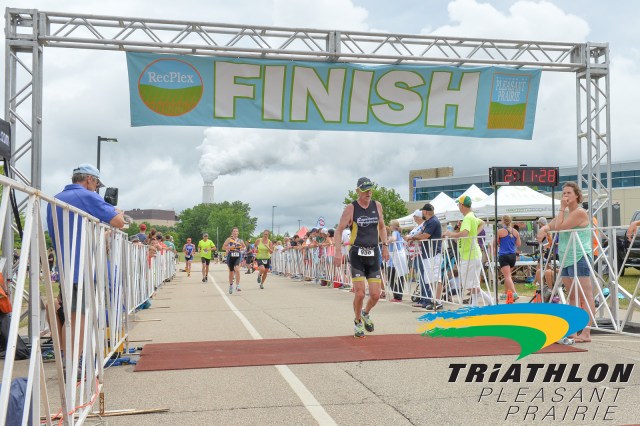
But the concentration is paying off. Two weeks ago in a Sprint Triathlon, the course was rolling and there was a mid-level breeze. I came out of the swim into air that was cool and enervating. From point to point on a 15-mile circuit, I rode hard. And averaged 22 mph. Then got off and ran 7:13s for the 5K.

That’s the territory in which I want to operate. However, when I first looked up the results, they showed 18.7mph on the bike. I was crestfallen. To my relief, those initial result postings were somehow not accurate. That’s happened on several triathlons and duathlons. So I don’t look at the results for a day or two. They often change.

Because it made no sense to me at the time. No one had passed me in the bike stage. I passed dozens of riders. I know how fast I’m going even when I don’t use the bike computer. That’s how I’ve chosen to ride this summer. I don’t want to be chained to the computer and be thinking I’m going too fast or too slow. Just ride.

And the riding is better because of that. I do check the numbers when all is done. Strava is good for that. And so far, the sweet smell of progress has wafted my way. I’ll be truly happy the day I average 22+ for the Olympic distance, and know that I can do that.

For a variety of reasons having to do with bike frame size and standardized components, my aero bike has 44cm bars when I need 42, or even 40. But that’s a challenge for next winter when I’m not riding so much.

For now, the results are there. As I write this, I’m sitting in the three-season room of my house with the screened in porch windows open and the sounds of summer all around. From the TV in the other room I can hear the sound of Phil Liggett and Paul Sherwin describing progress in the Tour. This is the little sanctuary of July. The height and depth of summer. And it feels good to be in it.

Yet the real sound of summer is the whirr of bike tires on the tarmac. And when it sounds a little faster, that’s a sweet sound indeed.


Posted in cycling, triathlete, triathlon, triathlons, Uncategorized | Tagged , , , | Leave a comment

Summer running for what it’s worth


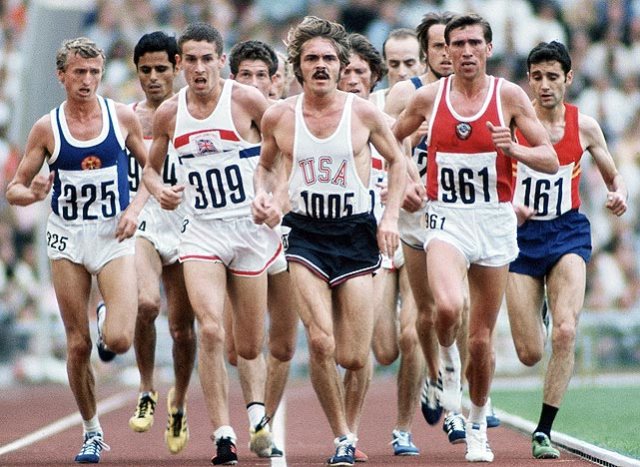
Steve-Prefontaine-Oregon-782562

Coach Bill Bowerman mapped out individualized programs for each of his Oregon distances runners. These varied in mileage and intensity depending on their abililty to tolerate mileage

These days high school running programs encourage kids to train together during the summer months. This is valuable in terms of team confidence and building an aerobic base. Cross country coaches have long recognized the value of summer running programs.


Our coach at tiny Kaneland High School where I started running offered rewards for summer training. It was impossible to get the team together because the communities that fed the school were miles apart in different directions from the school campus. So Coach Rich Born created incentives instead. Earning a 500 mile or a 1000 mile summer running t-shirt was a true badge of honor. Coach always said, “If you can train through July, that’s the toughest month.” And he was right.

I never made it near that mark of 500 miles. Not even close. For one thing, the country roads near my house were patrolled by packs of angry farm dogs. There were no leash laws and the packs of barking hounds would emerge from farms with jaws snapping and howls yapping. I wanted nothing to do with that. Plus I was lazy.

Honestly, the shoes we had to train in were pathetically thin. Somehow several of my teammates would train all those miles in shoes fit for ballet, and little else. They would get their coveted tee shirts come fall. Yet I beat all of them in the season. The fact of the matter is that training is highly specific. Long slow running doesn’t always translate into racing success.

Summer fun

During the summer I’d train once a week if I was feeling good. But trucking around in that summer heat felt insane. Instead I played baseball, and kept in some sort of shape with that. And basketball too. I rode my bike everywhere I went in Elburn, and did a paper route at 5:30 in the morning that required about six miles of cycling, all told. So I got plenty of aerobic exercise. That might even be a better approach for many runners. Certainly the sport of triathlon has illustrated that cross training has some beneficial effects.

It also helped our cause in the “good old days” taht we walked a lot. Mostly to the houses where the cute girls lived. Infatuation is the best training motivator ever.

Time to run

In fall I’d show up and suffer through the first two weeks of practice. Coming into my freshman year, I had no idea what the training would be like. I had not “trained” a step all that summer between eighth grade and high school cross country. In fact, I was determined to go out for football because that previous fall I’d won the local Punt, Pass and Kick competition and moved on to regionals. I thought that was what football was all about. And of course, I was wrong. My father knew that I was a tough kid, but not cut out for football. I weighed 128 lbs., for one thing. Even when I graduated I weighed only 138.

Yet the real reason he did not want me going out for football was his distaste for the sport and its capacity for injury. He also disliked wrestling for its grunting methodology. None of my brothers either wrestled or played football as a result.

The flow sports

We played soccer, basketball and baseball instead. My older brothers excelled in those sports back East in Pennsylvania. But then we moved to Illinois for my father’s work, and there were no soccer or baseball teams at Kaneland High School. So my brother Gary ran cross country the fall of his senior year, and played basketball and ran track that spring. He had no choice. He’d been yanked up by the roots when he might have starred back in Lancaster, but out in Illinois he had to put down new roots.

I’ve always admired him for that. But it didn’t really register with me that he’d done cross country the year before. I was too busy with a new school to care. And he certainly did not do any summer training that year, in 1970. So he gutted it out and did a damn fine job.

Running instincts

My father knew that I was likely more the runner type. So he shoved me in the locker room with a stern warning; “You’re going out for cross country, and if you come back out of that locker room, I’ll break your neck.” And that was my introduction to the sport of cross country.

And you know what? I loved it. So thanks, dad. Because it produced a lifelong activity that I hope to continue for many more years.

But I didn’t love it quite enough to suffer much in summer between those years in high school. In college, I was much better. By the time my senior year rolled around, I was putting in weeks of 40-50 miles during the summer. Yet my roommate that year put in more than 1000 miles, and for the first five weeks of the season he was one of the top-ranked cross country runners in Division III. He won our major invitational and a few others as well, recording times in the high-19:00 range for four miles and below 25:00 for five on some tough courses.

By mid-season, however, he was feeling the effects of all that mileage. It got tough for him to train without injury. That went for all of us, to a degree. Yet we all managed to pull it together for nationals that year, and placed second in the nation, but not a week too soon.

Retrospective

It’s made me look back and question how much running is the right amount for scholastic and college runners during the summer months. The famous York High School distance running program created by Joe Newton has won numerous state titles over the years. Yet few of those athletes, who put in between 5000-1500 miles over the summer, has gone on to do much after high school. Perhaps they’d simply had enough of all that running stuff by the time they graduated?

My teammates at Luther College often commented that the Illinois runners who came to school there were often burned out. That might have been due more to the competitive schedules of Illinois high schools at the time. We had 18 meets during the fall season. Some weeks we’d race Tuesday, Thursday and Saturday. In college we even had a competitive season of 13 meets. That’s a lot of racing actually.

Our training in high school typically reached 55-65 miles per week. In college that ratcheted up to 75-100 throughout the fall. That would sometimes be carried over through winter, and then honed to sharpness with winter and spring track. So training hard through the summer months was frankly insane. You simply can’t train that much all year round. The body needs a break.

Changing times

These days, competitive schedules are somewhat reduced. The generation of athletes that came through those competitively intense programs perhaps realized it was hurting kids in some ways. Yet it’s difficult to say. The times posted in state meets were often better in terms of overall quality in the first 25 runners.

Few athletes have approached the three-mile cross country mark set in Illinois by Craig Virgin back in 1972. So the record still stands.

Most high school cross country teams now have formalized summer programs in which entire teams train together. Perhaps with the increased mobility and access to cars, that is possible even at schools like Kaneland, one of the largest geographic school boundaries in the state of Illinois. The local kids here in Batavia are running six days a week all summer. That will certainly build a base for those kids come fall. It is symptomatic of all sports to conduct year-round training programs.

Better perhaps

Perhaps I’d have been a better runner with more summer mileage back then. It would have helped to train with a team, that’s for sure. Yet somehow each fall I’d rally to race against the best runners I faced, many who put in the summer miles, and managed to keep up. My times in high school cross country reached 14:49 for three miles in cross country. In college I ran a 14:40 three mile time on the track and a 9:19 steeplechase. My best 8000-meter time in cross country was 25:12. Not national class, but not bad either.

When it comes to summer running and fall competition, I always think of two runners from St. Olaf college in Minnesota. Their names were Matt Haugen and Mike Palmquist. If our team raced against them in early September, we’d wipe the course with them. But come November, they were both typically individual All Americans. They knew that the season was a crescendo, not a march. Perhaps they ran some over the summer, but not all that much.

Of course, they both had natural ability. And those who do not possess so much might have to rely on the big mileage summer months to help them compete. So there’s always the question: How good does summer running really make you, versus runners who are simply talented and will do their best once you get them running in the fall.


Posted in Uncategorized | Tagged , | 2 Comments

“If it ain’t broke, don’t fix it.” Not.

Venge ExpertOne of the compelling images most people miss in the coverage of the Tour de France is how the bike mechanics basically take apart and re-assemble the steeds used by riders in the Tour. Where most of us expect our bikes to basically hold together day-to-day, praying there is not a mechanical along the way, Tour mechanics break the bikes apart and put them together again every night.

It’s a massive job, but necessary to keep nine Pro riders pedaling their best over 2000 miles in 20+ days. The pressures those pros put on their bikes may be greater than you and I, but the lesson of that pressure should not be lost on us.

The wear and tear of racing and training impacts all of us. And it can be tempting to avoid tinkering with our bikes or our bodies when we’re having what feels like success. Yet that instinct to protect your equilibrium can have the most devastating consequences.

Overuse injuries most often come about through repetitive training or undue stress on one particular part of the body. This can happen to your feet from running when you pound away at the same pace on cambered roads. That’s sometimes how stress fractures come about.

Or you can strain a hip flexor doing speedwork on a track if it’s cold outside. Doing proper warmups as well as preparatory strength work, stretching and rolling out sore muscles is just like doing mechanical work on a bike.

Swimmers can hurt their shoulders from bad form. Yet it’s tempting not to “fix” your stroke if it’s basically getting you through training and races. But when you have a “mechanical”breakdown that results in a sore shoulder, then you wish you’d done the right thing and fixed your stroke even if it wasn’t broke.

It’s helpful to look through the lens of a pro rider to assess your own training and racing. Certainly all of us could use a bit more attention to the mechanical workings of our bikes. The same principle holds true in all phases of our running and riding. Sometimes it pays to imagine something’s broke in order to prevent problems in the future. The pros do it. How about you?

Posted in cycling, Uncategorized | Tagged , , , | Leave a comment

The height of summer


Media Heights Pool.jpg

The Meadia Heights Pool is nothing more than a green rectangle in the woods. But it was once the center of many a childhood summer. 

Mid-July has always been a special time of year for me. As a child growing up in Lancaster, Pennsylvania, summer days meant hanging out all day at the swimming pool. Our family had some kind of Social membership at Meadia Heights Country Club south of Lancaster. That let us into the pool, but we could not play golf. That was for the “real” members of the golf club.


But it made no difference to us kids. We showed up when the pool opened at 9 or 10 a.m. It was a common point of summer to spend the entire day in the sunshine.

Some summer along the way a bunch of us were recruited to join the swim team. I recall those cold morning practices when the clouds hung low in the sky. It was always tough to get into the pool. We traveled around to other pools to race. That was the extent of my competitive swimming career.

Grassy expanse

Most days I’d grab my towel and run the half mile from my house at 1725 Willow Street Pike down to the pool. We lived right next to the practice range, a broad, open field of grass dotted with those tiny plants whose heads stuck between your bare toes when you ran. There was plenty of clover as well, so you had to be careful not to step on a bee and get stung along the way.

But it was green all around. The massive acreage of the golf course was so inviting that at times I’d go out in my bare feet to sprint across the fairways in late afternoon when the golfers had finished and the grass was cool. That sensation of running on closely mown summer grass has never been lost on me. Later in my college years, we ran plenty of races on golf courses, wearing medium spikes to get a grip but not tear up the turf too much. I don’t think that happens as much as it once did. And that’s a shame.

Green memories

These associations stick with you in some way. Even as adults, there are tiny impressions from youth and summer memories that slip through. The smell of the lily blossoms I clipped from the garden have filled the house with sweet smells. That richness in the air was rife in Pennsylvania, a humid, often rainy environment rich in gardens and farm country.

In fact, the rains are about to arrive here in Illinois this morning. I’ll go out to the three-season room to work on my writing projects and wait for the rains to come rushing in. So many mornings in Pennsylvania I’d be working on drawings or putting a model together when the thunder would gather and the rain came down in sheets.

After the rains, I’d sometimes go out in bare feet to stomp in puddles and wander the neighborhood. This was heaven to me. The cool water rushing over my feet. Worms crawling across the road.

Then came the sun again. Steam would rise off the black streets as the rains evaporated. We’d then pedal our bikes down to the pool for the rest of the day. The pool water would be slightly cooler from the rain at first. But the sun would do its job as the afternoon proceeded. Then it felt good to be deep in the blue water, hidden from the world in a way.

All these elements; the swimming, the riding bikes and the running. These have been constants in life for so long. Now they’re combined in the sport of triathlon, which feels much like play. I pray that I don’t have to give up on any of them. The height of summer is also the center of life.


Posted in Uncategorized | Tagged | Leave a comment

Share and share alike

One of the interesting aspects of endurance sports like swimming, cycling and running is that there is so much to share. Essentially, there are four ways to share.

  1. Share your experience. When you have knowledge to share, it can really help others.
  2. Share your experiences. When you train or compete, your experiences tell a story.
  3. Share your enthusiasm. Sharing love of the sport is a positive way to get feedback.
  4. Share your challenges. To overcome difficulties is part of the sport. Share it.

You’ll notice there is an inverse to the manner in which we all share. As a new participant in any of these activities, or all three when it comes to triathlon, the things we tend to share first are our challenges and enthusiasm. And understand, it is not uncommon for people to complain during this phase, or lament the results of their most recent workout or race. Still others will hit a plateau during training or races. These are forgiveable shares.


EXPERIENCE TRIATHLON GALS

A group of training partners can be a valuable resource of friendship and shared experience.

That’s the hallmark of someone pushing themselves to do better. Progress is seldom a straight line proposition. So we verbalize those challenges as we get deeper into the respective sports.


The kid who lives behind me is a high school freshman. His middle school team won the state championship in cross country last year. He’s running six days a week now with the high school cross country team. Yet the first question I asked him was simple: “Are the other runners good guys?” And he answered, “Yes, most of them.”

Because that’s the most important thing in a training environment. How do the people around you respond to your challenges and your enthusiasm? Do they answer questions and share their experience? That’s the sign of a good environment.

Most of the time, this information-sharing occurs through people relating their experiences, not their experience. People usually don’t like to brag about what they know, or make themselves out to be know-it-alls. Instead, they share experiences or tell stories about their efforts in training or racing. These are meant to convey their experience.


Rupp and Meb

You may recall that Meb had some experience to share with Galen Rupp in the Olympic Trials marathon about how not to bump into other competitors.

Some of these shared stories can be funny. But often they relate a deeper truth. If someone throws up after a high school cross country race because they ate a donut just before the start, that’s a funny story. But it shares important facts about what not to eat when you’re about to compete.


So this sharing process plays an important role in all our development.

As a longtime distance runner, I’m learning that the most important thing I have to share is experience in how to train for races. People who pick up the sport of running or triathlon in their twenties, thirties, forties or beyond often do not have the baseline experience of running track or cross country in high school. As a result, they typically learn one way to train. Quite often that is doing their race pace in training, over and over again. Their methods may make them faster for a while, but ultimately they run into a wall of sorts. Progress ceases, and they wonder why.

The answer lies in aerobic thresholds and learning to train much faster than your desired race pace. It’s a simple rule: To get faster, you absolutely must run faster than race pace in training. Doing race pace over and over again may build endurance, but it has its limits in terms of building speed.

The trick, therefore, is to run paces that both physically and perceptually stretch your baseline race pace.

Of course, this is true in cycling as well. Yet most of us go out and barrel around at 18-20 mph on our own, thinking this will magically transform us into 22-24 mph cyclists. That isn’t going to happen. To ride much faster, you must do intervals at even faster speeds than your desired race pace. That would be 24-26 mph and better yet, even faster. If nothing else, one must get into a group that rides those faster paces and hang on for dear life. You may get dropped at first, but the goal is to stick a little longer every time.

That’s how the pros do it. And when they ride an easy day, they take it really easy. Their riding thus covers an entire range of speeds and aerobic needs. The really long slow rides build aerobic endurance while the speed training raises the heart rate.


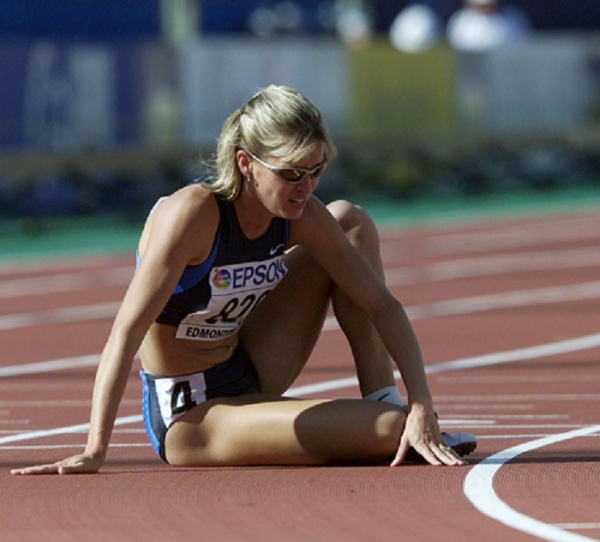
suzy-favor-hamilton

Coaches often play an important role in picking us up when we’re down.


It is this knowledge and these methods that coaches are supposed to share with athletes. However, coaches can fall into a trap of prescribing the same types of workouts year after year because the formula works to produce certain types of results. A triathlon coach who gets people over the finish line in an Ironman is a valuable commodity. Yet that same coach might not be helpful to athletes seeking to refine a specific aspect of their triathlon performance.

That’s where event-specific coaching comes in. Or, you can opt to work with other athletes whose experience with ability and experience in those specific events. That type of shared experience is often free. Be prepared to ask when the opportunity presents itself, and most experienced athletes are quite willing to help. It’s an organic feature of endurance sports that your fellow athletes want to help other people in their sports.

This is tricky in a sport like swimming, where advice on proper swimming form can be conflicting on many levels. It is best to confine your form coaching to a set of specific, trusted resources. Ask other athletes who to trust, or hire a coach and stick to what they say. Nothing slows you down faster than trying too many things in your swim form. That’s asking for trouble, not help.

Be prepared to accept that there are some people who refuse to share their experience. But you typically don’t need them in your life. Sharing is something we’re supposed to learn and socialize in preschool. But the competitive nature of some people takes over. Even your close friends can become your worst enemies in training and competition. I advised my children when they reached late elementary school that it is often wise to realize your friends are prone to want to control you or leverage advantage in many facets of life. That’s not being paranoid. It’s a fact. Those same dynamics are played out in politics, religion, business and relationship. Human beings are competitive characters. And they aren’t always honest about their motives.


pre-olympics

The heat of competition is no time to ask others to share advice.

Which sadly means that some advice is also best not taken without some consideration. People on the starting line of a race can be profound liars. I have been guilty of this manner of competitive lying. Yet I have also shared what I believe the truth to be in competitive experiences. While racing in a five-mile mid-summer race years ago, I knew that I was supremely fit and did not believe anyone in the field could beat me. A mile into that race, a competitor turned to me and asked, “What pace are you going to run today?”


I replied, “Faster than you,” and took off with a surge that left everyone in the dust. In that situation, I was not going to share an advantage of any sort. But why should I? There are some situations in life where winning or beating your rivals is the order of the day. There is nothing at all wrong with that. You can share stories and experiences after the racing’s done. Laugh or cry about the difficulties.

The one thing you are not obligated to share in 99% of most circumstances is your focus. yes, if someone is in need or you feel motivated to help another competitor out somehow, that is a great thing. That’s sharing yourself with someone in need. That is the greatest of all shares, if you think about it. And I’d say the first four types of sharing prepare you for that noble cause when it comes around.


Posted in Uncategorized | Tagged , , , , , , , , , , , , , | 1 Comment

Pokemon Go can’t get into the track

Pokemon Go Fence TooIn case you have not yet heard, the app Pokemon Go is getting tons of teenage and twenty-somethings out of the house to walk their neighborhoods in search of fictitious creatures to capture on their phones.

I asked a middle school kid to show me the game on his smartphone and explain it. But like the original Pokemon card game that my kids enjoyed playing twenty years ago, this new version of Pokemon left me cold.

It’s not supposed to appeal to adults like me. But I have an additional layer of prejudice toward games of that nature because my longtime, avid interest in the actual natural world frequently finds me discovering far more interesting things than the world of badly drawn mashups of animals with bad attitudes and weird habits.

But I do believe firmly in the right of all people to let their imaginations wander where they need or want to go, even if that is a place manufactured and owned by a massively corporate method of engagement. Such is life in the Big City.

Oops I got some exercise

Whatever the outcome, kids doing Pokemon Go are actually getting tons of exercise. That’s something in which I also believe. And as one parent of an avid Pokemon Go player said to me, “For all the efforts of Michelle Obama to get kids to exercise…kids are walking more from playing Pokemon Go than anything else.”

It’s true. And you should check out this hilarious link to a Gizmodo web story on the Pokemon Go phenomenon.

The game basically plays a huge virtual reality trick on kids to get them to locations where Pokemon characters can be nabbed. You can also collect “eggs,” I am told, which is a prized bit of ownership. The trick to the game is that you have to walk another 5.1 kilometers to get the egg to hatch. Pretty sneaky stuff.

Trick or treat

Pokemon Go FenceSo what evil parent dreamed this up?

It plays like a comedy routine from Daniel Tosh, who revels in perverse irony.

That means it will only be a week or so before the evangelical Christian community begins its protest of the Pokemon Go game.

The meme with conservative Christians is almost always the same. They’ll say that Pokemon is a product of the Gay Agenda, or the product of atheists trying to steal the attention of children away from Jesus.Just you watch. It’s going to happen in 3…2…1…

And while writing this blog, I entered “Christians protest Pokemon Go…” and found this stunning admission by the inventor of the original game. He was reputedly trying to contradict his anti-evolution Christian parents. But as a person with an education in biology, the thing that always bugged me about Pokemon is that it doesn’t really get evolution right either.

But when some Christian organization gets wind of these possible beliefs, it will undoubtedly pump out a weak-ass version of Pokemon Go, call it Elijah Walks or some such biblically imitative hogwash, and foist it on unsuspecting Christian kids as God’s answer to the godless gaming community.

Then the arch-conservative Christian networks and Fox News (which is redundant) will pump out a free commercial for the Christian alternative to Pokemon Go. Then the 100M or so authoritarian-minded sweatheads who listen to the likes of Pat Robertson will think they’ve done some good, when in fact the only thing they ever reveal is a lack of comprehension that humanism is how the world actually works.

Perpetual battles

Christian of the sweatheads variety remain in a perpetual battle with rational Christians, who maintain that the Bible uses metaphors to represent the spiritual truths of God. “That’s how Jesus taught,” rational Christians contend. “So it’s the right way to think.” Such metaphors as the “tree of life” and the “river of life” can be trusted to withstand all scrutiny because they don’t treat the bible as a science textbook or a Christian gaming manual.

Christian conservative never seem to get the fact that Jesus is actually mocked by their lack of confidence in the verity of the metaphorical interpretations of scripture. Instead, faux Christian hypocrites always behave with the same fearful, selfish, shallow approach to every issue. That’s what a literal interpretation of the Bible or the Quran or the Torah always produce. Jesus railed against the scriptural literalists of his era, calling them hypocrites and a “brood of vipers,” thus proving that Jesus might have enjoyed playing a good game of Pokemon Go.

Conservative faith is instead perpetually afraid of its own irrational shadow, imagining Satan into existence through its own perverse interpretations of the bible. The Book of Revelation is an especially fertile field for this bit of conservative gamesmanship. That’s how we get predictions of the End Times and all that Left Behind stuff foisted on the world by the likes of Timothy LaHaye.

It all works by creating a tapestry of virtual fears, making some Christians believe in the imaginary boogeymen lurking in the real landscape of history. The reason Christians hate games like Pokemon Go is simple competitive jealousy. The fear-based messaging of the priests in Jesus’ day became the target of his criticism. But authoritarians in the modern era, just like the priests of old, still see themselves as having gotten things right. “Forget that weird prophet in the wilderness, or the one who ignores the rules given to us by God. He does not have truth on his side.”

It’s a game still being played to this day.

Virtual.Reality

In the meantime, Pokemon Go actually does represent the first Virtual.Reality iteration of the next generation. It stamps a virtual world onto the real world. And that’s a pretty novel approach.

It borrows from the geocaching trend from 15 years ago, in which families traipsed around parks looking for stashed cylinders and boxes. You had to use a GPS device to do that.

Now, thanks to the evolution of smartphones, that GPS stuff is all built into your  typical iPhone or Droid, which makes Pokemon Go the Google Maps of late teen and 20somethings tomfoolery. Whatever device you engage to go catch Pokemon, it all depends on the satellites we’ve thrown into space (with a ton of other space junk) to send Pokemon data into real places on earth where kids can go to “find” them. Hence: Virtual.Reality. I made that up, you know.

Where Pokemon cannot go

Lock on FencesBut there’s one place where Pokemon hunters cannot go. That would be your local high school track. Because over the last 15 years, running tracks have been turned into virtual prison facilities where only a small section of the public is allowed to go.

All those tax dollars the public spends on school facilities such as high school tracks are locked up behind tall, tall fences. Some of these fences stand twelve feet high and are made of tightly woven chain link so you can’t even get a toe grip and climb over.

We all understand the supposed reasons why schools are supposedly forced to lock up their track and field facilities. Vandalism on many public properties is a never-ending problem. We all know how complex the vandalism problem can be. Just look at the recent militia dustup with those property bandit ranchers and the damage they did to the wildlife refuge at Malheur in Oregon. Some selfish turds think they stand outside the law, and don’t answer to anyone. But despite their claims of acting for a higher purpose, they’re wrong. The same held true for Oliver North and his pack of bandits committing high crimes in the Iran-Contra affairs. There’s always someone claiming a higher purpose than the mundane affairs of government and the law, who don’t like fences if they stand in the way of their selfish interests. Ironically, many of these same people seem to want to build a wall all along the Mexican border. One might call that “reverse vandalism” of the nation’s best interests.

Track from aboveVandals rule

As for protecting high school tracks, I do specifically recall the year a pair of kids jumped the four-foot fence and dug a BMX dirt jump right in the center of the football field at Geneva High School. That was supremely stupid. But also rather typical of vandals as a whole.

Within a year, the school had erected eight-foot fences around the entire track and field complex, effectively blocking a community of runners from using the facility.

Years later, they also installed an artificial turf field. Such are the defenses against vandalism. Is our government right or wrong to commit such resources in these instances?

Having harmless fun 

Years ago a band of us bored with three weeks of education at a seminar in Irving, Texas decided to jump the gates at the Texas Rangers stadium and get onto the field to run around. It was fun. No harm done. But had we been caught, there surely would have been arrests made. And so it should be. Private property is just that. Private. No admittance except upon permission by the owners.

Yet there’s a wild side of my nature that resists such orders. Years ago my brothers and I frequently trespassed in a natural area to go birding. It was owned by a peat bog mining company at the time, and used in fall and winter by hunters. The property has long since been purchased by the county as an Illinois Nature Preserve along with thousands of acres around the main marsh. The public now owns the land. And as such, there are rules that govern the property, such as no ATVs or snowmobiles allowed. Surely that disappoints some potential users.

Litigation

Quite often public properties are focus for concerns about issues of litigiousness as well as damage. If someone gets hurt or dies on school property, for example, there is always a chance for a lawsuit. This is not a government problem, but quite the opposite. The selfishness of individuals who either don’t respect property or can’t take responsibility for the risks they take in life is what drives so many lawsuits.

Look through FencesSo there is a degree of irony in every chain link fence surrounding running tracks. Crawling over those fences is a risk unto itself.

Even when our local school created an eight- foot fence  around the track, I’d still climb over it because I lived a half away. I figured that I paid taxes and there was a right of some sort that went with that obligation. But had I fallen and broken my back? Well, some people might sue…

I’ve even read about thieves and robbers that have sued property owners because the intruders hurt themselves while breaking into a store or commercial property. My late father-in-law was vexed by the fact that some people who bought his hydraulic presses would take off the safety guards, resulting in the loss of limbs by machine operators. Those incidents brought lawsuits.


Pokemon Go risks
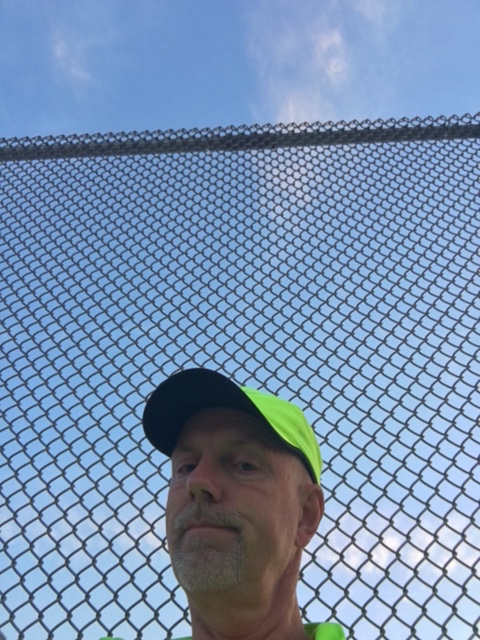
Me and High FenceIt’s long been said you can’t protect people from their own stupidity. And it’s just a matter of time before some kid with his face stuck to his phone walks into a busy street while playing Pokemon Go and gets nailed by a garbage truck. The headlines will scream, “POKEMON GO PLAYER DIES IN TRAFFIC.”

And that will be sad. And the family will probably sue the Pokemon company and try to get a million or two dollars for the loss of their son or daughter.

But there’s one place for sure where no kid will ever catch Pokemon. That would be the center of the infield of a high school track. The twelve-foot fences will never allow it. And that Pokemon is a crafty smart little bastard. How else would he ever kid those lazy ass kids off their couches to come find him?

Freedom to run

These days I run at a middle school track where there is no fence to block us from using it. Last year we were joined by a pair of sandhill cranes feeding on the infield. Something about training in the presence of those birds made it extra special. There is a pair of hawks that perches on the power line poles overlooking the track as well. Swallows of three different species dart over the infield. In spring one can hear chorus frogs singing in the ditches across the street. These are my Pokemon Go partners. I find them everywhere I go.


Posted in Uncategorized | Tagged , , | Leave a comment

Immodium did not quite lead to a podium

Gu SplatDays before the Lake Zurich Triathlon, I had not even registered for the race. There was a very good reason. The only races I was doing last week were to the bathroom to make it on time before calamity.

A few lessons have been learned this past two weeks about the importance of gut bacteria, and how it works within our bodies to regulate the kind of poop we pump out. For those of us with relative regular bowel schedules, these kinds of interruptions are a major disruption in how you look at life.

Oh, I know. There’s a whole world of people out there with far worse problems in their heinie functions than a little imbalance in their probiotic ratio. I respect all those dealing with this fine balance within our bodies. There are those who can’t seem to poop for crap, and wear tee shirts that say, “I pooped today!” And then there are those whose digestive systems have gone on permanent or semi-permanent strike.

There are lots of reasons why these things happen. But all you care about when it happens to you is how to fix it. So I went to the doctor (yes I did) and asked what to do. And tomorrow I find out if there’s a C-Diff thing going on.

In the meantime, I had a race to run. So I did the other thing the doctor told me to do and made the trip to Walgreen’s for a bottle of Immodium. I chose the mint because I thought it would taste better. And it tasted better in that way that things that are supposed to taste better but actually taste terrible tend to taste. Which is just shy of awful.


Panniecakes

I earned a post-race meal of pancakes and eggs. But the pancakes were so big I could only eat half of the first one. My gut was too full.

I’m not that sensitive about that kind of thing, so I choked down two sets of three teaspoons. That’s what the microscopic instructions said to do. And then I waited. An hour later my gut rumbled in the manner of distant thunder, and I thought something was going to blow. But you can’t run away from your own ass, so I stuck it through, had a couple short sessions on the pot, and that was that. The Immodium was working.


Only I think I overdid it a bit. Because we left at 4:00 in the morning and there was no urge to hit the bathroom before we left. That’s highly uncommon. Even at the race when I had plenty to time to hit the porta-potties, the Immodium would not give up that shit.

Which was rather the relief I was looking for. Because all last week the only thing I wiped more than my ass was philosophical tears from my eyes as the nation suffered yet another round of stupid murders by cops with guns and people with guns aiming at cops and still the trolls on Facebook claim that guns have nothing to do with gun violence.

I hate that shit. And I posted this article to explain the crappy neurosis that is driving this insanity in America. And then I made a vow to let it go a bit. Because frankly I felt awful for three whole days Thursday, Friday and Saturday. Exhausted and slightly feverish. Clearly my body was trying its hardest to work through what amounted to an infection of the bowel.

C-Diff can get serious. And I did not want to race if my body temperature was up. But the nurse took my temp and it was 98.6. “You don’t see that very often, actually,” she told me. And my blood pressure was 107/78. Pulse just under 60.

Yet I was so tired. Whenever I sat down to watch the Tour de France, my eyes slammed shut. Watching the Tour in that state is like a weird dream where Phil Ligget and Paul Sherwin are like characters from Alice in Wonderland. At one point I woke up to find Chris Froome racing downhill at 50+ mph. So I thought I was dreaming and went back to sleep.

However that was the real deal, and Froome built a lead that he isn’t likely to relinquish anywhere before Paris. Hell, he even punched an ignorant fan right in the face during the climb before his massively speedy descent.


Sue undt Chris

Post race smiles. Sue got second in her age group and I got fifth.

That was a bit inspiring. For the rest of the day I felt better. I took the bike out for a one hour spin and felt good. Even got some sprint practice in the drops in anticipation of the next day’s 15-mile racing speed.


So it was quite a turnaround to feel so damned good and happy this morning at the Lake Zurich triathlon. I was even excited for the swim.

Only I have never swum with so many swimmers around me before. This is just my second sprint triathlon after last year’s experiment. The Pleasant Prairie Sprint got converted to duathlon thanks to lightning. I did get in a 750 meter swim the day before, and it went smooth as silk.

That is now how the water feels with 200 other people around you in a shallow lake. Had I not known for sure there were no schools of piranha in the lake I might have sworn that I woke up in a B-Movie where herds of hapless villagers are pushed into dark Amazon waters where they are consumed like tuna steaks while the evil henchmen for an American oil company stand on the shore laughing their asses off that no one will live the tell the tale of their dark doings in the jungle.

Instead, I swam to the outside and out of the piranha chop and caught my breath. There was seaweed thick and clingy but that does not bother me. But it took me nearly 10 minutes to complete the 400 (plus the extra yardage I swam) so the performance was not that impressive.

I made up some good time on the bike. Only one cyclist passed me the entire 15 miles. I was passing people right and left, and I mean that literally.

Sue On PodiumThe run went just as well. I averaged 7:12 per mile without even knowing where we were going. Perhaps next time I’ll study up on that. Have a plan. But when your plan is just to get to the starting line without shitting your pants in some public place, the rest is not that important. The unstoppable Immodium Man plan was Plan A. Everything else was take it as it comes.
And that wrought a 5th place in my age group, which isn’t bad. The Immodium did not quite lead to the podium. I had the second fastest run time of the group. The third fastest bike time. 5th fastest swim. And one terrible transition after the swim that took 3:33. That was because I spent time praying in thanks to God that I did not fill my wetsuit with crap.

It was fun. That is what’s most important to me. My fiance Sue earned second place in her age group and a possible invitation to age group nationals in Omaha. I’m checking to see if they have an Immodium Division. Cause I would rock that.


Posted in Uncategorized | Tagged , , , | 4 Comments

When it comes to biotics, stick with the pros

ProbioticsMost of life is dealing with the consequences of your own actions. You make a choice and deal with the results. Sometimes they are good. Sometimes, not so good.
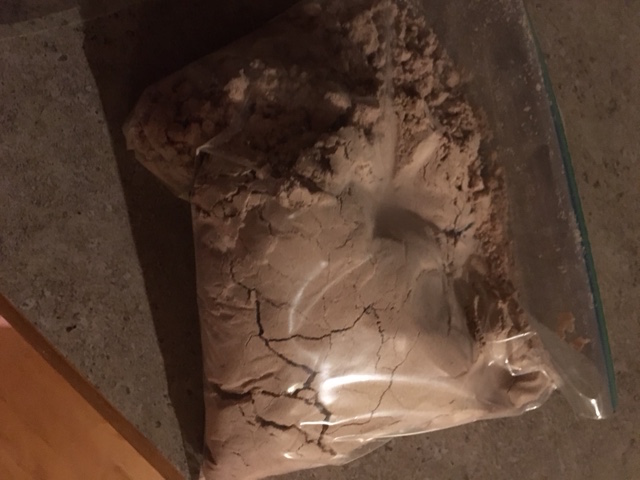
One of the hard lessons of existence, given the collective tendency to fuck up royally as the human race,  is that it always pays to work with the pros. That’s because the amateurs don’t always know what they’re doing. That’s why they’re called amateurs. Not pros.

But I still trust some of my amateur friends for advice and guidance, at least to steer me in the general direction of doing something smart. And recently I was dealt a strange affliction known as cellulitis. It is an infection caused when staph germs get under your skin.

Cellulitis is just as bad as those situations when a co-worker gets under your skin. You know what that’s like. Dealing with a nasty co-worker builds dread of going to work each day because that aggressive asshole, whatever gender, is about to ruin your day.

I’ve had more than my share of dealing with nasty co-workers as well as some strange afflictions and affections. I once contracted a sliver that almost caused me to lose a finger. That was a ton of fun, a knock-me-out surgery and three weeks of intravenous antibiotics. And my finger is still slightly bent even after weeks of hand therapy. So I have learned not to mess around with infections of any kind.

So when I sensed something funky brewing in the back of my hand, I went to the Urgent Care Center. They took a look at the hand and prescribed powerful antibiotics to knock out the infection. This is a bit like pushing your annoying co-worker off the sixth story of your building. But let’s not tell anyone about that.

Because that would be a quick fix to the annoying co-worker problem. Cellulitis takes a bit longer to depose. In fact, I took antibiotics for three full weeks. Twice a day. Big ass horse pills. The infection subsided. Got reduced to a twinge. And finally, disappeared. And that’s what antibiotics can do. They kill bad germs.

But there’s one problem with antibiotics. They can also kill the good germs that help your body in important ways. We truly need the bacteria in our gut, to properly digest food and maintain a healthy bowel. If you kill off that bacteria, things get funky in a hurry.

That’s exactly what happened to my lower gastrointestinal tract. The antibiotics killed off the good germs in my lower-whatever and everything got loose and messy.

Protein.jpg

Now you may recall that we already discussed the fact that working with the pros is always important. But I do know some people who know a lot about this gut problem stuff, and asked them on Facebook if they knew how to handle a loosey-goosey gut. They all told me to take some probiotics. And some protein, perhaps, because it has the word “pro” in it.

Which is very different, you might say, from the amateur biotics. Those are pills that don’t know what the hell they’re doing. Rather than wind up in your gut, they’re likely to take a detour to your liver, and confuse the hell out of that organ. But as it turns out, the liver does help with digestion. Here’s what the Internets says about that, in short (grammar as it was posted): “In the human it is located in the upper right quadrant of the abdomen, below the diaphragm. The liver has a wide range of functions, including detoxification of various metabolites, protein synthesis, and the production of biochemicals necessary for digestion.”

Holy shit! Who knew? Well, it turns out you actually can find out some interesting stuff when working with amateurs. Like how vaccines cause autism, and how the human race never landed on the moon. Wait, those are the work of amateurs…

My other fear was that taking amateur biotics would let them head for my brain instead of my ass. That might produce some strange and dangerous thoughts, like the idea that it would be a good idea to elect Donald Trump as President, or that going into Iraq was a good idea even though George Bush the First called George Bush the Second and told him, “This is a very bad idea.” But what did George Bush the Second do? He impetuously slammed the phone down and went ahead with that shitty plan to invade a country full of people who already hate us, and the countries around them too. Nice job, Georgie Boy. Now we have ISIS to deal with. Which proves that terrible ideas often lead to terrorism of an entirely different level.

So I did not want any amateur biotics in my system. So I called the actual doctor (a pro, you see) and made an appointment. He listened to my story and read the information on his computer sent to him from Urgent Care. That’s how modern medicine works these days. You can’t go anywhere without a doctor knowing what you’re doing.

I was waiting for my doc to ask if I’d replenished my I-Pass when he brought up the topic of a condition called C-Diff. I’d already heard that term from a veterinarian friend of mine that weighed in on the subject on Facebook. We’re all just animals in the end, you see. C-Diff, he told me, is when your gut bacteria is out of balance and your shit turns to brown water.

And my actual doctor wanted to know something important about my shit. “Does it stink?” he asked. And I had to chuckle inside. “No, I’m a liberal,” I wanted to say. “My shit doesn’t stink.”

Pro PoopBut they sent me home with a plastic pan in which to shit, and I did that with rubber gloves covering my hands so that I could avoid contact with all those bad germs messing with my innards.

My doc told me to start taking probiotics right away. So I called up a friend that evening who sells probiotics, so she’s a pro of sorts. And the doc said I should work with the pros. “Get some good probiotics,” he counseled.

And my friend sells Shaklee,and I think that company sponsors a pro sports arena somewhere. So she doled out a bag of little round pills encased in three layers of acid-proof coating, which protects the probiotics until they can get down into your gut and colon. That’s just like the wedge pro football players use on kickoff returns. So I knew I was headed in the right direction on this shit.

But if they work from the throat down, it rather makes you wonder why you don’t just shove them ten inches up your ass and call it a day. But that would be an amateur move, you see. Because unless you’re a pro at that kind of thing, life can get messy in a hurry.

Pro Gloves.jpgThat also makes me wonder about people like Howard Stern, who pretty much does nothing on his show but talk about anal with his guests. And he’s one of the richest guys on the talent side of media. Which also makes you realize the real assholes all work on the ownership side. And that, my friends, cleanly explains the success of Donald Trump, who though he’s full of shit has gotten a complete pass from the media until recently. See, this shit all fits together in the end.
But I hope the probiotics start working fast, because I have a Sprint Triathlon to do this weekend, and I’d rather avoid the scene in which I shit my wetsuit or crap on the bike or let loose a barrage down my legs while clipping along on the 5K run.

See, it really did have something to do with swimming, riding and running. You have to trust me on these things. Cause I’m a pro.


Posted in Uncategorized | Tagged , , | 3 Comments

When it comes to running shoes, we’ve all got history

IMG_6267.jpgEveryone in life has a history. And some of that history is baggage. Good baggage. Bad baggage. But baggage it is.

Some of that baggage is highly personal. Secrets you never want to reveal to anyone. Typically that’s the bad baggage.

But good baggage can be just as bad, in some respects. Like those letters from a former lover, secreted away in a photo album down in the basement. You know they’re there. You know what they say. You keep them hidden until you chance another glimpse at the writing that was once so precious. Those words. Those feelings. They never truly go away. They take you back to another day.

IMG_6263

For some of us the baggage we carry around stays out in the open. It’s called wearing your emotions on your sleeve. Or your feet.

And like a love affair, my involvement with running began at the tender age of twelve. That’s when I first felt that combination of pain and joy so familiar to those who run. It happened while being timed in a twelve-minute running test in gym class. That feeling was so personal and profound I almost did not dare tell anyone how it felt. That catharsis of self and release of fear and anger and pleasure all at once. A cleansing of the mind. It really was like love at first sight.

Some people tell me they hate running. And I get that. For some, it is no joy at all, but a burden. Like marrying for family reasons or money…when there is no love in the relationship. Some people run because they feel they have to do it. I both admire and pity them, just as one admires a person stuck in a difficult marriage. You wish the best for them.

When people blanch at the idea of running I always tell them that walking is just as good for them. But it isn’t running. It’s not what we experience in that sensation of rushing air and flirting with the edge of exhaustion.

Perhaps you’ve heard it said that good sex is often the product of conflict because the passions that result from a fight are more intense. But that’s also why people who love each other sometimes do fall into boring patterns in the bedroom. Too much trust can actually soften the heart, which gives up the notion that it has to try so hard. Comfort really can kill. But not always.

IMG_6266

It’s like that in running as well. When we fail to challenge ourselves the idea of going out the door can become boring. We fall into familiar patterns. Run the same pace. The same routes. Lose the joy of discovery.

Which is why a set of new shoes always shakes things up a little. At least the shoes on your feet look different. Feel different. They might even make you run a little different.

I’ve long lost count of the number of running shoes worn in 40+ years of running. It’s somewhere between 200 pairs and 500, I suppose. Yet I clearly recall that pair of Puma kangaroo-skin running spikes, circa 1971, doled out to me in freshman year cross country. And I recall those gum rubber flats for running on the asphalt around little Kaneland High School in the cornfields west of Chicago. Those shoes are burned into my brain like the slow dance I once with a rock-hard cheerleader during a high school dance. Oh. My. God.

And I also specifically recall my first pair of adidas running shoes. There was something about the three stripes on those shoes that screamed legitimacy. Perhaps it was those photos of European runners in issue after issue of Track & Field News. I longed to be that fast. Be that good. So many of those athletes wore adidas, the dominant brand of German track shoes. Sold in America. World class.

I wore a set of brushed suede blue adidas track spikes in high school track. They were sweet, sleek and dangerous with those 3/4″ spikes screwed into the bottom of the soles to race on cinder tracks. Then we took those spikes out and put in 1/4″ spikes to race on all-weather tracks. Indoor and outdoor. Then into the mud and scree of fall cross country.

We trained as well in adidas Italias. I’ve written about the glorious simplicity of those shoes, and how the running world has come full circle to the quiet functionality of the original adidas training flats.

The Italias had sister shoes in the adidas SL-72 and SL-76 training flats. The SL-72 was a classically simple adidas shoe issued during the Olympic year, built with a sole good for grass or concrete. Enough heel to do the job. They were followed by the much stiffer and less resilient SL-76. And from there, adidas went into a personality crisis of sorts. Their shoes got weird in some ways. Too hard in many models, or too narrow. Runners began adopted the ways of Nike and New Balance, Reebok and Saucony. The world exploded around the loyalties of those of us who loved the original adidas. It was like a sudden and implosive breakup.

IMG_6262Losing a first love like that is never easy. You don’t forget those feelings. Not when they helped form who you are. It’s true that high school girlfriends or boyfriends remain a part of your personality the rest of your life. You recall the fresh thrill of being liked or loved because it feels like nothing else you’ve ever experienced, or sometimes never experience again.
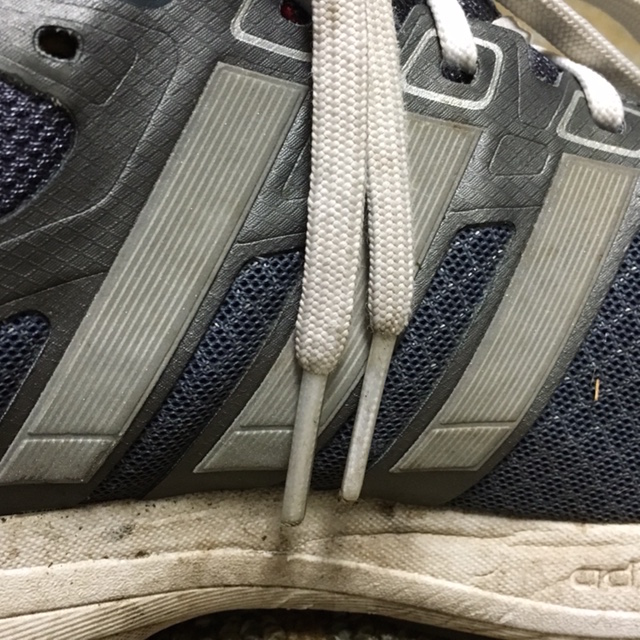
When I pull on a pair of adidas shoes, even a pair too broken down to use for training purposes, I still get that little rush of love that went with the originals. Those three stripes. The familiar angle of the adidas heel and sole. It’s not too sentimental to say that feeling with never, ever leave. It’s something to cherish no matter what other brands I choose to wear.

And there have been many. I got married in Nike Pegasus. Trained in Nikes all through college and beyond, including that summer in ’84 when I raced 24 times and won 12. Then came the settled years and New Balance trail shoes I threw on my feet because I was being purposely counterculture, hiding in the woods from competitive opportunities because life’s obligations were too many to allow heavy training. I was a running hipster.

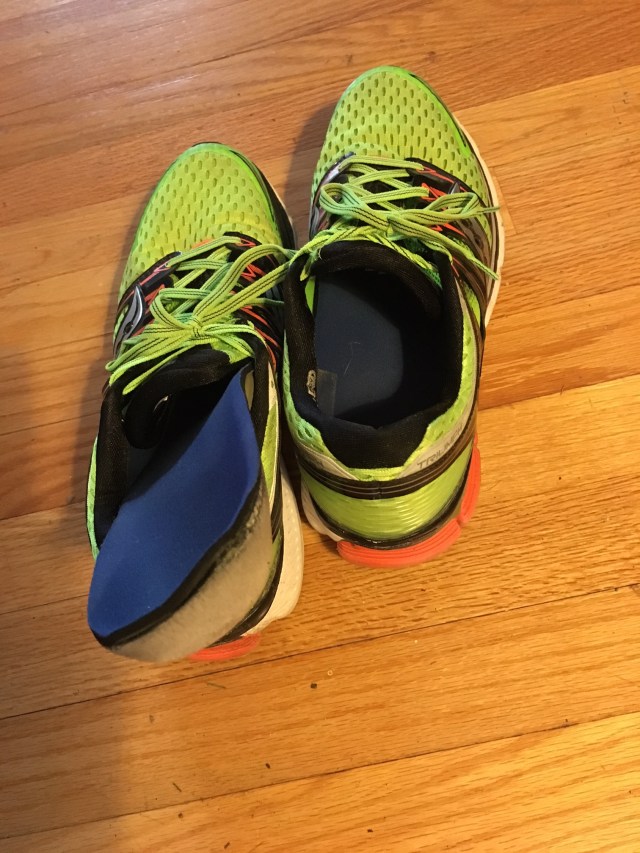
OrthoticsNow I’ve emerged on the other side of Bell Curve and am simply enjoying the entire ride when it comes to running, riding and swimming. But when it came time to clear out some running shoes and give them back for recycling, I noticed a pair of gray adidas with sweet red soles. I pulled them out of the pile and put them through the wash. They’re a little hinchy in terms of support because I wore them out running, but the adidas still feel good on my feet and bring back all those happy memories of early days in running.
Call me a romantic if you will, or hopelessly lost in a running history that goes back farther than some of you reading this might even have been alive. But I say that life’s verve comes from a combination of dedication and desire. Older men can make great lovers, you know. We know how to tie the laces just right, or are willing to listen and learn.

There was once an urban legend that the word adidas actually stood for All Day I Dream About Sex. Well, it wasn’t true. What most athletes actually dreamed about in relation to adidas was somehow becoming world class. And it’s that pursuit of excellence and how it transfers to life that makes it all so interesting to consider exactly what we’re doing when we talk about having a love for the sport.


Posted in running, Uncategorized | Tagged , , | Leave a comment

It all comes down to gut instincts

RMKY_9275-X3At the end of a race, success or failure often comes down to whether you can will yourself to “gut it out.” That means going hard even when your stomach is in knots.
During peak racing years, my biggest concern was always managing gastrointestinal issues. Hard racing during that era meant 5:00-per-mile-pace. And that sometimes led to that feeling that I might barf. In fact, I did barf on occasion after races. Some of us are born with iron guts, but most are not.

That meant it was quite important to manage my food and fluid intake prior to races. I learned the hard way that it was not wise for me to eat much of anything within four hours of a race. I drank judiciously as well. I learned to avoid sweet fluids such as Gatorade during races or surely get nauseous. Sometimes I could taste what I just drank coming back up. So I knew it was being digested during the effort. So why drink it? I stuck to water.

Even the fluid intake days before the race could influence the outcome of a race. I made a rookie mistake once during the leadup to a 5000 meter race in the Illinois Prairie State Games. The carefree life in the dorms in the days before the race reminded me of college, and I ate and drank as I pleased, including too much Coca-Cola. Come race day, the weather turned hot and it was deadly trucking in the humidity too. I went through the first two miles in 9:30 when a nasty sidestitch forced me to stop. The caffeine and sweets in that Coke had not helped matters any. I’d not paid attention to the gut instincts that normally guard against such flaws.

Gutting it out

Beyond sidestitches, there were always bathroom needs to consider as well. Getting all that out of your system before the race begins is vital. Even having to pee when you’re going all out can interfere with concentration. Having to move your bowels can be far, far worse.

All athletes need to learn their weak spots in these categories of preparation. Testing the fluids you can tolerate before a big competition is important. There is no room for experimentation come race day. And the longer the event, the more critical this becomes. That’s why triathletes who do Ironman competitions and ultradistance races consult with nutritionists. It’s not just about nutrition. Gastrointestinal issues can force you to stop, lose time, or pull out of the race altogether.

These are all things we seek to control. Even the best-prepared athletes can get caught off guard by unexpected situations. Following a national steeplechase race, I indulged in some chain restaurant pizza for dinner. That night, food poisoning struck with a vengeance. I threw up 27 times and lost seven pounds off my 6’1.5″, 140 lb frame at the time. Seriously dehydrated, I begged the coach to take me to the hospital. They pumped me full of IV electrolytes to stabilize my system and cut down the fever. But I could well have died that day.

Gut bacteria

Featured Image -- 4823Recently I somehow developed cellulitis in my hand, perhaps from a small scratch. It spread across the back of my hand so I went to the Urgent Care Center and received a prescription for antibiotics. It took a couple weeks to knock out the hand infection, and I continued as instructed to complete the entire bottle of medication. Otherwise, infections can slip around the whack you give them and develop resistance. Then you have bigger problems.

During the late stages of the medication my stomach started acting up and my bowel movements got thin and frequent. Weeks later I am still dealing with this pattern. So I called the doctor and scheduled an appointment. My gut bacteria must be seriously disturbed as well. I’m even concerned about the ability to race in the upcoming sprint triathlon scheduled for this weekend. The last one went fine at Pleasant Prairie. No bathroom issues there. But one can’t be too careful.

So I’m planning to get some probiotics and drink tons of water. Time to flush out the bad gut bacteria and replace it with good gut stuff. That’s the tarsnake of gut issues. Bacteria keeps you together but it can also take you down.

See, it takes guts to admit when something’s not right. You can’t always will your way out of a disturbance in the gut or anything else on your body. It pays to get help. So that when the time really comes to gut it out in the race, you’re not starting out halfway behind. It all comes down to gut instincts.


Posted in running, triathlete, triathlon, Uncategorized | Tagged , , , , | Leave a comment