Being in charge of the Finish Line is indeed a big responsibility.
Working for the Boy Scouts of America in 1985, I inherited leadership of the annual Friends of Scouting 10K. Like most races in that era, the event drew between 200-300 people who paid an entry fee of $20-$30 for the honor of running six miles. Before working for the Scouts, I’d competed in the event and didn’t do all that well. When I joined the Scouts, I raced during the month in which I was about to get married, and didn’t have the concentration or consistent training to win the damned thing. I took second that day, and the Scouting bigwigs weren’t impressed that I’d somehow failed to show the Council Colors.
So the assignment to run the 1986 Friends of Scouting 10K was for me, at best, an equivocally acceptable assignment. Going into the race, I was instructed to collaborate with a great volunteer who actually organized a 10k in Geneva that I’d won two times previously. His name was Chuck, and I should have let him run the whole show, but I was a determined young man eager to prove that I could do things even better than they’d been done before, so I launched into the act of race direction a little too aggressively for my own good.
Part of that non-experience came from working at events organized by my former coach and erstwhile business partner, Trent Richards. A few of his former athletes worked for pocket money and free goodies at some of Trent’s races. So we knew a bit about what it took to put on a running event. But not really. Trent ran most everything by the seat of his pants, and thus what I knew about race direction was at best secondhand, and far from detailed.
I knew that I wanted to change the event from what it had been for several years, a humdrum run usually held in mid-summer heat, but occasionally conducted in fall as well. But Chuck wasn’t available on some of the dates that we discussed, and as race plans began to develop, he kind of backed away. Perhaps I was too forceful in my objectives. I was known to be that way in my 20s, so I likely caused the key volunteer to dump his involvement.
That left me holding the bag, so to speak. My first goal was to get approval from the City of St. Charles to host the race in its downtown on a Saturday morning. The plan was to start the course on the east side of the Fox River, cross over the Fox River walking bridge, do a loop or two around Mt. St. Mary Park, and finish back on the west side.
I showed up to the City Council meeting only to be greeted by Mayor Fred Norris, who I’d met many times through my high school and college years. He was a kind and genuous man. But he turned to me and said, “You’re not going to get this race site approved, you know.”
Steering people to your point of view can be like guiding oil on water.
That stoked the competitor in me. I got up in front of City Council and gave the best damned speech I could while wearing my adult Boy Scout uniform. The Council approved the concept of my race because I pulled at heartstrings with appeals for fundraising goals, and following the meeting Fred came up to me and said, “I knew you could do it!”
I was so shocked at his behavior I said nothing. But his “yay and nay” approach was typical, I would learn, of some many conservative political types that I’d meet over the years.
Wanting to create something different for runners, I pre-ordered polo shirts as age-group prizes. I also reached out to a company called Flagsource to ask for a donation of two American flags as top awards for the race winners. So the finish awards were a blend of red, white, and blue. Pure Americana.
On race morning I arrived to set up the finish line with a group of volunteers and noticed that a massive art show was set up on the northern part of the course across the river. I walked across the bridge and realized we now had a massive problem. The city had miscalculated where the art show would reach and booths were set up along the path where the race was scheduled to proceed.
I wandered the path looking for the art show organizer. When I found her and explained the situation about to occur, she immediately went into a manic rant. She was a woman possessed of a prodigious figure and a ruddy complexion that turned even redder when she started screaming at me.
She was inconsolable, so I decided the best approach was to go on the offensive. “Well, I told her,”I’ve asked nicely, and we’re both in a jam. So I’d advise you to have people move everything off the path and we’ll come through their quick and fast, and everything will be over in a hurry.”
That’s exactly what happened. Sure, it was chaotic. But I think some of the runners even saw the additional complexity as a challenge. A friend won the race and collected one of the flags, if I recall. The rest of the awards were well-received, and the race did make some money after all.
Sometimes we take on projects that are much bigger than we supposed. However, a bit of determination to get to the ideal tipping point for success.
But I swore never to take on the responsibility of race direction again. And true to that promise, I’ve not done that. I realized that day and in all the days leading up to that event that I was much happier as a runner than as a race director. That said, I’ve volunteered and worked many events since then, including water and food booths at Ironman races, and putting together fun runs in collaboration with non-profits. It is gratifying to help out when you can, and I highly encourage everyone to give back to the sports they love. I make it a habit to thank race directors and the volunteers, and especially the police and EMT personnel on hand to provide support and safety. I’ve seen the benefit of having those folks available when athletes get into trouble.
In the summer of 1985, my wife and I drove to Glacier National Park in Montana for our honeymoon. The drive across Illinois, Wisconsin, Minnesota, North Dakota, and Montana took a few days. We stopped at the Badlands to stay a night and had to set up our tent in a fierce western wind. I burned a hole in the picnic table making dinner. Some camper was I.
Those are Boy Scout socks. You can see how frightfully lean I was in those days.
But when we pulled into the park all those miles melted away. We were alone together as man and wife.
Cooking dinner at our Glacier Park campsite. Those are my Alberto Salazar Nike Racing shorts and the NYRRC long-sleeved tee my downtown girlfriend had given me the previous year. Life moves on.
We pitched the Eddie Bauer tent we’d been given for our wedding at the Rising Sun campground. There were rumors of grizzlies wandering the park, of course. Grizzlies and Glacier go together. But it wasn’t until we hiked high into the Otokomi section of the park that I really worried about bears. The further we hiked into the wilderness, the wilder the scenery got. On the way up the trail my wife turned to me and said, “I’m not sure I brought enough supplies.”
“Wait, what? Supplies…” I asked her.
“I’m getting my period,” she told me. “I’m not sure I brought enough tampons.”
“This is not good,” I told her. “I’ve read that bears can smell that kind of thing. And we’re definitely in bear country.”
“Well, I think I’m okay,” she told me. So we kept hiking. And hiking.
Wearing my Running Unlimited racing singlet while carrying our pack up the mountain.
It was several miles up to the campsites set in a big glacial rock bowl with half-dead trees sticking up against the twilight sky. We set up our tent and quickly cooked a meal, careful to put our dishes and extra food in a backpack that we hung sixteen feet up on a metal pole. So the bears wouldn’t smell it.
But there I lay in a nylon death trap with a menstruating wife. It wasn’t the most restful night of my life. I thought about what to do if a bear did approach. Mostly I thought it would be best to lie perfectly still and hope that a set of giant teeth did not penetrate our skulls, or that a paw the size of a dinner plate with claws the size of dinner forks did not rip the flesh from my skinny bones. But I vowed to lie on top of her to protect her if a bear did come along.
Here’s a famous pic of a truly frightening grizzly bear paw.
Because yes, I was still skinny as heck from all the running I’d done thus far in life. The next morning we happily hiked out of Otokomi and later that day, while perusing the book rack at Rising Sun, I spotted a book titled The Maulings of Otokomi. I held it up to show Linda, and she just laughed. “Well, at least it wasn’t us,” she responded.
Glacier was gorgeous. It was a wonderful honeymoon that wrapped up with a trip to Waterton-Glacier Park where we stayed in a beautiful hotel overlooking a pristine alpine lake. We posed for pictures on our last day of our honeymoon and I still desperately wished she had not had her period that week, because I like sex, and we didn’t have any. On our way back home, we stopped in Minnesota to visit some of my college buddies. We went for a run together.
Luther College teammates Dani Fjelstad, Paul Mullen and Chris Cudworth
Back home I set back at the Boy Scout job and dreaded November when I was scheduled to attend the National Executives Institute training in Irving, Texas. The training last three weeks, which I found absurd. But it spoke to the mindset of the Boy Scouts that they thought they owned you.
Fortunately I found a friend in Irving named Tom. He was a runner from Greenville, South Carolina and a good Southerner in every possible way. His stories were long and interesting, including one tale about grabbing a ride across town on a northbound train that only sped up as it crossed the city center. They were stuck in a boxcar as it rolled north through the Carolinas into Virginia and all the way up to New York City. Between them, they had about fifty cents in their pockets, money used to call his father back home in Greenville to come pick them up. The way Tom told the story in his casual fashion had me laughing so hard that I nearly lost my senses.
Every morning Tom and I would go run six to ten miles before breakfast. We both despised the long classroom hours and the dull subject matter. To break the monotony, we also bashed around after dinner. One night we snuck into the Texas Rangers stadium and ran around the bases. On one of our last nights in training, he got me so damn drunk that I let him push me down the hall in a stolen laundry cart. We crashed into the far wall and woke half the floor, then scurried back to our rooms. I was so hungover and sick the next morning that my main goal was not puking on the floor during class. They kept strict attendance so we couldn’t skip class, but I stole a half-hour nap during break and made it through the day.
We climbed over the front gate behind the Texas flag and ran around the ballpark.
I think I talked to Linda two or three times the whole three weeks. The entire enterprise of forcing people to spend all that time away from home was ludicrous to me. The flight home was bittersweet because it also meant going back to that job I hated.
But I did the best job I could nevertheless. I made my numbers in both membership and finances. Not by much, but I made them. Come fall the next year, we welcomed my son Evan into the world on October 30, 1986. I was up all night helping Linda through contractions every three minutes, for she was in difficulty and pain in delivering her first child. She stayed in the hospital that day and I made a swing by the Boy Scout offices to hand out some bubble gum cigars and tell everyone I had a baby boy. The Field Director said, “That’s nice. You’re coming in later then?”
But not to support a young father after the birth of his first son.
I stared at him. “I was up all night,” I told him.
“You look good. You can come in tomorrow then.”
Here was an organization that claimed to value and support youth, especially boys, telling a new father that there would be no time to spend at home with his wife after the birth of a child. Before that incident, I questioned the real values of the people that ran that council. After that incident, I knew that it was high time to leave.
Little did I know that there were conspiratorial plans to force me out of the job. A few weeks before my child was born, I’d presided over a weekend Camporall that ran from Friday night through Sunday evening. I worried all weekend about Linda but wasn’t allowed to leave the event at all. When Sunday night came along, I raced home to be with her, figuring I could deposit the receipts for the event the next morning when I came to the office.
I turned in the money and receipts right off the bat that morning. But a few days later I was called into the field director’s office to answer questions about why I didn’t drop off the money on Sunday night. “My wife is pregnant. I was away all weekend,” I told him.
“Well, some people wonder if all the money was turned in,” he said, implying that I’d stolen some.
“I turned in all the money,” I said flatly. “You know I did.”
“One of the volunteers wrote us a note about it,” he said, handing it over to me. I looked at the name on the paper and recognized him as a stalwart Scout leader. But I’d done him some solids over time and believed we’d built a relationship. Apparently not. He’d composed some formal-sounding note about the fact that he was not sure I could be trusted because he’d seen that there were ghost units in the district.
Tiger Cubs, Cub Scouts, Webelos and Boy Scout uniforms.
The Council had put the guy up to lying about me. They wanted me gone for one reason or another. A series of events ran through my mind. The corruption I’d seen. The perverse behavior of the Chief Scout Executive on one of our staff retreats in Wisconsin when he sat around leafing through porn magazines showing us his favorite pictures. These were corrupt and disturbing people, I realized, who would stop at nothing to get their way.
My native appeals to honesty were a threat to them. I’d write the volunteer’s name right here if I felt it would do any good. I can still recall it quite clearly. But that’s not the point. The real point is that I learned not to trust people that hid behind organizational values to do horrible stuff. These supposed pillars of conservative values, who recited the Scout Oath with regularity in their profession, were cheating the books, cheating other non-profit organizations, lying to volunteers and asking volunteers to lie, all while pushing people to abide by their corruption no matter the cost.
I think about that pack of amoral slobs and realized at how poorly they represented the principles recited in the Scout Oath.
Scout Oath On my honor I will do my best to do my duty to God and my country and to obey the Scout Law; to help other people at all times; to keep myself physically strong, mentally awake, and morally straight.
The minute they showed me that note from the volunteers was the motivation to get the hell out of there and get on with life. I’d fulfilled whatever angst or guilt about self-indulgence that half drove me to take the job in the first place. I was sick of the bloated attitudes and secretive graft, and most of all sick of the fat asses and fat heads of those running the council.
Fat chance at success
Before I left the job, I did one of my fellow executives a big favor. He was living in the same house that my family had rented back in 1977 when my parents decided to try life in the country again. We moved out of that house after a year because the commute into town for my brother’s sports career was nuts. But we also left because the landlords were daffy.
My compatriot had even worse problems with them. He was so angry that he’d decided to try to scare them to death by throwing a bowling ball through the plate glass window at the front of the house while they were sitting in the living room. I said, “You’re not serious,” but he lifted the trunk of his car and showed me the sixteen-pound bowling ball he planned to use. “I want to scare them to death,” he told me. “I want them to have a heart attack.”
He surely would have gone through with the plot if I had not pointed out the possible ramifications. “It’s hard not to get caught at stuff like that,” I warned him.
And despite all the calculated crap that Council staff pulled on me, I left the place without a fuss and on civil if not good terms. I took the advice of every career counselor I knew and let bygones be bygones. I’d found a new job working for our hometown newspaper the Chronicle, and I was excited to be leaving the Boy Scouts of America behind forever.
Lie about one thing…
But it sure didn’t surprise me that the entire Boy Scouts of America organization was found to be corrupt and hiding the long-term effects of the pedophiles using the Scouts to gain access to boyhood prey. If you lie about one type of thing, it’s common that you’ll lie about another. Based on my experiences, the lying runs from the local councils all the way up to the top of the organization. That’s just like the Republican Party and many other conservative organizations from megachurches to supposedly Christian to business networking organizations and the entire Trump debacle of Make America Great Again, conservatives flat out suck at behind honest about anything. Scout’s Honor? Bullshit.
And it now really disgusts me that to make up for the abusive follies, the BSA has raided the realm of the Girl Scouts by welcoming school-age girls into the Boy Scouts of America. I don’t trust the BSAT or anything it has ever said, or ever will. It is my belief that the world would be better off if the entire enterprise were forced to close its doors forever. It is flawed with the same sort high claims of principle and lowbrow behavior that is vexing America today. We’d all be better off without them.
Coming from the world I’d inhabited in the City of Chicago, where there were few rules and fewer people to enforce them, the culture shock of working at the Boy Scouts of America was profound. I’d enjoyed being in Cub Scouts as a kid, earning badges for simple tasks. But that ended one afternoon while playing kickball at a Den meeting. One of the kids in the Pack stole second when no one else was looking and I called him out on it. “You have to go back!” I declared. “No stealing!”
He mocked me boldly. “No way,” he insisted. “I didn’t steal.”
I walked toward him ready to challenge his claim when the Den mother walked out of the house to find me in mid-stride, yelling at the cheater. “Okay, Chris, that’s enough fighting. You can leave if you don’t want to play nice.”
“But he cheated!” I turned and told her. “He stole second when no one else was looking!”
“Terry, did you steal second?” she asked. He shook his head, saying nothing.
She glared at me. I walked off the field and strode straight home. And never went back.
So perhaps I should have known that the Boy Scouts of America were not the most honest organization in the world. Despite Scout’s Honor and pledges and all that quasi-military stuff the Boy Scouts use to collar kids into controlled behavior, deep down the BSA is a conflicted, contrary and anachronistic organization with more to hide than it has to offer the world.
For example, I quickly discovered that several of the “high-performing” District Executives were cheating at their membership numbers by paying for kids that weren’t even signed up. Those “ghost units” showed up at legitimate kids in the program. The criminal aspect of those actions wasn’t just limited to lying to the Council Executives and volunteers about membership levels. Those figures were also used to solicit money from local charitable organizations like the United Way. The Council leadership knew that some DE’s were cooking the books at some level. But when I asked questions I was told never to mention it, and that it was my responsibility to hit those numbers no matter where they came from.
This was just the rot at the core of the BSA council where I worked. The stench of strange intrigue existed at the periphery as well. One of the far-flung camp properties owned by the council was a “ranch” about forty miles west. An elder District Executive ran the ranch, and everyone pretty much left him alone in that endeavor. He was sort of kind and chill, and known for hosting kids that like to ride ATVS and dirt bikes.
But somehow a rumor floated back to the Council that the Gold Old Boy running the ranch was up to some real no good. The Council executives and perhaps a policeman or two showed up unannounced at the ranch one day and Good Old Boy put a gun to his own head and fired. The child pornography he’d been created was discovered in his domicile, and the ranch was sold soon after.
In fact, the Council was in the process of a big property sell-off. The tax burden of multiple camps, one for each District at the time I joined, was too large for the organization to sustain. But the District volunteers were not happy about selling properties on which they’d grown up in Scouting. So the head Scout Executive was not a popular man.
Working for the Boy Scouts was not my idea of a good time. So I kept running to keep sane.
Every morning I’d get up and go for my modest three-mile run to process all that was going on in the vortex of the Scouting world in which I’d become immersed. Days would be spent mulling over membership numbers and visiting elementary schools to recruit Cub Scouts and Tiger Scouts. We’d face gymnasiums full of restless boys and try to keep their attention long enough to interest them in signing up for the program. The fliers would go home (we hoped) and sometimes enough kids would emerge through that process to fill a unit or start another. It was a big churn dependent on the goodwill of the school officials allowing the BSA to conduct business inside their public and private schools.
I had friends on the BSA staff. One was a former track athlete and teammate that I’d once coached as an AAU athlete. He ran the Explorer program, a career and interest resource for kids beyond the Boy Scouts in age or experience. Another of my peers had indeed earned his Eagle Scout award during his Boy Scout days. The two of them were a pair of the biggest pot smokers I’d ever met, and when spent most of the trip high as we traveled to a big Scouting professionals convention in Columbus, Ohio.
Such were the contradictions of life as a BSA professional. My peers warned me not to get too close with the volunteers, but I made the mistake one day while riding around with a volunteer that I liked of admitting that I’d smoked pot in college. I really liked the guy, but he turned around and reported me to the Council the next day. His conservative belief system could not tolerate the idea that someone had done something even slightly illegal in the past.
The Scouting Life
Working with the volunteers in my heavily urban and somewhat socioeconomically poor district was a daily adventure in managing expectations. The head volunteer was a man in his sixties named Clem. His big white mustache indicated his love of tradition, where the Scout uniform was almost a holy object, and “training” to be a Scout leader was equivalent to being ordained. I admired his dedication, but lacking the romance of having a full scouting experience in my past, I took a far more objective and frankly jaded view of the enterprise.
Clem clashed with a heavy-duty district volunteer named Bill. He was an imposing dude who wore the large-brimmed Scouting hat as if he were the Field Commander for a military operation. Bill would stalk around a weekend event at one of the council properties inspecting camp sites and pointing out flaws in the way that Scout leaders wore their uniforms. Clearly there were some compensatory control factors at work with Big Bill. He’d stand at the back of district meetings and stare at people to intimidate them. And when he talked, he made no effort to lower his voice but sounded forth like an old bull elk trumpeting in the trees.
But Bill didn’t intimidate me, and that meant he didn’t quite know how to act in our encounters. During one weekend Camporall, he showed up to inspect my non-traditional Eddie Bauer tent perched on the bank of a quick-running stream a hundred yards away from the cluster of tents on the main field. I’d decided to camp where it was quieter and not overrun by the noise and smell of cigarettes and fat weiners burning in blackened frying pans. As Bill approached, I look up and called out, “Isn’t it nice out here?” He trudged through ankle-high grass to reach me and stood next to a big tree. I pointed up the stream and told him, “And look, there’s a spotted sandpiper on the sandbar!”
Bill sort of harumphed and walked off. Though he still tried to control everyone else he encountered, he never really bothered me again. I considered that a quiet triumph. Because, fuck him.
Volunteer relationships
I felt compassion for some of the volunteers trying so hard to make the program work for underprivileged kids. Many times these folks gave to the program money they didn’t really have, buying supplies or giving time they could hardly afford to give. One of these women had obviously been a real beauty in her time. But years and the strain of having four kids by four different “husbands” showed in her. She was a chain-smoker, and when I visited her home to drop off a requested set of membership forms and literature, she invited me inside where it was difficult to breathe due to all the smoke. Then I noticed a different, quite-familar smell as well. Natural gas. She had a leak somewhere in that home, I was sure of it. I told her so, and she grinned the wan grin of a woman that had faced a million strange threats in her lifetime, and chuckled. “Well, I ain’t blown up yet, so I guess it’s okay.”
Another volunteer named Glenda had such bad hygiene I could hardly stand near her for wanting to puke. Her hair was greasy and her skin oily. The uniform skirt worn by Scouting women was hitched up to the wide mounds of her breasts, and she stank. One day I pulled up to the serving window of a Burger King in my district to find Glenda serving the food. I saw her visage and kept on driving rather than pick my my food.
Her husband Jim was a sweet man but hardly the handsome type. His ears stuck out and he wore a perpetually fuzzy haircut about 3/4 of an inch long. His learning disability was also evident, but you’ve never met a more sincere man in your life. He kept asking me about a pin that he’d earned, and I wrote down the name of it. But when I asked around the Council to find out more about his prized pin, no one had ever heard of it. I wrote the National office and tried to secure the pin that way, but no one there could answer my question either. So week after week I’d see him at meetings and he’d approach me to ask about the pin. I never did find the damned thing. He had a picture of it, but that didn’t help either.
Then one night I met Glenda and Jim at a District meeting. Standing next to them was a tall, strikingly handsome young man. He wore his Boy Scout uniform with a panache I’d never seen. Other Scouts gathered around this pillar of virtue, and for a few moments I wondered where he came from. Then Glenda and Jim grabbed me by the arm and introduced me to their son. I honestly wondered, “How could that Adonis come from those two people?” Just goes to show you can’t judge people. Ever.
Sanity runs
Running every day kept me sane through all those Boy Scouts of America shenanigans. All day I’d recruit kids or raise money. At night I’d attend district meetings or visit Blue and Gold Banquets where Cub Scouts and Webelos earned their badges. I’m a social guy, but it wore me out talking to gaggle after gaggle of babbling mothers asking for supplies to be brought to their next meeting.
I tried to make the best of the relationships I had with other district executives. I liked my immediate boss well enough, but he was exceedingly enigmatic about most of our dealings with volunteers. When he was replaced with a big guy named Mo, I wondered how long I’d last. But Mo was one of those calmly resolute Black guys wanting to do a good job despite the corruption he saw all around him. Mo’s biggest piece of advice was, “Don’t project anything. If you don’t see it, don’t say it.” That’s another way of saying “Don’t bet on the ‘to come.” Mo was one smart man.
Come fall, I pulled enough fitness together to race the Park Forest Scenic 10-Miler and finished in a decent time of 54:00. That gave me the confidence and interest to try running a marathon that fall in the Twin-Cities. So while the insanity of working for the Boy Scouts kept escalating, I increased my training and made little mention of it to anyone but my friend Bruce, the guy that recruited me and loved running himself. We ran some slow 20-milers together heading into fall, and I asked him questions about how to better get along in the Scouts. He had a mellow demeanor balanced by a completely focused work ethic when it came to Scouting, and I was quite the opposite. But I tried to learn from him.
One crisp fall day we got back from a long morning run and he hit the shower while I dined on a glass tray of chocolate chip cookies that he’d baked. I was so hungry from the run I downed half the tray before he got out of the shower. He laughed upon seeing the carnage, and asked, “Hungry?” “Stress eating,” I told him. That was certainly true. I had the BSA Blues and didn’t know what else to do about it but to keep running and make the best of every day possible.
Preparing for the marathon in October, I trained hard through the month of September. Coming up to the weekend before the race, I worried that I needed one more long run to prepare. Dumb idea. I bonked at around eleven miles and had to job back home for a harrowing 18-miler. For the rest of the week I felt half-sick and worn out. But I’d committed to run and had the plane ticket and a place to stay with my former college roommate in Edina, so I stuck with the plan.
The morning of the race dawned fearsomely cold and windy. The temps were just above 30 degrees and I unwisely chose to wear only a tee shirt under my Running Unlimited singlet. Standing at the starting line, I looked over to spot the former Olympic marathoner Don Kardong in his long-sleeved Salazar cold-weather tee, so I sidled over and joined the group around him.
We ran 5:20 miles through 5, then 10 miles. I felt far better to that point that I deserved after messing up by running that last long run. But at 15 miles, I felt a numbness set into my hands after circling around the lakes in Minneapolis. The cold wind coming off the water froze my face and my tongue started to swell. I had hypothermia. My lips turned blue. At 16 miles I saw Dani Fjelstad standing by the trail. He knew me well as a teammate for four years at Luther. “How’s it going, Cud?” He asked. When I could not answer without speaking in a slur, he ran over to clasp my arm and said, “Come on, dude. You’re done.”
The kerchief around my neck and the thin short-sleeved tee shirt could not keep me from freezing up. Kardong is thrid from left, and I’m two oer from him.
And that was that. My only serious marathon attempt ended with my climbing in a warm car and calling it a day. I was tired beyond belief anyway. But I’d run all those miles with Don Kardong cracking jokes as we wound through the Tri-Cities. It was still a great experience. And even though I didn’t finish, it was the type of hard work I truly admired, a far cry from the groveling manipulations of those corrupt Boy Scout executives scrapping over the next $50 they could raise to make themselves look good.
Not everyone on the Scout staff was a nasty person, but the nice ones tended to suffer the scrutiny and debasement of the insecure manager above them. One o the nice guys was an older man named Pete, whose daughter happened to attend Luther College, my alma mater. When Luther won the NCAA Division III national cross country championship that fall, Pete stopped at the Luther Book Shop and bought me a tee shirt honoring the achievement.
Pete did his job well and it made his superiors insane. He’d annually hit his numbers in both membership and the Friends of Scouting (FOS) campaigns. His volunteer corps was complete and capable, and Pete relied on them to help him achieve his goals, but the top executives harangued him to do more. “C’mon, Pete,” they’d harass him in meetings. “You always do just enough to get by,” they’d complain. But actually, Pete usually beat the annual goals even when they raised them by goofy percentages.
In other words, Pete was an honorable man among dishonorable characters. We shared quiet moments talking business and I’d sometimes turn to him for advice on volunteers and such. He’d give the best answer he could, then seal it with a glinty wink of the eye. God, I appreciated that man. He was conservative in the best sense of the word, but he was working for leadership that was ‘conservative’ in the worst of all ways. In that regard, the Boy Scouts of 1985 foretold a future of conservatism in America that would compromise even the roots of democracy in the year 2020. I knew it back then, and I saw it coming in the world today.
None of it shocks me anymore. The brand of conservatism that for decades hid sex scandals and pedophilia among Scout leaders is running amok in America now while gaslighting the rest of us as if “liberalism” were the enemy. It is the secretive dealings of the ardently repressed that we should watch most closely in this world. There are fascists among us, and the BSA is and was no exception.
Forty years after my 1984 engagement as an essentially ‘full-time runner,’ I got interested in triathlon and started competing in Sprint and Olympic distance events. I quickly learned that the most awkward part of triathlons are the transitions, those moments when you’re changing gear and switching from swim to bike and bike to run. Some people navigate those passages with ease. Others, especially those of us with ADHD or other distracting mindsets, find it that much harder to smooth through transitions.
Such was the case with the life transition I was going through in the spring of 1985. That winter, I’d asked my girlfriend Linda to become my fiance. We asked her parents to host the reception in their Addison backyard, and met with the pastor at St. Mark’s Lutheran Church to plan the wedding. I purchased her wedding ring through a high school friend that worked for a local jeweler. He secured a nice diamond and built the ring according to her design.
It wasn’t a huge ring, but neither was it tiny. Linda was happy that we were finally on our way to marriage, and I was figuring out what to do next for an income. The job managing the Norris Sports Complex was winding up in May with the advent of spring, and I’d begun searching for a full-time job in the tri-cities of St. Charles, Geneva, and Batavia.
Some close friends introduced me to a guy named Bruce that worked for the regional district of the Boy Scouts of America. They were looking for a District Executive, and my buddy Bob had worked for them years before. It was worth talking it through. But I was also concentrating on my sponsorship from the Running Unlimited store. By that spring, I’d used the holdover fitness from the previous year and the training I’d done all winter on the indoor track at the Sports Complex to race a few times. I started off the year with a slow 26:30 in the Shamrock Shuffle but the weather was again freezing cold. Then in April, I broke 20:00 in a four-mile race and felt fantastic. It felt like I was on my way to a good year.
Raced results through late May of 1985
After another late-night effort at 5K on the track at North Central College where I almost broke 15:00 (and ran about 14:30 for three miles) I competed in a big event called the Rundo in Chicago. But struggling with the effects of a heavy cold from the previous week, I stumbled along to a 33:08 and wanted to swear off running forever. It’s never any fun to have a bad race.
But I was still racing for the Running Unlimited squad, and wanted to redeem myself. So I entered the Elgin 10-mile, an epic race rife with sets of steep hills over the first eight miles. My goal in the race was always to finish in the Top Ten, but it wasn’t easy to do. Most of the Fox Valley’s top runners showed up at the race, and usually a couple much tougher “ringers” who took the pace out fast.Such was the case that morning, but I hung on through the eight-mile mark and finished hard on the last two miles that wound through the north part of downtown Elgin and closed with a final mile in which you could see the Finish banner from a mile away. My time was 53:36, the second-fastest 10-mile in my career.
Then I found work. Sometime in early June, I signed on to work for the Boy Scouts of America. “You’ll love it,” my newfound friend and training partner Bruce told me. “The summers are pretty easy, and in the fall and winter you recruit kids and help raise money.”
“And by the way,” he told me. “I told them you’d run in the Boy Scout 10K in June.”
I showed up to race and wasn’t feeling at all excited about running that morning. It was hot and humid, and the race didn’t even start until 9:00 a.m. The sun beat down and my head hurt a bit. But Bruce had talked me up among the other Scout executives so there was quite a bit of pressure going into the event. I led for four miles before grabbing my side with a terrible stitch. It took me eleven minutes to finish the last two miles and some jerkwad plodder passed me up for the win. I walked around after the race disgusted by the whole experience. To make matters worse, one of the execs walked by and muttered a snarky comment about my being a “big star” as he passed. It certainly didn’t set a good tone going into the job. I watched him walk away with his fat frame and blurted an insult under my breath. Most people have no idea what it takes to achieve and maintain race fitness, or to perform at a top-level every time you step on the tarmac.
The prep for the wedding was occupying much of my brainpower anyway. I was excited about the wedding, but starting a new job at the same time was tough. The job required that we buy a full Boy Scout uniform to wear at council events and I frankly felt ridiculous in the thing. We all looked like grownups playing at child’s games. That was a factor I hadn’t counted on. The immersion into an entirely different culture. But I did like the blue jacket and requisite grey slacks we wore for formal events and wished we could wear that all the time. So the transition to working for the Boy Scouts was for me…a little rough.
Then in late June, it was time for me to defend my 10K title at the Community Classic in Geneva. The previous year I’d triumphed in a course record 31:52, and though I’d run that early 19:56 for four miles in mid-April and the 53:36 10-mile in late May, my brain and body weren’t in sync for the start of the Geneva race at all. I was not fooling myself. I knew that I was not going to win that day.
Atrio of fast-looking dudes showed up to run, and I knew that my competitive Mink Factor was low at best. I just didn’t have the fight within me, nor the feeling of fitness required to beat any of them. I stood on the line with that tiny #1 on my chest and tried to escalate my hopes and quell my fears. But it was not to be.
At the starting line of the 1985 Geneva Community Class 10k. I was fit, but not ready to race.
The race ended predictably, with me nearly jogging home in 34:10. Adding insult to injury, some nerdy kid from Kaneland that broke my freshman record in the mile passed me with a mile to go. I could barely move my legs after that. But considering all the changes in my life that first half of 1985, and the fact that I was getting married a week later, it makes total sense that I was not the hard man that I wanted that morning.
A week later, we got married in a beautiful ceremony at the church. For the groomsmen, I purchased a set of Nike Air Pegasus in silver and gray to wear with the silver tuxedos we all sported at the wedding. I used the Running Unlimited discount on the shoes, and it was a fun look suggested by my bride Linda.
Linda and Christopher Cudworth, Paul Mues (brother-in-law, Jack Brandli and my Best Man Gregory Andrews)
The wedding reception was held outside and it was gorgeous weather. We gathered under the massive tents rented by my in-laws, and a quartet from the Chicago Symphony Orchestra played as guests arrived. My sister-in-law Diane Mues had just earned a spot as a violist in the symphony. There was much cause for celebration all around. We danced until midnight and Linda and I were driven up to a nice hotel. But my Best Man forgot to bring my change of clothes bag along. I had nothing to wear to breakfast the next morning but the tux. We made do.
Teary-eyed and happy all at once.
And so began our journey through life together. That entire day I was impressed with Linda’s grace and composure in the face of so much social attention. People from all sections of our lives showed up for the wedding, including a few of my Luther College buddies who dragged me out of bed at 9:00 the night before to take me out drinking. I’d planned on getting plenty of rest and being ready for the wedding, but “the boys” were having none of that. We partied at the Mill Race Inn Gazebo, and I sat with a close friend Randy Steinheimer, whose wife Debbie was with him the night I met Linda four years before. He doled out some marriage advice and I tried to listen carefully.
I was lightheaded and hungover during the wedding ceremony, but was careful not to lock my knees and faint forward as a friend had done a few years before. He’d whacked his head on the altar and bled all over his white tuxedo. I felt so bad for him that day, but the key to life is learning from the mistakes of others, and also your own.
There were a lot of mistakes yet to come in life. I knew that much for sure. Now that I was one-half of a married couple, I wanted to try my best to keep those mistakes to a minimum, or else keep them to myself. Yet what one learns about marriage is that it doesn’t really work that way. Every good thing or bad thing you do affects the other person somehow, or someday. That’s a whole different dynamic than the lonely, self-absorbed life of a committed distance runner. I was realizing that the real transition in life was just beginning. It was my hope not to stumble along the way. But that’s yet another lesson one learns about life on many fronts. We all stumble sometimes. It’s how you pull yourself together and get back on your feet to keep going that really matters. To everyone.
From the age of twelve through the time I reached twenty-seven years old, I dedicated myself largely to the sport of running. At times, that commitment constituted total immersion. An endurance athlete is both reduced and enlarged through a lifestyle of eating, sleeping, shitting, and running. That’s about all you do when training 90-100 miles per week, which is the typical cost of competing at the highest possible level in running. Every day you get up, empty the tank with workouts, and refill it with food and rest. I learned many times over fifteen years of competition that it’s possible to take that process too far. Too often I made myself sick from the overtraining, too much racing or burning the candle at both ends trying to keep up with a social life that conflicted with the demands of distance running.
But I burned in another way as well. From an early age, I felt pressure from a world that I frequently did not fully understand. It was the competitive pressure to fit in, to be accepted, to succeed at whatever I was doing, and to be loved. Often those pressures stood in conflict with each other. At other times, they complemented one another. I learned that being competitive often led to being accepted by people that might otherwise ignore me. That included my own siblings, whose competitive nature passed through them and into me. But it was all driven by an alternately kind and demanding father. We both created and endured our sibling rivalries, competing to make each other laugh, and at times fighting until one of us, usually me, began to cry.
I was a skinny and impressionable child, sensitive to a flaw, and prone to wetting my pants when tickled too hard. Yet I loved to laugh and would do almost anything to earn the approval of my brothers for a crack I’d made or a joke I’d told. They were a tough audience, so approval in the form of a knowing nod or a quick burst of laughter was hard-earned. The risk was being mocked for any attempt to appear smart or funny. It really didn’t get any easier as we aged.
The Cudworth boys and father Stewart at Indiana Dunes, circa 1973
Despite these difficulties I loved and admired my brothers more than anything in the world. In particular, I was a fan of their athletic achievements, attending their games and even serving as a batboy at the naïve age of six years old. Headed to the first game, I sat in the back seat sweating profusely. My mother turned around to look at me from the front seat and asked, “Chrissy, why is your face so red?”
“This baseball uniform is so hot,” I answered.
“It shouldn’t be,” she replied. Then looking closer at me, she noticed the pantlegs of my jeans sticking out the bottom of the baseball uniform. “Oh, my goodness,” she laughed while looking over at my father in the driver’s seat. “He put the uniform over his regular clothes!”
That incident is an allegory for so many things that I’d ultimately encounter in life but did not yet understand. I recall playing with a friend named Jimmy Morris who lived up the road from our house in Seneca Falls, New York. We got bored at his place and Jimmy pointed to my house and said, “Come on! Let’s run to your house!”
He took off ahead of me and quickly gained a big lead. Sensing something wrong, he turned around to look at me. “Why aren’t you moving your arms when you run?”
I stood there silently. “You have to move your arms to go faster!” he insisted. “Like this!” Then he showed me how to pump my arms when running. I actually did know how to run correctly but something about the idea of competing with him in a race to my house made me feel shy and keep my arms at my side. Such are the effects of native anxiety.
This much I knew already at the age of five years old: the world has little patience for people with profound or visible limitations, and the only way to make up the difference was to prove yourself even after making a mistake like that. This time when Jimmy took off running, I pumped my arms and caught up with him. We finished running to my house together.
But imagine a child so sensitive to competitive situations that the pressures of social interactions could produce such strong reactions. Not only was I sensitive to my own fears and needs, but the instinct to protect others facing challenges from bullies or other social dangers ran deep within me. One day those instincts would evolve into strong beliefs in social justice.
Life has a way of uncorking situations of great difficulty.
I still had to survive family life first, and my father harbored his share of anxieties and anger within him as well. He lost his mother Rene Stewart when he was just seven years old. She died from getting sepsis following breast cancer surgery in the early 1930s. His father Harold Cudworth later suffered profound depression from the loss of his wife and farm during the Depression. When my grandfather was institutionalized for his condition, my father and his three sisters were shipped off to live with two spinster aunts and an uncle on a tiny farm in Upstate New York.
With plenty of farm work to do as he grew up, my father never got to experience a full-fledged athletic career of his own. From what I could gather in photos from his youth, he played some football and ran track, and was swift afoot. Lean and strong-legged, he yearned to have a go at real competition himself, but alas, that was never the case for him. It is my opinion that my dad always felt a bit bitter about not getting to play sports more. Some of his desire to see his sons do well likely stemmed from that sense of personal deprivation.
Plus, it is doubtful that he ever had any serious counseling about the sudden death of his mother when he was so young. One of his sisters told me that the kids were left wandering the streets of Cortland, New York at one point. Thank God that some relatives had mercy on the children, finding them a place to say when their father (my grandfather) collapsed into a profound state of depression.
Given those experiences, I can’t blame my father for living with some unresolved anger. Losing parents to death and mental illness is hard to reconcile at any age, much less when you’re not even ten years old.
Most of the time, my dad was a friendly, an often gentle man who genuinely tried to teach us everything he could about the world. He encouraged us in art and music as well as sports. But he grew frustrated if our grades slipped and dished out harsh punishment if we genuinely failed at something he considered simple and achievable if we put our minds to it.
But that was part of the problem. In today’s educational world, a couple of us brothers would be categorized as ADHD: Attention Deficit Hyperactivity Disorder. I struggled in school for lack of attention, and one time arrived in class at the end of the school day to find my mother meeting with the second-grade teacher, Mrs. Helm. I’d fallen far behind in the SRA Reading Program, and the paper sailboat I’d made to track my reading progress lagged far behind the other boats taped to the wall in measurement of the number of stories read. “Chrissy,” she said to me, pointing at my boat on the wall, “Why are you so far behind?”
Thinking fast, I glanced at my boat that sailing two full walls behind and told my mother, “I’m waiting until they come all the way around. Then I’ll race them.”
Clearly that was not the answer either my mother or teacher wanted to hear. But when you’re a kid with ADHD the task of reading stories you don’t like is unbearable. That’s why I stopped after hitting a particularly boring tale in the SRA program.
Looking back, I’m a little surprised that my competitive instincts didn’t make me want to beat all the other kids in the reading contest. After all, I was a killer competitor out at recess, where I led the school Home Run contest in kickball. Every kick that soared over the center field swingset counted as an automatic home run, and I led the entire school in homers when Mrs. Helm called me over before morning recess. “Chris,” she said sternly. “You have a choice. You can stay in and work on the school play or go out to recess. Which would you rather do?”
I stared at her as if she asked the dumbest question in the world. In my mind there was no question about the choice she asked me to make. My foot was burning inside my shoe to kick yet another home run over the swingset and extend my playground lead. My entire sense of self-esteem was tied up in that contest. Stay inside and work on the school play? You have to be kidding me.”
“Recess,” I told her.
“Fine,” she impatiently blurted. “You don’t get to do either. You can sit inside at your desk during recess while the other kids work on the play or go outside.”
I decided right then and there that her decision was not one of justice. She never mentioned the penalty associated with making a choice she did not like. I sat at my desk furious at what I considered an outright lie about the situation.
See, I was already somewhat of an angry kid myself. The previous year, when I was just six years old, an incident occurred in our house that would mark me for life. My father was trying to get my brothers to do some work around the house. One was assigned to scraping paint from all the shutters my father removed from the windows, and the other was supposed to scrape paint off the house itself. It was boring, stinky work and neither would agree to the tasks assigned them on a day when the summer sun beat down on our Pennsylvania yard.
My dad gave my brothers both a powerful sock with the back of his hand, then pulled the belt out of his pants and thrashed my brothers hard as I watched, in terror, tears streaming down my face as my two heroes writhed underneath my father’s repeated attacks. When it finished, I tore up the stairs to hide in my room crying. Later my mother found out about the beating and came to check on me, but it wasn’t much help. During those moments I feared for my brother’s lives, and it left me with wrenching emotional scars that sank deep within my soul.
A week later, my best friend in school did something wrong on the playground and got pulled aside for a spanking by the playground teacher right on the spot. I fell to the earth crying at the sight of him getting beaten with that paddle. Corporal punishment was often doled out for minor reasons at Willow Street Elementary school. If the infraction was perceived by the teachers to be bad enough for real punishment, they yanked you into the hallway, dropped your pants to the ankles and hit you with a paddle on bare buttocks. I once got that treatment for getting mad when some dopey kid knocked over our Stratego game during a rainy day indoor recess. I yelled at the kid, calling him an idiot, and a teacher named Miss Paloney strode into the room, grabbed me by the arm, and dragged me out in the hall to beat my bare ass. I was filled with shame and rage at the injustice of it.
None of that made any sense to me. What it did produce was a kid determined to be tougher than the punishments people were doling out. The most extreme case of that reaction was a kid named Richard who came from a bad neighborhood and refused to comply with many of the stupid rules aimed at the sixth graders in Hans Herr Elementary. Stubborn and defiant, Richard was handed over to the male teachers in the school for even harder beatings. Each classroom in that school had a wooden paddle with holes bored through it hanging by the door. If a kid was targeted for the Paddle, they’d be hauled out in the commons area, told to lean against the wall, and stand there for multiple whacks. We could hear the sound of that torture being administered, and we each feared getting hammered if our day ever came. But Richard was so tough that the teacher broke several paddles over his ass. I only saw him cry once, but to this day I think those tears were more an expression of self-virtue than sin.
Fifty years later I learned that Richard engaged in a life of crime and wound up spending time in prison. That’s tragic, and I can’t help thinking that the manner in which he was treated and brutalized by corporal punishment in elementary school helped make his life situation worse. I experienced some of the same treatment, and to that end, came to realize there are many kinds of “prisons” in this world. Some are physical places. There are millions of theories on whether prison conditions rehabilitate people or make them worse. Other ‘prisons’ form within our perceptions about the world. Anger is one of the most imprisoning emotions of all.
In many respects, I am thankful that I became a runner, for it frequently helped me escape whatever prison of anger might form in my head.
And the years that I spent lost in the mystery Fall away leaving only the sound of the drum Like a part of me It speaks to the heart of me Forget what life used to be You are what you choose to be It’s whatever it is you see That life will become
–Jackson Browne, The Fuse
The big events of life––like getting engaged and married, having kids––and then some––all wait patiently outside the door of youth. Whether that youth is well spent or misspent, it’s all the same. You turn the corner toward adulthood when––as we read in the Bible–– the mind awakens to a different reality. “For now we see only a reflection as in a mirror; then we shall see face to face. Now I know in part; then I shall know fully, even as I am fully known.”
I know that’s a passage with far more theological purpose than my employment of it here. But it still applies. You can’t know what the future’s like until you’re experiencing it in the present. As Jackson Browne accurately captured in his song “The Fuse,” it’s both easy and hard to “forget what life used to be” when you start to realize “you are what you choose to be.”
The gritty path of that transition from youth to adulthood finally hit me in late January, 1985. “Hello, little journal,” I wrote. “I feel as if I have now purified you. No more running data lining up your pages. Just pure sad and happy thoughts crossing your pages. Perhaps these will no more give direction, really, the way that things are done.”
Weighing beliefs
Then I wrote, “Listening to “The Fuse” again by Jackson Browne. Hard to go back to that unadulterated time. Alive in eternity––that nothing can fill. I am free now to hurtle headlong toward death, and soon with a mate. Oh, what arguments and changes we will see. What money we’ll spend. Then we’ll die. Just like all of humanity. Just like all the carefully rendered faces in the art museum. Just like mom and dad. and too soon, Oh, too soon. I will miss them. I am living in their house. I am lusting nights and wasting days. I am so human it hurts like a stab in the dark. So sudden a pain I have to jump to skirt the reality. Running like my car with its vital vents open. I stick fingers up my orifices and in my mouth, prodding my humanity and probing its aches and rhythms. I’m at once gay and hetero, never confirming one. I don’t think I’d like to.”
Never one for literal definitions be they social or theological, my sense of direction was both sound and undefined. I felt good for the decisions we’d finally made. But I also knew myself, even then. I understood that somewhere inside of me there was still unreconciled anger and anxiety. All that running I’d done was a psychological salve. It helped me cope, but it was not a cure. There were still issues of usefulness and meaning to find and confront.
Retrospect
In the year 2022, I took an Enneagram online test that would have been enormously helpful to read in the year 1985. Back then, it could have absolved me of some angst about who I was, where I’d been thus far in life, and even where I was going. To some extent, it might also have shown how long it would take to get there. On the subject of self-image, it read:
“You are very aware of what people think of you, and you cultivate your image with care. This means that you often make choices that others admire, and are often well-liked. However, it can also lead you to be overly concerned with appearances over substance—in the worst-case scenario, leading a life that looks good from the outside but isn’t fulfilling. Worse yet, your concern for image sometimes backfires, causing you to come off as inauthentic and creating distance in your relationships. There’s nothing wrong with wanting to be admired, as long as you keep a sense of balance. Sometimes the right choice isn’t the one that wins you the most acclaim, and sometimes you have to be willing to ruffle a few feathers as you pursue what’s right for you.”
Some of that insight explained things that I did not yet understand. Yet some of it illuminates things I was already engaged in. “Willing to ruffle a few feathers as you pursue what’s right for you.”
That’s what I’d been doing between the years of 1982-1985. I was willing to ruffle a few feathers to pursue some tangible goals that proved to myself that I could set them up and achieve them. It did not matter whether I’d become world-class as a runner or not. I set a course and made it happen, learning plenty of lessons along the way, like the fact that letting nerves get the best of me is my worst enemy.
The Enneagram continues with observations about the razor’s edge of fault versus joy: “You feel separate from other people, and tend to think that others can’t truly understand you. Most likely, you grew up around people—either family or social groups—who made you feel like an outsider. There’s nothing wrong with appreciating yourself as a unique person, but everyone needs a sense of belonging. You’ll live a fuller life if you put some time and energy into creating a network of kindred spirits. Somewhere out there are people who are just as offbeat as you are, and who will make you feel like you’re finally understood.”
Those were my running buddies, the offbeat people I needed along the way. Runners were surely the foundation of my friend network. As much as we competed with each other, and competed for each other’s attention, we also supported each other.
The five guys who formed a team at Luther College
Another Enneagram bit of wisdom: “You are a grounded sort of person, tuned into what’s happening now. You don’t spend much time thinking about the future or imagining what might come next. You’re way ahead of those multitasking folks who struggle to “stay present,” but you can also be a bit blindsided by life. Without a vision for the future, your path through life can be haphazard, and you may make decisions based on circumstance rather than a cohesive plan for what you want. Although nobody can predict the future, that doesn’t make thinking ahead a waste of time. Making a point to think about how you’d like your life to go will make it more likely that you get what you want.”
Oh God, I wish someone had pulled me aside and shared those words at that point in life. That would have been so, so helpful.
And more about my Enneagram “number”, the Eights: “When Eights are psychologically unhealthy, they are some of the most aggressive and domineering of all the types. Since their core fear is that others will seek to control them, they go all out to let people know who is in charge. At this level of health, the Eight can retreat to a dog-eat-dog world where everything is about bullying and challenging others to get their own way; a true contest of wills.”
There is evidence of an at-times abusive father in that information. And my response is predictable from understanding the past:
“At some point in their childhood, Eights have convinced themselves that only the strong can survive and be loved. It’s hard for Eights to believe that anyone could accept them for their weaknesses and so they hide their vulnerabilities. Young Eights may show an inner strength and a fighting spirit that adults may mistake for a self- confidence that does not exist. Even in childhood, Eights are fiercely independent. Many seem older than their years.”
I was told that last part many times. And my writing and art were beyond my years.
“Seizing control so they cannot be controlled is the major driver for Eights, and this manifests as an aggressive child who has a tendency to exert their will over every situation. Eights stand up for themselves and, at this level of immaturity, may attack physically or verbally when provoked. They are the type most likely to get into playground fights, although some will step up and take charge of situations because they perceive themselves as the strongest person in the room.”
I had those playground fights. Some of that drive came from sibling rivalry and aggression.
“For many Eights, then, their childhood is marred by power struggles. Perhaps they had a domineering parent, or perhaps the parent was intolerant of the child’s forceful nature. Either way, an Eight raised in a battlefield of clashing agendas and explosive arguments is likely to entrench and become even more persistent in getting their own way. This attitude carries through into adulthood, and the Eight may keep their defenses up and deny their own fears and vulnerabilities to maintain the upper hand.”
But by my mid-20s, the growth process was occurring. I was growing up.
“At average levels of psychological health, Eights are stimulated by conflict. They like to provoke reactions to enhance the intensity of a situation and they don’t beat around the bush, pushing boundaries and delivering ultimatums to see how far others will let them go. They seek to show that they are tough to stop others from taking advantage. Balanced Eights will do anything to stay in control may resort to competition, boasting and intimidation to impress others and show their strength.”
I also realized that every relationship is a power struggle. Some of that never changes. The last lines I wrote in that running journal covering the years from 1982-1985 were both harsh and honest. “But the battle with this woman’s crotch will be a long one. Long as I live I’ll yearn for another and it will yearn against my brevity. I want to go back to the womb, rocking slowly asleep with th eneck of my phallic being resting against her hood, and she covers me.”
After that, the pages go blank in that composition book I transformed into a record of my early 20s. I have no regrets about anything I said or did during those years. No guilt over the dalliances or the pursuit of sex. No remorse over the anger I felt at the injustices by employers or manipulative associates. I was an Eight for sure, aggressive at heart yet fearful at times, in the soul.
But my goddamn fuse burned brightly.
Though the years give way to uncertainty And the fear of living for nothing strangles the will There’s a part of me That speaks to the heart of me Though sometimes it’s hard to see It’s never far from me Alive in eternity That nothing can kill
Moving back into your parent’s house after six or seven years of self-sustaining independence is an odd but sometimes inevitable choice. With Linda crammed into a single room sharing expenses with a fellow teacher, there was no space to join her. My folks let me fill half their garage with a pile of stored furniture and belongings, and we made the best of it while I made plans on what to do next.
That winter I took a job as the assistant director of the Norris Sports Complex, a multiple-use facility on the St. Charles High School campus. It featured an 11-laps-to-the-mile indoor track, four full-length basketball / volleyball courts, and a set of soccer walls to host the leagues on weekends.
The indoor soccer program was the real moneymaker for the facility. I had little to do with its operation other than to get the tall curtains pulled up to the ceiling before closing on Friday night. Our daily operating hours were from 6-10:00 pm Monday through Friday, but the soccer leagues ran from dawn to dusk.
Droves of pickup basketball players arrived every night. They came from all over the Fox Valley, including black players from two of the larger nearby cities, Elgin and Aurora. Having grown up loving and playing the game of basketball with all kinds of people, those players were welcomed in my eyes. But not everyone in the mostly white community of St. Charles was happy about their presence. I considered it my job to get to know almost all the players over time and never had any significant problems. Quite often I’d join a team to play a game or two. That helped build the bond of trust between “management” and the players.
We also employed a floor manager to specifically run the basketball court. His job was to assign players to teams as they arrived. There were guys trying to juke the system by walking in as a team. Our job was to make the teams fair as fair as possible within the ‘winner-keeps-the-floor-for-two-wins’ system.
Getting burned by Doc
One night, while the guys from Elgin were dominating the floor, I joined up with a team that had a chance of beating them. We got out on the floor and on the first possession the ball was passed to the little man I was guarding. They called him Doc because of his wire-rimmed glasses, and he was lean and quick, that much I could tell from the moment he got the ball. But what I didn’t expect was his jumping ability. He drove toward the basket and I fell for one of his fakes, then he leaped over my left shoulder and dunked the ball. The whole place erupted in cheers and teasing. Doc had caught me by surprise. All I could do is fist-bump Doc and say, “Nice move.”
The Run/Walk Community
Most nights I’d spend time talking with the runners and walkers that showed up to get their mileage in during the cold winter months. Few people understood the concept of how many laps it took to walk or run a mile in each lane, so I figured it out with the help of Linda, who’d signed up to work the front desk a few nights per week. We created a simple chart that people could study for reference. Ten years later, I returned to the Sports Complex one night and was proud to see that our chart, though faded with time, was still posted in the case just above the stairs.
My local reputation as a runner helped build a community relationship because people knew that a person was in charge that cared about their needs. Often there would be basketball players not paying attention as they stood outside the court right in the walking or running lanes. It took time to educate everyone about track etiquette required, but eventually, I could see the players checking the track before crossing.
We had several people each week walking at the track for medical purposes, especially heart patients recovering from surgery. We made a point of getting to know them well in case anyone had a problem, but no one ever did. For that I was grateful.
Bloody hell
But there was a night when I thought I’d seen my first gym visitor die on the spot. One of the basketball players tripped at the baseline, stumbled forward and struck the top of his head on the soccer boards. Instantly he started to bleed from a tear in his scalp. A puddle of red blood formed around him and grew quickly. Fetched from the office by players screaming, “Come quick!” I ran out to find the guy sitting there a bit dazed but conscious. We called emergency services and kept an eye on him. It turned out he wasn’t that badly hurt at all. No concussion. He was back playing a night or two later.
Thinking back, I’m a bit surprised I was never required to learn CPR to run that facility. Such were the good old days of facilities management. I was lucky nothing truly horrifying happened that winter.
Sickening behavior
There was one thing that made me sick, however. Our locker room got robbed by a pair of guys carrying a big bag with a set of bolt cutters inside. While one guy watched the door and the other broke into lockers, they stole wallets and other valuables and made their getaway. It was quickly discovered so I called the police. I knew the officer that arrived from high school, and he apparently assumed that I held a similarly aggressive mindset about the burglars. Using a well-known racial epithet, he asked, “Do we know anything about the n****** that did this?”
At that point, all I wanted to do was get the police report done and get that officer the hell out of their. He a nightstick in his hands. I was worried he was going to go into interrogation mode with any other black person in sight.
A few days later, without anyone consulting me, a new policy was passed down that significantly increased admission fees for everyone but the residents of St. Charles. That change in policy hurt many of our regular visitors, and many people complained. I pointed out the fact that it wasn’t actually our patrons that caused any problems. It was just a couple opportunistic thieves, and that could happen anywhere. So the policy was switched back a few weeks later, but that rush to judgment made me feel sick about the knee-jerk racism we’d just experienced.
Future stars
I always viewed the facility as a welcoming place for all. When a black father from Aurora showed up with his little kids to use the track for training, I charged him just one admission fee, and let the kids through for free. Several of his children went on to become track stars at the highest levels in Illinois. It certainly didn’t hurt the facility to help some kids make strides toward their dreams.
That decision to encourage young talent certainly suited the philosophy of the man that helped design the facility. That was my friend and former coach Trent Richards, who advised on the interior plan when he was coaching at St. Charles High School. The Norris Sports Complex was one more intersection between my life and that of my former coach Trent Richards.
I did my own share of running around that track during the winter of ’84-’85, because while I’d just concluded an intense year of training and racing, I did still plan to compete in 1985. So I ran interval workouts and jogged around with patrons during warmups and cooldowns. Along the way, I made lifelong friends that I still see on the running trails to this day. Forty years later, we still give each other a knowing nod because that little world inside the complex was kind of special back then.
A Work/Life Partner
Linda mugging for a photo in the early 80s
Working together with Linda was the perfect complement. She took care of the nightly check-ins and the money, and I moved about greeting people, offering fitness advice and making sure things ran smoothly from opening to close.
And sometime during those winter months, I invested in an engagement ring. Then I invited Linda to dinner after work after calling ahead to ask the owner of a favorite local restaurant called Erik & Me if we could stay a few minutes after closing. Anders understood when I told him, “We’re going to get engaged.”
Sitting across the table from here in the middle of January, I was nervous but excited to be asking her to marry me. We’d talked about it many times, and I’d held off for reasons that only I understood. But I was finally ready. She said yes.
A week later, we visiting her parent’s house in Addison. Sitting in the back room facing the spacious yard behind their house, we chatted with them a while and then asked, “Do you think the back yard would be a good place for a wedding reception?”
Both of them jumped up from their seats and said, “Yes!” And we set the date for June 29 of 1985.
By November of 1984, I’d raced enough that by the 17th of November when I ran a 20:17 four-mile… that should have been enough to call it quits. But then my former coach and then-business associate Trent Richards got involved in a big race out in Rosemont, and he called me to sign up. It was a Turkey Trot that was attracting world-class runners like Mark Nenow, the Kentucky graduate that had recently set a 10K road race record.
So it was tempting to rev up the engine one more time. I showed up at the Rosemont convention center convinced that I still had one more race left in me. I’d managed a 14-mile training run the week before, and got some light prep running done that week for a total of 40 miles, but something definitely felt off inside me. Distance runners that have trained all year and are getting near “past-peak” conditioning know the feeling. You become stale. It’s like having an anxiety in your system that won’t go away.
At that point, I should have listened to the advice of Marty Liquori in his book Guide for the Elite Runner. Once you’re raced out, it’s time to put away the racing flats and go back to slow running. I could have skipped that race and no one would ever have known.
But I’d been living the edge for a few weeks and couldn’t turn around. Back on the 20th of October, the week after the Frank Lloyd Wright Run victory in Oak Park, I signed up for a big-time event in Lincoln Par to try my luck running with the true elites. On the starting line, I stood next to Alberto Salazar and Thom Hunt and Keith Brantly and other emerging national and world-class runners, I decided to go out with the lead pack and hold on for as long as I could. The first mile was 4:42, and already I was falling behind. The two-mile split was 9:52. I hit three miles at 15:03 and four miles at 20:19. Again, those were pretty good pace markers for a sub-elite runner. But heading into the last mile I was running on exhaust fumes and finished in 25:30. Way back in April I’d run a 24:49 with energy to burn. But that was the start of the season. Now I’d learned yet again that I was no indomitable, and I certainly was no phenom in the making.
So in late November, I stood in the crowded field of the Turkey Trot feeling exhausted mentally and physically. There was a mass of runners all around me, and I had no real appetite to get up front where the best of them stood.
Off we went, and from the get-go my legs felt near dead. I managed a 4:50 first mile, came through two miles in 10:02, ran through three in 15:10 and hit four miles in 21:00. By then I was cooked. I hit the five-mile mark in 26:30 and even walked a bit. Near tears. Then I jogged through the six-mile point at 32:00 and turned off the course. I had no interest in finishing the race. It meant nothing yet took a whole bunch out of me. I wrote in the journal: “Tired and distracted from the start. Pretty disgusting effort, really. Shouldn’t have raced but felt the possibility of an undertrained miracle. Instead experienced the woes of a stale effort. Good time to start the winter.”
I’d felt good all that week but that’s because I’d finally let up in training enough to give myself a break. In truth I was a maxxed out distance runner with little left in the tank.
Cross country calls
The calendar turned over into December and I was taking it super-easy when a few of the Running Unlimited guys called me up about a cross country race to be held in a forest preserve near Schaumburg. I thought “What the heck?”
The day turned out to be fresh and clear, not too cold for running. The five-mile course included some jumps over hay bales and the like, and I was in my element with all the steeplechase background I had. I ran relaxed and happy and with no real burdens on my brain, I ran 26:39 and won the race going away. That was a nice way to close down a year that began in January with a couple indoor track races. I’d set PRs at 5K on the track (14:47) 5K on the road (14:57) four miles on the road (19:49) and five miles on the road (24:47). I also set a PR at the 10K of 31:10, a PR at 10-miles (53:30) the half marathon (1:10:58), and the 25K at 1:24:47.
IN terms of results, I won five or six races including the Arlington Heights Library Run, the Community Classic 10k, the Mt. Prospect 5K, the Frank Lloyd Wright 10, the Warrenville 10K, an indoor two-mile, and finished second or third in several others. All in all, a very good year.
That was all on top of about 3000 miles of trainingor an average of nearly 60 miles per week.
What can other runners learn from all of this? Here’s a list of ten observations that I might call “lane changes.” In other words, moving out of whatever lane you’re in for a fresh and informed change of pace in thinking is always good.
There does actually come a time when “enough is enough.” Once you’re stale, let it rest.
Getting constant colds is also a sign of overtraining. While it was a successful year, I did get sick several times through too much intensity, too often.
It’s possible to improve considerably with sufficient dedication, but the existing talent of every runner ultimately has finite possibility. “It is what it is.”
For journeyman runners like me, it’s possible and likely far more practical to expect to work full-time. The gains earned from having unlimited training time are not the answer to limited talent. Be honest with yourself.
There is considerable joy to be found in racing your hardest and best during the period of your life when it is most practical to do so. That tends to be in the early 20s through the late 20s. Some runners do get great results in their early 30s, and perhaps it is wise to take a longer view of what the push for improvement should look like. Rather than trying to jam it all into a couple years after college, think in terms of a longer-scale rate of improvement.
Life balance is important. But so is understanding that “life balance” also comes from figuring out what it is that drives you, for better or worse, and coming to grips with your true motivations for running or any other endurance sport.
Running races or competing in endurance sports is often a question of managing “nerves” so that you don’t collapse under self-inflicted pressure. Always remember that 90% of the drama in any situation is in your own head.
Running and endurance training can help people (like me) cope with conditions such as anxiety and depression. But too much concentration and pressure and self-criticism flips the model around until it becomes its own source of fear. Be wise and step back to consider what it is that drives you to worry, be anxious or nervous before events. Think as if you were looking back at yourself ten or twenty years in the future. What would you tell yourself? How would you see your efforts? Can you give yourself credit for doing your best? Then give yourself credit in the present moment, and let your body and mind do the work.
Let yourself “enjoy the wins” if you earn them.
Forgive yourself for the occasional failure. It happens to all of us.
Before the Sycamore Pumpkinfest Run at the end of October, 1984. I’d raced almost two dozen times and knew that I was overtrained by then, and tired from the season.
For almost two years my roommate and I made the best of our city life together. But both our lives were starting to change. His graduate work in exercise physiology at the University of Illinois-Chicago was winding down, and my ‘graduate work’ in journeyman distance running was almost complete as well.
The city life that began with us getting a Queen bed stuck in the door frame so that we couldn’t get into the apartment would ultimately come to a close with a U-Haul truck pulling up to the door of 1764 North Clark Street. That move was still a few weeks off, but we both knew it was coming. Our lease ran through November, and that would be that. I’d pile all my stuff in the back and jam it into my parent’s garage.
The late nights and wild times were now coming to a close. We had some damned fun times together along the way. I think back on the day that we both got into his girlfriend’s pot. Not knowing how strong it was, we shared a thick joint and within fifteen minutes were so stoned that we retreated to separate corners of the room and sat there pointing and laughing at each other. All we had to do to burst out laughing was bring up some stupid story from our past and we’d convulse into another fit of laughter. While the world’s problems swirled around us, and our own situations were far from stable, none of that mattered during those couple of stoned hours that we shared. Then his girlfriend showed up and walked into the room. Within seconds, she could see what was happening. “Oh God,” she chuckled. “You got into my pot.”
That was the understatement of the year. It took us a long time to come down from that high, and along the way a box of crackers suffered a horrible fate along with some Cheez Whiz and some other disgusting foodlike substances. But it was a helluva ride while it lasted.
Repeat victories
It was mid-October, and I still had a series of races to run, including my defense of the Frank Lloyd Wright 10k in Oak Park. I was spending more time out in the suburbs with Linda, so we drove down to Oak Park together in the early hours. I was both nervous and excited to try to win that race again.
Upon arriving, we learned that the course was altered due to construction. “We’ll have people out there directing you where the route is changed,” the race director told me. That wasn’t exactly reassuring. The recent race I’d won in which the course was more than a mile long made me suspicious of any last-minute changes. Plus I’d had other such experiences with errant course “guides,” including one lead police car that slammed on its brakes at the start of an intersection when I was flying along at 5:00 pace. I slammed into the trunk of his car, spun around and found my feet again, and had to run away from the pack of runners descending on me. Talk about an unnerving experience. I still won the race but I was a mess inside my head the rest of the way.
Critical adjustments
The race directors moved the starting line up several hundred yards to avoid construction at the original point of departure. We all jammed onto the street and waited for the gun to go off. I took the lead at the mile mark and steadily built on the distance between myself and the rest of the runners behind. There were three thousand of us out there, but I could only see a few of them as we wound through the city of Oak Park. With a half-mile to go, I saw a volunteer directing me to make a left turn, so I ran a block and was directed right for a block, then right again to turn toward the street from which I’d just come.
I could see no one else behind me at either turn, so I knew that I had a big lead. But when I came back to the original street, the rest of the race had gone straight where I had done the three-block race detour. Apparently the runner in second missed the volunteer’s direction and the rest of the race followed along behind him. My lead vanished. I glanced right to see the madding crowd descending on me. I turned hard left on the crosswalk and sprinted home to win by just twenty yards or so.
Was I angry? You’re darn right I was. Plus the winning time wound up being 33:00, a full minute behind the time I’d run the previous year. That was an indication (again) that the course I’d run was far too long. I knew my pace well enough to know that I’d been cranking along at 5:00 to 5:05 the whole way.
At any rate, I collected a second silver cup for winning the Frank Lloyd Wright 10k and was grateful to get out of there with the win. I earned two of those beautiful trophies and over the years have used them for serving champagne and other cold drinks. I try to remove the tarnish every few years, but it’s hard to keep up. They’re the only two trophies I’ve kept other than the Second Place NCAA Division III plaque from Luther College days.
My then-girlfriend Linda Mues running the Sycamore 10k in 1984
A week later I joined a bevy of Running Unlimited team members racing out in Sycamore at the Pumpkinfest run. That 10K was a vexation of sorts. I’d finished second and third a couple times but never won the damned thing. Nor would I win it in 1984, finishing out of the Top Five as my Running Unlimited teammates chewed up the course ahead of me. I was just tired. My time of 32:26 wasn’t horrible but I represented the team interests well by finishing in the Top Ten. The splits were 5:03-10:07-15:10-20:30-26:00-32:26. There was a time when I’d have been ecstatic with those splits, but I’d raised the bar some during 1984, so I went home a bit disappointed.
One triumph of the day was the fact that my girlfriend Linda decided to race in Sycamore. That was the only 10K that she’d done during our relationship. To her credit, she finished in under 60:00 on just a few weeks of training. I was quite impressed actually. She toughed it all the way through, a portent of things to come in the future.
One more cold
I should not have raced that day. I knew that I was exhausted before ever stepping to the line. The day after the Sycamore race, I came down with a cold starting with a sore throat, runny nose, aches, and fatigue. For days I didn’t feel like doing anything. Yet for some stupid reason I traveled to Decorah and back that weekend, perhaps for an art show on my part, I can’t recall. But I took it completely easy on the running with a 25-mile week.
Racing despite being fatigued. A day later, I was sick as a dog with a bad cold.
I rested the following week as well, logging just thirty miles as the fall season wore down. Then on November 17, I joined my city girlfriend to run a Saturday race called the Trotters Twosome. We’d planned it months in advance and her leg was finally healed from the stress fracture she’d picked up that summer, so I drove up to Arlington Heights and we both ran well enough to claim the Twosome victory. My time was excellent, too, racing through four miles in 20:17. Funny what a little rest can do?
That night, I traveled downtown for one of the last weekends of living in the city. She and I celebrated a bit with some dancing and drinking, and I woke up with her in the morning. We laid in bed after some morning sex, and then, in a panic, I recalled that Linda was heading downtown that same morning. I was scheduled to pick her up at the train at 9:00 a.m.
To cover my tracks on the night out with the city woman, I’d told Linda that I’d be hanging out on Saturday night with one of my roommate’s friends, a guy named Larry. I don’t know why I chose him, but that turned out to be a massive mistake.
I dropped the downtown girlfriend off at her place with a kiss, trying to play it cool all the while, and rushed over to meet Linda at the train. She climbed in the car with me with an odd smile and asked, “How was your night out with Larry?”
I’d actually forgotten what I’d told her about going out with Larry, but I started in making up yet another story about where we’d gone when she interrupted me and said, “That’s funny, I rode the train in with Larry this morning.” And it was true. She pointed to him walking down the street in front of us. He gave us a wave.
And I. Was. Busted.
“Okay,” I admitted. “I lied.”
I’d had my wild year. Now it was time to make a commitment after three years of dating.
And that was that. I decided that it was time to break off the relationship with the downtown woman. Granted, I’d tried to tell her way back in June that I was seeing another woman in the suburbs, but we’d buried all that that time spent together. Wishful thinking will do that. But I also don’t think she was totally naive.
That said, I directly confessed to the downtown girlfriend the truth about Linda. Her response? She punched me in the arm and said, “I knew it!” But I figure that I got off easy on that one. I’d had friends whose girlfriends gave them a bloody lip and a black eye for sins far less than mine.
From there on out, I dumped double life and was never unfaithful again. Ever. I’d done my time as a pale imitation of Henry Miller, and I certainly wasn’t a Hunter S. Thompson type. Not by a long stretch. My wild times were just wild enough for me.
I also learned ten years later that the downtown girlfriend had the last word on our association. While out running one day with a friend, we were reminiscing about those days downtown and I made a comment about how much that woman liked sex. And he said, “I know. She slept with me two weeks after you broke up with her.”
“You dog,” I turned and said to him. But it wasn’t that much of a surprise. She’d given me an STD just
Like most things in life, I’d sort of assumed I knew what was going on in my immediate world when I really didn’t. Certainly that college girlfriend had also played me for a fool quite a while, but I learned from that. The other women I’d dated taught me many things as well. It’s called gaining life experience.
But now that the city life was over and our last rent was paid in Chicago, it was time to move on. It had been a helluva year thus far, I’ll say that much.
The face that launched a thousand running questions.
My former coach and business associate Trent Richards ran a side hustle as a race director for road running events. He recruited his former athletes to work logistics, run timekeeping equipment and help with setup. It was always a bit chaotic working for Trent. He knew what he was doing but not always the best way how to do it. So we covered those tracks the best we could.
The only real problem we ever had was during a corporate road race held on the parking lots and side streets of a business district in Oak Brook. It was mid-summer and got hot out early, and we worked hard getting all the rigamarole set up in time for the race to start. The race was sponsored by a beer company and there were giant metal tubs filled with ice and beer near the starting line before the race even began. Some fool runner with a bad drinking habit dug into the stash and downed five or six beers before the race even started.
In those hot temperatures, he didn’t last long, and I found him lying in a culvert with his swollen tongue hanging out of his mouth. The guy suffered liver failure from drinking all that alcohol and trying to run on a hot day. I quickly ran to retrieve the emergency services team and that idiot survived, thank God. But later on, he tried to sue the race and its directors for having the beer available pre-race in the first place. Talk about lack of responsibility for one’s own actions!
There were other event mixups at races Trent directed, but none so serious as that. But when he called me in advance of the Deerbrook 25K to ask if I’d like to serve as the host for Boston Billy Rodgers at the race, I volunteered right away. My duties were to pick him up the morning of the race in a rented Volkswagen Beetle, since that’s the kind of car Rodgers requested. I was excited to help out and looked forward to meeting one of the most famous runners in the world at that time.
Rodgers in his heyday, wearing those Tiger racing flats.
Thinking that I wasn’t going to race that morning since I’d be escorting Rodgers around, I piled on the miles in the four days leading up to the race, which was held on October 1st. I wasn’t keen on racing again after that debacle of an overly long 10k run in Warrenville the previous weekend.
So I engaged in a big training week instead.
On Wednesday the 27th I ran seven miles at 6:00 pace. “Medium effort,” I wrote. “Light and strong.”
On Thursday the 28th I ran nine miles in the morning and another three with Linda in the afternoon.
On Fridaythe 29th, the workouts consisted of six miles easy and nine at night “Medium/strong.” In my journal, I noted some “dizzed out” feelings from the pile of training, but still pumped out another ten miles on Saturday the 30th, the day before the event at Deerbrook. That totaled 72 miles for the week. I’d gone 9, 9, 10, 7,12, 15, 10 over seven days’ time, and 44 miles in four days.
Driving Bill Rodgers around in VW Beetle was pretty damned fun.
I got up super early on Sunday morning for the 1.5 hour drive down to Joliet from Geneva. The morning was cool and fresh, and I secretly wished that I could race that day. For all the mileage that I’d done that week, my legs felt fresh. I drove my little Plymouth Arrow to the race site, picked up the keys for the VW and headed over to the hotel to meet up with Bill Rodgers.
It wasn’t a fancy hotel by any means. I parked outside and found the room number, which faced the outdoors, more like a motel than a hotel. I knocked and the door opened quickly. There stood Bill Rodgers in his underwear. “Hey Bill,” I responded in a nonchalant manner. “I’m here with the VW you requested.”
He grabbed his running stuff and changed in the bathroom, then doffed a set of Bill Rodgers nylon sweats. How many people can say that they get to wear running gear named after them? Yet there he was, the real Bill Rodgers sporting a full suit with that distinctive Boston Billy runner logo on it. “Okay, where we going?” he asked.
I offered him the keys but he walked around the other side of the car and said, “You drive. I don’t know where I’m going.” So we both climbed in and I tried to go back the same way that I arrived but got a little lost. We finally pulled up to the race finish and Bill muttered, “Oh wow. Lots of people!”
Rodgers has aged much like the rest of us.
There were. A ton of people considering the distance of the race. 15.5 miles! A 25K. I knew of only one other race of that distance in the entire country, held over in Grand Rapids. I remember that Greg Meyer had won it. He later went on to win the Chicago Marathon.
As we sat there in the car for a minute, Bill turned to me and said. “I’m not feeling that great today. If you want my number, you can have it.”
While I wasn’t planning on racing, I always carried my racing shoes with me in the silvery Frank Shorter running gear bag that was sitting on the back seat. “Um, huh,” I replied. “I ran a bunch of miles this week.”
“Up to you,” he said, tossing his race number and pins on the seat. “It’s here if you want it.”
Now, I’ll admit to being a bit inspired in having the chance to escort Bill Rodgers around. He was charming and affable, even a bit daft in person. Just like they said he was. That eternally open expression of his was an open invitation for people to approach him, and right when we pulled up in the car that morning, a runner saw him in the car and came jogging over to tap on the window. Bill rolled it down and said, “Hi there. What’s up?”
The guy got a serious look on his face and asked, “Do you have any advice for a four-hour marathoner?”
Without missing a beat, Bill responded, “You can run for four hours?”
That was a genuine question. I think Bill hadn’t done the math that most runners do, and failed to realize that it takes a 9:00 per mile runner about four hours to complete the 26.2-mile distance. Some day, when I got much older, I would come to appreciate what that meant to a runner of that pace. But back then, I just found it humorous the way Bill responded. He once got into trouble by calling the efforts of plodders “graceless striving.” And in many respects, he’s absolutely right as compared to the running elite. Rodgers later modified those views. In any event, the guy at the window that day laughed, and said, “Yeah, I can.”
But for Bill, it was “on to the next thing.” And he turned to the other window to answer the next question. I felt like the squire to a running king. I sat there in the car with Bill as people approached the car and peppered him with questions. It was getting close to race time, and Bill said “C’mon, come run with me.”
That looks like Boston Billy next to me in this photo. It wasn’t but I was racing with the ghost of his fame chasing me that day.
We jogged a half-mile together and my legs felt absolutely great that morning. But Bill, not so much. “I’m not feeling all that great,” he told me. And then sensing my state of mind, he repeated again, “Do you want my race number?”
I though to myself, “Aw, what the hell…” I’d run so many miles leading up to that race all I’d had to do was jog a block or two and I felt ready to go. Probably not the smartest thing to do, but I was gonna go for it. I was ‘friends’ with Boston Billy now. How could I turn him down?
And luckily, right from the starting gun, I felt incredible. Racing along at 5:10-5:20 pace, I found myself in third place overall.
Several spectators called out to me, “Go Bill!” Apparently they’d looked up his race number and figured that I was Bill Rodgers. Finally I turned to someone and said, “No, he’s not running today. He gave me his number.”
That’s how relaxed and smooth I felt the whole race. At one point, the TV truck with a full camera crew pulled in front of me while I cruised along. “How’s it going?” they asked. I felt so super I responded, “Great! I might not win this thing but it’s going well…”
I wish that I’d asked for a copy of that video before Trent Richards passed away a few years ago. It would have been fun to see my young self running along that day. But a few years after his death, his wife Joan disposed of all the running stuff. I’d missed the opportunity by only a few days.
If I’d won that would have been a true fairy tale finish. But I got third overall, finishing about thirty seconds behind an old college rival, Ralph Longus, who ran for Willam Penn. I was impressed how far he’d progressed as a runner. He looked strong and smooth and I could not make up any ground on him the last mile or so. I finished in 1:24:47, a pace over the whole distance of 5:20. If I’d have run a marathon that day it is likely I’d have finished in 2:26 or under.
Given the mileage that I’d run that week and especially in the four miles leading up to the race, there’s a good chance I could have run even faster that day in Joliet. But one never knows, and it does no good to engage in woulda-coulda-shoulda. I’m proud enough of that third-place finish.
I did have a tight hamstring following the race. And meeting up with Bill to take him back to the hotel, I tried to hide the injury. But a guy that smart is used to old runner’s tricks. When I bragged a bit about the race I’d had on top of all those miles, he said, “Well it’s fine, if you don’t get injured.”
That was humbling. But in the end, I didn’t care. It had been a fun day and one to remember for a lifetime. I had been a good escort of Boston Billy, and he told me so. I think he appreciated the fact that I did not barrage him with conversation or questions during our time together. It’s quite a bubble in which world-class athletes sometimes exist. They’re treated like a commodity by so many people who encounter them. Thus far that year, I’d avoided being an intrusive jerk with the likes of Sebastian Coe and Eamonn Coghlan. But it was hard not to be a bit awed by the presence of Boston Billy. He was considered the “people’s runner” for his offhanded approach to success and uncalculating person.
And yet he was a man of keen precision in his own running, even citing the fact that while winning the New York Marathon one year, he paid attention to every detail, like the right way to carry his hands for maximum efficiency. If you ever know the factors that add up to greatness, the evidence is right there. Bill Rodgers was a man that respected his craft.

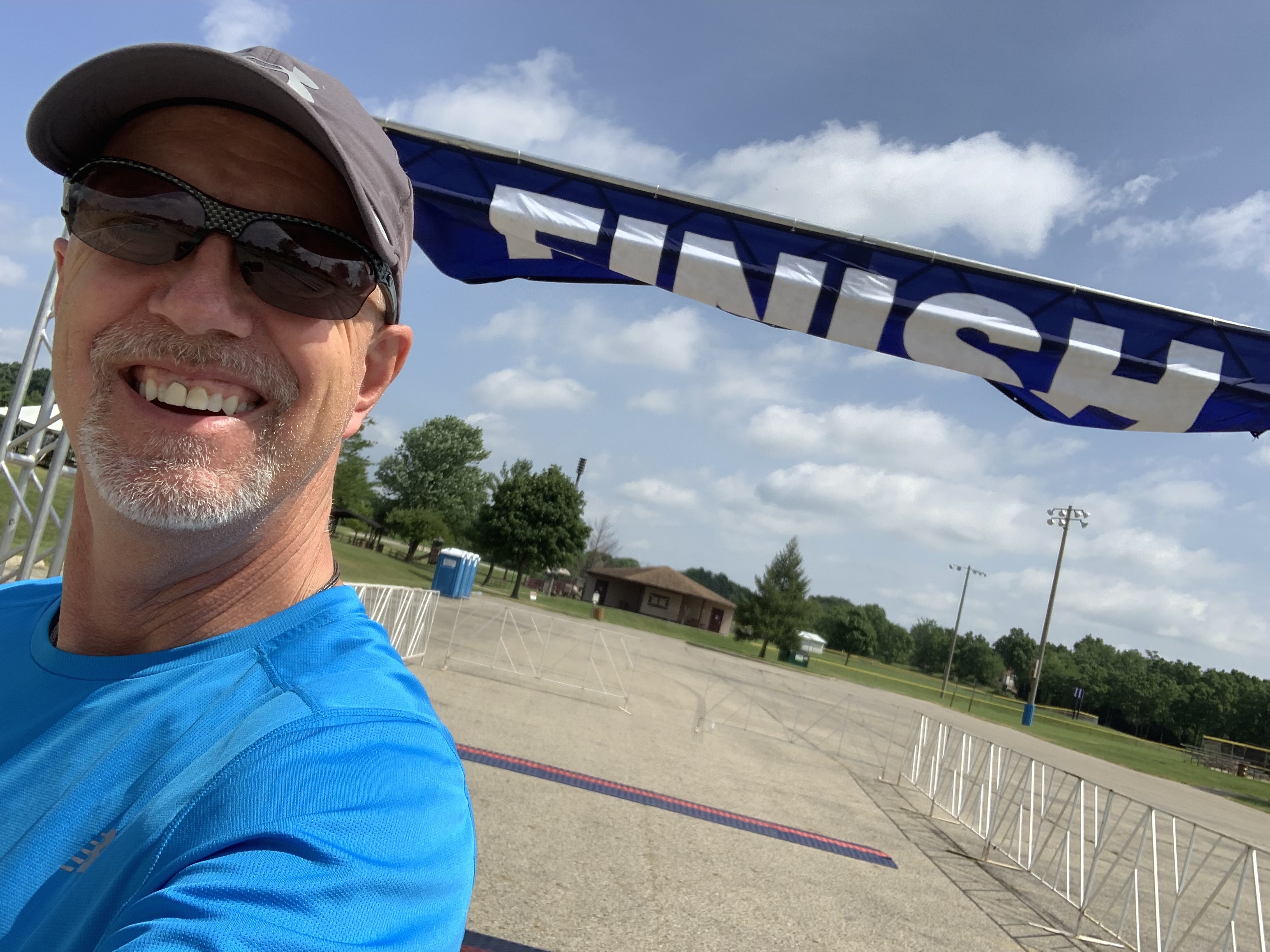



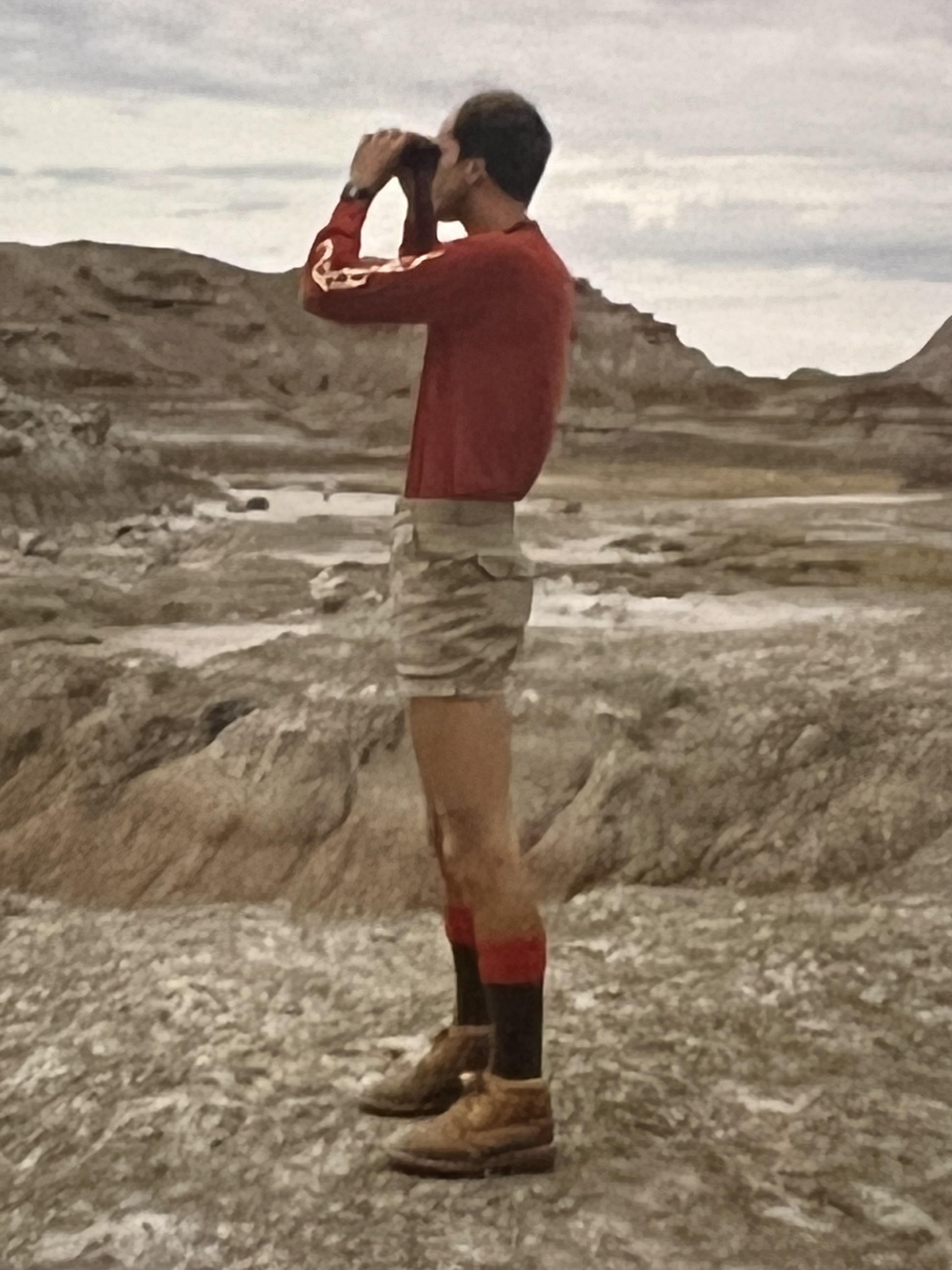

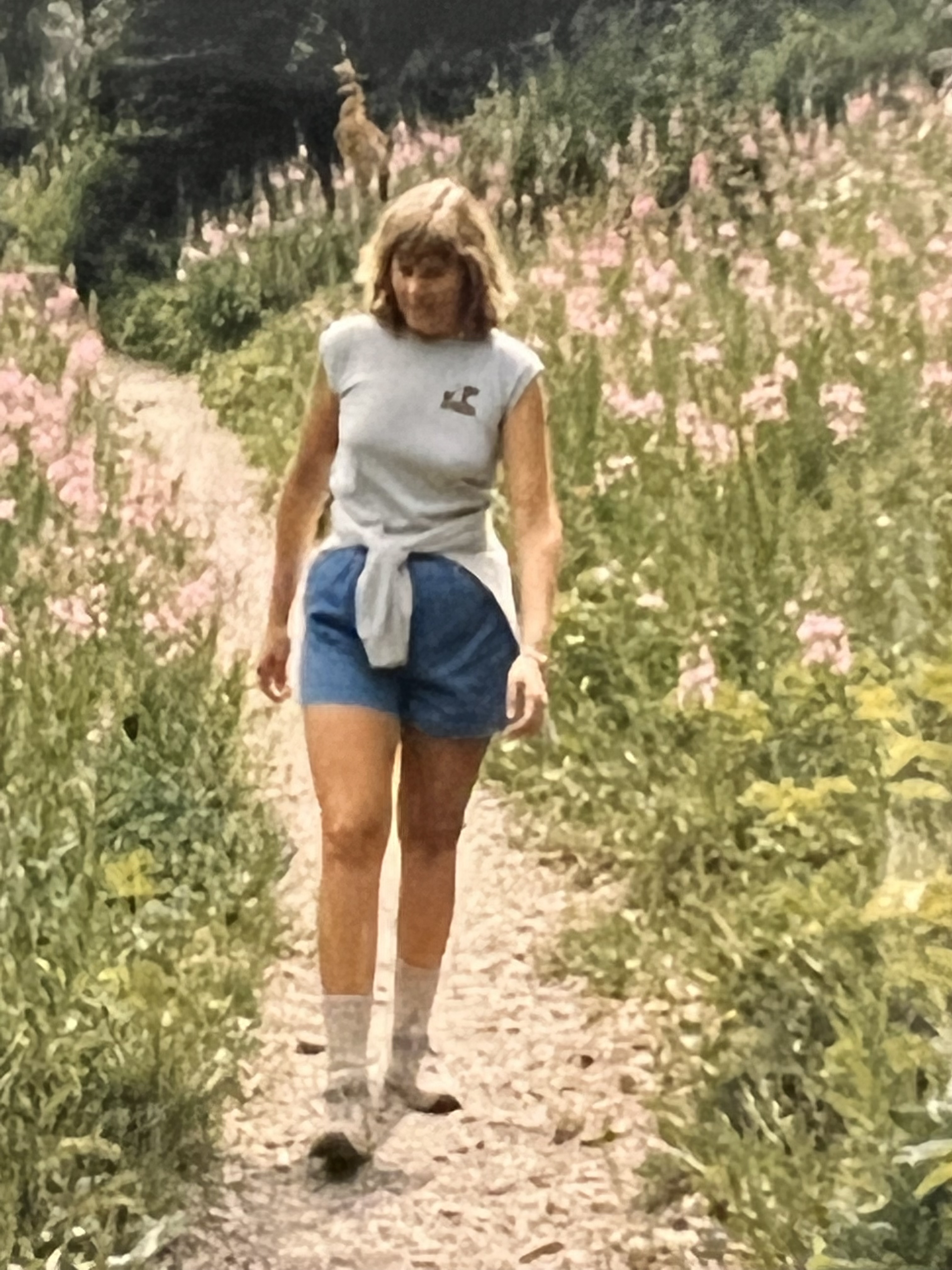
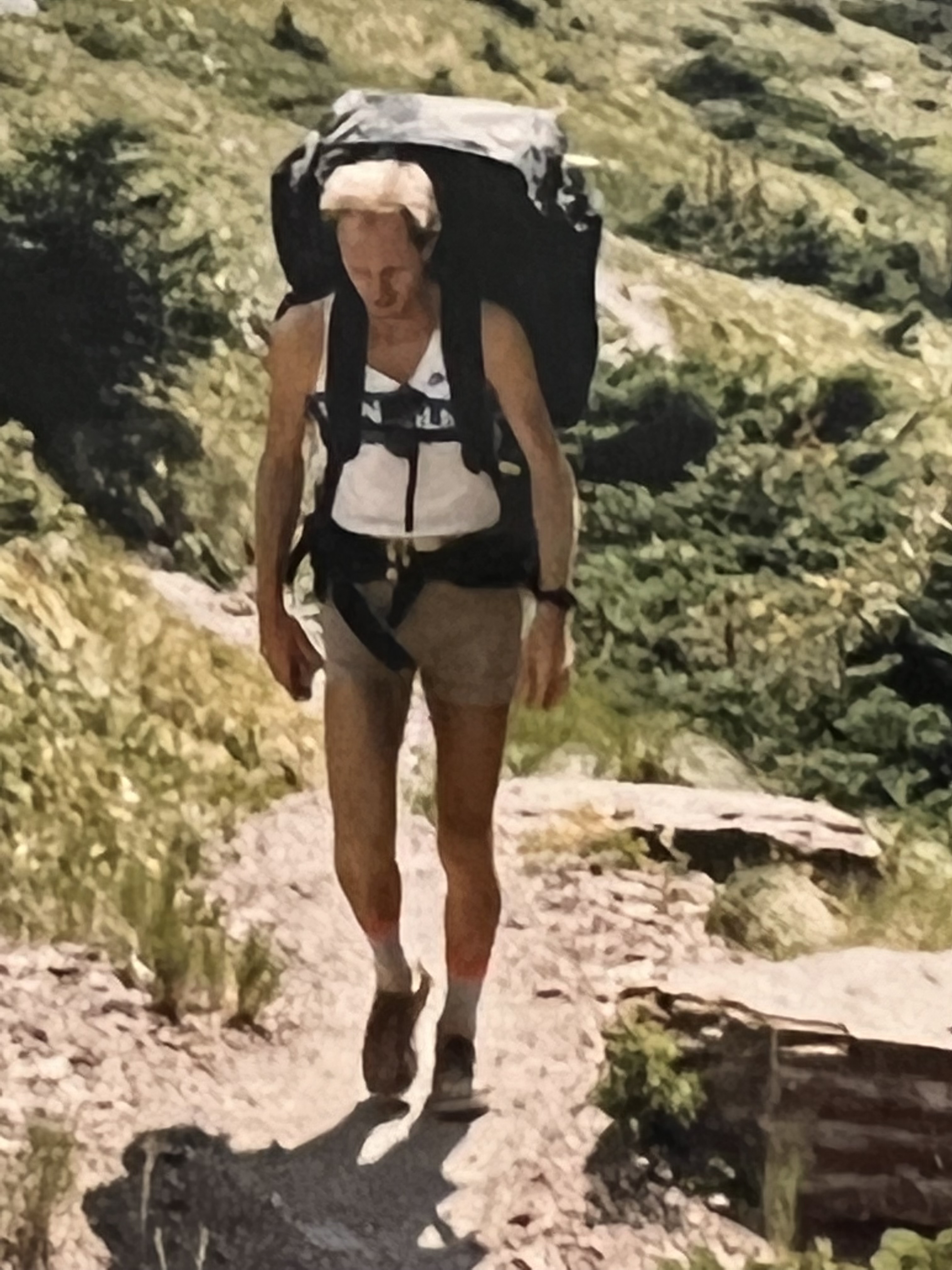

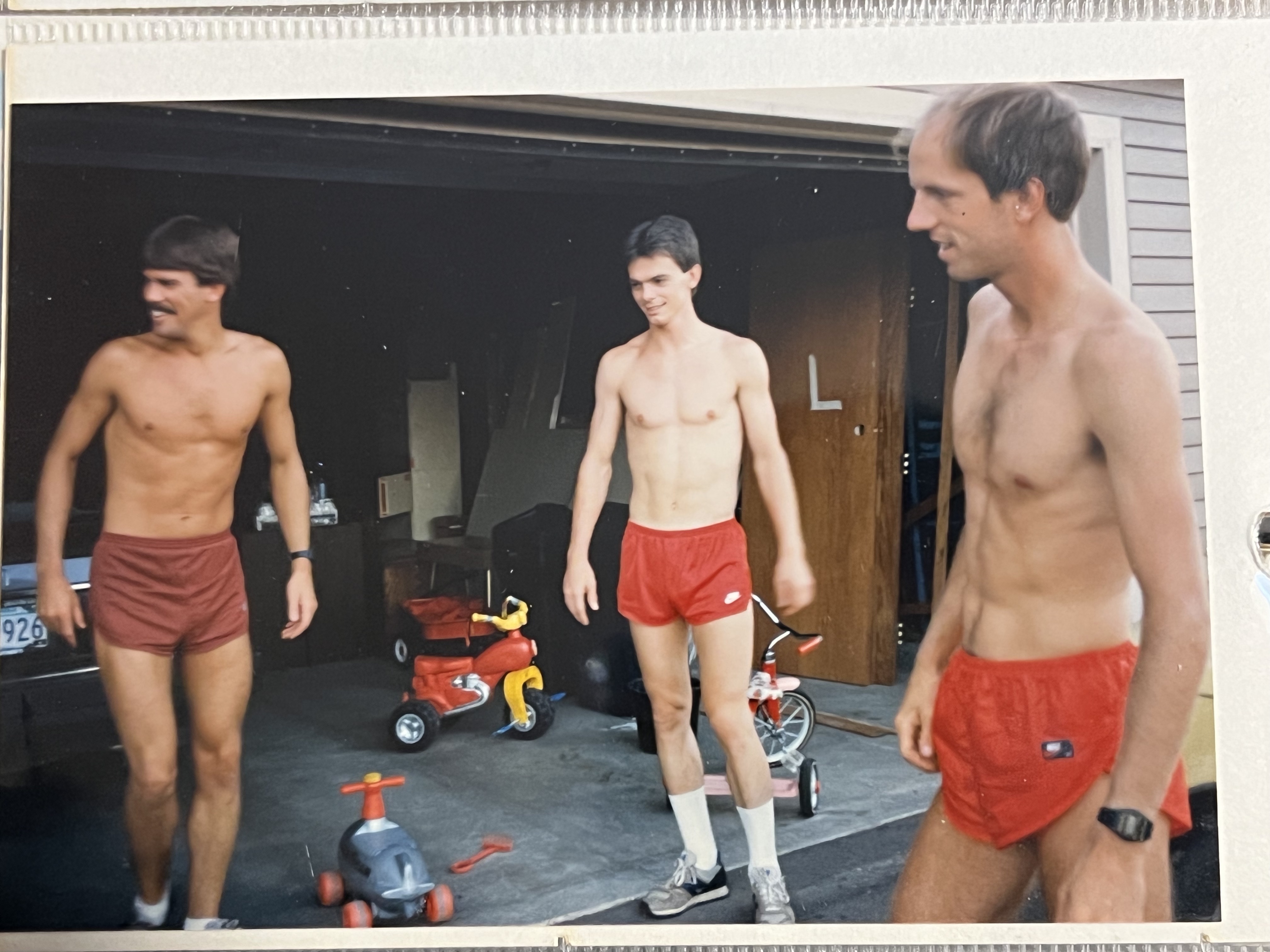
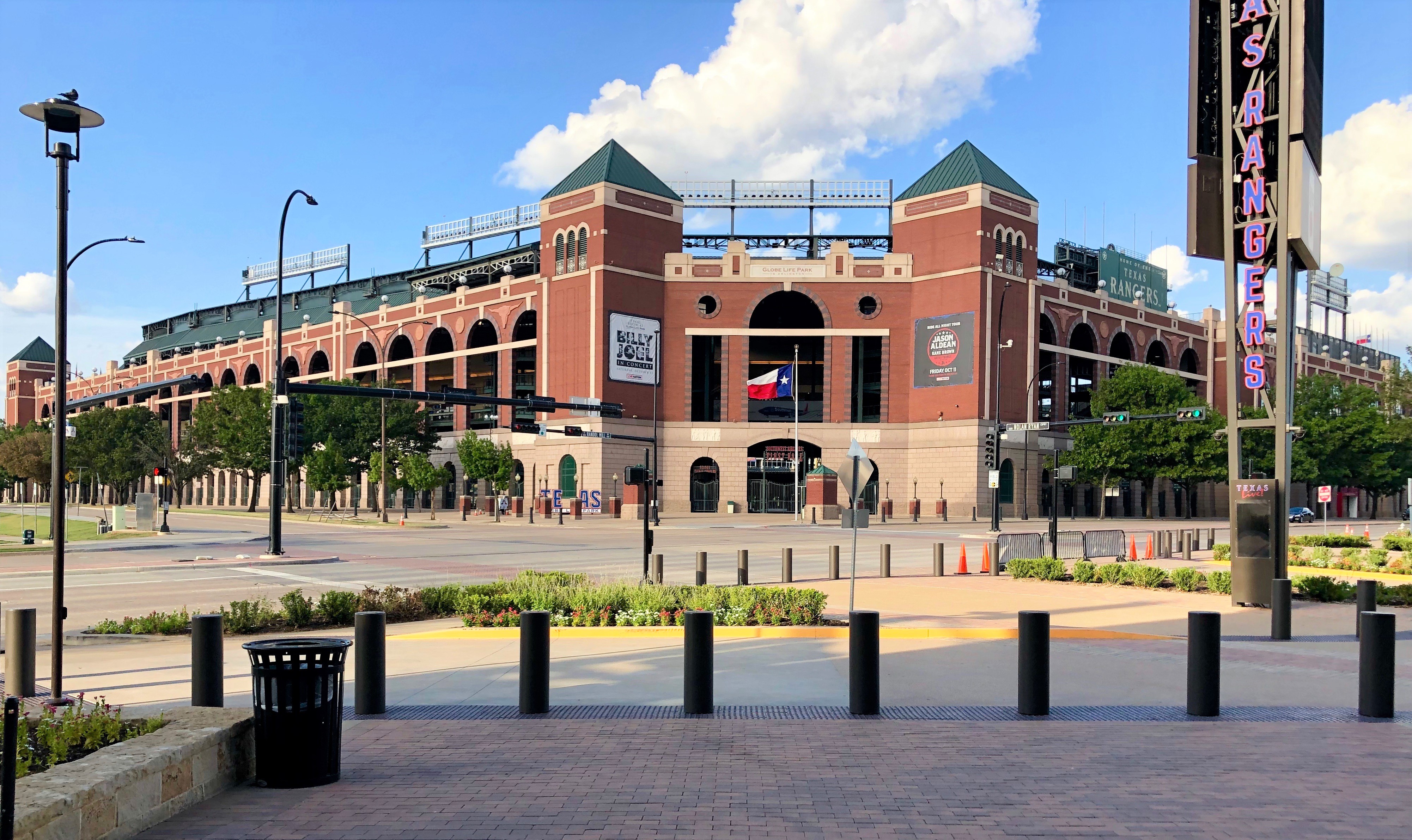



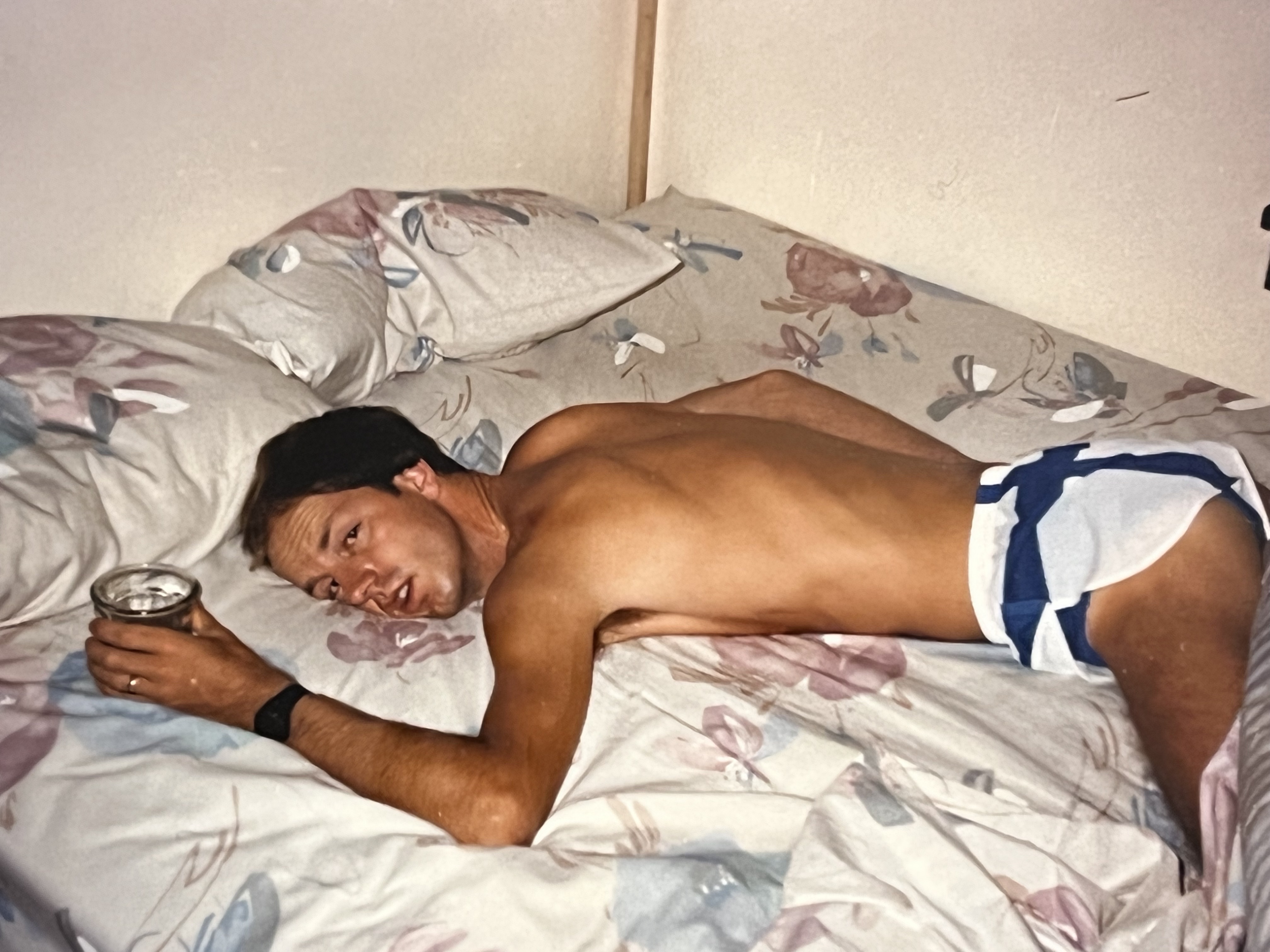
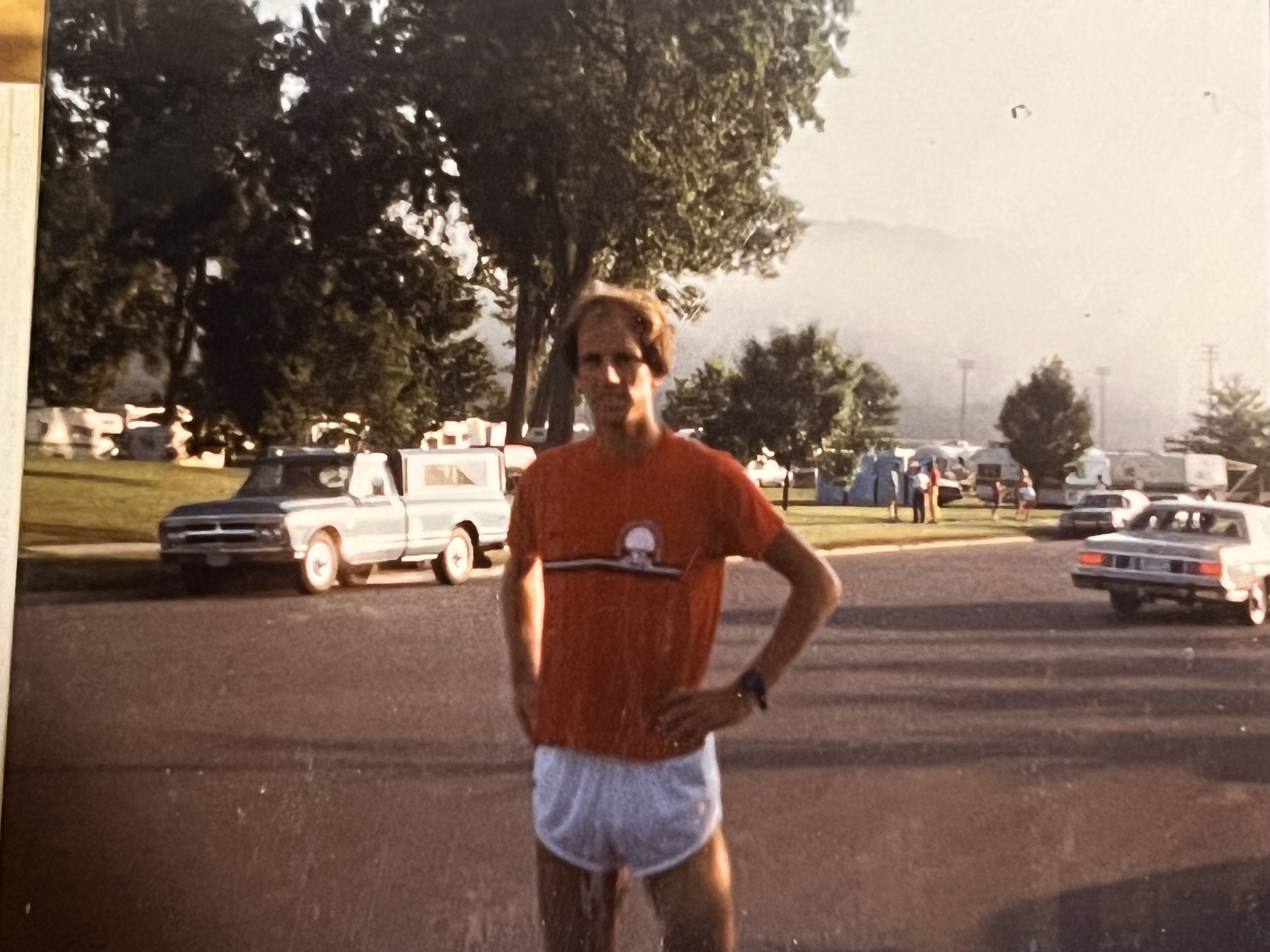
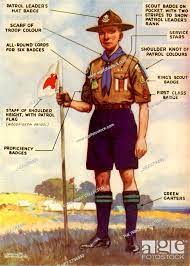


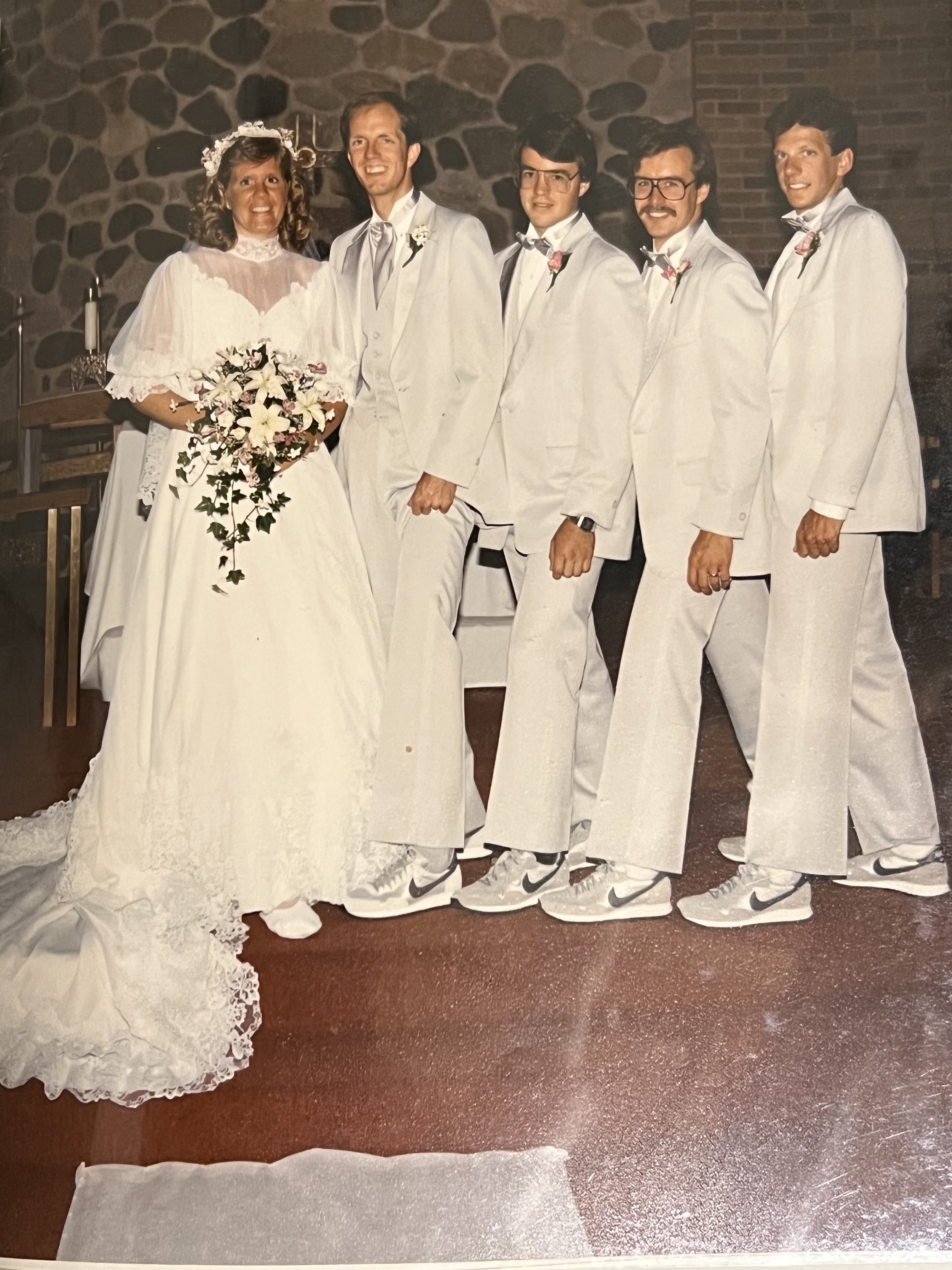

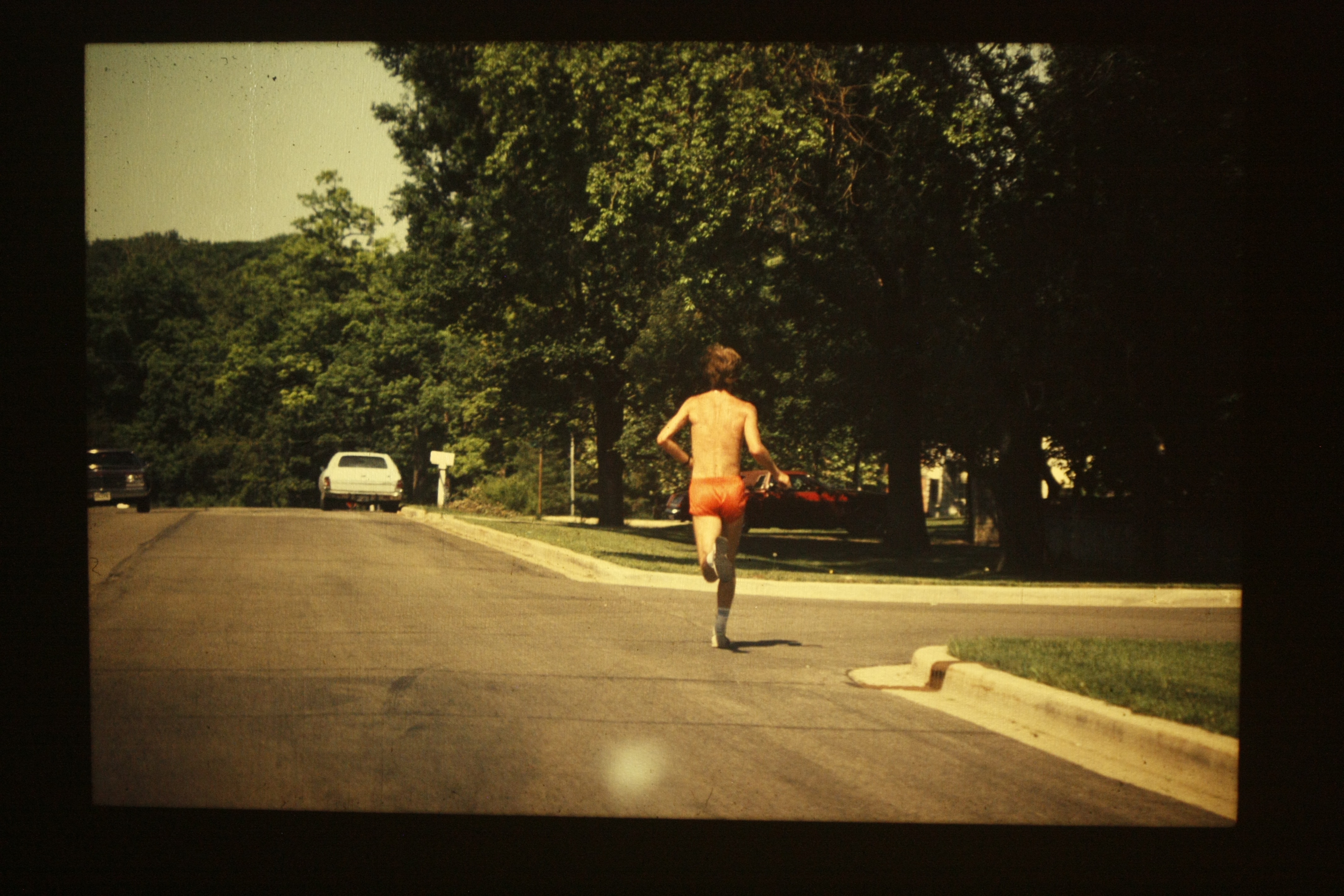




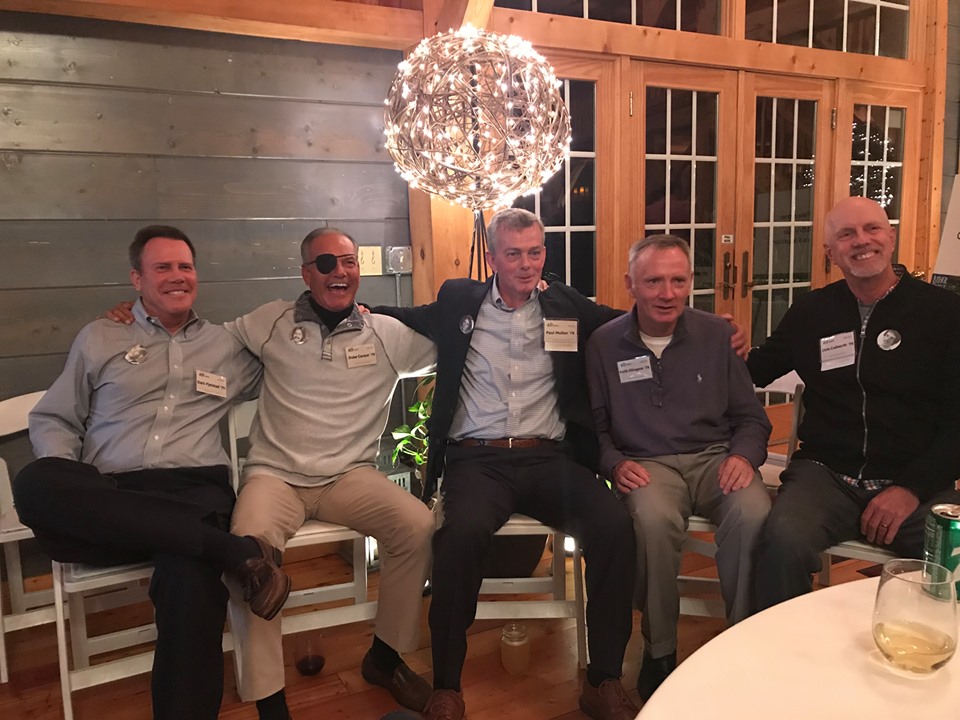




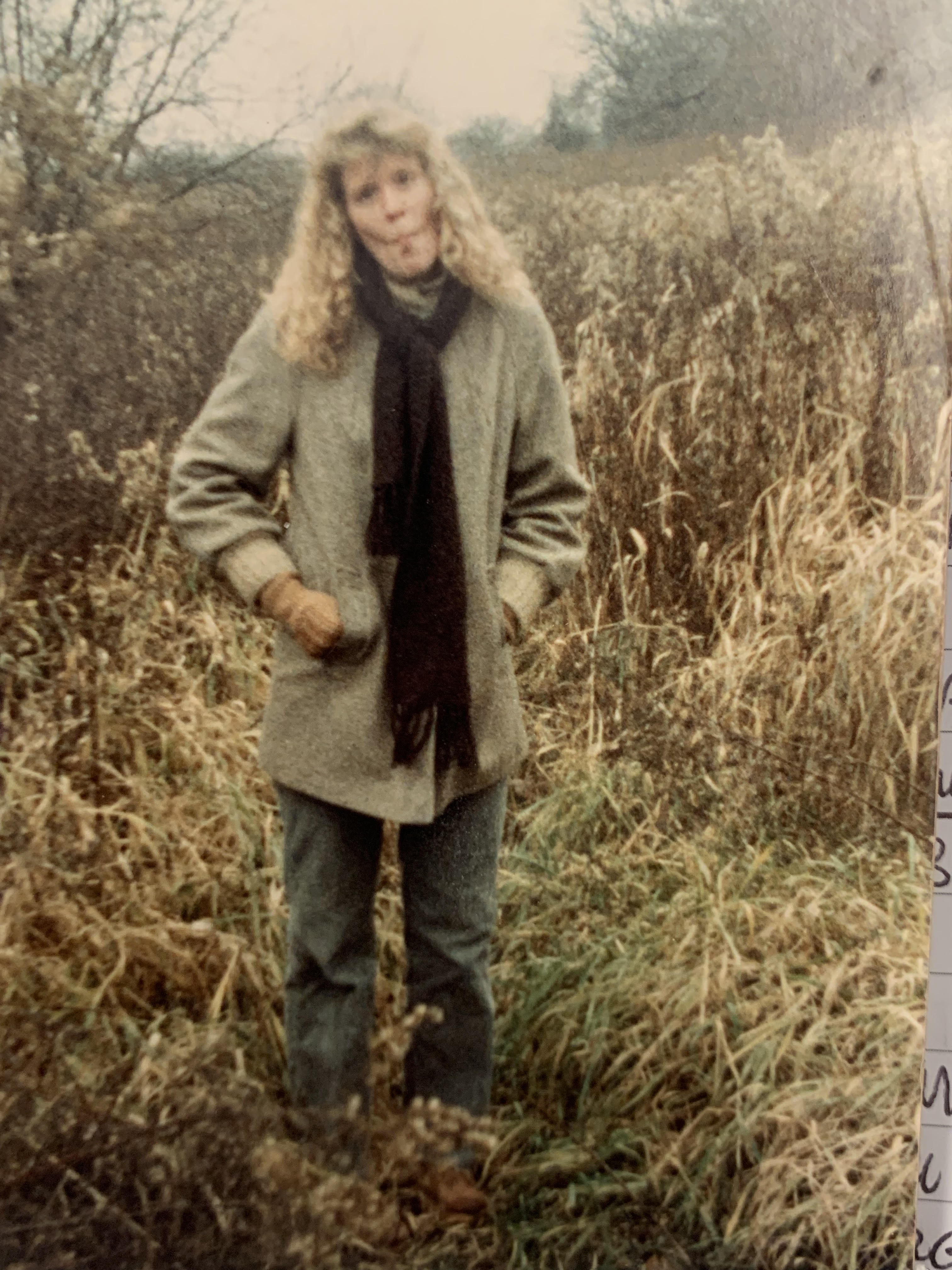

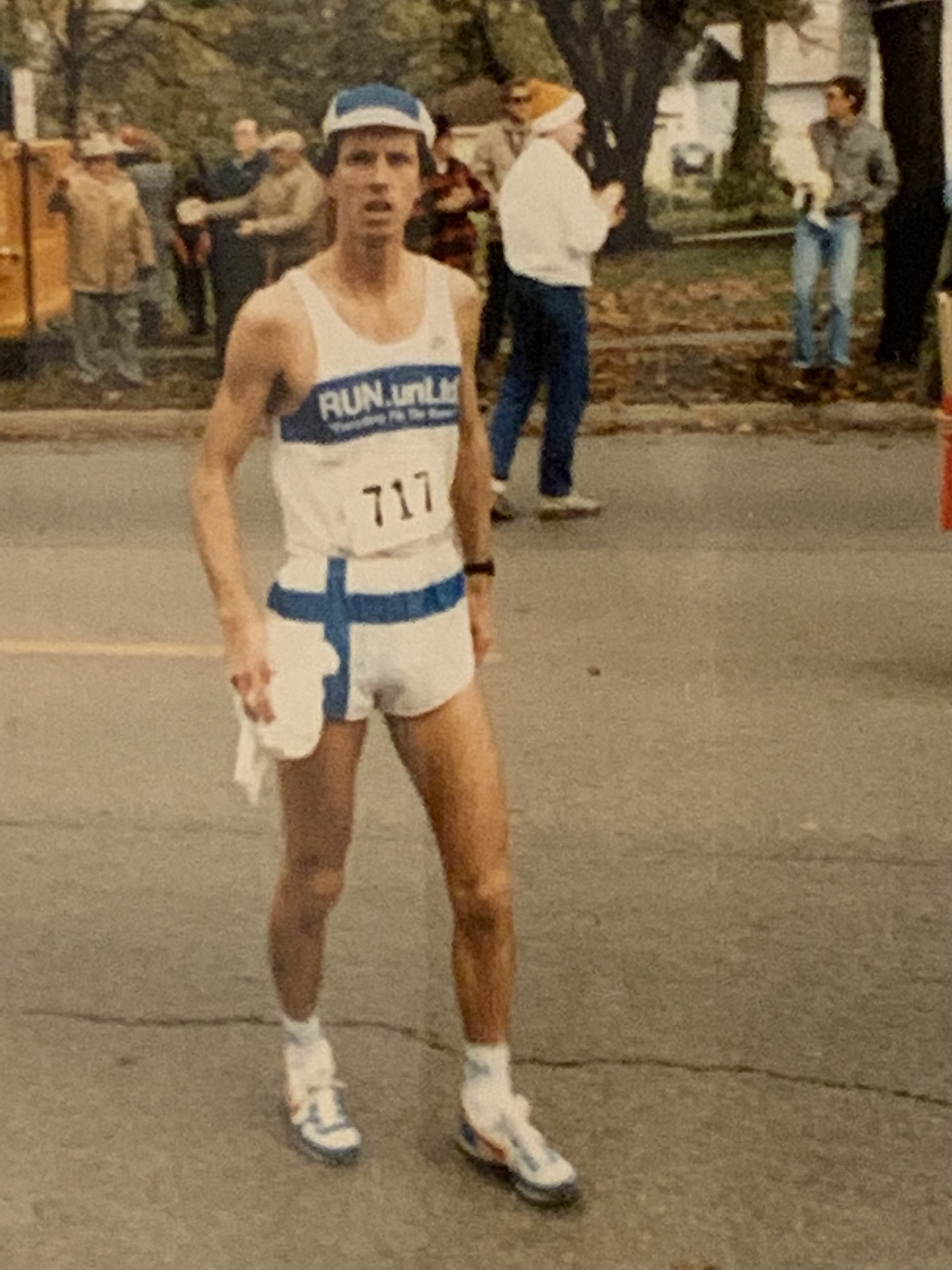


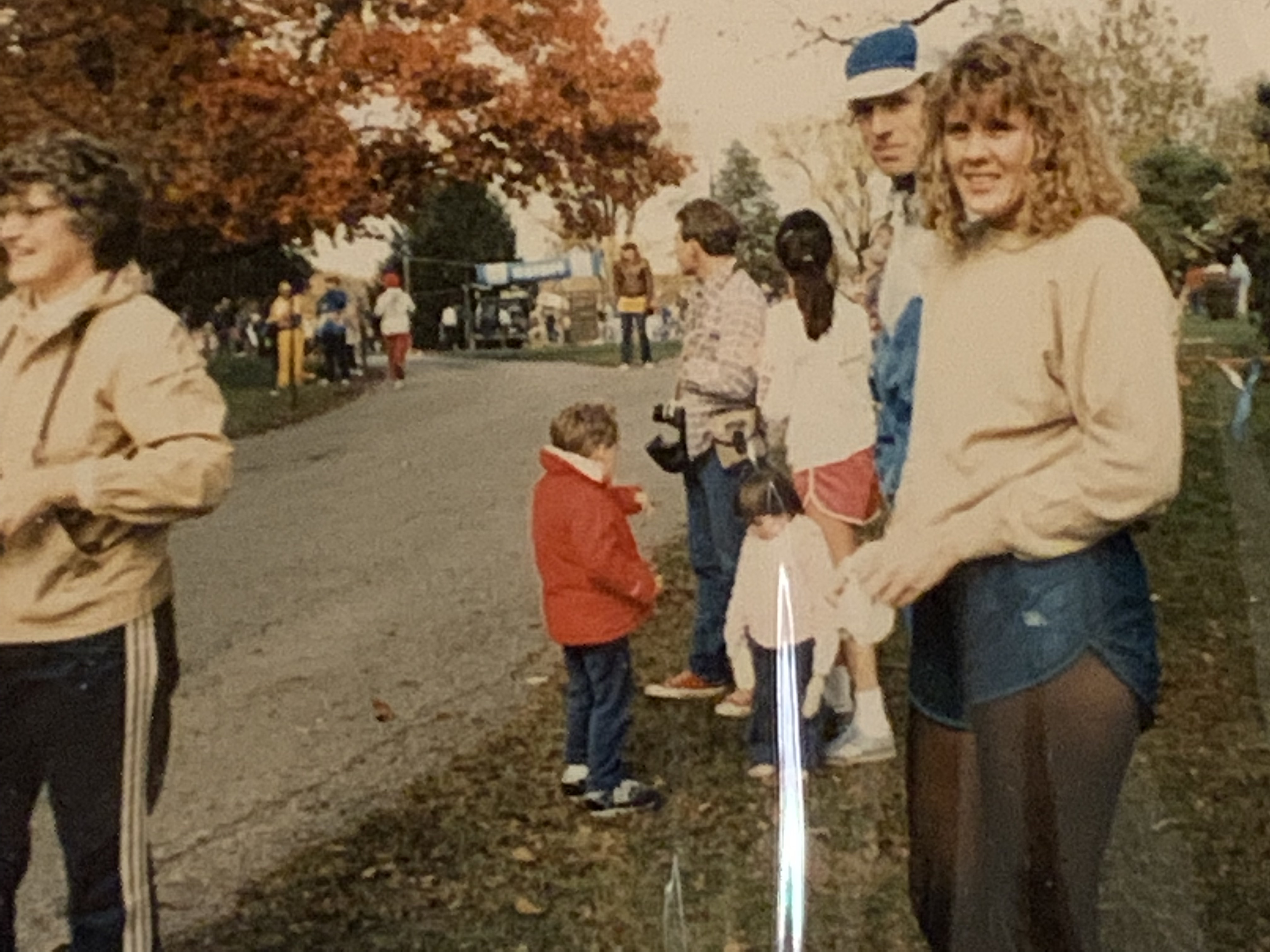

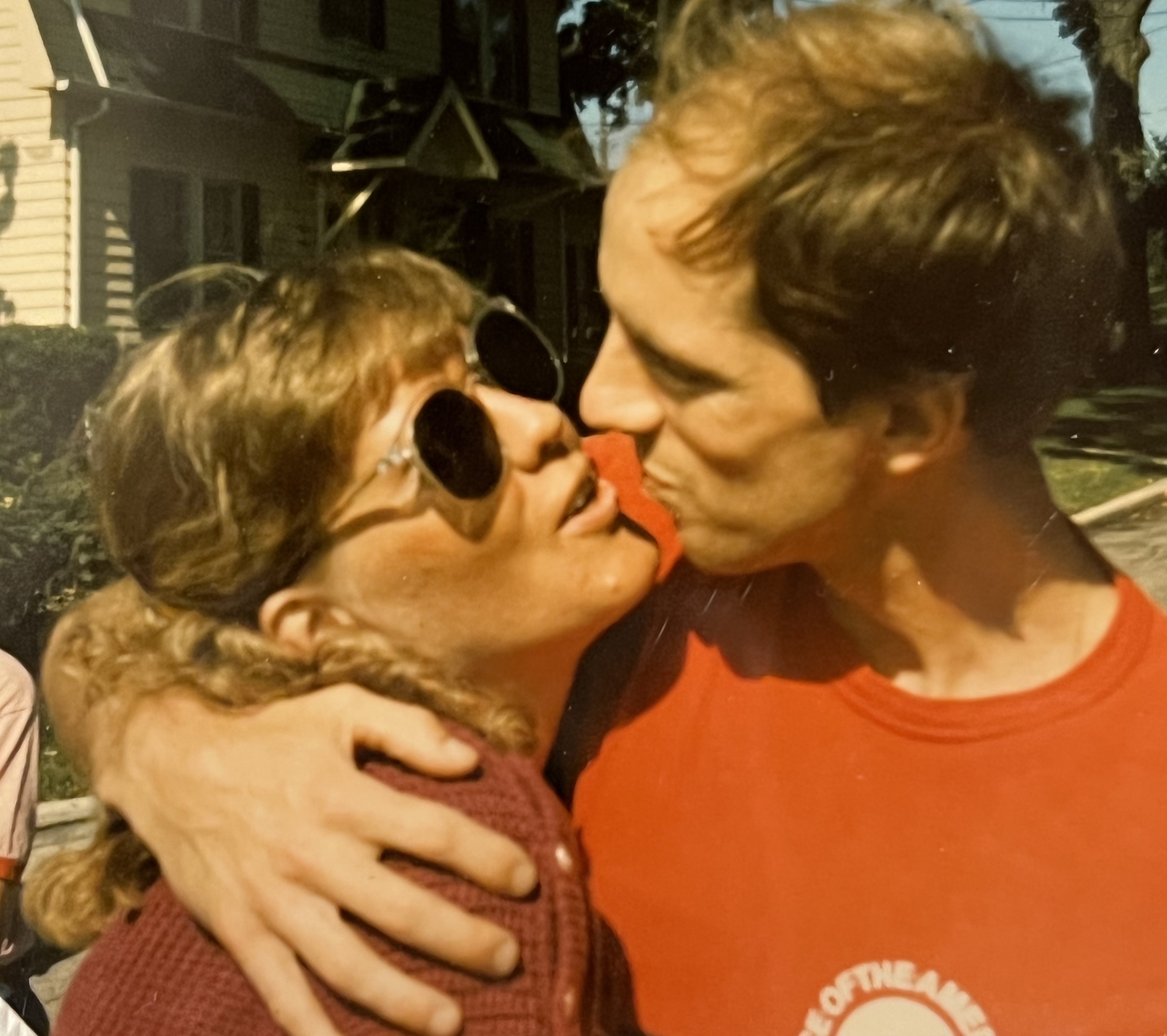
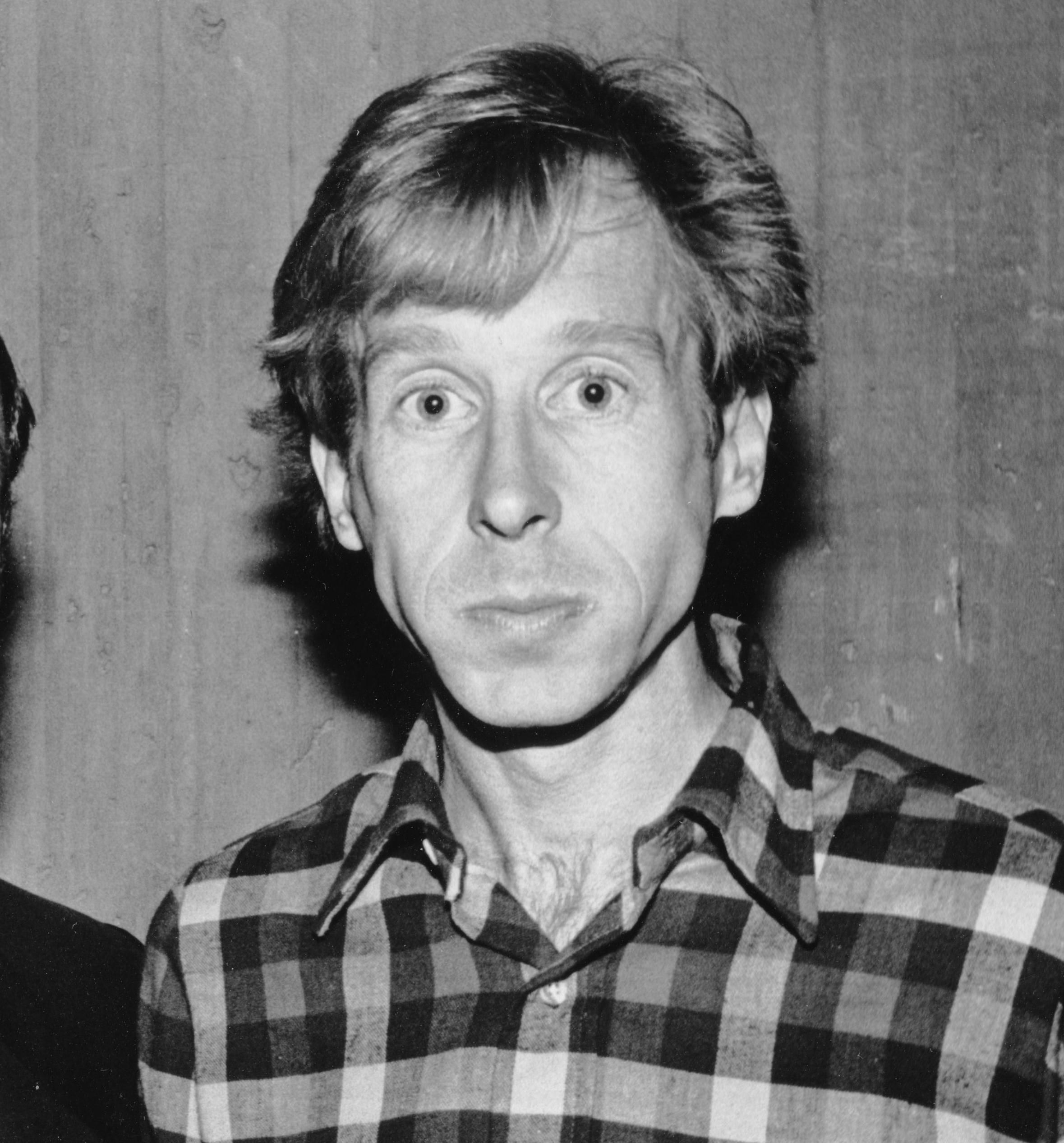
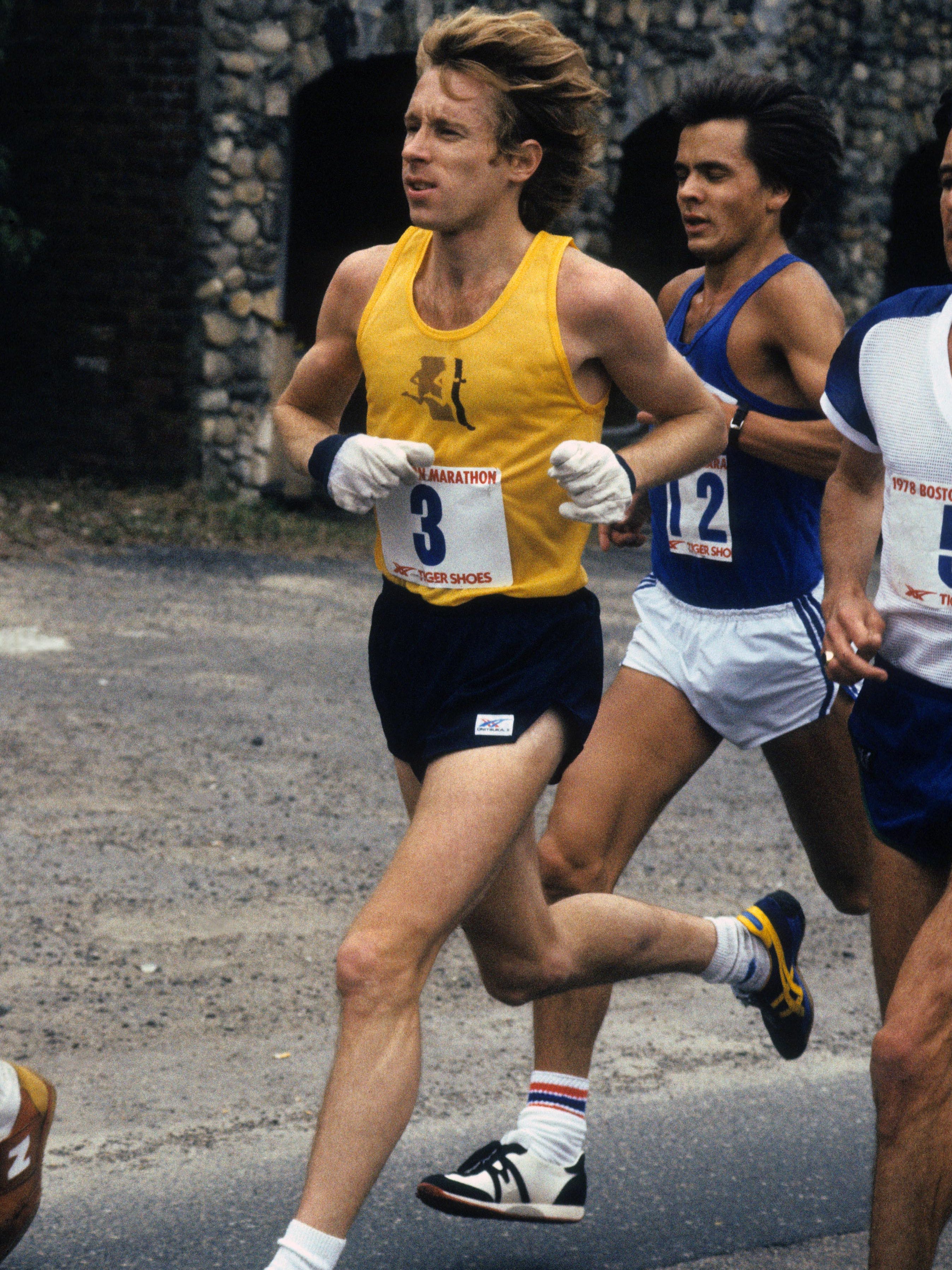
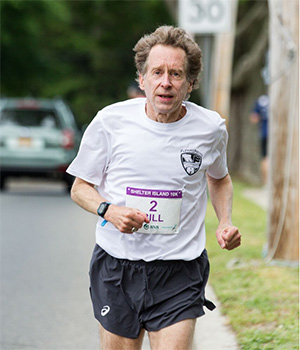


 We Run and Ride