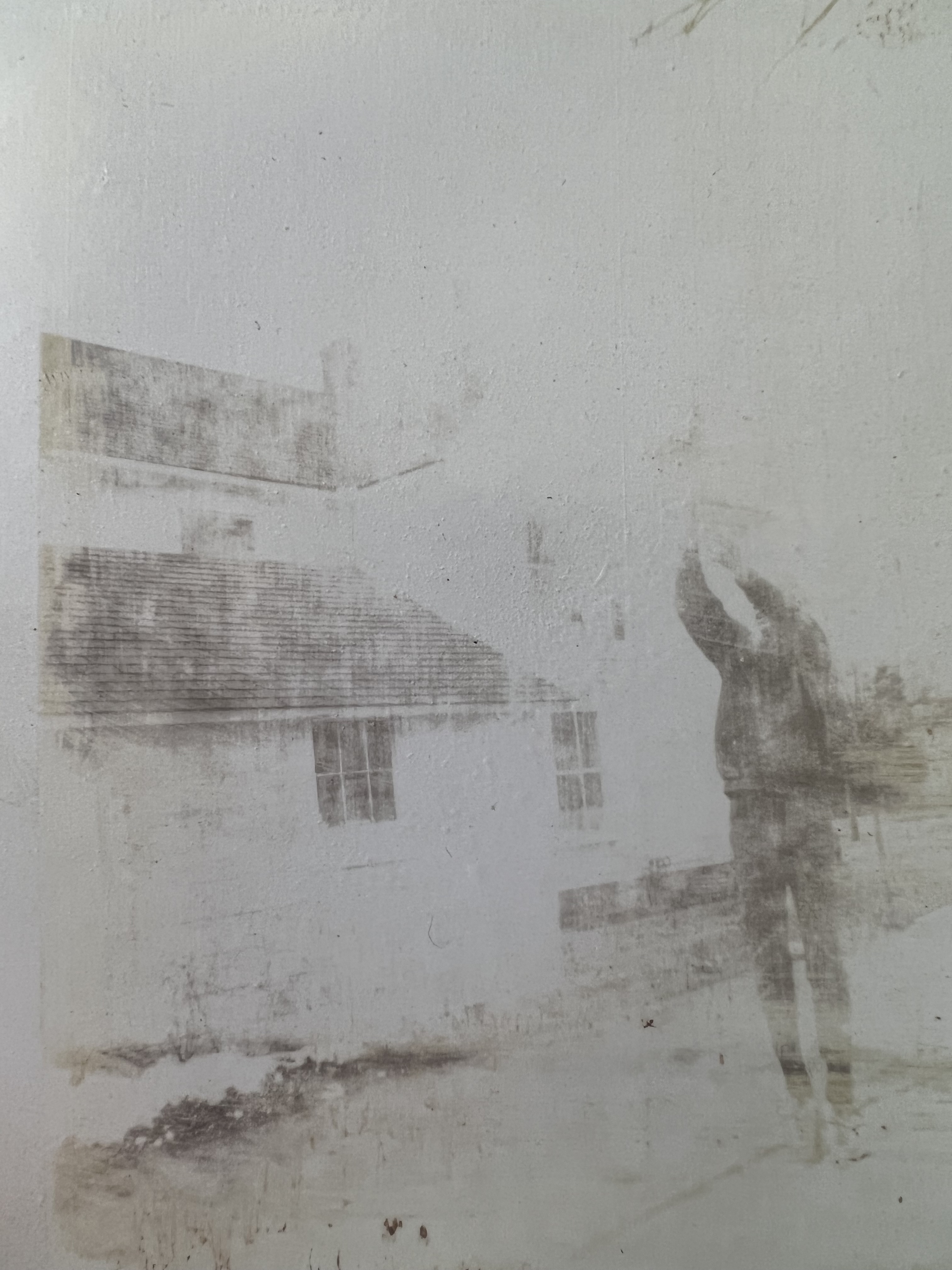
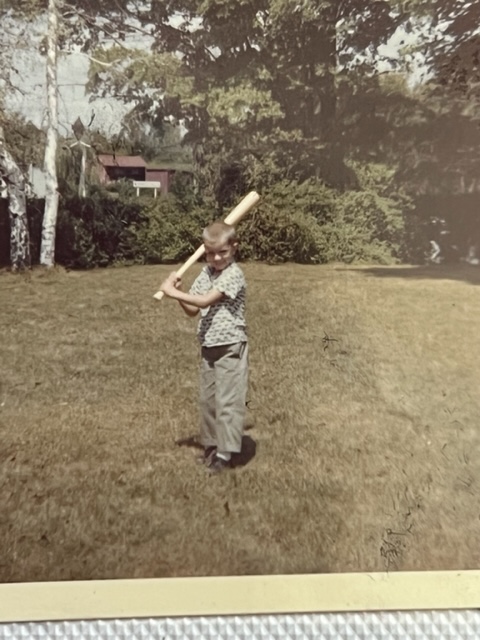
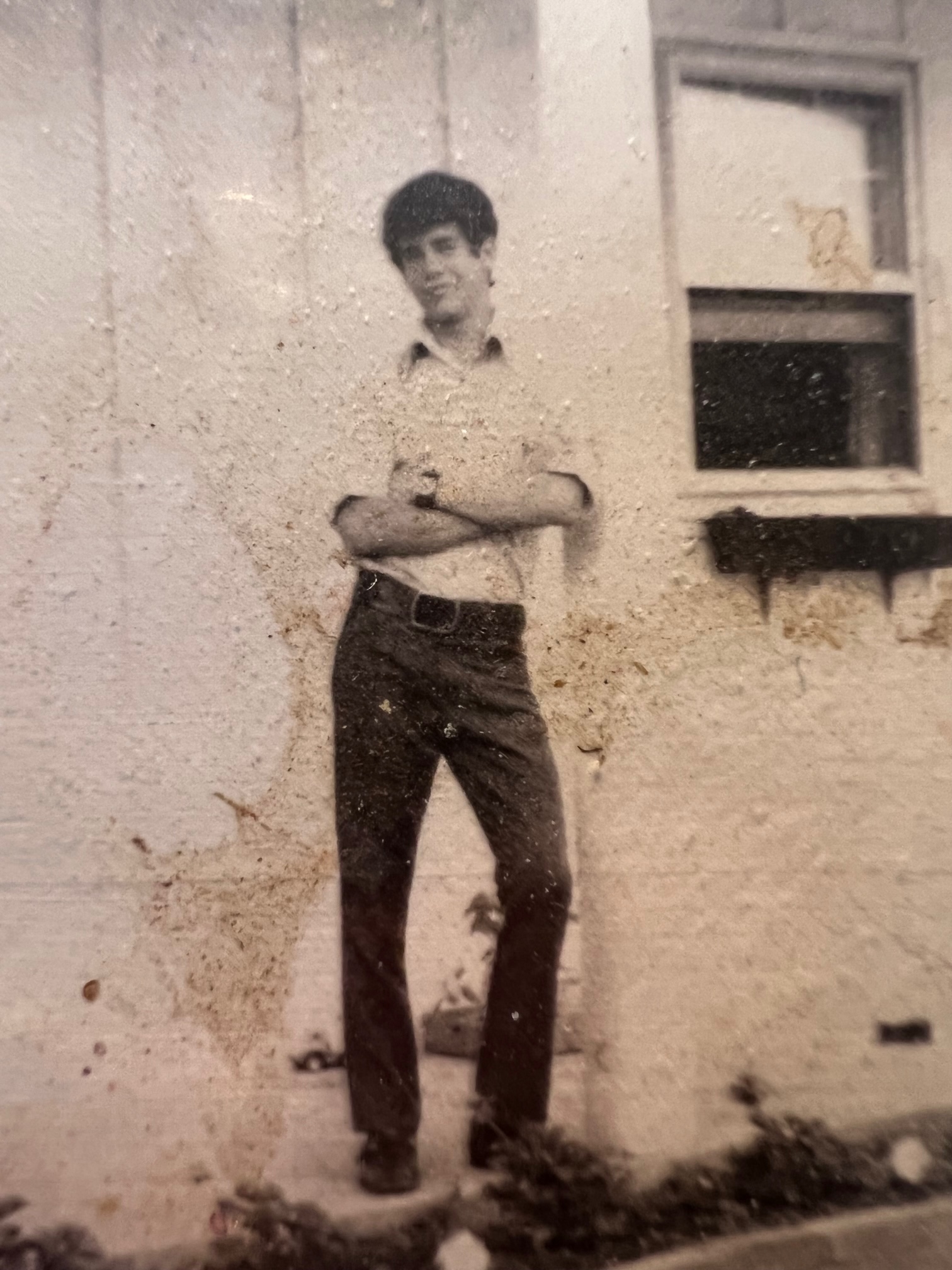
A faded Polaroid photo of my jump shot taken by my father in 1970
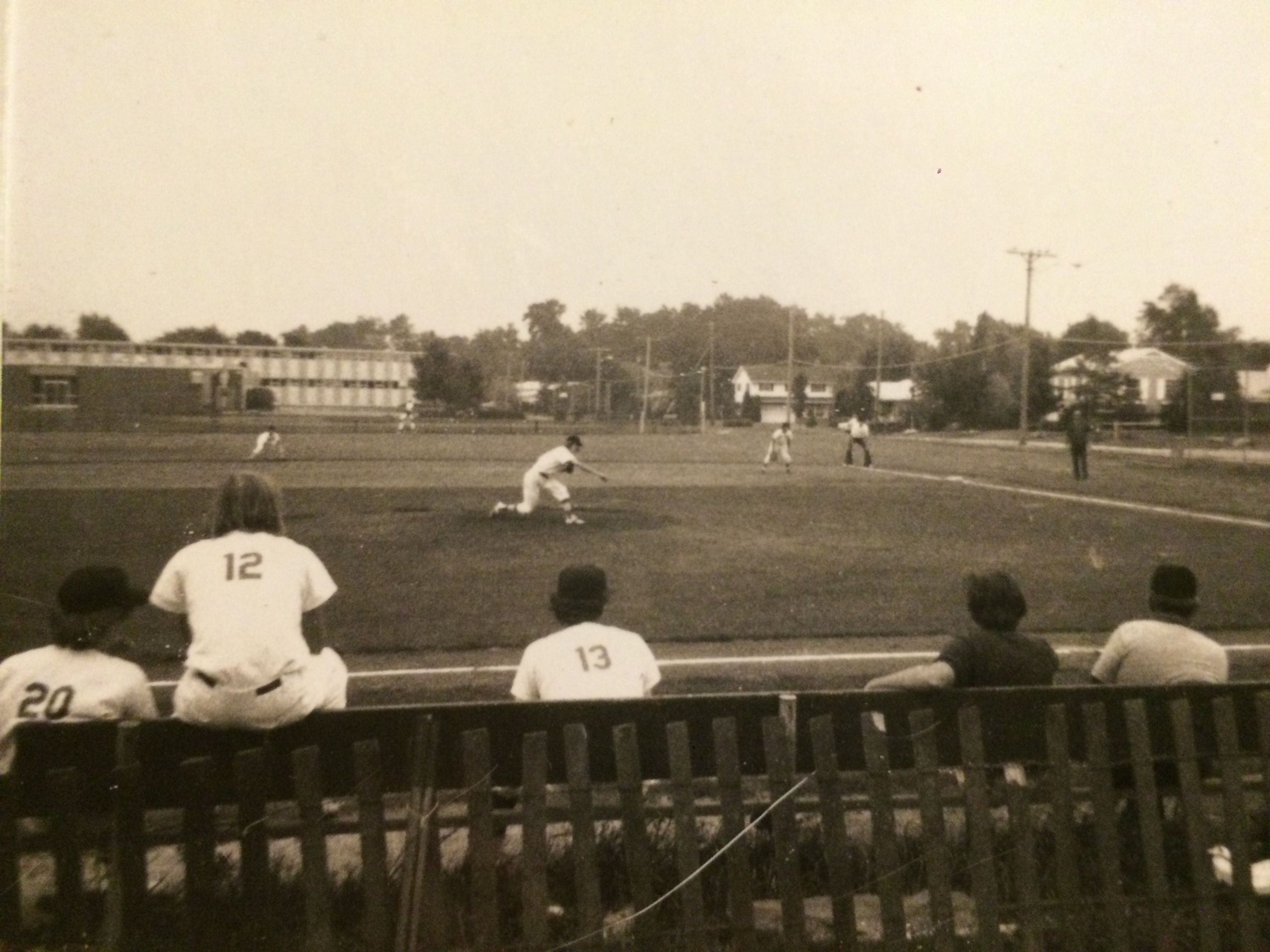
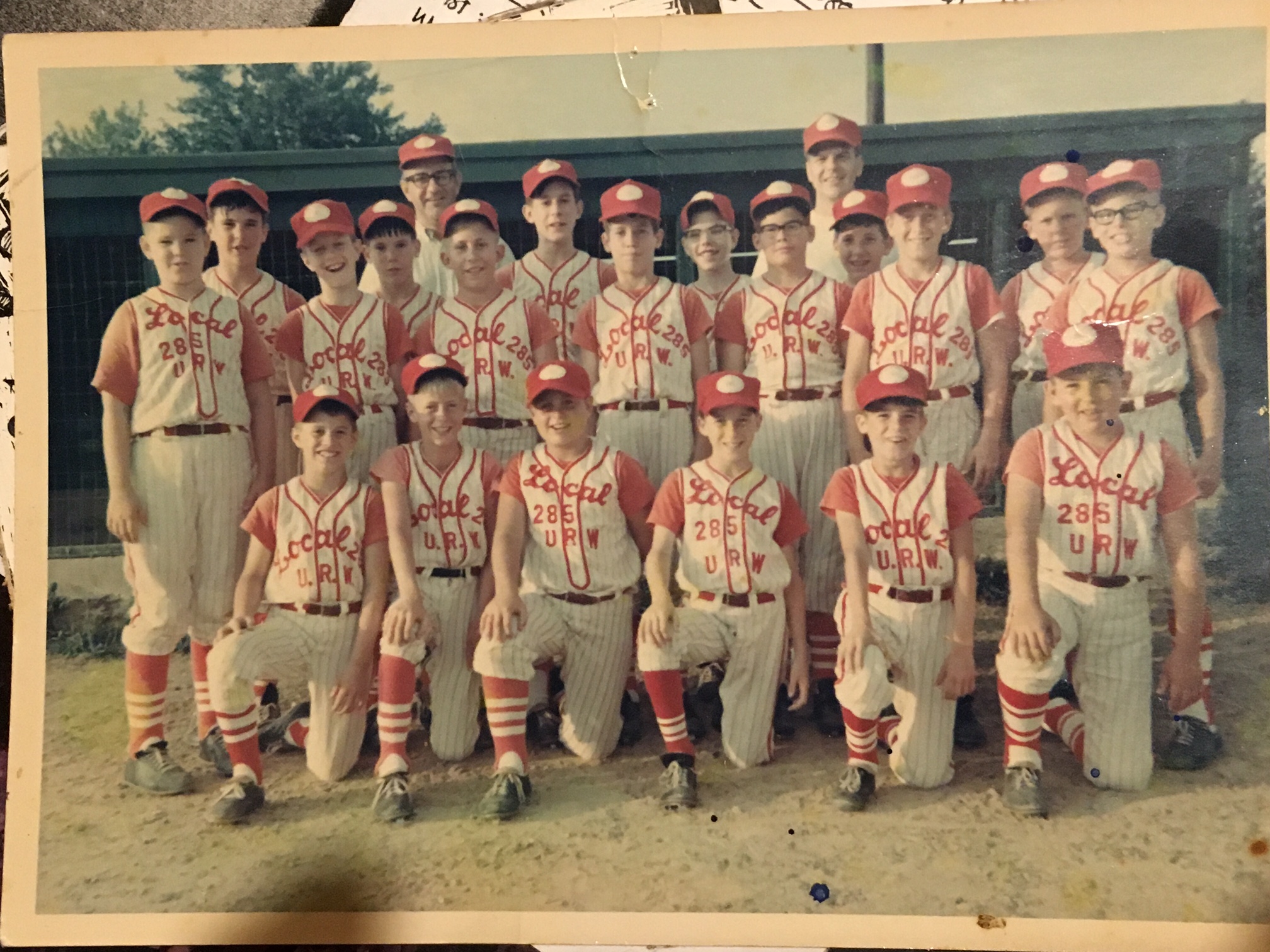
The first thing I wanted to do upon arriving in Illinois as a twelve-year-old kid was to get signed up to play baseball that summer. My folks lined me up with a team in the 8-12 year old league, which was a similar age grouping to the Local 285 team back in Lancaster where I helped pitch the team to a Lancaster New Era Tournament championship two summers before, and led the team as its top pitcher the following year.
That league was immensely competitive. You had to try out to make a team, and the first year I tried that as a nine-year-old, I got cut. So I understood what it meant to earn a spot on a baseball team, and I was determined to make that happen again in Elburn.
The coaches saw me warming up at the park that day and offered to let me be the starting pitcher. I struck out the side in the first inning. And the second. And so on. Before all was said and done, I’d thrown a perfect game with no one on the other team reaching base either on a hit or a walk. I don’t recall anyone really touching the ball with a bat that day. Perhaps a foul tip, but that was about it.
Following that game, a group of parents gathered around to discuss what to do with me. They talked to my dad, and he pulled me aside and told me kindly, “They said you’re too good to play in this league. I think they want you to try out for the American Legion team.”
There apparently wasn’t a Pony League team for 13-15-year olds. The next step up for Elburn baseball was the American Legion squad, which started at age 16.
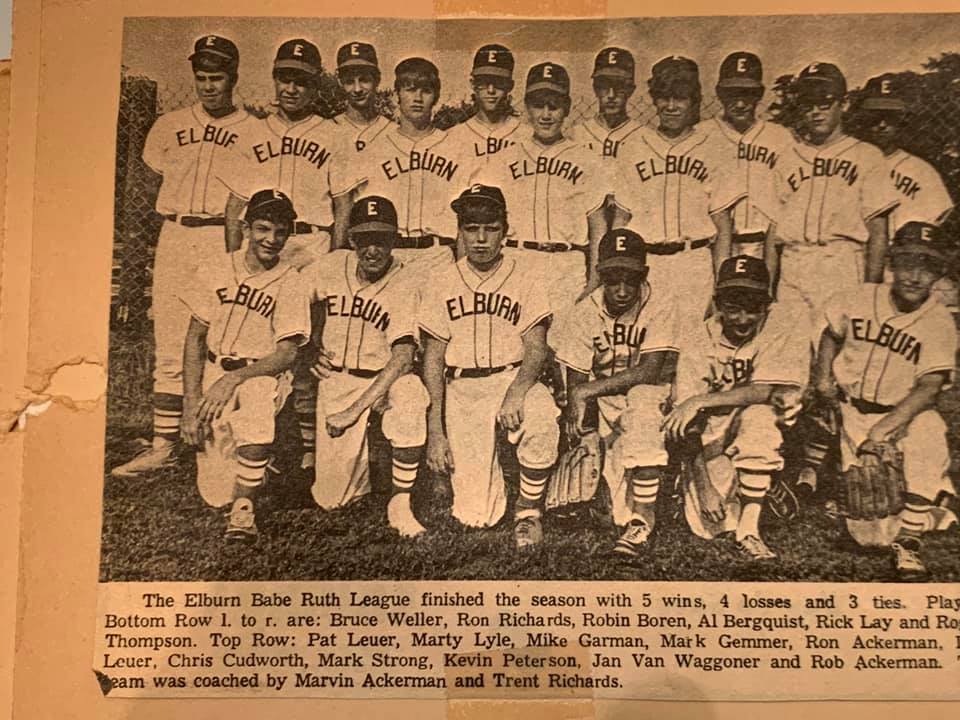
I showed up for practice and met the coach, a 22-year-old firebrand named Trent Richards. He was assisted by another young man named Jim Yagel, a well-known athlete from the region who would help out from time to time.
The top pitcher on the team was a guy named Dale Garmin. He was a quiet, studious guy with a decent set of pitches, and he led the squad. But I got to pitch quite a bit that summer, and while it was intimidating at first to face batters a few years older than me, I was used to pitching to my older brothers and their friends, so I got over those fears pretty quickly.
I was happy kicking around in the dust of that baseball field that summer. I turned thirteen on July 26 and the transition to being a teenager was nothing special. I was just as horny and naive about sex and girls as I was at twelve years old. But I felt like something of a man playing baseball with those older guys.
I hung out with some of Elburn’s best athletes, including a guy named Kevin Peterson who was also a good basketball player. Rumors went around town that I was a pretty good player. Some of that reputation caused jealousy and eventually ridicule by some of the more cynical guys in town. But Kevin always treated me well.
So I got pulled into the hoops arena as well. We played basketball all year around at the Morris Barn court just west of Elburn. It was nearly a full-length basketball court in what would have been a hay loft. The floorboards were worn smooth from all the years of basketball played there. A couple of those boards were “dead zones” where we learned not to dribble the ball. We’d play in the heat of summer and through the cold of winter, sometimes wearing full gloves on our hands as we worked up a sweat in the cold air streaming between the wooden slats of the barn.
But for all that acceptance and interaction I was still an anxious and sometimes depressed kid that summer. I had made new friends named Mark Strong and Eric Berry (Eeker, RIP) that were my age. We rode our bikes around Elburn trying to connect with the girls we liked. Twyla. Allison. Ellen. Mary Jo. Sometimes we’d sit on their porches and compete for attention. It felt like the world expanded in their presence. I lived for the ability to make them laugh, even a little. But no matter how hard I tried, they still seemed to know so much more about the world than I did.
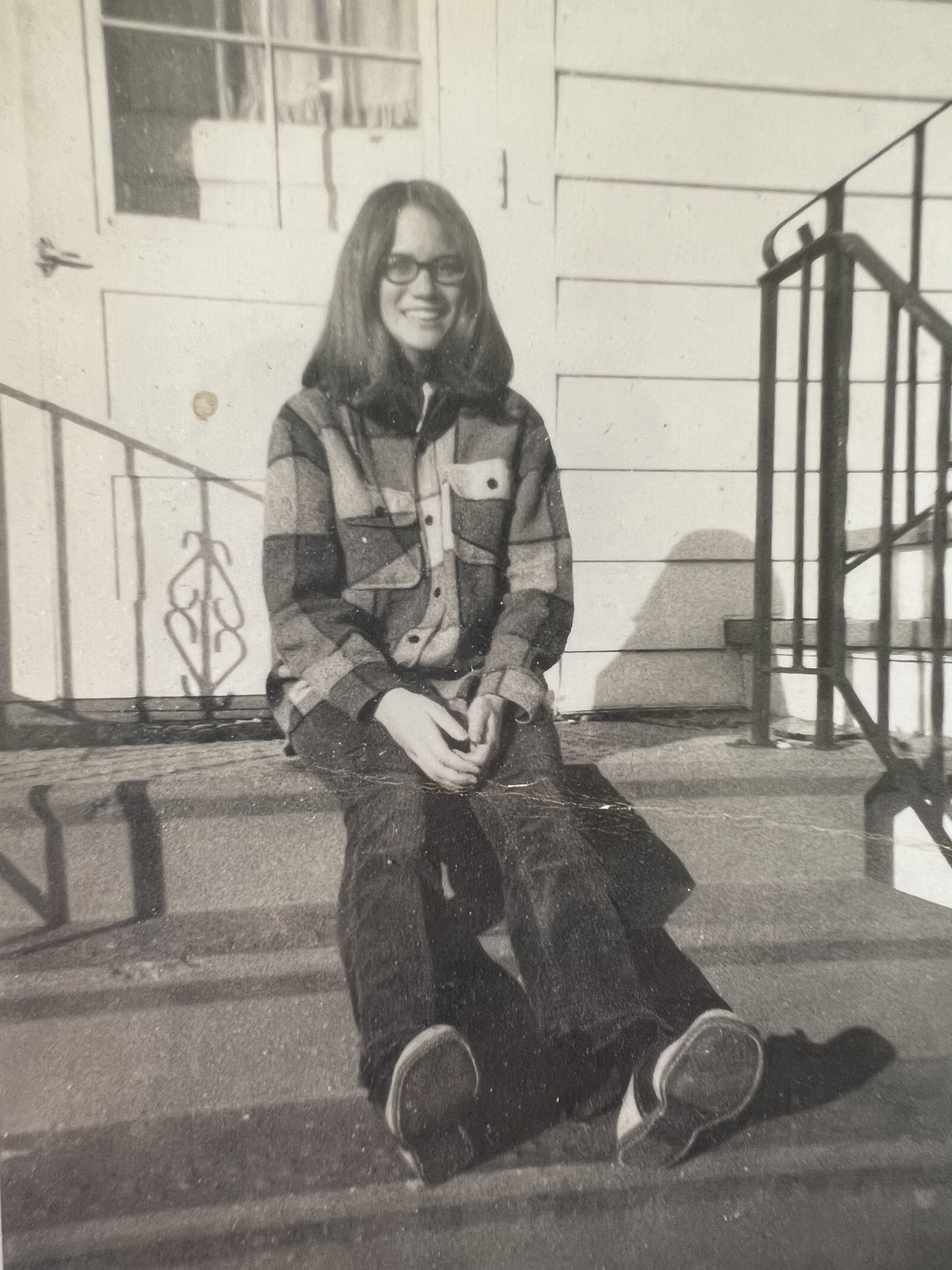
One of my fave friends Twyla.
We’d all be attending eighth grade together that fall. That meant a whole new wave of introductions was at hand. I was the New Kid In Town that year for months at a time. On one hand I loved the attention. On the other hand it meant I was always on trial with the new people I was meeting. As always when seeking a competitive social advantage, I turned to sports as my proving ground and social outlet. That’s all I knew how to do. Focus on making impressions and hope for the best. Thirteen years on this earth isn’t that long a time to know how the whole place works. But we do our best. That’s all anyone can do.
It’s a funny thing how we circle around each other trying to match priorities and make contact in this centrifugal world of inner existence. We spin and brush up against the events going on around us, and whatever rubs off on our being is what we wind up calling experience. It’s a thin veneer in some ways, this impression we make of ourselves. But it’s all we have to protect ourselves from the pressures the world places upon us.
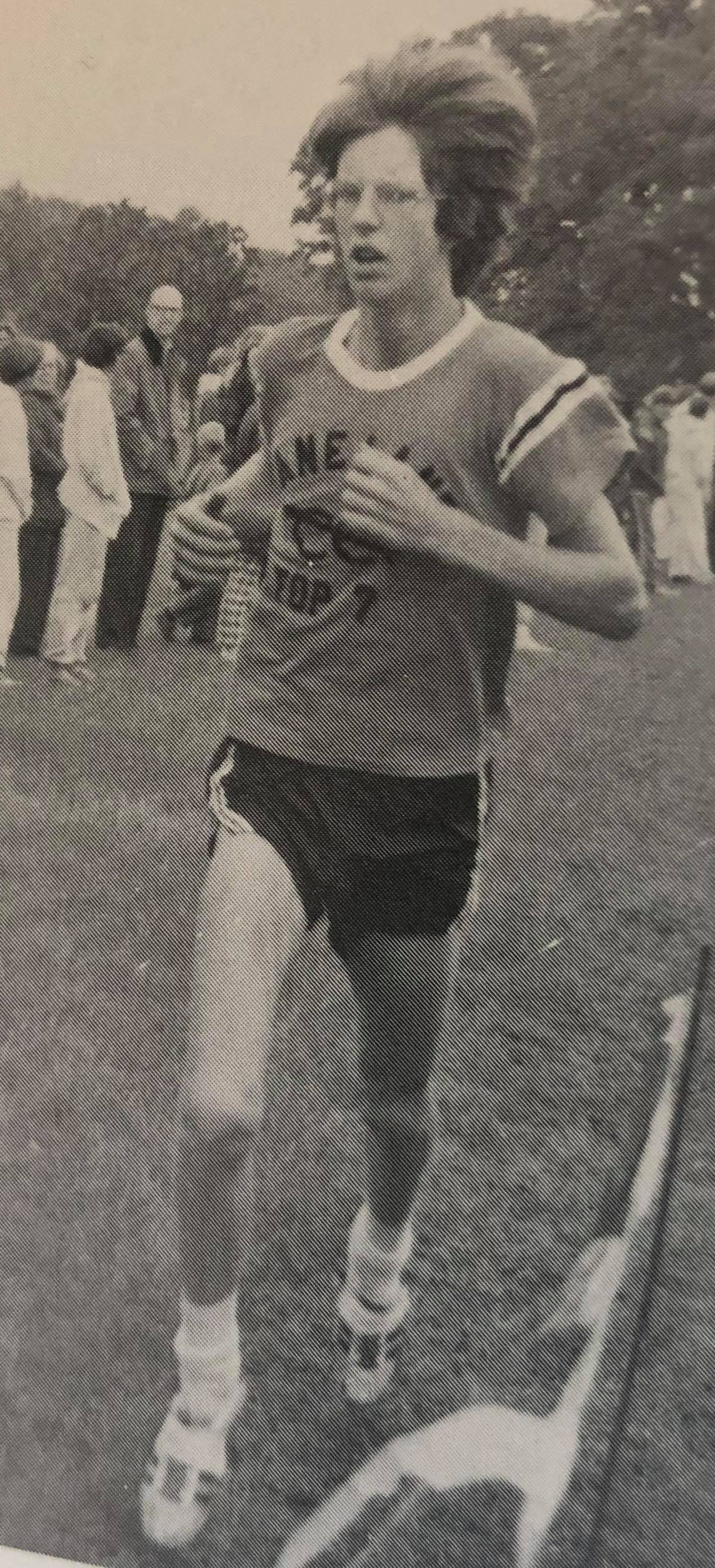
Finishing a race (1972) at the beloved Elburn Forest Preserve where we also birded and escaped from life in general.
As our family drove west through Ohio and Indiana toward our new home in Illinois, the land flattened out and the trees disappeared into distant blue clumps dotting the horizon. I’d been to Chicago once as a small child, but had no real memories of the trip. This time around, at the age of twelve years old, I struggled to process the change in landscape. It all looked so different.
The first thing I recall while pulling off Route 38 onto Route 47 at the north end of Elburn was the color of the soil. Back east in Pennsylvania the dirt was reddish brown. The Amish farmers grew tobacco on the reddish soils of Lancaster County. The smell of that crop drying in the factory just past the steel bridge over the Conestoga River south of town reminded me of the breakfast cereal Cheerios.
By contrast, the Illinois soil was dark and sullen. But as the corn and beans grew thick it disappeared beneath a layer of agricultural homogeny. We would not see the soil again until November when the farmers tilled under that season’s crop detritus. Come spring the soil might get turned yet again, revealing the shining faces of black chunks of near-perfect dirt.
Years later I’d learn that the soils in Illinois were created by the roots of prairie grasses. When settlers arrived, the farmers broke wooden plows trying to cut those roots. But when steel plows were invented the entire state fell victim to the ravenous desires of farm production. Today, less than 1/10th of one percent of the original Illinois prairie remains. I’ve visited small pieces of original prairie alongside railroad tracks and rural cemetaries. These feel like botanical graveyards, and yet prairie restoration projects are preserving the legacy of many amazing plants. I helped start such a project in 1973 under the tutelage of Bob Horlock, the high school biology teacher and birdwatching buddy of mine that passed away during a prairie burn in 1993. He was fifty-three years old.
Regrets
Just fifty years after I first recall seeing those rich, black soils on our move to Illinois, farmers here are acknowledging that they’ve laid waste to some of the best soils on earth. Over the last 100 years, thanks to aggressive farming techniques that amounted to a rape of the land, much of the best soil on earth either blew away or washed downstream to the Gulf of Mexico. In some regions of the Midwest, more than six feet of rich, loamy topsoil is now missing in action.
These days, while running the paths of the restored prairie at Dick Young Forest Preserve, I cross a two-foot high rise in the earth where a fenceline once crossed the property. You can see the rise in the landscape because the plows didn’t cut close to the fenceline. The height difference between that rise in the earth and the land around it is a clearcut illustration of topsoil loss everywhere across the Midwest. Trillions of tons of topsoil is now gone. The pale brown caps of earth mounds once covered by rich prairie soils now remind us that sustainability is important.
The restored prairie where I run now goes about the slow business of rebuilding that soil. It will take thousands of years to raise the soil profile, but if left alone, that’s how it works. The prairie built great loamy soil after the glaciers ground stone into loess and left the land behind for grassland plants to own.
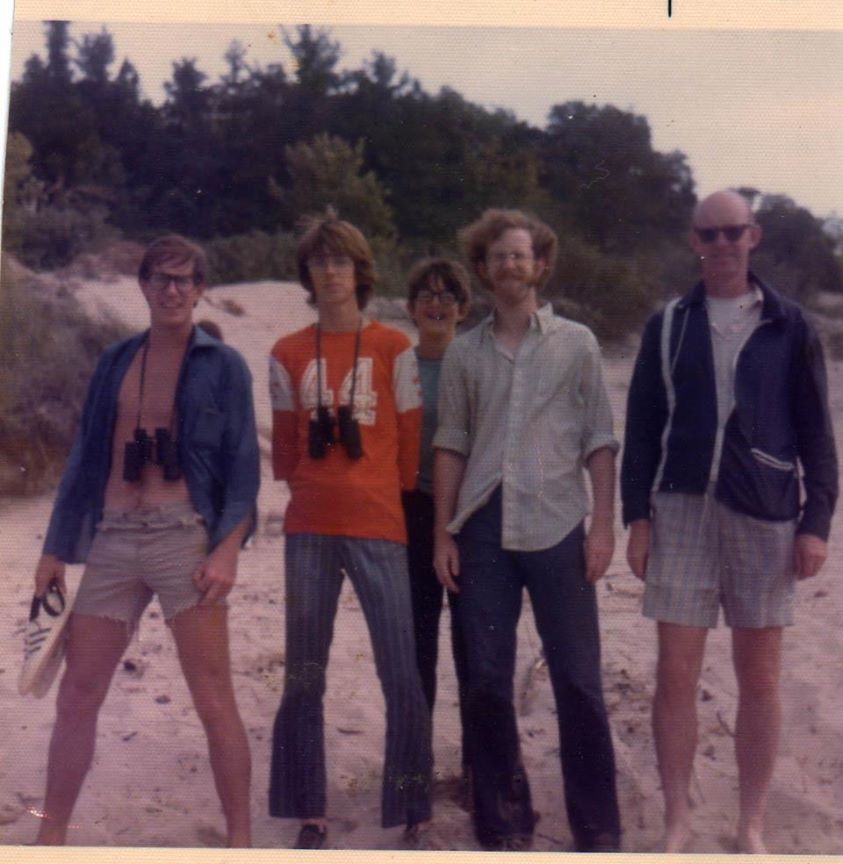
We found species like the brown thrasher at Elburn Forest Preserve
Birders
One of the first things my brothers and I did upon moving to Illinois was seek out natural places to engage in birdwatching. We’d taken up the avocation thanks to my eldest brother’s experience in a college ornithology class, and we were on fire to find new species. The closest forest preserve was just a mile west from our house in Elburn, and we spent many mornings searching for birds while walking the gravel road that looped through that preserve.
We found owls and flycatchers, several species of woodpeckers, dozens of warblers in spring, and a pair of resident red-tailed hawks that soared over the thick oak woodlands. That preserve became our “home away from home” because it most resembled the woods we’d left behind back east.
The Oregon Trail
At the front of the preserve, there was an odd “ditch” of sorts where the entrance road crested a small hill. One day I finally noticed a sign indicating that this drop in the land profile was a feeder route leading to the famous Oregon Trail. The “ditch” had been cut into the earth by the movement of covered wagons and other human migration through the area 150 years before. I stood there one day thinking about that trail and how it represented both a scar on the landscape and also the mark of so many dreams.
Two years later, as a freshman member of the Kaneland Cross Country team, I’d run races right past that deep cut in the earth. We’d start on the bottomland of the preserve, race up the broad glacial hill on the south end of the woods, tarry through the oak forest on a winding gravel road, and pop back out front next to the section of the Oregon Trail. Sadly, the county has allowed trees to grow in the groove in the landscape. That should never have been allowed. Much of the cross-country course is also “wooded over” and the large open grassy area that served as the starting point of the race has been allowed to revert to wetland. Those are all good things, mind you. I’m comfortable allowing my high school memories to dissolve into those natural areas. Nothing lasts forever if nature has its say.
Becoming a Midwestern Boy
Running in Elburn FP 1972
I never knew when we moved to Illinois that there would be so much to learn about the land and its history. It might have been great to remain in Pennsylvania, but perhaps I was meant to expand and experience the many things the Midwest has to offer. I moved back to Philadelphia for a short period during my early 20s, but by then I felt out of place. The landscape back East felt crowded and intense compared to the open skies of Illinois. I’d also grown to love the diversity of birds and the open-faced nature of Midwestern people. While I’ll always think of that Pennsylvania house and yard as my original boyhood home, I grew to make the best of it here in Illinois. I’m a Midwestern Boy for sure.
I’ve always loved running where you could see ahead, and dream a bit on the way. And yet, as I ran at Luther College, I also loved winding between cedar-covered bluffs on dirt farm roads. The mystery of that I also loved. But it is uniquely Midwestern as well. The Driftless Region is one of the most beautiful places on earth.
Perhaps I wasn’t so different than those travelers on the Oregon Trail, each seeking their own version of a new frontier. Learning to call a new place home is a valuable part of life, indeed.
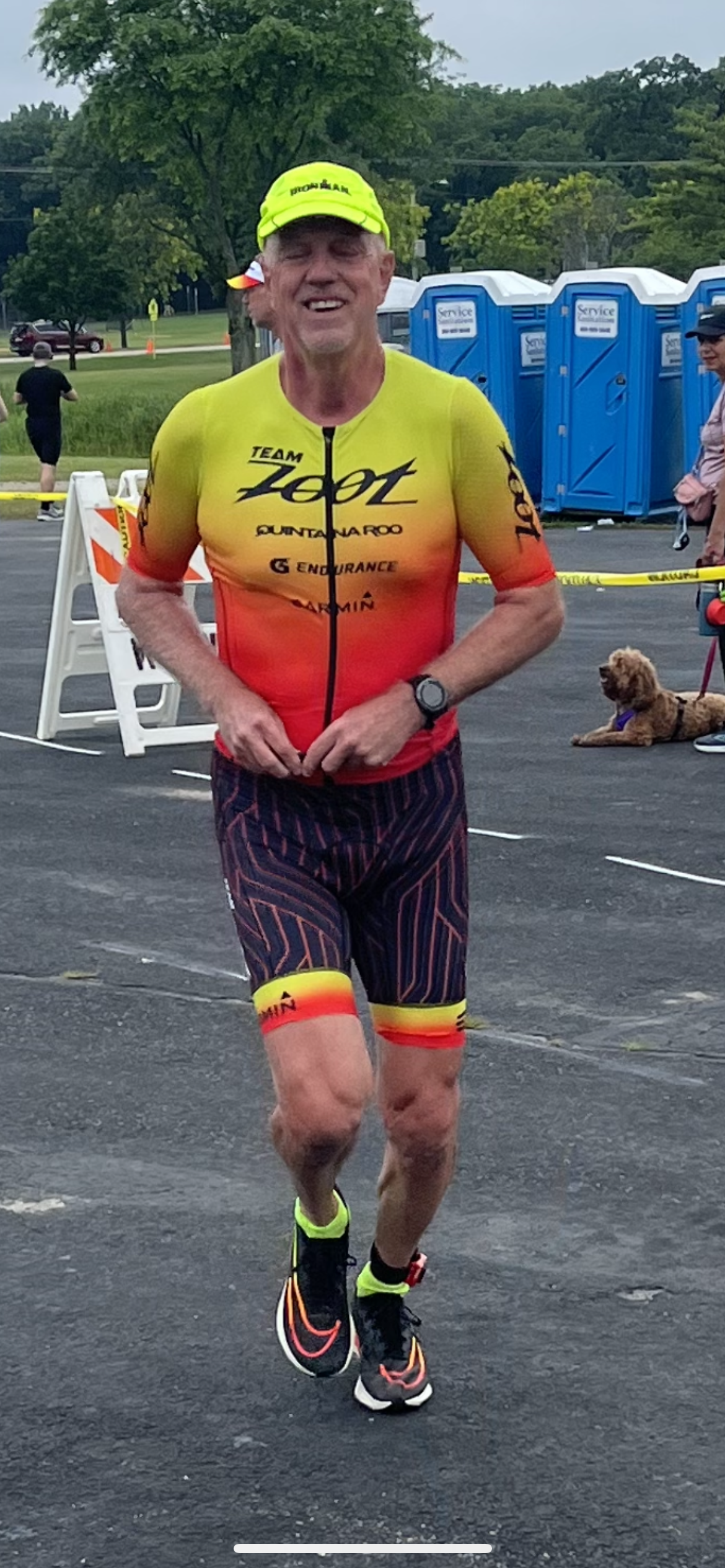
Heading into the Run Out zone, I ran over to give my wife a kiss
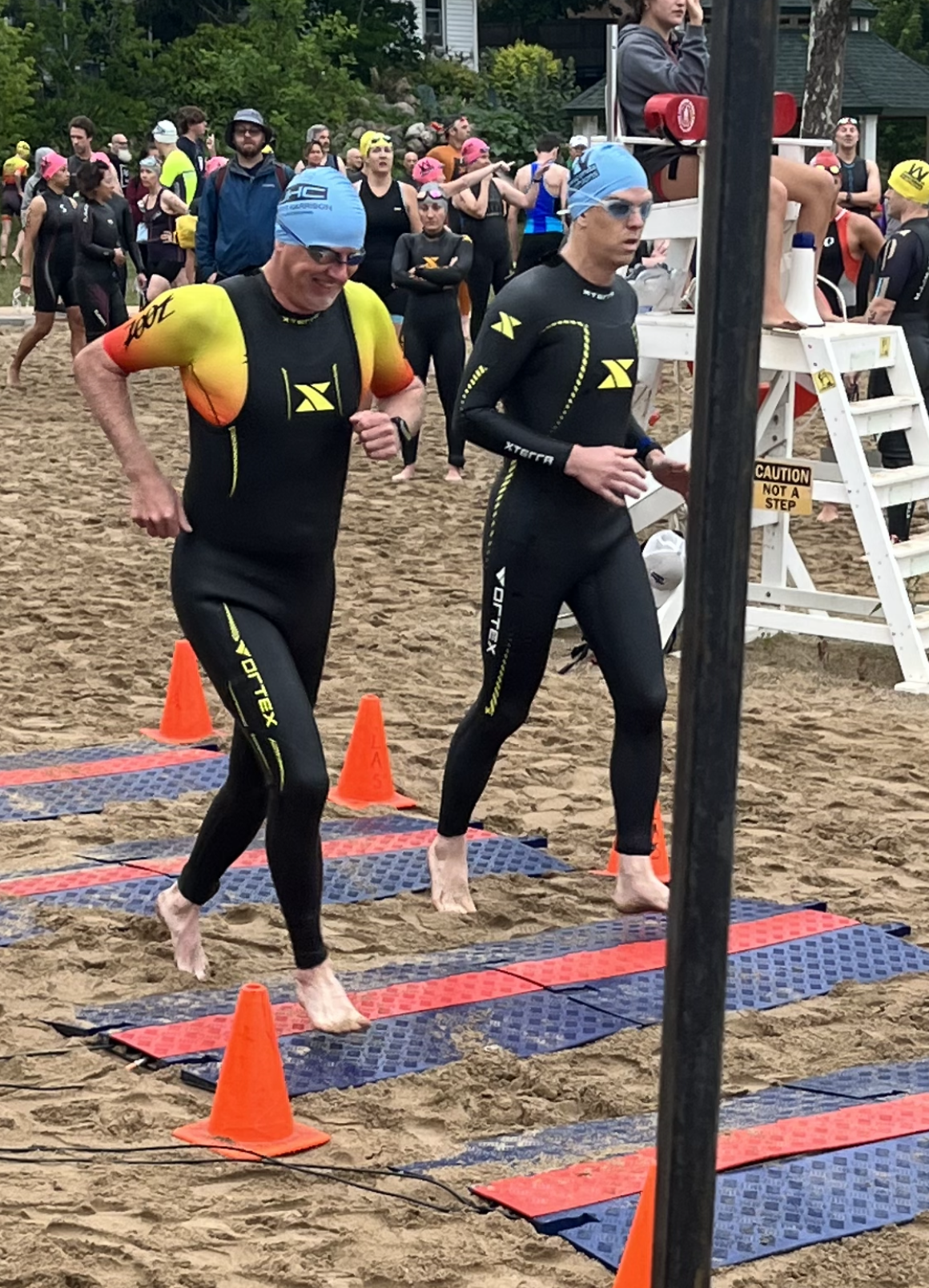
Standing in the sand at the beach next to Bang’s Lake in Wauconda, I felt one small tremor of nerves. Then I remembered that these days competition is more about the experience than the result. I swung my arms a few times to loosen them up before the mile swim I was about to do, and smiled.
I’d already warmed up in the lake yesterday morning. The water temps were cool enough to make the swim “wetsuit legal” so the queue of 500 competitors was largely cloaked in black, some with arm sleeves, others without. My Zoot kit sleeves poked out the holes of my sleeveless wetsuit and I felt ready to go.
Last Thursday I went to Vaughn pool to test swimming in the Zoot kit. The shirt crawled up my belly a bit even when I tucked it into the ROKA shorts. It’s important to test these things out in advance of any race. For a bunch of reasons, including a bout of Covid one month ago, I’d waited all spring and half the summer to race this year.
It felt good to splash into the lake and get swimming. Both of my pool workouts went well last week, with per-100 times in the 1:47 range. And as it turned out, my fastest 100 split in the Wauconda Olympic triathlon swim was exactly 1:47. It pays to practice these things.
Coming out of the water in 38 minutes was about my target time. There was some chop in the lake from a northeast wind on the way out. I dialed into a cleaner stroke on the way back and was pretty sure I’d gotten faster as I went. Much of that is a matter of warming up this soon-to-be 65-year-old body. My birthday is July 26, so I’ve shifted age groups this year.
Getting through transition is a matter of calming the brain after the freneticism of the swim. I stopped to let my friend Trudy pop open the back of my wetsuit. She smacked me on the back and away I went. Then it was time to stomp out of the getup and pull on the cycling shoes, shades, socks and helmet. These days I don’t bother with cycling gloves because they’re one more thing to pull on during transition.
It was cool riding at first with an entirely wet tri-kit. The north breeze made it hard to get rolling along with the group of inclines over the first four miles. My legs always feel tired on the bike right after the swim even though I barely kick. Something odd goes on there, and I haven’t quite figured that out. Once I get going, another issue crops up. My upper hamstrings often tighten up if I ride a gear too big for my britches at the start.
Coming in off the bike course
Up we went over a series of hills to the northernmost point of the bike course. I didn’t really study the facts of the race carefully enough to know that we were doing two loops of the same course. My vision was that we were riding one big 24-mile loop, but that was not the case. My lack of attention to detail sometimes gets me into trouble in circumstances like that. My sweet wife kept checking my gear list the morning of the race. “Helmet? Shoes? Running shoes…” but yes, I had it all with me. I’ve learned to focus on what’s needed to succeed. But I never bristle at a few reminders.
Heading down some back roads, I dug into the Clif Shots to chew a few down for nutrition’s sake. It wasn’t super hot so I wasn’t panicked about water, but six miles in the sweat did start dripping off me. I was ripping along at 24-25 miles per hour at some points on the course.
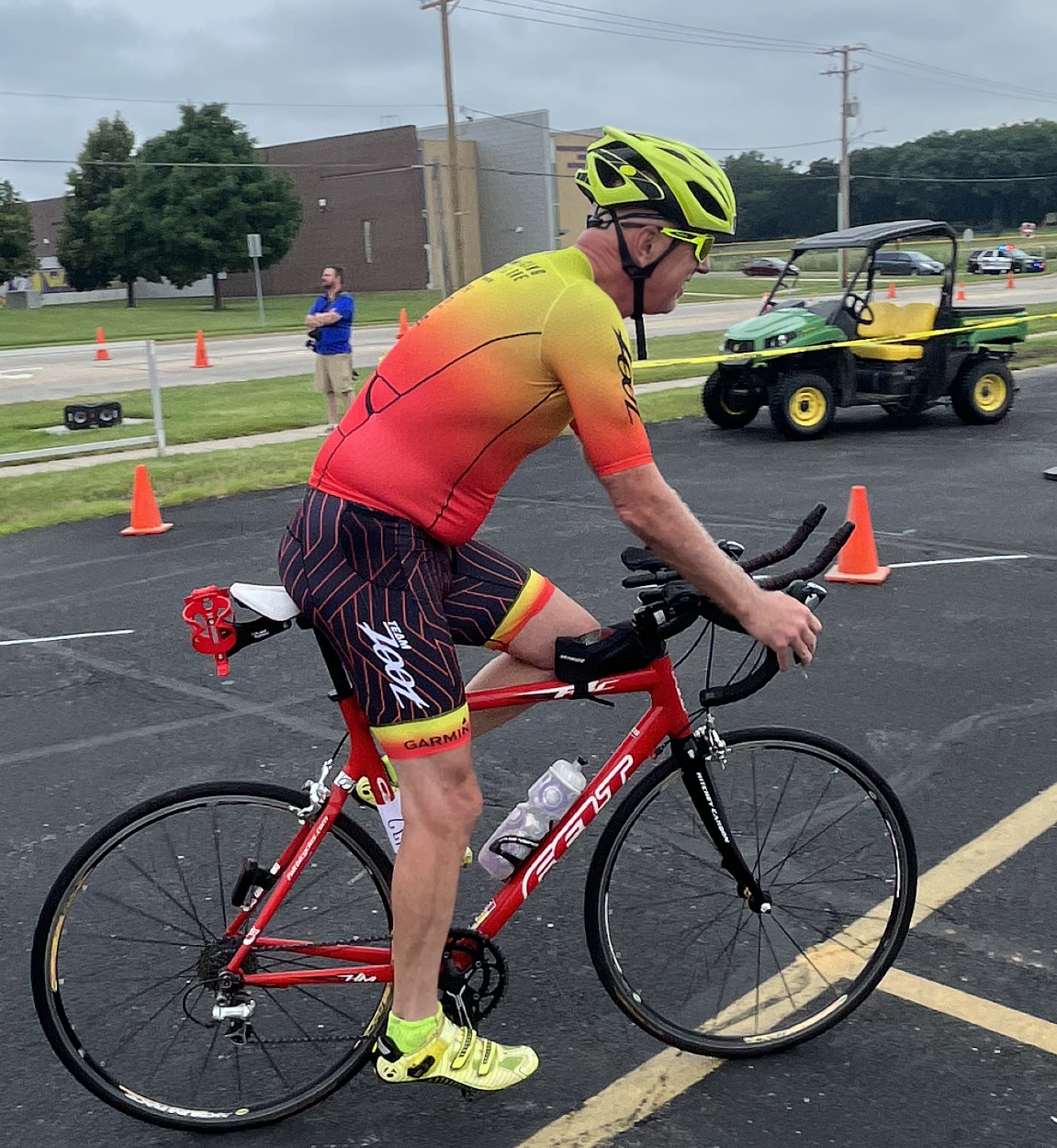
But the climbs were weak. I felt the stress in my upper hamstrings and that’s a sign that in truth, my bike geometry is not ideal for triathlon racing. The Felt 4C I ride is a faithful companion. It is the bike I raced in criteriums back when I had the nerve for such things. Now I fix aero bars to the front and ride in the best position I can. Which isn’t terrible. I averaged 18.5 mph for 24 miles on a course the race information calls “challenging.”
Heading into Bang’s Lake for the swim.
The men and women riding true tri-bikes came zooming past at times. The sound of their carbon wheelsets preceded their arrival. It sounds like rolling thunder in the background. Then they whoosh past at warp speed and I watch them go. Younger and stronger, and likely trained much more seriously than I, the age-group elites have all the time in the world ahead of them. I remember being the race leader on so many occasions at road races. Whipping past slower runners on the return trip of an out and back course, I accepted their cheers and often cheered back. “Way to go!”
I uttered that phrase to all kinds of participants in yesterday’s race. “Way to go!” is a gender-neutral, positive bit of encouragement that isn’t judgmental in any way. There’s nothing wrong with being respectful toward even the slowest riders out there. Some of them rode mountain bikes with sneakers flat on the pedals. Their age and race numbers were still scrawled in black marker on their calves. They’re after their own race experience.
A 60-year-old Zoot woman came ripping past me with four miles to go. I decided to ride in sync with her the rest of the way, and allowing six bike lengths to avoid any drafting penalties, I dialed in a faster cadence and rumpity-rumped through Wauconda on its bumpy streets and finished the bike with my wife cheering.
I’d had a bit of a mixup the first time around. The woman giving directions for Sprint and Olympic competitors got confused and stood right in the middle of the bike lane as I approached. “Olympic!” I called out while approaching the race split point. “Left!” she yelled back.
“Left?” I asked, and veered into the space outside the cones. Looking ahead, I saw competitors riding on in the Olympic distance. But as stated, I hadn’t studied the details much and perhaps I missed some sort of roundabout we all had to do before heading out on Loop 2. So I soft-pedaled over to the sidewalk and down about fifty yards before swinging back onto the race course proper. Catching back on with a younger rider, I told her, “They f’d me over back there,” I laughed. “This is the Olympic loop two, right?”
She smiled and said yes.
So I was glad to be done with the riding section of the race by the time we pulled back into transition. I love cycling but the slow inclines on that course ground me down a couple times. I need to work on that aspect of my riding.
I did do something on the bike yesterday that I’d never accomplished before. I peed while riding! Yanking down on the bike shorts in a section of the course where no one was near and there were no competitors in sight, I whipped out the nard and relieved myself while in motion with a helpful wind to blow the results away. I was so, so proud of myself for that move. Hey, you take the small victories where you can in this sport.
But I’d hydrated enough that I still had to pee coming out of transition to run. My wife Sue was waiting for me with her iPhone to take pictures as I ran past. Instead, I veered off to the Porta Potties for a ten-second pee. I hate running with that tingle of having to pee. It was worth it to get rid of that sensation when it was most convenient.
Age group champ. Aren’t I “matchey!”
There was one more problem to solve coming out of T2. I’d tried to use the Triathlon setting with my Garmin watch but at some point pushed the wrong button and I didn’t know what to do next. Was it tracking transitions still, or just adding it all up. The face read 1:50 and I tried to save it but the watch decided it wanted to find Heart Rate data. “Nooooo!” I yelled at the watch, pushing all sorts of buttons at the same time. Finally, as I approached two minutes on the run I dumped and discarded the whole setup. I wanted to see split times on the run.
That first half mile is always a drag. The legs are dead from cycling and the human body needs to figure out what it has stored up for a six-mile run. I lumbered along for a half-mile and finally things started to come together. The first mile was relatively flat and I passed through the mile in 8:38. A good start.
Then things got interesting. I wasn’t trying to pick up the pace but I was running along at 8:00 per mile by then. “This is great!” I told myself. “Just don’t push it and let the body do what it does best. Run!”
Then we turned the corner near two miles and the hills came one after another. Much like on the bike, I could not climb for beans. My butt was tight and the legs were tired. Cresting that first hill, I looked ahead to see another. “Well damn,” I muttered out loud.
A half mile before the turnaround we turned right and spilled own a 300-meter hills. “You have to climb this coming back,” the volunteer at the turn told us. “Thanks,” I breathed.
We climbed yet another hill to reach the turnaround. I slowed to a near-walk and then the road flatted for a while. Turning back, I tried to remember how many hills we’d have to climb on the return trip. Plus that one big one. So yes, I slowed a bit through that middle mile, hitting a 10:03. That was all I had in me running up and down those hills. Midway through the 300 meter climb back to the highest point on the course, I walked for fifty meters. A woman in front of me was walking backward to deal with butt cramps. Coming off the top of the hill I commiserated. “My butt locked up too!” She huffed in that shared suffering triathletes love to endure.
We got to go downhill at last. I locked into 8:00 pace on the flat again, and reasoned that perhaps I could sustain that going back in. My stomach felt side-stitchey the first few miles, and now my throat felt a bit acidic after taking a sip of water that floated the gel I’d taken at the last minute on the bike. I’m no wizard when it comes to triathlon nutrition. Pretty much I try to take the minimum required to get through without gastrointestinal issues. After the race, our friend the race referee Maxine-Franck Palmer laughed and told me, “Well, if you almost barfed it means you did it the right way.”
Right at four miles I saw three cheering faces as my wife, my step-daughter Stephanie and her partner Yomi appeared on the course dancing and swaying their arms. That cheered me up and I was thankful that I was moving decently at that point. At least I didn’t look like hell.
Then a surge of reality kicked in. I’d not taken quite enough nutrition to last me the whole race. During the last two miles I stopped for a few five-second breathers and walked a couple times. I was still managing to move along at 9:30 per mile. “Just get this thing done,” I said out loud.
On a nice long decline I was joined by two young women running on either side of me. Both were encouraging after I told them, “Good job!”
Trucking it home
“You too!” they said. Then I watched as their fit butts moved on ahead of me. I thought about the first two women that started the Luther College Cross Country program my freshman year in college. How far the sport has come in terms of equality! Gender really doesn’t matter out there on the course, does it? We’re all just people trucking along.
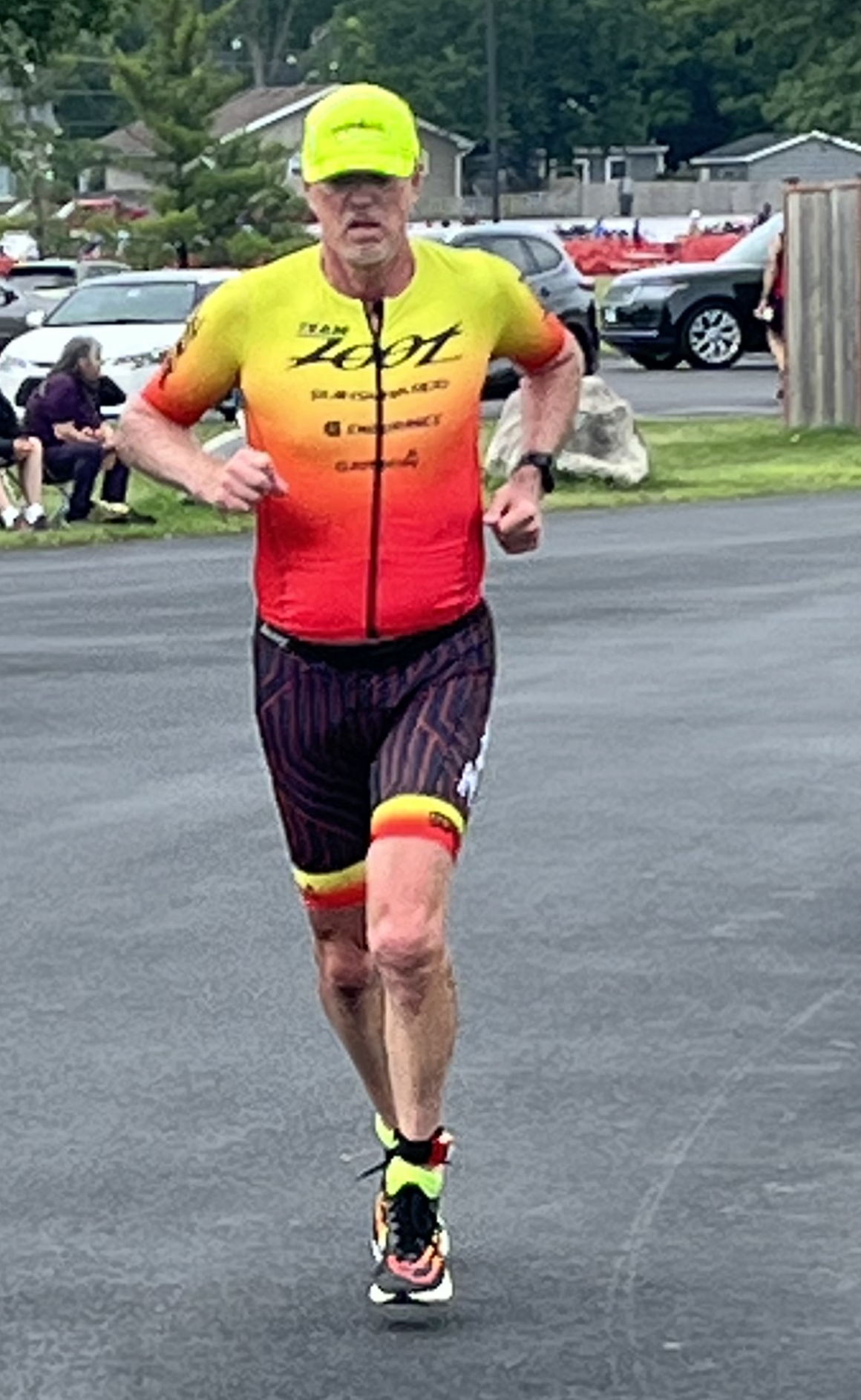
Blessedly, the last half mile was mostly downhill and then flattened out in the park to the finish. I glanced at my watch to see an 8:20 pace pop back up and was glad to run strong into the end of the race. My wife was there to capture the moments, and I was there to have fun and do my best. My splits on the run weren’t great, but they were respectable on that kind of hilly course. 8:32, 8:48, 9:13, 933, 10:11, 9:04 and a total time of 55:25.
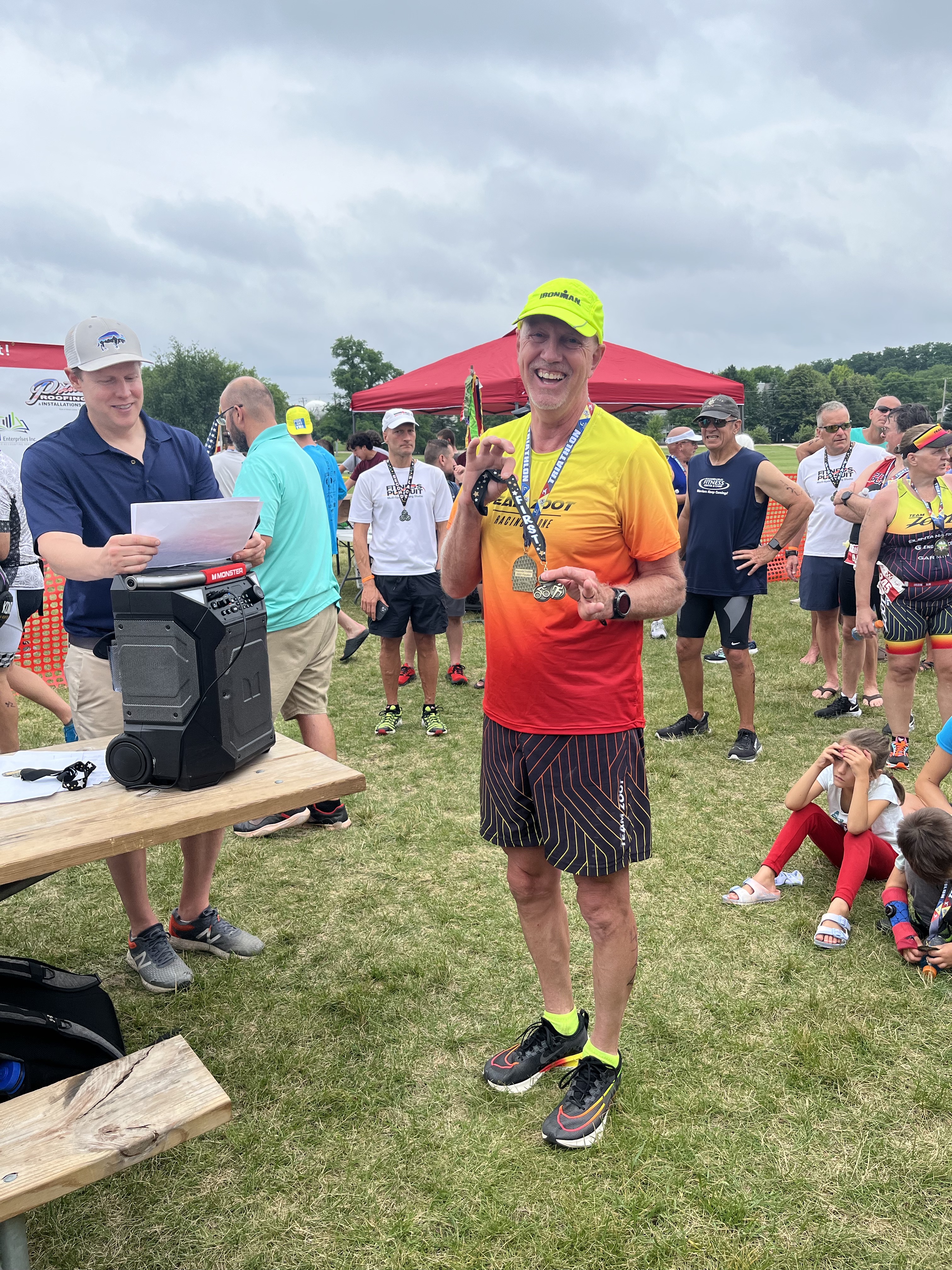
Turns out that “aging up” has its advantages. I took first place in the 65-69 age group with a creditable PR of 2:59:49. Yay!
We made the long drive home from Wauconda to North Aurora and I actually did some yard work after a restless nap. My heart rate data from the race showed that I topped out at 179 bpm. That’s nice and high for a guy my age, and it shows that while I was trained enough to do decently in the race, there is still fitness to be gained, for sure.
My body was buzzing most of the day. I felt strong, almost liberated in some respect. Perhaps I’m one of those people that needs to push things to the limit now and then. This life we live too easily become mundane if you don’t raise the needle of effort now and then.
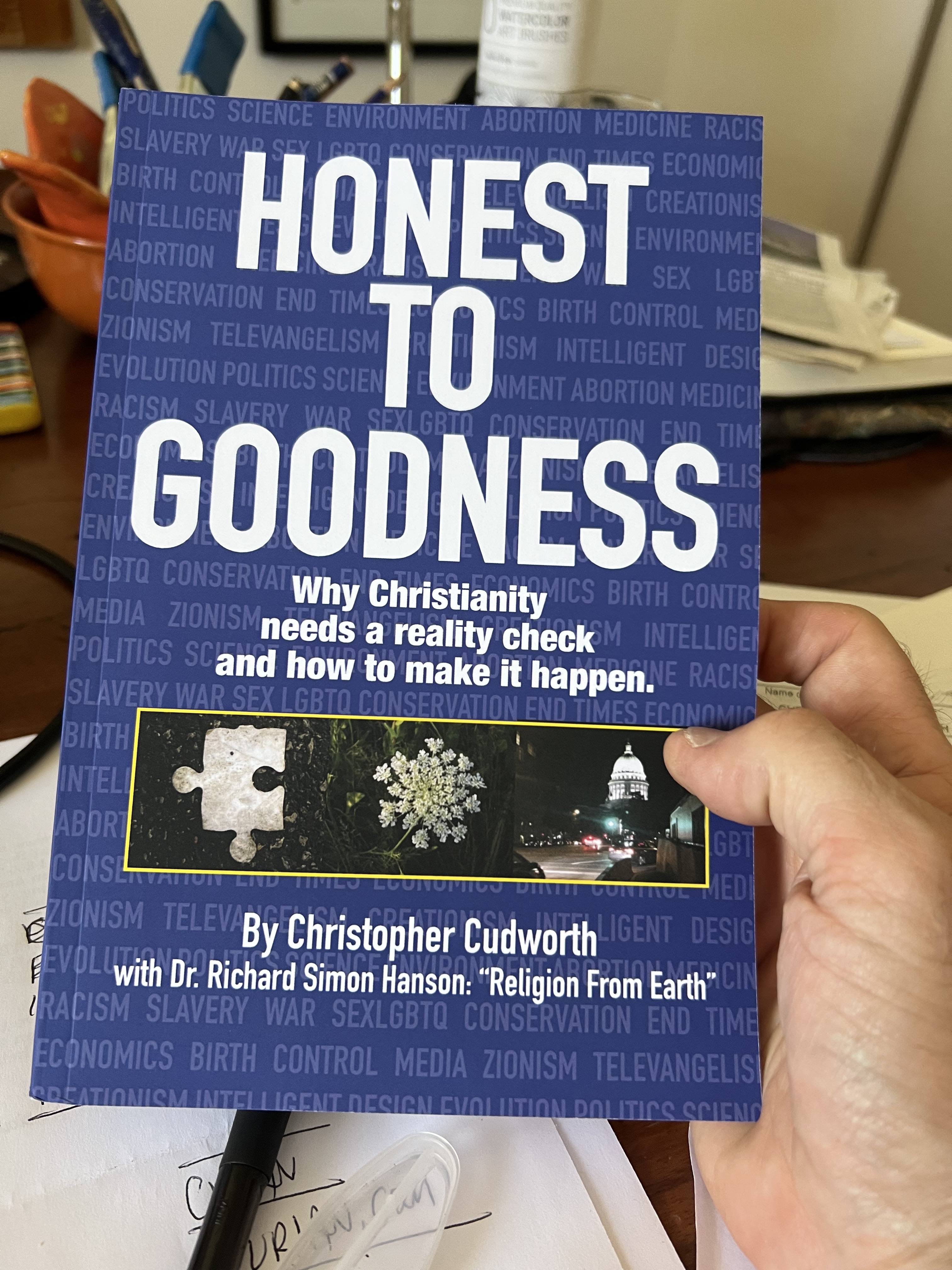
It inspires me to do that in other phases of my life. I’m a week away from fully publishing my book Honest-To-Goodness: Why Christianity needs a reality check and how to make it happen. It takes a ton of work and focus to make a project like that happen. There are stops and starts, and detail matters just like it does when running a race.
I believe that one good thing feeds another. It was about time I raced again. And it’s about time I tried to change the world with this book I’ve written.
As the school year wore down in 1970, the time for our family to move to Illinois soon arrived. My father moved out to Illinois after taking a job with an electronics company in rural Geneva. He lived in an apartment in St. Charles for months. Looking back, the uncomfortable truth is that he likely valued the time away from the family––and perhaps even time away from my mother. He let loose in a bit of mid-life crisis. But when he crashed the greenish ’57 Chevy at an intersection one day, the crush of reality probably caught up with him quickly. Some omens arrive by way of metal. Others take the form of flesh. In either case, the collision with reality can be awkward, and often rough.
My mom worked hard to keep our family together back in Pennsylvania. She worked all day teaching school and ran her boys around to practice most evenings. On weekends she tutored students from my class with special learning needs at our home. She made sure I made no mention of their difficulties lest they be mocked at school. The social order was merciless back then.
Holding pattern
To me, that spring was a strange holding pattern between normalcy and all the changes that I sensed were about to come. I was a self-conscious kid with crooked teeth who refused to fully smile when having my picture taken. It was hard enough maintaining some sort of social status among kids with whom I’d grown up from the age of five until seventh grade. Now I was going to have to reinvent myself in an entirely new state? It was best not to think about it day-to-day.
Then one day my father called long distance to relay that he’d found a house in a little town called Elburn. He sent us Polaroid photos of the house and driveway. I noted that the basketball backboard affixed to the barn had a nice orange square behind the basket. That was an all-new feature of basketball backboards in those days. It gave me the slimmest hope that life in Illinois could somehow turn out to be cool.
A Polaroid photo of the Gates Street house in Elburn in 1970.
The news that I’d be moving out of town swept through our class at school. People wanted to know why I was leaving, and I didn’t have much of an answer except that my dad had gotten a job far away. Even relating that bit of foreign information made a difference in how some friends treated me. There are always people that don’t cope well with any change in a relationship, especially when it means you might be moving on in one way or another. Often to protect their own sense of security, they hide their true feelings and the person leaving winds up getting treated like dead meat. That’s how it worked with some, but not all classmates.
Over the years, I’d feel that same sensation in other situations as life went on. When things weren’t going well at work, or if you actually got laid off or fired, the ‘friendship’ dynamic changed in an instant. Whether for superstitious or practical reasons, people don’t want to associate with anyone anywhere near the chopping block. If someone is sick or worse yet, even dying, people have trouble knowing how to act. They don’t want to say the wrong thing, so they say nothing at all.
And if a lover cheats on you and other people find out about it but are afraid to tell you, the communication dynamics get awkwardly clipped and odd. In all these situations, people often choose to avoid or hide from the truth. Perhaps there is some evolutionary explanation for these types of human interactions. People see any form of weakness or signs of separation from the herd as a potential threat to themselves. It’s a dynamic as old as wildebeasts and lions, and it is one of the tarsnakes of human existence that even longtime friends will duck and run if they don’t feel they have the emotional energy to sustain you in a time of need.
But that was not the case with everyone in our class. Some of the junior high teachers sympathized with me about moving away. One in particular, a music teacher and the choir director, organized a Going Away party that my classmates attended. Someone took a collection and the group purchased me a an actual sweep-second-hand wristwatch, the first I’d ever owned. I was overwhelmed by the gift even though it probably wasn’t all that expensive. Others gave me 45 RPM records that were popular at the moment. That included the newly released Let It Be single, a 45 single that had the amazing parody number You Know My Name on the back. I loved that song because it captured the odd humor of my brothers and I. We all looked a life like a parody in so many ways.
But the record given to me that hurt the most was the single Get Back by the Beatles. Its refrain…”Get back to where you once belonged” was hauntingly real to me that last month in Lancaster.
Natural retreat
I’ve always lost escaping into nature.
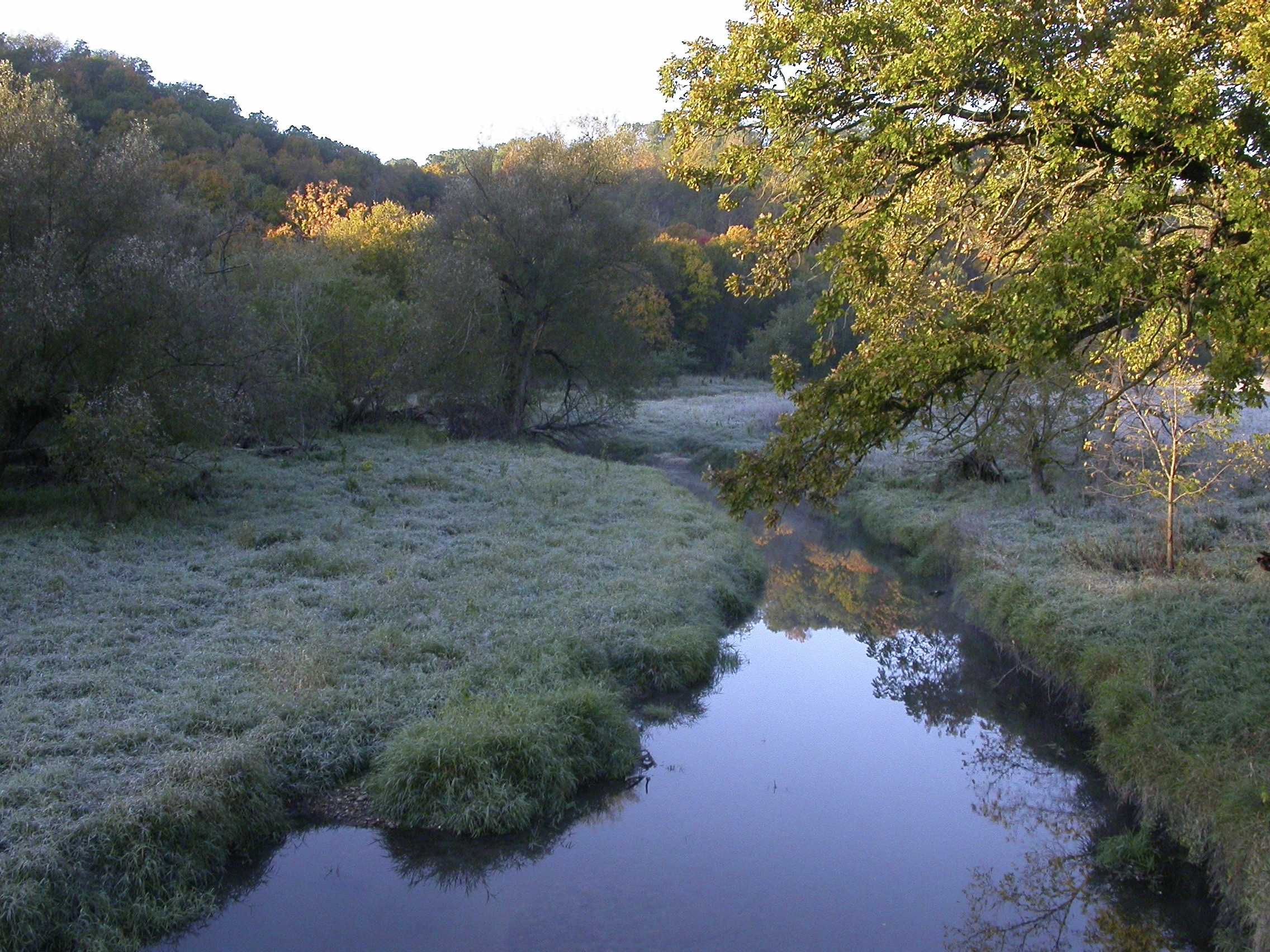
After all that social attention, I did the one thing that comes natural to me when human relationships get too much to handle. I retreated to nature. I headed to the woods and walked trails along the small brown river called Mill Creek, and wandered over to the Conestoga River as well. Even as a young kid I loved spending time alone. On warm days I’d sometimes strip naked and walk through the deep woods feeling free and wild. To this day I love the feeling of being naked outdoors. Not everyone appreciates that sensation, but millions do. It would be better for the world if more people did, and if it were legal in the United States, the most uptight country on the planet.
Of course, a little kid, I was afraid of being caught while naked. But I was cautious as heck and that never happened. I was like a wild little animal carrying my clothes around or leaving them in some safe spot to run back and forth for twenty or thirty yards like the skinny little roadrunner that I was. These days, I’m not beyond finding some massively remote place to strip down and stand a few minutes in the sun. It is cathartic in many ways.
Anxiety reigns
Finally I’d get anxious enough about getting caught naked to throw clothes back on and hike out of the woods and find something else to do.
Along with my human friends I’d made friends in those woods and streams with crayfish and salamanders, frogs and fish including bass, suckers, carp, catfish and bluegill. While fishing, I once watched a squirrel try to leap from one tree to another and fall into the stream, only to swim back out. In winter the ice from Mill Creek heaved up during an ice dam. It collected on the banks and made an astounding playground, but I was always careful not to fall and hurt myself. I never liked the idea of dying alone.
There was a massive aviary near the golf course and I loved visiting the fenced in area to stare at the peacocks strutting with their raised tails. You could hear them calling at all times of the day, and the guinea fowl would race around with their insane clucks and protestations if you got too near.
Time to move
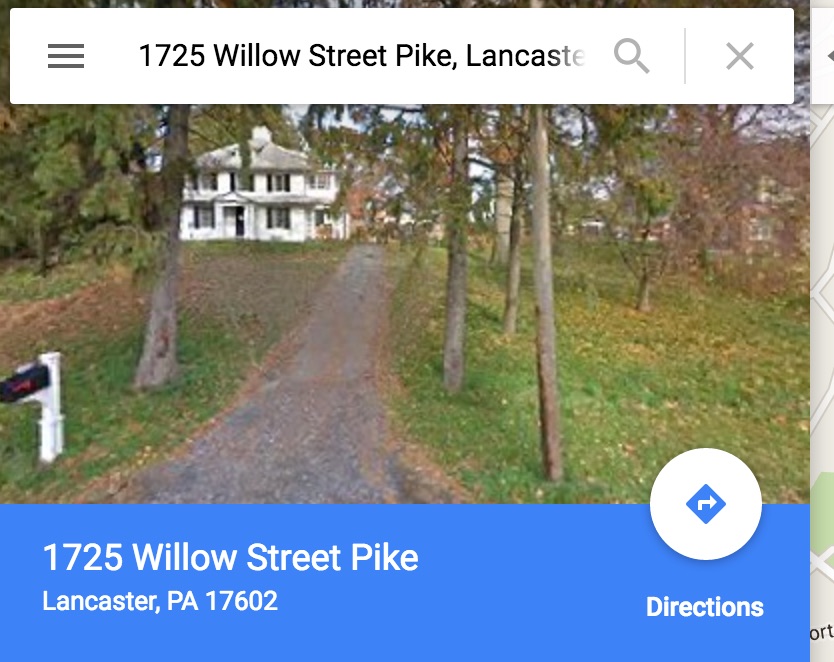
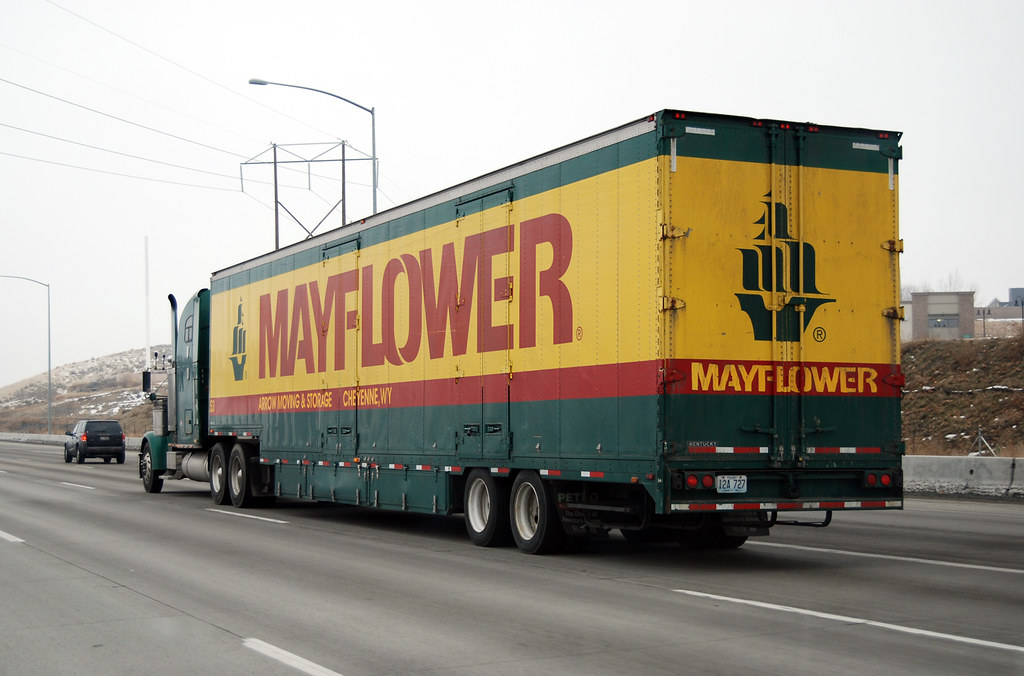
Then came the day that the Mayflower moving van showed up with that classic mustard yellow and green pattern with red lettering. I can still feel the dull pain of seeing that truck in our driveway. The movers hauled all our furniture and belongings out to the giant truck. Then our home at 1725 Willow Street Pike sat empty, and I walked around the house with my footsteps echoing off the walls. I could not believe it was actually happening. We were leaving home, and for what? What awaited us?
I walked around the yard with its newly grown layers of green grass. I stood there and thought about the seven years we’d spent living there. I loved that home with all my heart. Because despite the pains of growing up, and the occasional whippings we’d get with a switch or a brush, or a hot pan of water thrown by my mother to settle our asses down, that house would forever be considered the place I called “home” no matter where else I lived. I knew every corner of that lawn. I’d learned to pitch a baseball, throw perfect spirals with a football, and kick a soccer ball with the side of my foot like you’re supposed to do. And I also ran my first timed race around the side yard that was the size of a tennis court, because that’s what it used to be.
Life in images and sound
I loved how the dogwood tree blossomed white in spring and how fun it was to climb the tall hemlock on the east side of the property. Looking out from the upstairs windows of my bedroom, I could always see what was going on in the yard. My mother used to send me to bed before dark in the summer months, and I’d be jealous of my older brothers and their friends running around outside playing Kick the Can or Capture the Flag. But eventually I grew up enough to join them, and racing around as the fireflies rose from the grass is the substance of my youth.
So many evenings we’d be out there playing in the yard or somewhere nearby in the neighborhood and my mother would come out calling our names for supper. She’d mix them up half the time, “Grary, Chrimmy, Jissy…” she’d call out in some kind of confused hurry. That was because she loved us all equally, and deeply. For all our fights and differences at times, in many ways were were inseparable.
My memories of that home include birthdays spent working on plastic models given to me as gifts. Sometimes I spent hours doing watercolor paintings or pastels with the art supplies that my mother purchased for me.
In the summer of ’69 I sat with my mother watching the moon landings together in the living room. And my dad once turned to his kids before a Muhammad Ali fight being broadcast from the other side of the world, and said, “Have you ever seen a miracle?” Then he explained how those pictures were being bounced off satellites in space. But we were all so excited about seeing Ali in action we hardly absorbed the lesson. Float like a butterfly. Sting like a bee. Rumble, young man Rumble.
We watched the television shows Laugh In and Batman together. On Sunday afternoons and evenings, we’d lock in for the sequence of American Sportsman with Curt Gowdy, Mutual Of Omaha’s Wild Kingdom, then an episode of Daniel Boone or Davey Crocket, all capped by the Sunday Disney show that week. Of course, half the time I’d be watching those Sunday shows knowing that I’d not done my homework.
One fun summer we roared over the Marty Feldman comedy show as a family. The program began with the wild-eyed Feldman playing a hole of golf in which he putted into all kinds of crazy situations. On Saturday mornings, I’d watch Looney Toons with Bugs and Daffy, Elmer Fudd, Yosemite Sam, Sylvester and Tweetie, and Roadrunner, my favorite. Then came the weird-ass live shows like the Banana Splits (whose them song Bob Marley copped for one of his songs) and HR Puffnstuff, with its tongue-in-cheek drug references. and the Monkees. Then we’d watch American Bandstand and go outside after that and play.
With all those memories and joys stored in my conscience, I was numb that day we packed up to leave. The day before I met with my best friend out on the drop hole of the golf course, where he asked, “Why does everything I love have to leave me.”
As for me, I felt raw emotions burrowing into my soul. But I tried to be brave and hide them. The night before we left Lancaster, I stayed next door at the neighbor’s house. The girl next door named Amy was a sweet and kind friend all those years. Her mother Van made a special meal for us. Her father Dick used to take me fishing down at the Susquehanna dam. His eldest son was too old for going fishing with dad by then, and his two daughter had no real interest in it. So he’d ask me to go along, and I loved plunking a heavy line and sinker with a worm on the hook into the swirling waters. He trusted that I would not fall in, and I never did. Some aspects of common sense in those days were assumed.
I knew that he worked at a meat-packing plant in Lancaster. On his wall at home was painting of a bullfighter and a bull done in cow’s blood. I didn’t think much about it back then, but it is amazing how the sensibilities of generations change with time.
The morning that we left, my family arrived back from the various houses where they’d stayed the night before. My friend David and I hugged liked we’d never hugged before. We both cried deeply, sobbing. And then he stopped suddenly. That was his nature. We were two twelve-year-old boys knowing that they were losing a longtime friendship, and there was nothing we could do about it. But David learned along the way how to put pain behind him. After his parents’ divorce, and so on, he processed what he could and moved on.
The Trip West
We climbed into the 1967 Buick Wildcat with my younger brother sitting between my parents in the front seat and my two older brothers parked on either side of me in the back seat. Normally they didn’t want me touching them in any way, but that morning my oldest brother leaned close to me and we sang the refrain from the backside medley of the Beatles Abbey Road album. “1 2 3 4 5 6 7…All good children go to heaven…” Somehow that was a solace to us both.
Down the driveway we rolled for the last time. Then we drove straight through Lancaster past the Armstrong baseball fields where we all learned the game. The Buick Wildcat with its .357 engine wound onto the Pennsylvania turnpike and we traveled west toward Illinois and an entirely new life. I wasn’t exactly happy about it. Nor were my brothers, or even my mother, I’m willing to bet. But my dad had made up his mind that his future lay with that new company out in Illinois, we were all along for the ride. We’d stop in St. Clair, Michigan that night to stay with his former Cornell University college buddy. I recall having an immediate attraction to the prettiest girl among the three. She was my age and know she was pretty, so she took to running me around all afternoon, exploiting my desire to please and earn favor from her. Such is one of the tragic flaws of my personality. It always comes out during times of great duress.
The cute girl in the middle knew exactly how to tug my boy strings.
Then we drove the rest of the way through Ohio and Indiana to Illinois.
That period was all part of a horrifically awkward period of transition. My oldest brother was just enrolled in college back at Millersville next to Lancaster. My next oldest brother would be a senior in high school that year, and it was the worst possible timing to move to another state. I was only heading into eighth grade, and I’d soon enough make new friends and adapt to the new life in Illinois. My youngest brother was a mere nine years old, but growing like a big weed.
I was determined to hit the ground running once we arrived. Few things in life make you run faster in place than moving to an all-new town. Within a week or two, the word got out about my basketball skills, and I tried out for the local baseball team only to throw a perfect game against much less skilled players. So they moved me up to the American Legion ballclub that started at sixteen years old and there I was, a soon-to-be thirteen-year-old pitching against the older kids.
As a baseball pitcher, I feared no one.
And Competition’s Son was suddenly in his element.
In the seventh grade at Martin Meylin Junior High in Lampeter, Pennsylvania, I lived for gym class. Sure, I loved industrial drawing, a class that taught me how to create perspective as well as paying attention to my craft. That teacher was a stickler for accuracy, and I loved it. That class also made me write in all capital letters and I quickly abandoned the carefully curated cursive I’d learned to begin writing in all caps.
I liked English well enough, too, because I liked writing. But I hated math, tolerated social studies and even learned some German at some point. I was a B student at best, but more often earned a C average to match my name. See, I also hated homework, and had some issues with ADHD. That made matters worse.
Beyond gym class and studies, there was a social network to cope with, and my only real goal in life beyond sports was getting girls to like me. Somehow I worked my way into the realm of the most popular kids and even got to attend some parties where we played Spin the Bottle. Every second of life was some sort of competition, it seemed.
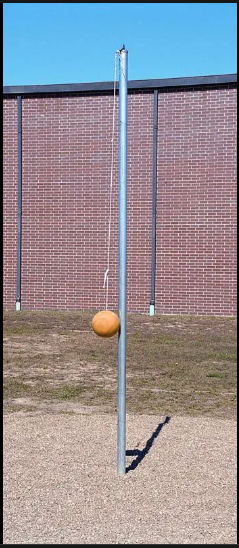
In junior high, we got to go outside twice a day. Typically we’d play on the macadam area behind the school. There were several tetherball poles stuck into the asphalt, and there was a system to establish who got to play on what pole. Getting to play on the “A” pole was a sign that you were moving up in the world.
The eighth-grade kids typically dominated those A games. But as I honed my skills on the “lower courts” I developed a stinger of a serve that no one could return. I learned to drive the ball hard above the reach of the other player on the serve, then sent the ball even faster and higher with each strike of the tetherball on my side of the court. It was an unstoppable tactic as long as I hit that first serve correctly.
The A Game
Word got around that I couldn’t be beaten on the lower poles, so the invitation finally game to play the eighth-graders on the A court. Now, I’d built into one tough little kid from all those days playing tetherball in all sorts of conditions. If it rained, I loved it because I was unafraid to get wet and could absorb the sting with my hands. If it was hot outside, my endless endurance came in handy as most competitors would tire out.
That’s how it went from day-to-day and for a month or so. I kept on winning. I know that sounds like an exaggeration but that’s what really happened. I even ceased washing my hands to toughen them up. During that period my mother and father were so busy working they hardly had time to notice that their grittly little son was possessed of a working-man’s hands. The skin cracks were lined like sanskrit on a whale bone. My knuckles too. I could strike the tetherball hard and hardly felt it. I was, you might say, “all in” on tetherball.
If it happened that someone actually caught hold of my serve and sent it back in the other direction, my fighting spirit took over. I transferred the anger I’d previously directed toward punching others in fights into striking that tetherball. It was cathartic, wild, and I was obsessed with winning.
Having worked all the way through the eight-grade players that wanted to challenge me, a set of familiar faces began showing back up in the line. All were equally determined to claim that they’d beaten the upstart 7th-grader Chris Cudworth. Eventually, it got tiresome and stressful to keep up the win streak.
Are you not entertained?
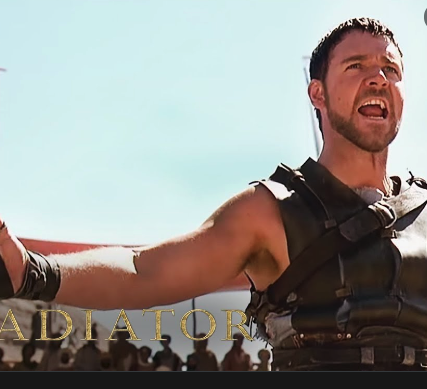
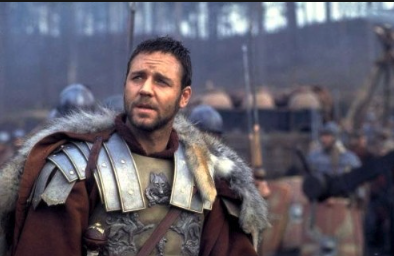
One of my classmates joined me in the mission to prove we were the two toughest tetherballers in the school. He ceased washing his hands as well. On the way out to the playground, we’d compare knuckles as we walked out to the courts. We smiled in the knowing way fellow warriors do. If we went down fighting, that’s all we cared about. Perhaps that’s why I like movies like Gladiator with Russell Crowe. He starred as General who turned into a slave, a slave who turned into a gladiator, and a gladiator who challenged (and killed) an Emperor. To me, that plot is not about being an underdog. It’s about recognizing that you were never a sorry sort in the first place. You need to be determined espite how other people try to make you feel, or seek to control you. Then you go out there and do your best. And realize that often you’ll be quite misunderstood, about which Maximus screamed after slaying an entire arena of gladiators. “Are you not entertained?”
Tired of battle
Yet even eager warriors tire of battle. And as the weather started to warm in spring and the baseball season beckoned, I wanted to be rid of the tetherball streak. I’d had enough of the pressure of having to win every day. The other kids were mad at me anyway. They told me I was a “court hog.” That didn’t feel good at all.
One day I walked out with Ed and turned to him and said, “I might try to lose today.” He stopped for a second and said, “Are you sure?”
“Yeah,” I told him. “This has gone on long enough. I kind of proved myself. The grass is getting green and I want to play baseball now.”
The trick, I felt, was to lose to a player good enough to possibly beat me but not make it obvious I was trying to lose. Nor did I want to let some cocky jerk beat me with the possibility that he’d never let me live it down. So I looked down the line and chose a kid that I liked well enough to lose to. When he came up to play, I purposely didn’t look him in the eye, but gave the ball a lower arc when I struck it and sure enough, with a quick response he sent it back my way.
It happened far faster than I’d have liked, but after two volleys he got that ball going faster and high enough that I could not return it. When the ball wrapped around the top of the post a giant cheer went up on the playground.
“Cudworth lost at tetherball!” someone yelled.
I walked off pretending to be mad but secretly I was relieved beyond belief. Ed met me shortly after. He’d lost as well that day, but never told me if it was on purpose. We stood out at the edge of the playground where a few people came out to console us, but we both just smiled and said thanks.
The next day I brought my baseball mitt to school and ran out to play 500 with the rest of my baseball buddies. A few mentioned the whole tetherball thing, but I ignored them and smacked my hand in the mitt softened with Neatsfoot oil. Then I stood there smiling at the fact that I’d washed my hands the night before. They didn’t need to be so tough to catch and throw a baseball. I’d learned that the will to win at any cost really did have a price. But you can trade it in.
Death smiles at us all
I think about the quote that captured the spirit of Maximus in the movie Gladiator: “Death smiles at us all, but all a man can do is smile back.”
When we lose at something it can feel like a small death. But when we accept losing because it is part of life or even embrace losing as a means to move beyond our present circumstance, that is smiling back at death. It’s hard to admit, but that’s a lesson most of us have to learn time and again. It certainly was the case with my distance running career, where a win one week was no guarantee of a win the next. As the saying goes, you’re only as good as your last victory.
Yet it is also true that we are only as good as what we learned from the last loss. We live sometimes because we choose not having to win all the time. That’s an important moral lesson in the present age, and for all times.
By the time I reached sixth grade, I’d earned a reputation as one of the better athletes in the grade. I recall being invited to a basketball clinic at the high school where the coaches took a first look at the kids coming up through the ranks. Already I was a flashy ballplayer, dribbling between my legs and doing pump layups, spinning the ball on my finger and shooting from the shoulder. My skinny arms were not yet strong enough to shoot a jump shot from the forehead, but I’d get there eventually.
For all that prowess in basketball and baseball and even soccer for that matter, the chip on my shoulder was still pretty large. Perhaps it was the products of a father-son relationship that tipped back and forth between encouragement and exasperation. The teasing and competitive trysts with my brothers didn’t help my self-esteem either. Nor did native anxiety as a nail-biting kid afraid that someone might not like me.
It all came to a head in a sixth-grade class when a kid pointed the projector at my face and it hurt my eyes. I got angry first, then cried in frustration, at which point one of the prettier girls in class muttered to another, “He’s such a sissy.”
That was enough to drive me to prove her wrong. I started picking fights on the playground and my reputation for fighting drew until this tough kid named Davey found out about me. “Meet me in the deep end of the Meadia Heights pool,” he told me one October day. “We’ll see how tough you are.”
The pool was empty for the winter, so the scene of the fight was going to be rather epic. Frankly, it scared the hell out of me. Plus Davey was a bit creepy-looking with a big head of black hair, super pale complexion, and really red lips that made me uncomfortable just looking at him.
The day came for the fight and I was supposed to meet him at noon in the pool. At 11 a.m. I was bragging about the fight before playing basketball with friends and a neighbor kid who was a year or two older than me grabbed me by the shirt and said, “You’re not going to that fight.”
Now, as nervous as I was about fighting the tough kid Davey, I was even more scared of the friend that grabbed my shirt. He was a little nuts as I recall, playing basketball in his socks most of the time, for what reason we never really knew. In any case, I backed off and the neighbor kid went to the fight in my place.
He returned a half-hour later with blood all down the front of his white tee shirt. He walked over to me and said, “That’s the last time you agree to a fight,” he said, pointing at his shirt. “Davey pulled a knife on me, but I knocked it away and beat the piss out of him. This is the blood from his nose,” he said, jabbing himself in the chest.
And from that point on, I ceased the fighting.
That was a big relief because I no longer felt the need to prove how tough I was. I’d learned to assume that there were always going to be kids tougher than me and that I’d meet them eventually if I kept on fighting. In fact, I didn’t punch anyone else until my senior year in high school when a kid named Kevin got so rough during an intramural basketball league that he flipped me over his back at one point. I jumped up and jacked him flush in the eye. He took a swing back that I ducked. Then I ran out the gym door all the way home through twenty-degree weather in just my basketball shorts, a tee-shirt and Converse All-Stars.
That night, the guy I punched called me at home (it was easy to look us up in the phone book back then…) and told me that he and his friends would catch me at school the next day and beat me up. So I stayed home from school on some excuse and the whole thing blew over.
I’ve dug through my youth as you can appreciate, and understand the reasons why I got so full of myself with anger at that age. I didn’t know how to handle some of the challenges of being raised by a dad with a bit of anger within himself. My dad was a really great guy, but he was also a bit presumptive about his own interests at times, and when his kids refused to help out around the house it really got under his skin. That’s when things got dicey for us, and that day that I watched him whup my brothers in front of me stuck with me for many years. I was traumatized, and the manner in which I acted that out of myself was to engage in violence too.
It can be much, much worse than I ever had it. Some kids endured regular beatings back in those days. Ours were relatively rare, or at best occasional. Most of my youth was joyous, filled with fun and laughter with my family and friends. But depending on how you’re wired, the worst part of an upbringing can determine a whole bunch of your outlook. For this Competition’s Son, it took years to work through those issues and find a form of self-esteem that was sustainable.
And I thank God that my dad nudged me into running. I’m not sure he understood exactly how good it would be for my anxiety to have a sport that tired me out, let me think on the run and built lifelong friendships, but that’s indeed what took place. I guess there were hints prior to ninth grade when I actually went out for high school cross country. Even in youth baseball, the coaches couldn’t believe how fast I could run practice loops and leave the entire team behind. They made me do extra pushups to slow me down so the other kids had a chance.
In seventh grade, I ran a 12:00 time trial in gym class and covered 8 1/3 laps, a pace under 6:00 per mile run in flat gym shoes on a thick cinder track.
My skinny frame cried out for a career as a distance runner. I took crap from my brothers and everyone else for being so skinny all those years. But I turned that weakness into a relative superpower. Granted, I was never a state champion or an individual All-American in college, but I did wind up leading the Luther College cross country team to a second-place NCAA Division Three second-place finish, competed three times in the national track meet in steeplechase and went on to win plenty of road races after college. I had a fun and largely productive running career. Nothing to complain about.
But after that day that we placed second in the nation, after the race, I walked over to hug my father for all that he’d done for me. That’s when the healing began. It would take years to fully recognize the depth of my personal issues, and I did wake up pounding the pillow one night at the age of twenty-eight years old. That’s when I finally understood that there was some anger I needed to purge and relinquish from my soul.
We’re all effectively in a competition with ourselves to find ways to let any bad things go and embrace the good in this world. We all go about that process in the best way we can. I’m grateful to have had help in that endeavor along the way. I’m also glad to be the recipient of some honest advice about who I am. Nothing can replace the value of that type of insight f you can handle it. That’s our job as human beings, to absorb some of the criticism and turn it into positive action. The formative experiences of youth carry through our young adult and adult lives until we finally make sense to us.
I hope that makes sense to you. If it does, please share aspects of your own journey if you have a moment to jot them up in the comment section below.
Pitching for the Blue Goose baseball team in the summer of 1973. Record: 7-1.
Nothing mattered more to me in elementary school than the playground. After sitting inside the classroom for a couple hours, we’d be released to go outside the do the things we loved.
We played kickball on the macadam behind Willow Street Elementary school. The “bases” were not traditional in any sense of the word. In fact, the “field” was a rectangle, not a diamond or a square. That meant the run to first base was longer than the distance between first and second. The run the third was also long, and the run from third to home was short.
We accepted those aberrations as part of the deal. But the most interesting part of that field was the tall metal swingset in left-center field. Any ball kicked over the swingset was an automatic home run. We kept a careful and accurate tally of the home runs we kicked, and in third grade, I led the entire school in total home runs. Every day I’d race out there eager to kick another home run. I could sense the right kind of rolling pitch that allowed me to connect with ferocity and full might. The reddish kickball with its classic starburst patterns molded into the rubber launched from my foot in a satisfying arc.
Then I’d trot around the bases triumphantly and get back in line with the team “at bat” and hope for another shot.
We’d move out into the field to play defense and I was merciless in gathering up kicked balls and striking other players with the ball if they came within range trying to get another base. One day a heavier kid named Jimmy was trundling along between second and third base when I scooped up a grounder kicked by his teammate. I gathered the ball up and threw it hard right at his head. He wasn’t looking and the kickball hit him flush in the mouth. He stopped for a second, grabbed his mouth, and then blood started gushing through his fingers.
He’d bitten clean through his tongue. I stood there shocked and a bit disgusted that he wasn’t paying attention while running the basepaths. Because that’s how I judged the world. If it was tough on me, I reasoned, it was tough on others too.
Jimmy was taken to the nurse’s office that day. He returned a week or so later and was sitting in the cafeteria during lunch hour poking a pencil through the hole in his tongue to show the other kids the extent of his injury. He looked up at me and yelled, “You didth thith to me!” I didn’t think he was supposed to sticking pencils through his tongue according to medical directives, but there he was, sticking out his tongue jabbing the eraser end of the pencil up from the bottom of his tongue while the other kids laughed and gagged at the sight of it.
I never learned if Jimmy’s tongue healed properly or not. To my way of thinking, it wasn’t my problem if he wasn’t paying attention during kickball.
No quarter
I wasn’t exactly immune to injury myself on the kickball field. Quite often I’d bong my head on that swingset while trying to run down a possible home run kicked by another player. I’d smack my head on the metal post and get a big goose egg on my forehead for the trouble. The first few times it happened the school nurse called my mother. After a while, my mom stopped worrying about me and told them to just stick ice on it. I’d go back to class with a big ice pack pressed to my head. The teacher would just shake her head at me.
The same sort of ferocity ruled my brain in the game of dodgeball as well. As a skinny, agile kid I was always one of the last to get hit during dodgeball. But I truly relished nailing other kids with the ball as I threw hard and accurately thanks to my almost perpetual practice of throwing some kind of ball.
By the time I was in sixth-grade my arm was so deadly that I almost felt bad the day I nailed some pale kid in the arm during our first game of the season against a team that was never any good in the Lancaster baseball league. A kid was crowing the plate and a hard pitch hit him in the back of the arm where the bare skin was exposed. The game stopped because he started crying, and I felt bad and walked in to check on him at home plate. The seams of the baseball left a bright red imprint on his arm. The umpire sent him to first base. I was mad that he’d gotten a walk so I kept an eye on him at first. The moment he stepped off the bag I spun on the mound and picked him off at first. It was a merciless move but to me it was the right thing to do. “Stay away from the plate,” I muttered to myself on the mound.
Once bitten
I kept hurting other kids wherever I played the game of baseball and other sports. But sometimes I got hurt myself. One afternoon in elementary school I was playing catcher when a kid popped up the softball in front of home plate. I jumped out of the crouch position and ran out to catch it. Our pitcher ran straight in from the mound and was looking up at the ball when his front teeth nailed me in the face. He happened to have buck teeth and they gouged me below the eye. Blood s started running down my face. Despite the collision, I’d caught the ball and stood up to yell, “You’re out!”
All that playground violence came to a horrible head when we were playing softball in a 6th-grade inter-class championship. Again I was playing catcher because it enabled me to control much of the action on the field. This time when a short popup came off the bat of an opponent, I caught beside home plate and turned to see the runner at first tag up and start running toward second. That was a smart move on his part, and I wound up and threw an ice-cold liner out to the second baseman.
He was a friend named John, and I reasoned he could handle the throw. But at the last second, he must have not known it was coming so fast and moved his glove aside to check. The softball struck him hard in the face and he went down in a heap. He was knocked clean out, but that was not the worst of it. The paramedics arrived and moved him onto a stretcher for a trip to the hospital.
My teacher Mrs. Cooper pulled me away from the field and took me inside Hans Herr Elementary. She asked me a question, “Why do you always throw at the head?” she wanted to know.
I’d never thought of that. But I did. I used people’s heads as a strong target point for every throw I made. All those days I spent throwing the ball into the pitch-and-catch net at home gave me deadly accuracy. I could kill birds with stones and even took out a rabbit or two by the age of ten years old. In fact, I had a disturbing desire to kill things at times. Years later I’d come to realize that all that fearsome accuracy was the product of a kid with some wounds deep inside him. The sometimes harsh treatment at home had a release point, and that was my right arm. With that right arm, I could control much of the world around me. And the right foot, too.
Sadly, I learned that the player I hit in the baseball with that softball that day suffered a detached retina. The accident required surgeries to fix, and that made me feel genuinely bad at having caused someone genuine harm. Perhaps as karma for that early incident, in my early twenties, I found out that I had a retinal detachment likely caused by rapid onset of astigmatism. What goes around, comes around.
Right arm to right at them
Watercolor painting of Christopher Cudworth by Christopher Cudworth
That same right arm shot thousands of baskets at the neighbor’s court. I could throw footballs long and straight, with that satisfyingly clean spiral that delivered it into the hands of a receiver. I won the local Punt, Pass and Kick contest and thought I’d become a quarterback someday. My father thought better of that and sent me out for cross country instead, where I made the varsity as a freshman. Father knows best.
By the time I finally gave up “ball sports” for running, that right arm was absorbed into my body like the tail of a tadpole sucked into the body of a frog. It fueled my competitive spirit for miles and miles.
And yet, my right arm wasn’t entirely done in my athletic career. During an intramural Superstars competition in college, one of the events was the softball throw. I lined up and tossed it more than the length of a football field, past three hundred feet. When the measurement was announced, the other competitors launched into complaints that the throw was mismeasured. That angered me fiercely. “Fine,” I told them all standing there. “I’ll throw again.”
I stood there for a moment shaking with anger. All my life I’d faced that kind of doubt and criticism. My father and brothers often teased and snarked about my athletic ability. In that moment with that softball in my hand, my whole body became the angry right arm of my being. I ran a few steps and heaved that goddamn softball even farther. It soared a few feet past my previous mark and the group around me went silent.
I know that story sounds fantastical. What 140-lb runner could throw a ball that far? Looking back, I wonder about that myself. But I also wonder how I could run 5:00 miles for miles at a time. The vigor of youth is a mystery as you age. All I know is that I won the Superstars competition that spring, and gladly collected a football jersey with the name CUDWORTH printed on the back.
It’s a bit hard to describe just how competitive I became at an extremely young age. The drive to keep up with my brothers was one motivator. The desire to prove myself to friends was another. Every moment that I was alive, other than wandering the woods or studying nature in some other way, I was competing for attention or approval. To do that, I tried to win at every turn.
There were exceptions to this rule. I did not like to compete at anything that bored me, or that offended some sense of fairness or justice. Sometimes those two disinterests combined. That happened when our second-grade class was enrolled in an SRA reading contest. SRA books were pamphlet-sized reading material published by some entity that thought it knew what kids would like to read. I was a good reader at a young age, but if the subject didn’t grip me, the gig was up. I’d stop reading.
Such was the case with the SRA books. For some reason that I can’t precisely recall, I got into the second section of required reading and stopped. Each section was color-coded and likely represented different levels of reading as you went along. The teacher was tracking our reading progress with ships that we’d made out of construction paper. Our ships started at the front of the room and navigated the blue waves (also construction paper) circling the room. By the third week or so, most of the ships were at the back of the room and mine was floating along far behind.
Then one day when school was almost over my mother showed up to meet with the teacher. My mom was an elementary teacher that loved to teach reading. She also knew that I was a quite good reader as I pored through books even during summer vacation. One of my favorites was a tale about a stray dog named Ribsy. The book was written by Beverly Cleary, and is described this way online:
“Good ol’ Ribsy’s ever-curious mind has always gotten him into scrapes, but this time he may have gone too far. After a comical turn of events, Ribsy finds himself in the wrong station wagon with the wrong children. Ribsy will do anything to find Henry, but there’s plenty of excitement to be had along the way—and scoring a touchdown for a local high school team is only part of the fun!”
I liked the story because it appealed to my own sense of “being different.” Our family didn’t own a dog, but I loved the idea of a dog so devoted to its human friend that it would do anything to return.
Lagging behind
My mother and the teacher sat me down and pointed to my ship on the wall. “Chrissie,” my mother asked. “Why is your ship so far behind the others?”
Thinking fast, I looked at my mother and told her, “I’m waiting for the others to come the whole way around and then I’m going to beat them!” Deeply satisfied with my quick retort to a question I did not want to answer I sat back in my seat hoping that would be the end of it.
No such luck. “Chris,” the teacher responded. “What’s the real reason you stopped reading?”
Again I was fast on my feet with a reply that wasn’t entirely untrue. I paused at first, then admitted: “I don’t like the color of the section we’re reading.”
My mother and the teacher looked at each other for a moment. I’m pretty sure they were trying not to laugh. Yet they were also genuinely concerned that I was two-for-two in giving evasive answers.
The teacher wanted to help. “Are the books too hard?” she asked. My mother winced a bit at that suggestion and sat back. She knew that wasn’t true.
“No,” I answered honestly this time. “They’re toooo boring.”
“Ohhhh,” the teacher inquired. “What’s boring about them/”
“I don”t like the story. Nothing’s happening in it.”
This caught my mother’s attention. She knew that I liked action in everything I did. She also knew that I was quietly observant and not afraid to concentrate on details, if they were indeed interesting. I sometimes drew for hours at a time. She inquired, “Did you like the book before the one that bored you?” my mother asked.
“Yeah,” I admitted.
My mother looked at the teacher and made a proposal. “Maybe he could skip that one book and read the rest?”
The teacher wasn’t keen on the idea. “What happens if he hits another book that bores him?” she intoned. “He’ll stop again.”
My mother looked at me and smiled. “I’ll talk with him about that. But I know Chris. Sometimes he just gets stuck on stuff like this. Right, Chrissie?”
I felt a sense of relief and a touch of guilt or shame at the same time. Dragging my mother into my reading mess was a bit embarrassing. In my head was a voice asking, “Am I just a weird kid somehow?Lke the kids she tutored at our home? Was I just like one of them, a kid with “learning problems?”
Attention deficit disorder
In a sense, I was like one of those students. It would take decades, plenty of classroom inattention and work problems to ascertain that I was like millions of people with attention deficit disorder. On one hand, I had an enormous ability to focus on activities that interested me. On the other hand, I was ripe for distraction whenever a boring task was at hand.
The one place I thrived above all those challenges was the playground. There was always something going on there. Even if I was standing alone in left field waiting for the baseball or kickball to come my way, those moments felt real to me. By contrast, the often restrictive atmosphere and rigid rhythms of the classroom proved too dull for me.
The one exception to that pattern arrived in fourth grade, when an amazing teacher named Miss Keggereis taught using the Robert’s English Series, and instead of construction paper ships creeping around the room she unleashed us to created entire wall murals on giant sheets of brown paper. We illustrated the poem about Casey Jones, and even our math classwork was made more interesting because she turned it into games. I had a great year and good grades. Finally, we’d all met a teacher who recognized our full potential and integrated our diverse skills in learning. I wrote poetry and did drawings, and even rode with that teacher in her white Mustang convertible with red leather seats. I dreamed that she really liked me. Perhaps she did. In a teacherly way.
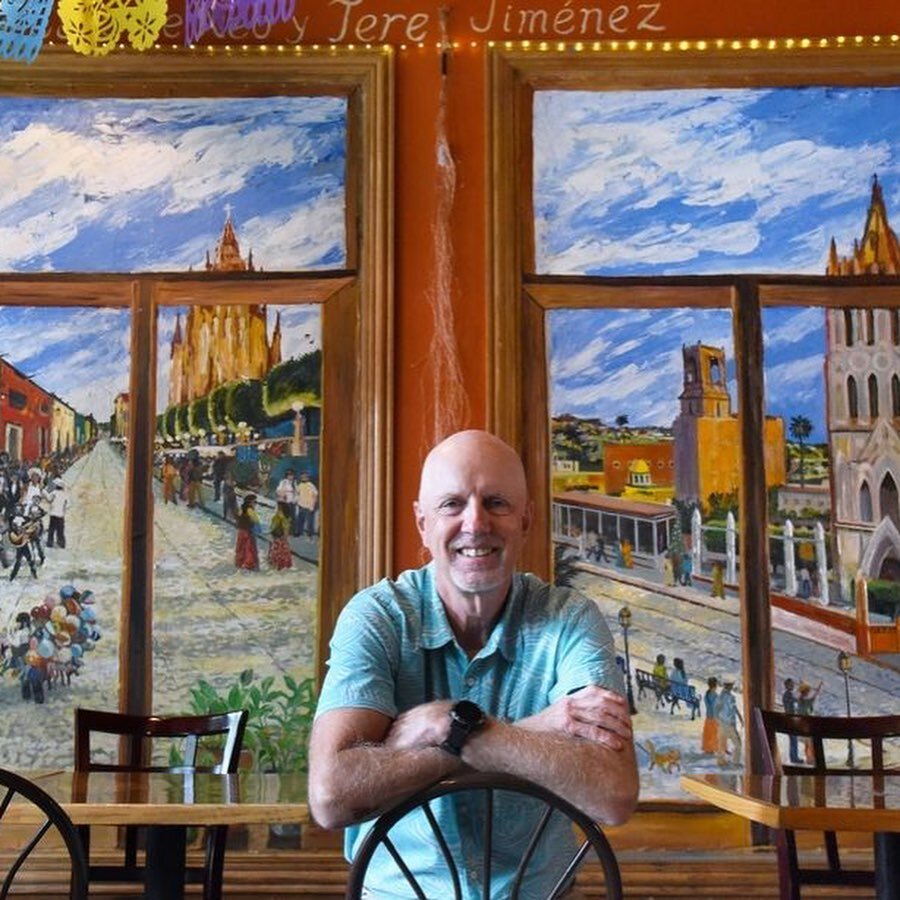
Posing in front of the murals I produced for the Santa Fe restaurant in 2021.
In some respects, she opened my mind to projects long in the future, as I’ve done several large-sized murals over the years. I never feared the process because of that early encouragement. She taught me to compete with my own fears in a good way. That’s a lesson everyone deserves at some point in life.
Navigating childhood is a wandering path of growing friendships, responding to parental influence, and engaging in varying degrees of imagination. My best memories of childhood all center around playing in the yard of our Pennsylvania home. For starters, there were multiple types of trees to climb, and getting off the ground felt like a form of liberation to me.
The dogwood just off the driveway stood twenty feet high and I had to reach for the lowest branches and crawl up the trunk with my feet. Often while climbing that tree I thought of the popular Batman show starring Adam West and Burt Ward, and sometimes hung a bit of cotton rope to pretend I was a caped crusader crawling up a building in Gotham City.
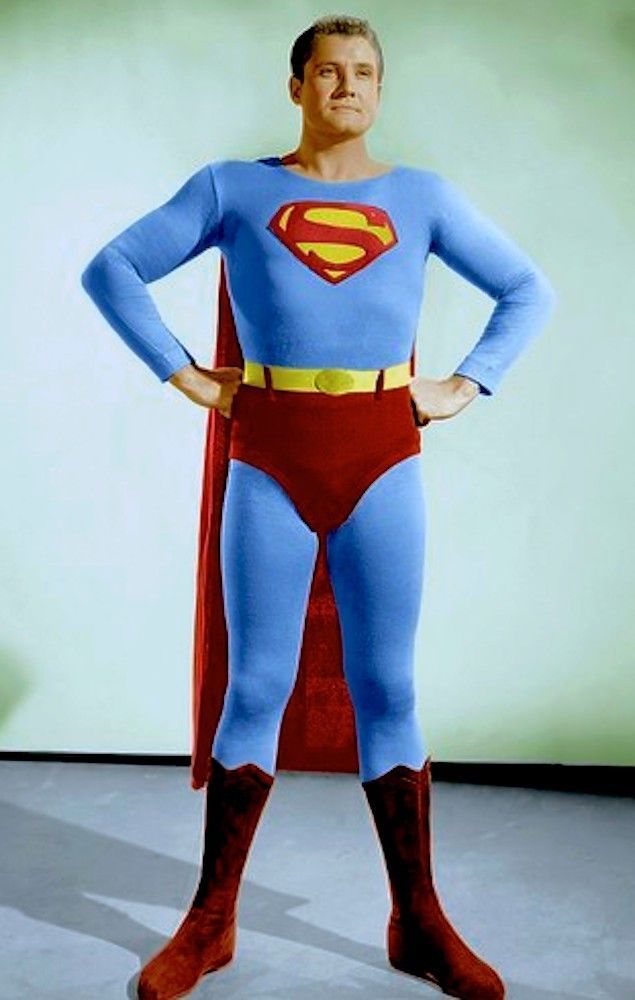
The theme song to this Superman show was so inspiring I once leapt out of a tree to fly.
At six years old I loved superheroes so much that I asked for a Superman costume for Halloween. It hung baggy and loose on my body, but the red cape was so gorgeous I did not care that my skinny body did not fit the suit tightly. It had the right colors. And I was so convinced that the suit imbued with some level of superpower that I bragged to two neighbor girls that I was going to attempt a short flight of the maple tree. With my red cape fluttering below me, I crawled up the tree and out on a long maple limb. Then I took a deep breath and dove out of the tree. Wham. I hit the ground hard. Fortunately, nothing was broken. The girls were somewhat impressed I’d flown at all. So they helped me up and I tried to look brave.
The yards of our childhoods are exactly that; one part fantasy and the other part hard-earned lessons. As I’ve already described, I gained my first hard lessons in running endurance by sprinting around the side yard carrying a watch to time myself. There was no way to fantasize yourself any faster.
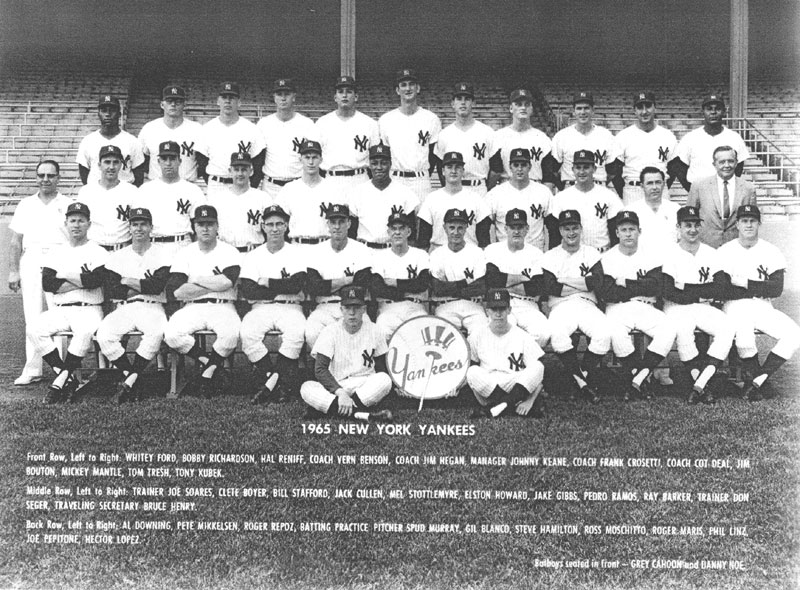
So while I was a dreamy kid in some ways, I was also disciplined in many respects. By the time I got old enough to play organized baseball, I begged my parents for a pitching net that would return the baseball to me in a personal game of catch. My two favorite teams were the New York Yankees with players like Roger Maris, Mickey Mantle, Whitey Ford, and Clete Boyer. I also admired the Pittsburgh Pirates with Roberto Clemente, Willy Stargell, and others. I’d pitch entire games of “ball and strike” and proceed with absolute honesty about whether my pitches fell inside the strike zone.
Pittsburgh Pirates baseball player Donn Clendenon, San Francisco Giants Willie McCovey, and Pirates Willie Stargell, posed on Forbes Field for 1965 season opener, Pittsburgh, Pennsylvania, April 1965. (Photo by Charles ‘Teenie’ Harris/Carnegie Museum of Art/Getty Images)
The romance of baseball in the 1960s was clean and honest to a kid my age. As a result, something in me demanded that type of strict honesty in my own efforts. I hated the idea of cheating at my own game, and hated when others cheated even more. My admiration for pro baseball players drove me to become a solid player myself. The last year I pitched competitively as a junior in high school my record was 7-1, the same as the teammate that went on to become the star pitcher for the high school team. But my athletic career was headed in different directions…
I’d also pursued a career in basketball most feverishly, modeling my game from the age of eleven around the flashy style of Pistol Pete Maravich. I schooled myself in the art of behind-the-back and between-the-legs dribbling and passing. I learned to spin a basketball on my finger, and could shoot the lights out from most any range, once making 29 consecutive free throws at the Elburn Days carnival when I was fourteen years old. But while choosing a superstar like Pistol Pete Maravich as a hero made me a popular player with teammates and friends, coaches were not always convinced that my flashy playmaking fit their plans. That is how I learned the price of individuality. It’s not always welcomed by the straight and narrow in many avenues of life.
But by the time I reached high school and had become a full-time runner, that individuality was vital because in running the principal demand is doing your absolute best, and the team scores fall into place after that.
As my notions of what constituted a “hero” migrated from Batman and Superman to baseball and basketball players, they ultimately shifted to runners such as Steve Prefontaine, Jim Ryun, Frank Shorter, Bill Rodgers, Craig Virgin, Alberto Salazar, and Henry Rono, to name a few. To this day, I view top-level athletes as a bit like superheroes. Granted, my running heroes never wore capes but the way they ran sure seemed like a superpower to me.
But I’ve also met a number of those heroes over time and learned that their fates and lives often have as many vagaries as mine. Like the “supes” in the hit series The Boys, it is true that even superheroes have flaws. It’s all proof that some boyhood fantasies never end until they fully run their course.
A posed picture of my childhood best friend and I in our Local 285 baseball jackets before we got the patches to adorn them.
Not long after our family moved to Lancaster, Pennsylvania, my mother made connections with another mom whose son was the same age. That afternoon, she drove me to their house on Golf Road across the street from the Meadia Heights Country Club. As a shy child, I was a bit anxious about meeting new friends. But within minutes of meeting the other boy, I liked him. He had an interesting voice quality, for one thing. His curly hair was quite different from mine, and we had a similar energy levels.
While the two moms talked, they sent us out to play in the backyard. My new friend invited me to try out the golf clubs his father had given him. He picked up an iron, gave it a quick swing, and struck me flush on the side of the head. Down I went in a heap. The pain was profound. My thoughts swirled and I saw lights. My new friend ran inside to report the incident and the two moms came running out to check on me.
“It wasn’t on purpose,” I think he said. My mom propped me up and looked at the goose egg lump growing on my head. “Are you okay, Chrissie?” she asked.
She knew I was a tough little kid used to taking lumps from roughhousing with my brothers. They fetched some ice and we sat for a little while drinking lemonade. Then my mom drove me home.
That knock upside the head didn’t slow our friendship down one bit. Pretty soon we were visiting each other’s houses daily. I lived about a half-mile from his place. The journey required that I pass through the golf course, and I took to running down the side of the seldom-used driving range to cut through the parking lot of the clubhouse to reach his house.
He became the best friend a kid could ever want. We shared all those rites of passage common to young boys. But most of all, we played games and sports together every day. He was a coordinated kid like me, and after that initial golf club incident, we played baseball and wiffleball, football and soccer, basketball and more. We wandered the woods around our house and spent long summer days swimming in the pool and cold winter days sledding on the golf course hills. We became closer than brothers in many ways, sharing our thoughts and fears, hopes and wishes. We made lists of the girls we liked and even shared some grade school teachers together.
He was a largely confident child, especially with girls thanks to having three older sisters who demystified the opposite gender for him. Plus he was handsome from an early age, possessed of curly hair that girls seemed to like, and he dressed well. His mother made sure of that. By comparison, I was nervous around girls but did manage to become a popular kid thanks to my playground acumen in sports. My friend was great support and filled with good advice about how to ingratiate myself to girls. But one bit of advice was tough for me to take. “If you want them to like you,” he told me. “You have to let them win now and then.”
“No,” I responded. “I can’t do that.”
I had the coolest childhood friend imaginable.
Then one afternoon we were playing tag in the yard with his older sisters when one of them chased me down and pinned me to the ground with her knees on my shoulders. I tried to wriggle free but could not move. She was bigger than me and I feared that she might tickle me. Somewhere on the playground that year I’d learned a few bad words and before I knew what came out of my mouth I blurted, “Oh, fuck.”
She sat straight up with a shocked expression on her face. “Chris,” she told me. “That’s not cool.”
My friend came running over at that point because he’d heard what I said as well. “Yeah, you can’t say that around my sisters,” he confirmed. She climbed off me and walked away. The game of tag was over. I’d ruined the fun and felt ashamed. I’d also learned a lesson, that some breaches of etiquette really do matter.
Later that summer my friend came to me and announced that he’d made a big decision. He was going to live with his father in Florida for a while. Perhaps permanently. I knew that their family was the product of a divorce. I’d met his father once or twice. He was a stern man, keen on discipline. One time my friend got stuck high up in the apple tree we liked to climb. He was afraid to come back down, but his father walked out of the house and had zero sympathies for the situation. “You got up there,” he intoned. “You can get back down.” Overcoming both fears of his father and fear of heights, he did climb back down.
When my close friend moved away to Florida, I expanded my network and played with other kids. It wasn’t a horrible period because I made new friends, but I still did miss my closest buddy. A year later he moved back to Pennsylvania, and something about him was changed. He was more cynical, for one thing, and a bit manipulative in his behavior. I quickly learned to be cautious around him, but that part of him eventually mellowed out and we returned to something more like the guy I knew before. That was the first time I became aware of how much a parent could affect the demeanor of a child. It made me think about myself as well.
Local 285
The Local 285 team that won the Lancaster New Era Championship. I’m second in the second row and my friend is fourth. That team learned fundamentals and played disciplined, high-quality baseball. As skinny as I was, I threw hard thanks to competing with my older brothers.
That next year, we both went out for competitive baseball and made the lineup on the Local 285 team that won the Lancaster New Era championship. The coaches taught fundamentals and it was a real honor to be on the same team for which my brother had pitched a few years before. I pitched the team to a victory in the critical second round of the tournament, but when the team celebrated at the local ice cream store I heard one of my teammates complain that I’d purchased both a cone and a shake. “He didn’t do anything to earn that…” the kid blurted. That taught me how shortsighted and narrow some teammates can be.
Following that tournament, my friend and I both received red championship jackets in honor of the win. His jacket stayed clean and nifty for as long as I knew him. Mine grew a layer of grime on the worn-out sleeves because I wore that damned jacket everywhere I went. The fact of the matter is that between us, I was the less sophisticated and refined. My liberal nature took me into the woods and I got dirty. Such is life.
And then our family moved to Illinois. At twelve years old I was forced to leave the best friend I’d made in the world. We sat together above the drop hole on the golf course and he openly lamented, “Why does everything I love have to leave me?”
I think he was referring to his family’s divorce as well as a recent breakup with a seventh-grade girlfriend who dumped him for another guy. At that age, emotions long and short mix together with equal force. I couldn’t blame him for feeling miserable. I did too.
A few times after the move I returned to Lancaster on visits, but the reunions were always awkward. My poor self-esteem drove me to react with competitive instincts toward him. We bickered over who’d become the better athlete, and one time I chose to stay at the house of my former neighbor, now a model-grade attractive young woman, and that served as sort of an insult to my former close buddy.
Years later when we both had kids, our paths crossed again when he moved to Glen Ellyn, Illinois. All I wanted to do was share some fun memories, but he was disinterested in that. He’d left some other parts of his life behind from a previous marriage and had married another woman that he loved and wanted to move on in life. He was successful and I’m not sure that he viewed me in the same light.
Plus our politics and beliefs seemed to have diverged as well. The last contact we had together was through social media. I don’t hide what I think about social justice, morality and liberality. Pretty sure he thought I was an idiot. LOL. He soon disappeared into the mists of late middle age.
I’ll always wish him well. Our gritty little lives were mixed in earthy ways back then. I remember one cold spring afternoon when the late snows were melting in the ditches. We wore no gloves but spent some time making ice dams in the ditches. We looked up at each other and he observed, “Isn’t it weird? Our hands are cold but they feel hot inside.”
Our experiences are often that way, counterintuitive at times. The tarsnakes of life.
I did try one more time to make connections by returning to a 20-year reunion with classmates from that era. One of them walked up to me and asked, “You know, I never saw you much in high school. ” I laughed. “That’s because I moved.” Another fellow walked out from the corner of the room and approached me. “You know what I remember about you? Even though you were popular, you were nice to everyone, even the less popular kids like me.”
That encounter meant more to me than almost any other I’ve had.
The Apple Tree
I will treasure memories of my close friend and I sitting together on the outreaches of a thick limb on the apple tree on his front lawn. We’d climb out there and talk about what really mattered to us in this world. We shared our experiences in sports, our efforts at making time with girls, and trying to figure out how to compete in this world without making enemies. We struggled to manage social lives that from the earliest age felt like a maelstrom of sorts. It was the late 1960s. Social change was in the air. Even young boys were not immune to the influence of the music, the shifting social mores, and social justice movements all around.
We were six years old when John F. Kennedy was killed, followed by his brother Robert. And we understood the portent of the death of Dr. Martin Luther King, Jr. Something gravely amiss was going on in the world. It formed my liberal instincts from an early age. I don’t know what it meant long-term to my childhood friend. From all that I can ascertain, he became increasingly conservative as he aged. And that’s his choice. There’s a fair chance that had I stayed out East, we might have grown apart due to competition over worldviews.
Willing and unwilling competitors
To that end, I had to wrestle my friend in the 7th-grade tournament organized by our gym teacher Mr. Davis, who happened to be both a gymnastics and wrestling coach. He set up a tournament bracket and called us out of class to wrestle against each other. I’d worked my way through the opening rounds by pinning several classmates. Then it came time to wrestle my friend. We faced off and I beat him on points. His heart wasn’t truly in it, and neither was mine, but I still deeply wanted to win and made it happen. Then I went on to beat a much tougher opponent to win the overall title.
The only other time that my friend and I fought each other was on the playground. I was in that weird period of trying to prove to everyone that I was not a sissy. At that point, I was a bit of a fucked up kid, and I was challenging everyone and anyone who crossed me. One day I picked a fight with my best friend and while he put his fists up, he danced away from me mockingly and declared, “I don’t want to fight you!”
But I kept on picking fights, so he offered to serve as a referee for a fight I picked with another classmate. We met at the far end of the driving range at an appointed time. When my friend said “Go!” both of us combatants threw quick punches. I hit him flush in the nose and he hit me hard with a roundhouse hook to the temple. It hurt like hell, and we both quit immediately.
“There,” my friend pronounced. “That’s over!” Then we all three went to play basketball.
Competition drives us to do strange things in this life. Competition between friends is just as real as competition over anything else. Later in life, I counseled my own children, “Even your friends will try to control you at times. Friendship is a power struggle quite often.”
What we all need to learn from life is how to challenge competitive instincts positively. By the time I became a runner, that outlet was vital for my mental health on many fronts. But it was the competitiveness of that early friendship and the trust gained that defined so much of my life, and I have that best friend from childhood to thank for that. I wish him well, wherever he is.