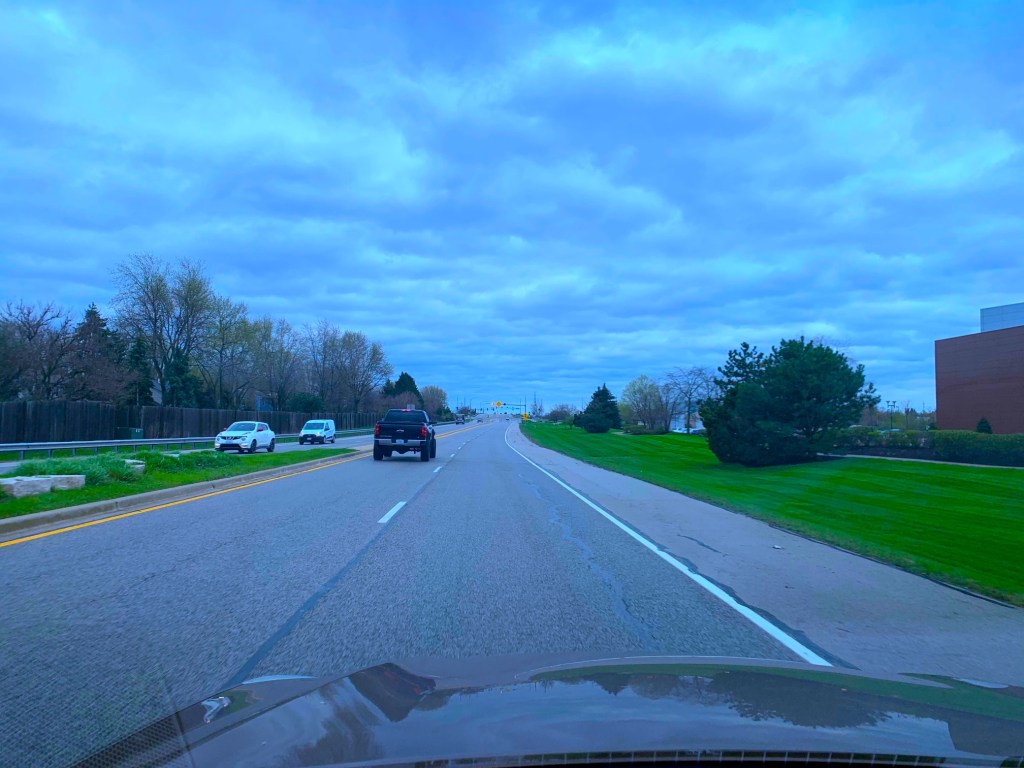
Driving back from taking our pup to doggy day care, the streets were much quieter than usual. Having lived in the area called the Tri-Cities in Illinois for more than forty years, it isn’t hard to recall a time when things used to be even quieter around here. There was less traffic back then because there were less people and less stores for people to visit. So things were quieter.
I’m not here to say that is good or bad. Businesses and malls have come and gone over those four decades. Houses cropped up and lifestyle shopping took the place of wandering around inside enclosed malls. Growth exploded in the Fox Valley. But things are changing fast.
Retail Armageddon
While driving home I listened to news that 70% of America’s economy is based on retail. Yet retail companies have already been struggling in the face of pressure from online sales. I’ve written marketing content and whitepapers for printing companies trying to make the transition from traditional to digital marketing. The effects of these changes are wide-ranging.
I’ve also worked for a municipality blindly trying to figure out what will happen to tax revenues as retail markets changes. That city lost $1M in annual revenue when a big box merchandiser closed up its location. Giants like Amazon are sucking up local business revenues. Downtowns across America have contracted or learned to thrive by changing their entire business mix.
State and local revenue wars
Meanwhile the debate at the state level is whether cities and towns should get a share of tax revenue from online purchases. Mayors and city managers are lobbying to make that happen. But getting a share of that money is challenging when states like Illinois and others are struggling to make their budgets work. There’s also a war over who pays more into the federal government and who takes out. That reality played out on the national stage when New York’s governor Cuomo, after asking federal assistance during the pandemic, was forced to lambast Kentucky’s Senator Mitch McConnell who complained that it was Blue States asking for bailouts. Turns out McConnell’s own state takes out $148B while Cuomo’s state pours money into the national coffers.
All this money talk clouds the reality that the wages earned by regular people have been flat for decades even while executive pay and corporate profits soar. Wealth has risen like cream to the top of the economy leaving the middle class to swim around in the toxic foam of credit card debt and mortgage payments. The Great Recession wasn’t that long ago, when millions lost their jobs and savings. President Obama at least provided a steady hand during the long recovery and handed a solid growth rate and largely employed society off to President Trump, who claimed all credit and clearly hoped to soar through the fall election by claiming the ‘greatest economy America has ever seen.’
Anger on the streets
But it turns out that Trump kicker is an illusion. The quiet streets on which I drove today are an indication that we haven’t been willing to look through the foam of mere survival to see how people are really getting along in this supposedly robust economy. The desperate plea of Make America Great Again had merit in one sense: the economy and healthcare and infrastructure all needed to be more balanced, and it was government’s job to do it. But that’s hard for Republicans who don’t believe in the merit of government to accept. So they threw more money at the wealthy with big tax cuts and hoped it would somehow paper over the cracks in the foundation of Americanism.
The disenfranchised in this country made great claims in supporting Trump, who promised to help them transition from legacy industries into good-paying jobs. Trump played front-page political games showing up at manufacturing plants where new jobs were promised. But capital still follows cheap labor out of country and overseas. They voted for a guy who promised to fix it all and it turns out that all Trump cares about is making the sure the fix turns out in his favor.
Farm fracus
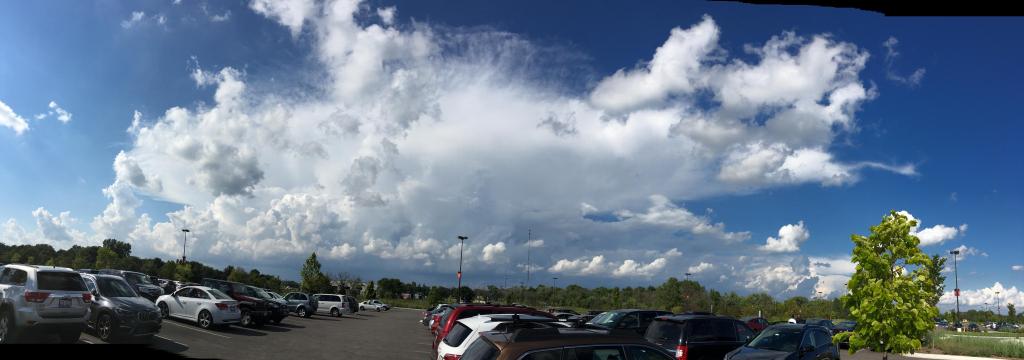
The storm approacheth. Was it easy enough to see?
The cures that Trump promised America were even foamier than the illusion of America’s economic parity. When Trump messed around trying to clobber China with tariffs his action cost thousands of farmers their markets and livelihoods. The fix to that debacle required billions in agri-welfare to bribe farmers from revolt. Yet the true colors of the Trump philosophy were revealed when agriculture secretary Sonny Perdue had little compassion for everyday farmers. “Go big or go home” was his only advice.
The place where I live sits on the absolute spine between suburbia and farm country. I can literally throw a stone east and hit houses. Turn west and it lands in a fallow cornfield. Last year it was so wet that many farmers planted late or didn’t plant at all. Perhaps that was an omen of things to come when we consider what’s happening with the economy right now.
As I ride my bike west this year I’m watching for signs that farmers are ready to plant again. Last night we received a blanket of rain that added up to more than an inch, and I’ll bet there are farmers nervous as hell that the rains may delay things yet again.
Running out of time
I went for a run in that rain yesterday. At one point I covered a mile on a sidewalk next to a normally busy street and saw no cars. Zero. It felt like I’d gone forty years back in time.
The streets are just now drying off thanks to a steady 20 mph wind from the north. IN some rhetorical dream, it would be nice if some sort of wind would come along and blow this Coronavirus pandemic away. Right now the economy is soaked with unemployment as one in five workers has lost their jobs at least temporarily. Trump and some governors are pushing hard to open the economy back up, and I don’t blame them. He screwed this thing up pretty badly, and no matter what happens this November, the royal messup that Trump committed by ignoring and lying about the threat of a pandemic is forever sealed in the Baggie of evidence along with his “perfect” phone call to the President of Ukraine.
They would hardly admit it, but even Trump’s supporters are disgusted with his lack of honesty. They may blame anyone but Trump, and are focusing their ire on state governors issuing Stay At Home orders, but they were only following the instructions originally issued and demanded by Trump, who told them as well, “You’re on your own.” Angry citizens know we’re running out of time to get things moving again.
Common sense
Some are too stubborn to engage in social distancing.
My personal view on how much social distancing is necessary depends on the circumstance. Common sense enters the picture at some point. I wear a mask in stores and wash my hands regularly. I respect social distancing guidelines and don’t make unnecessary trips to the grocery store or anywhere else. Even while running or riding, I moved far away from others on the trails.
Yet I stopped at a grocery story out on the edge of farm country last weekend and noticed immediately that hardly anyone inside the store was wearing masks. I think people in some cases believe their stubborn nature amounts to immunity. That and carrying guns around to prove that they won’t be bullied into doing anything they don’t like. Some pastors even tested the power of God by holding services despite strictures against such gatherings. Covid-19 hotspots immediately cropped up. That was just lack of common sense.
Can’t be bullied
The trouble our nation faces right now can’t be bullied out of the way or resisted by mere stubborn determination. That approach may be part of America’s nature and tradition, but it isn’t working when the threat we’re facing comes from within, and from the top down. This isn’t just a trickle-down effect from Trump’s selfish brand of narcissism, although that’s what cost us crucial time in responding to this pandemic. He simply made it worse. There’s no denying that.
So rather than a trickle, what we’re now dealing with is a flood of denial. Denial of the threat. Denial of responsibility. Denial of science that contradicts the politics. Denial of the difficulties in combatting a viral disease. Denial of the economic pandemic that predatory lending and high credit card interest rates imposes on the populace. Denial that the coming generation of young people is way more honest about these things than too many Boomers care to admit. Denial that the toxic flow of misinformation originating from the Religious Right depends on a legalistically corrupt version of scripture. Denial that the notion of constitutional originalism has turned the country into a festering pit of gun violence, racial conflict and false notions of liberty. All because people are too eager to live in the past. Like the past was better. And that Make America Great Again every made any sense at all.
Like I said, it used to be a lot quieter around here. But perhaps that was an illusion all along.
The worms were everywhere on my run this morning. Last night’s rain brought them out of the ground onto the roads and sidewalks.
It doesn’t bother me to step on a worm, but I don’t do it on purpose. That meant attention was paid to placing my feet in spots where there weren’t worms crawling across the asphalt or sidewalks during a four-mile run. After half a mile, the avoidance of worms became second nature. I became Zen at avoiding worms.
Then there was the issue of my running jacket sleeves. For some reason I do not like it when the sleeves creep onto the back of my hands. I roll them back to avoid the feeling. It might seem a bit obsessive-compulsive to let something like that bother me, but I accept it and make adjustments as the run goes along. Quite the opposite of Zen.
I actually love running in the rain because there’s so much interesting stuff going on. The spatter of new raindrops on puddles. The flow of water down the street gutters. The swelling creeks overflowing their banks. The rest of life’s problems seem to drain away.
Rain Man in training
When I was a child living next to a private golf club south of Lancaster, Pennsylvania, I used rainstorms as an opportunity to play a round. I’d gather up three golf clubs; a three-wood, seven-iron and putter, and play the set of holes out of sight from the clubhouse. We weren’t members of the club, but the course was accessible right out of my neighbor’s back yard. So I’d take a couple golf balls gathered on my trips back and forth to my best friend’s house, and play golf for free whenever it rained.
I loved the feel of the short grass under my bare feet. I’d wear shorts and a light rain jacket and bring a couple tees to hit the first shot each hole. Then I’d run after the ball. I was a decent little golfer and would even score a par now and then despite the wet grass slowing the ball down. Sometimes the rain would open up in a driving storm, but as long as I heard no thunder or saw no lightning, it was fair game in my mind to play most of the course.
Sometimes I’d just stop and listen to the rain pounding the fairways. At times there would be springs popping up along the way. That clear water pouring out of the ground fascinated me. It seemed part of a secret world.
Naked ambitions
One afternoon I was hanging out at my best friends house on the 17th fairway when a massive rainstorm passed through. It rained for an hour solid. When it was over, we peeked out the back window to find a massive rush of water bubbling straight out of the ground. We ran out to investigate once the storm was over. And in kind with our liberated spirits at age of eleven or twelve years old, we stripped naked and turned the fairway into a giant Slip and Slide. His sisters came out to watch us but I could not have cared less. It was fair play actually, because I’d seen one of them naked through her bedroom window one night when my friend and I were out catching fireflies.
Rain is the most natural substance in all the universe. Water is the sustaining source of essentially all life on earth. I am proud and happy to be a Rain Man of sorts when it takes over the immediate world. But I never feel the need to count all the worms.
Many of us get our start playing organized sports during elementary school years when we first turn out for team sports such as baseball, soccer, hockey or football. That is also the first time in life that we encounter the people we call “Coach.”
On top of being a team captain in many sports over the years, I’ve done a ton of coaching over the years. During high school a classmate and I coached park district basketball together. He went on to get his Master’s Degree in recreation administration, then managed programming at a large non-profit health and fitness center. Even at seventeen years old, his attitude with the athletes we coached was one of encouragement and parity. I’ve never forgotten his example even thought I did not not always excel in following it. Coaching is not easy either as a volunteer or a professional. But we learn as we go.
Just out of high school I signed up to coach a large summer track program with athletes ranging from five years old to high school-aged kids. Some turned into national champions. We traveled with more than 100 kids competing across the state of Illinois for summer track meets with programs in Moline, Chicago, Rockford, Bloomington-Normal, Belvidere and more. The experience those kids got competing against kids from every type of background was life-changing in many positive ways.
Along the way, I was getting plenty of coaching myself though high school and college, then for club teams in road racing. Most of the coaches along the way were great at what they did; teaching fundamentals, finding ways to motivate athletes, encouraging people to compete in healthy ways, and respecting the other teams and athletes we encountered.
Bad coaches
Almost every public appearance by Trump produces anger, accusations and blaming others. Not a good coach.
But there were some bad coaches as well, petty people whose interests were almost all self-focused. I recall being made to sit the bench in a junior varsity basketball game because my friend’s father took us out of school on a Friday to do a college visit out east in Pennsylvania. We missed one basketball practice. It was an epic trip and an important step in the lives of young people trying to make decisions about their future. But all the coach cared about was the fact that I’d missed that practice, as if that was a sign of disrespect to him.
That same coach was known to sit pretty girls in the front row of the classes he taught so that he could look up their skirts. The girls knew it. They told me so. That permanently cemented my view of him, and I wound up avoiding basketball camp that next summer and never played again. Such are the negative influences of coaches without good character.
Famously demonstrative coach Jim Boeheim of Syracuse confronting a referee
Bad characters and bad actors
Which makes me think about what it would be like if the likes of Donald Trump were to have been one of my coaches at some point in life. I met plenty like him in business over the years. Men who made a big show of being moral and upstanding, only to turn out to be less than ethical. One local developer with whom I worked while serving as a marketing consultant to a development firm made a show of wearing a crocheted cross in his front pocket. Then we learned that he’d run up debts with every contractor he hired. His entire enterprise floated on a sea of unpaid bills. The relationship between the two companies soon fell apart, as did the large deal in which they’d invested time and money.
The patterns evident in people of questionable character are so consistent and familiar it is astounding that they don’t get called to account more often. But there’s a tendency in this world to excuse bad behavior rather than confront it, especially when those dismissing the warning signs have some personal gain to make.
Standing up to bad actors
Confronting bad character in the moment is seldom easy, especially in business settings where personal reputations are on the line. But the rest of life is a rehearsal for our work life as well.
When I coached youth soccer there was a team in our league whose coach was famously confrontational. He and the fans attending the game to cheer on their kids broke every rule and brand of etiquette one could imagine. Despite league rules stating that no more than one head coach and two assistants could be on their sideline, he had five or six guys running up and down their half of the field yelling instructions to his players. The fans lined up in their lawn chairs yelled at the referees and even made comments about our players. Their team had developed that culture in the mold of their coach.
The scene came to a head just before the half when one of our forwards stole the ball at midfield and dribbled into their goal box to make a shot. Their goalie ran out, grabbed our player’s shirt and pulled him down to the ground. No call was made. It turned out the young referee for the game was actually the older brother of the kid playing goalie.
Obviously the environment got even more toxic before the game ended. Our fans began getting irritated and my own two assistants were angry and upset. When the game ended, I sent everyone quickly to their cars and was walking back to meet my family at our vehicle when one of their irate assistant coaches showed up in front of me and began yelling six inches from my face. I stood their mutely for a moment, then quietly said, “You do know how wrong you are right now, don’t you?”
Something clicked with him at that moment. He backed off an apologized.
Modeling ourselves
Coaches have big unfluence on our lives. We often model on their example. And a good one this was.
I know what it’s like to lose my temper, get frustrated and blow my cool. For many years I was so competitive and hated to lose so badly I’d swear and act out. Even good coaches can lose their cool, especially when another team or competitor says or does something unacceptable. As a soccer coach for ten years, I confess to not setting the best example many times, even once tearing my hat in two pieces during a match after a bad call that cost us a goal.
So this is not to say that in assessing coaches throughout my life that I am (or was) perfect. Quite the opposite. But pointing out problems in the coaching style of others is not necessarily judging someone. It is healthy to try to look at the bigger picture and identify potential problem sources, not just dismiss or ignore them out of some desire to win or personal gain. Even great coaches such as Bobby Knight, the legendary chair-throwing coach at Indiana learned there are limits to their authoritarian models in coaching. Despite his winning ways, the University ultimately asked him to leave.
Now we’re living with President possessed of the same qualities as a bossy, abusive coach. Yet many of Trump’s biggest supporters insist that his imperfections are actually a blessing. Evangelicals even love to depict Trump as a man through whom God is working directly to effect good things in this world. By that measure, Trump can literally do nothing wrong. His flaws and even his outright fraud (Trump University) and conflicted interests on many fronts are ostensibly forgiven directly by God, so the providential claim is that the rest of us should just go along. Even the Senate of the United States was complicit in forgiving Trump’s egregious behavior in his attempts to coerce the President of Ukraine into corrupt actions on his behalf.
Learning from mistakes
But scripture tells us that learning from our mistakes is critical, or else forgiveness is not a given or a permanent state. Learning from mistakes is actually the most important quality of any good coach. A game lost is almost always a lesson won, unless you refuse to admit any sort of defeat or error. Then you are doomed to repeat them. A great coach knows how learn from his or her own mistakes as well as those made by the people around them. It is also true that you can tell much about the character of a person by who surrounds them and how they conduct themselves. It’s no secret why both John the Baptist and Jesus branded corrupt religious authorities a “brood of vipers” because they saw how religious legalism forced people into complicity with traditions corrupted by greed, self-righteousness and political power.
The lesson here is that a great coach learns to look objectively at situations and treat proteges with expectations, but respect. That is the most critical character trait of all. Everyone is accountable to one another. That is not judgment, it is good values.
That also means dealing constructively with complaint or criticism. One of the ways to deal with complaint is to frame its destructive qualities in terms of lack of respect, self or otherwise, and take ownership for any personal faults or errors before assigning them to others. That seems to be a big problem for Donald Trump. He refuses to learn from any of his past or present mistakes. Instead he whines and complains about how badly he is treated even when he leads the way in verbally abusing others and publicly revels in punishment and revenge. But his supporters seem to think that is his best worst quality. But a society that prides itself on belittling others is one diminished by its shrunken conscience.
No Apprentice please
Which is why I don’t think I’d ever be inspired to compete for Donald Trump if he was a coach. Back when he hosted that reality show The Apprentice I found the entire concept of firing people for entertainment’s sake to be offensive. What possible inspiration could one derive from seeing some bossy bully tell people “You’re fired!”
That is possibly the worst possible way to motivate anyone. Granted, creating an atmosphere of fear and trepidation is the tactic some successful coaches have adopted over the years. That Old School tactic was favored by tough old coaches for many years, especially back in the Good Old Days. But that is no guarantee it constitutes a Best Practice by any measure of civic engagement. After all, it was also common in the Good Old Days for people to experience sexual harassment as well as gender and sexual orientation and racial discrimination. The profession of human resources has evolved to prevent these Old School attitudes from dominating the workplace. That’s called progress.
Yet our current Coach In Chief exhibits all these negative traits in all phases of his life; personal, business and political. As result, the nation’s culture wars now flirts with outright civil war because he encourages old school attitudes with his claims of victimhood at the hands of those who dare question him. We all know coaches like that who rule the team or organization or league for years. They are the generals who refuse to be challenged on basis of their own claimed authority.
Old School War Mentality
Perhaps Trump is merely playing a role in his approach, adopting the Old School style of military commanders like General Patton or some John Wayne character that roils around in his head. Our nation lauds such leaders for sending men and women into war. But is the tactic of driving people by division and fear truly the best way to generate respect? Does breaking the will of men and women to rebuild it in the mold of a command genuinely create discipline and inspired competitors? Or is that an Old School anachronism?
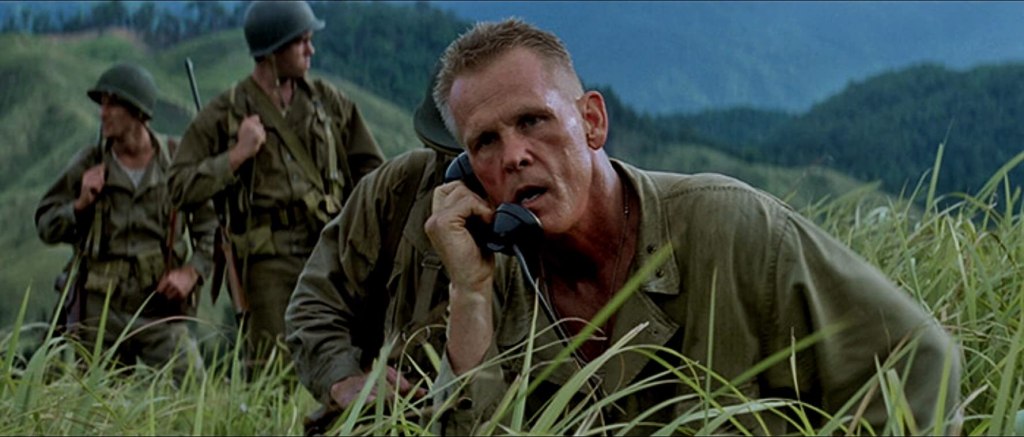
War has always been known to reward a particular brand of mentality, one that frequently dismisses consequences in order to achieve certain outcomes. The war movie The Thin Red Line confronts this belief system in brilliant fashion, showing that soldiers and leaders truly do need to engage collaboratively in judgments of what it fair and sustainable even in war. Otherwise people die for no reason other than the ego of those driving them.
Nick Nolte plays a field commander driving soldiers to their limits in sacrifice and morality.
The United States essentially has an epidemic of soldiers coming back from the Iraq and Afghanistan with Post-Traumatic Stress Disorder. Perhaps military veterans have always suffered stress disorders coming out of war, and it for centuries it simply fell into categories such as “shell shock” or other colloquial dismissals of mental health issues caused by war.
Despite greater awareness of the reality of this syndromes, some are still prone to stigmatize soldiers with PTSD. President Trump rankled military veterans with comments that were later published on StarsandStripes.com:
“Trump began speculating about PTSD on Friday morning when asked about the shooting, in which authorities say Marine veteran Ian David Long, 28, opened fire at a country-music bar in Thousand Oaks, California, and killed 12 people. Officers found Long inside an office in the bar, dead of an apparently self-inflicted gunshot wound.
“He was a war veteran. He was a Marine. He was in the war. He served time. He saw some pretty bad things, and a lot of people say he had PTSD, and that’s a tough deal,” Trump said after describing the shooter as a “very sick puppy” who had a lot of problems.
“People come back – that’s why it’s a horrible thing – they come back, they’re never the same,” the president added, referring to Long’s military service.”
No empathy. No compassion.No Respect.
That’s not exactly an example of compassion, empathy or good coaching, do you think? How do statements like that make tens of thousands of veterans and their families feel when the Commander-in-Chief of our military makes broad-based statements like that?
Trump also maligned the service of the late Senator John McCain, a decorated veteran who suffered years of torture, then emerge to a successful political career. Yet Trump seemingly blamed McCain for the ordeal. As reported on Politico.com:
“Appearing on Saturday at the Family Leadership Summit in Ames, Iowa, the real estate mogul took his running feud with Arizona Sen. John McCain to a new level. “He’s not a war hero,” said Trump. “He was a war hero because he was captured. I like people who weren’t captured.”
Killing trust
The problem with statements like that is they undermine trust and respect by using disrespect as a controlling tactic. Trump’s supporters seem to love his use of disrespect because it is “old school” like a tough old coach yelling at his football players to suck it up during two-a-days in the August heat.
But we’re learning that old school tactics are not always best for the long term health and lives of people in sports or business. Surely professional and college football teams are learning that the old attitudes toward concussions suffered in the support are not acceptable. New protocols to protect players suffering concussions are now in place at every level of football. Even rule changes for the game of football have been imposed over the last ten years to discourage players from engaging in hits that can hurt themselves or other players.
Smashmouth attitudes
Some might call these changes unnecessary or, more cynically, the outcome of supposed ‘political correctness.’ There are still plenty of fans that prefer smashmouth football and fighting in hockey even if it causes those players to lose their minds later in life. That is a dangerous attitude to sustain in any society; that is acceptable to allow others to suffer for purposes of entertainment, to protect wealth, to satisfy sexual urges or achieve political power. If that all sounds a bit like Ancient Rome, the parallels are potently obvious. And what happens to empires that fall prey to such selfishness? They dissolve into vigilante factions eager to kill each other for dominance.
And sure enough, when Trump supporters showed up for rallies opposing stay-at-home orders due to Covid-19, many brandished guns to demonstrate their vigilante intentions, all while proclaiming some selfishly motivated form of “freedom,” to which their Coach tweeted, “LIBERATE!”
In other words, Trump incited those groups to insurrection of their own states. That is a crime.
Toxic selfishness
That attitude of selfishness and the toxic anachronism at its core has taken over much of the American mindset. Even the twisted interpretation of the Second Amendment, calculatedly disregards the first half, “A well-regulated militia, being necessary for the security of a free state…” in order to emphasize the second, far more selfish phrase “the right of the people to keep and bear Arms, shall not be infringed.” That elective interpretation potently illustrates how selfishly anachronistic attitudes have come to dominate the American experiment. As a result, the deadly annual pandemic of violence threatening every American continues year after year.
The person we supposedly rely upon to lead us through these problems is the “Coach” of our nation, the President. Yet as a “coach” Donald Trump exhibits a toxic selfishness that led him to ignore warnings about the threat of the Coronvirus pandemic in hopes that he could avoid any disturbance to the economy in advance of the fall election. Yet his selfishness delayed adequate response and preparation, and the nation was thrown into lockdown mode while deaths have risen to 55,000 and counting.
Yet even if Trump had displayed the personal courage to be honest with the country, few would have trusted him given his terrifically dishonest claims about what constitutes truth and what doesn’t. His daily flirtations with dishonesty make it difficult to trust his word on anything. The disrespect and suspicion he shows toward both his perceived enemies and members of his own staff, toward the press and even toward our own Constitution have all undermined national confidence in his true motives and judgment.
Trump’s base
Except that’s not the belief of Trump’s base, people who believe wholeheartedly in the smashmouth “coaching” style of Donald Trump, whose version of “winning” is to use intimidation and when that doesn’t work, deploy outright force to accomplish its aims. In that game the Senate Majority Leader Mitch McConnell has been happy to be Trump’s assistant coach.
Whether that strategy is a genuine “win” for the nation is now being exposed. The economy that Trump claimed as part of his “winning” record has now dissolved thanks to his bad play-calling. Yet rather than accept responsibility, Trump spends all his time blaming the Democrats for every problem he has caused. Even his prized tax cuts gutted the middle class while enriching the wealthiest members of his “team” of millionaires and billionaires. The same goes for his disturbing attempt at righting the trade imbalance with China. Trump stepped in to play Tariff Manager and cost American farmers their key markets. Hundreds of family dairy farms in Wisconsin alone went out of business. Meanwhile Trump’s agriculture Secretary Sonny Perdue dispassionately told America’s farmers, “Go big or go home.”
All these bad outcomes are the product of a Coach with no clue how to even keep America running, much less how to actually Make America Great Again. He’s trashed environmental laws, broken legislation governing auto emissions and ignored the genuine problem of climate change for all three years of his term. Trump knows nothing about playing the long game, as his string of business bankruptcies and political impeachment prove. It’s all about selfish, short-term gains and then lying about the wealth that seems permanent, but really is an illusion.
But then again, what do you expect from a Coach who drives his own golf cart on the greens? That proves he’s the worst to ever play the game, or any game, for that matter.
Sunday’s run turned out to be an interesting experiment in negative splits. My wife was scheduled for a ten-miler but I’m only up to eight miles in training as my hips and strength training progresses. So I ran four miles out with her and turned back to complete the run on my own.
We started with a warmup 10:00 mile. Then we dropped to 9:40 for the second mile. From there it was time for Sue to start her first 6:00 interval at her 10K pace, so we hit 9:24. A pattern was emerging.
The next mile I dropped another twenty seconds or so to come through in 9:07. Then came an 8:39, another twenty second drop to 8:18 per mile, and then the seventh mile in 7:55.
One of the best ways to practice pace control and negative splits is to do speedwork on the track. Then when you get to the roads, it is easier to recognize the pace you are going.
That was seven consecutive miles of descending or negative splits. Each of those miles dropped the pace by essentially twenty seconds. The final mile I used as a warmdown at 8:54.
The trick to running negative splits is to be consistent in how you increase the pace. Those twenty-second drops were the result of an increase in stride rate and style. They are also the result of years of practice running pace workouts on the track.
It’s also about stride changes. As the pace increased I moved onto the forefoot and increased my back kick a bit as the miles went along. I was running as if I were a younger guy again.
Labor pains
It’s been a laborious process at times getting back to this point of fitness. Last year was a depressing debacle for me with injuries and illness. That meant much of the time spent on winter runs was plugging away 4-6 miles at a time at 10:00 mile pace. Humble duties require commitment. Part of me wondered if I’d ever run any faster again.
Sticking with it pays dividends. And when one of those days comes along with negative splits and some evidence of results, there’s no better feeling in the world of running. Here’s hoping you can be negative sometimes. It’s a great feeling.
Last weekend my wife was given a time trial to do. Her coach Steve Brandes has been guiding her through improved run performance the last couple years and the results, I am here to tell you, are noticeable and impressive.
So we lined up on a quiet exercise path on a fresh Sunday morning. He gave her a target pace to stay under and we discussed that briefly during a fifteen minute warmup. Like all runners, she was slightly anxious at the idea of going fast for a 5K, but once we got the warmup done and the bathroom duties out of the way, she seemed ready to go. We’d also landed on a perfect morning. Fifty-some degrees. Not much wind. We peeled down to basic long-sleeves and were ready to go.
Starting line
We’d agreed to start at a park on the south side of Batavia where the bike path sits next to the Quarry pool. That’s the starting area for a local triathlon and duathlon, and we’ve both raced on that path many times. But it all seemed rather abrupt standing there together in the sunlight. How do you start a time trial on your own?
I looked ahead and realized what we needed to do. First I gave her a kiss and a quick hug, then said, “Let’s start our watches up there at that sign,” I told her, pointing out the park district pole indicating a mile marker.
Nothing breaks physical and mental tension better than rolling into a time trial. Otherwise you stand there awkwardly with a finger on your watch and all kinds of dreadful thoughts can go through your head.
Keep calm and run on
That’s actually one of the reasons why I was so impressed with everything that transpired during our time trial last weekend. My wife not only kept calm during the entire session, she dealt with the type of quick little fallouts we all experience during fast running. There are few fast runs where the pistons fire perfectly the whole way. Normally we feel good for stretches, then struggle a bit. It’s the getting back on track that makes all the difference.
As we moved through the first mile I was careful to let her dictate the pace. Running next to someone is fine, but nudging ahead is not at all helpful when the runner next to you has a goal pace and concentration is critical. We passed through the half mile point in good shape and I noticed that her breathing was steady and her stride light.
Change for the good
That’s the biggest change I’ve seen in her since we first met seven years ago. Her running form has improved so much. When I first met her, there was a plodding aspect to her stride, but over the years she’s learned to run more efficiently by using her midfoot more effectively. Her cadence has improved, as has her arm carriage. She’s now gotten faster even as we’ve aged. And we train together quite often.
Her coach has encouraged her to do more speed work. That has profound effects on an athlete’s overall carriage and efficiency. You can’t fake it if you’re running fast with an eye on the watch. We’ve done early morning interval sessions on indoor tracks and trained together in the breeze and heat of outdoor ovals as well. All the while we’ve discussed what makes her faster and what slows her down.
Progress points
Thus when we passed through the first mile a full thirty seconds under the goal pace for the morning I was not necessarily amazed, because I’ve seen her do the work. But I was thankful that she was letting herself explore her capabilities. Going for it.
The middle mile went just as well. Which left us with a mile-point-one to go, and that’s where the going often gets tough. Yet she ran that last mile ten seconds faster than the middle mile.
At the three-mile-mark we neared the bridge in North Aurora where the trail dips down to the river grade and back up again. We zoomed along and I could tell the pace of the day was adding up for her. Then those hundredths of a second seemed to drag. I was watching my watch as they ticked away. I let out a little chuckle at that point and she sighed, as in “When is this going to end?”
Finish line
Finally, it was over. She’d rocked the time trial close to the times she was running ten years ago. “You know,” she turned to me and said, “Running a fast 5K is almost harder than running a half-marathon.”
Her revelation meant a ton to me. I’ve told her many times that “back in the day” we journeyman road racers did the occasional half marathon but more often we banged away at 5Ks and 10Ks trying to drop our times week-by-week. Those competitive efforts required intense focus and constant training to achieve. I feel like she tapped into that spirit with her time trial this past weekend.
Nothing gives you more confidence than blowing through your perceived limits at a 5K pace that seemed unreachable. Whenever the triathlon world opens back up again it feels like she’ll have more belief in her ability to come off the bike and run confidently and a bit quicker. That’s what it’s all about. It doesn’t have to be amazing to be fun. But it sure helps to feel a dose of both now and then.
Nice job, Suzanne Astra. And thanks Steve Brandes for being an awesome coach for my wife.
And all you people out there training for who-knows-what…keep the faith. You can improve even if there are no races on the calendar. Take pride and interest in what you’re doing. Be inspired.
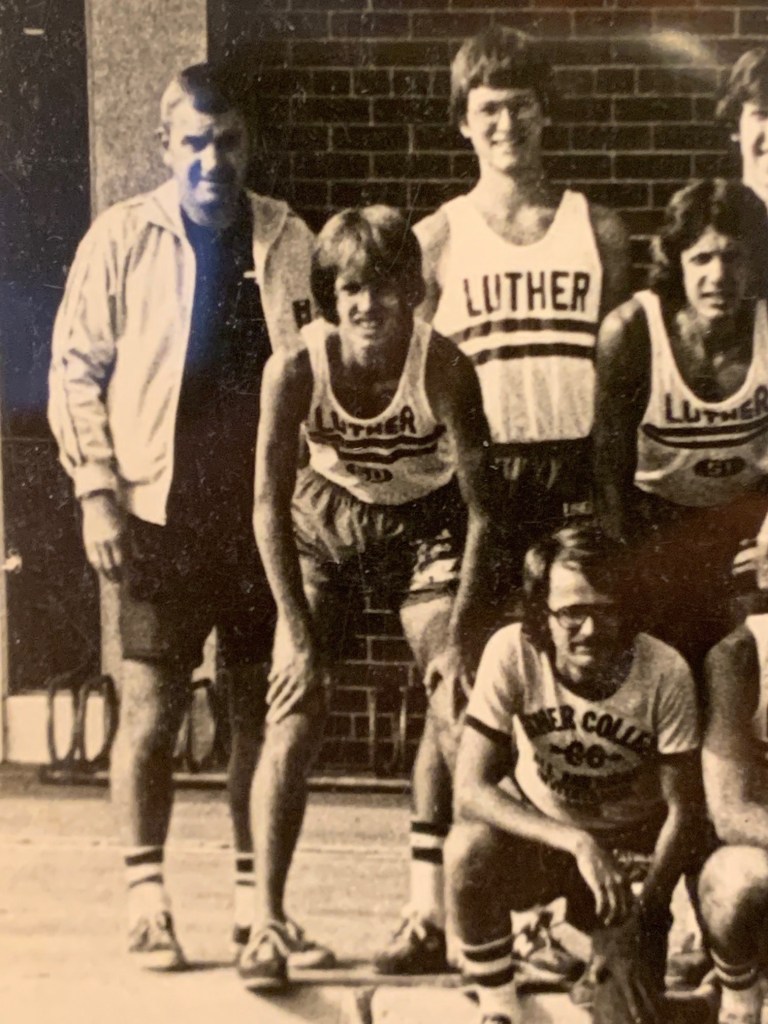
Last night before going to sleep I flipped through a booklet of results from my days of running cross country at Luther College. I’d stored those books in the bedroom desk and was looking for something else when I opened the drawer and pulled them out.
That must have set my mind thinking about that period of life. During the night I dreamt that I was walking down the long road from the Luther College campus entrance to the field house as if I was going to cross country or track practice.
Right before entering the field house, a young man appeared at my side and immediately engaged in conversation. He seemed friendly enough, almost like someone I already knew.
We were so absorbed in conversation that we walked right past the field house. Heading up to the union, I was sharing some quick recollections of my time at college when he invited me up to the cafeteria to meet with some of his friends.
The offer
When we sat down he pulled out a pamphlet and smiled. At that moment two other people sat down with us. One was a young man and the other an athletic-looking, attractive young woman.
As we talked it became clear that they needed someone to buy them alcohol for a party they were having at a place outside of town. They were offering incentives for the rate of alcohol I was willing to buy them, or a block of tickets they wanted to hand out to people attending the party. There were prices listed in the pamphlet and everything. All they needed were patrons to buy the supplies or admissions to the party.
They were particularly interested in getting whisky. Or else that was an interest of mine that just inserted itself into the dream. I don’t control these things. They just happen in dreams.
Sex for sale
It also became clear that one of the ultimate incentives for investing in the program was the opportunity have sex with the young woman sitting across the table from me. She also explained, while opening the pamphlet, that I could have the pick of any of four girls involved in the program. She showed me their pictures.
At that point I looked up and said, “But that would be cheating on my wife.”
I got up to leave the table and they walked along with me, whereupon several of the other girls involved in the program showed up. The two guys and the gals were not exactly pressuring me, but they were trying to make sure the temptations were known.
The situation
In my dream state my mind ran through what it would mean to take advantage of that situation.
Instead I considered exposing the whole ruse. I even mentioned an aspect of it to a professor or administrator that I knew on campus. Certainly the girls seemed willing participants in the scheme. And yet…
Leaving town
Next thing I knew I was in my car driving out of town. I had indeed promised to buy them booze but was looking for an excuse to escape the situation. So I simply drove away and seemed to have spaced out on the whole deal, because during the dream I came back to awareness and pulled over in Fennimore, Wisconsin with a sense of guilt at having lied to them. I pulled over with the sudden thought that I’d deceived someone. But then I realized that perceived deceit, quite ironically, was actually the right thing to do.
I believe I had that dream because these are trying times in this world. We’re faced with all sorts of compromising decisions during this pandemic and strain on the economy. Our minds are being asked to make unconscious choices all the time. Are we wearing masks properly? Are we wearing them at all? Who can we trust for news? What’s the right thing to do? Should we feel guilty if we’re working and others aren’t? And at what point should people press their employers for honesty if even they can’t get straight answers or honest information from our government?
And all that uncertainty got expressed in my dream in a simple more question: Is it okay to screw somebody to get what we want?
Sacrifice and selfishness
While there is a ton of sacrifice being made in this world, we’re also witnessing a brand of selfishness that seems unquenchable. People are willingly defying common sense, manipulating the truth to their own selfish reality and/or scamming the system however they can. Even people at the top of all this economic turmoil, the people in charge of the lives and destinies of millions, are playing games with who gets money and who gets left out.
It’s a transactional nightmare if you study it closely. Telling Americans that a one-time payment of $1200 is a “big, fat check” and that it should last ten weeks is one of the most cynical things a President of the United States and his henchmen have ever said to the public.
I believe that this era is a study in sacrifice and selfishness. That is what my dream was all about, a consideration of the seductiveness of wealth and power and the advantages it seems to promise, but only to those willing to sacrifice principle for approval by power.
In other words, are we willing to whore ourselves out to gain or take advantage of others in society.
Familiar and strange
It’s interesting to have a dream in which the circumstances are both familiar (my college town) and yet there’s an entirely different reality going on (the enterprising yet manipulative college kids) in which everyone is trying to get what they want rather than what they really need. These are the tarsnakes of life.
As for the moral dimension of that dream, I’m proud that even in dreamworld I made the right choice. There are plenty of powerful people in the world who would buy that liquor and have sex with that girl. We read about it all the time. And when those people gain enough power, they either manipulate or force others into their reality. And that’s what’s going on in this world as well.
Call me a liberal or a bleeding heart if you like. Call me a hypocrite for dreaming about potential sex and then denying it. Call me a naive fool for believing that moral choices really matter in this world. Asleep or awake, that’s how I’ll always choose to live. Trying to make the right and honest choices, at any cost.
I was twelve years old when our family moved from Pennsylvania to Illinois. That life back in Lancaster was left behind in more than one way.
I’d grown up playing all kinds of sports with my brothers. One of the games we played and loved was baseball. I was a good pitcher, and at eleven years old in 1969, took over the mound during the critical second game of the Lancaster New Era Tournament and held the lead for four innings to win 8-6. We won the entire thing the next game.
Posing for a photo in a Polaroid my father took in 1972
Pitching was one of my favorite things to do in the whole world. I loved being in on the action every play. I could throw hard, having grown up challenged by my older brothers to do so. And had we stayed in Pennsylvania, I likely would have continued playing baseball for the high school team. But once we moved, that was not to be.
As it was, we moved out to Elburn, Illinois, a town of only 750 people at the time. I signed up for the twelve-and-under local baseball program and threw a perfect game against kids who recoiled from the speed of my pitches. The mound was just thirty feet from the plate, as I recall. Those kids never had a chance, and I didn’t give them one. I was merciless as a baseball pitcher and most other competitive sports as well. It was a product of environment and temperament for me. It was how I survived. Felt good about myself. And proved myself to others.
But that focus was threatening in such a little league. Not knowing what to do with this weird kid with the fireball arm, the local baseball magistrates told my dad there was no place for me to play. There was no Pony League team for 13-15 year olds. “All we have is American Legion ball,” I heard one of them tell my dad. My father looked over at me and replied, “I think he can play at that level.”
Legion ball
Pitching for the Blue Goose in summer of 1973
And that’s what happened. I turned thirteen years old that summer while playing for a club team in Elburn comprised of kids much older than me.
The pitching ace was a guy named Dale Garman. I’d later play ball with his younger brother Mike on the Elburn team. We barnstormed around the western suburbs and country towns playing baseball against other teams. It really was a scene out of Field of Dreams, and baseball remained a big part of my summer life.
In those days, there were no fall leagues or spring leagues. You signed up for summer baseball, played a schedule of games and if you were lucky, made an All-Star team to compete against some of the better players in other leagues. I pitched in that game only because my coach out in Elburn, Trent Richards, told the regional All Star coach, “Pick that guy. He’s skinny but he’s a great pitcher.”
No soccer. No baseball.
The other sport I likely would have played had we stayed in Pennsylvania was soccer. I could run forever, was scrappy and quick and my brothers had both played in high school. But the high school out in Illinois had neither a soccer program or a baseball team. Which is how I wound up going out for cross country. From there, running became a massive part of my life.
At the plate for the Blue Goose in 1973
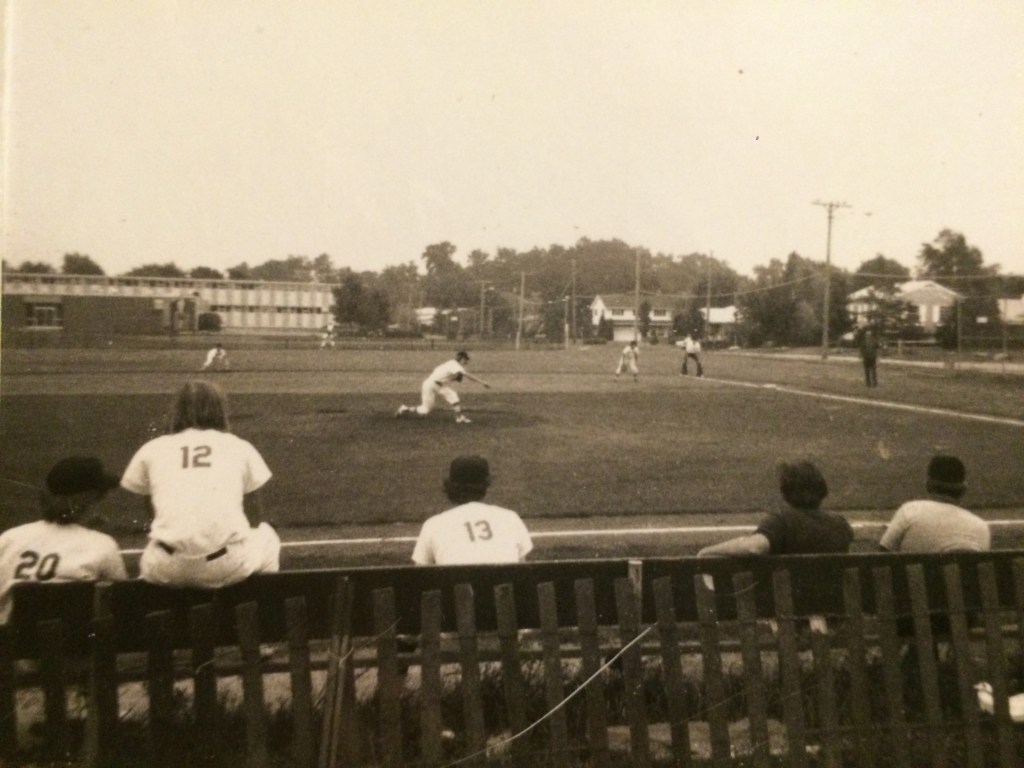
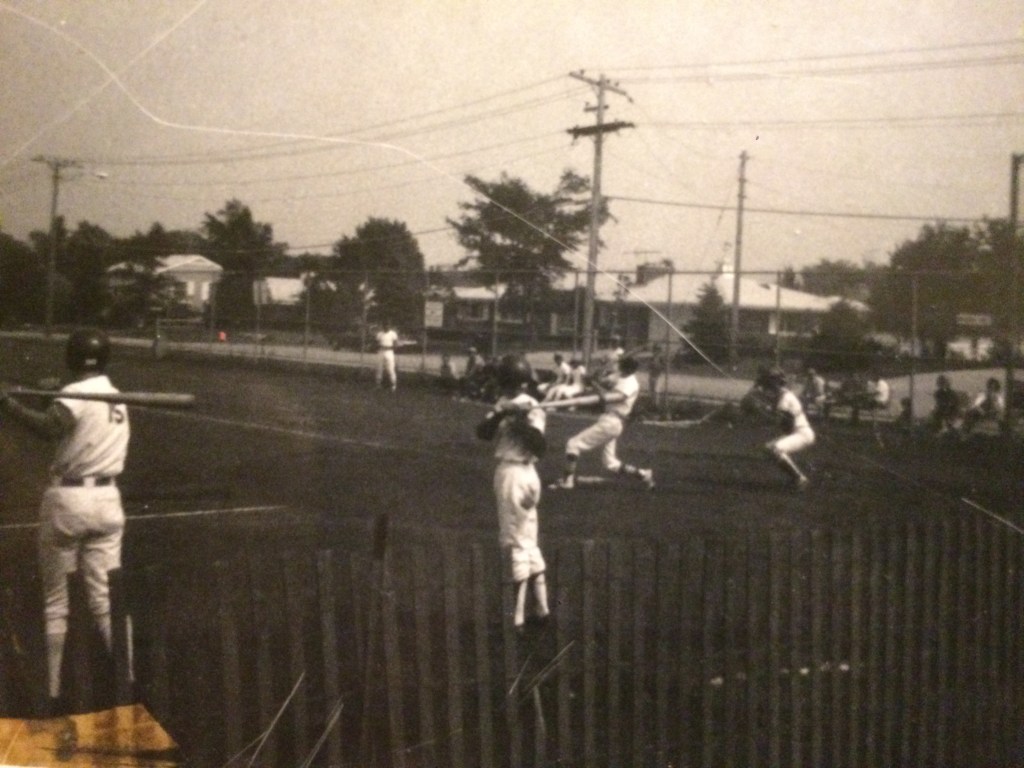
I still played summer baseball once we moved to a new town during my sophomore year in high school. I pitched to a 7-1 record that summer for the Blue Goose, a team sponsored by a local supermarket. The other pitcher, a guy named Corky Nichols, also racked up a 7-1 record and went on to star for the St. Charles baseball team.
By quirk of fate, the cross country and track coach at my new high school, Trent Richards, was my former baseball coach out in Elburn. He was the one that sold me onto the roster of the All-Star team. But he wanted me out for cross country and track more than baseball. So that choice was not really on the table by then.
Still, I inquired with the baseball coach that winter as to whether I’d be welcome on the team. Recently I found one of my personal journals that contained an entry in which I was weighing the decision on whether to run track or play baseball. I even asked both coaches if I could do both. The baseball coach talked with Trent, who was open to the idea.
My former baseball coach Trent Richards later coached me in cross country and track at St. Charles HS.
But my grades were weak and the high school knew that I’d be crushed by all that back-and-forth. So the parallel life of baseball and track never really came about.
Sometimes I’ve wondered what life might have been like if running had not taken over. Of course I have no regrets. I was a decent runner who won races, helped led several teams to titles of one kind or another through high school and college, and had a productive post-collegiate racing career winning road races now and then. It was hard work and it formed my entire worldview. I’m still a runner to this day. Perhaps I’d have even gravitated to that sport had we stayed back east. One never knows.
Yet now and then I’ll pick up a baseball and wonder, “How good could I have been?”
Perhaps I’ll only know on a Field of Dreams someday.
Yesterday I wrote about what it’s like when two apparently divergent worlds collide. My relationship with an older woman ultimately dissolved when our interests simply did not meld.
Yet I’ve also been caught between two worlds as well. As a fifteen-year-old kid I was the sophomore class president and top cross country runner at a tiny high school in the cornfields of Illinois. My father made the decision (or the decision was made for him) to move our family east ten miles to a larger town.
The reasons behind that move are not so important to this recollection. What mattered more was that we moved during late February or the month of March, right in the middle of the school year. From that point until the end of the year, I was hauled back and forth between school and basketball and track practices by a bevy of coaches who all happened to live near my new house in St. Charles.
Home and Away
That period was a weird existence. Rather than going home each night to our big house in Elburn a few miles east of old high school, I rode home thirteen miles east to a small split-level house in a modest St. Charles neighborhood. No more hanging with my friends at night after school. I’d also arrive before they got there in the morning and leave well after their parents had picked them up from school.
I lived in those netherlands for nearly four months.
Keeping on
I well recall trying to keep some sense of normalcy going during that netherland period. We’d arrive at that cornfield high school around 6:30 a.m., and I didn’t have the will to study, so I’d go to the locker room, change into track stuff and go practice the long jump or high jump. I was good enough to place in those two events at that level, going 5’10” at one point and 19’6″ in the long jump, but that was a split in purposes too. By trade I was a distance runner, not a jumper. I ran a 4:42 mile that spring.
But somehow rather than run more laps around the track it felt good to run down the runway and jump into that sand pit. I think it was a release of stress at being caught in a weird period of life. Without a measuring tool to check the length of my jumps, it was only possible to estimate how far I’d gone.
I’d back up on the runway, rock on my heel, take off running down the asphalt strip and jump as long and as hard as I could. My feet would strike the sand in a rush of noise. I’d brush off my hands and stand their looking at the distance between the board and the pit. Then I’d rake it back smooth and try all over again.
Coming out of college I worked for a year in admissions, then took a job as a graphic artist in marketing with an investment company. That move back to Chicago broke off the relationship with the woman with whom I’d fallen in love in college. But she was keen to marry far sooner anyway. I wasn’t ready for that.
In fact I sat in the company cafeteria explaining that breakup to a woman who was twenty-seven years old at the time. Her bright red hair and flashy red lipstick gave her an urban diffidence that a twenty-two year old like me did not know how to handle. Then she regaled me with a tale about how she liked to crawl under the breakfast table and give her man a real treat to start the day. That was when I began to realize there was an entirely new way of looking at the world. Older women seemed to know about it.
She told me without apology that I was far too young to be engaged to that college girlfriend, especially one that demanded no less than a carat diamond ring for the engagement. “You’re better off without her,” my female advisor admonished.
Meetups
The following year when I was turning twenty-three years old, I met a woman who was thirty-three. We talked at a bar and it turned out the she knew a close friend of mine. That kept the conversation going and I pushed for a date.
It wasn’t until a week later that I learned her real age. At first glance, that gap of ten years seemed significant. But the seasons were turning from spring to summer and everything seemed possible. So we started dating. And we had fun.
I was just in the process of moving from my parents home to a coach house apartment where my former track coach had lived. When the place opened up I was eager to move out and start on a new track in adult life. That little coach house became a party center for my extended group of friends. Some of them just came to drink, smoke pot and carouse. Others wound up screwing on my couch. It was all part of twenty-something life.
Wardrobe fixes
Meanwhile that older woman and I were getting together more often. Yet I turned up for a date one night and she looked me up and down and said, “You think I’m going out with you in that?” I was wearing the classic runner getup of the day. A County Seat plaid country shirt with pearlescent buttons, a set of scruffy corduroys and some well-worn running shoes.
“Here’s what you need to do,” she advised me. “Go to Marshalls. Buy yourself a nice set of khakis and a blue pinstripe shirt. And some real goddamn shoes. Then come back another night.”
That might have seemed harsh, but even at the time, I did not blame her. Runners were a sorry-looking bunch as a rule in the 1980s. Most of us were so thin our cheeks resembled hollowed out cereal bowls. And those old running shoes we wore around? We saw them as running chic but they were instead ugly as hell, awkward and heinous.
Admittedly, I’d already been taught a few fashion no-nos by that college girlfriend. So I realized there was probably plenty still to learn, especially from a far more experienced older woman.
So I went shopping.
The running thing
Up until that point in time my life was defined by experiences in running. All my social life centered around running and runners. I assumed that dedication to the sport might somehow, someday impress women. So I invited her to watch my best friend and I work out.
To her credit, that woman parked herself on the aluminum high school bleachers at the track one night while my best friend and I ran a set of twelve sub-65 second 400 intervals. I’d glance up now and then wondering what she thought. After our training session her first observation told me how she viewed the world. “I liked that both of your legs were in perfect sync. That looked really cool.”
She didn’t look at this running thing as some measure of character as I did. She viewed it as one more facet of this world to be analyzed for its value based on perspectives other than those I wished her to see. It is the best thing in the world for a young man to learn that a woman has a mind of her own, and the right to use it.
Working it out
That type of lesson came around more than once during our time together. I showed up unannounced at her place one day and found her immersed in the restoration of an antique chair. It looked only like an old chair to me, but she recognized its unique qualities. In fact she worked as a home remodeler, fixing up fancy apartments using amazing finds like that in the Gold Coast neighborhood of Chicago. She made close to $100K working only six months of the year.
That first summer I knew her, she decided to take a work break to drive around the country in the green Volkswagen van that she owned. She invited me to come along but the concept of ditching work to drive around the country and get high in a Volkswagen was foreign to me at that moment.
Her van only broke down once during her trip. It surprised me that she called from a pay phone sounding a little worried but not scared. No one’s perfect, I thought. But she seemed so far away it was hard to imagine her ever coming back.
Home and away
When she did return we used the rest of the summer to get high, and fairly often. That woman was a pot connoisseur with a collection of pipes and bowls and bongs as well as connections to import weed from far-flung places.
I didn’t mind getting high now and then, but it was also a year when I was starting to make big progress on the running circuit. My 10K time dropped closer to 32:00 with each race. With an efficient cardiovascular system like that, it took only a few puffs on a joint or a deep draft on a bong to render me half a world away from home.
Our worlds seemed distant in other ways as well. She didn’t know much about rock music, which surprised me on many fronts. Yet she somehow latched onto the song Tale of Brave Ulysses by the group Cream and especially liked these lyrics:
And you see a girl’s brown body Dancing through the turquoise And her footprints make you follow Where the sky loves the sea And when your fingers find her She drowns you in her body Carving deep blue ripples In the tissues of your mind
It’s a pretty intense song I suppose, especially when you’re high as a fucking kite. That “carving deep blue ripples in the tissues of your mind” lyric when breathed through headphones heightened by waves of hardcore THC ripping through your brain is nothing to sneeze at. So we got high, had sex now and then and tried to figure out if we were long-term compatible.
Then one night we ate ice cream on a park bench after smoking a bowl of pot. I was so out of it there was no guarantee I could even walk home. I looked across the parking lot and it felt like the world I knew was a thousand miles away. Some people smoke pot to get in touch with themselves. For me, it felt like the exact opposite.
At 7 Eleven
So it became clear that she lived in an alternate universe from mine. There were hints that I never really scratched the surface of that world. Bumping into her chest with my elbow one afternoon at the 7-Eleven, she reacted not with a jolt, but with a smile.
The attraction was there alright, but so were the reversely magnetic effects of age, experience and habits. I never heard from her again after we broke off the relationship, for some reason I have no photos of her at all.
It was the first time I truly realized that one world can run into another and never truly meld together.
You might recall that in the Wizard of Oz movie, a confused Dorothy stands in shock at one point and blurts out a classic piece of dialogue that goes something like this: “My, people come and go so quickly around here!”
That’s how the snows have been here in Illinois this week. We got four inches of accumulation that looked like it would stick around forever. But once the April sun popped out the clouds and swung over the land, the snow disappeared like magic.
Today it snowed another three inches. And again, green grass is already peeping through the sagging snow layer. Spring will be back in full force by this afternoon, I’m sure.
Is God really in control?
We look for meaning in all this change and sometimes we’re stumped. Some credit the seasons and weather to God, depicted that deity as both a control freak and a whimsical destroyer. Really bad weather events are branded “acts of God” even by the insurance and government agencies doling out billions of dollars to compensate those caught in the path of destruction. Perhaps they should consider billing the religious organizations collecting billions in the name of God. Ask them to step up and pay down the disaster bills if God is being such a jerk about all of this?
A world of Dorothys
We’re really no more sophisticated in our regard for natural events than the innocent Dorothy who upon stopping to pick an apple from a branch along the Yellow Brick Road gets scolded by a grumpy old tree. Something in me always hated that damn tree almost as much as I feared the Flying Monkeys.
That horrid old forest in the Land of Oz was not a nice place to be for young Dorothy, and that’s the allegory that applies to all of us in this world. We’re a world of Dorothys in a largely confusing place.
Fortunately, most of us don’t get swept into another world through our dreams. But that doesn’t mean the dream world avoids us entirely.
As for me, I truly love old trees. They seem to dream in place at times, and if you stand among them with a mind open to the breeze coursing through their limbs, it almost sounds like a language we’re supposed to understand. For that reason I regularly embrace the company of trees on the many runs, rides and walks through the woods. I am a tree hugger by many measures of the word. Those are aren’t, I don’t really trust. They tend to know only the language of selfish experience.
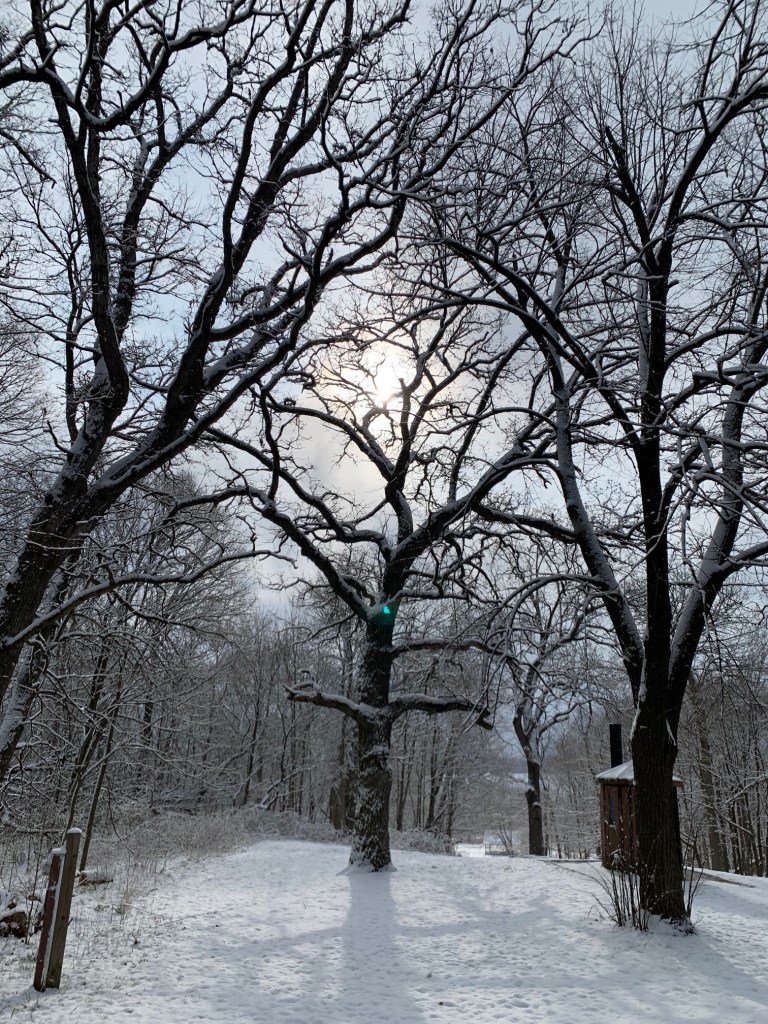
I also like a dark path through a deep and wintry forest. Yet when that dark path is surrounded by the green leaves of spring and summer, I like it just as well. It is spiritually healing to run through a forest in any season. You can feel the movement as if you were a part of the breeze itself. You can look down and find treasures below your feet and look up and wonder at the pattern of clouds between the branches.
It is also a glory to traverse a forest path covered by dead leaves or worn through to the dirt. Those are also paths to enlightenment. Once the snows melted the other day, I went for a run on a forest path and found a patch of Dutchman’s Breeches blooming as if the snow had never fallen at all. Whether the insurance companies and government agencies want to admit it or not, those flowers are just as likely an act of God as the houses torn asunder by tornadoes or flooding.
In truth, it’s not really necessary to credit any of this to God at all. Nature has its motives and is randomly happy to carry them out with abandon. I’m not one to constrain my worldview and force the will of nature through a God strainer. If anything, I see things the other way around. I think God is happy to sit back and watch it all happen, then study how people respond to creation. Those that respect it earn respect in return. To me, that is grace appreciated.
In other words, I don’t think God really cares whether we travel a yellow brick road or wander a dirt path in the woods. There are people who will tell you that the yellow brick road is the only path to salvation, but I don’t think that’s true. I bet you know a few people that agree, and perhaps you do too.
Find your own path. It’s a much more enjoyable way to live.


















 We Run and Ride