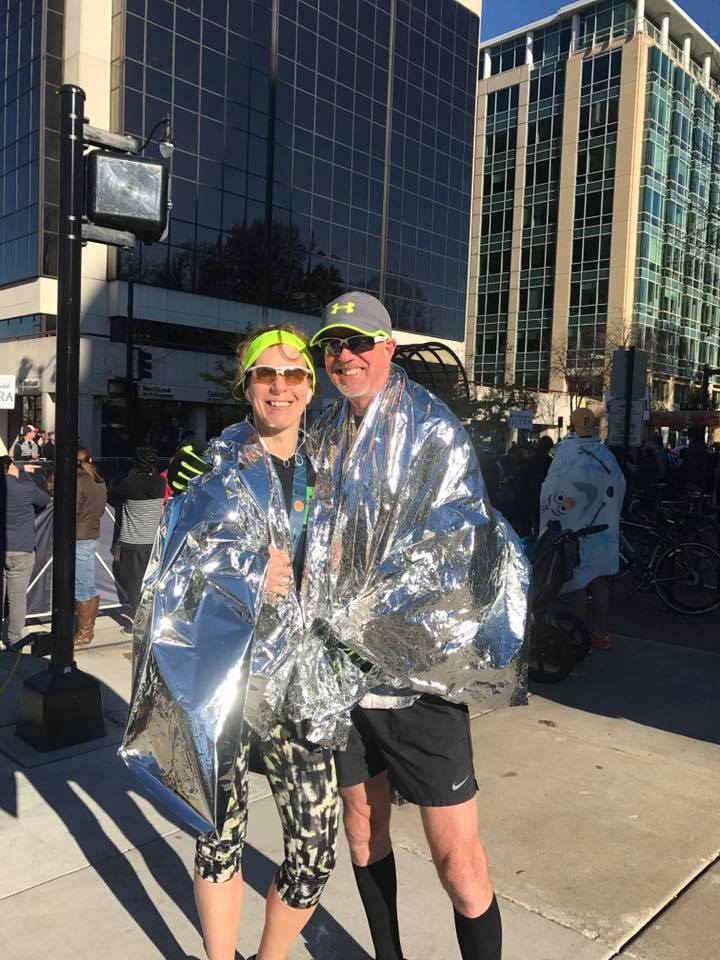
Running the Covid-19 gauntlet

Running the gauntlet: To run the gauntlet is to take part in a form of corporal punishment in which the party judged guilty is forced to run between two rows of soldiers, who strike out and attack him.

While visiting a nearby medical center for a followup appointment on an issue unrelated to the Coronavirus pandemic, I noticed a particular sensitivity to social distancing among the people walking through the parking lot and inside the building. At the entrance, there was a thermography device in the hallway to detect fever. Everyone wore masks, of course.

On the way back out, a longtime friend and fellow cross country runner from way back smiled behind his mask and said, “Hi Chris.” We nodded and kept on our way. No handshakes. No hugs.

Invisible gauntlet

In many respects it feels like an invisible gauntlet that we run each day during this pandemic. The goal is to move about without risking infection for yourself or anyone else. People who care enough to respect those concerns wear masks because they work. Yesterday a submitted story posted on our local digital newsletter Kane County Connects outlined the reasons why it makes sense to wear masks while out in public.

The Pandemic Gauntlet is real in the sense that our social order is disrupted, and it feels like a punishment of sorts. But for what? Some people view wearing a mask as a form of unjust punishment and even view it as a hoax being perpetrated on them. I encountered one such individual sporting a Trump 2020 hat with his little daughter in tow. He stood behind me at a convenience store, breathing heavily. Here was a man so determined to express his distaste for civil considerations that he preferred to flaunt his risky behavior as a sign of personal freedom. That is the real gauntlet of Covid-19. And it is all around us.

Touchpoints

It is tough to figure out where our responsibilities during this pandemic begin and end. The credit card processor seems like the worst place to contract the disease by touch. We also know that the virus is typically transmitted in airborne fashion. This is the gauntlet of casual consequences. Sometimes the information changes.

As a result, many people I know are avoiding social contact of any kind. They stay home rather than go out.

Our strategy is to choose our interactions wisely. That doesn’t mean we haven’t taken any risks. Three times this year we’ve participated in triathlon events where we could find them. We masked up, washed our hands, engaged in social distancing and competed. Our reasoning is that people doing triathlons are already in decent health or they wouldn’t be there. Even asymptomatic triathletes wore masks. The worst risk during all of that was standing in line just before the swim. People kept their distance for the most part. We emerged unscathed.

I still respect the concerns of people more conservative than us about social distancing, self-protection and protecting others. I wince when spotting an obviously fragile patron at the store struggling with an ill-fitting mask. During the early days of the pandemic, stores offered specific senior shopping hours. We would be wise as a society to go back to that. Make the Pandemic Gauntlet easier for those in need to navigate.

That’s not a selfish statement. Technically I’m a “senior” according to a varying set of definitions. Is a senior 55 years of age? 65? I try not to embrace or engage in ageism of any kind. Instead I’ve always tried to take care of my health at every age. None of us is perfect at that. I’ve made mistakes over the years. But through basic caution I’ve also saved my ass when it comes to the long series of odd incidents that for me consisted of infections from slivers, a cat bite and a bad tooth. The doctors told me I could have lost limbs or died from any of those three afflictions. All that I eventually “lost” was a tooth. What I gained was a health respect for the dangers of infections.

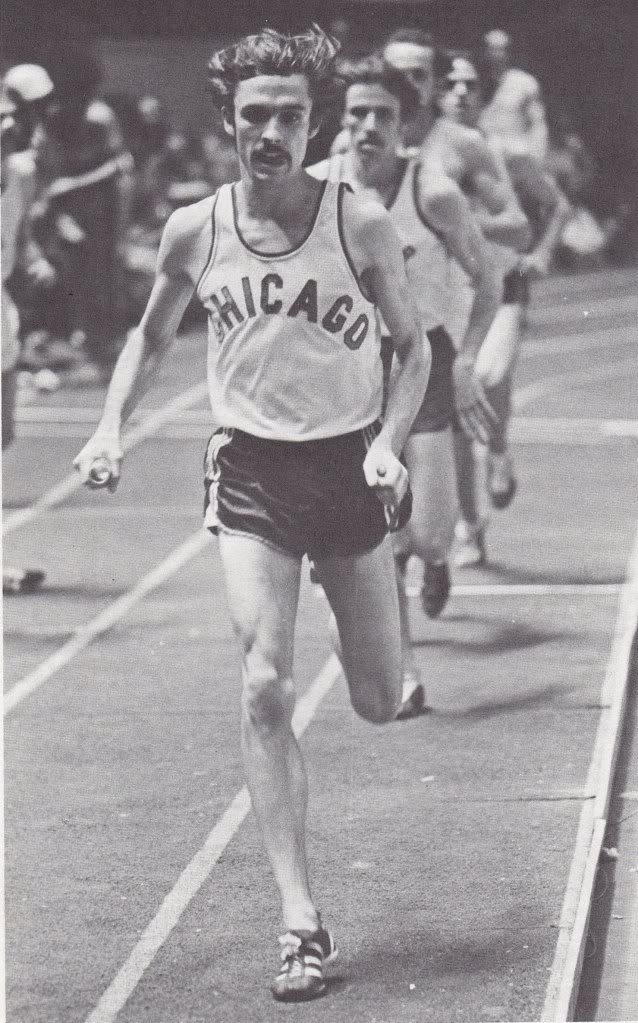
I’ve also experienced a lifetime of sports injuries, including torn ACLs, viciously sprained ankles, wrists and fingers from playing soccer, baseball, football, basketball, tennis and a host of other sports. I was a steeplechaser in college, one of the most dangerous of all track races. And since 2003, I’ve been involved in enough bike accidents to write a book. Add in the overtraining and heat exhaustion, close calls with nearly frostbitten fingers and toes, and nearly getting hit by vehicles while running and ride, and life is a set of close calls that could have gone either way.

Let’s face it: Athletes are risk-takers. We all have to learn our limits and make choices to protect ourselves and others. Sometimes it works. Sometimes it doesn’t.

My own daughter once chastised me for a risky bike ride on a 95-degree day. I arrived home sick from the heat and dehydrated. Salt coated my sun-soaked face. “Why do you do this shit?” she asked me.
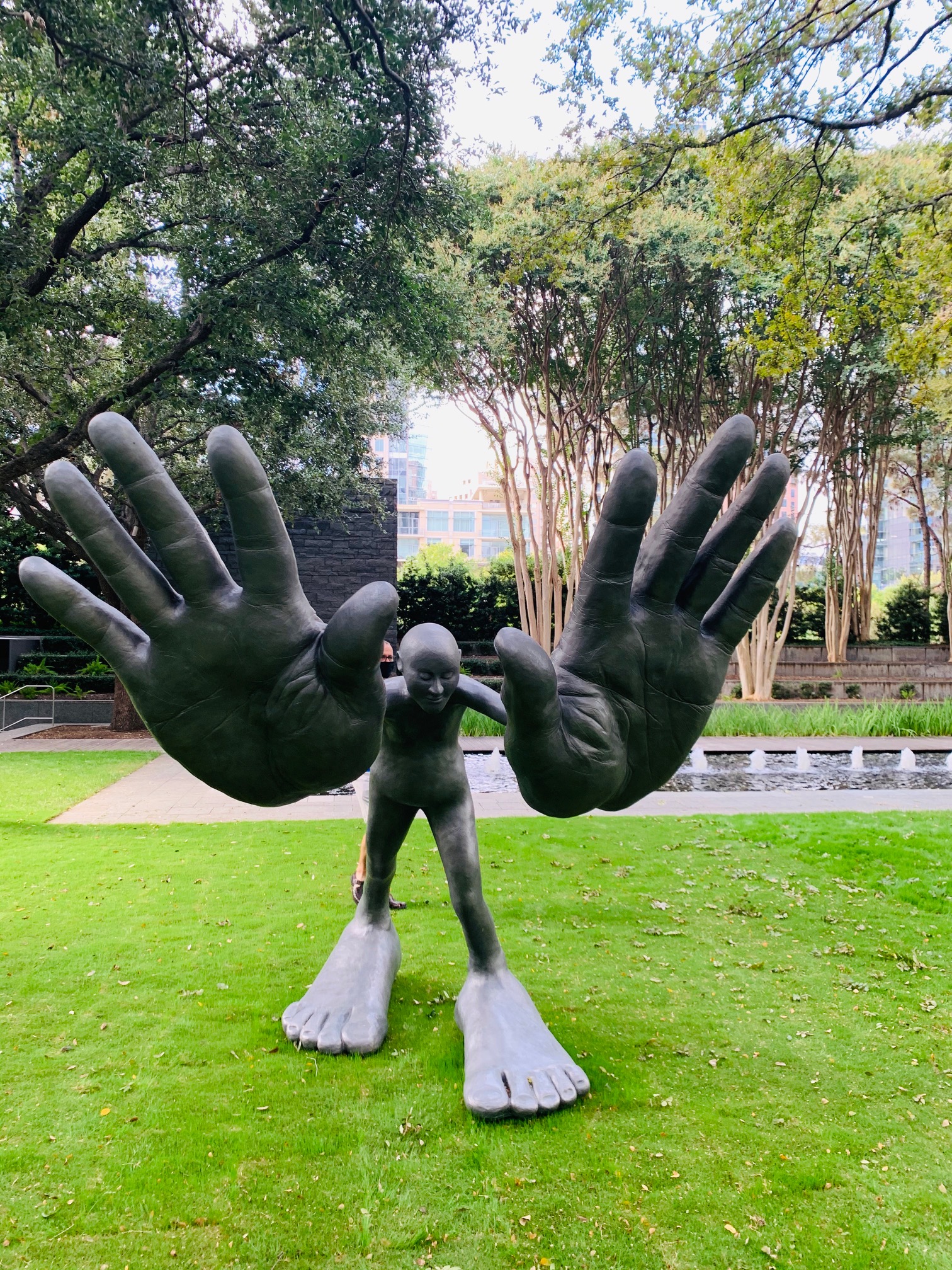
That’s a good question. The answer is not simple. Part of me has always seen taking part in athletics as an expression of freedom, even a defiance against society. That means a part of me empathizes with all those people out there bristling at the idea of being told to wear masks. They don’t want to run the gauntlet of pandemic precautions every day because it feels like an affront to their spirit and freedoms.

The sad truth is that they’re taking stupid and unnecessary risks with their own health, and the health of others. That leads to other questions: Do they care? Is there an obligation to care about others? Or is society just a “take what you can get” proposition?

As stated, I’ve taken my share of risks. Some people might deem those unnecessary. Competing in sports is an extravagant and often selfish pursuit. It also builds relationships, a sense of teamwork and community, and provides a diversified sense of self-worth that comes from overcoming self-inflicted pain and difficulties. Through those exploits we learn perseverance, develop empathy for the effort of others, and not to whine some much when things get tough. The risks, from that perspective, are actually the rewards.
Pandemic fatigue

There are days when I get sick of having to drag masks around all the time. We’re all fatigued at the notion of having to pull them over our faces. That said, I willingly participate in social protections because it makes sense just as wearing a bike helmet while cycling protects your head from injury, pulling on reflective gear to run at night creates better visibility, or swimming with goggles over my eyes keeps out chlorine and water-borne infections. These are all the “masks” we wear to do things we enjoy. Just another layer of life.

I also wear seat belts while driving and wash my hands after going to the bathroom both in public and private places. These actions are all part of being a wise and decent human being.

So if the pandemic feels like you’re running through a punishing gauntlet, that is a perception borne not of reality, but the product of a self-absorbed and shallow ideology. That’s the real plague on humanity right now.

Posted in coronavirus, covid-19 | Tagged , , , , , , , , , , , | 2 Comments

The techie world of fitness trackers

I wear a Garmin Fenix 5 fitness tracker. My wife purchased it for me two years ago. It has a ton of features. Beyond recording workout times, pace and route tracking, it also measures heart rate, estimated calories and stress levels. I’m not a super data-driven guy, but these measurements serve me well in managing daily life and workouts. The watch costs $300 and it’s worth it.

I recently competed in an Olympic Triathlon and the Fenix captured all phases of the day; Swim, Transition, Bike, Transition and Run-to-finish times. All with the push of a button. During the Half Ironman I did this fall, I used the Garmin to track the half-marathon course. I could toggle up and down from the map as I ran the course checking pace and distance thanks to a pre-loaded map of the route. The same functions work for cycling. That’s really handy. The only criticism I’ve had is that the Garmin device spazzes out sometimes during the swim. I can’t explain why. It just did it a few times.

Before all that, I used a classic Ironman Timex watch. I always thought those watches were cool. I wasn’t a triathlete back when I bought the first Timex 25 years ago. I wore them because the watches were durable and kept splits well. Over time I had big, fat Timex watches and slim models too. That’s all I needed at the time. Sometimes that’s actually all I do need.

While I like my Garmin and long appreciated the basic functionality of the Timex watches, the world of fitness trackers has diversified. Recently I came across a review of fitness trackers that explains the benefits of many different kinds. I know that my needs and interests are not representative of everyone out there, so I recommend giving this review a look. It’s a rather fun read with a mix of tech, assessments and illustrations.

https://www.consumersadvocate.org/fitness-tracker

I found it interesting that there are even fitness trackers that resemble jewelry, as described here by Consumers Advocate:

Jewelry that tracks your fitness? Sure!

“Made of stainless steel, Bellabeat products are fashionable wellness trackers that double as jewelry, either as necklaces, bracelets, or clips. These hypoallergenic, versatile pieces feature built-in sensors that track your physical activity–including steps, calories burned, and distance–sync with your smartphone, and store all stats and progress on the Bellabeat App.

Bellabeat jewelry, as well as the Bellabeat hybrid watch, costs between $120 and $200. Some of the jewelry designs include Swarovski crystals and natural stones, including rose quartz and onyx.”

They also review the Apple Watch and popular brands such as FitBit.

This Oura Ring looks pretty cool, right?

I’d add one more fitness tracker to the mix, a product promoted by Lance Armstrong on his podcast and YouTube channels The Move. The Oura ring. The thing looks awesome, tracks sleep and other life vitals and regardless of whether Lance doped and was an asshole to people, the guy still fought back against cancer and won seven times at the Tour de France. If he says it works well, it’s worth looking into.

If you’ve found a fitness device you really rave about, let me know. I’m always curious to know what people use to get faster or just look cooler. LOL.

Posted in healthy aging, healthy senior, swimming, training, TRAINING PEAKS, triathlete, triathlon | Tagged , , , , , , , , , , | 1 Comment

Turning points: what they tell you about performance, and yourself

There are both physical and mental “turning points” in every effort.

When it comes to successful training and races, we all hope for a “turning point.” That is the moment when the body and brain kick into gear and things begin to roll. Making good on the promise of a positive turning point is the secret to getting great results.

A turning point can go the other way as well if that good feeling disappears and things start to collapse within you. Avoiding tragedy when that kind of point comes along is the secret to avoiding damage and suffering.

It takes practice––perhaps rehearsal is a better word––to recognize both kinds of turning points for what they are.

Positive feedback

Turning points are often encountered during transition in triathlons and duathlons.

During any given workout it is typical to feel sluggish until the body warms up. That’s the period during which the body’s systems are working to process oxygen and burn fuel to meet demand.

Sometimes the warmup phase lasts well into the first third of the workout. At some point a sensation of efficiency starts to take hold. The warmup phase is over and the workout phase arrives. That is the first turning point within that workout, the spot where potential meets performance.

Later in that workout, after the middle period when the bulk of the work is done, a different turning point arrives. That is when the work already done starts to tax the body’s stored fuel sources and fatigue starts to affect the muscle fibers.

A smart athlete knows that turning point is always around the corner. Even athletes doing “negative splits” know there is a turning point where there is a tradeoff between sustainable speed and “maxxing out.” Another term for this state is “redlining,” the practice of racing or training at a performance level where the body doesn’t slip into a lactic acid state and cause a sudden dropoff in pace. That’s the wrong kind of turning point.

The right kind of turning point is being mentally and physically present with the feedback your body is giving you. That “associative” approach is a “promise” you make to your body and mind. Building trust in that feedback is a question of teaching your body the alternating sensations of performance and pain that define the quality and limits of performance.

Hard interval sessions (anaerobic training) and speedwork stretch the aerobic and muscles systems to accept and endure fatigue. Long workouts on the run, ride and swim tune the body to the wearing forces including cycing “Time In the Saddle” (TITS) along with runs that callous the body to repetitive stress and swims that force the athlete to maintain form and concentration despite all conditions.

Sometimes you have to adapt to the “turning point” of the day’s conditions.

All these training tactics contribute to the ability to meet turning points induced by fatigue that lead to doubts and fears. The entire goal of training is to prepare for these “turning points” and know how to process them. That breeds confidence and ensures that a fatigue-induced turning point is an expected experience rather than a rude surprise.

That said, even the best-prepared athlete in the world encounters situations where difficult training or race conditions ruin plans. That’s where a bit of bargaining takes place in turning point physiology and psychology. The “pace of the day” can change when heat, wind, waves or the body’s physical reactions to nutrition or other factors eclipses even the best turning point mentality.

In those circumstances, the athlete conducts a turning point “survey” to determine their options. Sometimes this takes place slowly, testing the body’s response and ability to endure more. It can also take place suddenly, such as the choice to continue in severe weather conditions that post a genuine safety threat.

But those choices are forced upon you. The more subtle and important turning points are those you make on days when a potentially good performance is on the line. I recall the day that I greeted my wife during a Half Ironman when she passed through water station with two miles to go and she smiled and yelled to me, “I’m going to hit my goal!”

All her preparation and training put her in that position. We passed through many turning points together in training as she put in the miles. I recall her indoor training intervals where she stated “I’m going too fast…” in the early stages of an interval workout, and helping her through the latter stages when it felt like she wanted to quit.

We all face turning points in our endeavors. They are what make competitive sports an interesting enterprise. Turning points are how we test ourselves, gain confidence and learn from our mistakes. Keep turning points in mind as you go through your training and racing. They are an important tool in understanding the full nature of your expectations and the realities of getting there.

It is also amazing what dealing with turning points in athletics teaches you about moments in life when challenges arise. Learning not to panic and “be present” in the moment to make good decisions even under stress is an enormous benefit in life.

Posted in competition, cycling, mental health, running, swimming, training | Tagged , , , , | Leave a comment

Wrestling with fear and purification

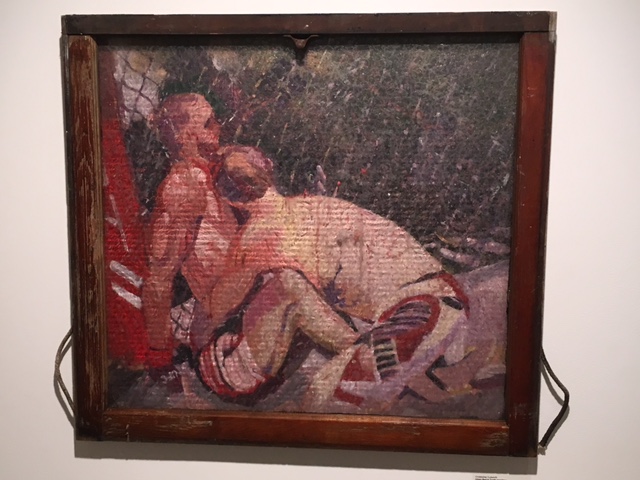
The Wrestlers, painting by Christopher Cudworth

One of the things I frankly fear as a writer is “missing the mark.” It happens now and then. Clients are typically frustrated or angered by that outcome. In a worst case scenario, that means going back to the starting line to begin again. In that situation, we have to wrestle with our worst fears.

That feeling of missing the mark or even blowing the opportunity to compete at all is the kind of stress that can make you question everything you have every done. The lyrics from the Pink Floyd song Time describe that sense of loss. They are some one of the most angst-filled words in all of rock music:

“Tired of lying in the sunshine staying home to watch the rain.
You are young and life is long and there is time to kill today.
And then one day you find ten years have got behind you.
No one told you when to run, you missed the starting gun….”

Thoughts like that can haunt you at any age. The fear of missing out on something in the future is one end of the spectrum. The fear of having missed out on something in the past is what haunts older people.

Failure to Lunch

Evan Cudworth rowed a million yards in one year.

My son Evan Cudworth is engaged in a mission to help people come to grips with failures past, present or future. It’s called Failure to Lunch. He’s courageously addressed his own personal challenges in many ways. Now he’s encouraging others to come out about their own failures. That way issues can be seen in the clear light of day rather than circling around as ruminative fears and anxieties that hold us back.

The feeling right after you’ve failed at something is paralyzing. A squandered opportunity, a gross mistake or a blind spot in your emotional intelligence can lead to painful results. Add in the native anxiety or depression that many people carry around and daily life feels like never reaching the starting line. Those emotional states rob us of present enjoy and create ambiguity within us.

Fear of failure and success

Fears above and below the surface affect us all

Back when I raced frequently the fear of failure was almost as bad as the actual experience of losing. So was the fear of success, the idea that if you achieve something difficult it will become the new standard by which you are measured and expected to perform. There are pressures to that too.

Back when he was setting world records at the half-mile distance, a runner from my hometown named Rick Wolhuter was interviewed by the Chicago Tribune and his words captured a significant reason why he was able to achieve at such a high level, including an Olympic Gold Medal. “Pressure is self-inflicted,” he observed.

Rick Wolhuter ran a world record 880.

As a young runner that idea that pressure was self-inflicted seemed difficult to grasp. How do you hope to achieve anything if you don’t apply some self-pressure? That was my approach to that question at the time, but it misses the mark. What Wolhuter clearly meant is that self-inflicted pressure that leads to a fear of failure is the enemy, not pressure itself.

When we’re excited by the idea that our competitors are actually there to help us in some way, self-pressure is not longer the focus of our attention. That’s what healthy competition is all about. Testing ourselves is a necessary and required part of life.

Some people don’t believe in that. Competition turns them off. A few times in life I’ve wished that I could be anywhere but the circumstance in which I was “forced” to compete. I think back to a conference cross country meet my junior year in college. That year had been filled with adverse situations. By late October with the fading light and the struggles of weekly competition my find turned dark and negative. I ran two minutes slower than I’d ever run before. In some ways I actually “missed the starting gun” and was going through the motions only to get the race over with. I’d failed the test.

But I survived and that winter committed to better training and performance. By spring I was setting all my personal records on the track. I was still a long-haired, bearded menace of a person inside in some ways. That included a toxic relationship with a woman that ended badly.

That summer, I cut off my long hair, shaved the ugly beard off my face and got contact lenses. That period of failure had transformed me in some ways. We have to keep learning these lessons of renewal however. My new friend Andre texted me this morning after I canceled an appointment due to a difficult work issue. He sent me a note that said, “Fear is a purifying element.”

He’s right. While it is painful to acknowledge these aspects in ourselves, they are consistently instructive and indeed purifying. Wrestling with fear and purification is a lifelong process. Running and riding and cycling are therapy. So is writing, painting and getting out nature.

Posted in aging, aging is not for the weak of heart, anxiety, competition, cross country, Depression | Tagged , , , , , , , | Leave a comment

A good belt of rest really helps

Our dog Lucy knows how to rest with the best of them after a big day at the dog park.

Over five days last week I did a sequence of consecutive training days that included an 8 mile hard run, an interval session of 10 X 400M at 7:40 pace, another eight mile run at an 8:30 pace average, then a sixty-mile bike ride at just under 18mph and a six mile run at 9:30 per mile, it was time for a rest day on Monday.

During that last six-miler on the running path on a Sunday morning, my legs were sore and my throat felt a bit tight. My resting heart rate had risen from its standard overnight rate of 48BPM to an average of 60BPM. My body was not catching up with the stress I’d placed on it. A couple more days of that and I’d have gotten sick.

Overtraining

That habit of overtraining used to happen quite a bit back when I was training 70-100 miles a week in distance running. I made myself sick every few months, it seemed, by overtraining. Doing two-a-days was a common practice in my peak years. That was necessary to cover 80-100 miles a week.

But sometimes, the fatigue would catch up to me. First would come the sore throat. The elevated heart rate. Hunger for sweets. Thirsty. Elevated temperature. A cold was coming on. That would slow me down for a good two weeks. Overtraining is easy to do if you don’t pay attention to the warning signs or get carried away by the thrill of successful workouts.

You’re only as good as the rest you allow yourself.

Moderation with age

I don’t often run more than thirty miles in a week these days. But throw in 2-3 bike rides, a swim or two and the training adds up. My wife cranks herself out of bed at 4:30 a.m. to swim, bike, run during the week. She’s one tough woman, I can tell you that.

On weekends we often ride together on a Saturday and run together on Sunday. Sometimes I do the entire bike with her like last weekend. We covered those sixty miles at just under 18mph on a windy morning. Our best ride together this summer saw us finishing a 56-miler in under three hours. That’s a standard we like to hit in preparation for the Half Ironman distance.

I’m a bit older than she, so I’m more cautious about my recovery days these days. One needs to learn some degree of moderation with age. The 60+ body does not recover as quickly as one does at age 30. I can feel when my body’s had enough.

Signals from below

My wife’s situation this past weekend was complicated by the fact that she’d gotten a flu shot on Friday. By Sunday morning her body was in a compromised state. For starters, her arm hurt around the site of the shot. Her glands were also up. She felt draggy and tired. The flu shot forced her body into a state of fatigue and recovery. But it all happened kind of quickly, in the middle of her 13-mile run.

We have to trust our bodies in situations where we start sensing these signals. Taking a day off to recover, as I did yesterday, is like putting money back in the bank for another day. Sue rested on Sunday afternoon. By Monday morning she was feeling better.

Plus resting keeps your training interest up. Running or riding or swimming when you’re absolutely tanked or exhausted doesn’t really produce a positive training effect anyway.

The alternator theory

I once had a Plymouth Arrow (I loved that car) with a battery that would run down once the alternator belt got loose. The lights would start to dim first. Eventually the battery would run down completely. Then, the engine would just stop working. Once the belt was replaced, the car ran again like new.

Our rest days are just like replacing that alternator belt. We’re not “losing a day” by taking a day to let our bodies recover. We’re giving ourselves a belt of good rest. Remember that next time you’re feeling really run down. You can ask our pup Lucy. She knows best.

Resting is good for athletes of all types
Lucy getting a dog massage on her rest day.
Posted in running | Tagged , , | Leave a comment

A long line of strong women

Heading into last weekend I read that a distance runner named Letensenbet Gidey had run a world record 5000M time of 14:06 in a track meet in Valencia, Spain.

I sat there for a moment and thought, “14:06. That means she ran through three miles probably 20-30 seconds under the 14:00 mark.”

That made me think about how amazingly fast women are now running. My personal best at 5K is 14:45. I ran the first two miles that night at 4:40 pace. The winning time of the race that evening was just over 14:00, run by eventual Olympic Trials winner Jim Spivey.

Gidet’s world record is now not far behind the time of another runner I admire, Tom Burridge, whose 13:45 5K as a University of Kentucky distance runner put him in the national class category. Tom also held the US national record for the half-marathon at one point after his college career.

Gidey would also have beaten the men’s cross country course record at Detweiler Park, where in 1972 I watched Craig Virgin race to a 13:51 time that stood for nearly fifty years. Please, please watch this video of this 22-year-old Ethiopian woman flow around the track. An inspiring effort.

Letensenbet Gidey and a host of other world-class women runners are now eclipsing the times set by national and even world-class male counterparts from a couple decades back.

The women’s world marathon record set by Kenya’s Brigid Kosgei in Chicago in 2019 is 2:14:04. That pace is within a mile’s reach of the best male marathoners of the late 1970s and early 80s. She would keep pace with the likes of Frank Shorter, 1972 Olympic Marathon champion, who ran times of 2:10, and Bill Rodgers, who won the NYC and Boston marathons multiple times. He ran a 2:09.

Imagine the sight of these women clipping along with those famous icons of the sport!

Joan Benoit on her way to winning the 1984 Olympic Marathon

It’s no longer shocking to the world that women should run or ride or swim so fast. Ever since Joan Benoit (Samuelson) led the way in the first women’s marathon in the 1984 Olympics, running somewhere around 2:22 if I recall, the supposed barriers of running and athletic achievement that once stood in front of women continue to tumble like dominos. The same holds true with age barriers. In her sixties, Benoit completed a marathon in 3:04. That’s just over 7:00 a mile for 26.2 miles.

I recall the first time being beaten by a young woman named Karlene Erickson in a 15-mile race called the Midnight Madness out in central Iowa. Her thin frame passed me in the darkness. She was just 15 years old at the time. A few pieces of male pride fell away that evening, but I learned that you can survive after being bested by women.

Since then, occasions to train with strong women have increased dramatically. This past weekend I rode sixty miles with two women that are stronger than me on the bike. I led much of the first fifteen miles just to lead us to the country roads. But out there in the wind I could feel the strength of those two gals. It’s a tremendously liberating thing, in a way, to accept the strength of women and revel in its aura.

It’s a long line of strong women that led up to today. It will be a long line of strong women carrying all this energy into the future.

I hope you find inspiration in all this progress for women like I do. It’s so much fun to share in keen athletic efforts. It makes the world a better place.

Posted in running, swimming, track and field, training, training for a marathon, triathlete, triathlon, triathlons | Tagged , , , , | Leave a comment

Just my wife and I and ten four hundreds

By the time we arrived at the Geneva Middle School track, the sun was barely a hand’s width above the horizon as I took measure of the light. We’d have forty minutes or so to complete a workout of 10 X 400 meters.

I’d been in that circumstance many times before. As October progresses each year, the light seems to fall into the void of autumn. Many times over the years I’ve run with teammates and training partners in late afternoon and finished as the sun vanished behind the trees. The night comes on and the air cools quickly. It’s all evidence of how tenuous our earthly existence really is.

But while the light lasts and the afternoon wind ceases to blow, conditions are perfect for running. Even the light breeze on the homestretch felt good around us.

Both of us were wearing new running shoes. The feel of new treads on a black rubber track is profoundly joyful. We warmed up with a mile jog and she did her strides while I engaged in some stretching.

Her planned workout was to run at 8:30 pace or below. We finished the first 400 under 2:00, and she made note of it. “That’s a little fast.”

We did another, again at sub-2:00 pace. Then another. She wasn’t struggling. Instead she was thriving. I tossed out my plan to do the second set of five at my own pace because it was such fun running with her lap after lap.

By the time we hit eight 400s with only two to go, her confidence was high. We didn’t go nuts but kept to the pace she’d been hitting all along. I was more than happy to get in a clean and steady workout at my current racing pace for 10K and more.

The sun was completely set as we cooled down with a couple laps of jogging. A cool waft of corn-swept breeze came our way. We climbed into the car to pick up supper after the workout and she summed up the evening by saying, “Well, that was good.”

Indeed it was. Just my wife and I and ten four hundreds. Cannot think of a better way to spend an October evening.

Posted in 10K, 13.1, 400 meter intervals, 400 workouts, running | Tagged , , | Leave a comment

Competition can break your heart

I’m sharing a video today that is compelling in its sadness, and yet inspiring. A Colombian rider at the UCI World Championships is left stranded on the roadside after getting a flat. There is supposed to be a neutral service car to help riders in this circumstance, but it seems that even that vehicle passed this rider by.

This young man rode thousands of miles to prepare for this competition, and then this happened. We’ve all experienced disappointment in sports, but as the commentators point out, few of us earn the chance to represent our country at this level. The pressure that comes with that is hard enough to bear. To have your chance to prove yourself stolen by a flat tire and no help in sight is a crusher.

I recall racing the 5000M in the Prairie State Games, an Olympic-style statewide competition held for the first time in the mid-1980s. The race started in 80-degree temps with 80% humidity. I passed through two miles under 9:30 in third place behind Ty Wolf of the University of Illinois and a University of Chicago runner whose name was Paul Snyder, if I recall correctly. At that point a side stitch from hell started coming on. I ran for another lap but it was too painful. Bent over from pain, I lurched off the track and the medical crew pushed my sad body into a wheelbarrow full of ice. I’m not sure if heat was the exact problem, but it was disappointing to have lost my place in the race.

Perhaps you’ve had an experience like that where your expectations were high and they suddenly burst in front of you. If so, this rider from Colombia expresses the tears and frustration that sometimes come with competition. We learn from it. But damn it hurts in the moment.

Take heart, everyone. You’re not alone.

Posted in competition | Tagged , , , , , | Leave a comment

What quitting Cub Scouts taught me early in life

At age five just before joining the Cub Scouts.

Like a ton of little kids sucked into the idea that the Boy Scouts of America knew what was good for us, I signed up for Cub Scouts and was assigned to a neighborhood den.

Dutifully, to the best of my ability, I followed instructions in the Cub Scout manual to earn badges. There was a sense of accomplishment in doing so. That much I’ll admit.

Then one summer afternoon our den was out playing kickball in an open field near the Den Mother’s house. I was a wicked good kickball player as a rule, and I didn’t like to lose. Which is why, as I was about to roll the ball from the pitcher’s position to the opposing, I saw from the corner of my eye that the runner on first base took off running the moment the ball left my hand.

The rules had been clearly laid out before the game. No stealing. No leadoffs. No leaving base until someone kicked the ball.

The player at home plate completely missed the ball. But there on second base stood the runner that had left the bag at first when I pitched the ball. “You need to go back to first!” I told him, pointing at the bag.

“Nuh uhhh,” the player on second replied. The other players froze, not knowing what to do with someone so brazenly willing to lie about the game and its rules.

“You go back to first or I’ll make you!” I told him.

At that moment one of the players from the opposing team ran across the street to get the Den Mother. I was arguing with the player at second when she arrived on the field.

“What’s this about you trying to start a fight?” she scolded me.

“He cheated,” I said sternly. “He stole second when I pitched the ball.”

“That doesn’t give you an excuse to start a fight,” she warned, grabbing me by the shirt.

I tugged away and glared at the player on second. He made a face.

“I quit then,” I replied, turning defiantly to the Den Mother. “If you like cheaters, then I quit.”

Then I walked off the field and trudged all the way home on my own. I knew my way around the neighborhood. That was no great risk.

When the Cub Scout Den Meeting arrived the next week, my mother called up the stairs, “C’mon Chrissy,” she called me that. “It’s time for Cub Scouts!”

“I’m not going. They cheat,” I told her.

My mother came upstairs to hear the whole story. I clearly explained the disagreement over the rules. My mother understood. She could have made me go back and apologize for threatening the other player I suppose. But my mother knew that I had a strong sense of justice earned from repeated interactions with my brothers. We simply never cheated or got punished if we did. Granted, I could throw occasional fits of wicked anger and tears, but at least I was trying to sort right from wrong.

So I never went back went back to the Cub Scouts as a kid.

Professional Boy Scout

My painting Flag Waiver.

Years later I was recruited by friends to work for the Boy Scouts of America as a district executive. Perhaps it was a closeted attempt to reconcile my earlier misgivings in life. But history repeated itself.

I worked there for three months before discovering that several of the other DE’s were cheating on their enrollment numbers. They filled out membership forms for youth in their districts, paid their annual fees and sent the paperwork to the national office. They cheated.

That was just like leaving from first base before the pitch was made. It was stealing second when it wasn’t allowed.

And just like earlier in life, when I met to discuss the problem with the executives running the Council, they accused me, not the other DEs, of dishonesty and trying to cause the Council harm. They even convinced a volunteer adult leader to participate in a scam to discredit me and insinuate that I’d stolen money from a Camporall when I’d gotten home late on a Sunday night from the event and decided to deposit the money early the next morning.

Having watched up close how corruption soiled the organization, it was no surprise to me that the Boy Scouts of America became embroiled in a massive lawsuit for obscuring child sexual abuse by adult volunteers and even professionals. It taught me that the more some people present themselves as good the righteous, the less they can be trusted.

Race cheats

Occasionally I’ve even see people cheating in races in which I was a competitor. Some of that cheating was on purpose and some of it was mistaken. I was in second at a 10K race with a mile to go in the Sycamore Pumpkinfest 10K when the runner ahead of me cut through a park rather than following the path around it. That shaved about 200 yards off the course distance and I was faced with the choice of whether to follow the leader or stick to the course. I stuck to the course. He beat me by 200 yards.

I know life isn’t fair. I know that justice isn’t always served. In many ways and on many days, justice doesn’t even sniff the fresh air of truth.

That’s what I learned from those early experiences in the Cub Scouts and in many later encounters with cheaters in life. They love to get away with it. They relish it in fact. And when they get accustomed to cheating, they grow to admire those who do it best. That’s how we got where we are today. The proof of admiration for cheaters and crooks is all around us. They gaslight and mock and smirk at those of us who refuse to cheat as if we’re the suckers, losers and fools.

Cheaters don’t always prosper

I’ve also seen enough in life to know that cheaters don’t always prosper. The Boy Scouts of America and the Catholic Church and a host of other self-righteous organizations claiming purity and goodness while hiding the sting of evil behind their institutional prowess. Our government here in the United States is in the grip of a phalanx of cheaters, hypocrite and power-hungry religious zealots. We’re all witnesses to another corrupt chapter in American history playing out before our eyes. Once again, there’s a guy standing on second base smirking at us all. He thinks he’s getting away with cheating. He’ll steal bases as long as we let him, and his teammates are all too happy to cheer him along.

The question is, what are we going to do about it? I say we challenge the cheaters with everything we’ve got in these circumstances. Speak up and speak out. Vote.

Don’t be gaslighted. The truth is eventually revealed when you do. That’s the other thing I’ve learned. There comes a day when we win because perseverance overcomes the deep inner weakness of the cheaters no matter how strong they claim to be. The bullies ultimately do fall. The stealers of second base get caught. The Den Mother realizes how badly she failed in a test of conscience because she stood up for the wrong kid all along.

Rightness will prevail. Are you with me?

Posted in Christopher Cudworth, competition | Tagged , , , , , , , , , , , | Leave a comment

The world on steroids

I’m going to tell you two quick stories and then explain why they’re pertinent at this precise moment in time.

During college cross country in a season where we’d go on to place second in the NCAA cross country championships, the top five guys all came down with sore Achilles tendons after an ill-advised speed workout on a cambered road. All of us were limping the next day, and I was deeply concerned about losing all that hard work so I went to the campus doctor for a checkup.

Bad Doc

He prescribed some pills and I filled the prescription that day and started taking them. Within hours I was lost in a daze. I got lost on my way to class. Couldn’t concentrate. I kept running and didn’t feel much pain. Of any kind. That lasted a couple days.

Everyone else was sore and weirded out by the injuries. Finally, our coach drove us to the Mayo Clinic in Rochester, Minnesota for a team checkup with a physician that graduated from our college. He took one look at the bottle of pills I’d brought along and said, “How long have you been taking this?”

“A few days,” I explained.

“Stop immediately,” he warned me. “This is a strong steroid called butazolidin. But this amount the campus doctor prescribed? This is how much they give horses.”

That was my first experience with a world on steroids.

Brain drain

Further on in life, my late wife had been going through cancer treatments for eight years before we found out that it had migrated to her brain. It wasn’t supposed to be able to do that, but it did.

She had surgery and radiation to reduce the tumor and was prescribed a powerful steroid called dexamethasone.

It completely changed her personality. She started spending money we did not have. I half-assumed that she’d been given some cash by her parents, which happened occasionally throughout our marriage.

Then she stayed up half the night researching the car she wanted us to buy. I was out of work taking care of her at the time, so I didn’t think it was the best time to be buying major purchase items. But she was adamant, so we drove to the Subaru dealer and signed the papers for a new Outback. Fortunately, my credit rating was over 800 at the time, so they didn’t ask any questions.

Not long after that, her alternating manic and sleepy behavior forced her boss at the preschool where she taught to call me. “She’s not herself,” I heard her say.

That was putting it lightly. The forceful energy and loss of inhibitions was hard to handle. The steroids had taken over her brain.

Trump on steroids

The reason I share these two harrowing, first-hand incidents is that I just read a disturbing report that President Trump received steroid treatments with dexamethasone. Then he forced people to jump into a car and drive around the streets surrounding Walter Reed hospital.

That action put everyone in his immediate environs in dire danger of contracting Covid-19. He’s needlessly (except for ego’s sake) endangering professionals whose job it is to protect him.

It’s not just the steroids that make Trump so irrepressibly irresponsible. He’s always been that way. But the idea that his sociopathic need for approval and fearful approach to losing election credibility is being exacerbated by mind-altering drugs is beyond disturbing. The fact that the White House is busy covering up the truth about Trump’s condition is not unexpected, but it is corrupt.

In other words, business as usual in the Trump era. He hid the truth about Coronavirus from the public (a fact openly admitted to journalist Bob Woodward) then politicized it by mocking those seeking to follow medical recommendations such as wearing masks and social distancing.

All Trump cared about was looking good for his date with legal security and a chance to keep the presidency and avoid being prosecuted for crimes already committed.

Now he’s on steroids. He’ll soon be acting out like the manic character George “Baby Face” Nelson in the movie Brother, Where Art Thou.

I could see Donald Trump whooping and hollering like this as they haul him off to jail after he rightly loses this election. It will probably be his dear supporters marching him through the streets once they realize how badly they’ve been hoodwinked by the Scammer In Chief.

Posted in Uncategorized | Tagged , , , , , | Leave a comment