In races with our own faces

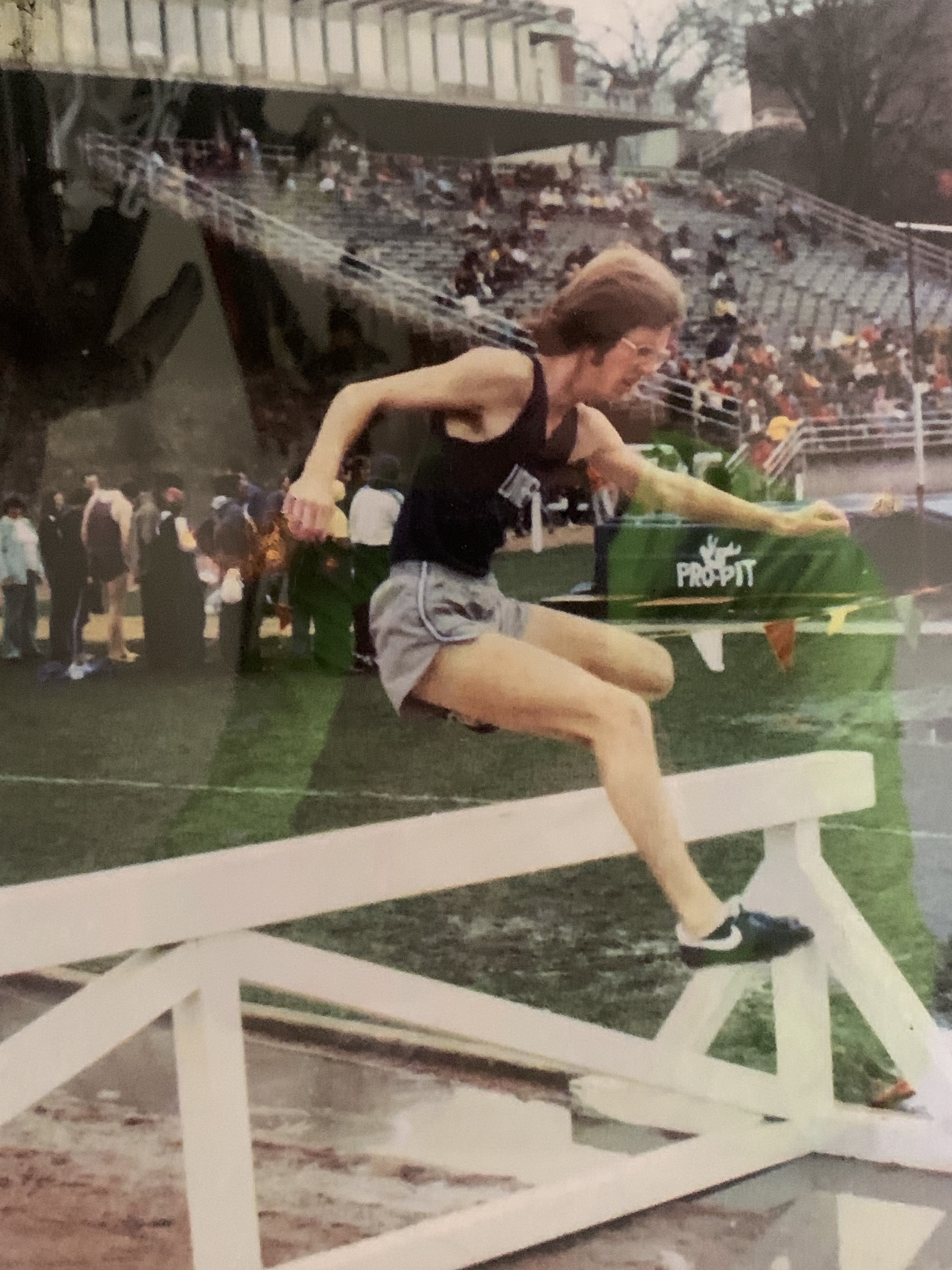
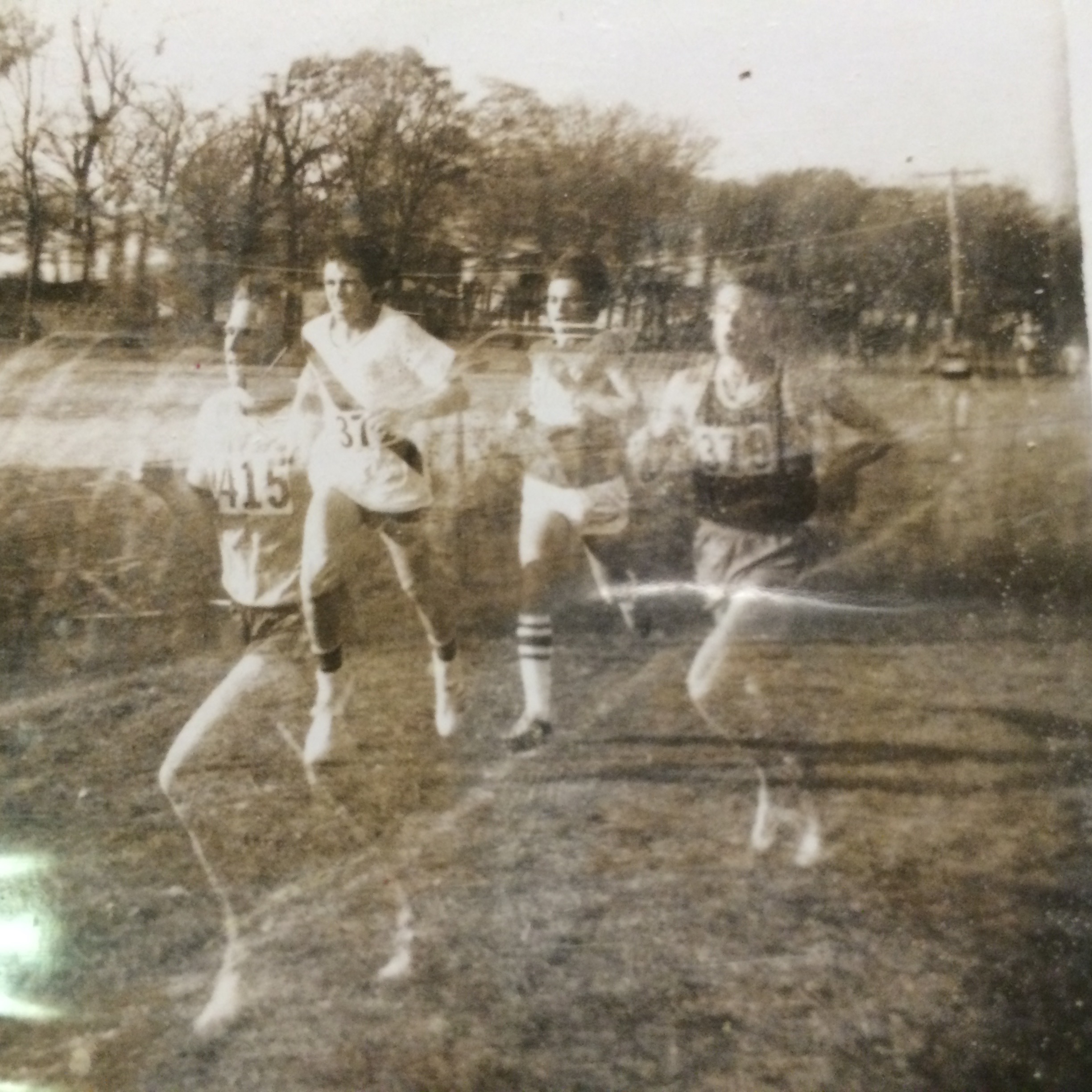
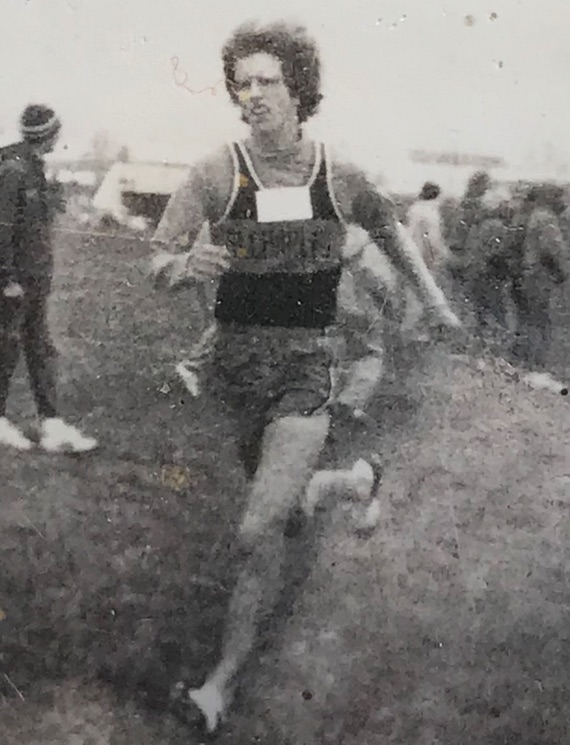
This photo convinced me to buzz the beard the next morning. No shag for me!

As an artist, I’ve never been one to paint or draw many self portraits. I prefer to look out at the world rather than constantly looking at myself for some hint about the universe. But yesterday, while sitting on a favorite chair in the living room, I held up the iPhone and snapped a selfie. Obviously I’ve done plenty of those over the years. Billions of other people around the world take selfies every day. There’s an entire industry built around “self-branding” now with influencers snapping pictures of themselves to hawk products or their own lives as evidence of some great insight.

It is likely that I’d have a ton more Instagram followers if I shot more selfies rather than randomly taking pictures of my many interests. Generally, social media favors One-Trick-Ponies over broad spectrum personalities. People seem to like the consistency of a confined personal brand. There’s not so much to think about.

As a triathlete these days I occasionally go on a spree of workout or race photos. I follow tons of athletes on Instagram and admittedly enjoy the feeds of fit-looking people from all sorts of backgrounds. Their mostly young faces stare out from those photos and we derive some dopamine pleasure from the bright eyes and beautiful bodies of these boldly branded beauties and beaus.

Not everyone focuses on being perfect. A few big personalities such as Amy Schumer have taken to showing their flaws and posting challenges on every front. In some respects, that’s what I do with this blog. There’s a fine line between documenting your time and being a narcissist in photos or words, but my belief is that being earnest is the opposite of narcissism. Sharing your world and inviting others to share their own is an honest form of dialogue.

A photo of Heather Bouton, one of the many athletes profiled here on We Run and Ride.

That’s why I like interviewing other athletes as well. I haven’t added up the number of people I’ve profiled but in nine years of doing this blog it is likely more than one hundred people. I’m considering publication of a collection of those essays by following up with those folks to share how their lives continue to change.

We’re all in races with our own faces, you see. Age comes right along with us. I love working out because it keeps me healthy, but I’ll admit that I also like that it helps me look a bit younger. That’s a more difficult chore as time goes by and the metabolism slows down, the face draws longer and wrinkles take over. That just means you have to eliminate the traits that by nature leave you looking older. Wild, frizzy, gray hair. Unshaven beards. Ear hair. The like. The irony is that to combat ageism in this world, you have to engage in it yourself.

While I acknowledge the right of some elder athletes to let it all hang out and care not how old they look, I’m not convinced that’s the best way to motivate or reward your efforts. In my limited estimation, it’s still best to keep yourself as trim and trimmed as possible. Granted, that’s not possible for everyone, so we have to find our own parameters. With so much life to live in every moment, it seems wise to face life with a youthful outlook, even if it’s just putting a smile on your face. That’s the best way to win the race.

Posted in aging, aging is not for the weak of heart, anxiety, triathlete, triathlon, triathlons, we run and ride, We Run and Ride Every Day, werunandride | Tagged , , , , , , , | Leave a comment

Fear of success is a real thing

Our fears sometimes bubble up from strange places

While teaching physical education as a substitute yesterday, I received a request from a teacher to let me know how the class behaved during gym. “They didn’t behave for the sub earlier this week,” she related.

I’ve taught thousands of kids over the years. The process hasn’t changed that much from one generation to the next. Treat them like real people and they generally respond well.

They had fun playing a game in which a court was set up on the grass and the goal was to throw tightly wound yard balls into a square of cones on the other team’s court. It was mildly competitive and largely harmless. They got to scream a lot and work off energy, and we headed back inside.

Walking back toward the entrance, I turned to one of the kids walking next to me and said, “You know, I’d give you guys and “A” for being good in PE today.”

“Oh, no…” the fifth-grader replied. “How about just a B. An A is too much!”

“What?” I responded. “Too high a standard to match next time?”

“Yes,” he laughed. “We don’t want that much pressure.”

That conversation made me chuckle all morning. I shared it with the teacher and she just rolled her eyes.

It got me thinking about times in my life when we don’t want face the pressure of a given situation. It is easy to be intimidated by expectations once you’ve run a good workout in practice. Now do you have to run that much faster all the time?

Or when we set a PR in our event, do we have to compete even better the next time?

It’s natural to experience fear, consternation or dread at the idea of having to go harder, faster or longer in endurance events. That deep-down feeling that it might hurt a bit keeps the confidence at bay.

So how do we deal with fear of success?

Fear and trepidation often turn up at strange times.

The most effective method I’ve found is to gather elements of confidence rather than trying to shoulder the whole boulder of expected or prior success. Fear of success is actually ‘fear of change.’ That’s what that fifth-grader was trying to convey. It was much easier to misbehave, he seemed to reason, than it is to abide by the rules all the time.

He was smart enough to ask for leeway in the “better behavior” department. Most of us like some flexibility in our lives, including not having to try our hardest all the time.

Yet there are times when looking for slack amounts to avoiding responsibility for our efforts. That’s when excuses enter the picture, or we self-sabotage to crawl back into our comfort or “safe” zone where the pressures aren’t so great.

Olympic Bronze medalist Rick Wolhuter once replied when asked how he handled competitive expectations, “Pressure is self-inflicted.” In other words, the drama in our head is what keeps us from achieving at the highest possible level. The ability to turn off or defer negative thought to replace them with constructive thinking, such as focusing on associative feedback, is one way to take the pressure off and concentrate on doing your best in the moment. Some folks like to concentrate on empiric data such as watts, cadence, heart rate, or pace.

Others find it best to find ways to relax and allow the mind and body to do their best work “in the moment” and respond reflexively to challenges along the way. Relaxation is key to mind and body working together. I once ran a great race after indulging in an hour of reading a book that I loved.

Having competed for nearly fifty years in endurance sports, having begun my running career at the age of twelve, I am familiar with the full spectrum of “fear” that athletes tend to experience. If Fear of Failure is at one end of the spectrum, and Fear of Success at the other, how do we actually know which is which?

I believe the answer is somewhat simpler than one might imagine. To quote President Franklin Roosevelt, “The only thing to fear is fear itself.” But fears sometimes bubble up from strange places.

Most of all it’s about trepidation: that feeling of concern or agitation about something that may happen.

The key to dealing with fear of success or failure is to assess the source of those fears. Are they tangible and material, such as lack of training or mistakes in diet? Or are they intangible, such as how you FEEL about your current situation? And where do those feelings come from…?

That fifth grade boy was pretty smart in realizing that being given a higher grade meant being held to more challenging standard going forward. He was being kind in considering its effects on fellow classmates. He was also admitting out loud that new expectations weren’t all that welcome. Why? Because it seemed easier to have flexibility to misbehave than to live up to a perceived new standard.

Embracing even little successes can instantly expand our world.

In truth, he didn’t calculate an important factor in his decision to downgrade his class’ performance. What if the new standard actually made life easier? More exciting? What if getting an A for good behavior by the class meant more liberties, opportunities? Longer recess?

The fear of success is actually the limiting factor in all our objectives. We don’t know how good we can have it until we really try.

Fear is nothing more than a desire to escape responsibility. That’s why we consider people who are courageous to be heroes. They accepted the responsibility of the moment, or in a lifetime. It is also likely that some of the greatest heroes in the world will never be known. They accept their responsibility and move on, not wishing to discuss or celebrate either their accomplishments or their own character. In that light, some of the greatest heroes in this world are people who deal with challenges they never care to admit. Mental health issues such as depression or anxiety make life that much harder for many people. They work hard just to face what would be a normal day. Fear of existence is just as hard as dealing with fear of success or failure. We’re all dealing with trepidation in one way or another.

Tredipation actually wants nothing from you, and you don’t owe it anything. It may be the nearest thing to our minds, yet it is the farthest thing from our hearts.

The cure is do do something you love, the best as you can, and leave trepidation behind.

Posted in fear | Tagged , , , , | Leave a comment

Follow the worms

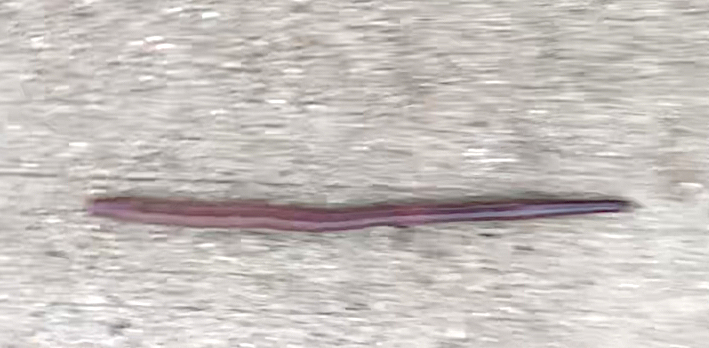
This time of year in Illinois, the rains bring earthworms to the surface. They show up on sidewalks and roads, making it hard at times to run without crushing them underfoot.

An earthworm hustling across a wet sidewalk.

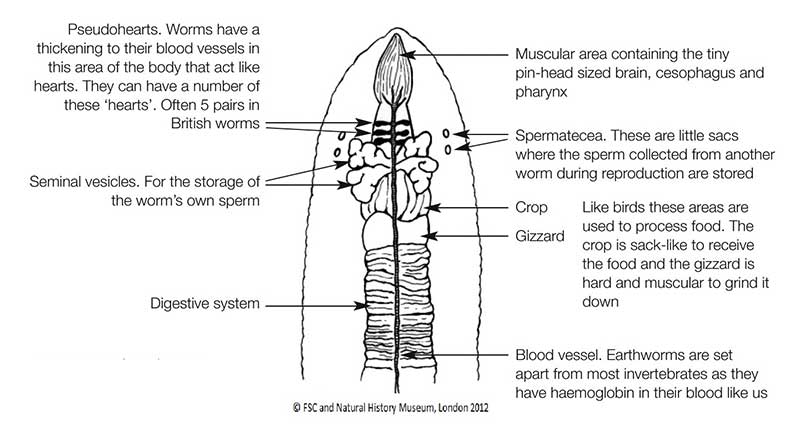
I respect worms. They are amazing creatures in many respects. Way back in high school and college I dissected large earthworms in biology class. We learned the body parts inside and out. Evolution perfected earthworms to live in soil, and also create it. Few other creatures on earth can claim such a mutually beneficial relationship with their environment.

When it rains, earthworms have to crawl to the surface to avoid drowning in the water regions below-ground. They’re not evolved to crawl on hard surfaces that well, but they manage, hitching their long bodies along as they go. They move like caterpillars without legs, and don’t metamorphose into anything but larger worms. However, they do mate without worries over gender or defined sexuality. They exchange reproductive material, fertilizing each other’s eggs. The human race can learn a few things about gender fluidity from earthworms and many other creatures in nature. It’s not just “male and female” as so many like to contend. Much of creation doesn’t care about such things.

A big, fat worm is a joy to some and a horror to others. As kids we dug them up to use as fishing bait. A good rainstorm made the job that much easier. We would walk along plucking worms off the ground without a bit of digging. There was satisfaction in doing a good dig, however. The sight of shiny earthworms in dark soil is one of the most organic experiences of all.

Some worms were so big we’d have to split them into pieces to fit on a fishing hook. Despite our best attempts to bury the hook through the worm, the species called sunfish would often nibble away the worm bit by bit, like little piranha. Our bobbers would jiggle and we’d try to set the hook, but those darned fish were hard to catch. Or worse, they’d choke the worm down whole with the hook. That necessitated a long and often bloody hook extraction using pliers to grab hold of the hook and yank it out of the gut. Too often that left the sunfish wounded and twitching as it died on the surface.

I can’t say that fishing with worms is a legitimate example of the “circle of life” concept. There is too much human intrusion on the ‘circle’ for the colloquial concept of “life taking life” to hold true. I’m not much of an avid fisherman anymore for that reason. I’ve also seen worms respond to other human abuses. I once plunged an earthworm into a jar of formaldehyde. It literally tied itself into a knot as it writhed in the chemicals. That had a profound effect on me for some reason, as if it were a sign of a worm protest. That worm was a sentient being, at least in its ability to feel pain.

My guilt over taking life isn’t so profound that I stop and cry after stepping on a worm. Even the frogs that burst forth from our wetland and get squished on the roads don’t engender much lament. For every frog we see dead, there are thousands more that escaped to some other waterway. That’s how nature works. It is a numbers game by any measure you want to apply. The same holds true for turtles that crawl up a hill to lay eggs in the dirt. They dump their load and return to their ponds without a thought. Some eggs survive to hatch a new generation while others are found and gobbled up by raccoons or some other predator.

I reason that for every worm spotted on a wet sidewalk or roadway there are at least a thousand more still crawling around under the surface. Stats from the Nature’s Way Resource website document the prodigious numbers of earthworms: “25 earthworms per square foot of soil equal 1 million earthworms per acre. Studies in England have shown that in healthy soil forty tons of castings per acre pass through earthworms bodies daily. A new USA study indicates 12 million worms per acre which move 20 tons of earth each year.”

Talk about unseen strength! Those of us that have tried to pull a live earthworm out of its burrow know that worms are indeed strong. Their ability to hold onto their position in the dirt is totally impressive. We’ve all seen robins engaged in that tug of war for their dinner. The birds grab hold of the worm and stretch it out, but sometimes part of the worm breaks off to live another day. Depending on where the break occurs, worms can regenerate a new head and other body parts needed to survive. Talk about resilience! The human race can stand to learn a lesson or two from that example as well.

The message here is that worms really are inspiring creatures if you give them a bit of credit. So many of our “companions” here on earth are like that, regarded as lowly or beneath us, but we deceive ourselves. Without worms, the human race would probably starve to death for lack of soil in which to grow our crops. They do us a ton of favors and in some ways, the dirt flowing from their guts is the stuff of which food is made. We may depend on bacteria in our guts to process that food, but we really depend on worms in the soil to grow it. The same holds true for the gardens in which we plant flowers to enjoy their beauty. Flowers are beautiful, but in many ways they owe their beauty to the lowliest creatures of all, the worms. Every flower owes its life to a worm. So do you.

Every flower owes its life to a worm. So do you.

So next time you run or ride down a wet street covered with worms, give a little more attention to the earthworms you see along the way. Bend down a moment to look at them closely. Follow them a few moments as they travel, because for many people on earth, it is back to earth we go someday, to join the worms underground.

Makes you want to step over a few more worms here in life, doesn’t it?

Posted in aging is not for the weak of heart, running | Tagged , , , , , | Leave a comment

Meeting Leah Hayes made my day

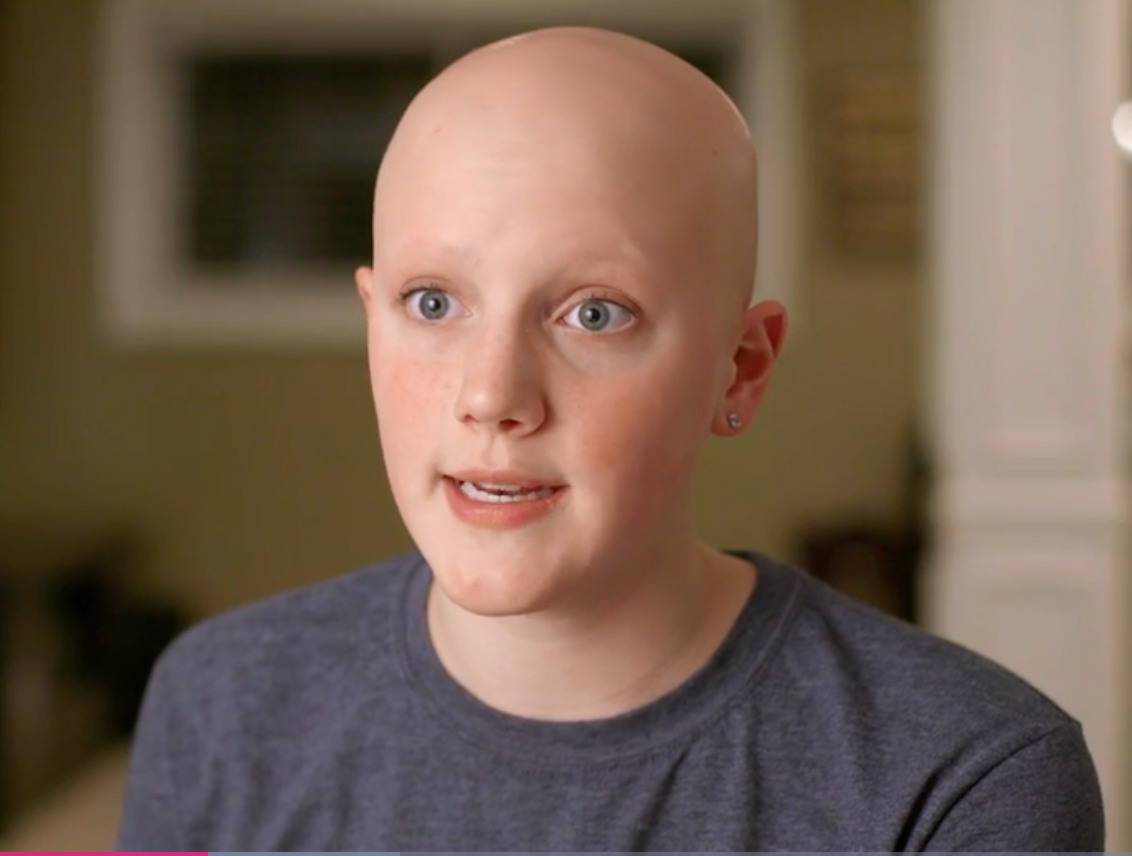
Leah Hayes is a 15-year-old competitive swimmer.

Yesterday while standing on the pool deck talking with a fellow triathlete Karah Osterberg, I observed that the person swimming one lane over from the lane I’d chosen looked mighty fast. “That’s Leah Hayes,” Karah told me. “You know, the one with her name all over the record board?” as she pointed across the pool where the name LEAH HAYES filled nearly every category.

Sure enough, I’d noticed Leah’s name at every level from eight-years-old to the current day. Year-after-year she has set pool records. Now she has six national age-group records to her credit.

Her coach sat at the end of the lane next to the pool. Leah was cruising through sets of 50-meter reps making it look so easy that I was reticent to get into the water at all. Karah smiled and waved as I sat with my legs in the water. “Have fun!” she chirped, as I watched Leah spin through a flip turn as smooth as a metal cylinder.

Leah is a gifted athlete. She is also a refreshingly straightforward person, as you’ll see from this Sports Illustrated video about her life and its challenges.

As you can see, this young lady has a big heart in many ways. With seemingly so few genuine people making headlines in this world, it is refreshing to meet someone so determined to do well while doing good with others. “I love to compete!” she notes in this video. Yet she also shakes the hand of every competitor.

I guess I share, in some elder way, an appreciation for her honest approach to losing her hair. Those of baldies know that it makes no difference whether you have hair or not. Mine is male-pattern baldness while she has an auto-immune response that attacks hair follicles. Granted, the loss of hair on the head for a woman is not easy. Yet it might have been far more socially traumatic thirty years ago than it is today. One of the things I love about the liberal aspects of our culture is that people are far more often allowed to be who they are, or who they want to be. Those who can’t accept that are the people with real problems.

Forthright, intelligent and talented. That’s Leah Hayes.

By example, her fourth-grade classmates got the picture about her hair follicles quick enough. I’ve been substitute teaching lately and have observed that in some ways, kids are far more accepting of differences than most adults in this world. They still pick on each other, and bullying still takes place. But when you talk to them about it, they also get the reasons why it’s wrong. That’s progress.

It was an honor to swim next to such a great example of character and purpose in this world. I also learned some technique by watching Leah move through the water. She’d pop up between intervals with a bright smile, a set of sparkling earrings and a willingness to chat quickly between sessions that would leave lesser swimmers gasping for breath and unable to talk.

I’ve met many world-class athletes in my life. I believe I just met one more. And it made my day, for sure.

Posted in swimming | Tagged , , , , , , | Leave a comment

Cinders and white lime

The weather was chilly this morning while walking the dog. The wind from the west reminded me of all those laps run around the perimeter of the Kaneland High School parking lot before the cinder track dried out in spring. Our workouts consisted of hard 600-meter repeats around the school under a ceiling of low, scudding clouds or bright, unforgivingly cold skies.

It certainly made you tough.

It taught you the art of concentration in all circumstances.

When the track finally did dry out enough for workouts, we’d get in a few days before an April snowstorm arrived. The track would try to soak up the melting snow, but we learned to avoid the puddles each lap. They became part of our short-term memory, a hazard to be avoided sub-consciously.

By mid-April, if we were lucky, there was a grand occasion to be held. Coaches would line the black cinder track with fresh white lines made of lime. We’d come out from school that day to find a work of art mapped out on the oval. Those lines were the tracing of our pain, of course. Somehow they were still welcome.

That white lime used to line the track was an ephemeral substance. For the first day it shone in all circumstances; cloudy, sunny, even through the rain. Then it would smear, dissipate, dissolve into the layer of cinders and hard-packed clay beneath.

The process took place many times during the season. Think about that. Some coach or custodian or helper walked the 400-yard perimeter laying down lane lines eight different times. Then came all the exchange points. The process was like the reciting of an ancient language or a holy writ. All so that young men and women could line up and train or compete.

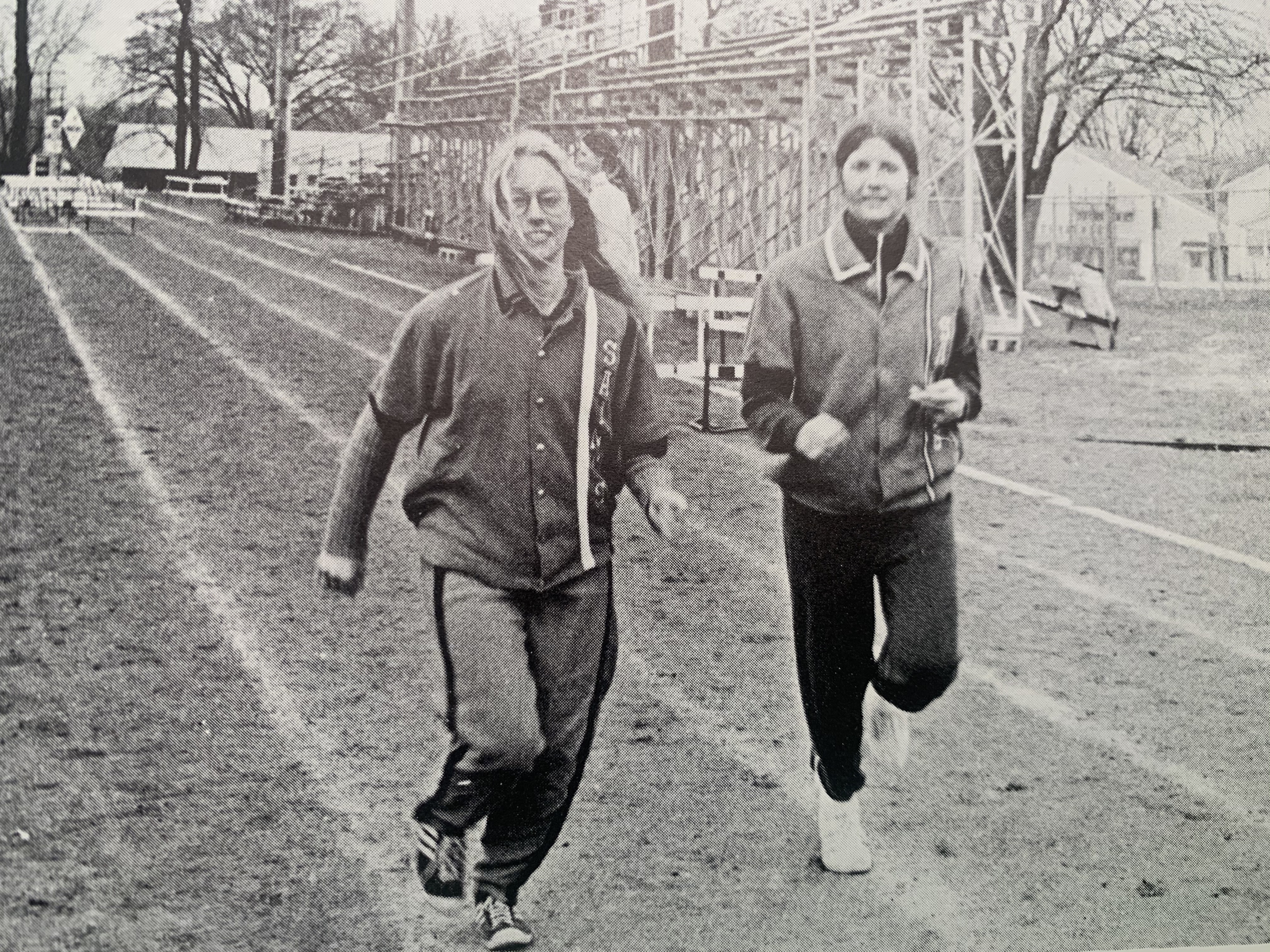
Patti Brandli and Leah Peterson were women track pioneers at St. Charles HS. Not the smeared lines.

I’m not wistful of sentimental for those days. Our generation of track athletes was the first to enjoy all-weather tracks. We craved those opportunities to race on Tartan or other rubber surfaces. Some were hard and unforgiving. Others got soft in the sun. I recall a set of Nike tracks on the first turn of the new St. Charles East all-weather track because some idiot insisted on running there before the surface was fully solidified. His stupidity was immortalized in ten quick footprints that lasted as long as the track was there.

By contrast, the footprints we left in cinders evaporated quickly, covered up by the next round of athletes circling the track. In some ways that transient nature was the more honest reality. Fitness is like that. It only lasts as long as the most recent stride you’ve taken.

Even our college track was “cinder” of a sort. More accurately, it was crushed brick or some other stone. That made for a salmon-colored oval. The texture was gravelly and the surface beneath turned a shiny mush when it rained. Too many nights we circled that track at the far edge of the inside lane because the water along the rail was deep.

The noise, too. The sound of athletes tearing by on cinders still resounds. I never envied the true hurdlers, those guys and gals running highs or lows on cinders paid an awful price if they caught a knee and went down. Some of them still have cinders under their skin fifty years later.

I was a steeplechaser, so I got my share of hurdling in as well. Seven water jumps and 35 barriers per 3000 meters. I also ran a 59.2 400 IM hurdle race on cinders. Perhaps that would have been a second or two faster on a clean all-weather track? Who knows?

Those long spikes we stuck in our shoes acted like claws in the cinders and clay. We clawed and pressed our way lap after lap. Those white lime lines were the perimeter of our dreams. That black or salmon surface the realm of hopes. Sometimes we exceeded them. Many times we did not.

We kept on trying. Seasons on and off. Rain and wind. Dirt and grit. Cinders and lime.

It was a fine affair all around.

Posted in 400 meter intervals, 400 workouts, Christopher Cudworth, competition, running, steeplechase | Tagged , , , , , , , , | Leave a comment

Sometimes it pays not to follow your original instincts

I no longer have these shoes or these compression socks, but hey the photo fits the theme today.

Last Sunday I planned to run a seven mile loop along the river path. It was windy as heck from the northwest, so it made sense to tuck down in the valley and avoid the worst of the bluster.

My wife Sue had a 1:50 run on the schedule, but I’ve only been doing 6-8 milers the last few weeks. I generally believe in building up a mile or two over a period of weeks.

A quarter mile into the run my legs felt decent enough that my planned seven-miler started to change. We ran together through three miles after a potty break and she turned to me at the typical turnaround point and said, “Okay honey, see you back…”

But I turned to her and said, “Nope, I’m going further today.”

At four miles I decided to pick up the pace, gave her an air kiss, and took off ahead. The turnaround point is at 4.5 miles but I forgot to start my watch after the potty break and cut out some mileage, so it read only 4.3. But I knew better.

Running back south with the wind at my back felt really great. I glanced down at the watch and it read 7:35 pace. Why not? Let it roll.

At eight miles my hips did start to tighten a bit because I haven’t built up those proprioception muscles with longer runs as yet. The way I looked at it last Sunday, it made sense to uncork a little longer run. “Ya gotta start sometime…”

Give yourself a break though, sometimes. I stopped for thirty seconds at nine miles to pet a really cute dog named Violet. That let my hips relax a little and the rest of the run went smoothly. I averaged 9:00 per mile with several under that pace in the last four miles. A good tuneup for things to come and races to run.

Let’s go for it. Sometimes it pays not to follow your own instincts.

Posted in 10K, 13.1, aging, aging is not for the weak of heart, running | Tagged , , , , , | Leave a comment

The opposite of March Madness

Our dog Lucy playing with another type of big dog, a friendly Newfoundland

Last week at the dog park, our pup Lucy was running around socializing with other dogs when a pair of giant brindled animals entered the field. It turned out they were a mix of Rhodesian Ridgeback and Argentinian Mastiff. Big dogs! Yet they were clearly puppies based on their cautious demeanor and oversized paws relative to their overall size.

Their own was a big man. He stood a full seven feet tall. Not wanting to ask the obvious question too soon, I focused on his dogs in conversation. He clearly enjoys his pets. When his big boys got a bit intimidated by a forceful husky pushing them around, he watched them carefully but quietly observed, “They need to learn how the dog world works.”

Eventually the dogs started coming out of their shell of nervous puppyhood. It was their second time at the dog park, and if you’ve ever taken your dog to socialized, you know how it goes. They play and retreat, sometimes growl a bit or go submissive and lie down. It’s not much different than a child entering kindergarten. You want to protect them but they also have to learn how to interact on their own.

As we watched the pups work it all out, I chatted with my big new friend. He is one of those genuous human beings whose humility belies an inner strength. Finally after talking a while about ourselves, I asked the question, “So you clearly didn’t play small forward…” and I laughed.

“I played wherever they put me,” he chuckled. I learned that he played in a pre-eminent Chicago-area high school basketball program. That earned him a full ride at a major college basketball school, where he starred and played in the NCAA tournament. We left it at that because I didn’t feel it was my need to pry into the man’s whole life.

I did learn his first name, which was rather unique. At home I entered his first name and his college program in a Google search and photos from his playing days popped up. Then I discovered that he’d played in the pros as well. In other words, he was once a really great basketball player.

As a kid that’s all I wanted to be. I modeled my game after Pistol Pete Maravich and earned starting spots on the middle school and high school teams before switching schools, where my career lasted one more year before starting to run full time. The summer between my junior and senior year, I didn’t attend basketball camp and that was the death knell for any interest the coaches might have had in me.

Plus I weighed a mere 135 lbs as a senior in high school. In our conference in those days, that was a pretty slight frame. Granted, I had quickness on my side, endurance to last the whole game and a great jump shot, but the most important aspect of any basketball player is a grasp of the overall game. Coachability. Fitting into the offense.

I’m #30 circling the basket in a JV game

So while my youthful dreams of starring in basketball earned some teenage kudos and a few kisses from the girls, my naive notions of playing at a higher level never came about.

That was not true for my younger brother, who earned All-State Honorable Mention status and played at a Division I basketball program. He was really good.

My course into the world of running worked out alright. I wasn’t world class or even national class at a Division 1 level, but I made the national meet several times in track and helped lead our cross country team to a second place at nationals.

In some ways I wrapped up too much of my identity in those efforts and accomplishments. So did many others from that era. Which why I was rather impressed that the basketball player that I met at the dog park wasn’t keen on talking about his pro sports career. Perhaps he’s not that interested in being known “only” as a basketball player. Maybe he’s happy with a quieter life. I would never want to disturb his peace if that is his choice. I know this guy experienced March Madness like few of us ever have. He was in the thick of it. On a cool March afternoon at the dog park, he seemed to want to be as far away from it as he could be.

His dogs never did let me pet them no matter how nice I tried to be. They circled back to their dog daddy whenever I reached out a hand. I accepted that too. Everyone deserves their space.

Posted in running | Tagged , , , , , , , , | Leave a comment

Different dimensions than our own

While walking our dog Lucy this morning, we passed through a playground where children made sidewalk drawings in chalk. One of the images attracted my eye. It showed two intertwined rectangles.

Or was it something more?

I’ve just completed a book on theology that an English-savvy associate is now proofreading. The book deals with topics of religion and science, seeking to reconcile the two by avoiding the brands of bad theology that lead to unnecessary divisions.

One of the deeper aspects of such discussions is the notion that there exists a spiritual dimension that many people sense in their lives. Those who doubt such things tend to view that worldview with skepticism. At the same time, I’ve been reading posts in my news feed about scientists exploring the nature of the universe. It appears that there are dimensions of space and time that we’re only beginning to understand.

That’s why the sidewalk drawing caught my eye. What if that space where the two rectangles intersect is a portal between two realities? What if that’s what we’re supposed to find to gain meaning in life?

Years ago I read a series of books by Carlos Castaneda. They focused on the teachings of a shaman and dealt with the idea that there are cracks between the worlds. It made a compelling case that enlightened people can access these mysteries with enough concentration and training. No one knows for sure if those books were entirely fiction or not.

On top of all this mysticism and curiosity, there is the raw fact that space exploration has returned the human race (through our machines) to the planet Mars. Scientists are curious whether there is water on the planet, an indication that there might have been life on Mars at some point in time. These pursuits are evidence of the perpetual human need to seek new worlds, to investigate the benefits of those places. Of course, with some people, there is also a need to claim and conquer.

All these dimensions of time and space and exploration make me dizzy thinking about the future. On one hand, I hardly see the benefit of groping around a wasted planet like Mars that has no suitable atmosphere. I watched a program that shared the fact that the sun’s radiation on Mars would make the surface uninhabitable. People would have to live inside giant holes in the Martian surface. That doesn’t sound inviting to me.

Knowing these extremes, my instinct is to question the wisdom of colonizing a planet such as Mars. Yet there’s a side of me that recognizes the ignorance of such limited perspectives. We don’t yet know what those other dimensions of time and space offer us. We might find portals from one reality to another. We don’t know what technology can achieve at some point in the future.

Well, about that future. The human race is actually engaged in a competition with itself. Our consumption rates on this planet over the last 100 years have compressed time in many respects. We’re pressing the limits of the planet’s ability to sustain so many people. We’ve trashed the atmosphere in some respects, causing planetary climate change. We now live in what scientists call the Anthropogenic Age. The age of human influence on the planet. We might even cause our own mass extinction.

The mass extinctions of the past are evident in the fossil record. Even the Bible recognizes the potential for planetary and climatological catastrophe. The tale of Noah’s Ark is a sobering chronicle of what happens when people grow so consumptive and benign about their earthly circumstance the world itself is threatened. I don’t believe in a literal worldwide flood. The concept is absurd, and there is no evidence that it ever happened. But the transformational metaphor serves an important theological purpose. We have to watch out when human beings grow arrogant to the point of ignoring their own greed, which can lead to natural peril.

It’s interesting that scripture shows God using nature so often to punish or reward the human race. From the plagues in Egypt to the manna from heaven, the dimensions of earth and heavenly activity are often blurred. The ultimate blurring of those lines is the raising of Jesus from the dead. That moment is supposed to present hope of eternal life for all of us. Some people buy that interpretation wholesale. Others view it skeptically along with biblical claims that people once lived 900 years. The mysticism of scripture is what so strongly attracts some people while it repulses others.

I view all of scripture as a metaphorical trip through dimensions of understanding. I love how Jesus breaks the rules of earthly expectations with his teachings. How he challenges cocksure religious authorities by asking them questions they cannot, or refuse, to answer. I like how Jesus talked with everyone, an act of healing all of its own. I believe in the power of breaking social rules to make life better for others rather than allowing stodgy traditions on earth and salvation greed toward heaven rule the day. Believing in miracles isn’t necessary for me to grasp the healing message of a counterculture representation of divinity in this world. I’ve seen enough of love in this world to know its transformative power and grace. Love knows its own reality and dimension in many ways. That’s enough for me.

The world we live in is both large and painfully small. The history of the human race is a battle against perceived limits, and pushing the envelope is what people do: exploring dimensions of existence. We play out these instincts in our athletic endeavors, testing our ability to endure pain, discomfort and suffering. Along the way, we experience enlightenment, sometimes joy, and relief. Some people consider those efforts fruitless, even graceless striving. The training and racing can seem self-indulgent at times.

Yet there is a dimension of reality that people discover through athletic pursuits. There is enlightenment that comes from existing on the precipice of fatigue and awareness. The ‘brain’ part of our awareness shuts off and the internal mind takes over. We’re transported to a different dimension. A sense of wonder. A mind of presence, or of absence. Either way, we’re in a different place.

If you don’t believe it, consider life without the sensations wrought through swimming, riding and running to color your existence. But you can get there other ways as well. By walking. By traveling through an oxygen-infused woods. By staring at a bubbling stream, or the cool depths of still, clear water. That is zen. Moving through time and space at a different pace, faster or slower, forces us to think differently, to leave behind our slovenly thoughts, to be fully present.

That’s why I looked at that chalk drawing and considered what it means to be alive. We’re all seeking new portals of perception to achieve a more enlightened existence. Perhaps that space where the rectangles intersect is far more real and possible than we might imagine. So go there on your own terms. You never know what you’ll find.

Posted in competition, healthy aging, life and death, love, PEAK EXPERIENCES | Tagged , , , , , , , , , , , , , , , | Leave a comment

Every race is a step in the right direction

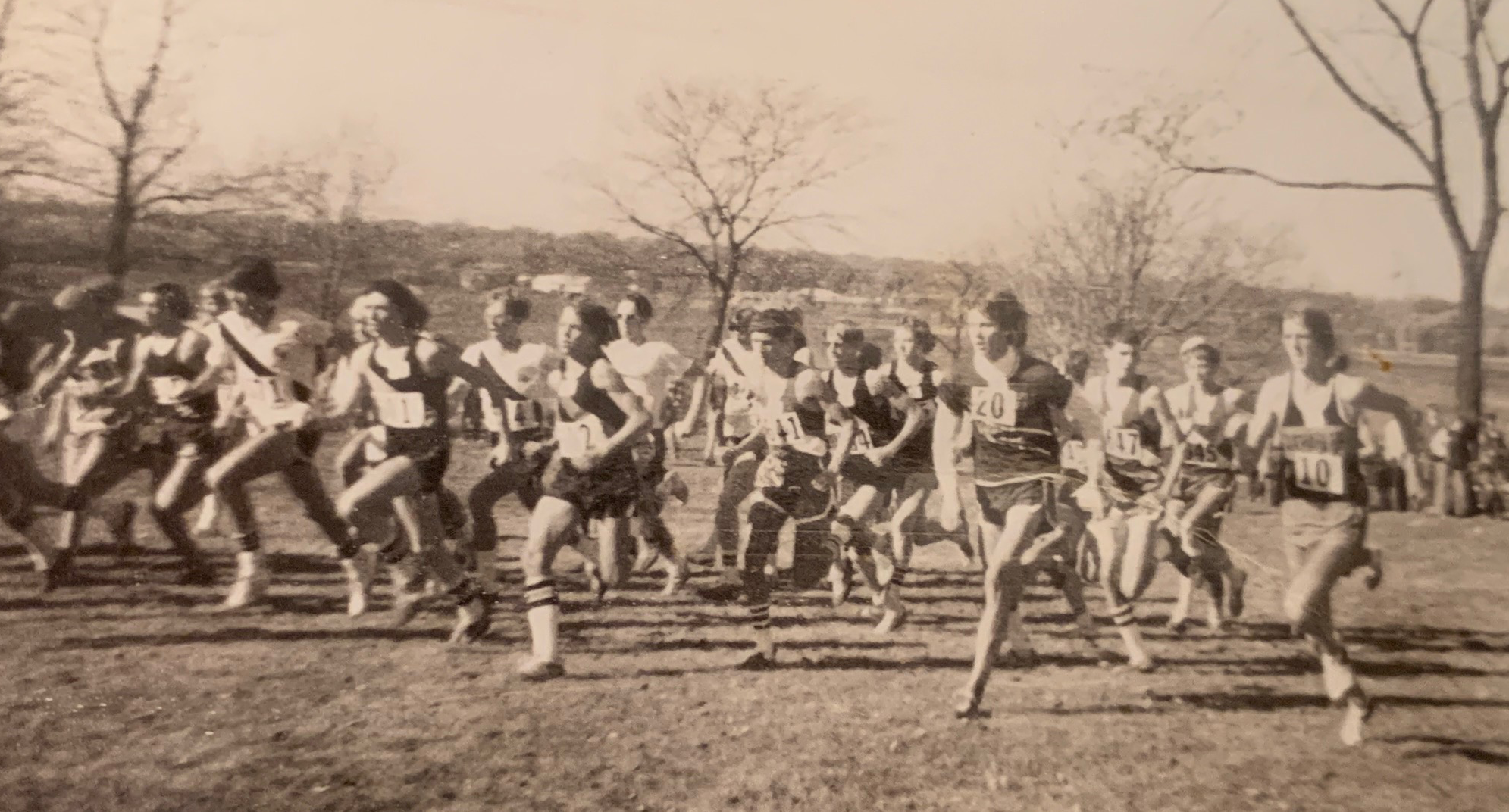
I’m at the far right of the field heading into the Sectionals meet in1974.

Following my writeup about the statistics on the 1974 Sectional meet in which I studied the results relative to the dual meet battles that season, I gave more thought to the outcome and determined that while forgiveness is important, so is honesty.

The truth of the matter about that day is this: I choked.

It wasn’t the first time I choked that season. Nor would it be the last time in my career that I’d fail to run up to potential. We all have our ups and downs in endurance running. Earlier that fall I’d gotten a sidestitch in the early stages of a large invitational in Peoria. I went out hard, got the stitch and struggled home in whatever place I was able to manage. Part of it was a poor choice in pre-race meals. It was also nerves.

That lax performance was a disappointment because I’d won an invitational a couple weeks prior. By season’s end, I’d won ten meets and lost eight to one competitor or another. The goal was to earn a trip downstate. Following a solid fourth-place finish at Districts, I felt ready to race in Sectionals.

And yet, a bit of anxiety took hold. It felt weird to train alone the prior week. Things were shaky around home and I had classroom struggles too. I always run best when pressure is not self-inflicted, and our coach did not always recognize that in me. When high expectations dominated the mind, it was always possible to get too ready. Too nervous. That was most likely the case at Sectionals in 1974.

Clearly in a bit of anguish and starting to fade through the field to 25th place.

The type of side stitch I got during that race was not some simple little cramp. I’d run through those many times before. We’re talking a full-on, nearly bent-over type of sidestitch that was probably the diaphragm in full spasm. I never had it in college that I can recall. After college it flared up during the Prairie State Games. I’d raced through two miles in 9:28 during a 5000 meter track race and then it hit me. Pain. I didn’t finish. Again, some poor dietary choices were made.

While I finished in 15:51 that day at Sectionals in 1974, that sidestitch held me back quite a bit. I’d been running times in the low 15:00 range for three miles all season. That time would have put me in the mix with my closest rivals, who all ran up to their potential and made it downstate.

But I choked. Such is life sometimes.

We all learn from disappointments and failures. Later in my career I came through in plenty of big races. But it is important, I think, to engage in honest self-assessment––even years later––to better understand the nature of self and soul.

I think of how Steve Prefontaine must have felt after his epic attempt at running the gas out of his competitors at the Olympics in Munich. He ran a 4:00 last mile if I recall, yet finished in fourth places. His European competitors had his number that day, you know?

Pre was disappointed. In his mind, he likely thought he failed. Yet that race still inspires many runners to this day. The courage of it. Even when we don’t achieve our goals, iEvery race is a step in the right direction if we look at it the right way. That is, with honesty.

Posted in anxiety, Christopher Cudworth, competition, cross country, running | Tagged , , , , , , , | Leave a comment

No revisionist history necessary

As a member of the Facebook group Glenn’s, I’m privy to a load of statistics and recollections from runners who excelled in the sports of cross country and track during the 60s, 70s, and 80s. Those years produced times and runners that took decades to surpass.

Occasionally, a statistic or race result will pop up that I’d never seen. Such is the case with the results of the 1974 Sectional cross country race. I finished 25th in the race, well out of a chance to advance downstate. It was a tough Sectional, for sure, dominated by the likes of York High School, perennial winners of the Illinois State Cross Country Championships.

I’ll admit to being a bit intimidated by running in that sectional. I’d advanced through Districts as the fourth runner across the line, followed closely by a close rival named John Rath from what was then Burlington Central HS. We’d run together in summer track and he trained with our team in pre-season practices. That made him one of those “keep your enemies close” kind of runners. I beat him at Districts. He beat me at Sectionals and if my math is correct, he got to go downstate. And I didn’t.

My name is listed as Tudworth

Not making State was a disappointment for sure. It hurt a bit more because several runners to whom I’d barely lost in dual meets did qualify. Yet honestly, while I suffered a bit of a sideache at Sectionals, I finished less than a minute behind the winner. All my conference rivals were wedged in between my struggling 25th place finish at 15:51 and the winner from York in 14:58.

While I won ten dual, triangular or invitational races during our 18-meet cross country season, against conference rivals there were close battles and some unfortunate moments. Against Rick Hodapp, who finished sixth at sectionals, I built a lead of 100 meters and with a half mile to go, turned to make a second loop around the west side of the track only to realize that we were supposed to go straight the second time around. I lost that lead and the race.

Against Ken Englert, who finished seventh at sectionals, we traded leads and broke the Elgin course record by a large amount only to crash into the chute at the finish, where Ken was granted the win. He was one of the toughest competitors I ever met.

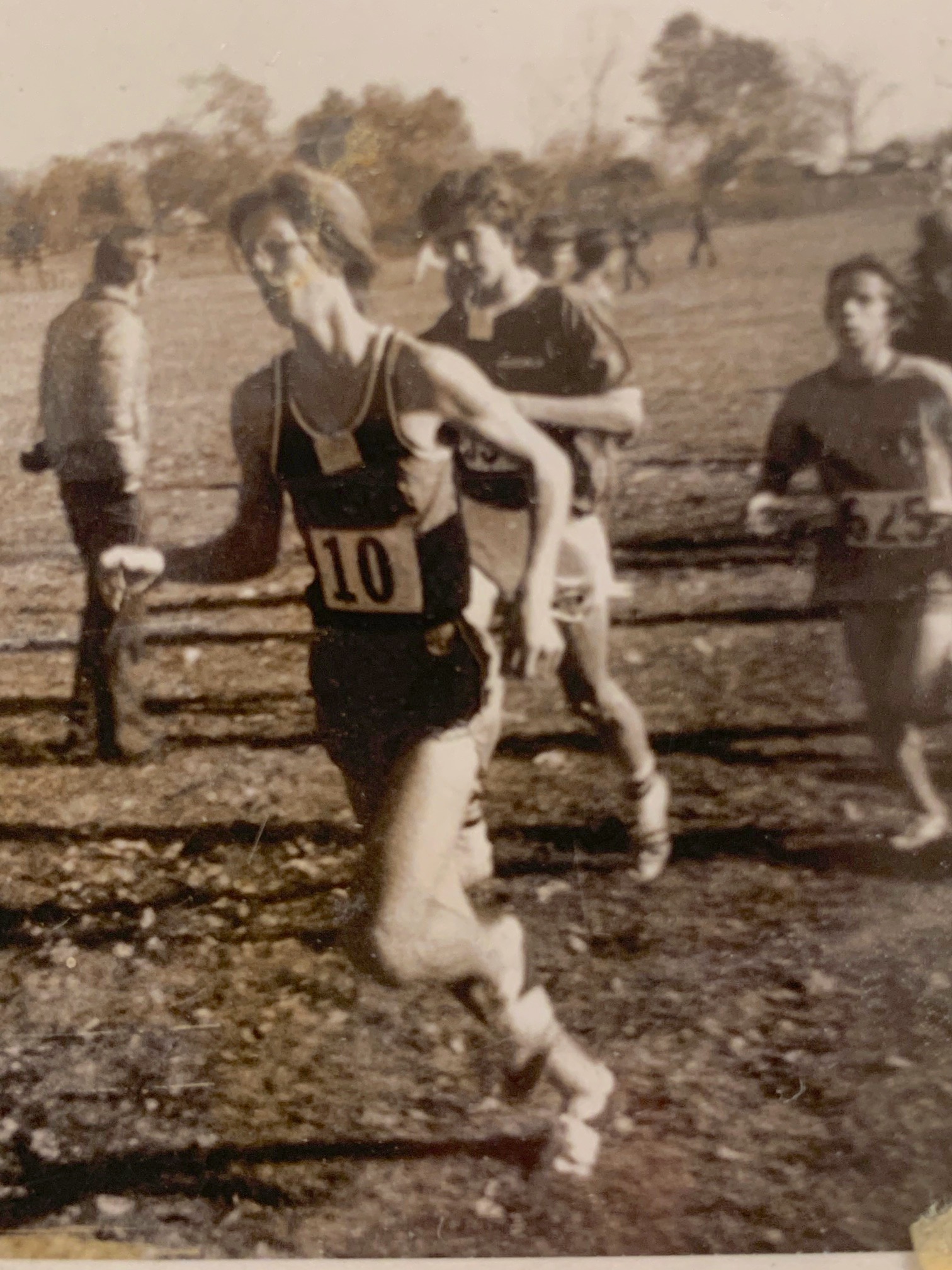
Jeff McCoy (center left) with John Rath in this double exposure Polaroid by my father. The larger images are Randy Russell of Central and my close friend Paul Morlock. I’m the runner in front of the telephone pole, and caught Rath before the end of the race.

Tom Logue from Marmion, in 11th, was a far better two-miler than I. Paul Vestuto from Wheaton Central, in 15th, beat me in a home dual meet by waiting me out after I took an early lead. John Ciontea from Elgin Larkin was 22nd at Sectionals but whomped me in a dual meet after having their course tour leader zoom us around the course. Our team was all exhausted before the race began. I was panicked, and ran that way.

There was one other impactful factor that senior year in high school. My mother had gotten gravely ill with internal complications wrought from delivering four large boys during her pregnancy years. My brother and I visited her in the hospital and it scared the hell out of me. I came home that day, cried my eyes out, and went on with life. No one ever talked to me about those feelings. Those fears. We were expected to just suck it up and make the best of it in that era. Not the best strategy for young minds.

I was strategically naive in many ways during all those races. Too many times I went out hard without regard to actual race strategy. In some ways, that was brave. In many cases, that was stupid. Savvy and superior competitors know how to run you down.

Then there’s the question of native ability. If you drew lines every fifteen seconds or so between the first runner at 14:58 and the 30th at 15:59 it is likely, adjusting for talented younger runners who move up with age, that you’d likely find the demarcations for Division I, II and III athletes. I was the latter, and the runners up the ladder from me ran at higher divisions. That’s the stratigraphy of running talent.

That’s the reason I think it’s valuable to go back and look at those results, especially after not knowing them for four decades. There is so much they can reveal about your self-image. A lackluster performance at an early age can travel around with you for years, even a lifetime. I told myself many years ago that the Sectional race was a failure, and in some sense it was. But looking at these results, I realize that even with a side stitch that day, what I actually did was run to my relative talent level.

Circa 1974

Some of the athletes I’d face again in college and beyond, on the roads. They all improved with age, as did I. Sometimes I’d beat them. Other times they’d beat me. That’s all any of us can do. Compete in the moment.

The irreversibility of time––to quote an existential principle––does not allow us to go back and improve upon things that we’d like to correct.

The one thing we can do is gain an understanding of the true circumstances of life rather than perennially living with some negative outlook or a nagging sense of grief over lost opportunities. As a runner I earned opportunities to lead teams and thrive in competitive circumstances. That’s valuable experience.

The difference between a positive self-perspective and a life of self-doubt can come down to something as simple as forty seconds. That’s the relative breadth between running in the State meet and what I ran that day in 1974. Forty ticks of the second hand.

Now it’s forty years in the past. It’s fun to look at the results and realize that running 25th in one of the toughest Sectionals in the State was perhaps disappointing, but not the end of things. That’s a lesson worth carrying forward at any age. As we all know, the challenges keep coming whether we plan it or not. There’s no revisionist history necessary if you approach the past honestly and with an eye from what you learned. It’s best to believe you can endure even if things don’t always go your way.

Those are the results that really count.

Posted in running | Tagged , , , , , , | Leave a comment