A new and healthy way to look at competition in life

CudworthVersusCudworth

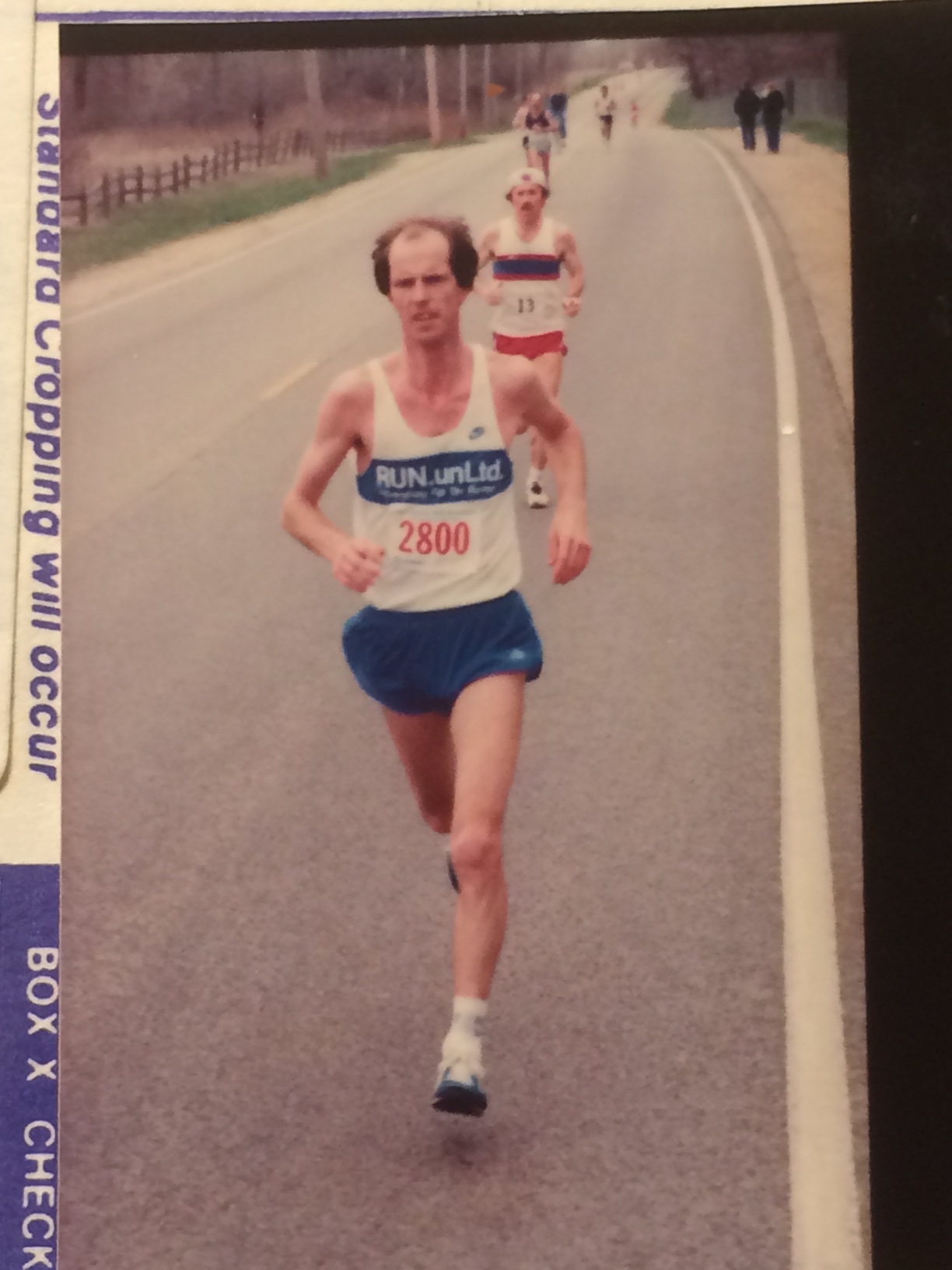
This photoshop illustration shows the 2005 me competing against the 1985 me.

Whether you choose to believe it or not, you’re always competing with yourself. I know I do. It’s inevitable that we compare our current selves to our past selves. We want to know how we’ve grown or changed. We ache to know we’re improving somehow, becoming better people, surpassing our old selves, or surpassing our young selves.

But here’s something to consider. Perhaps what we’re all doing by competing with ourselves is not the best strategy for self-improvement in the long run. Pun intended.

Don’t get the wrong idea. We’re not about to advocate lowering your standards here. That’s not what self-improvement is all about. We will advocate understanding the nature of your standards and what healthier competition with yourself really looks like.

It all starts with knowing your realistic baseline. For me, I know that baseline has shifted slightly with age. At age 25 (shown in the photo above) I ran 31:10 for 10k.

This past year at age 56, I ran 45:00 for 10K. That’s a 14 minute difference, or about a 30-second loss per year in terms of racing speed. I once averaged 5:00 per mile for 10k. Now I run 7:00 per mile and don’t actually expect to get a whole lot faster than that.

But also learned that I could not run a whole lot faster than 5:00 per mile at age 25. And I beat myself up at times for not being national or world class. That meant at times I did not enjoy the success I was having in winning or placing high in some races. Sure, I was proud to win at times, but the angst at not being even faster hung with me.

Seasoning
Cudworth Running LCHMThere are some things you learn with age. Thinking back on the reasons why I ceased competing in road racing, they turned out to be good choices. I had a young family to raise. My career needed more focus. I decided for better or worse not to put so much time into long distance running. The 80-mile weeks were not conducive to those other things in my case.

It was also true that I needed an emotional makeover of sorts. So much of my self-esteem was tied up in running that I needed to build a richer identity. Competing and training had long been my way of making myself feel better about myself. But as noted earlier I still did not allow the success to actually become a foundation for self-actualization. That was kind of screwed up, actually. So I set out to change that aspect of my personality.

Throughout the 1990s I kept running for fitness and fun and stress relief. I’d still run races but not for competition’s sake. I did team duathlons at times, or jumped in a road race when I felt really good. But obligatory running was out of the question in my mind. I’d done that from middle school through my middle 20s. I’d given myself over completely to the sport, and to a flaw at times. There was more to life, I realized.

No longer running from yourself

Perhaps you’ve worked through periods of your life where you considerately worked on your mental or emotional health. I know I did. It started in my late 20s when I recognized some anger issues from my upbringing. Then it became evident that anxiety was part of my makeup. Then a friend told me that depression is the flip-side of anxiety. A whole bunch of things in life began to make more sense as a result. I acknowledged my family’s history going back through my grandfather who experienced emotional challenges, especially during times of stress. I worked at understanding these emotional patterns and built a foundation for mental health that was less susceptible to old triggers and habits of mind that opened the gates to emotional instability. I became a stronger person supported by a liberal faith that looked for healthy resolutions in work, family and life in general.

So I was grateful when I’d done some preparation work when real life challenges came along in the middle 2000s. That’s when my late wife was first diagnosed with cancer. It turned our lives upside down. But by that point I was no longer running from myself. I knew how my brain worked and knew when and where to get help. I sought counseling during times of great duress. I took mild forms of anti-anxiety medicine and anti-depressants to cope with the ups and downs of cancer survivorship.

Wisely I’d also recognized that communication was important to the foundation of marriage. Before my wife’s cancer came along I set out to improve that aspect of our relationship, and it paid dividends.

And when all that piled up I went for long runs when I could, and took up cycling as a complement to the running because my legs and knees and hips were telling me they needed balance. Strength work became part of the routine as well.

Life as a competition

Some people don’t like to think of life as a competition. There are entire religions, zen and Buddhism and many others that try to help us release the ego from the front of our brains so that the rest of our minds can grow in awareness. And I agree with some of that, but have also found that competition can be a healthy thing. It’s fun if you understand and accept that to lose can be as instructive and gainful as winning. That is the yin and yang of life as a competition. Winning and losing really are the same in many ways.

Now when my wife was sick and I went out with buddies to train and could not keep up because I was so stressed out and on drugs, it was hard to accept that I could not compete with them or even with myself. I had to accept that I had a form of PTSD brought on by the repeated impacts of dealing with cancer, financial challenges, work and life changes.

But sooner or later you come to appreciate in that circumstance that it is moving that counts, not how fast you do it. Every step is thus a triumph, especially the first one.

Keep on moving

11336898_10153355466639313_5963747517278445329_oSo I now look upon my training and racing as an expression of life, not just a competition with myself or others. That combines my love for the arts as well,. It turns out that competing can become more like a dance, not just a fight.

All of life opens up when you view it through the lens of expression, not just competition. I look at the photo I created above and realize that all the running and riding and swimming I now do is an expression of that person that is constantly growing and changing through these activities. From new friends discovered in these sports to the writing I do about them, it’s all about expression. And competition just comes along for the ride.

Christopher Cudworth is author of the book The Right Kind of Pride, a chronicle of cancer survivorship. It is available on Amazon.com. 

werunandridelogo

Posted in Christopher Cudworth, competition, cycling, duathlon, running, triathlon, We Run and Ride Every Day | Tagged , , , , , , , , , , , , | Leave a comment

SBR Coaching and Rocket Bicycle Studio: multifaceted approach to multisport success

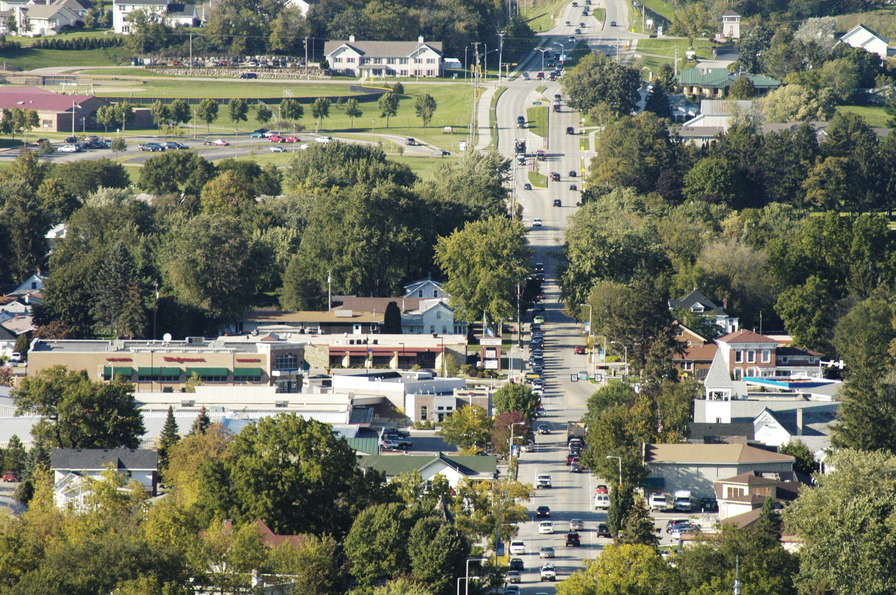
Verona, Wisconsin sits on Highway 18 west of Madison. It also sits on the “stick” of the Ironman Wisconsin triathlon course and a hub on the Military Ridge Trail where cyclists can park and ride 40 miles west to Dodgeville if they choose.

All this cycling activity means the community of Verona sees hundreds of cyclists coursing through town on a typical weekend. Some are there for recreational purposes while others are there on the serious business of preparing for the Ironman in September. Many riders start from Verona and catch the “stick” west to ride the 30+ mile loop that makes up the guts of the Ironman course.

Communities

The triathlon and road cycling communities in Madison mix fairly well out on the roads, where everyone shares the white line and everyone climbs the same hills. The two sports may never synthesize completely, but they mix as well as they can in Madison and the hills beyond.

On a given day, a healthy mix of roadies and triathletes circulates through Rocket Bicycle Studio on the far west side of Verona. RBS is unconventional in appearance compared to standard bike shops. For starters there are not hundreds of bikes hanging from the ceiling like a harvest of overripe carbon fruit. That’s because RBS does everything rider-specific or custom. From the bike frame to saddles, wheel sets and everything a cyclist needs to go comfortable or go fast, RBS starts from scratch and works made-to-order. The shop is run by expert mechanic and corporate expatriate Peter Oyen.

Jessica

Jessica Laufenberg

RBS shares the business complex with SBR Coaching, a progressive multisport practice run by Jessica Laufenberg. She has impressive credentials including USA Level II Triathlon coach certification backed by degrees in kinesiology, exercise physiology and biomechanics.

Just as importantly, Laufenberg has a passion for helping athletes get the most out of themselves as well as their bikes. She is trained in sports performance, muscle balance, posture and gait assessment, muscular injury and rehabilitation, athletic coaching, and nutritional education. That means no stone goes unturned when preparing her athletes for participation and competition in multisport events. 

Open door policy

On an exceedingly warm Saturday morning in May, Laufenberg stands front and center as cyclists come through her front door. She counsels numerous cyclists heading out for a loop or two on the Ironman course. One rider that completing his first loop stops in to ask questions about nutrition and hydration. Laufenberg spends 15 minutes walking the rider through the fact that he’s already put himself at something of a disadvantage in terms of salt levels in his system. She carefully counsels him on what to take during the next 40 mile loop, and how to ingest what he needs to feel better.

Verona Wisconsin is the gateway to hill cycling and running.

Verona Wisconsin is the gateway to hill cycling and running.

As the first cyclist rolls out the door on his way to another loop on the triathlon course, Laufenberg turns to a female rider walking in with a puzzled look on her face. “Hi,” Jessica greets her. “You look like you need something…”

“No,” the cyclist replies at first.

“Well, make something up,” she warmly chides.

“Well, something’s not right with my bike,” the rider responds. Laufenberg does not have to wait for her partner Peter Oyen to step up and check out the situation. He kneels down to feel her chain and informs her. “Your chain is bone dry…” and off hustle back to the bike shop for a quick lube on the chain and components.

Advice freely given

So it goes on a typical day at SBR and RBS. The advice and assistance is given freely to every cyclist that walks in the door.

“That’s definitely our approach,” Laufenberg say. “We believe in supporting everyone. We don’t run a team so we have no priorities that way. Everyone that comes in our door is our customer.”

Laufenberg has worked with all kinds of athletes in her career. “Pro football and basketball players, and swimmers,” she shares for perspective on her coaching background. “But when I moved back here to Madison from Green Bay, there was really no place to go for cyclists and triathletes to get help, so I started this business,” she notes.

Her own athletic career has included success in Ironman and numerous other triathlon events. She now combines that personal experience with her background in exercise physiology and biomechanics to help athletes start right and finish right in whatever cycling, running or other discipline they choose.

She’s now been leading small group and one-on-one coaching for 10 years. the process is methodical and founded on core principles of sound mechanics. “If you come here and ask me to coach you, we do an assessment to look at where you are, how you swim, how you bike, how you run. Instead of just pumping out training plans…”

Building the right bike fit

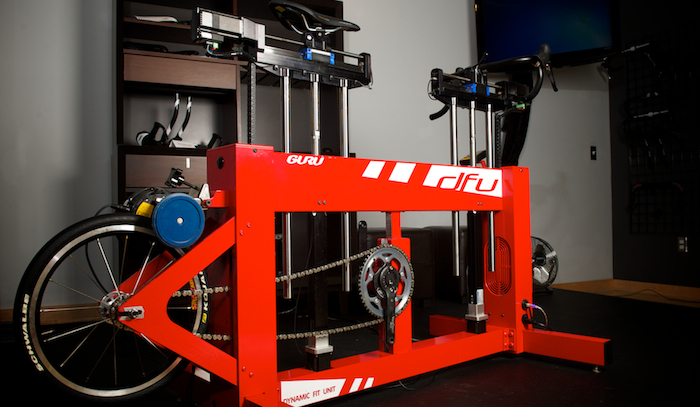
Bike FittingAs her business progressed, Laufenberg was approached by bike manufacturers that wanted partners with her expertise and background to fit bikes. SBR now works with five different bike makers and component companies to build bikes specific to client needs.

The process employs a bike-fitting machine that enables Jessica and Peter to get precise measurements of everything needed to build a bike to order. The bright red Dynamic Fit Unit uses a combination of mechanical adjustments and computerized readings to build the ideal profile for a cyclist.  “I worked with Dan Empfield to get my Basic F.I.S.T. Bike Certification, and just this year finalized my F.I.S.T. Down Deep Professional Bike Certification,” she observes.

But that’s just the start of the cycling makeover. Once the cyclist or triathlete gets their new bike, there are training methods and riding techniques to learn and build into the cycling regimen.

Asked if people are intimidated by all the expertise and knowledge evident in the facility, Laufenberg notes that they try hard to avoid that “bike geek turnoff” of some facilities. “We have a significant number of people in that 0-3 year experience range as well as athletes that have been competing for a while. So we make sure we give people the help they need and might not get even at a bike shop.”

Peter Oyen

Peter Oyen

The bikes sold at RBS start at $3500. “But if that’s not a price point people can handle, we will fit you and give you the measurements to go get your bike somewhere else,” Laufenberg offers. “Our full bike fit is $275.00. That includes the initial fit and a couple follow ups depending if you purchase a bike or not. That gives you everything you need to get a proper fit on the bike. It’s like buying a nice suit,” she smiles. “You need to have it fit.”

An expert eye

All that bike fitting has given her a unique perspective on what good bike fit really looks like. “Last year I sat up on top of Midtown and took videos and photos of people riding their bikes. I blocked out their faces and such, but I showed people what their fit looked like, and predicted how they’d finish based on their position on the bike. So I wrote a small blog about it, and how important that can be to survive 112 miles (the Ironman cycling distance) much less conserving energy because you still need to run yet. But that type of information is important for anybody, at any length of ride.”

“I have a lot of people that have running problems stemming from the bike,” she continues. “And some people tell me, ‘Well, you’re supposed to be uncomfortable on the bike, and I say, “Noooo! You’re supposed to feel good on a bike.”

“If you came in on your current bike, I don’t even look at you on it. I put you on the Dynamic Fit Unit and then I can take measurements on your current bike and move you back and forth instantly. And you can go, “Ahhhh…that’s how it’s supposed to feel.”

Completing the picture

SBR Endurance Performance Center works with athletes in all phases of the triathlon, swim, bike and run. Come winter the training moves indoors to a studio where cyclists can tune in and ride hard on CompuTrainers by RacerMate.

Athletes can work all the way through an evaluation phase and get metabolic testing to work on specifics in their personal biology. SBR offers both Standard Coaching utilizing group learning sessions and prescribed workouts as well as Deluxe Coaching that carries an athlete right through the specifics of preparing and competing in a chosen event.

When asked if her business feels a bit ahead of the curve in terms of its willingness to dispense free advice balanced with specifics of expertise and individualized coaching, Laufenberg replies, “It’s just who we are,” she smiles.

werunandridelogo

Author’s tip: If you’re cycling in Verona, Wisconsin, be sure to stop by Sow’s Ear, a great coffee shop on the main drag in downtown Verona. Excellent coffee, beverages and fine food. Plus it’s air conditioned. 

Posted in Christopher Cudworth, cycling, duathlon, running, swimming, triathlon | Tagged , , , , , , , , , , , , , , , , , , , , , , , , , , , | Leave a comment

Hitting the bricks in more ways than one

BricksI have a relative that lives in Wilmette, Illinois. The side streets there are wonderfully paved with bricks. They are lumpy and bumpy and noisy to drive on, but they work. There used to be tons of brick streets, but for whatever reasons (lumpy, bumpy and noisy perhaps?) such as high maintenance costs and plowing brick streets in winter, we don’t drive on many brick streets anymore.

None that we can see anyway. But when road construction crews come around, it is interesting what can be revealed beneath the thin layers of asphalt on which we depend on for smooth travels.

Just this week the state started construction work on a section of Route 31 in my hometown of Batavia. The pavement sucker-ripper-grinder thingy stripped off the top layers of athletes leaving Rough Grooved Surface. If you ride a bike you know what that stuff is all about. Find a road with the asphalt chewed off and there’s some sweet riding, right there.

But I was surprised to see what appears to be a layer of perfectly smooth brick underneath State Highway 31. How quaint! How cute! How marvelously small town!

In fact, I’d love to see the City of Batavia demand that the asphalt all be stripped away and leave the bricks exposed. Our community has been engaging in all sorts of bricky experiments in the downtown on a streetscape campaign to make the place feel more Old Tyme and Homey.

Bricks tooWell, let’s go for it then Batavia! Imagine five whole blocks of brick streets from the north end of town all the way through to Main Street on the south! Then people will know they’re in Batavia. No more sterile State Highway Tarmac for us!

Seriously this brick looks so well-laid it would be smooth even to ride a bike on it. That’s saying something. Because I would not like to ride my road bike on the streets of Wilmette. No, Sir. Not with the ruts and nubs of that brick. Beautiful to behold. Bad to ride on unless you’re in a car.

My companion Sue noticed the brick exposure in Batavia too. Funny thing is, she was out doing a “brick” for her Ironman training when she noticed the bricks. After four hours on the bike, she had a one-hour training run to do. So she hit the bricks. Talk about cosmic brick convergence!

Bricks for pavingI also made plans this weekend to pick up bricks to pave over another section of my lawn. Through connections on Facebook, I scored a stack of 400 perfectly new bricks. Only I was surprised to find they have holes in them. They’re actually construction bricks, not for paving. But I’ll make it work with a little filler for those holes. Plus it doesn’t hurt to let water seep through to the earth. So I loaded these bricks into the back of my Subaru Outback and it handled the 1000 lb. load quite well.

But while we’re looking down at the streets, may I warn you about a pending danger that appears to be taking place. Tarsnakes have begun to emerge from their wintry hiding places! There’s one on my block that is in the process of escaping from its natural habitat in the groove of the street and is apparently planning an attack on a cyclist or runner sometime soon. It’s black, snakey body has pulled up from the crack and it is writing on the cement in hopes of tripping some poor cyclist, runner or pedestrian.

If that happens, it’s also known as hitting the bricks. It’s almost frightening how all this fits together when you really get down to it.

werunandridelogo

Posted in Christopher Cudworth, cycling, running, Tarsnakes, triathlon, We Run and Ride Every Day | Tagged , , , | 1 Comment

Here’s how to measure how bad you stink after a workout

As a public service to you and the rest of the world, We Run and Ride is here to inform you that you stink. Well, once in a while anyway. You stink.

That actually means you’re doing things right. A hard workout makes you sweat and when you sweat hard enough, you usually start to stink. It can start out innocently enough. But then those sweat microbes start to party under your pits and everywhere else on your body and pretty soon you’re a whole orchestra of stinkiness.

Here’s a graphic to show you just how bad it can get. Perhaps you should stick it to your refrigerator so that when you get home you don’t kill the ones you love.

StinkyMeter

Posted in Christopher Cudworth, cycling, duathlon, half marathon, marathon, running, triathlon, We Run and Ride Every Day | Tagged , , , , , | Leave a comment

On Wisconsin and bicycle stupidity

Wisconsin Gov. Scott Walker talks during an interview with the Associated Press in New Orleans, Monday, May 18, 2015. Republicans clashed over the future of government surveillance programs on Monday, highlighting a deep divide among the GOP's 2016 presidential class over whether the National Security Agency should be collecting American citizens' phone records in the name of preventing terrorism. Walker three times declined to say whether he supported reauthorizing the program. He said it was "important to be able to collect information like that," as long as there were unspecified privacy safeguards. After the interview, a spokesman emailed to say that Walker supported continuing the program as it exists, with the NSA storing American phone records. (AP Photo/Gerald Herbert)

So the state to the north of Illinois has been the scene of many interesting expressions of the New America men like Scott Walker and the Koch Brothers want to create. From dunning organized labor to sneakily manipulating education funding right and left, the Walker Klan has been using Wisconsin as a petri dish for hard right politics.

Of course we know the success they’re all having down in Kansas where Republican right-winger Governor Sam Brownback made this giant pledge to add 100,000 new jobs. Through budget cuts and austerity measures the state dropped to 44th in creation of new jobs.

It seems that wishing new jobs into place is actually much more difficult than respecting the middle class and paying wages that actually provide demand for goods and services. That’s how economies grow.

Community investment

cyclists.31-550x300See, there’s this thing called investment in the community that has visible, verifiable benefits. When you create environments where people have the money to support businesses, those businesses actually make money. And when they make money or need to meet demand, they actually hire more people to service that demand.

Some people claim that cutting taxes on businesses is the best way to create that environment. They argue giving more money back to businesses enables them to spend more on employees. But that argument entirely ignores the reasons why businesses are in business in the first place. They want to keep all the money they make, not spend it hiring new employees as some sort of altruistic expression of communal goodness.

The argument that giving more money back to the “jobs creators” proved emphatically hollow during the Bush administration. The economy crashed despite significant tax cuts for the very wealthiest people and a diet of healthy corporate welfare support for the big industries. What did that do? It fed a profit-hungry machine that watched with bemused detachment as millions of people lost their investments, their jobs and their security. Banks would not even make loans to small businesses. People suffered while the very wealthiest, insulated by size and tightly focused prosperity, ignored the needs of the nation.

Real solutions

So what are some of the solutions to community investment in America? How do you bring money into a region that actually fuels jobs and even creates demand?

Wisconsin-printable-map-860You would think Wisconsin has that long figured out. As one of the more attractive tourism states in the nation, the state has long been the beneficiary of money flowing into Wisconsin from states like Illinois, where vacationers take the Money Pipeline of Interstate 90 up from Chicago to Madison and all points beyond. Half the population in northern Wisconsin on a summer day is from Illinois. Millions of dollars flow into Wisconsin year round from tourism. Fishing. Snowmobiling. Skiing. Bicycling.

Those tourism dollars flow north and stay in the state. Take a trip anywhere in the state on a summer weekend and Illinois plates are everywhere. Taliesin in Spring Green. Wisconsin Dells. Milwaukee. Eagle River and all the fishing resorts across the northern tier.

And significantly, in recent years, there are thousands of bicyclists who travel north to ride Wisconsin roads. Events like The Wright Stuff and the Horribly Hilly 100 bring thousands of cyclists into the state where they spend money, stay in hotels, dine at restaurants and more.

Hometown cycling

The state also (originally) recognized the benefits of cycling for its own citizens. The capitol of Madison is one of those places were bikes have been encouraged by construction of bike lanes. There are clearly marked lanes to and from the suburbs to the city. There are recreational bike trails around the lakes. These see heavy use.

All this bike traffic is intelligent community investment. People who bicycle spend money locally on restaurants, goods and services. This is how America once operated. This is how America once prospered.

Jealous motives

Bicycle riders also happen to emit far less carbon dioxide and environmentally harmful emissions than cars, and reduce traffic congestion when commuting. But perhaps that’s where bicyclist are running afoul of certain economic interests who want to see the world structured around their personal benefit.

Perhaps Scott Walker and Klan hate the idea that bicyclists use the roads because it doesn’t flow money to a specific sector of the economy.

How is that being expressed? The new state budget in Wisconsin slashes funding for community investment in bike trails and even proposes a tax on riding bikes. Talk about hypocrisy for a supposedly tax-opposed Republican!

Here’s what Spencer Black of the Madison-based Cap Times newspaper wrote about the Walker budget:

And you might think, at least in saner times, that bicycling is one of those things we could all agree on, regardless of party. Even Walker’s Department of Tourism says on its website that Wisconsin “boasts a biking friendly culture and is clearly big on biking as a way to keep visitors healthy, happy, and coming back to bike time and time again.”

But these are not sane times. If Walker and his Republican allies in the Legislature have their way, the Department of Tourism will have to delete that boast.

Before this anti-biker state budget is even passed, our reputation for biking is taking a hit. The League of American Bicyclists recently knocked Wisconsin out of the top five states for biking. When Walker took office, Wisconsin was ranked second best in the nation — this year we’ve dropped to No. 9.

No more trail funding, no state funding for community bike projects, no consideration of bikes in road design. And if that isn’t enough, the state Legislature is now considering a tax on bicycles. That $25-a-bike tax wouldn’t even go to biking but would go to road construction — roads that would no longer have to even consider bikes.

Trickle down something…

One can only imagine the true agenda behind such stupidity. Do the Koch Brothers find it offensive that bicyclists use less of their oily products?

There have been precedents where dis-investment in transit friendly infrastructure has been accomplished in the name of “progress.” Back when Illinois had a comprehensive trolley system in the western suburbs of Chicago, and especially in the Tri-cities where I live, people could get place to place without cars. The trolley system was bought up and closed down by interests that did not like competition with cars and oil and getting someplace with more ease.

That’s the direction we’re headed when the nation succumbs to dunderheaded leadership like Scott Walker. Those political leaders bark for the treats they get from their moneyed masters. Their followers all fall in line like a pack of stupid dogs at the thought of trickle-down something or other.

The goal of all these political dog treats is not entirely clear, other than to claim that prosperity is somehow going to flow our way in the end. But when it involves the slashing of funds for cycling infrastructure, and the community dis-investment it represents, it feels more like someone is pissing on our back and telling us it’s raining.

IMG_7142It becomes clear that if this kind of community dis-investment continues, one day we’ll all find ourselves in a Dog Pen of austerity with no place left to go. And maybe that’s the way men like Scott Walker and his Moneymakers want it. Just a bunch of cyclists trapped in a pen pissing all over each other. Wouldn’t that make the selfish bastards who hate to Share the Road really happy?

A pissed off society

Certainly the attitude toward cyclists on the road is not much better at times. Just last week a friend of mine pedaling through downtown Batavia was accosted from behind by a giant black pickup in the 350 range. The guy did not like sharing Wilson Street with a cyclist and pulled up behind my friend to lay on the horn. Then when he pulled over to yell at my buddy he got all contrite when he got out of his truck and realized that there are human beings out there in the world who ride bikes. Yet while we stood there talking with him another guy in a black pickup did a u-turn just to honk and yell at us. He did not even see the original incident. “Get off the f****** road!” he yelled.

Back roads

Seriously, you’d think we really could all agree that bicycling is a decent idea to support as a community benefit. But you get a few selfish twits complaining that they have to wait 30 seconds to get around a pack of cyclists on a Wisconsin back road and suddenly there are movements to ban and prevent events like The Wright Stuff Century from taking place.

Forget that these events bring literally hundreds of thousands of dollars into communities like Dodgeville and Spring Green and Mount Horeb. Forget that these towns desperately need tourism because the highways and bypasses the state built around some of them gutted the downtowns and sent traffic flying past with no chance to witness what local businesses have to offer.

Cycling definitively reverses all that cost of progress. It brings people back into communities where real people live. It brings money to local businesses. That creates jobs because it engenders demand.

But people like Scott Walker refuse to see that because they have this idea that the only way to show political guts is by gutting the communities they were elected to serve. If that’s the kind of America where you want to live, good luck. There are quite a few of us that simply want to enjoy life, keep fit and support your local business in the process.

That sounds pretty American to me.

werunandridelogo

Posted in Christopher Cudworth, cycling, We Run and Ride Every Day | Tagged , , , , , , , , , , , , | Leave a comment

The mysticism of training with cranes

Sandhills Saying HeyAfter a day of sweeping rainstorms and gray skies, Tuesday’s twilight came with a soft southwesterly breeze and a sinking sun that spoke in clear tones and light that sought out every detail. As we rounded the second lap of a mile’s warmup on the Geneva Middle School track, a pair of large birds came over the hedgerow and set their wings for a landing. Their wingtips spread like fingers and their long necks were balanced by equally long legs. These were a pair of sandhill cranes. They arched their necks and swung to our right as we trotted on the inside lanes of the black rubber surface of the track.

“Whoa!” Sue exclaimed. She stopped in her tracks for a moment. Then we kept jogging and approached the cranes again. They were now walking on the track itself, curious at our presence perhaps but not afraid. ‘

“What are they doing here?” Sue asked.

“They probably have a nest right over the hill at Peck Farm Park,” I explained. “They’re here to eat right now.”

We paused to take photos and Sue walked ahead talking softly to the birds. One of them gave a short chortle in return. They were in the moment, as were we.

Just SandhillsThe birds wandered to the infield where one kept watch while the other fed on insects or worms gleaned from the infield. Their plumage was a wonderful russet color heightened by the low angle of the sun. Cranes vary in color from gray to rusty in tone, with the rust tone stemming from a combination of diet and preening themselves with iron-rich mud. Both these birds sported the golden rust plumage.

The breathing slots in their long thick beaks could be seen clearly at a close view of 40-50 feet as we passed while running each lap. The bright red “skull cap” on the front of the head was also visible. As they walked, their legs formed the classic crooked angle indicative of tall birds such as herons, egrets and cranes that emerged from the evolutionary process and dinosaurs stemming back more than 600 million years.

The Wikipedia description of the age of cranes as a species describes the wonderful history of this species of bird:

Sandhill cranes have one of the longest fossil histories of any extant bird.[9] A 10-million-year-old crane fossil fromNebraska is said to be of this species,[10] but this may be from a prehistoric relative or the direct ancestor of sandhill cranes and not belong in the genus Grus. The oldest unequivocal sandhill crane fossil is 2.5 million years old,[11] older by half than the earliest remains of most living species of birds, primarily found from after the Pliocene/Pleistocene boundary some 1.8 million years ago. As these ancient sandhill cranes varied as much in size as present-day birds, those Pliocenefossils are sometimes described as new species.[12] Grus haydeni may have been a prehistoric relative, or it may comprise material of a sandhill crane and its ancestor.[13][14]

What this description actually tells us is that cranes like these are a connection to the very old history of earth. The voices of cranes have been ringing out across the earth’s landscape for far longer than human beings have held the awareness to categorize and name them. Our own meager evolutionary history extends back some 2.5 to 3.5 million years, when apes first developed the ability to walk erect, use their hands and minds to build tools and push our evolutionary progress along toward the intelligence we now enjoy today.

Sue RunningConvergences such as these where ancient lives mix in the sunlight traveling millions of miles to earth are truly magical. As Sue and I conducted our respective workouts, our minds fell to the task of movement while the cranes casually walked and fed in the grassy infield. We peacefully shared the space until suddenly the cranes felt the urge and time to leave. They lifted quickly on a six-foot wingspan and flew off toward the marsh and pond where somewhere their nest may lie snuggled among the cattails.

They have come a long journey no doubt. This information from a WhoZoo.com describes the lifestyle of the sandhill crane:

Sandhill cranes travel as much as 350 miles per day while migrating.  They fly at anywhere from 14 to 51 miles per hour in a V formation–often as high as 12,000 feet.  Their nesting grounds are through the northern United States and extreme northeast Siberia, and they arrive in early to mid May.  Nests in the wetland areas are made from dominant vegetation, while nests in drier areas are sparsely prepared.  These cranes usually begin breeding at 7 years old and mate with only one partner for life.  Two eggs are laid and both sexes incubate.  These eggs hatch in 29-32 days, and the nestlings can walk immediately.  This trait is why the young cranes are called colts. 

sand_kirchmeierIt is a somewhat strange thing to juxtapose the purposeful presence of a pair of sandhill cranes with our efforts running around the track. As a lifelong birder I realize that sandhills and many species of cranes around the world depend on human intervention for survival. The International Crane Foundation headquartered in Baraboo, Wisconsin takes an active role in these conservation efforts. The organization works with governments around the world to identify populations of crane species and document their needs from habitat to migration routes. In the United States it could be argued that the work of the International Crane Foundation has saved the Whooping Crane from extinction.

In our area of Illinois sandhill cranes were extremely rare as recently as the 1980s. Thanks to conservation of wetland habitats and improvement in environmental quality (reduction in certain pesticides, for example) sandhill cranes have become numerous enough to breed with great frequency in Illinois.

Still I recall a morning 20 years ago when the mystic quality of cranes first struck me. The morning sun had barely crested the horizon when I spied a pair of tall gray cranes walking a flat next to the lake at Dick Young Forest Preserve, an Illinois Nature Preserve west of Batavia, Illinois. As I used binoculars to observe the cranes, the male began dancing around the female. His wings were illuminated by the morning light, glowing as if afire. Then he rose above the female and mounted her as both birds raised their wings in the act of consummation.

Those birds raised young that spring, and cranes have returned every year to Dick Young and many other Illinois marshes.

LegsSo it’s not an entire surprise that sandhills should be comfortable around a pair of runners on a twilight in May. They have come to recognize that people do a lot of weird things that cranes can ignore without risk. Some of us are even built a bit like cranes. Skinny legs.

Sharing that space for an hour with a pair anciently wonderful birds is still a precious gift. As we ran our workout of 6 X 800 with 400 intervals mixed in, the sun slowly fell and the air cooled. We were primal in our movements and yet lifted by the circumstance. It is no exaggeration to state that we felt the wind beneath our wings.

werunandridelogo

Posted in Christopher Cudworth, running, We Run and Ride Every Day | Tagged , , , , , , , , , , | Leave a comment

The Not So Great Fanny Pack Debate

My Running Fanny Pack may be hopelessly outdated but it still works. And that's what counts.

My Running Fanny Pack may be hopelessly outdated but it still works. And that’s what counts.

As I have mentioned in previous blogs, in some ways I have evolved with the times when it comes to running and riding. In other ways, perhaps not so much.

For example, a few weeks ago when the weather changed for the better, I was faced with the challenge of how to carry my iPhone to Strava during a run. I’ve been carrying it in the pockets of my ASICS sweatpants all winter, and that works. But now that I no longer need sweats to run, how’s that going to work?

I own an armband iPhone carrier and Hate the Thing. It is hot and slides around or else it flips up and down your arm like a torture device. You can’t stop the phone app unless you spin the arm band around like a blood pressure band and then you wind up clutching your arm like you’ve just been bitten by a giant mosquito.

My companion Sue says, “I need to buy you a running belt.” And perhaps she’s correct. But I’m not convinced those are any much better than my 1989 Era Fanny Pack.

Of course those are highly out of fashion according to every acceptable measure of Cultural Evolution. You do not see Dads wearing fanny packs any more because that is somehow a Mark of Shame among Men of a Certain Age.

Wives of husbands who dare to wear fanny packs have been known to walk Thirty Paces Behind to avoid the inference that their husbands are stuck in the late 1980s and still listen to albums such as Peter Gabriel’s “So.” Which is not a bad thing by itself, but in combination with wearing a fanny pack it suggests your are both Old and Out of Touch.

So the day I wore my very handy Fanny Pack to Run Club I noticed that several women in the group recoiled as if they’d been struck by something like the Curse of Medusa.

But when I went running with the Fanny Pack it was damned handy to be able to simply reach down and pull the iPhone out of the inside pocket where it was protected from both sweat and rain in the event that either should occur.

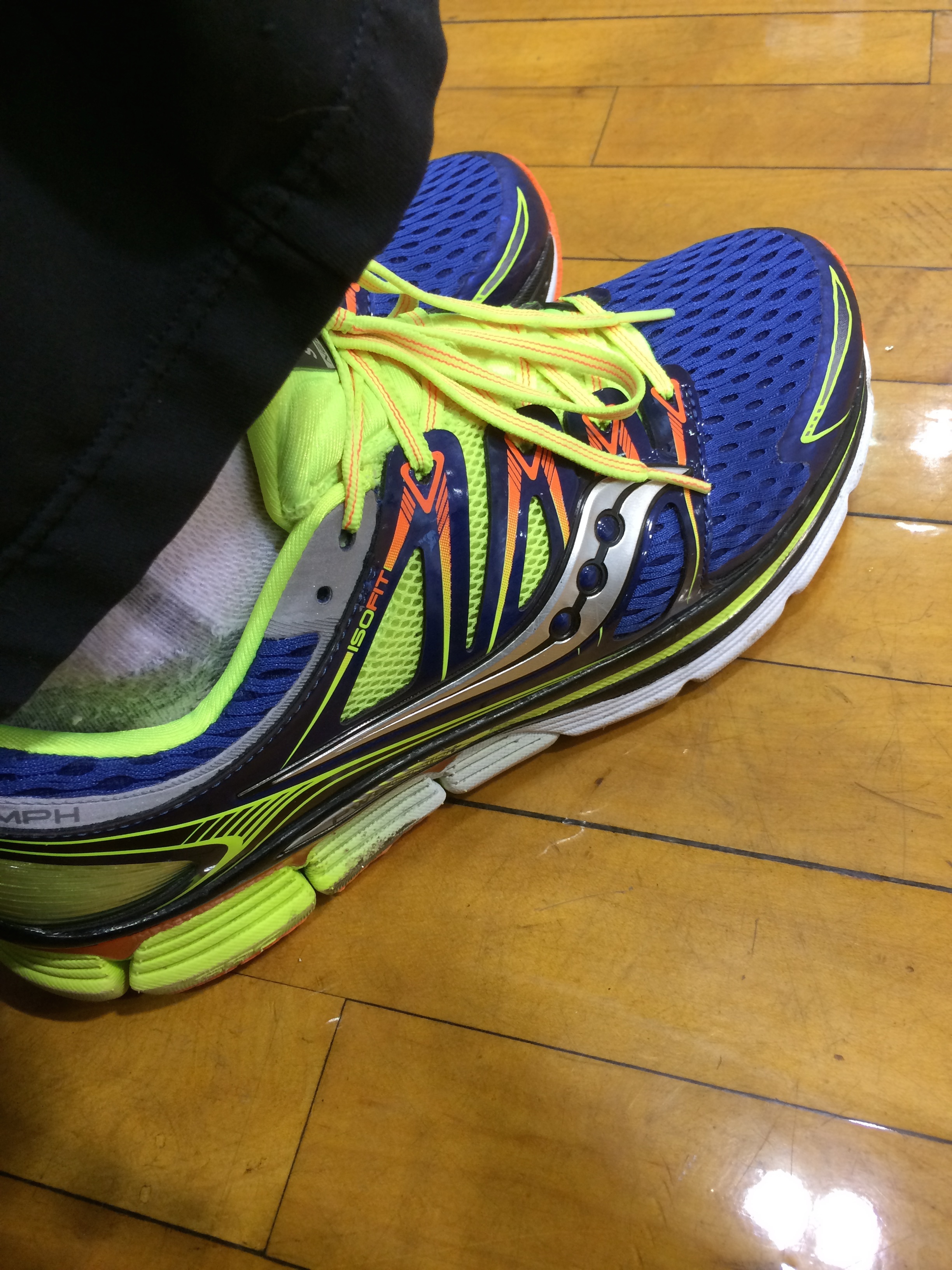
Perhaps the Greater Sin is that my Fanny Pack is also tinted a fluorescent green, further demonstrating that it was purchased in the early 1990s. However what goes around comes IMG_3473around. In case you have not noticed, everything except the vaginal IUD now comes in fluorescent colors. They’re back in, so to speak. Look at my new shoes, for example!

So I am sticking by the fact that my Fanny Pack is both Retro and in full fashion with the times. It doesn’t have clips for carrying race numbers and it doesn’t have water bottle pockets like the new running belts do.

But goddamnit it works to carry my iPhone.

And I’m still, in my supposed dotage and hopelessly outdated shape as a runner…relatively faster than 90% of the people I encounter on the roads or track. So unless someone can catch me and rip my fanny pack off my Retro Rump, they are going to have to deal with the fact that it is hopelessly useful for my purposes. And that is all.

werunandridelogo

Posted in Christopher Cudworth, running | Tagged , , , , , , , | 4 Comments

Memorial Day and military grade thoughts

“Flag Waiver” painting by Christopher Cudworth, 24″ X 36″ acrylic on masonite.

This morning with rain falling on crowds of families protected by umbrellas, a solemn group of military veterans conducted a quiet Memorial Day ceremony at a small cemetery in Geneva, Illinois. There are likely hundreds if not thousands of such ceremonies going on across America today, each with its own flavor and significance.

When our family lived in Geneva we walked down to witness that Memorial Day parade and service every year. Often I’d rush home from competing in the Elgin Fox Trot 10 mile to shower and pull the kids in our American Flyer red wagon as they sipped on Capri-Sun sun drinks and hid either from hot sun or threatening rain.

Family history

My father was a serviceman in the Navy during World War II but he never made much of his time in the Pacific to his four boys. He rode across the ocean in a rattling old bold that was scuttled to the bottom of the sea once it delivered its crew across to Japan, where the American military was busy in 1945 overseeing the transition from war to peace time. My father took photos of the city of Hiroshima and Nagasaki where our war planes had dropped the bombs that helped convince the Japanese to stop fighting. Those photos, and those bombs, only made sense to me when I was much older and could understand what the terrors of war really meant.

My father-in-law also served in the military. He was stationed in Guam far out in the Pacific where he worked as a radio man for the Army. His tales of service were focused far more on the advent of technology that helped the war effort than on grim scenes of terrifying battles or buddies lost or maimed in action.

Reading up

It therefore fell to me to learn more about what war was about on my own. I read books about wars and a massive tw0-volume biography of Winston Churchill. Those convinced me of the importance of determination and valor in the face of a remorseless enemy. They illustrated both the conservative zeal for country and the liberal guts of taking chances when the odds seem slim.

They also made me consider whether I would have had the guts for war had I been called to service. As it turned out my generation of young men and women never even had to register for military service. The draft was over and there were no requirements to give our names over to the government. That dismissal from military connection might have lasted a mere few years but it was also an apparent recoil from the period in the early 1970s when the draft sent thousands of young men off to that confusing mess of a conflict our country created in Vietnam.

The closest I could then come to military service was to participate in athletics. The head-banging and puking learned through these endeavors, might not have been war, but they do teach you what it means to give your all.

Never called

My brothers were older and their numbers were never called. Yet I knew plenty of Vietnam veterans and few had anything good to say about their time in that war. Of course the war protests were a big part of my awareness growing up. I was in middle school from 1968 through 1970. Peace signs and televised marches and protests against the war were everywhere. I grew up thinking war was a pretty bad thing. That view has not radically changed since I was twelve years old.

That’s the same age at which my athletic career began to careen toward becoming a distance runner. That meant early exposure to discipline and sacrifice as a way of life. I was drawn as well to the idea of triumphing over difficulty. There was a mean streak of anti-authority running through my veins as well. I sometimes wondered how I might have done as a soldier? Would I have resisted command from superior officers or welcomed it?

Perspectives on authority

I know the answer to that question now. As life goes by you experience various kinds of authority in your work and personal life. You come to appreciate that authority can be both smart and stupid. If you’re smart you learn to recognize authority that has purpose and that which is just the product of controlling people with an agenda of their own. Of course that kind of authority is hard to parse in times of battle. Great generals often have outsized egos to match. Churchill was no wilting flower either. We need leaders with guts to make tough decisions. Sometimes that means men and women go to die in the name of country. That’s what Memorial Day is all about.

So I took it as my responsibility to learn about why our nation fought its wars. Sometimes there were good reasons, such as fighting off Hitler. There were wars of fear like Vietnam and Korea. There have been wars of economic and political interests such as the first Gulf War in Iraq. Then came the long war of retaliation in Afghanistan that is still going on. And let us not forget the war of choice America waged in Iraq that led to 4000 soldiers killed and thousands maimed and wounded.

Against war

I did not support the reasons Americans were given for starting that war. I saw through the jingoism and ideological cheerleading (including the media) that capitalized on the tragedy of the 9/11 debacle to rush our nation into war in Iraq.

That made me look even deeper into our nation’s history and its choices in war. One book whose title I cannot recall struck me most deeply. It was a documentary tome about how America has treated its soldiers during and after its wars. It outlined the many promises we made to soldiers in advance of war and the promises broken after war was over. It showed how many times America’s politicians have dragged our nation and its military into war and then sealed its pockets when war was over. For centuries veterans have been placed in horrific situations and told to be brave only to come home from battle to find that the country cared not one whit for their sacrifice. It happened with the Civil War and it is still happening today.

World War II and beyond

The biggest exception to this horrid tradition was the GI Bill that sent millions of military personnel to college after World War II. What followed was a period of great prosperity for our country. This was a quid pro quo with conscience.

Some might call it a liberal folly to actually fund the college education of military personnel and veterans. But truly, this was one of the only times in American history when military veterans were compensated for their service and sacrifice.

It makes no sense that military personnel are paid so poorly to this day. It makes no sense that we don’t reward people who invest their lives on behalf of our country with education and yet, even pensions the rest of their lives. Anyone who serves in the military deserves this. And if you are wounded in action or left without limbs or eyes or half a brain due to impact or concussion, our country should pay every goddamned dime you need for the rest of your life. That’s patriotism, folks. These are the people we need to remember. I’m a political liberal but I support the military 100%.

That’s the personnel I’m talking about however. Our nation’s penchant for military spending as a portion of its overall budget gets a little out of hand. We all know stories about $5000 hammers and other sources of military waste. Where are the so-called conservatives on issues like these? We hear gripes from that side of the aisle about too many corporate taxes and stealing wealth from the jobs-creators and how that’s all wrong. Yet we hear absolutely nothing about being wise with our national treasury and billions in taxes spent on a military that spends as much as the next 17 military nations combined.

That is insanity, not intelligence. Together with our nation’s history of abusing and impoverishing our soldiers with wars of choice, poor compensation in service, neglectful care for veterans and mercenary spending that fuels the military-industrial complex, America has a lot to answer for.

And no one seems to be talking about the answers. Instead we gather annually to wave flags and pretend we love our fallen when in fact there have been millions of soldiers basically chewed up and spit out by our society.

Harsh realities

It’s harsh to remind people of all this on Memorial Day. These are military grade thoughts on what basically is a civilian holiday designed to pay respects to all branches of service.

But the thing that all my running and riding have taught me about life is that sacrifice is often poorly understood by the very people who claim to celebrate it. People mean well. They might slap you on the back and chortle, “Good race!” But in your mind you utter, “You don’t know the half of it.”

And of course that’s vitally true with our military as well. Soldiers hold things close to their hearts that either cannot express or dare not tell. When you’ve seen limbs torn clean off and bodies turned into red mist there is no real place in daily conversation for that imagery. That’s the reason why soldiers become bonded in war. Who else can imagine the sacrifice and solid bonds that come from facing mortal terror?

God and foxholes

We’ve also heard it said “There are no atheists in foxholes.”  When your life is on the line, belief in a higher power may feel like your only salvation. Yet even Jesus Christ in the Garden of Gethsemane wept and sweated blood at the realization of what was about to transpire. We should never pretend that we are more brave than we truly are. Jesus showed the way on that.

Yet there are people who take even that example for granted, flaunting their religious beliefs as if they were the ultimate expression of truth and bravery when in fact they expose the weak and fragile souls beneath all that religious zeal. We see it all the time with the religion known as Christianity. The things for which Jesus preached and sacrificed his own life, such as caring for the poor, loving your enemies and loving your neighbor as yourself are the very things pushed to the background by people fighting to discriminate against the poor, blame them for the ills of the nation, hating people for their gender, orientation or race, and all the while calling people names because they don’t vote for the same political party or adhere to the sickly twisted values expressed in meta-Christianity.

Confusing God and Country

Meanwhile all that gets mixed in with national identity and people can’t separate the notion of God from country. Swirl it together further and we wind heading to war for all the wrong reasons, lashing out against Muslims in Crusades ancient and modern.

Meanwhile back home in the United State we let military grade and easy-to-use weapons flood our streets. The result is that more people have died on American soil due to gun violence than all the soldiers that ever died on foreign soil in America’s wars. Think about that. We’re a nation at war with its itself.

As a result we confuse violence with heroics. And then we wind up confusing our criminals for heroes, lauding men like Oliver North who abused our nation’s laws to throw money and guns around in secret wars for which there were no accountability. Even Ronald Reagan admitted that was the Grand Mistake of his presidency.  We only wish George W. Bush and Dick Cheney had exhibited such moral fiber. If the GOP admires Ronald Reagan so much, how come they seem to have forgotten the ability to admit wrong?  Instead we’re stuck with claims on many fronts that the Iraq War was both justified and a good idea. In fact it was an unbudgeted, mercenary debacle based on speculative desires to tame the Middle East and put it to American uses.

Cutting to the chase

None of this means I disrespect our military as so many conservatives accuse liberals of doing because we’re willing to criticize the political reasons why our armed forces are used like pawns. Quite the opposite.

Having learned a few things about what sacrifice feels like through athletic endeavors and caring for loved ones that are sick or dying, I hold firm in the conviction that use of our military should be both rare and lethal, and only as necessary.

Like athletes in training for the Olympics or World Championships, our soldiers of all genders should be prepared to engage in combat.

But as we gather to stare at those stars and stripes on Memorial Day, and ponder what it means to engage in military service in both an active and philosophical sense, perhaps it is time to consider whether we as a nation have ultimately earned the right to govern those willing and able to serve.

werunandridelogo

Posted in Uncategorized | Tagged , , , , , , , , , , | Leave a comment

Problems are almost always underfoot

IMG_7618I met a friend at a local Starbucks yesterday. He told me his running was completely curtailed due to a knee injury. This is a guy that already has completed an Ironman. I’ve cycled with him and he’s got an engine that is powerful and the legs to match. Typical rides with him average 24 mph on the flats. He can’t climb hills for crap like many triathletes, but don’t mess with him in the wide open.

So he’s no rube, but he has been through some crazy medical stuff the last couple years. Which is strange in a way, because he’s widely known as a brilliant diagnostic physician.

And that makes what I’m about to tell you all the more weird.

My friend tried to treat his knee problem through a couple channels. These include visiting an orthopedist and possibly a chiropractor. Neither has been able to solve his knee problem.

Having been through a few knee issues myself over the years, I asked where and how it hurt. I told him about my own case of chondromalacia and how, through a combination of physical therapy activity and new orthotics, the problem went away.

“Well, there are orthotics people and there are anti-orthotics people,” he answered.

I told him I was aware there is a divide in the sports world as to the effectiveness of orthotics. Some believe that all injuries are the results of strength imbalances. To an extent of course, they are correct. But there are also issues of raw biomechanical flaws, structural defects in the human body that include bone structure that can lead to chronic pressure and collapsing ligaments and joints. These lead to injury.

Fact is, biomechanical problems may or may not be fixable through strength training or surgery. My friend had already had surgery in fact. There are some orthopedic doctors that love to go in and mess around with things. Not all, but some.

Surgery should be the last resort of course. Any time you enter the human body there is risk of disturbing or even creating material such as scar tissue that complicates things even further. Great surgeons know how to avoid this for the most part. I’m very pleased with the work done on my clavicle by an orthopedic surgeon who repaired my busted collar bone.

But I trust correction of most of my biomechanical flaws to a physician that works from the ground up. As I’ve written before on this blog, I see a pedorthist who prescribes and creates my orthotics. The finished product are a little bulky in some respects yet I can race and train effectively in them.Without orthotics, I’d be dead in the water.

Sue Running Past Pointy ThingsMy companion Sue has had hip and back problems from running. She saw the pedorthist recently too, and the visit was truly revealing. Her new orthotics arrive soon.

I’ve tried self treatments and strength training for my calf muscles. I do the work to strengthen my quads, and do some yoga to increase flexibility. But problem are almost always underfoot. That is, biomechanical deficiencies almost always start at the feet and emanate up the body.

I illustrated a book with a sports podiatrist about this very topic 20+ years ago. Back then, sports podiatrist John Durkin was treating athletes like Sebastian Coe (world record holder and Olympic champion) Jim Spivey (Olympian at 1500 and 5000) and more. They all realized they needed help at the foot level to compete and train at a high level.

Seb Coe’s feet were flat. Yet he could leg lift 700 pounds. So it was a strength deficiency that was his problem and led to injuries. It was poor structural foundation in his feet.

IMG_2157Runners and cyclists who don’t want to be dependent on orthotics have a point. Once you choose to go forward with them, there really is no turning back. But using orthotics is like wearing glasses. No amount of eye exercising is going to correct your vision.

So I told my friend to go see the pedorthist. He seemed semi-convinced. I honestly believe he’ll be fully convinced once he tries running in orthotics and it solves his knee problem. There’s obviously an imbalance leading to a torque in the patellar tendon that is producing knee pain and possibly cartilage wear. You can go in there and scrape away tissue forever, but unless the patella tracks cleanly in its groove on top of the knee the problem will return and persist. It’s that way with a ton of cycling and running injuries. They all come from overuse or imbalances. Combine the two and the problem never goes away.

I wish I did not have to wear orthotics. It’s one of the tarsnakes of an aging athlete however. It’s always ironic to buy superlight shoes and then plop those orthotics inside. Without them I can’t run more than 2-3 miles at a time. I’ve tried. Been down that road. I put orthotics in my cycling shoes as well, so that my pedaling is in a balanced mode.

Pretending your body and feet are perfect won’t do y0u any good. Taking steps to correct your foot imbalances will.

werunandridelogo

Posted in Christopher Cudworth, cycling, duathlon, half marathon, marathon, running, We Run and Ride Every Day | Tagged , , , , , , , , , , , , | 1 Comment

It’s time to wake up. Or not.

GoofyOnBikeOne of the most difficult decisions any endurance athlete must face on a daily basis is when to wake up and when to get more sleep.

You know the feeling don’t you? Lying there in a warm bed on a cold May morning. The road calls you to get in some mileage. Or, you might have a pool workout scheduled and it is 5:00 a.m. and still dark out. The pillow seems to hold your head fast.

If you succumb to the urge to stay in bed you face a day racked with guilt. You missed a workout. You’re falling behind. You won’t reach your goals. Or worse yet, you suck.

Ha. We all know how that brain cycle goes as well. Kind of goofy, isn’t it?

If you are disciplined you overcome the temptation to stay in bed. That takes a firm fix on your objectives and a will of iron. No pun intended. Of all athletes perhaps Ironman triathletes face the toughest get out of bed schedule of all. Balancing training for three sports is both mentally and physically tiring at times.

But a distance runner training for a marathon or any other race needs their sleep as well. And a cyclist hammering miles to ride a Century or compete in a road or crit race find it just as hard to rise, while tired, and go get the miles in.

One of the rude shocks I do not like about adding swimming to my regimen is going from a warm bed or shower into a cold pool. I make the mistake at times of standing in the shower too long at XSport before going into the pool. The warm water of that shower is likely the same cozy temperature of those blankets in bed. When I go to the pool the water feels extra cold. Kind of stupid of me.

So if you want to succeed you need to know how to cut your losses by planning your showers or your sleep accordingly. You know you like the comforts so build in enough time to let them take hold. Otherwise you feel sleep-deprived.

WalkingdeadThat means going to bed at a reasonable hour as often as possible. We all seem to live busy lives and there are nights when we get to bed later than we’d like. We wind up trundling about like the Walking Dead.

Forgive yourself for that. We can’t avoid our obligations in life. But if you’re going to train hard you must be as committed to going to bed early as you are to get up in the morning.

Of course the former (going to bed on time) makes the latter easier. Hard training also tends to make us tired in the evening. That makes it easier to go to sleep at 9:30 because you’re flat out ready to go to bed by then. Hopefully you have a spouse or companion that understands and supports that. The long haul can be just that.

Quality of sleep is important as well. We all know how hard it can be to train when you’ve had a restless night or worse yet, a succession of difficult sleep nights. You get out there but it feels like you’re going through the motions.

Dunning's aloneCompensating for poor sleep or lack of sleep is difficult. Naps help. They can be completely restorative at times. You drift off for a bit and the world flows past without a care. That can be some sweet stuff, right there.

My problem with naps is sometimes more mental than physical. For some reason when I wake from a nap of a half hour or an hour there is a foggy, depressed feeling that sometimes overcomes me. I have not studied the physiology of this, but there are 55 million results on Google for this phenomenon, including this assuring (and short) observation from a blogger on Healthline.com.

It is likely those of us that experience depression and anxiety in our lives have a brain susceptible to shift in chemistry as we’re napping. It usually doesn’t last long but it can hit hard. Frankly I almost view it as a comic tragedy. Like a Shakespeare play going on in my head. Sometimes talking aloud helps me get through the fog and back into the flow.

It is still always better to get a good night’s sleep, the most natural way to sustain good mental and physical health. During college while training 100 miles a week, I could fall asleep in a dorm room full of half-drunk college buddies playing REO Speedwagon at nearly full volume. I was an aggressive sleeper, and people knew not to mess with me because I was an absolute Mink if disturbed. I knew I needed sleep to train that hard and let it be known that it was my top priority.

And there really are times when you know you need more sleep. You court disaster if your body gets so tired that a cold or viral infections takes hold. You can see the warning signs. A sore throat is never, ever good. Neither is a constant craving for sweets. Aggravating or constant thirst. Elevated heart rate. All are signs of a body fighting fatigue and in need of more sleep.

image (1)You can also tell when you’ve compromised the natural sleep cycle when you lose enthusiasm for your training or racing. That means you need to block out the time for good sleep.

If possible, schedule that nap before your evening workout. Sometimes even 10 minutes of “down time” with the phone stashed away and nothing to do but listen to the quiet or the calm whirr of a ceiling fan is enough to give you the juice to go on.

I have noticed that I have a propensity at times to get really tired just before it’s time to work out. What’s up with that? Well, this is the psychosomatic side of sleep. For example, we often yawn before a race because of nerves. It’s our body’s way of collaborating with the brain to confront a period of perceived stress. “We need more air down here!” our bodies say.

This nervous response is a bit like the natural phenomenon of redirected aggression in birds and other animals. A bird trapped in defense of its territory will engage in activities such as “bill-wiping,” a behavior normally conducted after feeding. This appearance of relaxed behavior during times of stress functions in some way as a deflection of anxiety.

photo (89)There we have one of the secrets of sleep and our inability to wake. The human animal is just as susceptible to perceived stress and the physical tension of persistent physical exertion as any other creature on the planet. But unlike less sentient beings, we force ourselves into routines that invite rather than avoid stress.

Welcome the real world that is not so real. So to keep it real we need to prioritize to get the sleep our bodies need in order to perform at levels that are unnaturally good for us.

And if that makes sense, then you’ve gotten enough sleep today. If it doesn’t, go take a nap and come back later.

werunandridelogo

Posted in Uncategorized | Tagged , , , , , | 3 Comments