It was a DNF for the RRCA coach certification clinic


OIl and WaterCover

Detail of painting Oil and Water, acrylic on board, by Christopher Cudworth. 

The best intentions sometimes don’t work out. Last Friday night I held an art opening for my solo show “Urban Wilds” at Water Street Studios. People liked the work and visitors were still arriving at 7:30 p.m., but I was scheduled to leave for a drive to Ann Arbor that evening at 8:00.


Under normal conditions, the trip was supposed to take just over four hours. I’d planned to leave by 8:00 and arrive by midnight, then get up to attend the running coach certification course held by the Road Runner’s Club of America.

I’d done my homework. Watched the required video on Vimeo about the history of running coaches. I already knew them by heart, for the most part. Arthur Lydiard. Percy Cerutty. These were the guys who informed our training in the early 1970s. However, I never purchased a pair of Lydiard-brand shoes because they were $70 at the time. How times have changed.

I was excited to take the course but a bit concerned about the drive east. When I signed up the art show dates were not set. But then they synced up with that Friday and I decided to make do.


Storm Path.png

The storm path was approximately 100 miles wide and headed in a northeasterly direction. 

There was one problem. Big storms were pushing through the Chicago area and up into western Michigan. The skies were dumping boatloads of rain as I climbed in the car to start driving. I made it all the way to Woodridge, about 30 miles southeast, before pulling off I-355 to look at the radar on the Weather Channel app.


It did not deliver good news. The rain storm was coming from the southwest and heading on a continual, broad path in the exact same direction I’d be heading on Route 80 to 94 and up in to Michigan.

While sitting in the car on the road shoulder next to the tool booth, my phone made a strange sound and a FLASH FLOOD ADVISORY came up. That equated to a DNF in my book. It would be too stressful to drive through that weather for hours without relief.

I took one last look at the radar. The band of dark green indicating rain clouds was at least 100 miles wide and flowing like a river northward over the path I needed to drive. I sat there with a sigh. Then I called the hotel in Ann Arbor and told them it was impossible for me to make it that evening. So they cancelled my room. Thank you, Candlewood Suites.

Then I emailed the clinic organizers and explained the situation. It simply wasn’t advisable to attempt that drive at that time of night in what would likely be driving rain for the next three hours. I hope they’ll let me apply my course fees as a credit for a future seminar.


Oil and Water 2.jpg

Oil and Water 2, Original Painting by Christopher Cudworth, for the show Urban Wilds. 

As a younger idiot I might have attempted that long drive in the rain. But I’m an older idiot now who possesses a dose of common sense. So I turned around and headed back home.


Only I had gotten myself so pumped to do the drive it was difficult to get to sleep. So the DNF on the RRCA turned into a CNS (Could Not Sleep) night of fitful rest.

But I still got up and rode 30 miles with my buddies, who were fortunately a bit hung over from a class reunion the night before. So we rode 16 mph and called it a morning.

The funny thing about the entire evening was the strange resemblance between my painting Oil and Water and the image of the weather from Friday night. There indeed seemed to be some sort of flow going on, and a lesson that life isn’t always what you want to make of it.


Posted in running, Uncategorized | Tagged , , , , , , , , | 1 Comment

A new meaning to fields of grass

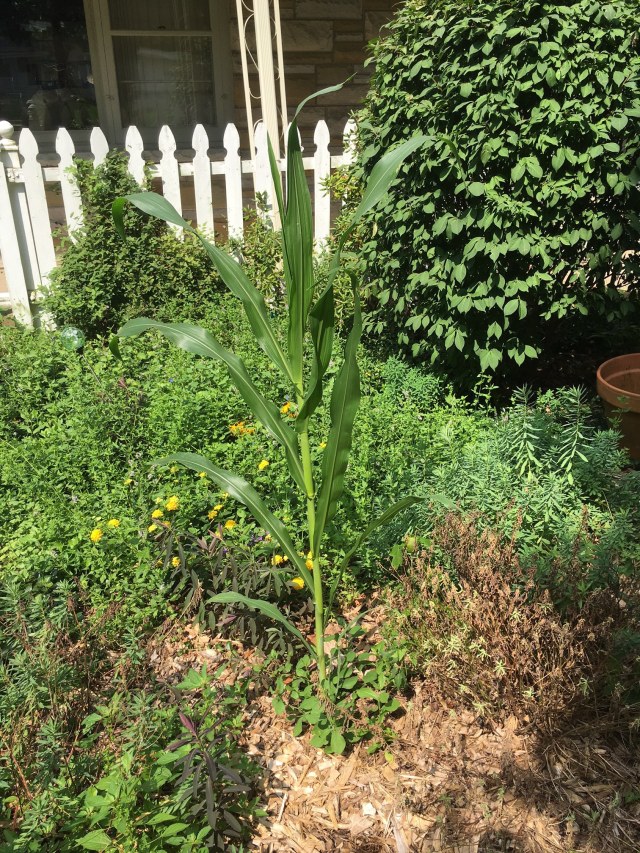
CornThe squirrels who visit my front yard bird feeder played a bit of a practical joke on me. A tall corn stalk has popped up in the front garden. It stands nearly five feet tall now. Whether it will produce ears of corn remains to be seen. But it’s still August. So there’s time.

I looked up corn on the Internet because I’d read somewhere that it is a form of grass. Here’s what I found from a study of corn genetics at the University of Utah:

“Through the study of genetics, we know today that corn’s wild ancestor is a grass called teosinte. Teosinte doesn’t look much like maize, especially when you compare its kernels to those of corn. But at the DNA level, the two are surprisingly alike. They have the same number of chromosomes and a remarkably similar arrangement of genes. In fact, teosinte can cross-breed with modern maize varieties to form maize-teosinte hybrids that can go on to reproduce naturally.

Scientists study teosinte-maize hybrids and their offspring through the process of genetic archaeology. This process helps geneticists understand what is happening at the DNA level to make teosinte and maize so different. By combining clues from genetics and the archaeological record, scientists have pieced together much of the story of maize evolution.”

Wow. So all that corn growing across America’s heartland, and through which I ride and run every day here in Illinois…is actually a form of glorified grass.

The products that come from corn are so diverse they cannot be listed here. But check this out: 10 products that you did not know were made from corn. 

The reason all this runs through my mind is that we take all this stuff so much for granted. This week I rode 38 miles with a group ride and we passed miles upon miles of cornfields. They are green and tall now. Sweet corn is for sale at farm stands everywhere. There will be a big corn boil out in Dekalb soon, and our local high school has a big corn boil to raise money for all the athletic teams.

Everyday citizens take all this for granted. We don’t need to think about corn, as a rule, for our daily existence. But agriculture does. And these massive monocultures we’ve created across the entire United States exist except in exceptionally arid regions.

Corn grows like a weed, essentially. It is a highly refined weed. We’re nudged and coaxed it genetically and companies like Monsanto own the patent on strains of corn that cannot be kept from season to season. Farmers that do so have been sued and impoverished for the simple act of keeping corn seed stock from season to season.

One can see why Monsanto wants to own and enforce its patents on corn. It pumps money into its research programs and wants to protect that return on investment. All to own the rights to a glorified weed. A grass, turned into the princess of farm products. It’s almost a Cinderella story, if you think about it.

Marijuana plant

big cannabis marijuana plant detail

Contrast that narrative with another type of “grass.” That would be marijuana. There’s a whole science to growing “weed” as well. It hails by origin from south-central Asia. Yet in many parts of the world, growing marijuana is illegal. Still, people with a penchant to get high took hold of marijuana and turned it into a cash crop that perhaps rivals even corn in its commercial viability.

Because of its illegality due to the fact that marijuana can get you high as fuck, its propagation is often a highly protected secret. And because of that fact, you do not want to stumble on a marijuana plantation guarded by people with guns, which I almost did one time while visiting the Hawaii island of Oahu. I was determined to visit some back country and went for a run-walk up some trails into the mountains. I got lost and wound up walking back through a military base where I pretended to be one of the residents and walked right out the front gate.

Later, while relating this story to a semi-local in Waikiki, he turned to me and said, “Are you fucking crazy? There are pot farms up there and they’ll shoot you in the head if you find them.”

Such is the world of the innocents. I also encountered a fair number of call girls working the streets of Waikiki that day. They seemed too beautiful to be whores, but that’s a naive judgment as well. While running through the streets of Honolulu I was asked point blank whether I’d like oral sex in the alley. And sitting in the Blue Water Cafe, I learned that the stunning woman next to me in the transparent tee-shirt made a very good living in the company of very rich men. She traveled the world and looked the part.

So this world of expectations and illegal activities is always near if you go looking for it. If so moved, I could score a bag of grass this very day with one or two phone calls. Illegal or not, grass is everywhere. Pot is a recreational drug. Michael Phelps got busted using it. NFL and NBA players toke the stuff. There are strains from Jamaica or Hawaii or Turkey that can take the top of your head right off.

Bike Lanes MeI recall smoking some weed back in college days when my buddy handed me a pipe and sat chuckling in the front seat of a 7-11. I took a draw or two and then my head slammed back against the seat. “Like it?” he squealed through squinty eyes. “It’s hashish!”

And later, on the way to a party my friend and I got high in the parking lot and engaged in an impromptu kickboxing match for the fun of it. Some dude walked out in the parking lot and wanted to know what style we practiced. We both stood there laughing like dopes. “We’re high, dude. We don’t practice nothing.”

That was many, many years ago. I have not smoked weed in more than three decades.

But I do eat a lot of corn, and as we’ve learned, corn is a glorified form of weed. The chemical aspects of corn actually have far more influence on our daily lives than anyone might care to admit. Corn syrup is used in sodas, for example, which can make you fat faster than almost any product on earth. Corn syrup and its sugars are more powerful in some ways than crack cocaine, much less pot. Our bodies grow so addicted to the sugars made from corn syrup we cannot eat, sleep or drink without craving them.

So we have to ask which types of weed or grass are really our worst enemies? Is it the illegal kind that makes us high and builds cravings for trays of brownies? Or is it the corn-based products that drive obesity and are the ruination of healthy diets through all the processed foods we ingest by habit and by aisle at the grocery store.

These are things worth considering, because the drugs we choose and the foods we use are often no so far apart in our dependencies. Alchohol causes all sorts of addiction problems, as well as obesity. Yet it’s perfectly legal. But pot? That’s a “gateway drug.”

But things are changing. Now that marijuana is becoming legalized in some states, it might be time to turn around and actually take a look at regulating products like corn instead.

And we might start by telling Monsanto to shove a genetically modified corn cob right up its ass, as they did in some European countries that have banned GMOS like certain brands of corn because they can spread and cause strange effects in the plant and human population. These countries are standing up to the unpredictable and possibly dangerous side effects of GMOs in plants and the food we eat.

It is indeed a funny world when our formerly legalized and beloved plants are being stopped at the borders of countries who consider it an enemy. Yet formerly illegal plants like marijuana are suddenly being embraced by nations the world over, and hemp products too, which can be useful for manufacturing and energy, to name a few.

Whether we we like it or not, we’re all just running through grass of one kind or another. Might as well enjoy the ride, huh?


Posted in Uncategorized | Tagged , , , , , , , , , , , | Leave a comment

Hugging a wheel


cud-racing

ABD Kit. Circa 2008. On the Felt. 

Athletes By Design is a cycling club to which I belonged a few years back while doing a bit of criterium racing. The group is housed out of a pair of Prairie Path Cycling shops run by Mike Ferrell, whose own pro years mix with those of epic teams such as 7/11.


ABD and PPC put on some of the best races in the Chicago area. They also host the Tuesday night criterium racing in an underdeveloped tech corridor area south of DuPage airport. Every week 50-75 riders from throughout the Chicagoland area and in all categories practice their road racing skills because ABD/PP puts on the events.

They also host a solid group ride on Wednesday evening. Years back when I began cycling that group ride was a staple of my training weeks. The ride once attracted 20-25 riders and a mix of men and women. It was popular but a bit unwieldy at times.

This week when I showed up I recognized the familiar young face of a rider named Konrad Witt. I recall his first ventures into cycling when he was just 13-14 years old keeping up with guys ten years older. He’s a beast now, with massive cycling thighs and a competitive record of which most would be envious. He’s attending school at College of DuPage and intends to transfer to a school named Lindenwood University in St. Louis, Missouri. I had not heard of the school prior to that, but I guess they have a good cycling team.

Witt rode with us for a while , the first 10 miles or so, but disappeared at some point to go ride at a faster rate, I’m sure. I overheard a quiet bit of coaching from Mike Farrell to Konrad before we departed. “The last five miles should be hard,” Coach Farrell instructed the young man.

Riding in the company of someone so talented as Konrad can be disconcerting. No matter how fast the group may be going, or how good you personally feel, there is an awareness with a rider of that caliber that they can pedal away from you any minute. In fact, there was a bit of joking at the start of the ride about how The Kid has to carry all that muscle around in his thighs. He chuckled quietly and kept pedaling. Elite riders know that there are always people who can beat the hell out of them on any given day. Elite runners and swimmers know that too. No amount of muscle or confidence equals perfection.

Instead, the act of perfecting your riding is a constant journey. And as we rolled out on the roads west of Batavia, the pace picked up and I found myself doing one of the first pulls. This is both wise and unwise with a group that you have not ridden with in a long time. Doing pulls requires more energy, and when you don’t know what the typical pace might be, or how you might be at sustaining it, doing pulls is risky territory.

But I figured that would figure itself out. I’d ridden with the group years back and discussed pace in advance with a couple other riders, and was told it was 20 mph on average. I knew that was possible because my riding has been going well. So I did my two minute pull at the front and tried to drift back. But we were on narrow roads and the back did not come forward right away. So I wound up doing another pull fairly quickly, but felt fine. And then another. Well, so it goes.

As a relative newbie to the group, this was perhaps silly of me to carry on like that. One does not want to send some arrogant message or suggest that you’re a superior rider by doing too many pulls. When the next stop sign came around, I made sure to drift further back and hug a wheel for a while.

Then we turned west onto country roads toward Kaneville and the group dialed it up again. This time, we were at 23 mph, or so I ascertained when my turn at the front with another rider came along. We were pedaling two abreast and spinning off the right and left in rotation. He turned to me and asked, “Keep it at 22?” So that told me that we were riding decently, but not out of control.

Because a few years back the ride turned into a weekly race. Guys on the front might hammer the group to pieces. It wasn’t constructive for anyone that could not hold that pace, and eventually, the ride busted up on its own accord.

It’s been formed again with a firm yet friendly hand. Everyone is into the scene for its steady benefits, and the ride still goes fast now and then, but cooperatively so. That makes for a great group ride. If you’re feeling strong, you do more pulls. If you need a week to regather, you sit in, do the pulls that come along but don’t stay on the front too long.

Only the most pitiless riders take pleasure in dropping people on group rides anyway. There are a few cycling sociopaths who live for this, their big egos focus on small things like that. But the ABD guys were in this thing together, and it was a great ride as a result.

As expected, the ride truly dialed up the last 10 miles coming in from Kaneville. Hard riding when everyone is warmed up and nearly home is acceptable. I did have to pedal hard to stay on and not let a gap open up. In fact, for most of the ride, I ignored the scenery, which was beautiful on a summer evening, focusing instead on riding a clean line with the wheel in front of me just inches from my own.

At some point, another rider actually tapped my rear wheel with his. A quick apology was issued and I was glad it was not any worse. That can turn a lovely ride into a living hell. Fast.

We rolled back into town and my legs felt good the entire way. My phone died and my Strava lost the last six miles, which was too bad because someone after the ride shared that we’d averaged 21.5. A perfect mid-week ride in the company of good guys who love their “work.” I took no photos because that’s a good way to crash when you’re riding in a group of 10 or more. But I kind of like the photos held in my mind. The whirr of wheels. The slide from front to back in rotation. The feeling of being on the front and doing pulls, and getting quiet compliments on the quality of your pulls. It’s what you want from a group ride. Nothing more. Nothing less.

Thanks, ABD. We might see you again to hug a wheel and ride until the sun sets.


Posted in cycling, cycling the midwest, doing pulls in cycling, Uncategorized | Tagged , , | Leave a comment

Hybrid dreams


SpecializedMidway through my ride yesterday, I turned right from Burr Road onto Silver Glen Road heading east toward a bridge across the Fox River. It was a mellow ride thus far, a bit of recovery two days after the Sprint Triathlon in Naperville.

As I turned right at the T intersection, another cyclist on the bike trail across the road came whipping past. He wore a plain white tee shirt, black shorts and wore sneakers on his pedals. The bike he rode was a hybrid. He sat upright and pedaled like a madman.

Proceeding east, I slowly caught and passed him. He was doing 18 on the flat, by my estimate, and 20+ on the downhills. His loose tee flapped in the wind and he was enormously focused on what he was doing.

On the uphill I passed him and then cut into the middle of the road to make a left turn at the big road ahead, then changed my mind and decided to go straight.

At that point, the light changed and the tee shirt guy came ripping past again. He was still on the bike trail across the way. I clipped in and started pedaling at my normal rate.

Ahead on the trail, he was now hunched slightly over and pedaling even harder. I was focused on a high cadence ride yesterday, so I kept it near 100 rpms and pedaled past him on the Venge.

The guy was clearly having a good workout. Doing what he likes to do. And as I stopped to wait at the next intersection where the road was under construction, and traffic was tied up in impatient knots, the hybrid dude swung past on the left and began pedaling against traffic on the newly laid tarmac headed north. He vanished around the long arc of Route 25 at Stearns Road before I could get across the street.

I figured that was the last I’d see of him. Yet two miles later, when I angled through the forest preserve to grab the bike trail heading south toward St. Charles, I heard the banging of bike tires crossing the trail bridge with its wooden boards. Sure enough, as I turned onto the trail, the hybrid guy was at the base of the long climb up Tekakwitha Woods. It’s a Strava segment. Yesterday I dialed in an rode my best time which measured 288th all time. At 2:18 I’m about one minute behind the fastest of riders. So I make no claims to be a stellar cyclist at any level. At the top, I nearly caught hybrid guy. But purposely did not pass him.

These days I remain something of a hybrid guy myself. The Venge I ride is technically a road racing bike. Yet I hump it through triathlons while riding in the drops. I’ve rather decided not to put aero bars on it.  Specialized warns against that with the particular carbon bars that came with the bike. It would require replacing the factory bars($300) recabling the bike ($300) and sticking aero bars on it (another $300). I’m not all that sure all that work will make me any faster on the ride segments of triathlon. My riding improvement this year has come about through smarter pedaling, smarter training and some strength work. If I can average 24 on the bike, I’ll be doing just fine. I averaged 22 in the last two triathlons I did. Aero bars aren’t going to do that. Riding harder will.

Last weekend I passed tons of people riding aero. I only got passed by a few people during the race, all of them pushing big gears and bearing down in aero. Triathletes love that big gear stuff. No high cadence for them, as a rule. Not that I’ve seen anyway.

I admire their strength. And purpose. But something in me still likes the snap of climbing on my road bike, and cornering, and having fun on the bike as a rule.

So I remain a hybrid triathlete of sorts. I’m sure there are those who view me and my road bike with the same curious (judgmental?) eye that I apply to the guy in the white tee shirt humping along the bike trail at 20 mph. But we’re all hybrids of some sort. Triathlon is a hybrid sport. Its entire premise is based on trying to become adept at three very different sports.

Part of me is curious about what it would have been like to race triathlons when I was supremely young and fit. At that stage of life, it would not have been hard for me to run 16:00 in the 5K even coming off the bike at that point. I ran those times in my sleep, and 17:00 was a training run. That’s elite-level stuff in triathlon.

Whether I could have gotten equally good on the bike is another consideration. My two best buddies did triathlons back then, with some success.

The swim would have been tough for me. My arms were skinny. But I was a damn determined kid all through my 20s. I won the college Superstars competition doing seven different events from a choice of ten. But the only thing at which I sucked in that event was, admittedly, the swimming. That 50-yard freestyle damn near killed me.

So it would have taken some work on my part even back then to become a decent swimmer. That’s still very much a work in progress. I’m a hybrid animal in the pool, with just enough fat on my body to float a little yet skinny enough in my frame to sink at the hips like runners do in the pool.

I guess it’s time to take pride in being a hybrid. As both a writer and artist, my days bounce back and forth between the two, with some marketing and sales thrown in. The triathlon of my work world.

And if you’re curious whether I caught and passed that hybrid guy a third time? No, I did not.. I held back and let him cruise on ahead. What was the point? My ego is not that hungry that I had to make some sort of point by catching and passing him after the hill. Instead, I veered off to ride some new roads, because that was what my ride was all about yesterday. Tee shirt guy headed south on the bike trail along the river. No doubt he was getting in a good 20-miler or so. And good on him. His hybrid seems like it loves a good workout, and he gives it a go. Godspeed, Hybrid Guy. We all have our hybrid dreams.


Posted in Uncategorized | Tagged , , , , , , | Leave a comment

Get moving

BallsIn the early phases of my career in marketing, the company for whom I worked shipped me out East to Philadelphia from Chicago. The President of the company walked in my office one day (because he was the one that hired me) and said, “We’re moving all marketing activities to Philly. You need to move by August.” It was April.

The company paid for the move east. The movers packed up all my stuff and I drove separately to the house in Paoli where I’d signed a rental contract.My furniture and belongings did not arrive for several days. That first night I lay on a sleeping bag spread out on the floor crying my eyes out, alone and afraid. I knew no one back East save for some childhood friends 70 miles west in Lancaster. That was little solace. I was on my own.

So I went running a bunch those first few days. I’d brought my running shoes and gear in a separate suitcase and went out the door twice a day for long runs. Granted, the land was beautiful. But the roads were confusing in eastern Pennsylvania. It was horse country and White Mare Lane would t-bone into a different road and pick back up a hundred yards to the left or right. I got lost several times. It felt like a cruel trick.

Obviously, I survived the move, just as I survived the move back to Chicago nine months later when the company decided that consolidating the marketing department under the leadership of an effete marketing theorist and his flirtatious assistant VP was a bad idea.

And this time, the company did not pay for the move. So I took some of that severance money and drove down the Atlantic Coast to get naked in the surf and say“fuck it” for a few days. Then I called up my buddy and asked if I could move back to live with him in Chicago.

A month later, I packed up all my crap in a giant U-Haul van and started heading back west. The van stalled on the incline up a Pennsylvania mountain. It was so symbolic and scary at the same time. But I got the thing started again and made it through several dark tunnels as well.

The trip west with my van full of stuff was bittersweet and strange. I’d ridden those turnpikes with my family just thirteen years before. That was when we pulled up roots and moved from Lancaster, Pennsylvania to the tiny town of Elburn, Illinois. My father had landed some sort of job and went ahead to try out the territory. Then when school ended in the spring of 1970, we piled into our Buick Wildcat, all four brothers and I, with my parents up front and my youngest brother between them, to drive away from the house we loved and the place we considered home.

StoolWe survived that too. But I recall my brother Jim and I huddled in the backseat of the Wildcat singing clips of Beatles songs together as we drove away from Lancaster. “Onetwothreefourfivesixseven….allgoodchildrengotoheaven…”

Yes, we claimed special significance to those Abbey Road tunes, especially the back side medley, which would come true for all of us in the coming years. “Out of college, money spent, see no future, pay no rent…all the money’s gone nowhere to go…”

There are two aspects of moving that we all need to get. There is the actual “get moving” part that comes with packing up all our stuff and going to a new place. Then there is the philosophical part to “get moving,” n which you try to come to grips what what your move will mean, or does mean, or meant. In your life.

I can’t say that any move that I’ve chosen to make or been forced to do has been bad for me. That all came with unexpected benefits. Moving out East that summer of 1982, I teamed up with a great group of guys at the Runner’s Edge, a retail store that sponsored a team. I learned a bunch about smart training from that group of highly elite runners, some who ran in the low 29:00 range for 10K. But while I was running with them, I was also aching for friends left behind in Chicago.

The simple truth is that there is pain to any move, yet it is often balanced by joy. The moving process in college is an annual thing, for example, and is filled with expectation and trepidation each year it seems. You camp out at your parent’s house during the summer, or do some camp thing to gain work experience and make money, then it’s Back to School come August. That starts next week for many kids in high school and college. If you’re an athlete, that’s when practices begin as well.

As every parent (and teacher) knows, that cycle starts all over next week for kids in high school and college. If you’re an athlete, that’s when practices begin as well. The kid behind me is entering freshman year in high school. I remember that year so well I can still taste the sweat earned through those practices. Still hear the call of the coaches as they guided us through our runs. All urging us to get moving, in a good way.

The new school year is always challenging. The summer training you did is all behind you. Whatever base you’ve built up is what you’ll live with now. All those sweaty August miles will start to feed you now. Build your endurance. That’s how it works. September is just a few weeks aways. That means races. Competition. Fighting for team spots. Fighting for places or wins or team success. Get moving. The time is now.

What we can learn from this process is that all of life is change. Even the sweet lady in the riverside cottage with the perfect gardens and an old basset hound trotting around the fence must sooner or later face change in some way. The signs are always there. One year the nasturtiums bloom like gold. The next year, they wilt like rusted wire. We’re part of a changing world. Evolution waits for no one. Neither does God. It’s a fact of life.

And when the day comes, and that little old lady passes away and her home is unceremoniously sold to a new owner, that person may come in and change things altogether. All the people who pass by the house will note those changes. “It’s too bad that little old lady passed away,” they might say. “That little cottage was so cute while she was alive.” Which is proof that Realtors and pastors and funeral home directors have much more in common than you might think. All preside over life’s transitions. Some quote mortgage rates while others quote the price of heaven or cremation of the body. We can live in denial of these facts, but we deceive ourselves.

And that’s why every time we step out the door for a run or go cycling should be a celebration of the present. Because when we pass the cottage where the little old lady’s tended gardens once pleased the eye, we are witnessing evidence of our next move in life. It is inevitable, you see. None of us gets out of here alive. But when we’re alive, it’s important to get out, and get moving. Lest we die in one place, or another.

And that brings me to memories of that fall road racing season the year of moving back to Chicago. All that summer in the city I trained like a madman. The first road race that season was a 10K in Arlington Heights, Illinois. It was called Run For the Money.

My summer training had been done in Lincoln Park on the north side of Chicago. There were long, fast runs up to Montrose Harbor and back. My roommate and I lived right on Clark Street at the southern tip of the park. We could see the Chicago Academy of Sciences from our front window to the north, and the skyline and the Hancock building to the southeast. And every day I ran up and down that lakefront for all I was worth, thrilled to be living in the city and a bit miffed about the events that had led me there. I let my anger fuel me.

DumpsterPerhaps we don’t like to admit it, but there always seems to be a bit of anger that follows us as we move through life. There was for me, anyway. The move from Seneca Falls to Lancaster disturbed me even at the age of five years old.

The move from Lancaster to Elburn, Illinois forced me to give up dear friends back east. At thirteen, I was angry and depressed about that. But people didn’t talk about such things in those days.

Then came yet another move from Elburn to nearby St. Charles.  I gave up being Class President and a top runner at little Kaneland High School to start life all over (yet again) as a junior in high school. I recall being more sad than mad about that move. But my father was right. I was a social kid. He knew I’d adapt.

The moving wasn’t finished, however. We moved from a rental house in St. Charles to a country farmhouse outside of St. Charles. My parents were raised on farms, and it felt like a fun idea to try country life again. But the landlord was a psycho farmer with a control streak and we only stayed out there a year. Plus it was a twelve-mile commute to deliver my younger brother to high school basketball practices. That had to change.

So we moved back into town again, to the house where my parents then stayed for 38 years. A house I never liked. The house I gladly cleared out this spring into two big dumpsters after my father passed away. He’d lived with the effects of a stroke for 15 long years.

And then came those moves after I married. To the little rental house in Batavia. Then to the 750 square foot brick bungalow in Geneva. Then to the 2700 square foot ranch in Batavia that I’ve now owned for 20 years.

There is a chance I will move again soon. My fiance Sue and I are trying to decide what the best course may be for our financial and family future together. It’s not an easy decision. She hates moving more than me perhaps. She’s done it a few times the last few years, and she despises disorder. And moving is the biggest disorder you can create.

So I don’t blame her for the angst it brings. But we want to make the right decision. There are family considerations to make, sets of kids to consider, of whom some exist in transition coming out of college, and one who is just starting. My kids are on their own and figuring out their own lives. My home has been something of a foundation for them through all that, and more.
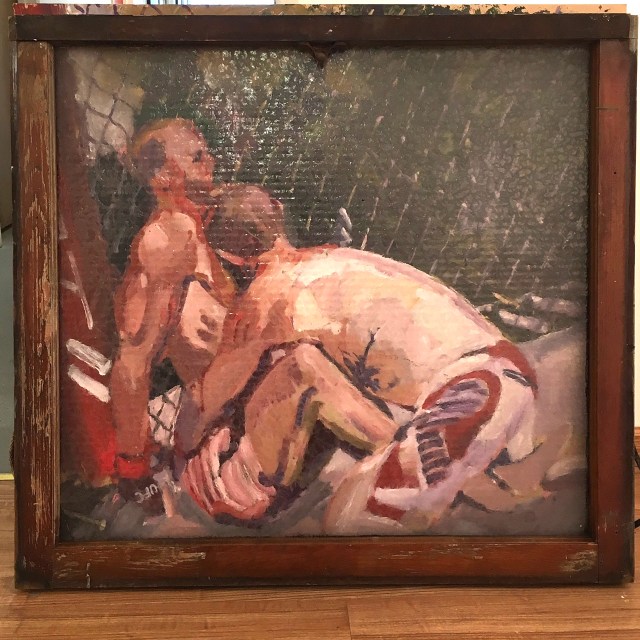
UFCThere are sentimental reasons to keep my house. But there is also the need I feel to embark on a new chapter in life that challenges me in new ways. I have long learned to accept my faults, and have grappled with the benefits of working for myself and having a steady paycheck. I’ve launched into my art again, and have a studio where I pump paint out of my fingers, it seems, in mad expression of all that lurks within. I have a new show coming up this weekend.

And between all that I run, ride and swim. And wrestle with the purpose by which we motivate ourselves to get out, and get moving.

It is a lifelong process if you love it. And I do. And I will. Get moving.

Posted in running, Uncategorized | Tagged , , , | Leave a comment

Really fun ‘trime’ in triathlon

NSwim TransitionEmerging from the swim at the Naperville Sprint Triathlon, I glanced down at my watch chronometer and it still read 0:00. We’d waited so long to begin the swim by setting off in random groups of four that I’d completely forgotten to hit the START button.
Time becomes fluid in the water anyway. The time groups that had been so clear on the shore, with declared swim times of 5:00-6:00-7:00-8:00 all indicated by signs on posts meant nothing at all at some point. Those are merely what swimmers estimate for their expected swim times. In the actual water, none of that makes any sense.

It’s more about avoiding obstacles in the middle of the pack. Those can be other people flailing in the water… or the disconcerted obstacles of your mind trying to calculate whether you are swimming too fast or too slow for your own good.

Then comes that strange bit of triathlon when you emerge from the water and go into “transition.” That’s the strange phase of the race in which you’re not actually doing any of the three events for which triathlon is named, but instead find yourself prancing across a parking lot in bare feet or encased in dangerously slick bike shoes that were not meant for trying to run at all.

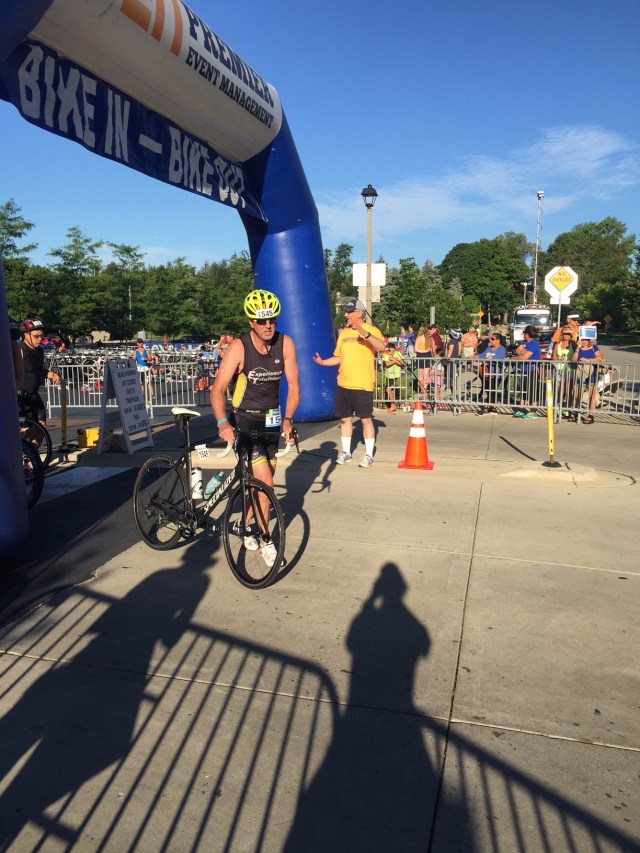
NBike OutThe better triathletes have their shoes mounted on the pedals and ready to go. Barefeet and all, they just climb on and go riding. Those of us not so adept at transition are forced to play games with our own mobility. We flounder, in other words, in a world of ‘trime’ in which normal physical activities are mixed together in a sport salad we call triathlon. It can be quite comical, and at times dangerous. Last year I fell flat on my ass while coming off the bike and trotting through transition to my running shoes. I just laughed. It was funny.

But you’ll notice that I’ve made up a word to explain the rubbery world between actual time and the time spans between swimming, riding and running. The total experience is “trime,” that is, ‘triathlon time.’ This is a world in which all other worlds and their orders of time and expectations of such do not exist. Trime is truly what you make it. Like lovemaking, it requires both an open mind and a fixed purpose.

Indeed, we are both alone and together in this strange little land of rolling starts and  transitions. And we set out on bike courses in which you cannot tell which competitors are truly ahead of you or behind in the race. And then you climax with a run in which putting one foot in front of the other until you finish is the only way to finish. And it feels so good when you do. You can call it pleasure or relief. Whatever you like. It’s trime well spent.

The concept of trime is a strange enough notion at the Sprint distance. It only magnifies, it can be said, the farther you go up in triathlon distance. Surely the segment of trime constituted by the transitions represents a lesser percentage of the entire effort the longer you go, but it is still significant. There are reports of competitors in transition at Ironman races in which observers wonder if certain male competitors will ever actually leave. They loll about naked or half naked as if there were no other place to go in the world. They are lost in trime, one might say.

NTrime Results.jpgTransition trime can be an embarrassment of sorts. It is the necessary evil that hides within your triathlon overall time. Transition is akin to stepping out to take a shit during an important company meeting. You excuse yourself momentarily to sneak out of a deep discussion and squat on the toilet doing this most humble of deeds. Then you wash your hands and ease back into the meeting room as if nothing in the world ever happened. But truly, those few minutes are gone forever. They won’t show on the meeting notes. “Verna stepped out to take a shit,” is not going to contribute anything to the notion of profitability or branding of the company. It’s the same thing with transition. “Christopher Cudworth contemplatively shoved his feet into his bike shoes” does not make for a better overall triathlon time.
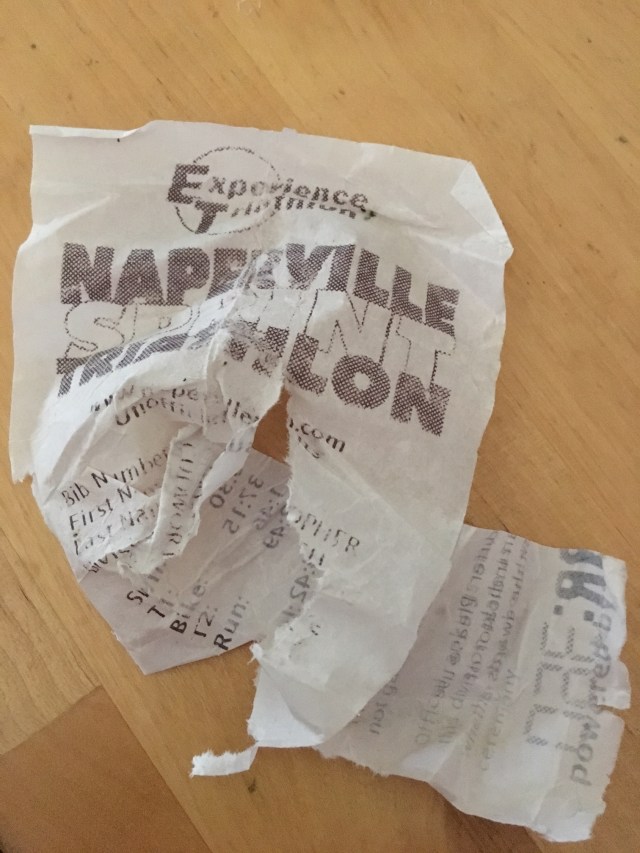
 

NPrintout

Oooop. I put this fragile little printout in the side pocket of my kit. It go soaked.

Your transition trime shows up on that little printout and nine times out of ten you look at those times and go, “Oh shit. I could have been faster in transition.” Yesterday, my transition trime was 3:30 in T1, which involved jogging from the pool to the bike, putting on helmet and sunglasses, shoving socks on feet and feet in shoes, yanking said bike from the lean-to and trotting in cleats 150 meters to the bike out at the far end of the transition zone.


That was trime out of mind. But actually, I was just glad to be there at all.

I’d signed up for the race at the last minute because last weekend I’d been shitting my brains out from what I thought was the raging return of the c-diff I’d contracted from taking powerful antibiotics for cellulitis in my hand. The entire month in fact has been dodgy in terms of training and mental gymnastics as a result of that nasty affliction. I wasn’t sure even three weeks ago I’d be in good enough shape to race come August 7. Every summer it seems I’ve bumped into a stupid infection or affliction. But that’s life.

So I wasn’t beating myself up as I tottered and skipped in short little steps pushing my across the giant black parking lot in bike shoes that made noise like the tip-toes of a Fairy Princess. I only wanted to get to Bike Out. Just keep moving. Trime is passing. It was such a blessing to finally climb on the Venge and start pedaling. I skipped the cycling gloves entirely. Didn’t even put a HeadSweat on. Precious seconds of trime were passing. Who needs them?

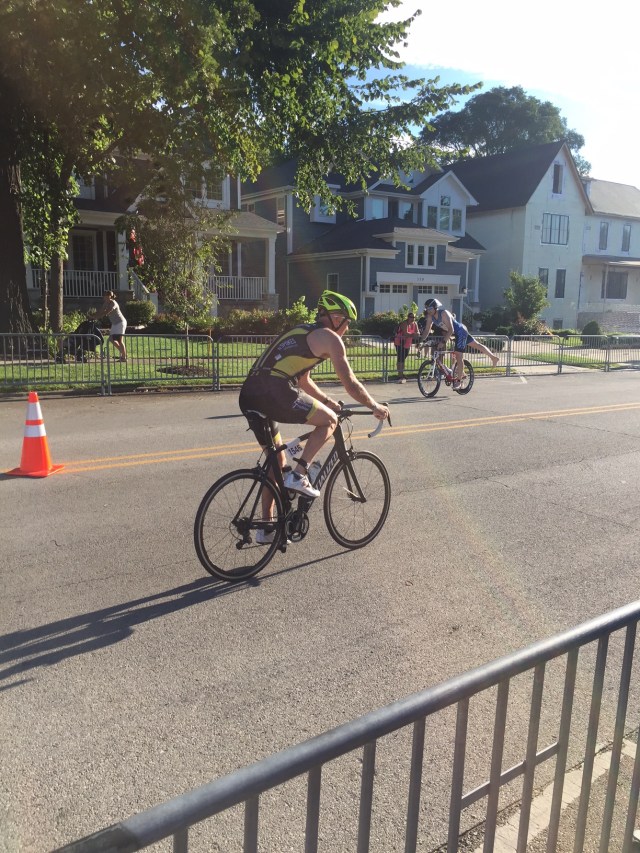
NCyclingLast year my bike split haunted me. I’d been clobbered by several minutes by those in my age group. This year I was determined to cut that gap. And I did, cycling almost two minutes faster than my bike split of 2015. 37:15 for 13 miles. Progress.
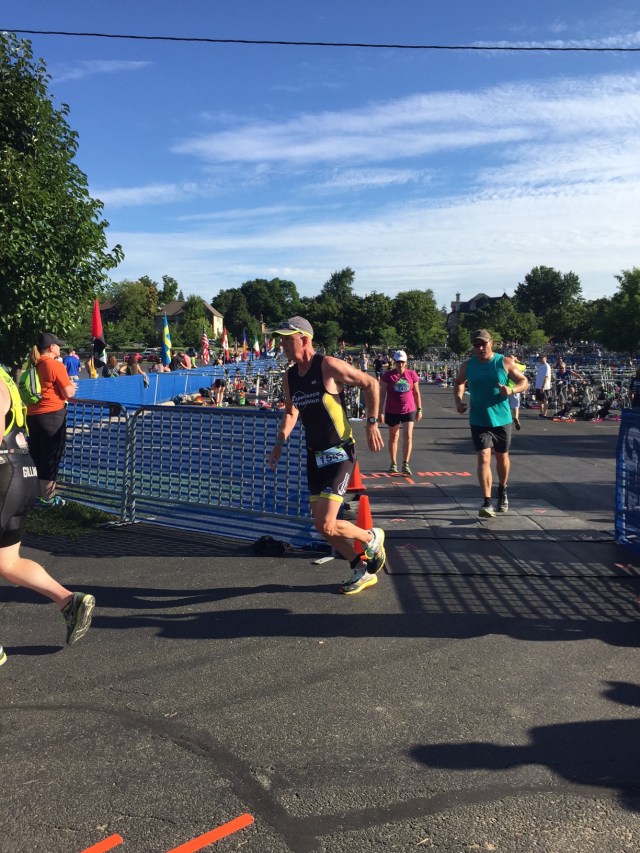
The run was a minute slower, balked by a slight case of side stitchiness that I did not want to flare into a full-blown, clutching my side, bent-over misery. Given the transition from full-blown flu last weekend to racing yesterday, I was grateful to be running just under sub-8:00 in the last two miles. So I kept it sane and ran 23:49 or so for the 5k. I only ran about two miles last week, and that was while conducting some coaching for a friend who just started in triathlon. The rest of the week my gut was compromised from the flu. I did 30 hard miles on the bike on Wednesday, swam Thursday and Friday (not feeling all that good in the water) and rode a smooth spin on Saturday morning for 1.5 miles or riding. Not much of a training week at all. Mostly recovery.

But a funny thing happened while walking my way to the swim start. There stood my family physician who stuck out his hand and said, “How you doing?” We both knew what he meant. The stool test had come out negative on Tuesday for C-Diff, which is important news because that condition can literally kill you if it gets out of control. I’ve been doing the second round of prescribed antibiotics that came about as a result of the depressed call I made last Saturday to the doctor’s office asking the on-call physician what to do. They ordered the meds just in case. But that night still brought twelve hours of raw misery with diarrhea, nausea, cold chills and sweat-soaked sheets. It took several days to recover. Even by Tuesday night my gut still felt like it held a bag of wet pinto beans inside.

NRun Out.jpgSo it was with a combination of relief and acceptance that took 13th place in my age group this year, after a 10th last year. My slower run time was a product of some trime spent just getting healthy again.
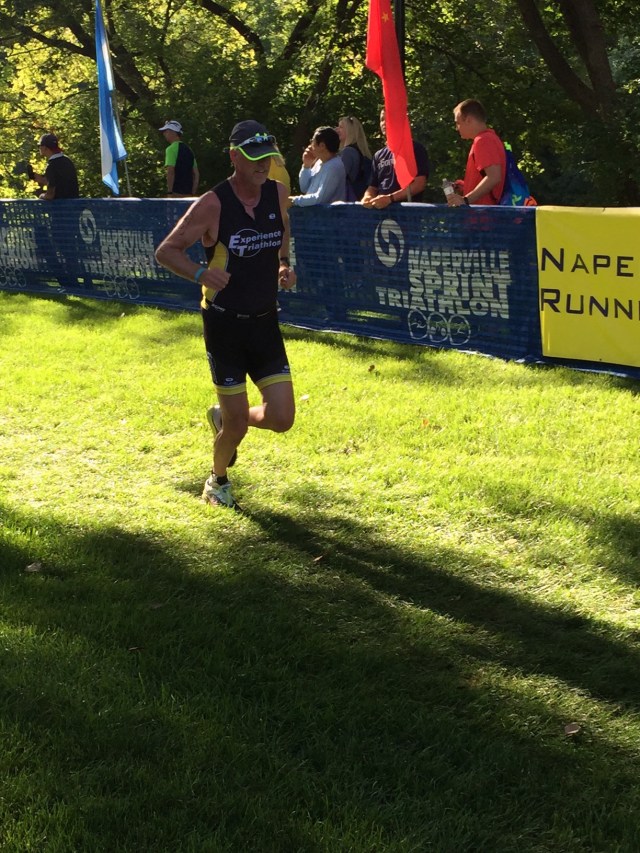
I was 218th out of nearly 2000 total competitors. Not bad for a 59-year-old rookie triathlete coming off the flu. The bike was also a bit of a slalom given the number of people out on the course ahead of me… because I waited to swim with the 8:00 trime group. That’s the Catch-22 of being honest about your swim time. Because you’ll swim faster with better swimmers especially if there are fewer people stopped cold in the water interrupting your own stroke. Which is the case with the slower swimmers. Sometimes it does not pay to be honest about your trime here on earth.

And when you get out of the water, those are all people you will likely have to pass on the bike. I estimate that number to be around 300 total before it was said and done. Lots of cycling crit skills went to work weaving through gaps in the cycling crowd because no one pays attention to the “slower traffic to the right” rule in the waning group of tri competitors. I was down in the drops, alternately hammering a high cadence and a big gear depending on the wind and the road. I rode well.

NRunFinishBut all those trime factors show that a formerly pure distance runner like me must learn to make adjustments. It’s been a rolling process, one might say, learning the triathlon. I’ve raced five times this year, all at the Sprint Distance, and gotten a little hardware in the process. I first got into cycling in 2003 as a sustainable sport, and raced my bike in crits for several years. Now I’m doing triathlon as part of a lifelong balance of activities.  This is all part of a different kind of transition for me. One must learn to suppress some native instincts about how time and races actually work.

In my former life as strictly a runner, the measurement of success was always so empiric. I either won the race and finished ahead of everyone, or did not. Then I got into bike racing, and learned that almost no one can just ride off the front and take the win. If you do, it’s time to move up another racing Category, or else you’re a sandbagger. And that’s the worst type of competitor of all.

Then came triathlons, where the only categories you typically sense are those you choose for yourself. Oh sure, one can sync up with an age grouper at some point and try to race them. But that would typically require an inquiry as to what swim wave they were in, and so on, and so forth. Not worth the wasted breath, if you think about it. Time is not the same as trime.

Perhaps the greatest lesson in triathlon is that the empiric measurement of effort is not what everything is all about. Being part of the heaving masses in our sometimes graceless striving is in fact, an acknowledgment of grace. God does care that much who wins or loses. The glory of the universe may shine in the victors and their fitness, but it also emanates from those that have decided to participate, and even those on the sidelines holding the dog leash in one hand and a child on the other hip. It’s trime well spent in one way or another. It is the recognition of existence. The now. The forever we can grasp.


It’s triathlon trime.

Posted in Uncategorized | Tagged , , , , , , , | Leave a comment

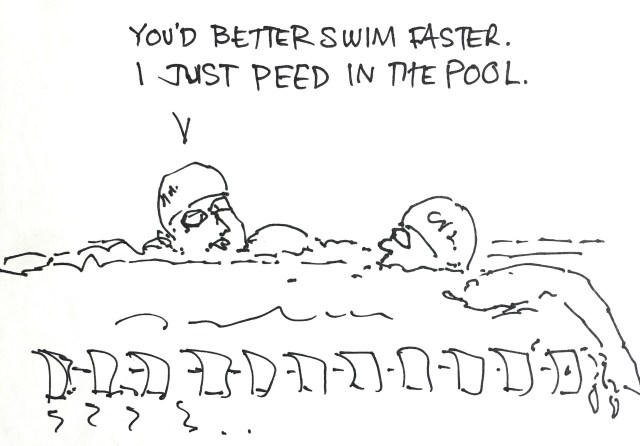
You’d better swim faster…

Let’s have a little fun today. I drew up this quick little cartoon of two swimmers in a public pool. One found a reason to swim a little faster. I’ll add a few more reasons. Perhaps you can join in the fun as well.

Peed in the Pool Yeah.jpg

Or, these good reasons:

“I see fins in the water behind us.”

“There’s a special two-for-one deal on burritos at Chipotle.”

“This part of the pool is downhill I hear.”

“I’m in the middle of a divorce, and I just might need to drown someone.”

“I had sex last night and didn’t take a shower this morning.”

“Your mother-in-law is behind us, I think.”

“We’re crossing under the high dive.”


Okay, now it’s your turn. What are some other good reasons for swimming faster at the public pool?”


Posted in swimming, Uncategorized | Tagged , | 1 Comment

Making waves at the pool

Lifeguard.pngThis summer unlike many summers before, I purchased a pool pass to get in some swim practice. Last year I faked it through the only Sprint Triathlon I did, which required only a 400-meter swim before letting you emerge to the more sane activities of land-based activities.

But this summer I’m still working toward a potential Olympic distance triathlon. That may happen the same weekend as the Wisconsin Ironman, which is held in Madison in September. That same day there is an Olympic distance race in Lake Geneva with a great reputation. Before that, I’m possibly jumping into the Naperville Sprint Triathlon weekend if there are still slots.

I’ve held off because this past weekend I was so sick that no training was possible, and for three days following the poop-and-dry-heave-fest of Saturday night, I felt weak and awful. My fear was that the danger of C-Diff had returned. The symptoms were scarily like those described in all the literature.

But I raced to the doctor and did my stool sample and Thank God, the C-Diff had not returned. However, that meant my illness this past weekend was something else entirely. The flu, perhaps. That might well be possible because earlier that week I’d led a couple sessions of storytelling, illustration and song at the Vacation Bible School program in my church. Perhaps breathing air from those little germlets was enough to make me get the flu. If so, it was worth it. After my teaching session, a sweet little girl came running up to ask me if I could paint a picture for her parents. It was their anniversary, she said. Could I paint a picture of them standing on the beach while kissing? And I told her yes. And there would be no charge. This is how it came out.

Beach painting.jpg

Whatever it was, I rode through it like a chump. But yesterday I went out with Sue for a 30+ mile ride and we averaged just over 19 for the distance, and perhaps 20 if my Strava had not quit in the middle, but was feeling good.

So I felt it safe and wise to return to the pool for a swim practice. It’s been a week though and that means breaking yourself in all over again. The first 400 went great. The water was 78 degrees. The sun was hot. The kids were not jamming the lane and it all went smooth.

Then the rest horn sounded. So I lay in the sun on my newly purchased beach towel. A few tan moms lay on lawn chairs nearby. The regular crowd of half self-conscious 8th-grade girls was strolling around, and the lifeguards perched on their chairs like human cormorants drying in the shade.

Their job is to save people in the event of an emergency. A posted sign near the front gate says so. “Watch your children,” it advises.

I still feel like a kid when I am in the water at the pool. Sometimes while swimming laps, I admittedly recall that gasping feeling when first challenged to swim the length of the entire pool. But I also recall endless summer days in which I went off the high and low board dozens of times over the course of the day. Little did I know that was so good for my brain. All that exercise. You don’t have time to be anxious or worry about the world when you’re swimming and diving and making waves in the pool.

Still, I recall looking down at my white, wrinkled fingers to notice a wildly pale hangnail and biting it off like a chunk of whale blubber. And when I got home, the white skin around my genitals and my white little ass had a strange effect on my being. There is a patent sexuality to the pool of course. We strip ourselves nearly bare most of the while. But these days middle and senior-aged men wear long shorts if they don’t want to creep out the crowds at the pool. The moms don’t have to hide anything. Their stretch marks are worn like battle wounds. Their breasts go where they want. Their daughters stand above them in their youthful perfection and you can feel the generations rolling over like ripples in the Gulf of Mexico. Little by little, we all get to the shore of old age. It comes in waves and if you’re unlucky, in a tsunami of illness or injury. We hold it off by trying to swim faster than the currents of life. That can work wonders. That’s why we do it.

As for covering up when you’re an older guy at the pool, that’s a fair concession. You don’t want to make the wrong kind of waves. Be invisible if you can. Keep your eyes on the water and sand. Tuck your phone in your pocket and don’t start long conversations with anyone unless you’re reclined in a lawn chair, harmless as a pale penguin. Then you can jabber away like a sun-soaked fool. Change quick in the locker room and head home. It’s all part of the gig.

Beach sink.jpg

It’s all fair. Society has its norms and its rules. Of course, those of us in triathlon sometimes flaunt them when we show up in our wetsuits. Then we change from penguins to Orca whales or something similar. We course through the lap lanes with the lifeguards above watching us with the curiosity of an ocean gull pondering a passing porpoise.

But probably not. Lifeguards learn what types of swimmers they can aptly ignore. It’s the variances to which they must pay attention. The guards hold those red banana floats in their laps just in case they are called to yank some kid out of the water. The kids making the wrong kind of waves, perhaps, or an old fart having a heart attack. Yet I’m joined in my lap swimming at one point by a gaggle of three boys who thrash and pull their way all fifty yards down the lap lane. They swim at roughly the same pace as me, only frantically. One pulls up 25 meters down, just in front the lifeguard. When I reach the end with his two friends, who with their thrashing and wavemaking gave me great practice for the chaos at the start of a triathlon open, I turn around to see the little red head of the kid who quit back their bobbing in the water. “Jeffrey quit!” his friend says in amazement.

It’s not that uncommon, son. We all do it eventually.

The guard watches the boy carefully, making sure he’s not so tuckered that he can’t make it to some sort of safety, even the lane rope will do. But imagine the dread the guard must feel at the thought of touching some pale old fart that pulls up gasping for air. Who wants to do mouth to mouth with that? Being around old people is icky if you’re not used to hanging out with your grandma or grandpa. All that crepey skin, and folds where smooth skin should be. The waves of life come lapping over you.

Sunrise

We all make waves at the pool, in one way or another. But sometimes I run or ride past the pool at twilight, when the air has settled down, the sun is setting and the pool is closed. The water of the pool is glassy smooth then, and reflects the tall trees standing above the surface. One feels a temptation to climb over the fence and go skinny-dipping. That’s the way we’re all supposed to swim. Most of us do it sometime in life. Night swimming.

But skinny-dipping or even showing too much skin if you’re above a certain age is still frowned upon here in America where the swimsuits we wear play a coy game of hide and seek with our genitals. It’s neurotic as hell, and Europeans have grown up and moved on. But here in America, land of exceptionalism, we’re still afraid to acknowledge that women really do have tits and so on.

Some would seek change things back to a more conservative period. Take us back in time when women covered themselves completely.

And interestingly, as I walked along the north fence of the pool there was a young couple sharing something on their smartphone together. She wore a covering on her head. He stood freely in nothing but his knee-length black shorts and wonderfully rich dark skin. They were happy together, clearly. There was no seeming loss in her choice to cover her head. Perhaps she would even swim in a covering later. That’s all fine and good. This world is not about making everyone do the same thing, or the same way.

How ironic it is, however, that the traditions followed by people of the Muslim faith are considerably more modest than mainstream America. Yet certain segments of society consider that the radical choice. We’ve all heard the cries of social conservatives whining that we’ve become far too loose with sexual images and even more immoral in our choice of swimwear, yoga pants and brassieres peeking out the shoulders of teenage girls in the high school classroom.

Beach stuffYet here we have the Muslim culture expressing their normal, everyday values in secure, respectful and conservative ways. In fact, there are millions of people who abide by the faith of Islam in the United States. They are peace-loving, normal people who contribute greatly to our society. These kids at the swimming pool were not terrorists. That handsome young man posed absolutely no threat to anyone. And her kind face and smiling eyes beneath her head covering were joyous, youthful and eager about life. They were just kids with their feet in the sand at the pool. Real Americans.

Yet there are some people who seem to want to make waves about that. They make the ignoble claim that all Muslims are hateful people. They would prefer to send those kids away from the pool simply because the sight of them makes ignorant people feel afraid.

And if some of these prejudiced zealots had their way, they would have all Muslims sent across the pond to live somewhere else.

Those are the people making evil waves in the culture of America. They view of our Constitution as their swimming pool where no one else is allowed. They’re all too happy to wallow and bellow in the cesspool of their own prejudice, spewing hateful, ignorant words that drown out the voices of rationality, tolerance, and community.

But let’s be honest. Those bigots are the ignorant people with their heads in the sand. And they had better not hope the tide of rationality washes over them. For they will drown.


Posted in Christopher Cudworth, evangelical Christianity, healthy aging, healthy senior, religious liberty, triathlon | Tagged , , , , , , , , , | Leave a comment

Confessions of a f*ck up, and how to keep laughing about it

One of the main images didn’t stick. Please read this version.

Christopher Cudworth's avatarWe Run and Ride

I love it when I f*ck up. Find it amusing. My kids love it too. They roll their texting eyes and go, “OMG dad.”

This morning in conversation with my fiance Sue, I was discussing a fun coaching session I conducted with a friend named Oliver. He’s got some talent for running and already has his swimming chops down. So I was downloading the experience of working with him and tried to relate his swim times. This is how it went.

Text

It’s quite easy to misquote times in an innocent conversation. You just admit it and move on. I rather love finding out I’ve messed up badly. Some of life’s funniest circumstances come out of honest mistakes. While blogging about my personal history years ago I misquoted the date my son was born. It made it appear that he was a love child. My two kids conducted a side conversation…

View original post 1,537 more words

Posted in Uncategorized | Leave a comment

Confessions of a f*ck up, and how to keep laughing about it

I love it when I f*ck up. Find it amusing. My kids love it too. They roll their texting eyes and go, “OMG dad.”

This morning in conversation with my fiance Sue, I was discussing a fun coaching session I conducted with a friend named Oliver. He’s got some talent for running and already has his swimming chops down. So I was downloading the experience of working with him and tried to relate his swim times. This is how it went.

Text

It’s quite easy to misquote times in an innocent conversation. You just admit it and move on. I rather love finding out I’ve messed up badly. Some of life’s funniest circumstances come out of honest mistakes. While blogging about my personal history years ago I misquoted the date my son was born. It made it appear that he was a love child. My two kids conducted a side conversation, aghast and amazed at what might be true.

Then they called me: “Hey dad, were those dates correct in that blog?”

And they weren’t. And I was chagrined. And it was hilarious.

I’ve written more than 10000 articles online. Yes, that could be called neurotic. But I’ve also published a couple books, and material from those blogs make up those books. That’s still happening to this day.

This blog alone is written 5 days a week all year. That adds up to 260 blogs per year, and it’s been going for three years. That’s more than 1000 articles right there. I do it for love, yet it has also helped to get me paid work. So it’s worth it to me.

Occasionally I get detractors about things I write. I’ve gotten some facts wrong, or cited weak sources. It happens. But largely, and for every word I write, there has been strong consideration over what’s being said. My liberalism and writing about political, environmental and business topics goes all the way back to before Reagan. I wrote a column called Straight Nature in the local newspaper in 1980. In the 90s I produced my own page in the newspaper called Environs.

Even while working in advertising and marketing, I published articles in newspapers and magazines, and had a pen name to write for a local publication that our newspaper Publisher considered a competitor. So I’ve done this through risk and reward

I’ve also done some straight news reporting on track and field, basketball and one rare chance to cover a football game. To be authentic, I called a coaching friend and got down on the sidelines to get a real feel for the action.

All of this was unconventional in many respects. Because while I essentially got a minor in English in college, I was not a J school graduate. Sometimes that shows. I f*ck things up. I don’t know Chicago Style the way I should. I still type two spaces instead of one after a period. I think. Maybe not any more. I guess not. But my love of writing, and trying to convey original thoughts, as the title of this blog suggests, is something I deeply care about.

Which is why I get a bit aggressive with people who attack my writing based on shallow or dogmatic premises. Or who throw worn out cliches at a topic, and spout hole-riddled ideology and anachronistic theology.

Because here’s the paradigm. One cannot arrive at original conclusions lightly. These may run counter to traditional opinion or conventional wisdom. Some people just can’t conceive why that’s valid. To question. To challenge. To push the subject. But to me, that’s the same thing as running a race. Let’s see who can get to the finish line of truth first.

I once started a race and found a competitor next to me who asked, “What pace are you running today?” I looked straight ahead and replied, “Faster than you.” And I took off and won by more than a minute clocking 24:49 for 5 miles. Touche.

To me it’s the same thing with competition over thought. And for forty years I’ve listened to staid conservatives complain about the pace of progressive change and I’ve replied, “Try to keep up.” Because all the great changes in American culture have been accomplished by liberal and progressive thinking. No regressive thinker has advanced the cause of science, for example, or medicine. As a result, the real f*ck ups in this world are those who refuse to try, claim it can’t be done, deny the evidence, refuse the right to research, and blame others for the problems they create by being such massive dolts. Jesus lambasted his disciples for being such dullards in being unable to appreciate the meaning of his parable, which were metaphorical, he reminded them, so that everyday, common people could understand the link between earthly foundations and spiritual realities. Duh. But his supposed disciples still didn’t get it. He cowed them. “Are you still so dull?”

In other words, “Try to keep up, if you can.” Remember Doubting Thomas?

I’ve started coaching runners and will become certified in a couple weeks because I believe in helping others. It’s a liberating feeling to share what you’ve learned and see progress in those willing to listen. It’s a direct and gratifying pleasure to share your experience in ways that can clearly help people improve their running.

My fiance is a swim coach and is getting certified to coach triathlon as well. She’s an excellent coach. She has aptitudes for seeing the mechanical deficiencies in swim strokes and excels at correcting them. Now she’s also taking the experience she’s earned in seven years of successful triathlon competition to become a certified USAT coach. That same weekend she’ll be taking the course and competing in triathlon nationals, I’ll be in Ann Arbor getting my coaching certificate for running. We hate to be apart for all that, but that’s progress for you.

I don’t see my writing as anything different from coaching. Way back in 1998 or so I was recognized by my high school as a Distinguished Alumni for my work as a Writer, Environmentalist and Artist. That was nearly 20 years ago. A plaque hangs on the high school wall with my picture on it. I laughed to myself upon receiving it, thinking of the Groucho Marx quip, “I don’t want to be a member of any club that would have me as a member…” And so, rather than viewing it as an an honor, I’ve always taken that award as a challenge. In some ways, I’ve succeeded at that challenge. In other ways, I’ve failed. But I’ve always tried to fail forward, as they say. I’ve taken risks. Invested in training that makes me relevant in a progressive society built around data, content marketing and social media. That is my progressive side.

My conservative side centers around paths to success that have not changed. For example, the same training principles that held true when I was running my best times back in the 80s as a young man still hold true today. It is still true that a combination of long distance running, mid tempo fartlek and track workout intensity builds fast, strong runners. Add in some weight and cross training, for sure. But the conventional wisdom in all this is that there are supposedly no shortcuts.

Except the things one learns about high-volume training is that it is not always the answer. Not for everyone. Progressive thinkers in running now recognize that intelligent use of speed and intensity can replace junk miles. And you’ll get better results, feel better and maybe even look better.

Granted, today’s world records may be a bit faster at the super-elite level, but we still don’t know how many of those athletes are taking drugs or not. And we also expect progress over time.

Legat

But the empiric data holds true. This year’s Olympic Trials 5000 meter race was won in a rather slow 13:35 time. It was Bernard Legat who won it, but if I’d been in the race at my peak, I could have held on through 4000 meters perhaps. I would have been 1:05 at the finish, which is a full lap. So I’ll admit that I was never world class, but I was close enough to learn a few things about what it takes to get there.

Like all athletes, I f*cked up a few things during my training and racing along the way. Overtrained. Undertrained. Raced too often. Went out too fast. Or too slow. But I got it right in a lot of ways along the way. I still consider it a great gift to have had the ability and honor to win a number of races over the years. It’s quite a feeling, coming across the line in first place. Except that time my jock broke in a high school race and I had to hold my shorts tight to my thighs so my dick would not flop out. That was a hilarious f*ck up on my part. The moral of that story is to never wear a jock being held together by one string. But who even wears those old-style jocks any more? They’re part of an anachronistic past, like an Old Testament relic we don’t need to abide. A conservative ghost, you might say. And irrelevant, for the most part, to modern conversation. So we grow with the times.

I see this world of writing and political thought and social memes much as I do the training I still do for triathlons and running races. It’s a constant learning experience in which progress is key. You either build from what you’ve learned and adapt to what time and life gives you, or you regress to something in the past. It’s important to change with the times, but also to make them happen.

But it’s not a straight-line journey, which makes it all the more forgiveable when you royally f*ck up. You must learn to laugh about it, and keep moving. Over tarsnakes and rough roads, choppy waters and deep dishes of tempting ice cream, one must keep on keeping on. And never stop laughing at yourself.

Posted in 10K, 13.1, 400 meter intervals, 400 workouts, aging, Christopher Cudworth, competition, PEAK EXPERIENCES, race pace, racing peak, Tarsnakes, Uncategorized | Tagged , , , | 1 Comment