
By Christopher Cudworth
Go slow. In fact, go slow for much of your training.
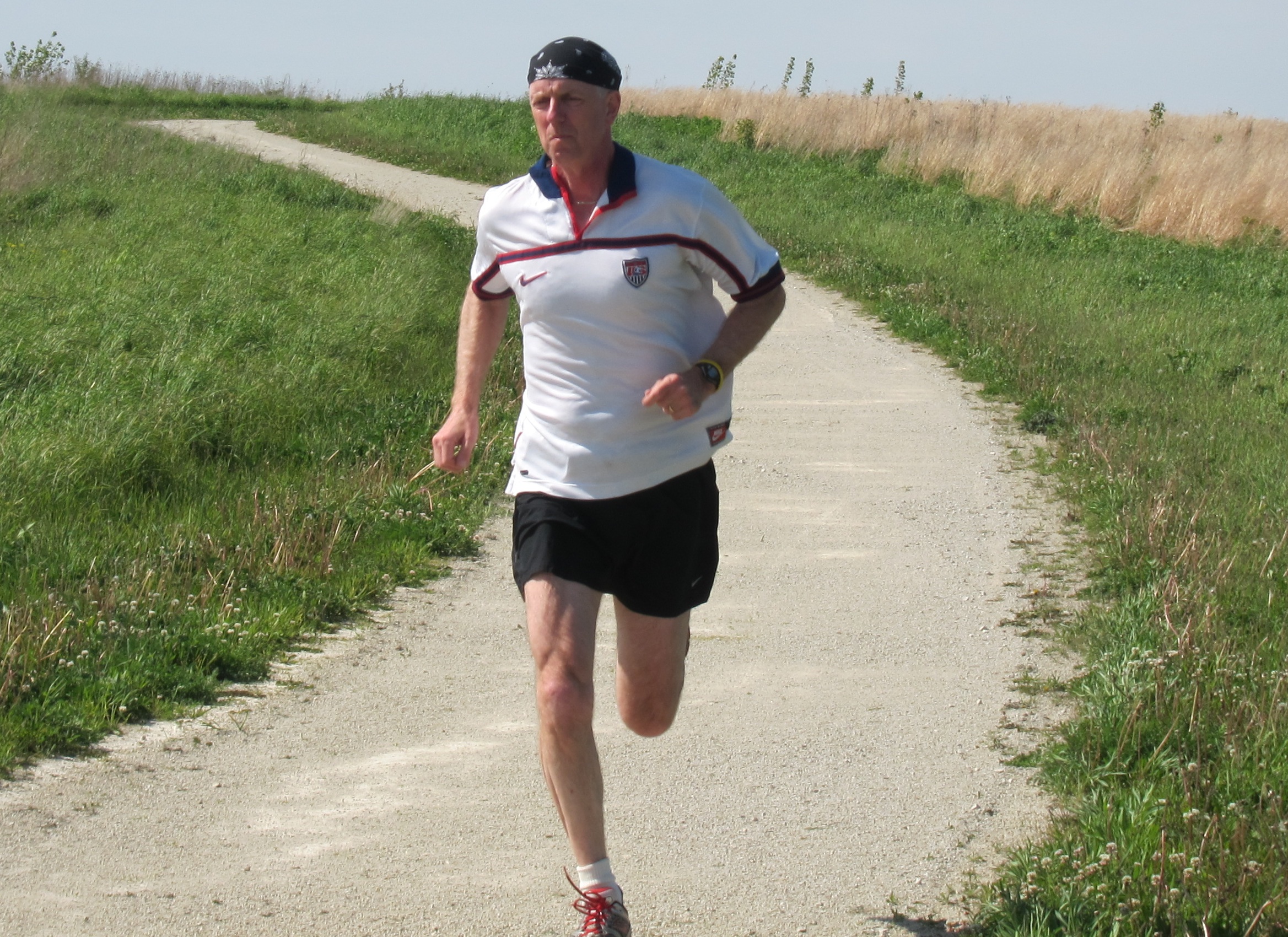
Having the courage to go slow will give you the base, someday, to go fast.
Whether you run or ride, using slower runs and training rides is key to building baseline fitness. If you don’t go slow, but only go medium or fast all the time, your body will not build up the oxygen carrying capacity for the long haul. It’s that simple.
Warm up to slow pace
Here’s a simple analogy to help you understand why it is as important to go slow for significant portions of your training as it is to go fast.
When you head out for your daily run or ride, is it possible to head out the door running 6:00 pace? Not likely. Not if you haven’t done a whole routine of warmup and stretching before you go. Sensible people conduct a “warmup” session, and many athletes spend considerable time “warming up” with runs as long as 3 miles before they do anything hard.
And cyclists learn quickly that if you jump on your bike and begin tearing along at 25mph before warming up, you are more susceptible to “blowing up.” In fact, it’s almost guaranteed. Go race a criterium some day without doing any warmup. If you’re lucky the race will start slow and you’ll be able to ease into the pace of the day. But if you’re unlucky, and the race takes off with an early surge, your muscles will be begging for mercy at the pace, and despite the fact that you are fit and ready to go in other ways, you will get dropped.
Cutting off the oxygen
Going slow in training is essentially the same principle as warming up for a race or a hard run or ride. You are effectively “warming up” for the harder training or racing you need to do to get faster. But if you don’t do the slower stuff, your body does not oxygenize well and you are left with a weird kind of physical state that is transient, quick-burning and fatal to your objectives. It is literally true that your too-quickly taxed muscles can cut off oxygen that helps you sustain endurance.
Lessons in pace
While training with a group of very talented runners (most in the 29:30 range for 10k) near Philadelphia, it was clearly communicated at the start of long runs that the pace would be very gentle for 17 miles out of 20. The last 3 miles were run at 5:00 pace. That was their tool for learning how to run fast when fatigued. Yet the baseline training at 7:30-8:00 pace is what built that fatigue, and that was creeping along for those guys, I can assure you.
If you are a marathoner or half marathoner, you are insane not to incorporate some solid slow runs into your plan. There have been crazy exceptions at times to the rules of LSD training. Runners that do nothing but speed, and compete in marathons and half marathons up on their mid foot. But even the great African runners who float along for miles that way do not train at race pace all the time. They build base miles together, running smooth, even tempo to “warm up” for their hard training during the week.
Communicate your plans
In cycling it is much, much harder for some reason to get many riders to communicate such a plan. Most people show up for group rides, it seems, with little or no plan in mind. Those that do are often ridiculed or ostracized. Made fun of, really. “Oh, your coach runs your life, does he?” I’ve heard it said.
Yet when a world class cyclist showed up at our group ride by invitation, he rode 30 miles with the group at a mid-20s pace and finally asked, “Is this what you do all the time?”
The honest answer would have been “Yes. This is what we do all the time. We take each other out and beat the shit out of each other. Then we limp home the last 4 miles clinging to our bikes like frogs half dead from electroshock. Then we pat each other on the back and say, “Good ride.”
Because that’s what most group rides do.
Notable exceptions

Group rides are important base-building opportunities
The exception was a group ride that was organized 7-8 years back when I was first riding a real road bike. A group of 15-25 riders was led through a steady-state group ride by the owner of a bike shop and director of a racing team. The ride averaged 20 mph, which is a pace that constitutes and easy effort when you are in a group that size. If you wanted to do more work, you moved to the front and handled the pulls, especially in the wind. Then, toward the end of the ride with 3-4 miles to go, a group of riders would pull ahead and if you wanted to get in some faster finishing pace you could do so. Otherwise you stuck with the group and finished 35-40 miles with a 20mph average. And lived to see another day.
A well-built base
That baseline training prepared this humble rider for some of his best racing in the early phases of learning how to be a cyclist. Sadly, the group ride broke up when the Wednesday night ride was supplanted by Wednesday night crits. Those have great value as well. Learning to race in criteriums does take practice, and you absolutely must ride fast in order to learn to ride really fast. But the sacrifice of the Wednesday group ride for the Wednesday crits was an uneven tradeoff, in many ways. Performing a steady state 40 mile ride on your own with a 20mph average (or slower, of course) is not nearly as fun or constructive on your own.
Training too fast all the time is a tarsnake of sorts. You may enjoy some fast times and burn the legs off everyone in the group ride, but that hard training may not actually translate into fast racing. It’s like you’re erasing the gear you need to go really fast because you’re up against your threshold all the time, which gives you the impression of going “all out,” but you’re really not. In other words, you are deceiving yourself by going sorta fast all the time while the true 30mph racing pace eludes you on the bike, and your speedwork on the track suffers because you can’t muster the mental or physical energy to truly go all out.
There are life lessons for us in these training choices. In business we also need to map out a plan for success, and going too fast at the start can cause us to miss seeing opportunities for collaboration or other ways to build on the core of an idea. So the transfer of skills and courage to “go slow” has value not just in athletics, but in the real world of corporate and business success.
Trusting yourself to go slow
In all things, there is a certain amount of work you must do on your own if you plan to succeed.
For example, in running you must do long, slow runs on your own even if you don’t have a group to train with. That’s because you need the “warmup” phase to build toward harder efforts that long, slow runs and rides provide. Cut out that part of your training and you will probably “blow up” somewhere along the way.
Have the courage to go slow, in other words. You might get dropped on the Saturday group ride sometimes, or get left in the dust by the one-steppers at the weekly training run. But if your goal is to live to run and ride another day, you must resist the temptation to go fast all the time. Save your fast tempo runs and rides for quality days. Because if you’re too tired and washed out to do real quality speedwork, your muscles will not get the fast turnover they need to truly go faster on the day you choose.
Have courage. Go slow for some of your training. It’s the key to success.



 We Run and Ride
This is so hard, but I am glad I have started forcing myself to take it easy.