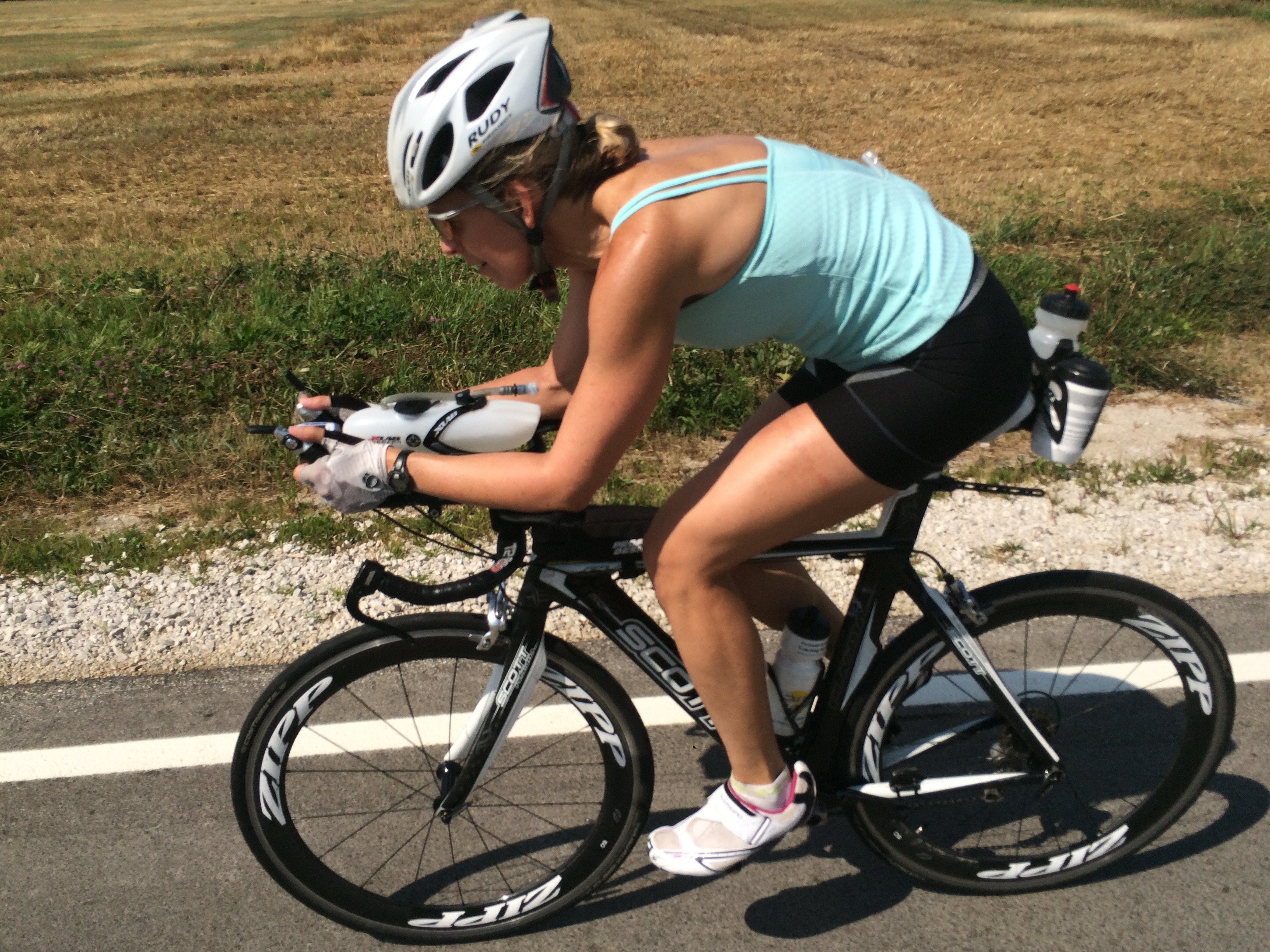
The cause and effect of our own circumstance

Yesterday afternoon while cleaning out the bird feed bins I looked around for the container of black oil sunflower seed that has supplied the cardinals and other birds with food all winter. It started with a 60 lb. bag from which I’d shovel a big servings every day for distribution at the foot of the feeding station.

Now the seed stock is down to a few pounds so I poured it all into a plastic bin and stored it at the back of the house. The squirrels found their way into the bin and so did an opossum.

Likely a large male opossum. Females are slightly smaller.

Two nights ago the opossum apparently climbed into the bin to gorge itself on the sweet smorgasbord of plant protein. Unfortunately the bin must have tipped and dumped the opossum into our five-foot-deep window well. There is slept the day away despite its circumstance. The lifespan of most opossums is not much longer than four years, if they’re lucky. Many die as road kill or are attacked by owls or other predators. Some just starve or freeze to death.

I find wildlife encounters fascinating. So last night I brought everyone out to see the opossum. The fur is beautiful, and yet one of our children remarked, “It looks like old man hair.” It certainly did. All silver at the base with untamed strands poking up like the head of Bernie Sanders.

I thought about the origins of that opossum. Here’s a description of their lifestyle and biology:

Opossums are cat-sized mammals with a pointed snout, grayish fur, small ears, and a long, scaly tail. It can use its tail to hang from tree branches, and it has paws with opposable “thumbs.” Males are usually larger and heavier than females. The opossum is active only at night, and is a solitary animal. They have an eclectic diet and will eat both plants and animals, including rodents, young rabbits, birds, insects, crustaceans, frogs, fruits and berries, and vegetables.

Tick eaters

I find facts like these fascinating. Opossums are also appreciated for their habit of gobbling up ticks, the most horrid creature on the face of this earth as far as I’m concerned. What is there to love about a blood-sucking critter that in some species can transmit Lyme disease to humans?

I was bitten by a tiny deer tick fifteen years ago and got the radar rash. That sent me straight to the doctor for medication. Thankfully I did not contract Lyme.

Regular old ticks are just as unnerving as those that spread Lyme and finding a tick on your body is always a disturbing moment. I’ve been running in our local grassland forest preserve and come home with four or five ticks in my socks. But far worse than that, I’ve found them crawling up my neck a half day later. Ticks are sneaky bastards, so I’m glad that opossums eat them. I hope they spit out their little tick souls in the process.

So I say “Welcome to my house, opossum.” There is a faint trail across my side yard where the critter traipses to our home during his nightly visits to our bird feeder. But the true trail of that opossum to our home goes back much farther than that. Opossums have come a long way through history to haunt our yards.

Sometimes the best survival strategy is just to sleep it off until circumstances change.

The website Sciencedaily.com offers fascinating information on the life history and evolution of marsupials such as opossums: “Marsupials migrated between North and South America until the two continents separated after the end of the Cretaceous period. Marsupials in South America diversified and also migrated into Antarctica and Australia, which were still connected at that time, Bloch said.”

“North American marsupials went extinct during the early Miocene, about 20 million years ago. But after the Isthmus of Panama emerged to reconnect North and South America 3 million years ago, two marsupials made it back to North America: the Virginia opossum (Didelphis virginiana), a common resident in the Southeast today, and the southern opossum (Didelphis marsupialis), which lives as far north as Mexico.”

Origins

The reason this information is so important to our existence as human beings is that it reveals the miracle of nature on its own terms. The long history of the planet earth and its paths of evolution are evidence of cause and effect. These dynamics undergird the rational foundations of all reality.

As human beings, we rely on cause and effect in our everyday lives. One common example is that cause and effect drives the training of athletes. It provides a foundation for the prediction of performance. When we say we’re “in shape” it means we have used the cause (training) to achieve the desired effect (racing and performance) around which achievements are based. We don’t just wish our way to success in any endeavor. Cause and effect gets us there.

Survival of the fittest
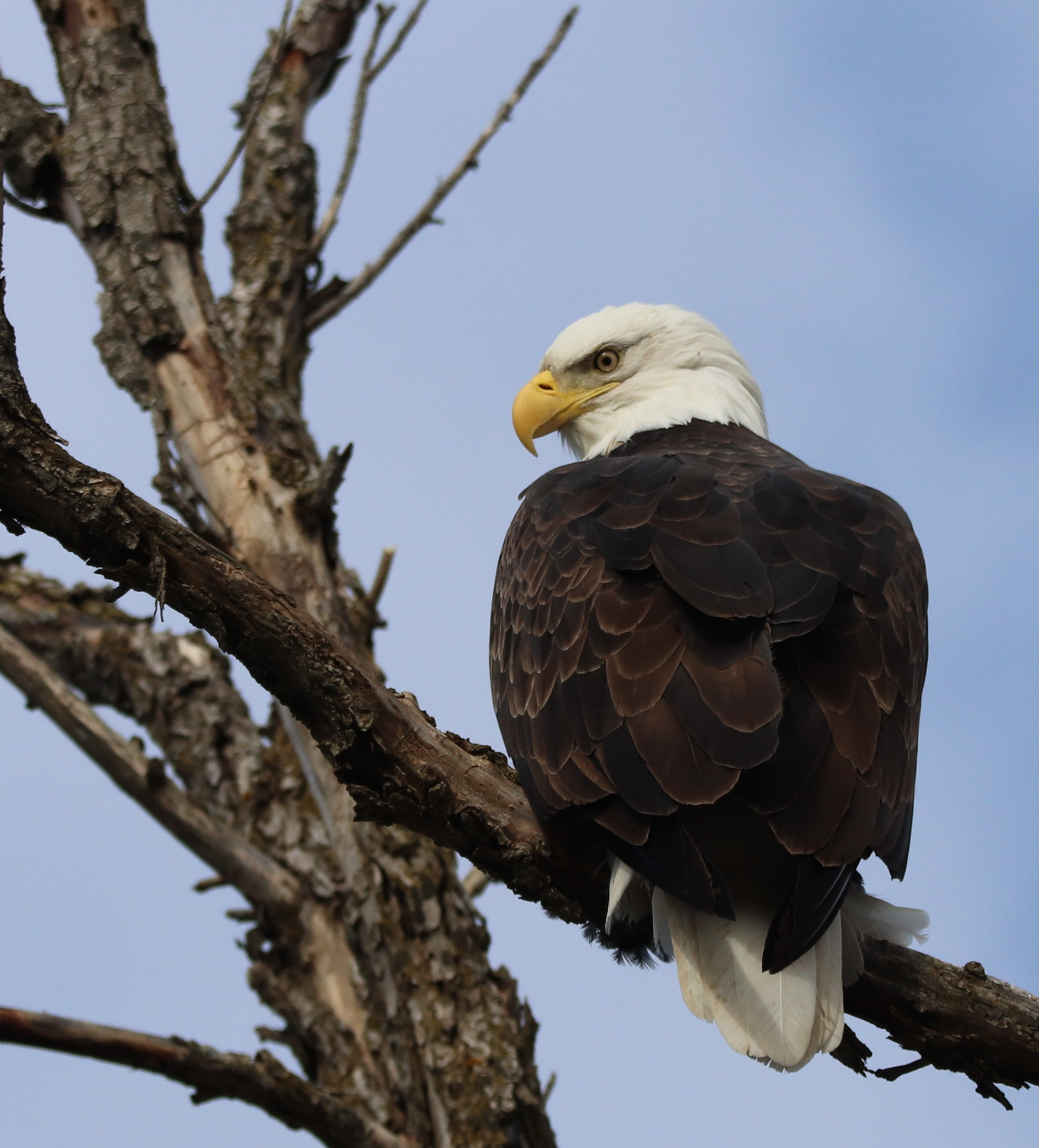
The colloquial term “survival of the fittest” that is traditionally associated with the theory of evolution is essentially a broad-based description of cause and effect. The opossum in my window well is the product of millions of years of cause and effect at a local, regional and global scale. From the continents shifting across the face of the planet to seas rising and falling as a result of those movements, creatures such as the opossum have been crawling through time to arrive at our doorsteps.

Human beings are not immune from the forces that shape and change our planet. Yet some people try to deny that fact on basis that we’re “specially created.” This claim rises from a literal interpretation of scripture found in the Book of Genesis, a document originally based on oral tradition that was written down more than three thousand years ago.

Noah and the Flood

That worldview includes the clearly mythical tale of Noah’s Ark, in which all the living things on earth save a few specimens are wiped out during a great flood.

The story of Noah and the ark is clearly is not literal in nature. There are far too many missing facts and enormous improbabilities for the myth to hold up as a scientific theory. Consider the opossum in our window well. Did the ancestors of that creature (was it a pair, or seven?) somehow swim across the salty stretches of Atlantic Ocean, cross deserts and mountains to board the ark and then swim back over the ocean again to settle in North America? No, they did not.

The flood narrative does serve as a paralyzingly cataclysmic morality tale. In its brutal finality, it demonstrates the inescapable truth of cause and effect. It warns the human race that arrogance and selfishness can lead to destruction at the hands of nature.

Literally stupid

Despite the obviously allegorical purpose the flood narrative, biblical creationists are eager to defend a literal interpretation because it feeds into the notion that human beings are the saviors of the world, with Jesus at the top. This is cause and effect as described by religion. It likely has roots in a flood of immense proportions but the inherently limited knowledge of the world at the time of its recording precludes any claims that the flood was indeed a worldwide event. So the literal interpretation of that narrative is literally stupid. The choice to embrace a brand stubborn literalism is evidence of willing ignorance.

Instead we need to recognize that human beings are lucky to have evolved in the form they did. We have enough intelligence to calculate our own survival prospects, but not if we deny the material evidence that undergirds that existence. Depending on anachronism to describe the origins of the universe is not intelligent. It is selfish and dangerous.

Setting nature free

The wisdom of setting nature free is why we stuck a ladder down the window well to let the opossum creep out on its own. No need to call Animal Control or trap the animal and send it off to isolation or likely death in unfamiliar habitat. For the most part, the opossum has minded its own business along with the many creatures we watch our the windows of our house. Wood ducks. Canada geese. Numerous songbirds. And come spring, eruptions of migrating frogs. All have their rhythms. All living within the boundaries of cause and effect.

Nature knows what it’s doing far better than the impositions of human judgment and arrogance. Unfortunately, millions of species of animals are at risk of extinction due to human interference with the environment. That’s a cause and effect that should be unsettling to us all. Yet some people are too arrogant or religiously stubborn to comprehend the cause and effect of our own impact on this world. Perhaps those folks need to spend a night in a window well to help them realize life really is a product of cause and effect.
Posted in race pace, racing peak, running, triathlete, triathlon, triathlons, we run and ride | Tagged , , , | Leave a comment

Confessions of a diehard rule-breaker

I hopped onto the website for The Rules of cycling as described by a less-than-merry bunch of riders who go by the scribe Velominati. There is plenty of good and wise advice on the site for anyone seeking to slot into the world of cycling without being considered a douche, a Fred or a hopeless hipster.

Yet there’s always room for breaking The Rules as mapped out by any sort of religious authority. And if you don’t think cycling is a religion, then you don’t know any real cyclists.

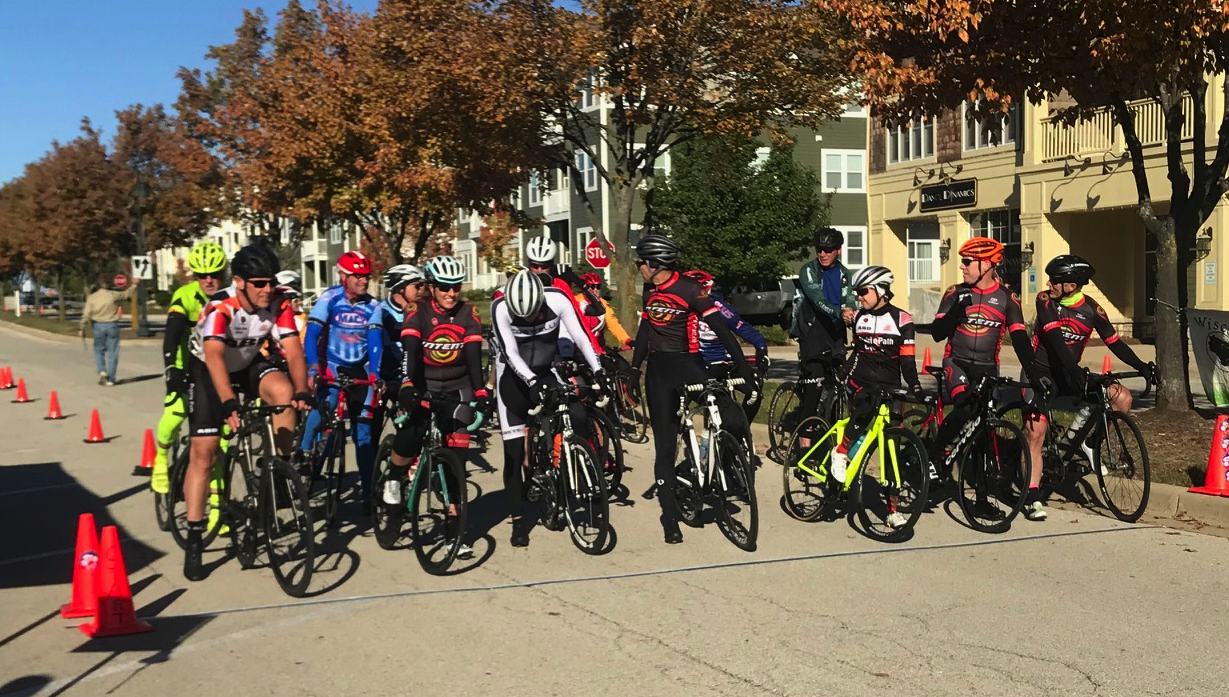
Is is the start of a race or the beginning of a moving prayer?

I know quite a few, and the best riders I know do indeed adhere to some version of The Rules because they’ve been 1) cycling a long time and 2) simply know better than to wear a road riding bike helmet with the visor still installed.

I made that mistake the first time I showed up for a ride with real cyclists. I also still had the reflectors on my wheels. But I’d just purchased the Felt 4C road bike and new helmet and Specialized cycling shoes, so I was an admitted rookie.

That day I hung on for dear life and came home tired and gratified to be initiated. Then I removed the reflectors from my wheels and took the visor off my helmet and the rest has been a matter of close observation and learning to shave my legs without any risk of razor burn.

But I’ve been a rule-breaker in so many other ways in life that my adherence to the canon of cycling has in fact encouraged me to reach outside The Rules and invent my own set of standards. This has included involvement in the sport of triathlon, which is described in unforgiving terms by the Velominati:

Rule #42: If it’s preceded with a swim and/or followed by a run, it is not called a bike race, it is called duathlon or a triathlon. Neither of which is a bike race. Also keep in mind that one should only swim in order to prevent drowning, and should only run if being chased. And even then, one should only run fast enough to prevent capture.

Don’t tell me I haven’t sacrificed for the sport of cycling.

Well, I was frankly screwed in this category from the get-go. After all, I came to the sport of cycling from a long career as a runner. I was a good runner. I freaking won races. Lots of them. So I’ll not apologize for that history under any circumstances.

I also learned to race bikes… once I got a decent one. Lots of criterium races. Hard riding at top end while learning to draft and figuring out how to catch back on if you get dropped. You ride like an SOB and hope you can catch a wheel.

The more I rode, the harder I trained. That’s one of the tarsnakes of cycling, it never gets easier. I was a man who loved his work. That included a day going out into the rain on the bike. That’s not an easy thing to do, to walk from your warm house and pedal into driving rain is at first shocking. Then you realize it’s so fun you keep going.

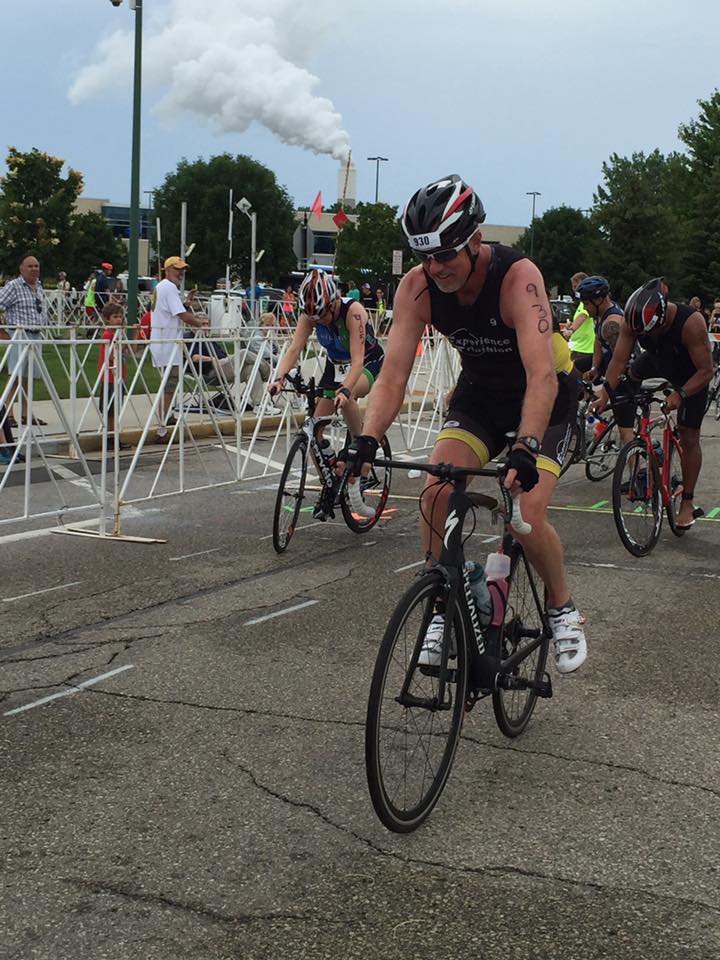
Heading out for the bike segment in the Pleasant Prairie Triathlon.

That’s the same attitude I bring to triathlon and duathlon. I do it because it’s hard. Swimming has been one of the hardest things I’ve had to learn in life. And I don’t pussy-foot on the bike or the run either.

I do know enough not to bring a triathlon bike to a road group ride. That would be dumb. But I’ve also watched pro cyclists race their time trial bikes and there is no difference between the bike I’ve set up for tris and the bikes raced in the Tour or other time trials.

So sure, I’m breaking The Rules in some respects. But I’ll break them as hard as I can, and Harden the Fuck Up along the way.

Posted in cycling, running, swimming, tri-bikes, triathlete, triathlon, triathlons | Tagged , , , , | Leave a comment

How adept are you at confronting your fears?

A sandhill crane being attacked by a red-winged blackbird. Photo by Christopher Cudworth

Fear is a real killer. It is a killer of confidence. A killer of trust. A killer of motivation. A killer of good judgment and a killer of performance.

Yet fear is not the real enemy. It is only the product of the things that make you afraid.

Age-old problems

For example, many of us have a deep fear of ever running out of money or other resources. I once knew a woman that kept a closet full of brand new clothes because she told me that she’d grown up poor and never had any nice things.

Later, after she divorced a man who wanted to spend her hard-earned money on a risky venture, she worked through a series of younger men that she effectively trained to be her sexual partners, but nothing more.

Her fears over ever being poor again essentially drove both behaviors. This is not to criticize her. Just about everyone is driven by some sort of fear. Secret or not, these fears compel them to defend against the situations that relate to the reasons why they are afraid.

Sometimes you can’t tell when or where fears will strike.
Photography by Christopher Cudworth

Those of us that have worked for bosses driven by their fears know that the outcomes of their management style are often unpredictable or inconsistent. They may instruct us to do one thing and then turn around and contradict themselves. It’s all dependent on how the current progress or lack of it makes them feel.

By contrast a boss or coach that has built genuine self confidence and is not so subject to fear will, if faced with challenges, likely also want to know the reasons behind those problems and help you find ways to overcome then.

But the fearful boss just wants you to make them go away. And if that doesn’t happen, sooner or later they’ll make you go away.

Overcoming obstacles

These same principles of managing fear through reason and knowledge apply to athletes. The dangers of fears operating among coaches in sports such as swimming, running, cycling or triathlon center around compensatory fears. It takes a lot of insight for coaches to counsel athletes and not project their own fears or shortcomings on the athletes they coach.

The job of a coach or a boss is to observe and counsel. And not let fear drive either party.
Photography by Christopher Cudworth

The job of a coach is to help the athlete achieve a state of informed objectivity and provide both direction and perspective. Typically that means building up the confidence of an athlete through training, then teaching them to apply that training in a race scenario. But along the way, coaching can also mean identifying and overcoming the problems or fears an athlete brings to the table.

In fact that might just be 90% of the job. As my wife likes to say, “Everyone has their baggage.” This is true in the world of work and relationships. It is also true for people who swim, run and ride. Every past performance fuels our present state of mind. But it’s the future that always matters most. The next chance to try again.

Relaxed anticipation

Getting to that point of relaxed anticipation about the next performance is the goal. That’s why releasing our fears or setting them aside is so important.

Along with the tools of associative or dissociative psychology, which determine whether you focus on your body’s signs or try to ignore them by listening to music or other distraction, there is the reasoning that goes into why you’re out there trying to perform in the first place.

That’s the missing element in the psychology of so many athletes. Knowing the “why” of what you’re doing is a powerful way to take hold of the moment and set aside your fears. Because when you’re sure about the “why,” and that can mean any number of things, the power of fear to hold you back is greatly diminished. In fact, it can entirely disappear.

So I encourage you and perhaps your coach to consider an internal discussion about the “why” of what you do. It may be something quite simple… as it was when I trained and raced in my 20s and just wanted to find out how good I could be.

There was another “why” involved as well. I also had some things to prove to myself, unsolved elements of youth that led to anger. And I wanted to prove my ability to cancel my doubters while I was at the peak of my physical years so that I would not have to spend my whole life wondering or speculating how good I truly was. Or was not. And I do know that.

Which makes it a little easier to deal with the natural fears associated with aging. I don’t like getting slower as a result of adding years, yet I continue to train and race because I largely enjoy the sensations and excitement that come with those endeavors.

Which means that when I stand on the starting line the only fears I typically have are practical ones. How can I swim better in open water? What do I need to do to ride faster today? What pace do I need to hit after the first mile out of transition?

These are the kinds of fears that make us a little nervous and excited, but they typically don’t stop us from trying our hardest. So use the “why” to get past the fears based on personal doubts or inner conflicts that make you doubt yourself. And learn to trust when someone tells you that you can do it. Because you can.

Posted in 10K, 13.1, aging, aging is not for the weak of heart, Christopher Cudworth, competition, running | Tagged , , , , , , | Leave a comment

Races that stand out in your mind

Racing the Lake County Half Marathon

I suppose it would be possible to go back and count all the races. All those times toeing the starting line. Looking around at your competitors. Wondering how the body and mind will respond on that day. In that moment. And for how long?

But some would no doubt be forgotten. Too many to count.

Yet there are always some races that stand out in your mind. It may be the quality of your performance, or some quirk in the weather. I recall winning a 10K race with an earwom of the Amstel Light Beer commercial playing through. “25 calories…never tasted so imported…till you…blah blah blah Amstel Liiiiighhht” over and over and over again. I couldn’t shake it.

Standouts

Gratefully for me, there are more than a few races that stand out over the years. This past two weeks the dank late April and early May weather makes think about a point-to-point half marathon I ran in the early 80s.

The strain of the head and chest cold is evident on my face.

The reason that race stands out is that I’d been fighting a cold for two weeks before the late-April start. That cold involved all the classic symptoms of sore throat, snotty nose, coughing and then the clearing out of phlegm. Nasty stuff.

So my nose was sore and raw from blowing it. But mercifully the worst had abated by the time I’d stepped to the starting line. Still, I felt a bit achy and tired. Not race fit necessarily. But I was determined to give it a go.

Obligation

Part of that determination came from obligation. As a sponsored athlete for the Running Unlimited store that provided my shoes and racing kit along with paying race fees, I’d signed up weeks before and the expectation was that I’d be at that line. It was a major local race, you see. Right on the fringe of that store’s market area. So I sucked it up and got my ass to the race.

Early on, it was tough to establish a rhythm. When the body is racked by a cold, it feels like the pistons aren’t firing together. But my training had been going well, so it was a question of being patient enough to let things warm up and fall into place.

Leaders in sight

Through 10K I stuck where I wanted to be. The leaders were still visible a ways up the road. I knew that I would not win the overall as there were some notably better runners entered. But my goal was top 10, cold or not.

There was a slight wind in our faces as we headed south. The course followed roads through posh suburbs and hard industrial towns along Lake Michigan. A spit of rain might have fallen at one point, and the scent of flowering bushes still penetrated my half-clogged sinuses.

My rival wasn’t having his best day either.

My rival

At ten miles I caught a longtime competitor. We typically traded wins against each other every other race. I knew his stride instantly. He was short and solid, my polar opposite. He always wore a hat backwards before running caps were even invented. I gave him a quick hand signal to say “Let’s go” but it was not his sharpest day either.

That’s how it is, or should be, with our keenest competitors. We get better by trying to best them. On the days we do, there’s a little satisfaction. But it’s always best to win if you’re feeling good and so is your rival.

Perhaps he’d been fighting a cold just like me. In any case, I still smiled to myself as I pulled away. My body had turned into something other than a cold-wracked portal. I was running well. The training had kicked in. I’d been running sub 5:30s and passed ten miles in under 55:00. Not bad for a skinny guy with a head full of snot.

Finish line

The finish line loomed and I tried to lift into a sprint, but that call to arms was not going to happen. My time just under 1:11 for the half-marathon earned a spot in the top ten as I’d hoped. My sponsors were happy. I was happy to have survived the day and be done.

Two days later the cold was almost magically gone. Perhaps that hard effort in the half marathon had actually blown out the carbon, as they say. But more likely the cold had just run its course. I was back to healthy again.

Two weeks later I’d race a 5K on the track at an All-Comers meet. There were so many runners the race did not start until midnight. I lined up with perhaps 25 guys and we took off under the lights. I came home in 14:45 but stopped my watch a bit late and it read 14:47. Such are the challenges of the self-coached athlete.

But those were two races that have forever stood out in my mind.

Posted in 10K, 13.1, half marathon, running | Tagged , , , , | Leave a comment

Turning it inside out on the track

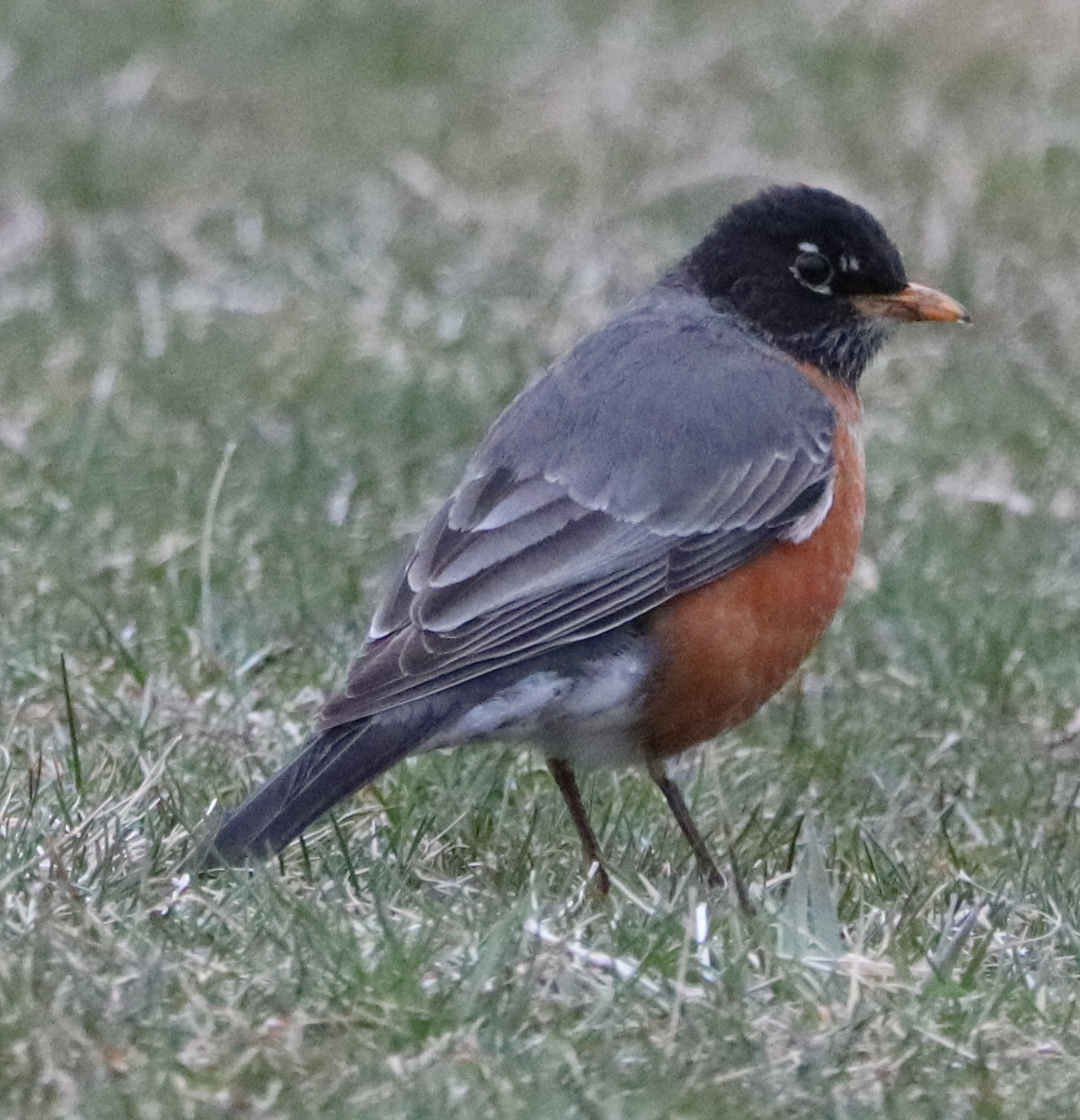
I did the math based on an estimate of three worms per foot. That adds up to 3600 worms per lane per lap. There were eight lanes on the track. That’s 28,800 worms. Robin food.

We’ve had some wicked rains the last few days here in Illinois. The Geneva Middle School track where I do speed workouts was covered with dead or dying worms. There were robins so stuffed with the free food they barely wanted to fly as I jogged by during warmup laps. I confess that I felt a little more like them that I cared to admit.

Photo of American Robin by Christopher Cudworth

I’m down to 180 pounds after a winter weight high of 189. Ugh that was an awful feeling. My goal is 175 and maybe 173 if the training goes well.

I figure running will be that much easier with 6-7 lbs. less weight to carry around. But the only way to get there is to do the work.

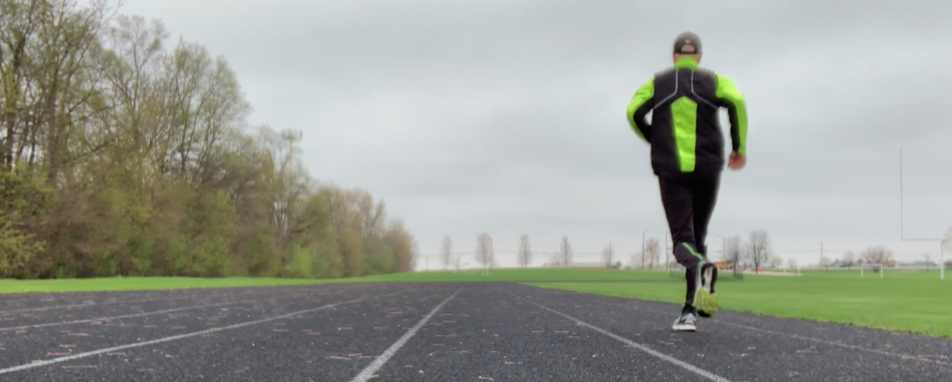
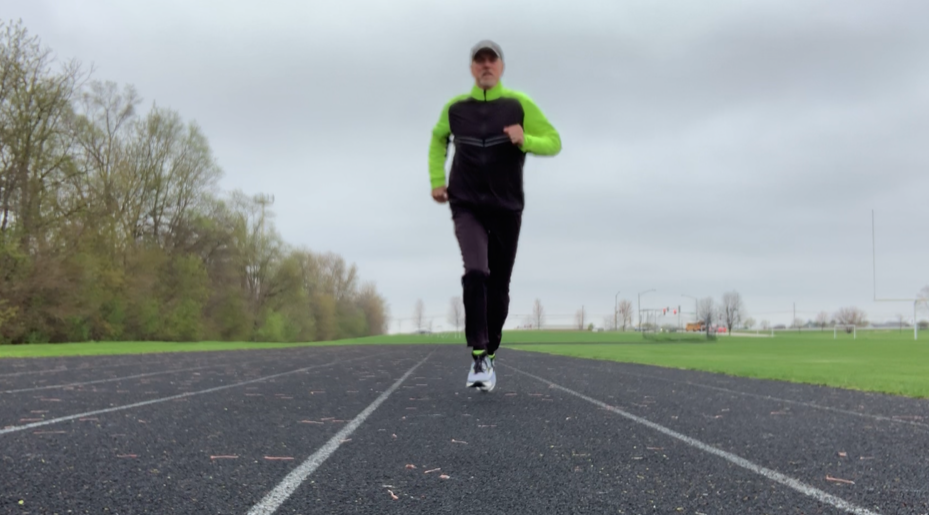
After warmups I set up my Smove camera to look at my stride. I have to laugh because my right arm has always swung because one leg is shorter than the other and it’s now such a part of my running form I have to consciously change it to avoid looking like I’m casting a fly rod from the hip with every stride. It really helps to watch yourself running on video.

Warming up on a worm-lined track.

Because once you’re out there running it also helps to concentrate on achieving efficiency in order to run relaxed. Having a mental picture of your optimal form can be helpful in that.

I ran 8 X 400 meters and again had to laugh because my times were precisely, exactly the same pace that I’ve been running on the indoor track. I turned myself inside out trying to gain a few strides on each of those intervals but kept hitting 48 for the 200 and 1:38-1:40 on the 400. What that proves is where my current baseline resides.

The goal is to drop my baseline mile pace to 6:20 per mile. Then my target pace of 7:00-7:20 per mile for 5K Sprint Triathlon races and 7:40-8:20 for 10K Olympic events will feel sustainable. Conditions permitting, of course. Heat and wind and weather always determine what you can ultimately pull together in any summer race.

Floating over the track is still a fun thing to do.

The challenge is in improving that baseline over the next 4-6 weeks of May and into the June-July racing season. It’s an age-old rhythm with me. A small voice in my head chuckles at how long I’ve been doing this. And why? It is apparently who I am and will always be until it is no longer possible to run. Who knows when that will be? So many aspects of life are like that.

The question that senior athletes such as me must answer each spring is whether the season’s baseline is a product of fitness or age? Which is the factor holding us back and what is the best way to defy that tarsnake against all odds?

The only way to answer that question is one step at a time and by engaging in laps of the mind. Turning oneself inside out on the track is a lifelong process. I’m not going to let a few worms (or tarsnakes) on the track keep me from giving it my all.

Posted in 400 meter intervals, 400 workouts, aging, aging is not for the weak of heart, running, we run and ride | Tagged , , | 3 Comments

A few words of praise for my triathlete wife

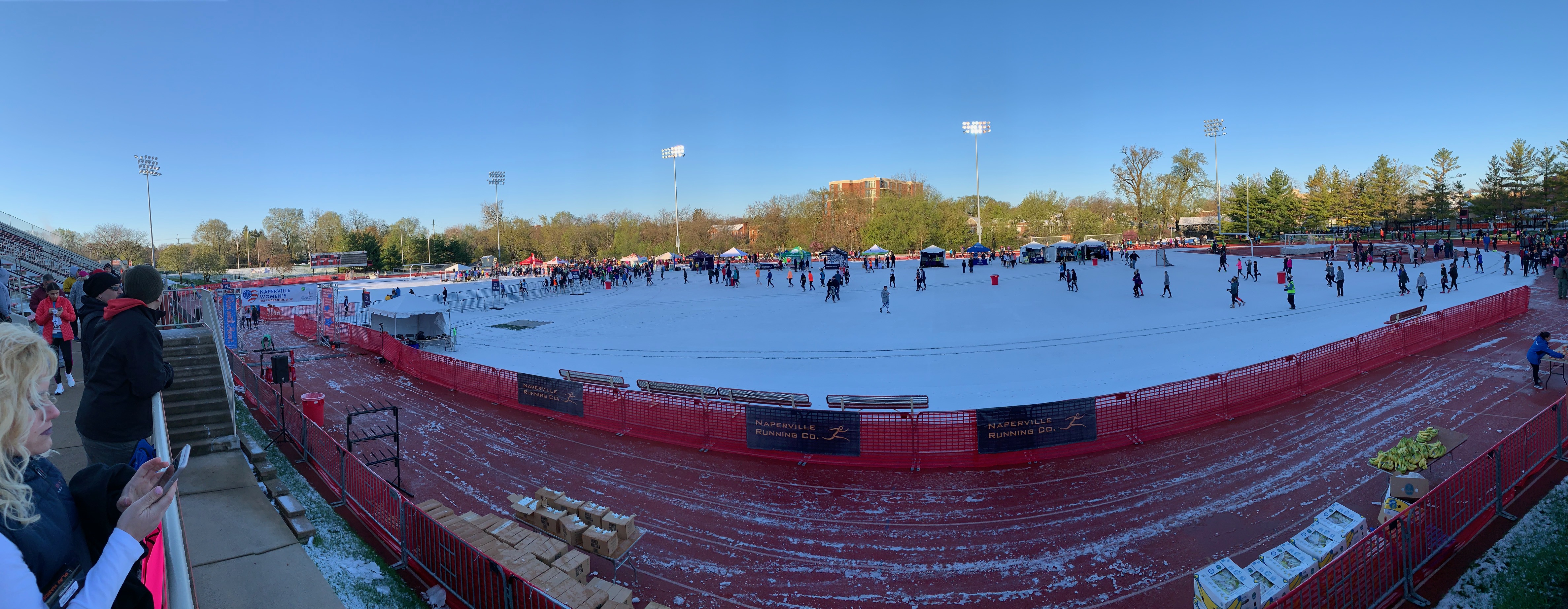
The scene at the start of the Naperville Women’s Half Marathon yesterday

Yesterday I played Sherpa for my wife during the Naperville Women’s Half Marathon. It was chilly (30 degrees) and snowy (but the streets were clear) and she ran really steady and strong.

She’s now run a series of three or four solid half -marathons with a solid 10K (or three) thrown in for good measure. Her training is paying off.

She doesn’t like her grimace in this pic but who said running 13 miles was easy?

As it should. She’s a disciplined woman who rises five days a week plus weekends for early morning workouts. Some days it is a swim session with the Master’s Group. Other days we zip to the Vaughn Center to swim together. Well, not together, because she’s much faster than me in the pool.

I love watching her swim. She’s got a clean swim stroke and it’s a solid part of her triathlon game. She’s also a really strong cyclist. More than once I’ve gotten through 60 miles with her only to find her pulling away as she gains speed over the last 10-20 miles. Or perhaps it’s me slowing down.

She’s good at getting into the zone and going.

It’s her running that she’s had to work hardest to improve and sustain. We both compare ourselves to times we ran ten years ago, which isn’t really fair. But in some ways she’s running more consistently and steadier than when I met her six years ago.

Like all triathletes, her dream objective is to pull all three disciplines together on race day. She’s doing the work that will make that happen. I’m so proud of her for that. When I hug her strong body I can feel the athlete in her.

Coming off the bridge over the DuPage River to head onto the North Central College track to finish

That connection was on full display watching all those women covering all those miles in yesterday’s half-marathon. I love seeing all that determination and self-discipline on display. I think about about how all those gals also have relationships in their lives that sustain them in one way or another. The crowd waiting at the finish was testimony to that.

So while I praise my wife for her endeavors I also praise all women for their pursuits. I had to chuckle because there were at least twenty men who ran in the Naperville Women’s Triathlon yesterday. They raised a few eyebrows but no one really complained. Men are not banned. It’s just primarily a women’s race. The first male finisher ran about 1:44 while the women’s victor clocked 1:22. She was clipping for sure.

Betsy and Sue share the glory after the Naperville Women’s Half Marathon

After the race, we found one of Sue’s triathlon friends Betsy, a talented athlete we see at swim sessions now and then. They looked like Snow Bunnies in their white racing gear.

It’s all good. It was a cool, gorgeous morning to ride my bike around and cheer on my wife and all the other ladies (and gents) who ran 13+ miles on an April morning. It never struck me to be jealous or envious of their efforts. I was too busy being happy and proud for everyone involved.

We’re doing a sixty mile cycling trip in Galena for our second anniversary coming. For once this spring, there is no snow predicted for the weekend.

Posted in 10K, 13.1, running, triathlete, triathlon, triathlons | Tagged , , , | Leave a comment

Oceanwalker swimming has me fascinated

It’s been four years since I started to learn to swim again for triathlons. Early on, I took swim lessons with a great coach named Whitney whose first priority was to simplify what I was doing. Along the way there have been many “A-Ha!” moments as other swim instructors (including my wife) have encouraged me to improve technique in every phase.

For most swimmers, success comes down to the correct use of the “catch,” the phase when the front hand enters the water and begins the pull phase of the stroke. The arm is bent in an L shape and “hugged” to the body as it stays shallow and is pulled near the hip for the next lift out of the water.

I’ve learned to “drag the fingertips” in order to get ready for the catch. I’ve practiced keep my wrist angled properly to dig into the water. And through all these measures of form and analysis, my swimming has improved.

Yet I’m still a 1:50 per 100 yard swimmer. Not that fast. And that’s pretty much top end.

The Dick Fosbury of Swimming?

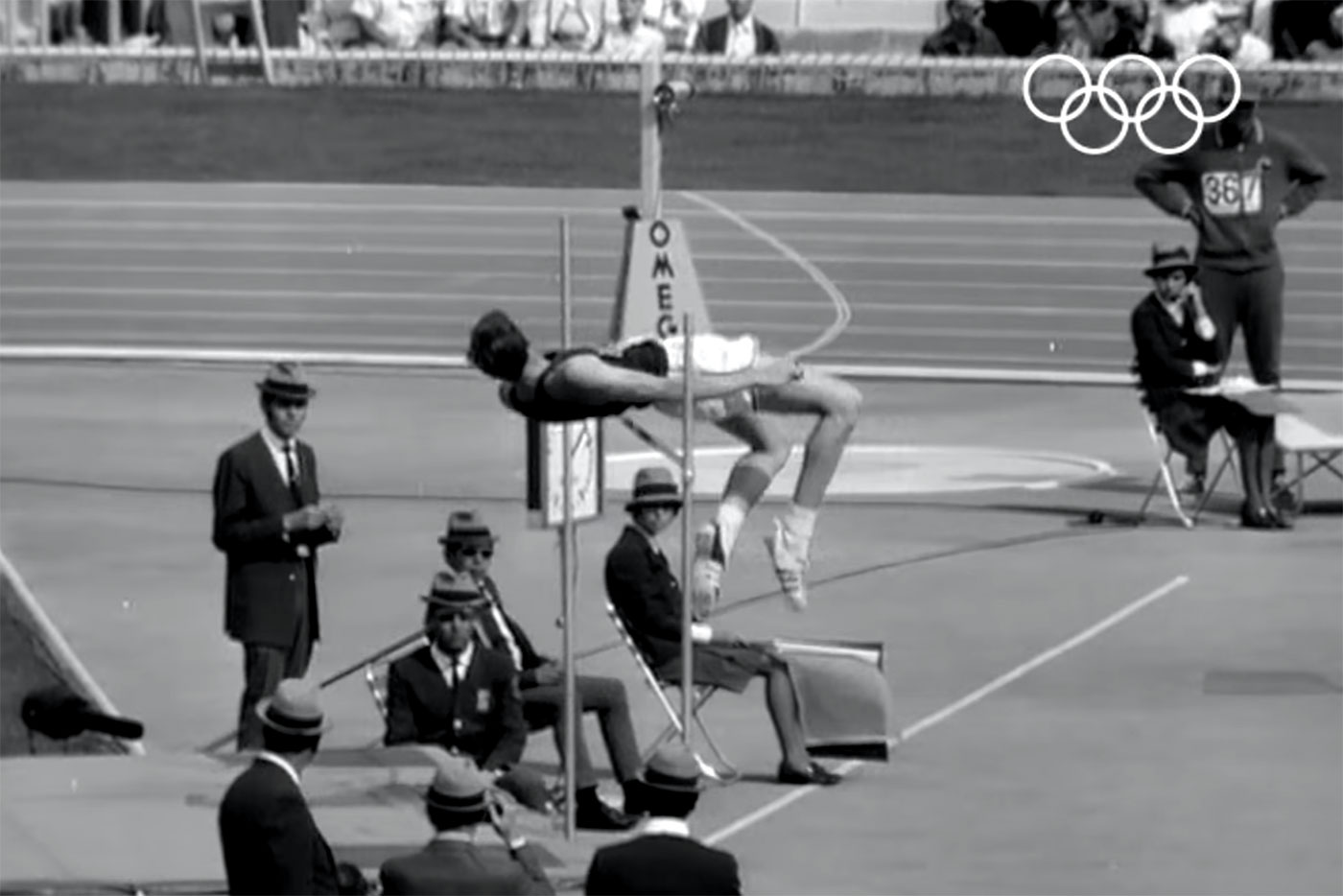
Olympian Dick Fosbury jumping in Mexico City in 1968

But recently I stumbled on the Instagram account of a guy named Adam Walker who developed an alternate freestyle method he calls the Oceanwalker. Watching him swim is fascinating. The guy has a long career of crossing ocean channels and setting records using more conventional freestroke methods. But then his bicep tore and doctors said he’d never swim again.

Rather than quit, Walker experimented with new techniques that took pressure of his shoulders. The new stroke involves a mesmerizing rotation of the body and a tremendously smooth pull driven by a new arm angle that is supported by the core.

Walker clearly has developed a great swim technique for open water in particular. It may be so revolutionary that it catches on like the high jump technique originated by Dick Fosbury, the Olympic high jumper who turned the event on its ear by turning backwards to leap over the bar headfirst. Before that, all high jumpers used the Western Straddle, a leg-first method that required the jumper to roll over the bar.

Dick Fosbury invented and perfected the improbable “Flop” technique that revolutionized high jump.

Fosbury changed the entire world of high jumping. The world record now stands at more than eight feet using the Fosbury Flop. I high jumped 6’1/2″ using both methods, and the Flop was much easier to employ. Is there an equivalent in swimming?

Saving energy

The thing that fascinates me about the Oceanwalker method is the reduction of necessary strokes to travel the same distance. That saves energy, a key aspect of successful triathlon swimming. The whole goal of covering the swim is to emerge ready to ride at full capacity. Last year during my first open water swim of 800 meters I came out of the water and hopped on the bike only to find my legs weak from the kicking I’d done. It was shocking.

Given that I did not come from a traditional swimming background, having only swum as a kid, not through my 20s, 30s and 40s, I have no compunction about adopting an alternate freestyle method if it helps my shoulders stay healthy through my senior years. If it also helps me be more efficient in the water you’re damn right I’m going to look into it.

I’ve already experimented with what I understand of the method. It resembles the “Catchup” drills we’ve done in swim practice. But I love the rolling rhythm I feel when swimming in the Oceanwalker way. I love the feel and flow of it.

Are you curious too?

Posted in swimming | Tagged , , , , , , | Leave a comment

A legacy worth riding home about

The photograph above is an image of my late grandfather Leo Nichols. I don’t know the year the photo was taken, but it was sometime in the early 1900s. The image was sent to me by my cousin Kermit Nichols, Jr. whose father Kermit Nichols was the older brother of my mother, Emily Nichols Cudworth.

I never met this particular grandfather, nor his wife who died the year before I was born. The things I’ve learned about those grandparents have mostly been through snippets and stories, especially from my mother whose diaries I also own.

Life and death situations

From what I do know of Leo Nichols, he was a cultured man who owned and farmed several hundred acres in the Catskill Mountains of Upstate New York. When I was a little we’d visit that farm each summer along with the farmstead right down the road where my father was raised. Yes, my parents grew up 200 yards apast. My father moved to that farm after the death of his mother from complications related to breast cancer treatment. He and his sisters were sent to live with an uncle and two aunts when their father suffered an emotional breakdown.

Time were tough during the Depression. But people took care of business, and their own.

Little of Leo

I share tdhis photo with my next-eldest brother via email, who observed a few things that he remembered about our grandfather. “He would give me the eye if I was misbehaving during dinner,” my brother related.

In other words, the man likely ran a stern household, for he had quite a few kids of his own. I also know that work was also valued by Leo Nichols. My mother raised vegetables on the farm and sold them in a road stand on Highway 7.

That highway ultimately ran right in front of the family home. But first the state highway commission had to take down one of the giant elm trees at the front of the farm property. Before that there was only a dirt lane leading from Bainbridge to the Nichols farm overlooking the Susquehanna River.

I was too young when we visited that farm during my grade school years to feel the echoes of my grandfather in that place. Relatives that had passed away were simply not discussed all that much. I did get to know my uncle Kermit and Aunt Margaret quite well. They ran the farm through the 1960s. But when our family moved to Illinois I never got back there again. Perhaps it is better. The barn burned down and the entire place changed over the years. Some memories are best left undisturbed.

Magical place

It was a magical place for me as a child. The little that I learned of farm life still delivered a few lessons and treasured memories. I loved cleaning the manure off the center of the barn floor when the cows came trundling in for milking. I’d clear the floor by using a scraper to shove the big cow patties into the troughs where the automated belt would carry it over to the manure pile and spreader. Sometimes my uncle would hoist me up on his lap and we’d take off flying on his tractor down the two-track lane to the “flats.” Then he’d engage the manure spreader and we’d fling large wads of poop out into the fields. That’s how the crops got fertilized.

My uncle Kermit was an animated and fun-loving man with huge biceps and a set of bulging pectoral muscles grown large from farming. He could pump those muscles independently and make us laugh. Or he’d sharply aim a spit of tobacco juice and nail a grasshopper to the ground. Sometimes he’d pitch a farm cat up on the roof to give it something to do.

But he warned me sternly one day: “If the bull ever gets out of that barn, you run straight to the house.”

Man of speed

Uncle Kermit also loved speed and drove his vehicles with verve and sometimes dangerous panache. That resulted in a crash or two over the years, yet he still lived to 94 years old after retiring from the government to live in Florida.

Earlier in life he was a brilliant distance runner who trained by running up and down those hills in the Catskills. His road race and cross country records stood for decades.

Circa 2017

That family love of speed makes me realize that photo of Leo Nichols standing with that bike ties to my own love of cycling and running. It now seems part of the family character. Leo Nichols truly looks like he liked to ride that bike fast whenever he had the chance. It probably suited his character.

Yesterday while playing catch with a baseball following our Easter dinner, my brother shared with me that Leo’s hair was red, much like his own. My beard used to be reddish when I grew it out as a young man. The same holds true from my son Evan.

I’m thinking Leo Nichols was perhaps a feisty and competitive person like me. Yet I’d have to tear back into the pages of history all sixty years of my life and sixty years again to ever get to know the man in that photo. The world was so different then. Yet that’s still a pretty cool-looking bike. And when I look at that photo I realize that in some ways, people do not change all that much. Not within a family, nor across the face of history.

We all have our ‘proud bike’ moments, and a desire to go faster in some way. The real challenge is in realizing that life itself goes far faster than most of us could ever know or realize. Which is why we should grab those bikes when we can, and go. Fast as we can. Then our photos may capture some moment in time for future generations.

Posted in Christopher Cudworth, competition, cycling, death | Tagged , , , , , , | Leave a comment

On actually seeing a woman

Women deal with being women right down to their soles.

This morning on the way to the train station for her weekly once-weekly commute, my wife pulled an item out of her purse and opened it up. “I have new lipstick,” she told me. She applied it by memory, checked it in the mirror, then turned to show me the shade. “I like it,” she told me.

I liked it too. a mellow shade of pink that complimented her skin. She takes good care of her skin. And her hair. All that hair. I love it both straight and curly, which is how it looks when it dries naturally.

So many women shift their appearance from one look to another that way. Years ago I complimented a co-worker that her hair looked nice and she told me, “I didn’t do anything to it today.” She had wavy blondish hair that looked lovely. I said, “Well you can nothing more often and it will still look great.” She thanked me.

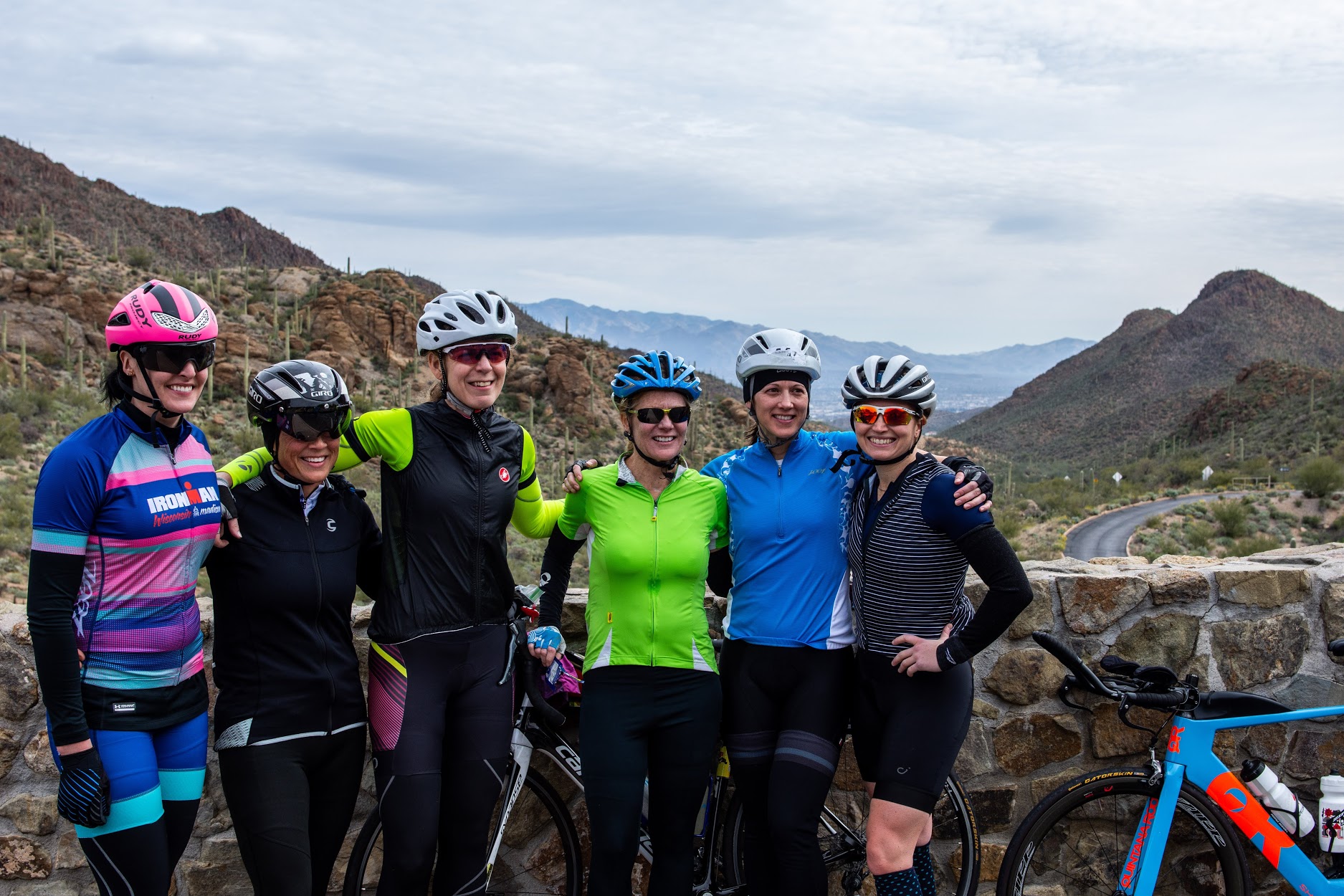
This great band of women joined together for a photo atop a mountain in Arizona this past February.

I’ve always sought to be careful with my compliments. Not go over the line or make a woman feel uncomfortable. I actively believe that issuing compliments, when it it is done with consideration for the person to whom you’re speaking, is a still appreciated art. Thus I’ve complimented women my age on the beauty of their silver or gray hair. I’ve also looked down at a man’s feet and said, “Nice shoes.” In general, people appreciate the words.

The process of being

I have this theory now that if you want to engage in the act of actually seeing a woman, to see who she is and what she values, you must legitimately think about the process of conditions and actions that led to her appearance. The routine for many women in this world is by definition of gender quite time-consuming. Just the process from morning shower to drying hair to doing makeup to choosing clothes and accessories for the day takes time that men typically don’t have to spend. Then there are purses to wrangle, and dealing with feminine needs at progressive stages of life. I’ll say it plainly: Being a woman is not easy.

Expanding worlds

Yet women have actually chosen to expand the range of their endeavors in this world. This has taken place over the last thirty years in particular. Now I look around at running or triathlon races and there are typically as many or more women out there competing as their are men.

I met this beauty queen during a ride in Ohio.

One capable female triathlete friend always shows up at the starting line looking like a fashion model. Her makeup is done and even her hair is coiffed. And yes, she can swim and ride and run like a badass. She’s flown past me on her tri-bike going 26mph and trust me, it’s not about the makeup at that point. The women that know her marvel that she always looks so put-together, but those are her values and she does not piss around.

Unseen challenges

At least not that anyone would notice. Because the whole world of feminine anatomy and pelvic floor integrity is something few men can understand. The worst thing we sometimes experience is a numb package from a poor seat position. Women deal with their menstrual cycle until the age of 50-55 or so, and if they have children, they might have to deal with challenges like a tear of the perineum, a C-section or any number of other birth-oriented disruptions that can last years or a lifetime. My own mother almost died from latent complications twenty years after a breach birth with my large younger brother. Events like those can disrupt the whole workings of the reproductive or urinary system in the long term. And yet, women learn to deal with it.

And then, have to deal the impacts of jerkish male politicians trying to legislate their access to women’s health care, birth control or other reproductive rights. That’s because those men don’t spend time actually seeing women for who they are. They only view them in context of their own selfish male perspectives or receptacles for sperm. And that’s the most disgustingly shallow of all problems faced by women in this world.

Yet they deal with it

I’ve talked with so many women over the years about issues such as these. I’ve also helped women get legal representation when they face sexual harassment in the workplace. I’ve sat talking with women going through bitter relationships and listened to women longing for love or lamenting the loss of their life partners. In every case they are doing their best to deal with it. Not all of them do this perfectly. That is the point here. We’re all trying to deal with life’s challenges. Women simply have more of them in many respects than men.

So I’d suggest that if you actually want to “see” a woman in this world, you have to factor in the “deal with it” portion of their lives, because that’s one of the remarkable things that so many women do in this world. Despite lots of obligations and stresses that range from making a living to support themselves (in many circumstances) to raising a family the best they can, women “deal with it.”

My triathlete wife in full bike flight on a bright summer day.

Speed of life

Which is why it is perhaps so inspiring to see women out there choosing to “deal with it” in sports like triathlon, where the burdens and challenges are their own choice, not the circumstance of their gender or society’s expectations of them. Sure, some show up in full makeup and that’s their show.

Others show up with hair pulled back in a somewhat tangled pony tail, or stuffed inside a swim cap, bike helmet or running hat and off they go. And if they don’t look perfect out there making it happen, then it’s up to you to “deal with it.”

Actually seeing women

Here’s to actually seeing all you women. I’ve told my wife many times that I appreciate her. I also appreciate all the women I’ve encountered and watched train or compete all the way back to those gals in high school track and in college cross country who got out there in really poor-fitting gear, yet cared enough about what they were doing to see a future where the world would finally catch up with their commitment.

My respect for them was admittedly sometimes confused with a bit of desire. But again, that’s a compliment too. You women are amazing people.

And it’s a lifelong pledge that all of us should make to enjoy that company.

Posted in Christopher Cudworth, competition, cross country, cycling, track and field, training, tri-bikes, triathlete, triathlon, triathlons, we run and ride, We Run and Ride Every Day, women | Tagged , , , , , , | Leave a comment

Lessons learned are like bridges burned

Image of Champion of Trees 10K from the Chicago Athlete website. Link below for full race review.

I finished the Champion of Trees 10K in 51:00 flat, a pace of 8:12 per mile through show and up hills and down. At various times during the race I definitely questioned my ability to meet my goal of 8:20 per mile, a decent early season pace.

I finished the Champion of Trees 10K in 51:00 flat, a pace of 8:12 per mile through show and up hills and down. At various times during the race I definitely questioned my ability to meet my goal of 8:20 per mile, a decent early season pace.

My Garmin Fenix watch kept me perhaps a little too honest. When you’re crawling up a hill and the pace reads 10:20, the mind goes soft. “Ahh, what’s it worth anyway?” that little voice says.

But then you’re headed downhill and the watch reads “7:20” and you lie to yourself a little. “I could keep this up all day!”

Then you check the race results a couple days after the run and discover a second place age group finish and go, “Whoa! I wonder what the age group winner’s time was like?”

So I checked the race results and found out I was 119th overall. The 60+ age group winner Ed Straka was 111th overall with a time of 50:42. Just twenty seconds ahead of me.

Now I’m wondering if he was the tall guy in the blue shirt that was (wisely) walking the worst of the short hills along the way. He’d stalk up the slope and then take off running again. I’d hump my way up to a pair of anaerobic thighs and try struggling on.

In any case, the guy who beat me ran just two seconds per mile faster. I should know better. Lessons learned are like bridges burned, you only get to cross them but once.

Problem is, there are always more bridges to cross.

Posted in 10K, aging, race pace, running | Tagged , , , | 1 Comment