50 Years of Running: Jacked around

Having moved everything I owned east to Philly the previous August, now I was faced with hauling everything back to Chicago the following May. Through a few quick conversations with a close friend living on the north side of the Loop, I made plans to move in with him and see what life in the real city was like.

So I had to figure out what to bring with me on that first trip in the car. What would I need to make it through a month or so before closing up the Paoli place? I’d already paid my rent through June to take the pressure off the situation. My plan was to travel out to Chicago, plug into the living space there, and then fly back east to get a U-Haul and empty out the third-floor apartment at 18 Paoli Pike.

A Jack-in-the-Pulpit on the forest floor

In mid-May I’d gone for a walk in an area woods and brought home a Jack-In-The-Pulpit. It sat and stared at me during the back and forth travels as I packed. The little “jack” inside the plant always fascinated me, such a penile little character, typically bright green in color with a purple tip. With that striped shroud over its head, the plant looks like a quasi-religious figure or a shady character, depending on one’s mood. My mood at the time was somewhere between those two “jacks.”
One last look

To complicate matters on the day I was about to leave, as my car was all packed up and I was carrying down my gym bag with running shoes and gear stuffed to the brim, I looked out the second story window to find a vision lying on a beach towel just outside the back door. It was the landlord’s beautiful daughter. That’s not a joke

I’d seen her entering the front of the house a few times. She was quite beautiful. And while she looked fit in her jeans and a sweatshirt, there was nothing in her appearance to prepare me for the sight I now beheld. She lay on her back in the sun, with the outline of her body highlighted by the summer sun, and in stunning detail. I stood there on the steps a few minutes wondering if I should go out the door. I neither wanted to disturb her or acknowledge the fact that I’d been perving her from above. But what was worse? Me leaning to scope her out from a hidden window, or going out to load up my car and saying goodbye in one fell swoop?

That moment felt like some sort of final temptation during my time back east. I decided to head back up to my apartment and gather my wits, hoping perhaps that she’d pack up and leave. Part of me still wondering if this was some godly delivery of my lusty soul. Or what if she’d chosen that site on purpose? Who knew? Who ever knows? I did know from talking with her parents that she had a boyfriend. Yet I’d also recently, and quite profoundly, learned that it didn’t seem to matter to some women what their relationship situation seemingly dictated.

Ten minutes later, I decided the right thing to do was pack up and leave. As I walked down the stairs, she was picking up her towel and tossing on a coverup. I also noticed that she glanced up at the second story window before leaving.

I headed out the door and almost bumped into her. “Oahh, hey…” I said while locking the door behind me. “I’m moving today.”

“Yes, I heard,” she replied, and said, “Good luck!” Then she walked around the side of the house. I snagged a peak at her behind and felt that familiar twinge of wonder and regret.

Emphatic conclusions

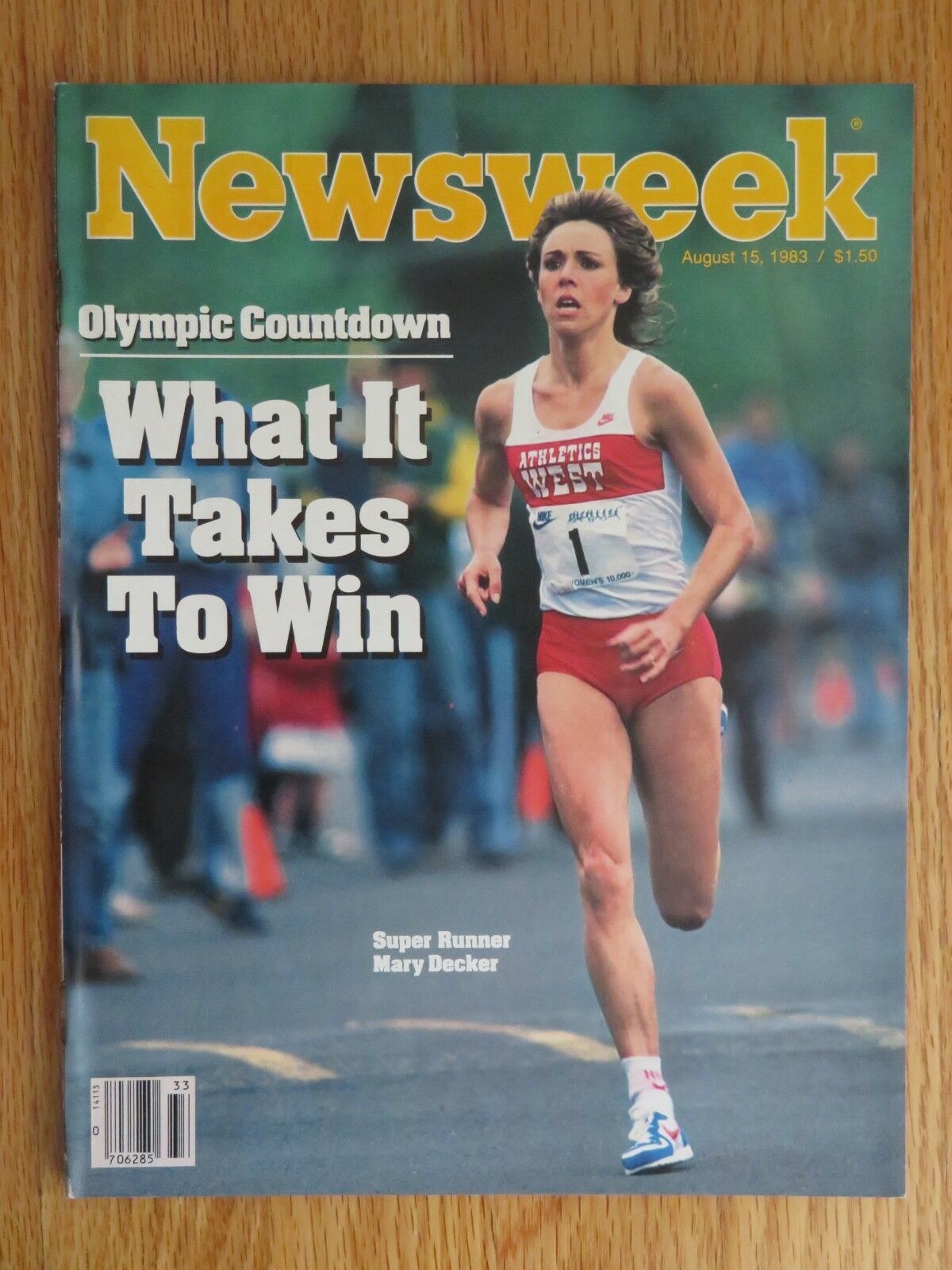
May of 1983 was a strange month marked by emphatic conclusions and raw realizations. On the 11th of May, I drove alone to the Villanova track to run a fast interval workout of 6 X 440 at 64-66 seconds. Don Paige was again being interviewed on the far side of the track. I envied the seeming assurance and level of talent he represented. He looked so professional and contained. It felt like his world was simpler and far more secure than mine. But who really knew? After the US boycott of the Moscow Olympics in 1980, athletes like Paige were effectively “canceled.” His first and real chance for a gold medal vanished thanks to the United States’ choice to protest the Soviet invasion of Afghanistan. I couldn’t help thinking about that every time I saw him.

As a 24-year-old young man, I was actively trying to make sense of how things like that, the “big picture,” as it were, actually worked. I pondered how my personal instincts fit with the actions of the country where I lived. I felt bad for the athletes that did not get to compete at the Moscow Games. I tried to imagine what it was like to be a world-class American athlete and be told to stay home. To some degree, I understood the work it took to perform at that level. For many, the Olympics are a once-in-a-lifetime opportunity. All that training for a single shot at glory. For men like Frank Shorter in ’72 and ’76, it made a world of difference. For others, not so much. But for the American athletes in 1980, no chance at all. How frustrating.

Yet I also thought that Carter was genuinely trying to do the right thing. He also had an Iran hostage crisis on his hands, and was stuck with the American policy of supporting the Shah of Iran, whose power was granted and supported by a coup conducted by the United States Central Intelligence Agency. So he wasn’t protecting some innocent action by our country. We’d interfered and injected our aims on a nation that was fighting back. And they had that right, did they not? So they took hostages, and got our attention.

Then the Soviets invaded Afghanistan, and Carter faced tough choices all around. But the Soviets paid the price long-term, wallowing around in a country that refuses to be tamed.

Painful regimes

Who thought that forty years later, it would be the United States invading Afghanistan? Yet that’s essentially what happened under Republican President George W. Bush and VP Dick Cheney. It led to America’s longest-ever occupation of another country.

And worse, those two ideological jackoffs sent us into Iraq as well. All based on lies about weapons of mass destruction and conflating Iraq’s supposed association 9/11 attacks. The Bush regime aggressively propagandized its plans under the so-called War On Terror. They were aided in this gaslighting doctrine by the likes of Fox News, Rush Limbaugh, and the rest of the Right Wing media. Even Howard Stern fell for their schtick at first, then recanted.

The right-wing echo chamber led the cheerleading as the Bush cabal embarked on their own massive terror trip, first bombing innocent Iraq citizens and then conducting torture in the same cells once used by Saddam Hussein to cause misery on his own citizens. They scooped up supposed terrorists and shipped them off to the Neverland of Guantanamo. Some of them are still there. In real-time, there were Black Ops and mercenaries working in both countries, and around the globe, where supposed “bad guys” were shipped to be brutalized under the dictates of PsyOps teams. The debate over whether waterboarding was torture dominated the airwaves. The terminally vindictive Dick Cheney insisted it wasn’t. Sane people understood that it was. This was America’s mental illness on full display.

No moral equivalency

I regretted what Carter had done to our athletes by keeping them home from the Moscow Olympic games. But forty years later, I absolutely hated what Bush and Cheney did to our military personnel by sending them on perverse dual missions and multiple tours of duty in war without focus, and without end. Carter admittedly damaged the lives of our athletes by calling for the boycott. He denied them the opportunity to capitalize on their life’s work.

But Bush and Cheney sent thousands of military personnel to die while others returned home permanently maimed and/or psychologically devastated as a direct result of the Bush Doctrine of pre-emptive force. The sick fact is that both wars served as a coverup for the fact that Bush and Cheney ignored legitimate intelligence that a terrorist attack was likely on American soil. Instead, they cynically used the 9/11 tragedy to foment their own brand of arrogant evil on the world at large.

The roots of all that force-driven doctrine date back to the arrogant rule of one Ronald Reagan, who was President in 1983 when my political views were first being tested by the realities of the world. I never liked Reagan or his British counterpart, Prime Minister Maggie Thatcher.

A country crossed

As a seemingly (supposedly) naive young man in 1983, I was already absolutely suspicious of the dismissively hardline nature of conservative ideology at work during the first three years of the Reagan Revolution. My Chicago friends and I branded the growing faction of young conservatives that we met “Reagan Youth” for their disturbing conformist instincts and Ayn Rand politics. I also never bought the claim that Reagan was the Great Communicator. I found him banal, superficial, and ideologically dangerous. I cared not for his jingoistic speeches or his enormously specious statement that “Government is not the solution to our problems, government is the problem.”

My response? “Then resign, asshole. Don’t inflict your shit on us.”

Nature’s enemy

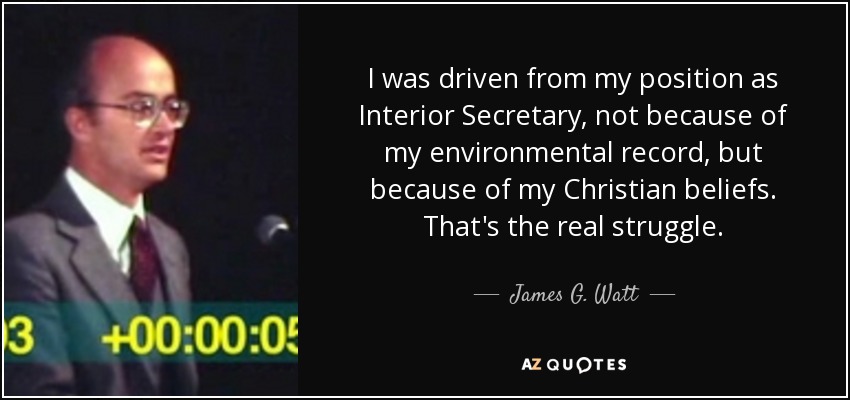
As an ardent birder and environmentalist, I also despised Reagan’s Secretary of the Interior, James Watt, who famously (dismissively) stated: “When the last tree falls, Jesus will return.”

He also whined when asked to resign, taking the position that he was being persecuted not for the corruption in which he’d clearly engaged with the HUD, but because of his religious beliefs. His brand of denial and deflection was bad enough. But that tactic of defense by conflation of religion with country fueled similar backcountry militants running the so-called Sagebrush Rebellion. We’re still dealing that crap in America to this day: people with self-serving claims to land and rights they do not technically even own. Yet these brutes are all too happy forcing their beliefs over the interests, and rights, of the nation as a whole. That holds true for the Second Amendment as well. There are now more guns than people in the United States of America.
The entire Reagan cabal felt like the first breaths of fascism at work in America. It ran in a straight line from Ronnie through the Newt Gingrich era to the vacuous Tea Party and on to the Bush camp and the Make America Great Again demagoguery of Donald Trump. Despite all sorts of denial from GOP sycophants, that’s the real story of the conservative Right in America. It ultimately led to an insurrection against the United State government on January 6, 2020. Donald Trump and his Big Fat Lie about the 2020 election were responsible. But what did we expect? Like James Watt, losers never accept the real reasons why they lost their position in life, or got caught red-handed. They make excuses, often while claiming that God is truly on their side. It’s the woulda-coulda-shoulda realm of political hacks and golf cheats (which Trump surely is) and other people in the grips of cognitive dissonance and habitual forms of sociopathy.

Cross country

You can doubt me if you like, but my big picture thoughts about Reagan and politics and the state of the American economy (and experiment) all crossed my brain while driving cross country from Paoli to Chicago in late May of 1983. After all, I was out of a job and needed to look for one in Chicago. The economy was rolling around under the weight of trickle-down economics, and Reaganites were chortling at the thought that he was busting unions and welcoming globalization as the future of our economy. The same people cheering Reagan in the 80s are now voting for Trump in the 2000s. They want to Make America Great Again never considering who destroyed their lot in the first place. And they expect a rich Daddy’s Boy whose own University was busted for fraud to fix their situation? It’s so laughable, yet it is so painfully evident that the selfishness endemic to the fearfully prejudiced and fearful is motivated by an attitude of victimhood. Trump promised to give them what they want, and like spoiled little children at a birthday party, they don’t want to give up what they claim for themselves. I

,I’d felt the first genuine surge of disgust with America back in the early 1980s. It had been fueled by the murder of JFK in 1963 when I was five, followed by the slaughter of his brother RFK, and finally the sniper shot that wiped out Dr. Martin Luther King, Jr. in the late 1960s. I sensed that there was a certain segment to society drive by hate and fear that would never play fair. In some respects, that jealous and selfish strain of psychology also killed John Lennon. And look at the guy that shot President Ronald Reagan. He’s now on YouTube trying to sell his music and start his own record label. As if he never did anything wrong in his life.

This is what’s wrong with America. The most selfish people on earth love to claim that they’re advocates of “personal responsibility” according to conservative doctrine. In fact, what they advocate is personal selfishness, and the right to even persecute others if it fits their religion, their politics, or their gun collection. They gaslight the world by complaining about “political correctness” and “cancel culture,” all while ignoring the fact that religions like Christianity have been “canceling” entire cultures and races of people for two thousand years. So when evangelicals claim that America is a “Christian nation,” they unwittingly confess the fact that their religion was used to justify slavery, racial inequality, suppression of women, persecution of gay people, and engaging in wars of choice to bring about Armageddon in the Middle East.

Yes, I understood the conflicted nature of conservative ideology way back when. It has pained me to watch this country succumb to its influence, even to the point of refusing to impeach a corrupt President and excusing a direct attack on our own system of government. I knew it back then, and a big part of me wanted to bring it all to light. So I planned to use my open schedule to continue writing a book about the misperceptions and conflicted judgment in this world. I’d purchased an IBM Selectric from a used typewriter shop in Philly, and that was one of the items I carried with me back to Chicago in late May of 1983.

“I didn’t even know what city I was in…”

I stopped in Ohio to spend a night out on the town with my younger brother and his girlfriend. We went out for beers and I made time with a cute townie at the bar, but wound up too drunk to deal with her. I wound up slurring my speech and aching to go home, I was so tired. My brother laughed at me and said, “God threw you one, and you blew it.”

The next day I drove to Illinois and spent the first night “back in town” at the apartment of two female friends from Van Kampen. My girlfriend Linda was out of town, as were my parents, so I crashed at their place near Route 38 and the I-355 extension. I woke up the next morning hardly knowing what city I was in. The girls were running around half-dressed getting ready for work, so I kept my glasses off despite a strong desire to see what was going on. I lay there thinking how weird it was that they were going to work at the company that I’d only recently left. And why? Because I didn’t somehow fit in? Or because the leadership of my department led us down the wrong path? I had no real answers to that. In any case, I was on the outs. Frankly, I’d been jacked around a bit by the entire Philadelphia experiment. So while I wasn’t perfect at the job, neither was I totally at fault. Perhaps I should have seen that as a bit of foreshadowing.

All I knew is that I turned the severance check I’d been given into $7000 in Travelers Cheques, and planned to use that money to get by until I figured out what came next in life. At least I wasn’t totally broke. I still had to get all my belongings moved back from Paoli to my friend’s apartment in Chicago. So I got back together with Linda, spent a few days re-orienting myself to Illinois, and planned the next move. Everything was fluid, including my money.


Posted in 400 meter intervals, 400 workouts, addiction, Christopher Cudworth, cross country, death, fear, gay marriage, life and death, love, mental illness, race pace, Uncategorized | Tagged , , , , , , , , , , , , , | Leave a comment

50 Years of Running: Closing time

All of us who run know the difference between a good race and a bad race. There are empirical factors such as time and place by which we measure our efforts. Yet even these are subjective depending on conditions such as weather and wind, heat or cold. We must adjust our expectations according to the elements.

We also have “gut instincts” about how well a training session or race turned out. Feeling good while you’re working out is an incredible sensation. Feeling awful is the worst.

Most of our work as runners and distance athletes in general (I’m speaking of cyclists, swimmers, and triathletes, all of which I do nowadays) falls somewhere in the middle spectrum between feeling great and feeling awful. I recall those weeks in college training 80-90 miles per week and being in a constant tired state. Without the discipline to go to bed at a sane hour during those years, I would have been sick all the time.

That was a lesson I still had to learn a few years out of college. You can’t stay out until Closing Time and expect to get up fresh and ready to run the next morning. The lyrics by the band Seismonic capture that desperate sensation of loneliness when the bar is about to shut down:

Closing time, open all the doors
And let you out into the world
Closing time, turn all of the lights on
Over every boy and every girl
Closing time, one last call for alcohol
So finish your whiskey or beer
Closing time, you don’t have to go home
But you can’t stay here

This may seem like an odd comparison to make, but leaving a job is much like closing time at the bar. It’s the raw sensation of knowing that whatever fun you were having is coming to an end. Or, if it wasn’t so much fun, the cold lights of reality are about to come on and it’s time to pack up your shit and move on out.

I blasted through the month of April in Paoli and Philadelphia clinging to the notion that the work situation at Van Kampen Merritt would somehow work out. On the other had, I was hoping like hell that it wouldn’t. I was tired of trying to make the long-distance relationship with Linda work. The daily pain of equivocation was too much. I raced on April 23 and of that effort I wrote, “Race was strange, feverish effort. Went out at 5;00, felt easy. 10:05, 15:30, 20:58 and 26:10.”

That was a decent effort, but nothing special. “Poor middle miles,” I noted.

The previous weekend I’d said “screw it” to the running and took off birdwatching at the Tinicum refuge. Spring migration was going great guns on the east coast. I birded at noon with the sun shining and 50 degrees, and still wracked up an impressive list of species. “Tree swallows, mallards, song sparrow, herring gulls, Canada goose, shovelers, yellowlegs, fish crow, common crow, turkey vulture, osprey, red tail, great blue heron, common egret, black-crowned night heron, coot, robin, tree sparrow, palm warbler, grackle, starling, blue jay, ruddy duck, white-throated sparrow.”

Then the weather turned sour with snow, 35-degree temps, and windy. “Windchimes are ringing in the cold wind,” I wrote. “Wonder how the spring peepers feel.”

Seeking refuge from work and everything else, I visited my brother out in Lancaster. I told him about the various ailments I’d been suffering. “Jim brought up hypoglycemia, ears ringing. Oh well, my dick hurts, my gums bleed and my ears ring. My eye hurts too. But I’m in great shape.” I was also low on money after the car accident bled my account dry before the check arrived. I couldn’t seem to catch up while making $23,000 a year. “It almost feels good,” I wryly noted in the journal. “Live poor and you will be rich.”

But by April 30 I knew that things were coming to a head. There were big moves being made on the Van Kampen front, and I wasn’t going to be a part of them. “Well, today was the day of surprised reckoning,” I wrote. “But I am not surprised at the result. I’m leaving Van Kampen Merritt. My eyes are tired. The Schuykill makes me ill. Secondhand women make me angry. No Tampico Trauma here. We got ourselves a change in attitude, a change in latitude.”

That is all I really want to say
I was thrown out of the country yesterday
See, I was…
Drinkin’ double
Causin’ lots of trouble
When the man looked in the window of the bar and he grinned…

And said, “If you come back, we just may not be your friend.”
“I don’t want to see you ’round here again!”
“If you come back next time, we may not pretend.”
(“Hidy ho’ boys!”)
–Jimmy Buffet

On May 6 the President handed me a $7,000 severance check as a gesture of thanks for moving out to Philly. I never felt that Jack was anything but straightforward and kind to me. But I understood the deal: “Glad I didn’t have to hang around being dead meat,” I wrote. “Gonna have to make the money’s last. Mebbe earn some more somewhere. Paid through July, in essence.”

I went on a date with a cute little redhead from the office, just to close that loop. Then I packed up a week’s worth of clothes and running stuff and drove south to Assateague Island in Virginia. The first time I’d been there was with my brother Jim in 1972 when I was a sophomore in high school. We drove down from Lancaster and back the same day. It rained much of the day, and my poor brother was hallucinating after all the birding, the fierce rains on the highway, and all the night driving. He always was the king of concentration and family leadership among my three brothers, making his own way in the world when my parents were not able to offer much support. We were excited to have the opportunity to spend time together during the period we called “Paoli Days.” Many weekends we’d trade cassette tapes of new music we’d found. I recall a day when he visited my place in Paoli. I put the track Eminence Front by The Who on the turntable. The opening notes and baseline are mesmerizing: “Whoa, dude,” he said, stopping cold in his tracks.

Drinks flow
People forget
That big wheel spins, the hair thins
People forget
Forget they’re hiding
The news slows
People forget
Their shares crash, hopes are dashed
People forget
Forget they’re hiding

Behind an eminence front

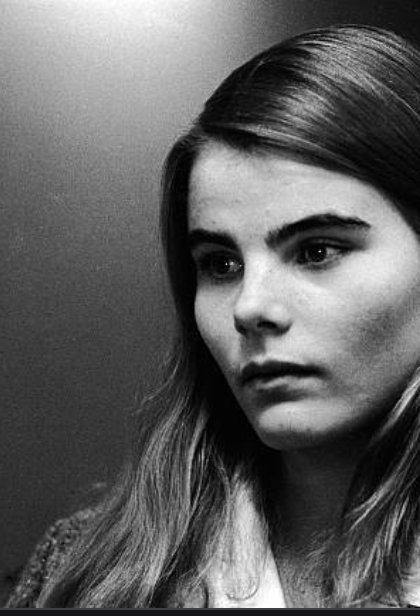
On the way down to Assateague, I stopped in some small resort town and got out of the car to stretch. Walking toward the sidewalk, I encountered a woman about my age with her car hood open. She stood there in a breezy top and blue jean shorts looking like a commercial for an 80s romance flick. I stopped to ask what was up with her car, and she glanced at me with fierce eyes and a set of Mariel Hemingway eyebrows, thick and full. I knew nothing about fixing cars then, and know little more now. But I should have known at that moment there was nothing wrong with that woman’s car. It was her adventure engine that was running on empty, and she wanted to start it up. Sadly, I was too distracted by the force of my ocean destiny to realize that the Lord of Hosts had put that woman there to join me on that journey, but I left her behind.

About ten miles down the road, realizing how dumb I’d been, I almost turned the car around to go back. Then I laughed and said out loud, “That would look lame.”

I was trying to shake off the malaise of closing time at Van Kampen. My goal was to find a peaceful place along the ocean, do some birding and go for runs along the beach. I pulled into the park and walked into a tall pine forest where large lady slipper orchids were blooming in profusion. They stuck out of the ground like strange creatures from the Yellow Submarine movie, almost unreal in nature. I walked among them letting the May sunshine dapple me through the branches, and sighed. Then I bent down on one knee and sobbed.

That afternoon, I parked by the ocean, carried some running gear and a towel out to the edge of the dunes, and hid them there. Wearing only a set of shorts and some adidas running shoes, I took off running north on the hard sand. Far up the shore, well past the limits of the parking lots or any signs of civilization, I saw a young couple playing in the surf. They were completely naked, letting the white, foaming waves bash them from behind. Her hair blew wildly in the wind, and her breasts shook joyously with every strike of the wave. The guy looked at me running by and gave me a wave as I passed. They looked so happy that I felt a kinship with them. I waved back.

I returned to run on the beach the next day, covering eight miles without seeing a soul. Then I drove back to Paoli and ran another four miles that night. On Saturday, I ran eight miles with Rich Crooke, the director of the Runner’s Edge team. During our run, I told him that I’d lost my job and would probably be moving back to Chicago. He wished me luck, shook my hand, and gave me a big grin. I was grateful to have met Rich and Pete, their talented younger brother John, as well as Dick Hayden and the rest of the Runner’s Edge club members. I’d lived nine months in Paoli and benefitted greatly from their counsel and support while training and racing.

But it was Closing Time for me back East. So I started making plans on how to move back to Chicago.

Posted in alcohol, competition, cycling, duathlon, God, mental health, nature, race pace, racing peak, running, running shoes, sex, triathlon | Tagged , , , , , , , , , , | 2 Comments

50 Years of Running: The homely hayseed and love

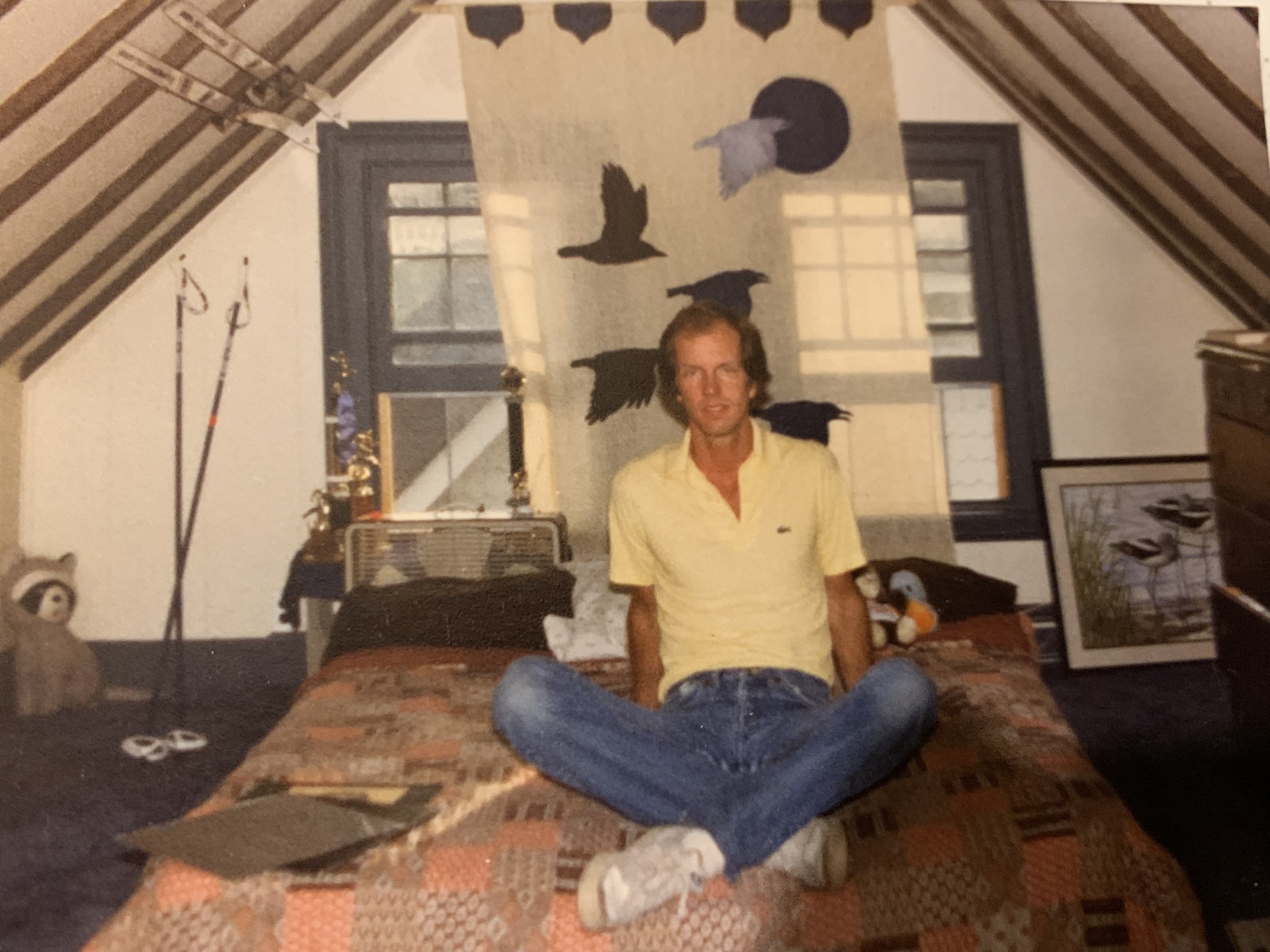
In my Paoli apartment in the early 80s.

Finding out from a key player and trusted friend on the management side that the marketing department where I worked in Philadelphia was not fulfilling expectations didn’t surprise me. There were great people on the team, who were doing some decent work, but on the whole, it often felt like something was awry. I’ve always sensed that sort of thing “in my bones.” I see it in the vacuousness and assumption of those who consider themselves immune or above reality somehow.

Or perhaps it was my dissatisfaction at the time, wrought by the struggle to stay engaged with the incremental tasks falling on my plate with unamusing regularity. To tell the truth, I didn’t really belong in the investments game at all.

To continue working at Van Kampen, we all had to pass a test conducted by the Municipal Bond School. I sat through the hourlong presentaton desperately trying to absorb information about bond funds and found it so boring and foreign that I knew passing the test would be, for me, nearly impossible. Fortunately, one of my co-workers recognized my state of mind and made it clear that it would be fine if I copied off her answers. That’s what I did, and passed the test. Such are the struggles of a person with my brand of artistic ADHD in the workplace. I was just trying to survive.

Laws and details

As a graphic designer in marketing, I didn’t really need to be a municipal bond expert, but it did make sense to me that the investment industry had standards. The financial laws required us all to be certified, so I was grateful to get help on the test so that I would not fail the test and lose my job. I returned to the office with the pale countenance of a sinner spared the guillotine, but my neck was possibly on the line in other ways.

Principle among those perceptions was the claim that I was “undisciplined.” I’d heard similar complaints from the boss during my year in Admissions work for Luther College. That boss complained that my head was not in the game, yet I nailed my quota and said a happy “fuck you” upon leaving that position for the job at Van Kampen. Yet here I was fighting new niggling notions that my head was where it should be. It was doubly hard fighting those feelings after cheating to pass Municipal Bond test.

My illustration for the farm investments being formed by the firm Van Kampen Merritt.

Some of the negativity toward me came from a third-party source, a frequent print vendor named Scott who openly criticized the artwork I’d created for the VKM corporate brochure printed by his company. Scott was a particularly particular man, a lover of clean registration and such. To research the brochure paintings, I’d busted my butt trying to find decent visual resources upon which to base the art. I dug through every photo and design book I could find to create collage images about everything from Real Estate to Public Finance. But worse than that, the only resource I had available to paint portraits of the company directors were small 2″ X 3″ black and white photos taken at some fast photo place. I did my best, but the portraits weren’t great.

I understood what Scott was trying to tell me: “Pay attention to your craft.” That’s the same thing my father often said about my work. I respected the advice from both men. My dad wanted me to succeed in life. Scott wanted me to do things right because it reflected on his work. I also understood that he was a refined gay man who appreciated everything from fine food to the arts. He told me that anything sloppy-looking really irked him. I did get it, and deep down I figured he was right about my lax propensity to focus on detail at times. But I’d produced the best work I could with the resources available, and felt like that wasn’t fully recognized. My father and Scott had that in common.

The happy screw-up

It wasn’t all bad news at the workplace. I wrote to Linda, “I had a ‘job description’ interview and it was encouraging. They like what I’m doing even though I screw up once in a while. I’m (oddly) proud of screwing up in some ways…I usually just screw up by being late with a project. These people think everything has to be done yesterday.”

Later in life, I’d experience a similar environment while working as an associate creative director. We were constantly under pressure to pump things out on tight timetables. That led to mistakes resulting from proofreading errors and mailing goofups, reprints, and other expensive outcomes. Our team would often mutter, “Always time to do it fast––never time to do it right.”

Goal-setting

I’ve always been goal-oriented, and have come through under pressure many times. Despite what some thought about my work, I knew that it was the final outcome that matters most. If a mistake happens along the way, you learn from it, and it doesn’t have to define you. And like my former elder girlfriend told me, “It’s all in the recovery.”

I’d also already learned quite a bit about budgeting time from the sport of running. How to set goals, hit markers along the way, and achieve results. While some luck plays a part in all sports, you can’t win many races if you don’t have a strategy and execute it somehow. I also developed considerable powers of concentration, persistence, and endurance––well beyond the typical human capacity to perform under stress. Running mile after mile at 5:00 mile pace takes both association and disassociation. You have to associate with the physical feedback you’re getting and in some way disassociate yourself from the pain you might be feeling. We had a saying for that in college running: “It’s only temporary.”

What I still lacked in the professional world was patience and the will to apply that principle across all endeavors, especially in situations where I got bored. So I’d get careless at times, and that’s the death of any workplace reputation.

I vented about the judgmental atmosphere in my journal, especially after overhearing a female co-worker utter a personal insult about my looks and dress, stating, “As homely as he is, he seems to get dates.” That was an ironic coming from her. She was as physically plain as a house mouse, and about as interesting in terms of personality. Yet I never said that to anyone out loud.

Of course I knew that on some days I was not God’s gift to good looks. Skinny, haggard runners are a pretty homely-looking lot at times. That said, it still hurts to hear someone say bad things about you. I’d certainly been insulted before, including the day that a Kaneland high school track teammate walked up to me at a meet and said, without any apparent cause, “You know what, Cudworth? You’re a real hayseed.”

Hayseed: a person from the country, especially a simple, unsophisticated one.

Birding with one of my brothers in the late 1970s.

He was absolutely right about calling me a hayseed. He was also entirely wrong as well. Because while I was a scroungy kid who loved crawling around the woods looking for birds, I also had a growing life list of 250 species, and regularly turned that knowledge into works of art that I sold and made money. So sophistication is always a relative term. What I should have said to him on that day was a pithy and terse retort, such as, “And you’re a prick.” But he caught me so much by surprise with his random insult, that I accepted it at face value. Plus, I think he was looking for a fight, so I kept my mouth shut, and wisely so.
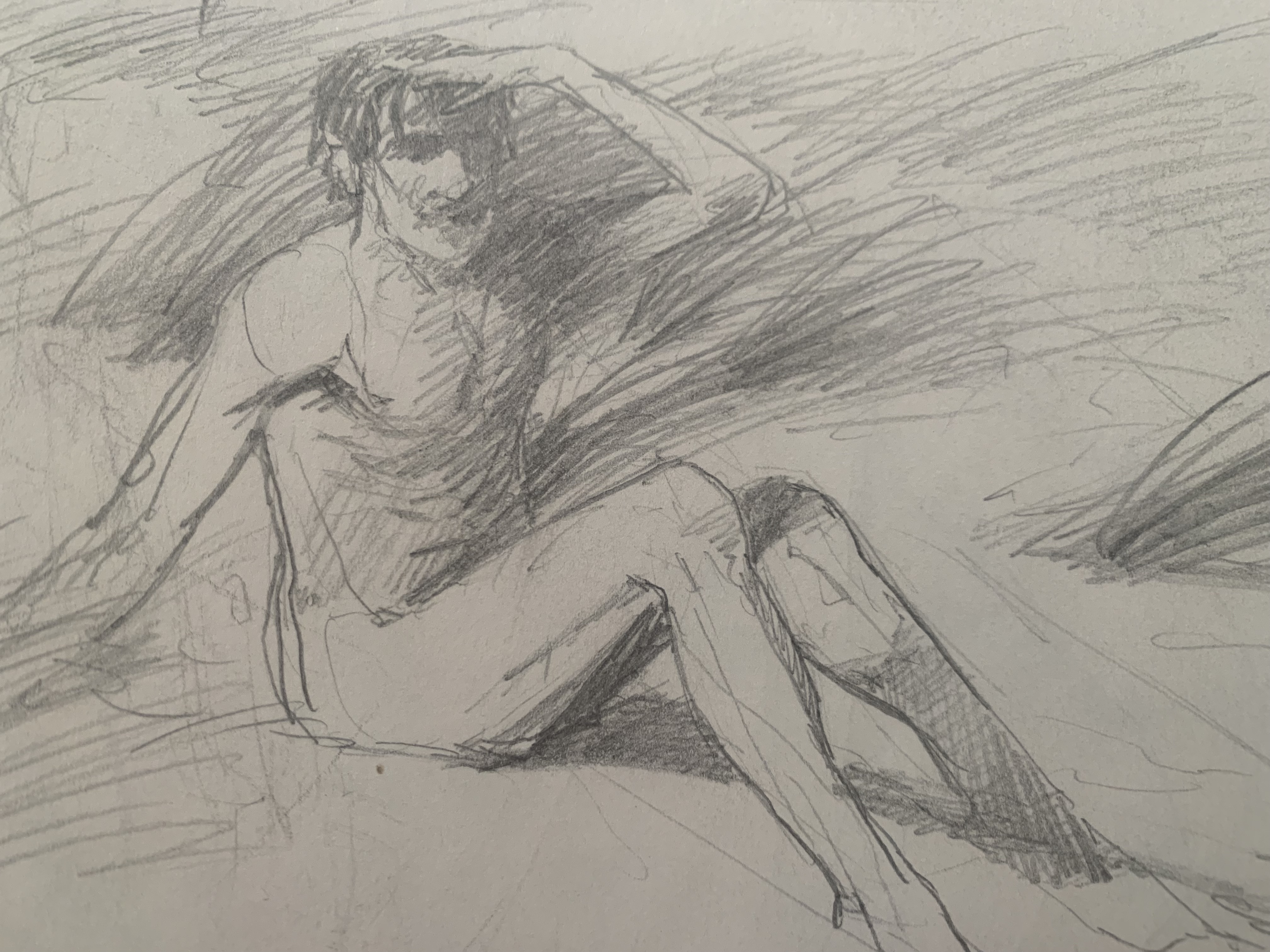
The saving grace in all of my hayseed homeliness was Linda, who did accept me for who I was. The fact that I was thrashing around, seemingly trying to avoid her love had more to do with my own pursuit of self-actualization. I was also trying not to hurt her with my lack of solidity, because I knew that the longer the relationship went on, the more it would hurt to break up.

I know that I told her how I truly felt because I wrote her a letter on December 5 of 1981 that read: “I’m so young, why do I push myself to such mean extremes? The simple truth is that I have no faith, in God or myself. I have no faith. (and I noted in the margins…”I take this back, partly…I have faith in a plan, a set of goals for me by God’s plan.) I have genius. I have motivation. But I don’t have the gratitude which comes with accepting fate and mortality. If you can teach or help me to gain––somehow open me up to the possibilities of eternity and everything before it, I will be indebted, and you will be married to a great man. You will be a great woman, I see it.”

Older and wiser thanks to experience in life.

Just like preparing in training for a big race, I was building a base for our relationship even while making mistakes along the way. I was trying hard to clear through the thickets of my own inner conflictedness, and lust in particular. I included this confession in a letter to her: “Lust traps me in the shower; however, also sneaks up on my loins in the most impractical and annoying places, record stores, grocery shopping, work. Lust to me is life’s rust. It burns and erodes me slowly but wholly; keeping me from strength by patching up its naughty, raunchy, funky, distracting, handiwork, rots my brain!”

But then I wrote: “Yes I do, I love you. I swear on the billions of Gideon’s slapped out there in hotels. You got to forgive me though. I am an artist. I am supremely, if fatally, married to that pursuit. I think you understand. You have hit the spot many times, and said you love me.”

I quoted an article that I’d seen. “I read something yesterday that describes how I feel. I need to feel available to the world,” says Dudley Moore, and being married, he says, has dechanneled that need, at times.” I concluded, “Yet I know that being married will solve, will change, the way I look at many things.”Then I copied some lyrics from a Joni Mitchell song that we both knew.

“Where, as a child, I saw it face to face

now I only know it in part.

Fractions in me

of faith and hope and love

and of these three

love’s the greatest beauty….” –Joni Mitchell

Posted in anxiety, Christopher Cudworth, competition, Depression, fear, foregiveness, gay marriage, life and death, love, mental health, nature | Tagged , , , , , , , , , | Leave a comment

50 Years of Running: Love letters and tell-alls

The stack of letters my wife kept from the first year of our relationship when I moved to Philadelphia for work.

During all those weeks and months away in Philadelphia, I kept up a steady stream of correspondence with Linda back in Geneva. She kept all those letters, and I found them in our house years later.

In the week after the March 18 car accident, I wrote a pained letter trying to make sense of all that happened. “Well, lover-dover, yesterday was a doozy-woozy. Hoping to receive an insurance check to pay for my car, I called into work to tell them I’d be late. I was, the check didn’t come in the mail. It still hasn’t come, and it’s Thursday. They say they sent it Monday. Bullshit. Why does mail take 3 days from Maryland?”

There were ridiculous ramifications at work. “Sooo, they were really pissed at the way I handled calling in, not telling them a day early, etc. I ultimately took $800 of my own money out of the bank to pay for the Arrow. I’ve got fifty bucks to last me thru whenever! God.”

Clearly depressed, I shared the one thing possible to keep my spirits up. “I’m gonna race on Saturday morning I think, if it doesn’t rain. Probably run a five-miler in Philadelphia. I’ve felt good most times in training. I wish I had a little more time to run and other things. I really want to paint. yet when I get time I don’t use it right. I guess I just don’t have time to relax, plain relax. Y’know, I run around so much I just wanna flopp when 9:00 p.m. comes around.”

Then I drew her a cartoon to express my true feelings.

I actually had good reason to be cynical about my work situation at Van Kampen Merritt. A few days before the accident occurred, I’d conversed on the train with one of the guys that I really respected in that office. He’d also transferred from Illinois, and I’d been over to his house once or twice. Our respective circumstances were strikingly different. He was happily married, lived in a big house overlooking a wooded ravine, and had two robust German shorthair hounds that he’d send after groundhogs in the thickets. He was a solidly Christian man of the best kind, straightforward and resolute about life in general. On the morning we met on the train, we talked about stuff in general until he finally turned to me and said, “What are you guys in marketing department doing? The Wholesalers aren’t getting anything we need to sell. If that keeps up, you’ll all be gone.”

He did not say that to be mean. Quite the opposite. But it was a lesson I never forget throughout my career. Pay attentiont to the core business or you’ll be gone. And I trusted him because he’d become a patron of my paintings, hiring me to do two large-format acrylics, one of tundra swans and the other a portrait of a cock and hen pheasant.

Tundra swans by Christopher Cudworth, circa 1982
Ring-necked pheasants, acrylic painting by Christopher Cudworth, Circa 1982

I was proud of that work, and desperately wished I was good enough to paint for a living full-time. I had tried in many ways over the previous year to make that happen. Specifically, I helped an older associate from Van Kampen start up a store called the Blue-Winged Teal Gallery. I wasn’t an investor in the gallery, but did help him set up shop and showed my original work there. As an echo of that experiment, I labored all year on a perfect painting of the namesake bird. The earliest watercolor of a blue-winged teal that I produced that year was an airy rendition that I like to this day. As it turned out with the gallery, I sold a few pieces, but not enough to make a living. The place folded after I moved east.

In February of ’83 I’d written Linda a letter confessing the frustrations with how the regular work world felt compared to the joys of painting. “I’m not tired but I’m burnt out, y’know. I’m sick of this job sometimes too, which is something I wanna talk about when I’m out there. Plans versus reality, you might say. Why should it take so much guts to go out on my own, after all? I’m going to paint like a fiend this weekend. Three whole days of unmitigated creativity. Yummee!!”

I added a note about my vacillating health due to all the running. “You’ll be amazed. I’m taking eight to ten vitamins a day. Organic vitamins of iron, a multiple and Vitamin C. Now if I just get some sleep. My dad gets the bed again tonight so I think I’ll hit the floor instead of the couch.”

Like father, like son

As I recall, my father Stewart was out East that February interviewing for a possible job. He was dealing with one of several points in his life in which his career went sideways. That was something he and I shared over the course of our lifetimes. I believe he dealt with ADHD just like me, with a hyper-social personality to match. His interests were diverse, including the game golf and he also loved making golf clubs. And much like me, his distracted fixations on women were similar. Like father, like son. But by that point in life, after some contentious father-son years, we were starting to understand each other better, “Strange to get up with dad at the house. We get along well,” I wrote.

The corporate treadmill

The letter to Linda continued, “I’m gonna try to talk to this gallery owner here in Pa. Sometime this weekend. I’m getting real anxious. I want to paint for two purposes; to express the ideas about wildlife that are waiting for discovery inside my head, and to sell these ideas to those willing to understand them. I’m gonna say it again too. I’m sick of corporate thinking as wonderful as it can be at times… it is also the druid of procrastination and a strange form of treadmill, designed just for people with integrity but no power to purvey it. Telephones, memos, more memos, wives and Vice Presidents, arguments, illness, urban boredom, tunnel vision. God didn’t mean it to be this way. I’m not DEPRESSED just depressed. I’m gonna shake down my own bottle again.”

Those references to wives and Vice Presidents were based on an odd reality and wondering whether there was funny business going on at the top level of the marketing department.

Love takes flight

On occasion, I’d fly back and forth between Philly and Chicago on the company plane as space and time would allow. That gave me a chance to reconnect with Linda, go for runs with my buddies back in Illinois, and try to find some sense of personal groundedness. On the return end of one of the trips, I went straight to the office, sat down and wrote her a love letter. “Quite convinced these funny rocking sensations, flutterings of sorts, that are emanating from my midsection are the after effects of the delicious lovemaking we performed only sixteen hours ago. Think of the power of that. Your soft movements and kisses like thoughts on my neck are undissolved by the distance I have flown. Your love flew right with me, strong and urgent, like a heron passing through early autumn air with the last breaths of summer under its wings.”

A great egret in flight, much like a great blue heron, symbolizes a journey.

Then I noted, “Walked right into the end of a marketing meeting this morn. Apparently I looked oddly calm and resolute. Lynn Rodman asked “If I got engaged or something.” Little did they know I was sweating at the pits and a bit jet-lagged, wishing to be back in XRT-land.”

I confided to her by letter: “Home. Where it is right now I’m not sure, but I’ve always felt that home is where I produce best. One never has the measure to know for sure what is “best” and what is in need of examination, but home is where I live. Ultimately, it is said, the artist must choose between the work of his life or the work of his art–my translation, done badly, I admit–but what I mean to say is that I am always married to my pursuits. And will be for the course of my life and its destiny. Should you join me in that course it is fair to say that I will be inspired by achievement for both of us if possible. But anything or nothing is always possible. Thus it is the artist’s choice and the commonest failing–to give up without having tried.”

Thus my love letters to her gave fair indication of where I was in the search for self, and ultimately, companionship and marriage. I wasn’t quite ready, I tried to tell her, but I loved her along with my art and running and everything else that young man inside me was trying to do.

Posted in love, mental health, nature, running, sex | Tagged , , , , , , , , , | Leave a comment

50 Years of Running: Marching on

Foreshadowing

By March 6, 1983, the weather in southeastern Pennsylvania was beginning to moderate. I ran a sixteen-miler in 1:43 on a route that I now knew well enough to do with confidence. No more getting lost in horse country. I wrapped up the week with a set of 8 X 400s in 68-70 and a total of 51 miles. I was shooting for a ten-mile race in Cherry Hill, New Jersey the 20th of March.

On St. Patrick’s Day, I stayed home rather than go out drinking. “My phone’s off the hook,” I wrote. And quoting Jackson Browne, I noted, “Never shoulda had to try so hard to make a love work out, I guess. I wonder what love has got to do with happiness.”

Despite my ongoing angst over my relationship with Linda, everything seemed relatively under control until the night of March 18. I had decided to order some rainbow trout for dinner from a restaurant a few miles away, but a rainstorm hit and the roads were a blurry mess. As I crested a hill in my Plymouth Arrow, I came upon an accident scene. A car sat sideways on the curb with its lights aimed directly at the roadside bushes. And next to it, a man lay crumpled in his own blood. Immediately I thought, “That’s not good.”

There were people running around the scene, and one crossed the road directly ahead of me. So I slowed my car to a stop to wait for them to move out of the way. That’s when a set of car headlights came flying over the hill and rammed hard into the back end of my car. The Arrow lurched forward, flinging my head toward the steering wheel. I blacked out for a moment, but woke quickly and sat there stunned. My neck hurt, and so did my chest, because I’d been thrust hard against the seat belt. Thank God I was wearing one.

I unbuckled the belt and crawled slowly out of the car door. The guy that hit me was already outside his car staring at the back of my bumper. “I’m so sorry dude,” he confessed. “I hit you so hard. My music was on. Are you okay?”

Honestly, I wasn’t sure. I glanced across the road at the scene of the original accident. Something made me want to check on the man I’d seen lying by the side of his car. I wrote in my journal that night: “Fuckin March luck. Bad luck held out again. Got slambanged on a simple trip west on 30. Ka-thump. Never saw it coming. The wet road disappeared for a moment but I knew immediately what the do was. Some poor kid with the tunes cranked rapped the Arrow’s rear end. One more assault on the poor exterior of my baby. Fender looks poor. Then I wandered up the dripping road to see the man with blood on his head and hands. He moaned in the darkness. I hope he lived and is o.k. The experience must be horrible, but shock must buffer the pain. The cars are ripping by outside. Gotta ride the Schuykill tomorrow. God works in strange ways. It’s 12:06. I love Linda.”

The next day my neck was sore, and the day after too. But I’d committed to running the Cherry Hill ten miler so I drove through Philly and crossed the bridge to fulfill my mission. My neck was so sore that I tied a blue kerchief around it to keep warm. I must have looked ridiculous, like an addle-brained pirate that couldn’t put the thing on top of his head, but I didn’t care. Sore as I was in many places, I’d come this far and wasn’t turning back. Little did I know at the time that what I was experiencing was a medical condition called whiplash. Years later, I learned that the accident permanently altered the position of my neck vertebrae. Life tectonics.

Racing in Cherry Hill

The day turned breezy and the air alternated between cool breezes and warm temps that at points rose as high as sixty-eight degree, but shifted back as colder air from the Atlantic battled for dominance. The winds thus came from different directions at different points on the course, so it was hard to settle into a rhythm. But I took it out in 4:55, ran through three in 15:00+, eight miles in 43:00, and came home in 53:54, my best ten-mile performance to date.

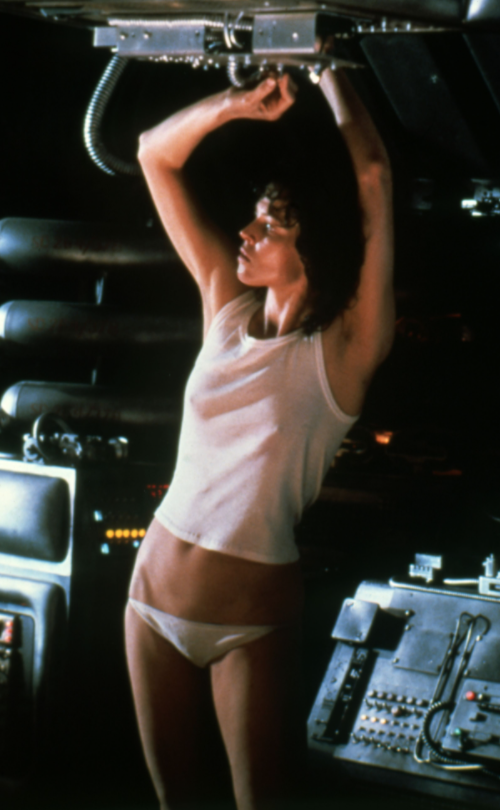
“First mile in 5:00 was effortless,” I wrote. “Will I gain further efficiency by going out even slower? I finally beat the Plaisted guy, or Converse or whatever. Didn’t notice mile markers for some reason. Took two small sips of water. Right foot blistered but mostly got numb and sore. Kept stride the entire race but let down against the wind. The psychology of the turnaround got me. Consider, Pete Crooke ran 49: something. Only 4+ minutes ahead. Placed seventy-first overall. Equates to about a 50:17 15Km, which isn’t that bad. Run a 15KM and go under 50:00. That’d be the fun race. Had a real good stretch past five miles, smooth, relaxed. Beat fucking Jack Myers. Try to edge the mileage toward sixty a week, but stay health. So I’m going to bed. I wanna girl like Sigourney Weaver…”

Yes, I’d been watching Aliens on the TV. That underwear scene. Who can blame me?

Blown away

The race felt like a metaphor for everything going on in my life. Buffeted by forces unseen, I was plowing through with everything I had to give. I confessed my twisted soul in the journal that weekend, quoting a bit of Pink Floyd, “Got admit that I’m a little bit confused. I don’t know whether to go out or stay home. I think about the girls I’ve known and I quantify them in terms of beauty. They’re beautiful inside, stupid. That college girlfriend was a hell of a love. The woman from work a Copernican shooting star. The theory is correct but the universe is different than we think. Now Linda, a honey sweet bit of barley girl, an Amoreena when I need her most and I deny her. I should marry that girl and quit looking upon it as giving in. Have a last fling. Run to the beach and pray that the God of erect nipples bestows a beach baby upon you. But will you ever be satisfied? You’ll always want one more beautiful girl. You can’t have them all. You’ve never lived…but…I have had fantasies come true. Which is the path with heart? Which is controlled folly?”

That last observation was a product of my reading the works of Carlos Castaneda and the Teachings of Don Juan. Now I was applying those fictional principles to real life, and real love, or the fear of it, “I’m probably looking for replacements for Linda, fearing the hurt and guilt I know will come. It’s like I know I won’t go through with it and I’m looking for excuses. My poor best friend heard the dim story for the umpteenth time. I wonder how much pressure there would be if I were still there? Then there’s that elder girlfriend; the perfect fuck I seldom lived up to. So weird after sex, a sixties mind trip hold out. Big jugs in the dark, a soft set of lips that kissed and palpitated. And teeth, always teeth. When will I ever find a girl who gives a good blow job? That’s what I need. A real suck queen. But I also need a wife. And I shan’t just possess her. Keep your eyes open and your heart in control.”

While I wasn’t much of a car guy, I did love my gold Plymouth Arrow. It ran smooth and quiet until the oil leak.

All the existential pandering hardly prepared me for the practical ugliness and confusion of what came next for my banged-up car. By Pennsylvania law, while getting my car registered, I’d had to repair a small rust hole on the underside of the vehicle. Anything bigger than a quarter had to be fixed before you could register for a license plate. I’d quickly purchased car insurance from a storefront agent in downtown Paoli. It turned out that he wasn’t entirely on the up and up. When I showed up to discuss the bumper claim, he walked outside and declared… “No problem!” Then he turned to me and said, “Obviously not your fault. We’ll get this paid for and get you a couple hundred bucks on top of that. How’s that sound?”

We walked back inside. He filled out paperwork and shoved it back at me. “Drop the car off at this repair shop and they’ll throw a new bumper on there for you. You’ll get a check from me. There will be something for you in there too.”

I sat there numb for a minute. Was this insurance fraud? I took the car to get fixed and went for a run while they put the bumper on. It was clearly not the same style bumper as the original manufacturer. I called the agent to discuss the matter and he said, “Whattaya want? It’s a bumper, isn’t it? Did you get the money I sent you on top of the payout?”

Indeed, I’d received a check for $200 more than the amount I owed for the bumper and installation time. I needed the money, so I decided not to ask any questions. But I thought to myself, “So this is how this shit works…” The entire Pennsylvania registration system felt like a massive scam.

I drove to work late that morning and lamented, “Wish I could do that whenever I felt like it. Left Philly and hit the roaring Schuykill on the way home. Boathouse Row like a string of lights along the river. Now I’m home home home. Good night.”

March had been one helluva month

I was about to collide with another form of reality.

Posted in blood on the highway, Christopher Cudworth, competition, death, fear, mental health, mental illness, race pace, racing peak, running, running shoes, sex, we run and ride | Tagged , , , , , , | Leave a comment

50 Years of Running: Green-eyed redemption

Coming off the Miami weekend in January of 1983, I got caught in the rain during the first run back and came home feeling dragged out, with cold symptoms haunting me all the next day. “I’m resting tonight to see if this is how to cure a cold. Lot’s of Coca-Cola today. Laundry night. Nose is sinus sensitive but the running’s stopped, no pun intended.”

Years later I would discover that for me, the use of zinc tablets knocks out colds in the early stages. I also learned that extremely dry air contributes to sensitivity. And so does late-night masturbation when I was already tired. About that, I’m not kidding. As a perpetually horny young man, those rituals were simply part of life. But there was a yin and yang response in my body at times, that I could feel almost instantly. Something about the additional fatigue of a session was enough to shove my body over the edge.

So I learned to be judicious. If that sounds crazy, so be it. I beat the cold for once and lined up for a race the last weekend in January. It was a five-mile road race. I wore a pair of new Nike Mariahs, a new racing shoe with a full air insole. They felt light on my feet, but my toes went numb from the air soles. They were an interesting cream color that matched one of the pale yellow hues in my watercolor set. I wore them a few times and retired them to comfort shoes because my feet felt terrible every time I raced in them.

However, the race itself went well. I went out fast in 4:45, through two miles in 9:45, and three miles in 15:00. Then I hit some hills and came through four in 20:35, still a fine time for a four-mile race, before finishing solidly in 25:39. “Not bad for January,” I wrote. And, “Dick Hayden went by me.”

Humbling truth

That was the humbling part of racing for the Runner’s Edge team. Almost everyone was faster than me. But the best aspect of that truth came back to the training. If it doesn’t crush you, running with superior athletes almost always makes you better.

On February 11, I got a call from a former Luther College teammate, Keith Ellingson, who was in Philadelphia on a coaching seminar. We went for a short four-miler together in Philly, and got to catch up on life some too. I had not seen him since the previous New Years when Linda and I traveled to Decorah to go skiing with Keith and his wife Kristi.

We got a killer snowstorm in the middle of February, nearly 20 inches overnight, so rather than run some road race, I found an indoor track meet and blasted through a 9:29 two-mile, running miles of 4:40 and 4:49. The next day, I ran a measured 15.5 mile run in 1:37:30, or 6:00 pace. But through it all there was a nagging knee problem, a bit of tendonitis that would not go away. Part of the problem was the training shoes I’d purchased at the start of January. The Saucony Dixons I tried were just too stiff and hard.

And in late February, I was facing other stiff concerns. “Linda ground me out by phone,” I wrote. “I still can’t make a commitment.”

Green-eyed redemption

On January 29th I’d written in my journal, “Is this confusion, fatigue or lovesickness racking my body this time through. My stereo keeps clicking off. Nobody better read this is they don’t want to know the truth. 3 hours of sleep. Restless sleep with a green-eyed lovely next to me. Her camisole was so damn cute, better than I ever imagined her body anyway. Firm breasts and a round, solid pair of glutes. And loverly. Oh so companionable. But she will probably never orgasm until her daddy-went-away (and I don’t blame her) complex is dissolved. I didn’t try to perform miracles, but my love is heartfelt for you. Your name will never change to me, green eyes. I hardly care if I am first or last or even best. I have been yours and that is enough yet never enough. I’d like to spoil you. Simple yet complete girl and woman. It is a lonely house. Doctor My Eyes. You must help me if you can. Was I unwise to leave them open for so long? I’ve learned how not to cry.”

That woman and I would see each other again after we were both married, but nothing was ever mentioned about that night between us. It did not need to be. Who says that sex between two people cannot be about connections that need never be explained? Certainly, the prudish Christian world sometimes times insists that love outside marriage is some kind of sin. In some cases, I believe it is the exact opposite. Sex between two people that love each other yet know their futures are not meant to converge in matrimony is both the ultimate compliment and the penultimate complement. It is the bodily confession of departure, the form of goodbye that lasts forever. And frankly, I experienced that with a previous green-eyed woman, and have no regrets.

So while my path seemed aimless at that time, as if I could not make up my mind about anything, in truth the entire journey was a wide-awake attempt at finding out who I really am. I’d also sit at the easel most days painting like a fiend, in love with the process, and trying to make something real out of nothing. It was all so parallel: the running, the loving, the painting, and the writing. To this day, I make no apologies. In some insane way, I really knew what I was doing.

Posted in Christopher Cudworth, competition, life and death, love, mental health, nature, race pace, racing peak, running, running shoes | Tagged , , , , , , , , , , | Leave a comment

50 Years of Running: Ringing in 1983

After a sweet Christmas in Chicago with Linda, I returned to life in Paoli with an eye on starting the New Year the right way. A long run.

“I ran a very relaxed but determined two hours today,” I wrote. “Most of it was 6:30 pace with the late middle miles faster and the last three very slow, because I became light-headed again. This feeling did not hit me until probably fifteen minutes past one hour of running, when I picked up the pace on the flat shoulders of Route 252. The entire route went: Paoli Pike to Sugartown Road, Sugartown to Goshen, Goshen to Grubb (or Grubb’s Mill) to the aintersection of Barr and Whitehorse, Whitehorse to 252–one lap around the local golf course, up to Route 30 on 252 and several dizzy laps around the cemetery and park. Ran from 1:55 to 3:55 p.m. This got me over the stigma, somewhat, of two hours but I learned precisely at what point and what pace the ire of fatigue took over. It is and was a beautiful, warm winter day with a cool breeze from the northwest. Wore Goretex top, two T’s and a pair of Luther sweats. Oregon’s (adidas) felt good. Strangely, my knee problem, tendinitis around the outside of the joint, is eradicated. Knee felt quite fluid going upstairs. I was locked out when I got home! Climbed the house to get back in.”

There were many such moments when I locked myself out of the house. Blame it on my ADHD. In response, I’d developed a technique of scaling a gutter to the roof above the downstairs door, reaching over to the second-floor window, and climbing inside.

That afternoon, I grew extremely hungry from all those running miles and walked over to the Turkey Hill convenience store to buy anything that looked good to snack on. As I approached the door, a guy angling toward the same entryway stared at me and walked smack into the glass door. I went home with my snack collection and mused in my journal: “God gave me a helluva an illustration today. Some guy walked into a door today while staring at me. ‘Don’t let the fascination with life occupy your better senses.’ He seemed to be acting the fool, or needing sympathy or something. But his eyes were so fixated, and with all those people watching. The guy at the counter said, “he comes in here quite often, and he seems like a sedate guy.” There’s your only resolution, Christopher, on this, the beginning of a New Year, and you’re already begun on the old year. Let or make the balance of activity come and you don’t walk into any closed doors. Happy New Year!”

Then I wrote: ARTIST • PAINTER • WRITER • RUNNER • LOVER. BELIEVER IN GOD. WHO GAVE YOU JOY AND LOVE ON EARTH. And bless Linda, Family and Friends.

Post Race Of The Americas with my cousin Alan Nichols.

And then came a race in Florida. My cousin Alan Nichols reached out to me somehow, and we arranged a visit to his place in Miami to join him in running the Race of the Americas 10K. I hadn’t really known to that point that Alan became a marathoner. But his father, my Uncle Kermit, was once a leading distance runner in the Northeast. He’d trained as a runner by scrambling up the Catskill mountain on which the family farm resided. My mother recalled watching her older brother run a road race in which he built a lead so large that he stopped during the competition to chat with family members.

I grew up visiting that farm as a child. Much of my love of nature comes from those visits, as there were leopard frogs in every watery tire track, and black fossils found in every chunk of slate of which the mountain was composed. In summer, we once crested that hill and tread our way down a tumbling streambed formed of that slate. It was one of the most magical moments of my entire life.

So I was eager to spend some time with Allen both to run the race and to share some memories together. As kids, we often fished in the Susquehanna River that bordered the “flats” of the farm. That’s where my Uncle Kermit would pile me on his legs and start up the tractor to tear across the fields next to the river while towing the manure spreader behind us. I’d cling to his lap while staring down at the crazily spinning tractor tires inches from us on either side. While I openly dreaded the idea of falling off to my death, my uncle’s giant arms kept my skinny little body in a safe place. We tore down the flats with increasing speed as the cow shit flung in merry distribution behind us.

The chain pickerel is a beautiful species of fish in the pike family.

Come evening, my brothers and I would walk down to the Susquehanna with our fishing rods to catch bass and pickerel. We had a slim collection of lures in our tackle box. And honestly, Alan was terrible about losing those lures, catching them on weeds and such underwater, and a couple times he went to cast and spun them around a nearby tree branch. During one trip, we had only few good lures left between us, and gave Alan a rusted, hammered brass spoon with just two of the treble hooks left. He cast the lure but forgot to flip the bail. The line whipped ahead of him and the lure shot down into the lily pads with an audible !thunk!. The water erupted as a twenty-inch chain pickerel attacked the lure and Alan reeled it in. He’d just caught the biggest fish of the week.

I found that somewhat hilarious, actually. We put the pickerel in a bucket and took it high up on the ill to release it in the deep, clear spring where an artesian spring rose up from the depths of the mountain. Returning that next spring after a snowy winter, we were surprised to find that pickerel resting at the bottom of the spring. Apparently, it had found plenty to eat and slept through the winter in some kind of pickerel torpidity.

Pre-race warmup in Miami with my cousin Alan Nichols, January 1983.

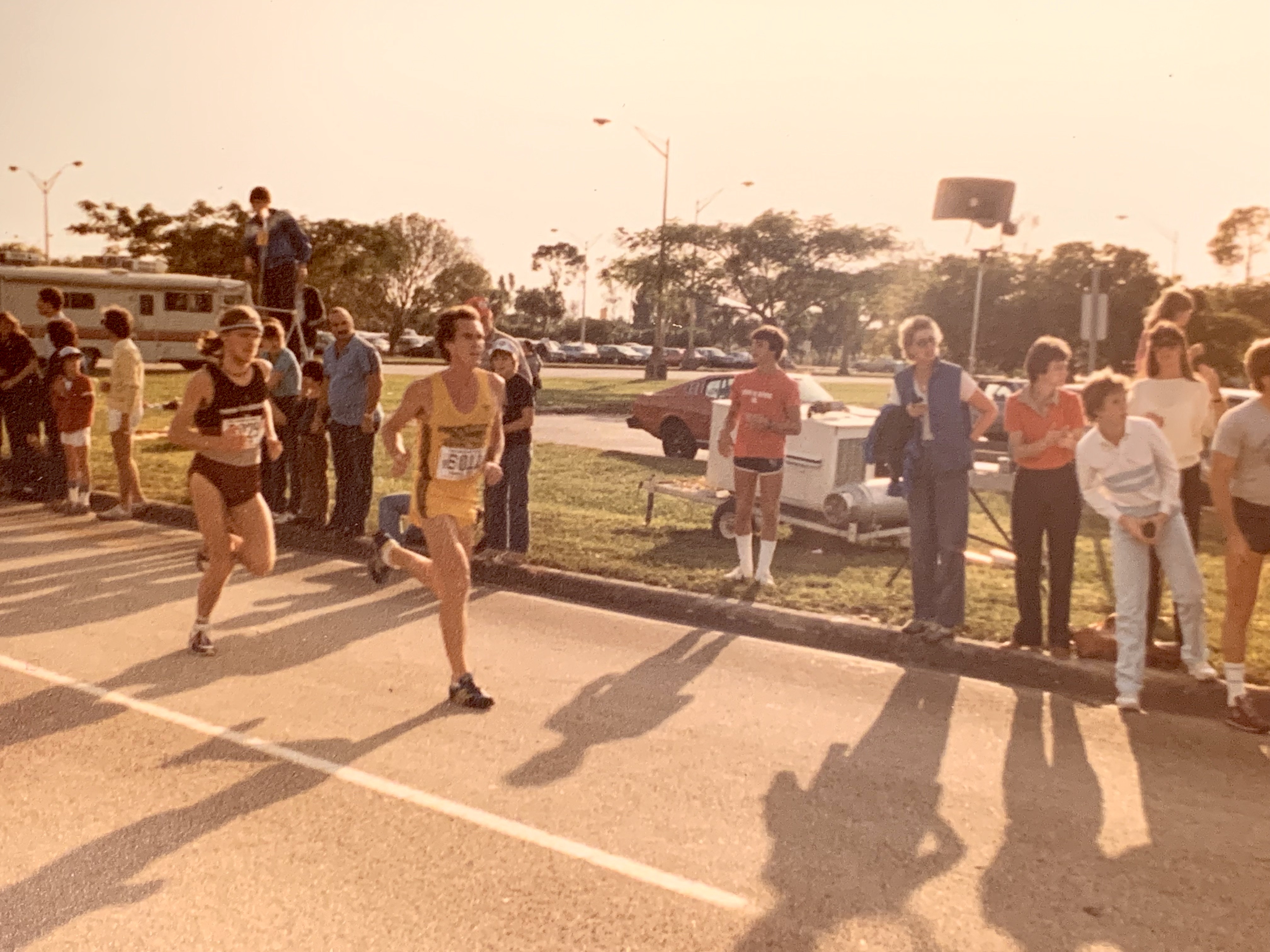
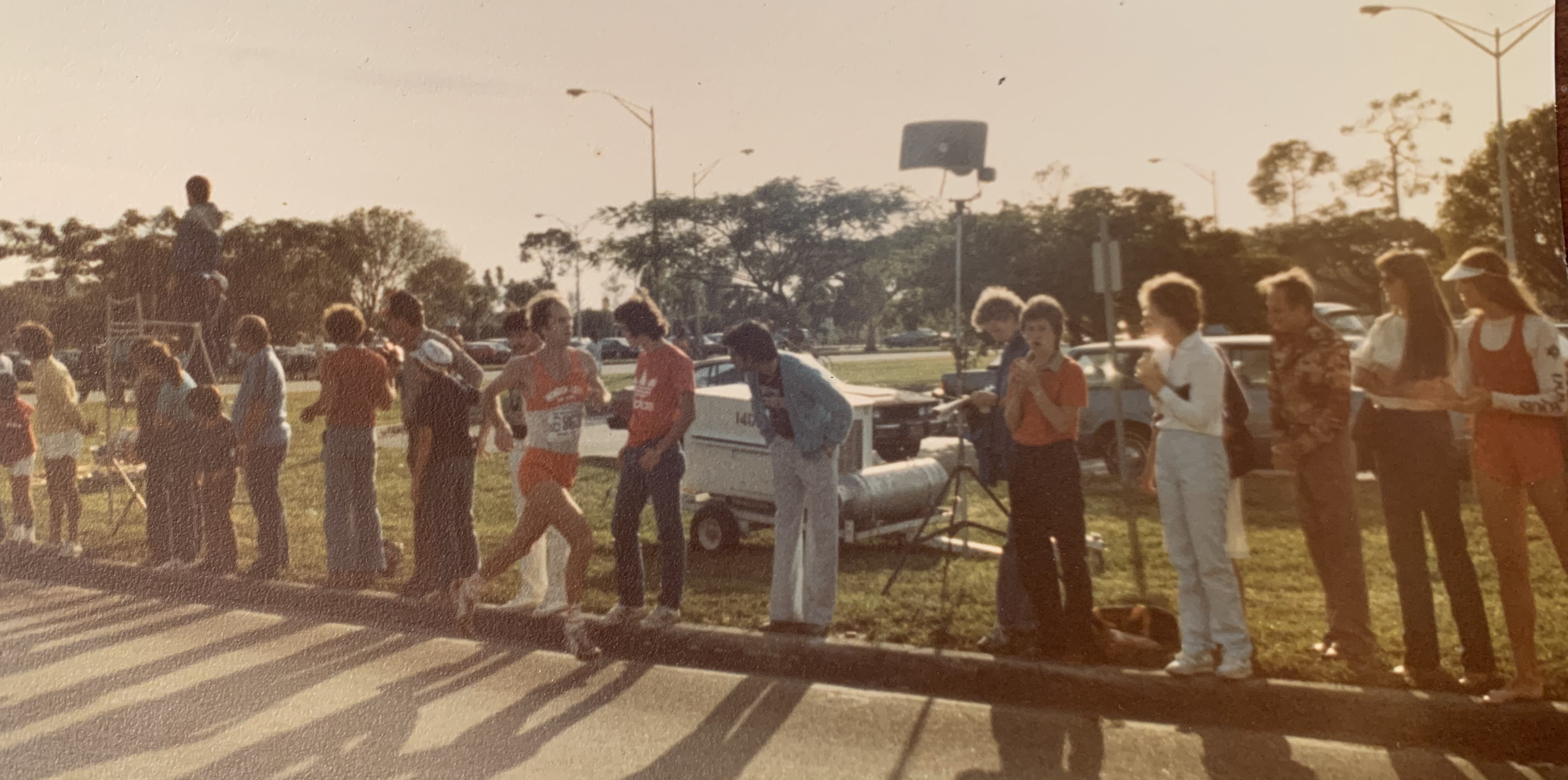
So I flew to Miami to visit Alan because who doesn’t like an opportunity to meet a cousin you haven’t seen in fifteen years? We raced the 10K and I wound up running alongside Ron Hill, one of the world’s greatest distance runners. I also ran next to Grete Waitz, the world’s best woman marathoner at that stage of the running boom, and even somehow bested Bob Hodge, a national-class distance runner clearly having an off-day down in Miami. I ran 32:20 for the 10k distance, and wrote, “No real blowouts. Just common pain. Wished I’d known splits. Could have run more relaxed early on.”

Grete Waitz leads noted distance ace Bob Hodge during Race of the Americas. I narrowly beat them both that day.

Indeed, no mile times were given throughout the race. I’d never run in a major race like that where there weren’t split times. I had a watch, but the mile points weren’t well-marked either. As I recall, Craig Virgin won the race that day. He was adorned in his yellow Front Runner adidas kit and eager to make headway in the burgeoning road-running scene of the early 1980s. I’d first seen him run ten years before in the Illinois State Cross Country meet in 1972. His time of 13:51 from that day would stand untouched for another forty years. He’d go on to win two World Cross Country Championships, and had a great shot at the Olympic 10K title if the United States had not boycotted the Moscow Games. If you want to read about his entire career, the biography Virgin Territory produced by sportswriter Randy Sharer is a compelling account of a world-class runner in both his glory and struggles. It wasn’t yet an easy time to be a professional runner, but Virgin was a trailblazer.

Craig Virgin leading the Race of the Americas 10K in Miami, circa January 1983
Christopher Cudworth at the Race of the Americas 10k, January 1983

The day after the race, Alan and I visited the Everglades. We rented bikes to ride around a 15-mile trail through the park. At one point, I was looking at the ditches for signs of water birds, and didn’t look up at a low-hanging branch where a red-shouldered hawk was perched. And then, around 13 miles, we encountered a large alligator laying across the narrow bike trail. The ten-foot beast was sunning itself on a cool day, so I reasoned it wasn’t going to be that active if we needed to jump over it. Alan chuckled in his famous way, and said, “You go first.” So I did, and the alligator just laid there like a log. So Alan followed suit and we didn’t have to ride the thirteen miles back the way we came. We were both thankful for that.

My drawing from the winter of 1982 foretold an encounter I’d soon have at Biscayne Bay in Florida.

On Monday, Alan needed to go to work, so I was on my own to find fun around Miami. I decided to go for a run and a swim at Biscayne Bay. The sun was warm and after the run, I stripped down to a blue Speedo swimsuit and sat in the rays. I stretched out on a towel between the sand dunes, and kept an eye out for girls walking along the beach. Still tired from the race the day before, I laid back down for a partial nap in the sun but awoke upon hearing a woman’s voice say, “Hi, how are you?”

I sat up, surprised at hearing that sweet voice. Then I went speechless at the sight before me. Here stood a short but magically built young woman wearing a tiny, bright blue swimsuit. The sun hit her at an angle where every detail of her body was evident. Her nipples stood out from her breasts, and the tiny swimsuit barely covered everything else. She stood over me on the towel and asked if she could sit down. “Sure,” I said.

I know. Dumb answer, right? But I ask in all sincerity: How cool would you be if a sun goddess in blue appeared in your midst, standing against the sky like an Atlantic mermaid come ashore?

We talked a bit. I learned that she’d attended college at Skidmore, and that she and her male companion drove down the East Coast to Florida for the fun of it. But now she was bored with him and pointed up the beach to where her companion sat staring out at the water. It took most of my life to realize that in some cases, a woman bored is essentially a woman scorned. She’d come to Florida for a sense of adventure, and for some reason her guy wasn’t delivering it.

I squinted up the beach trying to size him up in case he came after me for messing with his girl. I reasoned that with my relative speed, I could always outrun 99.9% of the people in the world. He was too far away to gather much about his athleticism. Beside, we were partly obscured by the dune grass.

“It’s getting hot up here in the sand,” I suggested. “Want to go for a swim?”

We walked down to the beach and as we went, I openly admired her. She walked in that relaxed way that showed she clearly liked the attention. We waded into the water, which was somehow plenty warm, and floated around together. She laid back with her chest to the sky and the blue bikini top clinging to her breasts. If I’d have had an ounce of self-confidence and male drive at that moment, I’d have invited her up the beach to have a good go of it on my towel. Instead, her eyes glazed over after a few minutes in the water, and she was bored with me too. “Well, nice to meet you,” she said, walking out of the water. Then she walked back down the beach toward her boring half-lover while I retreated to my stupid-ass towel still sitting between dunes.

Her laissez faire impressed me on many levels. Despite all my native lusts and fantasies, I’d let her slip away. That was sad, because I’d recently done a drawing of a fantasy girl by the beach. Yet here I’d been in the presence of a real woman eager to do what she wanted with her own body, and I’d stumbled into shyness. In that regard, she reminded me of the character Bo Derek played in the movie “10,” and I was about as awkward as the Dudley Moore character. Perhaps I had Linda ––my own Julie Andrews character––in the back of my mind as well.

My pencil sketch of a fantasy girl by the sea, circa 1982.

Later, I described the scene to my cousin Alan, who chuckled again and said, “You really blew that one.” There are few times in life when greater truths have been spoken to me.

What can I say? No one bats a thousand in this world. A major league ballplayer that hits .350 enough years gets a sure ticket to the Baseball Hall of Fame. But I also learned that if you keep swinging, sometimes you hit one out of the park.

I came with a wicked sunburn and a case of sore feet from running barefoot on the beach. It was surely fun to see my cousin and take a break from the manic commuting life up in Philadelphia. But things were moving behind the scenes in many ways that year. Sometimes when you’re running as fast as you can, it’s hard to notice things coming up from behind.

Posted in love, mental health, nature, race pace, racing peak, running, sex | Tagged , , , , , , , , , , , , , , , , | Leave a comment

50 Years of Running: A finish line not crossed

As the seasons changed from fall to winter, training in the dark night got hazardous. On December 12 I noted, “Cool, quite comfortable night. In bed at 10:00. Run went real well tonight with the exception of a fall, so sudden I was unhurt, no bumps even.”

I also had a new running mate, a talented woman my age looking for a training partner. She was fast, and we did our workouts at a quick pace. I was super impressed with her ability and endurance.

One night the roads were icy and she took a tumble as well. I helped her up and brushed off the snow from her running gear. She was embarrassed, but I told her, “No worries. I fell down like that last week.”

On the third night that we ran together, she explained that the support system for her running was not that great at home. Her husband didn’t like running at all. “He just sits around the house,” she observed.

The conversation expanded from there. She went on to explain that not only was her husband lazy, he also paid little attention to her in many other ways. He was no good in bed, for one thing.

I realized this was a woman with several layers of problems going on, and she was trapped in a dull and boring marriage. I tried counseling her on ways to get her husband interested in her running because I thought that was safe territory. But the conversation came back to his general disinterest. I was trying to take the innocent path, rather than the route she was clearly interested in taking.

On the fourth run we did together, we started and finished at my house. She thanked me for the run and then leaned forward to plant a wet kiss right on my lips with her arms around my neck.

I was surprised, for a moment, and yet not surprised at all. I was torn about what to do in the moment, yet knew the right way to respond. I said, “That was sweet.”

Surely there could have been an affair in the making. I could have asked her up to my apartment right then and there, and she would have come. We could have turned our weekly runs into an excuse to have sex every week and the running might have stopped altogether.

There’s no question that I was interested in her on many levels. I would have loved having that affair. She had an amazingly fine body and a beautiful face. Her slightly wavy red hair shone under the streetlights as we ran. The color of her eyes defied even the paints in my watercolor box.

But I resisted her affections. Because while I was a jerk on my own time, and had my own issues with commitment and respect for a relationship, taking on the problems of a married woman did not seem like a good idea at all.

And truthfully, I thought about that poor dope she married, and how much it would hurt for him to find out she’d been cheating on him. Or worse, he might not care at all. Then she’d be cast adrift with nothing to show for the risk she’d been taking. And what if he came after me with violent intent? I knew that the seemingly quiet dudes are often the most and dangerous when inflicted by jealousy. Think Richard Gere in the movie “Unfaithful” with Diane Ladd. Don’t mess with the wrong married man.

I also wasn’t about to go down the road of trying to steal her away from that guy. That was a finish line I was not willing to cross. So we stopped running together. I greatly missed our weekly workouts, because she was a fun and joyous person when she wasn’t feeling sad and morose about the condition of her marriage.

Perhaps in another life, we’d have made a great couple. I’d always wanted to go out with a “runner girl,” and tried to set that up during high school or college. There were a few wishful attempts at making time with girls from other schools during summer track. Then in college, I had the chance to date the girls on the cross country or track team, but I was dating other people. Now here I was with a sweet and beautiful woman runner throwing herself in my lap, and I turned down the opportunity.

That was clearly the right thing to do. I’ll admit to wondering in retrospect how her marriage turned out. It’s not uncommon for people in the first years of marriage to have doubts. One of my former lovers contacted me a year or more into her marriage and said, “I made a mistake.” It went no further. I’ll leave it at that.

She did go on to have a happy marriage by all reports. My truth is that as a 24-year-old man, I was having trouble with the idea of committing to marriage so young in life. In many respects, that’s the healthier way to deal with conflicted emotions. It takes time for some people to get those second thoughts out of the way. Then when you do cross that finish line and start the of life together, there’s a clearer path than the one you’ve left behind.

But wherever that ginger-haired woman with the fast stride may be, I wish her well.

Posted in Christopher Cudworth, cross country, love, sex | Tagged , , , , , , , | Leave a comment

50 Years of Running: Trying to get a leg up

I took a week off from racing after the zoo 10K and the Philly 8.4 miler. My brother invited me to come out to Lancaster and compete against his former Millersville classmate Jeff Bradley in a ten-mile road race. As it turned out, there were other Millersville guys such as Alan Treffinger that I’d run against at the national level in college. Seeing some of them on the starting line, I knew it would be a fast race, and I had no illusions of winning, especially after the much-faster and more experienced runner in Jeff Bradley.

The race did turn out fast. Even on the hilly course, we ran the first five miles fast: 5:00-10:01-15:35-20:55-26:10. By then, I’d dropped off twenty yards off lead as Bradley surged and a few others pulled away. Then the field strung out as we climbed hills and tore down the other side. I continued racing at a decent pace, passing six miles in 31:54, then seven at 37+, eight at 42:35, nine at 49+ and 54:04 at the ten-mile finish line. At the finish line, I was cooked. It ws extremely hard race. “Held pace well. Didn’t surge tho. Ran some uphills steadily. Felt headache a.m., kind of queasy. Had felt well on Friday, Thursday night. Probably just tension. Won a pair of shoes.”

The shoes I won turned out to be a set of Converse training flats. That company was trying to make inroads in the running market, so I was excited to receive a box in the mail with the shoes inside. They felt terrible on my feet and turned out to be absolutely awful running shoes. I ran four miles in them and never put them on again except to trudge around a marsh, and even then, they weren’t comfortable. So my “big award” turned out to be as big a disappointment as the Leg Lamp in the movie A Christmas Story.

November to remember

I summed up the November racing in more detail as well. “November ruminations–“Low mileage month. Ran three races. October 31–8.4 miles in 44:36, 10 km in 31:58 and a ten mile, hilly mother in 54:03. Thus about 1/2 of the month was probably recovery time….and I probably needed even more time than I gave it. Ten-miler proved to be a storyteller…went through 5 nearly as fast as I did/total in first 5-miler. Improved 10K time somewhat– 20 seconds–and learned that the leaders don’t necessarily go out any harder than 5:00, they just maintain.”

I continued the ruminations: “So, what does it mean? It means I’ve got a ways to go to be a sub 31:00 10K man, but that I’ve got the speed (4:15 mile now??) and can gain the stamina with a reasonable amount of consistency and the willingness to give up a bit for it. Where I’ll have to figure out. The dark nights are certainly tough, but then there’s tonight, a moonlit blue night cool as a hawk’s eye but not too windy and I felt like running so…”

Thanksgiving weekend

The following week I was hosting my at-home girlfriend Linda at my place in Paoli. I’d been back to Chicago once or twice on the company plane, but only for quick weekend shots. That was enough to keep the relationship going, but having a Thanksgiving weekend together would be good for us. I was excited to have her visit. The fall weather was cool, but not cold. A long line of maple trees along Paoli road shone a bright yellow. The day before her arrival, I planned to go for a celebratory run under that avenue of trees, but the rains came in torrents and stripped the trees bare. The entire countryside dimmed from bright autumn colors to somber greys and browns in a single night. The next morning the road under the maple trees looked golden with a layer of wet yellow leaves covering the surface. That made me sad because I was excited to show off the landscape in which I’d been running the past few weeks.

I was scheduled to pick her up at the Philly airport that night. Her flight was supposed to arrive at 8:00 p.m. so I showed up early and sat near the gate because back then, you could do that. Then word came over the loudspeaker that the connecting flight she was supposed to catch in Cleveland was canceled due to problems with the aircraft. With a touch of compassionate irony in her voice, the gate attendant told us that the plane we now saw pulling out of the bay was leaving flying to Cleveland to fetch those passengers and fly back again. I thought to myself, “Well, there goes three hours.”

I considered driving back to my place in Paoli and coming later to pick her up, but it was an hour each way, and that seemed foolish. Then a thought occurred to me; for some reason, it was really quiet in the airport that night. I sat there looking at the red-carpeted hallways and realized that the airport was built like a big square. “Hey,” I said to myself. “I could get in a decent run while I wait.”

Rolling locker room

I always carried some kind of running gear in my car. That night, all I had was some half-dirty racing gear and a set of worn-out Tiger flats. A quote I’d heard from a runner somewhere ran throw my head, “Go train, because if you’re not, your competitor probably is…” I was always trying to get a leg up on the competition.

So, I pulled on my gear and jogged back through the terminal to the square part of the airport and did a mile warmup. For the next hour or so, I ran repeats indoors just like we’d done while running the hallways of the high school in training for indoor track. I was just enough of an egotist to pull that off in the Philadelphia airport. Something in me imagined that my training was important enough to do it fully in the public eye. But after a lap or two, no one even noticed anymore. I finished five or six miles that way and finally heard the gate attendant announce that the flight from Cleveland was now loaded and would be headed our way in a few minutes.

That gave me time to head back to the car, towel off and change. I wiped all the important body parts with a stick of Brut deodorant and headed back to the airport. I felt a bit grungy, but happy that I’d gotten in a workout. There was still an hour-and-a-half to wait. Now I was just plain tired. Such were the ups and downs of life on the run.

My first-ever turkey trot

Earlier that day after work, I received a phone call from Linda to confirm her flight number. She asked if I had remembered to buy a Thanksgiving turkey that day. “Can’t we pick one up tomorrow?” I asked.

“No, Chris,” she said with some concern. “It needs to thaw. You need to go buy one right now.”

I hung up the phone and drove to the grocery store a mile away. Walking into the meat aisle, I was stunned to see that the entire freezer case was empty except for a lone frozen turkey sitting in the middle. Noticing another person at the far end of the aisle, I jogged toward the turkey and beat her to it. Never in my life had I felt so selfish and foolish. Without looking her in the eye, I grabbed the turkey, shoved it under my arm like a big pink football, and trotted away to the checkout line.

Back at home, I put the turkey in the refrigerator because I didn’t know how fast a turkey would actually thaw. This one was 15 pounds. When we got home from the airport, Linda immediately pulled the turkey out and we had it for Thanksgiving after all. Then we made love in my stupid little bed on the floor, and all seemed right with the world for a while that weekend.

Except it all felt rushed and too short. Yes, I was thrashing around trying to fight off loneliness and depression through other women in Paoli, but I had genuine feelings for Linda. Driving her back to the airport that day felt wrong. She knew it too. “Maybe I should move out here,” she asked. “I could find a teaching job.”

“That’s a nice idea,” I responded. “But I have no idea if this whole thing in Philly is even going to work out for me. Everything’s moving so fast.”

Money talks

The following week our big boss and President Jack Merritt treated the entire office to a nice dinner out in Philadelphia. Jack was a genuous man, and invited Linda and I to dinner at his home in New Jersey during one of her visits. He grew elaborate orchids in his spare time, and appreciated good wine.

Along with Jack, I’d begun to like many of the people in the office. For the most part, the feeling seemed mutual among them. For all my odd quirks and bad jokes made out of anxiety on the job, the relationships we developed from working together on projects were growing. After all, I’d only been there for four months, but thanks to all the newness of life in Philly and Paoli, that short period of time felt intense to me. But then, a happy little miracle came along. That night, Merritt handed out raises (mine was $1000) and bonuses. I took home a $3000 check. That helped my finances after scraping by for those first few months. I could pay off some lingering debts, especially the long-distance phone bill.

A warm December day

On December 5 the weather turned sunny and warm. Temperatures reached 75 degrees. All the running clubs in the area turned out for a competitive 10K in the hilly reaches of West Chester or some other clean little suburb. I decided to go for it that day and ran the first downhill fast along with the rest of the field. But even after passing the first mile in 4:40, I was thirty places back from the front. Hammering away, I passed three miles in 15:30, four in 20:35, five in 25:30, and 10K in 32:15.

I’d run decently, but still expected more from myself. I made that statement to a Runner’s Edge teammate Dick Hayden. He turned to me in seriousness and said, “32:15 is a good time.” That actually meant a ton to me at that moment. I really respected those Runner’s Edge guys. Dick was pursuing a sub-31:00 10K himself and had recently done a 6 X 1-mile workout all under 5:00 pace. That made me wonder if I should be doing the same. Other guys questioned the wisdom of it. But I think Dick went out and did it.

Of the most recent race, I wrote in the journal: “Gut gave out at the end. Legs never really hit the max point…I know I can run 25:00 flat now. Felt washed out the first mile. Ran well downhill. Wasn’t even a real clicker mentally today. You gotta know you can do it, and you can. Perhaps loneliness sucked it out of you.”

Yes, I was always super hard on myself, including the dating life: “Don’t sit on your ass then dumb fuck. Hit on a girl once in a while. Then run well. From now on….50 miles is base. We ain’t going under 200 miles a month. Eat well (good groceries tonight) sleep well, do your job and run. It’s coming, now snap this plateau. One you run 5:00 per mile, think of the confidence, the relaxation, the new level.”

I was trying so hard to get a leg up in the world and kept coming up with a leg lamp instead. But I wasn’t going to quit. That’s for sure.

Posted in 10K, 400 meter intervals, Christopher Cudworth, college, race pace, racing peak, track and field, training, TRAINING PEAKS | Tagged , , , , , , , | Leave a comment

50 Years of Running: Breaking barriers

Running has its barriers for everyone. Until Sir Roger Bannister first broke the 4:00 mile barrier in 1954, people speculated that it could never be done. Now the world record set by in 1999 by Hicham El Guerrouj stands at 3:43.13, and it has not broken for 23 years. The marathon record of 2:09 set by Derek Clayton stood for a decade or so before men like Alberto Salazar and Steve Jones lowered it. Then came the African runners who dropped it precipitously. Much like the mile, it was believed that the barrier of a two-hour marathon could never be breached. Yet the open race record set by Eliud Kipchoge now stands at 2:01:39, with Kenenisa Bekele just a second or so behind. Kipchoge did run a sub-2 hour marathon while paced by a contingent of world-class runners. So we know that under the right conditions it can be done.

These marks were set by the most talented and hard-working runners in all of human history. The world’s top women are now crushing records once thought unapproachable by the female gender. As described on Olympics.com,  “Letesenbet Gidey has crushed the women’s half-marathon world record in her debut in the event on Sunday (24 October) as she raced to an amazing 1:02:52 in Valencia. Helped by male pace-makers, the Tokyo 2020 10,000m bronze medalist meant business right from the start in her first-ever half-marathon race.” Brigid Koskei now holds the women’s world marathon record in 2:14:04, set in Chicago in 2019.

The men’s 10K record on the track is 26:11, a mark set by Joshua Cheptegei of Uganda. For women, the world track 10,000-metre record is held by Almaz Ayana of Ethiopia in 29:17.45 to win gold at the 2016 Rio Olympics on 12 August 2016. The world records for the 10K road distance are 26:24 minutes for men (Rhonex Kipruto, 2020) and 29:43 minutes for women (Joyciline Jepkosgei, 2017).

Against these records, my goal of breaking 32:00 for the first time in the late fall of 1982 seems a bit trifle. But it mattered greatly to me then because just like running a first sub-5:00 or sub-4:30 or sub 4:20 mile, it indicated progress.

At the end of October, I scheduled a series of races and started with an October 31 race in Philly. The distance was an odd 8.4 miles, but that made a great test of managing pace. I ran a solid 44:36 after coming through the five-mile mark in the low 25s, then hung on for a 5:10-per-mile average. That was a good sign.

But then, trouble hit. During lunch the next day at my job in downtown Philly, I was walking next to a building when a spray of Windex or some other cleaner from a window washer caught me in the side of the face. It shot up my nose and I lurched sideways with a dizzy spell. For the rest of the day, I experienced vertigo, and couldn’t get to sleep. “Wide awake at 11:15 tonight,” I wrote. In actuality, I’d probably developed some sort of ear infection brought on by a series of colds throughout the fall. The reaction to the Windex incident may or may not have been coincidental. In any case, I went to bed the next night at 9:00 and slept through to six a.m. the next morning. Clearly, I needed the rest.

Racing at the zoo

On November 7, I signed up for a race at the Philadelphia zoo. My confidence was mixed due to the issue with the ear infection, so I wondered if it was a stretch to race at all. But I also knew that I was making good running progress according to my race the week before. My goal at the zoo race was to break the sub-32:00 barrier for the first time.

My journal report was satisfying: “31:58 10 km. Ran with leaders first 2.0. Winner was 30:54. Let a guy go at 4.2. Didn’t kick. Afraid I was gonna puke or something. Good race though. Considering health and state of mind during week.”

That was that. Despite the self-criticism, I was actually ecstatic to have finally broken the 32:00 barrier. It felt like I was nearing the status of some sort of “sub-elite” runner. According to the Liquori book, the elite runner barrier for 10K was 31:00, or five-minutes per mile. And so, the next barrier would be a sub-31:00 10k, a pace under 5:00 per mile for the distance. First, I’d need to run a sub-5:00 race for four miles, then five. That’s typically how such progressions take place.

I was just about as fast as the world’s top women runners at the time. International stars such as Grete Waitz and Mary Decker were busy trying to break the same barriers. To my reasoning, it was no shameful thing to be running as fast as the world’s top women. But these days, women are running times that I never came close to achieving. Even my friend Tom Burridge, who once held the American half-marathon record at 1:04, would be almost a half-mile behind the likes of Letesenbet Gidey at 1:02.

The point here is that it is a noble measure to set goals for yourself, whatever level you hope to achieve. There’s also lifelong value in that. As that distance ace Marty Liquori once said about racing your hardest and doing your best at running (and I paraphrase), “You’ll never feel the need to prove yourself at the family picnic.”

Posted in 10K, 13.1, aging, aging is not for the weak of heart, Christopher Cudworth, competition, mental health, race pace, racing peak, running, training, training for a marathon | Tagged , , , , , , , , , , , , , , , | Leave a comment