Dogging it too

Yesterday the topic was “dogging it” in workouts to avoid unnecessary effort and pain.

But one of the ironies of the human languague is that a term like “dogging it” can be so close to a term such as “being dogged” and mean the entirely opposite thing.

When you’re being dogged about something, it means you won’t quit. Our local high school is called the Bulldogs because that animal symbolizes a dogged willingness to win.

I’m here to propose that there’s yet another meaning to the words “dogging it” or being “dogged.” After all, I’ve been dogging it in a dogged way for the past six years. That’s when a little mutt named Chuck first came to live with us.

Little ChuckAt first he lived in a frat house on the University of Chicago campus after my son Evan and a friend rescued him off the streets of Chicago. Then while still a pup under a year old, he moved to our house in Batavia. This came about by request of my daughter Emily, who loved the little pup at first sight.

Chuck was a cute and yet anxious pup then. He’s still something of an anxious dog today. When left at the groomer he yips and barks. No harm done, but they do call him a “talker.”

Chuck by the Back FenceWhen someone comes home he jumps and leaps in excitement. It’s an annoying habit frankly, especially for women in shorts. His nails can hurt.

Mostly he’s attached to “his people,” and is excited when they arrive back home. For the last six years as my son moved to New York and my daughter moved East in the Chicago suburbs, he’s been living with me.

My job has always been to walk him. Before she passed away from cancer in 2013, my wife did most of the feeding for Chuck and was often around the house. She was his main focus in life.

I assumed that role up upon her passing. But my wife had secretly confided to a close friend that if she were to pass away, Chuck might also die for lack of care. That might have been said in jest, or perhaps not. Some jokes are hard to discern out of context. But in any case, I have taken very good care of Chuck.

He was one of several caregiving responsibilities that came my way the last 10 years. Af first my mother needed help caring for my dad. She passed away from cancer and stroke in 2005. That meant I took over as full time caregiver for my father Stewart, who just passed away in October, 2015. During the eight years of my wife’s cancer treatment in that same timeframe, I was her direct caregiver during treatment and recovery periods. We also had lots of help. And Chuck was one of those helpers too.

Chuck and Chris

It was just him and me left in the house eventually, and it was a joy for the to have him as a companion. But as any dog owner can tell you, being a dog owner also comes with a healthy dose of obligation.

Every trip out of town for cycling or running or a triathlon meant finding someone to care for Chuck. That’s not as easy as it sounds at times. His neediness made a dog kennel an unlikely proposition.

There was a parallel there with my father actually, who was so demanding at times there were very few people who could tolerate his impatience. For that reason, it was not practical to move him to a potentially nice situation in a residential group home in his hometown. He could be a stubborn and forceful man when frustrated. His loss of speech and mobility due to stroke did not make it any easier on him.

But of course, that’s the nature of caregiving. One must accommodate the character of the person, or the dog, involved.

It has been fascinating the last week to see how much of my mind has long been occupied with reminders of Chuck the Dog’s needs. It turns out I’ve been “dogging it” for years and hardly knew that I’d built up a whole system of mental Post-It Notes to plan and take care of that dog.

  1. When I rise in the morning the first thing that pops into my mind is how to walk him. What’s the weather? Is it raining? Does he need paw gloves? Remember a poop bag?
  2. Then he needs to be fed. Wet, Dry or Hard Tack?
  3. He needs a chewie.
  4. He needs a Greenie for his teeth.
  5. And so on…

All that stands in front of any plans I might have for the day. Usually I’d walk him before I got out for a run or a ride. Otherwise it can be anywhere from 30 minutes to three hours before he can go. He’s not left me many presents over the years, but once in a while…

That means it’s even harder to get out the door some mornings for a workout. Going to the gym and getting back in time for 8:00 a.m. phone meetings or appointments means rising early. Add in the dog walk and it gets even tighter. When the weather is bad, all that prep with Chuck takes time.

Fact is, the dog often has to come first.

Chuck with LambsIt has been bittersweet however, having Chuck move out. When you’ve lived with any reasonably sentient, loving creature for so long, there is an inevitable feeling of sadness. After carrying Chuck’s gear and crate to my daughter’s car, I stood out in the yard where the dog and I have spent so many mornings together. By my count, that’s been about 2000 mornings taking him out to pee or walk in the early morning light. And again sometimes at noon. Then again at night. So I stood there and cried for a bit. He’s kind of the last connection to all that caregiving and stress and mortality and loss. He’s been a little lamb in a life of wolves. So I’ll admit I cried for myself a little bit. It’s always time to move on. But some moves come harder than others.

There were many longer walks together too. So we’ve probably dogged it together 1000 miles together in all those years. It’s kept him healthy. It’s kept me physically and mentally healthy.Through tough times and good.

There’s a definite attachment that comes with such a presence. I’ve held him in my arms when his paws get too cold on winter mornings. Felt him shiver and realized his small life depends entirely upon my care. Same with hot days. He’s plopped down in the shade more than once. You realize at that moment that summer should not pass you by. So you sit down in the cool grass and let the moment settle on you. He also almost died from a yellow jacket wasp sting four years ago. Those were anxious moments for sure.

On the happy side, we’ve met hundreds of other dogs over those years. I’ve told his story to hundreds of people and hardly a walk goes by where someone does not stop to pet him. I share his happy tale as he wags his short tail. He loves to sit and listen to people talking.

Unless there’s a squirrel.

I’m being careful not to be too sentimental. He’ll come for plenty of visits I know. So it’s not like he’s gone forever. Who knows if he’ll even adapt to living with my daughter in her condo? I rather hope so. She loves him and he’s still in his doggy prime. I want them to have this time together because she is the one who wanted to bring him home in the first place.
IMG_3559

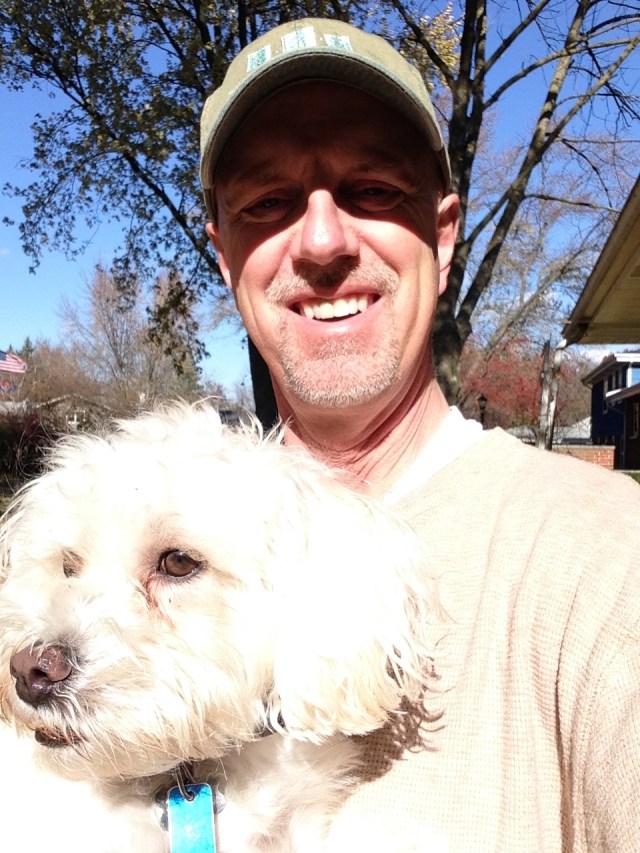
Chuck the Dog has been a steady companion.

I’ll also admit that a part of me selfishly wants to experience life without those caregiving obligations. Being able to travel out of town without all that prep and concern. Staying out late for dinner or an overnight without worrying if he’s okay back home. Getting up to go workout without that routine might be kind of nice for a while. Perhaps I’d even work out enough to lose the extra weight around my middle because, I must admit, I’ve been dogging it a little in the eating versus calorie-burning department.


People told me there would be a hole in my life when he’s gone. And while that’s true, I’m prepared to fill that hole in positive ways. With painting. Writing. Running. Cycling. Swimming.

It’s a tradeoff, a tarsnake of choice, selfish interest and obligation. If he comes back home because he’s too anxious to make it work in a new environment after all these years at my place, I’ll understand. But I truly hope he can be dogged in a good way and learn to love life with Emily because she loves him so. And I love her, and my son, and our whole family loves Chuck. We just want the best for him. Sometimes dogging it can also mean a little tough love. That’s another tarsnake of life. Tough. Love.

Runoverthetarsnakes2

Posted in Uncategorized | Tagged , , , , , , , , , , | Leave a comment

Dogging it

IMG_7618Last Thursday the speed work went well, Yet the next few days delivered a set of barely sentient slogs. That’s the yin and yang of endurance sports. One day you’re flying high and the next it feels as if you’re crawling through dirt to make any progress.
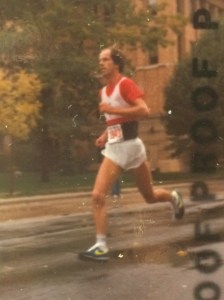
It was never my style to literally “dog it” through a workout. I simply did not understand those who did. Some of that seeming dedication came more from a thorough lack of self-esteem. My desire to prove myself in some way, somehow was always far stronger than my desire to avoid the effort.

That’s both a blessing and a character flaw. Our college cross country team at times trained way too fast and too intensely. That was not the fault of the coach. That was our competitive nature. Great coaches like Bill Bowerman at Oregon knew this tendency in distance runners and reigned them back in. Workouts were individualized for that reason. A Kenny Moore typically did not do the same workouts as a Steve Prefontaine.

FLW 1983I’ve shared that a roommate of mine and college track teammate finally broke that cycle of training intensity. We built a slow running base going into our senior year of track and both set PRs at all distances. The same thing transpired with those runners in Philadelphia with whom I trained. They ran their long slow distance really slow. And the benefits were really fast times.
It is likely true that all endurance athletes have learning experiences such as these. The summer I rode 4000+ miles on my bike was fun. I dropped weight all the way down to 163 lbs from a typical 175. I might like to go somewhere near that again to rid my waist of this excess weight. But there are no guarantees about that. I see plenty of long distance cyclists with bellies on them. The real culprit is diet. Too much sugar, for example. In many respects, some of us “dog it” behind the scenes. We do the workouts but secretly undermine our efforts by eating the wrong way, or neglecting our stretching or strength work.

It takes discipline not to dog it in some way. For that reason, most of us could benefit from sitting down with a pen and paper going into the New Year. Write down all the areas in which you want to improve. Don’t leave anything out. Be honest with yourself. Don’t dog it when it comes to your desire to improve. You’ll have a better year as a result.

Tomorrow: A different kind of dogging it. Lessons learned about brain power and the dog moving out of the house this past weekend. 

werunandridelogo


Posted in 10K, Uncategorized | Leave a comment

Don’t worry, you’ll get there

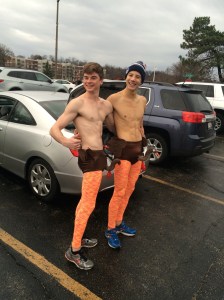
Turkey DudesWhen we’re young, it can be amusing to consider the vexations of older people. The flourish of youth enables this attitude. It’s hard to imagine that you’ll someday face your own symptoms of aging.
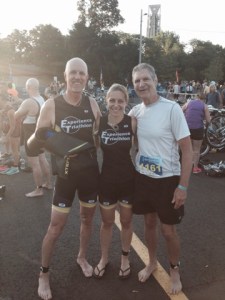
But it happens fast when it starts to happen. Just yesterday while speaking with a young father who took third place in our local Turkey Trot, he observed that he’d been beaten by younger competitors. To be sure, he still ran fast for his own age. But he was disappointed to be feeling a little older…

Then he asked how my own race went, and I explained that I was happy to run 7:00 miles for the four-mile distance.

There was a time when running 7:00 miles was really slow for me. These days I’m happy to be able to run that fast, and don’t really worry if I’m not dropping my times year to year. Granted, I ran faster this year than last because the Achilles problem I’d had last year was largely solved by different shoes and some strength work. Thankful for that.

Chris Fun Pic TooBut it’s not just injuries that slow us down. Eventually, our bodies cannot process oxygen with the same efficiency, and our muscle volume can deteriorate as we age. That’s why it is highly recommended that athletes keep working with weights and strength to maintain muscle tone and volume.

Thanks to a populace focused on better aging, expectations are changing about the way people age. Where the age of 50 used to be when things really started to fall apart, now people are blowing past that age with speed and energy. The same goes for 60 and even 70. Having ridden with highly proficient cyclists of that age, it is obvious that keeping the engine running is the key to sustained health and vitality.

Behind the scenes, however, there are challenges for everyone in the health department. The internal workings can get quirky, for example. Men and women can both face issues with urinary performance, for example. Some women become marginally incontinent, while some men face Benign Prostate Enlargement that can lead to balkiness in the ability to pee.

7e8f7__782468-9f8b3344-8e1c-11e3-836d-02ea2adb9f0aThese things sound funny to younger people, who can’t imagine themselves facing similar problems. But don’t worry, you’ll get there.
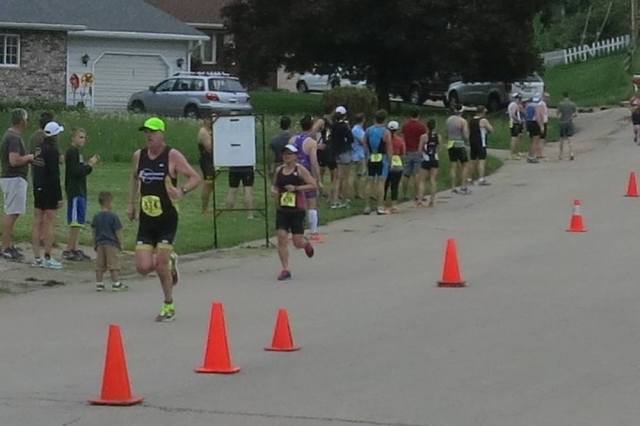
Here’s some basic advice: You should take pride in managing your health in every way you can. Aging is a process, not a thing, and many effects of aging can be deterred for far longer than science or people once imagined.

I’ve joked for years that when I run, I turn around and look for body parts. But in reality, the work I’ve done to keep my body together is essential to what I can still do quite well. Even without an ACL in my left leg, I can still run ten or so miles and the knee won’t hurt, cycle 100 miles and swim. I don’t play basketball or soccer these days because ballistic sports put me at risk for muscle and tendon tears. That’s a sacrifice that I accept.

11336898_10153355466639313_5963747517278445329_oBut the hips, well that’s a different matter. They do hurt after an hour of running. That means there needs to be specific strength work done to build up the hip flexors and keep them from tiring out late in a run.

Adding swimming and cycling has also been a good thing for longevity. These two low-impact events don’t put as much wear and tear on joints as much as running is perceived to do. Actually, I don’t believe that the running is the problem. It’s the lack of strength in supporting tissues that most often causes problems.

CudworthVersusCudworthThere is no escaping the fact that our bodies do change as we age. We are simply not as fast at 50 as we were at 20. But the relative benefits of pursuing fitness and endurance sports with intelligence is a great way to live. It keeps the whole package in shape so that the little health problems we all encounter do not become worse issues because our overall health is bad.

That’s the big shift going on this world today and endurance sports are responsible for better health in many people. That does not mean perfection for all, but it does mean setting a good example for those young people who think it can never happen to them.

But don’t worry, you’ll get there.


Posted in aging, aging is not for the weak of heart, Uncategorized | Tagged , , , , | 2 Comments

Boyfriend Points and more

Pre-Ride PartnersWouldn’t it be funny if girlfriends had scorecards by which they could grade their boyfriends or husbands on their day to day performance? Can you imagine?

For starters, let’s talk to the Ladies. What type of things would you put on those scorecards?

Footrubs? Check.

Washing and putting dishes away? Check

Going out and Buying Groceries when they run out? Double Check. Hell, triple check.

The list could be endless of course. But then there would have to be some sort of quantifier. How would the point system work?

Good points

You could dole out big points like they do in the show “Whose Line Is It, Anyway?” But those points are just for fun. No one really wins anything in an Improv contest. Except laughs.

Or you could go minimalist. On a 10-point scale, a guy might be a real winner if he hits 10 points a day. 10 “favors” or follow-throughs.

What does a gal or a companion want done? What earns real Boyfriend, Husband or Companion Points?

Right now we can guarantee there are some men out there doing the math and asking themselves, “What do I get if I earn 10 points?”

And of course, some like to think there is a sexual favor at the end of every relationship contest. And isn’t that sweet?

Well, sex may be a nice reward for some. But actually, there should probably be a category in the Boyfriend Points checklist for performance in that area of service too.

Interval session

IMG_8601This morning I got up at 5:15 to meet my girlfriend for a workout of 6 X 800 meters at 4:00 pace. It was a little hard getting out of bed at that hour, but really not that bad.

What was bad was the drive home last night after giving her a half hour foot rub. With two beers and some delicious tortellini soup in my belly, I got a little sleep-eee at the end of the foot rub and dozed off.

Rousting myself to drive back home was tough. Heck, I was so sleepy and yet so focused on heading home I did even say goodnight to her cats. That’s just not right. The cats might not talk to me tomorrow. But actually, I think they’ll forgive me quickly if I rub their ears and tummy.

But this morning’s workout was quite fun. And even if I earned a few Boyfriend Points for showing up and running with her, in the end, I was the real beneficiary.

Doing things

Pumpkin Pie

Amanda Marek, Suzanne Astra, Lida Bond-Keuhn, Pumpkin Pie Head Cudworth and Todd Walters post-ride.

That’s probably the real point about Boyfriend Points. Doing things for other people, especially the person you care about and love, isn’t really about a point system at all. It’s finding ways to make someone feel good that day. That hour. That minute.

The only thing the Boyfriend Points system might do is raise awareness of the many things you can do to make someone feel supported and special. It works both ways of course. There could be a scorecard for Girlfriend Points as well. Or just plain old Friend Points.  Every relationship has its “point systems” that show you love and respect someone.

But understand: it’s not that you have to prove yourself in some way. It’s more that you should prove yourself… to yourself. What kind of good companion can you be? Are you thinking of others as well as yourself? How can you show respect or care to everyone you meet today?

The broad spectrum on this kind of love is consideration of  “Agape, translated as “love: the highest form of love, especially brotherly love, charity; the love of God for man and of man for God.” The noun form first occurs in the Septuagint, but the verb form goes as far back as Homer, translated literally as affection, as in “greet with affection” and “show affection for the dead.”

IMG_2813This is the brand of love you express or feel toward all human beings. I truly get those feelings when seeing other runners or cyclists or swimmers racing or training. A quiet “way to go” runs through my head and sometimes I even yell out the car window or wave at a passing runner or cyclists with a few words of encouragement. There’s a fellowship to all that. It even pays to get a little goofy at times to express that agape in this world.
 

Buried hope

The art of agape is buried under the detritus of  battles over politics and ideology and religion going on today. These conflicts leave little room for consideration of the needs of others. Instead, too many people wind up projecting their needs on the world, jealously claiming that our country or religion or sports team deserves better than another. It’s all part of a pattern of a selfishness that evolves and emerges as the central focus in a competitive society.

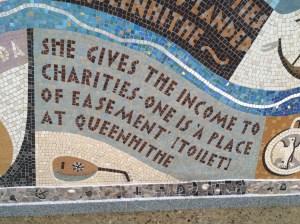
She GivesIn that atmosphere, every accomplishment or grain of wealth becomes a checklist against which all others are measured. “I earned every dollar I have,” goes the refrain. “I don’t want people freeloading off my hard-earned money.”
That sentiment is not hard to understand. But it is hard to reconcile against the greater Christian message of agape, which emphasizes the importance of giving over receiving.

2 Corinthians 9:7 [Full Chapter]

Each of you should give what you have decided in your heart to give, not reluctantly or under compulsion, for God loves a cheerful giver.

Luke 6:38 [Full Chapter]

Give, and it will be given to you. A good measure, pressed down, shaken together and running over, will be poured into your lap. For with the measure you use, it will be measured to you.”
Heading into the Christmas season, you are invited to do this little exercise today. Go to this link for Biblegateway.com, and enter the word “give” in the search portal.
You’ll quickly see how many scriptural entries it brings back. The Book of Genesis alone has dozens of references, and the rest of the Bible is full of references to gifts and giving.
And yet, Christmas has been turned into a veritable dark cartoon about giving. The day after Thanksgiving is now called Black Friday, which was (if memory serves) originally a term ascribed to the fall of the economy and the Great Depression.
Santa sucks
The rakishly mythical character of Santa Claus erases all thoughts of what it really means to give. Santa actually sucks all the real meaning out of Christmas. We now live in a cartoon society where real values are lost amidst a world of consumerism and crass behavior.
Meanwhile faux news stations like Fox News claim there is an actual War On Christmas going on. In fact the real war on Christmas has been waged and perpetrated by the very people who claim to value the tradition. That is, Christians have waged the war on Christmas, not anyone else. Those of us cynical about the holiday are mocking what the holiday has become, not what it really means.
Be honest
So let’s be honest about what Christmas really means. The fact of the matter is that it’s not always easy to give. Sometimes we feel pressed financially. Other times, our spirits are distracted by life’s demands. We can feel as if there is no room in our heads or hearts to give. Then there are hurt feelings to consider, and the difficulty of forgiving those who we perceive as having neglected or harmed us.
To help us overcome all these guilty feelings, we invented Santa Claus. But in so doing, we lost all hope of reconciling the conflicted feelings we have about a Savior and what we really owe this world from grace.
Giving and forgiving actually go together, you see. Sometimes the greatest gift you can give to someone is to forgive. Relationships and love itself can be restored to fullness through forgiveness.
Those who refuse to forgive are often forced to live in conflict and bondage with their hard feelings. The notion of giving from that perspective is foreign to those living in traps of bitterness or resentment.
How to fix it
Recently I posted a piece on LinkedIn about the Relationship Algorithm. It addresses the problems that vex relationships when complaint is allowed to lead the way. Complaint is the exact opposite of giving, you see. It is taking advantage of situations to manipulate or control the power balance in a relationship.
When people complain, there is nothing to focus on but the complaint itself. Complaint interrupts and pre-empts all other forms of communication. This is true in both personal and business relationships. Until a complaint is addressed, all other discussions are off. The power balance is off kilter. If you want to know how to avoid this disruptive pattern, go back and click on the Relationship Algorithm link. There are insightful ways to evolve your relationships.
Share and share alike
I share this because those of us who run and ride and swim know that these sometimes selfish endeavors can upset the power balance in any relationship. It can be hard to give of ourselves when the demands of the next workout clamor for our attention.
To be sure, most of us in endurance sports know that these workouts have the potential to improve both physical and mental health. We recognize the value of these workouts in our companions as well, and support that because the benefits do return in the form of an actualized person with whom we have a relationship.
But there can be a propensity to use our fitness routine as an escape from this world as well. That’s when working out becomes a form of complaint toward the other person. “Time away” becomes a statement about not wanting to share time or do other things for that person. It’s all very complex, but these things do matter. All of us need to weigh our priorities, and the end of the year is often a good time to do this.
The season of giving
It’s now officially the “season of giving,” and the New Year is approaching fast. Take a moment to think about that relationship; between the act of giving and the process of making resolutions, and consider how to giving really defines us.
You can start by giving compliments to both strangers and loved ones alike. Give time to your companion, but also make a vow to donate some of your time to a worthy cause. Give hope where you can, and accept the kindness of others with gratitude, which is a form of giving too. Gratitude is giving acknowledgement for blessings and gifts received. Showing gratitude can be a great gift to others.
We don’t really need scorecards to do these things. We were just kidding about that. But the idea of scorecards for Boyfriend Points does illustrate the fact… that whether we like it or not…there is a kind of scorecard operating in all our heads. So give yourself over to that notion and fill the scorecard without being asked. You’ll be surprised how many ways that makes your life and relationships a little better.
Merry Christmas and Happy Holidays.
Please remember to share this article with your social media friends if you liked it. 
Christopher Cudworth
werunandridelogo


Posted in Christopher Cudworth, we run and ride | Tagged , , , , , | Leave a comment

Requiem for a Felt 4C

IMG_3501The autopsy by my bike mechanic is complete. My Felt 4C is officially a wall ornament.
It happened as a result of a long ride under poor physical conditions. I’d been feeling sick during the Pumpkin Ride last October on a cold, windy day. Driving home, I just wanted to be done with the whole cycling thing for the fall. The year had presented plenty of joys; long rides in Wisconsin, a couple duathlons and a triathlon. But now it felt like it was time to hang up the bike for the season.

As I pulled into the driveway in early October and hit the button for the garage door opener, I’d forgotten one thing. The Felt 4C was perched up on the roof rack. I don’t always carry it up there. It’s much easier to throw it in the back of the Subaru and get where I’m going that way.

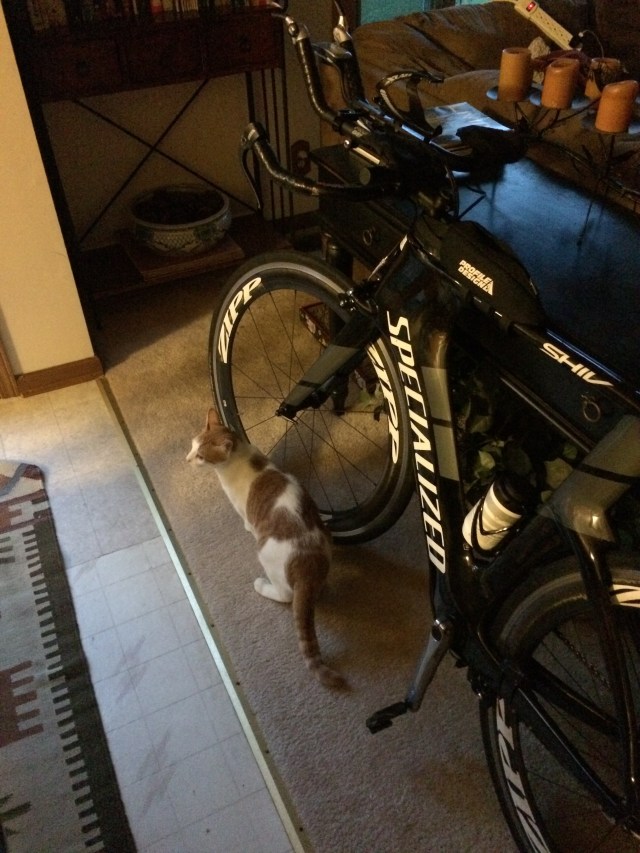
IMG_3476.jpgWhen I’m alone, that’s what I do. But my girlfriend’s brand new Specialized was in the back earlier that morning because we had not had time to adjust the roof rack for her ride and I wasn’t about to pile my bike on top of hers in the back.

You may recall she encountered her own tarsnake in terms of a bike frame. She needed to buy a new bike in advance of her Ironman this fall because toward the end of a long ride in preparation for the race, a distracted driver turned in front of her lane causing Sue to dump the bike. It cracked the struts on the back end, making the bike unsafe to ride.

Up on the roof

So I had put my Felt 4C up there in its favorite spot. In a moment of absent-minded dopiness on my part, I drove into the garage and heard the thump above my car as the bike struck the gutters. Fortunately, my reflexes were quick and I hit the brakes pretty quickly.

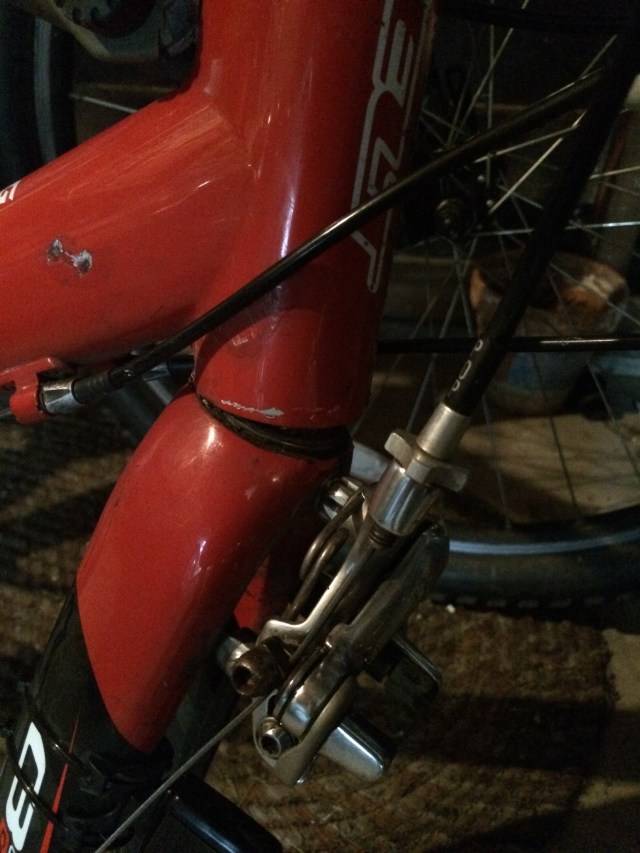
Right away I saw the bike was bent and likely ruined. The front fork was pushed back and the seat was all turned on its end. I just took the thing down and set it in my garage for a few weeks. Riding season was over anyway, except for a couple jaunts on my Waterford on nice days.

Stripped down

It turns out there are hairline cracks in the front of the bike frame. Cracked carbon fiber is no friend to cyclists. Right now my mechanic is stripping off the nice components from the Felt 4c: the newish Specialized carbon seat stem, Dura Ace derailleur and Shimano crank, chain and shifters are all good parts to keep around.

So it’s with some sadness that my Felt 4C will be forcefully retired. It was the road bike I purchased back in 2005 when I converted from the Trek 400 steel frame bike I’d been schlepping around for a couple years.

Speed thrills

Chris Bike standupI raced that Felt 4C in many criteriums. Climbed many hills. Struggled through the Illinois wind and enjoyed slamming through rain storms on summer days.
It has been a good bike even for getting into duathlons and triathlons. But road bikes have their limits in those types of races. Against aero bikes you really don’t stand a chance of competing.

Invested in the bike

Amortized over 10 years, it has cost me just $170 per year. That’s less than two pairs of running shoes these days. In other words, the 4C turned out to be a good long-term investment. Of course, I’ve aged ten years in that time as well. It’s a little harder to amortize that fact.

Can’t say that I’ve ever been perfectly comfortable on the Felt, however. Even through the original fitting and a more intense fit a couple years ago with new handlebars, seat stem and other tweaks (a new seat) the Felt still wore thin after 80 miles or so.

Last summer my mechanic let me ride his Trek Madone for a bit and that felt far more smooth and comfortable than my Felt.

Moving on

So perhaps this is God’s way of moving me on. It wouldn’t be the first time in life that events of destruction or loss pushed me onto a new path. It pays to be resolute and honest with yourself in all such situations. Life is what happens to you while you’re busy making other plans.

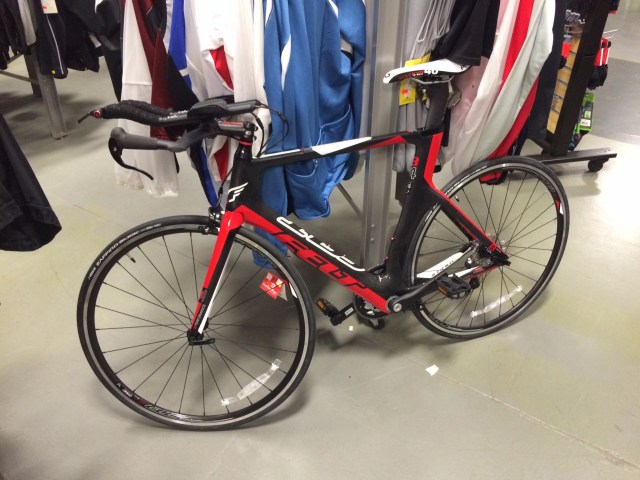
Felt B14I’ve been to the bike shop several times to look at a new Felt B14 carbon fiber aero bike. My needs and priorities in cycling have changed a bit over the years. Last summer was the first time I did not race a single criterium. But if I choose to do that, I still have the Waterford and with some tweaking that can be my road bike forever.

But racing in a duathlon or triathlon almost demands an aero bike in terms of geometry, tri-bars, shifters and aero form. Not sure I totally want the pumped up look of a Specialized Shiv, and the Felt B14 comes with some good components. It slots as a compromise between a road bike and a true aero knife with wheels.

My mechanic warned me, “It’s not going to be a good cornering bike,” but I could never ride that machine in a criterium anyway. The rules won’t allow it.

Winter wheels

Waterford 2We’ll see what transpires. I want to do some indoor riding this winter to build my thighs into shape before the season begins outdoors. I can always do that on the Waterford for now. But the experiment with tri-bars on that bike did not turn out that well. So off they come.
In the meantime, I’ll sing a quiet requiem for the Felt 4C and never forget that first liberating ride. The feel of a carbon bike under my seat and the speeds achieved compared to the old Trek I’d been riding were revelatory. The Felt 4C opened up new worlds and I’m grateful for that.

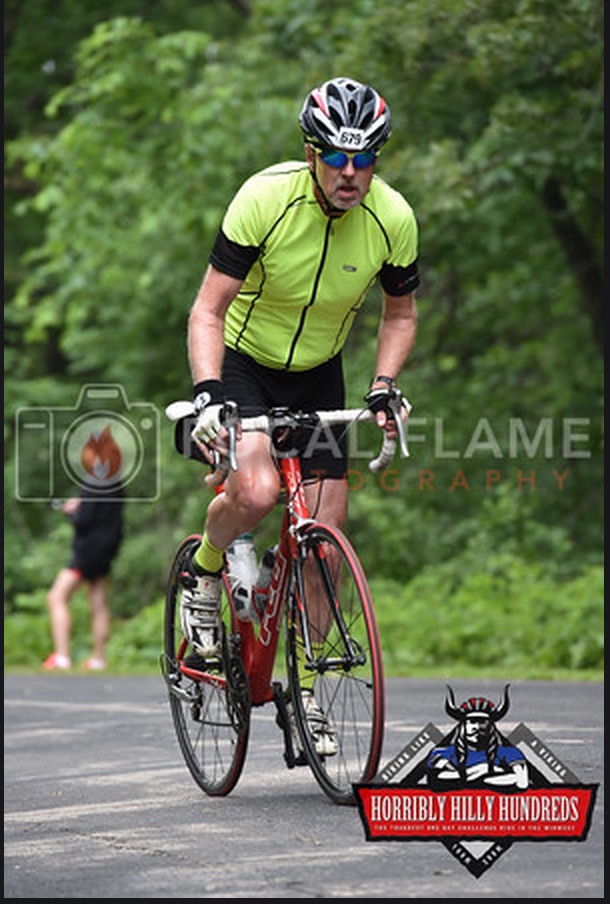
Last Climb Horribly HillyOf course, that bike delivered quite a bit of pain and suffering too. But I’ll cherish this photo of us cresting the last climb at Horribly Hill last summer.
That’s cycling. Along with the two crashes, the Felt 4C and I have been through some real experiences together. It’s just a bike, but it has accompanied me through 10 years of life. During that time I’ve lost my mother, my father, my father-in-law and my late wife. We’re all a little bent from those experiences.

But I plan to keep on riding. That’s what we all need to do. Get back on the bike and ride. Life beckons us to do so.

werunandridelogo


Posted in cycling, cycling the midwest, Uncategorized | Tagged , , , | 1 Comment

On the Road

IMG_6326Coming out of college an opportunity was presented to become an Admissions Counselor for Luther College. Feeling loyal and proud of the institution I interviewed for the position and was assigned the territory of Chicago and the state of Illinois.
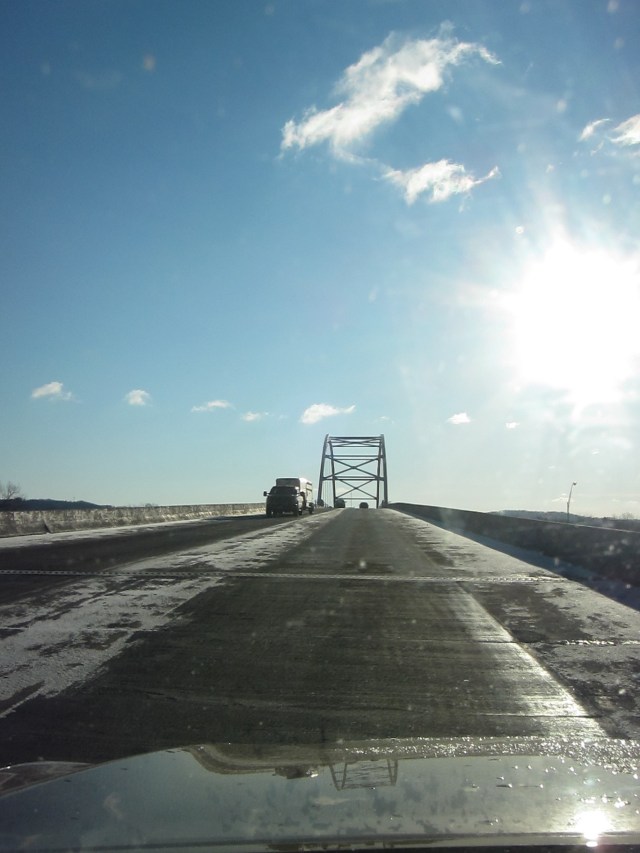
This was well before the age of the Internet. That meant everything was done by landline and snail mail. Invites were sent out to students for high school visits and college nights. Then you traveled around to all those schools and community colleges around the state, eagerly hoping someone would show up.

My quota for the year was 70 students. I made that quota exactly. In many respects it wasn’t easy.

For starters, I was still naive about the ways of the world. Fortunately, and at a practical level, I knew a few things about the layout of the Chicago suburbs thanks to a summer job driving for U-Haul during my college years. I did not get lost easily anyway.

“The road must eventually lead to the whole world.”
― Jack Kerouac, On the Road

IMG_9862.jpgBut what those seemingly faraway suburbs meant in terms of college prospects was a much more subtle thing to discern. My vision of large suburban communities was all based on what I knew of high school cross country and track teams against whom I’d competed.

Understand: There was no information available about the demographics of any community. No market research on the relative affluence or lack thereof that might give indications about where prospects might live. Even at my tender age, and well before the information age, I recognized this was a problem. College admissions was, to put it mildly, a relative crap shoot.

IMG_6438There were certain towns that had pumped out prospects for years. These were “hotspots” according to the outgoing Admissions Counselor, who was moving to take over the Luther Book Shop after ten years or more in the business of recruiting students. I sensed a bit of bitterness in the transition, something that surprised me as a young man. It was the first hint that something might be wrong in Wonderland.

“I didn’t know what to say. I felt like crying, Goddammit everybody in the world wants an explanation for your acts and for your very being.”
― Jack Kerouac, On the Road

I met with the former counselor and he handed along some names of people that I’d need to know. Yet these were carefully nurtured contacts with whom he’d built long term relationships. That’s how admissions works in the real world. Even to this day, with the Internet and common applications and all the technology in the world, the choices made by 18-year-old kids are still subject to the influence of information provided by those with the knowledge to provide it.

IMG_6337So it was impossible to step in and expect to take over the territory with the snap of a finger. I met with those contacts but like anyone, they were feeling me out as to how much they could trust me to take care of the kids they were recommending to attend Luther.

The Big World

That first fall in admissions felt like sticking my hand into a big bucket of worldly water. And as much as I swirled it around, it felt as if I were in some way sinking.

Then there were the road miles necessary to do the job. I was on the road from September through late November, the recruiting season. The previous admissions counselor had worked out of his home in Palatine, Illinois. From there he could fan out and cover schools and college nights and be home in the comfort of his bed by ten at night.

IMG_9845That option was removed when I took the job. That meant I left Decorah on a Sunday night, drove the 258 miles to some hotel strategically chosen in the Chicago landscape, and traveled throughout the week to reach schools scheduled for visits.
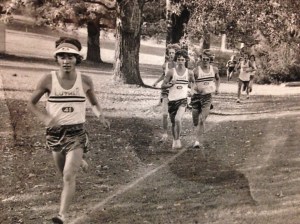
It was an enormously inefficient dynamic on so many fronts. Downstate trips required massively long drives across the bleak Illinois landscape. Stripped of leaves and crops, there was literally nothing to look at. I’d tune in the radio to Chicago stations as long as they’d hold out, then be left to dialing up and down the radio trying to find some sort of music to enjoy.

“I had nothing to offer anybody, except my own confusion”
― Jack Kerouac, On the Road

IMG_6533That schedule left precious little time for running. I began to lament the difference between the previous fall, when our team had trained together all those gorgeous months in the sunshine, placing second in the national meet in Rock Island. I was in love then, and in college, and finally enjoying some personal success after a previously difficult junior year and a relative period of personal crisis.
Survival strides

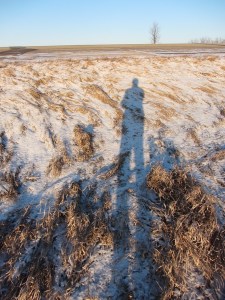
By contrast, my runs that fall between admissions stops were runs of survival. I’d get to some sucky hotel in central Illinois and glance out at the cold, windswept fields and hardly feel like going for a run. But I would. Four miles one day. Perhaps six the next.

These runs kept my brain in some sort of hopeful status. The job was frankly depressing with all that alone time in the car. Then there were the hotels, including one forlorn, half-broken-down motel on the edge of Decatur, Illinois. It sat next to a massive junction of the railroad tracks, and the trains were moving all night, sending visceral slams down the entire line of cars long into the night. I slept very little as a result.

“I woke up as the sun was reddening; and that was the one distinct time in my life, the strangest moment of all, when I didn’t know who I was – I was far away from home, haunted and tired with travel, in a cheap hotel room I’d never seen, hearing the hiss of steam outside, and the creak of the old wood of the hotel, and footsteps upstairs, and all the sad sounds, and I looked at the cracked high ceiling and really didn’t know who I was for about fifteen strange seconds. I wasn’t scared; I was just somebody else, some stranger, and my whole life was a haunted life, the life of a ghost.”
― Jack Kerouac, On the Road

Typically the week would wind up near Chicago somewhere and I’d leave IMG_9843on Friday afternoon to drive back to Decorah. Up through Madison and across the state of Wisconsin I’d go in that little blue Dodge Omni. It was a great little car in an era when American cars generally sucked.

Then I’d spend 46 hours or so with my girlfriend and turn around and drive back down to Chicago on another Sunday night. Sometimes I’d be crying all 40 miles to Prairie du Chien. Then I’d get out, get a Coke, suck it up and drive the rest of the way to Chicago.

“A pain stabbed my heart, as it did every time I saw a girl I loved who was going the opposite direction in this too-big world.”
― Jack Kerouac, On the Road

Results

For weeks, the grind continued, and yet the applications started coming in. But one Saturday morning during office duty, the boss pulled me aside for a hard discussion about my performance. “Is your head really in the game?” he wanted to know.

I did not know what to say. All those miles driven. All those college nights and dark long walks back to the parking lot after four hours standing at a booth with a binder full of pictures of a college six or eight or ten hours away. I was doing my best, I told him. “Well, you need to do better,” he warned.

“What is that feeling when you’re driving away from people and they recede on the plain till you see their specks dispersing? – it’s the too-huge world vaulting us, and it’s good-bye. But we lean forward to the next crazy venture beneath the skies.”
― Jack Kerouac, On the Road

Snow bound

Sometime in late November, I arrived for a college night in the Chicago suburb of Orland Park. It had snowed mightily the night before, but I was desperately feeling the need for a run. So, after a visit to Carl Sandburg High School, I talked with the cross country coach and asked if I could run with his kids.

We took off on a run into the hills of a local forest preserve. The varsity had left earlier so I was running with a group of sophomores. The snow was deep, but the kids were determined to run a 10-mile route they knew by heart. So we slogged and jogged and fought our way through a difficult run in deepening snow.

Chicago Pavilion7I got back to the hotel late already for the college night. Exhausted and sweaty, I showered quickly and tore out the door for the college night at a local community college. Mercifully, I was busy talking with kids the entire night. It was like God delivered a batch of prospects on a spoon. I was elated and tired and disgusted by the strain of that day all at once.
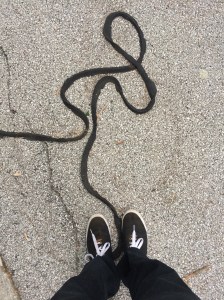
Progress

Soon the applications began to add up. I topped 30 committed kids. Then 40. By 50 I was building some confidence. When April came around and I was at 60 kids, the goal seemed in sight.

Then a father from Lincoln, Illinois arrived on campus with his football player son. We’d made what felt like a connection back in his hometown. I’d gone to their home and had a nice visit. The father was grateful because he really wanted his son to attend Luther. As they were leaving, the dad reached out to shake my hand and pressed a $20 bill into my palm. He winked and said, “Enjoy dinner.” It made me proud to have had some positive influence in someone’s life. That didn’t seem ethical, but on the other hand, that $20 felt like a small reward for all those miles On the Road.

“The best teacher is experience and not through someone’s distorted point of view”
― Jack Kerouac, On the Road

Quotes and quotas

By the end of the year, when the quota was reached, it was clear that my welcome was worn out in the Admissions job. Somehow my methods or recruiting were not predictable enough. A few of my associates had exceeded their quotas, but not by that much. So I had not failed but I recognized their focus was perceived as somehow different and perhaps more cogent than my own. Perhaps I had a little too much Jack Kerouac and not enough Bill Gates in my makeup.

IMG_2250Meanwhile my girlfriend had completed her degree and would graduate in December. We did not know what came next, but I had admittedly taken the Admissions job to remain close to her in some way.

She took a job in the Twin Cities that would soon mark the end of our relationship. After all, that meant an additional drive on Saturday morning each week to reach the Twin Cities. 150 miles up and 150 miles back to sustain my love and hopes. There are some forms of writing on the wall that we all easily recognize.

“Sal, we gotta go and never stop going ’till we get there.’
‘Where we going, man?’
‘I don’t know but we gotta go.”
― Jack Kerouac, On the Road

So I took another job as a graphic designer in marketing for a startup investment firm. That meant a move back to Chicago. That drive to Chicago with my car full of my belongings felt strange. Perhaps that’s the moment that I really, truly graduated from college. I’d learned the difference between the Neverland of those four years of nurturing experiences and actually working for a college. The real world was substantially different. I’d learned some valuable lessons.

“What difference does it make after all?–anonymity in the world of men is better than fame in heaven, for what’s heaven? what’s earth? All in the mind.”
― Jack Kerouac, On the Road

The year after I stepped down from Admissions, the college allowed the next counselor to again live in the Chicago area. All the driving I’d done every week going to and from Decorah was eliminated. They also raised the salaries of all the Admissions Counselors.

Times were changing. The Admissions game was maturing and so was the college, which moved forward and modernized everything about its operations, philosophy, development, and image.

IMG_1299Sometimes we exist in a time and a void that has no real explanation. Institutions go through changes just like the individuals who serve them.
We chalk it up to experience and hold it deep within for those moments when we need to understand that we can persevere, and that we weren’t wrong when it felt like we were.

And, that we need sometimes to keep running in order to stay sane. On the Road.

“…because the only people for me are the mad ones, the ones who are mad to live, mad to talk, mad to be saved, desirous of everything at the same time, the ones that never yawn or say a commonplace thing, but burn, burn, burn like fabulous yellow roman candles exploding like spiders across the stars and in the middle you see the blue centerlight pop and everybody goes “Awww!”
― Jack Kerouac, On the Road

werunandridelogo


Posted in Uncategorized | Tagged , , , , , | Leave a comment

Nutcracker Dreams and Dancing Fools

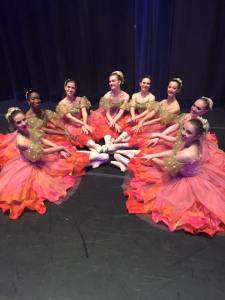
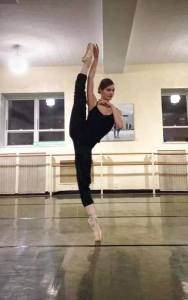
Victoria dancingLast evening I attended the Ruth Page Center for the Arts production of The Nutcracker. My niece Victoria Cudworth is already an accomplished dancer that has studied in Cuba.

Recently Victoria and my brother contacted me about the appropriate running shoes for her to wear. That’s a tough question as you can go any number of directions these days. But there was another concern as well. Dancers do not want to develop their calves too much. The physical lines of a dancer are important to maintain. I simply recommended shorter, mid-intensity runs. Raise the heart rate but don’t turn it into a slog.

I have written for a variety of publications about dancers in ballet, jazz and modern dance and hip-hop. My take was mostly about the energy and artfulness of the performance. I can’t claim to know the fundamentals of dance in any form.

That does not mean I can’t like it. The same goes for classical music, where my sister-in-law is a violist with the Chicago Symphony Orchestra. My own children play cello and violin, and their musical careers carried us through many joyous performances.

Victorial with dancersAll that work always comes down to performance im the end. In that regard, there is a keen similarity between running, riding and swimming. The work that goes into them resembles the practice of the performance arts, dance and music. There is a physical component to both, for sure. Dancers obviously put great stress on their bodies. Yet great musicians use their entire bodies in their playing as well. Why else would oboe players be susceptible to hemorrhoids, or drummers or guitarists blister and bleed from their fingers? It’s tough work.
Form counts on all fronts. The elegance of ballet is found in the small things. The position of the hands above the head. The delicacy of movement in the feet. I knew a massage therapist that worked exclusively on dancers. It was her job to keep them on the stage. Their feet were brutalized. Muscles and bones strained to the limits. Compared to dancers, working on runners was easy.

Then there are the glitches to deal with. At one point last night a dancer had a costume issue with a long skirt whose hem was running a few inches too low. Her forward steps were catching the edge of the skirt, yet she maintained her position and timing during the dance despite the distraction. I watched her the entire sequence and she managed to deal with the bothersome skirt with panache. One can only imagine the conversations backstage. Or perhaps, it teenage fashion, she merely wrote it off with a contemporary cliche. “Whoa, that sucked.”

Form counts not just for style, but for mental acuity. While running the New York City Marathon years ago, four-time winner Bill Rodgers took special effort to do it right. He commented that during one of his victories he became obsessed with doing everything right in his running form. The position of his hands. How his feet were landing. This is the mark of a true artist at work.

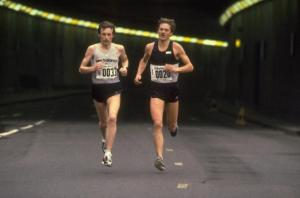
Dick Beardsley and Simonsen

Apr 1981: Dick Beardsley (left) of USA and Inge Simonsen (right) of Norway in action during the London Marathon in London, England. Mandatory Credit: Tony Duffy/Allsport

Perhaps you’ve had moments  like these in your own career, where the grace of running strikes you. Or, you feel one with the bike. Swimming is a horizontal ballet in water.

All these disciplines require work to master. There are no shortcuts to good form and clarity in your purpose. When you’ve put in the work there usually are moments of grace. Sometimes these are fleeting moments in our lives, yet they sustain us, in the same way the arts restore our spirit.

Yet like all disciplines, it is also wonderful to find a release from all that work. Like many excitable distance runners, I was one that loved to dance. With all that fitness behind me, dancing all night was no problem. I was a dancing fool just like the fellow in the Frank Zappa song:

Don’t know much about dancin’
That’s why I got this song
One of my legs is shorter than the other
N’ both my feet’s too long
‘Course now right along with ’em
I got no natural rhythm
But I go dancin’ every night
Hopin’ one day I might get it right
I’m a dancin’ fool, I’m a
Dancin’ fool
I hear that beat; I jump outa my seat,
But I can’t compete, ’cause I’m a
Dancin’ fool, I’m a
Dancin’ fool

Actually I do have rhythm, so that part’s not quite correct. But I was definitely a fool about dancing. I recall walking into a party in the company of a tall blonde in the early 1980s. America was awash in a bath of conservatism at the time, which meant the room was full of newly branded Reaganites in their stupid collared polos tipped up in the fashion of the day. The place reeked of conformity. They were all primly sitting in their places, engaged in some banal discussion of whatever Reagan Youth wanted to discuss. And my companion and I?  We started dancing. We were dancing fools.

The looks we got were priceless. To this day, I’ve remained that dancing fool on a number of fronts. Conformity and the stiff posture of the anal retentive are not for me. That’s why I run, ride and swim as well. All require discipline, but not necessarily conformity. That’s why I also flaunt and ignore The Rules on Velominati at times. Who needs that crap when you’re out to have fun and do what you want?

Nutcracker NutAs I sat watching the Nutcracker last night, considering the role of Drosselmeyer and his magic ways, it struck me that the entire ballet is about the non-conformity of Nutcracker Dreams. One description puts it this way: “It is never explained in the ballet where he comes from or why Drosselmeyer has magical powers, but one of them, apparently, is the ability to bring toys to life.”
What a wonderfully impractical skill! And yet how important it is to our understanding of human nature to study the passion and persona of Dancing Fools as presented in The Nutcracker. It releases us from normality to occupy the space of dreams and fantasy. But there’s more.

As I watched the various cultural memes of Russian and Asian and Arabic dance forms, it struck me that the Nutcracker is an eminently impractical celebration of human spirit. You can parse the world as it is now through any form of ideology, but it all comes down to human passions and cultures. Of course, some get warped by destruction and terror, while others can only imagine themselves through the barrel of a gun. These are the dances of self-loathing, the chronically fearful, and the already dead. Christian terrorists are just as manic and dangerous as Muslim terrorists. The Crusades long ago proved that, and we seem not to have learned the lesson to this day.

Instead, we need to be like Clara and her companion, calm in our study of the Nutcracker dreams we face each and every day. There is no need to panic or rush into the clash like a bunch of manic gray mice and toy soldiers trying to prove ourselves.

Tera MoodySport plays an important role in this dance of the world. It shows us that our differences are what make us so much alike. Those of us who run, ride and swim know this at heart. The varied abilities and goals of each competitor make every event unique. We derive inspiration from the plodder coming in at the last minute of an Ironman just as we do from the triumphant stride of the winner hours earlier.

So many stages. The Olympics. The World Championships. The Nutcracker. It all fits together if we focus on making it work, and don’t let the angry mice and manic tin soldiers run away with the show, or tie it down with fears of dancing in the face of life itself.


werunandridelogo

Posted in Christopher Cudworth, cycling, running, the rules velominati, triathlete, Uncategorized | Tagged , , , , , , | 4 Comments

Breaking sexism’s back

I wrote a piece on a different blog this week titled Thus Spoke Vagina. It addresses the many ways women in this world must deal with both the control and ignorance men try to place on them.

I’ve written also about the focus on women’s breasts on this blog, and how athleticism and healthy body image is a positive trend for women who run, ride and swim.

id_134_2005ITUGamagoriEliteU23JuniorTriathlonWorldChampionshipsEliteWomen20050911_1054__mediumTests of my own objectivity and respect are not difficult to find. Yesterday in the pool I popped up from an interval to find a woman perched on the pool edge working up the will to get into the water. I said hello, and offered a bit of commiseration. “For me, the worst part is getting into the water,” I laughed.
She laughed as well. We talked briefly and I learned that she’d taken up swimming a year ago following a serious injury to her spine. “I broke my back sledding,” she informed me.

“I’m glad you’re okay,” I responded.

Her face grew serious and she looked up the lane of the pool. “Yes, swimming has been wonderful. I used to be a runner, but I can’t do that anymore.”

I shared the fact that I was grateful to have avoided spinal injury during my bike crash a few years back. “I was grateful to only break my collar bone,” I told her.

She was sitting on the side of the pool with her swim cap on, wearing a teal swimsuit, and she wrapped her arms across her chest at that point.  I sensed a bit of self-consciousness, and took pains keep my gaze on her face as we talked. It was well past time for the start of my next interval anyway.

I know that women are too accustomed to being ogled, and did not want to be one more guy being perceived as doing that. That’s especially true at the pool, but just as true at the track or on the bike. But I’m human and we athletes do appreciate athletic bodies. It’s part of why we all go out there and try our best to be fit. We want to look good. But there are rules of respect that we all need to maintain.


Sure it was just an encounter at a swimming pool. The world did not change because I took pains to respect her personal space. I genuinely learned something from our conversation, and how much she now loved to swim. My girlfriend Sue loves the water too. And now so do I. Most days. It’s still a difficult process, but it’s improving.

The trick to swimming is learning balance in the water between stroke, kick and body rotation. The trick to life is learning balance too, between interest, appreciation and respect. That’s the triathlon of social interaction, in a nutshell.

werunandridelogo


Posted in Uncategorized | Tagged , , , , , , | 2 Comments

The Anthropocene Triathlon

IMG_4361I recently did some simple calculations, adding up the number of hours spent outside running and riding. It totals more than 7,000 hours, approximately 40,000 miles of running over a lifetime and just as many on the bike. 80,000 or so miles.

As an avid naturalist, I’ve also spent considerable time in the field birding and studying nature. That time is impossible to quantify. But given the fact that I’ve been birding since the age of 12, and pretty much lived outdoors whenever I could as a child, it’s been more than 100,000 hours outside in nature fishing, some hunting and a lot of plain appreciation.

My love of writing and painting completes the Anthropocene Triathlon for me. Converting my experiences into paintings and stories is a great love of mine. For more than forty years I’ve published articles in newspapers, magazines and online media. I’ve served as Editorial Writer at a major newspaper and published dozens of freelance articles in publications large Chris Cudworth 7and small. That includes a fun piece I did for Runner’s World years ago that led to a contract with a running race in Texas for whom I produced a poster won the RW Cream of the Crop Award for Best Designs.

Added up, all that writing amounts to more than 5,000 articles or about 4,000,000 words. I’ve also published two books now, The Genesis Fix, A Repair Manual for Faith in the Modern Age (2007) and The Right Kind of Pride, a Chronicle of Character, Caregiving and Community.

All this running, riding and writing has been conducted during a period now titled Anthropocene Era. Here is how it is defined: “relating to or denoting the current geological age, viewed as the period during which human activity has been the dominant influence on climate and the environment.”

As an environmental writer with a background in biology this phenomenon of the Anthropocene Era has been quite evident across a number of fronts. Back in the early 70s when I first began reading and writing seriously about environmental issues, environmental pollutions such as smog, acid rain, groundwater destruction, Superfund sites and health issues related to cancer agents were in the news every day. All thse issues were introduced into the environment by chemical or industrial means. Humans, in other words.

Some of this influence has been moderated thanks to human response to our own presence and harmful activities. Certain harmful chemical such as DDT were banned, allowing species of birds such as peregrine falcons, bald eagles and other creatures to rebound from near extinction. Without that action, these species would certainly have been lost.

SunriseSo the Anthropocene Era is certainly real. That includes the massive influence of carbon emissions on the atmosphere. We’ve already taken steps to reduce use of accelerants and other substances that destory the ozone layer. The Montreal Protocol of 1997 took some products off the market that were causing the ozone layer to deplete. Human beings had singlehandedly created that problem. We got together, figured out what was causing the problem, and moderated the issue.
Of course, there were people who pooh-poohed the idea that humans were the cause of any of this. A certain worldview refuses to accept that human beings can affect anything at the planetary level. This neglects the absolute evidence that our chemical pollution and habitat destruction is responsible for the loss of thousands of species of creatures. There is a massive extinction going on just as they have occurred in the past. This time, however, nature is the agent but not the cause of this extinction.

That’s us. 

Now we’re faced with the very real problem of global climate change. There are moneyed interests claiming there is no problem with global warming. They fund science to disclaim the relationship between human activity, especially carbon-based pollution, and the potential effect on overall climate.

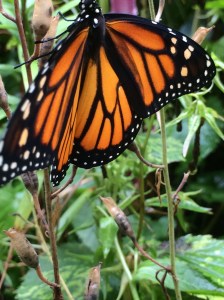
Monarch scalesAs a person that spends considerable time outdoors, and who knows a few things about animals, plants and living things and the ecosystems on which they depend, I share concerns that human activity is responsible for this problem. I’ve seen firsthand the effects of chemical and environmental pollution on all sorts of creatures. I watched a great blue heron teeter and fall over from the effects of pesticides in its system. I’ve seen the gangrene-infested gizzards of ducks that ingested lead shot. I’ve watched fish float up on a river rife with suds, and seen cancerous boils on bass fished out of a polluted creek. I’ve seen monarch butterfly populations plummet due to destruction of habitat, loss of milkweed host plants and possible impacts from chemicals in their systems.

So I do not naively assume that human beings have no effect on the environment.

Because I’ve also run through cities thick with pollution. In China where environmental restrictions have not been as strict as here in America, people are forced to wear masks just to get to work. Health problems abound wherever anthropocentric pollution takes over. Does anyone recall how difficult it was for runners and cyclists to prepare in advance of the Beijing-pollution-4_784300aBeijing Olympics? There were absolute concerns for the health of endurance athletes. All that was the product of anthropocentric pollution. It did not happen naturally. It did not happen supernaturally. God was not involved. And God is not going to fix this thing. More likely God has shown a propensity in history to tell the human race; “You screwed this up. It’s your problem now, not mine.”

So prayers are not going to whisk away the carbon choking our atmosphere. What will fix the massive problem of anthropocentric global climate change is cooperation between nations and governments.

Yet America can’t even budge a set of stubborn politicians so selfishly absorbed in their own moneyed interests they refuse to acknowledge that climate change is a problem. Never mind the direct evidence of choking athletes in Beijing or other regions around the world. Never mind the potential desertification of the Great Plains as we already saw during the Dust Bowl, another product of human activity.

Never mind there are 7 billion people on the planet and we’re shooting up toward 9 billion. Climate change threatens to ruin millions of acres of currently fruitful agricultural zones. California is already parched and fighting over water rights.

imgres-2Meanwhile, companies such as the Nestle Corporation have intimated that access to water is not a basic human right. So we’re faced with a world in which corporate profits and human greed are taking precedence over fair use of resources and basic human rights. That is the definition of the Anthropocene Era in a nutshell.

Those of us that have spent 80,000 miles and thousands of hours out in the field, on the roads, and under the sun understand the real risks of neglecting the facts before us. 97% of the world’s climate scientists agree on the fact that profound changes are taking place on our planet, and that human beings are a direct cause of these changes.

To me, it is the height of irresponsibility and selfish greed to ignore the recent and ancient history of human foible as a profound influence on this world. Both the environmental community and Christian apologists with an understanding for the call for stewardship of creation understand this.

IMG_3085But there are tons of people who interpret these signs instead as the inevitability of human sin rather than the opportunity to prevent it. In other words, they’ve given up. Quit the race just when it is beginning. They are failing the human race as a result. Throwing in the towel. They are admitting they are losers and that their worldview is defeatist and dependent on a bailout from God to solve human problems. Their only concern is that they remain flush with cash. Leave the rest of that shit for others to deal with.

Every time I run and ride and sit down to write I think about these things. This is the Anthropocene Triathlon for me. Every time I go birding and see cranes migrating through the skies and recognize their rebound as a species is the result of human efforts to protect habitat and fix the mistakes of the human race, I get the feeling there is hope.

I choose hope and collaboration. That’s the solution to the problems of the Anthropocene era, not self-centered greed and belief that money trumps all human compassion and environmental responsibility.

werunandridelogo


Posted in riding, running, Uncategorized | Tagged , , , , | 2 Comments

25 meters of joy

Swim FormLearning to swim again has taken more than a year. That’s because there’s a balance between developing form good enough to swim efficiently, and then building muscles and endurance to support the effort.

But there’s real progress happening now.

I’m writing about this because I encourage you to try it too. If you have not tried swimming in a very long while, it is an activity that you can add to and gain all sorts of benefits. It’s a whole body workout for one thing, and low impact at that. Two, you get to smell like chlorine and play in the water. Three, you can actually do a triathlon if you can swim. And that’s fun.

As noted, this has not been an easy experience. While I have not been tempted to quit, there have been moments where I stood in the pool with my face very near the water breathing hard while trying to figure out when it might get a little easier.

But there has been progress. And yesterday I had a swim lesson with Whitney, the coach with whom I’ve been working off and on the last year. Now we’re meeting every three weeks and she gives me assignments to practice between sessions.

Yesterday she asked, “Do you want to do endurance or sprints?”

Honestly, I’d never thought about it. Early on the most I could swim at one stretch was 25 meters. Then it was… stop, breathe, and start again. I wasn’t so much swimming as surviving from one end of the pool to the other.

Now, I’m up to 400 meters straight and haven’t yet tried anything longer. That’s coming this week. My relaxation in the pool is such that the idea of going long is no longer a threat. I can breathe on both sides now too, albeit still better on one side than the other. That will come with more practice.

Bu to test my stroke mechanics, Whitney gave me a workout of 8 sets of 50-meter repeats. 25 as fast as I can go, short rest, and back at a slow pace. We did sets of four and put some float swimming of 100 meters in between.

The 25-meter sprints were fun. I actually had never been given license to go as fast as I can, so I had never done it. Having the opportunity to let loose was a real joy. She asked me after the first couple, “You’re only breathing every fourth stroke. Is that feeling okay?”

“More than okay,” I told her. “It feels great!”

Fast or slow, learning to swim well is basically a task of being able to use your stroke mechanics to efficiently move through the water. If you can’t swim slower, it is very likely there is something wrong with your form or balance between kicks and strokes.

Three weeks ago, Whitney had me practice kicks with the focus of using my butt muscles to propel my legs as well. That engagement clicked in my head. I envisioned my butt making me go faster. But that’s just me. Some of us need pictures in our heads to make things work.

So it was fun to “feel the churn” on those sprint sets. I was under 20 seconds on each, so things are coming along. Each was 25 meters of joy.

On my next swim coaching session, it will be time to learn flip turns again. I did them as a kid swimmer and it should come back pretty well I hope. Once you get the feel, it’s a matter of practice.

I’m grateful to be learning something new like this. The challenges have been real, but the revelations have too.

werunandridelogo


Posted in Uncategorized | 3 Comments