
 By measures of the general population, I was once a fast runner. It doesn’t really matter how fast that was. It’s all relative anyway. There was always someone faster. Even if you’re a world-class runner, there are days when someone will beat you.
It’s true in cycling and swimming too. There is no one on earth that is absolutely unbeatable. Even sprinter Usain Bolt gets dusted when he’s still getting in shape.
But if you’re generally faster than the general population, there is one thing that is more fun than anything else. That is passing people.
Admit it: When you’re out on the bike training, it thrills you to catch another cyclist and pass them by. You see them up ahead and do that cyclist’s algorithm to figure out how long it might take you at your current pace to catch them and pass. It’s an ego boost if they look anything like a serious cyclist.
Of course, half the time, they don’t know you’re coming up from behind. So the advantage is all yours. Plenty of times I’ve been the cyclist that got caught. I hate that moment. A rider goes by with that serious “I’m better than you” look and keeps on going. You pedal on in your humble little air space. Do you catch on? Only if you dare.
Last year I caught some guy at a crossroads who seemed to be waiting for some other cyclists. I said hello because I did not want to give the impression that I thought I was the shits. He clearly looked like a more solid rider than me. His piston thighs and team kit told me he could pound out some pace if he so chose. I turned to head down the hill and pedaled up to a decent pace, probably 30-35 on the downhill. Nothing hard about that. Then I kept up the tempo, probably managing 25-26 the next two or three miles. I was working hard. Feeling decent given the fact that my Waterford was not really set up for the type of riding I was doing.
All along I thought I was riding alone. So it gave me a start to glance back and find that guy coasting along behind me. Not even in the draft, really. Just riding the same pace because he could.
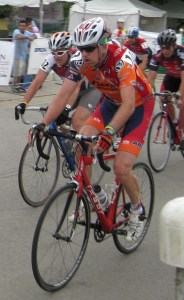 He didn’t pass me, and I wondered what he thought about my riding those few miles. Did he think I was trying to drop him? Nothing of the sort. Such is the strange etiquette of the road.
As a runner, I’ve had far more opportunities to catch and pass people than I ever have as a cyclist. Training in Chicago’s Lincoln Park was always a treat. On summer, spring and fall days the cinder trails and lakefront paths would be jammed with people running and jogging. That gave me plenty of fodder for the old Catch and Pass routine.
I was so fit there were seldom people I could not catch. Yet one day I heard someone approach from behind even though I was trucking along at 5:30 pace. His name was Jim Terry. He invited me over to the track at University of Illinois-Chicago for interval training. And as we ran along together I sensed this was a guy who had no mental limits. He would go as fast as he could for as long as he could. Perhaps he’d die before he’d give up. I both loved and feared the guy.
I also signed up to interview a runner named Mike Buhmann, who at that time was a world-class marathoner living in Chicago. I wanted to interview him for a publication called Illinois Runner (I’ve been at this a while) and he agreed. On one condition. We’d do the interview during a run.
Mike was short and fast. He flew along at 5:00 pace while I tried to engage him in conversation. We passed so many people on the trail it felt like one of those scenes from a B-movie where you’re riding in a train and the scenery is just flying past. And when finished, I had my interview, but the brain in my head was so oxygen-starved it was hard to even say goodbye. I’d set a PR for ten miles and skipped my race that weekend.
And that’s the main thing I miss about being as fast as I used to be. That feeling that you’re living on the edge of a digital dream, where time actually speeds up because you’re going faster than normal people go.
I’m normal again now. And don’t really like it. But that’s something we all have to accept at some point. It doesn’t mean I don’t still pass people. I do. But I also get passed a bit more myself. And frankly, that sucks. Donkey dicks.
 Apparently part of being mature is learning to accept that you’re nothing special after all. Just a bag of meat traipsing along with the rest of the bags of meat. That image came to mind when my girlfriend and I were looking through an anatomy book at the bike fitter’s lab. Almost every page was illustrated with photos of cadavers to show what the muscles inside our bodies really look like. And all I could think of at that point was this: “We’re nothing but bags of meat. All of us.”
Sorry I’m being so blunt. But it’s the truth. If I were coaching someone right now, at this stage of life, I would tell my protege: “Guess what? I’m going to make you the fastest bag of meat you can be.” And I’m sure they would be inspired. I’m sure that would get a great reaction.
Okay, I’ll admit. People don’t really think of themselves as bags of meat very often. But when you break it down to skin, muscle and bone, that’s all we really are. Bags of meat with shoes on, an occasional helmet or hat, and some swim goggles or sunglasses.
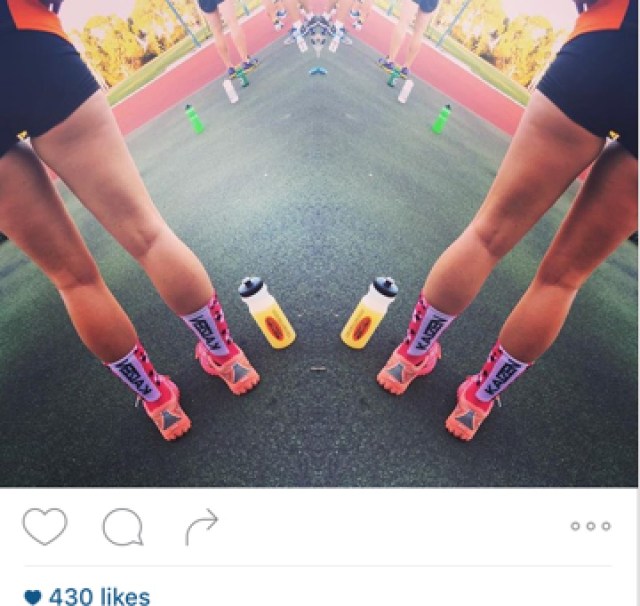 Yeah. Some of us are prettier bags of meat than others. The Internet and most of Instagram is filled with photos of exceedingly comely (no pun intended) bags of meat standing proud in selfies or carefully posed in pictures with captions such as: “I’m a beautiful bag of meat!”
That’s not really what the captions say. But they might as well. Because if you’re a beautiful bag of meat, or a bag of meat that can pass people on a regular basis, you get lots of followers. Probably 3000 or so. And 430 Likes. Automatically. That’s the average. Because that’s what it means to be a beautiful bag of meat. People follow you. And isn’t that special?
I’m sure you’re going to have a difficult time getting that image out of your head the next time you go out to run or ride or swim. It’s particularly gross to think of yourself as a tightly encased bag of meat when you’re thrashing around in a pool, doing laps and flip turns like a turd in a toilet bowl. But don’t worry, there’s plenty of chlorine, so you mustn’t worry about it. Someone will clean up after you.
It must be Friday, because as you can tell, my brain has been stripped free of artifice. Perhaps this is just a lament or resentment that I’m not as fast a bag of meat as I used to be. But in reality, I’m cool with it. I’m plenty happy to be a bag of meat at all. Love life. It’s all we got.
 Years ago I was driving in Paoli, Pennsylvania on a rainy night. Cresting a hill west of town, I noticed some commotion on the road ahead. There had been an accident, and a car was crushed, and a man was stumbling across the road.
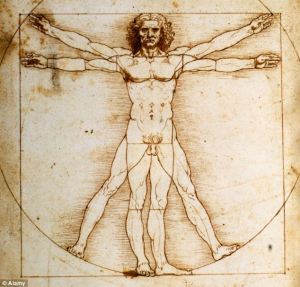 A few years after that, during a visit to a chiropractor, the x-rays he showed me demonstrated that I’d come out of that accident without much curve in my neck. The human neck normally as a bit of an arch to it. Mine didn’t.
 There’s another aspect to the issue of turning my head, and in which I have neck concerns going forward. That is swimming. It is crucial not to develop a habit of raising your head out of the water in order to avoid neck problems. Initially, when you’re learning to swim, anything that works to keep you breathing is acceptable. But as the intervals have grown longer, from 100 to 200 to 400 to 800, it has become obvious that head and neck position while breathing is important.
 running boom was just getting its second wind after the opening burst of Frank Shorter’s 1972 success in the Olympic Marathon. And let’s consider for a moment what that really meant. Shorter won Olympic Gold in 1972 and placed second to an East German doper (seen here in the white singlet behind the blue Finn, Lasse Viren) in 1976. So by rights, Shorter was a two-time Olympic marathon champ. Who else can say that? No other runner but Abebe Bikila has achieved such honors.
 Yesterday as I stood over the pool getting ready for a workout, a head popped up from the water with a big grin on it. I recognized the face of an acquaintance named Jim. He is the same age as my younger brother, and is quite an endurance athlete.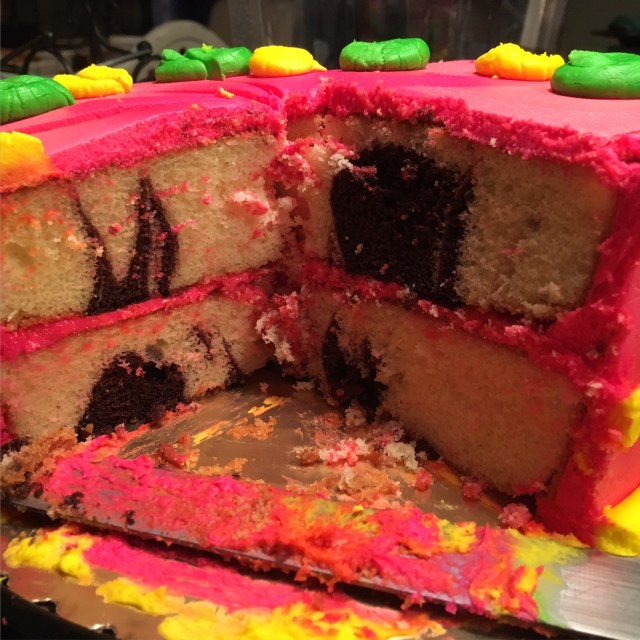
 Just yesterday we broke our a combination birthday/Easter cake all bright and thick with icing. I refused a slice of that one, but happily indulged in a chunk of delicious cheesecake slathered in caramel coating and an indulgent rip-rap of shredded dark chocolate on top. And it was wonderful.
 Perhaps we need sweets and cake to force us to confront the sweet guilt we feel over our privileged, indulgent positions in this world. Those who can barely afford to feed themselves never touch the wonders of cake. And some people can’t help the temptation to deny these simple pleasures to others. They hate in others most what they hate in themselves. It happens with sex and politics. We see politicians who embark on a campaign to ban homosexuality and then turn out to be gay themselves. Their denial fuels a repression that becomes their entire public personality.
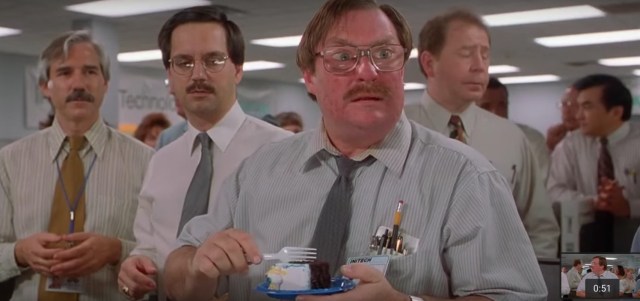 We feel for those experiencing struggles with temptation and need. Consider that unfortunate character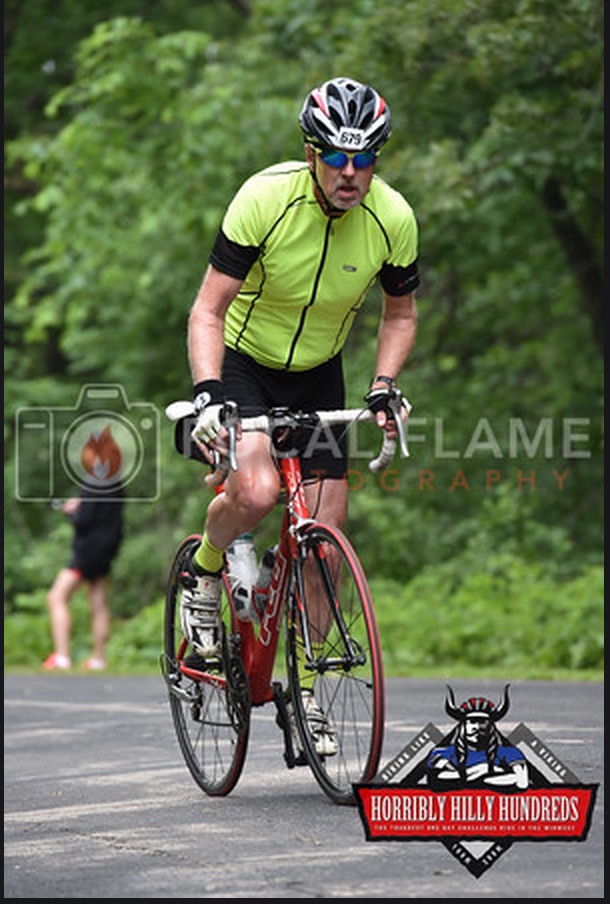
 Because I’m Specialized.
 This morning my companion Sue completed eight miles on the treadmill as part of her preparation for an upcoming half-marathon in April. No matter how you look at it, those are not easy miles on a treadmill. A long time, and lots of news to watch. Or whatever.
 A few years back, I stopped painting because the process was no longer satisfying or enjoyable. That break lasted a few years. The most that I’d do was create birthday cards in watercolor, or knock out a realistic commission or two upon request. Now I’ve returned to painting and am enjoying the processes that go into it. But it’s been a long journey.
 So it was perhaps a bit ironic that the Felt died an early death last fall when I drove the car into the garage with the bike still perched on the roof rack. I was sick and tired in a couple respects that day. Sick from a touch of the flu, and tired from a 65-mile ride in raw conditions. After a long and challenging year, the fun had frankly gone out of cycling. So my brain wasn’t operating well, and that’s how the Felt met its demise.
 It’s a related fact that it will be three years since my wife passed away on March 26, 2013. One of the last things she did was to rise one night while on steroids to write an inspirational note to me about pursuing my own way and interests in life. I’ve followed that course by taking risks in starting my own business as a content writer. Everyone knows that it takes a year or two to really hit your stride in any new business. There are fits and starts in clientele, big prospects that soar or fizzle, and also things that work out in surprising ways.
 In an interesting way, the new bike sort of symbolizes a renewed journey. I researched the options and got help from my girlfriend and a local bike shop owner. Now our bikes actually match in terms of color and looks. That was not intentional. That’s just how it worked out. She owns a black Specialized Shiv with white lettering. Same look as mine. We’ll be quite a pair of yin and yangs out there on the road. We even have the same inseam. And I’ll leave it at that.
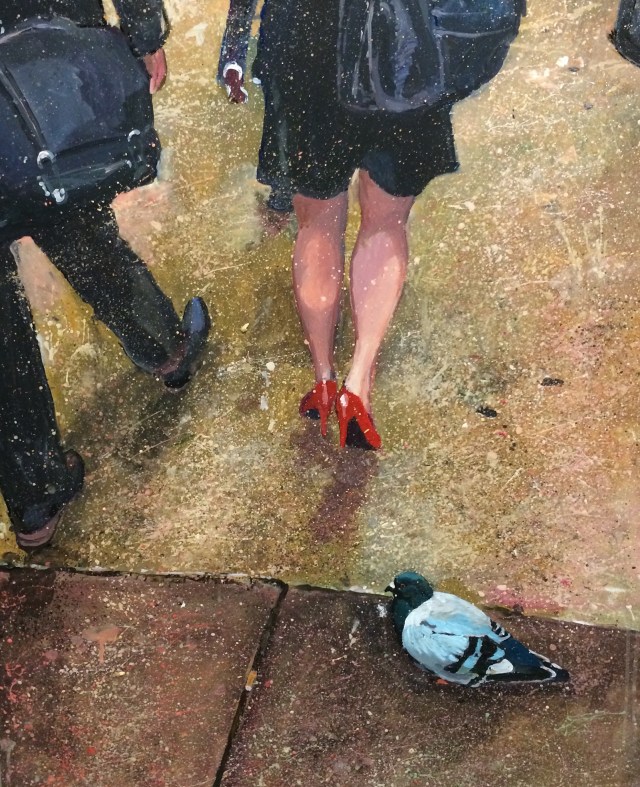 But let’s be clearl. She’s absolutely Sue to me, and very much her own person. We’ve spent many great hours together, shared our hopes and fears, and done many great things together. That included our trip to London last year, which to me was something of a launch into the future. Neither of us had ever been overseas. This was “our thing.”
 Recently I’ve heard several people in their late 20s commenting on the effects of aging on their bodies. That may seem silly to people that are older, but these are legitimate observations. Our bodies do change with age.
 That process truly begins in the 30s, that stage when we transition from youthful bodies to bodies that must be exercised to be maintained. Youth is wonderful, but aging is reality.
 The idea that showing your age (or gender, or race, or orientation) is a negative is the direct the product of a narcissistic society. Narcissism stems from generally poor self-esteem, which stems from poor management of self-worth and conflicted values.


 We Run and Ride