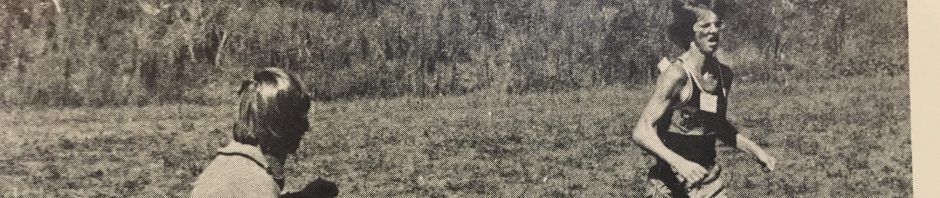
This morning’s Chicago Tribune had a long story about the dropping levels of enrollment in youth football leagues. We say “enrollment” as if kids were signing up for dance class. Football is a type of dance, you might say. Yet it is a dance that sooner or later depends on violence for its foundation. That’s where the sport is getting into some trouble.
Heading into my freshman year in high school, I told my father that I wanted to go out for football. Some facts: I weighed 128 lbs. and stood 5’10”. Skinny, but not frail. Competitive to a flaw. Determined to succeed. And naive.
So my father saw past that youthful desire for football glory. In eighth grade I’d won the town’s Punt, Pass and Kick Contest, advanced to regionals. But despite this incremental aptitude, he knew that the real football was not the sport for me, nor any of my brothers. My eldest brother with his speed, vertical leap and endurance would have been the subject of great success at any football combine, but my father saw football as a destroyer of bodies. So none of us were allowed to play the game.
Cross country calleth
 Which all added up to a clear conclusion my freshman year in high school. My dad drove me to the school and walked to the locker room door with me. Perhaps he’d already talked with the cross country coach, but in any case, he sternly said: “You’re going out for cross country. And if you come back out that door, I’ll break your neck.”
That’s one of the reasons I became a runner. The other reason is that I loved the way I felt that first day of cross country. How it hurt. How every second was a challenge to my determination. The hard exhaustion. The sweat and the desire to prove myself. All of it I loved. It hurt so good.
Cross country was my sport, and my dad knew it. Track was perhaps less suited to the overall pressures on my anxious character, yet I ultimately did well enough to make it to college nationals three times in the steeplechase.
Hard choices remain
When I think back to that day my father told me I could not play football, his main concern was that I would get hurt in some bad way.
These days parents are being forced to make even hard choices based on dire evidence that the game of football is a genuine risk to the brain. Today’s Chicago Tribune article quotes Dr. Bennet Omalu, the forensic pathologist whose discovery of CTE was chronicled in the 2015 movie “Concussion.” He recently told an audience at the New York Press Club that allowing kids under 18 to play football “is the definition of child abuse.”
The article goes on to explain:

Photo from the Chicago Tribune article on youth football.
“The Chicagoland Youth Football League, which hosts teams from nearly 50 towns, saw almost 10,000 kids playing a decade ago, according to President Geoff Meyer. Last year, he said, it was down to 7,500. Though he said the fear of head injuries is a big reason for the drop, he said other factors are also working against the sport, from a shrinking teen population to what he perceives as a lack of discipline among the young.
“America is a whole lot worse without football and it just drives me crazy,” he said. “It has done so much for so many people.”
That last quote seems like a slam dunk in favor of football as part of the fabric of America. Yet I also recall the actions of a cross country runner named Rich Flynn from Cary, Illinois, who was leading us through a course tour before a dual meet when he suddenly peeled off from the group and sprinted through an organized football practice screaming KILL KILL KILL!
His courage impressed me. It was one of the first times I witnessed anyone criticizing a sport that everyone else lionized. It opened my mind to the idea that people often worship at strange altars, and that it’s not necessarily our duty to do the same.
Liberalities
If football is indeed America’s Game, it aligns with so many other traditions and pastimes that on one hand seem noble and on the other, quite deadly. Our liberal gun laws now allow Concealed Carry in all 50 states. Guns are relatively easy to buy (whether legally or illegally) and the United States Constitution clearly states “the right to bear arms shall not be infringed.” But only if you ignore the part about “A well-regulated militia, being necessary for the security of a free state…”
Yet here are the statistics on what our gun liberalities produce in America:
More than 100,000 people in America are shot in murders, assaults, suicides & suicide attempts, accidents, or by police intervention. 31,537 people die from gun violence: ✓ 11,583 people are murdered. ✓ 18,783 people kill themselves.
 Given these statistics and the apparent will of the people to allow more than 30,000 people die each year from gun violence, the game of football hardly seems like a risk at all. But that may still be a deception. In fact, the history of America actually rests on a disturbing foundation of cultural bloodshed, genocide, racial and religious violence.
So America’s game is merely a sanitized symbol of our the absolute perfection of our imperfections. The violence and confrontation. The sidelines and sexy cheerleaders and militarily funded pre-game displays of hard-knuckle patriotism.
Ultimately, the tribal nature of the sport and its faceless violence reduces human beings to municipal totems for cultural conflict. America’s history as a violent nation plays out every weekend. It draws cheering crowds just as the gladiatorial colosseums once staged replications of major military victories while real people died in the arena.
No wonder there are still teams called Redskins and Seminoles. This is America rehearsing its triumphal nature and its pursuant guilt at having vanquished and abused people to achieve its status. The well-moneyed veneer of pro and college football is a thin vestiture for this, the American system of power before all. The requisite banners and logos of football teams symbolize the tribal nature of a nation bent on rehearsing violence in order to affirm its existence and self-worth. Are you tough enough?
Cooler heads
A friend of mine runs one of the most successful winning high school football programs in Illinois. He recently shared this perspective on the proportion of risk from CTE among most players. “A lot of my friends and I played football,” he observed. “None of us has any signs of brain injury. There are a lot of people who play the game that never get CTE.”
That anecdotal evidence seems true if you think about it. Personally, I’ve known dozens of people who played football and exhibit no ill effects other than the typical batch of creaky knees and other injuries that are a product of playing sports at a competitive level.
Even my college cross country coach Kent Finanger was a star football and basketball player for Luther, my alma mater. A few years ago, I was walking into an awards ceremony with Kenton when his own son was being installed in the Luther Hall of Fame. My coach was bent a bit sideways from an old source of back pain and was scheduled for surgery not long after that weekend. “Well Kent,” I said to him. “All these sports have a cost, don’t they?”
Without hesitation he turned to me with that impish grin of his and said, “Wouldn’t change a thing.”
Directions
It will be interesting too see what direction the sport of football takes in the next 5-10 years. I believe my father helped choose the right thing for me. It would be frightening at this age (60) to be experiencing acute memory loss, rash emotional swings and other symptoms of CTE brought on by having my head bashed around in football. I might well have caused that myself. I was a fearless, angry kid with a lot to work out on the field. Surely my noggin’ would have suffered the consequences of my rabid competitiveness.
The harsh truth is that some players do experience CTE issues much earlier in life. Some high school players even develop CTE. But it is the tragic stories of high successful pro football players who were so desperate for relief they took they own lives that is driving popular understanding of CTE. The actual risk may thus be exaggerated, but who gets to be the exception rather than the rule. The real question at the heart of all this is why the world can prove to be such a harsh place it can drive people to self-destruction of any sort.
Fatalism
 So the real question behind all this concern over football is whether the game symbolizes some aspect of national fatalism in general. Is there, in other words, some aspect of self-disdain hidden behind the very design of the sport? Is football, for all its association with teamwork and discipline and motivation…in fact a fatalistic denial of those very ideals? Is football, like the habit of smoking or overdrinking, more likely an indulgence than a character-builder?
There is without doubt a sort of self-aggrandizement and power structure at work in those who literally own and administrate the sport. They leverage the skills of those who play to their own advantage. And let’s admit it: the long-apparent byproducts of its damages were long obscured by leagues such as the NFL that prized profit over the cost of human suffering.
But in that respect, America’s game quite closely parallels the history of America itself. The country requires a bit of “dumbing down” in order to abide in notions such as “American exceptionalism,” a belief system that believes, without exception, that the ends justifies the means.
Dumbing down America
At most major college institutions the highest-paid staff member is the football coach. Surely this trend displays a sort of fatalism endemic to American educational institutions. Now that the anti-intellectual movement in America has risen to prominence in many ways, the emphasis on football at colleges and by society in general has come to symbolize the short-attention span theater that plays out in social media memes and shallow brands of religion dominating public discourse. The populism of cultural memes such as Friday Night Lights supposedly celebrates the good things that come from football as a cultural foundation.
So it is no small thing that the popular sport of football is now known to literally destroy the brains of some people who play the game. But is that the price of entertainment, or is it the price of a high-stakes game being played out on a national scale? We are witnessing a period in history when the question being asked is whether popularity and power are more important than the health and lives of everyday Americans. Some people seem determined to ignore the risks of populism’s peer pressure for the benefits of enjoying favor from the powerful. But not everyone. The Chicago Tribune columnist Steve Chapman recently wrote about the choices we face in supporting sports such as football. Just as importantly, this examination asks: how much violence can the nation tolerate within itself and still claim to exist as a beacon of hope in this world?
But I say that’s all a product of brain damage of one kind or another.
 All the time there were little streams popping out of hillsides. They trickled like ideas that could not be ignored. In winter these artesian springs would freeze leaving tall ice falls or patches of slick ice across the road. You either had to go full force across them or slow down and gingerly find the few spots where stones and gravel shone through. Decisions, decisions. A symbol for much that was to come in life.
 We’d run across these bridges in all seasons. Some years the river would be high and exceed its banks. Other years the river would get low, exposing pale rocks that once harbored fish. These would be tough years to kayak and canoe because hauling your boat over shallow areas until the next open patch of river is no easy journey.
 Such were the tests, at times, in the environment around Decorah. Running was tough because of the hills. But put on cross-country skis and try them? Even tougher. So the place had a way of keeping you honest no matter what you did.
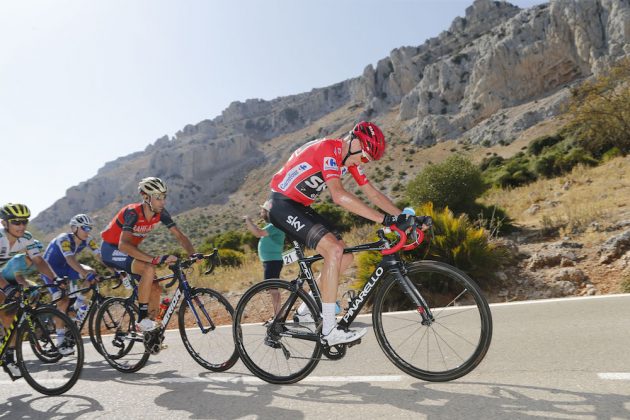

 So this made me double proud of my ability to fall under the most casual circumstances. It seems I can ride my bike at 30-40 mph on a steep descent with no problem. And back when I experienced the horrors of bike wobble at 40+ I even got the bike under relative control during a horrid incident of bike wobble a few years back.

 There was another life lesson that Miss Kegerreis imparted that would prove important over time as well. Not every aspect of my home life was positive. My father could be rough and critical in many ways, and sometimes even physically abusive with us. So my tender young brain was beset with some challenges in self-esteem. Some of those it has taken a lifetime to overcome.
 The anger somehow stuck with me through some aspects of life. And heading into my sophomore year in high school, I was determined to prove myself to anyone that would listen. At the same time, I was also desperate for approval. That’s not a good psychological mix. Every rejection or failure seemed double in dimension. Success sometimes seemed fleeting, and the cycle could repeated itself. I had anger issues.
 With August nearly over and the sun starting to slide south toward twilight, it is hard not to draw some associations with seasons past. With fall approaching, there is not a runner alive whose senses do not perk up while recalling the feel of feet racing through the grass. Those instincts might be some ancient bedouin blood in our veins, or perhaps we share a shred of our genetics with wildebeests, coyotes or cranes.



 Glenn laughs a bit at his own longtime penchant for detail. “I kept a journal of every race I did. So when people want to know what happened, I often have it written down. I was a little obsessive.
 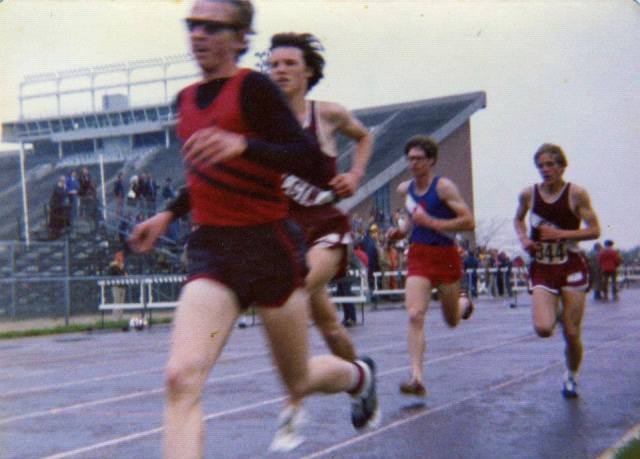 So the labor of love continues, and the little site known as Glenn’s continues to grow. Recently a former world record holder named Henry Rono requested to join the group. “I don’t know why,” Glenn admitted. “We’re kind of limited to the Illinois region and I want to keep it that way. But it’s interesting that a guy that set records from 3000 to 10,000 meters might be interested in other runners like us.”
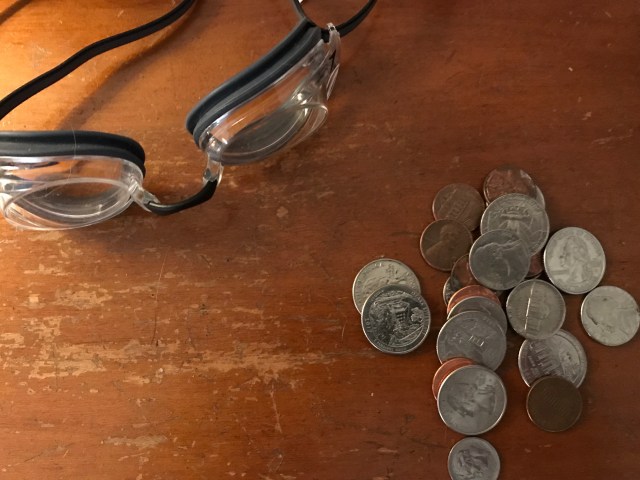 As athletes, we might imagine that change comes about in big breakthroughs. We train everyday hoping there will come a day when the nine-miler that felt hard last weekend suddenly feels easy.
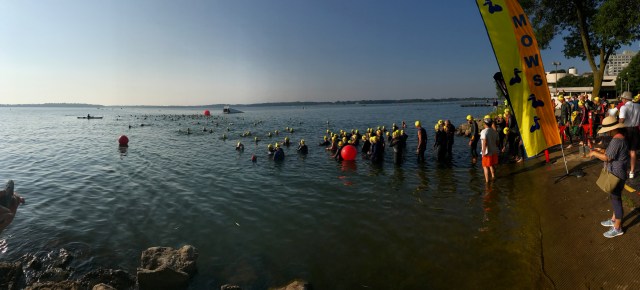 It is in swimming that the positive changes are often the most difficult to ascertain. That’s why the change tossed next to my goggles on the nightstand caught my attention this morning. Swim training, more than any other segment of triathlon, is like putting change in the Piggy Bank of Performance. Swim workouts are typically done in an indoor pool or one that measures 25 or 50 meters. That brand of experience does not exactly replicated the open water experience. Which means open water is an almost entirely different sensation. NO need to stop, flip or turn! Just get out there and swim!


 Some bucket list items are unintentional. Taking part in the Horribly Hilly ride in Wisconsin took a place in my uncalculated bucket list. Riding up that long climb to the top of Blue Mound was epic. It was hard. It took all my concentration. That’s a bucket list accomplishment right there.
 The late 60s were a heady time to be a pre-teen in America. My brothers were insightful sources of musical taste, and my 7th-grade friends were likewise caught up in the wonders of that era.
 Mood of the times
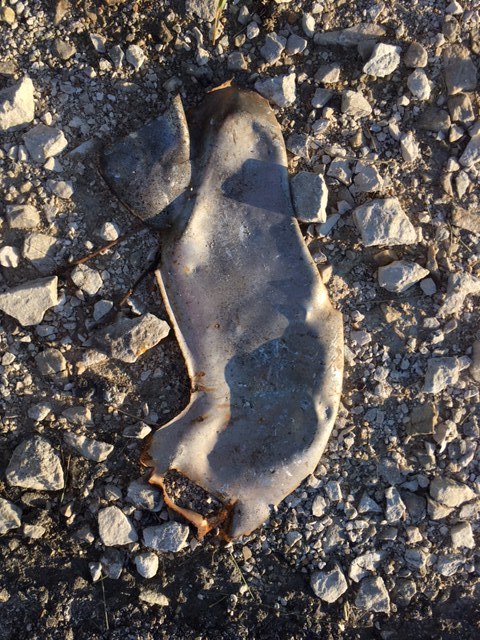 It disgusts me that a beer company had the gall to put the word AMERICA on its can in the first place. In a nation where supposed patriots are bitching about confederate statues being torn down and football players are derided for kneeling during the National Anthem in protest of ugly racial politics, hardly a word was uttered against the idea of putting a popular name for our country on a Budweiser beer can.


 We Run and Ride