Issued in 1984, the Marathon Santa Christmas Ornament was my prize for winning a 10K race in Warrenville, Illinois.
In late September ’84, I was picking races closer to the suburbs as my time living in the city was coming to a close. Spotting an event listed in the Warrenville area, I signed up on race morning and lined up eager to get a win on a cloudy, cool day.
The gun went off and within two miles I’d built a solid lead. The course wound through neighborhoods and I followed a guy on a bike over hill and dale. I ran the first mile in 4:56…but the second mile seemed really long. I passed through that marker in 10:32 even though I had not slowed a bit.
“Something’s wrong,” I called ahead to the lead guy on the bike. “Are we on the right course?”
The time only got worse at three miles, which I passed in 16:10. I hadn’t run that slow through three miles in more than two years. The same thing held true through four and five miles, only the splits were further off-base. And then the race kept going and going. I ran harder to try to make up the pace difference but it didn’t seem to matter. At some point, I decided to just run until the finish line showed up. We were well past 33:00 and counting as the miles rolled on. I finally finished at the 37:00 minute mark. The course was nearly a mile too long.
Disgusted, I crossed the finish line in first place and turned around to see if anyone was close. There were nearlly one thousand people signed up for the event but now of them were in sight.
“Stupid race to run,” I wrote in the running journal. “Course inaccurate.”
This little bastard would haunt me for another thirty years.
Linda and I waited around for the awards ceremony that were held inside a high school cafeteria. We walked past table after table filled of prizes. “Geeeez,” Linda observed. “You should get something pretty nice for winning…”
We there waiting for the awards ceremony while the big raffle giveaway took place. There were home goods and fitness membership, glassware, and electronic doodads like Walkmans and boom boxes. I leaned on the cafeteria table eager to get on with things. But the priority was clearly on making the masses feel glad that they came. The race even seemed secondary to the damned raffle.
Finally, they started announcing age-group winners. That process took a half hour. At last the time came to hand out awards to top finishers in race. Toward the end, my name was (at last!) announced and I received a polite round of applause while walking to the front of the room. This was almost two hours after the race had finished.The woman handing out the awards shook my hand and handed me a small box. It was sealed in wrapping paper, which I considered a bit odd, and I walked back to the table with it clutched inside my fist, and sat down with Linda.
“What is it?” she asked.
“I have no idea…” I replied, lifting up the box to turn it around for inspection.
“It’s about the size of a watch,” she volunteered. “Maybe a sports watch. That would be nice! Open it up!”
Surprise!
I carried a torch for running for many years.
I tore off the wrapping paper and looked at the object inside. It was a Christmas ornament, a plastic Santa Claus holding a torch forward like he was running an Olympic Relay. Linda looked at me with an expression of mixed bemusement and total disbelief. “What the hell??” she stuttered. “All this nice stuff they give out and you get a Christmas ornament for winning? There must be a mistake!”
I sat there thinking about the whole experience that day. The long course. All those prizes and waiting for a couple hours for the awards ceremony. It all felt like a cruel joke, as if someone was pranking me.
As the crowd started to leave, we walked up to the front of the room. I was half planning to ask if there was a mistake. But then I turned to Linda and said, “Screw it. Let’s go home. This whole day was a joke.”
Later that week, I pulled out the ornament and shared the whole story with my father. He thought it was hilarious. “I’ll take that ornament if you don’t want it,” he chortled. And he kept on Ho-Ho-Hoing about “Marathon Santa.”
Christmas Tradition
For years later, on every Christmas Eve my father would wait for us to arrive at their house before he’d pull out the Marathon Santa ornament and hang it on the tree with a big flourish. “Here’s your Big Award!” he’d roar. When my kids were little, he’d hide the Marathon Santa in the tree and encourage them to find it. Then he’d Ho Ho Ho all over again. He loved to give me joyous grief about that ornament.
I suppose there was a lesson in that annual display of grandiose teasing for me. My father loved taking the pomposity out of things his entire life. He never liked guys who smoked pipes, for example. Nor did he like men with big beards. And toupees? Forget it. All were signs of conflicted vanity in his eyes. The Cudworth Clan of four boys is all bald to this day.
My bald head in 2020.
My father loved trolling me about receiving that Marathon Santa ornament instead of some nice prize for winning the race. The tradition lasted for decades until my father passed away at 89 years old. I wound up being his caregiver after he had a stroke in 2002 and my mother passed away from cancer at the age of 80. He’d lost his speech due to the stroke and yet found a way to still tease me every year when hanging up that damned little Santa ornament. “Hoo hooo hooooohhh…” he’d say with eyebrows raised and a big grin on his face.
Forgiveness
Stewart Cudworth was a pretty big advocate for me in many aspects of life. While there were plenty of times in my youth and beyond when he exasperated the hell out of me, I ultimately absorbed all of that into a blanket of forgiveness. In so doing, I also learned to forgive myself for some of the failings in my past.
I think earning the Marathon Santa helped all that in some way. While cleaning out my father’s house after he passed away, I happened upon that ornament but decided not to keep it. The torch was broken off, for one thing, and also, my dad was no longer around to mock me with it. That plastic talisman stood for false and acquisitive pride. The Marathon Santa no longer meant the same thing to me without my dad to tease me about it.
We didn’t even spend $500 on our trip out west to Colorado in mid-August 1984. Over the years, I’ve met other people traveling around the country on similarly meager funds. They always seemed happier than people spending tons of money on their vacations. For one thing, the expectations are lower and the pleasures are that much better appreciated. We came home tired but satisfied with our journey.
We all need road trips now and then. As it happened, I was on a perpetual road trip with all my running adventures that included traveling around, checking into races, and leaving towns behind that I’d likely never visit again. I once ran a road race out in Amboy, Illinois in which I signed up, jogged to the line, left the entire field behind on the dusty rural roads in the first mile, and finished without anyone else in sight. I never saw another runner that day. The organizers handed me a small trophy at the line. I looked around a few minutes, got in my car, and left without ever seeing another competitor that day.
I always liked winning, but that race felt like overkill. I meant to use it as a tuneup for the fall season and hoped to have a few competitors join me along the way, but no such luck. It made me feel kind of weird for having gone out there at all. Was I that starved for approval? The local runners just stared at me when I lined up in the bright white and blue Running Unlimited kit and clean new racing shoes. They all wore beat-up Brooks and leftover cross country gear from the area high schools.
As a fifteen-year-old sophomore at Kaneland.
Well, I came from similar small-town roots, so tough shit. I paid my dues running laps around Kaneland High school in the heat of late summer and the freezing cold of February. Sure, at that time I was a snot-nosed kid with a prototypical case of teenage dandruff and bad clothes, but with time we all get over that stuff. There was no need to apologize for having gotten better at this running thing. While I was once a hayseed, now I was a runner in full blossom. A few weeks later I did throw that little trophy in the trash. It meant nothing.
The arc of a career
The arc of my fourteen-year competitive racing career was long, often fun, and largely fruitful. Add in the lifelong friends and relationships built from those years of running, and it was all worth it.
The failures experienced along the way only made the eventual triumphs feel that much better. Yet having competed in running since the age of twelve, it was getting near time to check off a Big Box (or two) and bring an effective end to that competitive career.
I knew it wouldn’t happen right away, but I sensed it was getting time to think about it, then move into real life without placing running in front of all other priorities. The itinerant lifestyle of a journeyman runner wasn’t compatible, I reasoned, with having a family, working a full-time job and building a persona around something other than sports.
My head was spinning about what came next, but we’re all spinning around on the same globe that never sits still, so it’s perfectly rational to keep on running in one way or another. I knew that the sport of running would remain in my future. It would just take on different forms.
On September 16th of ’84 I wrote in the journal: “If you want to achieve what you can as a runner, this is the perfect, only time in life to do it.” I was absolutely right about that.
The arc of a career
Carlos Lopes
So it was that during the summer of 1984 I soaked up what I could of the Los Angeles Summer Olympics knowing that while I’d improved immensely, I would never compete at that level and never really expected to. But I was still inspired by what transpired. Aching to see some segment of the men’s marathon, I caught only the last few miles of the race on a borrowed TV. Hoping for an Alberto Salazar win, I was modestly disappointed when Carlos Lopes surged to the front of the race. Watching his silky smooth stride that day, I grew inspired to run even better on my own.
In early September I ran an eighteen-miler with those images of Carlos Lopes flowing through my brain. I loved the idea of running so impossibly smooth that it looked and felt effortless. I believed in that principle from the first time I took up running seriously and read an article in Sports Illustrated about how to develop an efficient stride. During my 18-miler that day, I concentrated on having my feet “kiss” the road in the fashion of Carlos Lopes. Before I knew it, two hours and ten minutes passed by. I’d finished a delightfully easy long run. Of course, if I’d have stopped to dwell on the fact that Lopes was about 37 years old when he won the Olympic Marathon, perhaps I’d have shifted my goals to continue competitive running. But then again, I was not world-class, so one has to measure the investment and returns.
Between runs, I’d paint and write. Perhaps if I’d had an ounce of sense I’d have asked that downtown girlfriend to help me get a job at the big publishing company where she worked. But I also sensed that she was probably not the woman in my future either. The city was great, but the country called me home. Plus my roommate and I were wrapping up our lease in the City of Chicago. Come November, it would be time to move out. Things were coming to a close.
Autumn Kickoff
One of the watercolor paintings I produced during my Chicago residency. A red-tailed hawk.
But in the meantime, I was geared up and ready to get racing that fall. The first opportunity came along in early September, and it went well. I ran to a second-place finish in the River Forest 10K. My Running Unlimited teammate, Jukka Kallio, let me lead most of the race and then pulled away in the last mile. We both broke 32:00, which was his first time under that mark despite the fact that he’d already run a 2:19 marathon in his career, barely missing the Olympic Trials the year before. So I paced him to a PR as I ran 31:53 on a warm day. He waited for me at the end of the chute and we shook hands, then hung around to collect our hardware. My girlfriend Linda enjoyed the opportunity to sit in the late-summer sun.
I stayed with her out in the suburbs that weekend. The next morning I took a birding trip out to Nelson Lake Forest Preserve. I also wanted to collect some colorful sumac leaves to use as subject matter in a watercolor painting I planned to do that afternoon. On the way out of the preserve, I met Charles and Dorothy Brownold, the two people most responsible for getting the park protected as an Illinois Nature Preserve. I wrote about that meetup in my journal. “Caught red-handed with sumac pickings, etc. at Nelson’s Lake Marsh by Dot and Chuck. They were a conciliatory accuser. I just left. They could never understand the need to paint from life. Raided prairie plot instead.”
Frankly, I felt that a small fist of vegetation was worth the price of getting trouble if it meant that I could do a better painting as a result. That was my noble cause that day: a few sumac branches, a clutch of goldenrod, and a few few asters. No real harm done. Yes, I knew that if everyone took flowers and plants from the preserve it might really be harmed. But I defended my intentions under the claim that I’d be producing art with my fistful of stolen plants.
Not so fast
I was getting closer. But not yet committed.
But the onset of fall had other people wondering what my intentions were as well. Especially my girlfriend. “Linda spooky sad tonite,” I wrote. “Her homing instincts grow stronger every day, it seems. House rates here. Babies there. Marriage everywhere. It’s drivin’ me nuts.”
I was still pulled in several directions and felt guilty for it. My downtown girlfriend had written me a letter from California, and I pulled it out of my gym bag that morning outside Linda’s apartmet and sat alone the front porch reading it with mixed emotions. The day was bland and humid, ad the nondescript leavings of summer heat still hung in the air. I wrote in the journal, “My mind is up in that gray suburban sky, looking out on dark horizons and my ears are ringing with crickets of lust.”
Ah, lust. That was indeed my one constant companion. Lust was the ignoble cause of so much equivocation. “Stayed up late last night till 11:45, watching Debbie Does Dallas on the fine-tuned VCR, on TV through the fuzz and no noise. Obsessed, I guess.”
That was the 80s for you. It was a self-indulgent decade of overproduced music, titillating videos and skintight fitnesswear swirling around in an epileptic-inducing state of confusion. Forty years later I can say that I don’t miss any of that shit at all.
Well, there were some things I liked. A Police album or two. The Talking Heads, especially the album Remain in Light. And the Tom Tom Club. Steve Forbert. Joe Jackson’s Night and Day album. Neil Young’s Rust Never Sleeps. Everything by Rickie Lee Jones. Bowie still. And Johnny Mars on WXRT. I was listening one night when he mentioned Wacker Drive, then quipped, “You Wacker, you brought ‘er.”
My best friend was listening to the same station and heard that on-air joke. From then on, it became one of our ‘go-to’ jokes with anything ending in an ‘er’ sound. Yes, that was Chicago in the early 1980s. Make it up as you go along, and take your noble causes where you can find them.
In August of 1984, I polished off the last summer racing commitment and packed up to drive west with Linda to visit her sister Diane during a music residency in Aspen, Colorado. Diane had not yet earned a spot playing in the Chicago Symphony Orchestra, but she would one day. In the meantime, she’d played for the Lyric in Chicago and done a summer stint at Tanglewood in Massachusetts, where we visited her during those nine months I lived in Philadelphia.
The day before we left I was stressing out about money, but a check finally came through from Trent Richards, so I had about $500 with which to travel. “Tired,” I wrote in the journal. “Glands up. Slight diahrrea. Didn’t sleep well…”
Our plan was to drive south through Missouri and stay with friends for a day in Wichita, Kansas. I still had a special place in my heart for the woman with whom we’d be staying. Now married, she was the person I’d grown so close to at Van Kampen Merritt. She showed up to watch me set a PR at 5000 meters in that midnight race at North Central. And she’d visited me in Philadelphia when I most needed support, and we shared a night together as a sign of everlasting appreciation and friendship.
So we remained friends, and she adored Linda, so the afternoon and evening we spent with her and her husband were special. It was hot as hell in Kansas that July, so we drove out to a giant reservoir to go swimming. The entire body of water was only four feet deep, so we waded out to our chests holding a beer and stood around chatting while speed boats thrashed around the surface in the distance.
I wasn’t concerned about running during the trip, but did go out for a five-miler in Wichita. Then we packed up and drove ten hours into Colorado. I loved the look of the flint hills in western Kansas, where sharp bluffs jutted out of the landscape. I loved the entire concept of the West, even the flat, dry plains of eastern Colorado. Finally, we entered some foothills and Linda decided it was time to celebrate with a glass of wine in the car. She popped the cork on the wine bottle and poured us each a half-glass. I was sipping away when I noticed a set of police lights closing down on us from behind. “Hurry,” I told her. “Put the bottle under the seat. The cops caught us.”
We pulled over and somehow disposed of the wine out the passenger side window. The cop talked to us for a bit and peeked around, but didn’t inspect the car. We didn’t even get a ticket for some reason. He was nice to us, and I’m pretty sure he knew that we’d been drinking, but saw that we were just a pair of dumb young kids on a western lark, so he let us go.
Finally, we drove into the mountains. As we climbed higher, a storm burst over the crest of the peaks and hail started pounding on our car. We were driving her parent’s Oldsmobile on the trip, and I worried that we’d bring it home pocked with dents, but the hail fell fast and didn’t seem to hurt the tough old Olds, and the storm brought fresh, clean air into the mountains. We parked in a camping spot facing a shallow valley with more mountains in the distance. The sun was going down as we popped up our tent and Linda made a quick meal on the Coleman stove. I walked out on the rough ground and a bright mountain bluebird perched on a big rock nearby. I smiled. We were truly out west now.
Our full camping site was reserved at Maroon Bells, a spot nestled high in the mountains with aspen trees all around. We went for a hike that first day and both our legs felt exhausted. Linda was coming off the foot surgery she’d had months before to remove bunions earlier that summer. For the trip west, we’d both purchased a pair of Rockport shoes for hiking in the mountains. I loved those things. They were so light and comfortable.
On August 16 we took a 6 1/2 hour hike up to 12,000 feet. At the start it was just gentle walking on a dirt path. But then we climbed higher on switchbacks, and I was impressed how well Linda climbed despite not having a ton of prep going into the trip. She always had a high VO2 max, as did her brother Paul, who in later years became an exceptional bike racer, competing in Category 3 and Master’s races for a bike club in Arlington Heights, Illinois.
We made it all the way to the top of a saddle where the mountain ridge was sharp. We sat on rocks to rest. A fellow walked up to us at that point and started a conversation. Then he offered to take our photo for us, and stood back to take a snapshot. He was gregarious and friendly and promised that he’d get us a copy of the photo someday. Months later he made good on that promise, showing up at our front door in Batavia that next summer to deliver the picture, have a good chat, and be on his way.
Linda was kind of weirded out by the fact that he tracked us down like that but I felt he was harmless, and the photo did turn out great.
Sitting down for a rest at 12,300 feet. This phot was taken by a “newfound friend” that brought it to us a year later.
And then another weird thing happened at that mountain pass. One of the prime reasons why Linda was so happy to go on a western trip was to have a break from her roommates back in Geneva. They generally got along okay, but one of them was a bit irritating and worst of all, she owned a cat. Linda never liked cats, but they liked her. So the cat would follow her around the apartment as a constant reminder of her somewhat abrasive roommate as well.
There weren’t many people in life that rubbed Linda the wrong way, but I almost busted a gut laughing when lo and behold, I spotted her roommate and her boyfriend hiking up the other side of the mountain. “Oh God, look who’s here,” I said to Linda, pointing down at the switchback below. “It’s her,” she said in amazement. Sure enough, we had a group chuckle about the happenstance of that hike, and took their photo as a record of the meetup. Then I did a short run at altitude to see what it felt like.
I peeled off the long sleeve sweatshirt to try running at 12,000 feet. I have a set of Rockport shoes on my feet.
Then Linda and I started hiking back down the mountain. The altitude was having its effects on her at last. Halfway down the steepest part of the trail, I noticed that she was getting loopy and saying stuff that didn’t totally make sense. “Do you have enough water?” I asked her. She shook her bottle, which was only a quarter full, and said, “I think I can make it.”
Well, that’s how she was. Her whole family was like that. They didn’t go to the doctor unless it was absolutely unavoidable. Her father once got sciatica so bad that he clung to the living room entry shelf for weeks on end rather than get treated for pain.
So I watched Linda carefully. She didn’t improve much by the time we got back down to 10,000 feet. That’s still high altitude, and we were only three days into the trip. I stopped drinking any water myself because I knew that I was fit enough to make it back under any circumstances. After all, I’d once run 18 miles from 6000 feet up to 9000 feet and back down again without a single sip of water at the Grand Tetons. So I kept my water bottle to use with Linda.
She finally got outright punchy. “I’m gonna just sit down right here…” she mused. But I coaxed her along, kept her going, and stopped her to take a drink every half mile. Finally, we got back to the campsite where she could sit down, have food and some energy drink. and snapped back into reality.
The rains come
That afternoon, we hung around the campsite and noticed a kid of around twelve years old getting in and out of truck across the campground. I walked over to see if he was all alone. He explained that his father and brother had done climbing in the mountains, and he was worried. He pointed up at the Maroon Bells, which aren’t known for their solidity. Then it started to rain.
The kid clambered back in the truck and Linda and I grabbed everything we could from the campsite and tucked it inside the tent. Never had I heard it rain as hard as it did that afternoon. The downpour was constant, steady, and persistently vertical. But the runoff was prodigious, rolling down the gray gravel campsite in tiny rivers. The air quickly cooled. We tucked our bare legs inside the sleeping bags and napped for a while. I glanced at my watch. It was 2:30 in the afternoon and it had already rained for two full hours.
We were tired from the morning hike, so the nap felt good. I stared over at her face as we napped and felt a genuine love for her. We’d shared a peak experience that day. Her hair was golden that summer thanks to all the sun she’d soaked up. Her face was tan, and her bare shoulders stuck out from the sleeping bag. I wanted to crawl in with her right then and there, and make love with the rain pounding on our tent. But I figured she needed the rest.
Ninety minutes later we both were getting cabin fever from being stuck inside the tent for so long. The rain was still pouring down and the wind had picked up to a roar. Lightning flashed across the darkening sky. I got out of the tent and snagged a tiny little Scrabble board we’d brought along for the trip and we played a game or two to pass the time.
And the rain kept coming. “I wonder when this is gonna stop?” she finally admitted. We argued a little over whether to just drive into town. Then dozed again. Then woke up laughing our heads off when she saw that my face was wet because the rain had changed direction.
Night sounds
Out amongst the big mountain.
At about 7:00 in the evening, it sounded like someone shut off the spigot. The rush of rain hitting the aspen leaves suddenly ceased. A bird called. The lasting drip of wetness was all we could hear. Otherwise, total silence. And then, a tumble of rocks sounded as they came rolling off the mountain. It was an ominous sound, haunting and sad, like the low moan of a dying era. Indeed, the Maroon Bells were once hundreds of feet higher long ago. Wind and weather and tumbling rocks wore them down to the heights we see today.
Now that young kid hanging around the campsite was more scared than ever. His father and brother were still not back from climbing in the mountains. The sound of those rockfalls made him worry that they were dead. We sat with him for a couple hours to calm him down. Finally, well into the night, we spotted a pair of headlamps across the canyon. It was so quiet we could hear the sound of their voices carrying through the clear mountain air. The lamps bobbed and flickered through the trees, and finally grew near enough to see two figures illuminated beneath them. When the dad and son got back into the camp, the young kid ran into his father’s arms, sobbing. “What’s up with you?” the father demanded to know. “You knew that we’d be alright!”
That seemed like a harsh response to Linda and I. The kid had a right to be scared. But every father has their own type of relationship with a son. That was not ours to dictate.
Stir crazy
We had our own issues to address. The water running under the tent had been a problem all that afternoon. We had draped a big black plastic sheet over the top of the nylon tent, but water seeped through from below. We pulled our sleeping backs out to give them a shake. During that afternoon, we’d both gotten punchy in stir-crazy kind of way, alternating between laughing at our circumstance and getting a little bitchy too. We’d been pinned in that tent and unable to move for hours. Something in my brain that sounded like a voice from outside my body told me, “If you can spend seven hours in a tent with this woman, you can probably be married and be quite happy.”
Mooning her sister Diane.
We went for other hikes with Diane and her friends in Aspen. Linda was lighthearted and joyous at being out west. That was the first time I truly let the notion of marriage penetrate my stubborn young man’s brain.
Linda and I with one of Diane’s friends Marcia.
The next day, Linda drove down into Aspen to meet up with her sister now that the music festival was taking a break. We’d been down to town a couple times and I’d made note that it was twelve miles from the campsite to the main street in Aspen. “I’ll run down,” I told her. “It’s cool out, so you can take my stuff down with you and have some time with your sister. I’ll see you in a little over an hour.”
I put on some Nike Pegasus shoes and started the descent. It was fun flying downhill almost the entire way. The race down Ashcroft took me just under 1:15. My legs were really tired and sore the next day.
Linda (right) with her sister Diane.
After a $20 hamburger, we had a beer or two and arranged to meet up with Diane and a friend the next day for a hike at Independence Pass. We walked around at 11,000 feet after a brief scare with a lightning storm that raised the hair of the women in the group. It was gorgeous weather after that. All of us were light of heart and happy to be in such a beautiful place. I’d turned a corner in my relationship with Linda. Hanging out with her sister made me realize what a special family she had.
Linda’s sister Diane in Aspen.
Our adventures were not completely over. Diane was riding back with us to Chicago from Aspen, and we drove all the way east to Omaha, where it was now dark and we still needed to find a campsite. For a minute, we considered camping down on the sand flats of the Missouri River or whatever it was with the locals. But we thought better of that.
So we snuck into a mobile campground a few miles up the road and parked out of sight on a large field far away from the main ranger station. Working swiftly, we set up the tent in the dark and crawled inside using a combination of sleeping bags, thick blankets and stuffed gym bags (in my case) for pillows. I lay there between the two sisters feeling a bit weird about the whole deal, and we all fell asleep tired from the trip. In the morning, we got up early, packed up the tent, and drove out of the campsite without looking back.
Equivocation
The trip with Linda was a turning point in our relationship. Yet truth be told, most of the trip I’d worn a red long-sleeved New York Road Runners Club tee-shirt purchased for me by the downtown girlfriend during one of her trips to Big Apple through her employer, one of the world’s biggest publishers. While my heart was leaning toward a commitment to Linda, I still had deep feelings for the runner girlfriend. She was smart and funny. Sexy, and loved to dance. I liked her spirit, and she had a sad side to her past relationships that I desperately wanted to cure. Trouble was, so did Linda. I wasn’t being condescending. I had my own past heartaches to reconcile, and was a touch equivocal as a result of being burned before. We all have our baggage to carry.
Posing in the NYRRC tee shirt.
Women have to be so tough sometimes, and it’s a burden they don’t always like to share or show. In fact, the downtown girl was so tough that I worried about her. All that summer her period had ceased due to the training schedule she maintained. She told me her problem was amenorrhea, a ceasing of menstruation due to the stress of the running she was doing. When body fat gets below a certain level, some women have problems with their period. Yet she wasn’t overly skinny, so that wasn’t the exact problem. In fact, she had full breasts and strong buns, a solid set of legs, and her hair was always rich and real. So she wasn’t some overwrought runner girl. She was just too tough for her own good.
She did tell me that she was sometimes feeling bloaty as her tummy reacted during the weeks when she should have had her period. All I knew was that she rocked her blue jeans like no one I’d ever seen. My friends noticed that too, and liked her well enough to respect the reasons why we were together downtown. But the unwritten rule seemed to be that what happened downtown stayed downtown.
My other concern for her was the stress fracture in one of her legs. I could feel the lump below her knee, and it was a ‘hot spot’ too. I encouraged her to see the podiatrist Dr. Durkin, who uncovered the stress fracture and recommended that she stay off it for a while.
Then one day, while she was running intervals with the women’s group over at University of Illinois-Chicago, I was jogging back to the starting line as she was running past with the women’s crew and I heard a loud “snap.” The bone cracked.
I’d only seen that happen one other time in my running career. Our 400-meter hurdler at Luther College once snapped his shine bone in six places after training in a pool all spring before running the sole outdoor race of his season at the conference meet. His plan was to get a qualifying time and then run at Nationals. But that never happened. His collegiate career ended right then and there.
In her case, she took a few weeks off from running and eventually got back to training, but a bit more judiciously. We didn’t see each other that much for a few weeks, but the pull between us was still strong. When did get back in the flow of seeing each other downtown, she passed along a common sexually transmitted disease and I got worried. I visited the doctor right away, but the effects gave me pause. I hadn’t gotten that stuff from Linda. Of that I was sure. That begged the question: was the downtown woman loyal to me? That was doubtful, I realized.
And why should she be? She had every right to do as she wished. I offered her nothing but some partnership and an organized sock drawer, which I vainly showed her one night in an attempt to impress her with my commitment to running. It was all a veneer. A ruse of my own creation. I was honest in my desire for her but dishonest in my intentions long term. I guess that’s how the game is often played in the Big City.
“I used her and she used me and neither one cared…we were gettin’ our share…workin’ on the Night Moves…” (Bob Seger)
I sensed that the centrifugal forces of life were starting to swing in earnest. In many ways, I was running just to stay in place. The trip west with Linda was like a game of crack the whip: an exciting time that produced a lifetime’s worth of memories. But the center of the storm always awaits. Its pull is inevitable. You can Go West, Young Man, but in my case, there was still business to attend do back home.
The first pair of really revolutionary running shoes that I wore were Nike waffle trainers and racers. We bought the Nike Waffle Trainers during our college years for daily workouts. They were blue and yellow, stable and reliable, and we loved them for running on both the grass and roads in cross country. We put thousands of miles on those shoes over a few years’ time.
In 1975 or so, we were thrilled when the Nike Oregon Waffle racing shoes also came on the market. These were yellow and green, as you might imagine, and were perfect cross country racing boots because they easily made the transition to every surface. Built on a spike last, they were light and fast.
The Oregon Waffle Trainer
Post-collegiately, I still raced in the Nike Waffle Elites.
The next year and for three years after, I raced in Nike Waffle Elites. Those were also blue and yellow in the style of the Waffle Trainers, but much lighter. They were a cross between the spike last and the trainer, and that meant good footing in every condition as well. The soles were solid foam, so no Air components as yet, by 1980.
The panel at left tells the store of who the shoe fit best. “The Mariah is designed for the serious road racer….” and admits that it’s not for cross country. Finishing the last few yards of the Chicago Distance Classic in a set of Air Mariahs. Not my fave.
By the time I graduated from college, Nike was really ramping up in the road racing world. In late 1982 or early 1983, I purchased a set of Nike Mariah racing shoes. They had air soles from front to back. Designed almost entirely for road racing, the tread was minimal, and so was the traction. They weren’t the best shoes to wear on a wet day when the asphalt got slick from rain and oil and whatever else clung to the surface.
The Mariah was a novel yet flawed racing shoe.
The other problem with the Mariahs was their spongy feel. The total air sole was a bit distracting because of their ‘give.’ That compression aspect also led to blisters on occasion, especially in hot conditions. I tried to will the Mariahs I’d purchased at Runner’s Edge into a consistent racing shoe, but it never really worked out. Ultimately they wound up being what my college buddies used to tease each other about whenever someone showed up at a party or social occasion with their bright racing shoes on. “Oooooh,” they’d go. “Casual Elites.”
Nike Air Edge road racing shoes. They were the best.
The Air Edge was an awesome road racing shoe.
But not long after the Mariah sank into my closet a new Nike racing shoe came on the market. This was the Nike Air Edge. I fell in love with that shoe instantly and raced in it frequently during the early 80s. The Air heel was contained in a firmer form of rubber, so it did not squish around like the Mariah. The forefoot was not Air soled, but firm and bouncy foam, and it was really responsive as a result. The clincher in what I loved about the shoe was the traction. The sole composition was a nicely patterned grid or cross-lined array of horizontal grippiness. Not too much, but perfect for road racing. I ran under 25:00 for five miles in those shoes, a 31:10 10k, and a 1:24 25K (15.5 miles), one of my best distance running performances at any distance. Had I run a marathon that day, it may well have resulted in a time around 2:22.
I wish that I could buy a set of Air Edges to this day. They were built like a spiked shoe for the road. They’d be a great racing shoe for triathlon too, my chosen sport(s) these days. I’m a Team ZOOT Ambassador along with my wife.
The reason I’m writing about these older shoes today is that my friend and co-worker Glen Kamps at Dick Pond Athletics recently handed me a brochure for each of these shoes one night after I’d finished working a shift at the store. “Where did you get these?” I asked.
He replied: “I’ve kept them all these years.”
That’s Glen. He’s like a running shoe historian, having worked for Dick Pond for almost all its 50 years of existence. We chuckle often at our mutual histories, because while he’s got a couple years on me, we both happily recall the racing scene and its many names and heroes from the early 1980s when this whole road racing scene really took off in the US.
Seeing those little brochures gave me a nice dose of runner’s nostalgia. I don’t go in deeply for that, but when it’s a shared appreciation for all that’s changed in the world of running, it’s fun to have a little moment like that together.
I hope you can appreciate it too. We all have our set of favorite shoes from the past. Some got back years while others are more recent. And when those shoes share a “moment” like setting a PR or contributing to progress in some way, they live forever in our running hearts. That’s a good thing, and I like that my best shoes have left their tread on me.
I even got married in a pair of Nike Pegasus, and gave them to each of the groomsmen. But that’s a story for another day, and not so very far away.
The year was half over, and running races in March, April, May, and June was fun, but the brain and body needed a rest. By late July of 1984, I was ready for a break from racing, but there were still a few commitments to be fulfilled before we took a trip out west that summer. Two days after my miserable DNF due to a sidestitch at Prairie State Games, I took entire day off. That was only the second day I’d skipped a workout in months. The real reason I skipped the other day was the hard night of wild dancing and outdoor dalliance with my downtown girlfriend. It was a warm summer night, and we walked out on the pier at North Avenue Beach to connect under a brightly shining moon. But the dancing was so intense and lasted so long that the next day my foot hurt. Plus, I was hungover. And also, a bit guilty and remorseful. The dichotomy of my life was catching up with me. And finally, even my thighs were sore from three solid hours of dancing. I knew something had to change sooner or later.
I planned on one out-of-town race in late July, a trip to the old college town to run against former teammates. So I picked up Linda in Geneva and we drove out to Decorah, Iowa in my Plymouth Arrow. Our plan was to meet up with our friends Bob and Kirsten Snodgrass and camp out at Phelps Park (legally or not). We drove separately and met them in Decorah on a Friday afternoon.
Nice tent, dude.
A crap fest
There was just one problem: On the trip up to Decorah, I’d taken the back roads. Somewhere in southwestern Wisconsin, we came around a big bend on a remote country road and faced a long stretch of rich-smelling hog slop running across the two-lane pavement. There was no way to slow down or avoid that shit, so we plowed right through it for a few hundred feet. The smell soared up through the vents and we both nearly gagged for a half-mile. We opened the windows as fast as we could despite the warm day and drove along letting the breeze circulate inside the car.
We figured that would take care of the problem, but once we got to Decorah it was evident the encounter had other ramifications as well. The stench of that pig slop hung on the undercarriage of my car and attracted what seemed like every fly in the county. Swarms of them clung to the underside of the car, so I parked it some distance away from our campsite.
You can see the car doors are open on the Plymouth Arrow due to the stench of the hog slop on the car’s bottom.
Bob had a good laugh about the whole scenario. He and I used to trade funny stories about bathroom emergencies that we’d either experienced ourselves or heard about from others. We joked about compiling a book titled Crap Tales. It probably would be a bestseller.
Racing flat
I felt flat the entire race, and spent that afternoon lying around like this after too much food and wine. We spent a ton of time in really short shorts in the mid-80s.
The morning of the race in Decorah dawned cooler but still humid. I knew that I was fit, but the motivation to win just wasn’t there. I felt flat. One of my ex-Luther teammates won with a time ten seconds faster. I finished in 26:00 and was glad just to have the race done.
Early morning mist rises over the Upper Iowa river in downtown Decorah.
Back home, I stayed out in the suburbs and ran a thirteen-miler the day after the race with Linda accompanying me on a bike. On Tuesday, I had another side stitch during training. Plus, my thighs were sluggish and tired. Gee, I wonder why? Dude, give yourself a break! Yet Wednesday on August 2nd, I ran a morning workout of a 5:20 mile, a half in 2:20, and a 1.5 jog. Then in the evening I ran a set of 4 X 800 in 2:30-2:17-2:16 and 2:15. The depth of my obsession was great.
Heading into the weekend, I was scheduled to serve as a pacer on Sunday for one of Trent Richard’s clients, the president of the advertising agency that I’d been pacing in workouts. But on Friday night I got a call from the owners of Running Unlimited asking me to represent the team at a 5K race in the Northwest Suburbs that next morning. I appreciated their sponsorship and didn’t want to say no even though I’d already raced plenty that year. So I showed up with Linda in tow.
I’d forgotten my racing shoes, so the owners ran back to the store and grabbed me a pair of Nike Eagles. I was grateful for that, but a bit embarrassed. I also wasn’t sure that racing in a completely fresh pair of shoes was a wise idea. As it was, I laced them on with just minutes to spare and lined up for the 5K.
Lean and mean.
There were one or two other Running Unlimited guys on hand, including Bill Friedman, the man that had recruited me for the team. He was always a tough competitor even though he was ten years older than the rest of us. But given the situation, and the fact that we’d driven an hour that morning to get to the race, I wasn’t interested in wasting time. I took that pace out in 4:45, ran through two miles in 9:34, and finished off the 5K in 15:04. Even Friedman was impressed with that effort. “It’s not easy to run that fast on the roads,” he told me.
It always feels good to win a race. But it really feels good when you weren’t even planning on running a race at all. I’d gone from hardly caring about racing the week before to tearing it up the next Saturday. Such are the vagaries of long-distance running.
Duty and booty calls
I still had the 5K pacing to do on Sunday morning, so I showed up for the run downtown the next morning. Linda had enough for the weekend and stayed out in the burbs. I warmed up lightly and met up with Trent and his client near the starting line. My protege looked fit and ready, and I’d paced him enough in workouts to know that his goal of breaking 17:30 as a Master’s runner was in reach. His mistress was hanging out to watch the race.
We passed through one mile in 5:26, right on pace. At two miles we hit 11:15, and he was still good to go. The last mile was a bit harder for him, but we crossed the 5K finish line in 17:25. He was ecstatic. His mistress was waiting for him at the finish line with a big hug. I couldn’t help chuckling at that similarity between us. Me and my downtown girlfriend. Him with his work wife. The only difference was that I was not yet married.
Over the course of my life, I’d meet plenty of men with a woman on the side. And honestly, a few women with men on the side as well.
I’d also meet company leaders quite willing to sex it up with callgirls without seeming to feel any guilt about their behavior. And though I got invited now and then, I never spent time any time hanging around strip clubs throwing money at naked women. The one time I did join a friend at a club in Minneapolis, he got so drunk that he insisted on trying to rescue a pretty stripper from her occupation. “She’s too beautiful to be up there,” he insisted. “I’m going backstage to talk to her.”
“You won’t make it,” I warned him.
He refused to listen and commenced walking around the main stage headed toward the curtains blocking the dressing room when two giant bouncers appeared. They each grabbed him by an arm and lifted him clear off his feet. He was half their size and kicking his legs in mid-air as they carried him straight across the room and right out the front door. They may have thrown him into the street, but I don’t recall that clearly. I had to grab his jacket in the cloak room and join him outside. That was an interesting lesson learned.
Lincoln Park Pirates
I knew so little about the really wild world that I found amusement sitting in our Lincoln Park two-flat, I watching a parade of wealthy guys dropping off escorts from their limos and changing shirts before driving home to whatever the rest of their life offered. And while I had my shared of thrills during two years of Bohemian existence living in the city, once I got married I was never unfaithful to my wife. Once committed, I played by the rules and was proud to do so.
But not everyone around me did the same. A work associate of mine once asked what I thought about the idea of his having an affair. I told him: “Well, when you’re married, you have this road map, see. And your job is to get on the right road and follow it. But once you have an affair, all roads become an option. I think that’s a hard way to live.”
He agreed, and a week later her broke off the affair. But it took him some time to get the other woman out of his world, because she was a bit crazy. Not Fatal Attraction crazy, but crazy enough. Sometimes in life, we have to pass through some crap but the flies keep coming for us.
You’ve heard the phrase “Curiosity kills the cat?” Well, here’s a new one. “Overeagerness flattens the frog.”
Heading into the Prairie State Games in July of 1984, I was way overeager to hop to it. The week prior to the race, I joined other guys at the UIC track to do some intervals. WE ran a 4:32 first mile, a 3:27 3/4, a 2:15 half, and an “easy” 5:05 last mile. I’ll take the blame for running too hard that day. Most of that hard pace was my fault.
I should have been more relaxed, but the city social life and trying to make ends meet were not exactly complementary to my training. But beyond that, I was excited to share the Prairie State Games experience with a younger friend named Larry Wood who also qualified. The Wood family was familiar to me from having met his older sisters a few years before. My friends and I originally met them at some bar in Naperville and we took to hanging out together in 1981. Eventually, I even dated Alice Wood. After I met her dad, he invited me to go golfing with him in Hawaii.
But once I got to know Larry, I started running with him because he was fascinatingly smart and an obviously talented kid that ran the HS 800 in the low 1:50s. He graduated from Naperville North HS and went on to run for Indiana University. I tried hard to get him to attend my alma mater Luther College, even taking him for a campus visit, but he was curious about competing at a Division 1 school. When that didn’t work out to his satisfaction, he transferred back to Division III North Central College in his hometown of Naperville. There he became an All-American steeplechaser with PR of 9:02 or so.
Larry and I both qualified for the Prairie State Games, an Olympic-style competition to be held for the first time in late July, 1984.
Non-committal
Somewhere in the middle of July, I went to write in the running journal and forgot what day it was. “July ?” I jotted, and observed, “Oh how hard it is to keep an unbending path. To produce and reap faith. Things just grew tired today. Called off the writing tonight. I know I can do it though! Running was quiet today. Tonite’s run a washout in heat. Went swimming in Lake Michigan instead. I really need some stimulus. Some more success. Some Money! Money!! Money!!! Something. God just let me do something without questioning. I’ll keep on running till I succeed. And Don’t Be Vain. It will destroy all you’ve worked for.”
Some of that angst was the pressure I felt to move ahead in a relationship, one way or another. To that end, I want to extend an apology to all the young people in this world that have gone through similar things with equivocal partners trying to make up their minds up about commitment. It doesn’t matter what gender you are, or sexual orientation. It’s hard when you’re not in the same place as the other person. Think Karma Chameleon:
There’s a loving in your eyes all the way If I listen to your lies, would you say I’m a man (a man) without conviction I’m a man (a man) who doesn’t know How to sell (to sell) a contradiction You come and go, you come and go
My girlfriend Linda was frustrated as hell that summer and trying figure out the next steps in our relationship. But like it or not, I had business in my head that I needed to finish. In many ways, she knew that. When she consulted my oldest brother about my lack of decision-making, he told her, “Give him three months, and if he doesn’t commit, dump his ass.” Well, it didn’t work out that way. We would eventually get engaged, but not that quickly.
Some of that equivocation was just being honest about the fact that I didn’t feel stable enough at that point in life to get married. I’d come off that whirlwind mess of a job transfer and felt like I needed some time to figure out what to do next. Well, it was more than a year later and I was getting closer to being done with the peregrinations, but not quite.
Plus I’d already been pushed into getting semi-engaged by that college girlfriend when I was just 22 years old. She was domineering and demanding and played me off against other men as a tactic to get some sort of commitment out of me. At one point after a brief breakup, during the first semester of our senior year, she dedicated the song “There’s a Place In the World for a Gambler” by Dan Fogelberg on the college radio station. The lyrics actually came true for me in other aspects of life:
There’s a place in the world For a gambler There’s a burden that only He can bear
No one had to explain what it meant to take risks and gamble with things in the moment or long term. No one knows more about taking gambles than a distance runner. All those miles in preparation often come down to taking a risk in the moment: Do I have it today, or do I don’t?
Perhaps I took a gamble on that first job in Admissions for Luther. I was trying to stay close to that woman as she finished her last semester of college. But the job was grinder in many ways, and I found myself driving 1500 miles a week for months at a time––only to be asked whether my “head was in the game.” Well fuck yeah, my head was in the game. No one else was out there driving around the flatlands of Illinois in the bleak February and March months. And in the end, that girl decided I wasn’t worth her time, and married someone else.
Once I left that job and took the position with Van Kampen, I wound up getting tossed around like a corporate beanbag, transferred on a whim out to Philadelphia only to be dumped when the VP wasn’t delivering what the sales team needed. Not my fault. But suddenly it was my problem. I realized at that point that the world really didn’t owe me anything. So I decided to find out what I owed myself. And that minor journey turned into two years of self-exploration and running the best I could.
I’d dealt with both those upheavals the best I could, and now living back in Chicago appealed to my Bohemian side. I was in many ways a risk-taker, earning just enough to get by and training like a madman with no full-time job or health insurance. What drives a guy to live like that?
A young man’s brain
Recent studies on the minds of young men show that the part of the brain that governs risk-taking is not fully developed until well in the late 20s. That’s why many young men are thrill-seekers by nature. There is an evolutionary benefit to that brand of behavior. Picture big-horned rams slamming into each other on a mountainside. Headbangers Deluxe. It’s all about that famous mix of hormones and lack of common sense that drives so many young men and women to extremes in their early years. And talk about kindred spirits: my downtown girlfriend was a risk-taker on her own terms, chasing down sex and running as fast as she could. But she was making $90K. We collided in a mutually risky relationship.
There’s another dimension to all that risk-taking as well. Among human males in their teens and early 20s, the fear of disappointing their peer group is considered a far greater risk than any other sort of physical or emotional harm that might come from engaging in risky behavior. So young men often do stupid things to prove themselves to their friends. Duh.
But for young women trying to get a young man to settle down, that is a frustrating combo. Many famous rock songs have been written about women trying to get men to give up their wandering pursuits in exchange for love. One of the most famous of all is the song Brandy by the group Looking Glass:
Brandy wears a braided chain Made of finest silver from the North of Spain A locket that bears the name Of the man that Brandy loved
He came on a summer’s day Bringin’ gifts from far away But he made it clear he couldn’t stay No harbor was his home
On the flipside, young men also turn around and do stupid things just to impress women. My running pursuits were partly a product of that mentality. Frankly, I was willing to try to impress anyone I could. Seeking approval is a big aspect of risk-taking behavior, especially when it is fueled by an underlying case of low self-esteem. That emotional issue ran deeper in me and stemmed from causes that I failed to understand at the time. Those would be figured out in a few years time…
Let the Games begin
Tarsnakes symbolize inner conflict.
In the meantime, I brought all that inner conflict with me to the Prairie State Games, where I ate my feelings in the three days leading up to the 5000-meter race. All the free cafeteria food was too much to decline, and I downed it with glasses of Coca-Cola every meal. My sweet tooth has been a problem from an early age, but I certainly knew better than to drink all that Coke. But it was hot outside, and the cold Cokes tasted great. I let down my dietary guard.
I thought I was ready to race that hot night on July 21. But deep down it was the expectations I’d piled up in my head that amounted to self-inflicted pressure. I should have been content with the joy and excitement of just being there, but I built up the race in my head.
We ran the first mile in 4:35 and passed the second mile in 9:30. Ty Wolf from the University of Illinois (and Oswego) was leading with Paul Snyder from the University of Chicago Track Club in second. By that point I had third pretty well locked up, and hoped to cruise the last three laps for a medal. That’s when a vicious side stitch hit me at the start of the ninth lap. The hot evening temps didn’t help. It was 88 degrees outside with 88% humidity. There was no breeze inside the Illinois stadium. I was sweating like heck, yet didn’t dare take a sip of water fear of throwing it back up.
When the stitch hit, I grabbed at my side and lurched around the track one more lap before bending over in pain. I couldn’t run a step more. The medical team pulled me off the track and plopped me into a wheelbarrow filled with ice. They left me alone with a soaking cold ass and a disappointed look on my face. I sat there miserable and embarrassed that I’d let down our team.
My young friend Larry Wood placed in the Top 3 and took home a medal. He never let the even rattle him. Just did his job.
That’s all I really wanted from the event: a little hardware to show for all the training I’d done that year. It wasn’t the first time I’d tightened up from anxiety, and wouldn’t be the last. Some of the guys had a laugh at the sight of me flomped in that wheelbarrow full of ice, so I laughed along too. My side still hurt when I ran the next day, so it was likely a tightened diaphragm from nerves and too much Coca-Cola. That combination had me in stitches. Hardy har har.
On June 27, a day or two after the big win at the Geneva Community Classic, I dropped by to visit my former coach and business buddy Trent Richards. His partner Marietta was a lovely Jewish woman with hair that just amazed me. She was smart, and somewhat snarky, and quick to observe all that she encountered. “Look at you,” she remarked when I arrived. “Lean and mean.”
I was having some trust issues with Trent because I was doing plenty of work for him but not earning much money for the collaboration. That was a major stressor in my life at the time.
The fact is we were definitely different types of people. “He’s a sincere guy but he lacks a sense of folly,” I wrote in my journal. “Even his jokes are meant to be serious. I’m not that way. I want to function in this world but I want to retain a link to the mystique of what I’m about. I will. Remember what Gary (my brother) said so long ago––”Do you really think your personality’s that weak?”
Certainly, it was not weakness that enabled me to drive through the pain to win or hold the pace race after race. But anxiety, that native sense of dread inherent in my family’s genes, was my Kryptonite. On some occasions that fear of something bad happening crept into the running. Yet at the same time, running was the primary cure for anxiety. That was the tarsnake of my existence, a strip of black dread threatening to trip me up at any moment. My goal was running over the tarsnakes.
Coping mechanisms
Beyond running, my coping mechanisms weren’t altogether healthy. The daily desire for sex was so strong that I’d edge along at times, wasting an hour here, or several hours there thinking about it or allowing absolute lust to take over. Surely that was not healthy. At one point I even developed a sore groin muscle that I checked with the doctor. I’d stretched it too far during a wild night with the downtown girlfriend and then had not the sense to leave it alone. “I’ve been feeling this muscle pull or groin problem for about two weeks now. I hope it’s not a hernia, or something worse. I have no health insurance. I should get a job for a while. Get healthy. Run well. Be myself. Yo. Who’s that?…I’m a working man in my prime…cleaning windows.”
That last line was a quote from a Van Morrison song, comparing myself to men working hand-to-mouth, just getting along. But it wasn’t even that practical. I was living race-to-race, actually. That was my salvation. There was nothing practical about it. But I was driven, because I knew it was the lone chance I’d have in life to fulfill that realm of potential. So fuck it. I was going to see this thing through to the best of my ability, whatever that meant.
Firecracker 4-Mile
A few days after the Geneva race I signed up for a four-mile race in Glen Ellyn. I knew the competition would be tough because that city was the source of many great runners in Illinois, including a world-class athlete named Ken Popejoy. In college, I’d showed up to race in one of the Glen Ellyn summer cross country races and lasted about a mile before the lack of fitness took me down. As the lone “strange runner” in that race, I was targeted for a bit to see what I was made of. But it turned out to be not much that day.
This time around I was fit as heck, however, and prepared to race whoever showed up. I was going to be the firecracker that day.
As it happened, the main competitor was a guy named Geoff Hill, and we were evenly matched. The course was hilly as heck, up and down and around the rolling terrain of that city. We traded leads back and forth on the Fourth of July. In the end, he beat me with a superb effort with a quarter-mile to go.
I ran 20:06 on a warm summer morning, taking second place and was proud to do so. Out on the course, whenever I took the lead, his friends and all the Glen Ellyn guys screamed at him to take the lead back. But I made it hard for him, racing quickly up the hills even when it hurt like hell. He raced right back. We were tearing along at 5:00 pace the whole way. He was bolstered by all the yelling and I could feel that local pride surging within him. He was protecting the Home Turf. So while I wanted to win, it was also everything I could do to keep from falling behind. I finished the race with utmost respect for him.
My girlfriend Linda watched it all go down. Following the race, she said, “That was a tough one, huh.” “It was fun,” I told her. “I’m not disappointed at all. We both ran really hard.”
What a cool feeling that was. Nothing holding me back. Young and fit and raring to race. There’s no feeling like it in the world.
Juggernaut
Three days later I showed up for a race in the Northwest Suburbs with ten other Running Unlimited teammates. The race was right in the vicinity of the shop, so we wanted to make a good showing. Well, we overdid it. The squad blew away the field and took the top eleven places. We ran together like a pack of blue and white dolphins. The splits were fast: 4:55, 9:55, 14:55, 25:00 and 31:10. Exactly 5:00 per mile. I finally did it. Ran a 10K at 5:00 pace the whole way. I finally set a respectable 10K PR.
Unfortunately, I got outkicked by a teammate, Jim MacNider for the win. “Lacked boldness,” I wrote in my journal. Well, that was how critical I could be about my own running. I topped off the week at 52 miles with two races in less than seven days.
But the backlash from the crowd attending the awards ceremony was upsetting as our Running Unlimited team swept up all the top awards in age groups and the overall race. We generated a bit of bad PR, and the shop’s owners were almost ready to apologize but enough people came by to congratulate them that they decided to let it go.
A summer of success
Already the summer had been a success. In mid-June, I’d also set a 10-mile PR at the Melrose Park Run for the Roses race in mid-June. That day, my future mother-in-law Joan Mues came to watch me race because her daughter Linda had just had foot surgery done by Dr. John Durkin. He chopped up the bunions in both her feet and shoved the bones back in place. That meant it was recovery time for Linda. She had metal pins sticking out the tips of her toes and could only wear slippers to walk around, and hobbled around on crutches. So Joan Mues joined us to help out that day.
It was hot as hell that morning. I jogged lightly to warm up and the sun was wicked hot. But I felt superb, without any soreness in my legs from training. The race was also special to the Mues clan because the family business, a manufacturing plant called Northern Hydraulics, was situated in Melrose Park.
Downtown Melrose Park
So the race was largely an urban affair with a route that crossed a couple major highways via arched bridges. The rest of the time we hustled past rowhouses or large factory plats and railroad yards. Hardly the most scenic race I’d ever run. But I didn’t care.
Jogging back to the starting line, I took note that several of the area’s top runners were in attendance. I did the math on what I knew about the competitors and figured a Top Ten finish would be a good effort that day. I vowed not to go out too hard because the temperatures were surely going to rise as the sun got higher in the sky.
Early on, a large pack cruised along while being towed by Kevin Higdon, the son of the famed running writer Hal Higdon. I’d trained the two of them a few months before and knew Kevin to be a smooth and strong runner. I hung at the back end of the pack and waited for the moves to begin.
That didn’t happen until well past five miles. Suddenly, as if someone set off a firecracker in the middle, of the bunch, the pack broke up and guys took to the curbs on a narrow street to get past a batch of slowing runners. I swung past on the side of the road and found myself perched in eighth place, about where I wanted to be among the group.
We twisted and turned and ran over the railroad tracks yet again. I was feeling incredible. One by one some of the guys I considered unbeatable slipped behind me. Now I was in sixth with just two miles to go. Through a welcome section of shade, I took measure of the runners ahead. “I think I can beat some of those guys,” I reasoned. My mind was clear. My legs felt good. There was not a trace of sidestitch or even and threat of nausea holding me back. I was on a hot streak, you might say.
Old beliefs
Part of me worried that I’d flounder in the heat at some point. I still believed at that point in life that I’d been the victim of heatstroke after a national meet steeplechase race my junior in college. I’d thrown up all night after the race and for years had told myself that it was due to running in 85-degree heat and high humidity. The conditions were similar in Melrose Park that day. But my affect was completely different this time around. I was sweating but clear-headed and eager to put in a finishing kick… and see what came of it.
To whit: Later in life, I figured out that the illness the night after nationals was caused by food poisoning, not heatstroke. I’d gotten sick from a bad meal at Pizza Hut. In fact, the success in that hot ten-mile race in Melrose Park was the reason I looked back and figured out that I was not heat-susceptible after all. In fact, I rather thrived in it.
With 1.5 miles to go, I was sitting in sixth and had a runner fifty yards ahead in my sights. Remarkably, the more I pressed the pace, the faster I was able to go. Just after the nine-mile point, I was within ten yards of the runner ahead and still felt strong. I decided to not get greedy because the next guy was another fifty yards ahead. I’d save my kick until the right time because I could still see the other three guys up the road.
I unleashed a strong kick when the finish line came into view. Blowing past the runner in fifth felt tremendous. My future mother-in-law had walked up the avenue a bit and I could hear her cheering at the top of her lungs. “Come on, Chris!” she yelled, waving her arms. I’d never heard that tone of voice from her. That meant quite a lot.
When you train all those miles hoping for a strong finish at a race, it is such an exceptional feeling to have the work pay off. It felt like I was flying across the ground the last 50 yards. I’d not only finished in the Top 10 that day. I’d placed in the Top 5, exceeding all pre-race expectations. My time of 53:30 was a PR as well.
Just past the finish chute, I was greeted by none other than Kevin Higdon. He walked up with a big smile and offered congratulations. “Good race today,” he offered. “You beat some good people.” That meant a ton to me too. It always feels good to be recognized by quality people like him.
To that end, I’m thankful for all the experience gained from years of running. The summer of 1984 was truly a peak period of performance for me, and the year was only half over. Despite my reticence at times, I did savor the racing and the accomplishments that came from the dedication. I think my mother was right about that aspect of my being at the time. I was burning brightly.
Yet with that said, every flame is subject to the winds around it. The next goal on my schedule was competing in the Prairie State Games 5000 meters in Champaign. I bought a new pair of Nike spikes from Running Unlimited, and set a goal of running 4:40-4:40-4:40 with a 30-second kick at the end. “14:30 is very respectable,” I wrote. “And you can do even better.”
That’s what I was certainly trying to do, race after race.
By mid-summer of 1984, I’d gotten quite used to life in the City of Chicago. Essentially I was leading a double life, with a girlfriend in the suburbs and one in the city. But that wasn’t the whole story either. The manic energy of a 26-year-old (young) man knows no bounds. Along with the late-night dance sessions with the downtown date that I’d branded Miss McBuns in my running journal, the city seemed to beckon in other ways.
My roommate would often come home singing the song Paint It Black by the Rolling Stones, particularly the line:
“I see those girls walk by dressed in their summer clothes…I have to turn my head until my darkness goes…”
Because yes: women in summer dresses in the city can kill a young man. All it takes is a shaft of sunlight flashing from the front of a woman and her silhouette shows up through gauzy fabric. Then there are the summer breezes that playfully lift summer skirts, revealing either panties or none at all. That kept happening to my friend and roommate, and it was driving him crazy. “I saw another one today…” he’d half lament. “She was unbelievable.”
But the killer moment of that summer was a morning at Nookies, the breakfast restaurant one block away from our apartment. We’d both been out late with our dates and decided to grab some pancakes in the brunch hour. Sitting together at a small table in the center of the restaurant, my friend leaned forward and whispered, “Don’t look right away. But when you get a chance, the scenery to our right is quite striking.”
I waited ten or fifteen seconds, then dared a glance to my right. And there, illuminated by a long shaft of sunlight coming through the front windows was the lightly furred crotch of a woman wearing an extremely short skirt. We played it cool and did not stare. But he mouthed the words, “My. God.” to me. I quietly shook my head in agreement. “You have to appreciate that,” he told me once they’d left.
Indeed, the signs of sex seemed to be everywhere in the city. Earlier in the year, I was invited to attend a large party that was rumored to feature a live appearance by the porn star Seka. The night of the event, the friend that invited me handed over a silver thong and said, “Put this on underneath your clothes. You may need it later.”
“Okaaayyyy…” I said, half laughing. “Is this gonna get wild?”
“You never know,” he said with a bit of mystery in his voice. “But it’s best to be prepared.”
The admission fee was $35, and ostensibly the night was supposed to feature some avant-garde visual artists, wild music and dancing, and food if you were hungry. We showed up at the address to find a large warehouse with music thumping inside. It felt strange to have that thong creeping up my tiny runner’s ass, but I was used to small garments. My racing shorts for running weren’t all that much bigger. Yet knowing there was a silver lame crotch pouch underneath my loose-fitting sweatpants was admittedly thrilling.
I loved dancing and figured the night could get goofy and wild. How many other times in life were opportunities to get truly wild going to come along? We met a couple friends on the big open floor, but the atmosphere was not looking crazy or interesting at all. The lights were up and a large part of the crowd in attendance was suburban men in their late 30s or 40s. Most were dressed in jeans and poorly tucked-in dress shirts. Many of them had the flushed complexions of unfit and slightly flustered men.
“What…the…fuckkk…” my buddy laughed. Then we realized we’d been had. The whole party was basically a fundraiser for the porn star Seka. The crowd was a pack of chronic jerkoffs there to see their fantasy come to life. Some of them probably even dreamed they’d get a shot at Seka, who finally made an appearance of sorts, just enough to tease the crowd into submission before traipsing backstage while the emcee promised a “real performance” later on.
The 80s porn star Seka
Dance off
At that point, my friend and I had both downed several drinks. When the lights went down, the main dance floor cleared of suburban wankers and some of the more serious partiers swarmed a dance floor that was suddenly bathed in lights. My buddy asked some woman a few paces away to dance, but I froze in place. Watching him roll out onto the dance floor made me jealous.
I was instantly a bit nervous and feeling foolish in my grey sweatpants with a silver thong beneath them. So I stood there moving in place and glanced right and left to see if anyone might be up for dancing. The lights pulsed and swung around the crowd. I noticed a pretty face right next to me. “Huh!” I thought.
I turned and asked, “Do you wanna dance?” The young man faced me and said, “Sure!”
Honestly, I freaked. At that age, I had neither the confidence, desire, or awareness to know how to respond when a man accepted an advance, however unintentional it was. So I turned on a heel and booked out the door. That party was held in early spring, and the weather had shifted while we were inside. The cold Chicago winds took over the night and temps had dropped into the 20s. I ran half-frozen all the way home wearing just my sweatpants, a tee-shirt, a light jacket, and the silver thong, which rattled around my crotch. Halfway home, I couldn’t help laughing at myself.
Had I stayed around that night, things might have gotten interesting. One of my friends wound up going home with both a gal and her guy friend. It was the afterparty that turned out to be the real party for him.
Side attractions
A happy but naive young man
As for my own dalliances, there would be other encounters with interested gay men while I lived in the city. One of them followed me on the 151 bus one morning. He pressed against me in the crowd and I gave him a stern glance and moved to the door to get off at the next stop. He followed me off the bus. When I got back on the next bus, he followed me back on, again with a physical advance. “Look,” I told him. “I get what you’re after, but I’m not interested.”
But he persisted. I got off the bus and he followed. I got back on the bus and he joined me again. “I’m getting off this bus one more time,” I warned him. “And if you follow me, I’ll punch you.”
Perhaps that wasn’t the right way to handle the situation. But I knew so little about gay culture and was frankly fearful of what I didn’t know. But the warning worked.
The inner workings of a brain
There was definitely something still driving me to explore the inner workings of my brain. Even with all the running and working and writing and painting I was doing, I was still restless, sometimes anxious, and wracked by desires outside the norm. Such is the brain of a writer and artist on a diet of sunshine and darkness.
If no one else was around and I didn’t have a date of some kind, I’d sometimes wander over to a punk bar called NEO a few blocks away from our place. I didn’t have much to wear that matched the atmosphere of that bar, but that’s why I went now and then. Above all, I wanted to hang out near people that weren’t at all like me. The courage they had to buzz half the hair off their heads, or pierce their faces, or wear makeup that looked like it was painted on with an acrylic brush…all felt like an escape from the sucky normalcy of daily life with bills and money and business relationships that seemed to be going nowhere. It all appealed to my inner David Bowie, the Ziggy Stardust side of my personality. I’d finally had the courage to try a bit of glam that night in the silver thong, but it all came to naught.
But even NEO turned out to be a rue. One night, I ran out of cash and found only a folded-up, worn-out Traveler’s Cheque inside my wallet. I tried to pay for drinks with the thing, and the glammed-up bartender told me, “You’ll need to go in back with that thing.” So I walked past the bar and down a long hallway to a door that said MANAGER. I knocked and heard a voice inside say, “Yeah, come in.”
Pushing open the door, I was surprised to find a classically frumpy businessman sitting behind a desk. “How can I help you?” he asked in an accent that I took to be Jewish, or New York, or something.
“I have a $50 Traveler’s Cheque I need to cash,” I replied.
“Drinking, huh?” he grinned, reaching in a drawer to pull out some cash. “Here,” he handed me two twenties and a ten. “Sign it off,” he said, punching the Traveler’s Cheque with a finger. “Have fun.”
That exchange took all the exoticism out of the NEO club for me. I bought one more drink that night but never went back. I guess the fact that the club was nothing but an artifice or moneymaking enterprise gutted its allure. It wasn’t a punk bar at all. It was a business catering to people living out a fantasy of their own making.
In some ways, that experience made me think differently about the whole City of Chicago thing. Was everything just an excuse to sell everything from sex to alcohol to whatever else people had to sell? I could sit in my second-floor window and watch the high-priced escorts loading into limos every night. And I thought I was living a double life?
All that felt real most days was walking out into the sunshine every morning to go for a run. That cleansing act cleared my head and helped me to make it through another day. The rest was desires and distractions wrapped around me like the helix of DNA. It takes time and experience to unravel all that.
In 1982 I’d won the inaugural Geneva Community Classic 10K in 32:36. That was the first race ever held on the Fox River Bike Trail. At that time, the path was so new that the last chunk of asphalt was laid down just days before the race was to be held.
I was living in my coach house in Geneva that year, and was dating my new girlfriend Linda. It was hard to tell where that relationship would go, because I’d just learned that I’d be transferred to Philadelphia for work in August of 1982. So the win that day was joyous, yet bittersweet.
By May of ’83 I was back in Geneva after a nine-month sojourn living in Paoli, and moved back to live with a best friend in Chicago. Looking to defend my title from the previous year, I signed up for the Community Classic only to get thumped by another former St. Charles High School graduate, Jeff Wheaton. That meant I was coming into the 1984 race determined to win.
I drove out from our city apartment on a Friday night, but traffic was heavy and I arrived too late to register. The pre-race registration booth was closing up as I approached, and frustrated from the long drive in the heat and traffic, I got a little testy when they refused to let me pay for my entry and get a number. “Listen,” I barked, “I’ve won this thing before and I’m going to win it again. Just take my money.” And I shoved it out like I was closing a drug deal.
That was a prick move, for sure. But I was serious. The race director was familiar to me, having watched me either win or take second the two previous years, so she stared at me for a moment. “Alright,” she instructed one member of her team. “Go ahead and sign him up.”
Racing conditions
The morning of the race broke clear and mild. I was relieved that it wasn’t as hot for racing as it had been n 1982 and ’83. That’s always the risk with a late June race. Often that’s when the first real waves of humidity strike. If you go out fast on those days, it catches up with you eventually.
There was a large field gathered on race morning, just over 1000 runners. The race grew so fast in popularity it would be named one of the best 10ks in the Chicago area, and for good reason. The course started on the scenic avenue of Third Street in downtown Geneva and went down to Batavia and back on the Fox River Trail with views of the river almost the entire course.
I warmed up with a solid jog to make sure my legs were revved up and ready to go. I felt fast and lean at 140 lbs. My Running Unlimited top and shorts felt like they were barely there. That’s how I liked my racing uniforms.
I wore a pair of Nike American Eagle racing flats that day. They weren’t quite as fast-feeling as the Nike Air Edges that I loved, but those were almost worn out from two years of racing. I laced the Eagles twice to make sure there wasn’t a chance of them coming untied. My ADHD had on occasion allowed such things to happen.
After warmups, I did a couple hard stride-outs at race pace to test the legs. Everything felt good. Then I trotted back to survey the front line and see who showed up. And there, bouncing up and down in place was a guy wearing Prairie Striders singlet. “Hmmmm,” I thought. “There’s my competition.” I thought I recalled that the Prairie Striders club was the same team from which Phil Coppess or Dick Beardsley emerged to become some of the nation’s top marathoners, winning races such as Chicago, Grandma’s and the Twin Cities Marathon. In any case, I figured the guy to be tough. He looked solid and fast type, and I later learned that in college he was a steeplechaser like me, only much faster, with a sub 9:00 time to his credit.
The race started and I made sure to stand next to my key rival so that he could not get away.
Who knows what he was doing in town? The early 80s were like that. Road racing was growing quickly, and regional or national gunslingers like this guy often showed up to challenge the locals. “Well, here I am,” I said to myself during the last jog into place at the starting line.
The gun sounded and we took off at a super-quick pace. The course went straight north for five blocks to State Street, also known as Route 38 or the Lincoln Highway. We turned into the sun and faced two full lanes of open asphalt. That’s where he accelerated again.
I decided to track behind him rather than take an early lead. We soared downhill toward the Fox River bridge and caught the swooping turn beneath it to join up with the Fox River Trail.
It helped that I knew every inch of the park and trail by then. That speedster and I were running so fast it was all I could do just to stay on the path. We separated ourselves from the rest of the race and hit the mile mark in 4:37. That didn’t rattle me. I’d run a 4:30 practice mile the week before with plenty left in the tank, and figured my real mile speed at the time was around 4:15. So I let the guy lead as we crossed under the railroad bridge and sped toward the woods of Fabyan just ahead.
We passed two miles in 9:42. Again, a healthy pace but not one that rattled me. We’d settled into a one-on-one battle and I decided to wait my turn to lead.
At three miles we hit 14:42. At that point, I kind of chuckled because I still felt so damn good. It was one of those rare days when everything seemed smooth and well-oiled. I savored the soft sound of every footstrike and pulled up next to him as we turned west on Wilson Street through downtown Batavia. As we crossed the bridge I swung to his left and prepared to pass him when we turned north again.
Taking measure of the man
He was sweating and breathing hard, but so was I by then. About then, I thought about my folks and their friends waiting for me back at the finish line with my girlfriend Linda. My parents loved the festive nature of summer races. They’d seen me race all through high school and college, but the open-faced sandwich of road racing was different. My mother loved the intensity of it. Years later, when I’d retired from competitive racing, I mentioned to her that perhaps I was a bit self-indulgent during those years when I was half-working and running full time. “I don’t think so,” she corrected me. “You burned brightly.”
Such were the thoughts of my mother, ever the poet. My father seldom said much at road races. He enjoyed the spectacle and figured that if I’d made the choice to run, it was my job to make it work. Yet here was his skinny son, the same bratty kid that used to cry for mercy whenever his older brothers refused to let him on the basketball court when the big kids were playing. But I was also a tricky little fuck. I’d save my tears until just a few feet before entering the house, then erupt in a big display of drama, crying and whining that my older brothers were being mean. My parents bought the act the first time, because my brothers were mean, but the next time around, they called my bluff.
“Stop blubbering,” my father said after I entered the house in tears. “We saw you coming across the yard. You weren’t crying until you came in the back door.”
From that episode, I learned that crying to get my way wasn’t going to do me any good in life.
Tests of character
There would be many tests of character like on the way to adulthood. Yet there I was, twenty-six years old, putting my guts on the line with no one to get the job done but myself. If I lost the race, it would surely do no good to cry about it. The type of drama I’d face was all mine to choose. Either take the lead and own it or let the guy in the Prairie Striders shirt run away from me. And cry about it later?
I pulled around his shoulder and took the lead. We turned left on Batavia’s Houston Street for one block and ran past the Depot Pond wher ethe west side of the bike trail began. Now we were on the return trip north toward Fabyan Forest Preserve. The trees provided plenty of shade, but the humidity was higher underneath the canopy. I gave a big exhale and leaned forward a bit more. I was chugging toward home.
The trail follows a former railroad bed once used for industrial purposes as well as a trolley line coursing from Aurora to Elgin. The auto industry put the trolley line out of business in the early 1900s, but sections of track could still be found sticking out of the streets in Geneva, especially on Anderson Boulevard, the street where I’d come to live two years later, in 1986.
The watercolor rendering I produced of my training route past the home where I’d later live at 421 Anderson Boulevard.
I’d grown up running through Geneva all through high school and college. This was my home turf, and I felt obligated to defend it.
We covered the next mile fast as well, a feat because the grade went slightly uphill all the way to Fabyan Forest Preserve. I kept the pace quick by shortening my stride slightly and we passed through four miles in 19:50. Geez, what I would have given to run a time that fast in college cross country! But we still had at least two miles to go. Gotta stick to business…
At the entrance to Fabyan park, we swung left and started an abrupt and then prolonged climb to the five-mile point at the crest of a hill on a four-lane state road, Route 31. The police had closed one lane of traffic. A long line of orange cones marked the way ahead but disappeared from sight over the top of the hill. We climbed past five miles and hit that mile marker at 25:00 flat. “We’re sure not pissing around,” I thought to myself.
Just after the five-mile point, my stomach started to get flighty. The pressure of racing that fast often gave me the dry heaves. Perhaps it was stomach acid having its way with me, or maybe I should have eaten more before races, but barfing was not out of the question by that point. Still, I rolled over the last bit of climb and turned full attention to the closing mile. We raced past the stone walls and weird animal cages erected by a wealthy magnate named Colonel Fabyan back in the early 1900s and headed toward the finish.
One of the former animal cages of Col. Fabyan
The road starts to drop again toward Geneva, including a long downhill section where a creek runs beneath the road. It bottoms out quickly, then it climbs back up again on Route 31 to slip beneath the railroad bridge.
From there, it was about half a block until we turned up an even sharper hill to the finish line. I held a lead of just a few yards on my competitor, who had not given up. But I could feel that he’d given his all by then, so I kept the tempo high even as I could feel my legs starting to tire. It was a damned hard hill to run after six miles of stern racing. Then we turned and could see the finish chute with all the crowd milling around. I unleashed what I had left and felt the first taste of barf sneaking up my throat. By then I did not care. I was going to win this fucking thing after all. I’d passed the test. There would be no crying that day.
The finish clock read 31:52 as I passed underneath it. “What?” I thought to myself? “There’s no way we ran a 5:52 last mile…” Then I threw up.
“Hey,” the race director churled at me. “Don’t do that here.”
“I got no choice,” I blurted, and stumbled away.
Linda met me there with a big hug. “Are you okay?” she asked.
“I won,” I replied. “I’m great.”
Locked in battle for 6.2+ miles.
The Prairie Striders guy and I shook hands. We’d been locked in a battle for six full miles. We actually cooled down a bit together. I had the chance to tell him how much I respected his racing that day. He was also complimentary, a good sport. Following the cooldown, I accepted the congratulatory backslaps and handshakes from local friends. Then a familiar face showed up beside me. It was Jeff Leavey, the track and cross country coach from my alma mater, St. Charles High School.
“What was your time?” he inquired.
“31:52,” I told him. “Which is weird,” I observed. “We raced sub-5:00 most of the race and I know we didn’t slow down that much in the last two miles. Even with the hill, I hit 5 miles in 25:00. And we kicked at the finish.”
“That’s because the course is long,” Leavey informed me. “We walked it with the wheel a week ago. It’s at least 200 meters long by my measurement.”
I trusted Jeff because he cares about such things. He was also the race director of a really good five-mile event held each fall, and he always walked the course and covered the tangents to make sure things were accurate.
Doing the math, it made sense that the course was a bit long. Running an extra 200 yards would chew up 37 seconds or so at 5:00 pace. That would take the final time down to 31:15, a more accurate reflection of the racing we’d just done. In fact, I’d race even faster than that in the coming weeks.
But in terms of competitive racing, I don’t think that I ever ran better than the Geneva Community Classic 10K in 1984. I recall that crazy feeling when my ears kept tensing up in a fight or flight response knowing there was a runner right behind me the last three miles. But I kept the pressure on and didn’t flinch, even when nausea almost took me out of contention.
ranrA post-race photo with my late wife Linda, myself, best friend Greg Andrews, his wife Francie, and my mother Emily.
Indeed, two decades later the record of 31:52 still stood; a fact noted by the race director in a letter to the editor marking the 20th Anniversary of the event. The course eventually changed when a parking garage was constructed on the former finish line, so any subsequent fast times didn’t count. I’m sure that some of the elite runners from the Chicago area could have broken that course record, but nothing makes you feel better as a runner than an effort that stands the test of time over many years.
Coming off a less-than-stellar race like the one I had in Elgin, where a side stitch slowed me down, is tough on the short-term confidence. But while I was second-guessing the ten-mile race in Elgin, I heard that there was going to be an Olympics-style event called the Prairie State Games held in Illinois. The qualifying meet for the region I’d chosen to represent (the western suburbs, not the city) was at York High School on June 9th.
I still felt ready because I’d run a PR 5K the week before. My workouts with the UIC boys were going great. Week after week, those workouts built confidence in both my base fitness and increasing speed.
Bumping into legends
Coach Al Carius of North Central is known as one of the most motivational running coaches of all.
I signed up to run the 5000 meters and showed up at the York track for the noon race and met up with two men I knew and respected, both of whom happened to be some of the greatest coaches ever in Illinois. They were Al Carius and Joe Newton. Each had committed to coach the west suburban track team. Of course, I wanted to impress them somehow, but that only made me nervous. Some of that was situational anxiety, but some of it was native to my persona and brain chemistry. So I had to calm myself before the race. Rather than shoot for a fast time on a hot day, I needed to focus on the main goal, which was qualifying for the team. To do that, you had to win.
Not knowing who would show up to run, I poked around the registration asking to see the competition slate. Al gave me a funny look and smiled that big smile of his. “Just get out there and run,” he grinned, and glanced over at Newton, who was too busy to worry about a Nervous Nellie runner like me. Thinking about their respective coaching styles, I knew that Coach Al built confidence by meeting runners “where they were” and helping them understand what it meant to achieve their full potential.
Most importantly, Al was famous for taking mildly talented kids and turning them into national-level competitors. That happened again and again over the years. He’d coach kids with 10:20 high school two-mile PRs that would run near 9:00 before they graduated from college.
North Central in their famous striped uniforms.
By contrast, Newton turned out team after team with five runners breaking 15:00 for three miles. That’s how they won state championships, and that how Joe built confidence among his runners: by involving them in a larger-than-life program. That tradition alone was a form of self-empowerment.
The Long Green Line was famous nationwide for winning state championships year after year. In the 1970s, you couldn’t miss the York Dukes team. The military-style crewcuts worn by York runners at one point defied the moptop hairstyles of most cross-country runners in the 1970s. Newton ultimately relaxed that rule, but it didn’t change the fact that you knew York’s runners were fully committed. By reputation, we heard that many of them ran a thousand miles or more during summer months. Honestly, I was lucky if I ran 100 miles over the summer between track and cross country seasons. Sure, I’d play basketball for five hours at a time, but that was probably not the same as putting in long mileage.
Burning desire
Joe Newton’s teams won plenty of state titles, but at what cost to the long-term interests of his runners?
The only rap on York kids among the running community at large was that seemingly few of them went on to do much in college or beyond. There were a few notable exceptions, but the belief (true or not…) among most Illinois runners was that due to the high mileage they put in, and the strong disciplinary environment in which they ran, York kids were either used up by the time they left high school or found the college environment undisciplined compared to their formative experiences under Coach Newton.
A year or two before I arrived at Luther College, a quality York runner paid a visit to our cross-country program. He trained with the team and that went fine. But then he encountered the antics of the team leadership at a party to which he was invited. Apparently, the drunken team captain from that year wore danced around like a madman wearing the lace-fringed Pussycat Lounge cap he sometimes wore while racing. At least, that’s how I heard the story. And perhaps that made the wrong impression on the York boy, who did not sign up to run at Luther. Nor did any York runners ever visit again, to my knowledge. Ironically, that Pussycat Lounge runner was one of the toughest runners ever to compete for Luther, and earned the distinction of being a conference champion as well as a Division III cross country All-American. There was a vast difference between the team culture at Luther and the regimented running program back at York High School.
Alternative history
I’ve wondered what it would have been like to run for Coach Newton in high school. I probably would have done fine with the training, but the haircuts seemed extreme in that era. I fought my father many times over the length of my hair. Fortunately, none of my coaches ever said a word about any aspect of our appearance either in high school or college. The entire running world was a ragamuffin-looking bunch in the 70s and early 80s. We didn’t envy those York kids for their closely buzzed haircuts, but did respect their work ethic and abilities.
I loved my Pete Maravich moptop hairstyle in 1972.
When it comes to haircuts and appearances, most coaches care about one thing: Are you willing to put in the work to improve? And secondly, do you know how to get ready to compete?
That is why Al Carius glanced at me oddly when I showed up that day at York all anxious and wondering who else was in the race. Worrying about the other competitors never helped anyone! You still have to go out and run the race no matter what! So dude, line up and run! Stop ruminating about whether you’ll fail or not! That’s the surest path to failure.
Race time
I warmed up for the 5K and it didn’t take long to work up a full sweat under the early summer sun. We lined up at the starting line and I glanced down at the mix of athletes and didn’t see anyone familiar or even fast-looking. That helped me relax.
From there, I wisely started off with the bunch and moved into the lead after two laps. Admittedly I was grateful that I wasn’t being pressed by anyone in that race. Two miles in with the lead in hand, I felt foolish for acting like such a scaredy-cat hovering around the registration table. Here were two of the greatest coaches around, and I came off with zero confidence and even less self-awareness.
At any rate, I ran hard enough once the race got going, and qualified for the Prairie State Games. I was grateful to finish in first that day at 15:49. It was one of those days when I felt like it would be tough to run any faster than I did. It was hot out. In some respects, earning a place on the team was like “going downstate” at last. And lookee there, I’d done it on the track at York, the host of the cross country sectional the made it through thanks to all that high-level competition.
Sometimes, as a runner, you just take what you can get.


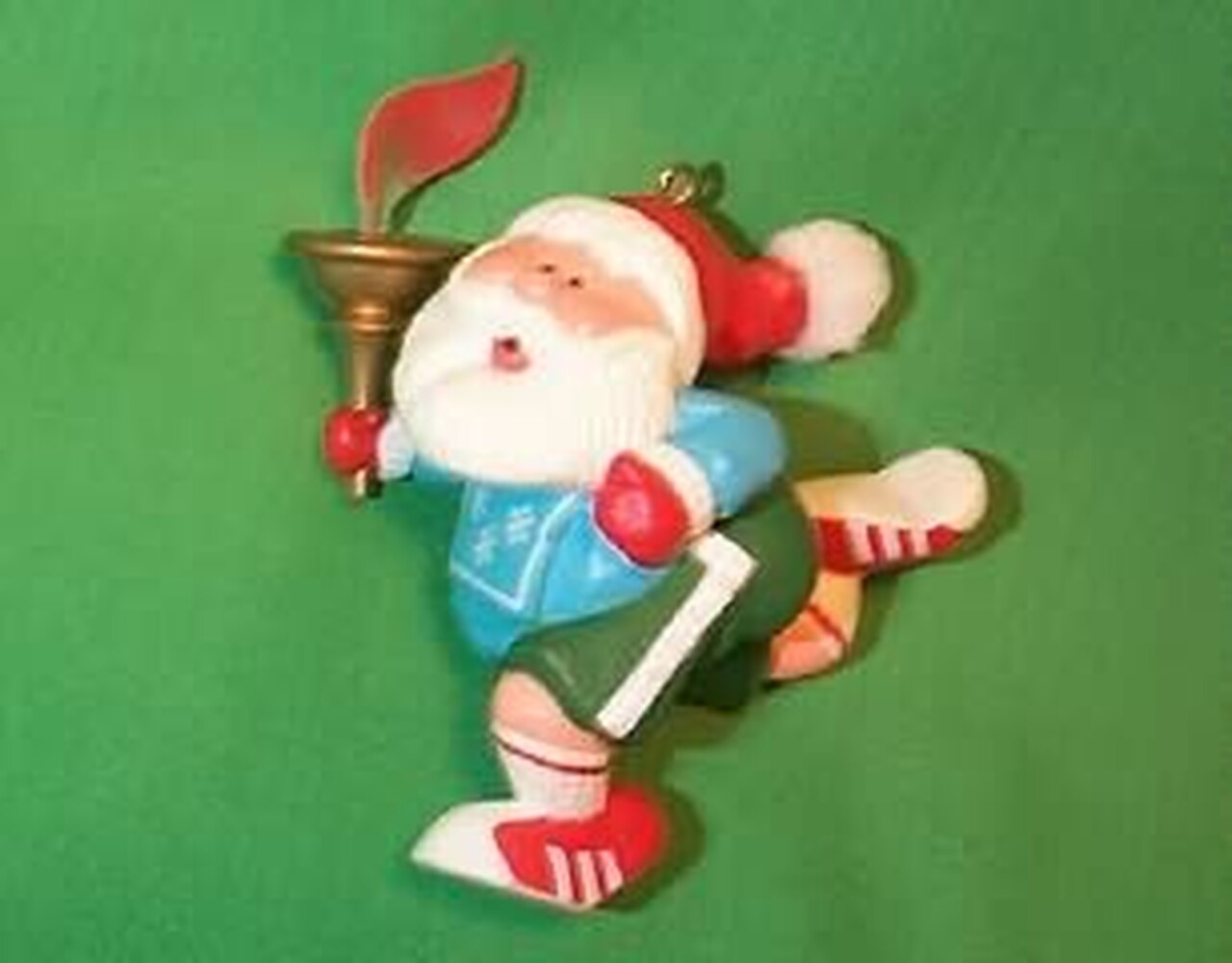

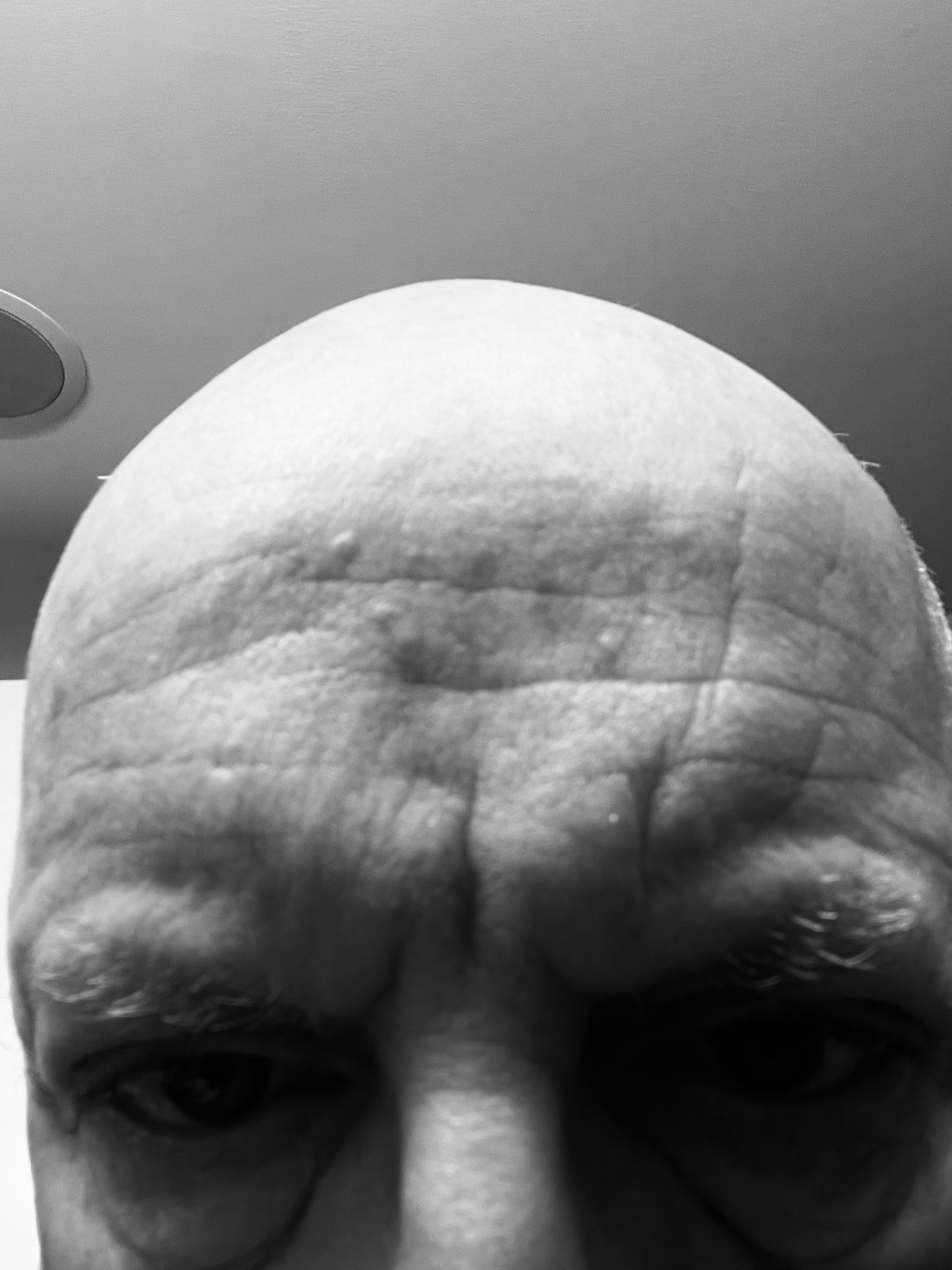

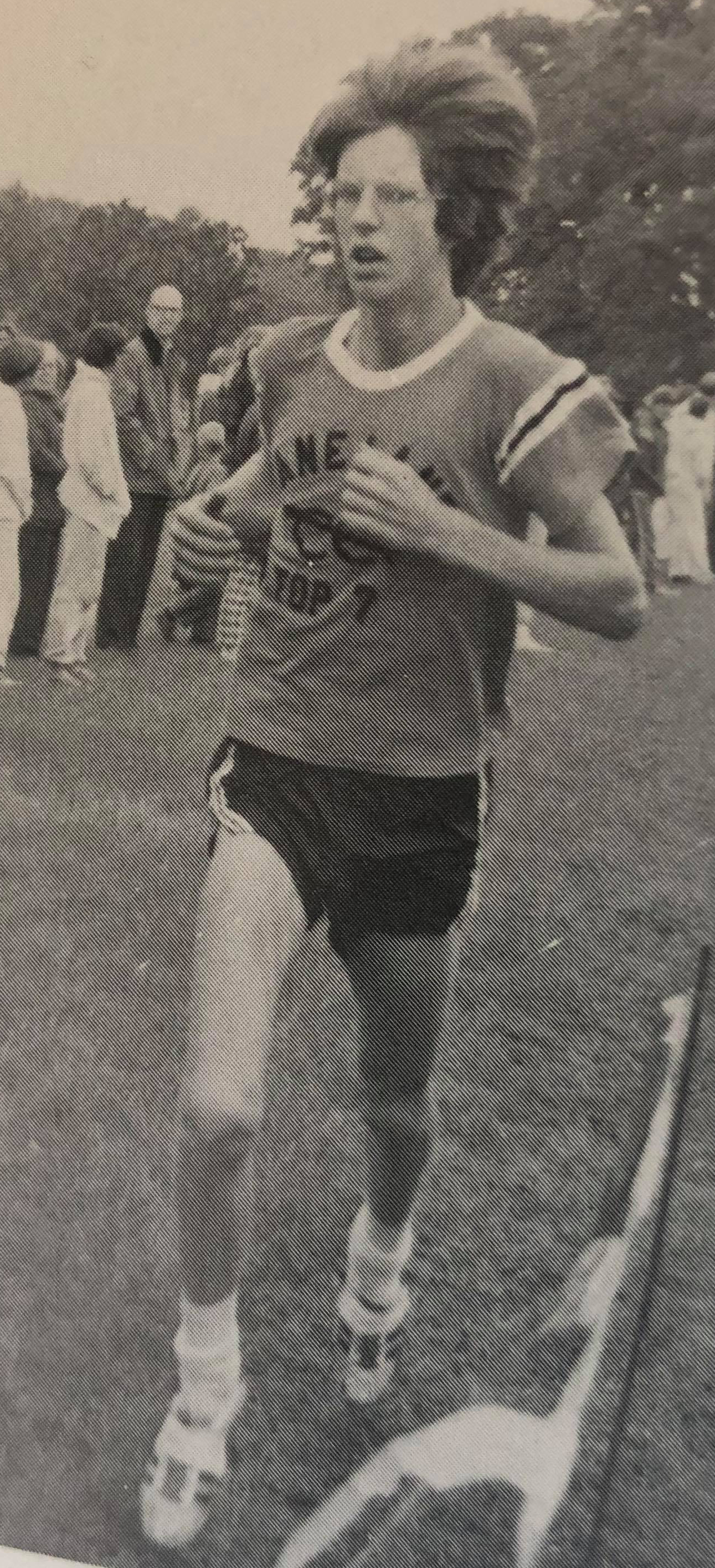
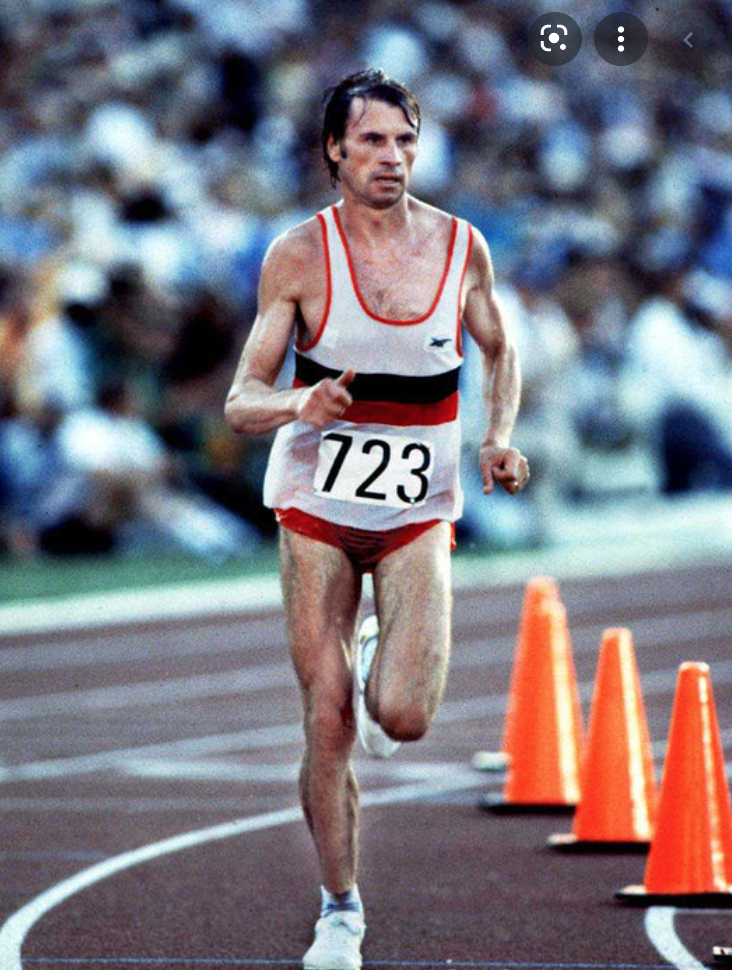

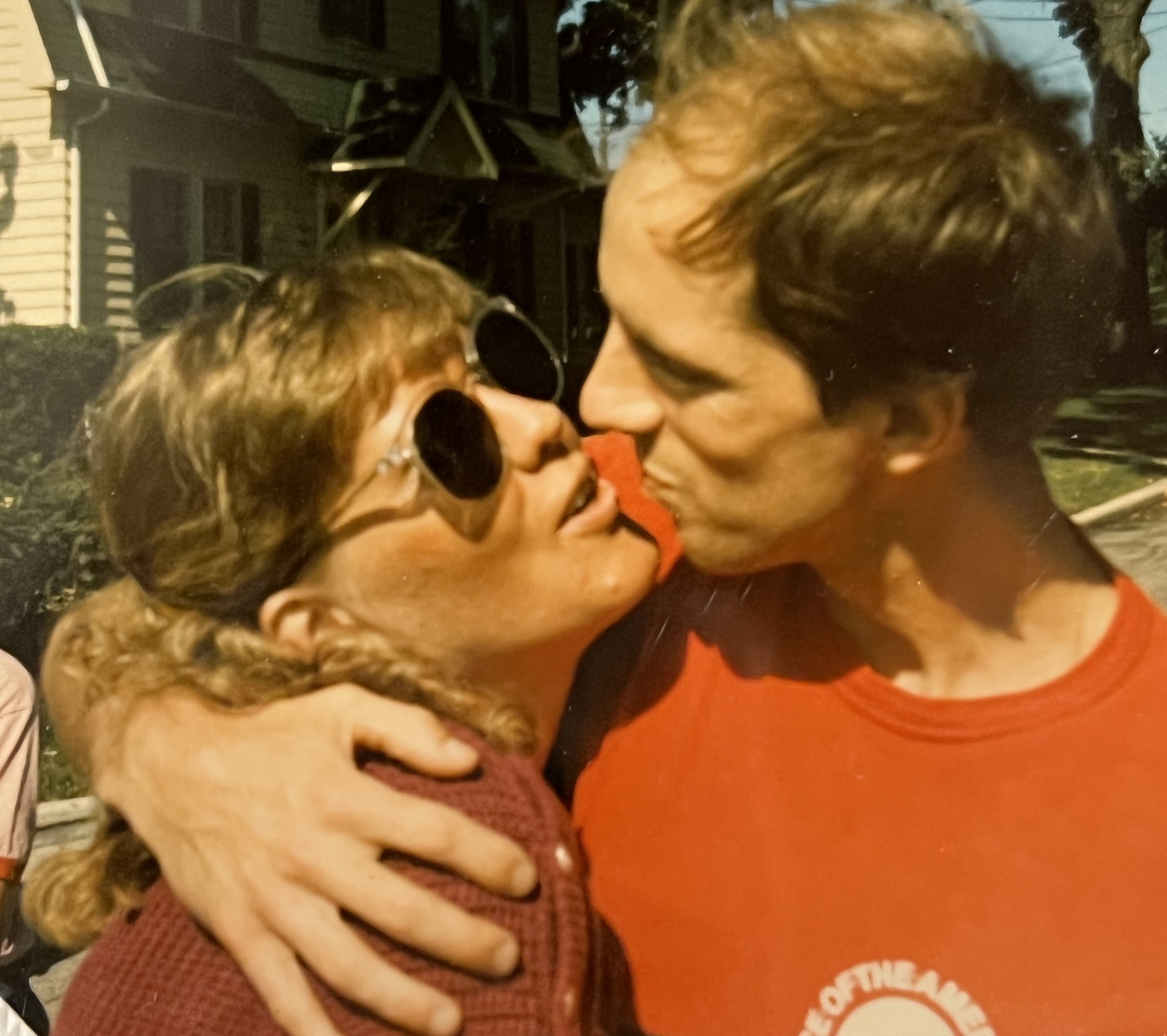


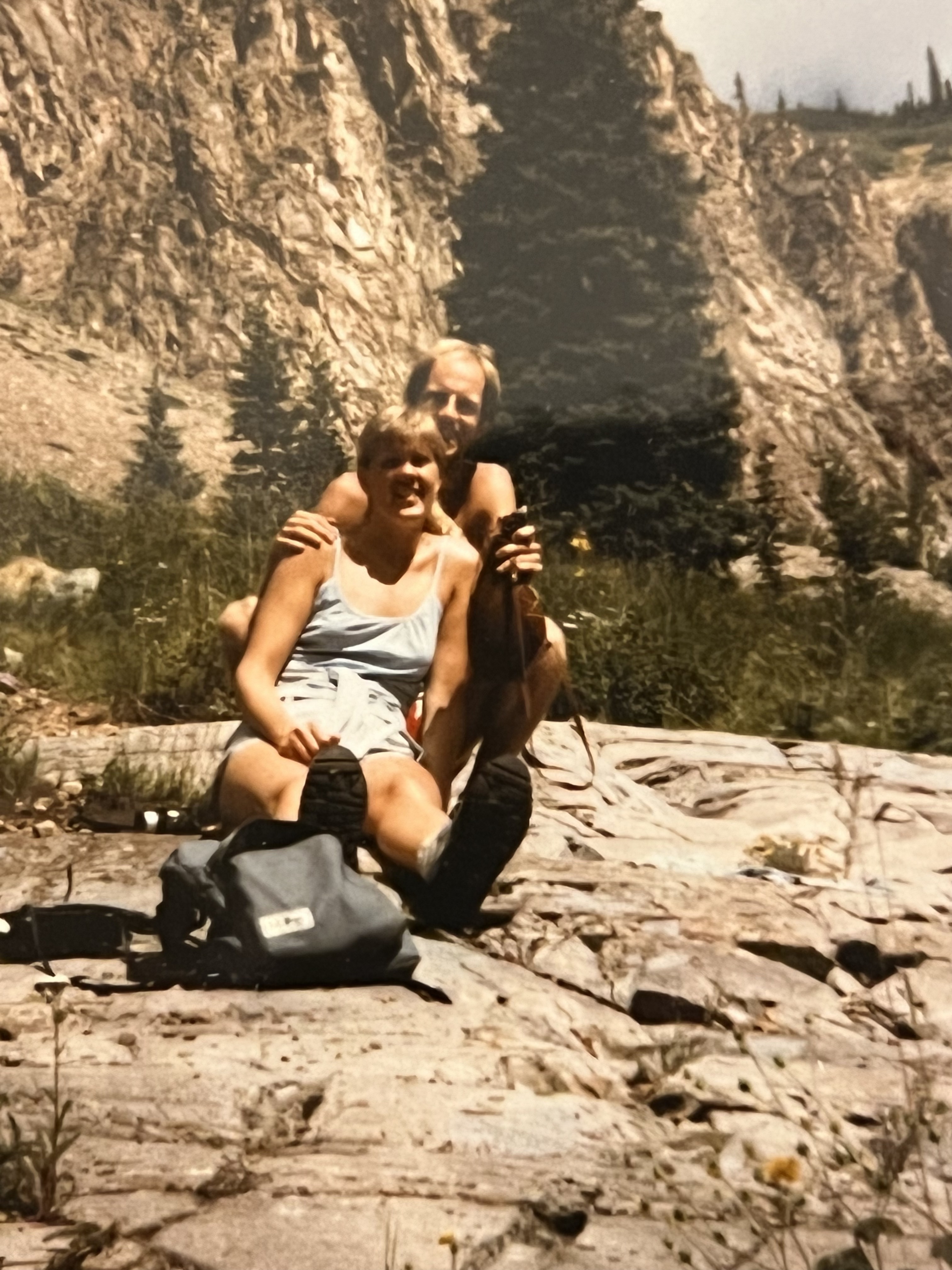


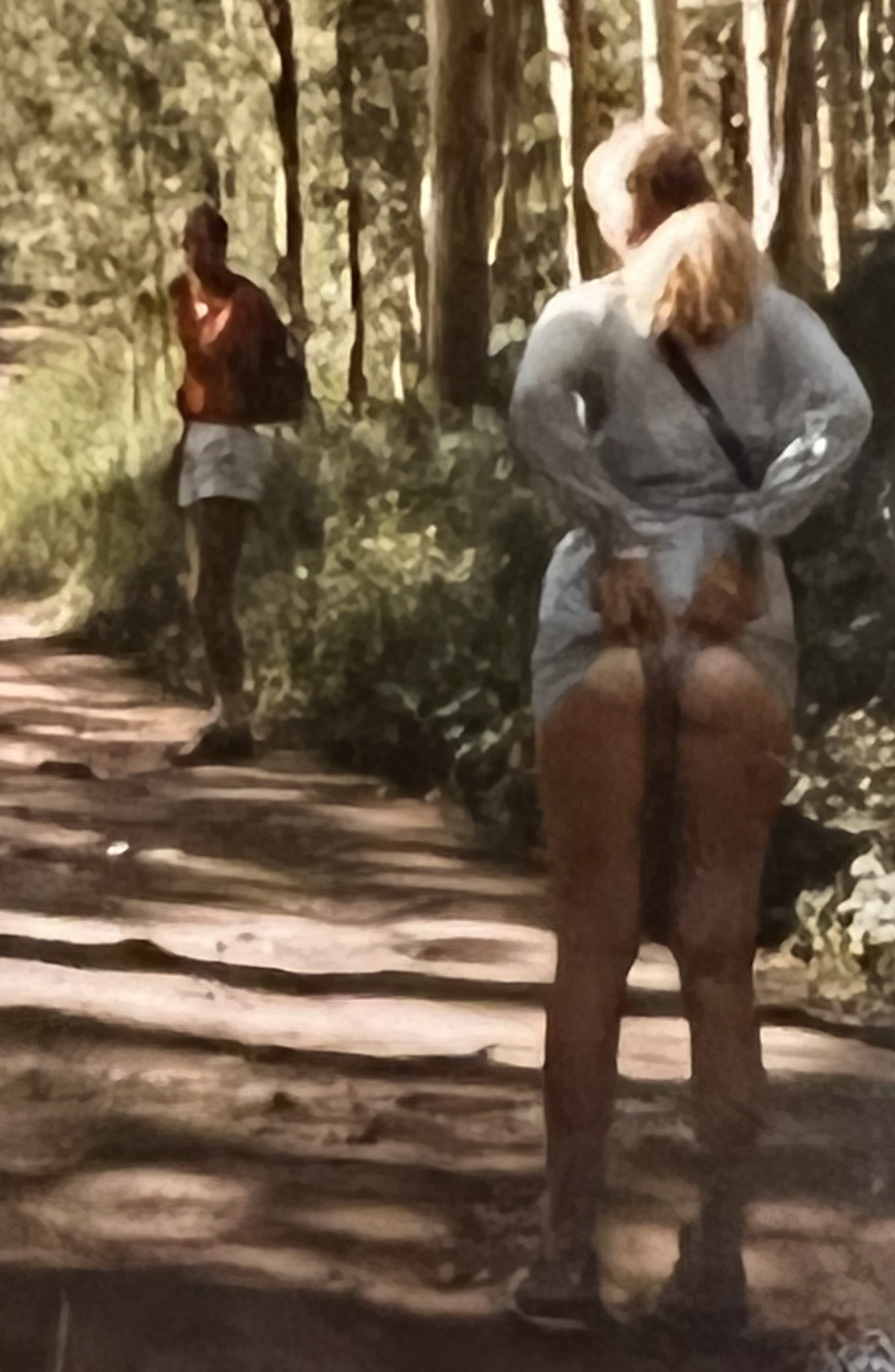
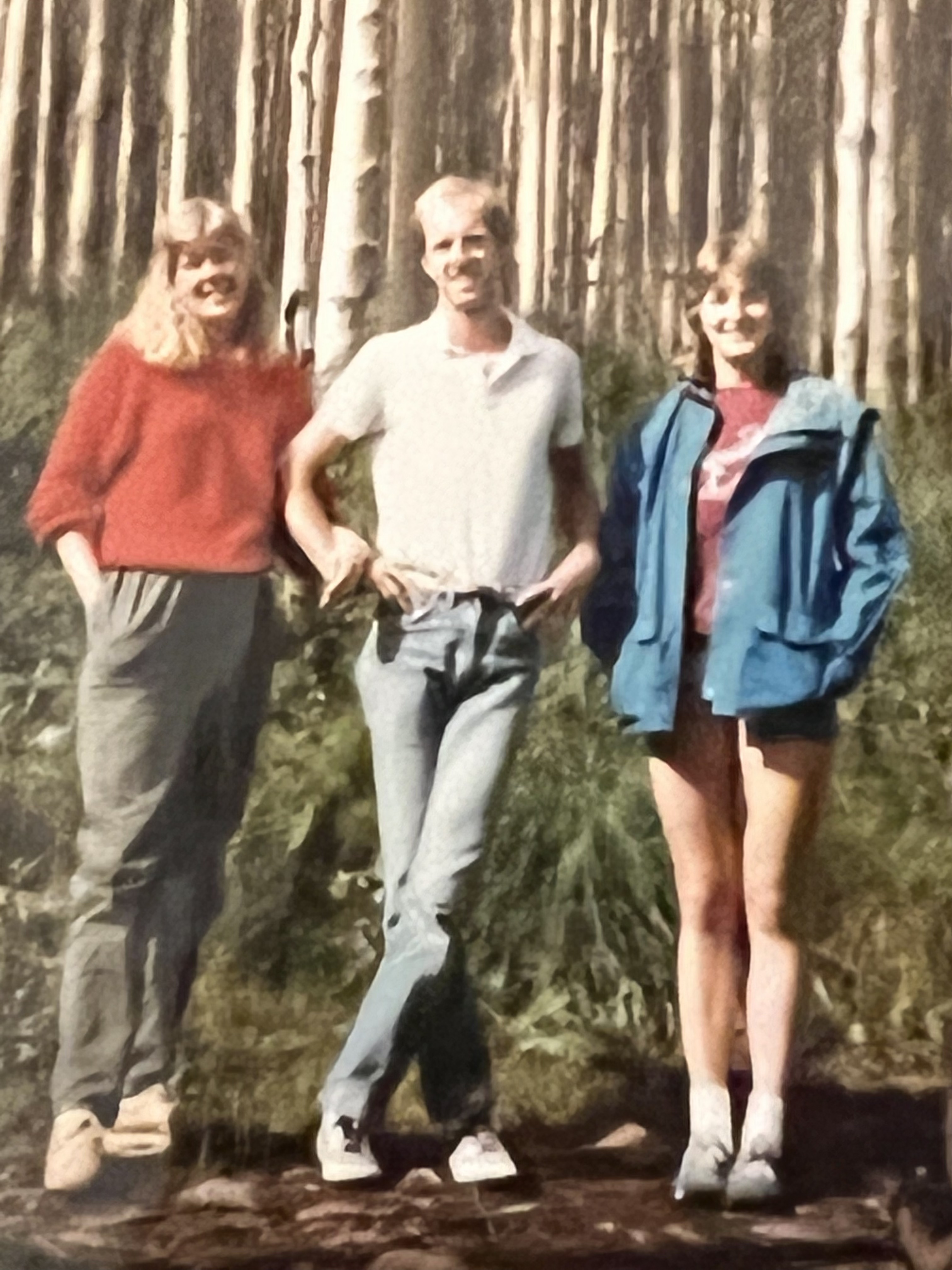
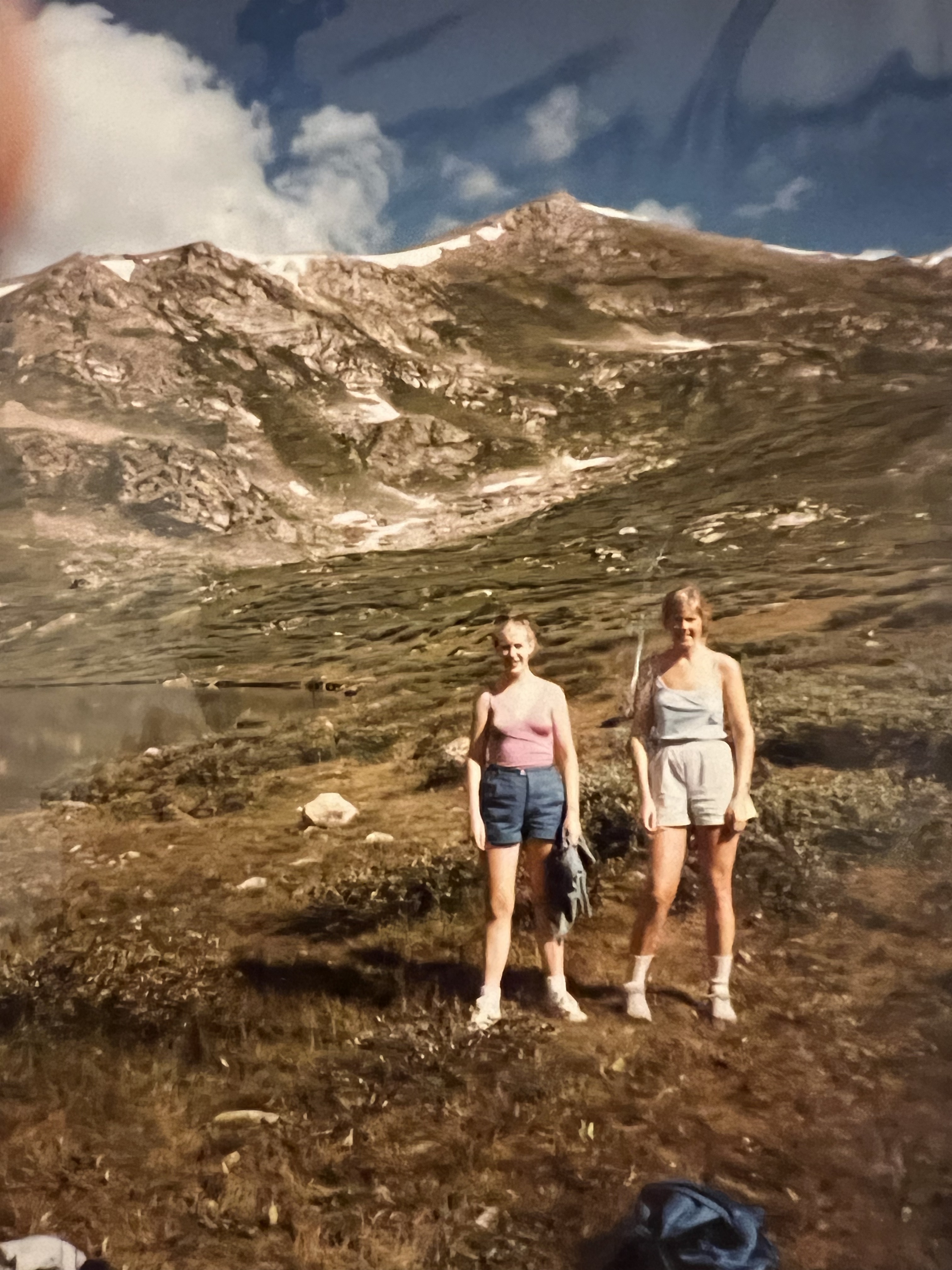
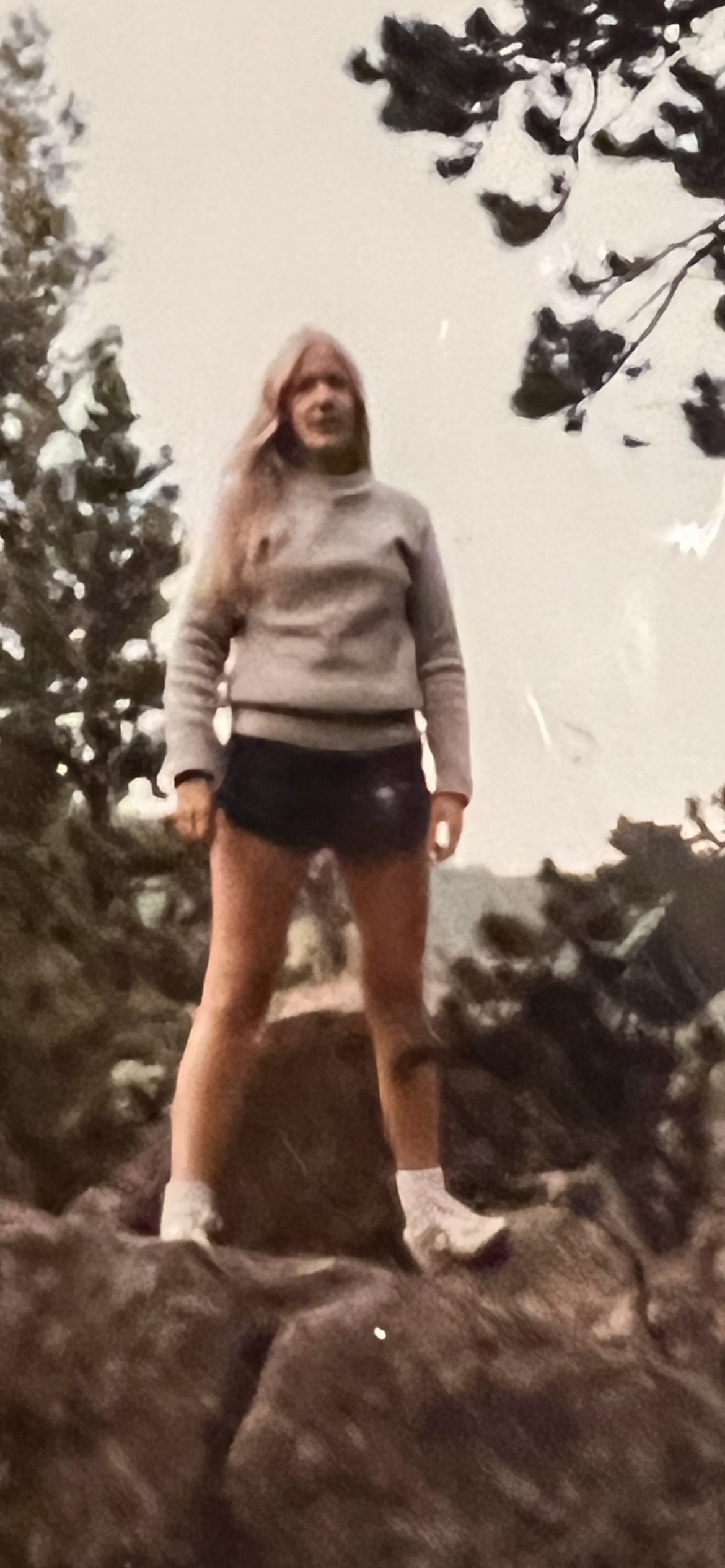


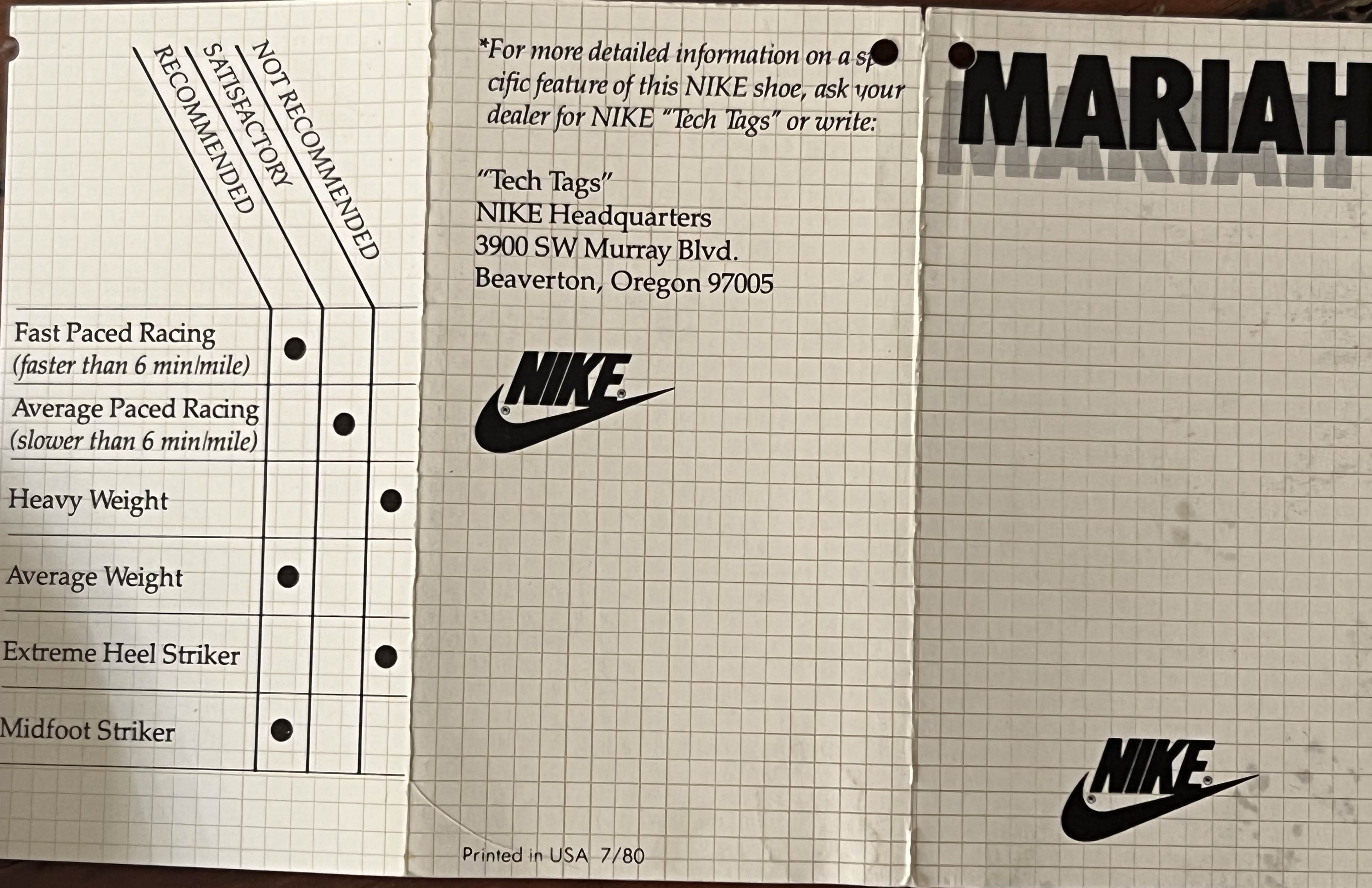

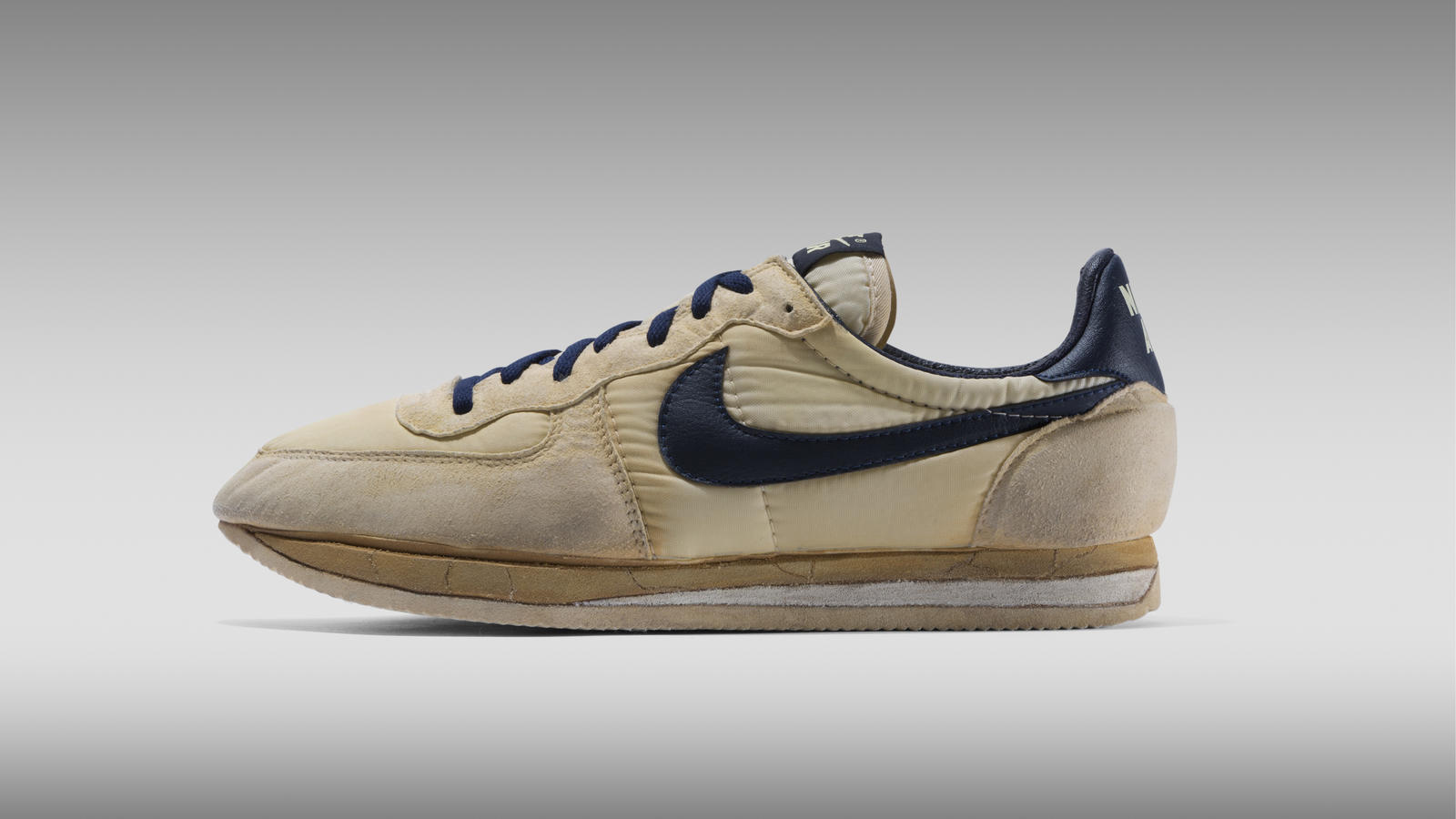
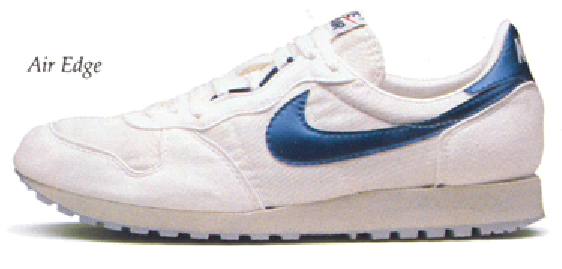


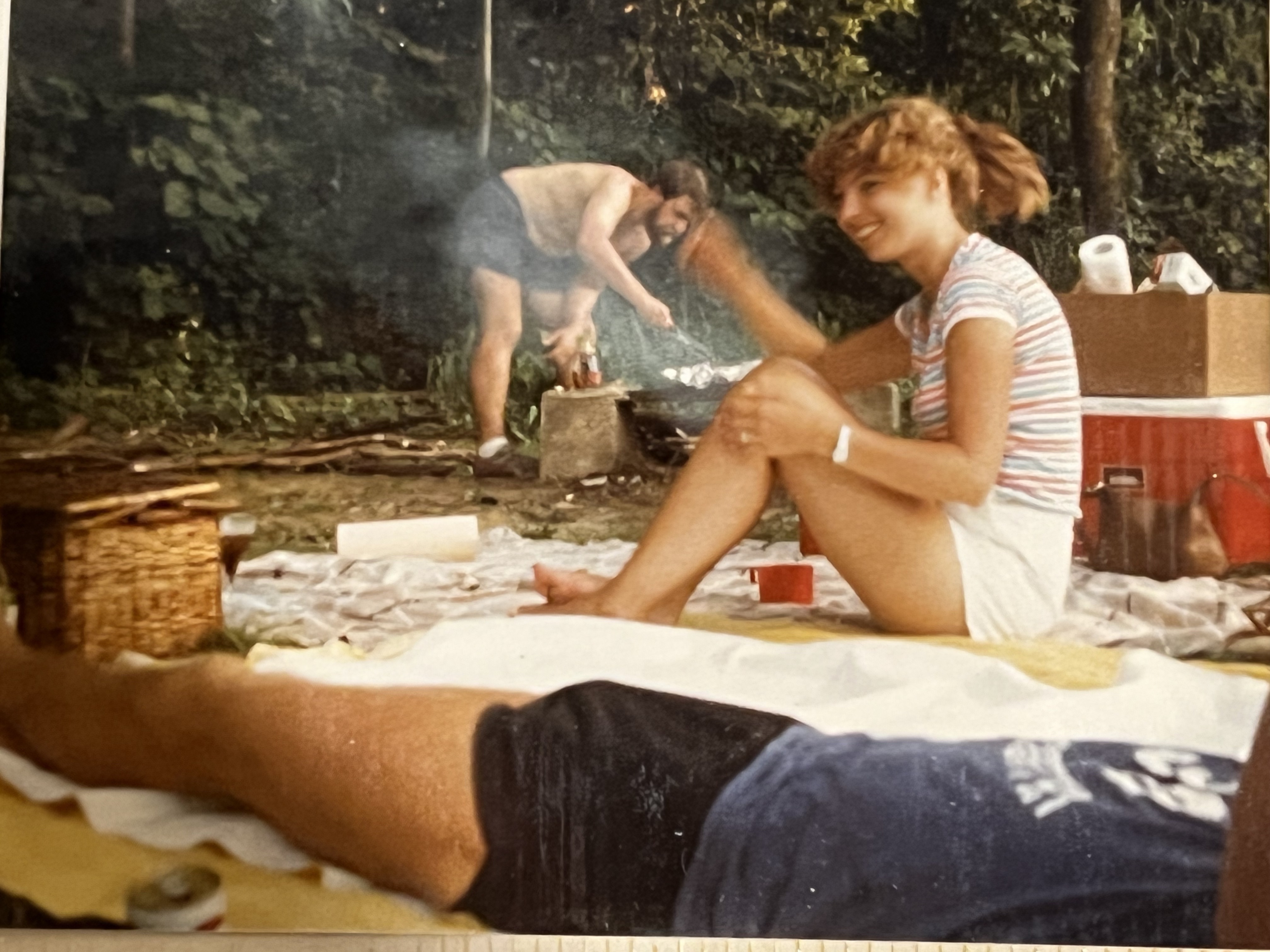
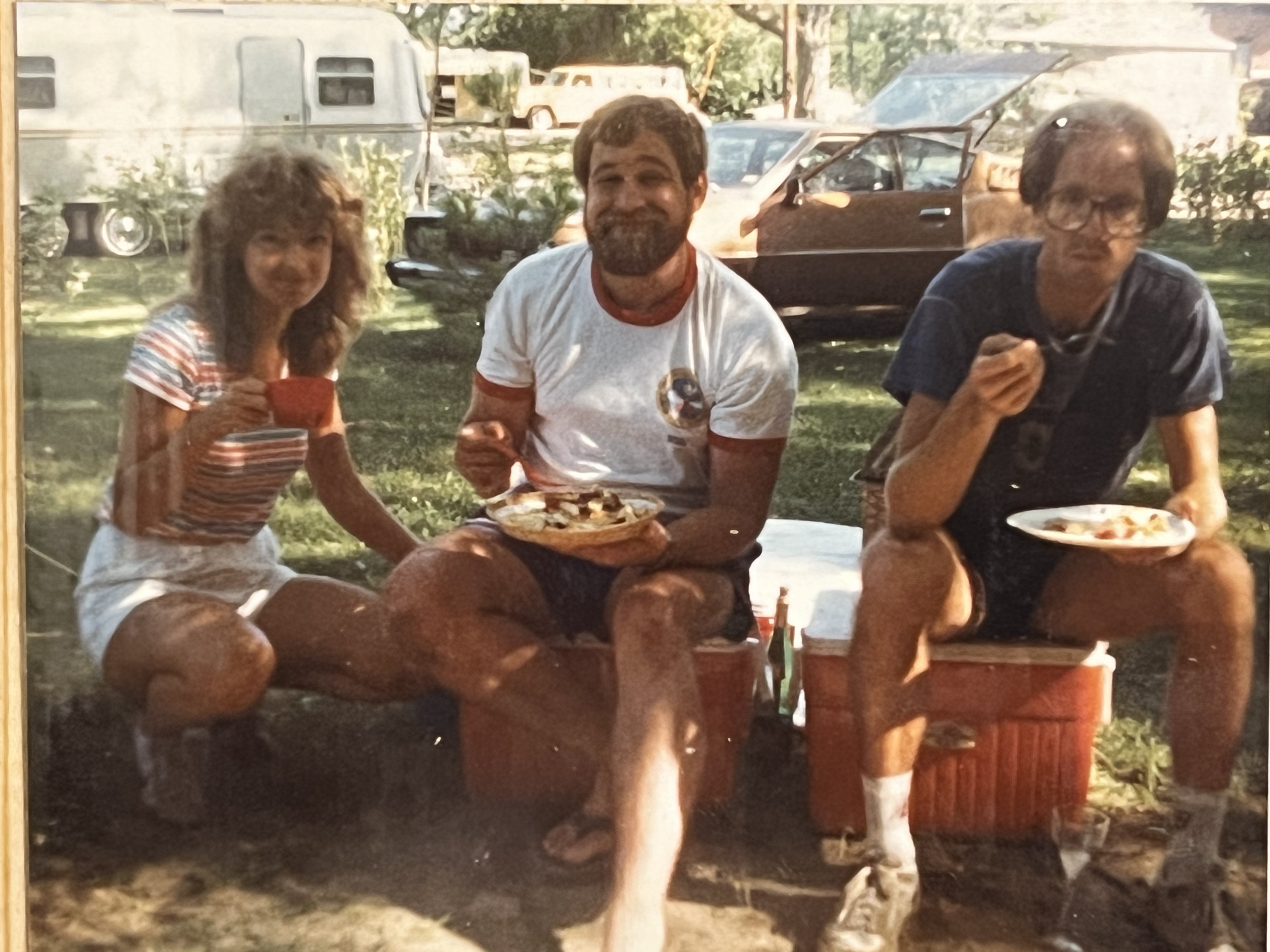
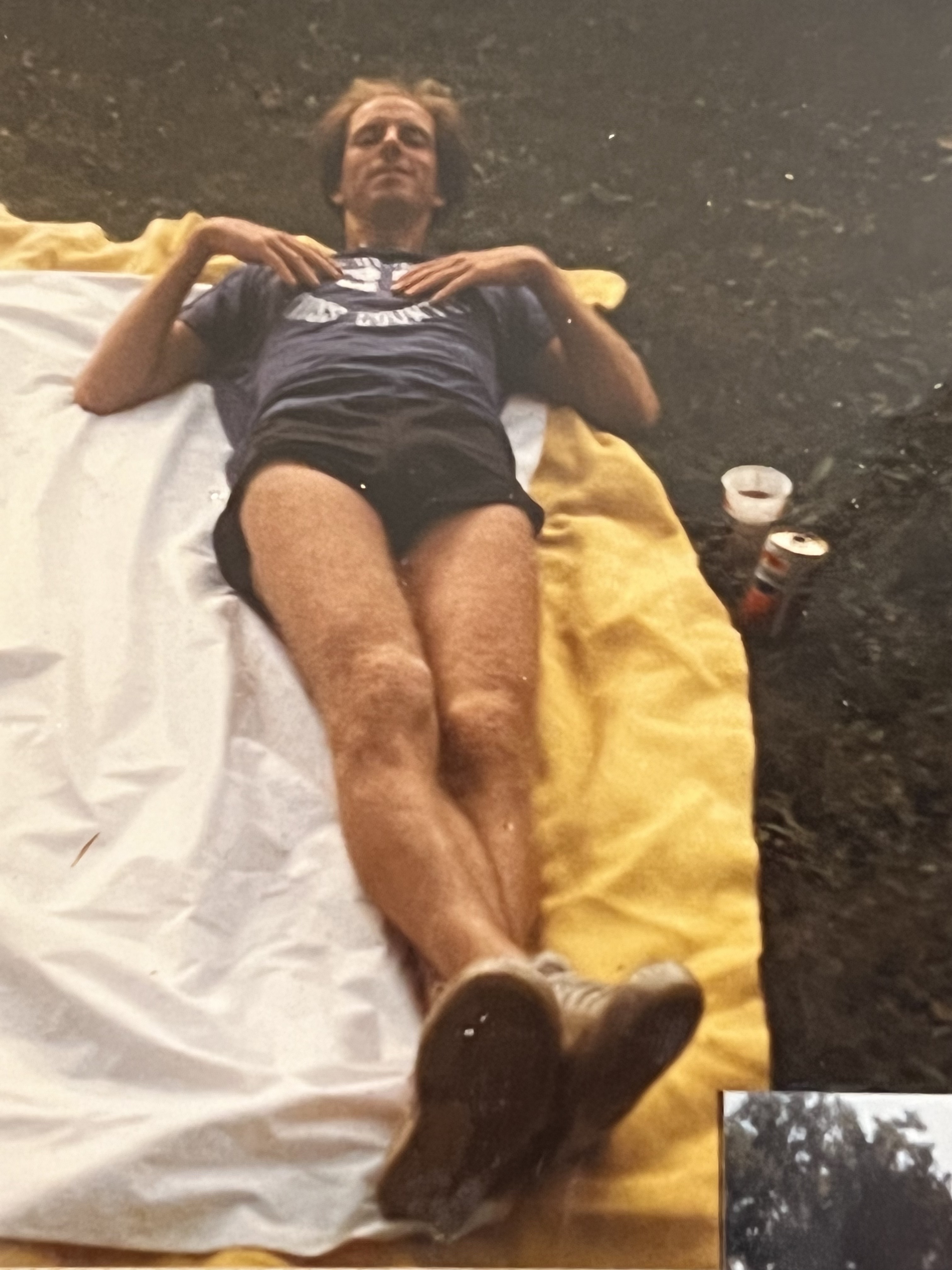
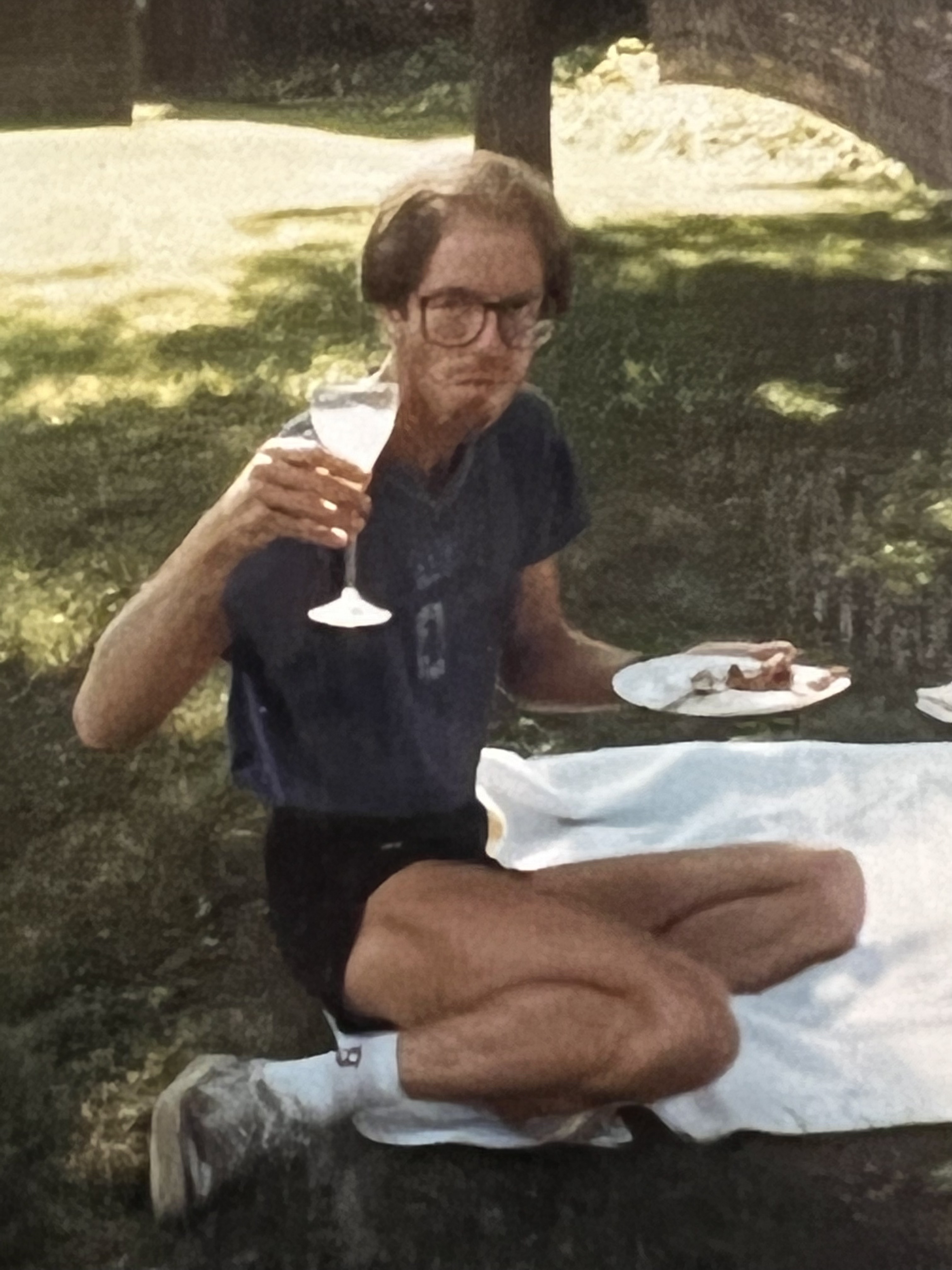
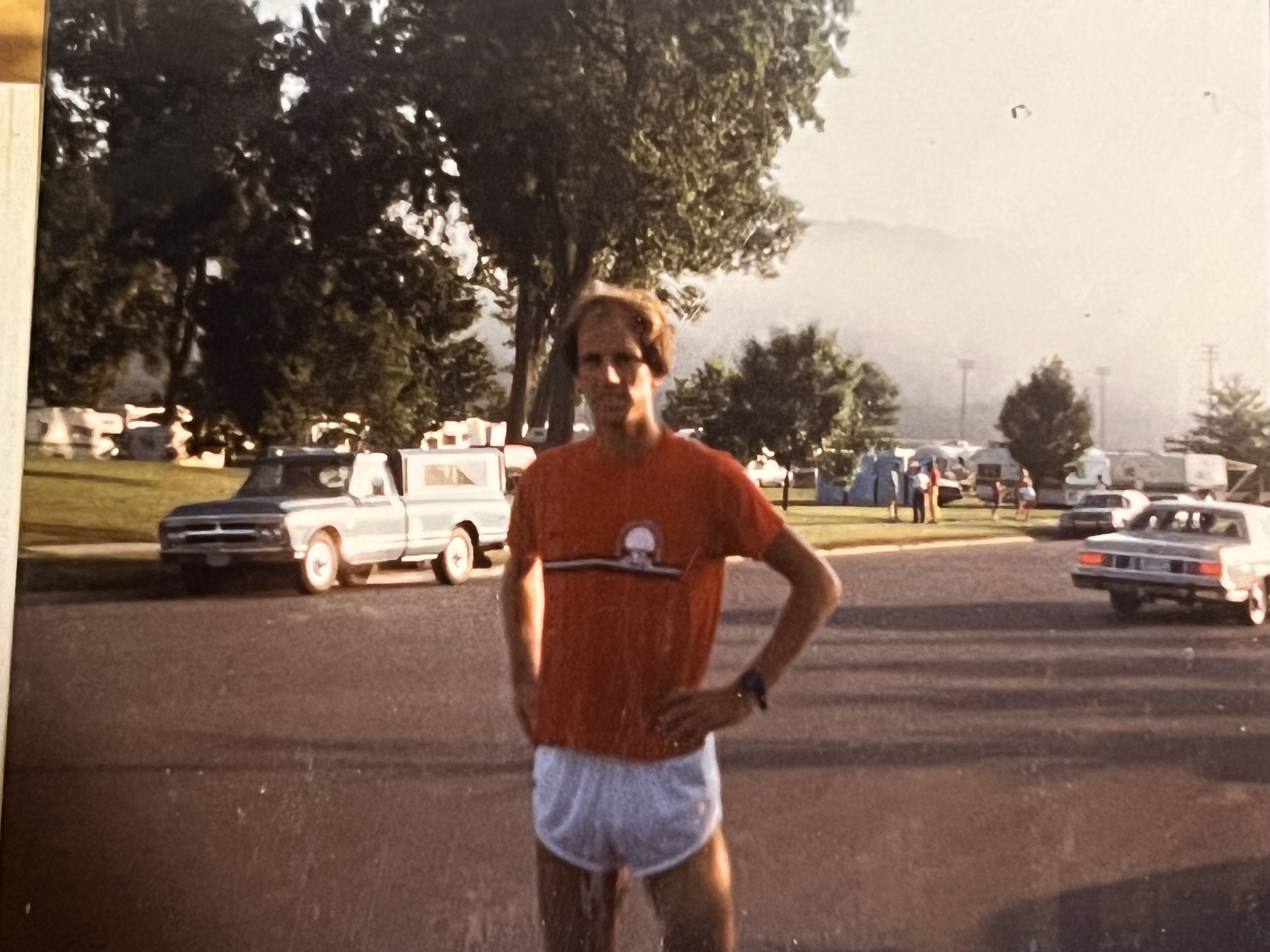
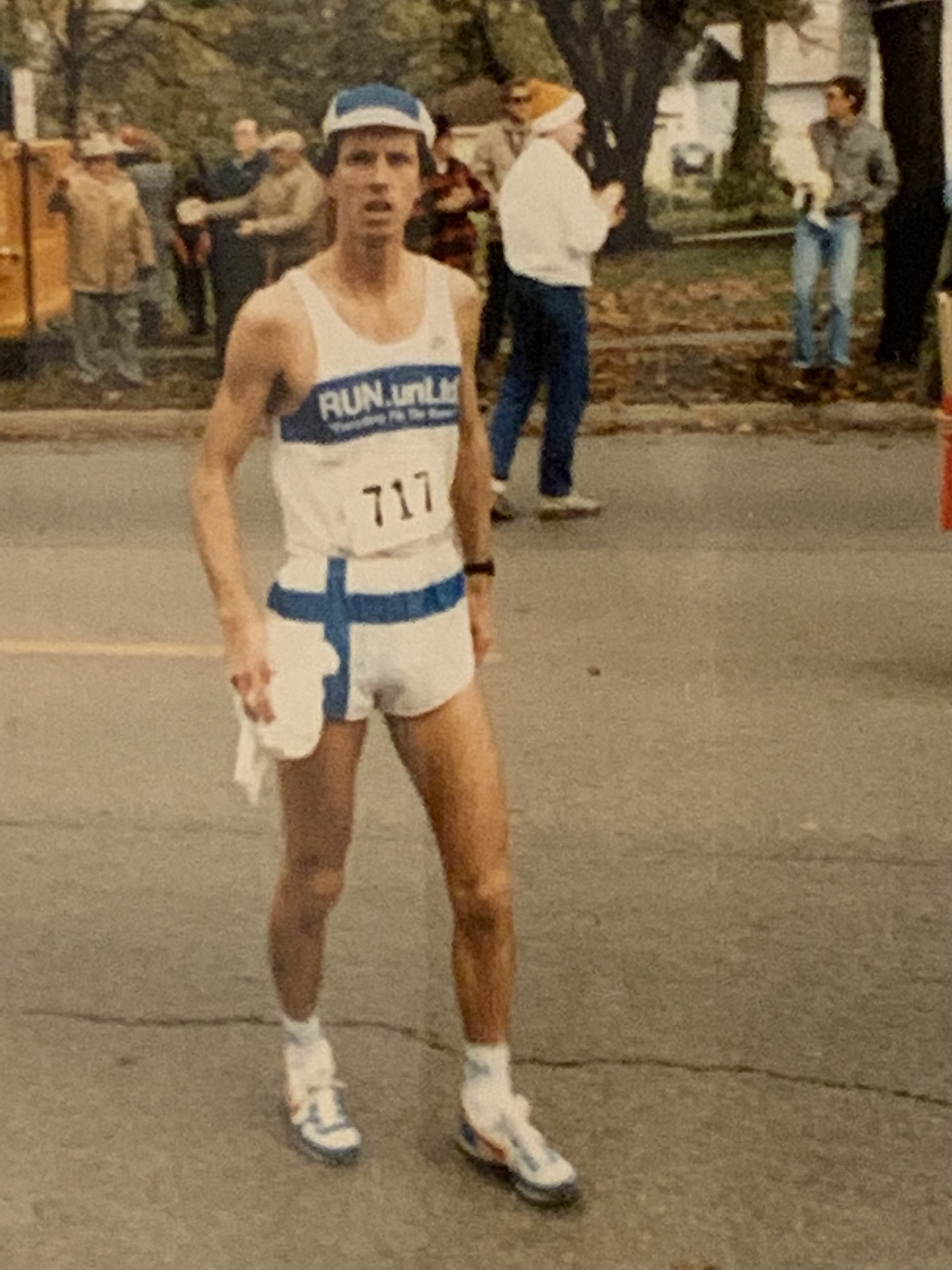

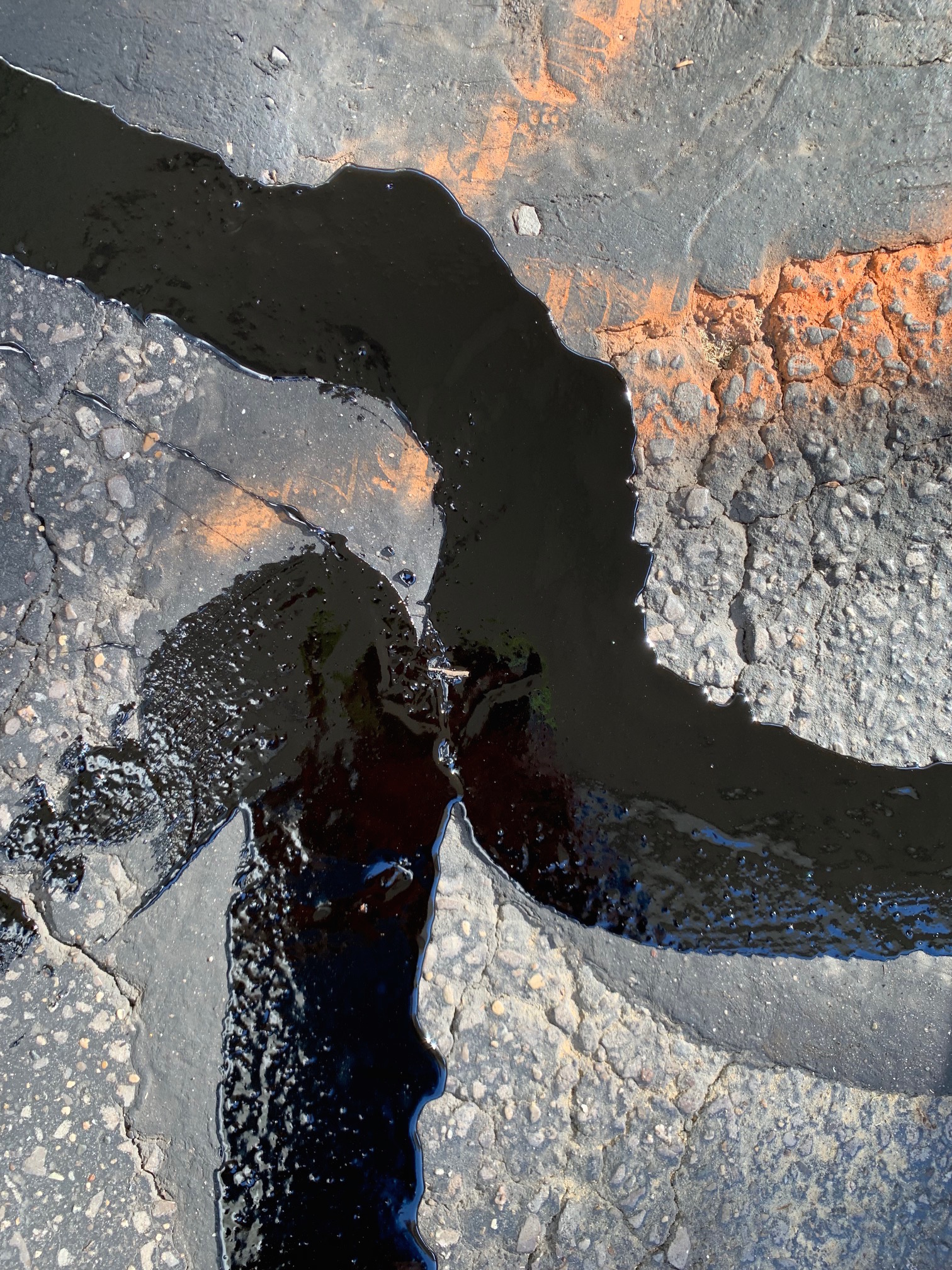
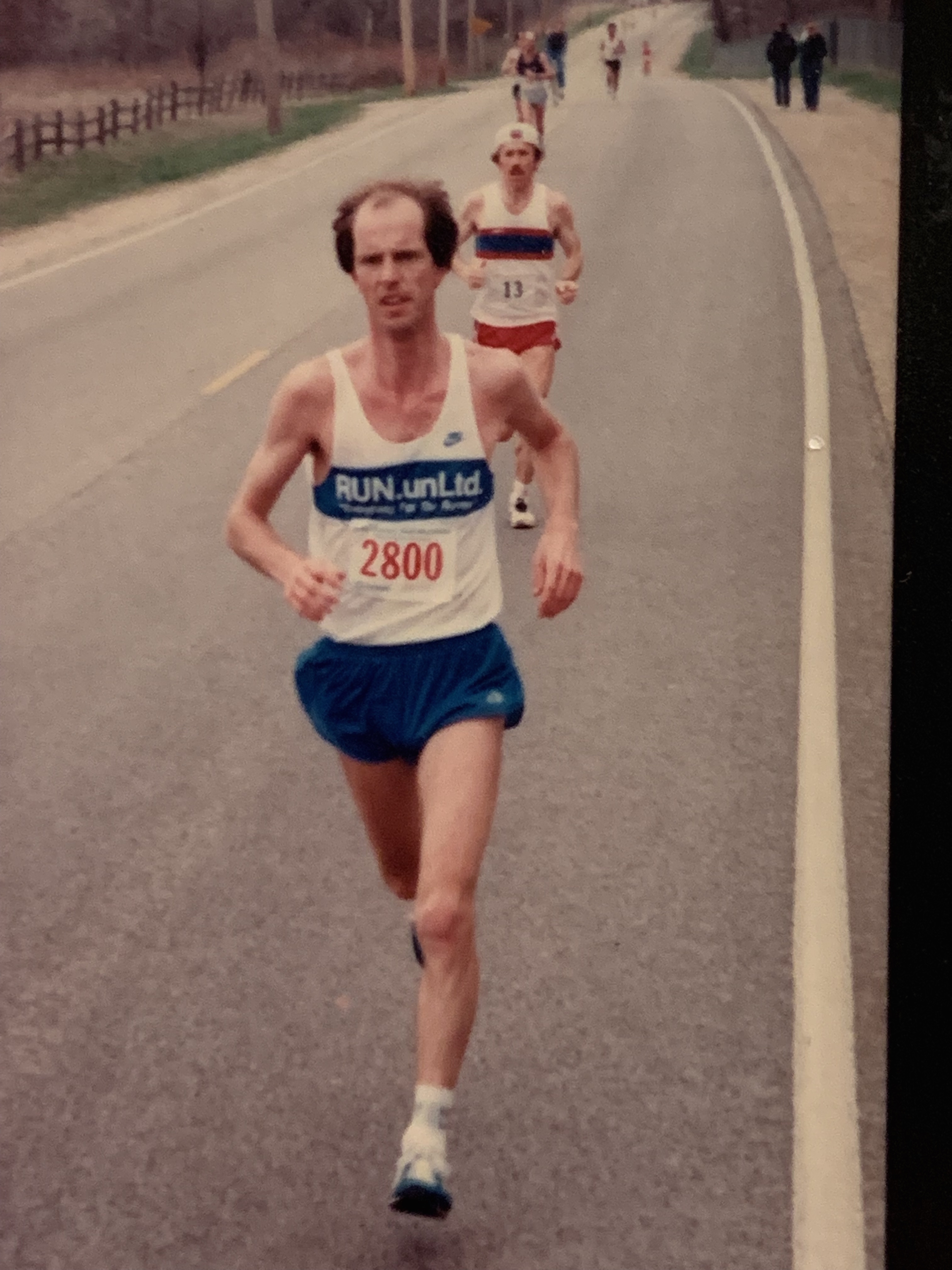


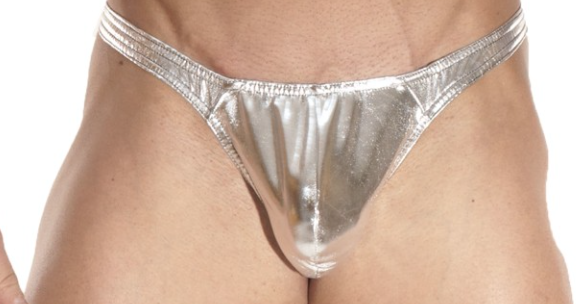
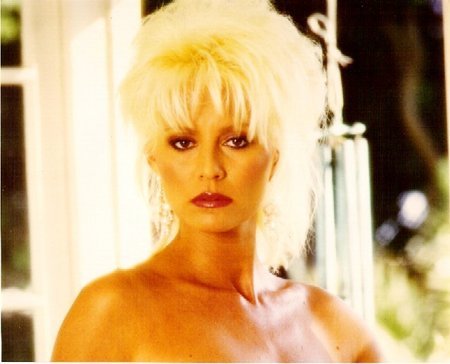
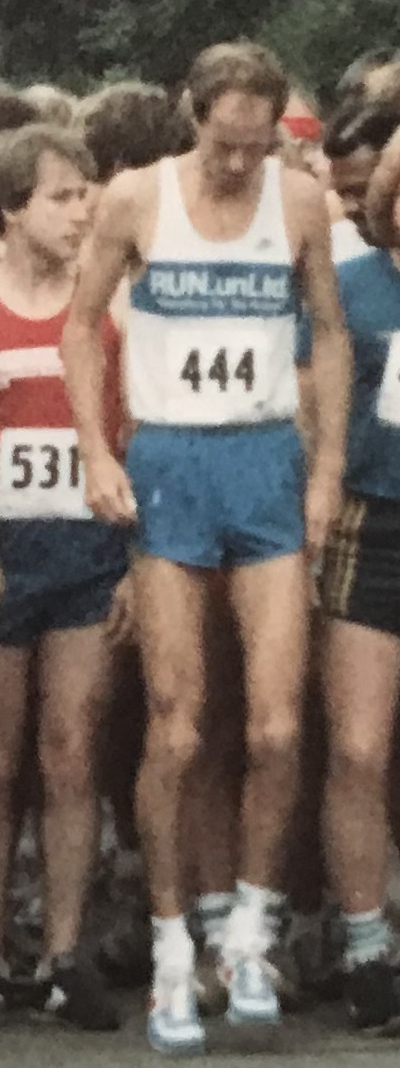
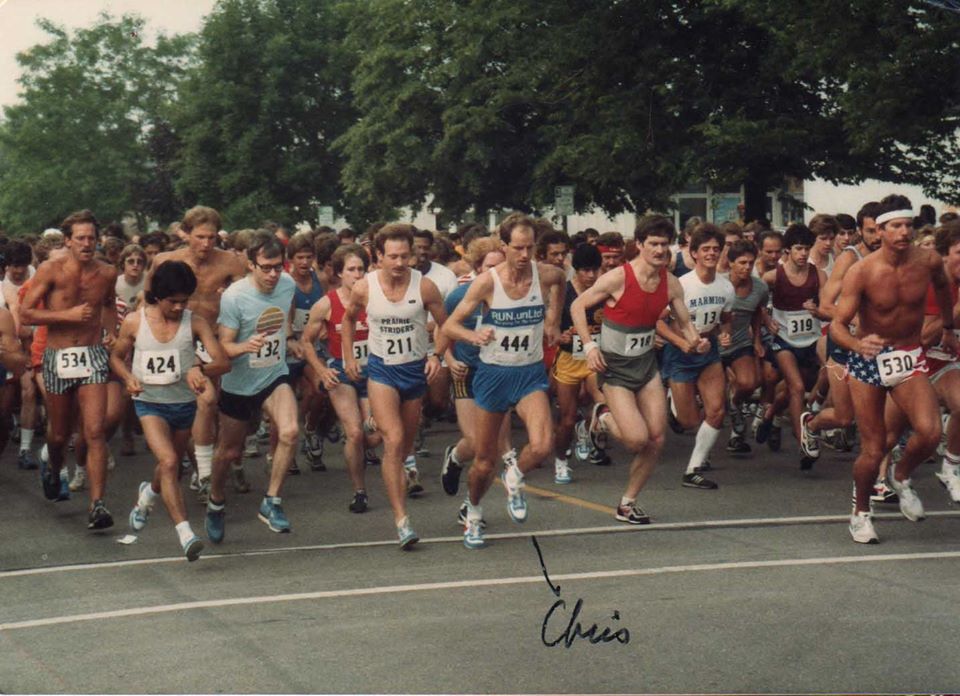


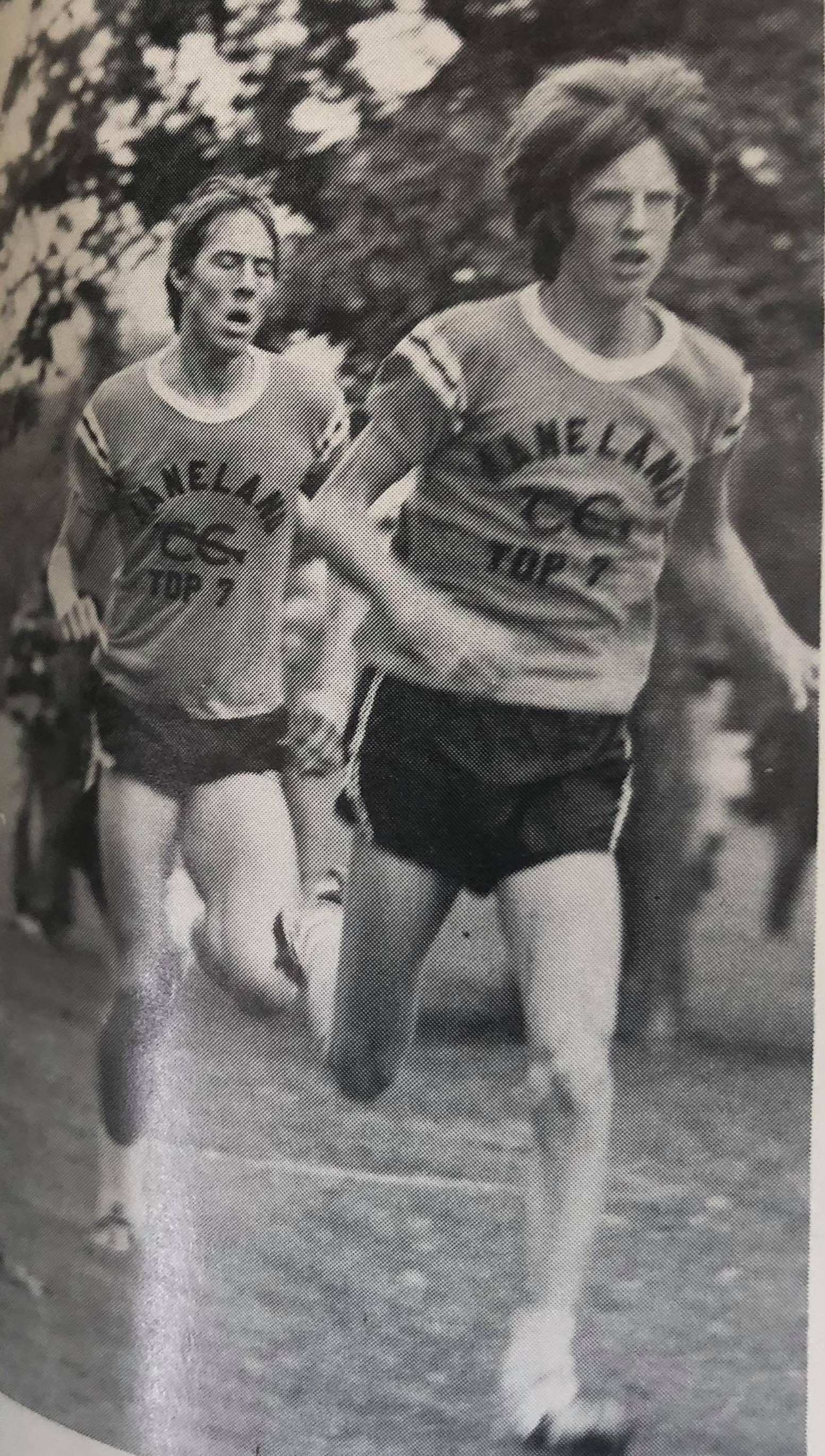


 We Run and Ride