Please remember to flush, unless you can’t


Me in the Pool

You’ll see why this photo is pertinent at the end of this blog. But what’s that floating in the pool? 

Those of us who run, ride and swim get to have our fair share of encounters with interesting bathroom options. At races the proverbial Porta Pottie landscape can range from wonderful… to wondering if you’re going to catch an awful disease.


Stopping at a forest preserve or park to do your business can also create interesting considerations. Typically the toilets in these locations are what we might call Stop and Drop structures. Just you, a toilet seat and hopefully ten feet of clearance between your butt and the frightening concoction of human waste and detritus below.

Let’s admit that we don’t like to think about what’s going on below us. It’s a necessary evil that we expel human waste, but philosophizing about it resolves no problems. In a pinch, so to speak,  there is no room for complaint about the nature of the facilities. You sit there in the heat or cold grunting away because to continue on without relief might lead to a shorts disaster. Then you prepare to move on by doing some basic hygiene, usually with a few sheets of one-ply toilet paper, and toss it in and leave. No need to flush.

Squat thrust

This is closer to what human beings did for hundreds of thousands of years. Only in the last 150 years or so did people actually get to use flush toilets with liquid sanitation plants waiting to receive our best and worst efforts.

But in the public sphere, we can all Thank God for decently maintained public toilets. They seem generally to be on the increase these days. For example, the local Starbucks where we meet to run on Saturday mornings always keeps their restrooms clean. The same holds true for all the other Starbucks and other coffee shops I visit. All seem to be well-maintained with clean facilities if a visiting slob has not ruined things for everyone else.

Even gas stations  seem to have upped their game in the clean toilet department. And we all know what a welcome sight a gas station with a restroom can be during an eight-mile run wjem the urge to go becomes so fierce your butt feels like it will explode. So you mince into the station and plop down to do your business, grateful perhaps, that the restroom is also clean.

As mentioned, the problem in this formula arises when slobs wreck the joint. Some people don’t seem to have any control of their bowel or urinary functions. That action is never a pretty scene. Understand that the etiquette of all this is an issue that comes down to one ideal: Leave a place better than you found it. Suffice to say this is not always the case, because we have all turned around when faced with really bad bathroom conditions.

A Word of Thanks

So here’s a word of thanks to all those people whose job it is to maintain clean restrooms. It can’t be a fun or pretty job, especially when a flush toilet backs up and needs to be fixed. That’s got to be the worst situation in the world for everyone involved. Talk about your gritty, disgusting situations. Yet somehow the toilets do eventually get flushed and back and in working order. Someone has to do it.

So let’s all agree not to take that for granted. Compliment the help at your local service station or coffee shop, department store or gym if the restrooms are clean and well-maintained. And be thankful for the convenience of flush toilets, because squatting in the weeds as they did for centuries is not as fun as it looks. Granted, we all wind up there eventually if we’re out cycling or running. When you’ve got to go, any tree or clump of grass is a haven.

But above all, please don’t poop in the pool. It takes a really long time to flush those things.


Posted in Uncategorized | Tagged , , , , | 1 Comment

What kind of running creature are you?


Running Creature

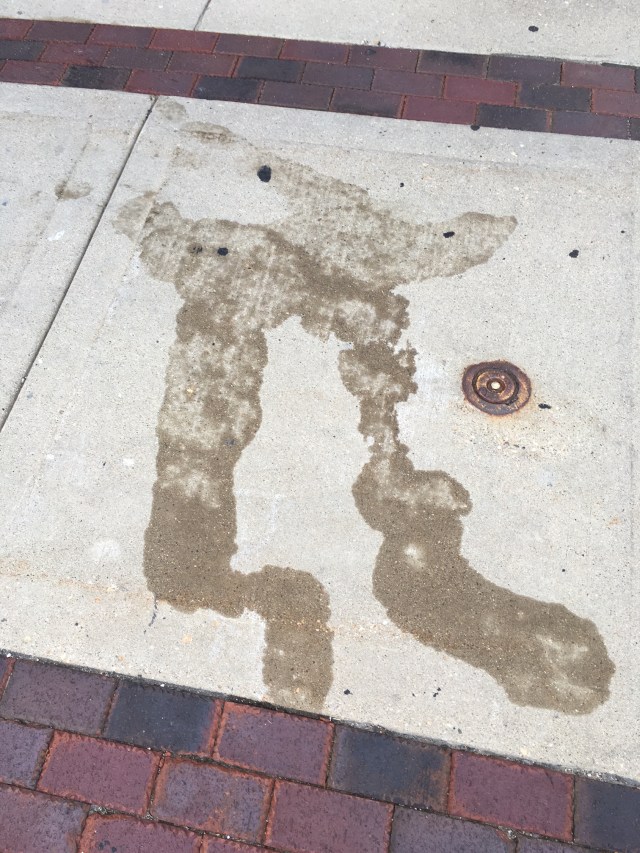
This sidewalk bears the stain of the very rare Torsoless Treader, a species of Running Creature typically found outside bars and coffee shops.

There are millions of runners out there, all with individual running forms and methods. Yet we all tend to fall into categories. There are forefoot strikers and midfoot strikers and heel strikers and pronators and supinators. There are Chi runners and Huarache devotees, World Class skimmers and Clydesdale plodders.

But just like the world of Harry Potter, where normal is abnormal and magic replaces technology such as Garmin, the world of running exists a bit like its own universe.That means there are some interesting characters and creatures out there. Here’s the short version of the Field Guide to Running Creatures.

Starbucks Seekers

Starbucks.jpg

Starbucks Seekers in their host environment.

This species of runner is highly dependent on various types of coffee. Its host environment can vary from city to city, and some Starbucks Seekers Subspecies have been known to occupy local coffee shops. But the favorite environment of this Running Creature is the international chain known for its Frappuccino and Espresso, upon which the Starbucks Seeker feeds both pre-and-post run.

Brick Breeders

This species of runner can be identified by its shuffling gait and anguished expression, a mating display that seems to attract partners with similarly pained-looking faces, because they are often seen moving about in pairs or groups, arms raised to the chest and feet scuffling along the ground. It is theorized the act of Brick Running performs a function similar to a lek or breeding ground for some species of grouse. You can often find Brick

Specialized.Shiv_.S-works.2015

An often telltale sign of Bricker Breeders are the bikes they shed before engaging in their Brick Run mating behavior

Breeders near the trailhead of a cycling route where they emerge like locusts from clusters of Specialized and Cervelo bikes. A rare subspecies is also associated with Quintan Roo. The breeding cycle involves periodically shedding the bike to shuffle about with other Brick Breeders before gathering up the detritus of their breeding display to head to a coffee shop and meet up with Starbucks Seekers. This species is declining in population in recent years due to the fact that most Brick Breeders are too tired after their mating ritual to actually consummate the relationships.

Decisive Drifters

LegsThis species of Running Creature vacillates between sticking to a prescribed running route and taking what is offered by circumstance such as traffic lights. The Decisive Drifter is often seen running in place glancing nervously at a watch or Garmin, adjusting their hat or shorts or crossing arms over the breast to cover erect nipples under a running bra. All these behaviors fall under the category of evolutionary adaptation known as “redirected aggression” as exhibited by birds that grow anxious and engage in “normal” activities such as “bill-wiping” when danger approaches. Decisive Drifters are a common species through their range, which is the entire world. Sometimes they can be seen in small groups on street corners, chittering and chattering to each other while making strange motions with their arms. This may or may not be associated with mating rituals, or it may just be an innate response to sweaty armpits.

Selfie Sharers

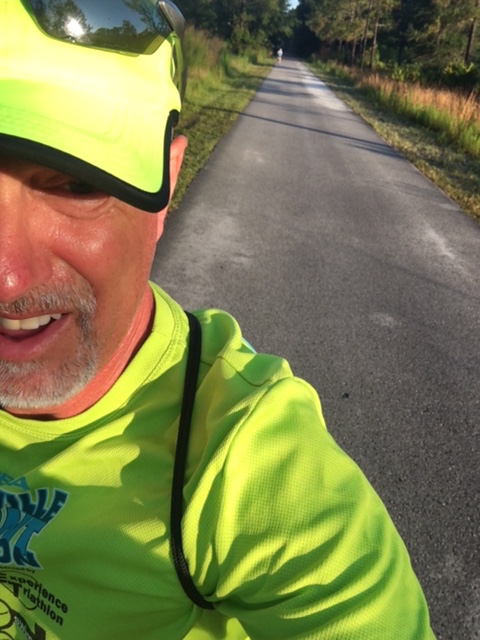
RunThis Running Creature rarely finishes a run without raising their phone above their head to take a groundward facing self portrait to post on Instagram and share through Facebook and Twitter and ten other social media all linked by a sharing app loaded with 1300 other Selfies of said Creature running in some country that isn’t really identifiable because the scenery is not really identifiable when the camera is pointed toward the ground. Typically the Caption on these photos reads: “Just finished a great run! Wish you could be as runnie as me!”


And there you have it. A few interesting Running Creatures to consider in your travels. Perhaps you know a few other types. If you have suggestions, share them in the comments section below and perhaps I’ll illustrate them for an upcoming blog!

Till then, enjoy your next run!


Posted in Uncategorized | Tagged , , , | Leave a comment

A bike guy, not quite a car guy

Last night our community hosted a Block Party that included a classic car show. My job as a volunteer was to assist the fellow who organizes the show. As a good volunteer should, I arrived early and introduced myself. He was classically unimpressed. There I stood in my light khaki shorts and blue polo shirt with little bikes on it. On top of my head was a dapper straw cap and on my feet were a pair of Sperry boat shoes that honestly have made my summer a ton more fun.

Bike GuySummer gear needs to be easy-on, easy-off. It needs to breathe and go with just about anything else you put on your body.

However, the Car Show Guy was dressed in a sagging tee-shirt and equally sagging jeans. His shoes were worn on both sides and he walked with the ambling gait of a man who needs to get places in a hurry but can’t seem to so so.

Clearly, we came from different cultures in life. I’m a Bike Guy. He’s a Car Guy. But it was my job to become a car guy for a while and make myself useful. It was not for me to change a thing he liked to do, or how to do it. Follow orders. Be nice. Make yourself useful.

Car Buy took a few tries to trust me. I got to a spot where it made sense helping him guide the long line of classic cars into place. That’s where a bit of diplomacy started to enter the picture. Some of the classic car drivers were concerned about their vehicles overheating while waiting in line. They were all “early” according to Car Guy, who insisted against reason that they should have all shown up at 4:00 rather than 2:30.

But the classic car drivers all knew better. They had just come from another show in another town managed by Car Guy, so they knew that to get the better spots for the show, they had better be early.

So we had cars pull up and then back into their places on Batavia’s South River Street, which is paved with brick these days and lined with key retail and restaurant businesses around which our city is planning its future. There’s just one problem with the very near future. A Big Developer has come forward with plans to construct a major new residential and retail project that will likely force the beautifully landscaped River Street to close down at times. Businesses are scared. Residents are wary. But the planning to make it all go smoothly is moving ahead.

Such are the needs of the Post-Modern downtown. Upriver there are two communities, St. Charles and Geneva, that have undergone similar growing pains amidst degrees of community resistance. Both towns are ultimately changed for the better. The parking accessibility and mix of businesses is healthier. Bike trails connect all our communities, bringing destination diners and shoppers. Batavia has indeed been declared a “bike friendly” community. There is even a bike repair stand on the trail.

Events such as the Block Party are designed to make the whole downtown feel like a friendlier place. And it’s working. Thousands of people came to the Block Party with their families in tow.

Attractions such as the car show bring people from other communities. To its credit, and to the credit of Car Guy, the collection of classic vehicles was truly impressive. They all sat with their hoods up and their engines gleaming. All except for one ancient Corvette, a 1960s-era bomb with oxidized paint and a cracked emblem on the front. But it ran. And the guy who purchased it in 1973 said he’s kept it in his garage all these years and it was time to bring it out. “I don’t even know why I bought it,” he laughed.

That was clearly not the case with the coral-tone Thunderbird that rolled in late for the show. That stunner was sexier than a Playboy centerfold, but likely just as airbrushed. She (the car had to be a she, it had too much class…) eased down the hill with my guidance and I swore there was a whiff of Miami breeze following it along.

There were black-and-yellow Plymouth Dusters and Hot Rods gleaming with paint jobs that looked like candy. Trans Ams and Mustangs. A 68 Buick Wildcat and a 67 Buick LeSabre. My father owned each of those cars. I learned to drive in the Wildcat. A tinge of nostalgia got me as they both pulled in together.

So I did my job talking with the drivers as they arrived and thanked them for coming. Gave each of them a compliment of some sort on their car. And some laughed at the fact that Car Guy was nowhere to be seen. They were used to dealing with his select form of chaos.

The main booth at the center of the show pumped out 50s-era tunes by Elvis and the like. Apparently, that’s the psychology of most Car Shows. Old tunes to set the mood. Yet the crowds walking through the show  were people young and old, and of a healthy diversity. All sorts of people like classic old cars.

“Please walk your bikes through the show,”Car Guy barked through his portable microphone. “Some of these paint jobs cost $20,000. You don’t want to crash into them.”

So time stood still on River Street last night. The cars posed just like dogs in one of those Best In Show competitions. They all looked a little different. Some of those engines even seemed to bark a bit as they ran slowly to their places along the street.

When it came time for my shift to end, this Bike Guy hopped on my silver edition Specialized Rockhopper and pedaled home. I had an Arizona lemon tea in my bottle cage and a melted Snickers Bar in my pocket. It felt good to help out. Car Guy seemed to be happy with my service. He even smiled at me once before I left.

Then he went back to barking into his microphone about the fact that the 50/50 drawing for car owners was $700 last year and this year they only had$20. “You’re not going to win much that way!” he warned.

And that’s how Car Guy rolls. Hawking a bygone era that people seem to enjoy under the stars and lights of an American city. Even if we can’t make time stand still, some people enjoy trying.

Posted in Uncategorized | Tagged , , , | Leave a comment

Mortal fears and changing gears

IMG_1357One of the problems never solved on my former road bike, the Felt 4C, was a difficulty in getting the chain to move from the small ring to the big ring. The derailleur was Dura-Ace and the setup was quality Shimano. So it wasn’t the quality of the equipment. Mechanics and friends fussed with the gearing but it never quite felt clean when shifting into the bigger ring. It would pause or slip off at crucial moments.

Which made riding difficult, especially cresting a big hill and heading down the other side. Fussing with gear changes at increasing speed, or trying to glance down and see what’s happening was never safe.

There are no such problems with the new Specialized Venge Expert. Shifting is second nature.

And so goes the allegory for life in general. There seem to be times in life when change comes easy. We find a new job or make other life changes and things proceed smoothly. Perhaps we even pick up speed. Put some money in the bank and retirement.

Other times life seems to slip right off the gears. A relationship gets off track, or falls apart completely. Loved ones from grandparents to parents, friends or even spouses pass away. Grief is a sticky substance. It can cause your emotional gears to lock in one place. The stages are familiar. Shock. Denial and Isolation. Anger. Bargaining. Depression. Acceptance.

Except these stages don’t always come along in that order. Some people move into some sort of state of acceptance right away because life demands it. Then the other stages pop up as time goes on. Sometimes this takes years. People wonder what’s going on. Why is anger suddenly a part of life? Or depression. What are we denying?

It happens with divorce and job loss. It happens with the emotional letdown after a big event. Even success can throw you right off the big ring on the Bike of Life. Completing an Ironman, for example, can leave one with a void in life where once the training and commitment filled the days, there is nothing. What now? Who am I? Why do I feel so goddamned mortal?

Super intentional

Our super intentions are often responsible for the slipping gears of life. Highly successful people appear on the surface not to suffer this problem. They give the appearance that their lives are complete and in order. Their personal brands gleam with intention and achievement.

But be not fooled. Even successful people have those “chain slipped off the gearing” moments now and then. There is no such thing as a perfect human being. We could group the categories of gear slippage as well. There are five clear areas where the gears slip for most people:

  1. Relationships and family
  2. Career
  3. Worldview and faith
  4. Character
  5. Self-esteem and respect
  6. Mortality

One could argue that these categories are upside down in some respect. But let’s look at them foundationally. Perhaps everything in life starts with a recognition of mortality.

Perhaps everything in life starts with a recognition of mortality. Yet this aspect of life is perhaps the most frequently denied aspect of human existence. Our mortal fears too often haunt us rather than fueling our love of love of life. But we’ll get to that in a moment.

Next on the list is self-esteem and respect. And we find that the world’s religions try really hard to keep these gears on track. The Christian faith tells its followers that God Loves You and Jesus Loves You. Those are direct appeals to personal esteem and self- respect. People who feel loved tend to thrive. Yet those who deny religion find these qualities in other places. So there is no set formula. You can ride in essentially the same gear in the middle of both large and small chain-rings.

Which leads us to character, or  how we value and conduct ourselves in the context of society. And like the gears on a bike, character can change in the face of life challenges. A life-threatening disease is a test of character, yet so is an injury during training for a big race. These are challenges of different natures and degrees, yet they are both real. They test, define, refine and emerge in our character.
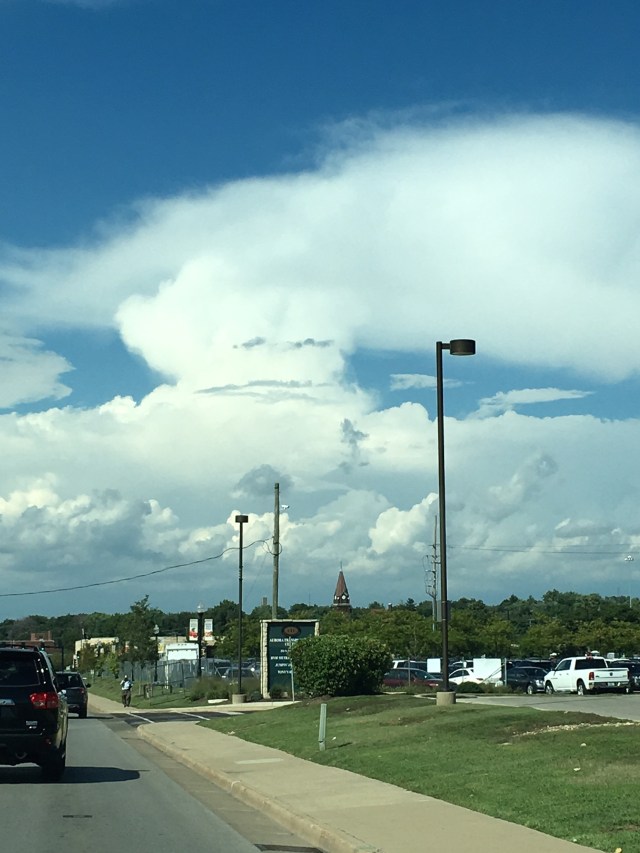
Clouds 1From character we move to the broader concept of worldview. That is the foundational set of beliefs that inform one’s perspective about everything from the structure of the universe to the leaning of our politics.

Many things inform a person’s worldview, but what really greases the chain in one direction or the other is the culture in which one is raised. That is the “chain lubricant” that makes things feel like they pull in the same direction. Yet there are times in life when that chain can go dry. People have their worldview tested when they go off to college, for example, or enter the work world for the first time.

Which means people can get lost when they realize their worldview is exposed or proven wrong in some way. Then the stages of panic and grief can kick in. The chain of life slips and even falls off at times. These are tests of personal faith which can lead to a wholesale personal tuneup.

People who go through alcoholism or other addictions know how wrenching this experience can be. The same tests daily afflict those who suffer from anxiety or depression. Mental illness is not so much a personal flaw as it is a deep connection to one’s sense of mortality. That is why so many great artists and works of art come from deeply ruminative places. If you want an immersion in the raw mortality and insight of life, go get yourself a book of Charles Bukowski’s poetry. 

Yet at some point, one’s worldview needs to be filled back in through some means of support. Otherwise one’s connections with mortality become a risk.

Career changes

IMG_7504Like it or not, most human beings grapple with the challenges of a career. Our working lives or vocation are expressions of who we are. This can be transplanted, of course, into avocation, and many athletes find satisfaction in this regard. Their personalities become immersed in a sport and that becomes an identity. But when injury or other circumstance knocks that chain off the gears, life can get complicated. Friend networks get strained, and even spousal relationships when one person continues in the sport and the other is forced to the sidelines. Humility is important in getting one’s “career” back on track in any case. But so is a solid sense of personal pride and recognition of individual value. Those are some of the hardest attributes to keep on track in the face of career loss. But it’s crucial to survival in every sense.

Which brings us, in the end, to this notion of mortality and mortal fears. No matter what stage in life we currently reside, the single fact defining us all is the reality that death will someday come. Never mind notions of heaven and eternal life. We’re talking about existing here on earth or not. It is the idea of ceasing to exist that makes life seem strange when you stop pedaling for a moment and think about it. I remember the first time I rode a bike with gears and was able to “pedal backwards” without bringing the bike to a halt. it felt so counterintuitive that I felt like flying. That moment is just like the Zen notion that life itself is an illusion. This idea that we’re locked into pumping the pedals and driving our gears all the time? That’s an illusion too.

When the Beatles George Harrison and John Lennon first experienced LSD, the so-called “mind expanding” drug, they very nearly freaked out. Yet out of those experiences came music that communicated the idea that life itself is not all gears and drive train motivations. Consider the lyrics of the song Tomorrow Never Knows

Turn off your mind, relax and float downstream
It is not dying, it is not dying

Lay down all thoughts, surrender to the void
It is shining, it is shining

Yet you may see the meaning of within
It is being, it is being

Love is all and love is everyone
It is knowing, it is knowing…

This is a dreamy yet patently real call to step outside our mortal fears (our grinding gears) and engage in the eternal philosophy of existence. Re: Let’s all pedal backwards for a bit and let the bike roll on its own. Find a hill and coast.
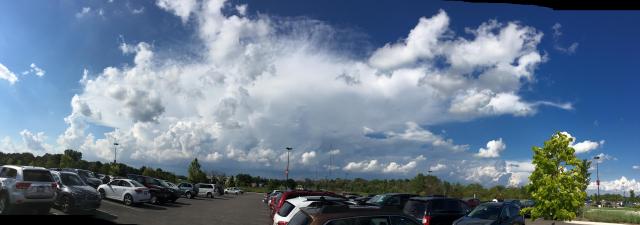
Clouds 3In life, that might mean your backyard with trees wafting in the breeze, or next to a river, where flecks of light shimmer off the surface.Or watch some clouds form and move past. Let the gears of existence move without your effort and you may well find yourself moving in new directions.

This summer I never put a bike computer on my Specialized. I rode simply how I felt each day. Some days that was fast and strong. Other days I rode for enjoyment and never worried about the pace. And you know what? Frequently there was very little difference between the two. Our struggles sometimes reap little benefit. Obsessing about money does not necessarily bring any more your way. Or love. Or hope.

Much less fear. One might think it the worst thing possible that I drove my car into the garage with the road bike on the roof. Yet the money needed to buy a new bike appeared and it has been a liberating year in many respects. It’s time to start pedaling in new directions, and while it’s not always easy, it helps to understand the gearing a bit better.


Posted in Christopher Cudworth, cycling, Uncategorized | Tagged , , , , , | Leave a comment

Riding into the sunset

Summer does not feel complete unless a cyclist ends at least one ride with the sun setting with  light fading and the mystery of dusk settling all around.

Which is why last night’s right with Sue was special. She traveled all day for business and was fortunate to get home just after 5:30 p.m. So we hustled to meet up and set off for a ride before the daylight ran out. It happens so fast once the end of August rolls around. And it seems to come around so fast. As the Counting Crows well noted…

Daylight fading
Come and waste another year
All the anger and the eloquence are bleeding into fear
Moonlight creeping around the corners of our lawn
When we see the early signs that daylight’s fading
We leave just before it’s gone

With daylight fading, navigating traffic late in the day can be tricky for cyclists. Commuters don’t much like to give way when they’re almost home or just starting in some other direction. That means cyclists must be extra careful when approaching four-way stop signs or crossing roads. With the light at an angle, cyclists sometimes aren’t even visible to motorists shielding their eyes from the sun. Add in a cell phone for distraction and your life can be at risk.

So we balked and stalked on our bikes through town until we reached a rolling stretch of somewhat country road where housing developments have cropped up the last 15 years on what was formerly farmland. The road still has a mildly country feel, and riding that type of asphalt always makes me think of those lyrics from the Elton John song Honky Cat:

When I look back, boy, I must have been green
Bopping in the country, fishing in a stream
Looking for an answer, trying to find a sign
Until I saw your city lights, honey, I was blind

They said, get back, honky cat
Better get back to the woods
Well, I quit those days and my redneck ways
And, oh, the change is gonna do me good.

That sort of inner debate still goes on inside my brain. A part of me loves all the smooth joys of civilization that road cycling represents. Yet I also still love a tour by bike on the occasional country road. Recently I took a shortcut on my road bike down an unpaved country road west of town. The surface was rife with washboard indentations. And yes, you risk a flat on that type of surface. But goddamn, the ride it is worth it.

Because, you see, I grew up a country boy. Bopping in the country. Fishing in a stream. Birding the woods. Stomping through puddles. Catching frogs with my hands. Catching butterflies under swim towels that we used to dive on top of them. Then we carefully rolled back the until we could hold and release any of a number of bright butterflies from swallowtails to prized fritillaries that would cross the grassy expanse to the woods at the edge of the golf course near the pool. It was heavenly.

I’m glad for those country roots. And while a bit of citified sophistication is good for the soul in many ways, it is those country roots and the soft smell of summer beyond the grip of homes and businesses that makes me feel truly at home.

As Sue and I cut East on our bikes through a carefully coiffed industrial park, there was a northeast wind coming off Lake Michigan that pressed flush in our faces. Yet the riding still felt effortless. Both of us are fairly fit from a summer’s training. Sue’s riding has been excellent this summer, and it all added up to a good effort at USAT Nationals in Omaha in early August. My riding sans bike computer has been both liberating and productive all year. I ride the pace of the day and only check the metrics in hindsight using Strava. This was my summer of liberality, you might say. And yet my racing has been better too. Faster on the ride segments in all my triathlons.

These racing plans formed a sort of structure for Sue and I in a transitional year. Now we’re making plans to consolidate our lives and move in together as we prepare for marriage. So it was a bit of convergence that we felt riding together side by side as the road allowed.

We entered the far south side of the Fermilab property where these days a gate blocks cars from heading north from Eola Road, a major arterial route for the western suburbs. A few years back the DuPage County chairman tried to push a four-lane extension through Fermi but the effort was blocked by scientific concerns about the impact of major amounts of traffic delicate experiments within the confines of the lab. So the grounds are highly monitored for traffic in general, and even cyclists must stop at any entrance to acknowledge their respect for stop signs and rules of the road. Fermi is thus a cycling enclave of sorts, protected from the vagaries or hustling commuter traffic because cut-through traffic is discouraged.

I recall the time thirty years ago when these entrances were still enabled for public use. That all changed with time and growth in the region. But what really set the clock back was 9/11 and stricter protections of government property following that event.

The 15-year anniversary of 9/11 is coming up this year. And if you stop and think about it, that event proves the whole Honky Cat mentality quite wrong. For all the supposed sophistication of “city life,” it took just an hour or two to expose the vulnerability of modern life in general. Turn technology against itself and the artifice of modern life surely crumbles. Like the resounding roar from the proverbial walls of Jericho tumbling down, fear spread around the world that September day. If America was subject to such an attack, who indeed could be safe?

Cynics maintain the source and causes of 9/11 are highly suspect. But this much in memory remains: for the first few weeks after 9/11 the skies were silent, as if even God wasn’t speaking. There was stunned wonderment that the gears of modern society could so easily grind to a halt. I remember standing in a large open field the week after 9/11 watching a pair of rare buff-breasted sandpipers feeding on a turf grass farm. The species numbers only 30,000 across the entire globe. All of life is so fragile, I thought.

And tragedy can bring that out. As it turns out, with any tragedy in life, it is a combination of human connections and nature’s solace that ultimately carry us through.

Cyclist Leg.jpgWhich is why it felt so marvelous to pedal up the road north through Fermi, past a tall row of secretive pines and broad fields opposite the woods where people exercise their dogs and coyotes also frolic and lay down their scent to vex the domesticated hounds. Such is the balance between city and country life. The lines of domestication often get blurred.

We crossed our bikes through the main intersection of the Fermi property and Sue picked up the pace a bit. She rode down in aero and I got into the drops on my road bike beside her. Wind was whistling in my helmet like some weird bird. We cared not about the actual speed so much as the sensation of riding smoothly around a big arc of road that took us west toward the setting sun.

There was one more section of delightful road to enjoy around the next turn. We curved into the mile-long arc with no sounds from our bikes but the whirr of tires and the clean hum of the chain over cassettes. On a slight downhill in the shade of a dark woods, we flew along at between 25-30 miles an hour and didn’t have to say a word.

At the next intersection we slowed to turn and she said, “That was nice.” Indeed it was. Now the sun was truly at horizon’s edge. It was time to head home. We took the Pine Street exit road that winds in slow S curves through an amber prairie planted 40 years ago that now stands in tall, wondrous pride for people to explore. Crickets sang and swallows headed for their perches. The sun peeked one last time through the trees and I sank back to take a picture with my phone because the moment was right. Then we pedaled on home.

The world is a marvelous and complex place. Yet it is the simplest of experiences, like riding into a sunset, that makes it all feel right. And I for one am grateful for that.

Posted in cycling, cycling the midwest, cycling threats, Uncategorized | Tagged , , | Leave a comment

The world makes more sense when you take out a couple zeros

Beanie BabiesThis morning at swim I arrived five minutes late and struggled to get my gear into place. Finally, things were ready and I wandered over to the dry erase board to study the assigned workout. Bullets swim coach Chris Colburn pens it all out so you can see what you’re supposed to do each day. Typically none of us can memorize the whole set at that time of day so you’ll see swimmers perched at pool’s edge with goggles up on their heads squinting to read the next set.


Chris roams the deck with panache, doling out advice and asking where people are in the workout. For swimmers like me who are just getting our fins wet (we’ll get to that later) he checks to see how much we’ve completed. Then he calls out some encouragement that actually means “Get your ass in gear” and moves on to the next lane.

Often the workouts consist of a set of six different activities including freestyle, IM swims, kick drills, a group of float intervals in freestyle and then some meaty-beaty big and bouncy joy ride like multiple sets of 8 X 50 in timed intervals with descending rest.

Today when I studied the board, the set included a surprising conclusion: 8 X 500. I was aghast. “That’s a big ass set,” I muttered to myself.

Get on with it

So I got in the pool and did my warmup and other stuff, then started to chew away at that 8 X 500 set. Only I couldn’t do it. Not effectively. So I started doing 200 repeats instead and kept my rest intervals down. After three 200s, I saw my Aquarian fiance Sue in the next lane doing kick drills. I was hungry for a break from the 200s, so I grabbed my Speedo board and did a weak-ass kick the length of the pool. Going nowhere fast, I call it.

“Where are your fins?” she inquired.

“In the car,” I told her. So I hoisted myself out of the pool and walked out to the car in my wet swimsuit to retrieve them. The sky had just above zero light going on, but I dug into the back of my car, retrieved the fins and went back to swimming. This will not be advisable in two months when the temps outside dip to 7 instead of 70. But for now that lonesome zero was a protection of sorts.

So I got back in the pool and did my kicking and was about to get on with the rest of my 200s when I noticed that everyone that had been in the in the pool had gotten out and left.

Ruminative thoughts

I’d already been beating myself up for being such a slow-ass swimmer compared to these people who seem to be part seal and part dolphin and part human all at one. But I figured if I kept showing up I’d get faster and maybe even get invited to the super Christmas party the group holds every year.

But how in the fucking world could anyone swim 8 X 500 in the same amount of time it took me to do, well, whatever I was doing.

So I wrapped up the workout at 5 x 200 and got out of the pool to visit with coaches Chris and Tim. I asked, “How the hell did those people do 8 X 500 in such a short amount of time?”

“What?” Chris replied. Then he looked at the board. “That’s 8 X 50 with descending rest. That’s what the “o” with the strike through it means.

“Well, fuck,” I blurted out. It is indeed funny what one zero can add or take away in life.

Zeros abound

That reminded me of a little Internet hoax I’d encountered the day before. Somehow I clicked on a story about the value of Beanie Babies that read, “If you have any of these eleven Beanie Babies, you can retire now.” 

It was curiosity that killed the cat. And so, I clicked on the story and studied the claims that people had made so much money from selling Beanie Babies. Then I walked to the hall closet where a small wooden cradle was filled with six of the many Beanie Babies my kids collected years ago. The Beanies in the cradle included the Peace Bear, some Easter Rabbit thing and a dopey looking white bear that also was cited in the article. The Peace Bear was supposed to be worth $5000. Same with the stupid rabbit.

I wasn’t entirely sold, but you never know in this world. And as I walked through Menard’s I got into a conversation with a gal working there about the Beanies. She kindly said, “You should have them appraised.” But it was not in that Antiques Roadshow kind of way where people are excited about what you’ve discovered. It was more in that come-back-to-earth kind of way that people who know the world lies about all sorts of things sort of tone.

“So you know about this stuff?” I smiled. She beamed and again smiled nicely. “Yes, I do.”

When I got home, I did a simple Amazon search and found a Peace Bear selling for $9.99. No zeros. Just a lot of nines. And so on. None of the Beanie Babies in our closet was worth $5,000. Not even $50.

It’s a funny thing with zeros, you see. They can cost you plenty in some aspects of life and make your eyes sing in another.

But that  reminds me of another thing I did in the pool for the first time today. During one phase of the workout, I put my goggles over the swim cap while trying to read the board. Then without thinking, I spun around and started swimming without my goggles on. Thank goodness my contacts stayed in place on my eyes. They felt like two little blue zeros that help me see. Only everything under water was foggy for that moment.

Proving I may not always see clearly, or understand very well, but at least there are people around who help me keep things in focus. But if you know something about Beanie Babies that I should know, and want to tell me these things are worth tons of money, I’m all eyes and ears. But with zero hope of that being the case.

Posted in swimming, Uncategorized | Tagged , , , , , | Leave a comment

Embracing our animal characteristics


Red Footed Booby

The red-footed booby. It’s not what you think. 

While sitting in the doctor’s office waiting for a physician’s assistant to look at the weird bruise I picked up on the back of my arm, I glanced through a children’s nature magazine sitting on the counter. And there were revelations to be had there.


But first let’s talk about the bruise, and put that behind us. Because a week ago the back of my arm starting hurting like a fat bee had just stung me. And that’s a possibility, because it’s August, which is better known as the start of Bee Sting Season. Or Yellow Jacket season. But I had not been stung by a bee. In fact I could not recall anything that happened to the back of my arm that would cause both surface and deep-seated pain.


Well, fortunately, the doc thinks I just popped a blood vessel in my arm. We’ve been cleaning house prepping it for both occupation and sale as my fiance moves in, and I might have jammed the back of my arm with a blunt object and never realized it. And now that the Physician’s Assistant has prodded my arm and explained the blood vessel thing, it feels exactly like it does when I pop a blood vessel in my finger or hand.

So that’s a relief. And while I sat there thinking about the sequence of events* and looked at that kid’s animal magazine, it made me wonder how animals survive without ever seeing a doctor. Our pets for sure get to go see a vet if they’re sick. There is even health insurance for your pet. They sell that these days. It’s a little know fact, perhaps, but you can get it.

The other fact of the matter is that wild animals depend more on adaptive evolution to get through disease and life rather than running to the doctor every time they get a suspicious bruise. Instead they just scratch it or lick it and move on with life.

But that got me thinking about what other animal characteristics would be helpful to have if you swim, run or ride?

And as I looked through the magazine about animals, I found some answers.


Hippo

That’s right. Hippo sweat is red. 

For example, did you know that hippotomas sweat is red? Think how useful that could be to triathletes? Rather than that crusty white salty sweat we all release into our clothing, we could sweat red like a hippo and actually see how much hydration we need to replace?


And did you know that a butterfly’s wings are actually covered with tiny scales? That is the secret to all those beautiful patterns, bright colors and cryptic eyeballs crafted so that their enemies will think they are looking back at them. If human beings had tiny scales growing out of their skin, they could replace Ironman tattoos and save people a ton of angst over the choice of a design and the pain of getting inked.

And how cool is it that a chameleon has eyes that can look two directions at once? That animal characteristic would be enormously helpful when riding a bike or running on a

Chameleon

Look out! Being able to see two directions at once could be confusing. 

busy road. It would be great in the swim leg of the triathlon too, so you could see who to follow and who is coming up behind so you don’t get run over by some behemoth who swims like a crocodile. Cyclists could keep an eye on the road ahead and the road behind, and runners of both sexes could check out those cute potential partners with a discreet glance. How useful!


We all know cyclists love their kits. All those engaging designs and bold fashion statements in lycra are the mark of a real cyclista. But cyclists aren’t the only ones with

Skunk

Think if you could spray stinky juice from your ass. Your enemies would quiver in fear. 

flashy kits. A baby skunk is also called a kit. And its cool black & white pattern is well within the cyclist’s call to Obey the Rules.


And think how very useful it would be to be able to simply raise one of your legs or point your tail and squirt an offensive smell at people who stop their cars to yell at you for riding on the road. That would shut them down in a hurry. Sure, the stench might stick around a few days, but what cyclist doesn’t stink after a four hour ride in the heat. It’s an animal thing to smell when exercising. Let’s be honest about this.

And when it comes to getting nutrition during workouts, no human being has anything on a catfish. See, these fish have taste buds all over their body, not just in the mouth. Which means you could take a PowerBar or some other source of nutrition and just rub it on yourself to get the same effect eating things on the go.

Some species of catfishCatfish can also live outside the water and walk across land to get from pond to pond. This would be a very helpful skill among triathletes seeking to become better in transition from Swim Out to the bike. Grow some fins and your swimming will improve, but being able to breathe through your skin while trundling up some sandy beach onto a sidewalk to transition could be really helpful too.

So there you have it. Animal characteristic from which we could all benefit. And given that we human beings shared 90% or so of our DNA with all sorts of living things, we’re not that far away from being able to sweat red, grow reflective scales on our bodies, or shoot stinky fluids out or butts as a defense mechanism. We’re all just a science experiment away from perfection. Just ask all those Hollywood actors and actresses getting all that work done. They all look like strange animals in the end.

Bruise*The sequence of events ot which I’m referring is the cellulitis that somehow appeared on the back of my hand earlier this summer. The Urgent Care people assigned antibiotics, which I merrily ingested for several weeks. When they were over, my gut bacteria was all messed up and I got this weird condition called C-Diff, in which bad gut bacteria takes over your lower abdominal region and turns your butt region into a zoo without cages. 
Which is a wild place, if you catch my drift. So that meant even more antibiotics to knock back the bad bacteria. So my body was basically like a Superfund site in which chemical warfare was taking place. 

Finally the C-Diff was eliminated and I tested negative for that. But them my body was wracked by a weekend bout of the flu. Most likely I got the flu from the little animals I taught in Vacation Bible School, where Kid Bugs are likely rampant. 

So finally, after eight weeks of medical experiments I was starting to feel normal, and could run again without hiding in the bushes to take a spray dump, and even felt safe to get into the pool. 

Then the bruise showed up. And I was like, “Whoa, WTF?” Because I’m not a hypochondriac, but when one bad event leads to another you learn not to take any of this stuff lightly. 

Posted in cycling, running, triathlete, triathlon, Uncategorized | Tagged , , , , , , | Leave a comment

What it means to have good legs

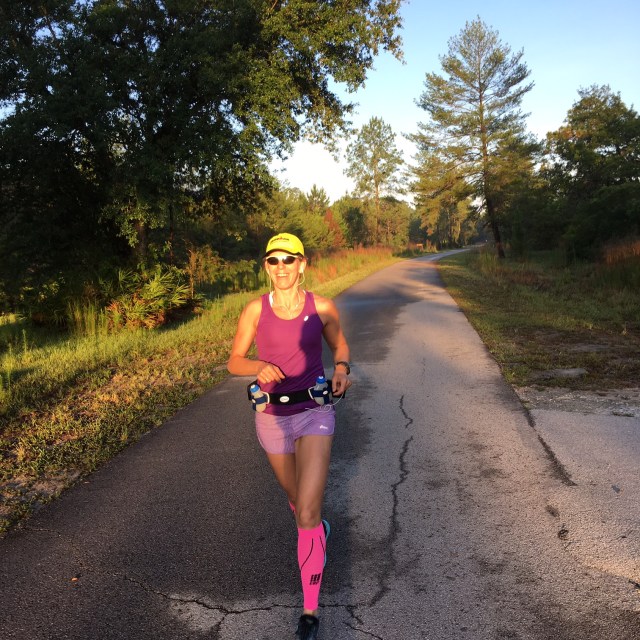
Sue RunningWhen watching a cycling or triathlon broadcast, one often hears the announcers refer to an athlete as having “good legs.” And while that is often true in the sense of appearance, the condition to which they’re actually referring is the athlete’s conditioning and how it is paying off that day.
There are tangible aspects to having “good legs” on any given day. At a recent gathering of triathletes, conversation turned to issues that affect performance such as training fatigue, cumulative fitness and tapering before a race.

TRAINING FATIGUE AND “GOOD LEGS”

Looking at the first component, training fatigue, we can examine how training affects having “good legs” on any given day.

One of the principles of training is doing work while your body is already tired. In college cross country, we used the term “chronic fatigue” to describe the rollover effects of consistent training. During the week, this consisted of twice-daily workouts usually with a 5-7 mile run in the morning and a 7-10 mile fartlek, speed or base-building workout at night. On Saturdays, we’d race distances of 4-5 miles with a four-mile easy workout after getting out of bed, then a one-mile race warmup and one-mile cooldown. Sometimes we’d get home and go for a short run to shake the travel out of our legs. On Sundays we’d do training runs of 15-20 miles. Often (and not wisely) we did these runs at 6:00 to 6:30 pace.

But that’s how one reaches a level of 100 or more miles per week. There were days  when the legs were tired, for sure. But there were also many incredibly loose days because the muscles driving all that work dispense the lactic acid and the body gets very efficient at replacing liquids and nutrients. And while 100 miles a weeks sounds like a ton of running and a guaranteed way to create training fatigue, I also knew a Division III runner who put up weeks of 250 miles in training.

The purpose in all this is to point toward races during the season where you were racing on tired legs already. So you can imagine, having “good legs” becomes a relative aspect of your overall training. We still raced at between 5:00 and 5:20 per mile in cross country competition. One learns to find the most efficient form and tempo, learned in large part through speed and interval work done on the track or in timed mile intervals. That race pace becomes ingrained in your body and the ability to sustain it too.

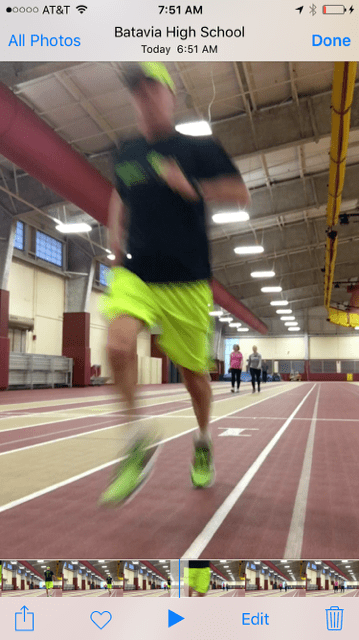
Chris running Intervals 2This last component is what most distance athletes who coach themselves learn to neglect. Training fatigue is your friend, but only if you are able to teach your body to perform under duress at the race level you want to achieve. That’s why some triathletes struggle to improve their runs. They simply do not do enough pure running volume to require the muscles to perform at a faster tempo. Brick runs will teach you to run tired to some degree, but the real secret is planning your run training to have at least one period per week, ideally with back to back days, where you press your body into service with a long run and then come back the next day with intensity training on the track. That is how you teach the brain to cope with training (and racing) fatigue.
This is the solution to having “good legs” on race day. And you’ll notice when watching races such as the Tour de France, that some cyclists will surge to the front on a given day. Ruling out the onus of performance-enhancing drugs, pro athletes in endurance races and their more modest kin at the regional and local level all experience relative degrees of positive biofeedback and energy.

There is nothing like the feeling of “good legs” when one has been training hard and yet the body responds with eagerness to the tests of the day. That is how athletes truly build confidence and learn to exceed former limitations in performance. Gaining good legs is all about creating the circumstances where the true mystery of training effects can show throw.

It can be amazing how fast you can perform when you open the doors to training volume and intensity. Then when your legs respond, there is less mental resistance to the idea that you can’t do what you set out to do. You are transcendent, and good legs carry you there.

Cumulative fitness

Training fatigue seems like a negative concept that adds up to positive results. So let’s consider the opposite angle of this equation. Cumulative fitness is the degree to which your training is already working and in place.

That’s not just your “base” by the way. Cumulative fitness incorporates intensity along the way. An athlete pointing to a September marathon or triathlon, for instance, will quite often add in some tuneup races. This helps the athlete develop functional performance strategies and other tangibles that contribute to success. In endurance sports this includes strategies for hydration and nutrition.

Typically during a peak racing season the early races are exercises in fitness testing. An sub-elite distance runner might start out running 33:00 for their first 10K in September and be aiming for a 31:30 or below by season’s end in late October or early November.

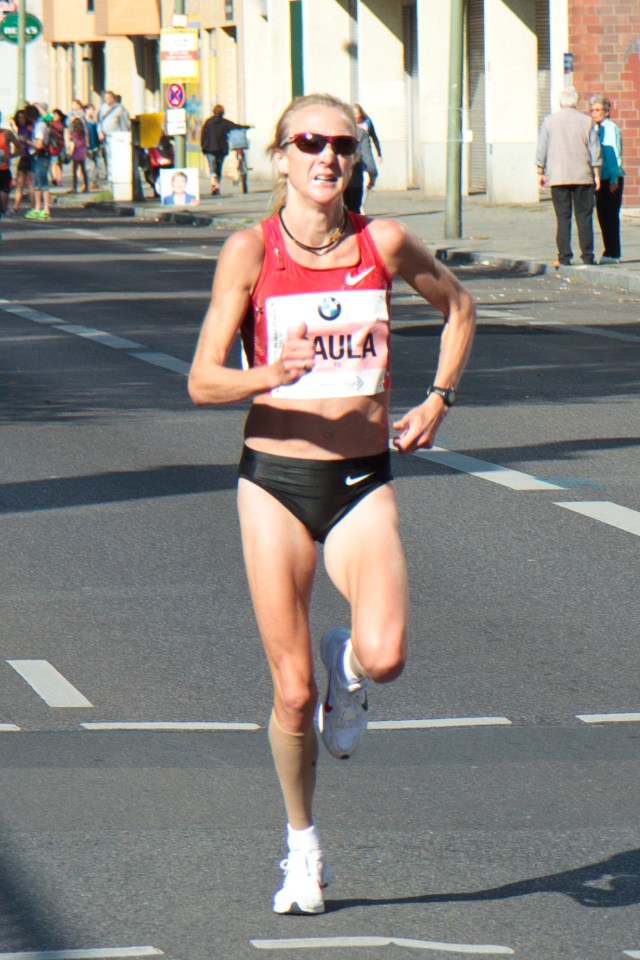
Paula_Radcliffe_at_the_Berlin_Marathon_2011The method here is to tap your cumulative fitness by planning around paces that one is already able to do in training. If a 43:00 10K runner can do 7:00 pace interval work or under during practice, that is evidence there is potential to manage that pace through the early going. But if one does not back off in training until a couple days before the race, there is not much training lost, yet the legs will feel fresher for those test races.
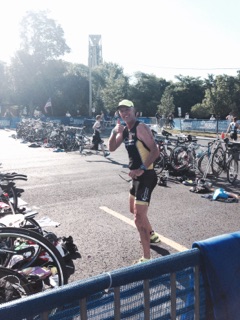
The same holds true for all three disciplines in triathlon. A swimmer hitting workouts five days per week or chops out two sessions in advance of a competition is not going to lose much training, but the confidence they’ll get from the feeling of “good legs,” or this case, “good arms,” is a motivational boost that feeds back into training adjustments. Races are excellent feedback even when they are not done all out. The opportunity to run or ride or swim at least an 80% effort tells you where you stand in the goal of having “good legs” in the long run.

TAPER

The delicious thought of a training taper is like a seductress waiting during the process of getting fit. The chance to back off on training is, for an Ironman competitor, almost too good to be real. Long rides of 100 miles or more, and 20-milers in the heat are all tough challenges in your schedule.

But the taper must be timed right and done properly for it to work. One cannot just go “cold turkey” and sit around waiting for the rest to start. It’s much more like active recovery from injury. Because training essentially does injure your body every day. When you keep training on top of that, the body is forced into action to build new capillaries and make us of oxygen transport from lungs to muscles to heart and again. It’s a cycle we all engage in just to live. The athlete in training simply pushes this cycle to its fullest.

Chris thumbs upThere is risk in the taper, in that athletes can be prone to relaxing their diet by putting things in the body that have not been ingested during training. Even a casual Coca Cola when one is not generally drinking soda during training can really mess up an athlete’s stomach. And a bad gut almost never leads to good legs.

So the taper, while it is received with such relief at times, comes with a responsibility for discipline. Otherwise all that training can be wasted, undermined by some last-minute weakness or personal failure.

Ironman triathletes joke about covering themselves in bubble wrap during taper. So much work requires a protective attitude before the race. Some athletes take the opposite approach, entering tuneup races with short but flared intensity. Some 10K runners race competitive miles the weekend of their race. Some triathletes do Sprint or even Olympic distances. If so moved, it is likely that the taper might include some surrounding rest around those short but intense efforts.


Intangibles

As mentioned, there are also many intangibles to the notion and joy of good legs. There are simply times when the human body is in a state of positive fitness where it acts as if it simply wants to “take over” the wheel and drive you home. It’s on those days that breakaways work in bicycle races. A rider with “good legs” becomes fearless, engaged and ready to win.

The same can apply to those who swim and run. “Good legs” sometimes come around when you least expect them. During those moments it pays t ask yourself, “Will this feeling come again?” Perhaps it will, but there should be an athlete’s maxim in play here, as in: “Goods legs are a bad thing to waste.”

So go for it next time you feel a set of “good legs” coming on. Take extra pulls. Run near the front. Swim in a lane with a faster swimmer. You might be suprised how far and fast a set of good legs is capable of taking you.

IMG_6262

Posted in Uncategorized | Tagged , , , , , | Leave a comment

Stoned band of Olympians arrives weeks late for Rio games

It happens now and again that athletes get mixed up in activities that are not exactly conducive to racing or training. It now appears that a band of athletes from six different countries got waylaid by their own party plans on their way to the Olympic Games. They all turned up yesterday wondering when and where their respective events were scheduled to begin.

Stunned Olympic Diver.jpgDiver Caroline Matscusheva of Argentina was one of six slightly stoned athletes who showed up late for the competition. “We all met up on Facebook and agreed to fly to Bolivia to meet up in La Paz,” she related. “But My God, we didn’t party that much. The games are still in August, right? August isn’t over, is it?”

Triple-jumper Eric Stott from Scotland was one of the six athletes stunned to learn that the Olympics were officially over. “I can’t believe it, Dude! I mean, we were all training so hard to get here. Well, maybe not the last two weeks or so. What day is it, anyway? Can I jump today and enter my distance to see how it I would have done?”

A pair of Cameroon soccer players were amongst the athletes who never reported for national team duty in Rio. But in truth, it turned out that the Cameroon Lions had actually not qualified for the Olympic soccer tournament in the pre-Olympic tournament to determine which countries get to play in the Games. “It is really disappointing Cameroon soccer playersthat we know now,” the two midfielders admitted. “We thought for certain we had won enough games to make it to the Olympics. Perhaps we were celebrating too much and did not check the Internet.”

Distance runner Mannio Spagnoil of Italy was the stonedest looking athlete of all. As the six lonesome figures stood together at the gates of the Rio Olympic stadium, the tired-loStoneroking Spagnoli kept rubbing his red eyes while alternately nibbling on PowerBars in each of his two hands. Periodically he would set the nutrition bars down on his gym bag and reach for his bottle of water, then seem to forget what he was doing, and grab the two nutrition bars again. “Io sono davvero molto in forma. Questo fa schifo!” he insisted.

The final athlete in the group was a very distraught-looking synchronized swimmer from Sweden who kept asking, in an anxious yet slightly slurred voice:  “What did my team do without me?” She spun in circles every few minutes and wiped a loose strand of bright blonde hair from her otherwise tightly coiffed scalp. “My one friend is so scared of the water. I hope she was okay.”

Rio Olympics Tinder

FILE – In this July 23, 2016 file photo, a representation of the Olympic rings are displayed in the Olympic Village in Rio de Janeiro, Brazil. Athletes increasingly are using apps like Tinder as they look to have fun and escape the pressures of competition inside the Olympic Village. (AP Photo/Leo Correa, File)

The group of six athletes was last seen wandering the streets of Rio at 10:30 at night inquiring at every gate whether the Olympic Village was still open. Stott tried his best to persuade the remaining security of his athletes’s status, even flashing his Scottish team badge with the promise, “We ken give you some graaate weed if you let us in the fookin gate,” he insisted. “I knewh I’m a very pale white Scotsman, fer shorr. But I kin promiss yew, thiss is pure Bolivian Gold straight from the mountains therr. Good stuff, man.”

Then Stott glanced down in a panic. “Dammit, me phone battery’s leow again. Who’s got the chargher? I’ve got to get on Tinder, stat.”

The six have set up a GoFundMe site to get money for their return flights to their respective countries. Stott already sold his bright yellow and red Nike spikes to get part of his air fare. “Sum demn kid stole me wallet out of me back pocket, though. Thank Gewd I was carrying me money where my stash seets in me crotch.”

Interested parties who would like to contribute to the plight of these stoned and wasted athletes and visit the  GoFundMe Site and search for Desperate Stoned Olympians.


Posted in Uncategorized | Tagged , , , , | 1 Comment

The wonderfully sexy world of hip flexors

We’re not super big into technical discussions here at WeRunandRide. But we do believe in basic instinctual lessons that can help those who run, ride and swim to be healthy and keep active.

hip-pain-hip-flexorWhich is why it’s time to talk about your hip flexors. This illustration shows the precise point where a group of muscles and tendons convene in the area known as your “hip flexors”  to make it possible for you to run.
Your “hip flexors” are actually a group of muscles that work together to help you lift your legs while running and doing other activities. They also help propel your legs during the kick in swimming. In cycling, they provide an oppositional tension in the pedaling motion. To put it simply, your hip flexors are the crux of forward motion in many respects.

You can do the series of exercises listed here, or which all happen to benefit other parts of your hip and glute region as well. The more you strengthen this support system, the less likelihood of injury you will have.

Smart runners, for example, know that tight hamstrings can lead to knee injuries. It seems counterintuitive to think that when something is not working on the back of your leg, it can be the front of the leg that gets injured. But it makes sense. Muscle imbalance leads to oppositional strain. This is biomechanics at work.

In the same way, weak hip flexors can lead to lower back pain. It is no coincidence that people who sit in office chairs for long periods of time often have tight hip flexors. That’s because the position of your body while sitting in a chair puts your hip flexors in an almost permanently kinked condition. When you go to straighten them out, or use them to run long distances, the unnaturally tight condition of that muscle group can lead to problems.

The best exercise I’ve used to isolate the hip flexors is a simple one that you can do at home. Take an mid-size exercise ball and lie flat on your back. Hold the ball in your hands and swing the legs up above you while swinging your arms down to place the ball between your ankles. Repeat this exercise 20 times and you’ll feel your hip flexors start to tire at 10-15 repeats. Go slowly if necessary, and be careful to train, not strain the region.

You can also do bent knee versions of the same exercise. Both work on your core strength at the same time.

If you’re a swimmer, putting fins on your feet and kicking from the hip with full leg motion can strengthen the hip flexors as well.

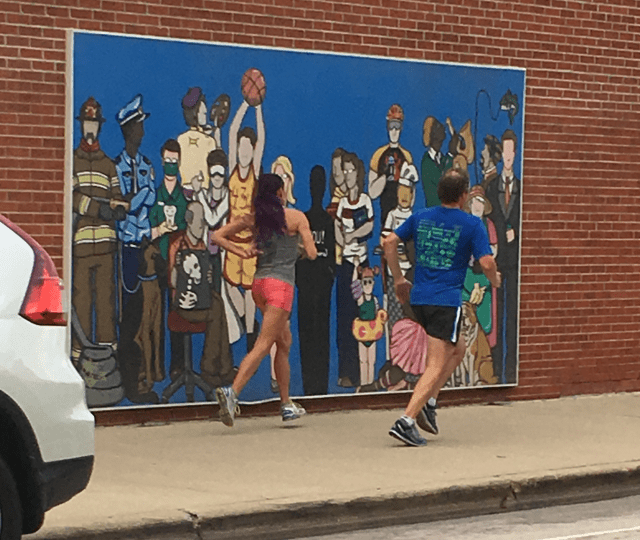
Hip Flexor Illustration.pngThink about the many runners you see out on the road. How many actually appear to engage in a fluid stride, one that moves freely from the hips rather than scuffling along. You can see the difference in hip flexion between the fluid stride of the gal versus the tighter stride of her father. Granted, they are in a slightly different phase of the running stride. But age is no friend to our hip flexion capacity. That’s the point.

Flexibility works

So to maintain this youthful vigor and fluidity in the running stride takes some work. The gym is a perfect place to engage in hip flexor exercises. Use the groin machine in which you place pads on the inside of the knees and pull them together to strengthen you groin and hip flexors. Lunges with 20 lb weights in each hand will help as well.

And for God’s sake, go out and do some speed work. Runners are so damn concerned about efficiency they often fall into these shuffling strides and wonder why they never get any faster or always get injured. You can’t increase your hip flexor range of motion doing 10- minute miles. It just isn’t going to. So even if your race pace goal is 1o minute miles, and that’s okey, you need to do some sprints on the track where you force your hip flexors into action. Loosen up. Run fast. Get up on your toes. Sprint, goddamnit!

High hurdles.jpgThink about the comparative hip flexibility of high hurdlers in track. They can run with their legs extended horizontally and snap them through all the way into the next stride. Their hip flexors are exceptionally loose and strong at the same time.
Doing so-called “hurdle stretches” in which you perch on the ground with one leg bent back so the heel nearly touches your butt used to be common practice for the running community. Some physical therapists and trainers do not recommend them. But in 40 years of running, I have seen no ill effects on the knees or any other part of the body from doing hurdle stretches. I also competed in the steeplechase which involved hurdling no less than 35 barriers and 7 water jumps over 3000 meters. I also competed in the 400 hurdles, running under 60 seconds while jumping those 13 (I think) intermediate hurdles on the way. By the last hurdle, your hip flexors are definitely tired in that race, along with every other inch of your body. Pure hell.

Hip flexor cross training

While we did not do specific hip flexor training over the winter months or during indoor track, my own training program included playing plenty of basketball. Hours and hours of basketball in fact. That sport really helps your hip and groin strength. Tennis works just as well, and cross-country skiing in winter.

One of the other exercises that really works the hip flexors is to find one of those pieces of gym equipment where you place your arms perpendicular to the body on pads and lift your knees to your chest. That’s a killer exercise for groin and hip flexor improvement.

Sexy hip flexors

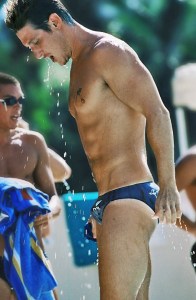
Swimmer.7What we’re saying here is that having really strong hip flexors is a very sexy thing when it comes to how well you run, ride and swim. There’s always something about watching really fluid looking athletes that is visually pleasing. Think of those sexy male swimmers in the Olympic pool. Slick as seals and just as fluid, you might say.

And also, how about those track girls running in those tiny shorts? You can see the hip flexors and butt muscles going to work to make speed happen. All the strength and grace you could ask for is composed in their strides.

The world moves on a woman’s hips

Years ago one of the songs on the Talking Heads album Remain In Light contained some interesting lyrics about the foundational aspect of a woman’s hips. The words seemed to imply that the female form around the hips has played an important role in the history of the human race. From procreation to delivery there is mystique in the feminine form, but sometimes its just the motion that seems to make the world go round.

A woman's hipsThe world moves on a woman’s hips
The world moves and it swivels and bops
The world moves on a woman’s hips
The world moves and it bounces and hops
A world of light…she’s gonna open our eyes up
She’s gonna hold/it move/it hold it/move it hold/it move it hold/
it move it
A world of light…she’s gonna open out eyes up

See, hip flexibility really is a really functional yet sexy thing in this world for both men and women. It not only gets us where we want to go, it helps us look good going there.

Posted in running, swimming, Uncategorized | Tagged , , , | 3 Comments