The Acorn
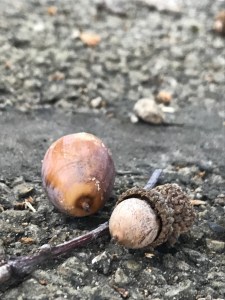 While talking with my brother-in-law this weekend, I learned that he is heavily involved in removing acorns from his lawn. He’s not one to exaggerate. He’s always been a person to calculate his statements with some accuracy given his background in mechanical engineering. So he literally added up the number of pounds of acorns that he raked up and bagged as lawn waste. “I took 450 pounds of acorns out of my lawn,” he said. So that symbolizes a microcosm of the bigger dynamic at work here in Illinois. It’s a big year for nuts around here.
For cyclists like me, that means danger lurks by the side of the road. Acorns tend to fall en masse (in fact, it’s called ‘mast’) thus leaving road shoulders covered in long swaths of half-inch variety nuts. A road cyclist barreling along at 20 mph can be thrown for a loop if the rider enters the Nut Zone and catches a few too many under those skinny tires.
The Walnut
The same holds true for walnuts. Those can be hazardous for both cyclists and runners. A triathlon friend was incapacitated last year with a broken ankle after stepping on a large walnut during a training run. He broke a bone in his ankle from the force of how far that walnut twisted the ankle joint. Ouch.
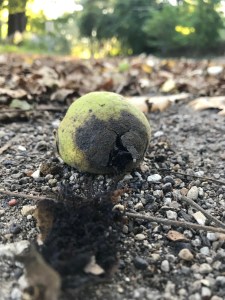 So walnuts are not a nut case to be trifled with. The exterior husk is further laced with a stinky musk that stains the road. When that decomposes, the inner nut shell is ribbed with deep striations. And when that breaks down the shell splits in two, leaving cases that resemble black pig noses.
It’s an elaborate system evolved over many millennia. Squirrels steal away with walnuts to extricate the fine meat within. Some will bury them in the ground to be consumed later. A few get forgotten along the way, and that gives the walnut a fair chance to germinate and grow. Evolution has built some twisty-turny, symbiotic relationships when it comes to the “life goes on” scenario. Squirrels get food from the walnut tree, but in turn they help walnuts get a lease up on life. It’s a fair trade.
But some years nuts are so numerous the bulk of them go to waste. You’ll find them scattered all over the bike paths and roads. They become a source of genuine danger.
While riding my bike on a section of the Virgil Gilman Trail to get out of the wind after 25 miles of fighting it in open country, I rode through a deep woods section of forest preserve. I kept my eyes on the trail for potentially offensive walnuts and other fall tree debris. The shade was so deep in places the trail was not really visible through my dark cycling sunglasses. To make matters worse, the husks of walnuts tend to go black after a few days of exposure to rain, sun or crunching tires.
So there was plenty of reason to be on cautious. And where the sun did penetrate the trees, the beams were so bright and sudden and clear that my eyes could hardly adjust quickly enough to discern what kind of nut might be lurking on the exposed asphalt.
Fortunately I noticed a large green walnut just in time to swerve the bike and avoid getting flipped off the trail. Now granted, should I have slowed down enough to avoid the challenge? Of course. But something the human spirit always likes to live on the edge, meet the challenge and take a risk. It’s called being stupid.
Barefoot and painful
 In college a few of us decided to run barefoot in an early season cross country meet. That worked fine on the lower campus where the intramural fields were composed of cleanly mown grass and there were no trees around.
Then we raced up the dirt trail that led to upper campus and found, to our horror, that the oak trees covering the Quad had shed thousands of acorns.
Running barefoot on paths covered with acorns is one of the most painful experiences you can imagine. Our coach was not pleased that some of us had shed our shoes. But knowing that was the case, most of us sucked up the pain and managed to come within a few seconds of our previous times. That came at a price, because it hurt like hell. After that, the barefoot running experiments were over.
Acorn rings
 Compared to their gratuitous presence in fall, the growth of acorns and walnuts is a background process marked mostly by the calls of cicadas and the occasional summer lyricism of the wood pewee and red-eyed vireo. All summer long acorns and walnuts grow silently in their respective trees.
While still green and firmly affixed to the branches, they look as appetizing as fresh apples. And so, as children, we used to pluck green acorns from the trees and pop off their caps. Then we’d sit on the ground and rub them on rough cement until both sides were worn off. Then we’d poke a hole in the middle and make an acorn ring.
On more than one occasion I gave an acorn ring as gift to a girl I admired next door. She even once returned the favor. Sometimes life is just nuts. Then you grow up and girls favor diamonds over the gift of acorn rings. But which truly has the most value?
The ways of (human) nature
Just over 100 years ago the annual harvest of acorns and other nuts in North America was consumed by a species of bird called the Passenger Pigeon. Those lean and lovely birds were apparently fiercely fast in flight and also numbered in the billions.
“Men still live who, in their youth, remember pigeons; trees still live who, in their youth, were shaken by a living wind. But a few decades hence only the oldest oaks will remember, and at long last only the hills will know.”
—Aldo Leopold, “On a Monument to the Pigeon,” 1947
Because of the enormous numbers of passenger pigeons, they were shot by market gunners who lurked by their roosts and blasted away at the birds. So they came and then they went.
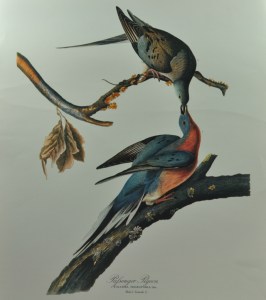 Ultimately there were no more birds left to shoot. They had all been killed by people too selfish, shortsighted and ignorant to realize that human beings really do have an impact on the way nature works.
The number of passenger pigeons had once been so great the branches of trees would break off from the weight of so many birds. But the bounty of that population and the ease by which they could be taken was their downfall. Now the acorns fall and there are no passenger pigeons to consume them.
The last passenger pigeon known to the human race died forlorn, largely ignored and quite alone in a zoo. The once numerous species had gone extinct. And that was stupid too.
Acorns and life itself

A young oak tree gets started in a forest filled with 150-year-old ancestors
So while the abundance of acorns and walnuts is a indeed a nuisance on our roads, a risk to cyclists and runners alike, I tend to still revel in abundance in many ways.
The reason why trees produce so many nuts is related to the numbers game of life itself. Between the natural destruction that occurs when nuts fall to earth, combined with the impact of so many creatures that feed on nut meats, it is important for trees to basically “breed” like crazy to produce the few nuts that will ultimately germinate. That’s how young trees get a start on life.
 Nature is, when you study it closely, a sacrificial instrument to life itself. As human beings, we are no different. The Bible encourages us to “be fruitful and multiply,” but that’s also because we die in droves every day.
We must come to understand that there is more than one way be fruitful in life. It is important to be abundant in spirit in order to share the true bounties of nature. Otherwise we insult the order and significance of creation itself.
We are truly fruitful when we share the infectious joy of being alive to revel in a world that both celebrates and humbles us every single second of existence. Our running and riding experiences are part of that connection process. But a simple walk in the woods may be the best compliment of all to that effect.
Thus what I see a patch of acorns or the black stain of walnuts on a road it serves as a signal to slow down not only for my own safety, but to immerse my mind and spirit in the changing of the seasons. This has happened 61 times in my life. It is important to cherish the memory of those past and build new associations as the years go by.
It is true that the waste and wonder of life itself is all around us. It is ours to keep a sense of wonder about it all, or wind up in a ditch or a rut because we ignore the very thing that warns us of our own mortality.
Life is just nuts sometimes. And that’s a good thing.

 I like to spread my business around to local running stores. But my longest relationship is with Dick Pond Athletics, whose founder I first met in the late 1970s when he was selling running and wrestling shoes out of his garage.
 I think I’ve found the perfect window for getting a lane at the Vaughn Center pool. It pays to get there after the Early Morning Diehards leave and just before the Slow Paddlers arrive.
 The water felt cooler than usual today at the Vaughn. I noticed on the way back to the locker room that the pool temperature is listed at 80 degrees. Not too hot, or too cold.
 While changing out of my swim suit in the locker room, an elderly man that I see at the Vaughn quite often was just arriving to work out. Many days I’ll see him sitting with a friend who works the front desk for the track. They sit and talk for hours, it seems. The Vaughn is this guy’s social life. Nothing wrong with that.
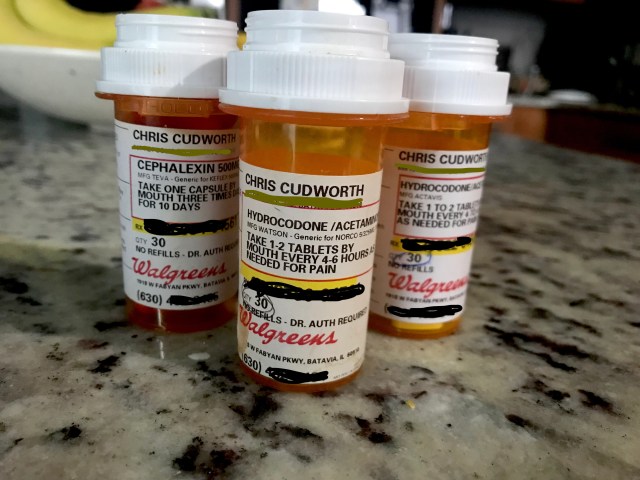 A set of familiar orange bottles with Walgreens labels on them have rattled around my bathroom cabinets for several years now. The Hydrocodone / Acetaminophen bottle from October 25, 2013 was filled with painkillers prescribed after surgery on my clavicle after the
  If you’ve never read the book
  To draw an allegory of sorts: Drugs become their own environment at some point. And like all aspects of evolution, the interaction between the drug and the user creates a form of natural selection from within. That’s why some treatments involve attempts to effectively replace, contain or erase chemicals that work on the internal environments of the brain and body.
 Over a lifetime of athletics, I’ve been fairly fortunate to only break and tear a few things. But they’re starting to add up these days, and it’s got me thinking about how it all started, and where it’s going.
 A few years back I bought a jug of whole milk at the grocery store. I wasn’t really thinking about the “whole” thing, just grabbed the jug and threw it in the cart.
 So it’s 2% milk for me at all times now. I’m tired of sitting a half inch off my chair on a cushion of expelled air.
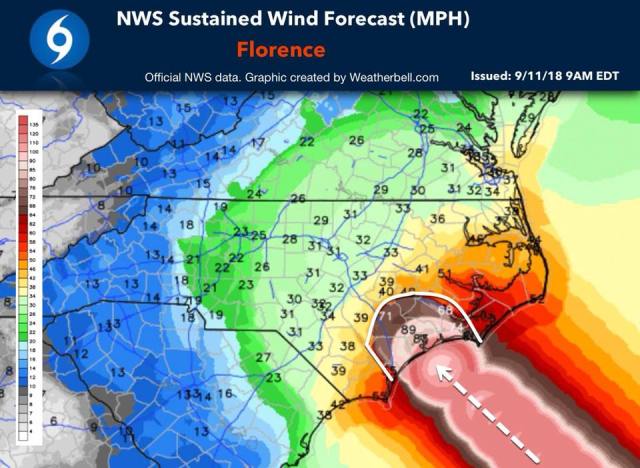 That’s what happens when people in the back room at the news room get giggling about the thrust of a storm. Only to Sue and I, the image means we’ll not likely head to Wilmington, North Carolina for scheduled mid-October Half Ironman. She’s doing the whole race and I’m booked to run the half-marathon as part of a Triathlinlaws team with my sister-in-law Julie Dunn.
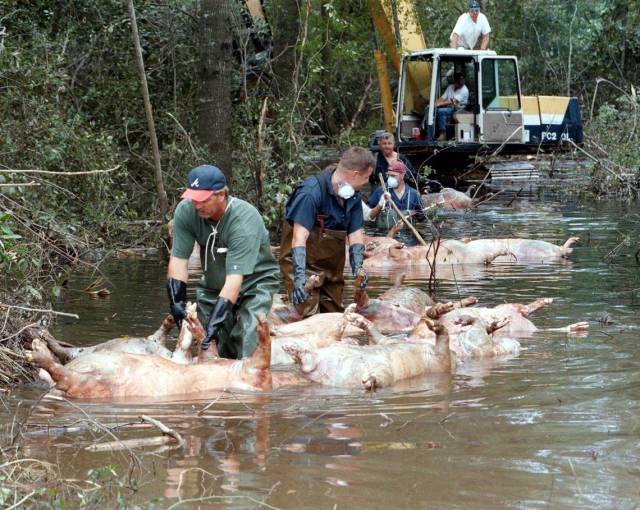 And I just read a Chicago Tribune and also a
 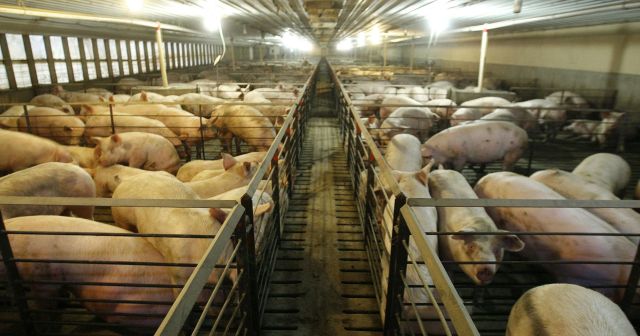 So we can’t be sure that North Carolina has done a damned thing about its hog and turkey industries. After all, the rest of the states in the deep Southeast United States are not exactly known for their progressive regulatory policies. Excuse the broad categorizations, but Southerners generally do not like to be told what to do either. Consider the lyrics from Lynyrd Skynyrd’s song “Sweet Home Alabama,”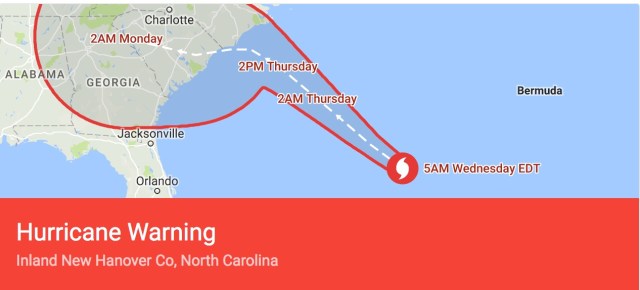
 So I’m thinking about the scenario down there near Wilmington, North Carolina. The hurricane is supposed to strike full force against the coast, then hang around for several days pumping thirty inches of rain into the landscape. I’m picturing hogs again floating down the river in the company of dead, sodden turkeys rolling like huge, bloated pillows of sodden feathers. The world of all that dead meat will travel up the seaboard and reach migrating turkey vultures all the way up in Vermont. The rush south on migration will be fantastic to watch as th
 So I’m not sure I’ll be advising my wife and sister-in-law to go swimming in the ocean come mid-October. The levels of fecal pollution along the seaboard may be equal to those flowing down the Potomac from Washington several hundred miles to the north. Up there the problem isn’t hog shit, but daily torrents of
 I recall standing there at the start of the race with all the other sixty-plus dudes in their wetsuits. Several were stretching stubborn body joints. One turned to me and told me all about his back problems.
 There’s a power struggle going on at CBS as a result of
  For example, consider the actions of conservative whip Newt Gingrich, the man who claims to know what’s best for America. Here’s how his personal life was described by a simple Google search factoid: “In 1984, Jackie Battley Gingrich told The Washington Post that the divorce was a “complete surprise” to her. According to Jackie, in September 1980, Gingrich and their children visited her while she was in the hospital, recovering from surgery for cancer, and Gingrich wanted to discuss the terms of their divorce.”
 Issues of moral equivalency are hard for some to sort out. But those of us that have been faced with temptations and have chosen the right path actually do know the difference. When a casual friend long ago confessed that he was having an affair outside of marriage, he asked what I thought about the situation. I replied, “Well, when you’re in a marriage, it’s like a road map: you know which way to go. But when you have an affair then all the roads are open.” He broke off the affair not long after that.
 Perhaps some men would have wandered off and found sex somewhere else. I know more than a few who did under much less stressful circumstances. Their marriages are no more.
 . Residents in the homes along the fairways were treated to the sight of naked young women giving lap dances to men on golf carts. It took a few phone calls and protests, but those events were eventually banned at most courses.
 That is not an American virtue in action. That is the death of a republic in process. The same thing has happened with the twisted ways our gun laws have been turned into vigilante justice. Now our public education is being torqued the same way, and our environmental protection policies too. Even the Department of Energy is closing down valuable opportunities to encourage use of renewable and low-fuel energy solutions.


 We Run and Ride