
Thomas Earl Petty was born Oct. 20, 1950, in Gainesville, Fla., the first child of Earl and Katherine “Kitty” Petty. Petty had a difficult relationship with his father, and cited a particularly brutal beating he received at age 5 that stayed with him for life.

Sometimes there are parallels with people in life that do not become evident for years. As I read the LA Times obituary for Tom Petty the above paragraph featuring the words about a difficult relationship with his father jumped out from the page. The pathos that seeped through many of the songs written by Tom Petty had to come from somewhere. You can’t write and sing about pain if you haven’t experienced it. Without direct experience, the sorrow does not feel genuine.
So I can relate to the story of Tom Petty’s difficult relationship with his father. My own dad had an angry streak that could burst forth in sometimes violent ways. It happened most often when his four boys didn’t listen or caused him some sort of angst. Then the fury would come out. I’m not saying that my father’s anger was not sometimes deserved. But it still had its scarring effects.
When I was six years old, my father took a belt to both of my brothers in the kitchen of our Pennsylvania house. The experience of watching my brothers get beaten traumatized me. I now know the effects of that experience affected me for years to come, even decades later. In my late 20s I awoke pounding the pillow with my fist. Then I knew I had to get help and figure out a way to heal. And through faith and counseling and forgiveness, that did come about.
Forgiveness and insight
I learned to forgive my father. His demeanor eventually mellowed, but perhaps the pain never really disappeared in his own life. He’d lost his mother to the side effects from breast cancer surgery when he was only seven years old. That tragic event upended his life, sent him into the care of some spinster aunts and a rough old uncle and left my father with unhealed scars when his own dad was institutionalized for depression during the height of the Depression.
 It took years to figure all this out because information about my father’s upbringing only trickled in over time. Snatches of conversation with his sisters filled in some of the blanks. But we didn’t live close to my aunts, so our visits were often pinched and brief.
Sometimes the real picture of my father came out in unexpected ways. I recall the year when my by-then-stroke-ridden father wanted to travel east to visit his sisters. He’d mapped it all out on a piece of paper that he handed to me. I did not know if he’d somehow had contact with them by mail or such, because he could still write a little bit, so I called them to confirm his intended dates of arrival.
“What?” my Aunt Helen replied. “We didn’t know a thing about this. But that’s just like your father. He never warned any of us when he was coming over or wanted to do something.”
Just showing up
Indeed, my dad was always one to show up unannounced at my house on Saturday mornings. He’d be drifting around going to garage sales (long before he had his stroke) and would pop in with a big “HELLO!” . That assumptive nature drove my late wife crazy. “Can’t he just call ahead?” she’d complain.
And, of course, there’s a certain amount of your father that you can’t help absorb, and that is me too. So I had a slight penchant to do the same, but learned quickly that people appreciate a little warning if you plan on dropping in for a visit.
Need for approval
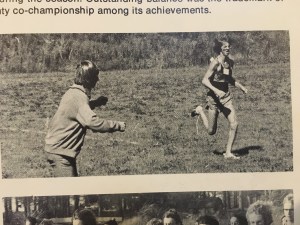
So it was a hot and cold relationship with my own dad, and that powered a need for approval that was a mile wide and quite deep. I sought that approval from mentors and friends and strangers in life. And when I found running in my early teens that proved a source of approval as well.
When I ran well, I felt good about myself. That was true in the moment, and true in the outcomes. In those middle teen years I was the best runner in school, and did fairly well in college. That running persona became a critical part of who I literally was. “Hi, I’m Chris Cudworth. I’m a runner.”
Reality bites
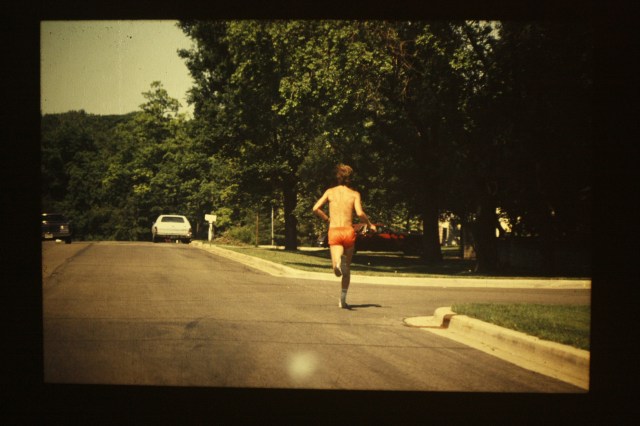 Out of college the world at first didn’t seem to care so much that I ran. But then the big running boom came along and prolonged the validity of running as a way of life. So I ran full-time for a couple years trying to become something that I didn’t really have the talent to be, national class, but felt that there was one chance in life to find out how good you really could be. And I did earn the top runner category in the Chicago Area Running Association 20-24 age group, which was no small thing in those days. And over a three-year period, I won plenty of races including 12 out of 24 in a single year. I set all my running PRs and learned where my limits lie. That meant there would be nothing to prove as a runner when I was 40, or 50 or 60.
And when that timeframe was done, I’ll admit it all felt self-indulgent to a degree.
But my own mother disagreed. It was time for some reality bites. “I think you did the right thing,” she told me. “You burned brightly.”
Mom had also consoled me somewhat through the year that it had taken me to heal from a breakup with a college girlfriend that I’d really loved. When I finally told her, “Well, I think I’m finally over her, ” she turned to me and said, “Well, I’m glad you didn’t marry her. She was a bitch anyway.”
I was stunned to hear my mother use that language. “Why didn’t you tell me when I was dating her?”
“Well, you were in love,” she said. “I didn’t want to hurt your feelings.”
Damn something anyway
I’d listened to a lot of Tom Petty and the Heartbreakers in that year it took to get over that girl. The album Damn the Torpedoes had come out around that time and along with Bruce Springsteen’s The River, the alternately heartachey songs and joyfully raised musical middle fingers on those albums helped me learn to adapt to the rest of the world. Honestly, that’s what music is supposed to do.
But to this day, the lyrics to Petty’s song Even the Losers resonate so true.
Two cars parked on the overpass
Rocks hit the water like broken glass
Should have known right then it was too good to last
Life is such a drag when you’re living in the past
Baby even the losers
Get lucky sometimes
Even the losers
Keep a little bit of pride
They get lucky sometimes
It was true. I’ve won some races in life and lost some too. And through it all I kept a little bit of pride and got lucky sometimes.
Thank you, Tom Petty, for giving us all the gift of your insight on pain and love.
You made the world a better place.
The following passage is an excerpt from the LA Times story on the passing of Tom Petty. Worth a read for its inspirational value. The quote comes from a few weeks ago. I’ve also been listening to Tom’s Sirius XM program for the last year as he plays tunes he particularly likes. His commentary was always so insightful, and real.
“The thing about the Heartbreakers is: It’s still holy to me,” Petty said. “There’s a holiness there. If that were to go away, I don’t think I would be interested in it, and I don’t think they would be. We’re a real rock ’n’ roll band — always have been. And to us, in the era we came up in, it was a religion in a way. It was more than commerce — it wasn’t about that.
“It was about something much greater: It was about moving people, and changing the world, and I really believed in rock ’n’ roll. I still do. I believed in it in its purest sense, its purest form. And I watched it commit suicide; I watched it really kill itself over money. That was painful, and I saw that coming, a long time before it happened. I wasn’t surprised in the least. I could see what they were doing wrong.
“But I think we still feel we’re on a mission for good. I’m so touched by … this year has been a wonderful year for us,” he said, adding with a laugh, “This has been that big slap on the back we never got. And it’s really felt good.”

 In the Age of Naked Selfies and hacked celebrity smartphones, it is hard to recall the time when nudity was dispensational, handed out like wafers at a Catholic communion ceremony. For a while, that right was owned by the likes of Playboy and the skin magazines that evolved from it. Penthouse came later. Then Hustler. There were obviously others.
 Some credit for these freedoms must come from Playboy. One can argue all day about whether the freedom of nude or sexual photos is good for society or for the soul, but let’s face it, things have not really changed that much in the last 60 or even the last 2000 years.
 I say the process has gone a bit further than that. As this image copped from a Pinterest site illustrates, the sight of buttocks in public is no longer such a shock. They are just buttocks. The clothing women wear now, even athletic wear, is form-fitting and leaves little to the imagination.
 And that’s a problem, for sure. But as the Mike Pence issue illustrates, it’s not what a woman wears or does not wear that is the problem. It is the repressive need to control male insecurities and fears that religion affirms in men. Even the Genesis story in which Eve leads Adam to temptation is an example of chauvinistic male fears.
 Athletes in endurance sports get used to the sight of the female nipple popping out from a running top or an ass cheek protruding from shorts. So, what! We bear witness to asses and crotches in all sorts of gear. A little camel toe on a gal or an outline of a dick in bike shorts just isn’t a problem as long as it isn’t a chronic and therefore distracting condition.
 In the middle of the first mile of a 4.5 mile run the other morning, my body was not exactly cooperating. Everything felt sluggish and slow. In fact I was trundling along at 11:00 per mile pace. Things eventually improved, but not by much. In the meantime, I was wondering to myself, “Will I always do this?”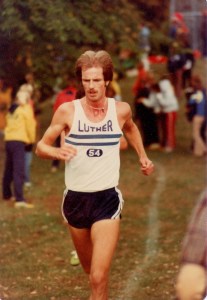


 We live in the age of Doritos Patriotism. The entire national dialogue about what matters has been commodified. People can’t tell real food from overprocessed junk any more than they can tell the practice of free speech from jingoistic patriotism.
  Society further reflects the commodification of NFL players with its fixation on so-called Fantasy Football leagues, in which millions of ‘third-party’ owners trade upon the performance of pro athletes to compete with other “team owners” doing the same thing. The players themselves no longer matter, nor the teams. It’s all about numbers, statistics and the commodification of the NFL to raw impulses anchored in gambling. This is the junk food of the economy, the Doritos of ‘sin tax’ revenue from gambling and Internet-fueling fixes of porn. It’s all very addictive yet fills the American gut with a weird sense of guilt wrought by the bloated feeling that one can never be truly sated. Like bloated diners at a Roman vomitorium, the American populace keeps feeding itself on BaseballFootballHockeyBasketball in a never-ending bag of Sports Doritos that never empties yet never quite satisfies.
 That’s why black track and field athletes Tommy Smith and John Carlos raised their fists in protest while the national anthem played during the Mexico City Olympic Games back in 1968. They were directly protesting an indentured servitude of black athletes to a largely white-dominated culture that did not accord equal rights to black citizens back home. They were pointing out the hypocrisy of a nation that calls itself the bed of freedom when for many who lived there, it was profoundly false.
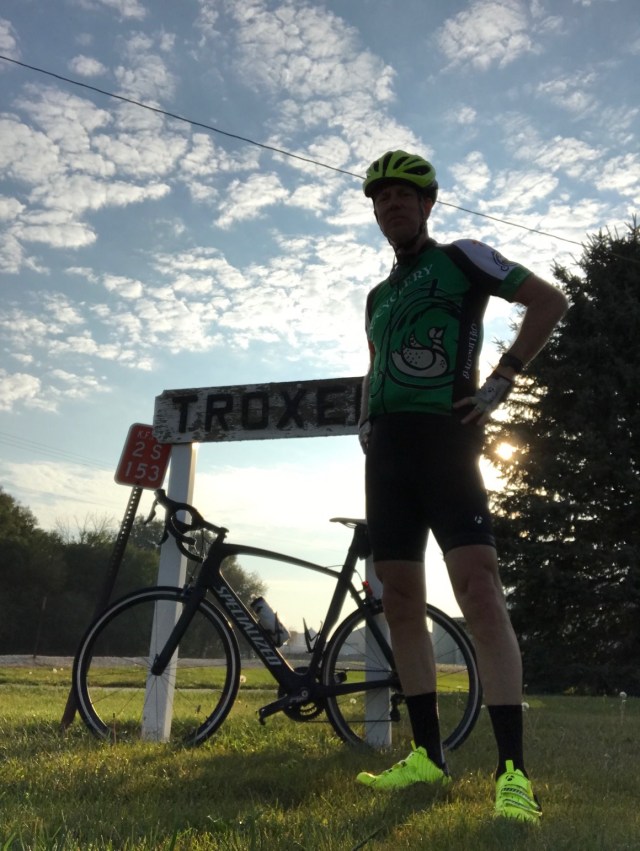 We headed out into the humid, hot weather on bikes this past Saturday. At 6:45 a.m. the surface of our sunglasses fogged over with moisture. The day was clear but the road ahead looked hazy.
 A work crew in that grove of trees was toppling a big old willow while I sat there waiting for the ride home. The saws tore into the trunk with a loud whine and the tree finally cracked and fell.
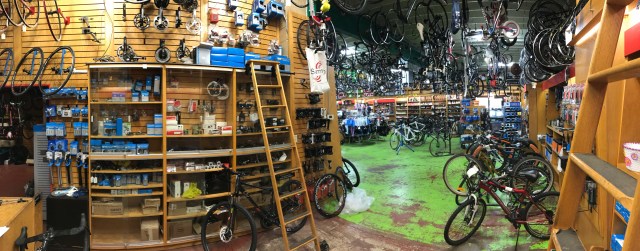 I tried making some polite conversation that first minute, but the mechanic was completely focused on fixing my wheel. He popped out the old spoke and stuck in the new one. Threw it on the apparatus to true the wheel and worked his way around tightening the spokes. Then he slid the wheel back on the bike and spun it into motion. Perfect.
 My point here is simple: bike mechanics aren’t just automatons who wrench your bike and go to sleep sucking on grease-soaked thumbs to dream about the perfect thread of a brake or drive train cable through a frame. They are, just like physician’s assistants or nurses in the medical world, some of the most knowledgeable and concerned people you will ever meet. They are the doctors for your bike. Don’t take them for granted.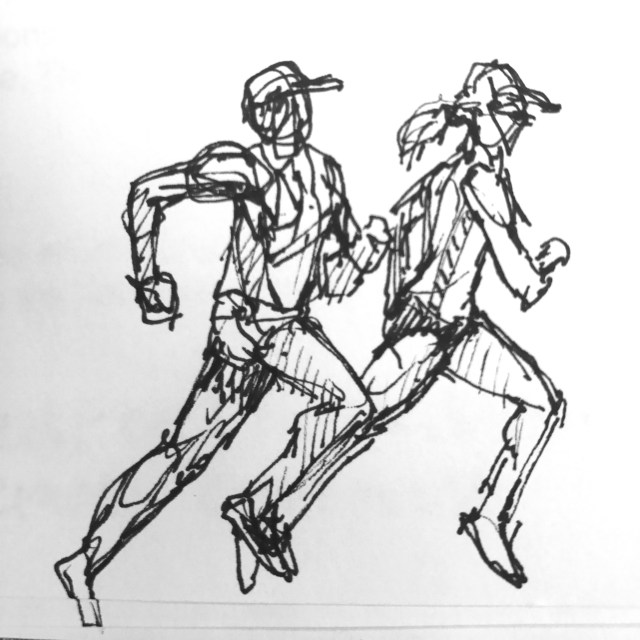
 I suppose we all go through a weepy teenage stage of sorts. That period in life when we feel like wounded birds bleeding complaint and laziness from our ears. Then we retreat into music of one type or another, and it takes over our lives. Nothing else matters but hearing the darkest tune we can find. The one that seems to express our hormonal lamentations or lusts.
 In cycling, we call that one-upsmanship half-wheeling, the practice of pushing the pace by riding half a wheel ahead of all others.
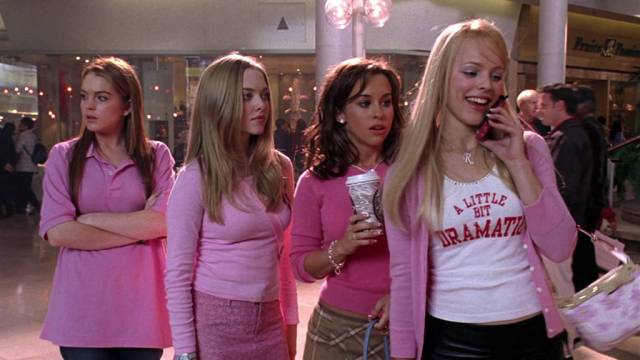 Guys just used to just pop zits, jerk off and play basketball. But being fifteen as a girl is patently more difficult than being a young man of the same age. The slights and offenses committed by girls toward each equal a Battle Royale of bodies, brains and appropriate accessories.
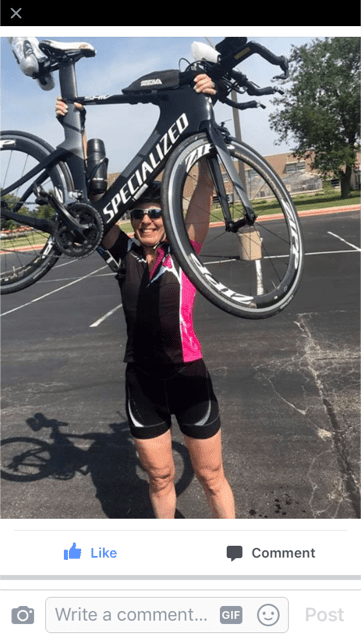 But many women have begun to quietly resist such stupidity. Which is why it seems so good to see girls, young women, moms and menopausal gals out running and cycling and swimming. It’s a space they own for themselves. They don’t need a “Good for you” pat on the head from anyone to do what they like to do.
 Yesterday on one of my other blogs


 We Run and Ride