Last one on the track and proud of it

DRAKES-7_largeAs a senior in college, I was chosen as the anchor leg of our 4 X 1-mile team for the Drake Relays in Des Moines, Iowa. My position as the anchor leg on the relay was not assigned because I was the fastest miler at our school. In fact, I was the least fast of the four small-college runners from Luther College lined up against the likes of Arkansas, Kentucky and Kansas. But I still had a role to play. Finish the damned thing. 

Clearly, we would be outclassed against some of the top Division 1 schools in the country at the Drake Relays. But that was the wonder of the challenge and the excitement of such a competition. It would push us to run faster than we might on our own at the Division III level.

The real deal

So we trotted out on the track in the company of the D1 guys. The gun went off and I watched a former Kaneland high school teammate named Ron Ackerman lead the Kentucky relay team out with a mile leg of 4:01. Ron was an Illinois state champion in the 880 and an exceptional athlete on many fronts. I don’t recall how his Kentucky teammates did that day, but it would not have surprised me if they’d won the race. Kentucky had recruited every good Illinois runner they could find and turned their program into a powerhouse in the mid-to-late 1970s.

Against such competition, my Luther teammates were running strong. I think our best runner Doug Peterson led off with a 4:08 mile. My senior-year roommate Dani Fjelstad ran a 4:12. My soph-junior year roommate Paul Mullen ran a 4:16 or so. Then I was handed the baton. Despite our strong showing, we were pretty close to last place in the race.

I ran a 65-second opening lap, then another. Managed the third leg in 65 and was hoping to really kick it in for a great time.  But I only managed a 64 closing lap and ran a 4:19.*

Alone in the world


IMG_1811

Steeplechase at Luther College, 1976

As it stood that late April day in Des Moines, Iowa, I was fairly much alone the entire last lap. I ran the first turn to a trail of muffled applause as the loyal Drake fans acknowledged a closing effort by a small college runner wrapping up the event.


Yet as I neared the far turn, the stadium went silent. The Drake marching band was lined up around the curve in preparation to play the national anthem. I’m pretty sure no one on that end of the stadium even thought the 4 X 1-mile relay event was still going on. Thus I could hear my own footsteps striking the smooth pink track of the Drake Bulldogs. As I rounded the apex of the far turn, a lone voice called out from high up in the stands. “Way to go, slow fucker!” he yelled.

Laugh it off

I couldn’t help laughing.  Then I raised the baton and swung it around in the air as if I’d were winning the whole race. This drew a round of light applause and a little laughter from the crowd. That actually gave me a boost of sorts. I kicked in as hard as I could those last 100 meters, I managed a 64-second last lap. My low-pressure relay leg was done. Just another pale skinny kid finishing up an effort at the Drake Relays.

I got to compete three years in a row at Drake. Each time I ran a little better than my previous bests at the relay leg distances. The bar to perform well at Drake was set high in my head. I remember sitting in high school study hall thumbing through Track & Field News magazines that our track coach Bruce Peterson encouraged us to enjoy. I’d study those black-and-white photos from the Drake or Kansas Relays never really dreaming that I’d actually get to run there.

Consolation prizes

Our little college never accomplished a miracle of any sorts at the Drake Relays. We’d beat a few bigger colleges, but let’s be realistic, even four guys running 4:08 mile legs would have had a tough time against the likes of Arkansas or Kansas. But we did our best and brought home our Drake Relays tee shirts with pride.

I actually kept one of those Drake tees in my closet for thirty-plus years. It was folded and stashed neatly with other classic tees until I moved a year ago. In the rush to clear out the house after 20 years of life in that classic ranch home, a few semi-prized possession were shunted into oblivion. That Drake tee-shirt and a bundle of other old favorites were likely tossed into a big black garbage bag and carted off to Goodwill.

Those shirts were all pretty small on me these days anyway. I weigh a bit more now than I did as a 140 lb college senior running 100-mile weeks. But perhaps those tees have found a new life on someone just as skinny.

Hipster tooMy real hope is that some hipster digging through the bins at Goodwill found that classic Drake Relays tee shirt and wears it around proudly these days. What greater honor could there be in life than to have a shred of your personal legacy become part of the Hipster movement to honor bad fashion from years past?

I’m so proud.


Posted in track and field | Tagged , , , , , , , | Leave a comment

Look, she’s fifty!

My sister-in-law Julie Dunn turned fifty years old this week. Behind the scenes, my wife Sue plotted several surprises including a party for her sister. It all turned out marvelous.

A couple months ago we collaborated on a design for a 50th cycling jersey in her honor. We came up with a wine-themed design including a wine bottle that stretched from the back pocket up to the neck that said “Aged to Perfection.”

The overall kit designs were based on the work of the artist Mondrian. There’s an additional element of neo-classicism in that color scheme for cycling given the fact that the cycling brand LOOK long ago adopted the Mondrian theme years ago for its logo.

Look_(company)_logo.svg

I had some socks that had the same color theme but one of them got lost in the laundry. Guess I’ll have to Look a little harder for that other sock now.

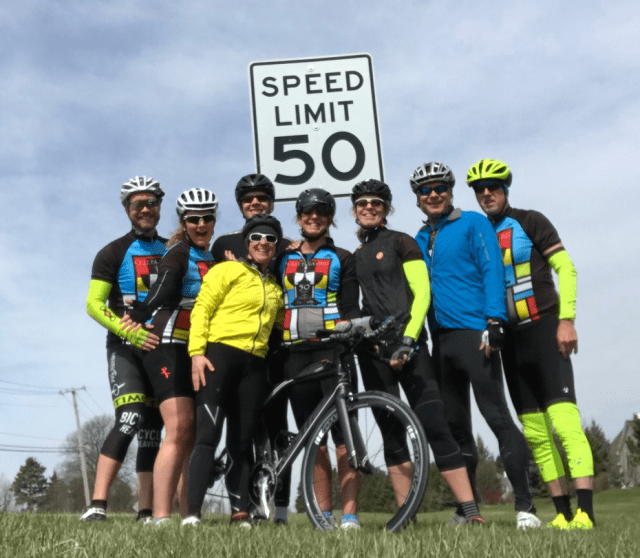
Kits and 50.pngTogether the kits made us look like we were an actual organized team (or something.) In truth, our morning objective was to either ride 50K or 50 minutes, whichever came first. Then we’d dive into the quiche and mimosas that Sue had waiting for us back at the house.

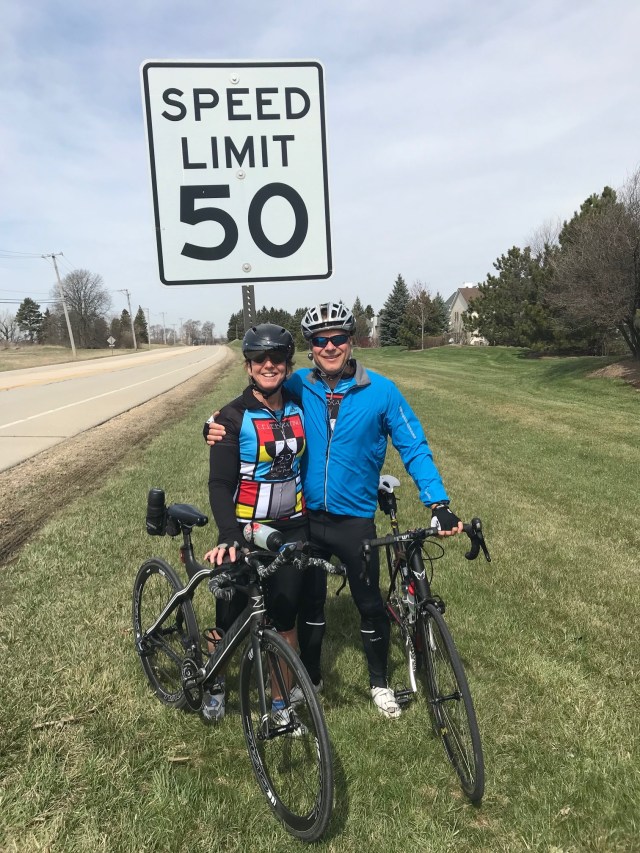
Julie and Mike.jpgGiven the windy conditions and the fact that Julie has been jetting back and forth between Texas and Illinois reorganizing her life at age fifty, we didn’t want to drag her too far in what became a vicious April wind. It turned out to be a nice hourlong ride with a stop for some photos (with her beau Mike) at a 50 MPH road sign out in the country.

It was a great way to wish her Happy Birthday as additional friends and family showed up for the party portion of the day. But we have lots of nice beer left over, so you’re welcome to stop by anything for a free bottle or five.

Kits picxThe only question remaining is why I Look so GIANT in this group photo (I’m at far right). Sue is 5’9″ and I’m 6′ 1 1/2″. But I look like a relative of the half-giant Hagrid from Giant logoHarry Potter. I look so freakishly tall.

Granted, I also need to lose 10 lbs of winter fat. I’ll cop to that. But if I keep growing at the rate of this photo, I’ll need a 70 cm bike by July.

Does Giant even make bikes that big? They make them that big-time expensive, for sure. $11K will get you this Giant Propel. Someday, perhaps. Someday. But it looks like it needs some LOOK pedals. And I already have those. Propel-Advanced-SL-0-Disc_Color-A_Carbon_RT

Posted in cycling, cycling the midwest | Tagged , , , , | Leave a comment

Short and sweet

Bright Kind of GuyWhen you’ve been away from any of your favorite activities for a while, the return feels pretty sweet. Which is why it felt so sweet to run a few steps from my car to shut the front door this morning as we headed off to take Sue to the train.

I turned around and made some exaggerated “thumbs up” up gesticulations. I even did some dancing hands Thumbs Up signals as I walked back to the car.

“Are you happy because the knee feels good?” she asked, knowing the answer to the question. And she kissed me.

The knee feels good, and I’m grateful. Tomorrow I have an appointment with the surgeon and will have good news to share on the progress after surgery. Between the active recovery of walking and pedaling the bike on the trainer a little this past week, the swelling is now almost completely gone. The knee is still a bit stiff in on the outside, and needs some intelligent stretching and more strength work. That will come. Headed to the gym today for some light lifting and proprioception work.

But that short and sweet trot to the door was quite encouraging. 

And with that note of optimism, we’ll make this post short and sweet as well. May you find some sort of sweetness in your day as well.


Posted in Christopher Cudworth, cycling, running, Uncategorized | Tagged , , | 4 Comments

Brought to you by Starbucks and other human beings

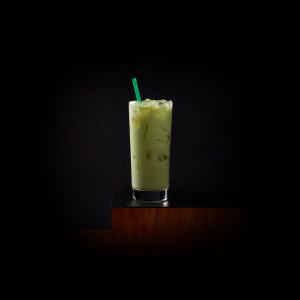
Green teaBy now you’ve heard about the ugly incident in which an employee of Starbucks called 911 to have two black men removed because it seems they had not yet placed an order. Here’s the skinny on the story as it was described on LinkedIn:

Starbucks will shut its 8,000 U.S. shops on the afternoon of May 29 for racial-bias training. Former Attorney General Eric Holder, the NAACP and others will help develop the training, which will be provided to some 175,000 employees. The announcement follows the arrest of two black men at a Philadelphia location; Starbucks CEO Kevin Johnson also apologized in person to the men, who were arrested for trespassing and later released with no charges filed.

Now I’ve spent a lot of time during the last five years in a local spectrum of Starbucks restaurants. As a freelancer, I depended on the free and fast wi-fi at Starbucks in order to work online and communicate with clients. There are six different Starbucks within five miles of my home. I’d move around day-to-day for variety’s sake. Thus I got to witness how an array of employees conducted themselves at a variety of locations.

On top of the local interactions, I traveled to Chicago frequently doing contract work. The urban Starbucks were sometimes only a block or so apart from each other. It’s always interesting to see how Starbucks squeezes itself into a specific space and slaps up the branding. It’s also interesting to see how an urban Starbucks differs from a store out in the suburbs.

Cage Free EggsConsistency

IN terms of product, things are pretty consistent despite these variations in location. But here’s the funny part about my relationship with Starbucks: I don’t even drink coffee. Don’t like it. Don’t want it. Don’t walk around clutching my pet concoction as if it were nectar of the gods.

I haven’t even used my Starbucks Rewards card. But that’s plain laziness. My problem.

International feel

When my wife and I went to London, we depended on a Starbucks for quick food and drink during a busy schedule. The food was slightly different, a touch of England you might say, but it still had the Starbucks feel. Never big portions. A few healthy options. A few rich in fat and sugar. You literally get what you pay for.

I drink the teas instead of coffee but have learned to order them with limited shots of sweetener. Otherwise, they pump up to four shots of sugary tonic into the tea. Then it tastes more like Kool-Aid than a true tea.

Habit forming

My habit of drinking tea at Starbucks started five years ago when our triathlon group met at the Starbucks in Naperville, Illinois for winter run club. We’d pile into the place, sometimes thirty people strong, to meet before going on our Saturday morning long run. Then we’d come back, change in the restrooms and enjoy the pleasantries of club fellowship.

Thus over time, I’ve gotten to meet plenty of Starbucks associates. I’m always amazed at how they keep all those orders straight. I know I could not do it. My ADHD brain would mix things up. Now that I think about it, I do recall an older person who seemed befuddled working the cash register. She was new and struggled with the system. It caused delays. People in line got fussy, fast. Some muttered. And I felt bad. But I don’t think her problems stemmed from the fact that she was an older person. Some people just don’t have the brain type for that kind of operation.

Not every Starbucks is full of whiz kids either. While doing some writing at a Starbucks in St. Charles, Illinois, I noticed a woman standing near the counter who was clearly not a paying customer. She was holding a stopwatch and was clocking each phase of the operation as employees scuttled around handling drive-thru and over-the-counter orders. Occasionally she’d point out or correct some flaw. Obviously, this was a quality check or efficiency study of some sort. Like I said, working at Starbucks is not necessarily easily. Nor is it for everybody.

Racial bias and homelessness

Which makes me think about the problem Starbucks faced recently when one of its employees made that poor judgment call amounting to an expression of racial bias. The guys hung out longer than she liked and she seems to have freaked.

Yet there have been plenty of times I’ve walked into a Starbucks, plopped down directly with my laptop and did not order for more than an hour. No one questioned me. But then I’m a senior-aged white man in a suburban town. Not much risk there in the minds of those who might regard me. And that’s racial bias. Thanks to my color and my age, I get to live life in relative peace.

That’s not the case for many black men in America. And when it’s a cop telling you to stand still or lie down, and you haven’t done anything wrong, things can get hairy in a hurry.

The world is a cruel place. Crueler still for some than others. 

Homeless and away

B James In the Street Cropped.png

James in the Street. Acrylic painting by Christopher Cudworth.

There is a homeless man whom I met for the first time at one of our local Starbucks (that shall not be named or mentioned here.)

My friend has one leg because he lost the other to diabetes. For shelter, he sleeps in a tent in the woods overnight. He’s told me that he has to use a stick to beat back the coyotes trying to steal his food once it’s cooked. I’ve given him money or purchased food a number of times. He needs it.

He wheels himself around town in a wheelchair, and the wear and tear on that implement is considerable. When I first met him, the chair he owned was literally falling apart. I drove home that day and brought back a wheelchair that my late father had owned. For another year, that chair served him well.’

Everything put together falls apart

Eventually, it too fell apart. Most wheelchairs aren’t really designed for rugged outdoor use or the constant banging they receive while bumping over curbs. The wind and rain and weather also have deleterious effects on his chair, especially the seat. Soon enough the foam sticks out, frays and falls off. It’s a rough existence. But it’s his lifeline.

Some locals have raised money to help James. One even used his name on a GoFundMe page to raise several thousand dollars. She told James about it and he asked for the money. She decided to not give it to him the money because she thought he’d piss it away. Her plan was to help other homeless people. “You used my name!” he admonished her. But she was unmoved.

Well, James is nice to a limit. There are times when he can get testy, and this was one of those times. Can you really blame him? He gets $700 a month from a government check, has no health insurance and no real help from family. So he makes a choice between eating and having a place to live.

At least that’s his story. We’ve all tried to get him to live in a local shelter, but they have rules he doesn’t like. Thus the quandary of trying to help homeless people can quickly become exasperating, even impossible. If they don’t want your help, you can’t force it on them.

But the heart-rendering part is that James sometimes falls out of his chair, and it’s quite a struggle to get himself back into it, especially when snow and ice cover the ground. I guess the local police are hamstrung and/or not allowed to touch him in that circumstance according to certain ordinances. That’s how James explained it to me. Whether the police thing is true or not, it does illustrate the many challenges he faces.

Familiar face

So by the time he rolls in the door at Starbucks, there is a heap of drama already surrounding his life choices. There are plenty of people who see James around town. You can’t really miss him. He sits at the train station in the morning. A few people every day hand him money for his morning coffee, some breakfast or lunch. He’s not an irascible man generally and doesn’t really beg. People just offer him stuff out of the goodness of their hearts. He’s got a big smile and a friendly voice. But as demonstrated, he doesn’t like to be trifled with. That’s how he’s survived despite the handicaps and his own stubborn nature.

Touchy situations

Which brings us back to the Starbucks thing. Because my friend James visits the Starbucks in town fairly frequently. People there buy him drinks and food and stuff. Generally, this is well-accepted by the Starbucks staff.

Green StarbucksBut the manager eventually got wary that James might be annoying customers. It’s a difficult and touchy situation engaging with the homeless. Who (and what?) determines how long is too long to hang around a store? After all, some Starbucks customers stay all day long working on their laptops or jabbering on their phones. Are they homeless as well?

Right down the street from Starbucks there is a local coffee shop that does a great business. I love that place as well, and know the owners from years of membership in the same church. The presence of Starbucks less than half a mile away hasn’t hurt them one bit.

Here’s the kicker. There are regulars who use that shop as an office every day. They come in at 8:00 a.m. and leave at 5:00 p.m. I’ve gotten to know them. So how does one distinguish between the rights of a homeless person who wants to sit inside a warm business sipping coffee for a couple hours and the businessperson or community organizer who perches in their local coffee house doing business all day or night?

It often comes down to physical appearance and the perception of the manager who should get to stay and who should leave. If we reach all the way back in Christian tradition, there should be no difference between the two. Yet there is. We haven’t really come that far in the last 2000 years. We judge each other in the moment, and we judge each other eternally. All because of human circumstance, which is ironic, because life itself is a ‘pre-existing condition’ according to life insurance terminology.

Tough call

We can all agree in principle that the manager in the Philadelphia Starbucks made a racist call by having two black men removed from that location. Starbucks is responding with a massive employee training day in which 175,000 associates will take time off to learn how not to engage in or tolerate racial bias.

That’s a good thing. But I’ve also seen that Starbucks hires plenty of people who seem to meet criteria of many types of diversity. Even from my obviously limited perspective, the company appears to employ people of all kinds of color. I’ve met them in all sorts of cities across the country. Frankly, that’s what I’ve come to expect from Starbucks. I don’t like their coffee, because I don’t like any kind of coffee. But I do like the people who work there and have made many connections simply by striking up a conversation. I’ve met so many people that way, and in a sadly liberal way that makes me very happy in the long run, have learned so much by talking to people different from me it shocks me into reality.

Because there are also folks who work at Starbucks whose gender is not emphatically clear. But in a practical sense, which is what so many people seem to care about,  it doesn’t affect their ability to make good coffee or treat customers with the sunny disposition so many Starbucks associates seem to embrace.

I’m serious. Only rarely have I encountered a grumpy Starbucks employee. Frankly, I often wonder to myself why more aren’t nasty given the pressure of customer expectations and the pace of their jobs. It’s hard work. Anyone who denies that is full of eternal crap.

Socially responsible

Ham sammie.jpgBut like I said, I’m no real coffee clutcher. I’m not speaking out of fear of losing access to my favorite drink if a boycott were to sink the Starbucks chain.

)But I do know people who might think that way.(

It won’t happen, nor should it. The place seems like it’s trying to be a socially responsible company in its communication of green initiatives, but that probably bears research as well.

Paying the price

As for me, the price I pay for my tea may be a little higher than other shops. But not really. The local coffee shop in the town where I work charges $3.50 for a medium chai tea latte. In some ways, Starbucks has actually benefitted little shops like that. They know they can charge higher prices these days, and get it. And I love to sit there and write as well. I try to spread my business around.

Each Saturday when we get out for a long run go to yoga, we swing by and grab a couple of those little eggy things for breakfast. Sue gets her vanilla something-or-other with almond milk, and sometimes they forget the last part.

But that’s only because they’re human. Starbucks responded quickly with an effort to communicate that humanity and help people understand the costs of racial bias. The company invites ideas, so if you have a good one, try sending one here. 

When they’re done training their employees, perhaps they could work on the rest of the country. Because like a hot cup of Venti tipped over by a careless elbow, America seems like a hot mess right now.


Posted in running, Uncategorized | Tagged , , , , , , | 2 Comments

Taking a spin through the recovery zone

Spin two.pngYesterday a nurse from the orthopedic office called to follow up on my recovery progress after surgery. They actually called a couple times immediately following the surgery, but I missed those calls. So the nurse sounded a little surprised when I answered the phone.

“We’re just following up to see how you’re doing?” she asked.

“Well, I walked two miles the day after surgery,” I told her.

“Ohhh,” she responded, a little surprised. There had been discussion about whether crutches were necessary after surgery. I turned them down.

“I also did a little lifting,” I told her.

“Oh, wait, what?”

“Just some light stuff. Things I learned in recovery from the ACL years ago. The knee feels great.”

“Did you read the information about what the doctor wants you to do?”

“What information?” I asked. “I didn’t see anything,” I admitted.

“The post-surgery instructions. He wants you to do some light knee bends. We gave you information to read.”

Playing along

At that point I figured I’d better fall into line. I was simply farther along than the instructions likely imagined. See, I’ve been through this before.

But even those around me seemed nervous at the pace of recovery. My daughter’s boyfriend has started calling me The Terminator. “I think the doctor’s right,” he admonished. “I can’t believe what you’re doing.”

This…. from a guy that has had plenty of gnarly accidents and recoveries during his work in the trades. He also once had an industrial-grade fire extinguisher go off inside the cab of his truck. Phooooomppfff!  “Yes, that was intense,” he laughs whenever I recall that day.

Such is life. You never really know what’s going to happen next. Just ask Sean Hannity. Phooooomppfff! 

Wanting more

But my knee feels great. There was no really no pain and not much swelling even the afternoon of the surgery. I’ve iced. Elevated. Kept the bandages on for a few days to protect the small incisions. Those are due to be removed this Friday.

And last night I went for another walk on the bike path that swings behind our house. It’s about a mile out to the “main road” and back. My legs felt energetic. The knee felt looser. The swelling is going down. I can walk stairs normally again. I’d call that healthy progress. Plus I saw some rusty blackbirds and a lesser yellowlegs. Signs of spring!

The Spin Zone

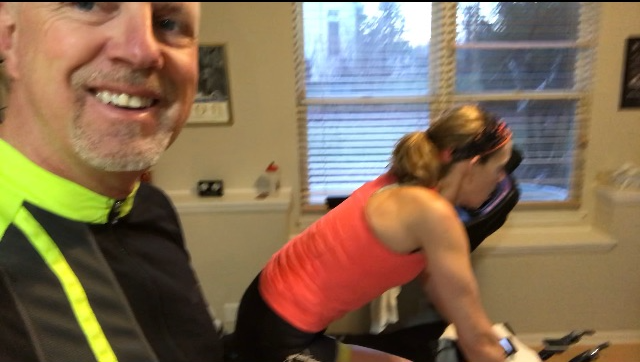
SpinSo this morning, I put on my bike shorts, stuck the Specialized Venge in the trainer and spun 45 minutes of indoor riding. Good news. The knee feels great.

I’m grateful that this is coming along well. I’m a couple pounds up in weight for lack of training, but that should melt off within the next few days.

Come Friday I’ll meet with the doc and thank him for his skills. It took just twenty minutes of his time to snip the loose bit of meniscus that I damaged hurdling a street cone during a race on a snowy day a few Januarys ago. Won’t be doing that again, I can assure you that.

And if the weather gets above fifty this weekend, I’ll be out riding 30-40 miles and starting preparation for our trip to the hills of North Carolina come May. It’s all part of a spin through the recovery zone.

Posted in cycling, cycling the midwest, healthy aging, injury, triathlete, triathlon, triathlons, we run and ride | Tagged , , , , , , | Leave a comment

Delayed reactions and side effects in endurance athletes

IMG_4121

Drawing by Christopher Cudworth, circa 1972.

One of the most challenging aspects of high-level training for endurance sports is how to recover properly to avoid overuse injuries, fatigue or illness. Those us us that have pushed the envelope too far know the pain and difficulty of the outcomes. We get a cold from overtraining, pick up an injury from too much intensity or volume, or simply get a case of the blah’s where motivation disappears along with energy.

As if that isn’t hard enough to manage, there is also the problem of delayed reactions and side effects. During peak training years, I abided by advice from the Marty Liquori book “Guide for the Elite Runner.” It held a bit of wisdom about the dangers of coming back too quickly from a hard workout or race.

Liquori promoted the “Day After the Day Lag Rule.” That means it is two days after a workout when the body is most at risk from overuse and injury. That meant when I was training on my own after college, speed training and other types of hard effort were done on Mondays and Thursdays on weeks when there was not a Sunday race on the schedule.

On weeks when there was a race, I’d recover (some) on Monday and Tuesday, then come back with speed or hard distance on Wednesday. Some months this would be the cyclical schedule because I’d race every week. It is a conflicting reality of endurance training that participants walk a line of perpetual risk. There is no way to improve without pushing up against the edge of maximum performance. But it’s the delayed reactions and side effects that one must learn to recognize if one hopes to succeed in the long turn.

Overeager

There were many exceptions to the Day After the Day Lag rule, but it tended to apply 80% of the time. Yet even that delay between hard workouts was a radical modification from college years when we hardly ever took true recovery days. We trained at 6:00 pace nearly all the time, even on supposedly “slow” days or shorter runs. During track season, we even did a workout of 3 X 3-miles at under 17:00 pace.

But that type of workload cost many of us over a 10-13 week season. Our concept of ‘training tired’ was stretched to the maximum with weekly averages between 70-100 miles and 1-2 four-to-five mile races each week. We’d also sometimes have dual meets during the week as well.

And going back to the high school schedule, we competed Tuesday-Thursday-Saturday on many weeks, and never with less than two meets per week. All that racing made us fast and tough. We also ran hard workouts the day after races and even trained hard immediately following a race, the same day!

Delayed reactions

IMG_2203

Drawing by Christopher Cudworth, circa 1972

What we sometimes failed to comprehend is that while the training and racing in that way worked “in the moment,” there was a background effect taking place in our bodies that was hard to detect. Racing hard every week from late August through the end of October simply has a cost. If you time it wrong, the racing peak would come too early. That left you grasping for strength in the late season meets that were most important: Conference, District, Sectional and State.

Wise coaches knew how to avoid this propensity to peak too early, and so did wise athletes. So the opening races of the season would be treated as group efforts or hard training opportunities.

For example, we raced against two perennial All-Americans from St. Olaf. We’d kick their butts in early season meets. But when it came time for nationals they’d turn on the gas and finish in the Top 25. I always admired that. They delayed their peak fitness until the timing was right. That’s a good kind of delayed reaction.

By contrast, I achieved my racing peak about three weeks out from nationals. And while I managed to hang on through nationals to bring our team home as fifth man and earn a Second Place overall, those last two meets I was close to that “running on fumes” feeling that an athlete past his peak can suffer.

Delays and denial

IMG_0306Endurance athletes also have to deal with delayed reactions related to diet and nutrition. An athlete who eats the wrong foods may enjoy early success in a run or ride but are not properly fueled for the long haul. This can happen easily on a longer bike ride. Forgetting to eat or drink early on can result in a bonk when the body runs out of fuel.
It is true that many distance runners of the late 70s and early 80s did not drink much in terms of fluids during hard or long efforts. Many of us did 20-milers at 6:30-7:00 pace with no water. Perhaps our bodies grew used to using what they had during those long runs. We once even ran an 18-mile run climbing from 6000-9000 feet of altitude and back down with no water during the entire out and back course. That was tough, but none of us collapsed. We just denied that we couldn’t do it.

It is likely our bodies suffered the actual effects of that effort a couple days later. But by then we were riding back across Nebraska to Iowa in a beater van with one bad wheel. We just toughed it out on every front.

Delayed release

This all came to mind this morning as I sat using the bathroom following a couple days of ingesting painkillers and anti-inflammatory meds following meniscus surgery. The nurses warned me that some constipation could occur. Those meds dry you out inside, and the result is stiff stools that can take some work to release. If you’ve ever experienced the urgency of a blocked colon and a stretched rectum due to constipation, you know it can be a hurry up and wait proposition. The same thing can happen from training without sufficient hydration.

But it all tends to be a delayed reaction. You think you’re home free and then things get tricky. Some drugs work by accumulation in your system. Thus it can take as long for them to be expressed through waste products as it does to be absorbed by your cells.

Postponed anxiety

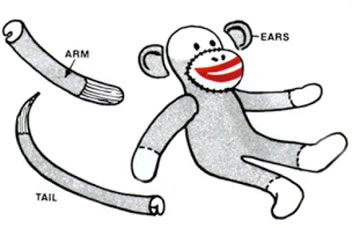
stuffedmonkeyI well recall trying to train on the bike when I was using a drug called Lorazepam for anxiety treatment during all those years of caregiving for my late wife. The drug helped alleviate anxiety in the moment. But it wore off with time. Then it was back to square one.

The benefits of that drug were like a short-term investment. The dividends were immediate, but long-term it was more about finding answers to the source of the problem than repeating the treatment cycle over and over. But sometimes we just need to survive in the moment. And that’s forgivable.

There were also some withdrawal effects when it came time to quit the drug entirely. That meant whittling the dose down from a full pill to just granules toward the end of two weeks. But finally, I’d be drug free. I will confess that was sometimes a scary period. It truly helped having a crutch substance during periods of such high stress.

Thus it was a strange thing moving away from the comfort zone of that drug. It protected me to some degree from adverse reactions to the situations I was in. Often there were pressures from all sides as I was also caregiver for a father who was a stroke victim. All the chores of finances, healthcare management and family obligations wore me down.

True salvations

finishedstuffeddollYet I still kept running and riding, because those were my true salvations. Granted, my efforts were full of shortcomings. At times, I had no will to compete on the weekly group ride and would simply fall back, too tired and depressed to care if I was anywhere near the top dogs. I had to swallow some ego many of those weeks. Sometimes I’d get angry, pissy or moody along the way. That had its own value. Since I couldn’t really afford to get angry with my patients, it helped to curse the winds of destiny, be they headwinds or crosswinds. That’s both a literal and metaphorical analogy.
So the lessons I learned about delayed and stress reactions have helped me understand psychology and the risks of postponing reality a little better. It’s not that I ever avoided taking care of problems. That was not the case at all. But ultimately I learned better ways to view situations in a fuller context. That enabled me to grow out of ruminative thought patterns that only make situations worse.

Takeaways

We all need to learn how our bodies and minds react to stress. Understanding the scope and degree of our delayed reactions and the side effects of thought and physical stress is important to managing ourselves in a healthy way.

It really helps you know when it is logical to forgive yourself if workouts need to be postponed, or recovery takes longer than you think it should. These workarounds are vital to your long term health. Because when we ignore the warning signs, the delayed reactions and side effects are seldom good. Thus an active and aware approach to our lives is critical. It can mean the difference between experiencing success and something else entirely.


Posted in cross country, cycling, injury, track and field, triathlete, triathlon, triathlons | 2 Comments

Learning things about ourselves

Sue thinking.png

The nurses responsible for instructions on how to handle things after my meniscus surgery were both honest and cautious about the conditions I might face coming off the procedure. “You might need crutches,” one nurse told me. “When you go down the stairs, you bump down on your butt,” another advised.

“On the other hand, you might be just fine,” another nurse advised. “It just depends.”

Crutch free

Well, crutches are not necessary. I walked out of the surgery center a little wobbly from the anesthesia, but other than that, life after surgery is a cakewalk.

In fact, I slept quite well with the leg elevated. No pain all night. The hydrocodone is working, but I don’t want to use it any longer than needed. Back when I had surgery for the ACL tear, it was Vicodin for a couple days and that was that. The clavicle repair, same thing. It’s not good to let the drugs wear off and feel a spike of pain, but neither is it good to carry the drugs on too long. We all know the opioid thing is a danger.

Let’s get up!

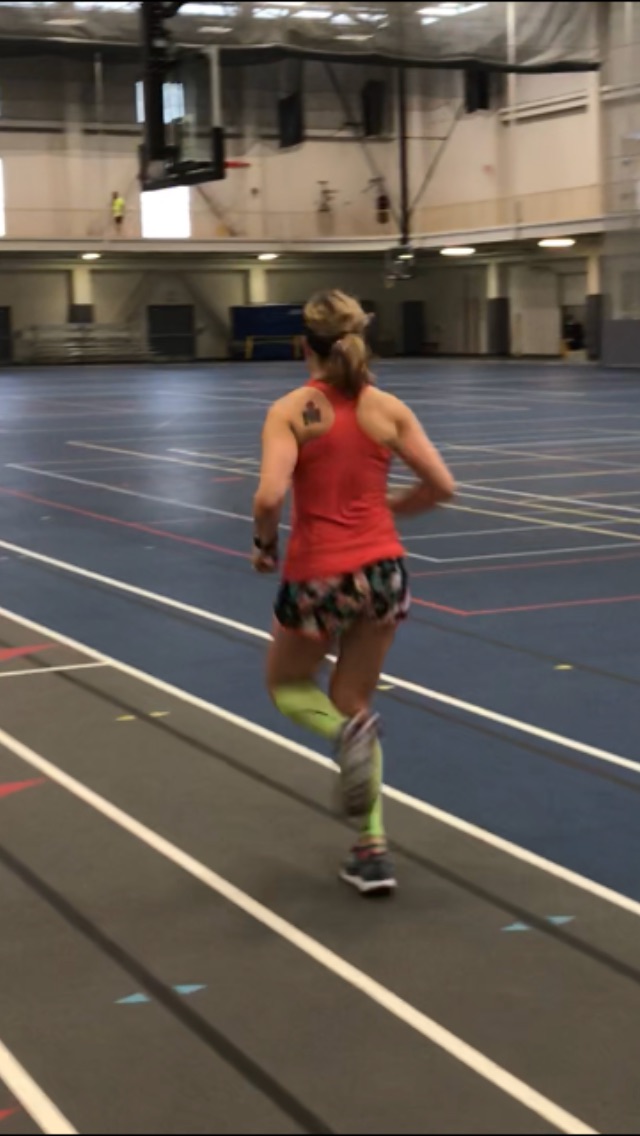
This morning, Sue rose early to head to the indoor track for a workout. She was checking with me on a few things before she left and finally said, “Do you want to come with me? Because you seem too awake to stay in bed.”

She was right about that. I did feel rested. So I got some workout clothes over the knee bandage and we piled into the car. She drove the Subaru, because technically I’m ‘on drugs’ and not allowed to drive.

On track

I wasn’t sure what to expect as I started in walking. So I took it easy a couple laps. Then a couple laps more. Sue was warmed up by the time I’d walked for fifteen minutes and I didn’t want to push my luck, so I settled into my coaching role.

She was getting ready for a workout that was likely to be tough for her. After my walking, I stationed myself at the starting line and coached her from there. She nailed every interval along the way. It was cool to watch her go about the business of building her confidence with that workout. Between intervals of 800 meters, we talked about the sensations she was feeling.

Closing kick

Sue Running.jpg

And when the last lap of the last interval came around, she dug in and ran the last lap 2.5 seconds faster than the previous four. I was really proud of her.

I was also grateful to be there walking at the pace I can manage in recovery. Nothing bad about that at all. The same surgeon has fixed both my clavicle and my meniscus. He also repaired Sue’s rotator cuff the first year I met her.

Sometimes that’s the price of being an athlete. But I think one of the rewards this time around was being an observer as my wife dug in and learned some things about herself she really wants to know. In some ways that’s the question that we’re always asking ourselves. Can I do this?

And the answer is, “Yes.”

See you back on the road in a few weeks.


Posted in running, track and field | Tagged , , | Leave a comment

Surgery day and healthy outlets

IMG_0682.jpgAs an athlete most of my life, there have been plenty of times when the doctors had to repair some part of my body. Even on the playground as a kid, I was so active and aggressive in sports there were injuries every other week. I was so competitive at kickball I was always running into the swingsets in centerfield. I’d get these big gooseheads on my forehead and the school nurse would call my mother to let her know I’d done it again. After so many times, she grew jaded. “Just put some ice on it.”
Baseball been berry berry bad to me

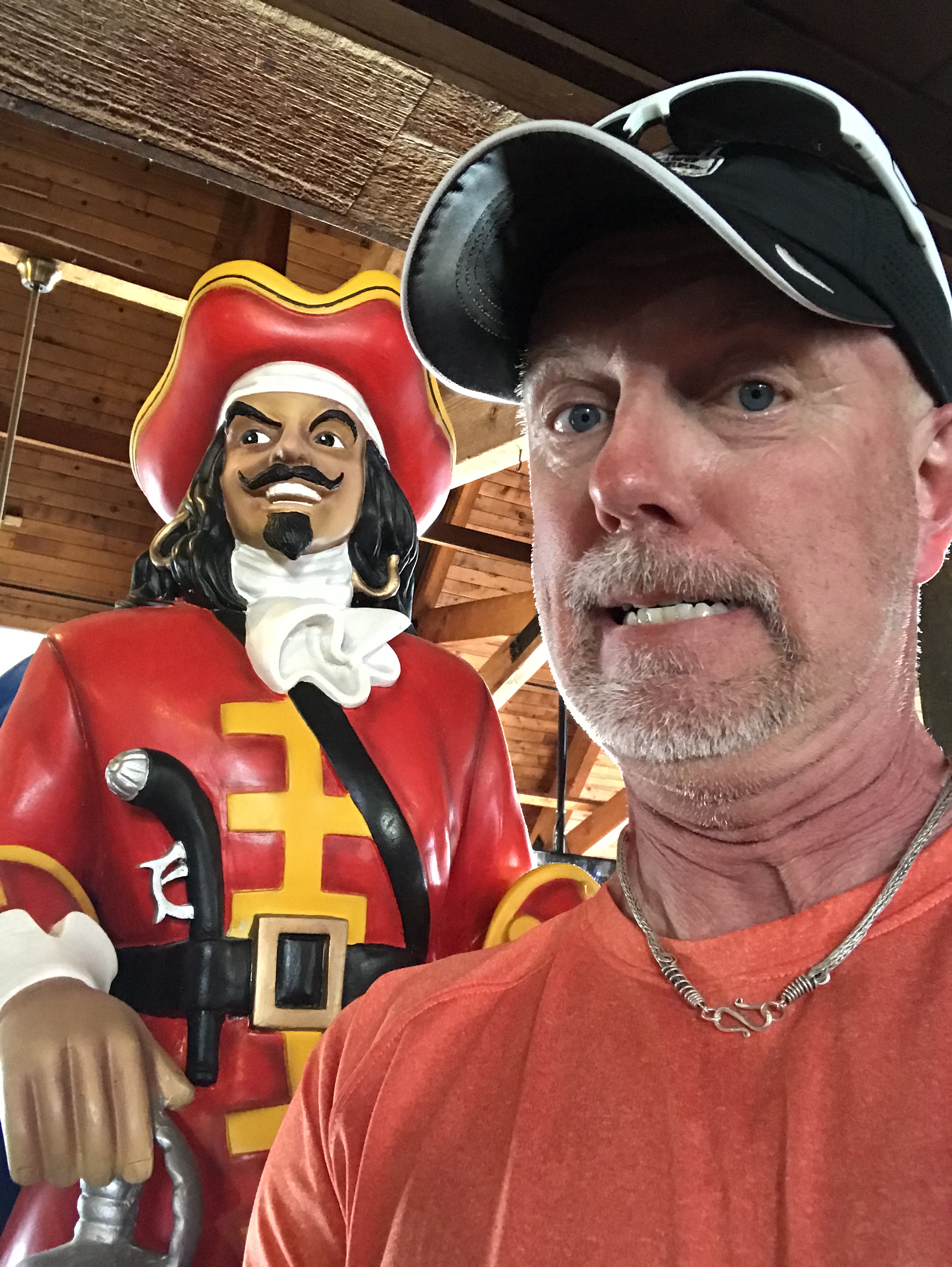
There were baseball injuries. A spike into my ankle left me hobbling home a mile from practice, bleeding down into my sock from the puncture wound. A chipped bone in my elbow came from stealing home and getting crushed under the body of a fat catcher. A front tooth got knocked out of place by a line drive at twilight during practice. That required dental surgery to put the tooth back in with a post. I have a fake tooth to this day.

Basketball Jones

There were some basketball injuries too. In eighth grade practice, we were doing “killer drills” in the gym during practice and a dorky teammate came stumbling into my knee and it hyperextended. I was lucky it didn’t tear the ACL way back in 1970. Surgery for that was brutal back then. But the knee did swell up like a balloon. The doctor used a six-inch needle to suck out the black blood coagulating around the joint. It filled a two-pint bag quite easily.

But I recovered from that incident and wound up sinking a half-court shot with a second remaining on the clock to help our team win the conference. That endowed me with hugs and kisses from admiring girls, and so much attention I nearly recoiled in my own body. But damn, that was a nice shot I hit.

Part of the game

So the injuries were part of the game, but it was worth it because much of the fun in life comes from competing at one thing or another. A few years ago I saw my college cross country coach at a reunion. He was bent sideways in discomfort from a back injury. He had been All-American in football and basketball,. When I asked him if he was okay that day, he turned to me and smiled, “I wouldn’t change a thing.”

Changes

But sports injuries do change us. Some hurts are temporary but still require a bit of recovery. Others are more permanent or require surgery to repair the damage we’ve caused our bodies.

I was feeling pain on the base of my pelvis back in the early 2000s. So I asked my doctor if I could go to physical therapy. He denied me that opportunity due to the HMO. A few months later I tore the ACL in my left knee. I waited six months, then had surgery using cadaver part to make the repair. Then I did months of rehab and got back to all the activities I loved. But then the ACL repair tore again in an outdoor soccer game.

Bad choices

A couple years ago I did something stupid during a snowy race and tore a bit of meniscus in the same knee that doesn’t have an ACL. It hasn’t hurt until this year, so I avoided having surgery even though it would jut out at times. But now it has to be fixed.

So this afternoon the ortho surgeon will poke into my knee with his scope and nip the torn meniscus. Just another day at the office for him. Just another life-changing surgery for me. It will take a couple weeks to rehab, but I plan to be active with that.

Back to normal

And likely I’ll get back to “normal,” whatever that means as we age. I know plenty of people who have had to really cut back due to wear and tear. I’ve been fairly smart and lucky in some ways. That bike crash at forty miles an hour in 2012 could have cost me my life. All in all, I’ve been fortunate. Not that many running injuries over the years.

Emotional pain

However, there are other damages we face in life as well. The emotional hurts sometimes linger as long as physical damage. Our daily challenges include pain from deception by people we trusted. Sometimes our reactions can be as damaging as the situations to which we respond. With anger or revenge. The echoes of other hurts haunt us. We want payback. Retribution. Satisfaction.

Healthy outlets

Actually, sports are a healthy outlet for such competitive urges. We can fight to win all we want in sports, and it’s just a game. I think about these things on surgery day and realize how much has actually been gained by being part of the athletic world. As my old coach once told me during a time of crisis, “Your whole life has been a preparation for this.”

Sage words and a strong reminder of why we choose to fix things when they go wrong, and study our lot rather than just letting things fall apart. Because that leads to making excuses the rest of our lives why we quit trying. And that’s something surgery can’t fix.

Better to fix things the best you can and move on. You can’t win at everything, because sometimes those victories have a greater cost in the long run.

Posted in bike accidents, bike crash, bike wobble, Christopher Cudworth, cross country, healthy aging | Tagged , , , | Leave a comment

The solace of lonesome places


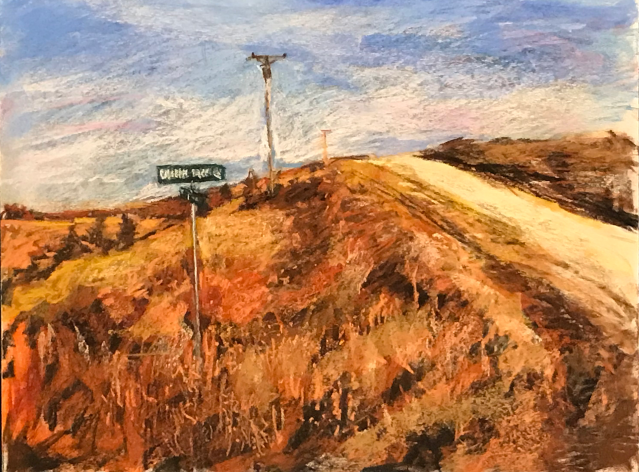
Solace of Open Spaces.png

Pastel by Christopher Cudworth, 2018

One of the things I like best about running and riding is the solace of lonesome places. Last night during my ride in rather windy conditions, I found myself in need of a roadside break to adjust some things and just by chance, the wind let up a bit where I was standing. The landscape even grew silent as the hum of cars on I-88 to the south abated.


For all the thrum and thrall of cycling, the wind in your ears and the whirr of the road below you, it is important at times to stop out there and pause in some lonesome place to just look around. Even if it is just to appreciate the fact that you’re out there, and even if there are no great thoughts swirling around your head, or ideas, just stop and look at the clouds, or the pending sunset, and just take it in. The solace of lonesome places is quite healing.

Back when I ran 15-20 miles at a time (I no longer do) there was a strange independence in finding yourself alone on two feet out where the roads narrow and the red-winged blackbirds sit on wires waiting for the chance to nail you on the head. Perhaps a red-tailed hawk or kestrel would flap ahead and land impatiently on pole after pole, hoping you did not come any further.

But when that company even disappeared there would only be nothing but a long line of fence posts stretching out into a field.  Each had their company of desperate weeds clustered around the base where the land-hungry farmers could not reach with the plow. I always saw this as a small show of peace in an otherwise acquisitive world.

I’d go running mile after mile in environs such as these. My little Timex or Casio watch was a loyal companion as the miles passed underfoot. With an uncanny sense of pace, I knew just how far I’d gone, and how far there was to go. Nothing more was necessary. I didn’t even carry water or food. I just ran until I could not run any longer.

Back at home with a tired body and restful mind, there was time to think back on the run. Often a single image from the day would stand out in my mind. It might be the turn of a creek or the presence of an old road sign at an intersection of country lanes. These days, I get the same imagery in my head after long rides. It’s funny how you can ride 80 long miles and come home with snapshot of the day in your mind.

But that is the solace of open spaces. It gives our minds something to dwell upon. For all the oxygen we inhale and the carbon dioxide we breathe out, we are also exchanging mix of thoughts and visions with the world. And that is what sustains us. The solace of lonesome places is the life’s breath of the mind.

Posted in Uncategorized | Tagged , , , , , , | Leave a comment

When Quora asked, “What are your deepest thoughts you have been thinking about life?”

The website Quora is a forum where people respond to questions from others. Some of the questions are phrased rather oddly, often with poor English, but some of that is contextual because the queries can come from all over the world where English may not be the primary language. 

This morning I answered a question about “What are your deepest thoughts” and used a running analogy to answer. Thought you might enjoy and perhaps be moved to ask yourself that question or respond here with what your deeper thoughts are these days. The comments section below is always open, and you can click through from email to get there. I’d love to hear what “deep thoughts” you have about life. 

IMG_2770Here’s what I wrote:

I am sixty years old. I’ve witnessed a number of people that were quite close to me die over the last 10 years. These include a wife, a father and mother, a father-in-law and a longtime running coach and friend who was a deep influence on my life.

Seeing death so closely has changed me in a way that can be described as calming. While death used to be such a mystery, and I knew very few people who died when I was still young, it is now part of my life in the sense that I carry along the intimate knowledge that it will someday happen to me.

Whether that comes tomorrow or perhaps 20–25 years from now, it has challenged me to think about what I have accomplished in life and what it means. And having done many things that were successful, but also many things that have failed, I now regard them with an almost equal status.

That sounds strange to say, because we’re often told that only winning counts. And while winning feels great, which I know from having won running races with more than three thousand people in them, I also have gained quite a bit from competing and “losing.”

For example, I once ran a race that was delayed for the start until midnight. It was just a bunch of us diehard runners lined up in the cool of night. The gun went off and I raced along for 5000 meters at what started out as 4:40 mile pace. I ran a personal best of 14:45 for the 5K distance that race, yet I finished in 14th place.

Should I have gone home disappointed that I did not “win” when actually, I did my best? Because by contrast two months later I put undue pressure on myself during a statewide competition by thinking I had to win to succeed. I wound up falling from a sure third place bronze medal position to sitting in a wheelbarrow full of ice because I overheated.

See, that’s an allegory for life right there. So many of us overheat from the personal dramas that we create in our heads. What was better, soaring along doing my best or pushing false expectations into my brain that caused a burnout?

As I watched people close to me die I realized that more than the statement “life is precious” or “seize the day” is acknowledging that “trying your best” should also include a clear recognition of what that really means. Because truly winning at life is a matter not just “winning” in the traditional sense but also to know where your contributions matter the most.

When my late wife was diagnosed with cancer, that coach friend of mine called me up and said, “Your whole life has been a preparation for this.” And by that he meant that it would take all the guts and persistence I had to stand by her side and face life’s pressures one after the other.

That’s what I’ve learned at sixty years old. And it never, ever stops. Until you die.

So that’s what I think about daily. How to know where my contributions matter most. That can be personal, fiscal, social, religious and political. Take your pick. We’re multifaceted human beings. Both material and spiritual, I believe, and one does not deny the other.

Posted in running | Tagged , , , , , , , | Leave a comment