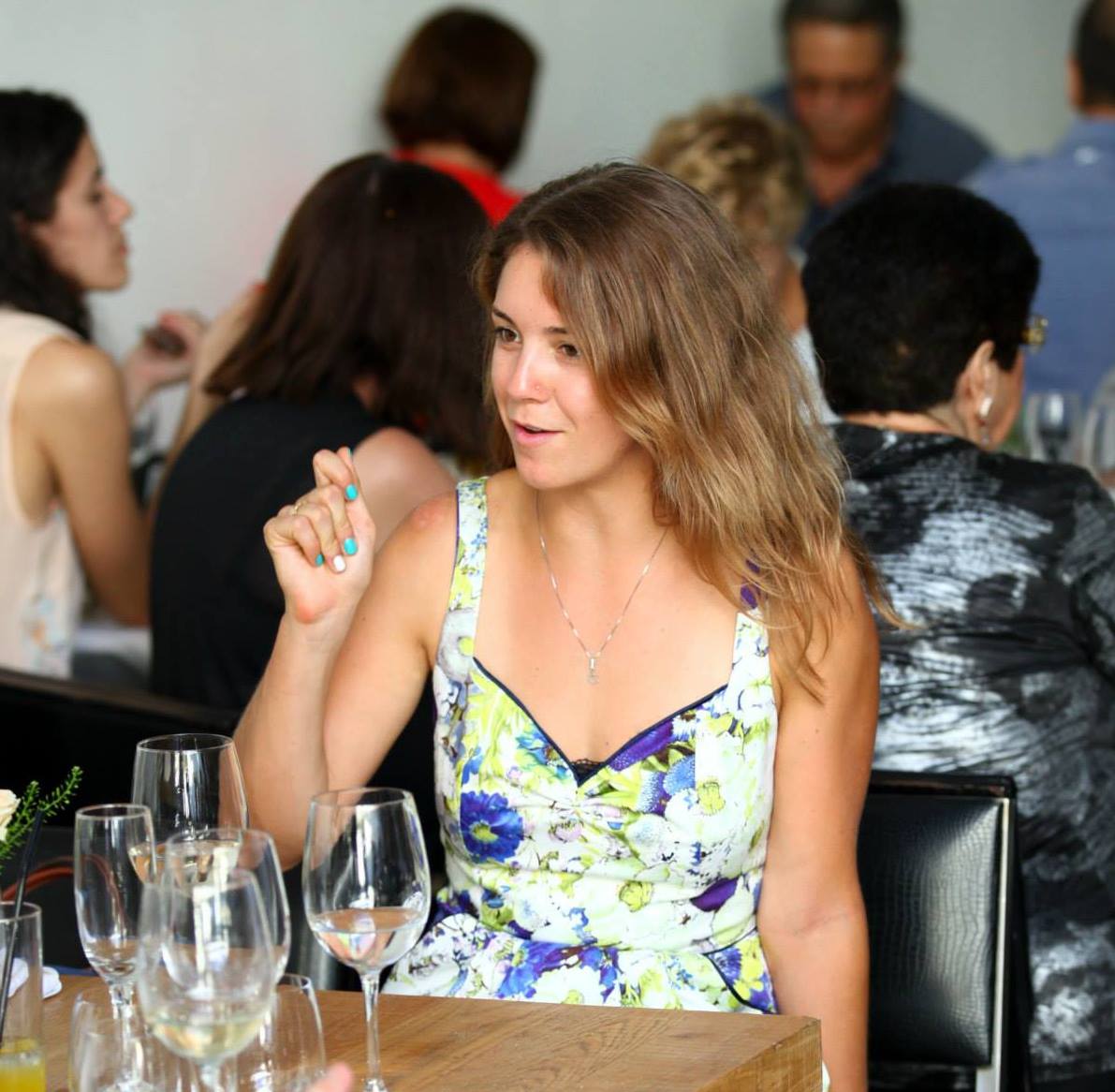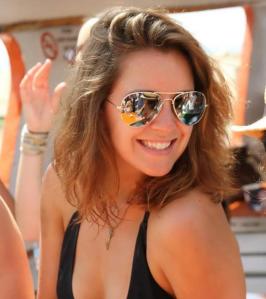
Cid Carver, triathlete in Israel
By Christopher Cudworth
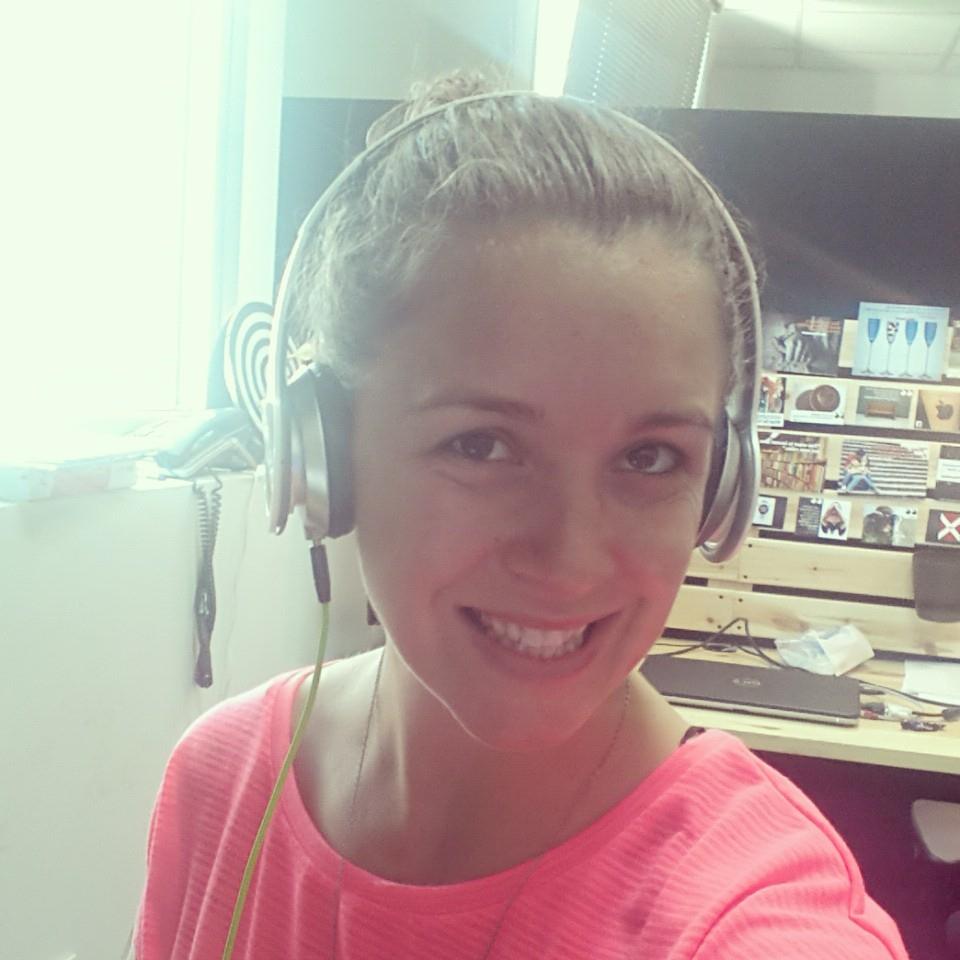
Cid Carver is originally from northeast Ohio where her interests in sports and international politics were perhaps innocent and marginal at best.
Finding her place in the world
It was only after she moved to her adopted country of Israel several years ago that both of those interests grew and converged. “I’m Jewish by heritage,” she explains. “But not by practice. Funny story, I came here on this 10 day free trip that Jews can do between 18 – 26 years old. It’s called Birth Right. I had no connection with the country. I didn’t know Hebrew or anyone here. But after 10 days I made my decision to live here forever. I loved it here and wanted to stay. So I got citizenship after two months of being here without going back to the US. Eventually I did return for my clothes, etc. Now I do go back once a year.”
Making triathlon connections
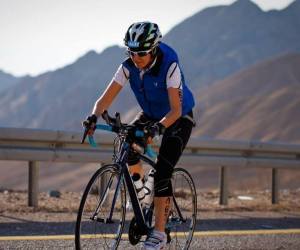
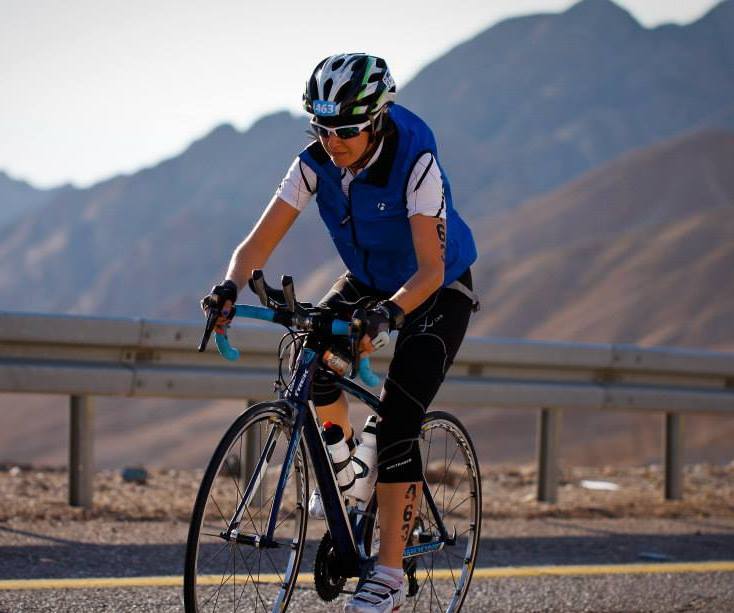
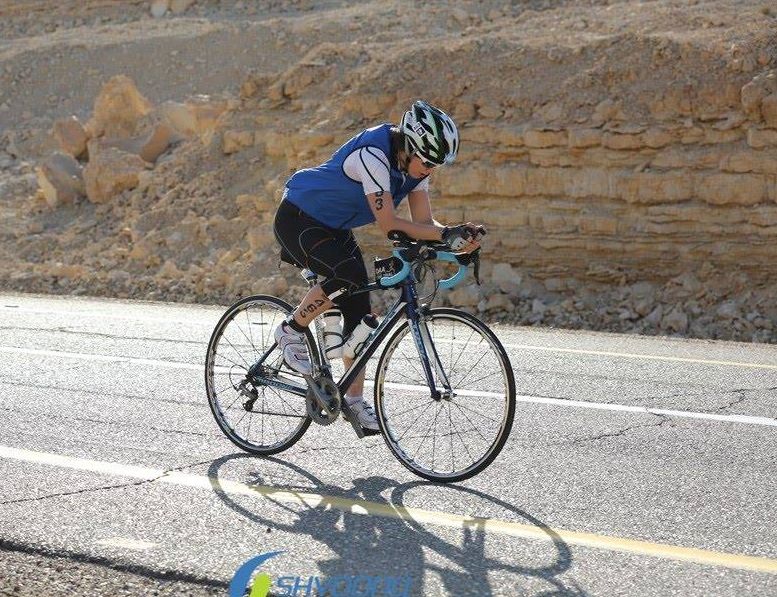
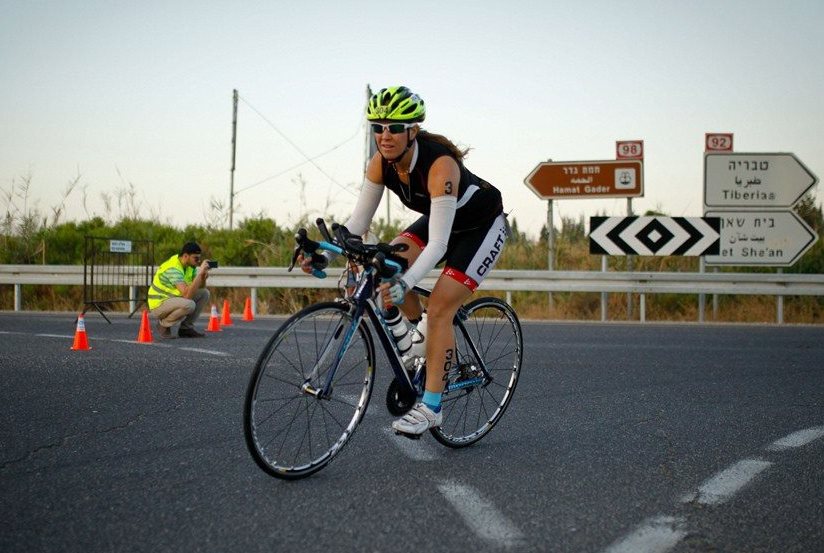
Training on roads among rugged Israeli hills
Carver was not a triathlete when she arrived in Israel. But as she experimented in the sport her love of movement and a new sense of place combined to form both a bond with her location and the community of athletes it hosts.
“Athletes are athletes, and when you are on the bike or in the pool or at an ultimate frisbee tournament, it’s about training together and being judged by your abilities and not by where you are from.”
Bombs away
But recently one of the challenges of training in her adopted country is the challenge of missiles literally falling from the sky. In July 2014, the group known as Hamas, a Palestinian Sunni Islamist organization with an associated military wing, the Izz ad-Din al-Qassam Brigades, has been heavily on the attack. The group regularly fires rockets at major cities trying to disrupt the Israeli state any way they can.

Swimming, cycling and running make up part of every day
Many of those missiles do not get through. Most in fact are intercepted by the defense system known as the Iron Dome. According to MSN.com, the mobile missile defense system is “designed to fire guided missiles at rockets that threaten to hit populated areas while ignoring others.” The Iron Dome is partly funded by American money and has recently reported a 90% success rate in taking out rockets launched by Hamas.
The few missiles that hit cities such as Tel Aviv still cause disruption in the daily life of Israel. People in several cities have been injured by Hamas rocket fire. Israel has returned fire on Hamas targets including known homes of Hamas operatives. Hamas in return claims that innocent civilians have been killed. And so it goes. On Monday, July 14, 2014 it was reported in the Chicago Tribune that 17,000 residents of Gaza fled their homes as Israel conducted a campaign to level suspected strongholds of Hamas militants.
The violence appears ready to escalate with each new strike. And as always, the international community struggles to contain such longstanding conflicts.
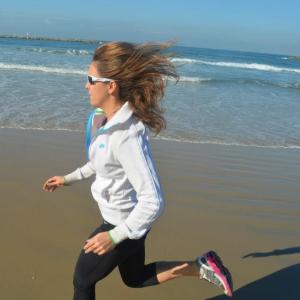
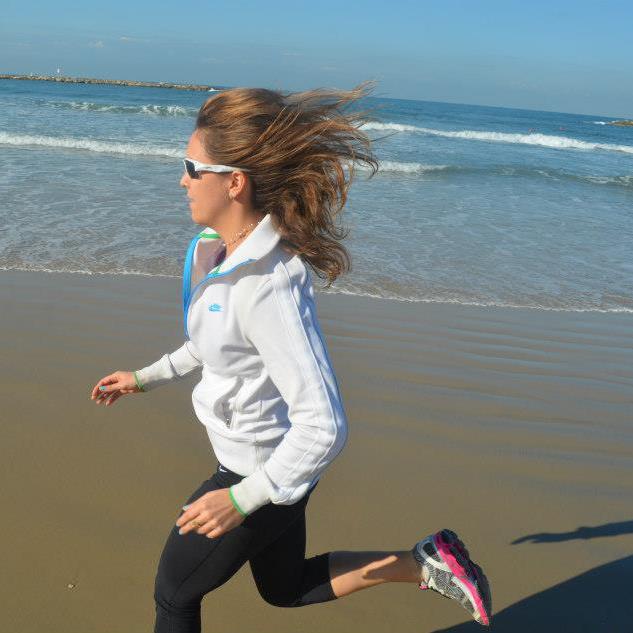
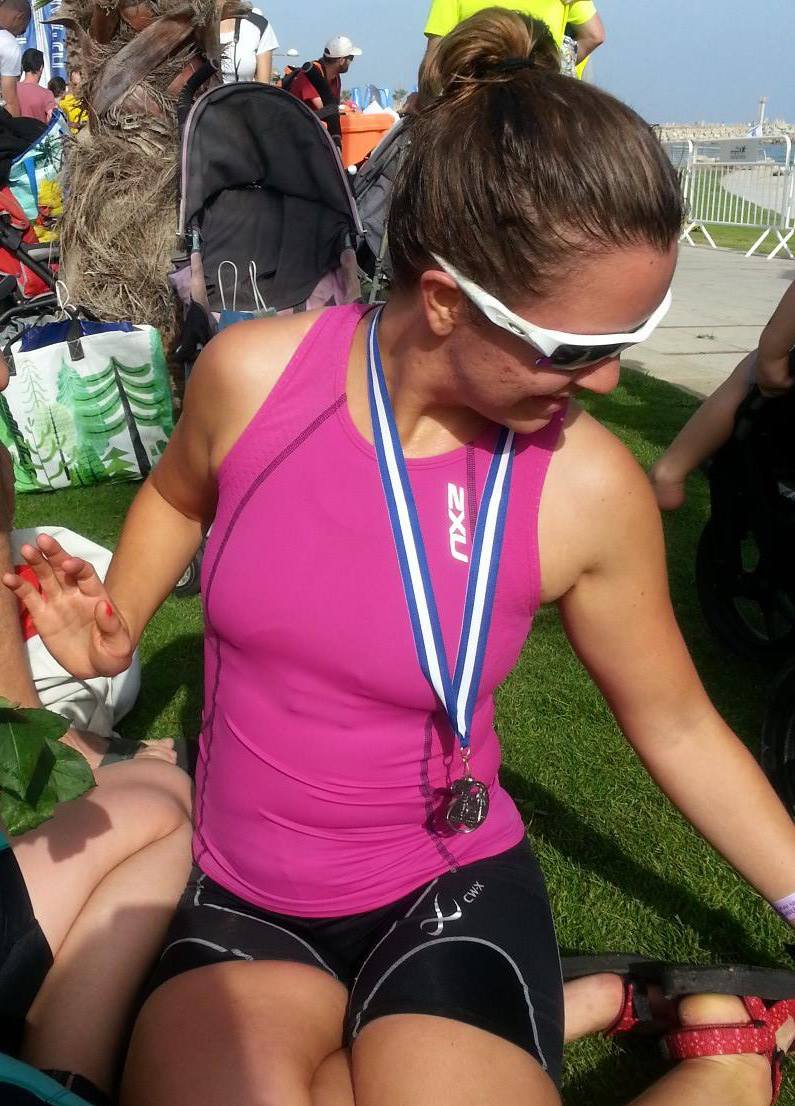
Training on the seashore
Keep calm and carry on
Trying to carry on with daily life is interesting enough. Add in something as wide-ranging as training for a triathlon and one can see why some people adopt the attitude Cid Carver describes as “living in the bubble.”
“People simply believe that we won’t be touched. It’s because we are less affected by it here in Tel Avi. But there are rockets being launched at us about every thirty minutes. So the pressure is always there. In Ber Sheva, Ashdod and the other cities in the south, they are getting hit year round. The rockets never stop in cities closer to Gaza. It’s just now they have bigger ones that can reach Tel Aviv.”
In many ways the attitude is similar to that of Britain during the German bombing raids of World War II. Life has to go on. But that does not mean you ignore your welfare altogether. Usually.
“You normally have 15-30 seconds to run to a shelter when the sirens go off,” Carver notes. “Or in my apartment building, you go to the stairwell. This morning I was sleeping and the sirens sounded. I woke up my roommate and we ran to the stairwell. We waited for the crash. And then I cycled to work. Life as usual.”
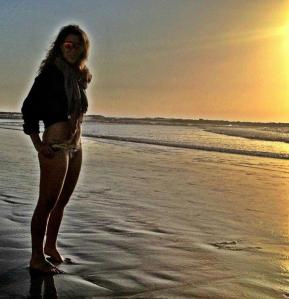
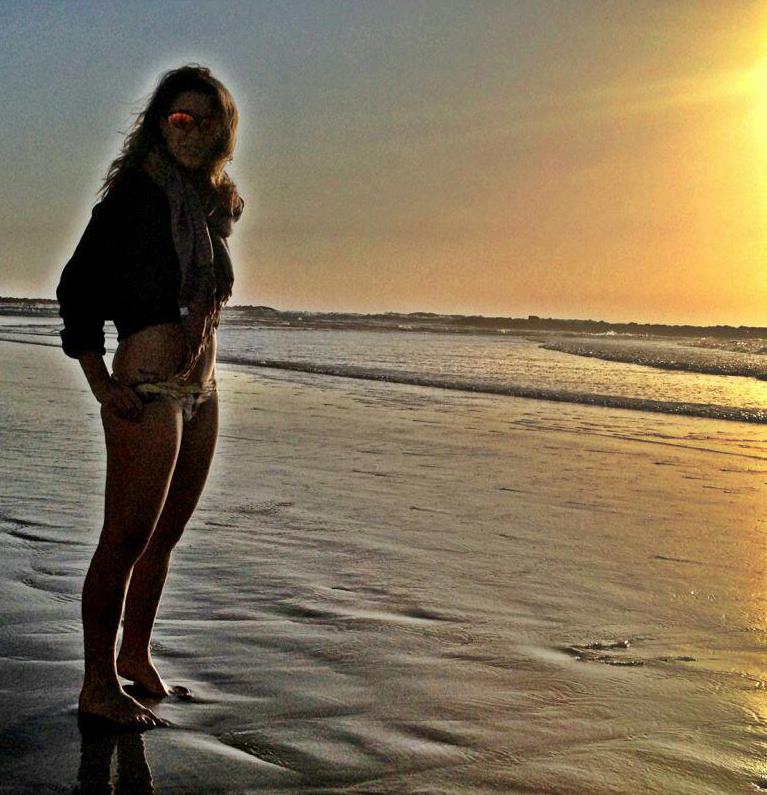
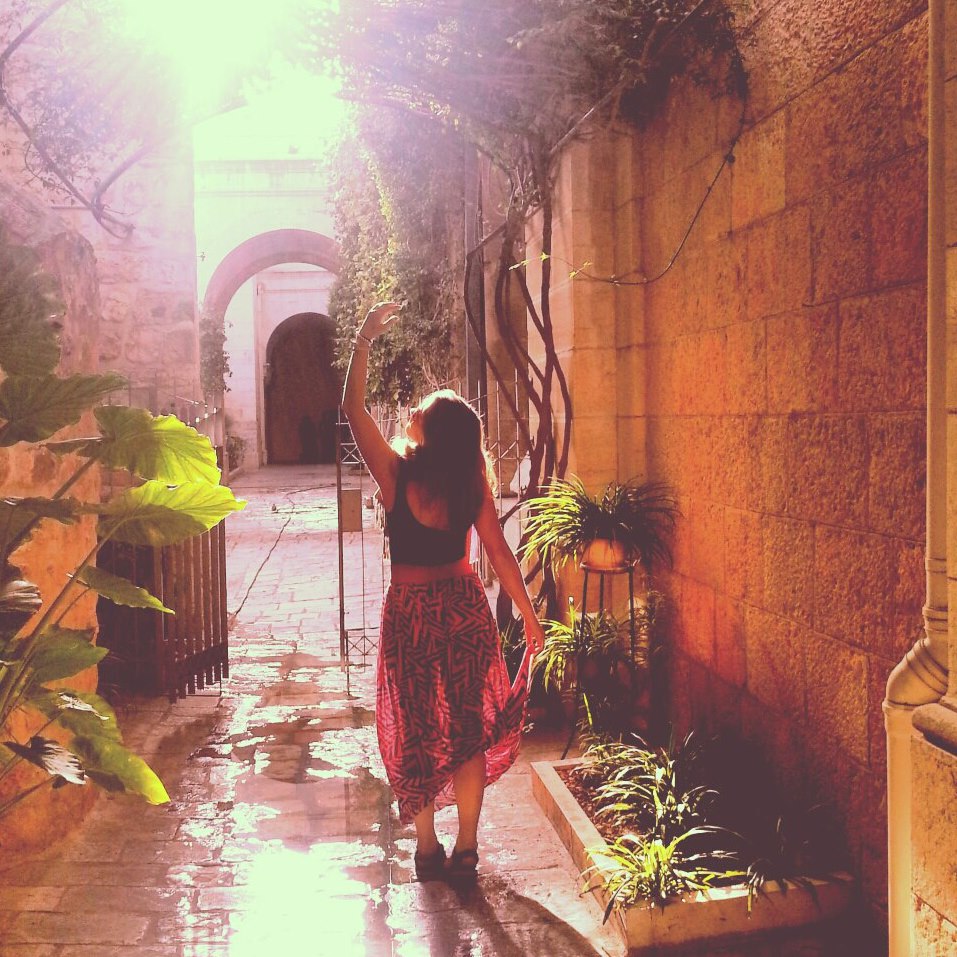
Away from the hubbub of Tel Aviv and the Israeli-Palestinian conflicts
Open lanes
At one point in mid-July 2014, the rockets aimed at Tel Aviv got through the Iron Dome when Cid Carver and her fellow triathletes were outside training at a downtown pool.
“I must admit, being in the swimming pool while the sirens go off and watching the Iron Dome hit a missile is very surreal.I was just about to get in the pool, I was filling up my water bottle and I heard the sirens. People stopped, and I was looking at the life guards and my friends who were in the pool and everyone just, basically stayed put as we waited for the explosion. I turned to my friend (an Israeli who recently did Ironman Austria) who gave me a hug then started laughing and said, “Perfect, look the lanes are empty, yalla! We heard the explosion and saw the smoke. Then we dove into the pool and continued the workout. There was nothing else we could really do about it. I was here in 2012 during Pillar of Defense and so this is the second time I have heard the sirens. So I am more used to it, but your heart sinks.”
When asked what she meant by her heart sinking, she says simply, “Fear.”
Finding family
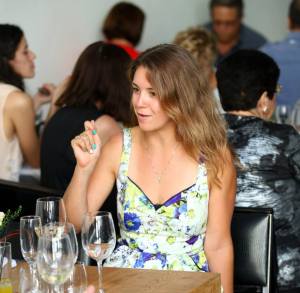
Carver’s social life is centered around triathlons and moves out from there
The triathlon community is Cid’s family in Israel. “I met a women who moved to Israel 30 years ago and she became my adopted mom. We went to Amsterdam to do the marathon together, I call her my Ironmom. When I moved here I knew no one. I wasn’t a triathlete or anything, just trying to find my way and slowly, as I ran my first race then signed up for my first triathlon I made friends. Friends that are also now family. I don’t go to the bars, I call my friends to swim or run or bike. And that is way better.”
She also recently met an Israeli man with whom she shares other activities. “He surfs and asked me to help him run a 5km in 25 minutes and we rock climb together. He is the first guy I’ve met who is not intimidated by me. That is one of the tough parts about being a determined female athlete,” she laughs. “He has his stuff and I have mine and then we have our stuff. But we’re always staying active.”
Recovering from loss
Cid Carver is finding her way in the world after the loss of her mother to suicide. “I got into sports as a kind of therapy,” she says. “It is a way to keep yourself moving forward, connected and happy.”
Her goals and training include plenty of movement, including a three day bike ride from one end of Israel to the other, 180km a day. “That gives you an idea of how small Israel really is. That you can cycle the entire length of the country in three days. All the cycling teams do it each year.”
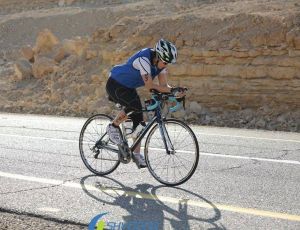
Long cycling events can start in the forested mountains of Israel and wind through rocky deserts
She will also participate in a cycling event called the Dead Sea Gran Fondo. “You start at the lowest point on earth and ride UP!” she laughs.
The country also sports a running relay event covering 220 kilometers. “Tell all your running friends to come!” she urges. “It’s a great event.”
Sports marketing
Which brings Cid Carver to the other reason in her love of sports: She longs to market Israel to the world. “I’m going to take an intensive 2-month Hebrew course and work part time, and then hopefully build up my base to work in marketing with one of the races or organizations. My dream though is to showcase Israel to the world in a positive light through sports!”
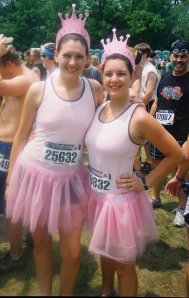
Not everything in life needs to be serious
The contrast between daily life in the nation beset by rocket bombardment and her hope of bringing the world to Israel through sports is not lost on her. Her take: “Sports is the only place where language and religion don’t matter.”
While that might be something of a blanket statement, and a bit innocent perhaps, the point is well taken when looking at events like the recent World Cup soccer tournament, where Iran’s football team carried the hopes of a nation that has been targeted by economic sanctions and ostracized by the world for its political philosophies.
Carver knows she cannot necessarily solve all that. But she sees hope in the personal connections made through sports. “I have met some amazing Arab cyclists and swimmers and it doesn’t matter where we come from. We are all racing and training together,” she says. “Sports is community building, and the races are like summer camp. It’s the time to reconnect with friends and do what you love. Everyone.”
To give perspective on what it’s like to train and race in an entirely new environment, especially one as recognized and perhaps infamously documented as Israel, I asked Cid Carver to answer a series of questions about her training and racing:
Are there special obstacles to being a woman/female athlete in Israel?

The number of women athletes in triathlons in Israel is on the increase
While I don’t say or think there are any obstacles to being a female athlete, it’s more that I wish I saw more females participating in the sports and on more of a competitive level. In May, I participated in a relay race that was 220KM from the northern most border, running south, all over road. I was on a team of six and we were all women. We were all very competitive women who have all moved to Israel and we met here. And of course we wanted to aim for the podium, personal records and making it through the night without sleep. The added bonus was the navigation in the cars, so there we were, six women, driving two cars, running off road and navigating in a foreign language and when we won were quite pleased! And we were the only all female team to have entered the race out of 7,000 people.
In the triathlons, there are even less. In the half Ironman distance race in Elat, out of the 1,500+ participates there were only two women entered in the half distance from ages 18 – 29, myself and a good friend. And for the sprint and Olympic distances in my age category (25 – 29), it’s a good day if there are ten of us. We’re starting to see more girls in the kids and teens, which is awesome! And lots of women in the 35+ categories, but slowly this is changing.
What are your racing goals and event planning for 2014?
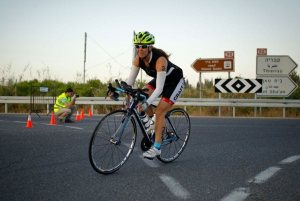
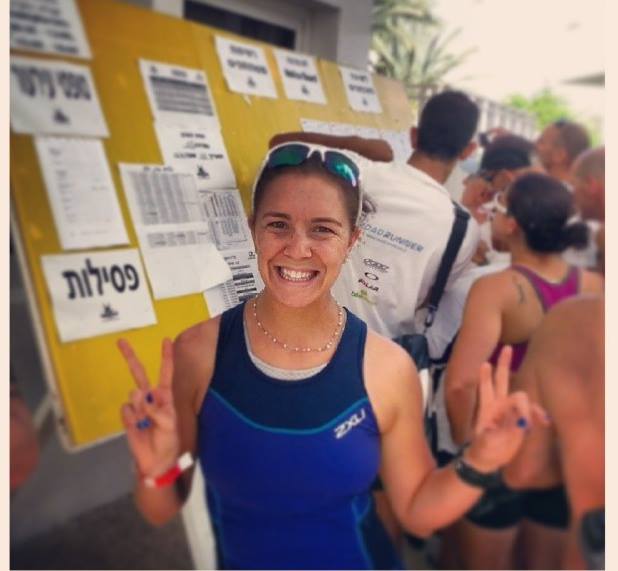
Competing fulfills Carver as it builds her friend network
Race goals and event planning is my favorite part of the sport. My biggest goal is to improve my 5km, 10km and 21.5km times in triathlons. I am focusing on and doing all sprint triathlons for the year to reach my other goal of being #1 in my age category here. I’ve already completed 4 races with 1st and 2nds, the season just ended and we will resume in September thru November. November I will do one Olympic, the last race of the season and then for the third year in a row, I’ll do the 1/2 Israman (half ironman distance race) in Elat, Israel. Where there my goal is to beat last years time.
There are of course some fun events along the way, such as two off road races I’ll run in, a 3 day bike ride from the north border to the south and maybe some time trial events in the fall for cycling, but the big goals are above. I am planning at the moment to do my first ironman in November 2015. It’s like a drug, the more you do the more you want to do and to see how far you can go.
Is there a community of athletes with whom you train or do you do a lot solo?
Doing the triathlons and sports was my way to integrate into Israeli culture since I didn’t study here, I didn’t grow up with the language and I didn’t do the army, so I needed a way to make friends. I am on cycling team, they are a non-competitive oriented team, but it’s all what you make of it and I love the group. I swim a lot with friends who I met at the pool or in the sea with friends who I’ve met at races. And then running with friends, we have our own small group or I’ll run after my cycling practice up to 6km with guys from the group. It’s more of my social life than training, at least that’s how I feel.
I like to feel that I’m not stuck or to rigid, it’s more enjoyable to ride with friends as well. This is what we do in our free time, we all still have jobs, so it’s important to love it and the people who you surround yourself with in trainings to get the good vibes.
If you were to prepare someone else to come to the Middle East as an athlete, what would you tell them?
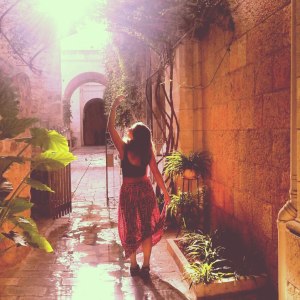
LIfe in the Middle East is colorful, fascinating and sometimes dangerous
The Middle East is quite a large region, but I can give some tips for traveling to Israel as an athlete. First, it totally depends when you arrive here, but the weather. The summer is hot, humid and nearly miserable. You have to start at 6AM, otherwise you’ll melt. The winter, well it snowed this year in Jerusalem, so it also can be quite chilly. But, like any adventure, check the seasons and the norm and prepare accordingly.
As far as culture and race atmosphere of the races. From what I’ve heard, it’s a little less organized and everything has a large personality but in a smaller venue, lots of life and energy, but not so shiny and fancy or showy. It’s a great environment and much more laid back. Don’t expect to be pampered here.
Also, in terms of triathlons, from what friends have said, there are less mile (KM) mile markers. And in the water or swim section, and I thought this was standard since I have not done a triathlon abroad yet, there are usually 2 guys in the water, one on a paddle board and one in a kayak, or sometimes a jet ski. There are sometimes helpers near the finish of the swim to help you up if it’s wavy. There are less signs directing you where to go and the people at the corners usually won’t be guiding you, you just have to be aware of where to go, look at the map before and follow the people in front of you, prepare.
What is your background leading up to moving overseas? HS? College athlete?
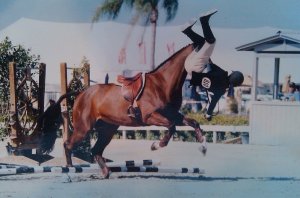
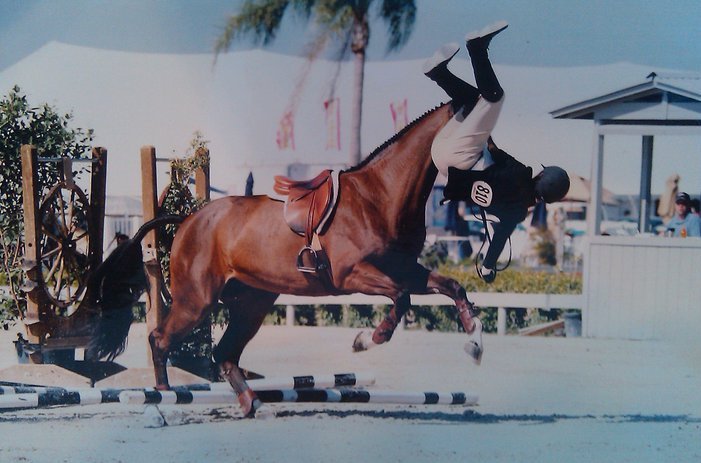
Clearly Cid Carver was head over heels about show jumping
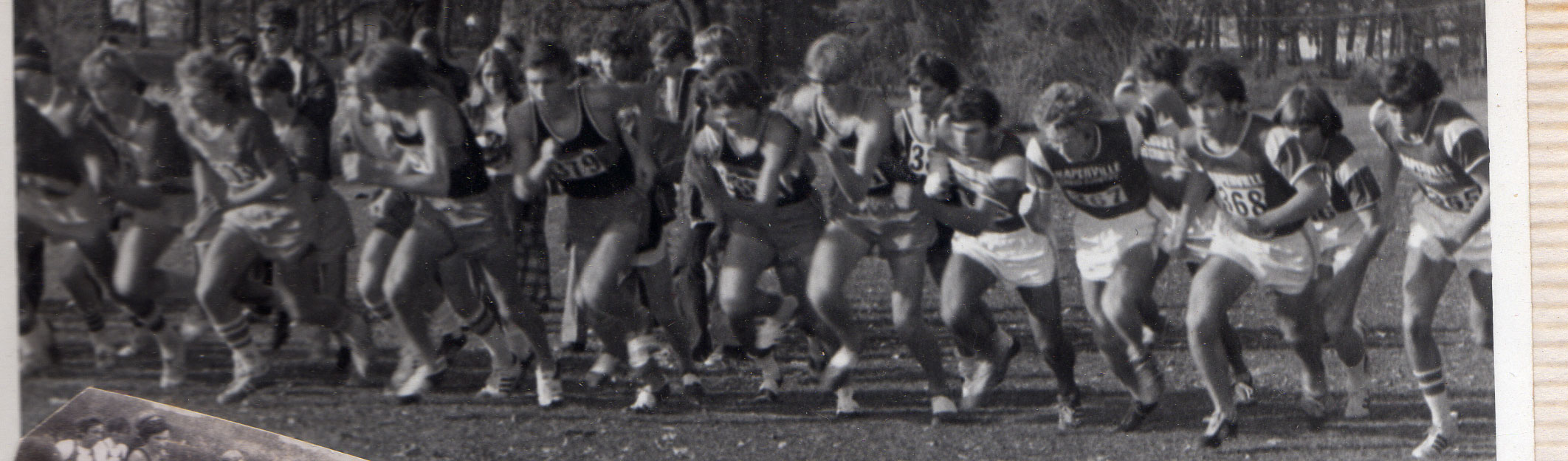
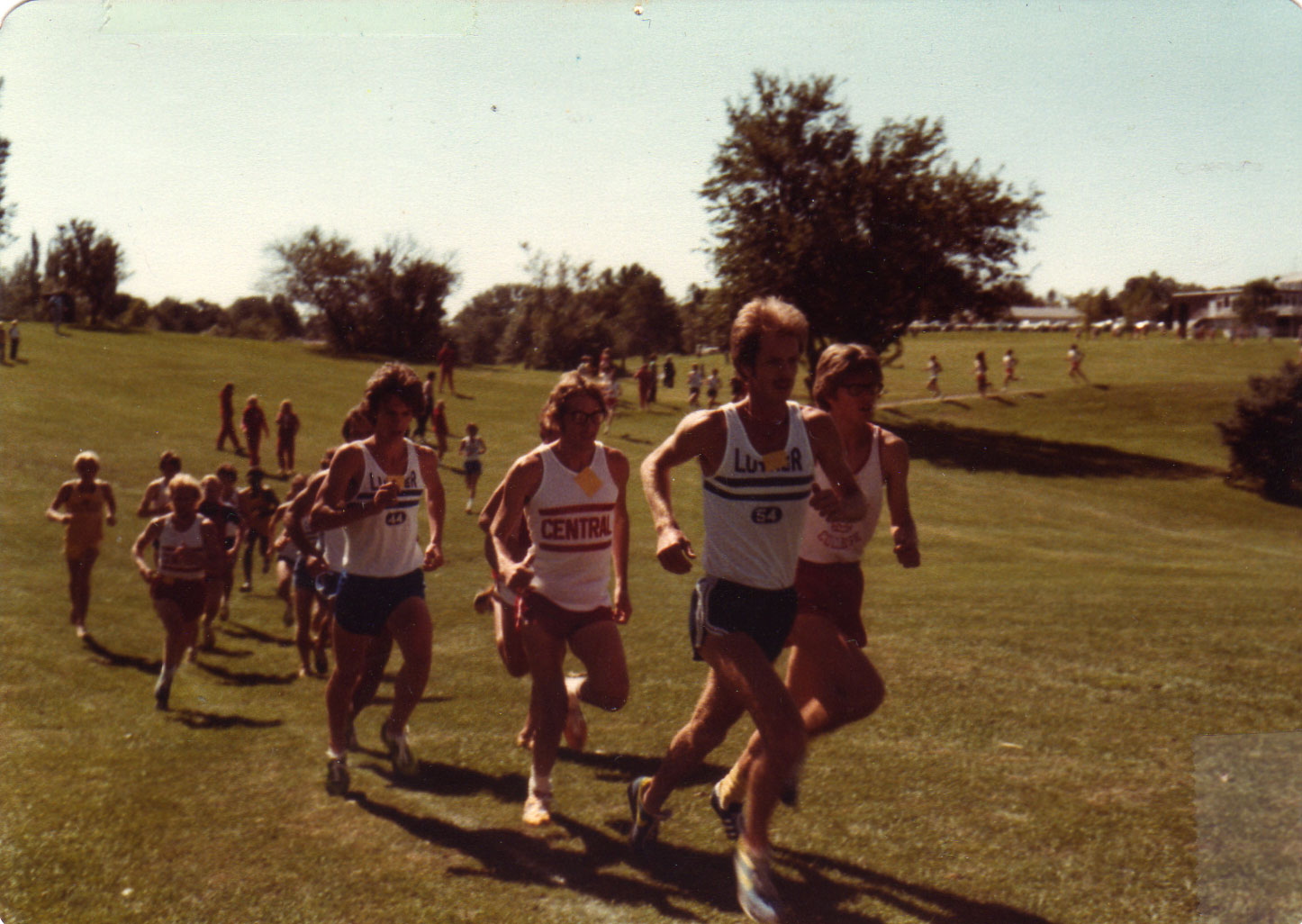
I actually rode horses competitively, show jumping in high school and in my senior year of college I ran on the cross country team, but the longest I ever ran was a 10K until I did my first half marathon in March 2012. I went to the gym a few days a week and would do the stair master, pretend to lift some weights and swam occasionally, but I was never serious about sports. Until I bought my road bike in June 2012, I’m actually not even sure the last time I had ridden a bike, except beach cruisers here and there on vacations.
What attracted you to triathlon/running/biking & swimming.
When I first moved to Israel I was working to get my citizenship and I needed something to do and training for a 1/2 marathon was something I’d always talked about, so I signed up and started training. I met some friends along the way, did it and loved it. But running was boring for me, so I started investigating other options. The only other race I found advertised in English here, was the 1/2 Israman ironman distance race. So I bought a second hand, alumnium road bike, a pass to the pool, signed up and was hooked.
How does the medical/fitness advisory community operate where you are?
The fitness community is pretty great and organized.This is not something I’ve thought much about. We have medical insurance for all of the events / races for sports injuries, and the doctors are good. Our health care is public, and everyone has medical help if they need.
There is I believe a sports/ fitness committee, but on the national level or government level I am not familiar with it.
What are some of the greatest attributes of where you live, outside of fitness, etc? Favorite places or new discoveries.
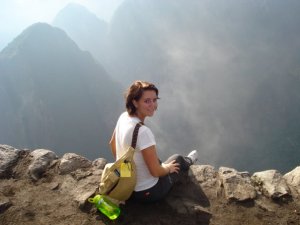
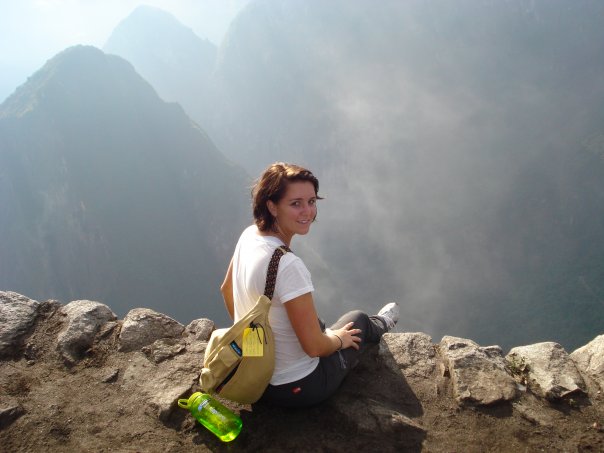
A prior trip to Machu Picchu whetted Carver’s interest in the world
First, the people. I love the culture here. Everyone is crazy friendly and open and willing to help you or say hi or to train. I have met some great friends sitting at cafes, or in my regular bike loop in the morning or at races. It’s a small community of cyclists and triathletes, so you see a lot of familiar faces and become friends or training partners, so I like that closeness and willing to help your neighbor attitude. Honestly though, the culture and people are open and treat you like family, everyone is like family.
Saturday is Shabbat and there is no public transportation in the country and nothing is open, so at 6am – 10am it’s super quiet and perfect for bikers!
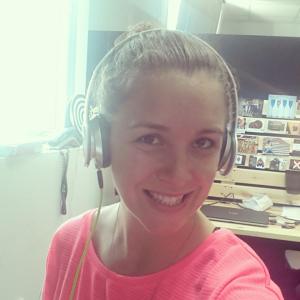
Carver plans to work in sports marketing someday
Work is awesome. I’m at a start up and we are pretty relaxed but also extremely serious, it’s a nice balance and I find that people are more human, and connected to one another. I moved to country where i didn’t know a single person or the language and now can’t imagine my life anywhere else.
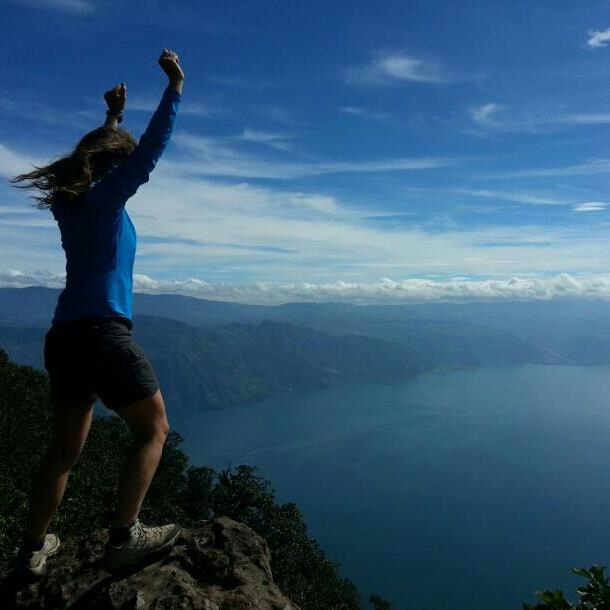
But, I like paddle boarding on the weekends or scuba diving in the south in the red Sea. There is amazing marine life here. Nature and hiking are incredible attributes as well. Some of the trails are breath taking. When I’m not training, I’m planning hiking trips.
Also, there is always something to do. Always an event, concert, volunteer project, so I love just taking part in what is thrown my way.
And the weather. Israel is really unique. We have the desert in the south, the entire coast is along the Mediterranean and then the north is hilly, green and lush and it will even snow in the winter. So you get to experience difference elements in a very tiny, compact space. It’s easy to get around, and takes no more than three hours to drive the width of the country, and no more than 8.5 hours to drive from north to south.
Has there been a big adaptation in diet and training for you?

Life balance includes plenty of outdoor time and also good, healthy eating
Everything. When I was in college at Suffolk, University I rarely cooked and was a college kid who lived off of quick meals and bar food. When I moved here, first everything is organic and the go-to food are fruits and vegetables or hummus. Not to be cliche, but I do love hummus and it does go with a lot. Generally I eat a lot of whole grain sandwiches, salads, home cooked meals from friends or sushi or at one of the vegan restaurants. Eating out here is also easier, most of the food is healthy, it’s organic and not processed. When I visit the states or Europe, I can feel the difference and how heavy food makes you abroad and that your choices are limited. Cookies are also a big part of my diet, I have a sweet tooth.
I also wanted to share with you the responses from two of my friends.
The first is from my friend Aviva, who said switching from miles to kilometers has been rough. And she mainly mentions the conversion centers and the booths, that in the states it is more of a spectacle and here, well, not as big, not yet that is.
And from my friend Elyssa: “I think the biggest adaptation for me was finding the places to train. It’s much more widely available in the states, because more people are doing it. For me also, it was dealing with a different schedule and not having as much control over my free time, but that’s personal I think more so that something that is specifically different from Israel to the us. In Addition, in Israel there are not as many people on the courses directing you, and in the state’s you will see people scuba diving and a life guard every 2 feet, here you might see only 2 life guards, not bad, just different and a bit more free and like a scavenger hunt to figure out the course.”


 While waiting for a birthday party to begin at an eatery in downtown Naperville, Illinois, I ordered a beer at the outdoor bar. My vantage point was pleasant, sitting at the corner of a marble-topped bar with just enough view of the other patrons to make things interesting if the wait got long.
 The recent Meta-flick This Is the End starring Seth Rogan, Jonah Hill and James Franco (to name a few) addresses the idea that modern movie actors are a Meta commentary on the act of acting itself. When the characters in the movie lampoon their own acting careers, the audience is in on the joke. We laugh at Michael Cera being harpooned by a streetlamp because his career is obviously at the end of that long arc where he played a certain kind of character over and over again. His innocence is skewered and we watch him gored by the power of the devil himself. That’s a very Meta moment.
 These are things to contemplate while drinking a beer or two or three at an outdoor eatery on a Monday afternoon in the middle of eternity.
 behind Meta bullets and Meta bombs.
 And then you look down and see your own reflection in the lens of your sunglasses, and you sip your beer and look around one more time to see if the people you are supposed to meet for the birthday party have arrived as yet. And you wave, and they wave back. You put on your sunglasses and carry your beer to the table you’ll occupy. And the Meta moment shifts. The abstractions have to wait for a moment, or an hour, or until the next time you sit with a beer at a bar with light clouds floating over head.