6 rules to live by with cycling communication

As a cyclist for more than a decade, it has been a challenge and a joy to figure out how to ride better. There have been years when everything seemed to flow. My quads bulged. My lungs thrived. My head imagined what to do and I fairly much did it.

Ride In CloseupSome years I raced quite a bit. Other years, depending mostly on my appetite for additional stress, I backed away from racing. There were other issues calling for my attention, the most notable among them taking care of a wife and family.

But there is one thing that stands out in all these years of cycling ups and downs. One thing that makes cycling better in every respect. That one thing is communication.

Cycling is a wonderful solo activity. It is also a great way to enjoy the company of others. But to fully enjoy that company, it truly helps to communicate.

Here are 6 Rules to Live By when it comes to cycling communication.

6. Determine how far and how fast you want to ride

Unless everyone in a group is in similar cycling condition, communicating about how far you plan to ride, and how fast, is critical to an equitable experience for everyone. The first step to quality riding is helping everyone in the group to understand the goals and expectations of a ride.

5. Talk about “Drop” or “No Drop”

If you are part of a competitively based group there is no question about the goals of a fast ride. You hang on or get dropped. But if you are part of a training ride, then the basic rules of “Drop” or “No Drop” must be communicated clearly to the benefit of the whole group. Nothing frustrates slower riders more than being dropped and not knowing whether someone from the group will come back to get them. And nothing frustrates stronger riders more than not knowing whether they can push the pace or not. So communicate. Sometimes rides “split” into two groups with some willing to hold back and guide those working on fitness while others agree to forge ahead. But don’t just do it without talking about it. That lacks class in cycling.

4. Don’t assume that everyone wants to keep up

If you drop back and find a cyclist or a small group of cyclists riding at a pace that is sustainable for them, don’t automatically assume they’re unhappy with the group for riding faster. Many cyclists readily recognize their limits and are not insulted by the fact they can’t keep up. The right thing to do in such circumstances is ask how a cyclist or dropped group wants to proceed.

3. Respect the pull

Kentucky resident Tom Burridge bike racing. If you are the strongest cyclist in a group you may find yourself doing a greater share of the work at the front. The right thing to do if you are in a group where a strong rider is doing all the work is to say to them, “Hey, we know you’re doing all the work. Let us know if we can share the pull now and then.” Some riders will decline, but acknowledging their effort is always the right thing to do. It is also important when riding in a group to do your best with your opportunity to pull. But respect your limits. It does no good for anyone if you ride to the point of absolute exhaustion and then find yourself unable to pull later on in the ride. You’re in it for the long haul, but sometimes that means doing shorter pulls.

2. Signal your intentions

No matter whether you’re a solo rider hammering along on a lonely stretch of road or one of a group of 20 slicing your way down the tarmac, communication about your position on the road, in the group, upcoming turns, approaching or passing traffic and changes in speed or the need to stop are all vital signs that you care about yourself and other riders. So communicate. It’s the path to safety but also to speed. It’s one of the laws of nature when it comes to cycling. A smart group can ride faster.

1. Know your kind.

Even at rest a tri-bike aero frame looks more aggressive.

This single most important rule is only heightened when you get mixed groups of cyclists together. If you find yourself as a road cyclist with a group of triathletes on aero bikes, pay extra attention to pace, speed and turning ability. Those bikes are not the same. And if you are a triathlete jumping in with a group of road cyclists, recognize that you are essentially a danger to the entire group. The bike handling capabilities of a tri-bike versus a road bike are night and day.

WeRunandRideLogo

Posted in Christopher Cudworth, cycling, triathlon, We Run and Ride Every Day | Tagged , , , , , , | 1 Comment

Let’s hear it for the parents

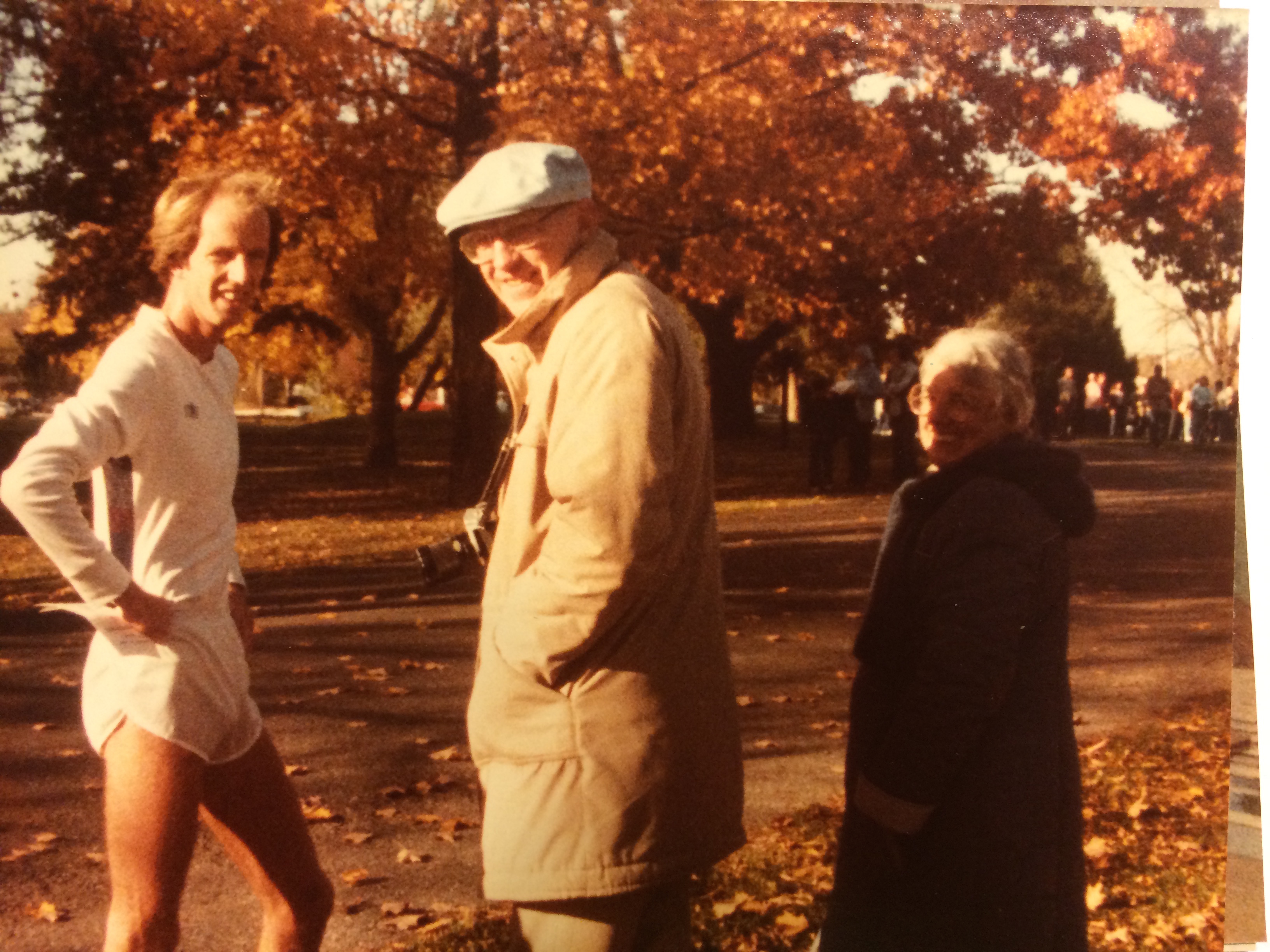
Cudworth with ParentsOver the last few months I’ve been going through layers of family history. Finally getting to the bottom of some of the deep stacks of stuff one builds up through years of marriage. All of us need to do this at some point. It’s healthy to de-clutter your life and also make decisions about what is important to keep, and what…not so much.

It has been interesting to stumble on photographs of events whose memory has been shaded by time. Just last night while flipping over some album covers a set of photos fell out that taught me something. One of those photos was a shot of my parents standing with me at the finish of the Sycamore Pumpkinfest 10K in 1984. I’d placed second to a better runner that day, but not for lack of trying. Some days you just get beat. So I was smiling in the photo, as were my mother and father.

But here’s the kicker. I had completely forgotten they were in attendance that day. And likely, that’s true of many other races. They came to most of my meets in high school and even some in college. My mother cheered and my father often yelled, “Stay loose!” which often made me more tense. But that’s a different story.

It’s so easy to forget these moments of support and dedication. I had my differences with my parents over the years like most people. But truth be told, they were very supportive of most of the things I did.

That includes my art, my writing and my athletic pursuits. It was my father that drove me to Luther College on a whim in the middle of summer 1975. I switched from Augustana to Luther on his advice. “It’s beautiful there.”

At the start of the Pumpkinfest 10k in Sycamore Illinois. I'd go on to take second in the race.

At the start of the Pumpkinfest 10k in Sycamore Illinois. I’d go on to take second in the race.

And that’s sometimes how parenthood works. It’s the small things that count. Like being there often enough to be noticed. And being there even if you figure your attendance will be forgotten some day.

They saw me win. And they saw me lose. And they loved me in between.

Recently my companion Sue made a trip to Florida to spend time with her parents. She had not seen them in more than a year. It was the right thing to do. Your parents need to see you, just like you need to see your parents.

So let’s hear it for the parents. Every one of them. Even if they’re gone from this earth, it is healthy to think back and remember. To turn and hug your own kids, or your spouse or companion. Share the love. That’s what parenting is all about.

WeRunandRideLogo

Posted in Christopher Cudworth, running, We Run and Ride Every Day | Tagged , , , | 3 Comments

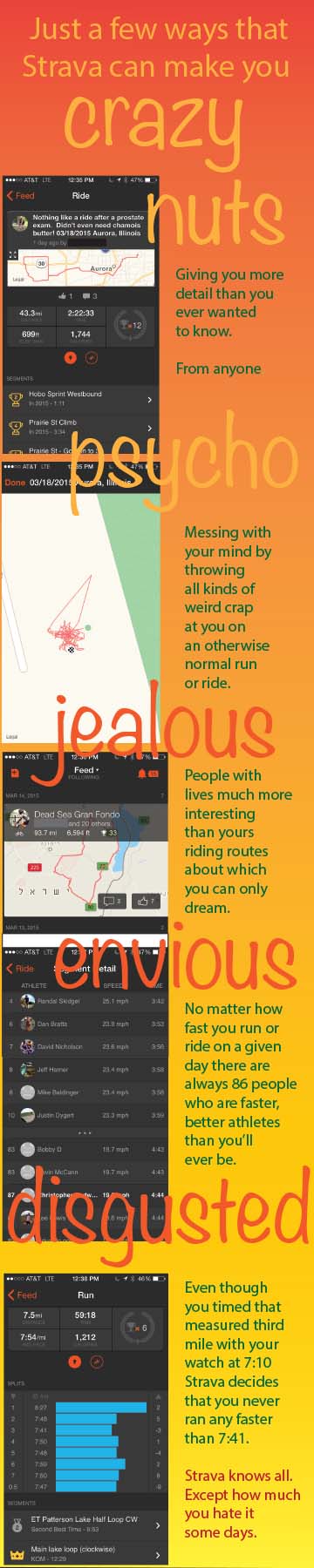
Just a few ways that Strava can make you crazy

Strava is a wonderful app but it can make you truly crazy at times.

Strava is a wonderful app but it can make you truly crazy at times.

Posted in Christopher Cudworth, cycling, duathlon, half marathon, marathon, running, triathlon, We Run and Ride Every Day | Tagged , , , , , | 1 Comment

On becoming a better runner, achieving it, and on we go

ScottScott Fink-Finowicki is a young man who works in sales and is returning to running after a period away from the sport due to injury and getting started in his career.

It’s been an interesting return to the sport, because during his competitive career in high school, Scott was not just an ordinary runner. He was a very fast runner. His time for 400 meters was 49.5 seconds. That’s under 25 seconds per 200 meters.

Even more impressive, his time for 800 meters was 1:51.3. That’s running a 56 second first quarter mile and coming back with a split of 55.3 on the second lap.

Fink-Finowicki started his track career as a sprinter with a 200 time down near 23 seconds. Anyone that has done repeat 200s on the track knows how fast that really is. A 5:00 mile pace requires runners to go through 200 meters at 37.5 seconds. 30 second pace gives you a 4:00 mile.

So to run 1:51.3 for the 800 meters is not joking around. Fink-Finowicki first tried middle distance races during his sophomore year in high school with an indoor 600 meters. He had been messing around in training with some sprinter friends by doing longer distance runs, so the idea of covering more ground in a competitive event was not completely foreign to him. He found success by applying his sprinter’s speed in combination with distance training.

ScottIt is very likely Scott would have placed high in the state meet for Illinois had he not torn his hamstring at the sectionals meet his senior year at Wheaton-Warrenville South High School. “I had tweaked my hamstring earlier in the season during the first meet. It was cold outside and I pulled it a bit during a 4 X 100 relay. But I worked through that during the season and had run 1:51.3 for the 800.”

That time could well win or at least place in the Top 5 at the state final. So it was obviously disappointing when Scott tore his hamstring muscle in two that late spring day.

He went on to college at Illinois State University but did not compete in track and field. To this day his hamstring is in the process of recovery. “Since I started lifting again the left hamstring muscle is about 1/3 the strength of the right. I can hamstring curl 20 X 60lbs with my right. With my left it’s still about 20 lbs. But I’m working on it.”

He’s back to running and has lost 20+ lbs. in the process. He says it feels good to be running again. Even sprinting is now possible.

When asked if people appreciate the speed he once had, Scott admits that most people cannot conceive running that fast. “If they’re from the track & field community or the running scene, they get it,” he laughs. “Otherwise, no.”

That’s one of the tragic aspects of being a really great runner at one point in your life. To the average runner hoping to run a 7:00 or 8:00 mile, and to do repeat quarters at 90 seconds per lap, the idea of covering 400 meters in under 50 seconds or doing a half mile in under 2:00 is inconceivable.

The irony of having run that fast at any age (much less high school) and having to leave it behind because of injury and finding out what you could do in college or beyond is tantalizing. It gives you confidence to think about what you accomplished, and yet one can’t help wonder what could have transpired without the injury. A 4:00 mile?

Typically those are questions that go unanswered. We all have windows of opportunity in our lives. Some come early. Some come later. Scott Fink-Finowicki gets to say he ran a 1:51.3 half mile. There is never any shame in something like that.

And now he’s using his running to build the remainder of his life and career. There’s certainly no shame in any of that either. Like they say, running is a journey, not a destination. On we go.

WeRunandRideLogo

Posted in Christopher Cudworth, running, We Run and Ride Every Day | Tagged , , , , , , , | Leave a comment

A true and compelling story about sharing lanes in swimming

By Monte Wehrkamp
IMG_8598

We share lanes in many endeavors in life.

TODAY’S BLOG is provided by my long time friend and fellow write Monte Wehrkamp. It was written in response to yesterday’s We Run and Ride blog on sharing swimming lanes. I loved the directness of this true story. It provides some inspiration for us all.

When I was a kid, I wasn’t exactly fat, I just wasn’t as slim as other kids by 1970s standards. My mother blames it on my extremely premature birth (did I ever tell you I was a twin? He did not survive, that’s how much of a close-run thing it was). Baptized in the incubator, I was. My home for six months. When I got home, I failed to thrive. I vomited up breast milk, cow’s milk, did not matter. The doctor put me on a diet of heavy beef broth. This I could keep down. Mom and Dad had to feed me with a toothpick in one hand in order to clear the nipple of beef and fat bits. Raised on such an unnatural diet (hey, it was the 60s, nobody had even heard of lactose intolerance or invented milk and formula substitutes yet), I was a chubby baby.
So it was I went through grade school wearing husky Toughskins from Sears.
And so it was I was an overweight kid in the pool, twice a week, every week, for 10 years.
With me the whole way was a girl named Diane. She was thin, fit, fast. In my grade, in my school. Some years, we’d be in the same class. Some years, we had different teachers. But every year, together at the YMCA taking, then teaching, swim classes.
Your WRAR article reminded me of how many hundreds of hours I spent lane sharing with her. And teaching tadpoles, then guppies, then frogs…class naming convention. She took the criers. I took the spastics.
When we were young, she always swam lead, slicing through the water with nary a wave or splash. I had good form, I just took up more space. It was an arrangement that worked perfectly till…
Seventh grade. I went from a 160 lb, 5′ 5″ chubby kid to a 170 lb 5′ 11 1/2″ regular kid. My stomach stretched flat. My shoulders grew by four inches. My arms and legs lengthened to proportionally fit a man 6′ 3″ tall. Then I took the lead in the lane, and slim little Diane fell in behind me for the next four years, as we completed everything, taught everything, received our lifeguard certification. Lots of kids came and went in and out of the program, but Diane and I were the only two in our grade to stick it out till the end. Survival swimming. Rescue methods. Kayak and canoe capsize and flip drills (which came in handy four years later when I was in college, I was with Diane’s brother in a half-frozen MN lake, we were drunk as skunks in a canoe at twilight when we flipped it. I righted the canoe, threw in the paddles, pushed Rich into it — it was still 80% full of water — and swam Rich and the canoe to shore while wearing cowboy boots and a jean jacket. The 33-degree water temperature ruined my Jim Beam buzz pretty quick).
Ach, teaching lane etiquette to a pack of 10 year olds. Like herding sunfish. But when we were done with the little kids, Diane and I would jump in and put in our laps. Then get out, write our totals in grease pencil on the board, shower, and go home to do homework (which sucked, because chlorine and my eyes don’t mix — can’t teach wearing goggles, and even the fumes off the water tear me up).
The thing with doing 25, 50 laps is like a long flat 50 mile ride on your bike. You get in this zone. Enveloped in a bubble, rhythmic, hypnotizing. Stroke-stroke-breath, stroke-stroke-breath. Or if it’s slower, gliding, more strokes between breaths, just letting the bubbles out your nose tickle down chest and stomach. The white churn and little peeks of Diane’s feet just a couple feet from my outstretched arm. She flips and I see her below and to my left and I flip, glide behind her. Over and over and over and over. Out of time. Tunnel vision.  Like the bike on a hot day with little wind on a flat straight road. The crank turns and turns and turns. Shift weight a little, relieve some pressure on hands or butt, but it’s unconscious. Unthinking. An hour goes by and you wonder where you are, startled out of the exercise trance.
It’s good to have a lane partner for 10 years, one that you learned to swim with from the beginning. All those things in your article that you’ve got to look for when lane sharing? Never occurred to us. We just swam.
Editors note: See what I mean? Sharing a lane really can change your world!
WeRunandRideLogo
AND SWIM!
Posted in Uncategorized | Tagged , , , , | Leave a comment

Can sharing a swimming lane teach us how to save the world?

Swim Form

You only need half a lane to swim.

Pool etiquette is as important as any other kind of etiquette on earth. For starters, everyone is standing around half naked, or might as well be. So there’s the first and primal duty of keeping your eyes where they belong when you arrive at the pool.

Of course most serious swimmers are long past that point when they’re at the pool. More important thoughts such as how to survive the pending workout occupy much more thought among serious swimmers.

There is still important swim lane etiquette to consider however.

There’s this issue of sharing a swimming lane with someone else while you’re both moving. It sounds simple enough, and people who practice swimming quickly learn the importance of etiquette in the pool.

swim-form

Keep an eye out ahead of you.

But conditions can vary, and even etiquette from pool to pool. But here’s some simple advice. If you’re swimming at a pool where the lanes are narrow you really need to put the priorities of your lane partners first. You don’t want to mess up your lane partner’s workout. What a wonderful example of how to get along in this world!

Of course there is also the pace of your swimming to consider as well. If the person swimming in your lane is much faster than you, it is vital and respectful to allow them to own the timing of the lane. For example, if they’re in the middle of a hard repeat 400 interval and you’re only doing repeat 100s at a much slower pace, you should be the one that accommodates their need to make turns and maintain a rhythm and flow.

Most good swimmers negotiate this stuff fairly easily. They’ve done thousands of hours in the pool with swimmers who are both good and bad lane partners. Some have shared lanes with two or three people at a time.

VS Women in Water

Are these gals sharing a lane?

Swimming is unique in this respect of sharing intimate liquid space with someone else. It’s a fact of physics: everything you do in the pool reverberates for everyone else. Cut that down to a single lane and it’s even more important to keep an eye out for your lane partner.

In these respects swimming differs from a sport such as running, but not entirely. For example, one of our teammates in college was known to sweat so badly it was gross to run in his vicinity. Sweat consistently flew off his body and struck you in the face if you ran behind him. “Hey,” we’d yell. “We didn’t come out here to go swimming!”

In cycling there’s this thing called “riding in the draft” that is akin to swimming in the wake of a boat, only you’re cutting through air, not water. But there’s a real challenge in riding a draft behind a person that can’t hold their line and weaves down the road with nary a consideration for the rider behind them. It’s distracting, dangerous and tiring to ride behind or beside a riding partner like that. Generally you’ll see experienced riders jump out from behind a wobbly cyclist and find another spot in the line to ride. Some would much rather lead the pull for miles than try to ride behind a cyclist that cannot hold their line. In racing, those principles become even more important. Poor cyclists cause you energy and time.

Which brings us back to swimming and the whole sharing a lane thing. If you have to share a lane at the pool, here’s a list of people you’ll want to avoid:

1. The Big Wake Swimmer. Some people know how to swim smoothly through the water. Others seem to have evolved their strokes by working as a waterwheel at a grain mill or as the propeller on an ocean line. They move water around so much with every stroke you nearly get knocked into the ropes when you pass by them. There are reasons for their big wake style. They may be a “head-raiser” or “shoulders out of the water” type of swimmer, which generates tons of wake. Or they have a rotating or thrashing stroke that turns a 10 meter circle around them into a Wave Pool. In any case, if you arrive at a pool and see the Big Wake Swimmer churning up the water, pick another lane to share.

2. The Human Orca. Yes, Killer Whales are beautiful, amazing creatures in the wild. But the swimmer who consistently tears at your feet while using your lane is no blessing of nature. Some people never look up when they swim. In triathlons they are the same folks that swim right over top of you as if you were a helpless seal. It’s hard to tell a Human Orca from a distance. But if you wind up in their lane it can be best to get out of the pool and choose a new lane partner. No sense getting eaten alive.

3. The Snot-Nosed Cough & Hacker. It’s simply a gross thought to have to swim through the watery detritus of another swimmer’s nasal or congestive issues. Nothing turns you off to sharing a lane with another person more than the sound of the snarking up Farmer Snots or coughing loudly like a clogged bellows with every pause at the wall. Ick.

4. The Bob and Weaver. Let’s face it, for some people it’s hard to swim in a straight line. When you share a lane with a Bob and Weaver, it means paying close attention when you approach them from the opposite direction lest you get clonked by their head or slammed by a wayward arm or body shot.

5. The Olympic Caliber Jerk or Jerkette. It doesn’t happen often, but sometimes even people who offer to share lanes are not the nicest folks you can encounter. Their every action screams “I wish you were not here.” You can almost feel the electric charge of despise and inconvenience in the water. Sure, they’ve likely earned their right to feel like they own the pool, having perhaps swum thousands of miles and won everything from the Kiddie Junior Olympics to the Master’s Swim National Championships. Some people just can’t help lording their ability over others.

Of course you can also encounter a jerk or jerkette that just thinks they’re too good to share a lane. In some ways that’s an even worse situation. The best you can do is be polite and hope you never encounter either species of swimmer again.

Fortunately the swim world is by and large one of grand consideration and etiquette. That’s because the pool is a pleasure for all those who enjoy swimming. Many people like to share that experience. But the fact remains: how sociable can you be really, given that 90% of your time is spent with your face down in the water? It’s not like riding or running where you can carry on a conversation while working out. It’s pretty much you and the bubbles you create for company. When you finally come up for air between laps it’s to catch your breath, not waste it discussing the world’s problems.

Now there’s a good idea! Perhaps the world really would be a better place if more people spent more time in the pool! Hot air and stupid political opinions tend to dissipate when blown into the water. Perhaps we should require that the next set of Middle East talks might be conducted in the confines of a pool, where both space and etiquette are better appreciated. That’s where bitter resentments can be drowned, as well.

May you share your lanes in peace.

WeRunandRideLogo

Posted in Uncategorized | Tagged , | Leave a comment

Resurrections

ResurrectionIn Christian tradition there is no more important event than the Resurrection. It symbolizes life after death and to some, the promise of eternal life.

Those are pretty big concepts to grasp. Yet every year at this time people who call themselves Christians broom together their guilt and sorrow into a dingy little pile and submit their repentance for consideration before the Lord God and His Son, Jesus Christ.

If that sounds a little bit like the language of a Radio Preacher, then so be it. As I wrote recently on my blog GenesisFix, there is a new form of Christianity out there that is more about winning the values argument than it is about actually acting out Christian principles. I call it Meta Christianity, that referential brand of faith that commodifies the authority of Jesus for the convenience of the self-proclaimed righteous masses and what they decide is all important on behalf of God and Christ. That might include lying to yourself about the Prosperity Gospel or that evolution is a farce, but so be it. Hubris isn’t confined to the secular world, for sure.

Because mostly what we find behind the motives of Meta Christianity is the love of money, political power and control freak standards of morality that have nothing to do with an intelligent understanding of scripture. There’s an arrogant tradition in religion that says if you own the narrative, you own the power. Just ask the Catholic Church before Martin Luther took them down a notch.

Ask and Ye Shall Receive…

Because while preachers these days are asking for $65M jets from their followers, and building $10.5M homes as testament to their own dreams of prosperity, millions of naive people continue giving their hard-earned money to the cause of the wealthy because humble people are always dying to get into heaven. It couldn’t possibly suck as bad as life on earth.

So the Resurrection holds tons of hope for people worshipping at churches where the kingdom of God is turned into a kind of currency exchange all those seeking a title loan on their souls. Frankly that approach makes the kingdom of God feel like a Rust Belt city trying to make ends meet as a tourist attraction. All those arenas filled with crying parishioners march straight from the church to the NFL stadiums or their big screen TVs because they crave stimulation in the face of this boring, secular life they have to struggle through before earning their place in heaven.

Paths to Salvation

photo (89)Well, I am here to tell you, my fellow believers and non-believers, that those of us who run and ride know a better path to salvation. We know daily what it means to suffer and come back to life. We resurrect ourselves for morning workouts when even God is still lying in bed. We strive and fail with gusto, just like Jesus and even the God of the Muslims and the Torah told us to do.

Moses and Abraham would have made great triathletes or marathoners. They knew the virtues of strife bring out the best in us all. A restricted diet of manna and quail? No problem. Let’s keep moving folks. We don’t want the dust to settle under our feet for too long. Snakes biting your ankles? Wrap thick cloth around your ankles and make sure you strap on your sandals tight in case you need to run for your life.

Moses and Abraham were like the original coaches, don’t you see? They led their charges out of Egypt and got their training rules from God himself.

But the people griped and complained. Life was too damned hard in the desert. They bitched and moaned about the food, or tried hoarding it like little piggies. So God made it wilt and spoil just to prevent them from cheating on their diets. Oh that Oreos would do that trick.

Even that biblical character Job knew what it meant to suffer with the best of them. “It builds character,” he so much as bragged to his snarky buddies who stood around mocking him for his pains. “And when I’m through with the spiritual workout God is putting me through, I’ll be in peak soul condition. Because what doesn’t kill you makes you stronger.”

Women pegged for success

There are plenty of strong women in the Bible too. You had to be tough to be a woman in those days. It wasn’t easy being the property of any man. Hell just finding the car keys would have been tough! And when tested, women knew how to survive. Take this example from Judges 4:21, “But Jael, Heber’s wife, picked up a tent peg and a hammer and went quietly to him while he lay fast asleep, exhausted. She drove the peg through his temple into the ground, and he died.”

It is likely she killed him because he stole her water bottle before a 20-mile workout. Anyone who does that deserves to die. And it’s unlikely that the dude with the tent peg through his head got resurrected, either. God doesn’t like thieves. They don’t get into heaven. “Thou shalt not steal.”

Daily Resurrections

Those of us who run and ride do know what it’s like to rise from death to run and ride again. Or at least we feel dead some days. Aching legs. Ass numb from riding 80 miles on a hot day in August. And yet, when you get moving a little things often improve. You come back from the dead eventually.

Of course we also make ourselves nearly sick to death with our training regimens. We skip sleep and feel like zombies. We catch colds so bad our lungs come flying out in chunks. We get diarrhea and constipation, spew blood and sweat and Farmer Snots, and still we swallow our pride and come back for more. We kill ourselves only to rise again. Another day, another workout. And goddamnit, we’ve not quitting.

Jesus in the Desert

Think about Jesus in that desert for 40 days and 40 nights. Satan himself accompanied him out their to tempt the Son of God with all sorts of riches and comforts. He waved his hand and said, “All this can be yours!” But Jesus turned to Satan and said. “I’ve got a swim workout at 5:00 a.m. tomorrow. Go away and let me sleep.”

So you get the picture. Our sacrifices do teach us a few things about life. Even if you think religion is a bunch of bunk, you have to admit there are certain parallels between endurance sports and the race of life. 2 Timothy 7 captures it cleanly: “I have fought the good fight, I have finished the race, I have kept the faith.” That’s like the triathlon of spiritual testimony, right there.

Beware of False Prophets

Crazy Squirrel (Callospermophilus lateralis)So we must beware of false prophets who would lead us astray from the modern asceticism that we find appealing in our endurance sports. The New Pharisees with their promises of the Prosperity Gospel seem to think God is in the business of handing us stuff just for speaking well of his character. They seem to think we’re all just a bunch of squirrels sniffing around for free nuts that God throws down from heaven. Seriously, that’s about the depth of their so-called Prosperity Gospel. Well, nuts to them.

True Spirits

Those of us who run and ride know there’s a big difference between saying you’re going to run a 2:30 marathon and actually doing it. We know that God refines our character through trials that many people seem unwilling to endure.

And yet we must be careful not to think ourselves better than others for our pursuits. There are many paths to God or enlightenment. Many types of journeys can deliver insight, hope and the zen of being.

The best philosophy is to be strong in your efforts, but grateful for your abilities. Be hopeful in your approach, yet accept your failings with humility and grace. Be sure to kick ass when you can, yet be encouraging to people of all abilities. The weakest among us are not those whose ass you seek to kick.

They already understand the grace of God, after all. They rise and fall in daily resurrections just like you, but without the possible glory you might earn. Those are the people we need to respect most of all. They teach us that resurrection is something highly individual, yet meant to be shared.

And here’s hoping the Easter Bunny brings your favorite kind of chocolate. You’ve most certainly earned it.

Spread the Gospel of We Run and Ride. Please share with your flock of friends. 

WeRunandRideLogo

Posted in Christopher Cudworth, cycling, duathlon, half marathon, marathon, running, swimming, triathlon, We Run and Ride Every Day | Tagged , , , | 2 Comments

5 great reasons why we should all be fans of women’s running

Women'sRunning

Posted in Uncategorized | Leave a comment

Running and riding from here to eternity

constellation-orionLast night on the way out of a networking event, I was walking along with an associate toward our cars. We both looked up at the night sky. I remarked that the big planet in the western sky might be Jupiter, and the constellation to the south and west was Orion.

“Have you ever seen Jupiter through a telescope?” I asked. “You can see its moons. That freaks me out. The idea that there’s a planet out there with other moons around it boggles my mind.”

That’s when my friend said: “You know, NASA is recruiting people for missions on which they’ll never come back.”

Would you do that? Would you climb on a spaceship, fly out of earth’s gravity and venture into space knowing that you’d never return to earth again?

It’s a question you probably have not considered except in strange little rock songs like Major Tom by David Bowie or Rocketman by Elton John. The idea of being shot off into space without hope of further human contact is a bit terrifying.

IMG_5128Then there’s this whole concept of eternity to consider. As scientists wrestle with the physics of how matter came into being, and how to describe the world as it is, not just as we imagine it, there is greater appreciation and greater uncertainty about what it is we really see around us.

I heard a discussion on the radio about the likelihood of life on other planets. We know there are great odds that there are other planets like earth positioned in galaxies likes ours where conditions for life as we know it may well exist. But there’s one problem. As the scientist describing these galaxies pointed out, there are something like 200 billion possible galaxies like that. All with billions of stars and billions of planets circling them.

Because there’s this thing called eternity. And it goes on forever. And ever. And ever.

Those of us who run and ride understand a few things about time and space. It’s not uncommon to hear people brag or complain about how far they just ran or cycled during a workout. “I felt like that run took an eternity,” you might hear someone say.

An eternity. That means time with no beginning and no end. The human mind can’t do it. Can’t conceive how that’s possible. That’s why people throw God into the equation. It helps explain to the human mind that time had a beginning, and that it might also have an end.

Comedian Louis C.K. describes the day his young daughter asked if the sun would ever go out. Before he knew what he was doing he described the process by which suns expand to massive burning orbs and then shrink and die. to his own horror he saw his daughter’s eyes grow wide as she started to cry. “No, it’s not going to happen for a very long time,” he tried to assure her. But in her mind everyone she knew was going to die. There was no way for her to conceive it any other way.

Bono-Might-Never-Play-Guitar-AgainEven adults can feel like their world is coming to an end when something happens in their life that makes them wish it could somehow be different. A bad race is sometimes enough to make those of us who run and ride wish we could go back in time and start all over again. Living with the results of a bad effort makes it feel like time has slowed down just to torture you. “God, I wish I could just die…” we tell ourselves. Not seriously of course. But in jest we say such things to help process the emotional pain that comes with disappointment or loss.

During college I took a course called Philosophy of Existentialism. One of the concepts we studied was the “irreversibility of time.” That’s right buddy. You can’t go backward. So you’re stuck with the consequences of your actions no matter what. That’s a depressing thought to many. Which is why so many people think existentialists are full of shit.

But those of us who run and ride live in intimate relationship with the irreversibility of time. And as I ran through the dark Iowa hills in the deep of winter, I could literally feel time passing me by. And I thought anew about the nature of eternity. And about God And our temporal existence. Rather than make me more of a skeptic about spirituality, existentialism stripped bare the material flatness of our being and exposed the rich emotional world of love, cosmic reality and hope.

Window 1Jean Paul Sartre created the play No Exit that proposes the idea that “hell is other people.” The play focuses on three people in a small room for eternity. And at some point at least one of the people in the room is disliked by the other two. It’s a critical, cynical view of human existence. Yet it’s pretty true as well. I could even hear Jesus saying that phrase: “Hell is other people.” It’s the flipside of the statement that the kingdom of God can be found here on earth.

It’s always stuck me that there are people that almost immediately offend your sensibilities when you meet them. You try like hell to be gracious but your mind gravitates to that ugly emotional pattern where you instantly hate their guts. You can’t even explain it.

Perhaps there is some evolutionary function to such emotions. When you think about your rivals in endurance sports, the people you like to beat the most, there is often some aspect of their character that makes you want to beat them badly.

Window Snowblock 3Why in all eternity do such emotions exist? Because the nature of the universe is that nature is not benign. It is a reflection of the competitive reality in which we all live. So our sporting endeavors are manifestations of truths that exist both in visible reality and in time out of mind. Competition is the dark matter of our brains. We know it’s there and control it to get along with others at work or in family dynamics. But deep down we’re aching to break out of this reality we’re forced to accept. We’re running and riding from here to eternity. We’re seeking to deny that there is a beginning and end to everything.

Or that there is not. That is our even greater fear. Eternity makes us feel like we are insignificant. That we really don’t matter in the scheme of things. That’s what our obsession with God and heaven is all about. We want to matter to someone. Whether that is true or not is a debate for the ages.

So we’re stuck as well with the seemingly competitive realities of religion and science. Some people flatly refuse to try to reconcile the two. Their religion is so important to them that they prefer to deny evolution over acknowledging that Christ and the Bible make liberal use of organic symbolism to describe spiritual principles. Jesus was a naturalist, you see. He would gladly have taken the knowledge of evolution and turned it into parables for how we’re supposed to understand the universe at an emotional, spiritual level. That’s not hard to imagine if you open your mind to realize that nearly every parable Jesus used to teach all who would listen that the eternity of God’s kingdom can be understood best through natural examples of how things work. The mustard seed. Yeast in the dough. That’s how the kingdom of God grows. And evolves.

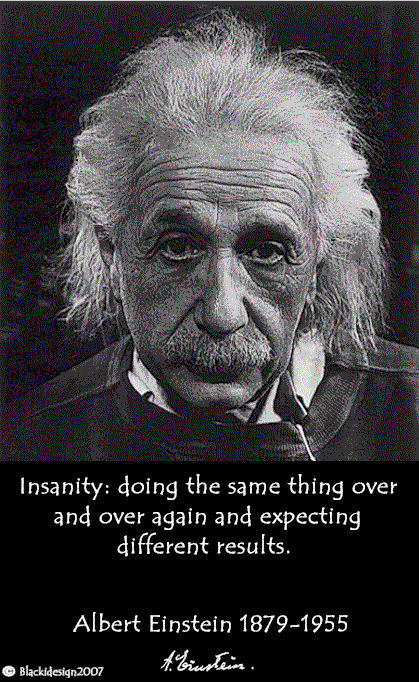
insanitySo it pains me to watch how people struggle with the simple, existential truths of how the world works. It’s all within our grasp if we don’t draw lines in the sand and say, “That’s my worldview. I’m finished.” But that’s insane.

Moving along in our individual passages through eternity is not a race. We’re generally in no hurry to finish off our lives. Some people can’t seem to wait to die and get into heaven. But they’re also generally the people most prone to condemn others to hell. Which proves the existentialist’s point: being forced to live with that sort of person really is a brand of hell.

I’ll freely admit that eternity has always freaked me out. It should freak you out too. Beyond our rich yet meager little planet lie cosmic systems so vast we can’t possibly know if we’re the only form of conscious life in all eternity. But as I’ve often quoted from the book The Ambiguous Adventure by Cheik Hamidou Kane, “the purity of the moment is made from the absence of time.”

That means that time expands when you’re doing something you love. Indeed, that’s what happens when we run or ride or swim. We’re living fully in the moment and also communing with eternity. It’s a humbling little adventure for sure. But it really matters. It really does.

WeRunandRideLogo

Posted in Christopher Cudworth, cycling, running, We Run and Ride Every Day | Tagged , , , , | 2 Comments

Running head on into your personal brand

Bunny earsFor the last two years I’ve written this blog, my objective has been to engage readers with original, hopefully knowledgeable insights on running and riding. The tagline is “original thoughts on running and riding.” And some swimming.

Some of the content published here has been designed to be informative. Some of it is meant to be entertaining. Some is just a joke. Or satire. My approach to blogging here has been to find or create things that interest me or that I think might interest others.

This blog has been read all around the world. I know that because every day when the stats come in through WordPress analytics I can see the country of origin. It’s exciting to think that people in Africa or Australia or Europe or Asia are reading my work.

Googling

It also gets shared on LinkedIn, Facebook, Twitter, Google+ and sometimes other social media such as Pinterest. I’m always grateful when people share my writing because it expands the audience for the blog. Go ahead and Google Christopher Cudworth. I’ve worked hard to develop my personal brand. People can find out anything they want about me and I’m both empowered and powerless to control all of that. People are going to judge you by their own criteria. It’s not likely you can manufacture a personal brand that won’t at some point offend or meet disapproval from someone.

Blogging

Blog trafficOne of the troubling aspects of writing on WordPress is that the convenience of automatically distributing this blog to your email address may actually cost the blog “real traffic.” I’m not complaining but when people simply read my blog in their email address, it never shows up as a view on my blog.

The most that have read a single blog post according to the analytics are 25,000 people. That’s not bad. Of course I’d love an audience of 100,000 or a million readers.

I hope what I do has value to you. It has value to me. This blog has brought me business connections through people I’ve interviewed. Some of my faves include talking with Jim Varga, the entrepreneur that has developed a way to personalize white ovals. I’ve also done personality profiles on people like Kerri Hoskins Branson, the Playboy model turned amazing mother and now professional painter and artist. We all have personal brands. Some are more interesting than others. But they all matter. Some readers regularly comment and interact. I love that! All the interactions are appreciated.

Debating

We even debate a few subjects here. As a noted Progressive on all fronts, my more conservative readers take exception to some of the things I write about topics such as guns, Republicans, religion or finance. As the title of this blog suggests, all these observations, right or wrong, are my own original thoughts.

Emotional IntelligenceThere’s a risk in that approach. I just read a blog on LinkedIn Pulse by an author named Travis Bradberry advocating his book titled Emotional Intelligence. That’s a book that is endorsed by none other than the Dalai Lama and Stephen Covey. One is a real guru and the other is pretty good at acting like one.

So I was a bit stunned at the brand of advice in Dr. Bradberry’s post on LinkedIn. He’s a LinkedIn “INFLUENCER” which means that for some pretty good reasons (including a #1 Bestselling book) Dr. Bradberry is someone to whom you should listen.

But I found myself depressed by the low threshold of advice in his post 12 Things Successful People Never Say At Work. Basically it winds up advocating a form of self-censorship. That is, don’t say anything too revealing or you risk giving people something to judge you on. And be careful not to judge others as well. Don’t talk about your party or sex life. In fact leave most of your personality at home.

It’s one of the tarsnakes of corporate existence? What can you possibly say about yourself that is safe?

Fraternizing

I have a couple friends who run companies. One is a CEO. The other is a President. When it comes to their personal lives, both run things close to the vest. For example, they avoid political topics at all times. They don’t go on and on about their families or the fact that they both own summer homes. All that is personal business. And that’s smart.

Both were also close friends of mine in running. I know their personal histories pretty well. They’re great but not perfect human beings. They both still run. Both apply the discipline they learned in running to their business lives. That has helped make them good at what they do. They’ve earned the right to their position in life.

Organizing
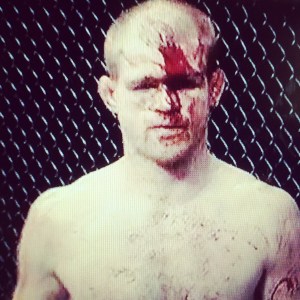
IMG_3505I’ve run organizations before as well. Not as a CEO mind you, but as President of service clubs and a chamber of commerce. In all my dealings with the business people in those organizations I strove to be perfectly honest about every aspect of my goals and commitments. In several cases I progressively  advocated transparent business dealings and financial accountability in situations where those principles had been neglected. Creating change was hard, but it set those organizations on a better course.

Some of that straightforward approach and transparency stems from my experiences in running and cycling. These egalitarian sports require much of us, but most of all honesty. It doesn’t pay to lie to yourself about your abilities. In the end, the watch or results don’t lie. You can either do what you say or you can’t. That’s a very real bottom line.

Equalizing

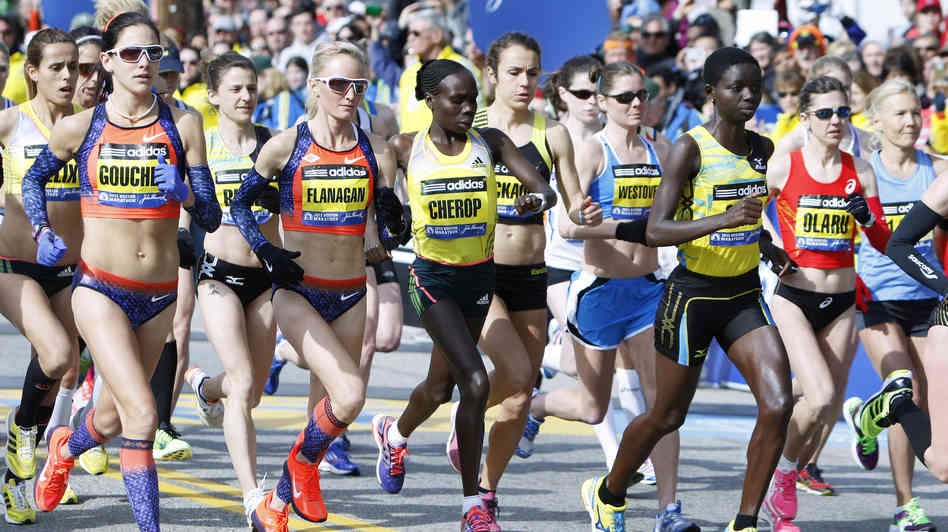
VS women's marathonThese sports are also great social equalizers. That does not mean that everyone who participates has equal ability. Instead it means that everyone has an equal chance to participate. Every person in every race or an event is a contributor. They may not be the fastest at their event, but their contribution of time is equally important as those who win the race, their age group or simply finish. Ask any race director whether he or she would rather have 10 elite athletes to compete in their marathon or 25,000 runners willing to pay for the right to compete, and guess who they’ll choose? It’s a democratic principle and a key aspect of business that numbers of people do count.

Of course there are vents where performance dictates your status. The Olympics or World Championships, for example. These are the best athletes in the world, after all.

Competition defines who makes the team even at the entry levels of a sport. The Top 7 fastest runners compete on a team in cross country. No one can really complain about that system unless political motives are imposed on the results gained each week.

Competition can also erase social strata such as race, gender, political and religious differences. But the lines quite frequently blur between competition and collaboration. When you’re riding in a group of cyclists on a windy day and you desperately need a draft to hang with the group, are you going to worry whether that person in front of you is a liberal or a conservative? A different race or gender than you? Nope. They’re a body just like you. And you’re grateful for that.

Politicizing

Rush creepy lookingAs you know from reading this blog, I am often critical about issues of political and religious conscience. When I don’t agree encounter viewpoints with which I disagree in this world, I am not afraid to challenge them. Nor am I afraid to be challenged. My values and views are hard-earned and consistently tested by publishing my views not just on this blog, but on other sites and social media as well. Some people advise against that approach to life. “Don’t give people a reason to hate you,” one friend told me. Another said, “I think you’re confusing your personal brand. If you want people to Like you, it’s best not to offend their sensibilities.”

But what about the advice of relationship managers who tell us we can never get everyone to like us? Isn’t that true as well? I happen to be a middle child. I know the costs of trying to get everyone to like me and to like each other at all times. Frankly it’s impossible.

Emotionalizing

So it is disturbing that a best-selling author such as Travis Bradberry should issue advice that we should essentially go around protecting ourselves from our selves. That’s not a sign of emotional intelligence. That’s an emotional sickness.

It is an emotional sickness because the logic behind it feeds the worst dynamics in society. If we’re protecting ourselves we’re going to buy into the perverse logic that ageism is the norm in the work world these days. We’re thus encouraged us to hide our age when seeking work because people are all too willing to judge our abilities by how old or young we are. So rather than conquer ageism through education and advocacy, corporatism takes the lazy way out and says, “You can’t stop it. So you better hide your age.”

Paralyzing

Wall threeThat’s just stupid. It’s not hard for a company or a hiring manage or an HR director to figure out how old you are. Many companies use background search services that can dig up everything in your entire personal history from financials to whether you teach Sunday School. Yet we’re told to play this stupid game of hiding our age? People are supposed to have the “emotional intelligence” to hide their age everywhere it can be hidden. On our LinkedIn Profile. Are we supposed to go back and alter our ages on college transcripts? Frankly, it’s paralyzing to think about.

Abiding by ageism, racial discrimination, gender and sexual orientation bias is not evidence of emotional intelligence, yet that’s where this polite lie of hiding aspects of yourself in the workplace ultimately leads. Yes, we all get that the advice in that column was just common sense. You should not brag about your party habits in the workplace, or snark on fellow employees. But the sinister side of all that supposed politeness is that ugly little aspect of human nature that judges on all sort of other counts. If we don’t have the real honesty to understand the diversity of human behavior and engender productivity through those channels, then the litmus test is left to those who view emotional intelligence as a tool for manipulation and competitive advantage.

Patronizing

There is a pathologically fomented sickness in society that says it is better to abide by the lie that gets you approved than to encourage change and actually demand honesty in the workplace.

For years it was acceptable to discriminate against gays and not hire people on basis of their sexual orientation. Progress has been made, Yet many people still believe in forcing others to hide their sexual orientation, and refuse to hire gay people on religious grounds. That’s not emotional intelligence. That’s emotional ignorance.

There are big moments in history when such “emotional intelligence” and hiding what you really believe and who you really are was a matter of life and death. Catholics once hated Protestants so badly they invented things like St. Patrick’s Day to celebrate chasing the “snakes” out of Ireland. Was it bad news at one point to admit that you were a Protestant? Sure as hell. Emotional intelligence during that time period was to put up or shut up. Same goes for blacks in the south post-slavery. Don’t show your face in the wrong neighborhood of you’ll get lynched.

Idolizing
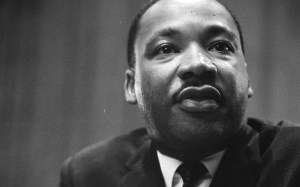
Martin-Luther-King-Jr-1280x800-3Real emotional intelligence requires a different kind of courage. The world is filled with great heroes that have given their very lives standing up for the verity of self identity. Dr. Martin Luther King, Jr., though he was a flawed man with a penchant for dalliance, was also a courageous defender of social morals that went entirely against the grain of American society. Businesses, communities and hate organizations all felt it was fine to discriminate against and persecute black people. That prejudice was based on the idea that black people were an inferior race. In certain societies it was considered impolite to even admit a black person not under servitude into the presence of white people. King peacefully and intelligently resisted that vision for black Americans.

As Americans we love what business does for our nation. Our productivity, inventiveness and wealth is considered remarkable in human history. One dares to say it is also exceptional.

Equalizing

But let’s not pretend our exceptionalism is complete, or even accurate. The work begun by Pointy-Haired_BossDr. Martin Luther King Jr. work is not done. There are still a great many dishonest people who claim to love their country while not supporting equal rights for all those who live here. In fact entire political parties stand in denial of these facts on demands that we simply “put it all behind us” even while discrimination persists in our very midst.

People that insist we need to hide our true selves in order to “get along” and “function” in the civic world or workplace often are the very same people who, in too many cases, are all too happy to be bad bosses or co-workers because they excel at leveraging the negative to their own profit over favoring positive or progressive solutions that actually require social or business changes.

Realizing

People who admire such authoritarian and provocative voices also tend to admire bullies and blowhards who claim to represent “reality” when in fact all they represent are their own selfish interest cleverly disguised as a benefit to others.

It happens in society and it happens in business. We evolve cultures in the workplace and society that incorporate or even foster discrimination over equality. The business world has become enormously adept at singling out all those who turn out to be “different.”

Psychoanalyzing

Wall IceJust this morning a psychologist in our business networking group explained that a specific personality test was created to identify all those with anxiety and depression. Somewhat ironically, the test was used as an identifier for people that tended to be motivated workers under certain kinds of stimulus. Yet that same test could just as easily be used to discriminate against those personality types. So who’s to say what’ right or wrong?

There are thousand of companies that use personality testing to rule out candidates they might deem to be too “different” from their mainframe or culture. That’s a tremendous capability when it comes to hiring.

Dehumanizing

It’s also dehumanizing. Yet the bottom line and the cost of hiring bad employees is deemed too great a risk to take chances with bad hires. So we’ve evolved emotional intelligence testing to objectify the hiring process as much as possible, and eliminate that risk.

But here’s an interesting notion. We could apply the same system of elimination to any marathon or event. Having competed for 40+ years in track and field and running, cycling and now swimming, I can head out to the weekend marathon and tell you with relative accuracy who the fastest and slowest runners will likely be.

Analyzing

But that’s not the point of a race, is it? It’s about participation and celebration of human achievement. It’s about the untalented mixing with the talented. Because no matter who we are, at some point in human society, we’re both talented and untalented.

MichaelAbsolutely no one is exceptional at everything. For example, even basketball superstar Michael Jordan couldn’t hit a curve in baseball. He also tried making it in professional golf. Yet he could not hack it. (pun intended).

But was he crazy for trying? And did he somehow breach the rules of emotional intelligence and corporate fealty by trying his hand at different sports. Was Michael Jordan a failure because he could no do everything he dreamed?

Quite the opposite. One must not forget that Jordan faced enormous pressure in both his professional and personal life during his career. The loss of his father weighed heavily on him. Perhaps stepping away to do something crazy in sports was just what he needed to process what his life in basketball really meant. In that respect was displaying a real form of emotional intelligence.

Spiritualizing

And perhaps there’s a lesson about personal branding in Jordan’s very public example of taking care of yourself when life throws you a curve. Perhaps toeing the line and sticking with basketball where all the money and championships and expectations resided would have been the corporately intelligent thing to do. But it was not the right thing for Michael at the time. His spirit needed something more than the manufactured brand he had become.

Chocolate Traffic LightIf there was ever an example of taking risks with one’s “personal brand,” then Michael Jordan was it. Of course it helps to be the best in the world at something when you want to tell the money-mongers to shove it. He could have quit baseball and basketball and golf and been fine for life with his accomplishments. The Jordan line of NIKE gear continues to sell well.

But he went back to the sport of basketball when he was ready. He had healed himself doing crazy things. It was not what many of his fans likely wanted. Nor was it likely what Nike or the Chicago Bulls as companies probably wanted or desired from their star “employee.”

Kind of gives you a new take on what it means to “Be Like Mike,” does it not? Because who are the Bulls or their fans or even Nike to judge Michael Jordan by force of their own expectations? Was Michael emotionally intelligent or not when he went against the grain of what the world wanted from him?

Those are questions worth asking ourselves before we run our personal brands through a filter of emotional intelligence that might just suck the soul right out of you.

Follow this blog and please share to your social media connections. Your readership is most appreciated.
Follow this blog and please share to your social media connections. Your readership is most appreciated.

Posted in Christopher Cudworth, running, We Run and Ride Every Day | Tagged , , , | 3 Comments