By Christopher Cudworth
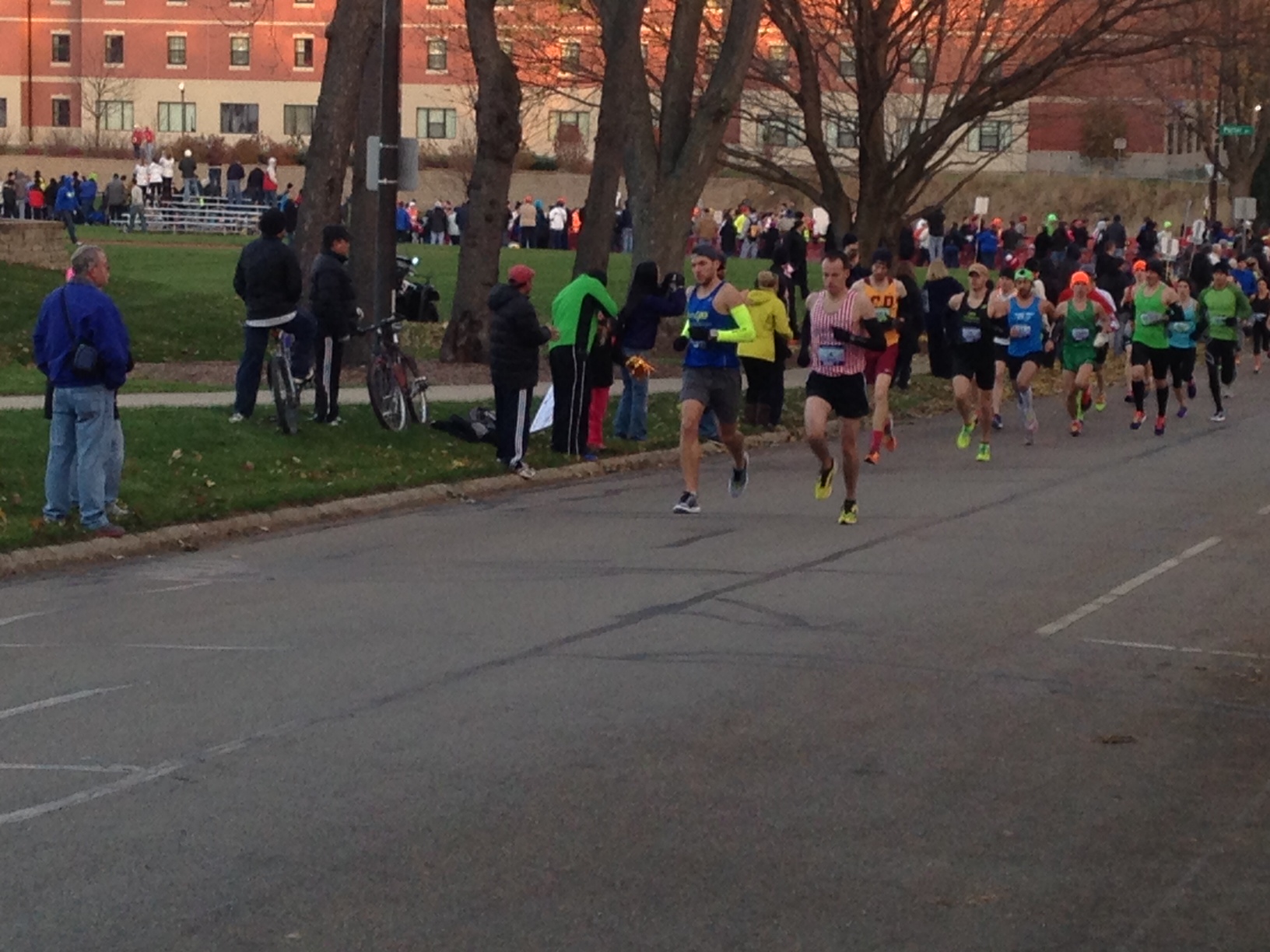
Races like the Naperville Marathon and Half Marathon have now become business entities unto themselves.
In the early 1980s when running was in its second boom, races started taking on more of a commercial flair. Businesses started investing in races as a marketing tool, and races began to be conceived as a tool for publicity.
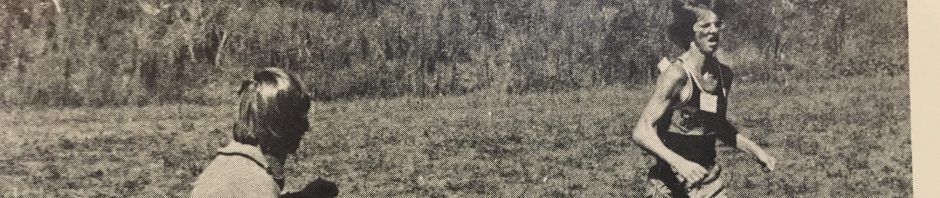
It all seems so natural now that it can be hard to conceive what road racing once was, a pastoral pastime for a relatively select group of runners who enjoyed trotting from here to there.
Off season?
One race in particular comes to mind as a Pre-Advent running event. The Crystal Lake to Woodstock 15K was practical then and possibly impractical now. The distance was prescribed by the space between two towns and the race kicked off in the June or July summer sun and everyone who showed up did their best to run a good time in the “off-season,” which was the summer months back then. Most serious runners competed in spring and fall, with perhaps a few running indoor track, but there literally were periods when people would not or did not race much.
How quaint, you say? Yes, things really have come a long way.
Running events as businesses
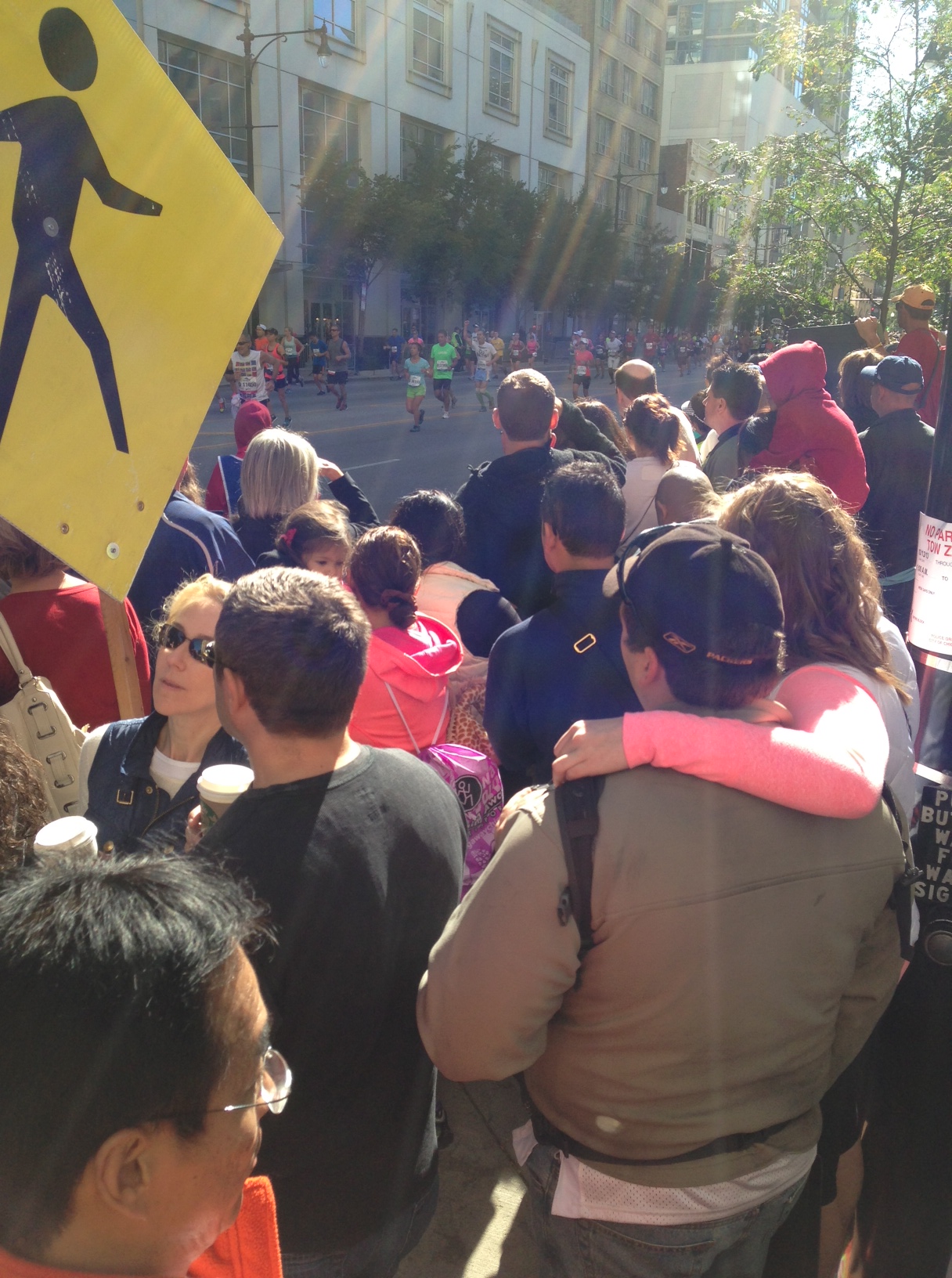
Spectators at the Chicago Marathon are an audience for a “product” that is now part of the running business.
Now running events such as the Chicago Marathon are businesses unto themselves. Entry fees of $10 are long forgotten in road races. And triathlons? Better break out the checkbook to write out a fee of $200 or more.
Charity Cases
Charities got into the action as well. Now charity events are major fundraisers, and with the amount of money coming into the tills of popular charities like the Susan G. Komen Foundation, there was bound to be controversy sooner or later.
Now that the third or fourth running boom is in full swing (we’ve lost count) there are multiple events each weekend, and in every season.
Half With It
The Half-Marathon, which used to be a marginal event at best, used by die-hard runners to burn off the rest of their competitive juices or to prepare for a really serious marathon down the road, is now one of the most popular events on earth.
Who’d have thought the Half would ever have its own sticker, 13.1?
Shoes News
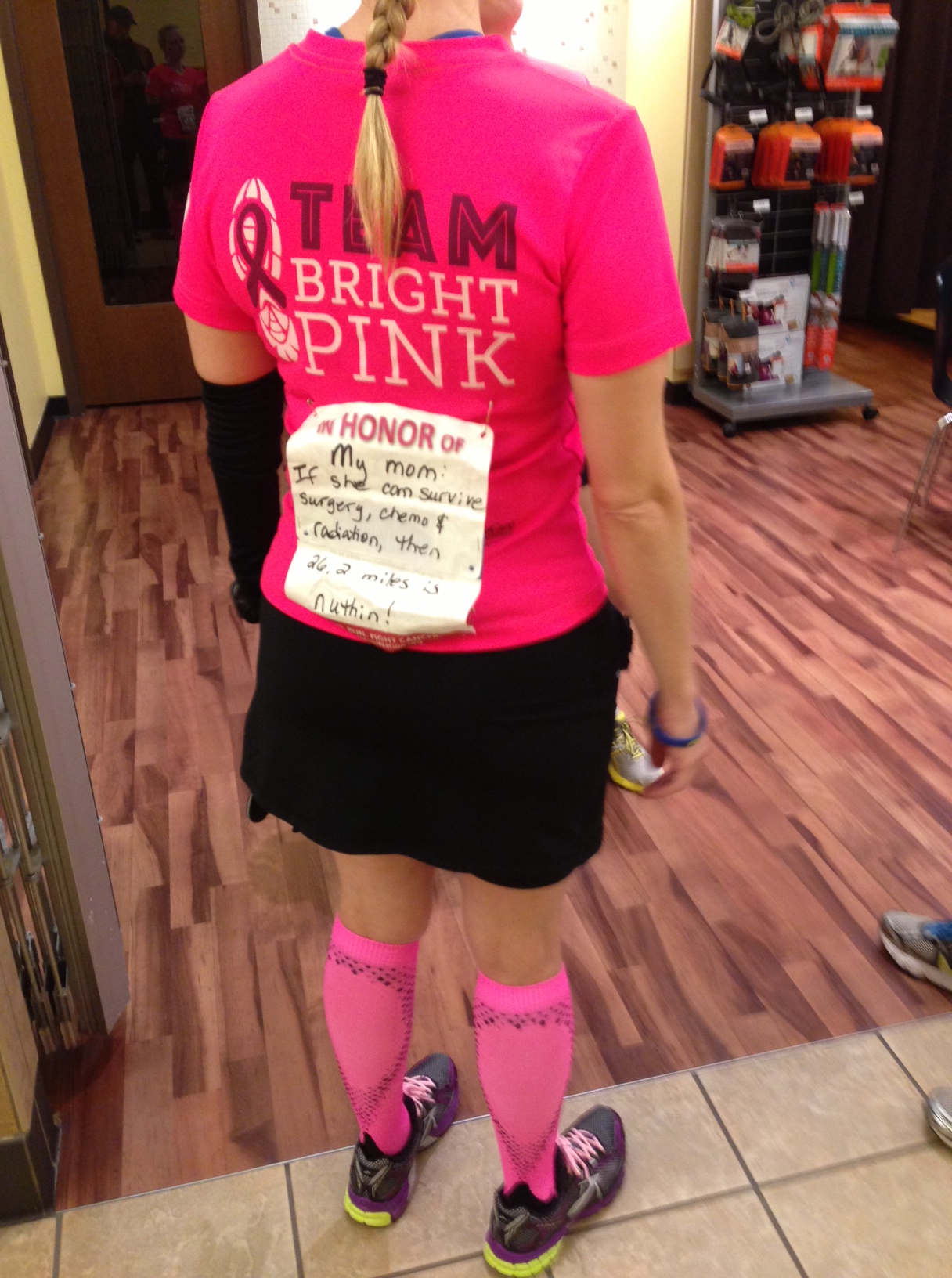
It’s not JUST the shoes. Runners invest in all sorts of gear to make the event a peak experience.
Let’s discuss the amount of money spent on shoes these days. You almost can’t find a shoe for under $80 that isn’t in the dump rack. Most shoes start at $100 and many are now reaching $200 for a pair of shoes that essentially lasts you a few months before you need to trade them in for a new pair and another $150.
In a typical 5k there might be 2000 runners and if you add up the money spent on shoes alone, it comes out to $300,000 on the starting line. A marathon with 45,000 people means $6,750,000 of shoes waiting to be worn out.
What is this running business?
Slap slap slap. We go on and on. The running business is both a congealed and amorphous reality, because you cannot really tell where the lines can be drawn from serious to semi-serious or casual runners. Now that everyday people buy expensive running shoes to walk around the outdoor mall, there is no limit on what the running shoe companies can (or will) charge for their wares.
Guinea Pig on the run

Glen Kamps is the lead figure in the Dick Pond St. Charles, Illinois store. Together we were guinea pigs for shoes in the late 70s and early 80s.
Certainly, in many respects the shoes are better. As a guinea pig in the 1970s and 80s for new running shoe companies, I tried out some of the worst shoes ever invented. Ever. Converse once made a pair of running shoes so hard you literally could not run in them. I won those shoes for finishing in the Top 5 at a 10-miler and was aghast when I put them on and tried them out. Talk about your reverse marketing tactics. They were horrid.
I got married in a pair of Nike Pegasus and gave matching silver and grey Pegasus to all my groomsman. So you might say I was “all in” when it came to the running business and how it entered my life.
Stranger in a strange land
Enjoying a renaissance of sorts in running these days, it feels good to go a little faster again. But I can’t help feeling like a little bit of a stranger to all the high commerce going on with running. It all started out so simple and ugly. The shoes sucked. So did the clothes. People thought we runners were idiots or fools, and the only sign we put on our cars to indicate our runner status were finger marks that said “Wash Me” after driving home on a country road from some far-flung 5K in the countryside of Illinois.
I don’t miss the old days at all, but I do remember them. These days are perfectly enjoyable and the equipment produced by the running business is frankly awesome. Yes, the entry fees are ridiculous. So are the costs of shoes and gear. It’s the tarsnake of technology biting us in the ass. Just like your cable/Internet bill and your cell charges, it’s the cost of living these days.
Other pursuits
But if you really want to feel the pain, become a cyclist or a triathlete. Trust me on that one. The running business looks like a pauper compared to those two sports.


 We Run and Ride
I fall into the ‘casual runner’ category. On one hand I wish that organized runs weren’t so expensive and sometimes so crowded, but it is nice to be able to find a run to sign up for pretty much any weekend that you are free!
kindazennish: love that name! Thanks for the comment and you’re right, the benefits and detractions are in some kind of balance these days.
The numbers are staggering when you consider the cost of the gear 2,000 runners have on at a race. Never thought of that.
If people are willing to pay $150 for running shoes just to run to the mall, maybe running has gone main stream.