
By Christopher Cudworth
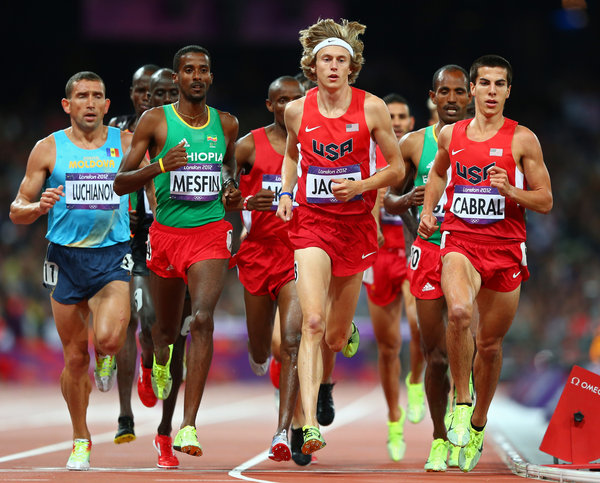
Elite athletes like Evan Jager (center) must be careful not to overtrain.
The tarsnake of overtraining
For most athletes struggling to find time to fit quality workouts into their busy lives, the concept of “overtraining” seems foreign and unlikely. But most elite athletes will tell you, it is actually far better to be a bit undertrained when preparing for competition than overtrained.
Overtraining occurs through several means:
- Too much volume or mileage (large or sudden increases)
- Too much quality work in too short a time (speed work on consecutive days)
- Too little recovery or insufficient rest days (lack of easy or slow training)
In fact, many serious athletes find themselves facing a combination of all three of these training flaws at once. That can put you in serious trouble, make you sick and knock you out of your big race.
You can see the signs of the overtraining tarsnake
The signs of overtraining are relatively clear, but many athletes caught up in the excitement of preparation for a major race or series of races are prone to ignore the warnings. Here are just a few ways you can tell if you are overtrained:
- A feeling of staleness or fatigue on consecutive days of training, even on easy days.
- Struggling to maintain a pace on the bike or the run that just a few days or weeks earlier was easy. The feeling of “trying to catch up to your old self.”
- Any symptoms of a cold or sore throat, dry or strained cough, elevated heart rate and irritability.
- The overtrained athlete will also crave sweets or other junk foods, lose the will to maintain good dietary habits in general.
- Overtrained athletes also tend to turn to other risky behaviors; including over-servings of alcohol, staying up late following a hard workout, restlessness, anxiety and overwrought libido. All are signs the athlete’s body and mind are responding poorly to the stressload of the the workout schedule.
It’s almost like your subconscious is trying to tell you to slow down before you crash.
Types of overtraining
Overtraining can be broken into two simple categories: Short term and cumulative.
For example, if you are in the midst of a 100 mile running week and by Wednesday you have 60 miles under your belt and are feeling great about your progress but also feel really fatigued, forcing that Thursday speed work is seldom a good idea.
Or, if you are a cyclist and begin to lose contact going up every hill during a group ride, or lose your will too easily in a pace line, it is likely you have overtrained to the point where your body and mind are sending you subconscious signals that rest is needed.
These are signs of a short term overtraining binge. Usually you can regain your reserves by breaking up your workout routine, shifting to a shorter day and getting more sleep, and making sure your diet is on target and you can get back on track.
Cumulative overtraining load can be much more difficult to detect.
During college our cross country team had a penchant to run all its base miles at 6:00 pace. That included midweek recovery workouts of 8-10 miles as well as our weekend long runs of 20+ miles. All of that mileage was run at 6:00 per mile! Nuts, I know.
It wasn’t until I got out of college and trained with some elite runners out East that I realized the mistake in our thinking, that high pace always equaled high-quality workouts.
The first time I ran with a group of sub 30:00 10k guys on a 20-miler I raced ahead at 6:00 pace thinking they’d tail along and maybe show me a few things along the way. Instead, they let me get ahead about a mile and never gave chase. When I slowed down they asked, “What the hell are you doing? We run 7:30 to 8:00 a mile for 17 miles, then do a smooth pickup for 3 miles at the end. That’s how you build up your base.”
In cycling the same principles hold true. If you’re out hammering every single ride at 26mph whether you’re going solo or in a group, your body really never has a chance to adapt and build baseline aerobic capacity. You may also (ironically) be hampering your ability to drive top power outputs and reach speeds of 30 mph if you don’t alternately do real speedwork at that rate. But you can’t do that every day or you’ll burn out.
Give yourself a break now and then
All those habits of overtraining; running too fast in base mileage, jamming too much mileage into a short period of time, not allowing yourself sufficient recovery over a season and doing too much speedwork can all add up to illness or injury.
Overtraining is often the product of enthusiasm, but the quickest way to undermine your enthusiasm, if you really think about it, is overtraining. The overtrained athlete literally loses the physical ability and the will to maintain quality, and enthusiasm comes from seeing progress and achieving quality.
Don’t use it up too soon
If you are training for a late October peak and you build your peak too quickly to the point of overtraining in late September and early October, there is a strong chance you will lose your ability to peak at all. Overtraining is exactly like sticking an energy tap in your side and letting it all drain out.
So how to prevent overtraining? The rules are simple:
- Keep a record of all physical norms; resting heart rate, weight, and even blood pressure if you can measure it. Do not ignore changes like increase in resting heart rate. Back off your training until it returns to normal.
- Chart your running and cycling mileage. If you see yourself losing mileage week to week because of training interruptions like sore throat or other symptoms, you’ve hit the edge of your ability to increase effort. Better to be safe and able to compete than sick, overtrained and unable to toe the line.
- Communicate with friends and teammates. Often they see signs of your overtraining before you do. They’ll notice irritability or other personality changes like depression, overtalking or negative behaviors before you do. Listen to your body, but listen to your friends and teammates as well.
Overtraining is something almost all serious athletes do at some point in their career. Understanding the signs and risks is crucial to maintaining good health and achieving your goals. Don’t let your enthusiasm run or ride away from you when ramping up to a good race. That holds true when you actually hit the starting line, when managing your pace, just like managing your training, is a microcosm of knowing your limits so that you can exceed them.


 We Run and Ride