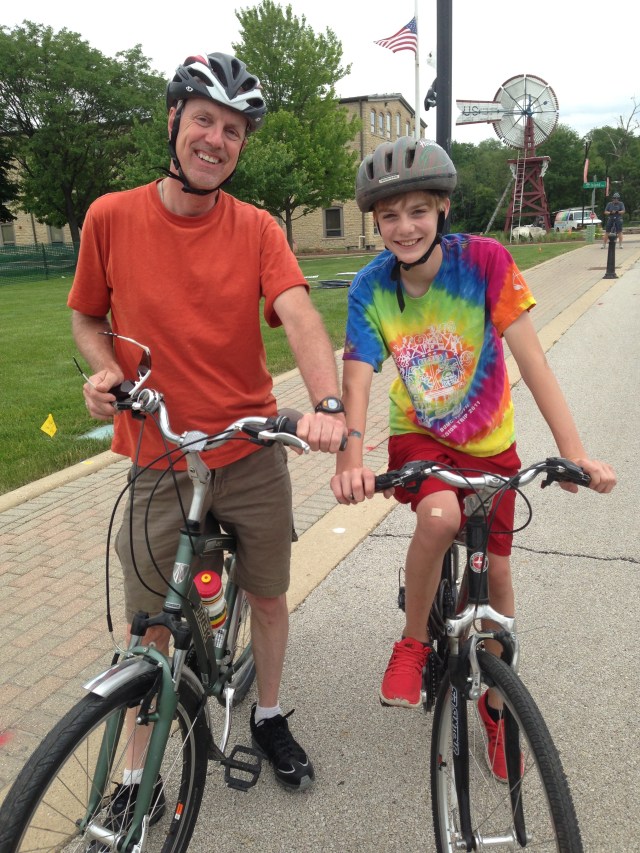
Riding up to Chuck’s

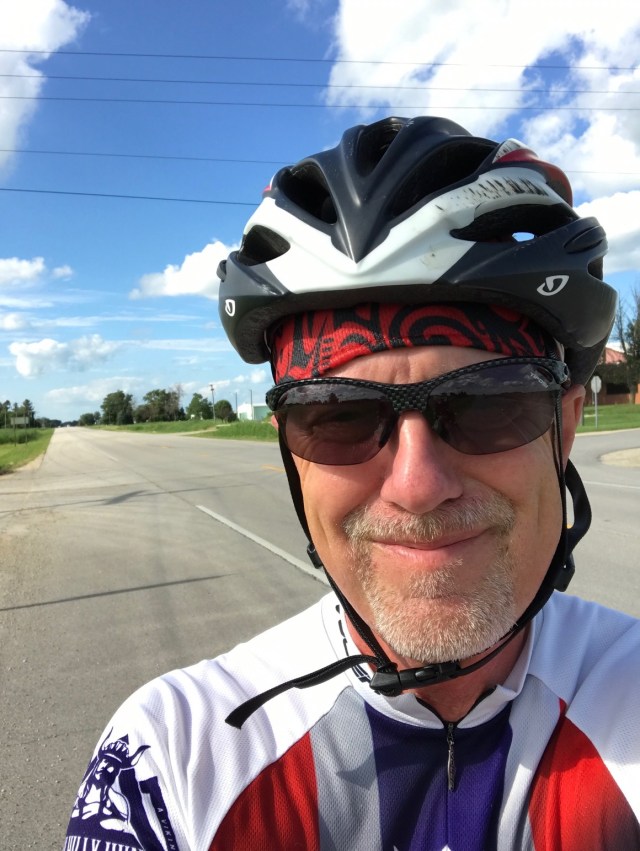
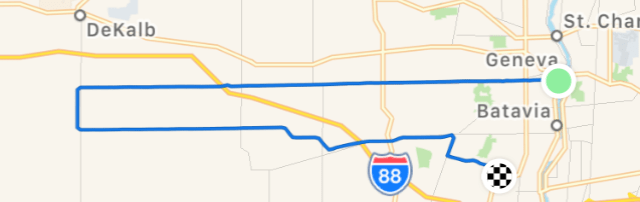
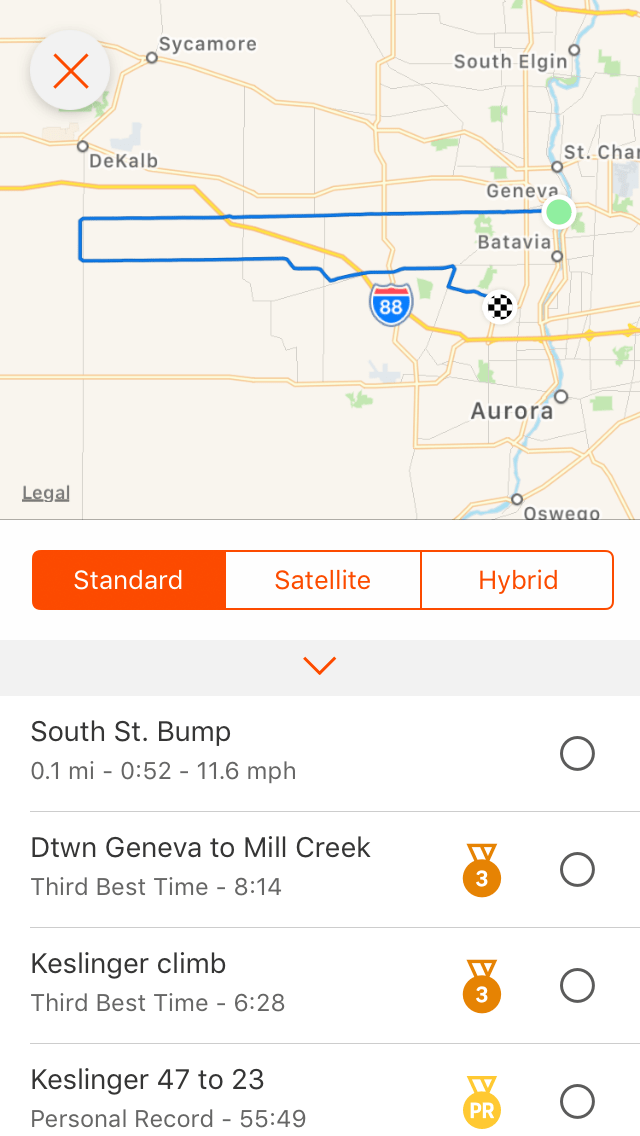
Chuck's Ride RouteIt is a sixty-three mile ride up to Chuck’s Lakeshore Inn from St. Charles, Illinois to Lake Geneva, Wisconsin. It’s a tradition we cherish each summer. The route we take is all backroads and has been handed down from generations of cyclists who first chose the roads over four decades ago.

It is likely that process involved some experimentation. The route was established long before the age of GPS, Garmin, cellphones or Strava. It is likely someone sat down with a series of county maps and plotted the route out by hand. Or better yet, there might have been cyclists who winged it for all they’re worth, and the route evolved over time.

That does not mean the roads are all perfect. Far from it. On several sections of the route the roads are broken up or fractured. Likely this is the product of a township or two that do not consider such backroads a priority. So the cyclist has the navigate across the worst of these with a dose of concern for the hindquarters.

Chuck's Ride Route GreenOn the other hand, there are places where the roads are both rolling and smooth. Shade graces the way for miles at a time. This was true even though we left at the relatively late hour of 7:00 a.m. to embark on the journey north. Some of this is the product of our aging constitutions. Both the hour of departure and the relative rate of progress have eased back a bit.

Not that some of us aren’t fit. But in any given year there is usually someone whose schedule has eclipsed their training. We used to cruise those sixty miles at 19-20 mph, wind or no. Some years the northwest or north wind would smack us in the face, so it was pace lines for miles. But yesterday was warm with a nice breeze but no wind. We rode fifty at a good clip but one of our party (and it has been any one of us over the years) had reached the extent of his training thus far and we needed to slow things down over the last 10 miles.

These are summer rituals and worth every moment of riding. Then we change at the beach in Fontana and pile into the cool water to ease out the crimps from riding and shoot the bull while waves from the many boaters out on the lake push us around.

Chuck's barThe final goal of the journey is lunch at Chuck’s, a lakeside bar and restaurant where the locals mix with the tourists and everyone seems to live and let live. One of the bartenders has been working there 19 years and does not seem to have aged a day in all the time we’ve traveled up there by bike. He smiled when the clouds gathered and the rain came down in sheets. “This is good for business,” he chirped at us over the bar. “It’s gonna get really busy now.”

Some people seem to thrive on service to others. This bartender has that knack. He was lining up tall glasses and mixing Bloody Mary’s four to six at a time. Nothing to it.

StellaI tipped him $20 on a $60 bill that included a simple CHUCK’S tee shirt. Normally I’m not the acquisitive or touristy type to buy tee shirts or any of that ilk. But I feel a genuine fondness for the adventure of such journeys and have done this trip with a number of friends over time. Our little bike gang has expanded and contracted, but the two buds with whom we rode this weekend I’ve known since 1973. They’ve been cyclists far longer than I, and even got into triathlons back in the 80s before I dared think about it.

History is a funny thing that way. One of them insisted that I’d been along on the ride back when a rainstorm struck them at 40 miles and drove them into a barn. But I recall him telling me that story the first time I rode up with them probably ten years ago. “You were there,” he told me yesterday. “We have pictures,” he offered.

“Take a look at them,” I suggested. “I’m not in them.”

That’s how our brains work sometimes. Melding things together is a habit of convenience. There is too much time that has passed, and we can’t remember everything the way we should.

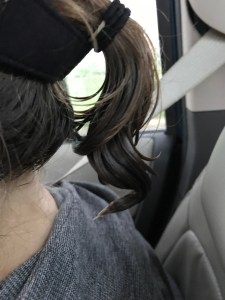
Sue's HairI honestly could not remember if my wife had ridden up there with us before. It seemed like she had a couple years back. But no, she told me. This was her first journey. “I like the route,” she said. “It’s pretty.”

It is indeed. Through the early morning fog we rode north. Up over the big rise at Central High school in Burlington then north through Hampshire up past Hebron, where the water tower is painted like a basketball because that little town won the state championship way back in 1952.

The ride up the Chuck’s is wonderful. It creates and recalls memories all at once. We all need time markers like this to make the year feel full and real. And a cheeseburger and a beer to make it seem like it won’t ever end.

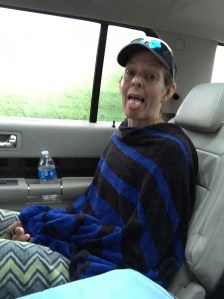
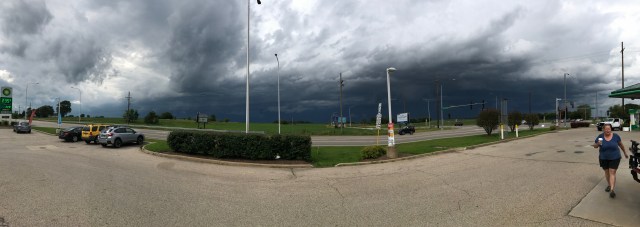
Sue tongueAs we left the restaurant the skies opened yet again. The storm had spread like a demented beach blanket across the Weather Channel map of southern Wisconsin and we got soaked on the way back to the car. Sue wrapped herself in towels in the car to keep warm. The storm chased us south, getting so dark to the north that one wondered if the end of the world would was coming about.

We barely beat the rain home, and then the skies opened up yet again as we went to remove our bikes from the back of the car. That rain washed off all the scuzz and drippings from our water bottles. It had been a hot ride north and no matter how carefully you try to take a sip, somehow the lines of sticky Gatorade or Scratch or whatever you drink sticks to the bike frame.

Storm Pano.jpgSo the day was principally washed away. Our clothes were soaked, and shoes as well. We tossed all that into the laundry and settled into watching the last stage of the Tour de France in our dry clothes with happy legs and relaxed brains.

The ride up to Chuck’s is no Tour stage, but without quick access to France, we’ll take the backroads of Illinois up to Wisconsin. You make your Tour where you can find it.


Posted in Uncategorized | Tagged , , , | Leave a comment

Some days it pays to weed your own mind

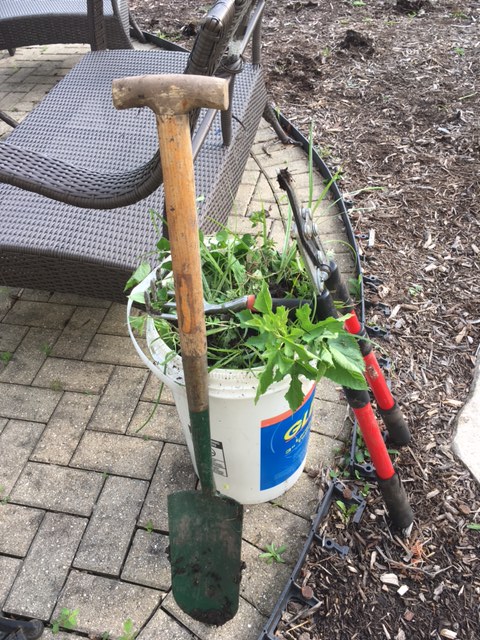
bucketLast night…

Hoo boy, last night’s run was really hot. And humid. I ran 5.7 miles at 9:34 pace and it felt like a lot more miles than that. I even walked at some points. At some points the humidity was so overbearing I felt little dizzy. Sweat ran along the brim of my running cap and dripped off the bill.

This morning the air was a bit cooler. And while I wanted to pile on a few more miles, there was a part of me that desired a little peace instead. So I went out front and collected the newspaper and tossed it on the kitchen counter. Looking out the back window, I saw the inviting sight of the hammock on our lawn.

I had pajama bottoms on, and a soft cotton tee shirt. Lying in the hammock was a bit like falling out of the sky from a dream and landing in some sort of odd net. But it felt good. To the north was a silvery sky with just a hint of the rain clouds that have been sliding across Illinois with such frequency.

The sprinkler system skipped its rounds this morning because the rain sensor in the gutter on the side of our house told it to take a day off. That is appreciated. So many times I’ve been out running or riding in the rain only to pass a home where the sprinklers are going full steam. Rain on top of water. Redundant.

garden.JPG

All that graced our grass this morning was dew. Sparking small drops hung on every grass blade. Later that morning, someone posted on Facebook that the dew point today was 77. I guess that’s high.

All I know is that the date is July 21 and that means 1/3 of official summer is over. Technically the season runs till September 21. Many years that is the case. The heat during those early-season cross country meets or September road races do make it seem like summers run through the ninth month of the year.

Back to School

But by August the season often feels bittersweet. The school hubbub starts up. Even if you no longer have kids in school, the feel of August sets you on a scholastic edge.

Which is why I wandered to the back yard this morning, leaned into the hammock and lay there looking up at the sky. I didn’t want to miss this morning. Don’t want to let summer slide completely by. This is my life. My season. My chance to be alive. We all take that for granted far too often.

I lay there thinking how nice it was not to be obligated to do anything, and how seeming obligations have taken over so much of our lives. The social media posts. The “notifications” on our phones. Text this person. Like this post. Like this Page. Like me. Like you. Like Like Like. All those likes can become like weeds in the soil of your mind.

Which is why a glance at the garden called on my conscience. There were bumps and patches of crabgrass and thistle sticking up out of the mulch and soil. So I got busy and yanked a bunch of them.

garden too.JPG

I tramped over to the garage and grabbed some tools. Snagged some loppers for the mulberry sprout that had reached two feet. Grabbed a shiny claw tool to dig up the crabgrass, and pulled on rubberized gloves to get a good grasp on the low, thick stems of thorny thistles. Pull them up by the root out or they come right back.

It was peaceful labor. Filled a tall bucket with weeds and unwanted grass. My shoes clumped with wet soil and my fluorescent shorts got dirty from the effort. A thin sheen of sweat covered my body and the gnats and mosquitoes followed me around trying to stick themselves to me. But it’s all worth it.

I went back inside to get ready for work. That pause to weed gave me time to work through some worries and put them into context. Perhaps I was just weeding my own mind. It needs to be done now and then so the soil of hope can be planted with good thoughts. Then I’ll get back in the groove for some good running, riding or swimming.

Posted in riding, running, Uncategorized | Tagged , , , | Leave a comment

The thing about real food

Food.jpgAs a runner I used to avoid eating anything for hours before training or races. My stomach just couldn’t handle it. I’d throw up if there was food in my gut during a race. Even Gatorade made me puke. It was water only, and not much of that, for me.

We also typically trained without eating beforehand, and seldom drank much even during long runs. This was true even among the 29:00 10K guys with whom I trained out in Pennsylvania. The idea of eating beforehand or during those 20-milers in training?

Fuhgetaboudit. 

Somewhere along the way I read about a runner named Ed Eyestone who ingested a little food to take the bite off hunger before training. It made me wonder if I had been doing something wrong all those years.

Larabar.jpgWell, in recent years I’ve modified that rule. I’m able to down a Larabar before runs with no ill effects. I like Larabars because they’re mild, seem to be made of largely natural agreements and have pleasant flavors. But best of all, they don’t upset my stomach. This is no commercial or sponsored content. We spend plenty of dough for our Larabars. I’m just grateful they work for me and I can eat them while riding because they’re not dry and rough.

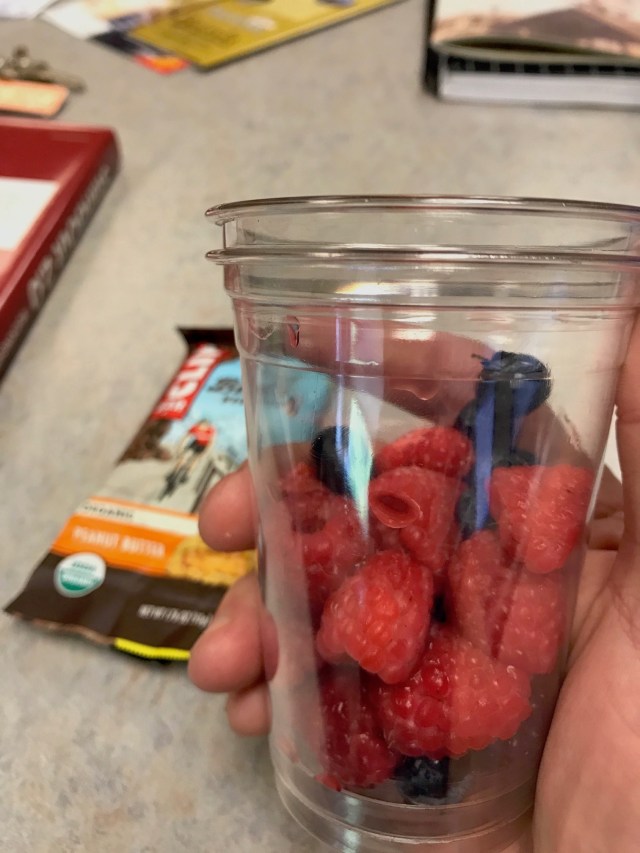
It’s nice to get a little food in the gut anyway. The other thing I’ve dined on before runs and rides is good old fruit like blueberries. Those don’t seem to bug me either. And raspberries too.

Now oranges, I would not think of eating those before exercise. They are too acidic and I’ve puked royally from eating citrus before races and such.

The point I’m making here is that real food generally rocks. They even covered the topic on a Tour de France feature where Christian Van De Velde rustled through the food bag of two different teams. Both had nummies that were not prepackaged. One held rice cakes smeared with banana. That was gross-looking but on a long ride would probably taste great.

Strange things happen to appetite out on a long ride. After a Clif bar or two, the body starts to reject them. The taste buds revolt. Plus I need salt at some point, and we stop at Casey’s, the gas station mini-mart available in most small towns, where there are cheese and meat sticks that taste so good when the sweat is pouring down your body.

Those border on real food. Who knows what’s in those meat sticks other than salt and shredded cow parts? But they seem like real food. Back before I had my colonoscopy, my brother warned that it’s good to get the innards checked. “Haven’t you ever eaten a Slim Jim?” he asked. He sought to warn me that those types of processed foods were not good for the colon.

And he’s probably right. Fortunately my colon checked out fine with the exception of one or two non-cancerous polyps. They clipped them off like raspberries off a bush and that was that.

I’m trying to move toward eating more real food in any event. The cup of fruit I bring to work is just one way of treating my body better. I bought a big green plastic cup to drink more water, which I like with ice.

It may not be a perfect turning of a new leaf, but all of life is incremental. You do what you can. Do you?


Posted in Uncategorized | Leave a comment

The jury is still out

Eye threeI’ve been fortunate to not have much legal trouble in my life. Oh sure, there was that snafu a few years ago in which I learned how Chicago judges operate on labor laws, but beyond that, it has been largely possible to steer clear of lawyers and courtrooms.

There was a time that I got called for jury duty on a murder case. The notification came in the mail and I showed up at the courthouse to sit with the rest of the possible jurists in the dark old hall where the county used to conduct trials.

We sat and sat. Then my name got called. I was told the name of the accused, a woman that had stabbed her husband to death with a kitchen knife over a domestic dispute. I knew the last name. In fact I’d dated a woman in high school with the same last name. Being twenty years old and unaccustomed to the ways of a courthouse, I assumed she was the daughter of the woman accused of murder.

The lawyers asked me if I knew the family. I told them, “Well, I dated the daughter.”

It got really quiet for a moment. The lawyers looked at each other strangely and told me, “You’re excused.”

Later that day, I discussed the case and my jury rejection with my friend. He looked at me funny and started to laugh. “You dummy,” he told me. “That girl you dated isn’t her daughter.” Then he looked at me with a serious face and told me, “Didn’t you read about this case? Her daughter’s paraplegic. She can’t use her arms or legs.”

I was horrified at my mistake. Then I realized why the lawyers had looked at me strangely.

That is not to say that someone cannot be in love and date someone who is physically disabled. But in the circumstance there was way too much to explain, and the lawyers on the case didn’t want to ask that type of question. Of course, if I had dated the daughter, that would genuinely have disqualified me from service on a jury.

I’ve told that story a few times over the years. The reaction varies among those who hear it. “Did you get caught lying?” one person asked.

But most people just say, “Wow.”

Getting slammed

I heard a story yesterday in which a friend told me about a car accident in which he was traveling 60 mph when someone ran a stop sign in front of him. His car slammed into the front quarter panel of the vehicle that did not stop. It caused him a broken wrist and some deep bruises on his chest where the seat belt held him in place. When the legal and insurance business was over, he received a check for $27,500. That seems like a windfall, yet there is a price to pay for injuries sustained in incidents like that. His arm still hurts on certain days. The money is long spent.

Way back in 1982 I was driving on a rainy night and crested a hill to find an accident scene ahead. I applied the brakes and rolled to a stop only to be struck from behind by a motorist in a speeding Mustang. That impact threw my head back, and technically, I must have had the condition called whiplash.

But in true 20-something fashion, I never had it looked at. Instead, I went to New Jersey that weekend to run a 10-mile race. Concerned about the soreness in my neck, I wrapped a bandanna around it and ran a personal best 54:00 in windy conditions.

Years later at a chiropractor’s office the physician asked, “Have you ever been in a car accident?” I told him about the whiplash and he showed me an x-ray of my neck. “It’s supposed to be curved,” he advised. “Your neck vertebrae are straight.”

I should have gone to the doctor back then. Perhaps it would have resulted in some sort of compensation for having been hit by that driver that never slowed down. But who could blame him really? It was literally a dark and stormy night. The roads were wet and the streetlights on that stretch of open road were weak.

Scammers

The only money I got from that incident was padding on the insurance claim that I filed to repair the rear bumper of my Plymouth Arrow. In Pennsylvania there are all kinds of laws about keeping your car in good condition. During the initial vehicle check, the state can send you to the body shop for a rust hole bigger than a quarter. In any case you were forced to buy insurance from some local provider and it turned out the guy from whom I bought my policy was a total scammer. He sent me to a local body shop and they stuck a cheap-ass bumper on my car and charged the same price to the other insurance company that a factory level bumper might have cost.

“Now you take this money and do something fun with it,” the intoned, handing me a $250 check. “And don’t tell anyone where you got it.”

How the game is played

Eye MezzotintSo that’s how the game is played, I thought. Naive and too scared to report the guy, it was the first and last time I participated in insurance fraud. Who does shit like that? The arrogant and the crooked in society, that’s who.

But life isn’t just about money. I’ve had a number of opportunities to sue for this or that reason. During a weekend at a national track championship in college, I came down with near-fatal food poisoning after eating an entire medium sausage pizza the evening after my steeplechase race. We dined at a national chain pizza restaurant that night, and an hour of two after we got back to the hotel room I got violently ill. I threw up 27 times and lost seven pounds off a 140 lb body. Severely dehydrated and racked with a tingling sensation all over my body, I told the coach I needed to go to the hospital. We had a schedule to keep, so he was reluctant. So I looked him in the eye and said, “Coach, I’m gonna die.”  We went to the hospital.

Two-and-two 

At the time, I thought my illness was the result of delayed heat exhaustion. I did not put two-and-two together that it was food poisoning that made me so sick. Years later I read in Harper’s magazine that the very same pizza chain was sued regularly for food poisoning and was involved in thousands of such cases across the country. The company was known for having a phalanx of aggressive lawyers who specialized in blocking lawsuits over food poisoning. Very people people won lawsuits against them.

I guess that’s a victory of sorts, if you want to call it that. One can only imagine the board room meetings at which statistics about such legal matters are discussed. “Well, we won an average of 275 food poisoning lawsuits per quarter and lost only 2% of those cases, most of which were settled out of court. The other three potential cases died before filing for legal recompense. That means bonuses for the legal department because we’re 1100-0 for the fiscal year 2016.”

Half the trouble

EyeThere’s a great story in the bible in which two women bring a child before King Solomon. Both claim parental ownership of the child, and neither will relent in her case. So the king calls for a sword and threatens to cut the child in half. At that moment, the real mother of the child speaks up and says, “Let her have the child.” And that is how the king determined the identity of the real mother.

So many legal decisions are like that, or worse. When my wife Sue was training for Ironman two years ago, a woman turned in front of her with a huge white Escalade. Sue had to drop the bike and slid to the side. She was scraped up but largely unhurt. However, her bike frame was cracked. In the following weeks we sought to recover the cost of the bike, but the officer on the scene had warned us. “It would have been better if she had actually hit you. As it stands, there’s no way to determine who’s really at fault.”

Perhaps if someone had come along and offered to cut the Escalade in half, that might have taught that woman a lesson. But the jury is still out, and forever will be. There isn’t always justice in this world. About half the time there is no justice at all. The guilty walk away proudly and the innocent pay the price. The honest get penalized for telling the truth and the haughty and dishonest get rewarded (or elected) by lying so well there is no way to tell the truth from fiction.

Yes, the jury is still out. The jury is still out indeed.


Posted in bike crash, cycling, cycling the midwest, cycling threats, running | Leave a comment

I break for dogs and people

Chuck and ChrisIt’s a longtime habit of mine to stop and talk to people with dogs. Even in the middle of a run, or out on a bike ride at times, I will take a break to pet a friendly-looking dog and talk with the owner.

This morning presented another occasion to do just that. I was finishing up a four-mile run and had slowed to a jog on the path that loops around the wetland behind our house. A woman was walking her mid-sized poodle on the path. The dog seemed relaxed and willing to be petted, so I stopped and put out a hand with a greeting, “Hello pup!”

The dog sniffed his way over and accepted a pet on the head. “Oh, well, he’s okay,” she said in what seemed like both a question and an answer.

“Is he normally a jumper?” I asked.

“Oh yes,” she smiled. “But with you he seems okay.”

The dog’s was named Duke. He huddled next to my leg and accepted a firm rub on his back. He was a sweet dog.

I told the story of the dog our family has had the last eight years. His name is Chuck. Rescued in the city by my son and a friend, whose fraternity held a beer bash to raise money for the dog’s vet bills. Chuck lived in the three-story frat house at the University of Chicago and was named after the building’s owner.  “Well, I can’t kick him out if he’s named after me,” the story goes.

It’s a tale I’ve told at least 100 times over the last eight years. It opens channels of thought and conversation with strangers. Everyone seems to love the romance of a dog rescued on the streets of Chicago.

But the tale is also a human tale. Because Chuck has played an important role in all our lives. First my daughter begged to bring Chuck to our home when my son started to travel. We had a ‘no dog’ rule in our house for decades, but we made an exception for the little Schnoodle that won our hearts. He wound up being a therapy dog to my late wife during her cancer and to all of us after she passed away.

I had shared that I was remarried, and that our families have merged through the process. “Our dog Chuck is even getting used to the cats, I told her.” Then I said, “My name is Chris.”

She replied, “My name is Maria.”

I shared the story of our dog Chuck and how he has helped our family and the woman stood there staring at me. Then she said, “I lost my husband two years ago to heart problems. It was very sudden.”

I walked over and gave her one of those barely touching hugs, the kind you give when you’re sweaty from running. More gestural than real contact. Then I stood back and said, “I’m so sorry.”

She had tears in her eyes then. She wiped them away with the shoulder of her shirt. “It’s still fresh,” she heaved a little. “But I suppose I am blessed. I have a sixteen year old daughter,” she smiled. I shared that everyone in our family has been grieving at our own pace. Off and on. Different stages. It’s an ongoing process in many ways.


“Well, we’ll see each other on the trail again I’m sure.” Then I readied to go. But before doing so I said, “You know, sometimes people are meant to stop and talk. I am so sorry for the loss of your husband. But thank you for sharing. And God Bless.”

He dog Duke was busy sniffing something along the trail so I didn’t disturb him again. I’m just grateful for the people and dog connections that have happened so often. So many wonderful people. And dogs. I’ve met them at Home Depot and at the pet store. At concerts and town picnics. I look at the dog, get a read on their demeanor, then ask the owner if it’s okay if I pet them.

Once in a while, people say no. Or the dog does. That’s important to respect. Not every human or dog wants unexpected contact. I surely respect that. And I still wish them well, and thank them for letting me know.

It’s a message of civility. And when I take a break from a run or a ride, nine times out of ten, the benefit is so wonderful. I learn something, and sometimes make people smile or laugh with a story, a joke or by playing some silly short game with their dog.

That’s why I break for dogs and people. It’s always worth it.

Posted in running, Uncategorized | Tagged , , | 4 Comments

Things to learn about good form

Good Form too

Sometimes good form can seem to be going sideways at first. Or something like that. 

I had a good ride this weekend. Sixty five miles at 19mph. Good for me. Hope you did well too.

I also had a good run this weekend. Ran ten miles with Sue to accompany her during 13-mile training run. 10 was good enough for me. And it helped her too. We both felt like we were in good form.

But the thing to keep in mind when having good rides and runs is this: Why are they good?

Built over time

Some of it seems obvious. Fitness builds over time if you keep at it. At some point you should be expecting good rides and runs. Same goes for swims. If you are putting in the work, the results will typically show up after a month or so. But not always.

So you must attune yourself to the aspects of your workouts that contribute to good form.

What does “good form” mean

The subtle yet important results of training relate to what we can call “good form.” You’ll hear that term on broadcasts of the Tour de France. Phil Liggett might say “He’s shown good form all season,” or, “He’s coming into good form during this Tour.”

There’s a difference. A rider showing good form over a season is getting consistent or results. But a rider can also race themselves into peak fitness. The daily racing pressure can hone the body and mind. Good form can also come about quite suddenly.

Parts is parts

Thus we may need to subdivide the term “form” into two or three parts. When someone is healthy they are in generally good form. That means no nagging injuries or illness of some kind. An athlete in good form is one who is training well, improving in workouts and eager to take on new challenges.

The typical target of aiming for good form is to produce better racing results. That’s why we work hard in practice; to build endurance and strength that are sustainable. That ‘form’ or fitness delivers us to the finish line in…are you ready for this…good form.

Good form is always a work in progress

What You Make It

Good form may not come together all at once. It happens in parts. As this guy shows. 

Finishing a race in good form does not mean you will never be tired during the effort or even struggle a bit. There will be times during every race where you want to back off or let up even if you are in good form. Racing hurts a bit or you aren’t quite pushing it enough. As many a cyclist will intone, “It never gets easier, you just go harder.”

But you must have built a base of good form in order to walk that line. An athlete that is out of shape cannot yet sustain endurance training, much less maintain a decent race pace in line with their overall abilities.

An athlete struggling to get back into shape after a layoff or an injury can hardly imagine the good form that lies ahead. Doubt that creeps into the conscious mind. “Can I do this? Am I ever going to feel good again on the (swim/bike/run)?”

It’s no fun coming back from a layoff. Good form seems miles away. That’s both a literal truth and a fact of perception.

Putting in time

That’s why cyclists talk in raw terms such as “Time In The Saddle” or TITS. There is no substitute for going out riding or putting in time on the trainer. While theories differ on the value of prescribed Computrainer workouts versus just putting the bike on a trainer during winter months and pedaling hard and easy for an hour or two, there is no guesswork when one finally gets outside. Most serious riders now err on the side of some form of winter training. I was horrible this past winter. And it showed all spring.

Often there is a month or more of training where every workout is both a challenge and a mystery. It’s frustrating to go out and train when you don’t know how the body and mind are going to respond.

We’ve all sat by the pool with our feet dangling in the cold water wondering why we do it at all.

We’ve all climbed on the bike on one of those windy days where the group drops us early and the rest of the ride is a lonely slog in cruel winds that roar in our ears as if to say, “You’re not good enough! You’re too weak! You should have ridden more this past winter!”

And those runs where everything just hurts? Forget about it.

Fits and starts

But over time and through perseverance, we work through these doubts and ill feelings. Sometimes it comes in fits. We’ll ride or run well for an hour, then find ourselves stumbling or struggling to maintain cadence. But the cycle of training we make it for an hour and a half, then two hours. Sure, the rest of the riders or runners with whom you train seem to be gliding along while you worry about every pending hill or turn into the wind, but slowly the form improves.

There are physical aspects of “good form” that relate to the actual posture and form you maintain while swimming, riding or running. As muscles grow stronger, it is also true that actual form can improve. That’s the ‘start’ part of getting to good form.

Losing form

With a swim stroke in freestyle it is easy when tired to lose form. Then the inefficiencies build one on top of  the other. Elbows drop. Hands flatten. Arms reach down rather than doing a good catch. The head rises. Legs drop. It’s a cycle that leads to even more fatigue. All because one is not in good form. Not in any respect.

Same goes for cycling. A tired cyclist often loses control of their cycling methods. Rather than spinning up hills using both quads and the hamstrings to pull the pedals around, the tired cyclist goes numb in the head and resorts to mashing their way up hills using only the quads. That leads to a near term bonk in the legs. You may recover by the next hill. But then comes the next, and the next. Inefficient cycling leads to absolute fatigue. Suddenly one is popped off the back.

A runner in good form keeps the feet under them, ‘pawing’ the ground for propulsion rather than plodding along with whatever motion and leg turnover one knows by habit. This ‘unconscious’ style of running is fine if good form is rehearsed. But when one falls into bad form and forgets to think about efficiency on the run, the inevitable happens. The legs go dead or ache. The mind refuses to motivate against such sensations.

Conscious engagement

Good form Illustration

There is a transfer of good form from one discipline to another. Fitness adds up. 

To achieve good form in all three disciplines thus requires effective rehearsal of techniques that lead to conscious engagement, and at prescribed speeds depending on the distance of a target race.

Fortunately, it usually adds up to good form overall. Thus at 35 miles of our 65-mile ride this weekend, Sue turned to me and asked, during a stop to calculate our course, “How are you doing?”

“Great,” I could finally respond. It’s been a year for ups and downs in training. Good form has been a while in coming. “I feel great,” I smiled.

Good form. It looks good on everyone. May you find good form this year too.

Posted in Uncategorized | Tagged , | Leave a comment

The long unwinding road

LUW 1.jpgA great ride does not have to be epic to be satisfying. Here in Illinois, there aren’t many big hills to climb or winding roads to follow. So we have to make our rides interesting rather than the other way around.

One of my favorite summer routes is best done in the evening after work. It involves a long, straight trip out to Dekalb County and back. The route is rolling in some parts, flat in others. It cuts through corn and soy bean fields for the most part. There are crumbling old barns that once held cattle and hay. I pass the old high school where my running career got started.

Departing from Geneva after leaving my car in the Metra parking lot for my wife to drive home on her commute back from Chicago, the straight ride catches onto Keslinger Road, which crosses the area’s big retail strip on Randall Road. After that, it’s all country riding.

LUW map excerpt.png

Keslinger goes up and down like the roads of Brittany in the north of France. I focused on full pedal strokes, but the wind was healthy from the northwest. Some of those climbs were difficult. That is the key area in which I struggle in cycling. Long, slow climbs uphill into the wind. I suck air and tire out every time. Only by focusing heavily on a full pedal stroke do I get anywhere. It’s a mystery why this is so hard for me. But my theory is that a long torso does not help in those circumstances.

There were moments of true flow along the way. I passed the Richardson’s Electronics plant, the company where my father got a job in 1970 that brought us all to Illinois in the first place. We saw all our stuff packed in a big Mayflower van and climbed into the back seat of our 1967 Buick Wildcat. There was a little brother in the front seat and the three older brothers in the back. Then we cried and cried as we drove onto the Pennsylvania Turnpike never to return home to 1725 Willow Street Pike again. We huddled together in the back seat singing Beatles songs, lamenting the rich life we were leaving behind.

LUW2.jpgSuch ancient history still pales next to the reason why the rolling hills on which I rode even exist. They are the deposits of glaciers long ago. On top of the gravel fells prairie loess, a rich palette for seeds that propagated one of the world’s great grasslands. Over millennia the soil grew deep and black. Sometimes the prairie burnt clean away, but that was only the surface. Below ground, roots ten feet deep held the secret of next year’s growth, and the next.

People that lived here for centuries burned the prairie on purpose. In fact it is estimated there was so much burning across the face of North America it actually kept the naturally cold climate in check. When those tribes that did the burning were wiped out by European aggressors, the climate actually cooled, leading to the period known as the Little Ice Age when Northern Europe froze in its tracks. Manmade climate change is real. It has happened before. Winters are not nearly as severe here in Illinois as they were just forty years ago when we first moved to the territory once known as the Prairie State. B

ut the prairie’s now gone. Not from burning, but from agriculture. Only 1/10th of one percent of the original prairie remains. The rest was wiped out by the plow.

Yet I rode past a preserve called Merritt Prairie out in Dekalb County. It sits on a steep rise in the landscape. Perhaps that is why some shred of the prairie remains. More has been restored in that site through propagation and restoration. At the base of the hill is a wet little seep where small patches of sedge remain. Once the prairie ecosystem was massive, complex and unimaginably wide. Now it is constrained to locations where either people or time forgot about it.

I well recall wandering the edges of railroad tracks with my late teacher Robert Horlock. He was an original in many respects, and loved the notion of restoring the prairie. But in order to salvage or save prime examples of prairie botany, Horlock and his associates Dick Young, Gerould Wilhelm and others had to learn where prairie remnants remained. They’d ferret out prairie remnants during the summer months, then gather seeds at opportune times, freeze them in sand over the winter months and prep them for planting come spring. These would be parsed out to prize students who would plant them in “prairie plots” which actually served the opposite purpose of a graveyard.

Had I learned some of this history when we first moved out to Illinois, it might have helped add some allure. As it was, my brothers and I embraced the avian life and became lifelong birders as a result. You enter the realm of interest through your own portals, always.

The long ride out to Route 23 in Dekalb County crossed through several townships. That meant different types of road. Some were smooth and wonderful. One cheap township did the classic ‘chip and seal’ and for four miles I rode on rough roads with strips of gravel on either side of me.

LUW map.pngSomewhere on that country road the asphalt came back and I was riding on the far edge of the road. Traffic is never heavy out there, but there are a few commuters who drive east to work and back again in the evening. They come barreling back into Dekalb on their way home.

It was quiet for a while. Then suddenly, a car roared past within a foot of my left shoulder. There was no reason for it. No approaching traffic. No hazards to separate. Either that driver did not see me, was driving distracted while texting, or wanted to intimidate me by buzzing me on the bike.

In any case, I raised my middle finger at him and shouted an expletive. It was a shitty thing to do, passing so close to me so far out in the open. The vehicle kept going, climbed past the prairie I just mentioned and disappeared over the top of the hill with a last glimmer of the windshield.

I’d noted the type of vehicle in case I saw it along the way. And sure enough, it sat parked in a farm driveway seven miles further up the road. I was sorely tempted to go let the air out of the tires. But having a long history with mean farm dogs and the bites they can impart, I thought the better of it. Plus you never know who will emerge with a gun pointed at you and anger in their heart.

One can die a thousand ways, it seems. That driver could have hit me and left me in the ditch bloody and dying under a prairie sun. The flies would reach me first if my phone was thrown out of my kit pocket. If buried in grass, the rest of the passing vehicles might never see me. Then the thirst would take hold as blood drained from my body. I’d grow faint and tired. The pain would settle into a dull throb, then shock would slowly take out the consciousness.

I might be discovered by another cyclist the next morning. The cool night air would have dried the blood over my bare skull. Open wounds would have sealed. Skin would be pale, perhaps a little blue. I would still be alive, but just barely. Calls would be made to 911. The ambulance would come tearing out from Dekalb, but it would be too late. The fellow cyclist that found me would sense some change in energy. A bird would call, mysteriously. Because that’s what birds do when someone dies.

That’s how it might have been if the driver had been one foot further to the right, or miscalculated his aggressive little feint at pushing me off the road. But as it was, I was not struck. Which is surprising, in some respects. Because a recent issue of Bicycling magazine states that 41% of people who ride at least four days a week have been struck by cars. That’s 4 in 10 cyclists. Struck by cars. All because people are too arrogant, selfish and concerned about their goddamned right to own the road because they (fucking) pay taxes and don’t want to slow down, move over or take thirty seconds to get around a person doing something good for themselves.

That’s the world we live in. 4 in 10 drivers are too stupid to know the difference. I’ll state it here plainly: even stupid cyclists aren’t really at fault most of the time. Not when the odds are 4000 lbs to 150. Cars should always defer to cyclists. Always. No exception. There is simply nothing so important, not even a stop sign or law so important, that a driver can’t err on the side of caution.

So I get why my wife sometimes worries when I ride out there alone. She’s a long rider too. We try to avoid high traffic areas. But as yesterday’s little experience proves, there are no guarantees.

When I turned back east with the wind at my back it was a relief in many ways. That wind had blocked my way for 24 miles straight out to Dekalb. Later while looking on Strava I learned that I’d averaged maybe 16 mph the whole way. Not too impressive.

But who cares? With the wind at my back I was tearing it up, going 30 on the downhills and thinking about the guy from the Bora team that had been in the breakaway in the Tour two days earlier. He rode a Specialized S-Works bike that looked exactly like my Venge right down to the white letters on a matte black frame.

So I was inspired, and alive actually, grateful to be riding more easily.

LUW purple store.pngThere was just one problem. I was running low on fluids to drink. Yet I knew that 12 miles ahead lay the Purple Store in Kaneville. So I parsed my Gatorade yet still ran out with three miles to go before the store. I was thirsty and feeling the effects of hammering along at high speed.

The sweet young kid at the store had to remind me there was a $5 minimum to use my charge card. So I threw a couple peanut butter cream inside Clif bars on the counter and it came to $10.50. Score.

It was hot before I went in, but the breeze had shifted suddenly to the northeast off the lake. So I’d lost my pure tailwind but the roads were still straight and true. It was just 13 miles home from there.

On Seavey Road just two miles from home I noticed some beautiful horses in a fenced pasture. So I pulled the bike over and took a photo. Then I bent down and grabbed some rich green grass and held it up for them. A rich bay came trotting over, then a darker horse and its healthy, growing foal. I got nuzzled by horses with their soft noses and snuffling nostrils. It was delightful.

LUW horses.png

Back home I showed Sue the video I’d made of feeding the horses. She knows horses well, having grown up a rider, grooming them and all. “That’s nice,” she said on looking at the crazy little exchange I’d captured on my iPhone.

That last bit had felt like some needed unwinding. The world is insane right now. Only horses and fields and long straight roads feel normal to me. It’s too bad that more people don’t get that, and that assholes in their cars have to destroy the frail illusion of joy that cyclists try to create. For themselves. And for the world. We don’t hate the world or view it as our property. We just want to enjoy the long unwinding road.


Posted in cycling, cycling the midwest, cycling threats | Tagged , , , | Leave a comment

As good as it gets

as_good_as_it_gets.jpgI’ve always loved the acting of Helen Hunt, Greg Kinnear and Jack Nicholson in the movie “As Good As It Gets.” You may recall the plot line: Nicholson plays a writer wracked by obsessive-compulsive disorder. Hunt plays a waittress beset by the vagaries of life. And Kinnear plays a gay artist who gets physically brutalized by some rough boy models and loses everything he has.

The movie is a chronicle of rolling pathos. And at one point, the three struggling characters join together for a road trip that exposes the kindness, cruelty and desperate need for acceptance they all feel.

But the apocryphal scene involves the Nicholson character, who goes to the psychiatrist with an entirely wrong attitude, only to emerge and find a room full of people in the waiting room. He can barely stand the sight of such humanity in such a small space. It obviously makes his skin crawl. So he pauses, and looks around, only to mutter: “What if this is as good as it gets?”

Average and above average

My brother and I talk now and then about art and writing and life in general. One of the topics that comes up is actual ability. How do you really know where you stand in this world? Are you average? Above average? Transcendent in some way?

Even great artists and athletes struggle with this question. It seems that the great Paul McCartney of Beatles fame may still be one of the most insecure people in the world. Artists are driven to new performance by the nagging belief that their last effort, or all their efforts for that matter, might somehow be lacking.

Hall of Fame

The same holds true for athletes. Even in empiric sports like track and field, where the absolute specter of time measures us all, there are doubts that creep in. Could we have run faster on a given day? Were we actually lucky, not talented, when we won a particular race?

There are subjective measures that help athletes past these insecurities. Being elected to a Hall of Fame in the local high school, or college, or even a professional Hall of Fame does the ego some good. At least someone recognized how hard we tried.

I’ve always wondered what it was like to be a state high school track or cross country champion. How often does it come up in conversation in real life if you don’t bring it up? Probably not very often. The principle reason for this is that the average person cannot conceive what it takes to achieve at that level of competition. They have not done sets of 300 repeats that make you barf at one end of the track, only to jog around the track and do it all over again. “That’s crazy,” people might say. But it’s not a universal rule. Despite what Forrest Gump might claim, crazy is not always what crazy does.

Humble ways

I’ve heard tale of a D3 national collegiate champion in cross country and track who kept up his training through his early 20s. He even made the Olympic Trials and then led the race for a bit. Yet back home where he apparently labored as a janitor in a job to pay the rent, his co-workers did not even know that he was a runner. Whether the tale is apocryphal or not, it would not surprise to find out that some runners just keep it close to the vest.

I can’t say that my own approach has been that humble and constrained. Back in the early 80s when the running boom was pushing sub-elites like me to train and race far beyond what sanity demanded, I sometimes leapt at the occasional opportunity to talk about my running. We were a budding curiosity back then.

That flame wore down as other pursuits and obligations took over in life. Over time I realized that part of that flame to succeed beyond college running was fueled by an enormous need for approval. That stemmed from the pressures of having lived under the auspice of a contradictory yet demanding father. Yet he’s the one that shoved me into running as a freshman in high school, a decision I initially resisted. But once I was into it, the sport of running grabbed hold of me like nothing else in this world. I loved it. So I owe him that. I’d wanted to go out for football, where I likely would have been crushed. Perhaps the sport of running, for me, was as good as it gets.

Grasp on reality

And while I had some success in high school and college, I somehow always understood my place and ability in the running world. The evidence was right before my eyes. There were teammates from that little school in the cornfield I attended through sophomore year in high school that were quite physically superior.

One ran a Class A state record 1:49 for 880 yards. Here was the same guy with whom I’d played summer baseball and winter basketball. We were generally equal in that regard. But through some very hard work and a high degree of natural talent, he turned into one of the best athletes that had ever run the 880 for Class A schools. In fact, his time was on par with athletes from all the Class AA schools. Indeed, 40 years later, his 1:49 time would still very likely win the 800m in the state meet.

Of course, the time he ran in yards is not converted to the distance of 800 meters for purposes of state records, but the times he ran are essentially that same. Here’s the all time list for Illinois 800M runners.

800-Meter Run

[1.] 1:48.10*, Dave Ayoub, Peoria (H.S.), 1977

[2.] 1:49.22*, Steve Schellenberger, Arlington Hts. (Forest View), 1976

[3.] 1:49.35, Aaron Rogers, Chicago (C. Vocational), 1988

[4.] 1:49.45*, Dave Kaemerer, Dolton (Thornridge), 1968

[5.] 1:49.49*, Chris Heroux, Des Plaines (Maine North), 1977

[6.] 1:49.58*, Jim Spivey, Bensenville (Fenton), 1978

[7.] 1:49.7*, Larry Kelly, Park Ridge (Maine East), 1964

[8.] 1:49.7, Jason Van Swol, New Lenox (Lincoln-Way), 1998

[9.] 1:49.9*, Tom Sullivan, Evanston (St. George), 1961

[10.] 1:49.9, Marlon Jones, Bartonville (Limestone), 1990

[11.] 1:50.1*, Willie Thomas, Chicago (Englewood), 1969

[12.] 1:50.30, Charles White, Harvey (Thornton), 1973

[13.] 1:50.33, Rich Kolasa, Oak Forest, 1986

[14.] 1:50.49, Rob Carter, Clinton, 1988

[15.] 1:50.7, Craig Grant, Hillside (Proviso West), 1965

[16.] 1:50.73, Tramell Smith, Willowbrook, 2002

[17.] 1:50.8, Jim White, Elmhurst (York), 1985

[18.] 1:50.9, Maurice Street, Chicago (Farragut), 1978

[19.] 1:51.0, George Hunt, Alton (Sr.), 1963

[19.] 1:51.0, Bruce Keene, Flossmoor (Homewood-F.), 1977

So I didn’t have to look far to realize I did not have that kind of talent inside me. My friend went on to run a 4:01 mile at University of Kentucky while I barely cracked 4:20 in the mile at little Luther College. That raised a question in my head at the time, “What if this is as good as it gets?”

So I set out to satisfy that question for myself beyond college. After a brief pause to move out into the business world, I took up training full time for a year or two to find out how good I could get. That’s right: I wanted to truly find out if this was as good as it gets.

Chris at Plainfield.jpgThat may be kind of fucked up approach to life, I know. But I wasn’t alone in that pursuit. There were dozens of guys at my talent level that were busting their butts to run 31:00 for 10k or get close to 50:00 for ten miles. It was what we did. It was who we were.

We filled a niche in the running world that these days appears to have completely disappeared. Race results from local 5K and 10K races on occasion may have winning times of 31:00, but not very often. More often the winning time is in the range of 33:00 or higher, and after that, it’s just a faceless crowd of truly less-than-average runners covering ground. That’s all good and well for the populism of running, but one has to wonder: Is this as good as it gets? 

There are no regrets on my part from putting time training back then. All those hard miles and even the illness and injury from overtraining taught some important lessons and answered all kinds of questions. Taking those risks and trading time spent running against career and money and advancement was worth it to figure out what it was that I wanted out of sports, and by proxy, out of life. If you strive to answer a question fully, it doesn’t have to be answered all over again. Or asked.

Reality waits

Because the reality of doing your best in a sport is always different than the fantasy of wondering what you might have done. Now that I’ve met a share of pro athletes and had an opportunity to talk with them about what it’s like to have that level of talent, a truth comes home. The processes are the same for all of us. There are both joys and limits to what you can draw out of sports.

And here’s a harsh reminder: It’s not the people that try hard and fail that should disgust us. It’s the people with talent that refuse to work hard that are worthy of scorn. There are some who are actually and openly disdainful of this ideal, and by proxy, they are scornful of all human beings on this earth. For example, a certain presidential candidate was asked about the record of Senator John McCain, who bravely endured torture and imprisonment during the Vietnam War. But this is what the heartless bastard said about him: “He’s not a war hero. He’s a war hero because he was captured. I like people who weren’t captured.”

There is a gutlessness and insecurity to that statement that defies all respect. Yet some people admire statements like that on grounds that the person spewing them out has “the courage” to speak his mind. That’s not courage exemplified. It is fear and insecurity on full display, the weak character of a person that has apparently not tried anything all that hard or he would know better than to say something like that. This is not as good as it gets. This is as bad as it gets. And worse. 

Taking talent for granted

Even people who obviously have talent are prone to taking it for granted. I recall a pro soccer player for the Chicago Fire who seemed to have it all. He possessed great speed, excellent ball control skills and easy good looks to boot. Yet he played the game of soccer with a brand of distraction and detachment that exasperated his potential fans. It seemed as if he could not be bothered to use the talent he possessed. He lasted a couple years in the league. Granted, he probably got laid a lot, so there’s that. But he was never heard from again in soccer circles. One wonders if there were any regrets there…

Ah well. That’s his choice, isn’t it? When it comes to succeeding in sports or not, we can’t really decide for others what is right and what it wrong. We can never know what other factors might have engaged another person or caused such distracted play. What was his real story? Perhaps he was actually playing at the limits of his ability, and just made it look easy. There’s that.

Knowing yourself 

As for those years of training and racing at my peak, it turned out I had the opportunity to win a few races, and did. And I can tell you this much: there is nothing like the feeling of being in control at the five-mile mark of a 10k race, and looking back to see all the people you’ve beaten. I won’t lie: there was a touch of vindication and a release of anger in all that.

That’s a thrilling reward for all the hard and lonely work of doing quarter-mile repeats in the dark at a local high school track. There might be no one there to cheer you along. Only your own thoughts, dark desires and the sound of spikes on the track, along with your own hard breathing. You’re the only one there to push the button on a watch and call out “63!” on the eighth or tenth of twelfth repeat quarter.

No one there but you. And your watch. And a dream of doing your best and perhaps even winning a race upon which you have set your sights.

And that, my friends, is as good as it gets.


Posted in 400 meter intervals, 400 workouts, Uncategorized | Tagged , , | 1 Comment

What would you tell a beginning cyclist?


IMG_8266 2

My neighbor kid from three years ago. We’re going road cycling tonight.


This evening if the weather holds up, I’ll be taking a former neighbor kid out to try my road bike. I’ll let him ride the Specialized Venge. I’ll pedal the Waterford. We’ll ride perhaps an hour.

He’s been interested in getting on a fast bike since I first pulled up in his driveway to talk with him and his dad probably ten years ago. He was five years old at the time, and rode a BMX around his driveway.

But when he saw the shine and shape of the Felt 4C I was riding back then (the bike was almost new) he asked, “Can I ride with you some day?”

His dad raised his eyebrows. When your kid is little, it’s hard to imagine how things might be ten years down the road.

Now the boy has turned fifteen or sixteen and knows how to drive a car. In fact, he owns his own silver truck, a vehicle for which he paid with some of his own money. From the age of nine years old, he’s been mowing lawns for money. One summer I hired him to mow my father’s lawn and pre-paid the $20 per week to cover April through September. That gave him $600 up front, a downpayment on his new riding lawnmower.

I was glad to help. His old mower was a Montgomery Ward machine that smoked and coughed. But it was his first real piece of equipment, and he learned a bunch about machine maintenance by problem-solving in real time with that old tractor mower. Those mechanical skills come in handy now that he owns several mowers and has opened a side business from his lawn mowing operation. He actually fixes lawn mowers now too.

Great Scott

Last summer when I still lived back door from his family, I inherited a chunky old Scott riding lawnmower from my father’s caregiver Leo after my dad passed away and we sold his house. I didn’t know the mower was on its last gasp, because it still looked good from the outside. Sure, the blade deck leaned a bit to one side and gouged my lawn now and then. But it was tons of fun tooling around my property on that riding mower. I’d never owned one before.

It would never have run for me if the back door neighbor kid had not worked like mad for a couple days fixing the belts and tightening some bolts. Then one day I heard it revvvv up in my garage where he worked every day trying to get the mower going.

Which is why I have a strong inkling he’ll like cycling. People who like mechanical things tend to like cycling.

The mower her fixed for me worked for six or seven lawn mowing sessions. Enough to get me through the summer. Then something happened deep inside the mower that needed repair and my young friend the mower-fixer was out of town. So I drove the mower four blocks down the street to the repair shop where he liked to hang out learning things. The mechanics there took a look inside the mower after I dropped it off and called me to ask, “How did you get this mower here?”

“Drove it,” I laughed. “Why? Is it dead?”

“Yup,” they told me. “This isn’t going anywhere.” So I paid them $25 to take it off my hands.

Yet that mower was a blast while it works and made life easier while it lasted. My young friend had worked his brain to shreds getting it to run, but he learned a bunch in the process. I offered him money for the work he put in, but he didn’t want it.

It’s been like that with him for years. He used to wander over when I was working in the garden and offer to help. One day I dug up some thick clay from deep down in my yard. He was fascinated by its texture. “Can I make things out of it?” he wanted to know.

I gave him a bowl of water and suggested he work the clay smooth. Which he did, and the glop that ran down his arms in the summer sun made him happy. This is a kid who likes doing things that are real.

For that and a thousand other moments in life, I want to give something back to my former neighbor kid. I know he can be a good bike rider because he’s been running cross country the last three or four years. He can cover a mile in under 5:00 if he pushes himself, so there’s some aerobic talent in his gangly body. Which is why I have a strong inkling he’ll like cycling.

Perhaps he’ll want to wear baggy shorts over the lycra I’ll lend him. Most teens don’t hang out in lycra, but are willing to wear it as compression gear, like Under Armor.

Whatever. I just can’t wait until he feels the power of that bike once we get out onto the country roads. I live right on the edge of civilization and the fields west of my house extend for 120 miles to the Illinois border. A perfect place to ride.

So we’ll give it a go. I’ve known this kid since the day he was born. Babysat him when his tonsils were taken out. That night he tricked me into letting him eat an extra cookie or two. But his mom wasn’t mad. He needed the nutrition after a long surgery and time in the hospital. He sat munching his cookies while ee watched kid movies together. Then he pulled out some cars that looked too nice to be toys. I said, “You sure we’re supposed to play with these?”

He said “Yeahhhhssss!” and then crashed his car straight into mine. I pulled my car back and took another look. Such fine detail. It was a model of a Porsche, as I recall. “Are you sure these aren’t your dad’s cars? Let’s play with something else.”

He still needed to work off some of the stress and energy from his tonsil surgery earlier that day. Which also tells me he’ll probably like cycling. From a young age, I’ve known this young man to be a thoughtful, often sensitive person. Cycling is a great way to go out and ride off your worries.

Giving that gift to someone else is both a thrill and an honor. Plus he’ll probably get so good at fixing bikes he can be my mechanic in a pinch. I have an inkling about that too.

Posted in cycling, Uncategorized | Tagged , , , , , | Leave a comment

Frogs on the highway

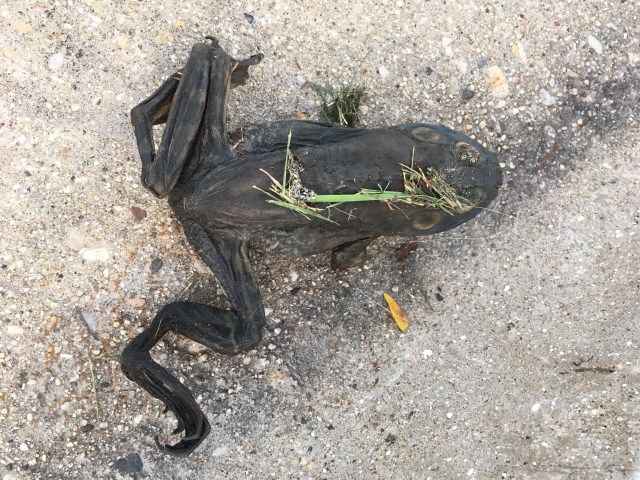
Frog 1.jpg

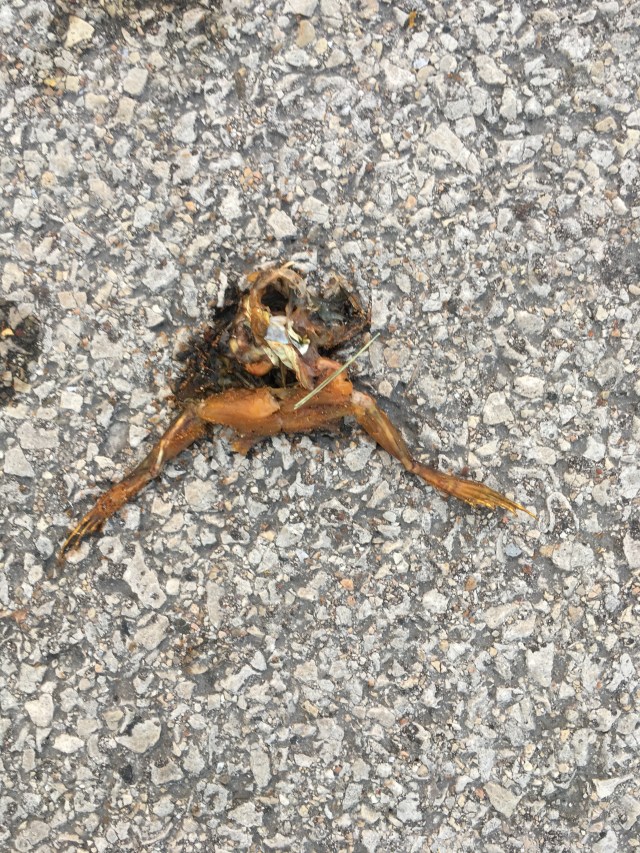
One of hundreds of frogs that met a gruesome fate in a migratory irruption. 

Last night a low-slung rainstorm raced across northern Illinois. It dropped the temperature slightly. But it raised the humidity tremendously. As I stepped out for a morning run, a small green frog bounded through the grass and hid under the car. It was an omen.


Starting up the drive from the cul de sac where we lived, I noticed frog after frog smashed on the road. Reaching the main street, the number of dead frogs increased. By the time I turned onto Orchard Road, a four-lane tributary that feeds into the Interstate a mile away, there was frog grease everywhere.

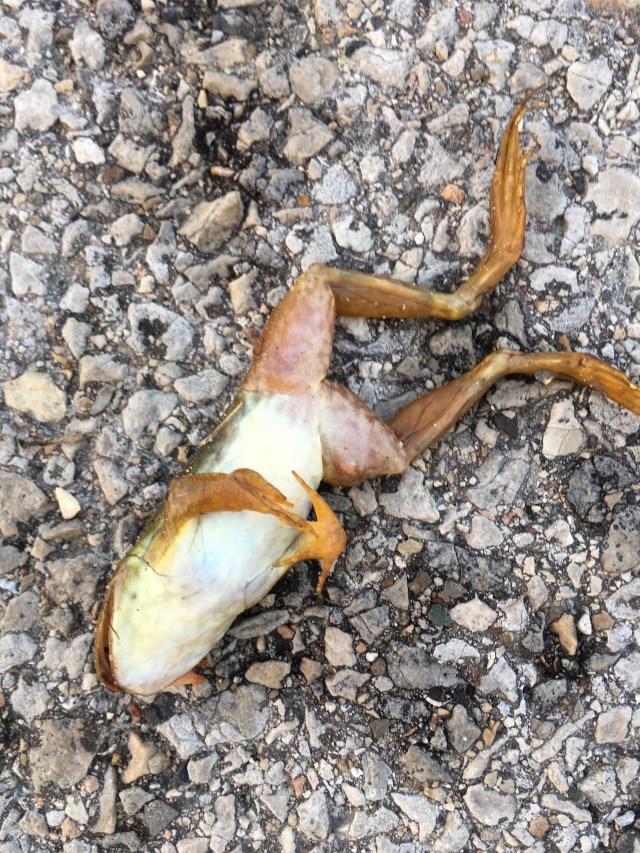
The weather conditions were perfect, it seems, for an irruptive migration of frogs. The wetland right behind our house provides prime breeding habitat for several varieties of frogs. These were leopard frogs, most of them three to four inches in length with their legs extended.

Dead on the highway

Frog 3.jpg

Nature is not so much stupid as it is determined. And determining. 

And that’s how I found most of them. Splay-legged on the road. They can seem like stupid creatures if you look at the irruption from a human perspective. How stupid do you have to be in order to jump in front of speeding cars? But the instincts that drive frogs out of a safe pond to find new environs is what has made them successful for millions of years.


Nature plays harsh with number games. Frogs gather in spring to sing and breed. Then they lay egg clusters that cling to plants until tadpoles emerge. Those wiggle around in the pond or wetland until their tales absorb into their bodies and their legs emerge and strengthen enough to swim. Frogs are very good swimmers you see. Far better than human beings. They use what we might call a combination of breast stroke and butterfly to kick their way through the water.

But they have lots of predators. Other frogs will eat them, with bullfrogs sitting at the top of the food chain in North America. But all frogs are merciless predators. Back in college, we had to collect six or seven species of frogs for our field biology class. Catching them was hard work in the cold springs and streams around Decorah, Iowa. My legs were stiff as boards for track practice that afternoon because I’d wandered around in fifty-five degree water most of the morning. But I finally had them all, and proudly placed them in an aquarium in our dorm room for safekeeping overnight until bringing them into class the next day.

When I woke the next morning to check on the frogs, I looked with horror upon the scene inside the aquarium. The leopard frog had chomped onto the body of the tiny chorus frog, whose legs were sticking out the craw of the bigger frog. I reached into the aquarium and squeezed the sides of the leopard frog, whose mouth popped open. Then I took the chorus frog and put him into a cup away from the other frogs. “You bastard,” I hissed at the leopard frog.

But he was only doing what leopard frogs do. Catching an easy meal was great fun for him in the aquarium.  Why had I assumed that one frog would not eat another? Again, my selfish human perspective was imposed on reality.

Wasteful or not?

Frog 4.jpg

Nature is every bit as wasteful and merciless as it seems. Humans are supposed to know better.

As I ran down the road this morning the paste of frogs on the road seemed so wasteful. Yet I fully recognize that nature does this all the time. Frogs breed and migrate in the thousands because nature requires such massive distribution in order to take advantage of niche opportunities. If 5,000 frogs get squashed but 200 find new habitats and 10 of them thrive to breed in new locations, that is considered a success in evolutionary terms. For some people, that kind of math is hard to buy. But it is the truth.


Human beings have done precisely the same thing throughout history. The people who occupied North America long before Europeans came across the Atlantic had long emigrated from Asia, likely traveling over what was either a land or ice bridge in northern climes. They built entirely successful societies with advanced knowledge of mathematics and astronomy. Some spread over the central plains and followed bison herds for food. Others made it all the way to the East Coast, and these were the people encountered by European explorers, who sooner or later migrated to other shores and irrupted like Spanish, English and French frogs across the country we call America. They all fought frog wars against each other too. So the cycle of frogs on the highway of history never ends.

Consequences

It looks like the leopard frogs are winning in America. But appearances can be deceiving. Migrations have their consequences, and so do attempts at ruling niches in ways that aren’t sustainable. Ponds dry up and streams stop flowing when heat waves strike. That can kill off entire colonies of frog. We learned that the hard way with the Dust Bowl. Rain does not follow the plow. We are learning it all over again with climate change.

Nor does money flow from rock. Two years ago I had a creative assignment to write content for a financial advisor who was nearing the end of his life. His mind was still sharp but his body was crumpling into itself from the legs on up, with limbs shriveling like frogs legs back into a tadpole tale.

Frog 5.jpg

Investors love to believe the Market has their best interests in mind. It doesn’t. 

Yet he still felt a sense of mission. And one of his key objectives was to tell the truth on what he knew about how the financial investment system operated in America. So we met several times as I worked on versions of content for his company brochure and website. Each time we met he grew a little more exasperated because I was not harsh enough in tone for him. “I can’t say this outright I know, because the industry has regulations about what you can and cannot say,” he told me. And this I knew. Because I’d written many types of financial content before.


“But it’s like this,” he intoned. “The typical investor is a loser before they even put any money into a product. I know this because for decades I worked the buyer’s side of the market. I’m the guy who purchased the stocks and investment products that go into investment trusts and other products. And I know for a fact that there are very, very few investment products that are honest with the consumer. The typical investor is forced to buy a bunch of dogs along with the better products. They mix it up to make it look good, but the money’s made by layers of takers before the investor ever earns a single cent. And the real good stuff is reserved for the buyers. It’s a scam. Plain and simple.”

What my clients was saying is that average investors have odds that are not much better than frogs on the highway. Every once in a while, this fact gets exposed when the market turns on everyone. That happens when the Big Frogs get cocky from preying on all the little frogs. They get greedy and leave the pond gobbling up everything in sight.

That was the Great Depression in a nutshell. Also the Great Recession of 2008. The Big Frogs got caught out in the open. The breeding stock, as it were, almost got scorched in the sun. Run over by the Market. Crushed by forces even they could not comprehend.

But the Big Pond was merciful this time around. The government bailed out the Big Frogs by dragging a stimulus hose out to the Big Frogs who lay gasping in the ditches. It was the civilized thing to do for frogs that were too big to fail.

Feeling Froggy

Frog Big.jpg

This Big Frog also bit it. 

The lesson of all that speculative arrogance and froggy greed was not long retained. The frog population got all up in arms about being ignored out there in the fields. “You forgot about us!” the little frogs all complained. “What about all those frogs that got run over on the highway? How are you going to prevent that from happening? We need Rain On Demand! You need to make it rain so that we can find new ponds and not get crushed on the highway!”


So the little frogs all got together and elected a Big Fat Frog to the President of the Frognited States. The Big Fat Frog made some amazing promises, like the ability to make it rain on demand so that all the little frogs can hop around with no fear of drying up in the wind or the sun. And now the little frogs are now jumping all over the place excited that they’ll never get dry again or be smangulated by the Market and run over by the Heartless Cars of Oligarchy.

It’s an ugly scene, for sure. And poor Big Froggy keeps croaking on Croaker or Twitter or whatever you want to call it.

But when Big Fat Frog gets run over, which is inevitable considering how big and fat and obvious he is on the road, there will be shock among all the little frogs who believe in him. “It’s the Mainstream Media!” they’ll yell. But in fact it will be the Heartless Cars of Oligarchy who do the evil deed. And they’ll stop, wipe down their tires and keep on driving. Because it does not look good to have the spattered parts of frogs big or little on the shiny hubcaps of permanent privilege. So unseemly, you know.

Frogs on the highway.


Posted in blood on the highway, Christopher Cudworth, cycling, game of chicken, running | Tagged , , , | 4 Comments