Self-medicating is not the way to go

There are plenty of habits than can turn into addictions. For example, food is meant to be a form of sustenance, but in many ways it is also a source of comfort. That’s why it is possible to fall into the habit of “eating our feelings.” That’s particularly true in times of stress or anxiety.

The goal is always to balance these potentially bad habits with good ones. In part, that’s why we exercise. It’s a habit that helps us maintain a healthy weight, cope with stress and build a positive lifestyle. But in excess, even too much exercise can become an addiction. I’ve been there. I know. Along with other excesses, such as…

Sex

Too much desire for sex can produce the same problem. What is normally a joy can turn into an obsession. Then there are acquisitive habits like shopping, or owning guns, that aren’t typically characterized as addictions. But I would argue that they’re no different than any other form of habit turned into a dependency that can lead to addictive mental attitudes.Whatever we crave too much or think we cannot live without is a potential source of addiction.

Social media

Recently it is addiction to social media that has grabbed cultural attention. I’ll confess to having a difficult time with this issue. I’m a rabid attention-grabber with a strong need for approval and it’s difficult to avoid over-posting to social media. The repartee itself is addicting. But so is the intense emotion that comes from arguing on the Internet. As a competitive person by nature, it is all I can do sometimes to pass by a comment that seems to beg a response.

I also like the feeling of doing something new every minute of the day. Of course, Facebook and Twitter and Instagram and even Linkedin all know that this is how users get engaged and addicted to their platforms. Then they have you. Your brain soon becomes “wired” to the chemicals released when strong emotions enter your brain.

Brain chemistry

But when it comes to brain chemistry, the most obvious form of addiction is to drugs and alcohol. Those substances have uniquely addictive qualities because they flood your brain. That’s why they qualify as pure, unadulterated addiction.

My parents were never frequent drinkers, so my upbringing was relatively alcohol-free. I didn’t even have my first beer until junior year in high school. After that I learned to party and eventually, even as an athlete, had a few episodes in which drinking got out of hand. It was the risk-taking freedom of being drunk that often appealed to me. But there was also coping with anxiety.

In particular, I recall a cross country party after my freshman season in college. There was a big vat of what was called Wapatuli that had grain alcohol or some other high-proof contents mixed in. Thirty minutes into the party I was wiped, but kept on drinking. I wound up being carried back to the dorm room and left to sleep it off.

Except I nearly didn’t. The next morning my kidneys and liver hurt like hell. It was a stupid choice to drink that much and I could have died quite easily from alcohol poisoning. That would have been the end of me. Done. Finito. Bye-bye.

Boozing it

Over the years I’ve learned how to moderate my drinking and enjoy having drinks of one kind or another with meals and such. Wine. Beer. Long Island Ice Teas while out on a Friday night.

And whisky. I’ve learned to like whisky. Most of all, the taste of Jack Daniels Tennessee Fire (cinnamon) and Honey Jack. They are fun to drink when poured over a glass of big, thick ice cubes. That’s habit-forming. I used to mix Coke with Maker’s Mark and always drank Jack and Cokes at weddings. But the straight-line consumption of Jack Daniels was not on my menu until about four months ago.

Anyway, I got into the habit of having a glass of Jack probably 4-5 nights a week. If I were to answer those questions at the doctor’s office about how much I drink on a weekly basis, they might ask, “Can you go a night without drinking?”

Reeling it in
That’s the question I asked myself last Saturday afternoon when, about halfway through the day, I began to look forward to that evening drink. And I thought, “Okay, that’s not normal.”

To be honest with myself, I have been self-medicating a bit. The stress of the Covid crisis and the politics that go with it have been affecting my mood. Then there are concerns for my kids’ well-being, and other family issues. Money. Making it. Managing it. All the things that everyone else in this world has to deal with. I’m nothing special.

But I’ve dealt with habit-forming addictions before. While going through eight years of cancer treatment as a caregiver for my late wife, there were times when the stress got to me. Doctors prescribed Lorazepam, an anti-anxiety drug, to help me deal with the pressure and also to get some sleep. It worked. But then I forgot to stop taking it. Finally a physician took a look at my charts and asked, “Are you taking this drug for a reason?”

I explained the history and he said, “Well, you’re really not supposed to use that long-term.” So we began a withdrawal period. Slowly I cut down the size of the pills, which were not that large to start, and within four weeks I’d eased out of usage.

But even in that waning period, I could feel that drug in my brain. I could feel it. could sense it going to work, easing off the anxiety. Letting me have my noggin’ back. So I appreciated its benefits. But it was time to let it go.

Stabilizing doses

These days I take a stable dose of Citalopram, an anti-anxiety medication that also has anti-depression aspects. It is managed through visits every two years to a psychiatrist, the physician who recommended it. Years ago in place of the Lorazepam I tried a drug called Zoloft on the recommendation of my doctor. That drug made me agitated to the point of panic. As the doctor prescribing it later acknowledged, “Not every drug works for everyone.”

“YOU THINK?” I blurted to myself after hanging up the phone that day. He hadn’t warned me in advance that things like that could happen. And so we learn about our body and brain chemistry.

So I took stock of my alcohol use this past Saturday and decided that I’d leaned into a habit of self-medication. It’s easy to do. Relaxing with a drink every night is a comfortable deal. It struck me while watching the Michael Jordan documentary The Last Dance that he hardly appeared in an interview scene without a drink by his side. All that emotion and confession isn’t easily done for a man of his stature without a bit of booze to ease you through.

And that’s the lesson here. None of us is bullet-proof when it comes to self-medication. So while we all try to get through the stress of quarantine and Stay-At-Home orders, it is fine to enjoy the arts of fine drink responsibly. But be smart, and do an inventory of your brain chemistry now and then. Self-medicating is not the way to go.
Posted in Uncategorized | Tagged , , , , , , , , , , , , , , , , , , , , | Leave a comment

Dealing with anxiety in an anxious age

This pandemic anxiety and the economic worries that come it it make the world feel as if it is locked in worried state and unable to get out. Perhaps there is something to be learned from this era, because the world at large is experiencing some of what it’s like to live with anxiety when it’s a condition inherent to the mind rather than a broad circumstance wrought by disease and money fears.

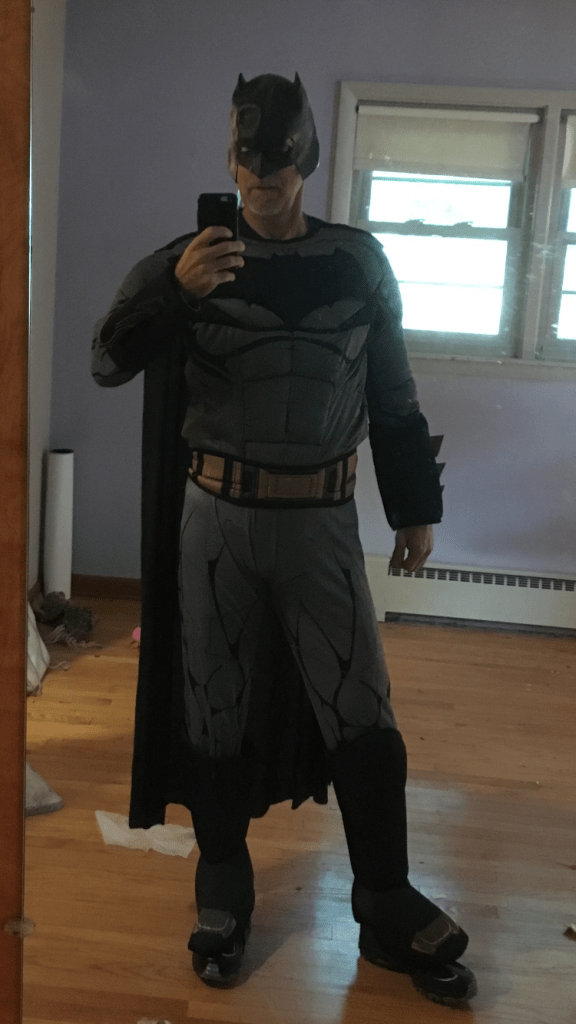
In other words, welcome to the world of anxiety, world. We’re all a form of Bruce Wayne right now, living what seems like a double life as we’re wracked with the desire to go outside as we wrestle with inner demons also aching for release.

The invisible flame

Anxiety is like invisible flame of the mind that flickers constantly and burns off rationality without heat or smoke. If you’ve ever stood near a fire yet far enough away from the warmth to just witness its effects, it’s quite fascinating to watch the curl of smoke, the crumbling blackness of cardboard and the wrinkling disappearance of paper as it all vanishes into carbon, leaving only ashes behind.

And those ashes are what chronic depression feels like. A world made gray with ambivalence and equivocation.

If that seems overly dramatic then perhaps you’ve not experienced what it’s like to battle a form of chronic anxiety and depression rather than a situational form. It’s not an easy venture. For those with the most severe conditions, such as bipolar disorders, the world flips back and forth from a joyful state to a severe battle with life itself. The people I know with that condition see the world through completely different eyes than the rest of us. It’s not much fun. Without medications to manage those conditions, its often difficult to function.

Coping mechanisms

Fortunately there are ways to learn to cope with much of what the brain can dish out. For some people it’s a revelatory period of self-discovery that helps. It might be a realization that events or conditions of the past accentuate one’s native anxiety or depression. Cognitive therapy can help. For others, it takes years of practice and learning how to recognize triggers and find healthy ways to counteract the invisible flame of anxiety and the ash-laden psychic state of depression.

There are also other conditions that contribute to anxiety, such as attention deficit disorder (ADD). An anxious mind that has problems focusing can be quite the brain to manage, and create even more anxiety and even OCD, obsessive compulsive behaviors that manifest themselves in a desire to control the immediate world around you. But even those with conditions such as these can learn strategies to help deal with distraction and the dysfunctions associated with them.

Exercise can help

Exercise can help. Just like the drug Adderal overstimulates the mind to get it to settle down, activities such as running, cycling or simply walking help wick off the invisible flame, or least get it down to a low level. Even as a child I recognized how important it was for me to get out to recess and work off the anxiety built up by sitting in class and being told to concentrate. I’d release those pent-up feelings by playing kickball or baseball, or run around playing tag in the rain or the sunshine. It didn’t matter to me. I just knew I had to move.

Nothing has changed about that over the course of my life. I moved from playground games to competitive sports. And while I was good at most of them, what emerged was a life as a runner. With some success, I kept at it through high school and then college and beyond. I even ceased working after losing a job in my early twenties and lived off the justified severance income while training and living in the City of Chicago. I won races, earned sponsorship from a running store and wrote and painted all day in my Lincoln Park apartment.

But that didn’t mean that anxiety entirely went away. There were still feelings of inadequacy, a strong need for approval and a desire to prove myself that fed the angry campaign to defeat other people in races. My self-esteem was deeply wrapped into those efforts. At times I wasn’t even happy after I’d won a race. So many athletes are like that. Their success stands in conflict with their expectations. That only creates more anxiety, pressures on the starting line and crushing angst when one doesn’t win.

Yet through all those experiences we learn to cope with our emotions. We hopefully mature and grow aspects of our mind to focus on new and better things. We marry perhaps, get solid jobs and make a life for ourselves.

That other issue

If anxiety is an invisible flame, it feeds on the oxygen of other urges as well. Sexual energy can be a real distraction. This is often the case with younger people, and a healthy sexual release of any sort can help an anxious, overactive mind, as long as guilt doesn’t enter the picture and make things even worse.

That guilt cycle has its religious roots, and fear of sin is a major factor in mind control, especially in the repression of those feelings. Yet no matter what the priest or pastor or psychotherapist with issues about sex has to say on the subject, much of the world has discovered that sexual release is a good thing, and there’s no going back now.

Guiltless tools

But those of us who run and ride and swim have a relatively guiltless tool to help us cope with anxiety in an anxious world. As long as we don’t get so obsessed that the other important things in life get ignored, a daily dose of exercise is a place to open up the mind, find perspective and perhaps most importantly, get the fuck out of the house.

It’s been said that exercise is the cheapest form of therapy. But with $150 running shoes and $4000 bikes, that’s not exactly true, now is it? So let’s change that around a bit and say that exercise is an investment in good mental health. That’s a bit more realistic and honest. So don’t worry yourself about it.

Posted in aging, aging is not for the weak of heart, anxiety, running, sex | Tagged , , , , , , | Leave a comment

An overflow of concern for our world and our climate

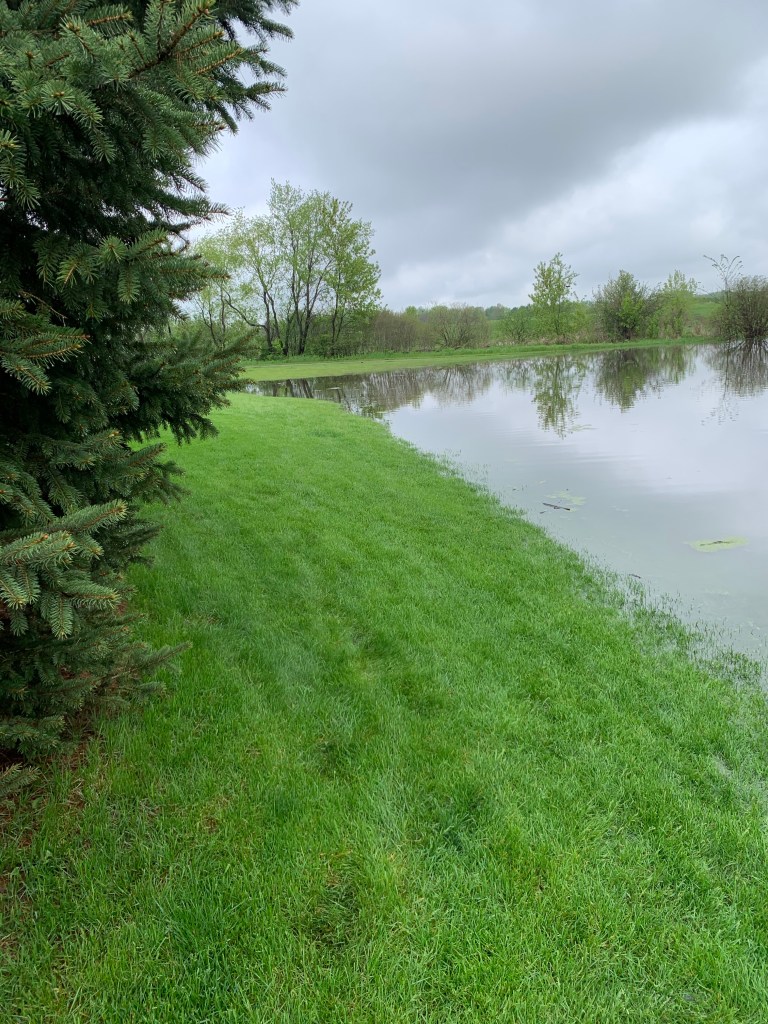
Our “lakefront” property where the wetland overflow heads for the next culvert installed by engineers 15 years ago.

Yesterday during my attempt at a three-mile run, I met up with flooding at an intersection where a road managed by a local township connects with streets within the jurisdiction of our village. The roads were completely underwater. Flooding from nearby farm fields poured over suburban lawns. And the rain kept coming.

It was all headed downhill toward the street drains, but those were under two feet of water and sucking hard to keep up. It was a classic case of lack of “downstream” consideration in which everyone shucking water off their land seemed to suffer from lack of concern for where it all might end up.

Every gutter in this world has a purpose, but there is a need to coordinate those purposes or someone down the hill gets to pay the price.

A resident of the neighborhood where the flooding rushed toward homes told me that before he’d moved in, the people living on his cul de sac had once been able to kayak around the circle. It was approaching that level yesterday. It was a Noah and the Ark moment. These patterns are repeating themselves.

Watered down excuses

I turned around and went home because my path at that intersection was blocked in all three directions. Actually I was glad to ditch the run because my body was pretty tired from riding 55 miles the day before in enormously windy conditions. Plus my watch was dead for lack of a charge and it all seemed to be telling me to bag it for the day.

Back home I walked behind our property and was impressed with the water levels rising out of the wetland. There’s a beauty to prodigious amounts of water as long as it’s not in your basement.

The first year we moved into this home there was perhaps a week or so during the seasonal cycle when flooding took over the bike path behind our house. Now that condition lasts all year long, every year.

People walking, riding or running on that path are now forced tocut across the grassy expanse of quasi-Park District property outside our lot. But right now, that entire floodplain is covered in water as well.

Engineering matters

But here’s the funny part. That’s how the floodplain management is actually supposed to work. The engineers who planned the landscaping around our neighborhood built a series of culverts that transfer water from one type of wetland to another. It works in a stairstep fashion. There’s a big pond to the east. That’s all open water and probably ten or fifteen feet deep in the middle.

But when heavy rains come, that pond has a culvert that dumps overflow to the west into the swamp zone. That’s where most of the wildlife lives. We have wood ducks and blue-winged teal, sora and Virginia rail. An osprey even visited our cottonwood trees a few weeks ago, and there are great blue herons, great egrets, green herons and killdeer hanging out every day in search of a meal.

We love the wetland, and the bike trail was installed to give people a nice view of the water beyond the rim of willows and cottonwoods that line the edges. The trail bends its way around this swamp and wetland zone. It’s at water level however, and cyclists and runners largely now come to a halt because the path is covered with water all year. Some elect to ride through, but most either turn around or cut across the often mucky ground that borders our property.

From what we can ascertain, that bike path was installed without much consideration for the overall floodplain engineering. It was planned for aesthetics but not practicality.

100 year rains

I well recall the rains we received in this area back in 1996. Entire neighborhoods were immersed. The basement of the home I owned back then was filled with water. Some friends found their basement two feet deep in water. Their television was floating in the middle of the room.

Sometimes we hear about “100-year rains” and these are apparently the calculations used by hydrologists to predict what water levels will do depending on how many inches of rain fall in a given timeframe.

But those calculations are probably based on what one might call “normal” data and weather records from the last one-hundred years or so.

Yet in that one-hundred years, the human race has completely changed the climactic dynamics. Industrial pollution and other sources have altered the 100-year perspective in almost precisely that amount of time.

Now we’re seeing the effects of climate change in rising temperatures. Warmer global temperatures are melting ice caps and carving chunks off Greenland and Antarctica.

It might be wise to revise those ‘100-year’ predictions and consider what’s really taking place on our planet before it’s too late.

Landscape and topography

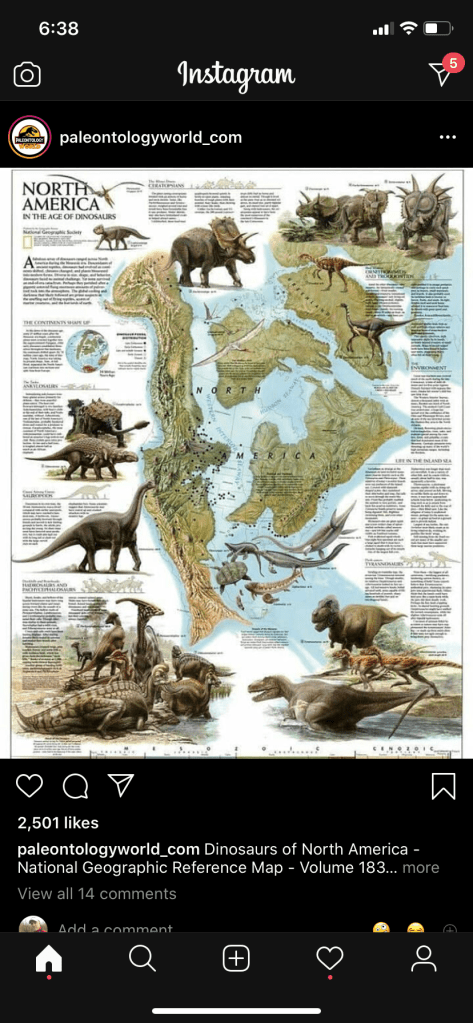
But here’s the problem. The human race tends to be so focused on the “way things are” we seldom seem to take into account the ways things once were, or could be in the future as climate changes. We have clear evidence from the fossil and geological record here in North America that our continent was once divided into thirds by giant seas. These teemed with life and the deep layers of limestone on which we live our lives, plant our crops and run or ride across hill and dale are the product of millions of years of forces far beyond human control.

Yet now we’ve become so populous and impactful our waste products have changed the composition of the atmosphere on which all life depends. CO2 emissions from a spectrum of human activities are holding warmth from the sun inside our sphere. Honestly we could see some sort of return to that former continental flooding if sea levels rise as predicted due to climate change.

Weather intensity

We are seeing more intense weather events. Sometimes these changes seem counterintuitive, such as the polar vortex of cold air pouring down from northern climes. How could global warming cause colder temperatures? It’s cause and effect, you see. When ocean currents warm and shift, the atmosphere is affected as well. Air masses get pushed around.

We’ve long known that El Nina and El Nino changes have massive impacts on climate systems. I can’t help believe that the water lapping at the slope in our backyard is not somehow related to changes at the global scale as well.

I’ve lived sixty-two years on this earth. I’ve watched massive changes in wildlife populations and behavior. Some of those are good, especially when human beings take measures to restore native habitats. The wild things come back. The same thing happened with reductions in certain pesticides fifty years ago. Bald eagles, osprey, peregrine falcons and water birds all made a comeback.

The error of our ways

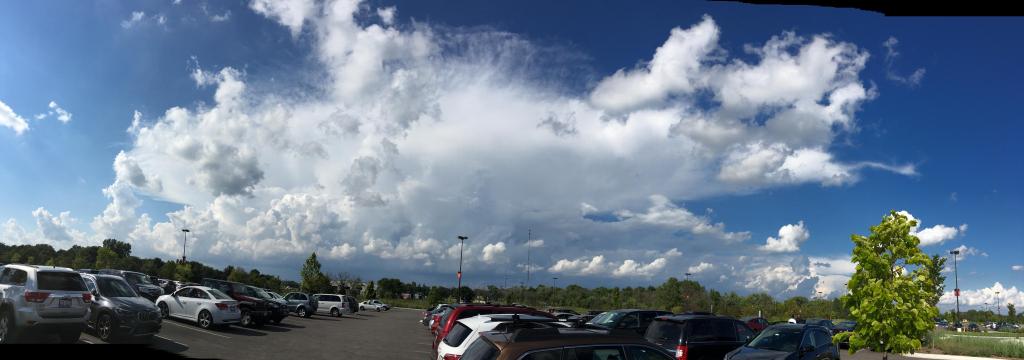
A storm approaches.

So it’s not impossible for us to correct the error of our ways. Some speculate that pandemics related to viruses around the world may be more common due to climate change. Even here in North America, back when people did not understand the relationship between mosquitoes and disease––and wetlands were far more common the landscape––malaria was a problem for many.

What we need to realize is that these changes are a constant part of life on earth. Evolution describes them and our science and medicine respond to them. But we may also need to consider how we “engineer” everything from our climate to the land and water upon which we depend for a living.

We’re long overdue for an overflow of consideration on that topic. The climate change deniers of this world are finding out the hard way that whether it is a flood of water or a flood of disease, denying the problem is not the way to fix it.

Posted in Christopher Cudworth, we run and ride | Tagged , , , , , , , , , , | Leave a comment

Keep Calm and the stones will speak to you

Today I’m in the company of someone having a procedure at a hospital. The facility is massive and beautiful like so many others that I’ve visited over the last fifteen years. During all my duties as caregiver to family members I’ve spent many days and nights finding ways to keep a calm head and heart in hospitals much like this one. It hasn’t always been easy.

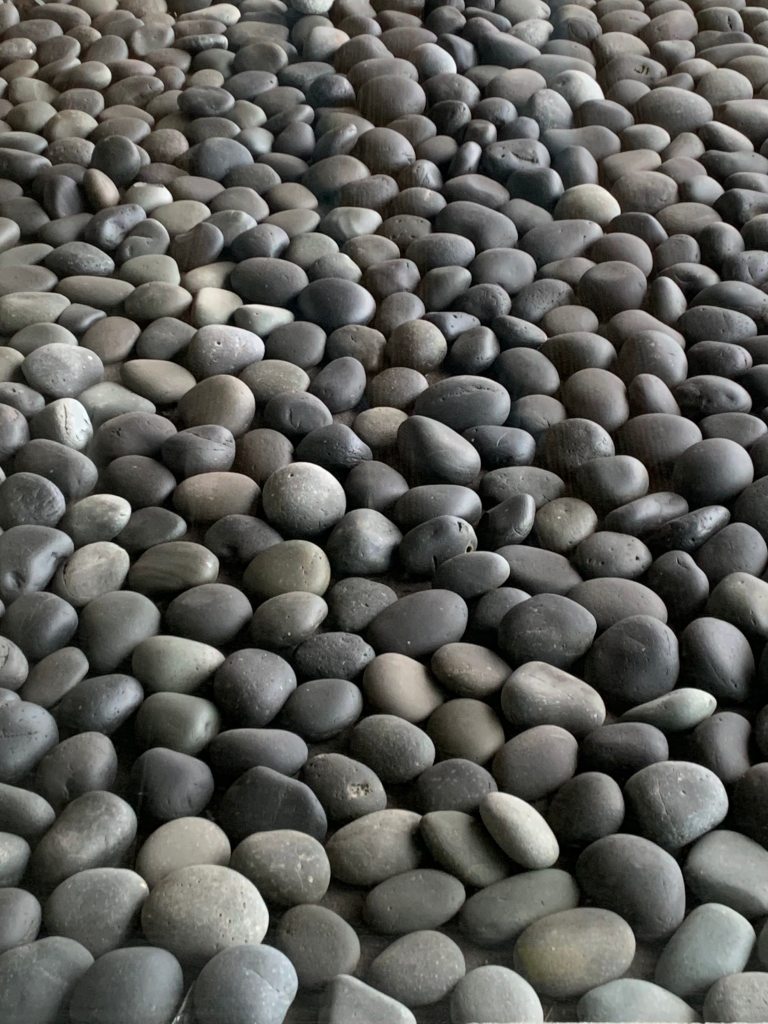
Today I walked to the edge of the building to look outside. One of the interesting features of the architecture is the layers of smooth stones used to cover the roof just outside the windows. There are thousands of these stones resting in place and yet their patterns also suggest movement.

Qualities of stone

I’ve always loved stones and have collected many of them over the years. I don’t believe they possess magical qualities or emit forms of energy or healing as some people suggest. But their presence is still magical in terms of consideration and they do depict a form of energy in this world. That’s how I look at them anyway.

Stones at the University of Chicago Medical Center.

I used to have a small zen garden with an inch of sand and some favorite stones in it. It was pleasing to drag the small rake around the surface to create patterns around those stones. Some were rust red. Others were pale or dark gray. A few were black or white. They were fun to arrange. It was fun to do.

Our garden outside our home has a collection of smooth reddish stones gathered from the shores of Lake Superior. Some are nearly a foot across and flat. Others are slightly round and robust. They are arranged like a waterfall down the incline of the garden edge. On rainy days they shine like dull gems.

We pulled many of them from an iron-tinged stream that trickles into the lake from the steep hills beside the Porcupine Mountains. Others we dug out of the warm sand along with bits of smooth driftwood. All these we piled into the car and brought back to Illinois over several different trips to the Upper Peninsula.

Those stones have always reminded me of time out of mind. Moments when there was no hurry to do anything but pick up objects that catch your eye. That is the height of calm to me. Being absorbed in some activity that doesn’t have a specific goal other than to enjoy the moment is one of the great pleasures in life.

Keeping calm alive

It feels like those stones on the roof of this medical center were put there to bring people into a contemplative state, to keep calm alive amid the deadening silence of a waiting room. The stones represent some non-transactional form of wealth that comes to us principally through the spirit. Like stars in the sky, we take comfort in the fact they are there.

I get the same feeling many days while out on the run or riding in the country. Just taking in the sights while moving along. Not counting footsteps or feeling any sense of acquisitive need, because those moments are the experience. These days they often show up later as data, but that’s incremental too.

Stones abroad

Last October we traveled by cruise from the west to the east of the Mediterranean Sea and back. Along the way there were plenty of shore excursions but by the last couple days I was feeling a bit strung out from all the food, the booze, all the running around amid the ship’s floors and quarters.

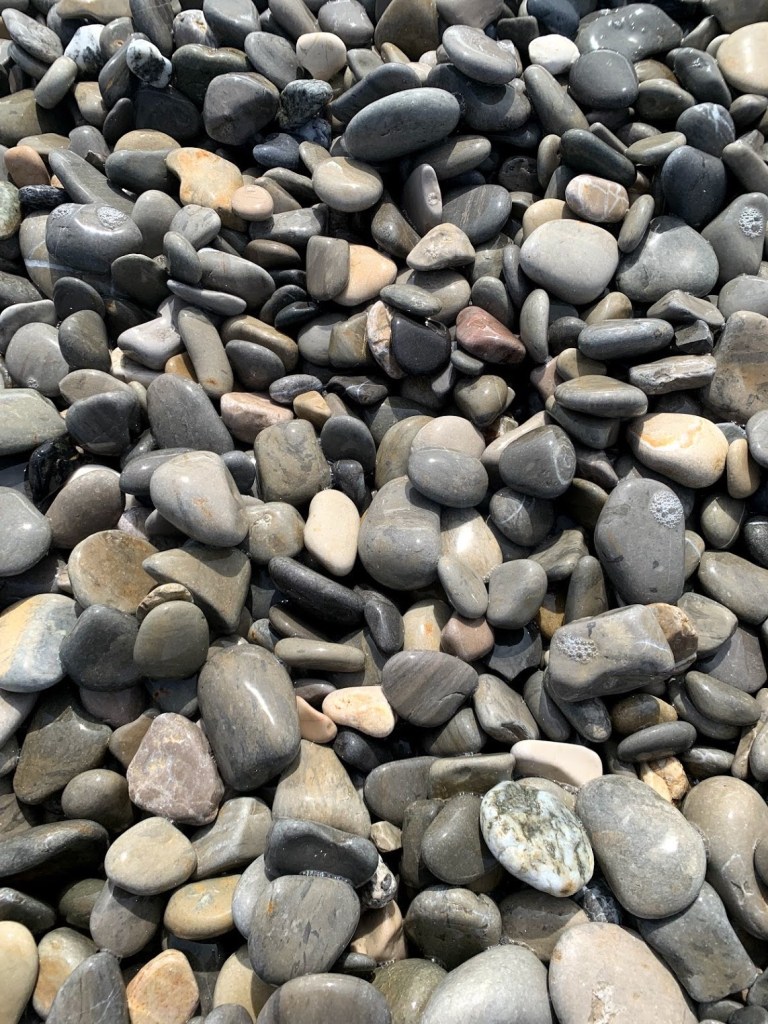
So I left the family and walked down to the shore of a French city. There were people scattered around the beach like bits of colorful paper. When I sat down, it was pleasing to find the entire surface of the shore was composed of millions upon millions of smooth stones.

Stones on the beach in Cannes, France.

Immediately I felt calmer. I put my hand into the stones and lifted a few to feel them. There were gray beauties and pale lovelies. Some held patterns. Others were gloriously plain. The entire history of the earth seemed available to me through those stones.

I gathered a few and put them in my jacket pocket. They were coming home with me. Now they rest on the oak table next to my writing desk. They remind me to keep calm, and that is how they speak to me.Listen to what the stones are there to tell you.

We are all alone and all together.

Posted in running | Tagged , , , , , , | Leave a comment

Regarding situations, road trips and personal history.

In the spring of 1982, the President of the company where I worked walked into my office and said, “We’re going to consolidate marketing in Philadelphia. We need you to move out there to be with the rest of the staff.”

That came as a shock. But not totally. I’d already flown out to Philly from Chicago a few times for meetings, and the VP was ramping up promotions for the investment banking firm that was growing fast thanks to the aggressive establishment of investment trusts across the country.

That summer my friends held a goodbye party. In August I moved east 750 miles from my home outside Chicago to a town called Paoli on the train line west of Philadelphia.

That move meant leaving behind a girlfriend that I’d met the previous fall. We were growing closer and the relationship would ultimately survive that move to Philly. We got married three years later. But first, we’d endure a long-distance romance without email or social media. We wrote letters mostly, because long distance phone calls were expensive.

The story of the benefits of moving to Philly has much to do with meeting a bunch of guys in a club called Runner’s Edge. Training with them from the running shoe store a block away from my apartment in Paoli was actually a life-changing experience. A trio of brothers was involved, with Richard, Peter and John Crooke all leading a group of some of the best runners in the Philly suburbs. So there are no regrets there at all. I learned quite a bit from them all and my times improved.

But then the job came to a crunching halt. I saw signs along the way and wondered what the heck to do about the situation. One morning on the train into work I sat next to a friend from Chicago that had also been moved to Philly as an addition to the wholesale investment team. He turned to me and said, “I don’t know what you guys are doing over in marketing. We’re not getting anything we need to sell.”

I was admittedly young and naive about the investment world. But I understood that warning loud and clear. I could also see the reasons why it was true. The man and woman running the department seemed more in love with the notion of marketing than its execution. Plus they were at least flirtatious and possibly fucking the daylights out of each other. In any case, it was a major distraction from the job at hand.

We’d gotten a bonus check of a couple thousand dollars at Christmas, so we knew the firm was doing well. But come April, the Big Boss pulled me into his office and slid an envelope across the desk. Inside was a severance check for $7,000. “We thank you for coming out here,” he told me. “But we’re cleaning house in marketing and starting over.”

Knowing what I thought I knew, I couldn’t blame him. Sadly for me, that company went on to do great things. Had I somehow shifted over to writing rather than graphic design, perhaps I’d have survived the shakeout. Instead I walked out of the office that day a bit confused but also relieved.

And then I went on a road trip. As people are wont to do when life around them doesn’t make sense.

Down the eastern coast I drove. All the way to Assateague Island. While walking through the pine woods I was startled and overjoyed to find large Lady Slipper plants blooming in the shaded soil. It looked like a fantasyland. There were migrating birds singing in the trees and nature seemed to welcome me into its arms.

I went for a long run up the largely empty shore and stripped naked to go swimming in the large waves. Another couple was splashing naked in the water as well.

When I got back to Paoli I packed up a batch of my stuff and drove back west to Chicago. A month later I flew back out to Philly, rented a U-Haul truck and stuffed everything I owned into the back of that stupid truck.

Before leaving for the road trip down the coast, I’d plucked a jack-in-the-pulpit from a nearby woods in order to do a painting. It was still sitting in a large vase the day that I returned to clear out the apartment. The plant had absorbed so much water it stood more than a foot tall. I wasn’t sure what that growth symbolized, but it felt like an act of defiance to leave it there, vase and all.

On the way home the engine of the U-Haul van stalled on a long incline in the Pennsylvania mountains east of Pittsburgh. I’d driven a few U-Hauls before, but nothing like this had ever happened. Rolling backward on the turnpike is not a good feeling. Still, I kept my nerve and gently pumped the brakes between attempts to start the damn truck again. Finally it fired back into action and I drove up and over the pass with an emotional sigh of relief.

Stopping in Toledo for the night, I parked the truck and locked it up tight outside the motel. Then I stepped out into an open field and watched fireworks lighting up the night. It was the Fourth of July. An Independence Day of sorts. But from what?

I guess it was independence from thinking anything is ever secure, forever. Not a “situation” as one might call it. Not a relationship or a home. The only thing we have is our brains and some determination. That’s all that keeps us moving or brings us back to whatever we call home again.

The rest is history.

Posted in running | Tagged , , , | Leave a comment

Save us from the time of trial

In July of 1980 I visited the Gunderson Clinic in LaCrosse, Wisconsin to have laser surgery performed on the torn retina in my right eye. A local optometrist had spotted the problem during a routine eye appointment. He’d been going through the motions when suddenly he stopped and said, “Whoa.”

I said “What Whoa?” Literally. Said that.

He said, “Oh, nothing.”

But I pressed him to tell me what he’d seen. And that led to being sent to an opthalmologist who prescribed a cauterization of the tear in the lower part of my retina. They hooked me to a machine the size of a Volkswagen and put a suction device directly on my eye. I hyperventilated and fell out of the chair. I wish I could say the suction coming off my eye made a large “POIT” noise like those old Mad Magazine cartoons used to show, but the truth is…I fainted.

The nurse jammed me back in the chair and we got the surgery going. “Breathe,” she told me. And I did.

No running

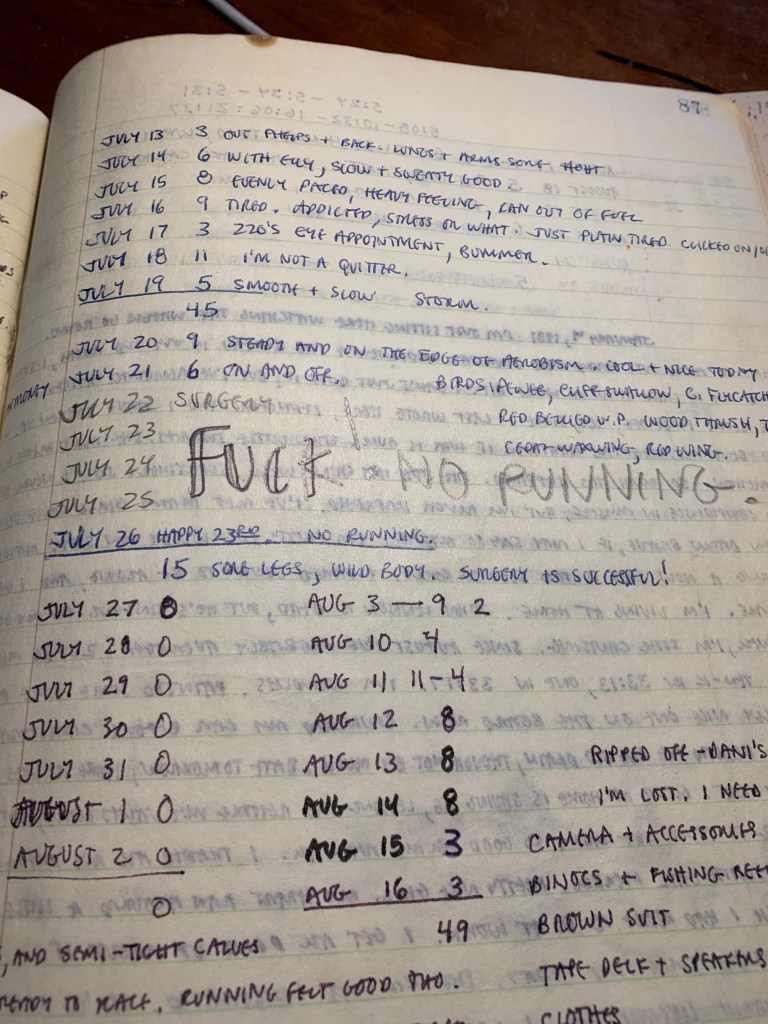
The surgery was July 22 and I was told not to run for a week or so. Up until that point I’d been averaging 45-50 miles a week in a post-collegiate training regimen that was fitful and desperate because I’d been working as an Admission counselor driving all over the state of Illinois recruiting students for my alma mater.

Come July that was done. And in the weeks after my surgery I ran not a step. Just slow walking and lots of rest. When released from that relative bondage, I shot right back up to 49 miles the following week and then traveled north to Minneapolis to spend a weekend visiting friends and catching up with my college girlfriend.

But that first night in the Twin Cities I stayed at the apartment complex of a friend and parked my Plymouth Arrow hatchback out in the lot next to some railroad tracks. I was moving out of my apartment after my Admissions job and planned to stay a couple weeks with my girlfriend before moving back to Chicago. In my trusting youth I left all my personal belongings in that car overnight. Upon stepping out in the morning light, I saw the remains of my possessions scattered all over the parking lot. It looked like the whole thing had exploded.

Everything of value had been taken out of the car. Stolen by thieves who sorted through it like a band of raccoons sifting through a garbage can for food. I made the list of things lost in my running journal. “Ripped off. I’m lost. I need Jennifer. Camera and accessories. Binocs and fishing reel and rod. Brown suit. Tape deck and speakers. Clothes. Portfolio. Shorter running jacket. God teaching me simplicity? I’m weak for now.”

Things lost

Yes, losing all that stuff really hurt me. In particular I’d lost the Olympus OM-1 camera that my parents had given me for graduation. The other painful loss was the deerskin art portfolio that my girlfriend’s parents had given me for a grad present as well. She never forgave me for losing that portfolio.

As for God teaching me simplicity, that was one lesson well-learned. I ultimately shed the girlfriend along with the Admissions job that I’d taken somewhat out of desperation coming out of college. It involved driving 1500 miles a week but I’d made it happen month after month and met the quota of 70 enrolled students that was mapped out for me at the start of the job.

Those three or four weeks were a harsh immersion in learning what’s important in life. From having surgery to save my eyesight to losing treasured possessions, it all just about gutted me. But soon enough the ordeal was over and I realized that survival is mostly about perception. You can get through some awful stuff if you keep your head intact. The running helped, of course. It saves us through times of trial. If we’re lucky.

Posted in running | Tagged , , , , , , | 1 Comment

A snake on the path to reality

This is not my photo. But it depicts a milk snake much like the one I encountered. MIne was even paler.

Yesterday while running in the forest preserve where our cross country team first held races more than forty years ago, I started out on a section of path where the sun was beating down on the earth. Most of us don’t stop to think about how the sun warms the ground. But creatures that live at that level know the intimacy of contact with the soil.

To my pleasant surprise, I found a milk snake stretched out on the path. It laid there still as a stick. It’s beautiful pale markings were bathed in sunlight. For a few moments I studied its pale coloring and recalled how few times I’ve actually seen milk snakes in the wild. Some people like to capture or breed them and keep them as pets. I think they belong where they’re found. In the fields and forests.

The tarsnake of snakes

That’s one of the tarsnakes of creatures from the wild. They’re worth far more out there than in some aquarium or cage. But it is the acquisitive nature of some people is to take wild things prisoner for their own pleasure. I ask myself: What right do we have to do that other than for scientific study to learn what they need to survive in the wild?

Having seen enough snakes crushed by tires or feet over the years, I wondered whether the milk snake I found on the trail was dead or alive. Usually a snake that sees a tall human standing over it will slink away. Not this snake. So I reached down to touch it. No movement. Then again. This time it snapped into action and crawled into the tall grass next to the trail. It was a beautiful, amazing creature.

It had been sleeping in the sun. Taking a solar nap. Soaking up the rays. Getting its Vitamin D. Picking up warmth for its blood.

I hated to disturb it, but I also did not trust that the next person on the trail would be so impressed or so kind as to let the snake abide in its domain. Some people hate snakes. Fear them. Others run them over if they get the chance. If kids on mountain bikes came tearing along they might not even see the snake before it was too late. In all my years of running and riding, I’ve seen too many dead snakes to count.

The strangest encounter of them all was the day I met up with a guy in a cowboy outfit that had killed several snakes and wanted to show them to me.

Serpentine fears

Even the snakelike appearance of a natural object is enough to give some people the creeps.

Perhaps the fear of snakes is native to some. The classic tale of the serpent in the Garden of Eden depicts a serpentine creature that talks Eve and then Adam into following its instructions to eat a forbidden fruit. It quotes the literal word of God to sound convincing, but its objective is to take control of the couple through manipulation. For centuries that story has been used to warn people into obedience. But Adam and Eve were obedient to a flaw. They fell for the oldest and longest trick in the book, using what appeared to be religious authority to confuse their conscience and take them under its control.

Later when John the Baptist and Jesus confront the religious authorities for their manipulation of the masses through legalistic tradition, they brand them a “brood of vipers” for their collectively conspiratorial methods and lashing out at all those who oppose them.

So the real “snakes” in this world––and we are speaking allegorically here–– are often the people who claim to speak for God.

Natural courses

But in most cases there is nothing to fear from snakes in the grass as long as we stay alert and don’t trod on them by accident. Granted, we don’t want to mess with poisonous snakes of any kind. For snakes, that evolutionary adaptation is both a weapon of defense and a tool of predatory power.

After the snake moved off I continued on my run, snaking my way around the rutted dirt paths where our cross country course curls through the woods. It has been a while since I ran there and this time around I marveled at the ups and downs of that trail. I won quite a few races there, and have watched quite a few more over the years.

Snaking through the woods

The course that we used to run is only used in part these days. There’s a big field where the forest preserve district expanded the property and that’s where the starting line sits these days. I ran across the field too. It was soaked after several rains and my shoes took a muddy beating. But that’s cross country in any season. You take what comes.

Toward the end of the run I glanced down at the trail and saw another strong pattern on the ground. It was a feather from a Cooper’s hawk. I’ve seen them fly down the woodland corridor ahead of me on several occasions. This feather was from a juvenile, rich in brown and white.

I wasn’t running fast. Nor was I running far. Just about four miles with birds calling and snakes crawling. For all the reasons that we run and ride, these are some of the best: to get outside means to feel good inside. That’s reality. And that’s always enough for me.

Posted in cross country, cycling, running | Tagged , , , , , , , | Leave a comment

You can’t run from guns in America

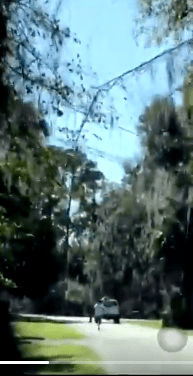
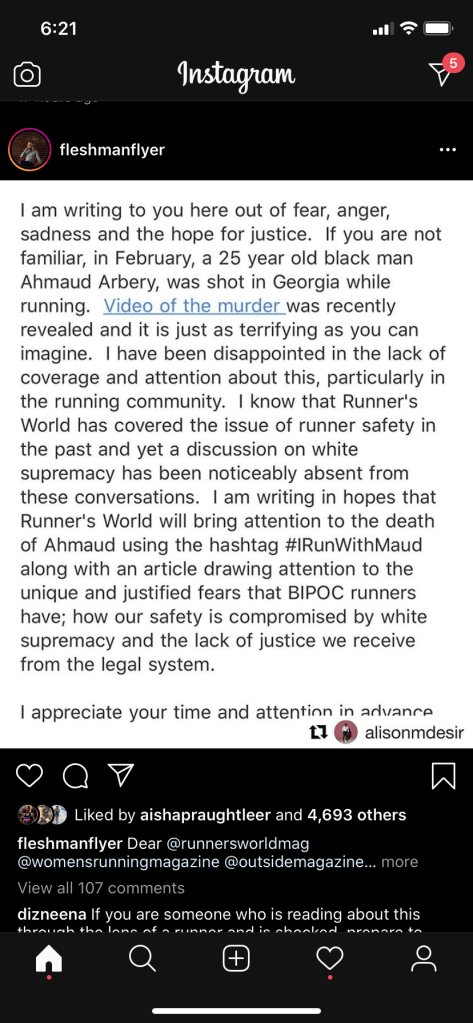
In February a man named Ahmaud Arbery was shot while out running in a Georgia neighborhood. News coverage of the apparent murder lists several alibis on the part of those who shot Arbery. Video of the incident exists, and it has the creepy nature of a gaming scenario in which the players hunt down and kill their prey.

First hand experience

Having been a runner for more than forty years, and a cyclist the twenty or so, I have written about encounters with people who don’t like what we do, and let us know. I’ve personally been chased by people who threw a knife at me, harassed off the road by a Corvette driver angry about what he perceived as a traffic infraction and struck by objects thrown out the window of vehicles. And that doesn’t count the many times my senses have been jolted by people hollering out the window, honking their horns or nearly killed by someone texting while driving.

The race factor

But the shooting of Ahmaud Arbery carries an entirely different layer of meaning. The shooting was quite likely racially motivated. The video of the pursuit of Arbery as he’s running through a quiet neighborhood captures the vindictive nature of their motivations. As such, it also symbolizes thousands of other such pursuits through neighborhoods just like this for whatever perceived slights the pursuers project upon their victims. Their “success” resulted in torture, lynchings and bombings. This is American history. This is what our country has always been about. And nothing’s changed.

Greatest nation?

I’m personally sick of hearing that the United States is the “greatest nation in the world.” It isn’t. Not when events like this have taken place for centuries now and are still occurring to this day. Even the so-called Greatest Generation did little to fix the problem of racism. People of color returning home from the war returned to a nation still ruled by Jim Crow laws. We’d defeated Hitler but done little to fix the corrupt brand of racism this country still abided through the 1950s.

The 1960s set out to cure all that, yet President Richard Nixon’s response was to arm local law enforcement with military surplus. The cities were the flashpoint but the suburbs were the perceived battleground. I once worked with a fear-driven man whose stock of military-grade weapons were kept in his house because, he told us, “I want to be ready if the n****** come up my driveway.”

So accept it or not, this is the America in which we live. There are also armed protesters storming state capitols without penalty for what amounts to terrorism in public places. This is the America in which we live.

Dying nation

And this is the America in which so many people die. More people have been killed by gun violence of one kind or another than all the soldiers that have died in wars on foreign soil. This is the America in which we live. And even when racist people in this country display hate and commit acts of violence, the President calls them “good people” who are simply “angry” and therefore justified in their motives and threats.

So this is no longer a passive game of selfishly motivated hide and seek. When the President says that it’s okay to terrorize a state capitol and its legislature by carrying an arsenal of weapons in plain sight, then tells the governor to negotiate and “cut a deal” we’re officially living in a fascist culture.

The sound of gunfire

I sometimes ride past a gun range out where I used to live in Elburn, Illinois. The sound of those weapons plugging away at targets is a familiar sound out that way. Sport shooters love to play with their weapons.

I just find it ironic that the entrance to the gun range passes right by the entrance to a local church. It makes me wonder if any of the people attending that church ever stop to think about the reasons why guns were invented. They were developed for one reason: killing. Taking life. In military or in criminal actions, that is their primary purpose and reason for existence.

So much for the theology of Thou Shalt Not Kill. Nothing strange about having a church next to a gun range? Not strange at all.

Semantic dances

Gun advocates love to dance around that fact by stating that the predominance of gun owners are “law-abiding.” And yet the sound of those weapons being fired in the video of Ahmaud Arbery is beyond disturbing. That was no gun range. That was a public street where an innocent man went out of a run and wound up dead.

Were the men who killed him “law-abiding” gun owners?

A report on the killing shared this claim: “According to an incident report filed by Glynn County police, Arbery was shot Feb. 23 after two men spotted him running in their neighborhood and armed themselves with guns before getting in a truck to pursue him. Gregory McMichael told police that he and his adult son thought the young man matched someone caught on a security camera committing a recent break-in in the neighborhood.”

In other words, those two men took the law into their own hands. Their version of the law was to track down and kill a person they suspected of burglary.

That’s the paradigm we’re supposed to accept as an indication that the United States is the “greatest country in the world?” That people owning guns are the ones who get to decide who should live or die?

That’s not freedom. That’s terrorism. That’s not liberty. That’s vigilante insanity.

Policies of brutality

Life itself is a bloody risk these days, for some more than others.

But America has allowed these brutal policies to continue because they benefit those selfish enough to dismiss gun violence as a necessary byproduct of their personal rights.

Even the police are outgunned in a nation where guns now outnumber the people that live here. All because well-heeled yet fearful politicians and non-governmental organizations banded together to fix in place a dog-whistle interpretation of the Second Amendment that suits their purposes of profit and political control. In many respects, this ‘tradition’ is a theft of freedom that causes the loss of human life, and without seeming remorse.

Things might be changing simply because the lie of ‘guns are freedom’ is no longer sustainable. Word has it the National Rifle Association is in the process of falling apart. Their director Wayne LaPierre has been accused of misusing funds and there are hints that the organization has taken Russian money and embraced foreign influence in United States policies and elections. That’s about as un-American as you can get.

Vigilante attitudes

Yet much of the damage is done. The NRA’s prized interpretation of the Second Amendment has produced a nation that embraces lawlessness and endless grades of vigilante terrorism. These range from supposedly innocent Concealed Carry laws to Stand Your Ground codes of conduct that effectively guarantee protection to those who gun down others out of fear. Those men hunting down Arbery in Georgia were simply extrapolating the worldview that their suspicions grant them authority.

The NRA even defends the the right to conduct mass shootings and commit individual killings because “the right to keep and bear arms shall not be infringed.” After every mass shooting, the spokespeople trot out the apologetic that “It’s too soon…” to talk about gun control.

Policing fear

Even our police forces struggle to know their true role in using weapons when so many people are so heavily armed. So much for the “well-regulated militia” crucial to the “security of a free state.” We no longer have that under control. And some police, fearing for their own lives or fueled by some hatred of their own are too often taking matter into their own hands in an ironic version of the famous defense of gun rights phrase “Guns don’t kill people. People kill people.”

Perhaps we’re a country too long involved with romanticizing cowboys with guns as heroes. Our movies repeat the theme. Our TV shows seem incomplete without a pair of beautiful-looking investigators or detectives stalking through dark hallways with handguns held ahead, spinning and twisting a barely varied plot of shooting the supposed “bad guys” lurking around every corner. The psychology of it all is absurd, and the supposed heroes seldom seem to die, and their weapons never run out of ammo. That is the ultimate American fantasy.

Triggered and addicted

Gun zealots are triggered by any language that questions those rights. But the sound of those weapons aimed and discharged at an innocent man running through a quiet neighborhood proves that America is a nation where part of the population thinks guns equal freedom, but that freedom includes the right to kill at will. For some people, that claim to rights is an addiction they refuse to quit.

It may not be possible to Make America Great Again because we never got it right in the first place. You can’t run from guns in America. That’s the sad reality of where our supposed freedom exists these days.

Posted in cycling, cycling the midwest, cycling threats, death, hating cyclists, I hate cyclists, life and death, Open Carry, religious liberty, running | Tagged , , , , , , , , , , , , | 1 Comment

You never know what a little cheerleading can do

A cross country meet is not the place where one normally expects to see cheerleaders. That tradition is more closely associated with football and basketball games where crowds fill the bleachers. Yet there were cheerleaders assigned to our cross country team in the 1970s. One of them is a friend of mine on Facebook.

Her name is Ellen Erickson Piccony. I played basketball with her brother Lance on the high school team as well. “I wanted to cheer for basketball when my brother was playing,” she recalls. “But we didn’t always have a choice. So I cheered for cross country and wrestling.”

Respect and excitement

She noted that her admiration for the athletes in both those sports grew quickly. “Wrestling is exciting,” she recalled. “The sad thing is there is no real place to watch the sport after high school. Professional wrestling isn’t real wrestling,” she wryly observed.

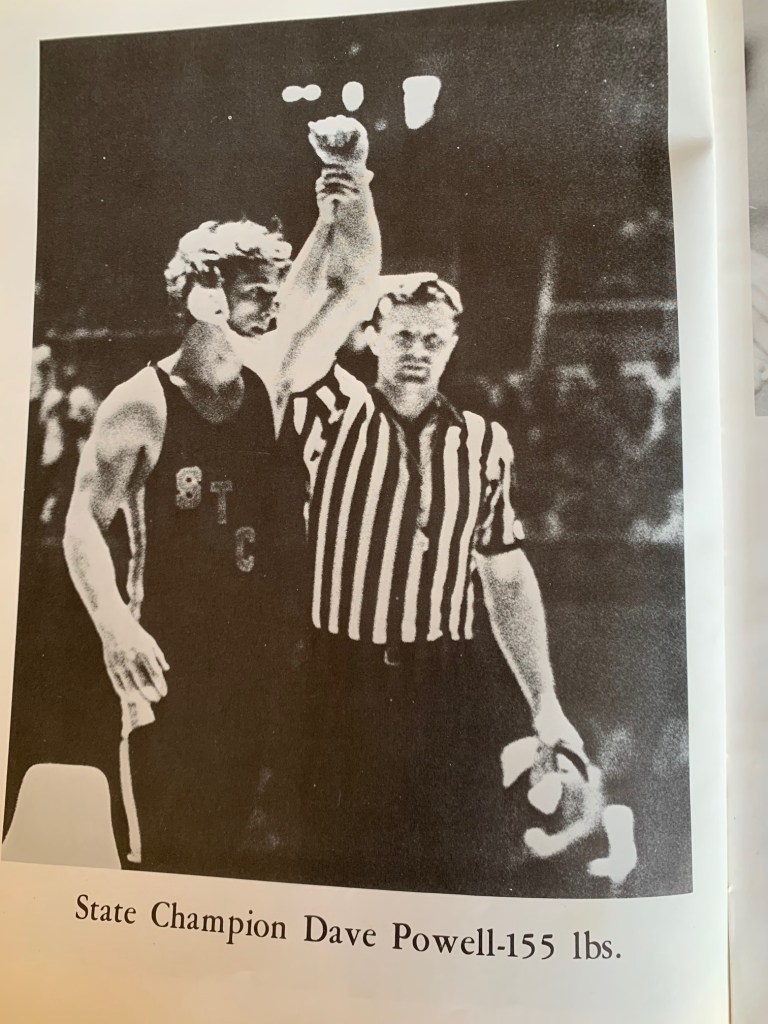
It’s no wonder she was an admirer of the sport at the time. St. Charles High school had an astoundingly talented state champion in Dave Powell, along with a state third place wrestler in Joel Hestrup. There were many other great wrestlers in the program as well. What an interesting contrast in cheering for those two sports must have been.

Cross country cheerleaders

As for cheering at cross country meets, “We could not have done it without Trent (Richards),” she said of the late cross county and track coach. “He appreciated that we were there and treated us with a lot of respect,” she recalled. “He’d tell us where to go during the race so that we could cheer you guys on.”

It wasn’t glamorous work. “We often had to find our own way to the meets,” she said of cheering for wrestling and cross country. “We’d find rides or get someone to take us. Trent was the one that invited us to ride on the bus. We rode with the cross country team to the meets. But we weren’t about to go on that wrestling bus. We heard about the gross things that go on there, trying to make weight and stuff,” she laughed.

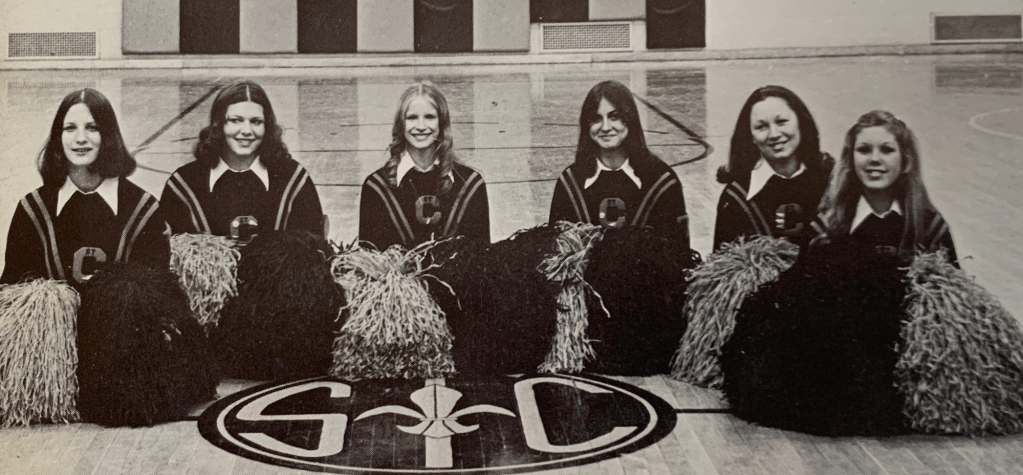
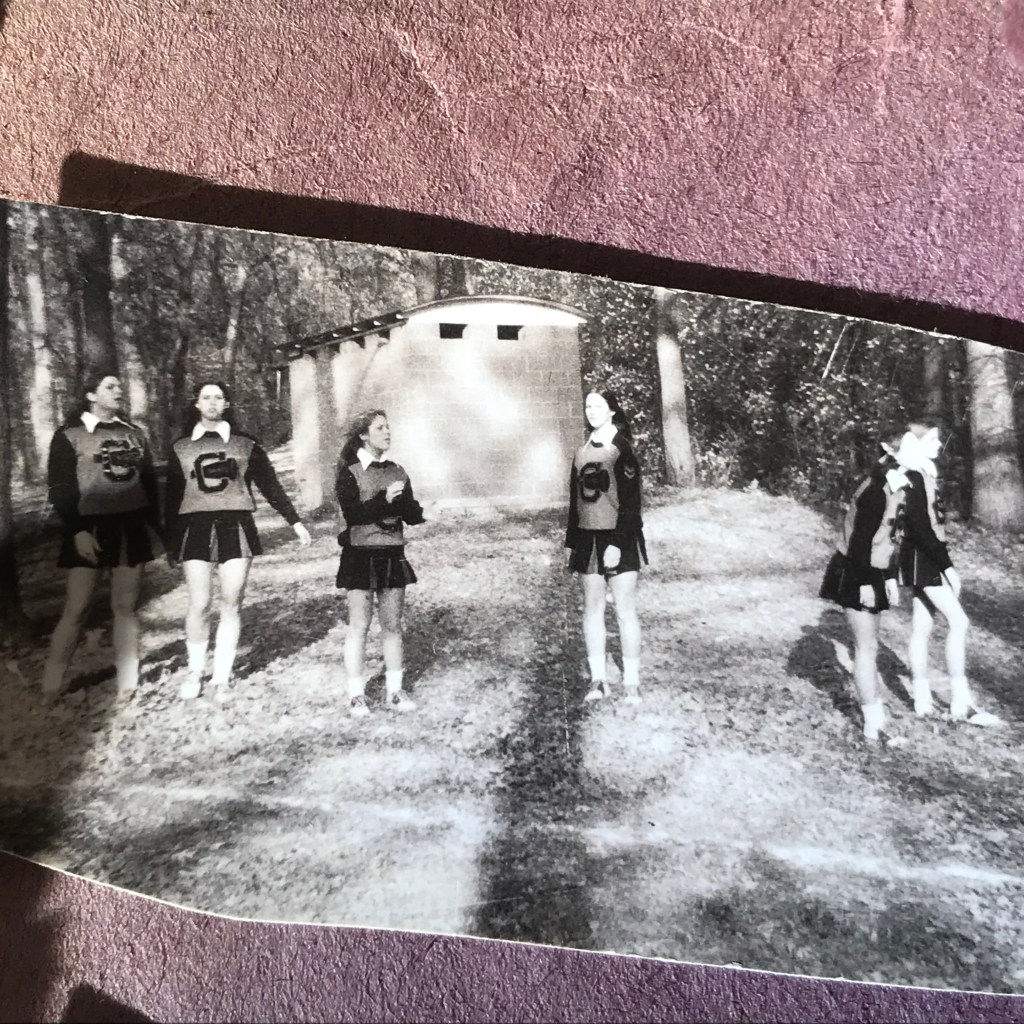
The cross country and wrestling cheer squad was comprised of six girls; Roxanne Arand, Carol Schreiber, Mary Ellen Pooley, Ellen Erickson, Claudia Donnelly and Kim Vance. Several were athletes in other sports. Ellen is third from right.

St. Charles High School cheerleaders

As one can imagine, attending cross country meets was somewhat less intense than cheering at a wrestling event in the confined spaces of resounding gymnasiums.

So the gals would often place themselves at intervals along the course. But much like today’s cross country programs, the story of the sport on most days was the personal battles of improved times and team camaraderie that mattered. Bearing witness to that was what made the sport rewarding for Ellen Erickson. “Getting to know the guys and seeing how hard they worked and ran. That was the fun part.”

Carol, Ellen, Kim, Roxanne, Claudia and Mary Ellen at Elburn Forest Preserve in October, 1974.

The previous year a different set of cheerleaders lined up at meets. That season the team won multiple races including invitationals and a district meet. So every season offered up a different flavor of success. Of course I well recall literally being the “new kid in town” that fall after transferring from a nearby high school. I wound up dating one of the cheerleaders (she’s in the photo at far left below) but our little romance did not last past the season. Such are the dalliances of high school excitement and fun in the moment.

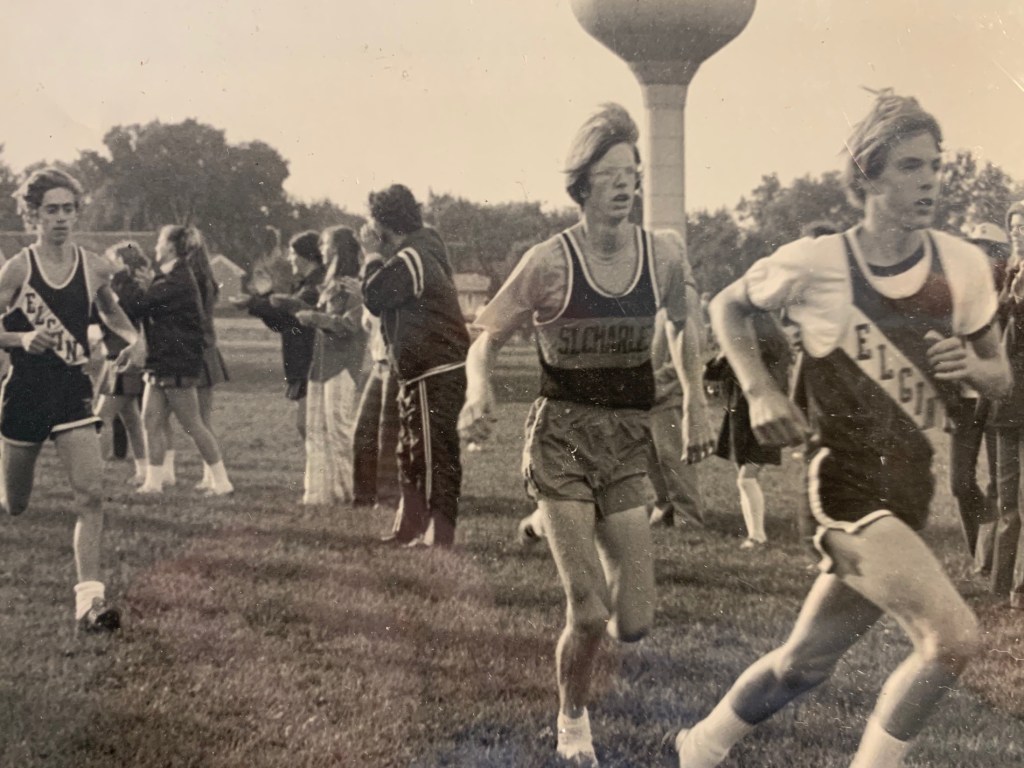
The finishing sprint of a dual meet with our cheerleaders urging us home.

Spring breakers

Of course there was life beyond cheerleading and cross country during those high school years as well. Ellen recalled a spring break trip that a group of students and the wrestling coach arranged. The plan was to visit Big Bend National Park and canoe down the Rio Grande. “But the river was too high when we got there. So we partied in the campsite instead.”

I recalled that I’d dearly wanted to go on the trip that spring, but was also a bit anxious about the idea. Some of the kids signed up for the trip were known for their partying habits, and I knew I wasn’t in their league. Plus I didn’t want to get thrown out of track for drinking. So I stayed back home to train the week of spring break but had always wondered what it would have meant to experience the west that early in life.

Ellen shared that the group finally did get on the river. “The camp ranger finally got sick of us,” she laughed. “He told us to go ahead and canoe.”

I mentioned the trip would have been special to me with such an interest in nature. “It might have been life-changing,” I told her. She responded, “There were lots of people on that trip who went for that reason.”

Perceptions and memories

Those recollections illustrate how thin the veneer of our perceptions and memories can be. But sometimes a seemingly innocent period of time has more meaning than we might think.

Ellen recalled that the guy she dated in high school reached out to her a few years back with a message he wanted her to hear. He’d done quite well in life and wanted to thank her for the early influence on his outlook. She told me: “He came from a rough family life and said that dating me and meeting my family was important. ‘You made me see what it could be like and showed me what I wanted in life,’ ” he told her.

It all proves that while it doesn’t pay to live in the past, neither should we write off the experiences that form who we are. They help us face challenges in the present time, and give us insights on the people around us. You never know what you might mean to someone, someday, if you cheer them on a little.

That’s the kind of cheerleading we can all use about now, don’t you think?

Carol, Ellen, Roxanne, Kim, Mary Ellen and Claudia share a moment after my 4th place finish at districts in 1974. My friend Deane Westland joined me in the photo and pinched my ass, which explains my reaction.
Posted in aging, aging is not for the weak of heart, anxiety, Christopher Cudworth, competition, cross country, running, track and field | Tagged , , , , , , | Leave a comment

There’s a place on the hill for you too

This morning I drove out to a trail through a forest preserve not to go for a run, but to climb a hill next to the trail and take in the morning sunshine.

I’ve run and cycled past this hill on many occasions. It runs parallel to the trail, rising thirty or so feet above the surrounding forest bottom. So it’s not a huge hill. But it is a significant hill.

That’s because this hill is the product of glacial activity here in Illinois. The long mound runs east to west and covers perhaps 400 meters. Behind it to the south runs a small stream headed southeast to the Fox River.

The hill was dumped here as a gravel skein 10,000 or so years ago during the Ice Age in the Midwest. The hill is a terminal moraine of a sort, the place where a glacier pushed gravel and then melted back and away, leaving the mound of stone and dirt to last for millennia.

On the far west end of the moraine a shooting range is dug into the hill leaving a large, U-shaped gouge down to the surrounding ground level. For decades that site served as a sportsman’s club where marksman gathered to plug targets with their various weapons. How much dead ordinance is now buried in the haunches of that hill would be an interesting study indeed.

But mostly, the hill is composed of tumbled gravel and stones. There are small piles of them atop the hill. People have tromped a narrow path along the ridge, which is now covered with spring wildflowers. While walking, I encountered a pair of volunteer botanists doing surveys for the county forest preserve district. We compared notes about what we’d seen and shared a mutual appreciation for the unique topography.

As I stated, I’ve been past that ridge many times and decided to finally go up on the hill and look around. There were few birds about, but a temporary pool at the southern base of the moraine had a choir of chorus frogs singing after our recent rains. That sound is even more ancient than the gravel dumped her ten thousand years ago.

Following the ridge east, I reached the end where the ground dips down toward the stream. That’s where the path also crosses the stream. So I walked back to the car with phone in hand, taking pictures as I went. With my big camera in hand as well, I noticed the ears of a raccoon sticking up inside a hole thirty foot up in a tree. The creature was no doubt settling in for a day’s sleep after roaming the territory all night in search of food.

Now that I’ve walked the ridge that stretch of trail will feel more complete in my mind. I’ve always been a wanderer of woods and walker of trails. There’s no reason to change, especially in this period in history where nature is the only real refuge from human insanity. There’s a place on the hill for you too, if you care to go.

Posted in running, Uncategorized | Leave a comment