

Following the passing of my late wife in 2013, I remained the principal caregiver for my father, Stewart Cudworth. My mother died in 2005, and despite my father’s condition as a stroke victim, he remained in their home under the direct watch of Olga, his original caregiver, and later Leo, her erstwhile husband, with whom she shared a child named Jessica.
Once I found out that Olga had a daughter, I offered to have her bring the child to live in my father’s house with my father’s approval. When Olga took the job caring for my dad, her daughter was just five years old. My father welcomed them as a family, and Leo visited as often as he could.
Ultimately Olga took another caregiving position. Perhaps it paid a bit more, but I never learned the real reason why. But one day I arrived to find Leo all moved in at the house with Jessica still living there. At first, I protested the change, but Leo showed me paperwork that he’d taken a caregiving course and was prepared to step in and do the job. Having had to find a few caregivers before Olga, I knew how tough that could be. So the opportunity to have Leo take over was in some respects ideal. He knew my father, for one thing. Dad could be a handful, prone to fits of anger at times, and demanding at the least. Leo smiled and informed me with assuredness: “Stew the Boss.” It turned out to be a great decision to keep him on.
That doesn’t mean it went smoothly all the time. Late in his life, my father decided to take a trip out east to visit his sisters. One lived in Upstate New York. Another lived north of Philadelphia. He drew me a map of where he wanted to go, but he had not thought to tell me he was going anywhere until a few days before the planned trip. I asked him, “Dad, do your sisters know you’re coming?”
He looked at me quizzically and replied, “No…”
I called around to all of them. They had no idea he was planning to arrive. His sister Helen quipped, “That’s just like your father. He always assumed he could just show up anywhere he liked.”
Indeed, that habit of my father drove my late wife crazy. Stew would show up at our house on a Saturday morning during his garage sale tours. But Saturdays were my wife’s “holy day” in the garden. She did not like to be interrupted. “A phone call would be nice,” she’d lament. But that was not my father’s style. There’s a part of me that operates the same way, but I’ve reigned in those instincts over the years. My father never did. He liked the impromptu joy of popping in unannounced. It felt like a little celebration of life to him.
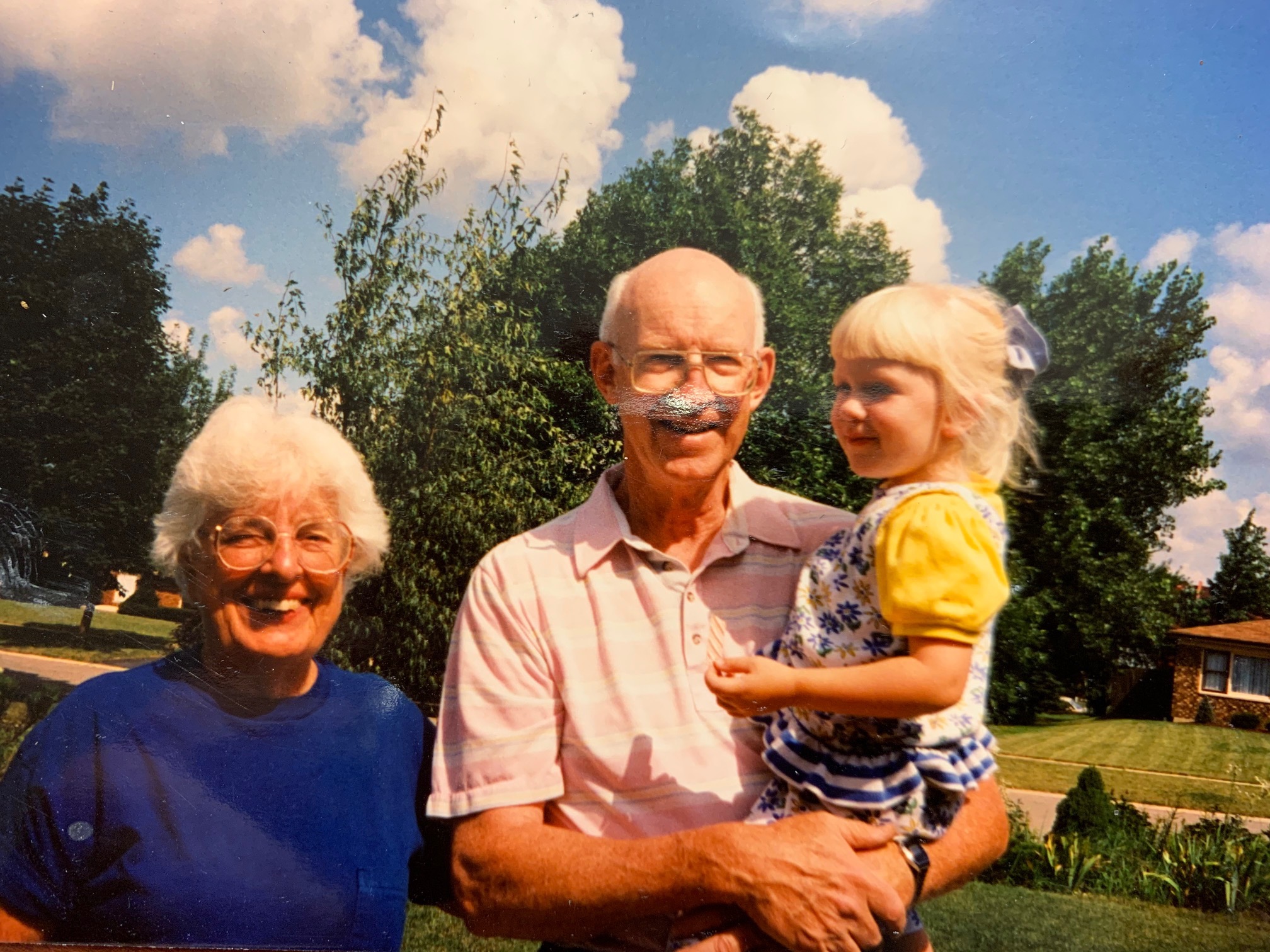
Before his big trip East, I helped Leo and Dad pack up. Off they went on their first stop, Niagara Falls. Leo was wheeling dad around when Stew decided he wanted to visit the Canadian side. That sent Leo into a panic. Originally a citizen of Belarus, Leo had a Green Card as a foreign worker in the United States, but did not carry the card with him on the trip. My father was insistent that they go across to Canada, but Leo rightly feared he would not be able to re-enter the US. My father started screaming and yelling at him to cross over to Canada, so Leo called me on his cell phone. I tried explaining to my father why Leo could not cross into another country. The next thing I heard was the cell phone skittering across the parking lot. My father threw it in a rage. Leo retrieved the phone, with the call still connected, and said, “Mr. Chris, what do I do?”
I told him, “Turn around and come home. You don’t need to deal with that kind of behavior.”
Then things settled down. On their way home, they stopped to visit my younger brother. Leo played guitar by the fire and sang Russian folk songs. Everyone had a nice time, but the larger trip was canceled. My father had also planned to visit a long-lost brother-in-law, Hank, known within the family for his cantankerous ways, but my dad perhaps liked his sarcasm and unbridled spirit.
Forgotten plans
On the other end of the spectrum, my father sometimes assumed that once he’d told you something, it was your job to remember it forever. In late 2003, he mentioned at Christmas that a family reunion might spring up the next year in New York state. My wife and I never heard anything about it until early June of 2004. By then, we’d made plans to take a family trip out to Glacier National Park. Our daughter was headed into middle school, and our son was in high school, so we thought it wise to make a family trip before their lives got too busy.

We spent two weeks on that trip and arrived home on a Sunday evening. My mother and father went to New York and stayed with relatives near the Finger Lakes. That’s where my father collapsed by the bedside with a stroke. It was a bad one. Back in 2000 he’d had bypass surgery due to heart blockages and his atrial fibrillation may have caused a blot clot to invade his brain. He wound up at the Syracuse hospital. However, the medics who treated my father that day told my mother he’d be going to Rochester. She drove to that city only to find out he was in Syracuse.
That Monday morning, she called to inform me that he’d fallen ill and might not even live. I hung up the phone and said to my wife, “Well, my life just changed.” I knew that it would be my responsibility to care for Mom and Dad. I lived closest to them. That was that.
After my father spent weeks in the Syracuse hospital, I arranged to bring him back to Illinois. That was one of the most stressful jobs I’ve ever taken on. I made all the flight arrangements for my mom, my dad, my brother, and I. The doctors told me on the day I arrived, “Well, we think your father can go home later this week…”

I was all set up to take him home that day, so the doctor’s loose plans made me panic. Nearly fainting from the stress, I leaned forward with a big breath and walked straight through the phalanx of interns to get out in the hallway. Then I told the doctor, “We’re taking him home today. Whatever it takes, let’s get him ready.”
We went home after I demanded that the nurses set up a catheter and bag to get him the whole way back to Chicago. Once there, I plopped my dad in a rusty old van that called itself an ambulance and he went to stay in a long-term care home for months. Over the next year, we moved him through a progression of rehab facilities as he regained some functions but not all. His speech and right side were permanently damaged.
That said, my father gained lucidity back after his stroke. If anything, that clarity of thought was as much a problem as it was a solution. If there was something he wanted to communicate but couldn’t get across due to his speech loss due to apraxia and aphasia, it was my job to ask questions hoping to ascertain his full meaning. It could be exasperating at times. If we couldn’t figure it out together, he sometimes got frustrated and angry, raging “NO NO NO NO!” at full volume.
I learned to depart and come back after he’d cooled down. Nine times out of ten we’d finally figure out what he was talking about. He’d write something down using his left hand (he was right-handed before the stroke) but sometimes the message didn’t come out quite right. We roared for ten minutes after he wrote out a word that turned out to say TITS when he was trying to write something else. That was really funny.
A day for Hooters

On another occasion, I met him at the doctor’s office to meet with the physician and review his overall condition. After the appointment, he wheeled himself out in the lobby outside the reception desk while Leo went out to fetch the car. “Well dad, things are looking pretty good right now. What are you and Leo going to do this afternoon?”
Without hesitation, my father arched his eyebrows and smiled at me. Then he broadcast in a loud voice, “Hooters! Hooooters!” They were headed to the Hooters restaurant for lunch.”
My face flushed as all eyes in the reception area were turned on us. But I’d grown a thick skin from caregiving and learned not to care if something seemingly embarrassing happened along the way. In any case, it was fun and helpful that Leo gave my father some “guy time.” They also went fishing, which my father loved, and every Saturday joined his friends at Colonial Restaurant for breakfast.
Living life the best way he could

In many ways I grew to respect my father’s determination to live the best way he could despite his stroke-driving limitations. He participated in a program called Revolution Golf that specialized in giving people with disabilities the opportunity to hit golf balls at a range. My dad swung those clubs with verve using his left hand and arm. Given his love for that sport, that was a highlight for him. He’d also gotten an invitation from the club pro at Pottawatomie Golf Course, his favorite nine-hole layout, to ride the cart around that little green gem.

In all, I was his direct caregiver for ten whole years, from 2005 through 2015. During that time my anger toward some of his difficult traits as a father subsided, and disappeared. I thought more about the many things he’d done to direct and change my life in good ways. He was an attentive father in my pursuit of sports, teaching me how to throw a baseball and showing up at many games. His cries of “STAY LOOSE!” weren’t always welcome, but he recognized my native anxiety for what it was, a limiting factor in success. During my early baseball career, I became one of the best pitchers on a team that won the Lancaster New Era baseball tournament. The next year, we’d “graduated” most of that squad and I was the remaining starter on whom the team relied for most of its wins in a rebuilding year. He noticed that I was losing velocity as the games piled up and asked me about my arm. In reality, I now realized that playing wiffleball with a close friend several hours a day wore out my pitching arm. But I never connected those dots until pitching against Local 928 when that same wiffleball friend came to bat and ricocheted a hit off my left shoulder. By then my arm was dead for much of the season. My dad was conciliatory nonetheless. He knew that I’d given my all no matter what.

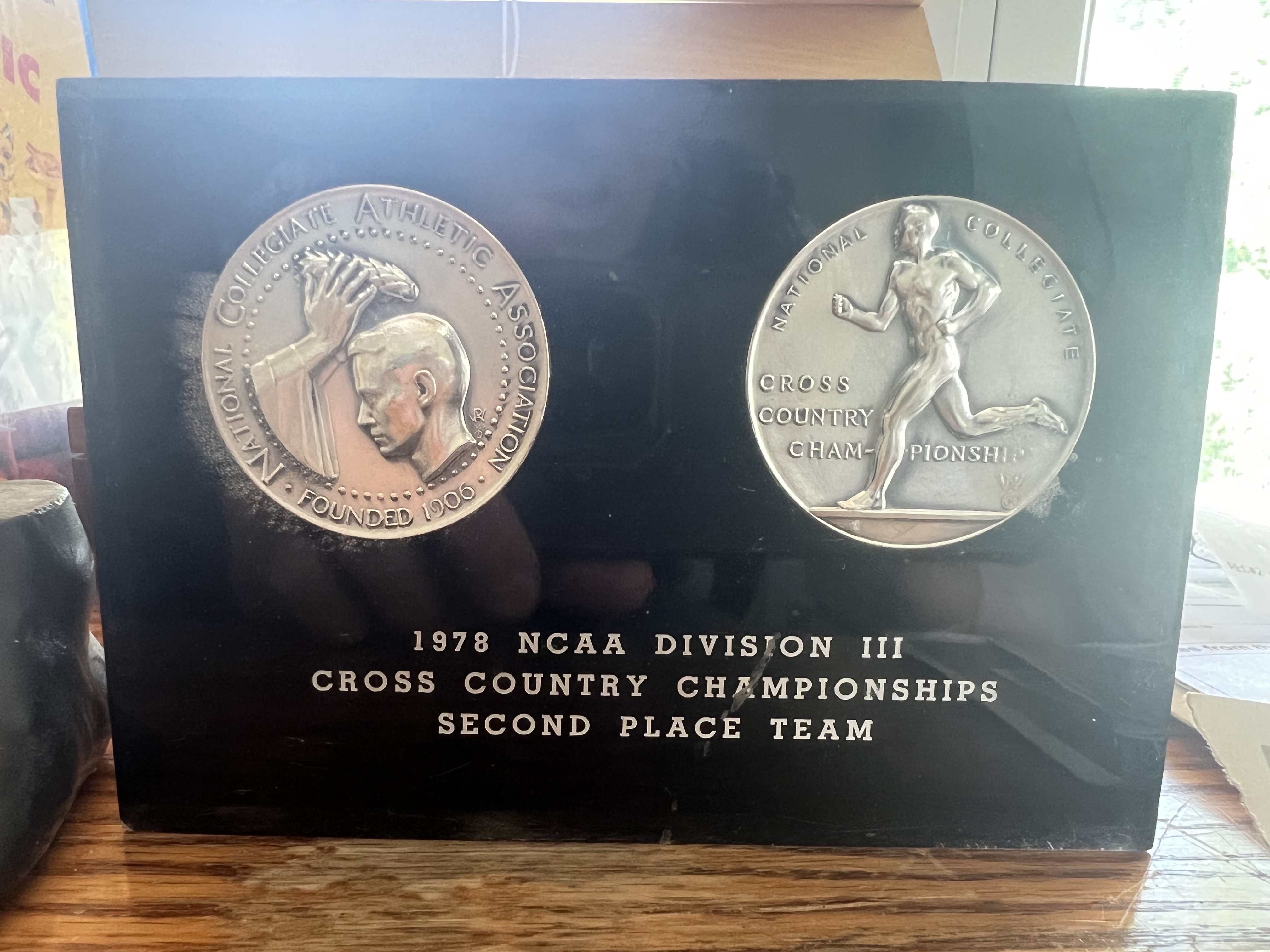
The same held true with his support of my running career. He was the one who pushed me to go out for cross country, and when I had a sore leg in track during my senior year in high school, he fashioned a heel lift in my adidas Tokyo spikes to take pressure off my Achilles. He drove me to colleges like Augustana and Milliken to explore options, and our trip to Luther College was made at his suggestion. “You’ll love the birds up here,” he observed. Dad was there with my mother the day our Luther College cross-country team took second place in the NCAA D3 national championships.
I’ve learned to put that experience into perspective with the overall directives he provided in life.
And yes, for years I bore some emotional scars from physical and verbal abuse he doled out to us when we were kids. That’s probably not unique among kids of that era, whose parents never “spared the rod” lest they “spoil the child.” That’s a misinterpretation of scripture. As noted in the Chicago Tribune, “The phrase “spare the rod, spoil the child” is a modern proverb that’s often used to justify corporal punishment, but it can be applied beyond physical discipline. It means that if a parent doesn’t discipline an unruly child, the child will become spoiled and develop an entitlement. However, the phrase is not biblical and actually comes from the 1600s narrative poem Hudibras by Samuel Butler.”
For better or worse, the attitude that kids needed to be beaten into submission served an entire generation of parents, teachers, and schools applying discipline. Whether it caused more harm than good is a subject for a different day. I received unjust spankings on many fronts. To this day, I distrust certain brands of authority as a result. I will say that some of my competitive drive came from feelings of anger toward things I considered unjust in life. That could mean teasing, exasperation, frustration or cheating. Heck, I quit Cub Scouts because some kid in the Pack cheated in kickball. My father could be exasperating at times. The Bible warns against that.
Fathers, do not exasperate your children; instead, bring them up in the training and instruction of the Lord.
I ultimately forgave my father the anger that drove his actions. He’d lost his own mother to cancer when he was just seven years old. Then his father experienced clinical depression during the Depression. Stew and his sisters lived with an uncle and spinster aunts on an Upstate New York farm during the school year. His required chores meant less participation in sports. So dad projected some of his desires onto us. I will say that it wasn’t easy to deal with four independent, often difficult sons.
Still, his physical thrashing of my brothers in front of me when I was six years old hurt me deeply. But I’ve let that go. I forgive him because I’m thankful for all the good he did for me and others in life. He cared so deeply about family it wasn’t always possible for him to convey or convince us to do the same. It would have been helpful, for example, to develop a closer relationship with his sisters, my aunts. They were incredible people in their own way. But we’d moved so far away and for so many years that we couldn’t have much relationship with them.

Beyond encouraging me in sports, he spent countless hours framing my paintings for display and sale at local restaurants. Many of these early efforts were crude in execution, but my abilities grew quickly One of those watercolors hung in the Manor Pancake House for forty years before the place was torn down in redevelopment.
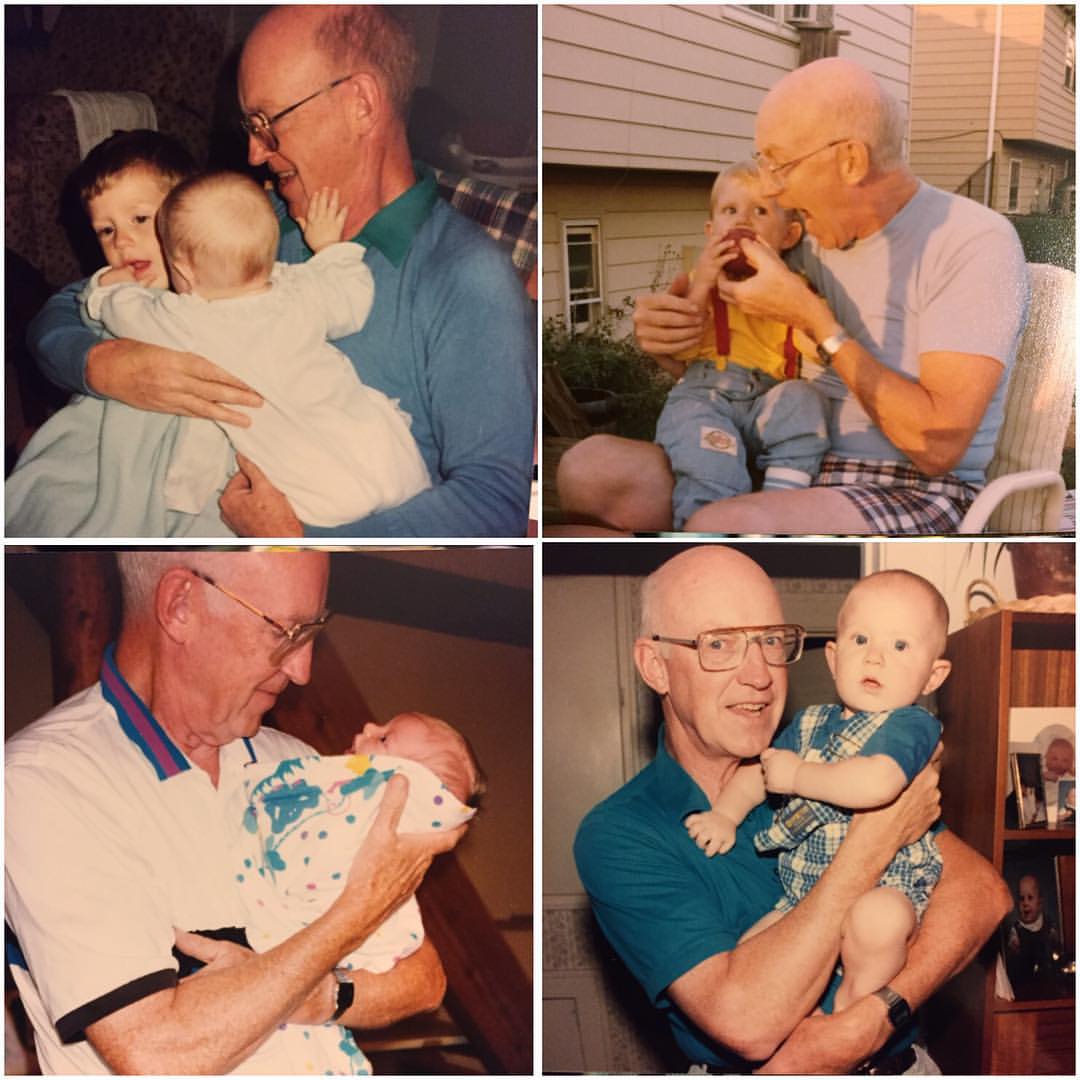
What made me happy in the end is how much he and my mother loved our children Evan and Emily, and all his grandchildren.
After my mother passed away in 2005, my father set a strong example of how to grieve. He showed me how to carry on. My father was happy for me when I met Sue. She “got” him in many ways and loved how my dad once wheeled himself into our kitchen on Thanksgiving Day, pulled himself up on the counter to his full height, and proclaimed to the kitchen full of people, “PIE!”
Stewart Kirby Cudworth, 89, died October 17 in St. Charles, IL. He was the son of Harold and Rena Stewart Cudworth of Virgil, NY. After his mother died, Stewart lived during the school year with his mother’s siblings, Leon, Helen, and Shirley Stewart in Bainbridge, NY, and summered with his father in McGraw, NY. Stewart served in the U. S. Navy during World War II. He held a degree in electrical engineering from Cornell University in Ithaca, NY, class of 1950. During his career, he worked for Sylvania Electric, Seneca Falls, NY; RCA, Lancaster, PA; and Belden Corp. and National Electronics in St. Charles, IL. His consuming love was golf, as an avocation. Stewart married poet Emily Nichols of Bainbridge, who predeceased him.


 We Run and Ride