
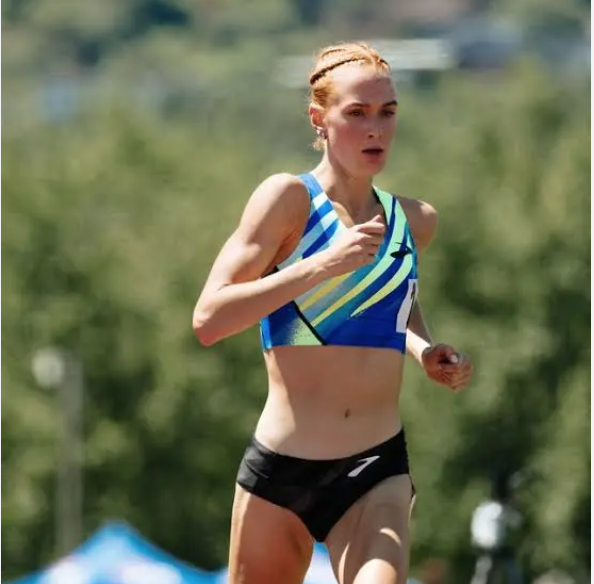
I tuned into Youtube to watch a young woman named Jane Hedengren from BYU run to victory in the Pac12 conference cross country meet. Listening to her stats as the announcers described her arrival on te college scene, I realized that her 4:23 high school mile time and 14:57 5K PR were far better than mine when I entered Luther College as a freshman. She could beat me, perhaps easily, I realized, at that same phase my running career. She will likely improve with experience, surpassing, as so many women have recently done, everything I proudly accomplished in my sub-elite running career. More power to her, and to all women out there .
Before going further into this post, I’ll share that I frequently express admiration for women athletes, and for women in general, to my wife. She’s a multiple Ironman finisher, has qualified and competed in World’s 70.3 several times, and is one of the most dedicated athletes I’ve ever encountered.
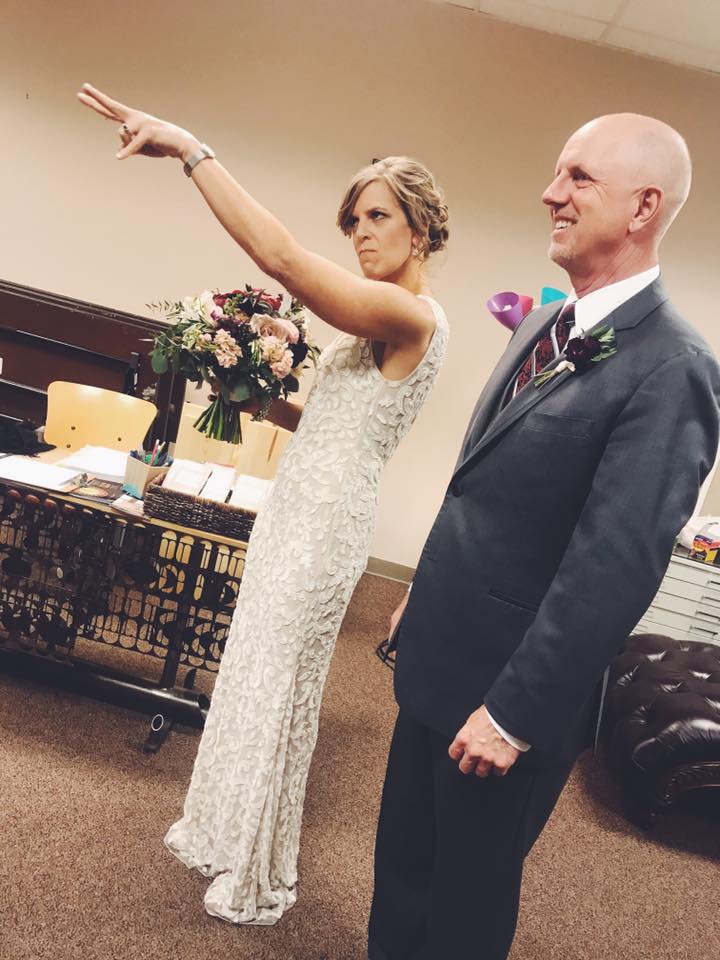
Moreover, I’ve shared that I also found it astounding that she had two of her three children at home rather than in the hospital. We’re both remarried, as I was widowed following 28 years of marriage to my late wife. She divorced before 2010, so we’ve been on a shared journey for the last thirteen years . Whenever I rave about women’s attributes and how many more ways women have to prepare themselves and endure feminine issues in life, she calmly replies, “Well, it’s what we do.”
She’s largely a “no drama” person, and I love that about her (and much more.) I preface this post with this disclaimer of sorts so that you know I’m not just ‘virtue signaling’ to win approval from women readers, whoever they might be. Sue doesn’t buy my whole “women are amazing” theme. She keeps me in line about all of this.
But let’s get back to Jane Hedengren for a moment.
The announcers called her a “once in a generation” athlete, and perhaps that’s true, at least in America. However, over the last five years, I’ve watched in appreciation as women from many countries have run astounding times at every distance, from the 800 meters to the marathon.

I’m especially intrigued by the women now approaching the longstanding world record at 800 meters held by a former East German athlete Jarmila Kratochilova, who ran 1:53:28 on July 26 (my birthday) in 1983. Keely Hodgkinson of Great Britain has run 1:54.61, set in London in 2024. Her teammate Georgia Hunter Bell, another British middle-distance runner and training partner, has also run 1:54 and beat Hodgkinson to the silver medal at the World Athletics Championships in Tokyo.
The speed of these women is so impressive, and now that Femke Bol is moving into the 800 meters, we could finally see that world record––questionable due to its achievement during an Eastern European drug-cheating era, get bested. The women’s mile world record is now at 4:07 set by Faith Kipyegon. She attempted to break the 4:00 mile mark this past summer but that proved to be too big a leap even for her. But never mind. The fact that women now consistently run under 4:20, and that Jane Hedengren ran a 4:23 women’s mile in high school, is remarkable.
Yet that’s not even the reason I’m most impressed by women runners. They face many more challenges to run this fast than men. It all begins with the bodily changes of young womanhood. I recall my daughter’s journey into menstruation and how she hated the entire process. “I don’t even feel like me,” she groaned after a soccer game where cramps caused her discomfort and the pads she wore chafed her inner thighs.
Through it all
Using tampons, dealing with the monthly stress of cramps and pain all make it that much harder for many women to train and race. Women’s injury risks and medical challenges differ, too. Too much running ends menstruation (amenorrhea) and puts women at risk of bone density issues, iron deficiencies, and stress fractures. In my twenties, I dated a 36:00 10K woman runner who experienced all those symptoms and ran until her leg fractured. I warned her to take a break and let it heal. But she persisted. I was there. I heard her leg break.
Then there are the vagaries of body image, sexualized social media pressures, dietary concerns, and the risk of eating disorders. High-achieving women may tend toward perfectionism, and the mental stress of setting and maintaining high standards exacerbates the issue. I’ve known women runners at the national level who literally ran off the track during championships when their performance that day failed their expectations.
From the beginning
Then there are the pressures of time and age, and biological clocks, childbirthing, and recovery. Some women come back stronger than ever after having children. I cannot imagine that journey. Men who care abide as women endure pregnancy and childbirth, hoping that our support helps in some way. I was there for the birth of both of my children. But I cannot fully appreciate what it’s like to carry and create a child. No man can.
I’ve seen many women return to sport or start up once their children reach a certain age. There’s an entire “league” of women triathletes in their forties whose performances defy former notions of what’s possible not just for women of their age, but of any age. They own their bodies in all-new ways, fully fit and uncompromisingly honest. Nothing to hide. They are athletes.

As women age their bodies change all over again. Pre-menopause and menopause mess with women’s bodies and minds. It’s all unpredictable, and it’s finally being recognized that applying men’s medical standards to women’s health is insane. Some of that realization comes from women pushing themselves in ways that prior generations never dreamed. That is not to say that previous generations were flawed. That’s not the point at all. We’re just learning more about women’s bodies and health by pushing the limits. That’s a good thing.
The playground of life

There was a time when men were ashamed to get “beat by a girl.” I do recall trying to catch a girl named Cindy DeMora, a classmate at Willow Street Elementary school, during a game of tag. I was one of the fastest kids in our grade, but could not catch her. That was my first lesson in the playground of life.
Women are tough, too. Watching women go through menopause with night sweats and brain changes, chemistry shifts, and the endurance test of not knowing how long that’s going to continue and it becomes obvious that women are some of the toughest creatures on earth.
There are also big changes going on in women’s mental health awareness. Even top athletes are susceptible to conditions such as anxiety and depression. When gymnast Simone Biles developed a case of the “twisties” she courageously backed off despite world-class pressures to compete no matter what. She set an example for all women that it’s better to deal with life honestly than to buck it up and fake it. Yet it’s also a fact that women frequently have to “fake it” in the face of multiple obligations that some men don’t care to imagine. They’re happy to let women handle “the details” of daily life that make things work, and then find time to train on top of that. I try hard to support my wife’s triathlon life, and she regularly thanks me for that. But that doesn’t mean I hit every note correctly. Not by a mile.
It does matter that we all try to appreciate what John Lennon once called “the other half of the sky.”


 We Run and Ride