
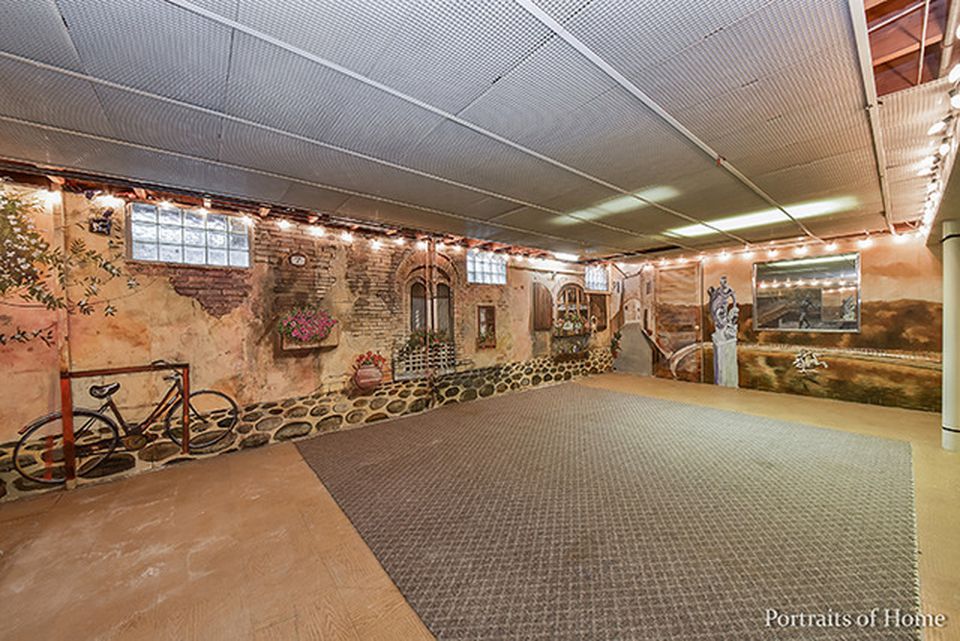
I was a bit torn when it came time to sell the house I’d owned at 367 Republic Road in Batavia. We moved there from a tiny little 750-square-foot house in Geneva with a leaky basement, a radon problem, and an attic with a ceiling too low to use for anything but storage. By contrast the Batavia house was spacious with a large living and connected dining room, huge front windows, a three-season room lined with russet-stained pine wood and slat glass windows, and a basement so large we once hosted the band Goldhouse for my daughter’s graduation party.
In other words, the place was stuffed with memories wrought from twenty years of life. My kids were going into fifth and second grade when we moved in. My late wife tore up the yard turf and replaced it with plants worth of a Master Gardener. We hosted parties and family gatherings, Thanksgivings and birthdays (my 40th, for example, and my 50th) and the pursuant attachment to that home grew greater by the year.
But I’d moved enough times in life to know that nothing is permanent. We moved from New York to Pennsylvania when I was five. We moved from Pennsylvania to Illinois when I was twelve. We moved from Elburn to St. Charles, IL when I was fifteen, and moved from a home in that town to a rented country house when I was a junior in college. Then my parents moved back into town the next year but I never loved that home. It was an uncomfortable split-level with a nothing yard in the middle of a suburban neighborhood with no character.
I moved many times as a bachelor after moving out of my folks home following college. I lived in Iowa, then Illinois, then Pennsylvania, back to Chicago, then got married. My collection of “stuff” grew along the way. Artwork I’d kept from childhood. Manuscripts I was working on. Photo albums. Boxes of books; Tom Robbins, John Updike, John Irving, Ayn Rand, Jack Kerouac, Carlos Castaneda. And a small porn collection consisted of a couple magazines and some torn-out photos of women I’d appreciated over the years.
All of that and more came with me through the Geneva house where late-wife Linda and I started our marriage and then hauled stuff to Batavia where her collections and mine melded in the basement closets and shelves. Before she passed away in 2013, she lay on our bed sick with exhaustion from chemo and surgeries and told me, “Chris, I’m sorry about all the stuff.”
I didn’t know what she meant until it came time to clean out the house when Sue and I mutually decided it would be best to sell the place rather than try to fix it up. She still had kids in their early 20s coming out of college and in need of a place to live and while the Batavia house had three bedrooms and a basement, the rest of the issues overwhelmed the sentimental notion of keeping it.
So I set about cleaning out the collections of stuff. There were large hall closets filled with Holiday decorations of all kinds. There were piles of Christmas things in all its forms, from ornaments to wrapping paper. Also Halloween plastic pumpkins. Thanksgiving plates and Easter baskets. Oh, so many baskets. I’d find ten or twenty in those hall closets alone. But then ten or twenty more on metal shelves in the basement. I never knew she’d collected so many baskets.
Linda was no hoarder. Most of what she had was part of the utility of her lifestyle, keeping up family traditions and being prepared for entertaining. But Lord, there was way more “stuff” than I ever imagined. She was right about that.
I spent weeks carefully going through all these goods, and the mental work was as exhausting as the physical act of separating material to keep and what to recycle or send to the dump. I thought long about the art of “death cleaning,” because when someone you love dies it is a challenge to determine what you want to save related to memories of their life and what needs to be discarded simply because you can’t keep it all.

One of the watershed moments came when I happened upon a box of old magazines from my wife’s teenage years. There was an entire box of David Cassidy memorabilia. Her brother and sister recalled her devotion to that star for me. “She’d make us all sit silent when he came on the TV, and she’d record his concert so she could listen to it later.” But that was fifty years ago, at least, and the Teen magazines with other pop stars did not seem worth keeping. Along with many other piles of paper goods and aged-out keepsakes, I conducted regular bonfires in our backyard fire pit as a catharsis of things remembered but lost to time.
I listened to music all the time I was cleaning out the house. It felt like a journey through time and my record collection played on the Radio shack turntable and receiver. I played Jackson Browne’s live album with the song Love Needs a Heart. The lyrics seemed to fit the tasks in which I was engaged:
Maybe the hardest thing I’ve ever done
Was to walk away from you
Leaving behind the life that we’d begun
I split myself in two
Proud and alone, cold as a stone
Rolling down that hill into the night
I could see the surprise and the hurt in your eyes
From behind each flashing city light
Love needs a heart and I need to find
If loves needs a heart like mine
It was true. I’d found love again with Sue and there was a tinge of guilt in that realization. A close friend of my late wife confided that she’d told her a few months before her passing, “I know Chris will date again if I die.”
With all the “moving on” I’d done already in life, I understood the inevitability of change. It would do no good to cling to past memories. As I moved through that house making decisions about whether to keep the childhood Lego collections, baby clothes and cribs, or all those baskets, my mind evolved to a state of colder objectivity.
That wasn’t popular in some respects with my own children, and I don’t blame them. Selling off their childhood home felt like abandoning our family history. Financially, there was a case to be made for keeping it, too. I was ten years away from paying it off. But I’d heard from other residents in town that keeping a house after it was paid off proved to be a financial challenge given the annual tax bill of $10,000 they had to pay anyway. It all felt like surfing a wave into the future. You either catch the wave and keep going or wash out along the way. I decided to keep surfing.
The last two weeks of death cleaning nearly killed me. Sue’s housekeeper was a sweet Iranian woman who had seen Sue through her divorce years. She knew her kids and liked what Sue and I were building between us. She came by my Batavia place to help clean out the kitchen, a major task with all the cupboards and cubbyholes. She turned to me at one point and said, “So much stuff!” We both laughed at that. “Yes,” I replied. “So much stuff.”
Over and over my sentimentality got tested. I weighed the value of dish sets given to us for our wedding along with plates and bowls gifted or collected over many years. There were more wine glasses and styles than one could count. And Linda loved items with grapes on them. Which to keep? Which to move on?
I moved piles of home belongings to the front curb and they’d immediately disappear. Pickers got word of my house cleaning efforts and drove by our house every day. I befriended the “metal guys” and the “wire guys” as I cleaned out the workshop where stashes of old Illinois Bell materials remained from the prior owner who had built the house back in 1956.
I’d already stripped old wallpaper in advance of the sale, and painted walls to freshen the place up. Beneath the wallpaper the installer signed his work in pencil. That was the archeology of the era.
House staging
After all that, and after the major act of trying to repaint the whole house (a grand mistake) the house staging took place. The realtor on my side hired a woman who specializes in staging houses for photos and tours. She ripped through the place telling me what to move and where. Everything extraneous was stashed out of sight. It didn’t matter what sentiment was or wasn’t attached to any object. To her, it was all about presentation, and I got that. For a few days, the house sat like a museum. Then it went on the market and sold in a day. Ranch houses will do that.
Then the buyers wanted inside to do some measurements for one reason or another. We let them in, but they acted like total bitches, and as timing was tight on Sue breaking her lease to move to the home we’d found in North Aurora, our kids moved in with all her stuff stashed in the garage and things got chaotic quickly. The buyers’ relatives walked in the door and began complaining about the conditions. They measured the living room and found it to be three inches short of its stated size and starting whining about that. One of my stepdaughter’s boyfriends let them have it then and there. “We let you in here to be nice…” he warned. They left in a huff.
Final days
Now the pressure was really on. Sue moved with all their stuff into the new home and I was left with the final cleanup phases. Downstairs there were dozens of paint cans. As the last days of death cleaning neared, I had to open them up and assess the condition of the paint inside. The Geneva Ace Hardware accepted paint for recycling, and I planned to take the bulk up there.
But I’d made big progress with two days left before closure and filled some giant green Bagsters with house junk to set out by the curb. Eager to have them picked up before the new owners took over the property, I begged the Bagster company to set a time. They refused to promise anything.
That night I was so exhausted from the physical and emotional labor I showed up at our North Aurora home in an almost comatose state. Sue made dinner. I ate the meat and picked at the green beans for a minute when she said, “You’re so tired. Why don’t you go up to bed?”
“No, I have to go back up and finish tonight.”
“No, you don’t,” she laughed. “You’re not going anywhere tonight. You can go back up in the morning.”
I rose at 5:30 and drove anxiously up to Batavia hoping that the Bagster company would come by that day. Otherwise, the buyer and her realtor, who was a high school friend of mine, I might add, were threatening to keep $5,000 in earnest money required as part of my move-out plan. The stress of that day was beyond imagination. I had to use all the lessons I’d learned about perseverance from decades of endurance sports to get through emotionally and physically.
Relief
Driving up Illinois street in the near-dark of a September morning, I saw the Bagster truck heading south. They’d picked up the front-yard debris. Along the way, I’d lost some keepsakes as people helped clear out the house. A bag full of my late wife’s tee shirts and such were going to be turned into a quilt, but someone swept them away to Goodwill. There were other losses too. A porcelain white Christmas tree with red cardinals from my late grandmother-in-law. I gave it up out of exhaustion to a collector who stopped by. “Are you sure?” she asked. By that point I wasn’t sure about anything. My love of life by that point was so far away I could not tell who I was. Jackson Browne again captured my version of that state of mind.
Love won’t come near me, she don’t even hear me
She walks past my vacancy sign
Love needs a heart, trusting and blind
I wish that heart was mine
Proud and alone, cold as a stone
I’m afraid to believe the things I feel
I can cry with the best I can laugh with the rest
But I’m never sure when it’s real
And it may be the hardest thing I’ve ever done
But apart from all that I hope to find
Where’s the heart that’s been looking for mine?
I hope it finds me in time
I pulled up to the house with a task list in my hand, sat down to go to the bathroom and took a deep, preparatory breath for the day ahead. Fortunately the relief at seeing the Bagster truck gave me a shot of energy. I could feel the finish line now. While working the basement to load up the paint cans, I thought I heard someone upstairs. Perhaps another picker checking in? I called up from the bottom of the basement stairs, “Hello? Anyone there?” No answer.
I loaded the Subaru Outback with paint cans and pulled up to the Ace Hardware as the sun warmed the day. But as I pulled the cans out, one tipped over, and a stream of pale tan paint flowed onto the driveway. I hustled to wipe it up with a towel, but it left a big stain. I placed the rest of the cans in the back alley where the store told me to put them, and then I drove home, relieved that the last of the basement was empty.
Back at home I thought to check my email as there were freelance work projects I still had to do. I looked around the kitchen table but no Mac could be found. I panicked, then recalled the voice I thought I’d heard earlier. Did someone come in the house and steal my laptop? I called the police. An officer showed up and took a report, but he surely thought I was nuts.
Walking through an empty house is an act of hearing your own echoes. Now I was fearful I’d lost the one thing most valuable to me in life. My life’s work was on that Mac. Several books. All my poetry. Some of that was stored online but not all. Now I was sad beyond exhausted. I went back to go to the bathroom and sat down. Reaching for some toilet paper, I felt my computer bag next to the toilet. I’d stashed it there at 5:30 in the morning. God, did I laugh out loud at that.
Disassembly
Carrying the step stool I used to reach shelves out the front door to the car, I banged it against the front door class and cracked it. “Fuck that,” I said out loud. Then the guys showed up with the junk truck to haul away the gas stove from the basement. They took one look and said, “No go!” because it was still attached to the gas line.
It was 3:30 in the afternoon. I called up one of my favorite pickers and told him about the stove. He showed up, took one look at me and said, “Go lay down, you’re tired. I’ll take care of this.”
I laughed. “There’s no place to lie down.”
He went downstairs with his tool kit, and within ten minutes, he’d disassembled the gas stove, sealed off the gas line, and carried all the metal parts out to his truck. I peeled off $60 in $20 bills and thanked him. In fact, I hugged him.
Then I locked the front door, put the key in the lock box, and drove away. The new owner moved in soon after, installed and air conditioner and forced air heater with HVAC vents, and hired a bunch of landscapers to move my rock collection all around the yard. But the elderly woman who bought the house tried to help and when lifting a rock to move it, tipped over backward and the rock smashed her in the forehead. Bleeding and unconscious, she laid there as the laborers refused to get involved. A young man from back door her the commotion and called the ambulance.
She lived there for several years and apparently filled the house with antiques she collected. When the old woman died her daughter came from out east and had to clear out the whole house again. I met her through my former backdoor neighbor and we were kindred souls, so I offered help but she did all the work herself. The house sold again to a guy who flies an American flag with a Blue Lives Matter stripe down the middle. I don’t want to know him.
Before leaving the property, I excavated my late wife’s lilies from the garden and transplanted them at our new house. They blossomed many seasons before giving out this year. A gardener friend told me I’d probably planted the bulbs too deeply. Perhaps that’s a symbol of some sort. I’ll leave that one for my readers to figure out.


 We Run and Ride