

You can check out your riding or running form by taking a route past a long set of windows.
Lacking the services of a good running form or riding coach, there are still things you can do to learn how your form may be affecting your fitness and speed.
All it takes is a good long look at yourself in a window.
Even if you live in a small town there are usually a few places where you can arrange your run or ride to swing past a storefront where you can see a reflection of yourself in the windows. The best location I’ve found in my hometown not only has a long set of windows, they actually have a mirror finish so you can see yourself run or ride past in full living color!
What can you learn from looking at yourself in the window as you run or ride past?
Check Your Form
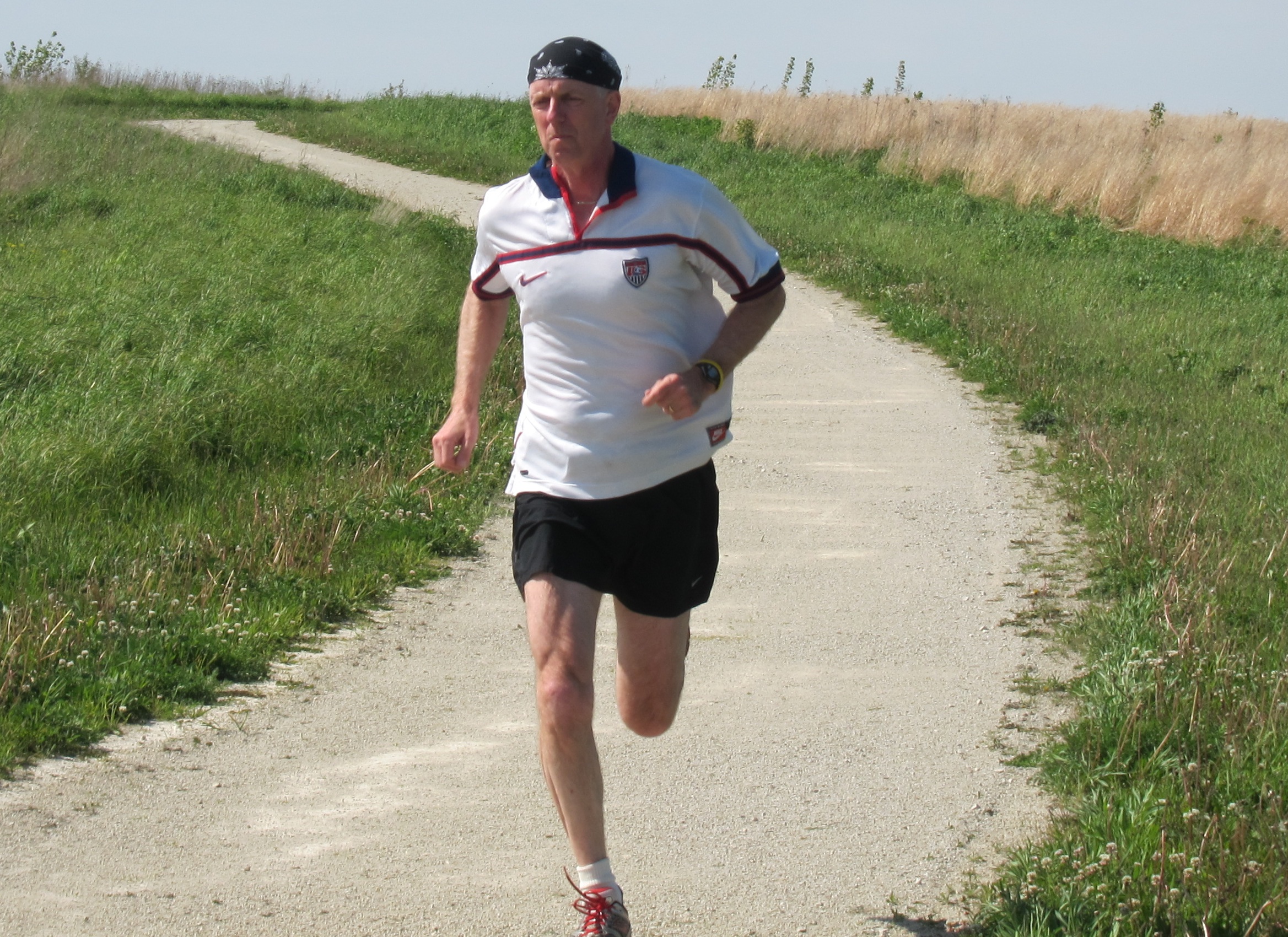
Look at your running form objectively. Find a window that can serve as a mirror and run right at it. Like what you see?
Runners can look at their overall body lean, their arm carriage and length of stride. It’s surprising how little some of us know what we look like when we run. Of course you could ask someone to record you with your smartphone or camera these days, and that would be really good information to help you analyze your stride. But there’s something about a rehearsed setup like that…makes you aware of what you’re doing and it is too easy to “fake it” rather than taking yourself at face value.
It’s better to make a pass by a window when you’re in full stride if possible. It’s not narcissistic to look at yourself that way. Well, maybe a little. The important thing is to be objective enough to assess your stride pattern and admit if you’re overstriding or understriding.
Critical to efficiency
The same goes for riding a bicycle. Cycling form is critical to efficiency. One of the first things you’ll notice in your riding form is how much or how little you arch your back. Cyclists often fall into bad habits when riding. These bad habits become chronic and can rob you of power. It is best to ride “low” with your body “perched” on the bike with slightly bent elbows, legs relaxed enough to spin rather than mash and your head carried at a healthy angle for both efficiency and viewing.
Bike fitting first
Much of this “form” comes from bike fitting, which is heartily recommended for anyone doing rides over an hour. Any road cyclist or triathlete can benefit from a professional bike fitting. Personally I would not recommend riding without a bike fitting. It just doesn’t make sense. Unless you’re a adept and knowledgeable and know the techniques of setting up your bike, find an expert.
Then when you ride by your favorite window to check your cycling form you will at least know how to adjust your form. If you hunch you’re back when you’re tired, the window can tell you that. Watch to see as well whether you’re just pumping your legs up and down or spinning the pedals. All these little things add up to better efficiency.
Making a list, checking it twice
Once you have a mental checklist built you can tell at a glance when you ride by a window if you’ve picked up any bad running or riding habits.
For runners, try to find a window you can also approach from the front. That helps you look at your footplant and your arm carriage as well. If your arms are flailing out to the side, or just one arm, it may indicate bio-mechanical deficiencies that start way down at your feet. That’s a lesson I learned years ago when seeing myself on videotape. My right arm flung out and I never knew it. Even world class runners like Bill Rodgers sometimes have these bio-mechanical quirks.
Your favorite window can get you started in understanding your own running or riding form. Give it a try. You’ll be amazed what you see.



 We Run and Ride