This post is part of a continuing series of chapters to be included in a book titled Competition’s Son.
Hunting for a job when you desperately need one is never fun. If you’re old enough to think back to the days before the Internet, then you’ll recall how really bad it once was. Printing out and mailing resumes. Waiting for a reply. On and on. It was one of the most depressing activities on Earth.

By the year 2007 that had all changed. As an employee of the newspaper business from 2000-2007, I watched in real-time as Employment advertising migrated from printed pages to online listings. The world was changing. The money once traveling through the newspaper industry evaporated almost overnight. Publications lost millions of the once-easy money flowing from employers and recruitment agencies placing print ads under headings such as ENGINEERING, MARKETING or SALES.
While the world was changing and the Internet was revolutionizing job hunts in so many respects, that still meant sitting home in a basement office typing up Cover Letters and emailing resumes. That part of it felt the same as it always did. That drama in your head begins the moment you find a job you want and imagine yourself interviewing. Then it builds and builds. Then comes either a rejection letter and the deflation feels worse than ever. Or some hint of interest teases you along. Eventually, hopefully, an opportunity comes along. Sometimes the choices are great. Sometimes you must take what you can get. I’ve experienced a bit of both in life. All experiences are instructive.
Before the online jobs revolution, I once paid to have a resume done by a guy down the block who specialized in such things. He was a massive man who appeared not to have emerged from his own home in many a year. But he came with high recommendations so I thought, “Why not?”
I didn’t count on one thing. The process of sitting there while he perused my experience damn near killed me on the spot. As a person with ADHD, there is no greater torture than being confined to a room with a mostly silent man except for his heavy breathing, largely due to the fact that his lungs were quite obviously surrounded by fat. Cynically, I thought, “What could this guy know about the world out there?”
After twenty minutes, I told him, “I’ll be happy with whatever you come up with…” and excused myself to run down the block to my quiet little house. He gave me ten copies of that resume on a cream-colored paper. I paid him $150.
Making the best of it

Job hunting is also torture on a spouse. That’s especially true when something on the order of cancer enters the picture. Through all our travails and my attempts at competing in life, my late wife and I made the best of it all the time. After we got over the fact of that first recurrence, we took some money out of the bank and went out to eat at a great Mexican place called Bien Trucha. That’s a slang phrase for “on top of your game,” whatever the fuck that might mean at any given time. The Mexican street corn was astounding. She downed a margarita with salt on the rocks. Few people made a better margarita than she did, but that one was tasty, she told me.
Lost and Found
During the winter months after she’d begun chemo again and had little energy to do much else, we’d lay on the couch watching episodes of the TV show Lost on the little black Mac I kept from the job at the marketing agency. We each liked different characters in the show. I was drawn to the more complex and tragic characters such as Dr. Juliette Burke and the Miles persona. Linda liked Hurley for his honesty and effort in trying to make things right in all situations. And gosh, was Ben Linus a creepy dude. We loved that show but the last episode was disappointing beyond belief. After all that intrigue and shape-shifting worlds, the best they could do is show a light down a hole? That sucked.
We’d roar through episode after episode, each ending with a little Bad Robot icon from the production company. That got us through many a cold winter evening. It also evidenced how much the world had changed through video streaming. Where once we’d been stuck to a TV screen, now the world came to us through a 13″ computer screen. It worked. And it was one more proof that the world was changing fast.

Come January of 2008 (or so) I finally landed a job interview with Dukane, an audio-visual company with a long history in the education field. Dukane projectors were a staple in classrooms for decades. The styles and technology kept changing, and once the company manufactured its own products. But the impact of superior products from overseas manufacturers such as Hitachi made it impractical to keep up with refinements in the AV world. So Dukane threw up its hands, purchased Hitachi projectors, and slapped Dukane logos on them. For quite a few years, the brand name of Dukane kept them competitive. Eventually, makers such as Epson and Texas Instruments took over the market. Traditional lens projectors were getting their asses kicked by DLP. Dukane is still doing its thing, but in a much-reduced way from its once dominant market position. That said, I worked there during its most tumultuous period as a company.
What’s the deal?
Dukane continued trying to compete through its considerable dealer network, and kept on adding products to its line. As AV markets continued diversifying thanks to the Internet, new products such as smart boards and “clicker” presentation tools entered the education markets. Dukane bought those from other suppliers and re-marketed them as well.
By the time I applied for the marketing manager job at Dukane, the company had invested in a modular classroom testing technology they called ConVA. That acronym stood for something like Connected Visual and Audio but nobody knew how to pronounce it. Even some people at the company didn’t understand it was supposed to sound like “CONVEY.”
They’d hired a few great new salespeople to push the new product and that’s also where I entered the picture. The compensation wasn’t that great but I had bills to pay, a wife with cancer to protect and the office was only six miles from my house. That meant I was close enough to get home to my wife if she needed me. So I took the job despite the fact that the first guy they hired lasted a day before checking out.

He probably couldn’t take the weird atmosphere. The Dukane building was constructed in the 1960s during a time when military contracts were a big driver for the organization. Dukane employed hundreds of people for decades. Their cafeteria was once the hubbub of a thriving “community” of workers who prided themselves on making things in a big way.
Up to the years that I joined the firm, Dukane made most of the beacons placed on aircraft to find and identify them after a crash. Then they sold that division. The Ultrasonics division was a profit generator they kept. It uses high-grade vibration science to mold plastics and such. And while they’ve updated some over the years, during my time there, walking through the factory was a bit like waltzing through a Time Machine. If you ever watched the show Lost that I mentioned earlier in this article, the inside of Dukane felt much like the Dharma bunker. The cafeteria still had round tables covered with orange and yellow flowers from the late 60s and 70s. The kitchen was closed for lack of business since the company had shrunk from hundreds of workers in its heyday down to a skeleton staff by the time I joined the firm. I sometimes felt like the ghosts of workers past walked those halls.

There were people still employed at Dukane having worked there for forty and even fifty years. That is a compliment to the firm. However, a few of them came to the cafeteria at their appointed break time just as they’d done for decades, and that frankly creeped me out a bit. All I wanted to do was get out of the building for an hour because it was claustrophobic inside.
The building had no outward-facing windows at all. Not a one. Rumor has it that the former President of Dukane, a brusque type named Jack Stone (could that name be any more “LOST” sounding?) was disgusted by people ostensibly competing for corner offices with windows so he banned all of them. Or, and this is the more likely scenario, they had top-secret defense contracts and did not want any security risks. In any case, that gave the entire operation a “closed-in” feel that was straight out of a science fiction movie. I’d step out of the office into the fresh air and let out a “aaaaahhhhh.”
Small scale operations
The Audio-Visual department where I worked was pushed into one corner of the building because it constituted about $20M in business while the other operations took up more office space because they were making more money. Yet there were big plans in the works with the new “clicker” system targeted for release within the year that I joined the company. The opportunity to do a launch for an entirely new product was an enticing challenge to me. I’d just come off building a literacy project reaching 175 public libraries and 375,000 families at the Daily Herald. Promoting ed tech seemed interesting.
On the first day, I met the young men assigned to the sales portion of the enterprise and was optimistic about the prospects. My family had many teachers in it. I thought that my background visiting many classrooms would be beneficial in the role.

The first thing I tried to do was clear up the whole ConVA name problem. “If no one can pronounce our product, that’s a problem,” I stated in a meeting. Everyone shook their heads. Everyone, that is, but the two longest-serving salespeople. “We want to call it A-Click,” they demanded. “That’s what we’re calling it with our dealers anyway.”
Without pause, I asked, “Who gave you the go-ahead on that?”
The room went silent for a moment. Then the President said, “I did. I kind of like A-Click.”
You can see in the photo at left that the dual name wound up being featured in our marketing materials.
I did protest at first. “So we have a product that people are calling by two different names and one of them people can’t pronounce? How are people supposed to know what it’s actually called?”
That set me on a mission to fix the basics. I came back quickly with a logo for the product calling it Convey Solutions Student Response System. That made sense because that’s what the product did. It “conveyed” information for teachers to help students learn and test their knowledge. Simple, right? At the same time, I came up with a company tagline for branding. “Education. Presentation. Inspiration.” That represented the three markets to which Dukane sold: Education, Business, and Religious.
Identity fix
To promote Convey, I begged the President to allow me to hire a professional photographer to do a classroom image capture session. He approved a $250 budget (way too cheap, I told him) and contacted a pro photographer I knew. We visited a local experimental classroom at a nearby school and he took 1000 images in a half hour. That cover photo alone was worth the $250.

Getting people on board with a holistic marketing campaign was challenging. I incorporated product line overviews in the brochure and united them in a poster-style interior piece that dealers could use on-site for sales presentations. The website, however, was still archaic and ponderous. Changes could only be made at first by submitting them to a woman working in a completely different department. She’d get around to it eventually. I insisted on learning the software and that helped a bit. But the web construct was early ’90s and it still is.
Every “new” product that came in the door, such as a new projector for the Dukane line, had an Owners Manual that had to be changed from Hitachi branding to Dukane. The only way to do that was digging around in the PDF Master document to alter and insert the word DUKANE wherever it said Hitachi. That company wanted nothing to do with providing Dukane any better assistance. They were happy to sell more projectors to Dukane but not with any extra hassles involved.
Meanwhile, there were massive delays in the software development and compatibility of testing information for Convey. It turned out that the 80,000 questions purchased for the Convey system didn’t work with the software or hardware. The Student Response System was glitchy and unreliable. The risk of putting faulty product out there was real.
A couple school districts in Texas were using the Convey systems, and those seemed to work fine. But those were directly hands-on situations and not indicators of general portability and accessibility. That meant the salespeople had nothing to actually sell. So they sold on “promise of delivery” or at least attempted to. As the new sales guys got out there in the market, the two traditional sales guys objected when the progressive new Dukane people approached potential buyers rather than working through the dealer networks. “We’re competing with our own customers,” they insisted.

Marketing research
To figure out what was going on, I dug into the sales records (requested from the Main Office) to examine the entire framework of sales logistics. I reasoned that it could be helpful to understand the full picture of who our biggest dealers actually were, and where any potential expansion potential resided. That’s what any good marketing manager will do: Understand the competitive landscape.
To my astonishment, I found an account that had done $600,000 in business three years prior and then dropped off the table. I met with one of the new sales guys and showed him the printouts. “Let’s go find out what’s up with this.”
The President gave a somewhat grudging approval to our exploration because that particular account was not a traditional dealer. Instead, it was a $3.5B company serving the education industry! We traveled to their headquarters and met with their marketing team to get the full story. The fact of the matter is that someone had really blown a previous sales call and backed out of a basic agreement to do business with the company. “All we ask is that for access to our markets, you buy an ad in our annual catalog.”
Quick rewards
We pushed that deal forward and by year’s end, the educational firm had driven nearly a million dollars in previously neglected business. Their sales team adapted to selling Dukane products quite readily. But again, there was jealousy and fear from the two traditional sales guys at Dukane who felt that the education firm was infringing on their dealer network’s business.
“Yes. Their salespeople are all over the country,” we openly agreed. “They are calling on administrators and educators that our existing dealers will never likely reach. How can that be bad? Competition is good for all markets,” we insisted.
It didn’t work out that way. In a pique of conflicted ideology, the new sales guys all got fired or dismissed. The traditional sales guys won the argument and the company lurched back into its cubbyhole of protecting dealers over driving open-market sales. They promised to service the education company but that was effectively a lie that didn’t last long. Then my sales partner in rebuilding that business left the firm for a better opportunity. I didn’t blame him. There was nothing left for him to do.
Trade Show competition
Before that, we’d attended a giant education conference called the NECC down in San Antonio. Our trade show booth was a decently designed and good-looking enterprise when it was properly set up. , But the President didn’t like paying for the trade show company to set it up. So he ordered us to set it up in the factory space and see what we could manage to do as the minimum cost for shipping and setup.
The problem with that strategy was that the connections between panels weren’t consistent. They didn’t “link up” properly when only half the booth was used. Someone from the Old School at the company even chopped off a piece to make it fit somehow. It looked bad. Yet we shipped it down there, jammed it together, and hoped for the best.
I walked the trade show floor to view the “competition” and was astounded at the sophistication of the biggest companies in the education field. We looked like a Mom and Pop store next to companies operating on a scale more like Walmart and Target. I got to know a few of the marketing people from those companies including one highly innovative AV firm. The owner took me aside and in the kindest words possible told me, “You know, in this business, it really is Go Big or Go Home.” Then he glanced at our booth and gave me a wink. “I know,” I said.
Public relations aside
I’d done quite a bit of work on the PR side as well, getting stories about Dukane products into regional, and national media. But it had been eighteen months since I joined the company and Dukane had not yet solved its software issues with the Convey system. The hardware could be iffy too, as a result. Then a national audio-visual magazine published a list of the Top Ten Presentation Student Response Systems in the United States. Of course, Dukane was nowhere to be found. The President was incensed, insisting that I’d failed somehow. “How can we not be listed here?” he demanded of me.
“How many units have we sold this year?” I asked. He stammered. The only real sales we’d gotten were through the educational company that the former salesperson and I had brought back into the fold. There was little service support for those units since the salespeople selling them through the education company were now gone. In reality, the Convey product was not even officially launched on the market. Adding insult to injury, another Midwest company posted a website for a student response system using the same name, a fact I found out after Googling Convey to see how it was playing in the open market. We sent them a Cease and Desist letter, but it illustrated how little impression the Convey product had made upon the market.
As for the sales prospects for Convey in traditional channels, dealers across the South were just not that into selling that type of advanced tech. The sales process was too complex, requiring multiple calls and followup that most AV dealers had no staff to support. They’d rather push a buttload of projectors on a school district and be done with it. One of them even admitted that an AV cart he’d borrowed from the company and kept at home between sales calls was now occupied by a family of raccoons.

By late 2008, two years after I’d joined the company, the George W. Bush recession was in full force and the economic projections for government handouts and education funding thinning out. The lag benefit of prior year school budget funding was over. Our “buffer” was gone. And the fact of the matter is that the Convey system was also not selling for shit because it didn’t yet work.
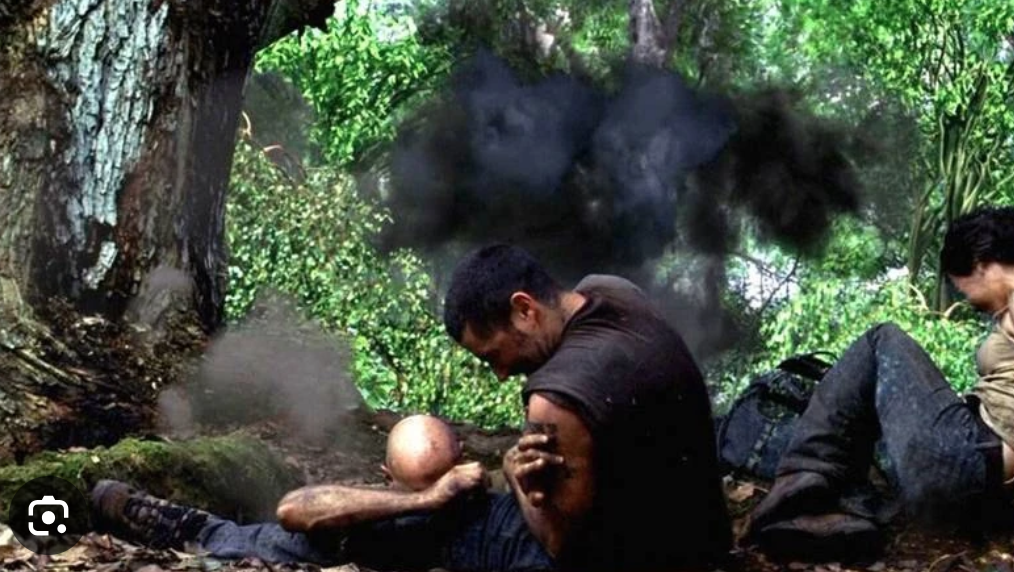
That meant my time at Dukane was also coming to an end. The President called me into his office a few days after the New Year and gave me a pink slip. I realized that being let go from the company was probably for the better. Their progressive hopes had died on the vine. The name A-Click hadn’t saved the day either. The product had gotten a resounding F in all three categories: Function, Market Timing, and Marketability. It would limp along for a year or so after I left, then fade into the ether much like characters from LOST getting sucked up by the Black Smoke Monster.
Before I left, we’d even been told to move to a claustrophobic space within the catacombs at the north end of the building where the floor tiles were crumbling. Tasked with assaying the space, I reported that I’d seen evidence of what I thought might be mold around the wall edges. I called in an expert for a walk-through only to be scolded for exposing any actual potential problems. The Dharma Effect was strong with them. It made me think back to that time when the company President insisted, “We should bring more clients to this building. It’s really impressive.” A few of us laughed at the thought of that.
In an odd portent, the former President of the overall company collapsed and died in the lobby one afternoon. He still came into work every day, and was was a much-loved director of the company for many years. I’d met him earlier in life during his late prime. His obituary read: “Mr. Stone, 81, died Friday, May 15, after collapsing, apparently from a heart attack, in the lobby outside his office at Dukane, company officials said. “Jack was an American icon to everyone that works here,” said Terry Goldman, a 30-year employee of Dukane and its vice president of administration. “He was a brilliant businessman but a wonderful person as well. He was inspiring — both professionally and personally — and brought out the best in others.”
Doing its thing

Dukane is still a big local employer and even the AV company is plodding along doing its thing. It just didn’t turn out to be the “thing” that a few of us hoped it would be when a mix of young blood and experienced people mixed together at the company.
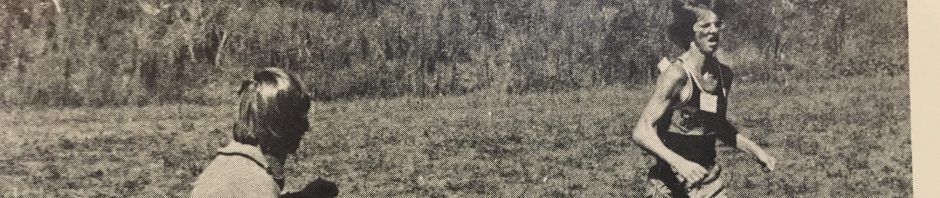
I don’t fault anyone really. It’s hard to go from 0-60 in an all-new direction. You can’t just go out and run a race with no training and preparation, you know? It took me three full years of hard work to drop my 10K time from 33:00 down to 31:10.
Dukane was likely trying to do too much, too soon, in a market that was changing so rapidly that you had to have money to burn in order to compete. Education moved quite quickly away from classroom presentation or student response systems to in-hand Chromebooks and online learning. Once laptops became more affordable the control it put in student’s hands was absolute. I substitute teach in many public school systems and online learning is massive. Frankly I’d been caught up in changing industries in both the newspaper and audio-visual business. Yet I remain proud of the work that I did at Dukane. I loved that tagline Education. Presentation. Inspiration. It kicks ass.
The larger Dukane dynamic is still in operation. People passing by the offices often look forward to reading the witty quips on the hand-posted sign out front. Occasionally, I run into a fellow former employee and we share stories about our time at Dukane. There were many people there that I genuinely liked. But a recent employee review on Indeed kind of tells the story of how the place works to this day.
“There is little to no career development. You must have experience as an outside salesperson, a degree in engineering, or be a relative of a high-level person who already works there, otherwise, you aren’t going to progress much beyond a relatively low-paying, entry-level job. They used to have continuing education programs and in-house training when the founding family still ran it, but like a typical American corporation, newer ownership scrapped that to become focused on short-term profit growth. You need to get used to tackling the same problems over and over and over again. Despite excellent performance reviews, maximum pay increases usually only matched real inflation but sometimes didn’t, though they do have a bonus program when the previous years’ sales were good.”


 We Run and Ride