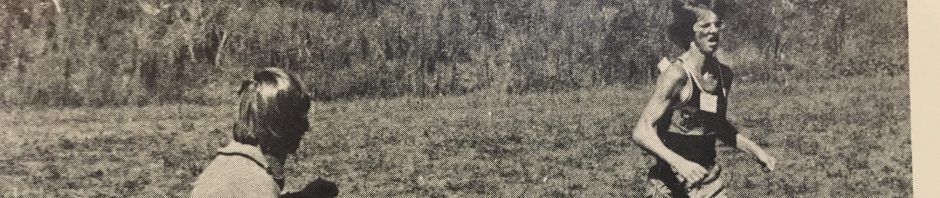
By Christopher Cudworth
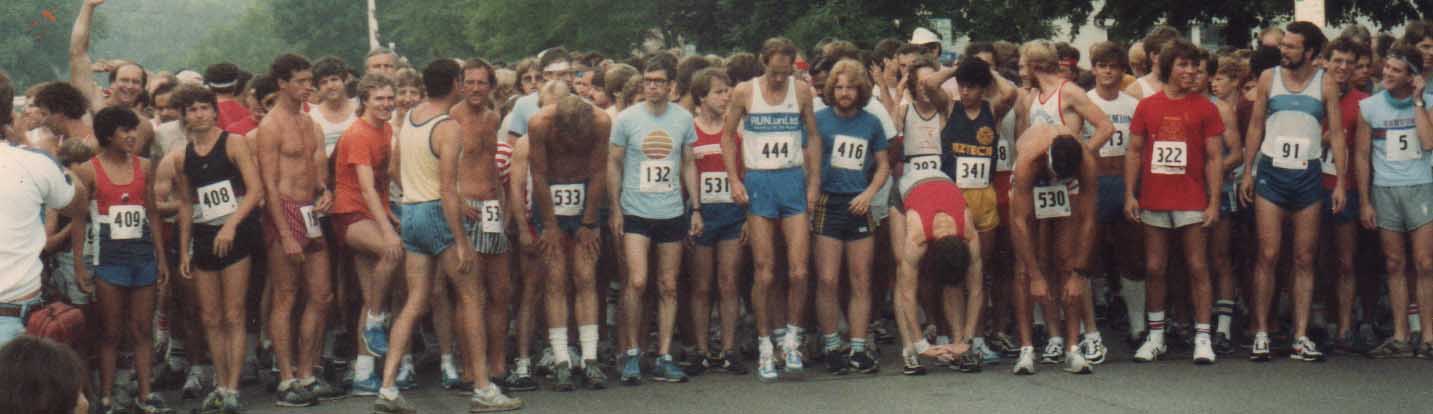
Choosing to race begins with a calm commitment to letting your competitors pull you along.
For 98% of the running population, the word “racing” is a misnomer for what transpires when most people show up at a running event. Racing actually involves trying to aggressively outrun another runner or a group of runners. Fact is, most runners don’t find themselves in that position unless they are competing at a really small event.
But you need to know “how to race” nonetheless. Because the best thing you can do to improve your times is to find someone to race against. Competitive instincts are the shortest point from your current personal record to your new personal best
Being your own “spy”

The sorting process begins right at the starting line and continues through the first mile. Be aware and find yourself a competitor you can trust to run the pace you desire.
The hard thing to do at any race is to pick out who will be running at or near your goal race pace. If you’re a good enough runner to lead a race, the problem of who to run with sorts itself out within the first 800 meters to a mile.
The question of who to compete against is rote if you’re starting a marathon where pace groupings are pre-marked and thus pre-determined. Then you at least know you’re in the ballpark. But you will still need to choose who among that group you want to chase as a pace setter.
That means you have to be your own pace spy. Here’s how it works.
Removing the guesswork
It doesn’t do much good to just guess who might be going the same pace as you. Some runners look great but run really slow. Others might not look so great but turn out to be the type of chug-a-lugs that never slow down. You’ve got to admire those types. They make the rest of us look like slugs.
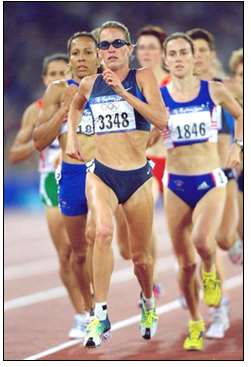
In short or long races the sorting process is how competitors emerge.
In the first mile of any race there is a lot of sorting going on, and you have to “read” the race like you want to win it, sizing up competitors and watching their form to see if they’re the “real deal” at your chosen pace or not. Trouble is, there are a lot of potential distractions in that first mile, especially with all the colored race kits and shuffling and huffing going on, it’s a lot like being thrown into a jelly bean sorter. Some jelly beans roll ahead while others start to trail behind. You want to be the jelly bean that quietly rolls through the chaos. That’s how all great racers handle their early nerves and put themselves in a position to mark their potential competitors.
How the world class runners do it
If you don’t believe it, watch a world class mile race sometime. The first lap is when all the runners read each other like moving books. At that level of competition and ability, all the subtleties count. The efficiency of stride. Rate of breathing. And then there’s race positioning. Great milers know they want to be near the front of the main pack, out of harms way yet in reach of the rabbits in case someone makes an early breakaway.
Measured response
Spending the first mile sorting out your pace competitors is a great way to keep yourself from going out too fast. By being observant and aware, moving gradually through the pack rather than frantically yo-yoing your pace will deliver you through the first mile calm and collected, warmed up and ready to make some good choices.
Some runners don’t even worry about other competitors at first. Instead they focus on getting into a pace rhythm and stick with it.
Beyond the first mile
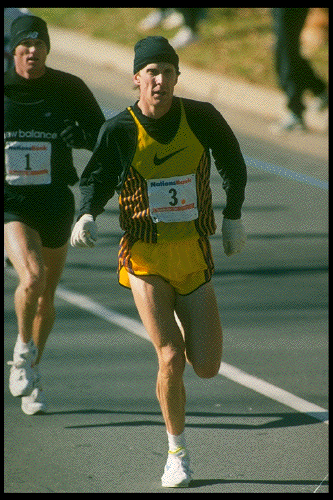
You’re either going forwards or going backwards. Fix your mind on positive progress at all times.
By the time you are approaching the first mile marker you’ll begin to see people “going backwards” as those who started out too fast begin to feel the effort and fade. Don’t charge past them. Just let them slide behind and keep to your race pace.
But after the first mile you can look around for someone to race against.
You’ll find them in two places. Generally if someone is going to hold their pace they are not going backwards at that point in the event. You should look ahead perhaps 20-30 yards and look for a runner with good form who is not flailing their arms, breathing like a bulldog or otherwise looking distressed. That’s your first target.
As a runner, you try to close down that gap evenly and consistently, racing your pace ever so slightly now that you’re warmed up. Then you slot in behind them and recover for a while. You’ll know right away if you’ve chosen well. If you are in immediate distress you might want to do the sidecar shuffle and move over to someone else for a bit.
But you must soon choose a runner to compete against and stick with it. Racing against someone is both the toughest and the easiest way to get to faster times. Our competitive instincts remove subjectivity and place our focus on an outside force that can shift our perceptions.
Capitalizing on your racing strategy
The next two miles should be spent focusing on being efficient and conserving energy. This is true in every race from 5K up to a marathon. If there’s a wind you tuck in behind your pace setter and run smooth. If there’s a tailwind you might move up next to them and run side by side. Some runners respond well to sharing the pace and cadence of running together. Pick up on the rhythm and let your body roll. At that point your competitor also becomes you friend, because you’re being pulled along.
COMPETITION RACE STRATEGIES
5K

Separating yourself from the race is something real competitors know how to do. To leave your competitors behind is a choice you make when your earlier decisions pay off.
If you’re running a 5K, the first mile is the “sorter” mile to choose your competitor or a group to run with. The second and third mile are “hold steady” miles while you let the racer “select” themselves and your goal is to always try to “choose up” one runner rather than drift with those peeling off the back. The 3 mile point is the moment when you find your final gear and accelerate toward home.
10K
If you’re running a 10K, the first mile is the sorter mile. The halfway point of the race is the best time to grab a short drink and check your watch to see your pace. If you’re on goal pace and feeling good, then you stick with your running “partner”–if they’re still moving steady. If you’ve lost them ahead or behind you must replicate the strategy used at the start of the race and find a “new” competitor with whom you want to stick for the next 3 miles before your last .2 kick.
Half Marathon
Segmenting a half marathon can definitely be key to improving your times. If you’ve done your training and know it is a matter of pacing yourself to a new personal best, then your goal is to find “competitors” to help pull you just beyond your baseline effort. At 13.1 miles, there’s too much distance to simply jump into the race with mile splits piled up in your head and hope you hit them as you go along. The minute you miss one there are all sorts of calculations going on in your brain. Do you make it up in one mile, two? Nah. Better at that point to put your focus on someone slightly ahead of you and start competing to make up the difference. Doing the math in your head, after all, does not always equate to covering the distance faster. You need to compete, not calculate. It is best not to even check your times much between 5 and 10 miles, for example. If you’ve done your training your pace should come naturally. It is far better to find someone who shares your rhythm and let those middle miles fall away. If you’re a fairly elite runner and go through 5 miles at 26:30, you cannot assume you”ll come through 10 miles at 53:00. Not if you don’t find someone to cruise along with. So race with someone. Competition is your friend, not your foe. Remember that.
Marathon
Marathoning has its famous checkpoints for brain games too. When you hit 10K and start thinking “there’s 20 miles to go” that’s not exactly encouraging is it? Instead you should prioritize on the immediate goal of keeping up with your surrounding “competitors.” Locking in on someone else is a great way to make the miles pass and not freak yourself out with pace per mile calculations. Sure, you can check your splits once in a while, but once you do, let the basic math settle back into your head. Then lock in on someone and let yourself get pulled along to close that gap in line with your personal best time.
Stay Calm and Race
You’ll notice there is no anger or competitive rage inserted into any of these strategies for racing to your best time. Competitive instincts need to be put to positive, not confrontational use. One can guarantee that world class starts like Galen Rupp want to beat their competitors more than anyone. But they also need their competitors to pull them along to faster times. In that respect you really can behave like a world-class runner. It’s the one thing the rest of us have in common with the elite. Competition makes us all better, if you let it work for you.



 We Run and Ride