

Sue and I rode together consistently in the summer of 2013. I recall it as a warm year, and every time she showed up in her little black cycling shorts and sleeveless kit jersey, I admired her arms and overall fitness. Given my situation, coming off eight years of cancer caregiving with my late wife, and dating soon after she passed away, Sue was sensitive to whether I felt comfortable dating one person so steadily. But I loved our evening meals together. She’d get done coaching swim sessions and stop by my house for dinner. One night I made salmon, some green beans and a salad complete with strawberry slices and raspberry vinaigrette dressing. At the end of the meal, I noticed the strawberries left on her plate. “Yeah,” she told me. “I’m not a fan of fruit in salads.”
It’s often small things of that nature that help people get to know each other better.
As our relationship progressed, I got to know her kids better. She met my daughter but my son was living in New York while working in Admissions for the University of Chicago. It was July of 2013, and my late wife passed away in late March. Not long after she died, my son suggested I should “take a trip” somewhere. I had some money from her teacher’s retirement, but not a ton. She’d worked ten years in the public school system and stocked up enough to pay for her funeral expenses, but that adds up quickly. A couple phone calls is all it takes to blow through $10-$20,000 even with cremation. I too well recall walking out of the funeral home with my late wife’s ashes under my arm, and said out loud, “I’m carrying my wife.”
That’s how weird it is to become a widow. One minute someone’s alive, the next minute you’re carrying them around in a canister. I’d already taken my mother’s ashes around before my wife’s passing. Eventually, many years later, I’d also carry my dad in a can. My parent’s ashes are buried in two cemetery plots in upstate New York where my father planned for them to be together. My eldest brother secured the two grave sites with a local cemetery in Afton, New York, near where my dad was born.
My late wife’s ashes are buried with a headstone next to her father’s grave in the St. Paul Lutheran church cemetery in Addison. Her dad had died in 2012, just the December before Linda succumbed after eight years of cancer treatment. It made sense for her to be with her family in the graveyard run by the church where she grew up and attended elementary school. Her headstone reads, “She loved God, Family, and Flowers.” I learned the hard way that grave markers are expensive as hell. Ultimately, I ordered her beautiful dark granite headstone online. It was delivered to a local installer who placed it according to regulations.

All of that business changed something inside of me. While I grieved my late wife, I wasn’t incapacitated by the loss. Having sat by bedsides and watched people die, I grew to see death as inevitable among the people I loved. There’s a freedom that comes with those experiences.
Perhaps that numbed me a bit to how others dealt with my late wife’s passing. I’m speaking specifically of my children, who were essentially adults by the time she died, but that doesn’t change the fact that they’ve lost their mother. Linda was a deep presence in many respects. She lived fully and with much love for others. My kid’s friends adored her welcoming ways.
Yet there was a side to her that she kept hidden most of her life. Those early “party years” from 15-20 years old with a guy she’d almost married were not a point of pride with her. The counterculture lifestyle she’d adopted was not uncommon in the 1970s, but it all ended badly in more ways than one. Once she left that world behind she kept a few friends but everything else about her move from conflicted teenager to adult was absolute. Her abusive former boyfriend who stood her up on a wedding persisted in contacting her but she fended him off. She dug into college, graduated summa cum laude from Northern Illinois University and began teaching high school students at West Aurora. That’s when I met her in 1981.
During one of our first dates, she told me, “You don’t want to know me. I’m not a good person.”
I said, “No, I think you’re a really good person. And we should go out again.”
I’d come off a deep love that sputtered out a year beyond college, then jumped into a spring-through-summer frolic with a woman ten years older than me. There were work romances as well, but my overall confidence was weak when it came to dating because I remained naive in so many aspects of guy-girl relationships. That fall, I drank all afternoon with friends and then met Linda at 2:00 a.m. at a local bar. We dated for four years and got married in 1985. We were together for twenty years before her cancer diagnosis. I view our relationship as a whole lifetime spent together.
A lifetime ahead
But I realized quickly after her passing that there was still a lifetime ahead of me, and I got going on that front. Perhaps being a distance runner and endurance athlete had something to do with my quick transition to a post-grief state of mind. Or maybe it was my writing because I’d processed what we went through every step of the way. In any case, I was reconciled to the truth of the circumstance. There was nothing I could do to change the losses I’d seen. Something in me recognized that it was better to make peace with it and move on.
I know that’s not how many others feel about the loss of their parents or a spouse. I’ve met many people who never get over it or who can’t move past the death of a spouse or someone else they love. That leaves people in perpetual conflict between what once was and what could have been. A year after my wife’s passing, well into my relationship with Sue, a close friend of my late wife turned to me and said, “Did I ever tell you that Linda said she knew you’d date if she passed away? She knew you’d want to be with someone.” That put my life and the decision to date again in context.
Not alone
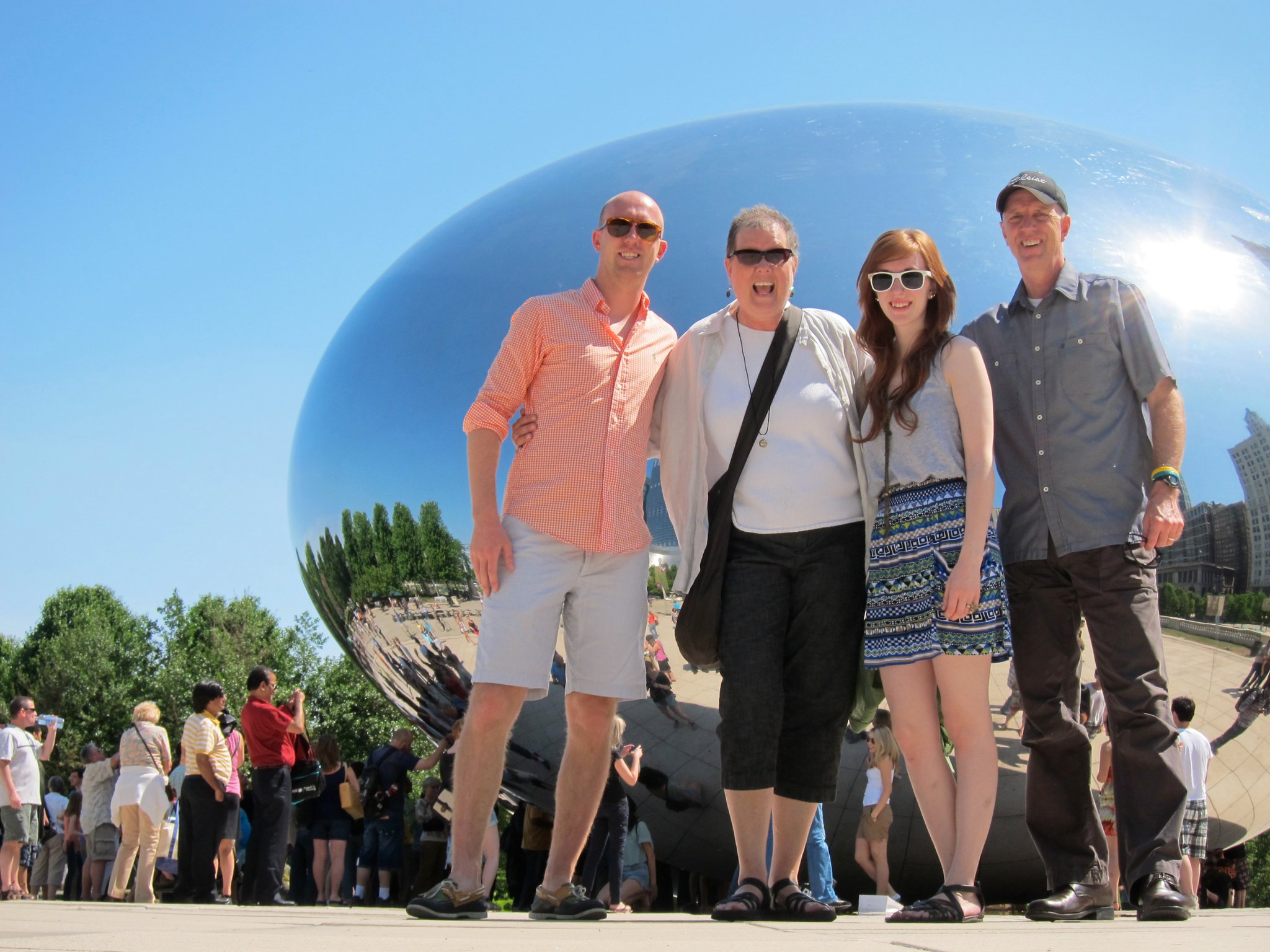
The problem with that conciliatory approach to grief is that it wasn’t much comfort to my kids. I visited my son in New York that summer and told him, too soon I now recognize, that I’d met someone I really liked in Sue. Evan was in deep pain over his mother’s loss. On top of that, her was immersed in a New York scene where drugs and booze owned the night, and sometimes much of the day. Yet we had a fun time in the Big City. We toured the city on bikes, had dinner at an outdoor cafe, visited the 9/11 Memorial in apt silence, and had ice cream in a sweet little park in the summer sunshine. Then he took me on a shopping trip to the Soho District to buy me something to wear to an evening party other than cargo shorts and the tight Under Armor I’d worn that day around town. He picked out a trim blue plaid shirt, some sharp grey shorts with tiny blue flecks in them, and the right belt. I added some stylish blue leather shoes. He chuckled when he saw what I chose. “That’s right. You got it, dad.”
We arrived at the party and his friend Stina looked me over and said, “I like your dad’s outfit!” Evan laughed his approval.
Later that evening, it was time for him to leave me at home and go out for the actual party. I sat home in his apartment with some dinner, watching a movie about a master chef making sushi. I realized that while we’d always been communicative and close, he had another life to which I was not entirely privy. It would be several years before I learned the truth about the pain he was going through and the drugs he was using to cover his grief. His courage in wrenching himself out of that world and into sobriety has inspired me to cut down on my own drinking.
A daughter’s journey

That summer my daughter was living at home after finishing up college at Augustana. That last weekend produced an insane event on the way home as a huge storm came through the Quad Cities to cross Northern Illinois just as we set off for home. Dust tornados rose all around us, blocking our view of the road. Her phone was dying as she drove our Chevy Impala and I trundled along in the U-Haul van carrying all her college stuff. The lighting ripping through the massive storm clouds behind us shone red due to the dust. The world looked like the Apocalypse was in full swing. All I wanted to do was get her home safely. She’d been through rough years going to community college while her mother was sick with cancer, then transferred to Augie only to find that the social structure and cliques were considerable, rife as they were with stuck-up “Naperville Girls” and jocks, which was never Emily’s thing.
She made the best of it and, during the previous summer, worked at the public radio station, completing her communications studies. Back in Batavia, Linda and I could listen to her read the news live on the air. We visited her at Augie a few times, including a trip where we drove upriver to LeClaire, Iowa, where the American Pickers had a shop we’d all seen on TV. On a walk by the Mississippi, I snapped a few photos of mother and daughter walking along the river. Admittedly I’d begun to wonder by then how many more years such a thing might be possible. By then, Linda was completely bald and wore a bright blonde wig. Her face was always puffy from the chemo and beneath her clothes, I knew her body was wracked and ravaged by multiple surgeries. She stayed strong through it all.
That was my challenge through those years: determining what to share with my children and what to keep to myself. Evan once told me, “Dad, just tell us the truth.” That’s what I tried to do when it was appropriate. Perhaps the problem with my fatherhood after Linda passed away was that I kept telling the truth after I’d met Sue and was determined to move on in life. I had put everything into a context that suited my nature well. Perhaps that’s the best any of us can do. In retrospect, it was the best I could do. If it wasn’t good enough in some ways, I’ve tried to make it up in other ways.


 We Run and Ride