By Christopher Cudworth
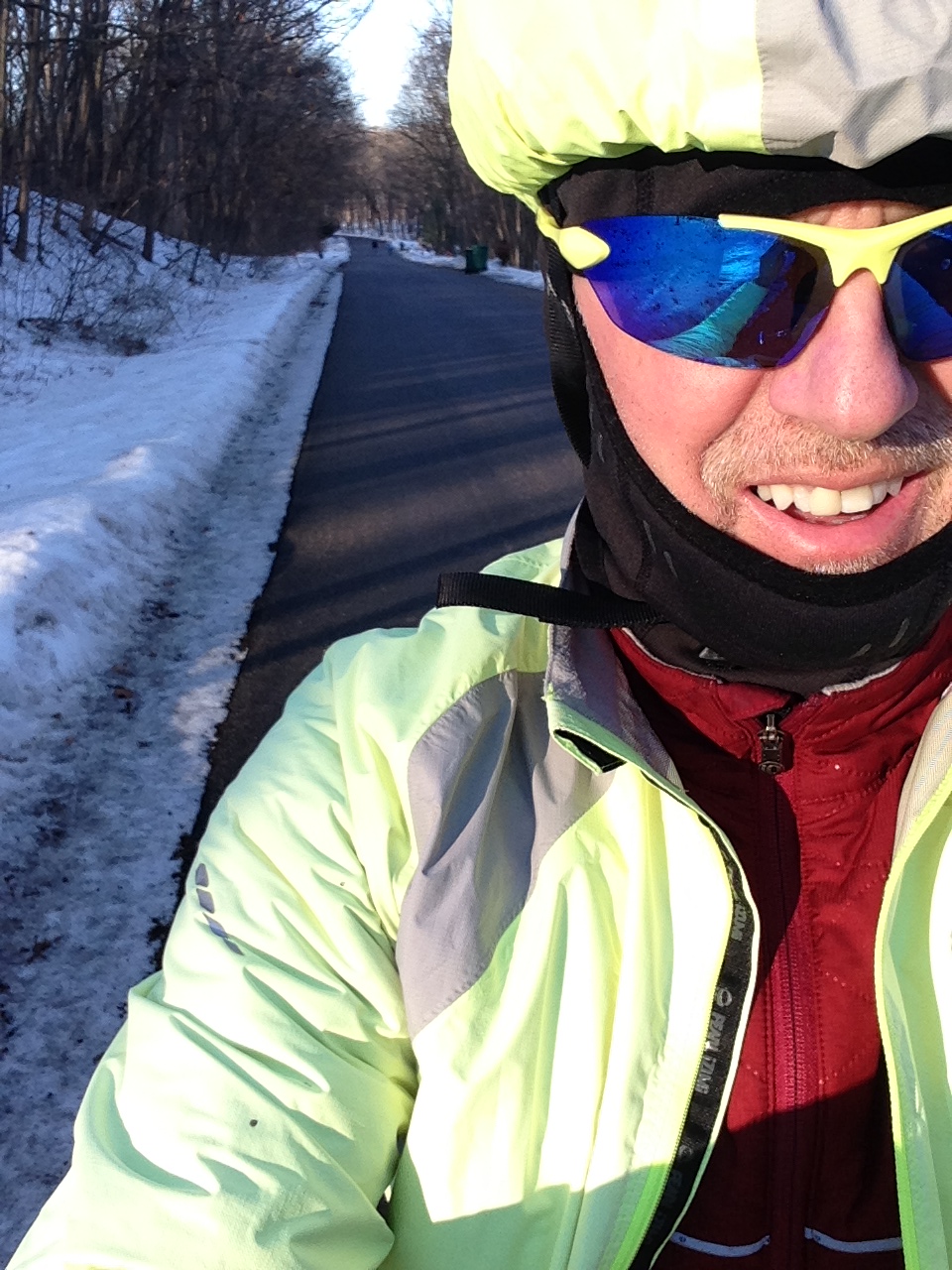
Dork alert. But hey, I don’t care. It was cold outside. But good for riding!
In winter you map out a fitness plan and hope the weather will allow it to happen. If you plan a run and the streets get too slushy, head to the gym. If you plan a road ride and temperatures don’t quite climb to what the weatherperson promises, you grab the mountain bike.
Which is how this winter fitness zealot wound up doing a 15-mile ride on a 14 degree day in which the sun was shining but the ice was not completely melting.
You know the conditions if you live up north. The roads look okay, but shade can make things tricky on the corners and in the valleys. Black ice can take you down faster than a UFC kick to the head.
Fat Tire Trust
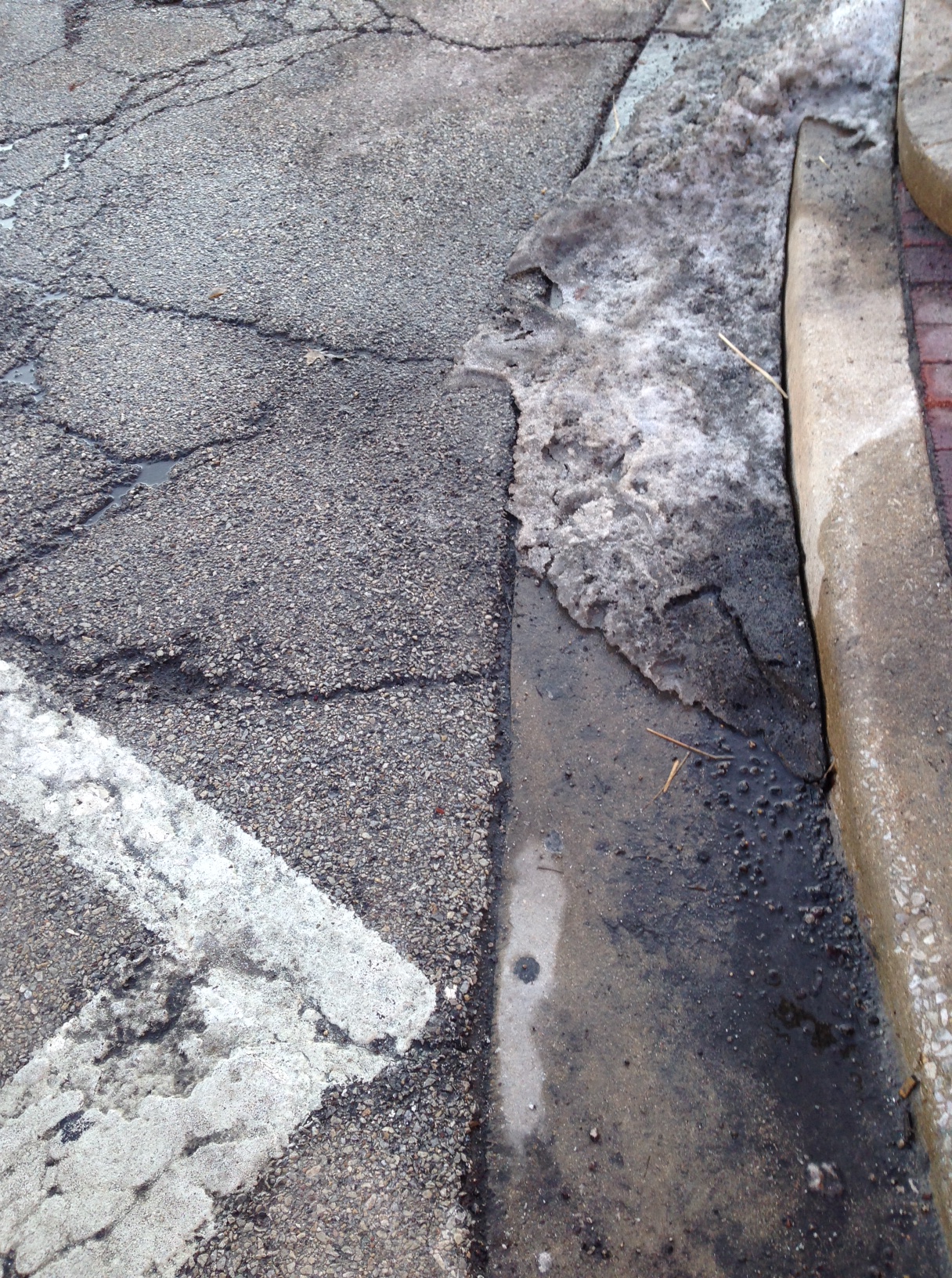
Watch out for the hidden ice on corners.
On fat tires you can count on a little more stability. If you’re wise, that is. Even mountain bike tires will wax out on ice covered with water. In January, you can count on those types of conditions.
So you stick to the roads that are least covered with visible ice and stay away from the curbs where dirty snow and ice still congregate.
Knobby Tire Pace
The reason you go out on a mountain bike is the quality of training you can get. Rolling down streets on knobby tires is a good workout. You may not impress anyone on Strava with your pace, but who cares. Bundle up, break out the balaclava and sweat it out underneath a couple of technical layers. That’s the ticket to winter fitness.
Potholes and Pasty Streets
There are plenty of reasons not to ride the road bike in winter. Salt flies up from the road into your gears and cables, for one thing. A few winters ago I also wound up pedaling through some kind of cranberry or beet slurry on the road that was the consistency of slick soap. It got through up into the hubs and coated the points where the cables enter the bike frame. That’s not good for a road bike, at all.
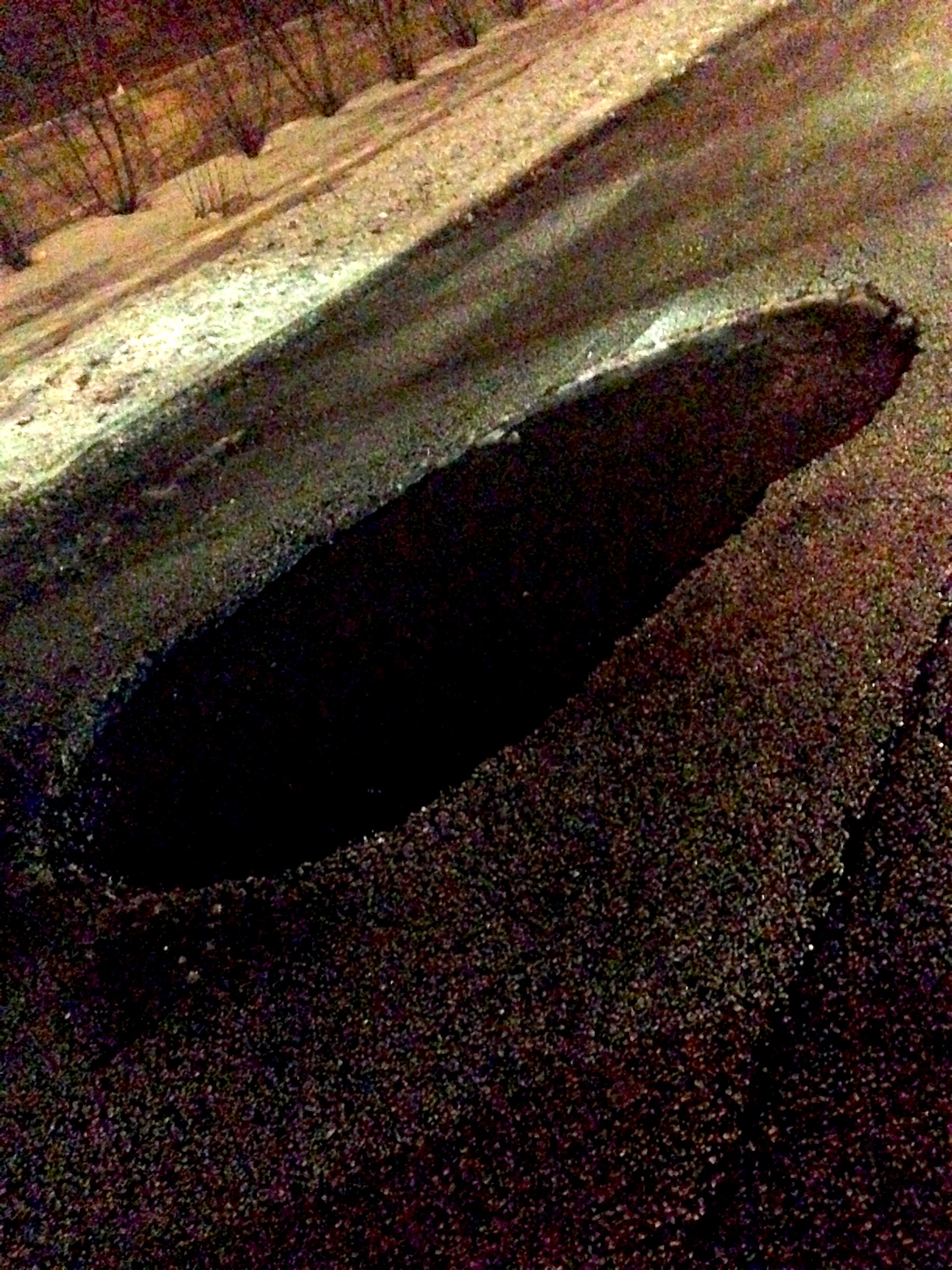
This four foot pothole is almost epic in scale. Don’t fall in!
Potholes can also cause pinch flats on a road bike. Even the smallest potholes are a threat, but the bigger ones are a clear danger. Recently I found a 4-foot pothole on the backroad I take to avoid traffic on the main highway. It was about 4 inches deep at the lowest point, and I could not help thinking how bad it would be to be riding along and dip into that thing. Might not be heard from again.
Hills and heart rate
The ride averaged 15 mph which isn’t bad for a mountain bike, especially on the hilly route I chose. But that’s the point. Working hills in January should be a high priority for any cyclist or runner. This time of year you don’t care how fast you go, just that it’s hard, raises your heart rate and strengthens your legs, especially the quads and hamstrings.
So that was the goal, and riding around a crisp winter morning was its own reward. All good in the land of Winter Fitness. Now I just need to do it some more. A lot more.
See you out there.


 We Run and Ride