As a cyclist for the last twenty years, I entered the Strava World not sure what it would do for my training and racing. At the start of my cycling experience, I rode my Felt 4C road bike in criteriums, most in CAT 5 races, but also in 50+ Masters races, where the pace was much faster and the riding much safer.
Riding with experienced cyclists means consistency in turns and overall circumstances. A year or two ago I went back to try a criterium but had a weird experience in the 60+ race because some much older lady went straight going into a turn and forced me off the road to crash on the grass. I decided at that point that criterium racing was “over” for me.
That’s sort of sad because the cycling club I once raced for holds criteriums on the roads of an unbuilt development just a few hundred yards behind my house. I’ve considered jumping into those races, but these days I mostly ride my Cervelo tri-bike and am not cranking at high speeds for sustained periods the way road cycling requires.
But during the last two weeks my coach gave me a series of time trials in training. I now have Garmin power pedals on my bike to measure watts, so it’s an interesting exercise to ride hard and see what kind of power I’m generating. For the past two decades, I’ve gone by perceived effort and speed on the bike cyclometer. The Garmin watch I wear is a Fenix 520 Plus and I also ride with a Garmin head unit gathering the power data.
I rode a set of 8 X 1 minute intervals on the criterium course behind our house to see how my times compared to the guys racing that loop. That was easy to find when on Strava, because the minute you ride a segment your results pop up. Typically I’m way down the list in 150th place or somesuch, because there are many great cyclists in our area, and the roads just outside our home at the edge of suburbia are the domain of hundreds of cyclists. The region is a patchwork of Strava segments, and I never ride without hitting some of them.
Two Strava segments particularly interested me in how I’ve done in the past and how I’m riding today. One is the Green Road to Bliss segment on Main Street west of Batavia. The segment starts as it suggests at Green Road and traverses a mildly rolling segment of asphalt ending at a now-truncated spot where Bliss Road formerly connected to Main. A new roundabout was installed on Main last year, and I’m glad for that, because riding the segment to the end meant watching out for the lights to change when you come rolling in at 26 mph. I’ve had to hit the brakes early a few times.
Two days ago I rode the Green Road to Bliss segment, a 2.05 mile stretch with two inclines at 5:06 or 24.2 mph. My All-Time best is 4:52, an average speed of 25.3 ridden in 2021. My original best time dates back to ten years ago, in 2014, at 5:04 or 24.3 mph. My wife Sue accompanied me on a leadout that day, but these days I’m riding it on my own.
I can analyze all 127 efforts over the past eleven years for which Strava has records, but I’m too lazy. Besides, I don’t always ride all-out or even pay attention to it as a segment.
Speedy types
The All-Time Leaderboard shows Erik Minalga leading with a time of 3:51, an average speed of 32 mph. He notes on his profile that he rode “out and back” intervals that day, leaving from Geneva and riding out to Kaneville, a great route to ride when looking for mostly flat roads and room to hammer. He averaged 21.1 for the day. I’ve heard of him locally and he’s obviously a great rider.
I’m not a cyclist of that caliber, but Strava shows that I do rank in the top 1% of all riders recorded on the Green Road to Bliss segment, so I’m not ashamed of my times. I’ve also maintained a solid riding pace between the ages of 57 and 67 years old, which I just turned July 26, 2024.
Seavey Road blast
The other segment of interest is a Seavey Road Strava Segment near my house. It was included on a course I rode in a rainy duathlon back in 2014. My Personal Record from that race on that segment is 5:47, a time I popped on my Felt 4C road bike with no aero bars. The rain was pouring on the streets, and the turns were treacherous, but I hammered all the way through the final long incline at a pace of 24.2 miles per hour. The segment is 2.33 miles long with a vertical incline of just 47 feet, and there is a big dip on the west end coming east, so you can fly down that.
Last week I rode it at 6:12 on my tri-bike. It wasn’t in a race and it came after doing 8 X 2minute intervals above threshold, so I was warmed up but perhaps a touch tired out from the first part of the workout. Yet I rode just a percentage point or three below my best performance on that segment from ten years ago.
The All-Time Leaderboard on Seavey Road shows Marcin Czaicki (proudly displaying his Polish flag on his result!) at 4:26. That’s 31.6 mph average, a result that I never touched at any point in my cycling career. The best pace I averaged in a Masters 50+ criterium was 25.8 mph for 40 minutes. I got popped on the Sprint lap that day, but I’m still proud of that result. It takes all kinds of focus to stick in a group like that for that long.
The data on my two local segments can be interpreted in many ways, but I regard it as indicative of keeping myself fit and in shape. It also indicates that I’ve never been a great cyclist, but given that, I’m still in the top 1% of all riders on the Green Road to Bliss segment. I’ll take that.
Running past
I don’t know where or how I ranked during my competitive running days, but I’m guessing that my PRs of 14:45 in the 5K and 31:10 in the 10K placed me in the top 1% of all runners at that time, and still does. But the difference in quality between runners and riders on the lower fringes of the top 1% and those who are national and world-class is immense.
I once read that the difference between an 18-handicap (bogey) golfer and a Scratch player is the same as between a typical Scratch golfer and a pro player. I had friends who qualified for their PGA pro cards in golf but never cracked the Nike Tour or any other professional level. The quality and talent of real pros in any sport is immense at the top tiers. That’s why so few great college players make it in the NBA or NFL, the NHL or the MLB.
I once stepped to the line of a running race in great shape and decided to go out with the world-class guys and see how long I hung on. Next to me was Keith Brantly and Thom Hunt, and on the other side, Alberto Salazar. The gun went off and I whipped along with them through two miles at 4:40 pace. Ahem. That’s the pace I ran for my 5K PR, and the third mile predictably dropped to 5:00 pace and then 5:30. I finished the five miles at 25:30, good for perhaps 20th place that day. A noble effort, but a notably humbling experience.
Yes, that’s the difference: great athletes have a better engine. Their cardiovascular makeup is superior. Their body structure, form, and “talent” include mental focus, too.
That doesn’t mean the rest of us need not enjoy our efforts. I still like the feel of going 30 mph on the bike when I’m riding all-out on a slight downhill. I like seeing the watts reflect my power output. And I love lying on the bed after a shower and looking at my Strava segment and saying, “Not bad.”
Somewhere in the middle part of my 60s a tooth went bad in the back of my jaw. I’d gone to some sketchy dentists right after my wife died and the first dentist I visited didn’t explain clearly that my insurance wouldn’t cover most of my “catchup” work after ignoring dental needs due to my wife’s ongoing medical costs and my pursuant parade in and out of jobs as companies fired me for having a wife with cancer.
The bill for the first round of dental work at a practice ironically called “Sunrise” shot past $6,000, which I was forced to pay out of pocket. After that, I proceeded more cautiously in choosing dentists but hit a dental tarsnake when a molar went bad and I needed a root canal.
I recall that appointment lasting an hour as the kind but seemingly nervous dentist dug around inside the tooth while her assistant apologized, dabbing at the blood and saliva flowing from the side of my mouth, and even held my hand once, saying, “Be over soon.”
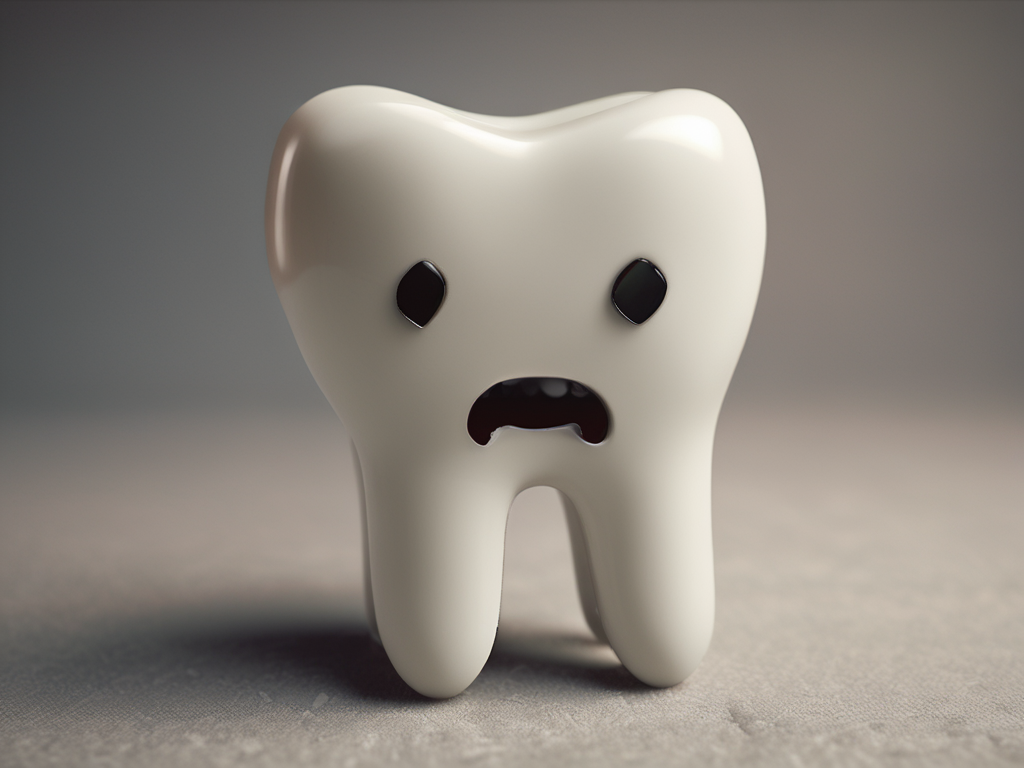
AI generated sad tooth generated by Christopher Cudworth
That’s the tooth that went super toxic ten years later. By then I’d been working with a regular dentist, a fellow Rotary Club member from years ago, who racked up his own set of bills for me clanging around inside my mouth. None of it was pretty, and when I showed up on July 2, he opened up the crown, poked deep into the dead tooth, and found an infection growing at the base. He tapped around a bit, sealed it back up, and said, “I’m sorry, I can’t really deal with this; we’re going away for the 4th of July weekend.”
At that point, I panicked. My jaw was hurting, and my dentist told me to go away. I contacted my wife’s dentist, who also dug around inside the tooth and proclaimed, “This is beyond my purview. But I know just the guy you need to see.”
That same day, I drove to see a root canal specialist. Now, the key factor in all of this was insurance. After my job scrambles I’d decided to get on my wife’s plan, so I did have dental coverage. It wasn’t necessarily a great dental plan, but at least I would get what I needed done.
AI generated image by Christopher Cudworth
If you’ve never visited a dental genius, then I have a fact for you. They do exist. The endodontist I saw specialized in dental surgery and root canal work. He worked on my tooth without stress or distraction. I sensed how deep he’d gone into the tooth by the pressure, but the novocaine worked and he wrapped up confidently in just ten minutes. He’d cleaned out the tooth completely, but told me, “This is not a good tooth. I’m prescribing antibiotics to fight the infection. But if this doesn’t work, there’s only one alternative.”
I mumbled through cotton and gauze. “Phull itfth?
“Yes,” the endo guy confirmed. “We’ll have to pull it.” I took the drugs as prescribed but my face was swelling from the infection. A week went by and we kept in contact. Another few days and I was getting nervous. The pain was awful when I sat still on the couch sipping tea. Eating was uncomfortable. I only felt good out riding, running, or swimming. The bloodflow cleared my head but the cumulative effects of ibuprofen on my kidneys was not good. I stopped during one run because my lower back hurt. Realizing it was not a muscle ache but my kidneys throbbing, I decided to be more cautious with the meds.
Finally, after two weeks, still in pain, I trekked back over to the endodontist who took one look in my mouth, gave me a number for an oral surgeon, and urged, “Don’t waste time. This is serious stuff. Sometimes it’s not worth trying to save a tooth. It’s better to pull it.”
The idea of pulling a tooth made me think of the Tom Hanks character in the movie Castaway, holding his head against a rock as he positioned an ice skate recovered from a FedEx box to knock out an infected tooth, and himself, in the process.
Surely it wouldn’t be that bad, I told myself.
The oral surgeon set aside all his appointments and took me in. Apparently, the endodontist called to tell the surgeon the procedure was urgent.
Until then, I’d been in hard training for an upcoming triathlon in Wauconda, Illinois. My swimming was improved, but I worried a bit about the warming water temps and having to forgo my wetsuit on an 800-yard course. My cycling that summer was solid. Averaging 19mph for 26 miles in an earlier Olympic Distance triathlon race gave me confidence. The running was going well too. I was training at 7:00 pace on the track.
I looked forward to racing Wauconda in mid-July until the tooth pain hit. I explained my race plans to the oral surgeon:”I have a race next weekend. “Do you think I can do it?”
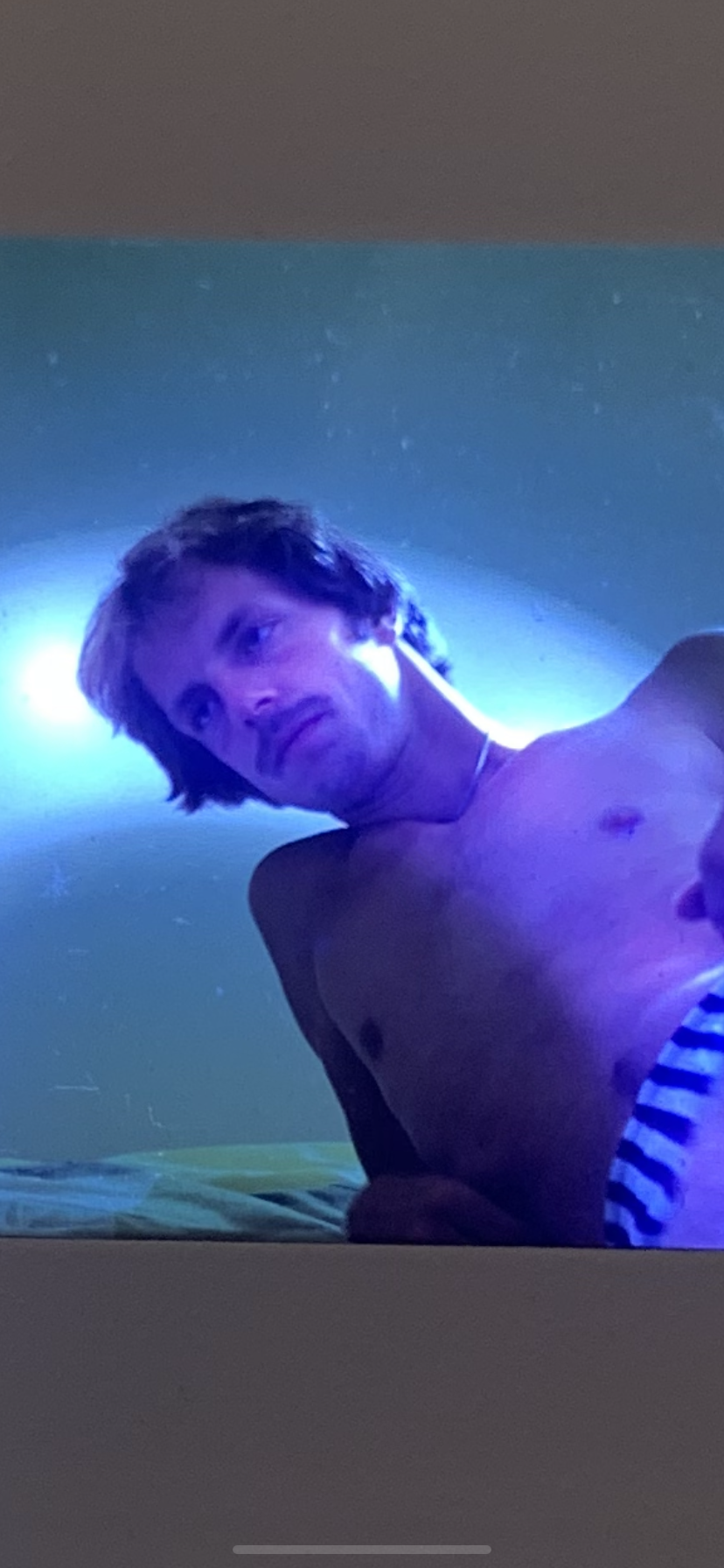
Another period in life when I felt blue.
The surgeon paused a bit, feeling around my jawline with a serious expression on his face. He said, “This infection has gone sublingual. That means it dropped down below your gums and tooth roots into your throat area. If we don’t pull the tooth quick and get the infection under control with antibiotics, there’s a possibility your throat might close and you could die.”
I lay there in the chair realizing how real the situation just got. The oral surgeon went to work pulling the damned tooth out of its socket, and I don’t recall much else about that afternoon. For days I’d been sitting in pain with that tooth throbbing in my head and now that it was out, I wondered if the pain would go away. Will it? I asked the doctor.
“It should,” he consoled me. “Plus you’re going to fill this prescription for hydrocodone and antibiotics. But I am giving you my personal number to call if you experience any more swelling in your throat. And I mean it. Call me at any hour.”
I took the card with his number to the car with me. Daylight always looks strange after you’ve been lying in a medical office chair for an hour. My whole head felt like a 50-gallon drum perched on my neck. I got in the car and drove home, stopping at the drugstore on the way to get my painkillers and germ fighting meds.
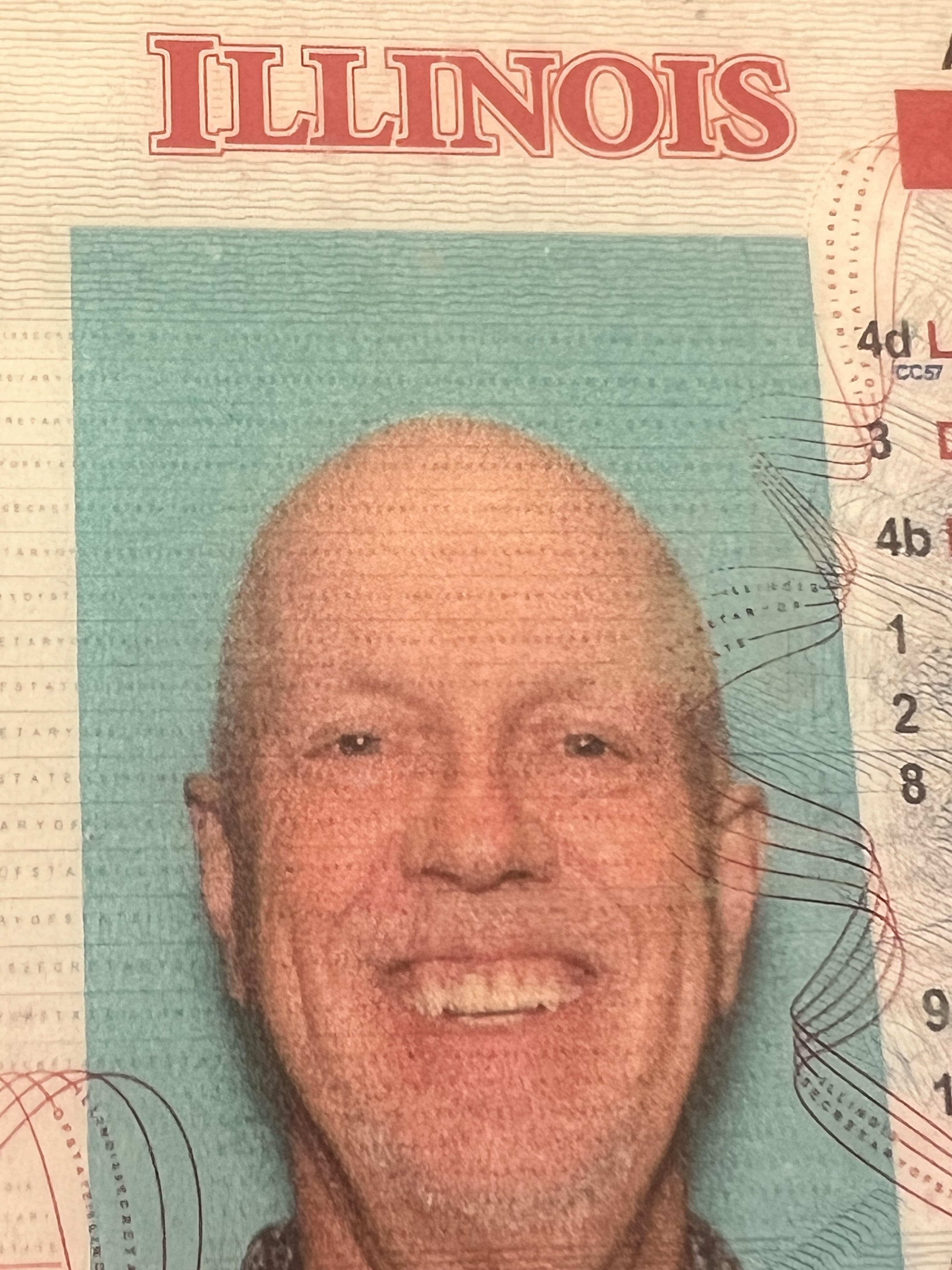
The novocaine started to wear off but the drugs did their trick. But my throat still looked like I was holding my breath. The next morning I pulled out my Driver’s License to fill out some form and realized I was due to get a new one before my birthday in July. I had no choice but to get the license taken with my face blown up like a balloon. My expression in that photo was dour. I looked to be in pain because I still was. My face was fat and wide and my eyes looked sunken.
For the next few years that license reminded me to take better care of my teeth. Renewing my license this year and getting a new photo was quite a joy.
And that’s the synopsis of the reason I might have died that year.
Ensuing drama
Yet the drama didn’t end there. I was still determined to race the weekend after the tooth was pulled. My wife’s sister was coming into town to do the same race, and I thought it would be fun to compete on the same day considering she’d been the one who “introduced” me to triathlon in 2013 when I first watched her sister Sue compete in Racine.
I drove up to Wauconda (an hour away) the day before the race to pick up her packet along with mine. My body still didn’t feel strong due to the effects of sustained pain and the drugs I was taking. But I’d raced the Lake Zurich Olympic tri when I had c.diff from taking drugs to treat cellulitis after our cat Wanda bit me, and I still won my age group.
So I thought I could fake my way through this triathlon too. Knowing we’d have to get up at 4:00 a.m. to drive to the race in time for transition to open, I went to bed at 7:30 but woke up at 3:00 a.m. to the sounds of thunder rumbling and rain pelting our roof. My wife rolled over and said, “Are you still going to race?”
I thought it through for a few minutes and got up to walk around. I felt like total shit. My legs were aching. My lungs didn’t feel good. My face was still puffy if not swollen thanks to the medications. Coming back to bed, I told her, “No, I’m not driving all the way up there.”
AI generated image by Christopher Cudworth
The storm kept pelting our house with rain and hail. Lightning flashed and I could not get back to sleep. Walking downstairs, I checked outside to find rivers of rainwater flowing from the downspouts. Then I got a text from my wife. “Julie is still doing the race but you have her race packet. What do you want to do?”
“I’ll drive it up to her,” I texted back. So I grabbed her packet with the race numbers and stickers and timing chip, hopped in my trusty brown Subaru Outback and drove up to Crystal Lake where Julie was staying with a longtime friend and fellow triathlete. I’d made it to her door by 4:30 a.m. “Here you go, sis,” I chuckled. “I am not fucking racing. I feel like shit.”
Looking out at the darkness and rain, she laughed. “Well, you picked a good one to skip.”
I don’t recall if they wound up racing that day or not. On the drive home the rain pounded my car roof for another fifteen minutes and then stopped as if someone turned off the shower. That was that. I went home and crawled back into bed. Sue was awake as I nudged over to her for a hug. “What a week,” I chuckled.
The sublingual infection finally subsided. I wasn’t going to die after all. The next year I went back to Wauconda and won my age group despite heat and humidity that damn near melted us in our tracks. I lacked salt for the last three miles of the hilly 10K run and suffered mightily trying to keep up the pace, but crossed the finish line somewhat resuscitated after finding some energy chews I’d stuff into the thigh of my bib pockets. I crossed the finish line with my tongue digging the last bit of a jelly chew out of the socket where my infected tooth once tried to kill me. A thought went through my head. “This hurt but at least I’m alive.”
Maybe you know that feeling for one reason or another. Perhaps that’s why we do this insanely painful sport: to feel alive in the fullest. Suffering has a way of doing that, heightening our senses for better or worse.
But I was sure rocking this Zoot kit that day, don’t you think? I
Over fifty-plus years of running and riding, I’ve seen and heard many species of birds along the way. Early in life, it was hawks that captivated me most. I traced their silhouettes in the Peterson’s Field Guide, drew them on my school notebooks, and painted them as I grew into a wildlife artist. The most familiar species in the United States is the red-tailed hawk. And on the day that Sue and I toured the home we came to own, I’d first walked into the backyard to look around and saw a red-tailed hawk fly up and land in the cottonwoods next to what looked like a dormant marsh.
She came out the house’s back door with the realtor showing us around and I turned to her with tears in my eyes. “Oh, you like this one?” she smiled.
“Yes,” I told her. We put down money that day and moved in a month later.
That wasn’t the first time a red-tailed hawk inspired me in some symbolic way. The summer before my senior year in college, I found a dead red-tail on a roadside while out running. Later I returned to pick up the bird with the notion of possibly stuffing it. I’d learned taxidermy in college field biology, but once I realized how few materials I had to complete the job, I chopped up the hawk into pieces to save in the “bird box” of duck wings, owl feathers and many other illegal bits and pieces of wildlife I’d collected for reference. Every one of them was illegal to own according to federal wildlife laws but I didn’t care.
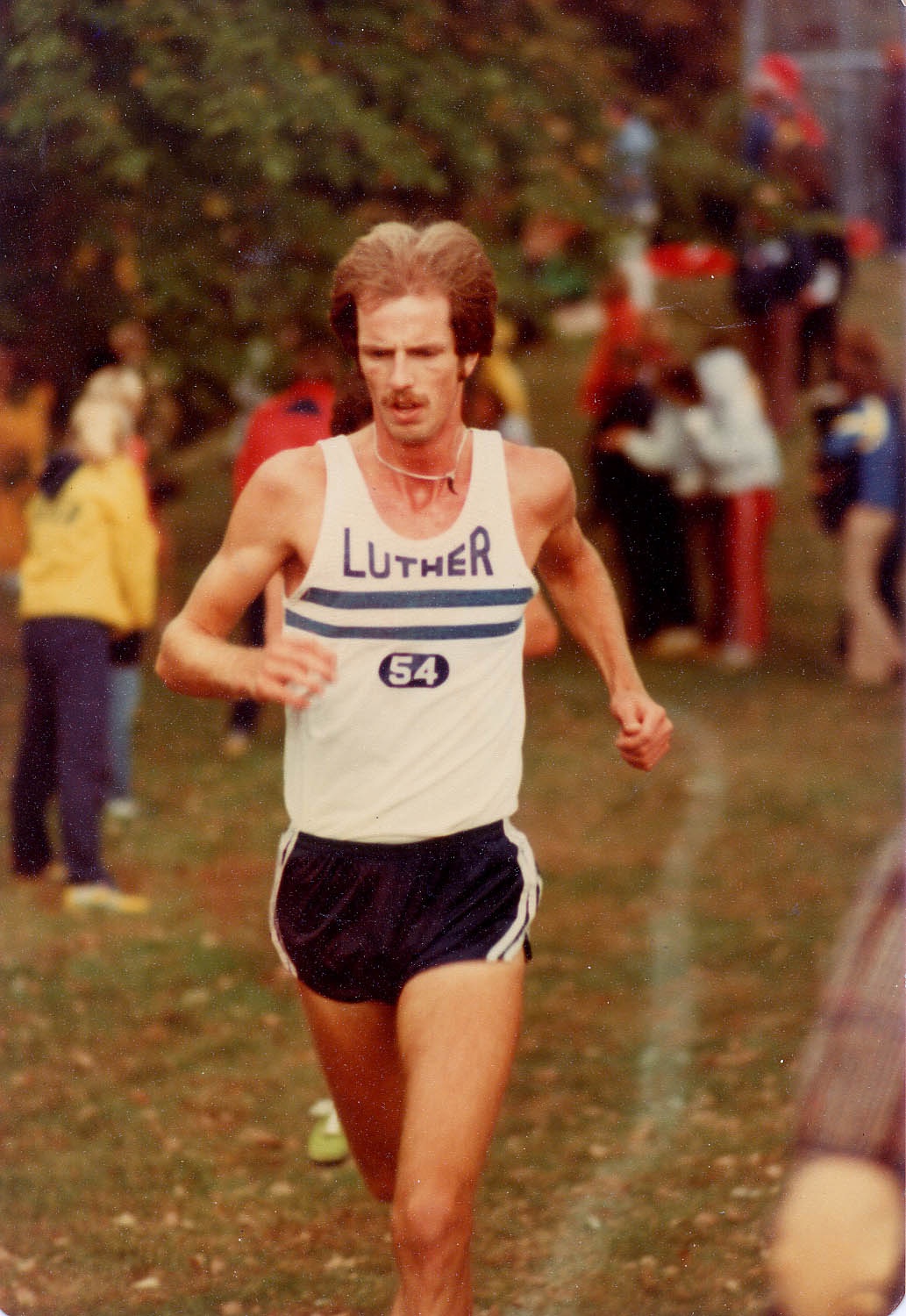
I even cut off a talon from the hawk’s foot and took it to a local jeweler to have it set in a necklace. I knew that the upcoming cross country season would require every bit of focus, and that I might not have much time to get into the field or do much painting in the fall of 1978. I was right. We ran morning, noon and night, sometimes training 100 miles a week with two-a-day workouts. My hawk talon necklace rode the crook of my neck the entire way, reminding me that while running was my focus at that age, someday nature would call me back.
Thus when a red-tailed hawk appeared in my future backyard, I took it as a sign. Once we moved into the home, something else miraculous happened. The wetland grew in size, swamping the reed canary grass that once covered it. Now, the water is six feet deep in places, and wildlife of many species has returned. There are fifteen species of ducks (maybe more…), four kinds of geese, herons of several types, plus kingfishers, ospreys, and even bald eagles now flying around behind our home. The calls of chorus frogs ring in March and April, followed by leopard frogs growling, American toads churring, and green frogs and bullfrogs croaking into the summer nights.
Our house also sits on a running trail, and we’re situated at the far edge of suburbia where country roads beckon us to ride our triathlon bikes deep into the fields. The Vaughn Center, with its beautiful pool, is just three miles away. I never dreamed I’d live in a perfect place with a woman who shares so many common goals. It’s enough to make you want to fly, or slow down and paint a creature who can. There are kestrels now inspecting the dead trees behind our home for a new nesting place, and Cooper’s hawks haunting our bird feeders in wintertime. We’ve had turkey vultures within fifty feet of our house, and great horned owls hoot and greet each other in the cold December nights. The ice covers the wetland most of the winter, while muskrats and mink, turtles and frogs retreat into hibernation.
Sue and I pedal our bikes in our workout room looking out at the dark and wonder when it will be light and spring again. That is life.
I was a bit torn when it came time to sell the house I’d owned at 367 Republic Road in Batavia. We moved there from a tiny little 750-square-foot house in Geneva with a leaky basement, a radon problem, and an attic with a ceiling too low to use for anything but storage. By contrast the Batavia house was spacious with a large living and connected dining room, huge front windows, a three-season room lined with russet-stained pine wood and slat glass windows, and a basement so large we once hosted the band Goldhouse for my daughter’s graduation party.
In other words, the place was stuffed with memories wrought from twenty years of life. My kids were going into fifth and second grade when we moved in. My late wife tore up the yard turf and replaced it with plants worth of a Master Gardener. We hosted parties and family gatherings, Thanksgivings and birthdays (my 40th, for example, and my 50th) and the pursuant attachment to that home grew greater by the year.
But I’d moved enough times in life to know that nothing is permanent. We moved from New York to Pennsylvania when I was five. We moved from Pennsylvania to Illinois when I was twelve. We moved from Elburn to St. Charles, IL when I was fifteen, and moved from a home in that town to a rented country house when I was a junior in college. Then my parents moved back into town the next year but I never loved that home. It was an uncomfortable split-level with a nothing yard in the middle of a suburban neighborhood with no character.
I moved many times as a bachelor after moving out of my folks home following college. I lived in Iowa, then Illinois, then Pennsylvania, back to Chicago, then got married. My collection of “stuff” grew along the way. Artwork I’d kept from childhood. Manuscripts I was working on. Photo albums. Boxes of books; Tom Robbins, John Updike, John Irving, Ayn Rand, Jack Kerouac, Carlos Castaneda. And a small porn collection consisted of a couple magazines and some torn-out photos of women I’d appreciated over the years.
All of that and more came with me through the Geneva house where late-wife Linda and I started our marriage and then hauled stuff to Batavia where her collections and mine melded in the basement closets and shelves. Before she passed away in 2013, she lay on our bed sick with exhaustion from chemo and surgeries and told me, “Chris, I’m sorry about all the stuff.”
I didn’t know what she meant until it came time to clean out the house when Sue and I mutually decided it would be best to sell the place rather than try to fix it up. She still had kids in their early 20s coming out of college and in need of a place to live and while the Batavia house had three bedrooms and a basement, the rest of the issues overwhelmed the sentimental notion of keeping it.
So I set about cleaning out the collections of stuff. There were large hall closets filled with Holiday decorations of all kinds. There were piles of Christmas things in all its forms, from ornaments to wrapping paper. Also Halloween plastic pumpkins. Thanksgiving plates and Easter baskets. Oh, so many baskets. I’d find ten or twenty in those hall closets alone. But then ten or twenty more on metal shelves in the basement. I never knew she’d collected so many baskets.
Linda was no hoarder. Most of what she had was part of the utility of her lifestyle, keeping up family traditions and being prepared for entertaining. But Lord, there was way more “stuff” than I ever imagined. She was right about that.
I spent weeks carefully going through all these goods, and the mental work was as exhausting as the physical act of separating material to keep and what to recycle or send to the dump. I thought long about the art of “death cleaning,” because when someone you love dies it is a challenge to determine what you want to save related to memories of their life and what needs to be discarded simply because you can’t keep it all.
One of the watershed moments came when I happened upon a box of old magazines from my wife’s teenage years. There was an entire box of David Cassidy memorabilia. Her brother and sister recalled her devotion to that star for me. “She’d make us all sit silent when he came on the TV, and she’d record his concert so she could listen to it later.” But that was fifty years ago, at least, and the Teen magazines with other pop stars did not seem worth keeping. Along with many other piles of paper goods and aged-out keepsakes, I conducted regular bonfires in our backyard fire pit as a catharsis of things remembered but lost to time.
I listened to music all the time I was cleaning out the house. It felt like a journey through time and my record collection played on the Radio shack turntable and receiver. I played Jackson Browne’s live album with the song Love Needs a Heart. The lyrics seemed to fit the tasks in which I was engaged:
Maybe the hardest thing I’ve ever done Was to walk away from you Leaving behind the life that we’d begun I split myself in two
Proud and alone, cold as a stone Rolling down that hill into the night I could see the surprise and the hurt in your eyes From behind each flashing city light
Love needs a heart and I need to find If loves needs a heart like mine
It was true. I’d found love again with Sue and there was a tinge of guilt in that realization. A close friend of my late wife confided that she’d told her a few months before her passing, “I know Chris will date again if I die.”
With all the “moving on” I’d done already in life, I understood the inevitability of change. It would do no good to cling to past memories. As I moved through that house making decisions about whether to keep the childhood Lego collections, baby clothes and cribs, or all those baskets, my mind evolved to a state of colder objectivity.
That wasn’t popular in some respects with my own children, and I don’t blame them. Selling off their childhood home felt like abandoning our family history. Financially, there was a case to be made for keeping it, too. I was ten years away from paying it off. But I’d heard from other residents in town that keeping a house after it was paid off proved to be a financial challenge given the annual tax bill of $10,000 they had to pay anyway. It all felt like surfing a wave into the future. You either catch the wave and keep going or wash out along the way. I decided to keep surfing.
The last two weeks of death cleaning nearly killed me. Sue’s housekeeper was a sweet Iranian woman who had seen Sue through her divorce years. She knew her kids and liked what Sue and I were building between us. She came by my Batavia place to help clean out the kitchen, a major task with all the cupboards and cubbyholes. She turned to me at one point and said, “So much stuff!” We both laughed at that. “Yes,” I replied. “So much stuff.”
Over and over my sentimentality got tested. I weighed the value of dish sets given to us for our wedding along with plates and bowls gifted or collected over many years. There were more wine glasses and styles than one could count. And Linda loved items with grapes on them. Which to keep? Which to move on?
I moved piles of home belongings to the front curb and they’d immediately disappear. Pickers got word of my house cleaning efforts and drove by our house every day. I befriended the “metal guys” and the “wire guys” as I cleaned out the workshop where stashes of old Illinois Bell materials remained from the prior owner who had built the house back in 1956.
I’d already stripped old wallpaper in advance of the sale, and painted walls to freshen the place up. Beneath the wallpaper the installer signed his work in pencil. That was the archeology of the era.
House staging
After all that, and after the major act of trying to repaint the whole house (a grand mistake) the house staging took place. The realtor on my side hired a woman who specializes in staging houses for photos and tours. She ripped through the place telling me what to move and where. Everything extraneous was stashed out of sight. It didn’t matter what sentiment was or wasn’t attached to any object. To her, it was all about presentation, and I got that. For a few days, the house sat like a museum. Then it went on the market and sold in a day. Ranch houses will do that.
Then the buyers wanted inside to do some measurements for one reason or another. We let them in, but they acted like total bitches, and as timing was tight on Sue breaking her lease to move to the home we’d found in North Aurora, our kids moved in with all her stuff stashed in the garage and things got chaotic quickly. The buyers’ relatives walked in the door and began complaining about the conditions. They measured the living room and found it to be three inches short of its stated size and starting whining about that. One of my stepdaughter’s boyfriends let them have it then and there. “We let you in here to be nice…” he warned. They left in a huff.
Final days
Now the pressure was really on. Sue moved with all their stuff into the new home and I was left with the final cleanup phases. Downstairs there were dozens of paint cans. As the last days of death cleaning neared, I had to open them up and assess the condition of the paint inside. The Geneva Ace Hardware accepted paint for recycling, and I planned to take the bulk up there.
But I’d made big progress with two days left before closure and filled some giant green Bagsters with house junk to set out by the curb. Eager to have them picked up before the new owners took over the property, I begged the Bagster company to set a time. They refused to promise anything.
That night I was so exhausted from the physical and emotional labor I showed up at our North Aurora home in an almost comatose state. Sue made dinner. I ate the meat and picked at the green beans for a minute when she said, “You’re so tired. Why don’t you go up to bed?”
“No, I have to go back up and finish tonight.”
“No, you don’t,” she laughed. “You’re not going anywhere tonight. You can go back up in the morning.”
I rose at 5:30 and drove anxiously up to Batavia hoping that the Bagster company would come by that day. Otherwise, the buyer and her realtor, who was a high school friend of mine, I might add, were threatening to keep $5,000 in earnest money required as part of my move-out plan. The stress of that day was beyond imagination. I had to use all the lessons I’d learned about perseverance from decades of endurance sports to get through emotionally and physically.
Relief
Driving up Illinois street in the near-dark of a September morning, I saw the Bagster truck heading south. They’d picked up the front-yard debris. Along the way, I’d lost some keepsakes as people helped clear out the house. A bag full of my late wife’s tee shirts and such were going to be turned into a quilt, but someone swept them away to Goodwill. There were other losses too. A porcelain white Christmas tree with red cardinals from my late grandmother-in-law. I gave it up out of exhaustion to a collector who stopped by. “Are you sure?” she asked. By that point I wasn’t sure about anything. My love of life by that point was so far away I could not tell who I was. Jackson Browne again captured my version of that state of mind.
Love won’t come near me, she don’t even hear me She walks past my vacancy sign Love needs a heart, trusting and blind I wish that heart was mine
Proud and alone, cold as a stone I’m afraid to believe the things I feel I can cry with the best I can laugh with the rest But I’m never sure when it’s real And it may be the hardest thing I’ve ever done But apart from all that I hope to find Where’s the heart that’s been looking for mine? I hope it finds me in time
I pulled up to the house with a task list in my hand, sat down to go to the bathroom and took a deep, preparatory breath for the day ahead. Fortunately the relief at seeing the Bagster truck gave me a shot of energy. I could feel the finish line now. While working the basement to load up the paint cans, I thought I heard someone upstairs. Perhaps another picker checking in? I called up from the bottom of the basement stairs, “Hello? Anyone there?” No answer.
I loaded the Subaru Outback with paint cans and pulled up to the Ace Hardware as the sun warmed the day. But as I pulled the cans out, one tipped over, and a stream of pale tan paint flowed onto the driveway. I hustled to wipe it up with a towel, but it left a big stain. I placed the rest of the cans in the back alley where the store told me to put them, and then I drove home, relieved that the last of the basement was empty.
Back at home I thought to check my email as there were freelance work projects I still had to do. I looked around the kitchen table but no Mac could be found. I panicked, then recalled the voice I thought I’d heard earlier. Did someone come in the house and steal my laptop? I called the police. An officer showed up and took a report, but he surely thought I was nuts.
Walking through an empty house is an act of hearing your own echoes. Now I was fearful I’d lost the one thing most valuable to me in life. My life’s work was on that Mac. Several books. All my poetry. Some of that was stored online but not all. Now I was sad beyond exhausted. I went back to go to the bathroom and sat down. Reaching for some toilet paper, I felt my computer bag next to the toilet. I’d stashed it there at 5:30 in the morning. God, did I laugh out loud at that.
Disassembly
Carrying the step stool I used to reach shelves out the front door to the car, I banged it against the front door class and cracked it. “Fuck that,” I said out loud. Then the guys showed up with the junk truck to haul away the gas stove from the basement. They took one look and said, “No go!” because it was still attached to the gas line.
It was 3:30 in the afternoon. I called up one of my favorite pickers and told him about the stove. He showed up, took one look at me and said, “Go lay down, you’re tired. I’ll take care of this.”
I laughed. “There’s no place to lie down.”
He went downstairs with his tool kit, and within ten minutes, he’d disassembled the gas stove, sealed off the gas line, and carried all the metal parts out to his truck. I peeled off $60 in $20 bills and thanked him. In fact, I hugged him.
Then I locked the front door, put the key in the lock box, and drove away. The new owner moved in soon after, installed and air conditioner and forced air heater with HVAC vents, and hired a bunch of landscapers to move my rock collection all around the yard. But the elderly woman who bought the house tried to help and when lifting a rock to move it, tipped over backward and the rock smashed her in the forehead. Bleeding and unconscious, she laid there as the laborers refused to get involved. A young man from back door her the commotion and called the ambulance.
She lived there for several years and apparently filled the house with antiques she collected. When the old woman died her daughter came from out east and had to clear out the whole house again. I met her through my former backdoor neighbor and we were kindred souls, so I offered help but she did all the work herself. The house sold again to a guy who flies an American flag with a Blue Lives Matter stripe down the middle. I don’t want to know him.
Before leaving the property, I excavated my late wife’s lilies from the garden and transplanted them at our new house. They blossomed many seasons before giving out this year. A gardener friend told me I’d probably planted the bulbs too deeply. Perhaps that’s a symbol of some sort. I’ll leave that one for my readers to figure out.
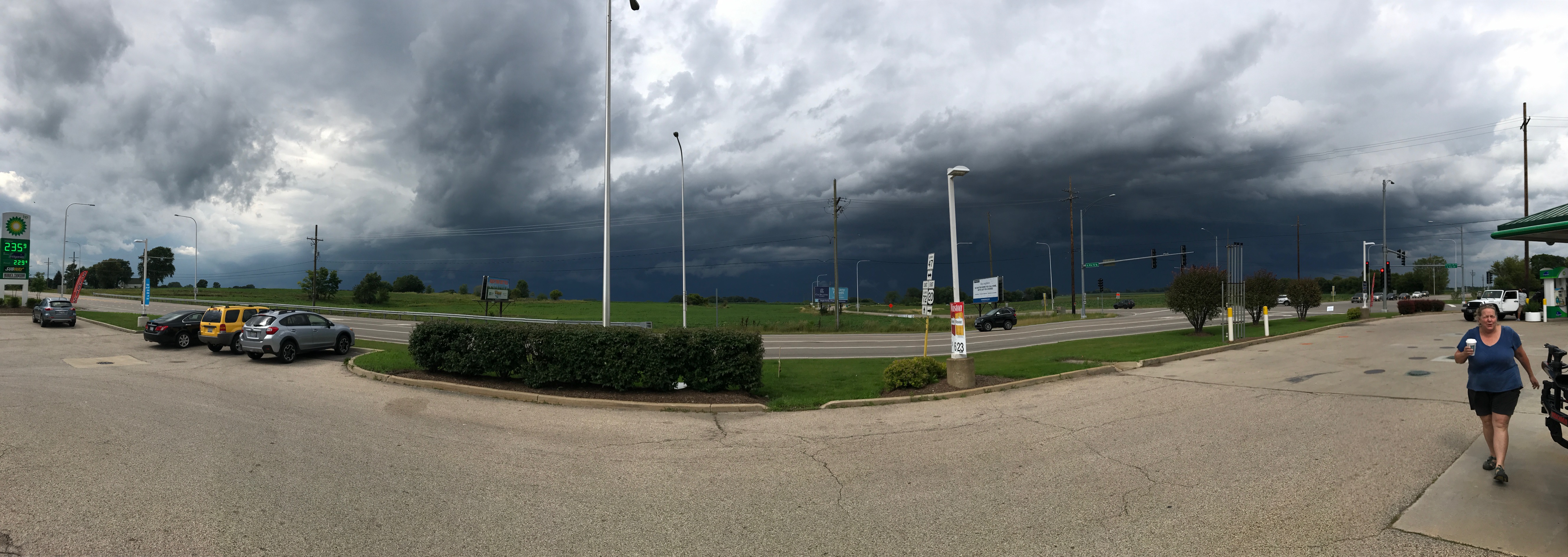
As our relationship grew the first few years, Sue and I began talking about marriage. We’d tested our compatibility in many ways: physical, emotional, and familial. Nothing’s ever perfect, yet we enjoyed each other’s company, found humor in many situations, and trained together almost daily. One of those afternoons we’d pedaled into Fermilab and made a big turn on the west end when a huge storm rose up and hit us flush from the side. The rain was coming at us horizontally, and wind buffeted us sideways on the bike. We rode headlong, getting soaked. When it was done the skies grew calm and we biked back through town to her rented home on Maves Street in Batavia. “Wow,” was all we could say. “That was intense.”
We got caught in the rain another day and parked under a tree as the skies unloaded. There was no lightning or thunder, but the roads were peppered with big drops and runoff streams, so it was safer to wait it out. After we pulled over, I looked at Sue whose eye makeup ran down her face in two long, black streaks. “Oh my God,” I laughed, “you look like Alice Cooper.”
These are the small moments that turn relationships into love. We laughed when I used the word “detritus” to describe the debris on roads after the storm. And on the day that Sue described her pet Wanda doing “cat physics” while considering a leap from one couch to another, I told her how much I appreciated her mind’s workings.
Her architectural training meant we shared artistic sensibilities. She also knew plenty of things I knew nothing about. She’d point out the assembly process as we passed a logistics building under construction. I’d written about precast concrete in my marketing work and we’d compare notes about the relative merits of building construction.
That brought us to discussing what to do with the house I’d owned since 1996. It was built in 1956 with a Wright-style extended roof that kept the house cool in summer and shed snow far from the walls in winter, it had no air conditioning except for the heavy wall units I’d been placing in the windows for over a decade. The old boiler in the basement fueled the radiant heating system, but it was original to the house, and impossible to tell if it would last another year or twenty years.
The biggest drawback in that home was the basement waterproofing system. A company called Everdry installed it before my late wife and I bought the home, but it was insufficient to keep the water at bay when big storms hit. Despite a system of drains installed along the home’s exterior walls, rainwater leaked across the basement floor on three sides of the house. The two sump pumps pushed water out of deep tanks at the north and south end of the west walls, but at times they could hardly keep up. Much of the problem was caused by the underground water table. Once while digging fenceposts on the back property line I discovered a layer of clay two feet down. The holes immediately filled with water once dug. Over time I realized the entire subdivision west of us was built on an underground stream flowing toward the Fox River from a wetland at Fabyan Parkway and Western Avenue. In the late 90s and early 2000s a period of immense flooding pushed the City of Batavia to address that hydrology, and sadly the result was a channelized drainage system where once a healthy farm wetland once existed.
Making matters worse at my home was a chimney crack that somehow allowed water to flow back through heat release piping next to the boiler. To deal with that annoying problem, I’d align loose gutter sections to direct the water pouring out of the galvanized pipe so that it would flow down into the sump tank.
All of this took place in “real-time” when the rains hit. Even our glass block window wells would fill up as the backyard became a lake. Mallard ducks would come perch in our yard when the water piled up. The stone block patio I built was tilted slightly toward the house and water gathered next to the sidewalk after the sand settled. I tried building a French Drain away from the house by wound up missing the mark by about half an inch so it didn’t drain completely.
I began to sense that the water we did push out of the sump pumps was just cycling back through the waterproofing system. That Sisyphean problem pushing me to the edge of tolerance. I’d contacted and met with the Everdry people and kept my $50 annual maintenance fee up to date. When sumps failed they installed a new one. That happened several times. The damned things ran 24 hours a day during the summer season. Even in winter the sound of the sumps going “whurrrrreeeyup” as they pushed water out into the yard was audible.
These problems drove a competitive urge in me to combat the home’s water issues. And once I began, it felt like the Water Spirits were having their day. A leak sprung in the roof over the garage and I got hit on the bald head with a cold spray of water once late spring day while I was taking out the garbage. “That’s it!” I hollered to myself. “I’m fixing this shit.”
Watery competition
What character!
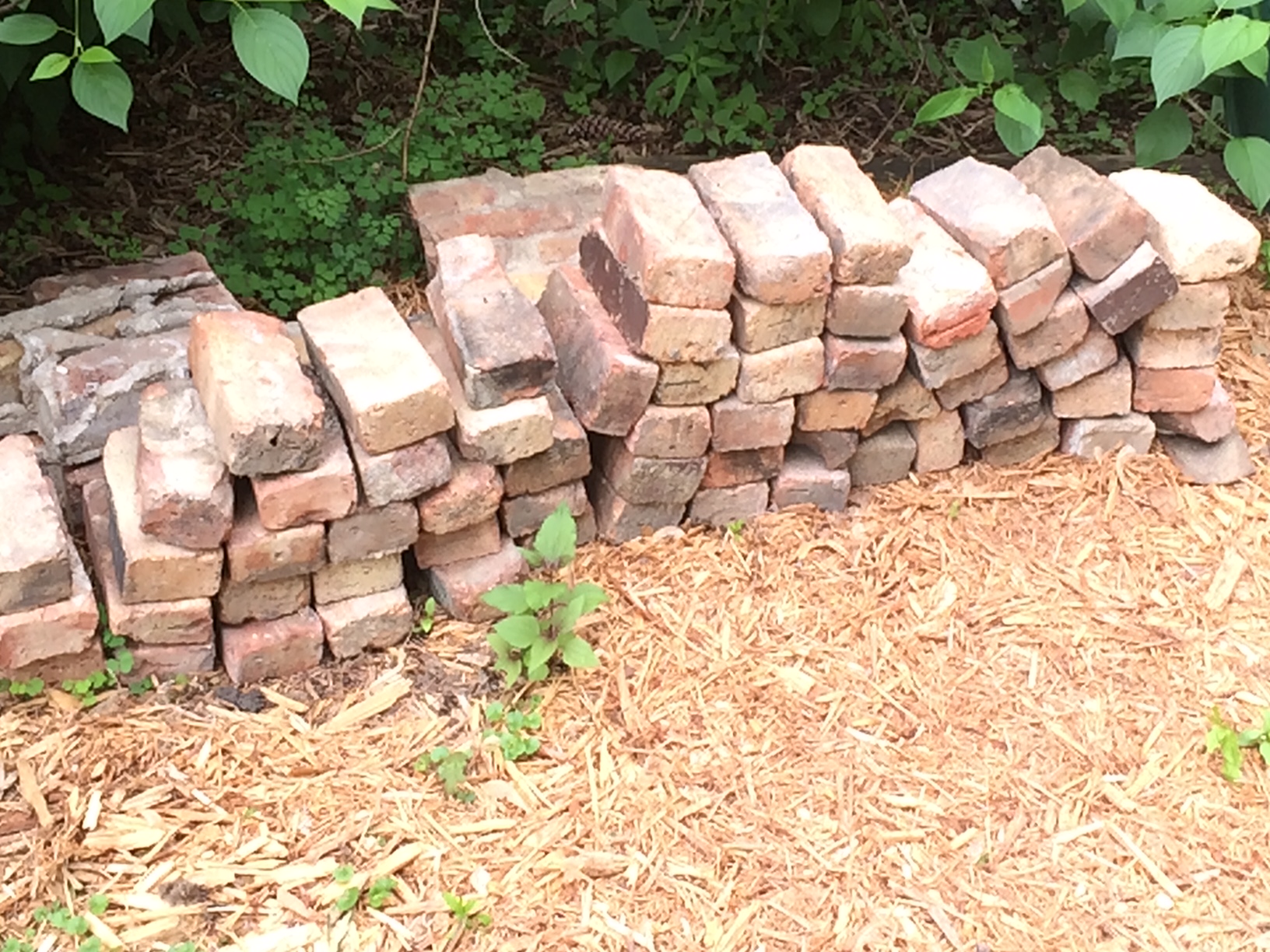
Eager to create a system where water wasn’t pressing against the house all the time, I dug waters features in two spots behind the house. The first received water from the sump at the Southwest corner. I lined it with bricks from the Old Chicago Stadium that I’d picked up from the guy who bought the whole place and sold it off. They had beautiful character and while I’m no sports sentimentalist, it was kind of cool knowing where they’d come from. Then I noticed a pile of old bricks outside an old building six blocks south of my home. I plotted to pick them up early one morning, but as I was loading them in my Subaru Outback, a man pulled up in a truck and asked, “Do you have permission to take those?”
“No,” I replied. “They looked abandoned.”
“Well, I own that building,” the man replied. “Those are my bricks.”
“Sorry,” I responded. “I’ll put them back.”
“No, at least you were honest with me,” he said. “You can go ahead and take what you have.”
I built a small platform with my brick collection and installed a pump that pushed water through a big clay pot with a hole in the side that I’d commandeered from my late wife’s gardening. It made me happy and the water was clear and clean and deep. The only time it proved dangerous is when a neighbor’s pug dog stumbled into the water and I had to pluck out the fat little pooch paddling around in the pool.
The other water feature was wider, flatter and rimmed with limestone rocks I’d brought back from a trip to Decorah, Iowa. That errand probably caused the rear bearings of the car to wear out before their time, but some risks are worth taking in time. I lined the two-foot-deep hold with flat stones but committed an error by cutting the AT&T internet cable during the excavation. They sent a tech out to fix my cable and sent me a $375 bill for the work, which was extensive, having to dig under the sidewalk and all, but I never paid it.
That water feature accepted the North sump pump’s flowage. And largely, that addition to my waterproofing system helped. My competitive urges to beat the water problems was mostly satisfied.
But then a blockage took place somewhere in the south system and the waterproofing guy came out to inspect it. He stuck some sort of backflush device into the piping system and gave it a big shot of pressure. To both our amazement, a geyser of water shot out of a pipe terminated in the front yard. Formerly the sump system pushed water out into the street, but that was banned a few decades ago, but the old infrastructure still existed. We had a good laugh out of that incident, as the sod blew out several feet from where the pipe ended.
Finally he put in a high-horsepower sump to deal with the South end water issues. I think that pump was 1.5 HP and it shot water out so fast it sounded like a fire hydrant hitting the back garden. Now the water was thirty feet away and to the south side of the house. Even it if didn’t cure the water problems, it felt good to punish whatever water dared enter my home.
All those issues contributed to my decision to ultimately sell the home rather than try to fix it up. The ancient boiler, the need for new roofing insulation, and aging old wallpaper all made it hard for Sue to love the place. We looked at taking some of my money to build a new entrance and fix all the rest, but the countervailing sensibility was that it was still the house where my late wife Linda and I lived for twenty years. My friends told me, “Usually a woman doesn’t want to live in the house of a former wife.”
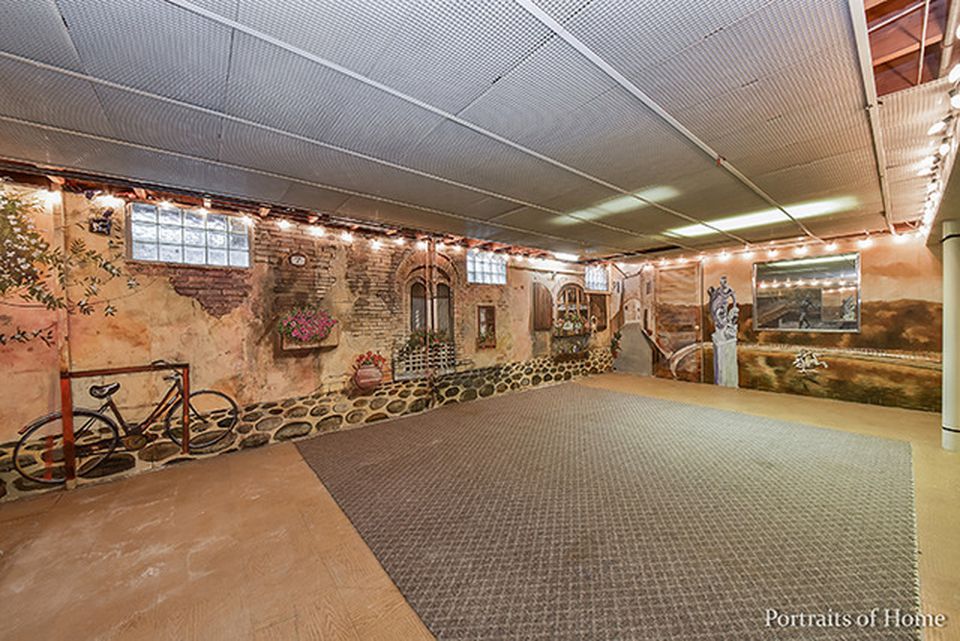
I left behind a mural featuring bricks and stones, but evidence of the leakage is at lower left.
And I got that. Some of the water problems flushed out any feelings of sentimentality. It was a tough decision to give up that home because I liked the general vibe with the pine three season room and the woodland garden between two maple trees that I’d built up with mulched leaves and soil, rich with ferns and transplanted redbud trees, but having moved many times before in life, I decided that it was a good thing to do.
My children were not big fans of the idea, I’ll admit. The memories tied to that home were strong. Their childhood and young adult years played big on their minds. But they weren’t thinking about the costs of fixing up the place. I was.
Following the passing of my late wife in 2013, I remained the principal caregiver for my father, Stewart Cudworth. My mother died in 2005, and despite my father’s condition as a stroke victim, he remained in their home under the direct watch of Olga, his original caregiver, and later Leo, her erstwhile husband, with whom she shared a child named Jessica.
Once I found out that Olga had a daughter, I offered to have her bring the child to live in my father’s house with my father’s approval. When Olga took the job caring for my dad, her daughter was just five years old. My father welcomed them as a family, and Leo visited as often as he could.
Ultimately Olga took another caregiving position. Perhaps it paid a bit more, but I never learned the real reason why. But one day I arrived to find Leo all moved in at the house with Jessica still living there. At first, I protested the change, but Leo showed me paperwork that he’d taken a caregiving course and was prepared to step in and do the job. Having had to find a few caregivers before Olga, I knew how tough that could be. So the opportunity to have Leo take over was in some respects ideal. He knew my father, for one thing. Dad could be a handful, prone to fits of anger at times, and demanding at the least. Leo smiled and informed me with assuredness: “Stew the Boss.” It turned out to be a great decision to keep him on.
That doesn’t mean it went smoothly all the time. Late in his life, my father decided to take a trip out east to visit his sisters. One lived in Upstate New York. Another lived north of Philadelphia. He drew me a map of where he wanted to go, but he had not thought to tell me he was going anywhere until a few days before the planned trip. I asked him, “Dad, do your sisters know you’re coming?”
He looked at me quizzically and replied, “No…”
I called around to all of them. They had no idea he was planning to arrive. His sister Helen quipped, “That’s just like your father. He always assumed he could just show up anywhere he liked.”
Indeed, that habit of my father drove my late wife crazy. Stew would show up at our house on a Saturday morning during his garage sale tours. But Saturdays were my wife’s “holy day” in the garden. She did not like to be interrupted. “A phone call would be nice,” she’d lament. But that was not my father’s style. There’s a part of me that operates the same way, but I’ve reigned in those instincts over the years. My father never did. He liked the impromptu joy of popping in unannounced. It felt like a little celebration of life to him.
Emily and Stew Cudworth with my daughter Emily
Before his big trip East, I helped Leo and Dad pack up. Off they went on their first stop, Niagara Falls. Leo was wheeling dad around when Stew decided he wanted to visit the Canadian side. That sent Leo into a panic. Originally a citizen of Belarus, Leo had a Green Card as a foreign worker in the United States, but did not carry the card with him on the trip. My father was insistent that they go across to Canada, but Leo rightly feared he would not be able to re-enter the US. My father started screaming and yelling at him to cross over to Canada, so Leo called me on his cell phone. I tried explaining to my father why Leo could not cross into another country. The next thing I heard was the cell phone skittering across the parking lot. My father threw it in a rage. Leo retrieved the phone, with the call still connected, and said, “Mr. Chris, what do I do?”
I told him, “Turn around and come home. You don’t need to deal with that kind of behavior.”
Then things settled down. On their way home, they stopped to visit my younger brother. Leo played guitar by the fire and sang Russian folk songs. Everyone had a nice time, but the larger trip was canceled. My father had also planned to visit a long-lost brother-in-law, Hank, known within the family for his cantankerous ways, but my dad perhaps liked his sarcasm and unbridled spirit.
Forgotten plans
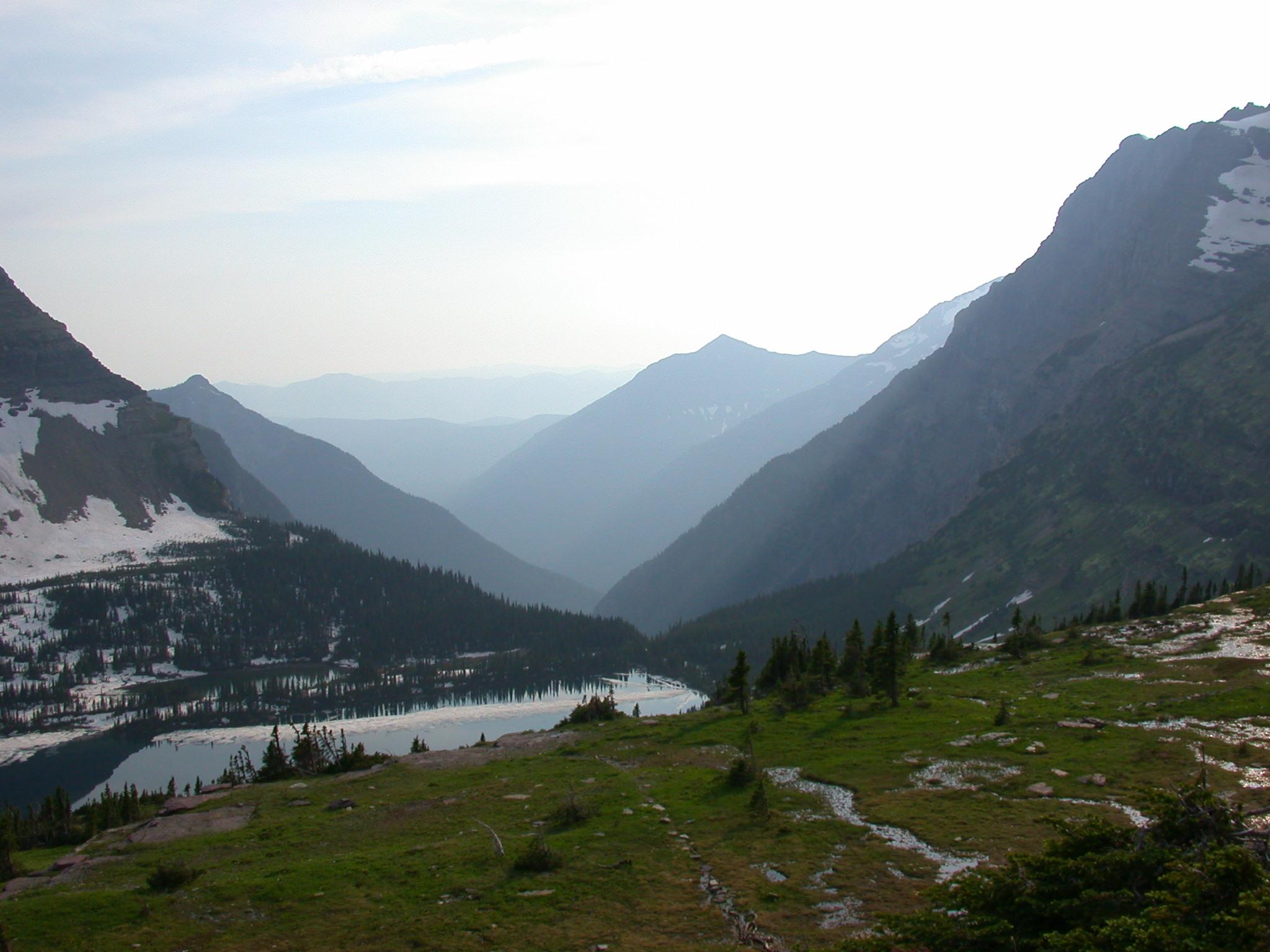
On the other end of the spectrum, my father sometimes assumed that once he’d told you something, it was your job to remember it forever. In late 2003, he mentioned at Christmas that a family reunion might spring up the next year in New York state. My wife and I never heard anything about it until early June of 2004. By then, we’d made plans to take a family trip out to Glacier National Park. Our daughter was headed into middle school, and our son was in high school, so we thought it wise to make a family trip before their lives got too busy.
We spent two weeks on that trip and arrived home on a Sunday evening. My mother and father went to New York and stayed with relatives near the Finger Lakes. That’s where my father collapsed by the bedside with a stroke. It was a bad one. Back in 2000 he’d had bypass surgery due to heart blockages and his atrial fibrillation may have caused a blot clot to invade his brain. He wound up at the Syracuse hospital. However, the medics who treated my father that day told my mother he’d be going to Rochester. She drove to that city only to find out he was in Syracuse.
That Monday morning, she called to inform me that he’d fallen ill and might not even live. I hung up the phone and said to my wife, “Well, my life just changed.” I knew that it would be my responsibility to care for Mom and Dad. I lived closest to them. That was that.
After my father spent weeks in the Syracuse hospital, I arranged to bring him back to Illinois. That was one of the most stressful jobs I’ve ever taken on. I made all the flight arrangements for my mom, my dad, my brother, and I. The doctors told me on the day I arrived, “Well, we think your father can go home later this week…”
I was all set up to take him home that day, so the doctor’s loose plans made me panic. Nearly fainting from the stress, I leaned forward with a big breath and walked straight through the phalanx of interns to get out in the hallway. Then I told the doctor, “We’re taking him home today. Whatever it takes, let’s get him ready.”
We went home after I demanded that the nurses set up a catheter and bag to get him the whole way back to Chicago. Once there, I plopped my dad in a rusty old van that called itself an ambulance and he went to stay in a long-term care home for months. Over the next year, we moved him through a progression of rehab facilities as he regained some functions but not all. His speech and right side were permanently damaged.
That said, my father gained lucidity back after his stroke. If anything, that clarity of thought was as much a problem as it was a solution. If there was something he wanted to communicate but couldn’t get across due to his speech loss due to apraxia and aphasia, it was my job to ask questions hoping to ascertain his full meaning. It could be exasperating at times. If we couldn’t figure it out together, he sometimes got frustrated and angry, raging “NO NO NO NO!” at full volume.
I learned to depart and come back after he’d cooled down. Nine times out of ten we’d finally figure out what he was talking about. He’d write something down using his left hand (he was right-handed before the stroke) but sometimes the message didn’t come out quite right. We roared for ten minutes after he wrote out a word that turned out to say TITS when he was trying to write something else. That was really funny.
A day for Hooters
On another occasion, I met him at the doctor’s office to meet with the physician and review his overall condition. After the appointment, he wheeled himself out in the lobby outside the reception desk while Leo went out to fetch the car. “Well dad, things are looking pretty good right now. What are you and Leo going to do this afternoon?”
Without hesitation, my father arched his eyebrows and smiled at me. Then he broadcast in a loud voice, “Hooters! Hooooters!” They were headed to the Hooters restaurant for lunch.”
My face flushed as all eyes in the reception area were turned on us. But I’d grown a thick skin from caregiving and learned not to care if something seemingly embarrassing happened along the way. In any case, it was fun and helpful that Leo gave my father some “guy time.” They also went fishing, which my father loved, and every Saturday joined his friends at Colonial Restaurant for breakfast.
Living life the best way he could
Stew with family around him at the service for my late wife Linda.
In many ways I grew to respect my father’s determination to live the best way he could despite his stroke-driving limitations. He participated in a program called Revolution Golf that specialized in giving people with disabilities the opportunity to hit golf balls at a range. My dad swung those clubs with verve using his left hand and arm. Given his love for that sport, that was a highlight for him. He’d also gotten an invitation from the club pro at Pottawatomie Golf Course, his favorite nine-hole layout, to ride the cart around that little green gem.
Stew golfing with Revolution Golf
In all, I was his direct caregiver for ten whole years, from 2005 through 2015. During that time my anger toward some of his difficult traits as a father subsided, and disappeared. I thought more about the many things he’d done to direct and change my life in good ways. He was an attentive father in my pursuit of sports, teaching me how to throw a baseball and showing up at many games. His cries of “STAY LOOSE!” weren’t always welcome, but he recognized my native anxiety for what it was, a limiting factor in success. During my early baseball career, I became one of the best pitchers on a team that won the Lancaster New Era baseball tournament. The next year, we’d “graduated” most of that squad and I was the remaining starter on whom the team relied for most of its wins in a rebuilding year. He noticed that I was losing velocity as the games piled up and asked me about my arm. In reality, I now realized that playing wiffleball with a close friend several hours a day wore out my pitching arm. But I never connected those dots until pitching against Local 928 when that same wiffleball friend came to bat and ricocheted a hit off my left shoulder. By then my arm was dead for much of the season. My dad was conciliatory nonetheless. He knew that I’d given my all no matter what.
I’m third from left in the back row. This team won the Lancaster New Era baseball tournament in 1969.
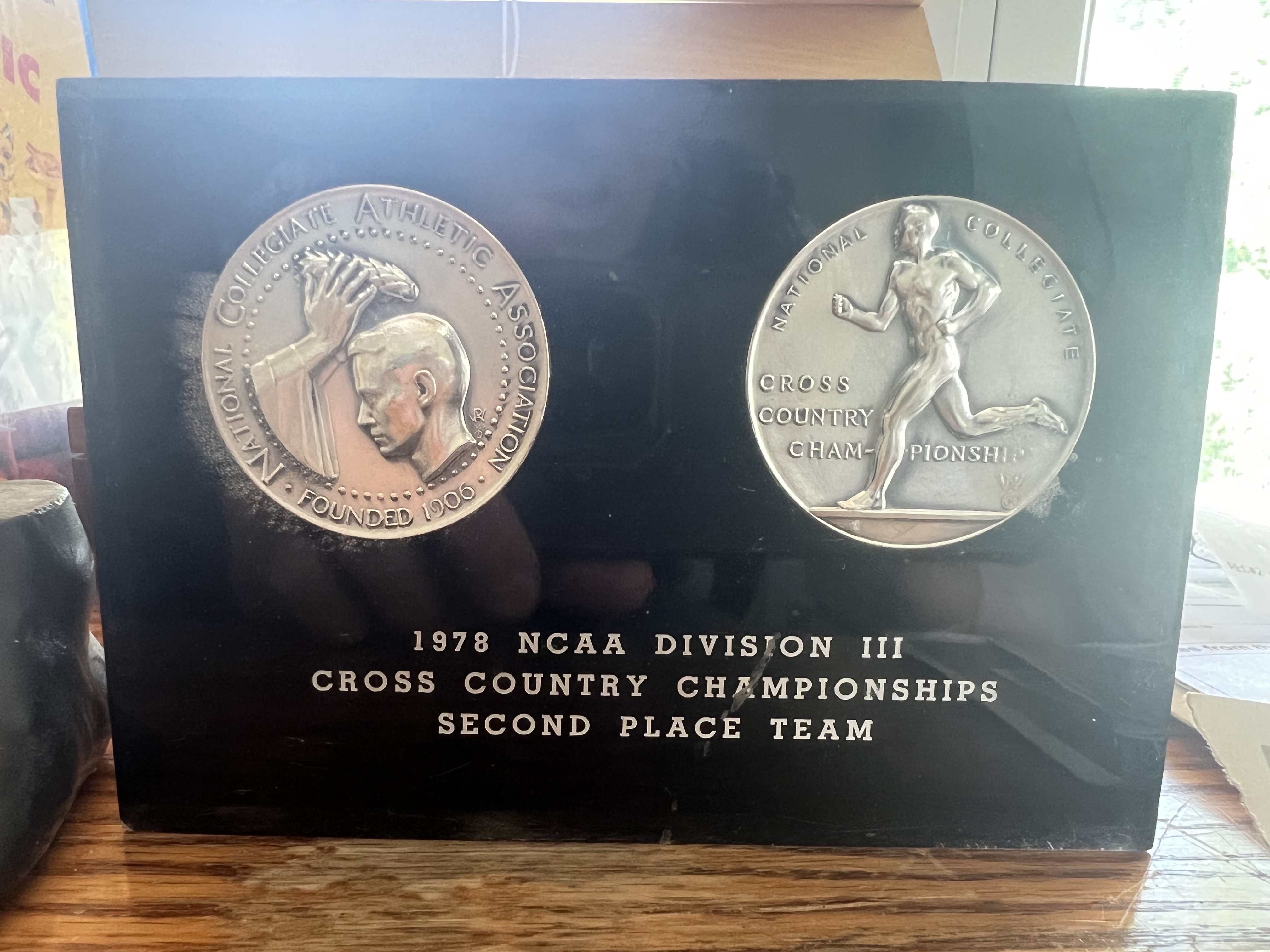
The same held true with his support of my running career. He was the one who pushed me to go out for cross country, and when I had a sore leg in track during my senior year in high school, he fashioned a heel lift in my adidas Tokyo spikes to take pressure off my Achilles. He drove me to colleges like Augustana and Milliken to explore options, and our trip to Luther College was made at his suggestion. “You’ll love the birds up here,” he observed. Dad was there with my mother the day our Luther College cross-country team took second place in the NCAA D3 national championships.
I’ve learned to put that experience into perspective with the overall directives he provided in life.
And yes, for years I bore some emotional scars from physical and verbal abuse he doled out to us when we were kids. That’s probably not unique among kids of that era, whose parents never “spared the rod” lest they “spoil the child.” That’s a misinterpretation of scripture. As noted in the Chicago Tribune, “The phrase “spare the rod, spoil the child” is a modern proverb that’s often used to justify corporal punishment, but it can be applied beyond physical discipline. It means that if a parent doesn’t discipline an unruly child, the child will become spoiled and develop an entitlement. However, the phrase is not biblical and actually comes from the 1600s narrative poem Hudibras by Samuel Butler.”
For better or worse, the attitude that kids needed to be beaten into submission served an entire generation of parents, teachers, and schools applying discipline. Whether it caused more harm than good is a subject for a different day. I received unjust spankings on many fronts. To this day, I distrust certain brands of authority as a result. I will say that some of my competitive drive came from feelings of anger toward things I considered unjust in life. That could mean teasing, exasperation, frustration or cheating. Heck, I quit Cub Scouts because some kid in the Pack cheated in kickball. My father could be exasperating at times. The Bible warns against that.
Fathers, do not exasperate your children; instead, bring them up in the training and instruction of the Lord.
I ultimately forgave my father the anger that drove his actions. He’d lost his own mother to cancer when he was just seven years old. Then his father experienced clinical depression during the Depression. Stew and his sisters lived with an uncle and spinster aunts on an Upstate New York farm during the school year. His required chores meant less participation in sports. So dad projected some of his desires onto us. I will say that it wasn’t easy to deal with four independent, often difficult sons.
Still, his physical thrashing of my brothers in front of me when I was six years old hurt me deeply. But I’ve let that go. I forgive him because I’m thankful for all the good he did for me and others in life. He cared so deeply about family it wasn’t always possible for him to convey or convince us to do the same. It would have been helpful, for example, to develop a closer relationship with his sisters, my aunts. They were incredible people in their own way. But we’d moved so far away and for so many years that we couldn’t have much relationship with them.
The Manor Pancake House painting hung in that establishment for forty years. I painted this watercolor at 17.
Beyond encouraging me in sports, he spent countless hours framing my paintings for display and sale at local restaurants. Many of these early efforts were crude in execution, but my abilities grew quickly One of those watercolors hung in the Manor Pancake House for forty years before the place was torn down in redevelopment.
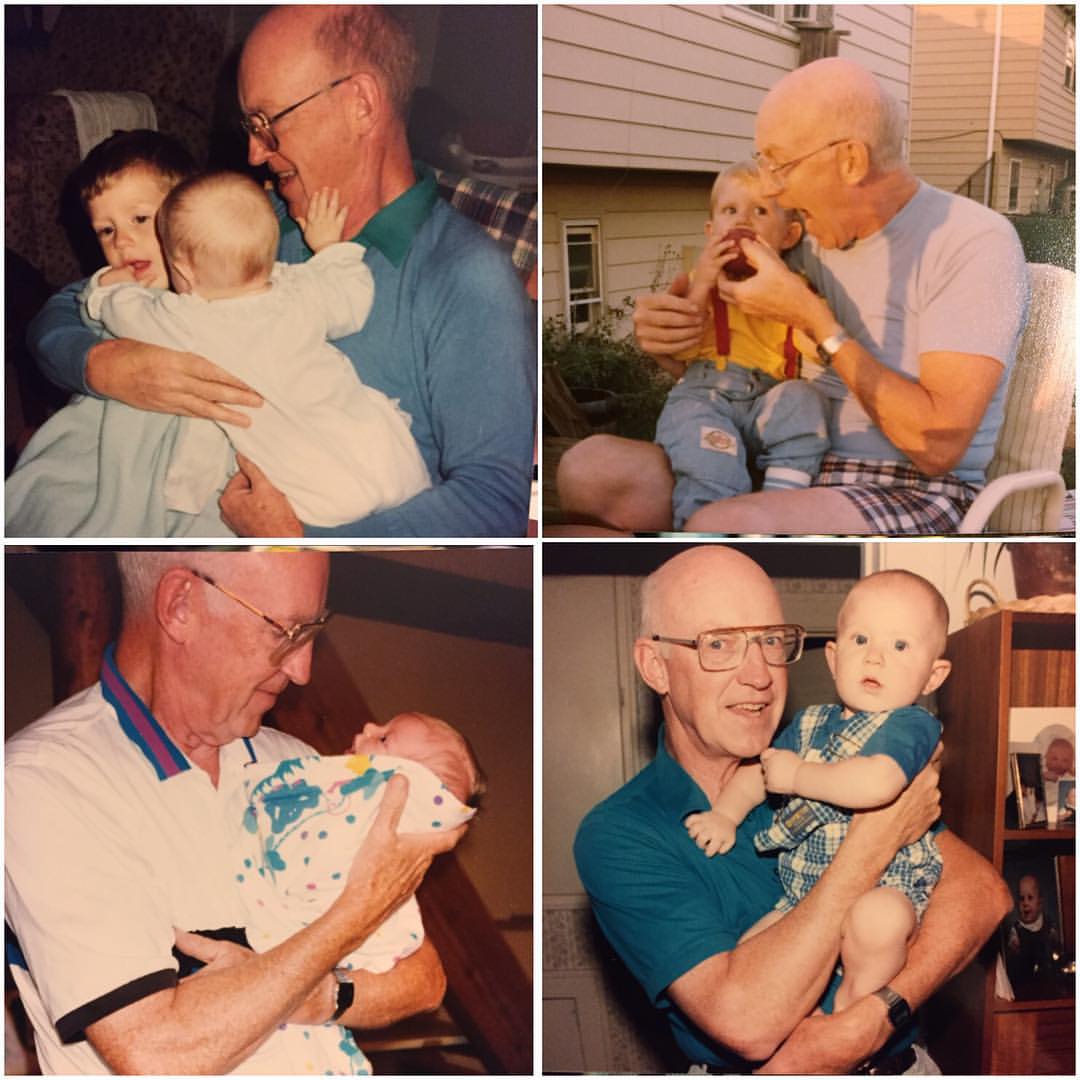
What made me happy in the end is how much he and my mother loved our children Evan and Emily, and all his grandchildren.
After my mother passed away in 2005, my father set a strong example of how to grieve. He showed me how to carry on. My father was happy for me when I met Sue. She “got” him in many ways and loved how my dad once wheeled himself into our kitchen on Thanksgiving Day, pulled himself up on the counter to his full height, and proclaimed to the kitchen full of people, “PIE!”
Stewart Kirby Cudworth, 89, died October 17 in St. Charles, IL. He was the son of Harold and Rena Stewart Cudworth of Virgil, NY. After his mother died, Stewart lived during the school year with his mother’s siblings, Leon, Helen, and Shirley Stewart in Bainbridge, NY, and summered with his father in McGraw, NY. Stewart served in the U. S. Navy during World War II. He held a degree in electrical engineering from Cornell University in Ithaca, NY, class of 1950. During his career, he worked for Sylvania Electric, Seneca Falls, NY; RCA, Lancaster, PA; and Belden Corp. and National Electronics in St. Charles, IL. His consuming love was golf, as an avocation. Stewart married poet Emily Nichols of Bainbridge, who predeceased him.
Attending a wedding together during the first few months we dated. Four years later, we’d get married too.
During the early phases of our relationship, Sue and I focused on enjoying time together. She’d just taken on a new job, and I was in a state of transition working as a freelance writer for companies like Aquent and Creative Circle. I landed gigs with small companies, but typically, those were just like contract positions. They’d last through a couple of assignments, and the owner would return to their little core of one or two associates who had worked with them for years. Often, their ambition for growth exceeded their appetite for change.
So I worked out of the house. I was familiar with the lifestyle of remote work and home-based employment, because it began early in life. In the 1980s, I spent a couple of summers writing and painting in a two-story Chicago flat while my roommate worked days and nights at Rush hospital getting his Master’s in Exercise Physiology. That left me alone in the apartment overlooking Lincoln Park, where scenes of Chicago life passed by as if on a movie screen. I was writing stories for Illinois Runner magazine and working part-time as a retail manager at Running Unlimited, the Arlington Heights store that sponsored our racing team. Down in Chicago, I was doing occasional projects for my former track and cross country coach Trent Richards, whose company One-On-One Fitness specialized in training corporate executives how to stay in shape.
Staring out that bay window while also working on a novel felt like I was playing hooky from school. I guess I was playing hooky from life in some respects. Yet that experience prepared me for periods out of the so-called “work world” when I was either unemployed or serving as a caregiver. It taught me not to feel bad about myself if I wasn’t employed in a job full-time.
That second floor was my window to the world.
During those two years in the 1980s, I drew self-esteem from all the running and racing I was doing. In 1983 I moved from racing with a team out in Pennsylvania to living and running in Chicago summer. That fall I won several 10K races, beating thousands of people through the streets of Arlington Heights, where I won the Run for the Money 10K in 31:42, and the Frank Lloyd Wright 10K in Oak Park, where a rainy morning with 55-degree temps made the competitive instincts rise and flow.
All that winter I trained in Lincoln Park during one of the coldest periods in Chicago history. Temps dropped far below zero, yet still, I ran through the cold and snow, determined to “prove myself” somehow worthy of whatever vision I had of myself as a runner.
That was also tied to my vision of myself as a writer and artist. Having been unceremoniously dumped from work as a graphic artist for an investment firm, my mind was stinging from that disrespect. I poured myself into alternative pursuits that proved to be a pattern for life to come.
Sue seemed to understand that about me from the start. As we got to know each other, she understood that I’d had prior career success, but she’d also witnessed the weird mistreatment and dismissive policies of the firm where I’d worked when we first met. I owe her so much gratitude as the ups and downs of employment and contract work tested me these past ten years.
She’s had her work challenges at times too. I admired how she endured injustice as her position changed. That inspired me to be resolute rather than dramatic about life’s obstacles. She also did not fixate on my ADHD issues. Instead, she saw my productivity and viewed ADHD as a puzzle to be solved. A patient reminder from her was all I needed to adjust a routine, and it was the more minor things, like loading the dishwasher attentively or making the bed the right way, that helped me grow more consistent habits.
But most of all, we’d fallen in love. The “L” word entered our language along the way. I told her I loved her, and she said she loved me too. It was official: we were in love.
Our daily runs and rides added to those bonds. We made trips to Madison, Wisconsin to ride the hills west of town on hot summer days. She trained for the full Ironman that first year we were together and everything went well until a white Escalade stopped in front of her at the entrance to the Illinois Youth prison west of St. Charles, forcing Sue to lay her bike down and skid to a stop. Her Scott bike frame cracked. We were a month out from her race, and critical training lay ahead.
She borrowed a bike to ride one weekend in Madison and it was a tragic misfit. The bike fit was terrible and we ditched it that day. She was also going through some first-year job stress and the pressures caught up to her one day while we were running a ten-miler in the Herrick Lake Forest Preserve. Sue stopped in tears. At that moment, a teammate from our triathlon club happened to run past. She slowed, turned around and embraced Sue. I stepped away to let them have privacy. There are moments in life when women most appreciate the connection with another woman, and that was one of them.
A coach for our triathlon team came around the corner on her run and immediately stopped to comfort Sue. This was not the first time I’d seen Sue genuinely upset. She has enormous emotional control yet as she put it aptly when we first met, and it was evident that day, “We all have our shit.”
That trailside conference with the coach turned into action. She dated the team’s triathlon coach at the time, made a call on her cell phone to the head coach, and within days, a new bike was ordered and delivered. After she’d departed, I encouraged Sue to jog with me and keep going. We finished that run together.
My painting of the Madison Ironman scene.
Sue rode the new Specialized Shiv tri-bike at Ironman Madison and finished the race. The challenges still weren’t over. She’d had asthma issues coming out of the cold water that morning. It took the entire first half of the 112-mile bike ride to clear her lungs. She’d run the marathon distance and was circling the Capitol square when she passed me on the final lap with tears of accomplishment on her face. She called out, “I’m going to be an Ironman!” I burst into tears and ran alongside her a few yards. “You did it, honey!”. It had been a long journey to the end of that race, and we’d done it together in many ways.
In more ways than one, we were building our lives together.
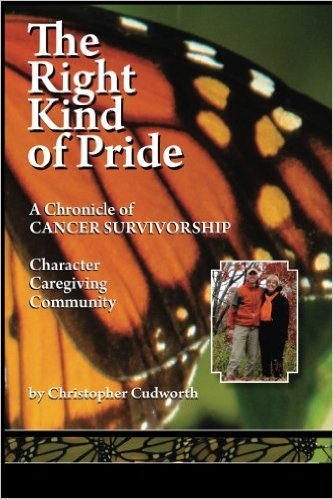
In 2014 I was finishing up the manuscript for the book I was writing about cancer survivorship with my late wife Linda when I went for a bike ride and started thinking about the book cover. Designing book covers isn’t an easy proposition. I tend to make them too busy, so I was riding my bike thinking about how to simplify the design and still communicate the depth of what I was trying to convey with the book The Right Kind of Pride.
A summer storm ripped through our region the night before. There was tree debris on the roads and puddles everywhere. I rode my Felt 4C road bike navigating through the sticks and wet leaves, then turned onto the Virgil Gilman Trail running from downtown Aurora out to Waubonsee Community College. That’s the same trail where in summer of 2013 Sue crashed her bike on one of our first rides together. She slid on her Scott tri-bike, crunched her shoulder on the ground and wound up having to get surgery later than year. The layer of wet leaves on the trail caused her to fall.
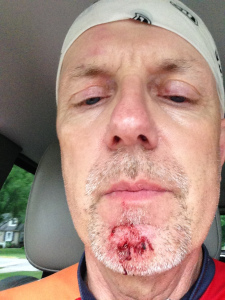
Given the conditions after the storm, I should have been more alert for dangerous trail conditions. Yet I was so preoccupied with the book design I had my head down thinking about it when my Spidey Sense told me to look up and there it was: a downed tree covering the entire trail. Without a moment to stop, I turned sideways and slammed into the tree at 20 mph. My face glanced a tree limb and my back crashed into it in turn. That was a sudden stop. Stunned, I somehow unclipped and tumbled onto the ground in one movement. Lying there I could feel the pain start and I looked up at the hole in the tree canopy to see blue sky. “Why…what the hell?” I said out loud.
I walked a few feet and sprawled out in the grass trying to assess the body damage. A couple came wheeling up behind me. They’d obviously watched me crash into the downed tree. She stepped into the grass, leaning over to speak and asked, “What are you doing?”
Speechless for the moment, I looked up at her through crooked sunglasses and tried to smile. That hurt.
“Because you’re bleeding,” she pointed out, motioning toward her chin, then mine. I touched my jaw and found the blood. I could feel a stinging gash on below my lower lip. “Yeah,” I admitted. “I am.”
“Do you want help?” her partner asked. “Should we call 9-1-1?”
I stood up, leaned over and stood up again. “No, I can ride,” I told them.
They both stared at me, ambled back to their bikes and lifted them over the downed tree. I stared after them, taking stock of the angle of the tree and its busted limbs. I hadn’t busted any of mine, but my back really hurt.
Reaching behind to grab my iPhone, the pain shot around my right side. The phone was bent about 12 degrees on either end from the impact. A few days later when I showed up to exchange it at the AT&T store, the salesperson looked at that phone and exclaimed, “I have never seen an iPhone bent before.”
I dialed my daughter first to let her know I was generally okay. Her voicemail was on so I left a message. Surprisingly, the phone worked for that call. But that was it. The next time I dialed it was to reach Sue, but the call didn’t go through. The phone fizzled and shut down.
Unable to reach anyone in my immediate emergency crew, I decided to ride into Aurora and stop at the house of some friends named Randy and Debby. I’d known them since 1981 because they were roommates with my late wife Linda when they were all young teachers in the West Aurora school district. Since 1985 when I married Linda we’d spent many occasions together including annual New Year’s Eve celebrations, as well as trading dinner dates, even going on camping trips and visiting Frank Lloyd Wright houses from the Midwest to the East. They knew me during my 20s as a competitive runner, and were there for us during all eight years of Linda’s cancer survivorship. If there was anyone I could trust in the world in a moment of crisis, it was them.
My bike wasn’t too messed up from the crash. Just a couple bent brake hoods and putting the chain back on. I rode a bit unsteadily but arrived at their house, rang the familiar door bell and stood there hoping one of them would answer. Debby opened the door and seeing the condition of my face, proclaimed, “What did you do?”
“I hit a tree,” was all I could muster.
“Do you want to come in?”
“Maybe, if you have time, we could go to the Emergency Room?”
“Of course,” she offered, grabbing her purse and sunglasses.
The crash chin
We caught up a bit on the way to the hospital. Earlier that spring we’d all three gone to Mineral Point, Wisconsin together to reflect on their friendship and my marriage to Linda. During that stay we booked a tour at the Taliesin home of Frank Lloyd Wright. No one else showed up for the tour, so it was just us and the docent, who happened to hail from Aurora, Illinois, walking through the home and sitting down in the living room. “Ask me anything you want,” he said. “You paid for the tour. We have all the time in the world.”
I felt like that interlude was a bit of an echo of our long friendship together. They were Linda’s closest friends in many ways. Both of them loved wine as she did, and as teachers they often compared notes about classroom experiences while I sipped my Killian’s beer or Maker’s Mark and Coke, a favorite for Randy too.
Debby sat for while in case I needed a ride home, but I called Sue on her phone and Debby was able to head home. The emergency docs and nurses looked me over and decided to put stitches into my chin. The doctor tried his best to sew the odd knob of skin sticking out of my face back into the flesh around it, but when I got home to clean off the wound I saw he’d done a shitty job. The stitches closed the wound but somehow missed the flesh hook protruding from the wound. I should have gone back and had them do it over but said Fuck It and laid down for the night. Sue ushered me home from the hospital but it was late and she had work in the morning so I laid down on the bed and fell asleep with my dog Chuck out of his cage and snoring on the bed beside me. “What a weird day,” I said out loud.
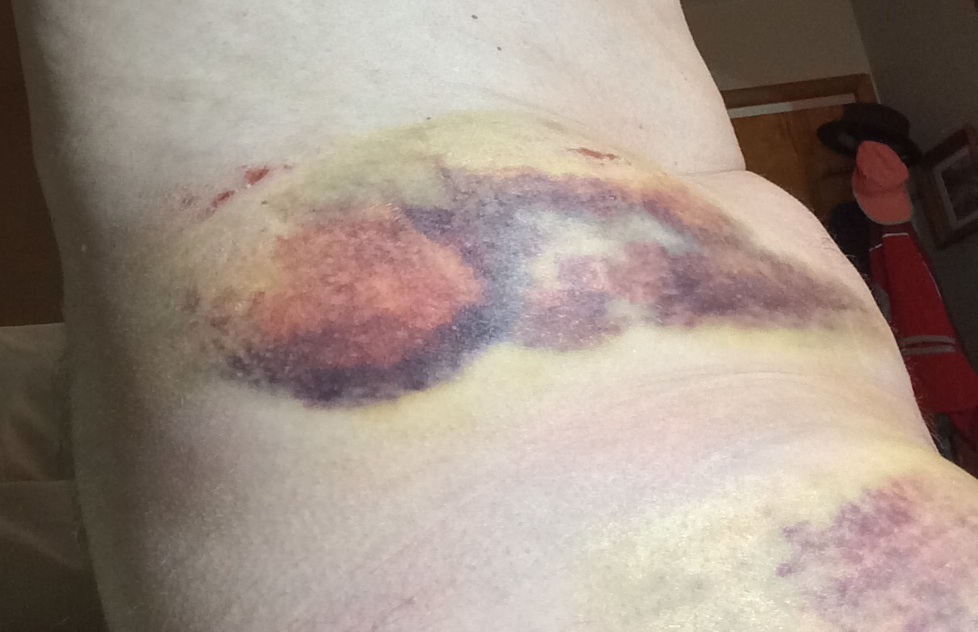
This bruise migrated to some colorful places
The real reason for the crash that morning was my ADHD. Alternately daydreaming and immersing my mind in total focus was a product of that condition. I’d bear marks of that mental mistake for many weeks after the crash.
The impact of my body against the tree caused deep contusions in the back flesh, which turned green, purple, rose-red and many other colors. The massive bruise was nearly a foot across in width and slowly began migrating around my hip and toward my crotch. Soon enough my genitals turned purple as the bruise blood headed wherever it was going and finally dissipated. Yet even that was not the end.
For the entire next year the scar tissue stung and tugged at my back muscles. Finally a chiropractor I visited suggested “scraping” it out with a hard plastic tool. That hurt like hell but it worked. Two years later, but it worked.
That day symbolized so many other incidents in life where my inattention caused me to crash into reality in one way or another. I took some wicked teasing from friends at our Friday night dinner gatherings. Sadly, it wouldn’t be the last time I had to admit to a bike crash over the years. At least once a summer for 6-7 years I had a bump-up of some kind. When it hadn’t happened yet each year, people would ask, “Aren’t you about due for your summer crash?”
I’d say, “Thanks for reminding me,” and have another sip of Jack or Maker’s Mark with Coke. Some habits are hard to break. That includes my habit of engaging in an annual summer crash.
During the summer of 2013, I worked as a senior copywriter for a company called Straight North. I’d landed the job that February, and was working a few weeks when my late wife’s health deteriorated quickly. She’d been taking steroids to prevent swelling inside her skull after surgery to tackle cancer in her brain. Since late summer 2012, she’d been having seizures caused by tumors. The neurosurgeon told us he could knock them out. We trusted him. On December 26 we parked ourselves in the hospital. She didn’t have to shave her head because it was already completely bald. They put a circular metal clamp around her skull so that they could keep her completely still and then went after the tumors with proton therapy or something else. I can’t remember.
She spent January in recovery at home and I was with her the entire time. I kept looking for a job and through a friend heard about the copywriting position and interviewed. We were excited that I landed the job after months of caregiving combined with unemployment.
All of that seemed to be working out in terms of timing. But once she stopped taking the steroids it was all over. She couldn’t get off the exam table at the oncologist and we called in the palliative care team.
By late March she passed away, but I had not told anyone at the company much about our situation. I’d been through so many messed up situations with employers who found reason to fire me once they knew my wife had cancer that I refused to let that happen again. But once she died, I had to tell them so that I could take care of all the arrangements. The company had a weird vacation policy of ten days per year to use as either “sick days” or “vacation.” As if that were somehow a benefit.
I took the necessary few days off and returned to work the next Monday. That seems weird, but by that point in life, after all we’d been through, the part of me that was sentimental about life, having already lost my mother back in 2005 and my father-in-law just the previous December when Linda was going through surgeries and chemo, I had no holdover emotion left. In fact, I was a bit relieved.
In some people’s minds, that might be a horrible confession. But when you’ve lived with illness and seen your spouse completely compromised over years of chemotherapy and surgeries and the side effects that come with all that, you don’t wish it on her any longer. Plus, there’s something in me that accepts life as it is. I don’t know what that something is. Sometimes, I’ve felt guilt about not grieving over long periods over the loss of my mother or my wife. Perhaps my father was my model for that when my mother died. He grieved in his way and moved on. What can you do? There’s no way to change anything that happened.
Life rolled on. I drove the brand new Subaru Outback we’d purchased back in February realizing that she’d only gotten to ride in the car a few times. We took it out once to lunch with my stroke-ridden father and a few times to make doctor’s appointments. Other than that, she was confined to home after her brain became too manic from the steroids and she had to quit teaching at the preschool where she loved to work. That part made me sad for her. She loved the children and it quite literally killed her in some respect when that had to stop.
The company Human Resources director was compassionate with me, and the President and directors all told me to take as much time as I needed. With just over a month on the job, I didn’t dare press my luck. I didn’t want to be without a wife or job. I went right back to work. That might not have been the best decision, but I put on a brave face and made it work.
The summer months rolled by but I felt an uneasiness growing as the company was not all that supportive about how we gathered information for the team of copywriters I’d been instructed to hire and train. The websites we created were repeats of a successful model they’d built and the goal was to get them up and running quickly and leave the content in the customer’s hands asap.
Classic to my lack of emotional intelligence or business sense and likely a product of my ADHD, I struggled sometimes creating messaging and turning it around into website copy. So did my staff, and we were also instructed to pump everything through a project management system that wasn’t that efficient. The entire company worked with it for weeks, and it was eventually dumped. Meanwhile, I offered to bring our editing processes in-house rather than pay an outside firm $150,000 a year to check our writing. I’d done some good things and some back.
Then an account executive brought in a new healthcare services client that wanted their website completely re-written. I met with the client and wrote the content from my notes, but they completely hated it.
Perhaps I was a bit distracted at the time. As a widow living at home I’d been doing fall yardwork and during one afternoon cleanup session, I stuck my bare hands into a yard waste bucket and felt a prick in my left middle finger. Instantly I pulled my hand out to find an innocent-looking sliver stuck in the finger. I plucked it out and kept working.
The next morning at work, I noticed a red seam emanating from the sliver spot on my finger. During lunch hour, I visited the Advocate Urgent Care center down the road from work and they told me, “You need to go to a Hand Specialist right away. You could lose that finger.”
I called into work and visited the hand specialist a few miles away. “Hmmm,” he told me again. “We need to get after that or you could lose that finger.”
That’s what I kept hearing. They prescribed antibiotics and that didn’t work. Then came surgery. Sue attended the operation and my hand was wrapped in giant bandages for the ride home. “No riding for a bit,” I chuckled, looking at the cartoonish hand.
I had to flounder around at work to type anything at all, using three fingers rather than all five, pecking away to write each work. I struggled to concentrate too.
The account work kept coming, but the account executive I’d failed on the healthcare client was not happy with my performance. I could sense her dissatisfaction and feel the mood changing toward me at the company. My need for hand bandages wore off, but I needed a port in my arm to do the prescribed home infusion of antibiotics the hand specialist recommended. That required another surgery, and called to mind all the chemotherapies I’d seen my late wife Linda endure.
So I knew how to flush the lines with Heparin and sat for three hours each night letting liquids and drugs leak into my body. Sue would show up sometimes, knock at the door and ask, “Are you still dripping?”
That kept me laughing, but the stress of working all day and infusing for hours was wearing me out mentally. I knew I was doing good work on some fronts, but there were signs that one account exec in particular didn’t like my work. She had the “beautiful yet bitchy” thing going on, and while I was communicative and collaborative with her, in the end I think it was her complaint that did me in at the company.
I’d grown so tired of the infusions by that point, I called Advocate and someone there told me, “Oh, well, we have a solution for that. There’s a syringe we can give you. It only takes ten minutes to do.”
I was furious, but it took care of the last week of infusions. The medicines showed up daily, delivered by a kindly man who asked how it was going each time. Finally he took the medical equipment away and I was free. Or so I thought. “You’ll need hand therapy,” the hand specialist told me.
Once or twice a week I went to an occupational therapy clinic to squeeze pink goo and strengthen my fingers. But first, they immersed my entire hand in a melted wax machine to loosen up the joints. That was my peace every week. I’d sit there with my hand in the warm liquid letting problems fade away. The therapists were sweet ladies who wanted to know all about me. Other patients came and went, some with profound injuries from other occupations. We all talked kindly with each other.
That was such a contrast to the growing dissatisfaction of my place at work. We inherited a job through an associate with the same last name of the client. He’d worked there before, and their website was hundreds if not thousands of pages deep. Our job was to revise content one product at a time. That meant learning what each product did and how it worked, a bed of information our associate already knew, but didn’t want to do the content himself. He’d sold his agency to our company and was a vested partner because of that, so he only did what he wanted to do.
That left me holding the ball along with three other copywriters struggling to learn technical information as fast as we could. That was our daily job. Pretending that we knew as much or more about a client’s products or services was our mission on every website we did. There was no exploratory method in place, although I did propose and try to implement that. As a company owned by venture capitalists, such endeavors were viewed as a “waste of time” and not in keeping with turning a profit as quickly as possible. That meant I was swimming upstream against the tide of internal economics.
We picked up a client that made precast concrete. I visited their manufacturing site with a designer who took photos for the website. Strangely, we were advised the day we arrived that one of their workers had just died in an industrial accident inside the factory. We kept our eyes open during the tour.
The proposed website design from our creative department came out looking industrial and gruff. I warned the design team that their design was too hard, but was told, “that’s not the copywriter’s job.” Never mind that I’d done decades of design work with high-level creative teams before landing at Straight North.
We arrived a week later for the design pitch to meet with the the client’s VP of Marketing. He was a delightfully profane emigrant Englishmen who upon seeing the designs turned to us and said, “What the fuck is this? We’re selling product, not showing them how it’s fucking made!”
And so it went. One odd moment after another.
A supremely strange thing happened to me in late August. I’d pulled into our company parking lot after lunch parked my car well up the hill. While inside working on a writing project, I heard someone say pop into our office space and say, “Does anyone drive a gold Subaru? It just got hit.”
I thought, “What?” Outside I saw a police car and several people gathered around my sure. It turned out that a woman driving down Highland Avenue had a medical incident, passed out behind the wheel and wound up riding in her car partway up the driveway, into our parking lot and smacked into the front end of my car. There was a six-inch dent in the hard plastic bumper. I thought “Damn, a new car too.” But later, when I went out to drive home, the dent was gone. It had popped back out.
Maybe that was an omen of some sort. I’d taken so many hits in life up to that point, I should have known that it’s always possible to be blindsided at any moment.
And in fact, I arrived at work one day and the head of the department called me in and “let me go.” I’d tried but never connected with him as a person. He kept his distance and even when he was out walking at lunch, always alone, would not acknowledge a “hello” if I extended him one. He was a prick, in other words. Just like the prick of the sliver in my finger, he’d turned out to be toxic to my system and everything I tried to do there. While the prick on the finger cost me time and money, that prick at work cost me my job. Surely a few less tragic events in my personal life while working there might have helped me succeed a bit more. I’d seen the death of my wife. The bike crash with my new love. The prick of the finger, and surgery, and infusion, and hand therapy. I’d made it through all of that. If that all had not happened, would things have gone better there? Perhaps not. I still had ADHD.
I had one spectacular moment during that months-long tenure. It happened while giving a talk about content development during one of the company’s Lunch and Learn sessions. I revel in public speaking and when it was over, the head of the VP of Creative, which was sort of an “agency within the agency” whom I served, but did not work for directly, told me, “You’re amazing at this. You should do that for a living.”
And I do. Now. I teach and am working to build a speaking and teaching life. Some lessons take a long time to sink in.
Following Sue’s bike accident in July 2013, she was initially not able to swim due to a torn rotator cuff. When the Naperville Sprint Triathlon rolled around in August, she reached out to a Master’s Swim buddy named Lida to handle the first leg of our proposed Sprint Triathlon Relay team. Lida would swim, Sue would bike, and I’d do the run portion.
Triathlon is not a sport for the sleepyheads of the world. We met up at the race that morning before the sun came up. I was a little nervous about racing because I’d taken a few years off from competition during my late wife’s struggles with cancer. For one thing, there wasn’t much time to train. For another, I had enough PTSD from the stress of caregiving for both my wife and stroke-ridden father that any additional stress felt like a huge, unmanageable burden. By the end of summer 2013, I was finally feeling like I could take on some new challenges. Following a summer of running and riding with Sue, I felt decently fit. We signed up as a team and figured to do decently because Lida was a superb swimmer, a former Division 1 competitor. Sue was a strong cyclist, and I was hoping to run 7:00 pace for the 5K. We did earn a win that day!
The swim in a Sprint Triathlon is a short affair, barely 400 meters. In Naperville, the course begins with the large, open water swimming area with a sand bottom. But without room for 400 straight yards of swimming, the course takes a series of bends and turnarounds. Lida tore through that swim in six minutes or so, handed the chip timer to Sue for the bike, and gave a big smile. “So,” she asked. “What do you think about Sue?”
I sensed Lida’s honesty right away, so I told her about my late wife’s long cancer survivorship journey and how I met Sue through FitnessSingles.com. Lida worked as a case manager in healthcare at the time. She absolutely understood my life transitions. We bonded over that, and before Sue returned from the bike course, I’d hopefully passed the girlfriend test.
That day set Lida on a course of her own in triathlon. Until then, she had not ridden a bike, much less run the miles necessary to train for a triathlon. That changed fast. I recall her first early rides on the bike. She was unsure about longer rides and was not all that efficient initially. Again, that changed fast. Her Division 1 “engine” quickly converted to endurance and speed on the bike. She bought a tri-bike and joined us on training rides of 60-70 miles in Illinois and Wisconsin. Lida and Sue maintained their girlfriend relationship through it all, and Lida soon completed her first full Ironman. Last year she competed in the World Triathlon Championships in Finland.
It’s easy to take for granted the impressions people make on your life. I’ll confess to some jealousy as Lida tore through the layers of triathlon on her way to winning age-group awards and finishing a full Ironman. I took it much more slowly, doing a few duathlons first, then some Sprint triathlons before tackling an Olympic distance tri in Pleasant Prairie. The swim section and Open Water fears held me back. Lida had none of those fears given her swim skills.
Lida, Sue and another girlfriend at the 10-mile mark of a 20-mile run.
The run was harder for Lida, but she became a steady, solid athlete there too. And then, a charming thing took place along the way. Her daughter Stephanie joined her mom in the sport of triathlon, and became an Ironman finisher as well. Their entire family is athletic. One of their sons played football at Illinois State and Lida’s husband John was a basketball guard on a Division III National Championship team at North Park.
Every year the family held a big backyard Oktoberfest event that Sue and I attended. Dozens of people showed up from near and far. Somehow a group of Swedes or Germans (I can’t remember which) that knew the family showed up to keep the Beer Garden busy. Typically, we’d find fair fall weather that tipped into the cool evening where we’d gather in lawn chairs around small bonfires to keep our feet warm. I snapped this photo of Sue and Lida one sunny September afternoon.
I relate all this to express the importance of friends in life. While we all love competing, having people you can trust in life is important. We’re grateful for people like Lida, a person who can tell it straight. I think I can still pass the Girlfriend Test, but maybe I’ll ask her next time.